
|
An occasional blog about populist politics and popular music, not necessarily at the same time. LinksLocal Links Social Media My Other Websites Music Politics Others Networking Music DatabaseArtist Search: Website SearchGoogle: Recent Reading
Music DatabaseArtist Search: Website SearchGoogle: |
Blog Entries [50 - 59]Monday, June 23, 2025 Music Week
Music: Current count 44388 [44357) rated (+31), 24 [27] unrated (-3). I've got a ton of work to do today, and tomorrow, and probably well into the near future. Music Week is one part of that work, the one that's most tightly scheduled -- is supposed to be done each and every Monday -- but not as important as urgent work on the Francis Davis Jazz Critics Poll: Mid-Year 2025. I sent a batch of invitations out to my jazzpoll [at] hullworks.net list a week ago (back on June 13) offering July 1 as the deadline for submitting lists. I had meant to do list and website maintenance before the mailing, but things got out of hand, so I figured I should go ahead and send out what I had to the list I had (210 members), and catch up later. I'm still working on that. So what I figured I'd do here is to post a Music Week stub, so I can scratch that off my todo list today, and update it later, at which point (probably not today) I'll have more definitive news on the Poll, possibly other projects as well. I'm omitting the reviews for now. They're all in the June archive. (The Bandcamp pages for my pick hits are also linked on my Bluesky feed.) It wouldn't be a lot of work to dig them out at this point, but their absence underscores that this is just a stub. On the other hand, I thought I could use this space to organize my thoughts on what I need to do today on the Poll. Otherwise I just have this cloud of thoughts clashing around in my brain -- which needless to say is already agitated over the beyond-insane Netanyahu-Trump attack on Iran, probably not the worst thing either has done but the most performatively pointless exercise in self-delusion . . . well, I can't think of a comparison. But back to basics: Of those 200+ invites, I've received and counted 20 ballots so far. I'm not sure how that compares with past polls, but it doesn't give me a lot of confidence that the invites have been received much less taken seriously. I like this particular mail list because with it all I have to do is compose one message and hit "send" and it goes to everyone. But the list has been a massive headache in the past, because many email providers regard the messages as spam, so they get routed to rarely-checked spam folders and sometimes flat-out rejected. Moreover, it's impossible for me to monitor how much mail is delivered and read, which allows considerable operating room for my paranoia. I had some hope that this year would be better because the list is hosted on a new server and the vendor has a system for maintaining its reputation. But again, I have no metrics showing that is the case. (That is something I need to look into, but that will also be take a lot of time.) I have an alternate method for sending out invites, which is to use the Thunderbird MailMerge utility to generate individualized emails, which I can then send out one-by-one -- a process which takes several very tedious hours. These messages are much more likely to be delivered. Given the large number of people who never got invites because I hadn't updated the list, I've reluctantly decided I have to do this again this week. I should also resend invitations to the initial list members who have not voted. The largest piece of work here was to figure out who's missing from the two lists. That much I largely got done yesterday -- leaving aside the question of whether invitations should be extended to new people (which is not something I'm terribly worried about). That leaves for today:
Update [06-24]: I've added the reviews, below. I managed to send the first batch of additional Poll invites (34 recent voters not on initial mail list) out Monday night. I got two ballots back Tuesday morning, plus a couple other notes. Second batch (50 people we've invited in the past but haven't voted) went out today, in dribs and drabs to avoid angering the mail gods. I've heard from one person (a gmail user) on the initial list who never got the original invite, so I should probably proceed with sending individual reminders to everyone on the initial list who hasn't voted. Unfortunately, there is no real way to identify list members who haven't actually seen their mail. I'll send a notice to the email list after I post this and update the website -- either late tonight or first thing tomorrow. I've held back pending expected updates to the website, but just a week before deadline we need to start beating the drums to get the ballots in. Besides, work on the website can be a perpetual, neverending task, especially as I don't get enough feedback to get a good sense of what is adequate and what needs improvement. That leaves me forever going back over various pieces, finding little details that can use a little tweaking. Meanwhile, my many other projects have been on hold the last few days. I need to balance better. Hopefully the ballots wil l roll in without much further sweat or angst on my part. Big project last week was sorting and storing the wood pile. To that end, I've built the new racks in the shed, and moved most of the wood out of the basement and the house, so it's in the target area, if not necessarily in its final resting place. So it's coming along, and will get a test in the next week or so, when I try to build my recycling kiosk. The bigger question is whether the extra space I opened up in the basement will finally allow me to sort the tools and hardware. If I can do that, I can reclaim even more space in the basement and garage. Unfortunately, my most likely diversion for the next couple days will be to turn the Loose Tabs scratch file into a blog post. I have two major sections long written, and I probably have 20-30 tabs I need to wrap up and close. While I've avoided most news, my chance encounters of late have been very disturbing. But perhaps there's no way to avoid having to deal with that. I'm also almost 500 pages into Greg Grandin's monumental America, América: A New History of the New World, and can recommend it highly -- although I suspect that there's still a lot he glosses over and/or simply skips. I'm reminded of the contrast between the treatments of the 1848 revolutions between Hobsbawm and Christopher Clark: the latter wrote 896 pp on all of the various revolts and reactions, which Hobsbawm dispensed with in less than ten pages (split over two books, with 1848 as the dividing line) which basically boiled down to: some stuff happened, but it amount to anything. Grandin has a similar eye for focusing on significance. New records reviewed this week: Sophie Agnel/John Butcher: Rare (2024 [2025], Les Disques Victo): French pianist, released a solo album in 2000, a couple dozen albums since are nearly all shared with other free jazz figures, this the second I see with the British saxophonist. B+(**) [sp] Sophie Agnel: Song (2022-24 [2025], Relative Pitch): Solo piano, seven songs simply numbered, 41:05 total. B+(*) [sp] Yves Brouqui: Mean What You Say (2024 [2025], SteepleChase): French guitarist, has several albums since 2002, including a tribute to Horace Silver. This is a quartet with piano (Spike Wilner), bass, and drums, playing three originals, seven standards, including "Besame Mucho," "Caravan," and the title piece from Thad Jones. B+(**) [sp] Gerald Clayton: Ones & Twos (2025, Blue Note): Pianist, debut 2009, father and uncle are famed as the Clayton Brothers as well as individually (John, Jeff). Title refers to two LP sides and a "turntablist concept" I neither understand nor can hear. Clayton also plays synths and organ, with trumpet (Marquis Hill), vibes (Joel Ross), flute (Elena Pinderhughes), drums (Kendrick Smith), and percussion/post-production by Kassa Overall. B [sp] Michel Doneda/Lê Quan Ninh/Núria Andorrà: El Retorn De L'Escolta: A La Memòria De Marianne Brull (2023 [2024], Fundacja Słuchaj): French soprano saxophonist (also sopranino here), has a substantial discography going back to 1985, but little I have heard. One 53:32 piece with two percussionists. Brull (1935-2023) was a Swiss-born publisher of anti-Franco literature, who eventually wound up living in Barcelona. B [bc] Signe Emmeluth/Ingebrigt Håker Flaten/Axel Filip: Hyperboreal Trio (2023 [2025], Relative Pitch): Alto sax, bass, drums trio. Distinctive tone, reminds me of Jackie McLean. B+(***) [bc] Alon Farber Hagiga: Dreams | Dream (2024 [2025], Origin): Israeli saxophonist (soprano/alto/tenor), came to my attention in 2005 with a FSNT release as Hagiga Quintet but had previous albums back to 1996, and continues to use the band name for this sprightly quartet, backed with piano, bass, and drums. B+(**) [cd] Paul Flaherty: A Willing Passenger (2021 [2025], Relative Pitch): Avant-saxophonist, discography starts in 1982, is fairly substantial by now but he remains a pretty obscure figure. Bandcamp page has a story about a revelatory 2005 duo set with drummer Chris Corsano as part of a protest against GW Bush's second inaugural, called "Noise Against Fascism." This one is solo, alto & tenor, which can be rough going and is unforgiving: as I was my grading of Braxton's legendary For Alto (a D: "perhaps the ugliest thing I've ever heard"). B+(*) [bc] Danny Grissett: Travelogue (2025, Savant): Mainstream pianist, tenor so albums since 2006, frequent side work (especially with Tom Harrell and Jeremy Pelt). Trio with Vicente Archer (bass) and Bill Stewart (drums), playing his originals and a couple standards. B+(**) [sp] Kneebody: Reach (2025, GroundUP Music): Jazz group founded by former Eastman students Adam Benjamin (keyboards), Shane Endsley (trumpet), and Ben Wendel (tenor sax), plus Nate Wood (drums, also bass after Kaveh Rastegar left in 2019; this is their first album without him), debut 2005. Not exactly what I would call fusion, but doesn't distinguish itself clearly. B [sp] Littorina Saxophone Quartet: Leaking Pipes (2024 [2025], NoBusiness): Four saxophonist from the Baltic Sea region: Maria Faust (alto), Mikko Innanen (alto, soprano, baritone), Fredrik Ljungkvist (soprano, tenor), and Liudas Mockunas (sopranino, soprano, bass, lugging the latter on the cover pic). All contribute pieces, and they keep them sweet and succinct. B+(***) [cd] K. Curtis Lyle/George Sams/Adi Du Dharma Joshua Weinstein/Damon Smith/Ra Kalaam Bob Moses/Henry Claude: 29 Birds You Never Heard (2022 [2024], Balance Point Acoustics): Spoken word by the poet, who has a previous album from 1971, two new ones in 2024, a book from 1975, not much more I can find, but he's been around, knows a lot, and has his way with words. Also with music here, backed by trumpet (Sams), bass (Weinstein & Smith), percussion (Moses & Claude). Reminds me of Conjure. A- [bc] Joe Magnarelli: Concord (2024 [2025], SteepleChase): Mainstream trumpet player, started on Criss Cross in 1998, has close to 20 albums, lots of side credits where he frequents big bands (going back to Buddy Rich and Toshiko Akiyoshi, recently with Mike Holober and Dannyh D'Imperio). Quartet with Victor Gould (piano), Paul Sikivie (bass), and Rodney Green (drums), half originals, half standards. B+(**) [sp] Mark Masters Ensemble: Dance, Eternal Spirits, Dance! (2024 [2025], Capri): Big band arranger/leader, debut was Early Start in 1984, features tenor saxophonist Billy Harper playing his own compositions -- they go back, at least to 1991. B+(***) [cd] Mark Masters Ensemble: Sam Rivers 100 (2023 [2025], Capri): Big band tribute to Sam Rivers (1923-2011), playing his songs on his centennial birthday, with tenor saxophonist Billy Harper again prominent among the soloists. B+(***) [cd] Camila Nebbia/Kit Downes/Andrew Lisle: Exhaust (2025, Relative Pitch): Tenor saxophonist from Argentina, has been prolific since 2015, joined here with piano and drums. B+(***) [bc] Ivo Perelman & Matthew Shipp String Trio: Armageddon Flower (2024 [2025], TAO Forms): Avant-saxophonist from Brazil, based in New York, albums start around 1989, recording pace picked up considerably, probably 8-12 albums per year over the last decade. The pianist is his most frequent collaborator, stating with a duo in 1996, plus a trio that year adding William Parker. The string section here consists of Parker and Mat Maneri (viola), who also has duos and trios with Shipp and/or Parker going back to the late 1990s. A- [cd] Andrew Rathbun: Lost in the Shadows (2025, SteepleChase): Canadian tenor saxophonist, based in Brooklyn but teaches in Kalamazoo, started on Fresh Sound New Talent in 1999, has been a regular here since 2006. Tenth album, a quartet with Nate Radley (guitar), Jay Anderson (bass), and Billy Drummond (drums). B+(**) [sp] Felipe Salles: Camera Obscura (2024 [2025], Tapestry): Saxophonist (soprano/tenor plus various clarinets/flutes) from Brazil, teaches at UM Amherst, debut 2007. Original pieces, backed by piano (Nando Michelin), bass, drums, and string quartet. B+(**) [cd] Frank Paul Schubert/Dieter Manderscheid/Martin Blume: Spindrift: Trio Studies (2022 [2025], Jazz Haus Musik): German saxophonist (alto/soprano), with bass and drums. Group has a 2020 album Spindrift, and it was a close judgment call whether to take "Spindrift" as the group name here, or as part of the title (the three artist names follow on a second line; I took the colon on the top line as a hint). B+(***) [sp] Julian Shore Trio: Sub Rosa (2024 [2025], Chill Tone): Pianist, albums since 2009, trio with bass (Martin Nevin) and drums (Allan Mednard), playing originals plus a couple covers, including one from Brian Wilson. B+(**) [cd] Ches Smith: Clone Row (2024 [2025], Otherly Love): Drummer, also vibes and electronics, roughly a dozen albums since 2006, last couple on this label have polled well, more side credits, many in interesting circles (Tim Berne, Marc Ribot, John Zorn). Quartet with two guitarists (Mary Halvorson and Liberty Ellman) plus bass (Nick Dunston). Some remarkable guitar herein, tricky rhythms, etc., so not sure what's holding me back. B+(***) [cd] Ches Smith: The Self (2023 [2025], Tzadik): "One of the most versatile and in-demand percussionists in the Downtown scene" is a plausible boast. Solo, credit reads: drums, vibraphone, timpani, glockenspiel, chimes, tam-tam, percussion. B+(*) [sp] Inés Velasco: A Flash of Cobalt Blue (2025, self-released): Composer, from Mexico, studied at Berklee, based in New York, first album, arranged for big band, with narration (title comes from a poem) by Jorge Esquinca and a vocal by Catey Esler. B+(*) [cd] Dan Weiss Quartet: Unclassified Affections (2024 [2025], Pi): Drummer, composer, many side credits, has led albums since 2008, mostly postbop confections I didn't much care for -- although his 2024 album, Even Odds, proved the exception. He goes for interesting chemistry here, matching last year's poll-winning vibraphone player, Patricia Brennan, with former MOPDTK trumpet player Peter Evans and guitarist Miles Okazaki. B+(***) [cd] Recent reissues, compilations, and vault discoveries: Misha Mengelberg/Sabu Toyozumi: The Analects of Confucius (2000 [2025], NoBusiness): Piano and drums duo, recorded in Japan, on the latter's home turf. Coming in my playlist right after dazzling piano from Cecil Taylor and Irène Schweizer, this took a bit longer to sort out, but in the end he won me over. I suppose it's a bit like comparing Monk and Peterson (or maybe even Tatum), an analogy he would most likely find flattering. A- [cd] Irène Schweizer/Rüdiger Carl/Johnny Dyani/Han Bennink: Irène's Hot Four (1981 [2025], Intakt): Swiss pianist (1941-2024), an astonishing player, especially in her duos with various free jazz drummers -- the ones with Bennink are among the best, but not alone. She started in the 1970s with Carl playing saxophones, clarinet, and accordion. A- [sp] Cecil Taylor/Tony Oxley: Flashing Spirits (1988 [2025], Burning Ambulance): "Pioneering avant-garde pianist" (1929-2018), holds the record for most 4-star albums in Penguin Guide, partly because they're so consistent they're hard to sort among, partly because at any given moment the one you're listening to is likely to sound uniquely brilliant. It's easy to pick 1988 as his peak, not least because he recorded so much in Berlin that year. Duo with drums, one of many that year but Oxley was the one he worked with most in later years, and good reasons for that. A- [bc] Old music: Kenny Burrell With Art Blakey: On View at the Five Spot Café (1959 [1960], Blue Note): Guitarist, made his debut in 1956, recorded intensively through the 1960s and regularly up to 2016, at which point he was 85. Live album here was expanded for its 1987 CD, and has just reappeared in a 2-CD/3-LP Complete Takes set, but this stream just covers the 1960 LP release. With Tina Brooks (tenor sax), Ben Tucker (bass), the featured drummer, and either Bobby Timmons or Roland Hanna on piano. B+(*) [sp] K. Curtis Lyle: The Collected Poem/For Blind Lemon Jefferson (1971, Mbari): Poet, from Los Angeles, in 1966 a founding member of the Watts Writers Workshop, later moved to St. Louis, where he met Julius Hemphill, who accompanies him on this, the only album attributed to him before two new ones in 2024. (Turns out he has a few side credits on albums by Hemphill, Baikida Carroll, and Oliver Lake.) B+(**) [yt] Grade (or other) changes: Wolf Eyes X Anthony Braxton: Live at Pioneer Works, 26 October 2023 (2023 [2025], ESP-Disk): Edit to artist credit/title/recording date, reflecting some fine print I had missed. Original review is here. May deserve a revisit. Turns out this is not their only recording together. B+(*) [cd] Unpacking: Found in the mail last week:
Ask a question, or send a comment. Wednesday, June 18, 2025 Music Week
Music: Current count 44357 [44332) rated (+25), 27 [32] unrated (-5). I made the cutover in reasonable time on Monday, but didn't get anything written until late, so this will be posted late. Big thing I've been doing is a fairly massive reorganization of what I refer to as the woodpile. We did a major renovation of the kitchen/dining area roughly 15 years ago, and it produced a lot of scrap wood that's been piled up in the basement ever since. Moreover, there is quite a bit of wood in the garage: one wall as a rack for stick lumber, and the opposite wall has a cage that I built that holds 4x8 sheets (plywood, MDF, underlayment, paneling, etc.), and there are lesser scraps of everything. As the woodworking tools are mostly in the garage, I wanted to move the wood from the basement to the garage and a nearby shed. That's involved building more storage for odd bits. I've averaged several hours a day on this for a couple weeks. Progress is slow, as everything gets harder the older one gets. But I'm hopeful of getting the wood sorted and moved by the end of the week. Next step beyond that will be building a kiosk that can be used as a staging area for recycling. Other storage projects are likely to follow, as well as a serious effort to sort the tools and hardware. And books and CDs, which are by far the largest categories. Meanwhile, I've sent out a round of invitations to the Francis Davis Jazz Critics Poll: Mid-Year 2025. I'm still way behind on cleaning up the website, and perhaps more urgently on checking the mailing lists, which I suspect are missing a number of 2024 voters. I have three ballots counted so far, but another 10-12 sitting in my inbox. Deadline is June 30, so we still have a fair amount of time. I'm already finding new records I wasn't aware of. [PS: Trying to close this Tuesday evening, I have 10 ballots counted, with 2 more uncounted, and a similar number of promises, plus 2 notes from usually reliable voters regretting (or perhaps just thinking) they'll skip this round. Thus far we have votes for 106 albums (75 new, 31 old), 29 of which weren't previously in my tracking file, which previously stood at 502 jazz albums. The 2024 jazz tracking file wound up with 1572 albums.] Two upgrades this week from Robert Christgau's Consumer Guide. I already had the Buck 65 and Willie Nelson albums at A-, and Tune-Yards at B+(*). I still have more work to do there (Arcade Fire, Ghost Wolves, Girl Scout, Justin Golden, Eli "Paperboy" Reed, Bruce Springsteen). I've added the MY lists at AOTY into my Metacritic file, but haven't yet gone looking for more trouble. One list I'm aware of but haven't catalogued yet is the set from RiotRiot: Albums (30-11); Albums (10-1); and Songs. I got rained out on Tuesday. We had a pretty severe storm blow through around 5 AM, which took down a lot of small limbs. The rain finally let up when I got up around 9, so after breakfast I opened the garage/shed up to work, but wound up spending a couple hours just picking up limbs, cuting them up, and packing them into the newly emptied trash can. I quit when I ran out of space, having not even started on the back yard. I broke for lunch, counted a few ballots, kept meaning to get back to it, until I heard thunder and had to pack everything back up. Still raining as I write this. Tomorrow's going to be disrupted by a dentist appointment, and whatever I feel like doing after as opposed to coming home to work. I did manage to listen to some stuff today, kicking off with three straight A- albums under old music. They're not in Music Week yet, but are in the June archive if you care to go there (link up top). What I will do is refer you to the Loose Tabs draft file, which has two long sections, one on Israel as a revolutionary experience, another on the "abundance" political pitch. So much shit is happening in the world these days that it's hard to just ignore it all, especially when it's so easy to see the delusions people in power are acting on. There is absolutely no sense to be made out of Israel's attack on Iran, nor is there any sense to be made out of Trump's willingness to take credit for starting the war. Netanyahu is effectively demanding that Iran finally fulfill his prophecy and build and use the nuclear weapons he claims he's trying to safeguard against. Still, the only realistic defense against nuclear war is peace, which is the one option Netanyahu is unwilling (or unable) to consider. Sure, it's possible that Iran will never take the bait, but who's going to admit that just proves how wrong Netanyahu has always been. The real message that Israel is sending is their intention to do things so horrific that other nations will be so repulsed they may be driven to unthinkable measures just to stop them. The last time any nation has worked so hard to turn the world against them was Germany and Japan in starting WWII. (Even there, it is sobering to note that it wasn't genocide against Jews that motivated the UK, USSR, and USA to fight Germany and Japan, but direct attacks against their own imperialist interests.) It will be much harder for Israel to provoke devastating reaction this time, because most sensible people are wary of entering into war, especially to stop an arsenal of nuclear weapons. That seems to be part of their calculation for aggression. When we look back at all this, we should realize that BDS was an opportunity to peacefully but firmly remind Israel that there must be limits to abusing the powers of a nation to inflict suffering on one's own people and others. It failed because Israel was able to organize corrupt support from the US and Europe, and in doing so, especially with "blank check" support from Trump and Biden, has only fed the arrogance of Israeli politicians, including some who were until recently regarded as criminals within Israel -- not a coincidence that America installed another escaped criminal as president. PPS: Just as I was getting ready to post this late Tuesday evening, the internet went out, pushing this post into Wednesday. It stayed out all night, but was working by noon today. By then, I took a look at what I had written, and decided to add a few more words on Israel and Trump. One more point: both are convinced that the harder they get hit, the more their people will rally to their support -- a conceit that makes they especially reckless, especially given their inability to see that Iran's leaders understand that just as well. It was, after all, Hitler who turned Stalin and Churchill into heroes, erasing their long and lamentable histories of misrule. New records reviewed this week: Aya: Hexed! (2025, Hyperdub): British electronic music producer, last name Sinclair, second album under this name, released a previous one as Loft. Leans into metal toward the end. B [sp] Hannah Cohen: Earthstar Mountain (2025, Bella Union/Congrats): Singer-songwriter from San Francisco, based in New York, fourth album since 2012. B+(*) [sp] Michika Fukumori: Eternity (2023 [2025], Summit): Japanese pianist, moved to New York in 2000, fourth album since 2004, a trio with Steve Whipple (bass) and Adam Nussbaum (drums). Opens with seven originals, then stretches out with some covers (Kurt Weill, Fats Waller, a mashup of Chopin and Jobim, "Be My Love"). B+(***) [cd] Ms. Ezra Furman: Goodbye Small Head (2025, Bella Union): Singer-songwriter, led band albums 2007-11, solo efforts since then, some seemed notable at the time although I can't say as I recall any of them. Too much of a mixed bag for me to try to sort out, but some interesting stuff if you care. (One track reminds me that Furman wrote a 33-1/3 book about Lou Reed's Transformer album.) B+(**) [sp] Alexander Hawkins: Song Unconditional (2024 [2025], Intakt): British pianist, quite a few albums since 2008, this one solo. B+(**) [sp] Izumi Kimura & Gerry Hemingway: How the Dust Falls (2025, Auricle): Japanese pianist, based in Ireland (which she's incorporated into past work), a second duo with the drummer -- they also have two trios with Barry Guy, all recommended. B+(***) [cd] James Brandon Lewis Quartet: Abstraction Is Deliverance (2024 [2025], Intakt): Poll-winning tenor saxophonist, well-established quartet with Aruán Ortiz (piano), Brad Jones (bass), and Chad Taylor (drums) -- their fifth album. This starts out sounding like a hitherto unknown Coltrane masterpiece. It doesn't develop much beyond that level, but how much can anyone ask for? A- [sp] Carol Liebowitz/Nick Lyons: The Inner Senses (2023 [2025], SteepleChase LookOut): Piano and alto sax duo, both very measured and precise. B+(***) [cd] Lifeguard: Ripped and Torn (2025, Matador): Indie/postpunk band from Chicago, Asher Case the singer-bassist, second album. B [sp] Ramon Lopez: 40 Springs in Paris (2024 [2025], RogueArt): Spanish drummer, moved to Paris in 1985, has dozens of co- and side-credits since 1992, including a solo album in 1998. This, again, is solo. B+(**) [cdr] Momma: Welcome to My Blue Sky (2025, Lucky Number/Polyvinyl): Dream pop band, led by Etta Friedman and Allegra Weingarten (both guitars, vocals, "additional instrumentation"), fourth album since 2018. Pretty much what I imagine the new Garbage album will sound like. B+(**) [sp] Greg Murphy: Snap Happy (2024 [2025], Whaling City Sound): Pianist, eighth album since 2004, mostly trio with Obasi Akoto (basses) and Steve Johns (drums), plus guitar (Mark Whitfield) on three tracks, and a vocal (Sy Smith) on one. B+(**) [cd] Billy Nomates: Metalhorse (2025, Invada): English singer-songwriter Tor Maries, first album (2020) was clearly influenced by Sleaford Mods, third album here is much more easy-going. B+(**) [sp] Ploy: It's Later Than You Think (2025, Dekmantel): British tech house producer Sam Smith, second album, other releases and mixes going back to 2016, hits a nice spot and sticks there. B+(**) [sp] Scowl: Are We All Angels (2025, Dead Oceans): Postpunk band from Santa Cruz, Kat Moss is the singer, second album after a couple of EPs. This has some real heft. B+(***) [sp] Sherelle: With a Vengeance (2025, Method 808): Last name Thomas, first album after several singles/EPs/DJ mixes. Experts tab this as a cross between footwork and jungle. I'm not one, but that sounds about right. One vocal piece shows some potential that could be extended, but the hard fast beats suffice. B+(***) [sp] Bartees Strange: Horror (2025, 4AD): American singer-songwriter, grew up in Oklahoma, originally Bartees Cox Jr., third album. B+(*) [sp] Recent reissues, compilations, and vault discoveries: African Jazz Invites O.K. Jazz (1961-70 [2025], Planet Ilunga): Vintage Congo soukous, designed for 4 LP sides, 28 tracks total, two batches credited to L'O.K. Jazz (Franco Luambo), one to L'African Jazz (Joseph Kabasele, aka Le Grande Kallé), the batch called "The African Jazz school - Style Fiesta 1961-1970" the only one with pieces that stretch beyond 3:00. B+(***) [bc] Dave Burrell/Sam Woodyard: The Lost Session: Paris 1979 (1979 [2025], NoBusiness): Avant pianist, known on occasion to look back with delight, at the moment he was coming off an excellent Plays Ellington and Monk and a Lush Life I haven't heard, and would later go on to The Jelly Roll Joys. Here he's in a duo with Ellington's longtime drummer, whose name rarely shows up in sluglines. Mostly originals, some of which could be vintage rags, but they work in "Lush Life," "Sentimental Lady," and "Embraceable You." A- [cd] Jimmy Lyons: Live From Studio Rivbea: 1974 & 1976 (1974-76 [2025], NoBusiness): Alto saxophonist (1931-86), best known for his work with Cecil Taylor, but his own albums are almost all worth checking out, and this one is crackling: two improv sets (27:52 and 26:10), the first with Karen Borca (bassoon), Hayes Burnett (bass), and Henry Letcher (drums), the second with Syd Smart (drums) and Burnett again. A- [cd] Motoharu Yoshizawa/Kim Dae Hwan: Way of the Breeze (1993 [2025], NoBusiness): Japanese bassist (1931-98), credited here with "homemade electric vertical 5-strings bass," duo with Korean free jazz percussionist (1933-2003), who takes charge early with one of the most striking drum solos I've heard lately. Gets more complicated further on. A- [cd] Old music: Docteur Nico: Dieu De La Guitare (1954-70 [2018], Planet Ilunga): Famed Congolese guitarist Nicolas Kasanda (1939-85), started with Joseph Kabasele's L'African Jazz, split in 1963 with Rochereau to lead L'Orchestra African Fiesta. He left a couple hundred singles under variations of his nickname. B+(***) [bc] Muriel Grossmann: Universal Code (2022 [2023], RR Gems): Saxophonist (soprano/alto/tenor), born in Paris, parents Austrian, based in Ibiza, heavily influenced by Coltrane's spiritual jazz tangent, a formula hard to resist. I missed this one, backed with guitar (Radomir Milojkovic), organ (Llorenç Barceló), drums (Uros Stamenkovic), and bass (Gina Schwarz, 3 of 9 tracks). B+(**) [bc] Resilient Vessels: Live at the Cell (2020 [2021], RR Gems): Live set, from a residency organized by visual artist Josh Werner, who also plays bass here in a quartet with James Brandon Lewis (sax), Patrick Holmes (clarinet), and Ches Smith (drums). Pretty scintilating -- an element I missed in Lewis's new, but otherwise excellent, album. A- [bc] Grade (or other) changes: Robert Forster: Strawberries (2025, Tapete): Australian singer-songwriter, one of two in the Go-Betweens (1978-90), went solo after that, and seems to have excelled at recapturing the group's sound since Grant McClennan's death in 2006. This hits the spot more often than not. [was: B+(***)] A- [sp] Lambrini Girls: Who Let the Dogs Out (2025, City Slang): British punk duo, started by others but here a duo of Phoebe Lunny (lead vocals/guitar) and Lilly Macieira-Bosgelmez (bass guitar/backing vocals), plus drums. First album after several singles and an EP I liked, 11 songs (29:25). This got enough hype I noticed it right away, but obviously didn't pay enough attention. Sound alone should have been good for a boost, even before deciphering the earned rage. [was: B+(*)] A- Unpacking: Found in the mail last week:
Ask a question, or send a comment. Monday, June 9, 2025 Music Week
Music: Current count 44332 [44300) rated (+32), 32 [23] unrated (+9). I published a Loose Tabs on Wednesday, June 4. I've added an article index, which is useful if you want to link to a specific section. I've fixed a couple typos, edited a tiny bit, and added some more reviews of the Jake Tapper book, although nothing I find all that revealing. [PS: I added some more reviews/notes on 06-10.] If I did have to do the research, the question I'd want to find an answer to is how the people advising Biden fail to recognize that his persistent low polling after leaving Afghanistan -- which should have been a big plus after 20+ years of repeated failure -- was a problem that Biden simply wasn't articulate and/or empathetic enough to talk his way out of. I've really avoided working up any new material since posting, so the current scratch file doesn't have much, and isn't likely to for a while. There is so much really dreadful crap going on that it's hard to know where to begin, and harder still to decide when to stop. I will say that overhearing some 10-15 minutes of Fox News spin on Trump's deployment of national guard to quell "riots" in California was enough to convince me that Trump is picking this fight because he believes it generates reactions that he believes will help him (and hurt Democrats) politically. And it's not really even immigration policy where he thinks he has the advantage. What turns him and his fans on is the action, underscored by the performative cruelty. It doesn't really matter how many people he deports -- Biden and Obama generally topped his counts -- but how people perceive his commitment and toughness. Not much to say about music here. I got a lot of the records below from Phil Overeem's list, plus the latest batch of reviews by Dan Weiss, and what I've picked up from the first few mid-year lists that I've factored into my metacritic file:
New today and not counted yet: The Fader; Paste; Spin. Rolling Stone started off their list in typical form: "What a year it's been for great music -- as opposed to, say, everything else." But looking at my metacritic file, I'm not all that impressed: while my tastes rarely align with the critical consensus, the current top five strike me as exceptionally weak: FKA Twigs (*), Bon Iver (**), Japanese Breakfast (*), Horsegirl (**), Lady Gaga (***). Beyond that: Julien Baker & Torres (***), Mogwai (*), Black Country New Road (B), Lambrini Girls (*), Sharon Van Etten (*). Granted, I have five A- records between 14-20 (Lucy Dacus, The Delines, Craig Finn, Billy Woods, Jason Isbell). But my scale is skewed to favor records I like (also Robert Christgau and some of his close followers), and he has all but the thus-far-unreviewed Woods at A- or higher. Speaking of mid-year polls, I'm thinking about running a jazz critics one, as I did in 2024. If so, I really should get invites out this week, with a June 30 deadline and an early-July publication date. Setting up the website should be easy enough, and firing off the mail list is easy if it works. (Last year it didn't work very well, but I have a new server this time, and supposedly it comes with a better reputation, although over-aggressive spam filters are still a risk.) One good reason for doing this would be to force me to do some prep work for the end-of-year poll. Downside is that a lot of people who will vote in the annual poll aren't really up for a mid-year poll. But we got 90 ballots last year -- albeit only after a lot of laborious nagging -- and that produced some very useful information. And while I'm unimpressed with the non-jazz so far this year, this seems to be shaping up as a typically solid year for new jazz releases (although maybe not yet for rara avis). I haven't split my 2025 list into jazz and non-jazz yet, but I have a healthy 56 A/A- albums so far, which on first pass are evenly split 28-28. I've been putting a fair amount of time into household tasks, which will continue for the foreseeable future. Big project this week has been to clean and reorganize the garage and shed, where along with much junk I have a lot of scrap lumber. I'm making slow but fairly steady progress, but it's taking a lot of time from my listening and writing, so things like the planning documents have been suffering. PS: It's agreed that I'll run a Francis Davis Mid-Year Jazz Critics Poll. I'll set up a website for managing the poll in the next day or two. It should appear here, under the archive website. The minimal job there is to copy the old 2024 Mid-Year directory, delete the old albums/votes, and edit the rest of the files to reflect the year change, any rule changes, and whatever other notes seem helpful. The idea is that voters should be able to refer to the website to answer any questions about the poll, so I'm trying to make it as clean and clear as possible. A simple copy from last year is a start, but still leaves a lot more that should be done. I have an admin maillist with a dozen or so people who volunteered to help out with last year's poll. Next thing on my todo list is to write them and get them engaged. I'm contemplating a couple of minor rule changes, which I will write up and request for feedback. There isn't a lot of easily distributable work to do -- the one big thing is qualifying and communicating with voters -- but it helps me to write up my ideas and plans, to have a sounding board and get advice, and to watch over how it all works, especially to catch errors before they get out of hand. If you would like to volunteer, please let me know. (Thus far it's only voters, so if you're not one, convince me. Also if you want to vote, convince me. And if you know of someone who hasn't been voting but wants to and should be included, also let me know.) I also have two email lists for voters: one easy for me to use, but which has had poor deliverability in the past; the other is a lot more work, but is more effective. I'll write up an invite and send it to the former list by the end of the week. When I do that, I'll also post a note on the blog, and on my Bluesky and X accounts. Deadline for ballots will be June 30. I need to review the lists, and make sure they are complete and up to date (as best I can). I'll keep track of letters and ballots as they come in, and I'll probably send nag notes a couple days ahead of deadline to whoever I haven't heard from. ArtsFuse will publish the results and an essay or two in early July. Complete results, including individual ballots, will be on the archive website, as usual. New records reviewed this week: Yugen Blakrok: The Illusion of Being (2025, IOT): South African rapper, third album since 2013. B+(***) [sp] Car Seat Headrest: The Scholars (2025, Matador): Indie band from Virginia, principally singer-songwriter Will Toledo, 13th album since 2010 per Wikipedia (first 8 were DIY, so 5th album on Matador since 2015 is more like it, with one of those a dupe from early days). Billed as a "rock opera," running 70:32 (or 127:47 deluxe), so no surprise that that I'm not able to focus enough to follow or care, but this is pretty consistently listenable, and may merit more serious consideration. B+(**) [sp] Central Cee: Can't Rush Greatness (2025, CC4L/Columbia): British rapper Oakley Caesar-Su, first studio album after a couple mixtapes. Can't just idle around either. B+(**) [sp] Sarah Mary Chadwick: Take Me Out to a Bar/What Am I, Gatsby? (2025, Kill Rock Stars): Singer-songwriter from New Zealand, based in Melbourne, 11th album since 2012 (per Discogs), one noted by Christgau in 2021. This one barely, with slow speak over spare piano, barely registers . . . until "I'm Not Clinging to Life," where she fights back. Interesting character, but music not so much. B [sp] The Convenience: Like Cartoon Vampires (2025, Winspear): Indie rock guitar/drums duo from New Orleans, Nick Corson and Duncan Troast, second album, moves along. B+(**) [sp] Cosmic Ear: Traces (2025, We Jazz): New free jazz group, mostly well known Scandinavians remembering and revering Don Cherry: Christer Bothén (bass/contrabass clarinet, ngoni, piano); Mats Gustafsson (tenor sax, flutes, clarinets, electronics, organ, harmonica); Goran Kajfes (trumpets, electronics); Kansan Zetterberg (bass, ngoni); Juan Romero (percussion, berimbau, congas); with "special guest" Manane N Lemwo (kangnan). A- [sp] Amalie Dahl: Breaking/Building Habits (2024 [2025], SauaJazz): Danish alto saxophonist, based in Oslo, has several albums with her group Dafnie, this a quartet with guitar (Viktor Bomstad), vibes (Viktoria Holde Søndergaard), and drums (Tore Ljøkelsøy). The percussion is especially striking here. A- [bc] Dickson & Familiar: All the Light of Our Sphere (2024 [2025], Sounds Familiar): Glenn Dickson (clarinet) and Bob Familiar (synthesizer) create ambient music that is complex and radiant, and possibly a bit tiresome. B+(**) [cd] DJ Shaun-D: From Bubbling to Dutch House (2025, Nyege Nyege Tapes): As best I can tell, a Dutch electronica producer, born in The Hague, father Dutch, mother "Caribbean," may have some records as Shaun D and/or DJ Shaun -- De Schuurman, whose 2024 Bubbling Forever has much the same appeal, cites him as an influence, so presumably he's a bit older. B+(***) [sp] Rocio Giménez López/Franco Di Renzo/Luciano Ruggieri: La Forma Del Sueño (2023 [2025], Blue Art): Pianist, from Argentina, fifth album since 2017, with bass and drums, playing a selection of jazz classics from Rollins, Parker, Coleman, Coltrane, Peacock, Monk, and Ellington. B+(***) [sp] K. Curtis Lyle/Jaap Blonk/Alex Cunningham/Damon Smith/Kevin Cheli: A Radio of the Body (2024, Balance Point Acoustics): Lyle is a poet, originally from Los Angeles, was a founder of the Watts Writers Workshop in 1966, moved to St. Louis and recorded an album in 1971 with Julius Hemphill, but that seems to be all until this and another 2024 album. Blonk is a well-known Dutch vocalist and electronics/sound artist, and the others play violin, bass, and drums. B+(***) [sp] Madre Vaca: Yukon (2025, Madre Vaca): Originally a quartet from Jacksonville, sixth album, now styles itself as a collective, but still a quartet on this sixth album, with three founders -- Jarrett Carter (guitar), Jonah Pierre (keyboards), and Benjamin Shorstein (drums) -- joined by Thomas Milovac (bass), who wrote 3 (of 8 songs; Carter 3, Pierre 2). B+(***) [cd] Mean Mistreater: Do or Die (2025, Dying Victims Productions): Hard rock/heavy metal band from Austin, second album, cover couldn't be anything else even if the most conspicuous metal is just calcium. Janiece Gonzalez is the singer, with two guitars, bass, and drums. B+(*) [bc] Ela Minus: Día (2025, Domino): Singer-songwriter from Colombia, studied at Berklee, now based in Brooklyn, second album, electropop (more or less), the catchiest refrain going "I'd love to save you but you've got to save yourself." B+(**) [sp] MonoNeon: You Had Your Chance - Bad Attitude (2025, Floki Studios): Bassist Dywane Eric Thomas Jr., from Memphis, more than a dozen albums since 2012, some experimental/jazz, but this one is a set of eight idiosyncratic funk tunes (29:30) -- imagine Swamp Dogg starting with Prince instead of Muscle Shoals. B+(*) [bc] Joe Morris/Elliott Sharp: Realism (2023 [2025], ESP-Disk): Two guitarists, the former also credited with "effects," the latter with "electronics," both have been on the fringe since it was called "avant-garde" (hype sheet says since 1983 and 1979, respectively). This sums their life's work up admirably. A- [cd] Mourning [A] BLKstar: Flowers for the Living (2025, Don Giovanni): Cleveland group, formed 2015 by RA Washington and LaRoya Kent, fifth album, has soul and gospel in its history, jazz and electronics in its toolkit. B+(**) [sp] Nao: Jupiter (2025, Little Tokyo): English neo-soul singer-songwriter Neo Jessica Joshua, fourth album since 2016. Choice cut: "Happy People." B+(***) [sp] The Onions: Return to Paradise (2025, Hitt): Pop/rock band from Columbia, Missouri, (3) in Discogs, second album after a 2015 debut, the kind of band that would cover "Wonderful Wonderful" as surfer or maybe bubblegum but owes more to Les Baxter than to Chuck Berry. C+ [bc] Sverre Sæbo Quintet: If, However, You Have Not Lost Your Self Control (2025, SauaJazz): Norwegian bassist, has a couple side credits but this looks to be his first as leader. All original pieces, quintet with three horns -- Heidi Kvelvane (alto sax/clarinet), Aksel Røed (baritone/tenor sax/clarinet), Andreas H. Hatzikiriakidis (trumpet) -- and drums (Amund Nordstrøm). B+(**) [bc] Samia: Bloodless (2025, Grand Jury): Indie pop singer-songwriter, full name adds Najimy Finnerty, after parents who are actors of some note. Third album. B+(***) [sp] The Sharp Pins: Radio DDR (2025, K/Perennial Death): Young (20) singer-songwriter from Chicago, also records as Lifeguard Dwaal Troupe, and A Towering Raven; this, after a couple DIY releases, seems to be the jangle pop project. My first impulse was to reject it, but then I started hearing things -- derivative, perhaps, not enough to stick with, but there could be something here. B+(*) [sp] Deborah Silver/The Count Basie Orchestra: Basie Rocks! (2025, Green Hill): The singer has a previous album from 2016 called The Gold Standards, which are indeed good ol' good 'uns. The ghost band is directed by Scotty Barnhart these days, but no names jump out at me, at least until I find Patience Higgins in the "additional musicians," but the featured musicians are well known, including George Coleman and Wycliffe Gordon. I also recognize the songs, which run (chronologically) from "A Hard Day's Night" to "Every Breath You Take," most swung mightily to little avail -- "Tainted Love," "Band on the Run," "Joy to the World," and "Fly Like an Eagle" are beyond help, and "Paint It Black" is worse. Only song where they came up with a revealing new take was "Life's Been Good." B [cd] Um, Jennifer?: Um Comma Jennifer Question Mark (2025, Final Girl): New York-based indie rock duo, Fig and Eli, offer "love-drunk and hate-fueled hallucinations," but also "a whimsical view of transness." B+(**) [sp] Recent reissues, compilations, and vault discoveries: The Bitter Ends: The Bitter Ends (2022 [2025], Trouble in River City): St. Louis garage rock band, although I'd pinpoint their origins in 1960s punk, still richer melodically than 1970s punk or 1980s hardcore because they listened to AM and knew a hook when they stole one, but were definitely heading toward a rowdier and noisier future, with no real sense of how postmodernism would relativize everything. Most of this would fit right into Nuggets. Originally self-released, so technically a reissue. A- [bc] Mazinga: Chinese Democracy Manifest: Greatest Hits, Vol. 2 (2024 [2025], Rubber Wolf?): Punk band from Ann Arbor, Discogs credits them with one previous album (1999), some singles/EPs (1997-2000, 2008). Bandcamp has some more singles/EPs from 2012 and 2024, as well as a 1996-2008 compilation. This looks like another comp: I can source 5 (of 10 songs) to 2024 releases, leaving 5 more unaccounted for (total 26:11). B+(***) [sp] Sweet Rebels: The Golden Era of Algerian Pop-Raï: The Ecstatic Electro Sound of Original Raï Cassettes 1986-1991 (1986-91 [2025], We Want Sounds): Algerian music, dates back to the 1920s but developed explosively in the 1980s, especially in Oran, before Islamic fundamentalism and civil war tore Algeria apart (1991-2002), driving many musicians abroad. I was first introduced to the music with Earthworks' 1988 compilation, Raï Rebels, which includes several of the artists here, in this compilation of eight rare cassettes that works just as well. B+(***) [bc] Old music: Amalie Dahl/Henrik Sandstad Dalen/Jomar Jeppsson Søvik: Fairytales for Daydreamers (2022 [2023], Nice Things): Danish alto saxophonist, based in Oslo, free jazz with bass and drums. A 43:41 piece called "Chapter I" and a 12:05 encore called "Chapter II." B+(*) [sp] Amalie Dahl: Memories (2023, Sonic Transmissions): Alto saxophonist, first solo album, four tracks, 32:15. B+(*) [sp] Amalie Dahl/Jomar Jeppsson Søvik/Henrik Sandstad Dalen: Live in Europe (2023 [2024], Nice Things): Two trio sets a week apart, one from Prague (March 3), the other Brussels (March 10). B+(**) [sp] Andy Haas/David Grollman: Act of Love (2023, Resonant Music, EP): Saxophone and percussion duo, Grollman also credited with balloon and voice -- reading poems written by his late wife, Rita Stein-Grollman, who died early 2023 from "the cruelties of the [Early Onset] Alzheimer's Disease." Short (7 tracks, 17:34) and rather harrowing, or perhaps cathartic. B+(*) [bc] Les Rallizes Denudés: Blind Baby Has It's Mothers Eyes ([2003], bootleg): Japanese experimental noise band, formed in 1967, active through 1988 and again from 1993-96, parts of their discography have appeared on Temporal Drift since 2021, including a live tape I've heard, Citta' '93, and evidently there is much more in the works: AOTY has a list of "86 Bootlegs (+7 unsorted dates/audience recordings), of which this item has been singled out by Phil Freeman for a AMG review (****), and which popped up on a Phil Overeem list, and is accessible on YouTube (full album, no track information or dates, 54:06). Presumably this was recorded somewhat earlier -- shortly before or after their hiatus is a fair guess. The historical uncertainty and lack of commercial packaging bothers me, as that's necessarily a part of my job reviewing, so I'm inclined to hedge. Also I'm not wild about the closing amplifier feedback, but for a long while, you could describe this as drawing a line from the Velvet Underground through Pulnoc and on toward oblivion, and that's interesting both as concept and revelation. B+(***) [yt] Mazinga: Mazinga (1999, Reanimator): Ann Arbor punk group, first album after a couple singles/EPs, recorded less after 2000, with more singles/EPs in 2008, 2012, and 2024. Fifteen fast ones, 37:30, including a cover of "Mongoloid" (Devo), although I'm less happy that it's followed up with one called "That Yellow Bastard," but the closer ("No Rewards") helps. B+(*) [bc] Deborah Silver: The Gold Standards (2016, Deborah Silver): Last heard fronting the Basie ghost orchestra in their romp through a batch of rock-era pop songs that will never become jazz standards, she presented the voice and phrasing of a capable standards singer, so I thought I'd check out this debut (and so far only other) album, where the standards are indeed golden -- "The Nearness of You," "Ain't Misbehavin'," "Slow Boat to China," "My Heart Belongs to Daddy," "I Could Write the Book," etc. Alan Broadbent plays piano and arranged for a big band that's short on brass but long on reeds. She's about as good as I expected, but still this comes up a bit short. B+(*) [sp] Unpacking: Found in the mail last week:
Ask a question, or send a comment. Wednesday, June 4, 2025 Loose TabsThis is an occasional collection of newsworthy links and comments, much less systematic than what I attempted in my late Speaking of Which posts. The new name comes from my extensive use of browser tabs. When I get around to cleaning up, I often find tabs opened to old articles I might want to comment on and/or refer back to. So these posts are mostly housecleaning, but may also serve as a very limited but persistent record of what 20+ years ago I started calling "the end of the American empire" and nowadays feels more like "the end of civilization." I collect these bits in a draft file, and flush them out when periodically. My previous one appeared 21 days ago, on May 14. I started this shortly after the last one, but added very little to it during the last week of May, before trying to wrap it up on June 3 (bleeding into June 4). Rereading the older material led to some editing and expansion, while the latter material is as slapdash and disorganized as ever, and I'm undoubtedly leaving more scraps on the table than I can possibly deal with in the moment. PS: Posting this Wednesday afternoon, without the "index to major articles" or postscript, which I may try to add later. More loose tabs still open, and I'm finding more all the time, but I desperately need to break off and do some other work, and keep this from becoming an infinite time sink. Index of major articles below (* for extended -- multi-paragraphs and/or sublist; ** for lots more; this is especially useful if you want to link to a specific section):
Ben Smith [04-27] The group chats that changed America. Evidently there's a whole world of private group chats dominated by billionaires -- Mark Andreessen's name keeps popping up -- where the affairs of the world are being hashed out (e.g., Group chats rule the world), far removed from public political discourse. Should we be surprised that these people are mostly fatuous assholes, with their experience of the world completely removed from almost everyone's daily life? Jill Lepore [04-28] A Hundred Classics to Get Me Through a Hundred Days of Trump: "Each morning before the day's decree, I turn to a slim book, hoping for sense, or solace." I'm not sure that the framing of short, classic books helps much, although any connection to the known world could have helped one get through the days. But the history of those 100 days seemed pretty well thought out, until I got to this:
This starts off ok, although "free and fair" aren't the first words I'd choose to describe the 2024 election. And while Trump had campaigned on that issue list, his promises were rarely more specific than "Trump will fix it." Sure, a lot of people placed blind faith in his leadership, but nearly as many recoiled from the prospect in horror. If by mandate you mean popular support for his actual policies, that's quite a stretch. The second half of the first paragraph does provide a nice thumbnail sketch of what he actually did, but it was virtually all by executive fiat, and cost him a good 5 points in approval rating. The second half goes awry with the list of "leaders," which could be designated the Establishment Democrats. While it is certainly true that they refused to admit some obvious problems -- the main ones I would group as Inequality and War -- they seemed pretty satisfied with the status quo, and campaigned on keeping things as they currently were, or were going. The word "emergency" causes much confusion here. They used the word to gain a bit of legal leverage to go around an obstructionist Congress that they couldn't win and hold, partly due to gerrymandering but mostly due to poor political messaging. On the other hand, Trump used the word to describe a purely imaginary existential terror, which only he can fix because only he can right the propaganda machine that sold the idea to the gullible masses, but which he has little intention of fixing once he discovered the extra powers presidents can claim during "emergencies." Still, where does the second half of the second paragraph come from? So we're going to blame the failure of the Establishment Democrats to defend their ivory towers and executive suites from Trumpian chaos on "the remorseless political intolerance of much of the left"? The left has never been in any position to dictate establishment policy. If they bought into #MeToo or D.E.I., it's because they had their own reasons. Perhaps they saw them as sops to the left, or to the people the left tries to advocate for? Or maybe they were just diversions from the more important matters of Inequality and War, which produced much of the rot Trump is inadvertently disrupting. For what it's worth, I don't especially disagree with the anti-woke critique, just with the blame heaped on the left for pushing the anti-racist, anti-sexist, anti-ableist, etc., lines too far. If for some reason the powers-that-be overreact and "cancel" some racist/sexist/whatever jerk, why do we have to be the ones condemning illiberalism and demanding due process? Why do we have to pull our punches and defend free speech for Nazis? (And note that the ACLU actually does that, as that is their mission, and most of us support them for that.) I'm open to engaging in the left's perpetual practice of self-criticism, but sure, I can get a bit squirmish when admonished for the same faults by smarmy liberals, and even more so by outright fascists, possibly because they find it impossible to criticize the left without projecting their own sense of superiority. But while much of what Trump has done in his first (and by no means his last) 100 days should be simply and resolutely undone, I wouldn't advise reflexively undoing everything. I don't doubt that there are bureaucrats who shouldn't be taken back, and dead wood programs that we're better off without, as well as much more that would benefit from a fresh rethink. I wouldn't rush to restore DEI programs, but I would restore the DOJ Civil Rights Division's enforcement budget, and encourage them to be more vigilant. I doubt you can undo his pardons, but you could add some more to spread out the effect: we should be more generous in forgiving those who trespass against us. And while I can't point to any even inadvertent blessings from Trump's foreign policy shake up, that's one area where a Biden restoration shouldn't even be contemplated. At some point, it might be interesting to take Lepore's essay and strip it down to the plain history, skipping all of the Swift and Coleridge and Whitman fluff. Even knowing it's happened, such plain words are likely to still be sobering, shocking even. Lepore's idea may be that we can always look back to civilization. But perhaps civilization isn't all it's cracked up to be. Scott Lemieux [05-04] Thelma and Louise economics: Starts with a long quote from Maia Mindel [05-01] Check Your Exorbitant Privilege!, which includes the Thelma & Louise ending scene video, in case you need that reference explained. Lemieux adds: "The biggest problem with Trump's trade war is that it's based on nostalgia for something that can't be reconstructed." And he ends with Trump: "We were losing hundreds of billions of dollars with China. Now we're essentially not doing business with China. Therefore, we're saving hundreds of billions of dollars. It's very simple." Brad Luen [05-04] Top 50 albums of the Fifties: The jazz list here is so good I'm hard-pressed to supplement it. The pop and rock, country and blues hit the obvious high points with best-ofs limited to 1950s releases (some since superseded; Lefty Frizzell is an obvious omission). The Latin and "Old World" lists give me something to work on. Mitch Therieau [05-06] Can Spotify Be Stopped? Which raises, but doesn't answer, the question of why should it be stopped? I'm pretty skeptical of tech giants, but I subscribe to Spotify, and it gives me pretty good value. There are things about it that I don't like, and there is much more I just haven't taken the trouble to understand. I could imagine something much better, but most of the complaints I hear have to do with shortchanging artists and labels, and I don't really see that as my problem, or even as much of an economic problem. This is a review of Liz Pelly's book, Mood Machine: The Rise of Spotify and the Costs of the Perfect Playlist Nate Weisberg [05-06] Inside the Trump Assault on the Consumer Financial Protection Bureau: "An agency lawyer and union representative opens up about the Trump/Musk rampage on the CFPB, what happens next, and why he's still optimistic." I think it's hard for people to recognize the extent to which the Trump administration has not only turned a blind eye to fraud and other white collar crime but has actively promoted it. Samuel O'Brient [05-10] Bill Gates' major decision draws shocking response: He's says he's not only going to give away his fortune, but dissolve his foundation within 20 years. I've had very little kind of even nice to say about him or his company -- at least since 1984, when they had a good chance to hire me but passed because, like Trump, they "only hire the best people," and explicitly decided I wasn't one. But I'll save those sour grapes for the memoir. The Windows monopoly came later, as it was barely a demo program at the time: both the technical decisions that made it crappy software, and the business dictates that turned it into a profitable monopoly. So I've always viewed his philanthropy as whitewashing blood money. But dissolving his fortune shows a sensibility to human limits I never gave him credit for, one that appears to be as rare in high tech these days as it was a century ago among the Rockefellers and Mellons of yore. More radical still is the idea of dissolving a foundation, a major loophole in estate tax law that encouraged moguls to leave permanent monuments to themselves. I've long felt that foundations should be required to dispense all of their net income plus a fixed percentage of their endowment each year, so that they have limited lifetimes. Joshua Schwartz [05-12] The hidden costs of Trump's 'madman' approach to tariffs: "The downsides of his trade policies are symptoms of a larger strategic flaw." Much to think about here, but my initial thoughts settle on how much I hate game theory. The madman theory assumes that your opponent is more rational than you are -- or at least is rational enough to avoid catastrophe -- so why can't you just reason with them and work out something sensible? And why make it some kind of contest of estimated power, when you know that even winning that game is at best temporary as the loss creates resentment that will eventually come back to bite you? Jacob Hacker/Paul Pierson [05-13] How the economic and political geography of the United States fuels right-wing populism -- and what the Democratic Party can do about it. The authors have written a number of worthy books on American politics, including (at least these are the ones I've read and can recommend): Off Center: The Republican Revolution and the Erosion of American Democracy (2005); The Great Risk Shift: The Assault on American Jobs, Families, Health Care, and Retirement (2007); Winner-Take-All Politics: How Washington Made the Rich Richer -- and Turned Its Back on the Middle Class (2010); American Amnesia: How the War on Government Led Us to Forget What Made America Prosper (2016); Let Them Eat Tweets: How the Right Rules in an Age of Extreme Inequalilty (2020). This will probably turn into another one, but it's going to take some more work. I think the "density divide" is a mostly illusory artifact of other factors. (Democrats have gotten very bad at talking to anyone other than well-educated pan-urban liberals.) Even more inexplicable is "plutocratic populism." What passes for "right-wing populism" these days is basically the substitution of false issues for real ones. That Republicans can get away with this is partly due to their clever efforts, but also to the Democrats' chronic ineptitude at talking about real issues and exposing and deflecting the nonsense they face. Also from this group:
Sharon Zhang [05-13] DNC Moves to Oust David Hogg After He Says Party Isn't Standing Up to Trump. He's 28, and has made the DNC nervous by organizing a PAC calling for primarying against ineffective elders, so they approved a complaint from a 61-year-old woman who lost, citing the election as a violation of the party's "gender parity" rules. (Why do Democrats have rules that are so easily lampooned?) They also voided the election of Malcolm Kenyatta to a vice-chair slot, who seems to be less controversial but collateral damage.
Nathan J Robinson [05-14] The Myth of the Marxist University: "Academia is not full of radicals. There just aren't many Republicans, perhaps because Republicans despise the academy's values of open-mindedness and critical inquiry." I don't feel like really sinking into this, but I could probably write a ton. One thing is that in the early 1970s, I actually did have significant exposure to explicitly Marxist academics: there were a half-dozen in just the sociology department at Washington University, and a few more I knew of in other departments. That was an anomaly, and the Danforths were already moving to dismantle the sociology department when I left. They fired my main professor there, Paul Piccone, and as far as I know never got another academic posting. I knew a few more Marxists elsewhere, mostly through Piccone, and many of them had a rough time, despite being very worthy scholars. Marxists had two strikes against them: one was that they were on the wrong side politically, as universities have traditionally been finishing schools for the upper class (a role they've largely reverted to, not least by making them unaffordable to the masses); and secondly, they demanded critical thinking, which made them not just subversive, but smarter than more conventional thinkers. I can't quite claim that there's no such thing as a dogmatic Marxist -- many academics in the Soviet Union were just that, and ridiculous as a result -- but most of us saw Marxism not as an ideology but as a step on the way towards better understanding the world (and sure, of changing it for a better future. Since my day, especially since the collapse of the Soviet Union, there seems to have been a concerted effort to poison the wells and salt the earth of academia to deny any sort of legitimacy to Marxian thought -- a campaign effective enough that even Robinson, who isn't afraid of declaring himself a socialist, shies away from admitting any sort of Marxist sympathies. In some ways this doesn't matter. While the Marxian toolkit is exceptionally powerful, there are many ways to get to the truth of a matter. But we should recognize that the right's agenda isn't just to stamp out a heresy. It is to shut down critical thought, and turn the universities back into a system for training cadres who accept and cherish the inequalities and injustices of the present system. Understanding Marxism will hobble their agenda, but even if one remains ignorant of Marx and his followers, inequality and injustice will drive a good many people to resist, to question, to research, and ultimately to reinvent the tools they need to defend themselves. Some more Current Affairs:
Marci Shore/Timothy Snyder/Jason Stanley [05-14] We Study Fascism, and We're Leaving the U.S.: Three Yale historians pack up and leave Trumpland, in what looks less like a principled stand than a book promotion -- I'm not familiar with Shore (a specialist in Polish and Ukrainian intellectual history), but I've read books by Snyder (The Road to Unfreedom) and Stanley (How Fascism Works), and consider them useful (although, like most "threat to democracy" alarms, they fail to consider how little actual democracy they have left to defend -- a better book to read on this is Astra Taylor's Democracy May Not Exist but We'll Miss It When It's Gone). I've pondered the fascism question quite a bit, and have no doubt that there are common ideas and attitudes among Trump and other Republicans, which become genuinely perilous when given power -- as has happened with Trump's election, and with his subsequent power grabs. When we look for historical insights, it is hard not to recall the early days of fascism: while the differences are considerable, few other analogies convey the gravity of what's happening, or the consequences should it continue. David Klion [05-15] I Thought David Horowitz Was a Joke -- but He Foreshadowed the Trump Coalition: I wrote about Horowitz's obituary last time, but I figured this article is worth citing anew. One thing that could use a deeper look is the hustle that moved him into a position of prominence (editor at Ramparts) on the new left, and which found much more lucrative support when he moved to the far right (e.g., his son as Marc Andreessen's VC fund partner). Of course, it's not just hustle. More than that it's the ability to make yourself instrumental for people with the power to make you rich. Jeffrey St Clair:
Maureen Dowd [05-17] The Tragedy of Joe Biden: Talk about "loose tabs": a horrible piece, open way too long, as I was thinking of tucking it in under some of those Jake Tapper book reviews that I must still have open somewhere. [PS: Have since added a few, but not a full reckoning.]
PS [06-10] In my initial compilation of the above reviews, I hoped to find some left critiques, which I expected would minimize the personal -- Biden's "infirmity" and the fickleness of his aides -- and instead focus on the administration's deeper failure to recognize and react to voter discontent. I even expected this would go overboard in stressing policy disagreements -- we do after all care a lot about policy -- the most obvious recognition/reaction would have been to admit to problems but blame most of them on Republicans and the much broader corruption that has kept honest and caring Democrats from implementing even the most modest of reforms. One might go on to point out that Biden has turned out to be one of the weakest links in the defense of Democracy, due to his lame communication skills, his checkered and opportunistic past, and his lack of empathy. But, sure, those are just talking points someone like me could rattle off without ever opening the book. What I suspect reading the book might add is details about how president, aides, donors, lobbyists, and the media interact, especially given the problem of a marginally incompetent central figure who many are inclined to defer to and to pamper like a monarch. (Needless to point out, the same dynamics are already evident in the Trump administration, where the bias towards destruction and chaos makes incompetence and intemperance a greater threat, and therefore a more urgent lesson.) However, aside from Solomon, I didn't find much. So I tried to get more explicit, and googled "left critique of jake tapper original sin." That kicked off the AI engine, which suggests that AI (chez Google, at least) has little clue who or what the left is, what we think, or why we care. Rather, they come up with this list of "common points of contention" (I'm numbering and condensing their wording slightly; brackets for my reactions):
I've added a few more reviews (Hari, Rawnsley, Green, Greenberg) to the section. We now have the extra perspective provided by the 2024 election results, after which Biden has become historically disposable, although for some still useful as a scapegoat. Several reviews quote David Plouffe complaining Biden "totally fucked us." None seem eager to point out that Plouffe, "senior adviser to the Harris campaign," fucked us as well. Nicholas Kristoff [05-17] The $7 Billion We Wasted Bombing a Country We Couldn't Find on a Map: The price tag comes from Yemen Data Project and Defense Priorities. Given the multi-trillion dollar price tags on Iraq and Afghanistan, this number seems like a pittance. While the cruelty, waste, and ineffectiveness are obvious, I don't get why any journalists would write like this:
How would Kristoff know how unpopular the Houthis are? They must have some kind of popular base, otherwise they wouldn't have been able to displace the Saudi- and American-backed police state that they overthrew. As for their alliance with Iran, what other option did we give them? And would Iran be such a problem if we weren't so obsessed with cutting Iran off and pushing them away? Dave DeCamp [05-19] Trump's 'Golden Dome' Missile Shield Expected to Cost $500 Billion: That's a wild guess that nobody believes. The only chance it has of working is if no one tests it. The cost of a working system is unimaginable, because any conceivable system can just as easily be circumvented, and anticipating how many ways, and handling all of them, adds orders of magnitude to the cost. Israel's Iron Dome works because Israel is small, and has weak enemies, with primitive technology. Even so, to say it "works" is pretty generous, given Oct. 7, 2023. (If it worked so well then, why is Israel still at war 18 months later? I know, "rhetorical question"! They're at war to kill Palestinians and render Gaza uninhabitable, and the attack was just an excuse for something they wanted to do anyway. In this context, Iron Dome may have helped sucker Hamas into an attack that was more a gesture of unhappiness than a serious attempt to hurt Israel.) Taking Iron Dome and gold-plating it isn't going to make it work better (but it will make it more expensive, which is largely the point to advisers like Elon Musk). Reagan's Star Wars plan in the 1980s never turned into anything more than graft, and there's no reason to expect more here. The waste is orders of magnitude beyond insane, but worse than that is the attitude it presents to the rest of the world: we dare you to attack us, for which we will show you no mercy, because we really don't care how many of you we kill to "defend ourselves." Every time I see something like this, I recall the scenario laid out in one of Chalmer Johnson's books, where he talks about how easy it would be for someone like China to put "a dumptruck full of gravel" on top of a rocket and blast it into low earth orbit, destroying all of America's communications satellites -- which would wipe out much of our internet service, weather forecasting, GPS, and pretty much all of the command and control systems the US depends on for power projection around the globe. That wouldn't make it possible for China to conquer America, let alone to replace the US as "global hegemon," but it would undermine America's capability to fight wars in China's vicinity. That was all with technology China had 20 years ago. Note that North Korea, which the US has given much less reason to be cautious, has that same technology today. But someone like Trump is going to think that a Golden Dome protects him from such threats, so he's safe from having to make any peace gestures. After all, look at how much peace the Iron Dome gave to Israel. Kyle Chan [05-19]: In the Future, China Will Be Dominant. The US Will Be Irrelevant. Dean Baker recommended this "very good piece," adding "it's not good for the home team. Trump's loony fantasies are not a way forward." Chan is a Princeton-based expert on "technology and industrial policy in China," so he's looking for nail he can hammer. China has a real industrial policy, and while it's tolerated quite a bit of inequality, it's ultimately rooted in a civic desire to raise the entire country out of poverty and into everyday wealth. The US has no such policy, nor for that matter much civic desire. Chomsky summed up the American system succinctly: one where profits are privatized, while liabilities are socialized. That reduces all of us to marks, where entrepreneurs (and mobsters) are free to rob everyone (even each other) blind. When Trump became president, he didn't change from private taking to public service. He just realized that being president gives him leverage to take even more, and unlike his predecessors, he has no scruples to get in his way. (Also that his courts have promised him immunity, although one wonders how much he can flaunt this being-above-the-law thing?) The issue I have with this piece is the concept of "dominant," and for that matter the horse race illustration, which seems like a lot of projection. What China can and will do is reduce a lot of the dominance the US has long exercised over the global economy and its politics -- including the part known as "exorbitant privilege." What China cannot do is to replace us and become the same kind of "global hegemon" the US has been. Americans can't conceive of a world without a ruler, so they assume that if they lose power, it must be to someone else -- someone less benign than we are. The US gained its power during WWII, when its economy, planned and directed by the most socialist government in American history, blossomed, producing widespread prosperity for most Americans, while the rest of the world was reduced to ruins. That disparity couldn't last, but as long as the US didn't abuse its power -- and at first its "open door" policies were much preferable to the old colonial extracters -- many nations were inclined to follow along. The main problems came when countries tried to assert their independence, especially if they ran afoul of America's championing of capital, with or without any form of democracy. The nations we habitually describe as enemies are mostly struggling for independence. PS: Consider this chart from a Richard D Wolff [06-02] tweet, which shows "GLobal average net favorability of the US and China, which a decade ago was running pretty steady with the US around +20 and China around -7, but the US rating sunk fast with Trump to -1.5, while China has improved to +8.8. Jodie Adams Kirshner [05-20] The Sun Sets on West Virginia's Green-Energy Future: "President Biden's Inflation Reduction Act was finally bringing jobs and industry back to the state. But not for long." The picture here shows Trump grinning with a couple other suits, backed by grim men in hard hats -- presumably coal miners -- and flags. Even if Trump manages to bring coal back, and the economics of that are unlikely, they will do so with automation instead of workers, few of whom will benefit. West Virginia's flip to the Republicans is sad and pathetic. Theodore Schliefer [05-20]: Democrats Throw Money at a Problem: Countering GOP Clout Online: This is probably true, up to a point:
This mentions some projects vying for donors: Chorus, AND Media, Channel Zero, Project Echo, Double Tap Democracy. And notes that one was founded by "Rachel Irwin, who led a $30 million influencer program last cycle for Future Forward, the biggest Democratic super PAC." I'd love to see a full accounting of the $1B-plus that the Harris campaign burned through to such underwhelming effect. My guess is that tons of money have already been spent along these lines, to very little effect, largely because the donor-friendly messaging was didn't gain any traction with voters. Perhaps the donors themselves are the problem, and we'd be better off with shoestring-funded grass roots projects which at least have some integrity? This piece came to my attention via Nathan J Robinson, who suggested putting some of that money into his magazine, Current Affairs, "if you genuinely want to build media that effectively challenges the right and is not just telling Democrats what they want to hear." (Which, by the way, is definitively not today's lead article: Lily Sánchez [05-19] We Still Need to Defund and Abolish the Police. What we really need is some better way to make the police work for us, to solve our problems, and one thing for sure is that requires some funding -- not necessarily for the things we currently fund, but something. "Defund the police" is a joke hiding behind a slogan, but damn few people are likely to go for the slogan, and the joke isn't even very funny -- least of all to people who are routinely victimized by crime, which if you count fraud is pretty much everyone. What they're basically saying is that the police are so dysfunctional you could get rid of them and wouldn't be worse off.) But Robinson is right: the left press gives you much more bang for the buck than the grant-chasing opportunists who try to pawn themselves off as consultants. Politics today is much more about who you fear and hate than who you like let alone what you want. Republicans understand this, so they fund all manner of right-wing craziness, even when they get embarrassing, because they turn lots of people against Democrats, and they know two things: they can use that energy, and they don't need to fear that it will go too far, because they're convinced they can control it. (Granted, they are not always right, Hitler being a case in point.) But Democrats don't get this: first, they fear the left, perhaps even more than they fear the right (e.g., Bloomberg spent $500M to stop Sanders, but only $25M to support Harris over Trump); and second, they don't see the value in using the left against the right (possibly because they think their muddled programs, like ACA, by virtue of being more "centrist," have broader appeal than something like Medicare for All, or maybe just because they don't dare offending their donors). To some extent they are right: media bias is such that Hillary Clinton was seen as more dishonest and more corrupt than Donald Trump, but it's hard to fight that with candidates as dishonest and corrupt as the Clintons. The only Democrat who realized he could use the left was Franklin Roosevelt. He saw unions as a way to organize Democratic voters, but he also thought that capitalism could survive a more equitable distribution of profits, and that the nation as a whole would be better that way. Meanwhile, union leaders like John L Lewis saw that communists were among his best organizers, so he used them as well, while cutting deals that fell far short of revolution. All that went out with the Red Scare, since which liberals have been much more concerned with distancing themselves from the left than from the right -- even though the "democratic wing of the Democratic Party" has always been happy to fall in line behind their modest corporate-blessed reform efforts (while the trans-Democratic left has, since FDR's day, been vanishingly marginal). The one thing Trump might be good for is to finally bury the hatchet between pragmatic Democrats and the more idealistic left. We need both. We need the left to push us to do good things. We need the pragmatists to figure out ways do them that don't provoke counterproductive backlash.[*] And both, but especially the left, need to expose the right for what they are, in terms so clear that no one can deny their truth. [*] Note that they don't have a very good track record on this. Even after they got all of the affected lobbyists to sign off on Obamacare, severely limiting the system, Republicans generated a huge backlash just to exploit the political opportunity. Andrew Day [05-20] Cut Israel Off — for Its Own Sake: There are lots of good reasons for taking this position. Even American Conservatives can do it. Even people who seriously love Israel and care for little else are coming around. That just leaves the mass murderers in Israel, their paranoid, brainwashed and/or just plain racist cohort, and their sentimental fools -- probably not paranoid, but brainwashed and/or racist, for sure -- in the west. More Israel, and here I'm more concerned with the growing sense of futility than with the daily unveiling of more atrocities (for some atrocities, look further down):
Sandeep Vaheesan [05-21] The Real Path to Abundance: "To deliver plentiful housing and clean energy, we have top get the story right about what's standing in the way." Review of Ezra Klein/Derek Thompson: Abundance, in which he finds much to nitpick, before moving on to more general problems. Among the most cutting:
Also related here:
Greg Grandin [05-22] The Conquest Never Ends: Tie-in to the author's new book, Greg Grandin: America, América: A New History of the New World, which I've just started, but also ties in to Israel's echo of the Conquest in Gaza. Subheds here: "Conquest, Then and Now"; "From Cortés to Hitler"; and "The End of the End of the Age of Conquest," which sees Trump's ambitions to expand American power from Greenland to Panama alongside Israel's clearing of Gaza and Putin's invasion of Ukraine as a deliberate reversal from the decolonization movement that followed the demise of the German and Japanese empires in WWII. Of course, there are differences, not least being that Israel is operating shamelessly in plain sight, but as Grandin points out, the Spanish broke new ground in documenting their destruction and enslavement through the then-novel medium of the printing press. Also at TomDispatch:
Mike Lofgren [05-24] Pete Rose, Donald Trump and the corruption of literally everything: "Our president's meddling in baseball history: Another reminder that he ruins everything he touches." Aside from Rose, the other names are ancient, with only Joe Jackson likely to receive any HOF consideration at all (some other names I recognize: Eddie Cicotte, a near-HOF quality pitcher also part of the Black Sox scandal, as were Happy Felsch, Chick Gandil, Fred McMullin, Swede Risberg, Buck Weaver, and Lefty Williams; also: Benny Kauff, Lee Magee, Cozy Dolan; others I didn't recall: Joe Gedeon, Gene Paulette, Jimmy O'Connell, William Cox; I was surprised that Hal Chase was not on the list, but no one in MLB history has been so notoriously corrupt for so long -- probably not HOF caliber, but pretty comparable to a couple others who have been inducted; see Wikipedia for details on these and others). I always hated the way sports writers lionized Rose, so I tended to denigrate him. (I suppose Charlie Parker was another one I underrated because everyone else seemed to overrate him.) If I had to rank Rose, I'd put him somewhere just below Paul Waner, but well above Lloyd Waner. That Trump would favor Rose seems typical of both (sure, I'm less certain that Rose would reciprocate, but I wouldn't rule it out).
Kenneth P Vogel [05-27] Trump Pardoned Tax Cheat After Mother Attended $1 Million Dinner: "Paul Walczak's pardon application cited his mother's support for the president, including raising millions of dollars and a connection to a plot to publicize a Biden family diary." Add his name to the list of examples "of the [Trump's] willingness to use his clemency powers to reward allies who advance his political causes, and to punish his enemies." Yasha Levine [05-28] A Letter to My Fellow Jewish Americans: Starts with the killing of two Israeli embassy employees in Washington DC, by a shooter identified as Elias Rodriguez, predictably spun as "a pure act of antisemitism," because what other reason can there be for wanting to strike back at Israel?
Jack Hunter [05-29] The great fade out: Neocon influencers rage as they diminish: "Mark Levin leads a dwindling parade of once important voices now desperate to stop an Iran deal. MAGA world is increasingly tuning out." They may be receding, but like a flood they've left their filth everywhere, deep in every crevice of the national security hive mind. Cleaning them out is going to take much more diligence than scatterbrained posers like Trump and Vance can muster. Steve M [05-30] The New Sanewashing: Assuming Trump Has Ideas, Not Just Resentments and Personality Defects. This cites three examples, all from the New York Times within the week:
I sympathize with reporters who habitually seek to find some "method in the madness," but even if some in Trump's orbit would like to dignify his outbursts with some kind of underlying concept, Trump himself shows little interest in rationalization. As M puts it: "Trump's only idea here is: 'You're criminals. We're not.'" As for the Wong articles, "Donald Trump, geostrategist? Nahhh." His notion of a new tri-polar world order may be more realistic than the Clinton-Obama-Biden "indispensable nation" hypothesis, but even so he's way behind the curve, where even the lesser BRICS nations are charting their own courses, and Europe is only humoring American vanities as long as the demands (like buying F-35s) aren't too onerous. More from No More Mister Nice Blog:
Howard Dean [05-31] How Democrats can pull off a win under a GOP trifecta: Dismantle the "legal" drug cartel: Dean's leadership of the DNC produced major wins in 2006 and 2008, so Obama replaced him with a cronies who went on to squander Democratic majorities in Congress and in the States, leaving Obama as the only major Democrat to survive. I haven't noticed him name in ages, so I jumped on this. Not what I expected, but he has a good case against the rackets that manage pharmacy benefits. Just how Democrats can fight them without a power base isn't clear, but it should be a campaign issue. Gregory P Magarian [05-31] Three ways the government can silence speech without banning it. "Among the present administration's chosen tools: making institutions stop or change their advocacy to get government benefits; inducing self-censorship through intimidation; and molding the government's own speech to promote official ideology." Melvin Goodman [06-02]: Marco Rubio: The Secretary of Statelessness: One of the few hopes I have for Trump is the utter destruction and humiliation of Rubio, which seems to be well underway. He was the most unsavory of Trump's 2016 opponents, and by far the most ambitious of the 2024 cabinet picks, which is to say the one guy who still thinks he can outsmart and use Trump. Tareq S Hajjaj [06-02] Aid massacre: Israeli forces kill 75 Palestinians at U.S.-run aid distribution center: "The Americans and Israelis set a huge trap for us to lure us here and kill us." Hajjaj had previous reports on the aid center from May 27 ("It looked like a large prison": Chaos ensures at U.S.-Israeli-backed aid distribution site in Gaza) and May 29 (Palestinians describe being treated like animals as chaos breaks out again at U.S.-run aid site in Gaza). Also:
Blaise Malley [06-03] "Shameful, vindictive erasure": Hegseth orders removal of Harvey Milk's name from Navy ship: "announcing the renaming during Pride Month was intentional." One thing about the Trump administration is that no chance to offend is too petty for them. Cheyenne McNeill [06-03] "Disgusting abomination": Elon Musk attacks "big, beautiful" spending bill: Needless to add, while vomiting the usual clichés about "this massive, outrageous, pork-filled Congressional spending bill," he also took exception to the removal of several cuts that would have specifically benefitted his companies. For more on this, see:
Tweets:
Current count: 169 links, 12807 words (15319 total) Ask a question, or send a comment. Monday, June 2, 2025 Music Week
Music: Current count 44300 [44276) rated (+24), 23 [22] unrated (+1). Rated count well down this week. Main reason was I spent two days cooking, which are documented in the notebook here and here, and on Facebook here (second dinner just merited a comment to the initial post). Both came out of a desire to use up leftovers from an earlier and more ambitious Thai/Burmese dinner (cf. Facebook and notebook). I feel like I'm done with that sort of thing for a while, but am generally pleased with the food. While I"m conscious of my physical and (to some extent) mental decline, this is one area where I'm still capable of producing exemplary results. In some respects, perhaps better than ever: while I've always been able to follow complex recipes, I'm much better than I used to be at fixing mistakes and improvising enhancements. Only two A- records this week, but a whopping 10 B+(***): seemed for a while like everything was landing there. Good chance a couple of those could have benefitted from the extra plays I gave Ochs and Truesdell -- not that my third play of Madre Vaca today has moved the needle beyond B+(***). I've struggled a bit picking out new records to check out, but a new list from Phil Overeem as well as the latest from Dan Weiss should help. A big part of finding as much as I do comes from knowing who to lean on. My count of Bluesky followers was stuck at 102 for a week, then dropped before recovering. I haven't been posting much, but got to one of this week's two pick hits today. I skipped Truesdell because I couldn't find a playable link, although the previous volume, Lines of Color (an A- in 2015) seems to be on Soundcloud. Some info on the new album is here. Still, my forecast is for below-average reviewing for the next few weeks. While I'm unlikely to do much cooking, I have a lot of tasks around the house to attend to, and other things that will take me away from the computer. When on the computer, I hope to make more progress on my planning documents. I'm generating a lot of ideas -- far more than I can possibly act on, I'm afraid, but much that strikes me as worthwhile. I also lost an afternoon last week when Robert Christgau's website got shut off. It took a good deal longer than it should have to fix, due to various miscommunications between Christgau, me, and the vendor. It's been resolved, and shouldn't recur. It reminded me that the tech stuff is more fun than the writing, not least because it can reach a successful conclusions, whereas writing never feels really done. (Cooking in this regard is more like programming, and possibly more satisfying.) One thing I need to think about is whether to run a Mid-Year Jazz Critics Poll. Target publication should be July 1, so this is about when I should send invites out. I don't quite feel up to it. Related to this is that we haven't had further discussions since Francis Davis passed. I haven't felt the need to move on, so haven't pressed the issue, it would be unfortunate to miss the opportunity. I've avoided doing any work on Loose Tabs, but the last one came out on May 14, and the scratch file turns out to have a lot more in it than I remembered (4800 words), which is probably enough to dump out on its own -- especially as it's already becoming dated: only two tweets and a Roaming Charges since May 20, nothing since May 26. On the other hand, I wouldn't be surprised to find a dozen or maybe even two open tabs (which I need to clean up, as I'm already getting snap complaints). So expect something on that front later this week, even if I don't put much more work into it. I got my books from the big April 25 Book Roundup. I finished Pankaj Mishra's The World After Gaza before they came, so read Gideon Levy's The Killing of Gaza in the meantime. While Mishra went deep into the psyches that allowed and ultimately rationalized the genocide -- territory I was generally familiar with from Norman Finkelstein and Idith Zertal, although it resonates with books by dozens of other writers, and is more systematic than anything before -- Levy just batters you with a series of weekly columns, each with new details of the same old brutality, and many redundant salvos of his opinion that most Israelis have lost all sense of what they're doing, and ultimately of their own humanity. It was hard reading, but thankfully ended after less than six months, leaving it to the reader to fill in the following year, same as the old but even more craven. After that, I moved straight into Greg Grandin: America, América: A New History of the New World, despite its daunting length. I'm still in the first section, but I'm already impressed by the novelty of describing the Spanish Conquest through the words of its dissidents, and not just Bartolomé De Las Casas. To get a sense both of the book and of its relevance today, see Grandin's TomDispatch piece, The Conquest Never Ends. New records reviewed this week: Tunde Adebimpe: Thee Black Boltz (2025, Sub Pop): Singer-songwriter born in St. Louis, parents from Nigeria, was lead vocalist in TV on the Radio (2004-14), first solo album. I've heard the band albums, but don't remember them at all (even the two I graded A-), but this is probably in the same ballpark, but with less ballast, which I'd guess makes it less impressive but more appealing. At least that's how this one leans. B+(**) [sp] Aesop Rock: Black Hole Superette (2025, Rhymesayers): Rapper Ian Bavitz, ten albums and more since his 1998 mixtape. B+(***) [sp] Jon Balke: Skrifum (2023 [2025], ECM): Norwegian pianist, two dozen or so albums since 1991, this one solo. B+(*) [sp] Bon Iver: Sable, Fable (2025, Jagjaguwar): Singer-songwriter Justin Vernon, fifth album since 2007, all well received, this one currently tied for 2nd place in my Metacritic file (with Japanese Breakfast, behind FKA Twigs). I've never seen the point, but the soul/funk effects have some appeal. This repackages Sable, his 2024 3-song 12:17 EP, on one CD, supplemented with the longer Fable (9 songs, 29:20) on a second. B+(*) [sp] Miley Cyrus: Something Beautiful (2025, MCEO/Columbia): A pop star of some renown, 7 of her previous 8 albums (since 2007) have charted top-five. Big production, hits intermittently. B+(**) [sp] Robert Forster: Strawberries (2025, Tapete): Australian singer-songwriter, one of two in the Go-Betweens (1978-90), went solo after that, and seems to have excelled at recapturing the group's sound since Grant McClennan's death in 2006. This hits the spot about half of the time. B+(***) [sp] Joe Lovano: Homage (2023 [2025], ECM): Tenor saxophonist, backed here by what was once known as Tomasz Stanko's "young Polish trio": Marcin Wasilewski (piano), Slawomir Kurkiewicz (bass), and Michal Miskiewicz (drums). Starts with a piece by Zbigniew Seifert, followed by five Lovano originals. No shortage of talent here, but also no interest in raising the temperature from a dull chill. B+(**) [sp] The Pete McGuinness Jazz Orchestra: Mixed Bag (2025, Summit): Originally a trombone player, sings, composes (4 of 11 here), arranges for big bands. Early albums include a Glenn Miller Project. Fourth album with this group (not his first big band). B+(**) [cd] Ava Mendoza: The Circular Train (2024, Palilalia): Electric guitarist, approaches free jazz from an experimental rock framework, or maybe vice versa, which is one approach to fusion (or two?). Solo. Sings two songs. Covers "Irene, Goodnight." B+(*) [bc] Larry Ochs/Joe Morris/Charles Downs: Every Day → All the Way (2023 [2025], ESP-Disk): Tenor/sopranino sax, bass, drums; the former best known for his work in ROVA, but has a long history of bracing free sax work, to which this is an excellent addition. A- [cd] Bill Orcutt Guitar Quartet: HausLive 4 (2024 [2025], Hausu Mountain): Guitarist, credits his first inspiration to Muddy Waters, started in rock bands like Trash Monkeys and Harry Pussy, but by 2009 was mostly doing solo improv, expanding to duos and sometimes more. recording Music for Four Guitars in 2021, then finding some extra guitarists to play it live -- the others here are Wendy Eisenberg, Ava Mendoza, and Shane Parrish. B+(**) [bc] PinkPantheress: Fancy That (2025, Warner, EP): British pop singer-songwriter Victoria Walker, one album, second mixtape, just 20:28. B+(*) [sp] Preservation Brass: For Fat Man (2025, Sub Pop): This seems to be different from the Preservation Hall Jazz Band founded by Allan Jaffe in the 1960s and led by his son Ben Jaffe since 1989, but shares ties to the New Orleans jazz institution. Fat Man is the late drummer Kerry Hunter, who is credited as playing here. Six brass (including sousaphone), two reeds (tenor sax and clarinet), two drummers and a percussionist, and some vocals, playing trad jazz with considerable grit and polish. B+(***) [sp] Marc Ribot: Map of a Blue City (2025, New West): A jazz guitarist of much note, he has done a wide range of things, ranging from fringe to fusion to agitprop to Postizos Cubanos and Ceramic Dog, tries his hand at intimate singer-songwriter fare here, mostly solo but with the occasional odd guest spot. Hard to hear much here, but some interesting bits. B+(*) [sp] Viagra Boys: Viagr Aboys (2025, Shrimptech/YEAR0001): Swedish post-punk band, fourth album since 2018. Mixed bag, evidently by design, to dilute the fast and noisy ones. B+(***) [sp] Jim White/Marisa Anderson: Swallowtail (2022 [2024], Thrill Jockey): Drums and guitar duo, the former an Australian with Chicago connections who's played in many rock bands since 1980 (and not the only Jim White you're likely to run across), Discogs credits him with 7 albums: 1 as the sole name, 2 as the first name (both with Anderson), 4 further down the slug line. Anderson, based in Portland, has a dozen albums since 2005, mostly solo, other duos with William Tyler and Tashi Dorji. B+(*) [sp] Yeule: Evangelic Girl Is a Gun (2025, Ninja Tune): A "music project" from Singapore, fourth album, started as "glitch pop," this seems more conventionally pop. B+(**) [sp] Recent reissues, compilations, and vault discoveries: Nellie McKay: Gee Whiz: The Get Away From Me Demos (2003 [2005], Omnivore): Born in London, mother American, grew up in New York, holding dual citizenship. Has since become notable for interpreting others' songs, but wrote her own for her 18-song, 2-CD 2004 debut, which is reprised (or anticipated?) here. Without looking back, the demos don't sound stripped down, possibly because the main instrument is piano. Half (or more) of this makes me wonder whether I underestimated the debut, but caution keeps me from overestimating this nice reminder. Adds three bonus tracks (which do sound like demos). B+(***) [sp] Moskito: Idolar (2001 [2025], Awesome Tapes From Africa): South African kwaito group, started with Mahlubi Radebe and Zwelakhe Mtshali, adding two more, first album. Not very polished, especially in the rap/vocals, but the beats have grown on me. B+(***) [sp] Gerry Mulligan: Nocturne (1992 [2025], Red): Baritone saxophonist (1927-96), topped DownBeat's poll a record 29 straight times, with a previously unreleased tape from late in his career, a quartet with Harold Danko (piano), Dean Johnson (bass), and Ron Vincent (drums). B+(**) [sp] John Surman: Flashpoints and Undercurrents (1969 [2025], Cuneiform): English saxophonist, plays all of them but here just soprano and baritone, plus bass clarinet, has had a notable career on ECM since 1981, but started in 1969 near the founding of the Anglo-European avant-garde with an eponymous album followed by groups called The Trio and S.O.S., and a Penguin Guide crown album, Tales of the Algonquin (1971) -- as well as side-credits like Extrapolation (1969, with John McLaughlin). Cuneiform has uncovered a couple more tapes from 1969 (Flashpoint, and Way Back When), and now this one, a rousing tentet with Kenny Wheeler on trumpet, three more saxophonists (Alan Skidmore, Ronnie Scott, and Mike Osborne), two trombones, piano, bass, and drums. This is rather extraordinary, but the overwhelming power can be a bit much. B+(***) [dl] Ryan Truesdell: Shades of Sound: Gil Evans Project Live at Jazz Standard Vol. 2 (2014 [2025], Outside In Music): Composer, arranger, conductor, appeared in 2012 with Centennial: Newly Discovered Works of Gil Evans, and followed that up with an excellent live "Gil Evans Project" album, Lines of Color (2015). This Vol. 2 comes from the same stand, and reminds us how impressive the interplay and the solos were. A- [cd] Old music: Syran Mbenza: Sisika (1986, Syllart): Congolese soukous guitarist-singer (b. 1950), played in several notable groups, with a few albums under his own name (or M'Benza). Five songs (28:08). B+(***) [sp] Soft Works [Elton Dean/Allan Holdsworth/Hugh Hopper/John Marshall]: Abracadabra in Osaka (2003 [2020], MoonJune): Soft Machine was a Canterbury prog rock band that started as a vehicle for Kevin Ayers and Daevid Allen, who soon departed for other projects, as did drummer/vocalist Robert Wyatt, leaving a trio that having run out of vocalists gravitated towards jazz, especially when saxophonist Elton Dean joined. Their main run was from 1966-78, with several revivals and spinoffs (Soft Heap, Soft Head, Soft Ware, Soft Mountain, Soft Bounds, and from 2005-15 Soft Machine Legacy). This iteration -- with Dean, Allan Holdsworth (guitar), Hugh Hopper (bass guitar), and John Marshall (drums) -- cut one album before touring Japan, where this was taped. B+(***) [bc] Soft Works: Abracadabra (2002 [2025], MoonJune): This was the quartet's studio album, released in Japan in 2003, and remastered, with two bonus "live in Tokyo" tracks. Appealing especially at first, but pretty much interchangeable with the live album. B+(***) [sp] Unpacking: Found in the mail last week:
Ask a question, or send a comment. Tuesday, May 27, 2025 Music Week
Music: Current count 44276 [44235) rated (+41), 22 [22] unrated (+0). I had thought I might try to get this posted late Sunday night. I've noticed that many of my tasks have to wait until a week day, and spending Monday on Music Week makes it hard to get the week started. As it turns out, this not only chewed up Monday but most of Tuesday as well. I know it doesn't look like it. The cutover occurred Monday morning, but seeing as how this was the last Monday of May, I had extra work to do in closing out the May Streamnotes archive and opening up a new one for June. Then I found that I was three months behind in the annual and artist index. That literally took the rest of Monday, plus a big chunk of Tuesday. But now I'm pleased to say that I'm caught up, for the first time in at least six months. I posted a Book Roundup last Friday. I ordered four books thanks to my research:
I've recently read the Carlos Lozada and Pankaj Mishra books, and found them both very useful. After finishing Mishra's study of how the Shoah has been politicized in ways that have ultimately been allowed Israel to commit genocide, I started reading Gideon Levy's The Killing of Gaza (from a previous Book Roundup, which provides a micro-journalist complement to Mishra's macro-historical survey: a lot of gory details, framed by the author's outrage. I get the point, and got it in real time based on skimpier reporting. The one fairly big thing in the book that hasn't been adequately reported is the evidently near-unanimous support the war has received from within Israel. Mishra provides some explanation for that, but here more details might help. I've also bought and poked around some of the music books (generally, the ones with cover pics, including Glenn McDonald's book on Spotify), but haven't found much time to go deeper. Some issues there I would like to write up at some point. I should also note that I answered a question on May 25, mostly about my listening habits. I have very little to add on the records below, and little to say about my near-future plans. Perhaps just that it's 2:30 AM as I'm trying to wrap this up, and these days I'm getting awful tired at that hour. So let's hit post and be done with it. New records reviewed this week: Marshall Allen's Ghost Horizons: Live in Philadelphia (2022-24 [2025], Otherly Love/Ars Nova Workshop): Alto saxophonist, joined Sun Ra in the 1950s and continues leading his ghost band as he's turned 101. Bandcamp page isn't very forthcoming about recording date(s) and credits -- says group founded 2022 and includes "guitarist DMHOTEP alongside an all-star cast of rotating musicians including Immanuel Wilkins, Yo La Tengo's James McNew, James Brandon Lewis, The War on Drugs' Charlie Hall, Wolf Eyes, and more." (Later info: the group first appeared in 2022, and this "collects 16 exploratory tracks from the ongoing series' first two years, captured live on stage at Solar Myth." The still incomplete list of musicians also includes William Parker, Eric Revis, Luke Stewart, Chad Taylor, and vocalist Tara Middleton. One vocal pegs Allen as 99. Another source mentions nine performances "between November 2022 and January 2024.") Some interesting material here, but there's a lot of it (88 minutes), and it's can be scattered and/or marginal. B+(***) [sp] Eric Bibb: In the Real World (2024, Stony Plain/True North): Blues singer-songwriter, couple dozen albums since 1972, has a nice, easygoing manner for his songs. B+(**) [sp] Bloodest Saxophone Featuring Crystal Thomas: Extreme Heat (2024, Dialtone): Japanese jump blues/swing band founded 1998 and led by Koda "Young Corn" Shintaro, seems to have made a breakthrough when Big Jay McNeely toured Japan for a pair of 2016-17 live albums. They reciprocated with In Texas, working with blues singers (Texas Blues Ladies, Texas Queens), finally settling on Thomas, who also plays a mean trombone. B+(*) [sp] Chris Cain: Good Intentions Gone Bad (2024, Alligator): Blues singer-guitarist, "(4)" at Discogs, but he's been around, had three albums on Blind Pig in the early 1990s, second on Alligator (the first inevitably titled Raising Cain). Seems easy, but grew on me. B+(**) [sp] Chuck D: Chuck D Presents Enemy Radio: Radio Armageddon (2025, Def Jam): Public Enemy majordomo retains his signature sound, which sounds as hard-edged as ever, but the impact is blunted by the radio concept, which chops and screws everything. B+(*) [sp] Paul Dunmall Quartet: Here Today, Gone Tomorrow (2022 [2024], RogueArt): British avant-saxophonist (tenor/soprano), many albums, with Liam Noble (piano), John Edwards (bass), and Mark Sanders (drums). Joint improv, making it look easy as well as dazzling. A- [cdr] Early James: Medium Raw (2025, Easy Eye Sound): Singer-songwriter James Mullis, from Alabama, third album, produced by Dan Auerbach, showed up on a blues list for could just as well be taken for a low-fi folkie. B [sp] Bill Frisell/Andrew Cyrille/Kit Downes: Breaking the Shell (2022 [2024], Red Hook): Guitar, drums, organ. Label was founded by a former ECM producer, which may help explain the big names and small ambitions. B+(*) [sp] Don Glori: Paper Can't Wrap Fire (2025, Mr Bongo): Australia-based songwriter Gordon Li, plays muiltiple instruments, uses various singers (sounding like typical "alt-r&b"), also employs a pretty fair saxophonist, likes Brazilian grooves, shows some promise but doesn't deliver much. B [sp] Larry Goldings: I Will (2023-24 [2025], Sam First): Probably better known as an organ player, many albums since 1991, playe piano here, a trio with bass (Karl McComas-Reichl) and drums (Christian Euman), one original and five standards, the title tune from Lennon-McCartney. B+(*) [sp] Homeboy Sandman & Brand the Builder: Manners (2025, self-released, EP): Even shorter than usual: four songs, 10:50. B+(*) [bc] Ute Lemper: Pirate Jenny (2025, The Audiophile Society): German singer and actress, released her first Kurt Weill collection in 1987 (her only previous album was the original German cast recording of Cats), and has returned several times, with a side line of cabaret songs. B+(*) [sp] Magnus Lindgren & John Beasley: The Butterfly Effect (2023 [2024], ACT Music): Saxophone and piano duo, the former playing tenor, clarinet, and flute. Originals by either or both, plus "Come Together." B [sp] Taj Mahal & Keb' Mo': Room on the Porch (2025, Concord Jazz): The former has been warming up blues and roots songs since 1967, has written plenty of his own but has a genius for covers that rivals and has probably caught up with Ray Charles. The latter got a lot of hype in the 1990s when he tried to fill those shoes but failed. They finally got together, hyped as two "blues giants," in 2017 for a nondescript album, but this one is better, perhaps because it's loose enough to just let that genius seep to the surface. B+(***) [sp] Fergus McCreadie: Stream (2024, Edition): Scottish pianist, several albums since 2018, this a trio with bass (David Bowden) and drums (Stephen Henderson). Some serious piano jazz. B+(***) [sp] Nate Mercereau: Excellent Traveler (2024, Third Man): Guitarist, debut was the 2019 album Joy Techniques, appears on a couple albums with Carlos Niño (who gets a guest spot here, as does André 3000), otherwise this is solo, aside from samples. Listed as electronic, but shows up on jazz lists, but could work as some kind of experimentalist soundtrack. B+(***) [sp] Natural Information Society and Bitchin Bajas: Totality (2025, Drag City): Two fringe jazz/rock bands from Chicago, the former led by bassist Joshua Abrams, with Jason Stein (bass clarinet), and Mikel Patrick Avery (drums); the latter with Cooper Crain (organ/keys), Rob Frye (flute/synth), and Dan Quinlivan (electronics). B+(**) [sp] Nikara Presents . . . Black Wall Street: The Queen of Kings County (2022-23 [2024], Switch Hit): Vibraphonist Nikara Warren, from Brooklyn, granddaughter of Kenny Barron, group name recapitulates title of her 2021 debut album. Most tracks with trumpet (Alonzo Demetrius), tenor sax (Craig Hill), keyboards, guitar, electric bass, and drums, plus some extras (including several Barrons), working covers of Marvin Gaye and Curtis Mayfield in with the originals. B+(**) [sp] Bruno Parrinha/Carlos "Zingaro"/Fred Lonberg-Holm/João Madeira: Enleiro (2024 [2025], 4DaRecord): Chamber jazz quartet, with bass clarinet, violin, cello, bass, emphasis on strings, but also free improv that is always in motion. B+(***) [cd] Rev. Peyton's Big Damn Band: Honeysuckle (2025, Family Owned): Actually just a trio, from Brown County, Indiana, with the Reverend on guitar and vocals, Breezy Peyton on washboard, and Jacob Powell on drums. Eleventh album since, with some guest spots. B+(**) [sp] Dan Phillips Trio: Array in Brown (2025, Lizard Breath): Guitarist, leader of Chicago Edge Ensemble, trio here with Krzysztof Pabian (bass) and Avreeayl Ra (drums). B+(***) [bc] Ron Rieder: Día Precioso! (2025, Meson): Composer, from Massachusetts, pictured with piano but not listed as playing here, second album, cover notes arrangements by Ricardo Monzón, 8 songs, 32:48, a mix of Afro-Cuban jazz, sambas, mambos, and tango. B+(*) [cd] Scheen Jazzorkester & Fredrik Ljungkvist: Framåt! (2023 [2025], Grong): Norwegian big band, started as a jazz composers workshop in 2011, nine albums, most feature guest artists like the Swedish tenor saxophonist here, who composed all of the pieces here. B+(***) [cd] Elijah Shiffer: City of Birds: Volume 2 (2024 [2025], self-released): Alto saxophonist, several previous albums including Volume 1 (2023), "dedicated to the birds of New York city," with a field guide on the cover, but the grooves are effectively a cutting contest with Kevin Sun (tenor sax), backed by bass and drums. B+(**) [sp] Luke Stewart/Silt Remembrance Ensemble: The Order (2023 [2025], Cuneiform): Bassist, DC area, has a lot of projects over the last decade, the best known being Irreversible Entanglements, but he's also played on recent albums by David Murray and James Brandon Lewis, has two very good Silt Trio albums, and a Remembrance Quintet album. This combines those two groups, so you get three saxophonists (Jamal Moore, Brian Settles, and Daniel Carter, the latter also on trumpet), with Chad Taylor (drums). While much of this is very impressive, some of the horn thrash just wore me out. B+(***) [dl] Melinda Sullivan/Larry Goldings: Big Foot (2024, Colorfield): Goldings is well known for his organ and piano work. First album for Sullivan, who Wikipedia identifies as a dancer, but she's effectively a percussionist here, with variations on tap dance, while Goldings plays piano figures on one hand, and synth baselines on the other. Some cuts add extra musicians, with Goldings' daughter Anna offering a vocal. B+(*) [sp] Sumac and Moor Mother: The Film (2025, Thrill Jockey): Canadian-American metal band, five albums on their own since 2015, also have three collaborations with Keiji Haino before this one with jazz rapper Camae Ayewa. (This was preceded by a Moor Mother remix of a Sumac track on a 2024 EP.) She adds weight a message that they probably already considered, while they provide the gravity. Just "don't look away." A- [sp] Tune-Yards: Better Dreaming (2025, 4AD): Duo of Merrill Garbus (vocals, etc.) and Nate Brenner (bass, etc.), sixth studio album since 2009. I can't say as I've ever been impressed, amused and/or simply pleased, although I keep trying. (Friends love their albums, notably Robert Christgau, who has graded the series { A, A, A-, A-, A }, vs. my { **, *, **, B, B }.) Some interest here, but hard to hear her even with three plays. File under "distinctions not cost-effective." B+(*) [sp] Kali Uchis: Sincerely, (2025, Capitol): Pop singer-songwriter, born in Virginia, father from Colombia, where she lived during her high school years, has a couple albums in Spanish as well as those in English, this her fifth since 2018. Hit or miss in the past, neither this time, although I could see getting comfortable in her groove. B+(**) [sp] Nasheet Waits: New York Love Letter (Bitter Sweet) (2021-22 [2024], Giant Step Arts): Drummer, many side credits (both free and mainstream, perhaps best known for Tarbaby and Jason Moran), just his third album as leader (although Discogs counts over 20). With Mark Turner (tenor sax), Steve Nelson (vibes), and Rashaan Carter (bass), opening with two originals, with pieces by Moran and Andrew Hill before closing with two Coltranes. Turner, in particular, was having a very strong year. B+(***) [bc] Michael Waldrop: Native Son (2024 [2025], Origin): Drummer, Discogs shows a 2002 album, I have four since 2015. Cover credits for Vasil Hadžimanov (piano) and Martin Gjakonovski (bass), recorded on their turf in Serbia, and small print for percussionists Brad Dutz and Jose Rossy (6 and 3 cuts, respectively). B+(**) [cd] David Weiss Sextet: Auteur (2023 [2024], Origin): Trumpet player, FSNT debut 2001, some interesting albums/projects (including New Jazz Composers Octet), this one five originals plus covers from Freddie Hubbard and Slide Hampton. With Nicole Glover (tenor sax), Myron Walden (alto sax), piano, bass, and drums (EJ Strickland). B+(***) [sp] Ben Wendel: Understory: Live At The Village Vanguard (2022 [2024], Edition): Canadian saxophonist, based in New York, ten or so albums since 2009, with a "world-class rhythm section" of Gerald Clayton (piano), Linda May Han Oh (bass), and Obed Calvaire (drums). Original pieces (one cover), well done. B+(**) [sp] Carolyn Wonderland: Truth Is (2025, Alligator): Blues singer-songwriter from Houston, née Bradford, based in Austin, dozen albums since 2002, has some songs and a powerful voice. B+(**) [sp] Carlos "Zingaro"/Flo Stoffner/Fred Lonberg-Holm/João Madeira: Na Parede (2023 [2025], 4DaRecord): Violin, guitar, cello, bass, pretty much the same avant-chamber jazz lineup as on bassist Madeira's other recent production (Enleiro, listed under Bruno Parrinha, replaced here by the guitarist; both records are, of course, joint improv). Although this seems like a self-limiting concept, but details really replay close listening. A- [cd] Recent reissues, compilations, and vault discoveries: Ella Fitzgerald: The Moment of Truth: Ella at the Coliseum (1967 [2025], Verve): Previously unreleased live tape, from the year she moved from Verve to Capitol, which tried to throttle her jazz instincts and move her into covering contemporary pop songs -- two examples here are "Alfie" and "Music to Watch Girls By" -- but her band here was well stocked with Ellington horns (including Gonsalves, Hodges, and Carney on saxophones, Cat Anderson and Cootie Williams on trumpet) and she couldn't help but swing. B+(**) [sp] Masahiko Togashi: Session in Paris Vol. 1: Song of Soil (1979 [2025], We Want Sounds): Japanese drummer (1940-2007), recorded this album with Don Cherry (cornet/flute/trumpet/percussion) and Charlie Haden (bass). A minor add to the Cherry discography, but he's not likely to be remembered for his flute. The drummer is worth focusing on. B+(**) [bc] Masahiko Togashi: Session in Paris Vol. 2: Colour of Dream (1979 [2025], We Want Sounds): Same time and place, but less star power: Albert Mangelsdorff (trombone), Takashi Kako (a Japanese pianist based in Paris), and Jean-François Jenny Clark (bass). A minor add to the Mangelsdorff discography -- the German is less reknowned in the US than Cherry or Haden, but should be regarded as a comparably major figure -- and this suggests that Kako might be worth further investigation. B+(**) [bc] Old music: Nate Mercereau: Joy Techniques (Deluxe) (2019 [2020], How So): Guitarist, most tracks guitar synth, also credits for programming and percussion, but label says "no keyboards were used in the making of this record," and most tracks have Aaron Steele on drums. Deluxe version adds 4 tracks. B+(**) [sp] Sumac: The Healer (2024, Thrill Jockey): Sources refer to them as "American/Canadian metal band." I'm always put off by the metal label -- not something I disapprove of in principle, but I've rarely found any reason to enjoy in practice -- but this album got enough widespread approval last year I'm surprised that I didn't get to it earlier. Fifth album since 2015. Four long pieces, for 76:08. Guitar/bass/drums, with Aaron Turner growling. B+(*) [sp] Unpacking: Found in the mail last week:
Ask a question, or send a comment. Friday, May 23, 2025 Book RoundupLast Book Roundup was back on April 5, 2025, nearly a full year after the previous one on April 25, 2024. So much had happened since then, and so much had changed, that I decided to limit myself to books published in calendar 2024, holding back some 2025 releases that already demanded attention. This is but a first installment on bringing the lists up to date. As usual, the post has two sections: a main one, where I single out 20 (or so) books that strike me as especially worthy of comment; and a second one, where I briefly note the existence of other interesting books. As the number of "briefly noted" books has grown, I've taken to grouping them by subject, first under main section books (which they complement), and now also in the second section -- in effect, a supplementary list to a major book I haven't found yet. Needless to say, I've actually read very few of these books. I'll include a cover scan for those I have read, or at least have bought and intend to read. What I know comes from reviews, blurbs, samples, and/or comments on sites like Amazon. I'm a very slow reader, but compensate with these wide-ranging surveys. While I read a fair amount of journalism most days, I take books to be the standard for what we actually know. They take more time and are more permanent, which both allows and insists on more work and reflection. Note: I've also added the occasional red star
( Internal links to authors/subjects (+ extended lists; the numbering has no meaning other than it saves me from having to count):
Many more climate change and/or activism books (seems like every Roundup brings another boat load):
John Cassidy: Capitalism and Its Critics: A history: From the Industrial Revolution to AI (2025, Farrar Straus and Giroux): New Yorker columnist, writes topically politician columns quite regularly, but his 2009 book How Markets Fail: The Rise and Fall of Free Market Economics was was one of the best books to come out of the 2008 financial crisis, and his earlier (2002) Dot.con: How America Lost Its Mind and Money in the Internet Era looks solid enough. This looks to be very thorough, with The Communist Manifesto only appearing in Chapter Eight, a reminder that lots of people have had beefs with capitalism both before and independently after Marx. He notes that he started writing this book in 2016, in response to the Bernie Sanders campaign. Now you can read it as a historical supplement to Sanders' It's OK to Be Angry About Capitalism. Or perhaps as an "Amen."
Robert Chapman: Empire of Normality: Neurodiversity and Capitalism (paperback, 2023, Pluto Press): Alternative term for "autism," author is "a neurodivergent philosopher" and professor, referred to here as "they," who "exposes the very myth of the 'normal' brain as a product of intensified capitalism." While I've never (as far as I know) been diagnosed as autistic, or assigned some peg on the spectrum, and I certainly don't have the superpowers of the French police archivist in Astrid, I am aware of seeing things and recalling details and relationships that few others recognize, so perhaps there is something to this "neurodiversity" beyond its euphemistic usage. As for capitalism, the author may be engaging in the usual leftist blame game -- which I tired of 50 years ago, but I can't deny that doing so here offers both insights and an ethical framework. It occurs to me that one can recast capitalism not as economics or culture but as a species of game theory, which forces people to think and act in certain prescribed ways -- so routine as to seem natural to most people, but patently ridiculous to the few who can see through and beyond them.
This opens the door to an extensive literature I've rarely noticed before (although I read a lot of RD Laing and Thomas Szasz back in my day, so I'm familiar with the dialectics of psychology and politics). Also, note more books on psychology below, under Davies.
Tom Cotton: Seven Things You Can't Say About China (2025, Broadside Books): And yet here he is, saying them. What a profile in "speaking truth to power"! Actually, he's a Senator (R-AR), building a reputation as the GOP's top warmonger, as if that's going to be his key to the White House. Actually, lots of think tankers are peddling the same wares, but he is exceptionally blunt about it. His seven chapter heads say more about his psyche than his book does about China:
In case you're wondering where the coronavirus pandemic fits in, he brings it up in the first line of the Prologue, adding "I've never taken the claims of Chinese Communists at face value." Nor is he fazed by independent observations, or any understanding of how the world actually works. I've cited a bunch of anti-China sabre rattling previously, to which we can add (including a few books that don't strictly follow the "coming war" formula):
James Davies: Sedated: How Modern Capitalism Created Our Mental Health Crisis (paperback, 2022, Atlantic Books). Notes that "In Britain alone, more than 20% of the adult population take a psychiatric drug in any one year" -- an increase of 500% since 1980, yet "levels of mental illness of all types have actually increased in number and severity." That may be because they're noticing things they had ignored before, or it may be a case of capitalist supply looking for demand -- a perennial in the advertising world. Or it may reflect the search for efficiency, combined with an indifference to care -- more capitalist traits. (One clue is the title: sedation may or may not be good for patients, but it can be a lot less trouble for "caregivers.") The author has written about this before, and he's not alone.
Glenn Diesen: The Think Tank Racket: Managing the Information War With Russia (paperback, 2023, Clarity Press): While this book is explicitly about how think tanks feed American militance against Russia, it's obviously relevant to the China sabre-rattling noted above (under Cotton). The bottom line: "The US adversarial relationship with Russia has sustained its exorbitant military spending over many decades." This opens with a section on "The Rise and Corruption of the Expert Class." No doubt they've created a lot of ideology on top of their graft, much of which is projection of America's own attempts to dominate an increasingly unconquerable world. Recent books on Russia follow the China pattern, except that it is easier to imagine future wars than it is to face current ones: before Putin's Ukraine invasion of 2022, efforts to rekindle the Cold War were common, but warnings of its consequences scarce; after Russia escalated, the first wave of American books were extremely anti-Russian, but now that the war has stalled, we're also seeing a few books that start to question American motives -- both leading up to the war, and in Biden's failure to attempt to stop it.
There are also several books on Russia's use of mercenaries, which with Prigozhin dead may no longer be much of an issue:
Phil Freeman: Ugly Beauty: Jazz in the 21st Century (paperback, 2022, Zero Books): With two decades down, it's possible to start thinking of the 21st century as a distinctly different period of time from the decades that preceded it. While individual timelines align poorly with arbitrary decades or branded generations, statistics do add up. When I set up my record rating database, I divided jazz into 20-year chunks, based on when an artist or group name started recording. Counting names today, it looks like the expansion of jazz has been geometric: 1920s: 145; 1940s: 460; 1960s: 717; 1980s: 1649; 2000s: 3524. (I haven't started a 2020s yet, but there is no reason to think the expansion has slowed.) If I tried to characterized 20th century jazz in generations, I'd say: swing (1917-45), bebop (1946-65), avant and/or fusion (1966-1980), and postbop (1981-2000), although the edges are increasingly blurry, and nothing old ever really dies. After 2000, you get a massive expansion of all of the above, which lines up with the more general notion of postmodernism. Of course, few practical writers indulge in such inevitably faulty generalizations. It's easier, and more sensible, to come up with a list of musicians and profile them, as Freeman does here (42 names in 29 chapters): while he's somewhat broader than the similar Chinen and Mitchell books below, his map still leaves a lot of terra incognita.
Book writers are always slow off the mark, so there's much more written recently about older jazz. For example (including a couple items that don't seem to be on Amazon):
Fawaz A Gerges: What Really Went Wrong: The West and the Failure of Democracy in the Middle East (2024, Yale University Press): Middle east expert based in London, was early on the scene in 1999 with America and Political Islam: Clash of Cultures or Clash of Interests?, an insight that has served him well as an analyst -- especially in predicting the problems the Iraq War would exacerbate. The "Arab Spring" is widely regarded as a failure today, but did it have to be? What difference might it have made had the US generously supported efforts to support liberal democracy, peace, and prosperity for all, instead of its narrow economic interests and its ridiculous superpower conceits (including its willingness to sacrifice all other concerns to buttress Israel)? This primarily focuses on Iran and Egypt, on Mossadegh and Nasser, so doesn't get to my questions, but lays the groundwork. David A Graham: The Project: How Project 2025 Is Reshaping America (paperback, 2025, Random House): Staff writer for The Atlantic, one of the few I'd read if I could, covers politics and national affairs, offers a short (160 pp) primer on the big plans the right-wing Heritage Foundation hopes to inflict on America through the clueless Trump administration. Although "think tanks" have long considered this sort of "thinking" their raison d'être, such plans rarely get taken seriously, as the actual "sausage-making" in Washington is done by the lobby groups that care for and feed our politicians, and they generally feel the less you know, the better. This one got some notoriety when a few journalists (like Graham) bothered to read it, provoking an embarrassed Trump to deny any involvement or interest -- an obvious lie, given that much of it was already tucked away in the wonkier corners of his campaign's website.
Chris Hayes: The Siren's Call: How Attention Became the World's Most Endangered Resource (2025, Penguin): I tend to automatically discount anything written by a "broadcast journalist," but Hayes' two previous books -- Twilight of the Elites: America After Meritocracy (2012) and A Colony in a Nation (2017) -- are both remarkably succinct and original attempts to deal with important and in some ways unexpected topics. Hard to say whether this makes three, but arguing against it is that attention is pretty close to his stock-in-trade -- he plies a trade where ratings are all-consuming -- and the concept is intrinsically hard to value. In particular, I wonder whether the point of many ploys isn't just to direct your attention away from elsewhere. For instance, while it may be horrifying to imagine what happens to the brains of people who follow Trump, the main point of much of what Trump does seems to be to keep you from thinking about Trump, and focus instead on the foibles of his opponents, or anyone who might just have an honest take on him. I'm reminded that the way airplanes escape anti-aircraft rockets is to flood the zone with false targets. If Trump isn't already doing that, I'd hate to imagine what he might do once he figures it out.
Ezra Klein/Derek Thompson: Abundance (2025, Avid Reader Press/Simon & Schuster): I've seen many references lately to "abundance liberalism," which this seems to be its bible. It comes at a time when Democrats are shell-shocked by the loss to Trump -- especially those who are congenitally prejudiced against the left, and still hope to double down on the neoliberal gospel of growth. I sympathize somewhat with their "build" mantra -- Democrats have a big problem convincing people they will actually deliver on their promises, perhaps because they have a really poor track record, and much of what they do deliver has been neutered by lobbyists and donor concerns -- but isn't the problem somewhat deeper than just providing cutting through the permit process paperwork? While it's true that if you built more housing, you could bring prices down, the neoliberal economy is driven by the search for higher profits, not lower prices. Democrats have been trained to think that the only way they can get things done is through private corporations (e.g., you want more school loans, so hire banks to administer them; you want better health care for more people, prop up and pay off the insurance companies); you want green energy, so offer patent monopolies and tax credits. This is not just wasteful, it invites further sabotage, and the result is you cannot deliver as promised. Similarly, Democrats have been trained to believe that growth is the magic elixir: make the rich richer, and everyone else will benefit. They're certainly good at the first part, but the second is harder to quantify. Perhaps there are some details here that are worth a read, but the opposite of austerity isn't abundance; it's enough, and that's not just a quantity but also a quality. Klein's a well read guy, and his Why We're Polarized (2020) covers useful ground. Thompson I'm not so sure about, so we'll note his books and some others in this general arena:
Michael Lewis, ed: Who Is Government: The Untold Story of Public Service (2025, Riverhead Books): Introduction and final chapter by the editor, who previously wrote a terrific book about public servants under threat from Trump, The Fifth Risk (2018). In between are six more profiles, by Casey Cep, Dave Eggers, John Lanchester, Geraldine Brooks, Sarah Vowell, and W. Kamau Bell, for a fairly broad cross-section. This seems to have started off as an op-ed series in late 2024, when we had a general sense of foreboding but hadn't yet reached the fever-pitched panic since inauguration day, when Trump revealed just how serious his revenge-seeking would be.
Sarah Maza: Thinking About History (paperback, 2017, University of Chicago Press). I've been thinking a lot about history lately, sometimes going so far as to question whether we are even capable of understanding the present except through analogy through the past. Of course, the flip side of that is that our understanding of the past is inevitably filtered through the present -- a line I noticed here is that history is what the present needs to know about the past. Mike McCormick: An Almost Insurmountable Evil: How Obama's Deep State Defiled the Catholic Church and Executed the Wuham Plandemic (paperback, 2025, Bombardier Books): An early frontrunner for most insane right-wing hatchet job of the year, not least for his tangent on Pope Francis ("an illegitimate pope, an unclean cardinal, a compromised president, his criminal vice president, and their win-at-all-cost operatives"), as well as his revelations of "how the Obama-Biden White House networked the Catholic Church into human trafficking along the Southern Border; how it schemed Ukraine into becoming a biological warfare threat to Russia; and how it collaborated to release the Wuhan Plandemic [sic] to upend President Trump's 2020 campaign." McCormick claims to know all this because he worked as "White House stenographer" over 15 years (presumably before his 2019 memoir, so not actually in the Biden White House).
Glenn McDonald: You Have Not Yet Heard Your Favorite Song: How Streaming Changes Music (paperback, 2024, Canbury Press): Rock credit, data nerd, someone I was acquainted with before he became Spotify's Data Alchemist, devising algorithms to guide users into finding their preferred music, or that seems to have been the theory. I had my own thoughts along those lines, and might have considered his my dream job, so I picked up this book -- (along with Stephen Witt: How Music Got Free: The End of an Industry, the Turn of the Century, and the Patient Zero or Piracy (2015) -- but I haven't had the time (or, I suppose, interest) to delve deeper.
Also note these additional new books on Israel's war against Palestinians:
Needless to say, the Hasbara folks have been working on this too (plus a couple older books along the same lines, just less desperate):
Some other recent (or not previously noted) books on Israel:
Finally, some books on Jews in America with or without reference to Israel:
Benny Morris/Dror Ze'evi: The Thirty-Year Genocide: Turkey's Destruction of Its Christian Minorities, 1894-1924 (paperback, 2021, Harvard University Press): Israeli historian, did much to document the expulsion of Palestinians during Israel's "war of independence," later turned into a hard-right ideologue, so one suspects ulterior motives here, in attempting to reframe the more famous depredations against Armenians during the 1914-18 World War into a much broader framework of Turkish Muslims attacking Christian minorities. I read Taner Akcam: A Shameful Act: The Armenian Genocide and the Question of Turkish Responsibility (2007) quite some time ago, as well as some more general books on the rise of the Young Turks, the Balkan Wars, the end of the Ottoman Empire, and the revival of Turkish nationalism, but it turns out there are more books I hadn't noted:
Premilla Nadasen: Care: The Highest Stage of Capitalism
(paperback, 2023, Haymarket Books): Capitalism has laid the foundation
for many higher stages: I don't know whether Lenin was the first to
identify imperialism as a higher stage of capitalism, but he turned
that insight into a theory. The pace seems to be quickening of late
with coinages like Naomi Klein's "disaster capitalism" and Yanis
Varoufakis' "techno-feudaliam." Meanwhile, the quainter industry of
post-capitalism has mostly focused on using technology to open up
leisure time (Sweezy and Gorz among Marxists, but also Keynes and
Bookchin and Frase). I've long been a leisure partisan, not for
want of a work ethic but I've never much cared for greed-headed
bosses. But lately I've been thinking more about the sense of worth
one gets from good work, and how that kind of work has increasingly
shifted from production to services and finally to care. So when I
saw this book, I flashed on the idea that the subtitle might harbor
a bit of irony, that increasing focus on care might offer the path
where capitalism fades back into history. Of course, much of the
focus here is on the exploitation of care workers and the tarnished
care they offer. Of course, even within those confines, she has
much to write about. But when you start to think about care work,
the contribution that capitalism adds is almost entirely negative.
As more and more of our work becomes centered on care, it behooves
us to cut out the profit-seeking predators and rentiers who devalue
and degrade the such socially important work.
Clay Risen: Red Scare: Blacklists, McCarthyism, and the Making of Modern America (2025, Scribner): A timely revisit to the period where the powers that be panicked the American public into adopting anti-communism as secular religion, a cause for rearmament and global outreach as the champion of the capitalist "free world," and sworn enemy of labor unions, anticolonial movements, and working people all around the world. Sen. Joe McCarthy lent his name to the crusade, which started before he jumped on the bandagon, and continued even after he proved to be an embarrassment. Anyone who recalls the era will recognize echoes today in Trump's harangues against "radical leftists," by which he means not just us few harmless idealists but millions more who are neither radical nor leftists (although some will be as they find they have nothing more to lose). Enzo Traverso: Revolution: An Intellectual History (paperback, 2024, Verso): Italian Marxist, has a new book on Gaza Faces History, cited among the Israel/Gaza books, but much more in his back catalog, of which this seems relatively major. I've soured on the idea of revolution, but clearly the idea captivated many on the left in the 19th and 20th centuries, with 1789 and 1917 looming large.
Michael Wolff: All or Nothing: How Trump Recaptured America (2025, Crown): Here I am still trying to figure out the election, and Wolff already has a 400 page book of intense reporting: "Threading a needle between tragedy and farce, the fate of the nation, the liberal ideal, and democracy at all, [he] paints a gobsmacking portrait of a man whose behavior is so unimaginable, so uncontrolled, so unmindful of cause and effect, that it defeats all the structures and logic of civic life." And then he squanders what little insight he has and calls it "one of the most remarkable comebacks in American political history." How could it be a "comeback" when Trump never left? Even when Biden was in the White House, Trump was in our minds, not least because he was all over the media -- even the ones who supposedly hated him never let him go. More early takes on Trump, Biden, Harris, and the 2024 election:
This has been followed by a tsunami of Trump triumphalism:
I've noted a huge number of books on Trump in the past, but I'm still finding pre-election books I missed, like:
A few more books briefly noted: Dana Bash/David Fisher: America's Deadliest Election: The Cautionary Tale of the Most Violenc Election in American History (2024, Hanover Square Press): Bash is "CNN's chief political correspondent," so of course she'd have nothing better to do during 2024 than reminisce about 1872. Fisher is "author of more than twenty New York Times bestsellers." Ron Chernow: Mark Twain (2025, Penguin Press): Big time biographer, short titles, long books (1200 pp). Needless to say, Samuel Clemens (1835-1910) gave him a lot to write about. Sue Coe/Stephen Eisenman: The Young Person's Illustrated Guide to American Fascism (paperback, 2005, OR Books): The latter's "crystalline text," followed by the former's drawings -- not clear how well integrated they are, or whether any effort is made to distinguish fascism from run-of-the-mill right-wing acts and thoughts. Maureen Dowd: Notorious: Portraits of Stars From Hollywood, Culture, Fashion, and Tech (2025, Harper): Or, "forget everything I wrote about politics in the last decade, let's talk about stuff that doesn't matter." David Enrich: Murder the Truth: Fear, the First Amendment, and a Secret Campaign to Protect the Powerful (2025, Mariner Books). New York Times reporter, has a couple books on Trump's legal efforts to throttle and ultimately control the press.Ross Gay: Inciting Joy: Essays (2022; paperback, 2024, Algonquin Books): Poet turned inspirational author, following up on The Book of Delights (2022) and The Book of (More) Delights (2023). Frederic Jameson: The Years of Theory: Lectures on Modern French Thought (paperback, 2024, Verso). Robert D Kaplan: Waste Land: A World in Permanent Crisis (2025, Random House): Used to be a travel writer with a fairly good grasp of history. But then he "started thinking" . . . and hanging out with folks like his blurbist David Petraeus. Edward Luce: Zbig: The Life of Zbigniew Brzezinski, America's Great Power Prophet (2025, Avid Reader Press/Simon & Schuster): Major biography (560 pp) of Jimmy Carter's answer to Henry Kissinger, which is to say no answer at all. Dan Nadel: Crumb: A Cartoonist's Life (2025, Scribner). Steve Oney: On Air: The Triumph and Tumult of NPR (2025, Avid Reader Press/Simon & Schuster). David Petraeus/Andrew Roberts: Conflict: The Evolution of Warfare From 1945 to Gaza (2023; paperback, 2024, Harper): Only interesting thing here is that the paperback reprint changes the subtitle from Ukraine to Gaza. I would ask what kind of general would even want to claim Gaza as a war when it is plain genocide, but the question answers itself. Vivek Ramaswamy: Truths: The Future of America First (2024, Threshold Editions). Kenneth Roth: Righting Wrongs: Three Decades on the Front Lines Battling Abusive Governments (2025, Knopf): Former executive director of Human Rights Watch. Israel gets chapter 9. Chuck Schumer: Antisemitism in America: A Warning (2025, Grand Central Publishing): Democratic Party leader in the Senate evidently thinks he has nothing more pressing or important to write about. He made clear where his true loyalties lie when he joined Netanyahu's Republicans in voting against Obama's Iran Nuclear Deal. Rebecca Solnit: No Straight Road Takes You There: Essays for Uneven Terrain (paperback, 2025, Haymarket Books). Jeffrey Toobin: The Pardon: The Politics of Presidential Mercy (2025, Simon & Schuster): Legal affairs journalist, has covered OJ Simpson, Timothy McVeigh, and the Supreme Court, timed this for general background as Biden and Trump were bound to issue a flurry of controversial pardons. As I struggled to wrap this up, I kept poking around, looking for books related to the ones I already had written up, but inevitably found more items of interest I hadn't touched on at all, or that I simply wanted (assuming I'd have the time) to write more on. For one thing, we're due for an update on AI. Robert Wright has written a lot about AI in his newsletter, and has promised a book, but the publication date is still way out (November 18), and for me the title is even more disconcerting: The God Test: Artificial Intelligence and Our Coming Cosmic Reckoning. He's a smart guy who has a lot of useful insights into real world problems like how Americans think about foreign policy, but this is surely bullshit:
I mean, I understand that all people -- and I certainly don't exempt myself from this, even if I'm more conscious of it than most -- when faced with the unknown, or just with new facts, translate them into their previously extant mental frameworks, no matter how poor the fit. So I'm not really surprised that a religion guy like Wright might come up with such an angle. (His books include: The Evolution of God, Three Scientists and Their Gods, The Moral Animal, and perhaps most pointedly, Nonzero: The Logic of Human Destiny.) Nor that an anti-religion guy like myself would recoil at such utter nonsense. I'm reminded here of Wolfgang Pauli's famous riposte: "That's not right. That's not even wrong." But chances are, when we get down to details, I'm likely to find a lot to agree with Wright on. "Nonzero" may be bad teleology, but the concept has some real value in ethics, and that's something we need much more than God. When I think about AI, I'm reminded of what people thought about the internet back in the 1990s. They projected all sorts of scenarios, from techno-utopian to utterly dystopian, but for the last 25-30 years, we've just muddled through, adjusting when we can, sometimes giving up, but in the end (so far, anyhow) what we have is pretty much what we started with: a Reagan-Clinton neoliberal economy, where the internet is mostly advertising, not much more ubiquitous and obnoxious than it was with radio and TV. (Which, if memory serves, is a lot of both. Indeed, with my open source software, ad-blockers, and DVR, I'm probably assaulted by less advertising -- or less obvious advertising -- than I was in the 1980s.) And while I'm not one to make light of advertising -- it may not be the root of all evil in capitalism, but it certainly turns the evil of capitalism into an art form -- I would still conclude that the internet is the best thing that has happened to at least my everyday life in my lifetime. But that doesn't mean that I'm happy it's turned out just as it has. As an engineer I see everything as opportunity for improvement. But I'm not much into "creative destruction" either. Sure, it works, but to say it's necessary require a pretty jaundiced view of humanity (which I rarely have, except when they do things as stupid as voting for Trump). As I was cleaning up, I wrote a bit on John Cassidy's Capitalism and Its Critics, and decided I had enough to include this time. I also added a sublist item for Jathan Sadowski: The Mechanic and the Luddite: A Ruthless Criticism of Technology and Capitalism, which is tied to Cassidy because both talk about Luddites, but also fit here because this strikes me as a smarter way of talking about AI and similar technologies. In particular, this quote from p. 12:
This isn't all that far from what Yanis Varoufakis has to say in Techno Feudalism: What Killed Capitalism, except without the confusing overkill metaphors. I should write more about this, and later, as this is one of the few books here that convinced me to order a copy. For now I'll note that the author's autobiographical sketch is not far removed from mine (although he was fortunate enough to have a science who wasn't a total asshole). And that I'm particularly looking forward to:
Current count: 30 links, 11388 words (13759 total) Ask a question, or send a comment. Monday, May 19, 2025 Music Week
Music: Current count 44235 [44197) rated (+38), 22 [21] unrated (+1). I published a Loose Tabs on May 14 (actually, late Tuesday night). I figured I should clear the decks, as I would be cooking on Wednesday and Thursday. I had shopped on Tuesday, and planned out a fairly grand Thai menu -- panang curry duck, pad thai, tom kha gai (soup) -- plus that Burmese tea leaf salad I wasn't able to pull off for my birthday dinner. I thought of pineapple upside down cake for dessert, with ice cream. I also picked up some odds and ends, which turned into three side dishes: cucumber salad, water chestnut salad, and grilled Japanese eggplant with Thai peanut sauce. I wrote up lots of notes as I worked. Rather than trying to recap them here, you can find them in my notebook. The two days of cooking took my mind of writing, including reviewing any records. That's reflected in the reduced rated count this week, but not severely. I think we have a nice mix of exceptional records this week, although I did fall down on my promise to tweet about them on the fly. I don't feel like I'm getting much value out of Bluesky at the moment, although I'll concede that part of the problem there is I'm not putting much work into it. I have very little idea what I'll be doing this coming week. I could try to wrap up a books file, but the amount of stuff worth mentioning is huge -- especially if you include the propaganda and nonsense that one can only ridicule. New records reviewed this week: Julien Baker & Torres: Send a Prayer My Way (2025, Matador): Two singer-songwriters with enough reputation for me to have checked out their solo catalogs -- three Baker, four Torres -- and accorded them respectable if unenthusiastic B+(*) grades (5, with ** for the first Torres, B for the middle Baker; Baker is also one-third of Boygenius, stuck at B for a widely-admired album and two EPs), merged here as "an American country duo," which means common songs with somewhat southern voices and (mostly) acoustic arrangements. The vocal contrasts help sustain interest, which may be all the songs ever needed. B+(***) [sp] Jon Batiste: Beethoven Blues [Batiste Piano Series, Vol. 1] (2024, Verve): Pianist from Louisiana, studied at Juilliard, was music director and bandleader on Colbert 2015-22, has since moved on to other projects, which this as the first of a promised series of solo piano explorations, with a mix of original pieces and covers. Given my ingrained antipathy to nearly all classical music, the best I can say here is that nothing here bothers me, and this is downright pleasant. B+(*) [sp] Blondshell: If You Asked for a Picture 2025, Partisan): Singer-songwriter Sabrina Teitelbaum, grew up in New York, where her father ran a vaping products company, based in Los Angeles, second album, alternate title "More Songs About Bad Faith and Sexual Ambivalence." B+(**) [sp] Buck 65: Keep Moving (2025, Handsmade): Rapper from Nova Scotia, started releasing albums around 1999, with 2003's Talkin' Honky Blues an early masterpiece, ran out of steam around 2014, but nearly everything since his 2022 reboot has been terrific. This one compiles 31 short, sharp pieces (51:25). A- [bc] Mackenzie Carpenter: Hey Country Queen (2025, Valory Music): Country singer-songwriter from Georgia, first album, makes a nice impression. B+(*) [sp] Lucy Dacus: Forever Is a Feeling (2025, Geffen): Singer-songwriter from Virginia, fourth album since 2016, not counting her share of Boygenius. This almost won me over with sound, and the lyric videos almost convinced me the words have weight. I don't normally factor politics into my reviews, but while I was sitting on the fence here, I read in Wikipedia of her referring to Obama as "war criminal" and took that as the tie-breaker. A- [sp] Erik Friedlander: Dirty Boxing (2024, Skipstone): Cellist, several dozen albums since 1991. This one is backed by Uri Caine (piano), Mark Helias (bass), and Ches Smith (drums). B+(**) [sp] Erik Friedlander: Floating City (2024, Skipstone): Discogs combines this as a second CD with Dirty Boxing, but Spotify has they as separate albums. Another quartet, with Mark Helias returning on bass, but the piano/drums replaced with guitar (Wendy Eisenberg) and voice (Sara Serpa). B [sp] HiTech: Honeypaqq Vol. 1 (2025, Loma Vista): Techno group from Detroit, rapper-producer-DJs go by King Milo, Milf Melly, and 47Chops; two previous albums, 11-12 cuts but time probably comes up short. B+(*) [bc] Jenny Hval: Iris Silver Mist (2025, 4AD): Norwegian singer-songwriter, studied in Australia, started in a gothic metal band, worked through a couple more bands, moved back to Norway, this her ninth solo album, plus she has two more as Lost Girls, and four novels. The metal influence may have contributed to the C+ album in my database, but it's an outlier. I certainly don't mind this one, but can't say I'm following it carefully. B+(***) [sp] Salif Keita: So Kono (2025, No Format): Legendary Malian griot, started with Les Ambassadeurs, still going strong at 76. B+(**) [sp] Alex Koo: Blame It on My Chromosomes (2024 [2025], W.E.R.F.): Belgian pianist, sings some (but not especially well), mother is Japanese, father was a missionary sent to Japan, fifth album since 2014. B+(*) [sp] Jinx Lennon: The Hate Agents Leer at the Last Isle of Hope (2025, Septic Tiger): Irish poet with music, 16 albums since 2000, has messages, stories, and anger -- more than I can digest, but enough to respect. B+(***) [sp] Model/Actriz: Pirouette (2025, True Panther/Dirty Hit): Boston rock band, new-wavish, Cole Haden the singer, second album. B+(**) [sp] Willie Nelson: Oh What a Beautiful World (2025, Legacy): Per Wikipedia, Nelson's 77th solo studio album (I have 114 albums rated under Nelson's name), a collection of a dozen very good Rodney Crowell songs, a nice production with a singer still good enough to cover anything. Seems too easy, but at his age what more can you hope for? A- [sp] Enrico Pieranunzi/Marc Johnson/Joey Baron: Hindsight: Live at La Seine Musicale (2024, CAM Jazz): Italian pianist, many recordings since 1975, a long-running trio with bass and drums -- his association with Johnson goes back to 1992, with various drummers (Billy Higgins, Paul Motian) until Baron took over in 2009. B+(**) [sp] Simona Premazzi/Kyle Nasser Quartet: From What I Recall (2024 [2025], OA2): Piano and saxophone (tenor/soprano), backed by bass (Noah Garabedian) and drums (Jay Sawyer). B+(**) [cd] The Gary Smulyan and Frank Basile Quintet: Boss Baritones (2024, SteepleChase): Two baritone saxophonists, Smulyan by far the better known, with a steady stream of albums since 1997 (including a Tough Baritones with Ronnie Cuber), while Basile mostly has side-credits with big bands (starting at UNT in 1999). Backed here by piano (Steve Ash), bass (Mike Karn), and drums (Aaron Seeber). Anyone expecting a rousing sax joust will be disappointed, but not much: these are nice guys who prefer to swing and bop in tandem. B+(**) [sp] Billy Woods: Golliwog (2025, Backwoodz Studioz): Rapper, from DC, mother a lit professor from Jamaica, father a "Marxist intellectual" from Zimbabwe, tenth solo album since 2003, not counting collaborations, most notably in Armand Hammer. Dense, rambling, hard for me to get a solid handle on this, but I have no doubt there's much to return to when/if I can find the time. A- [sp] Neil Young: Coastal: The Soundtrack (2023 [2025], Reprise): Solo album, "features 11 songs selected from Young's 60-year career, recorded live on his 2023 tour," cast as a soundtrack for a video tracking the tour. B+(*) [sp] Recent reissues, compilations, and vault discoveries: James Moody: 80 Years Young: Live at the Blue Note March 26, 2005 (2005 [2025], Origin): Bebop saxophonist (1925-2010), mostly tenor, also played quite a bit of flute, joined Dizzy Gillespie in 1946 and was a regular in his various bands, while he established his own career with "Moody's Mood for Love" in 1952. He opens this 80th birthday bash singing "Benny's From Heaven," badly at first but so infectiously he won me over. He opened with a solid band -- David Hazeltine (piano), Todd Coolman (bass), and Adam Nussbaum (drums) -- then brought out the stars for the back stretch: Jon Faddis (trumpet), Paquito D'Rivera (alto sax/clarinet), Slide Hampton (trombone), plus guest spots for Randy Brecker (trumpet) and Cedar Walton (piano). He turns this into an old-fashioned bebop revival, reprising his hits as well as "Cherokee," "Birk's Works," and "Bebop" itself. A- [cd] James Moody: The Moody Story: James Moody Septet 1951-1955 (1951-55 [2025], Fresh Sound, 3CD): Saxophonist (1925-2010), started on alto but mostly played tenor, played in an army band during WWII, then joined Dizzy Gillespie in 1946, and even now is probably best known for his work in later Gillespie bands. After a few years in Europe, he returned to the US, and recorded these early sessions for Mercury and Prestige. Various lineups here, but aside from the odd vocalist he appeared in septets, with Dave Burns (trumpet) prominent enough to get larger type on the box. [NB: Volume 1, which covers 1951-54, is not available to stream, so is unheard here. This grade only covers Volume 2 (1954-55) and Volume 3 (1955), which I've played, but the separate volumes only seem to exist for streaming.] B+(***) [sp] Pink Floyd: Pink Floyd at Pompeii MCMLXXII (1972 [2025], Columbia): Live concert from 1972, released as a film in 1974, and newly remastered, so the songs here predate their mega hit albums -- The Dark Side of the Moon came out in 1973, but there are two takes of "Echoes" (from 1971's Meddle) prototype here. B+(*) [sp] Louis Stewart & Jim Hall: The Dublin Concert (1982 [2024], Livia): Irish guitarist (1944-2015), a couple dozen albums from 1975 on, plays host here to the more famous American guitarist (1930-2013). Easy does it. B+(**) [bc] Sun Ra: Inside the Light World: Sun Ra Meets the OVC (1986 [2024], Strut, 2CD): "OVC" stands for Outer Space Visual Communicator, a device Bill Sebastian invented, "a giant machine, played with hands and feet, that allowed artists to create and finger-paint with light similar to how musicians create and explore sound with their instruments." I doubt the visuals make any difference, although Sebastian could hardly hope for a more fortunate alliance. B+(***) [sp] Horace Tapscott's Pan Afrikan Peoples Arkestra: Live at Widney High December 26th, 1971 (1971 [2025], The Village): A phenomenal pianist from Los Angeles, also notable as a community organizer, ran this not-quite-big band at least through 1979's Live at I.U.C.C.. Starts strong with a 25:03 version of John Coltrane's "Equinox," with Al Collins on tenor sax, two trumpets (Butch Morris and Walter Graham), two trombones, two bassists, drums and congas. The following pieces, with vocalist Linda Hill and "word musician" Kamau Daáood are no less wonderful. A- [bc] Hiroshi Yoshimura: Flora (1987 [2025], Temporal Drift): Japanese ambient musician (1940-2003), first album 1982, this one only released in 2006, after his death. Starts mostly piano, shifting later to contemplative synth tones -- which recall early Eno ambients, reportedly an influence. B+(***) [sp] Old music: Armonicord: Esprits De Sel (1977, L'Électrobande): French free jazz band, formed 1973, this their only album until a live tape from 1975 surfaced in 2023, only name I recognize is Juke Minor (baritone/sopranino sax, flutes, contrabass clarinet, guimbri, also wrote the liner notes and composed all but the Django Reinhardt cover), joined here by Jean Querlier (alto sax, oboe, English horn, flute), Joseph Traindl (trombone), Odile Bailleux (harpsichord), and Christian Lété (drums). Rough in spots, but vital. B+(***) [yt] The Buttress: Endofunctor (2023, self-released, EP): Rapper Bethany Schmitt, from New Jersey, second album (per Discogs, this one short at 9 songs, 21:53; the other, from 2011, even shorter, at 6 songs, 6:13), title here "a mathematical function that leads back into itself," with an analogy to satanism, an interest that suggests an abusive Christian upbringing. The murkiness is no doubt intentional. B+(**) [sp] The Buttre$$: Structural Stabilization of an Historic Barn (2011, self-released, EP): Early work, six pieces, 6:13, noise exercises generated on EMU modular synthesizer, not the worst I've heard, but not something I'm much interested in. B [bc] James Moody: In the Beginning (1949 [2017], Inner City/Solid): Possibly the tenor saxophonist's earliest records, the first five tracks released as Max Roach Quintet (with Kenny Dorham trumpet, Al Haig piano, and Tommy Potter bass), the other seven as James Moody Quartet & Orchestra (with Art Simmons piano, Buddy Banks bass, and Clarence Terry drums). B+(**) [sp] James Moody: Moody's Mood for Blues (1954-55 [1994], Prestige/OJC): Tenor saxophonist (some alto), compilation originally relesed in 1969, draws from four sessions, most originally released on the short albums Moody and James Moody's Moods (art work for both on cover, although half of the latter is skipped). A mixed bag of blues, ballads, standards ("Over the Rainbow," two takes of "It Might as Well Be Spring"), and bebop, with two Eddie Jefferson vocals and one where Ilona Wade channels Billie Holiday. B+(**) [sp] James Moody: At the Jazz Workshop (1961 [1998], Chess/GRP): Reissue of Cookin' the Blues, which came out in 1965, plus some extra cuts. Septet again, Howard McGhee (trumpet) the best known, plus trombone, baritone sax, piano, bass, and drums, with Eddie Jefferson singing on three tracks. B+(**) [sp] James Moody: Homage (2003 [2004], Savoy Jazz): Nothing in my database for him between 1961 and 1996 -- years when he got by with his Las Vegas gigs and road work but I also missed at least a dozen albums on Muse, Vanguard, and Novus. After Dizzy Gillespie died in 1993, he mounted something of a comeback up to his death in 2010. This is a good example of his rich tone and easy flow. Raps a bit at the end. B+(**) [sp] Torres: What an Enormous Room (2024, Merge): Singer-songwriter Mackenzie Scott, sixth album since 2013, one I didn't bother with at the time, figuring she had settled into a rut and I wouldn't have anything to say anyway. Slightly better than that, but still don't have much to say. B+(**) [sp] Joanna Wang: Modern Tragedy (2018, Sony): Singer-songwriter, originally Wang Ruolin, from Taiwan but raised in Los Angeles, a dozen or so albums since 2008, some with titles in Chinese (this one has a Chinese title on Spotify, but Discogs gives English titles for album and songs, which are mostly in English). B+(**) [sp] Carl Winther/Richard Andersson/Jeff "Tain" Watts: WAW! (2023 [2024], Hobby Horse): Piano/bass-drums trio, just last names on the cover. The Danish pianist started in his father's group -- Jens Winther (1960-2011), played trumpet -- and has led his own groups since 2010. B+(**) [sp] Unpacking: Found in the mail last week:
Ask a question, or send a comment. Wednesday, May 14, 2025 Loose TabsThis is an occasional collection of newsworthy links and comments, much less systematic than what I attempted in my late Speaking of Which posts. The new name comes from my extensive use of browser tabs. When I get around to cleaning up, I often find tabs opened to old articles I might want to comment on and/or refer back to. So these posts are mostly housecleaning, but may also serve as a very limited but persistent record of what 20+ years ago I started calling "the end of the American empire" and nowadays feels more like "the end of civilization." I collect these bits in a draft file, and flush them out when periodically. My previous one appeared 15 days ago, on April 30. I made a rather arbitrary decision after midnight Tuesday evening to post what I had at the moment. I'm pretty sure I have up to a dozen tabs still open, but I'm not expecting to have much free time Wednesday or Thursday, and didn't want to leave the thing hanging. If/when I do find time, I may add more here (if I think something fits), or save it for next time. One thing that kept me from closing was that I tried to answer a couple questions, and couldn't quite figure out the second (suppressed for now). Good chance I will focus on that next. More 100 Days Pieces:
Norman Solomon: [04-30] The US left Vietnam 50 years ago today. The media hasn't learned its lesson: "The myth that news coverage turned Americans against the war persists. In fact, it was largely complicit in perpetuating the conflict." I'd go so far as to say that the value of a free press in a democracy is that it uncover the facts and framework so that we can properly evaluate and judge our politicians. American mass media has been pretty deficient on that score in general, but especially when it comes to matters of war. Solomon offers numerous examples of how easily the architects of the Vietnam War gamed the media. Sure, in the end, what we saw overwhelmed what we were told, to such an extent that many of us still distrust most public institutions: Trump's charges of "false news" work because that's been our experience forever.
Yanis Varoufakis: [04-30] Trump and the Triumph of the Technolords: "Trump is a godsend for Elon Musk, Mark Zuckerberg, Jeff Bezos, and the other technofeudal lords. Any short-run loss from his tariff delusions is a small price to pay for an agenda that would deregulate their AI-driven services, bolster crypto, and exempting their cloud rents from taxation." Ed Kilgore: [05-01] Marco Rubio Might Have His Jobs, But He's No Henry Kissinger: Huh? Chas Danner: [05-03] Trump Loses Another Election Abroad: "Australia's Labor Party looked doomed a few months ago. Now, thanks in part to Trump, it's expanding its majority." The thing I don't quite understand is why the center-left parties in Australia and Canada were considered sure losers before Trump showed them that yes, indeed, things could get much worse. Sure, this fits in with the line that Harris lost as part of a global reaction against incumbents (that also wiped out the Tories in the UK).
Alexander Nazaryan: [05-04] Who's to Blame for the Catastrophe of COVID School Closures? "A new book tries to make sense of a slow-motion (and preventable) mistake that affected millions of children." The book is An Abundance of Caution: American Schools, the Virus, and a Story of Bad Decisions, by David Zweig, who is interviewed here, and allowed to spout his opinions with no review. It isn't obvious to me that the closures were bad decisions, or that they had long term consequences, let alone catastrophic ones, but I also find it hard to credit strawman attacks on caricatures of a left that has never come close to exercising the sort of power they are blamed for. This ends with the interviewer asking "are you optimistic that officials will handle the next pandemic better when it comes to school closures?" To which Zweig answers: "I think a significant portion of the public just simply won't tolerate it the way they did last time." So next time will be worse, not just because we learned nothing but because the do-nothing agitators have only been further empowered. Note that I'm not arguing that the closure policy was ideal or even right, and certainly not that we shouldn't review what happened and learn to do better. I'm not surprised that "remote learning" is less effective for many students, but surely it could be improved much over the current practice of just blasting students with data. Perhaps it requires more individual teacher attention, not less? Also, I admit that my views are rooted in my own ancient experience with a school system that taught me little and tortured me much. One thing I learned later is that at least some, perhaps many, students will learn on their own what they can't learn in school.[*] One thing I really hate is Zweig's attitude that every minute/day/month that a child is deprived of full bore, high-pressure education is a moment totally and irretrievably lost that will mar the person forever. I could point to the practice of tiger parenting here, but I see that more as an internalization of rat race capitalism, and its perverse reduction of human values. [*] I am probably an outlier in terms of my ability to pick up expertise in purely academic subjects, which was possibly aided by my being freed from the school system at a tender age (15). But I've known others who loathed school and deliberately underachieved, but on their own went on to master not just the rote practice but the science and logic of the trades that interested and engaged them. I've learned as much from them as I've learned from anyone with a proper academic pedigree. Even so, I admit that there are things that I've been unable to learn on my own, where the discipline of coursework could have made the difference. In particular, I've long noted with regret my inability to advance in mathematics after my standard -- and frankly not very good[**] -- curriculum was broken. (I've compensated somewhat by reading books about mathematics, like Philip J Davis/Reuben Hersh: The Mathematical Experience and John Allen Paulos: Innumeracy, two general surveys I highly recommend, as well as more esoteric fare like Douglas R Hofstadter: Gödel, Escher, Bach, James Gleick: Chaos: Making a New Science, and Benoît Mandelbrot: The Fractal Geometry of Nature. The exception (there always is one, isn't there?) was in 6th grade, when I had a very elderly -- and much despised by everyone else I knew -- math teacher who embraced the temporary vogue for New Math, and introduced me to sets and number theory -- concepts not only interesting in themselves but which provided nearly all of the math I eventually needed for a career in software engineering. It is worth quoting from the Wikipedia page here:
But also note what they were opposed to (and eventually managed to shut down):
In other words, New Math might encourage students to learn on their own and to think for themselves. When I moved on to 7th grade, it was back to the rote learning of Old Math, where I learned little of note but the A grades were easy, and I lost interest -- especially after my 9th grade science teacher was so horrible I not only ditched that as a career inclination but never took another science course (and as such had diminished use for more math). Kenneth Rogoff: [05-06] Trump's Misguided Plan to Weaken the Dollar: "The so-called Mar-a-Lago Accord, proposed by Council of Economic Advisers Chair Stephen Miran, aims to reduce the United States' current-account deficit by weakening the dollar. But this plan is based on a deeply flawed understanding of the relationship between the dollar's global status and US deindustrialization." I've been asking this same question: if the goal is to square away America's current accounts deficit, wouldn't it be more straightforward to just weaken the dollar -- making US exports cheaper to others, which should result in us selling more, while making imports more expensive, some of which could easily be replaced with cheaper domestic supplies -- than to raise tariffs, which make trade less efficient while inviting retaliation? I've long assumed that the "strong dollar" was dictated by the political clout of finance, because the main effect of the trade deficits has been to feed money back into the finance system, making the bankers (if not necessarily other capitalists, like manufacturers) all the richer. Those in finance have little reason to reduce the trade deficit, because it's already working just fine for them. Rogoff offers a couple reasons why an attack on the dollar wouldn't help with the deficit, and concludes "the idea that tariffs can be a cure-all is dubious at best," but doesn't really answer my question. He is, by the way, a former chief economist from IMF, and co-wrote a famous book called This Time Is Different: Eight Centuries of Financial Folly, which I don't recall all that well reviewed. He has a new book more specifically on this subject: Our Dollar, Your Problem: An Insider's View of Seven Turbulent Decades of Global Finance, and the Road Ahead.
Adam Gurri: [05-07] Why We Need a Reconstruction of the Liberal Public Sphere: "How media systems work, how ours came to be, and where we go from here." Son of media guru Martin Gurri -- I have a copy of his 2018 book The Revolt of the Public and the Crisis of Authority in the New Millennium, which seemed like it might offer some insight into the Trump-addled media circus, in spite of (or perhaps because) its author having wound up voting for Trump in 2024 (on extremely specious "free speech" grounds); I may have clicked here expecting Martin -- has "worked all over the adtech ecosystem," but also founded Liberal Currents ("an online magazine devoted to mere liberalism"). This is a long piece I've barely skimmed and can't especially recommend but the subject is important enough to bookmark it and return at some future point: Democrats desperately need to learn better ways of talking to and about other people, because recent approaches don't seem to be working at all. I don't know what the answer is, in part because it's hard to see how anything can effectively counter the forces that are fragmenting and denigrating consciousness with their relentless barrage of misinformation and misinterpretation. But I am pretty sure that nostalgia for "the Big Three" era isn't the answer, or even a part of it. That was, after all, the system that gave us the Red Scare, the Cold War, and especially Vietnam, and was still largely intact trumpeting Reagan's "morning in America," Bush's "new world order," and another Bush's "global war on terrorism."
Gaby Dal Valle [05-07]: Grifters thrive under Trump's scam-friendly administration: "Gutted watchdog agencies and unprecedented 'influence peddling' means unrestrained fraud." This is the essential story of the Trump administration, the one you can be sure of adding new installments to each and every week. This is also Trump's main vulnerability, as his graft is only barely more popular among rank-and-file Republicans -- who are so easily motivated by the slightest stench of scandal on the Democratic side -- as with Democrats and independents. Sarah Jones [05-07]: The Christians Who Believe Empathy Is a Sin: "When suffering is irrelevant, anything can be justified." I don't exactly understand why, other than because their politics depends on desensitizing to cruelty. Ends with: "The social contract is held together by empathy, which is why authoritarians fear and despise it so much. All they can offer is a net." Orly Noy [05-07]: What a 'peace summit' reveals about the state of the Israeli left: "Well-meaning dialogue workshops, panels on distant political solutions, but no mention of genocide: these are privileged distractions we can no longer afford." I spent over a year, from Oct. 7, 2023 through Nov. 6, 2024, documenting and denouncing Israel's genocide -- a word that will suffice for what's happening, which admittedly is much more than that, but also no less -- but I've largely bypassed the subject since then. This does not represent a change in my views, or a lessening of concern, but simply a choice to focus my limited time and energy on matters that are less glaring and/or are open to possible solution. While I may have been overly optimistic that Harris, had she won and transitioned from campaign to governing (from sucking up to donors to actually having to grapple with real problems), would have compelled Israel to limit its goals, I was certainly correct that Trump would rubber-stamp whatever Israel's leadership wanted. Given that force is not a viable option -- no opposing force has the means, much less the desire, to go up against Israel (and the US) -- the Houthis and/or Hezbollah are at most minor irritants -- and that war wouldn't be a good idea anyway, and that US support can be counted on, the only way this ends is when Israel itself decides to stop it. Hence, our hopes are limited to efforts like this "peace summit," political efforts that gnaw away at blanket US/Europe support for Israel, and the resilience of the Palestinian people, who are paying the price for our confusion and indifference. As usual, if you want latest news, see this website, MondoWeiss, Middle East Eye, etc.
David Armstrong: [05-08] The Price of Remission: "When I was diagnosed with cancer, I set out to understand why a single pill of Revlimid cost the same as a new iPhone. I've covered high drug prices as a reporter for years. What I discovered shocked even me." Jeffrey St Clair [05-09]: Roaming Charges: 100 Days of Turpitude: Starts with more on the new pope than I ever thought to ask. Although, for the record, see: Pope Leo XIV Calls for Peace in Gaza, End to Israeli Blockade on Aid. Of course, St Clair has much more than that. Michael Tomasky [05-09]: You Won't Believe How Much Richer the Trumps Have Gotten This Year: Estimate is $3 billion in three months. A big chunk of that comes from crypto: whereas lesser crooks could be accused of "selling out," Trump gets to buy in, on terms that all but guarantee profits. And given his ability to direct public money to private ventures, his "investors" could be able to recoup plenty in his allotted four years. This flows into another [04-25] story specifically on crypto: "Trump Just Did the Most Corrupt Thing Any President Has Ever Done." That may seem like a big claim, but whoever's the runner up is nowhere close. Nia Prater [05-09] A Few of the Many Lowlights of Jeanine Pirro, Trump's Newest U.S. Attorney. Trump nominated the Fox host after finding his original pick, Ed Martin, a counsel for January 6 rioters, "would be unable to survive Senate confirmation." It's hard to see how anyone who would object to Martin would be reconciled to Pirro (who "compared January 6 rioters to Revolutionary War soldiers"). Chas Danner [05-09] A Too-Deep Dive Into Trump's Doll Comments. For more on this:
Liza Featherstone [05-09] Kamala Harris 2028? Hard Pass. "Brat Summer is over and never coming back." She had a solid poll lead coming out of the convention. She had tons of money. Her opponent was a fraud and a nincompoop, and was promising to wreak mayhem on his supposed enemies. And to my mind, at least, she was likable as well as competent. (Maybe I was just a sucker for the cooking videos?) Sure, there were things about her campaign that bothered me, but the choice was so stark and her favor was so huge that I decided just to trust her. She had a theory about winning, and while I didn't particularly agree with it, it wasn't necessarily unworkable. So when she failed, it was just as easy to blame the voters as to blame her. (Pace Hillary Clinton, who did much more to deserve her loss.) But whatever the reason, she's just not substantial enough to keep running. (The only major party candidate to lose repeatedly was William Jennings Bryan, who you may or may not like but at least he stood for things. The only one to come back after a loss was Richard Nixon, and he was much worse than a serial loser. Third party candidates like Eugene Debs, Norman Thomas, and Ralph Nader at least had stands, but anyone can be a "lesser evil," which was ultimately the bottom line for Harris, as for Biden.) Steve M [05-10] The Rise of Fascism and the Tabloidization of Government: All of his posts are worth reading, but I want to quote from this one:
Also see:
Ammar Ali Jan [05-10]: India and Pakistan Are on the Brink of Catastrophe: "Many Hindu nationalists termed the recent Pahalgam terror attack 'our October 7' and now call for Pakistan to be 'reduced to rubble.' Even under a tenuous cease-fire, nationalist saber-rattling is colliding with the collapse of international law." This is always the risk when you install a government whose primary identity is hatred of others. Of course, there are differences, which should be sobering: Pakistan has 240 million people, whereas Gaza only had 2 million. Pakistan has nuclear weapons, where Hamas had little more than sticks and stones. On the other hand, Israel has shown what unopposed power can do, and few nations have followed their exploits more enthusiastically than India has. Joan C Williams [05-10]: The Left Has to Speak to Average American Values -- or Perish: Interview with the author of White Working Class: Overcoming Class Cluelessness in America (2019), has a new book out, Outclassed: How the Left Lost the Working Class and How to Win Them Back. Pull quote: "What working-class people know is that their parents' or grandparents' families looked quite different from theirs, and everything seemed to work then. Now nothing seems to work." I'm old enough to recognize what she's talking about from my own family and neighborhood, but I'm not feeling nostalgic about it; more like resentment, and relief that those times are behind us. I don't disagree that what we have now isn't working as well as it should be, but I prefer solutions based on what we've gained, not on what we've lost. Still, with the future unfathomable, people spend most of their time looking back, and that suggests some ways to talk about present wrongs. We do need help talking, because the standard Democratic Party spiel isn't cutting it. Speaking of which, which article led me to this:
Dave DeCamp [05-12] US Replaces B-2 Bombers at Diego Garcia Base With B-52s: This caught my eye because my father helped build the first B-52s over 70 years ago, when I was a child. He continued to work on refitting and refurbishing the planes until he retired. As noted, the "main difference" between the bombers is that the B-2 has "stealth," but perhaps more important is that the B-52 can carry more bombs, and not the so-called "smart" ones: it is a tool for indiscriminate mass bombardment against an "enemy" that lacks modern anti-aircraft defense. "Between March 15 and May 6, the US launched over 1,000 strikes on Yemen." Peter Linebaugh/Marcus Rediker [05-13]: A World Turned Upside Down: "Christopher Hill's history from below." Hill was one of the three great Marxist historians of British history, usually listed first ahead of Eric Hobsbawm and E.P. Thompson, either alphabetically or by period. This reviews a new biography, Christopher Hill: The Life of a Radical Historian, by Michael Braddick. I've been reading a lot of Hobsbawm recently, because his period is closer to mine, but early on I was much more into Hill, perhaps because his period in British history directly flows into American history. Scattered tweets:
Obituaries:
This is old, but I'm reading Carlos Lozada's The Washington Book: How to Read Politics and Politicians, and the book is made up of previously published book reviews, so most of the chapers are readily available online. This one I especially recommend: Carlos Lozada [2021-09-03] 9/11 was a test. The books of the last two decades show how America failed. On the day, I was well aware of the history of American interventions in the Middle East, including Sharon's counter-intifada that was already underway in Israel and PNAC's plots to project US power throughout the region (their alignment with Israel's far right amplified by post-Cold War delusions of America as the world's sole "hyperpower"). So I saw the attacks as further proof of US mistakes, but also as an opportunity to change course and get right with the world, because doubling down -- as Bush and his loyal opposition did with scarcely a moment's reflection -- would only bring further pain and suffering, and ultimately ruin for all. (As, well, it did.) Mine was a very isolated position at the time, so I'm gratified to see a reviewer like Lozada come around to it eventually. The books reviewed here are [* ones I've read, 7 of 21; order is from the article illustrations]:
I skipped all of the official reports and document collections, and I tended to focus more on early books (when I felt more need for research) than on later ones (which seemed unlikely to add much to what I already knew). The recent books by Ackerman and Draper look likely to be valuable. I'm curious about the Graff book to see how it dovetails with my memory. Of course, I've read more in this area. Omitting the large number of books on Israel, as well as most of the more generic books on US politics, Islam, and oil, here's a rough list (whittled down from here, sorted by year published):
This is, by the way, an incomplete list of books I've read by several authors: Gilbert Achcar, Tariq Ali, Andrew Bacevich, Noam Chomsky, Juan Cole, Steve Coll, Chris Hedges, Dilip Hiro, Chalmers Johnson, Fred Kaplan, Jon Krakauer, Robert D Kaplan, Rashid Khalidi, Lewis Lapham, Jane Mayer. The above list seems to tail off after 2012, which is roughly when the Obama surge in Afghanistan burned out. (The Michael Hastings book was pivotal, in that it was shortly followed by the sacking of Gen. Stanley McChrystal and the shelving of his counterinsurgency strategy, which had no support from troops who had little desire either to fight and even less to aid Afghans.) I wound up paying no attention to the handful of books on ISIS, or on the drone wars that were surging elsewhere. Besides, there was much more to read about elsewhere, especially in US politics. At some point, I should revisit this list and try to draw up a shorter, more useful annotation. That obviously looks like a lot of work right now, but Lozada's piece is a good framework to start. I don't think his methodology of focusing on commission reports, document caches, and reporters with direct access to their sources (like Woodward) is better than my approach of mostly working through critics I'm familiar with and inclined to agree with (like Ali, Bacevich, Chomsky, Engelhardt, Hedges, Johnson, and Lapham), but if my preferred critics are right, the more conventional sources should ultimately fit into their understanding -- as they do. By the way, a couple more personal 9/11 book remembrances:
Another old article link: Alison L LaCroix: [2024-06-10] What the Founders Didn't Know -- But Their Children Did -- About the Constitution. This is a useful précis of her book, The Interbellum Constitution: Union, Commerce, and Slavery in the Age of Federalisms, which covers legal arguments about federalism in the 1815-61 period. As noted, these debates have been resurfacing of late, especially around issues like abortion, gay marriage, and marijuana which states have often treated variously but which touch on constitutional rights that should be universally protected. Current count: 74 links, 9592 words (11481 total) Ask a question, or send a comment. Monday, May 12, 2025 Music Week
Music: Current count 44197 [44154) rated (+43), 21 [21] unrated (-0). Another week, and not a hell of a lot to show for it, although the rated count remains rather high -- boosted by wrapping up the rest of the Strata-East reissues I hadn't prioritized last week. Since then, and with my demo queue mostly caught up, it's been a struggle to find things to check out, although I now have a fairly sizable checklist based on the DownBeat Critics Poll ballot, which is sending me back to 2024 records, many of which never even placed in my 2024 EOY Aggregate (which among other things means they went unmentioned in the 2024 Francis Davis Jazz Critics Poll). I blew out a full two days of my time filling in the 73 categories DownBeat asked me to vote for. As usual, I took notes, this time being careful to copy down all of the nominees they offered in all of the categories. To save time, I dispensed with attempting any sort of running commentary -- as I've often done in previous years (which start in 2003, well before they first invited me to vote) -- although I may return and add some later. As my method is to start with last year's notes and edit them as I go, I'm aware that most of what I dropped were lists of snubbed musicians (which in major categories like alto sax and piano could be very long; but to do them properly, as opposed to just reiterating last year's lists, would take a lot of effort, something I was in no mood for). I also have thoughts on the design and implementation of the poll, but they would do little good. Some I've actually shared with DownBeat, like splitting Hall of Fame into separate living and dead sections, since they tend to be judged differently, and the two-per-year process is too limiting -- cf. the Rock & Roll Hall of Fame's by-the-dozen approach, which, easy to say, is way too much. I also think the album categories should be calendar aligned: that critics should have an extra 3 months to consider the past year, and that readers should have 9 months, should not just be deemed a feature but relished as a luxury. It takes time to catch up, and more time for things to sink in, so why not take advantage? I have a million other complaints -- ok, more like a couple hundred, but the mass is way too daunting to detail. The least I can do is mention this line from the invite: "As you already know, it's a LOOOONG ballot and will probably take a little less than an hour to complete, but your input is truly valued." I've never completed it in less than three hours, and that was only by cribbing from past note sheets and voting for 90% of the same people again. Even this year, where my revotes came close to 80%, it took me 6-8 hours, spread out over three days. There are 73 categories, and each one offers 40-75 nominees (with new jazz albums peaking at 136 -- only 22 on my A-lists, out of 110 for 2024, so 80% of my top picks don't even get nominated). Other than that, I managed to get a small amount of house work done last week. I cleared out a pile of dead, decrepit, and/or just disgusting electronics and hauled them off to recycle. I've done some sweeping, some window cleaning, and some yard work. I more-or-less fixed a porch rail that's been leaning alarmingly. I found where an air conditioner plastic slab has broken, so I need to figure out how to straighten it out and get it level. The big task of finding proper places for all the CDs and books, including weeding a few out, remains, as does the more confusing job of sorting out the tools and hardware and putting them where I can find them. The garage and basement need major cleaning. I should go shopping for glasses. While my eyesight is improved, short/medium distances are still troublesome. I need to work on my planning, especially for writing, website development, and finding a new car. Unclear how long the current one will even keep running. It certainly doesn't inspire me to consider any sort of road trip. I do have enough material for a Loose Tabs this week. Possibly for a Books post as well: draft file has 16 main section books; while in the past my standard has been 40, I've been wanting to cut that down, especially as the sublists have grown, and I once posited 20 as a good size. We're beginning to see the first post-2024 election books, and there are a number of important new books on Israel. I also have a big section on jazz books, which I've rarely compiled before. And I still have a lot of tabs open. I also have a couple of questions I hope to answer -- I considered knocking them out today, but don't want to delay posting any more than necessary. How much of this stuff I'll get done next week is anyone's guess. The only project I'm actually enthusiastic about is a dinner, which will give me a chance to combine the salad I missed from the Burmese birthday dinner last October with a couple of old Thai favorites (including one, panang curry duck, that I haven't made since a birthday dinner over a decade ago). Minor housekeeping note: as I've been listening to 2024 releases, I've been adding them to the appropriate 2024 files, including tracking, jazz and non-jazz, and even the EOY aggregate (although I'm making no active effort to collect more data for it). I've basically given up on the idea of including previous-year albums that were unknown to me in the new year lists (as I had done for many years). Eventually, I think that all of the older annual lists should be resynched to calendar year, although at this stage the amount of work involved is hard to imagine doing. I'll also note that my Bluesky account has finally topped 100 followers. I got nervous for a while when the count dropped from 100 to 99, especially as that happened right after a non-music post that no one seems to have understood. New records reviewed this week: Albare: Eclecticity (2025, Alfi): Australian guitarist Albert Dadon, 16th album, also uses a guitar synth, offers a nice groove album setting off Phil Noy's saxophone riffs. Title is quite the tongue-twister. B+(*) [cd] Håkon Berre: Mirror Matter (2025, Barefoot): Norwegian drummer, based in Denmark, several albums since 2009, various side credits (especially with Maria Faust). This one is solo, with electronics as well as percussion. B+(**) [sp] T Bone Burnett: The Other Side (2024, Verve Forecast): Americana singer-songwriter, probably better known these days as a producer but his 1980-92 releases were much esteemed, my favorite the last one, The Criminal Under My Own Hat. Only a few proper albums since, but this one is in much the same vein -- not that he doesn't sound older, and a bit less assured. B+(**) [sp] Cyrus Chestnut: Rhythm, Melody and Harmony (2024 [2025], HighNote): Mainstream pianist, emerged as a major figure in the 1990s with his Atlantic albums, has found an agreeable home here. Quartet with Stacy Dillard (tenor/soprano sax), Gerald Cannon (bass), and Chris Beck (drums). Six originals, three covers, "There Is a Fountain" is especially nice. B+(***) [sp] Yuval Cohen Quartet: Winter Poems (2023 [2025], ECM): Soprano saxophonist from Israel, brother of Anat and Avishai and member of the 3 Cohens, backed here with piano (Tom Oren), bass (Alon Near), and drums (Alon Benjamini). This is lovely, a secluded calm before the cataclysm. B+(**) [sp] George Colligan: You'll Hear It (2024, La Reserve): Pianist, based in Portland, counts as his 38th album (starting in 1996), I'm not finding a credits list, but opens as a trio, with some horns and a singer and switching to electric on the second track. [sp] Alyn Cosker: Onta (2025, Calligram): Drummer, from Scotland, first album 2009, side credits from 2003 including Tommy Smith and Scottish National Jazz Orchestra. Assembled from multiple sessions with various musicians, including several vocalists. I do like the closing folk song ("Làrach do Thacaidean"). B+(*) [cd] The Coward Brothers: The Coward Brothers (2024, New West): Howard and Henry Coward, the former better known as Elvis Costello, the latter as T Bone Burnett, with a back story that goes back to 1956, and an actual single from 1985. If you take Burnett's solo album as a reference, this one is much more eccentric, for better and for worse. B+(*) [sp] James Davis' Beveled: Arc and Edge (2024 [2025], Calligram): Flugelhorn player, from Chicago, wrote all the pieces here, joined by a second flugelhorn player (Chad McCullough), two bass clarinetists (Jeff Bradfield and Michael Salter), bass, and drums. Nice postbop mix. B+(***) [cd] DJ Dadaman & Moscow Dollar: Ka Gaza (2025, Nyege Nyege Tapes): South African, no Discogs history that I can find, just a note that DJ Dadaman "started his journey way back in 2003," in something called "bacardi music" ("a potent cocktail of kwaito, house and synth pop"), with a hint that this may be older music belatedly released. B+(***) [sp] Djrum: Under Tangled Silence (2025, Houndstooth): Felix Manuel, Discogs lists as DJ Rum but recent albums have run the alias together. B+(***) [sp] Maria Faust Sacrum Facere: Marches Rewound & Rewritten (2024 [2025], Stunt): Alto saxophonist, from Estonia, based in Denmark, debut album 2008, third album with this group, which stems from a 2014 album title. Group consists of six horns -- three brass (including tuba), three reeds -- plus two drummers. B+(**) [sp] Satoko Fujii This Is It!: Message (2024 [2025], Libra): Pianist-led trio with trumpet (Natsuki Tamura) and drums (Takashi Itani), third group album, although the first two probably have close to a hundred together, and this is their most basic grouping, and exemplary as usual. A- [cd] Galactic and Irma Thomas: Audience With the Queen (2025, Tchoup-Zilla): New Orleans-based jam (or funk) band, active since 1996, with a couple dozen albums, functioning here as backup for "the soul queen of New Orleans" -- a title she earned with hits in the 1960s. She's 84 now, a decade past her last album, but she sounds strong, and the band does her proud. B+(***) [sp] Hamell on Trial: Harp (for Harry) (2025, Saustex): Folkie singer-songwriter from Syracuse, couple dozen albums since 1996, did this one sounds live sometime after last November 6, which you can tell because he asks how the audience is coping. Just guitar and voice, like The Pandemic Songs, which is all he really needs. A- [sp] Joel Harrison: Guitar Talk Vol. 2: Classical Duos/Jazz Duos (2025, AGS, 2CD): Guitarist, has a couple dozen albums since 1996, organized something he calls Alternative Guitar Summit, releasing a batch of solos in 2024, followed here by two sets of duos: the titular Classical Duos with Fareed Haque & Dan Lippel, and Jazz Duos with Gregg Belisle Chi, Nels Cline, Adam Levy, Camila Meza, Wolfgang Muthspiel, Anthony Pirog, Brad Shepik, and Mike Stern, with scattered bits of voice. B+(*) [cd] HHY & the Kampala Unit: Turbo Meltdown (2025, Nyege Nyege Tapes): Jonathan Uliel Saldhana, a producer from Portugal, working with the label's Ugandan house band. B+(**) [sp] Hieroglyphic Being: Dance Music 4 Bad People (2025, Smalltown Supersound): Chicago house producer Jamal Moss, many albums since 2008. B+(***) [sp] Art Hirahara: Good Company (2023 [2024], Posi-Tone): Pianist, regular albums since 2011 plus side credits on many of the label's albums, this one with Paul Bollenback on guitar and Ron Horton on trumpet/flugelhorn. B+(*) [sp] Jazz at Lincoln Center Orchestra With Wynton Marsalis and Bryan Stevenson: Freedom, Justice, and Hope (2021 [2024], Blue Engine): Stevenson is director of Equal Justice Initiative, and he introduces the various pieces here with reminders of the long struggle for civil rights. I suspect he's preaching to the choir here, but I can't fault anything he says. I can't fault the music either, where the big band plays Rollins, Coltrane, Fats Waller, and "I Shall Overcome." B+(**) [sp] Jazz at Lincoln Center Orchestra With Wynton Marsalis: The Music of Max Roach (2024, Blue Engine): A big band program celebrating the bebop drummer's 100th birthday, with Obed Calvaire acting as music director. B+(*) [sp] KnCurrent: KnCurrent (2024 [2025], Deep Dish): Bandleader is alto saxophonist Patrick Brennan, who has several albums going back to 1999, some as Sonic Openings Under Pressure. Group adds Jason Kao Hwang (violin), Cooper-Moore (generally a pianist but plays his homemade diddley-bo here), and On Ka'a Davis (guitar). B+(***) [cd] Hedvig Mollestad Trio: Bees in the Bonnet (2024 [2025], Rune Grammofon): Norwegian electric guitar-bass-drums trio, with Ellen Brakken and Ivar Loe Bjørnstad. Fast, heavy fusion. B+(***) [sp] John Patitucci: Spirit Fall (2024 [2025], Edition): Bassist, has many albums since his eponymous debut in 1988, few I've bothered checking out, but a trio with Chris Potter (tenor/soprano sax, bass clarinet) and Brian Blade (drums) is promising, playing nine of his own songs, plus one from Wayne Shorter. B+(***) [sp] Pé: Æzæl: Eternity of Nonexistence (2025, Tokinogake): Probably Puria M. Rad, "a Bandar Abbas-based musician and sound designer/engineer who was born and raised in Tehran, studied audio production in Malaysia and has been exploring experimental electronic music since 2014" -- my doubts because this and another album on the same Japanese label have yet to appear on Discogs, although a 2021 album and a couple of 5-file FLACS are listed there, and the notes fit: title is an Arabic word, tied to Sufism, also used in Farsi. Not without interest, but pretty minimal, obscurantist even. B [bc] Sault: 10 (2025, Forever Living Originals): British funk group, a dozen albums since 2019, don't know what the four with numerical titles are meant to signify. B+(*) [sp] Joona Toivanen Trio: Gravity (2025, We Jazz): Finnish pianist, debut in 2000 with this same trio: Tapani Toivanen (bass) and Olavi Louhivuori (drums). Has an interesting ambient feel. B+(**) [sp] Gregory Uhlmann/Josh Johnson/Sam Wilkes: Uhlmann/Johnson/Wilkes (2023 [2025], International Anthem): Guitar/sax/bass + effects all around. Gives this a certain plastic quality, which comes home on the "Fool on the Hill" cover. B+(**) [sp] Julia Úlehla and Dálava: Understories (2021 [2025], Pi): Singer-songwriter, trained as an opera singer, draws on Moravian folk music, has studied at Stanford and Eastman, worked in New York and Vancouver, but bio is short on specifics. Dálava is basically Aram Bajakian (guitars, bass, piano, synths, percussion), sometimes supplemented by others: Peggy Lee (cello) and Josh Zubot (violin) appear on several tracks each. Strikes me as dark and heavy, but there's something to it. B+(**) [cd] Jordan VanHemert: Survival of the Fittest (2024 [2025], Origin): Also saxophonist, born in Korea, based in Oklahoma, third album, a postbop sextet with familiar names: Terell Stafford (trumpet), Michael Dease (trombone), Helen Sung (piano), Rodney Whitaker (bass), Lewis Nash (drums). B+(**) [cd] [05-16] The War and Treaty: Plus One (2025, Mercury/UMG Nashville): Duo of Michael Trotter and the former Tanya Blount, both strong singers, credited on their 2016 debut as Trotter & Blount, fourth album under this name, slotted as country but blows up huge with rafter-raising chorus. B- [sp] Recent reissues, compilations, and vault discoveries: Borghesia: Clones (1984 [2025], Dark Entries): Electronic music group founded 1982 in Ljulljana (now Slovenia), could pass for Krautrock, recorded extensively through 1991, regrouped in 2009. Second album. B+(**) [bc] George Colligan: Live at the Jazz Standard (2014 [2025], Whirlwind): A really good pianist since the late 1990s, but it's a crowded field. This is a live set, coming off a trio album with Jack DeJohnette and Larry Grenadier, with Linda May Han Oh subbing for the bassist. B+(**) [sp] The Descendants of Mike and Phoebe: A Spirit Speaks (1973 [2025], Strata-East): One of bassist Bill Lee's projects at the label, with "soprano" (meaning operatic) vocals by A. Grace Lee Mims, plus flugelhorn (Cliff Lee), piano (Consuela Lee Moorehead), and percussion (either Billy Higgins or Sonny Brown). B [sp] Shamek Farrah: First Impressions (1974 [2025], Strata-East): Alto saxophonist, born Anthony Domacase in New York City, started playing in Latin jazz groups, first album, group here is as unfamiliar to me as he is: Norman Person (trumpet), Sonelius Smith (piano), Milton Suggs (bass), Ron Warwell (drums), Calvert "Bo" Satter-White (congas). B+(***) [sp] Shamek Farrah & Sonelius Smith: The World of the Children (1976 [2025], Strata-East): Second album, the pianist getting co-credit with two songs to the alto saxophonist's one, the other songs coming from Joseph Gardner (trumpet) and Milton Suggs (bass). B+(**) [sp] Art Pepper: An Afternoon in Norway: The Kongsberg Concert (1980 [2025], Elemental Music): Another stop on a European tour that's been getting a lot of coverage recently, with the alto saxophonist's regular touring group of Milcho Leviev (piano), Tony Dumas (bass), and Carl Burnett (drums). Terrific, if course, but no better than the Geneva 1980 date I recently reviewed. B+(***) [sp] The Piano Choir: Handscapes (1972 [2025], Strata-East): Multiple pianos, some electic, also credits for "vocals, percussion, African piano, and harpsichord," the performers listed as Stanley Cowell, Nat Jones, Hugh Lawson, Webster Lewis, Harold Mabern, Danny Mixon, Sonelius Smith. This runs very long (9 tracks, 104:55), which makes it hard to find the point. B [sp] The Piano Choir: Handscapes 2 (1974 [2025], Strata-East): Further sessions, five pieces, 33:30, same pianists (possibly excepting Danny Mixon; the other six are featured once or twice) with extra percussionists (Mtume, Jimmy Hopps, John Lewis). Liveliness and brevity help a bit. B+(*) [sp] Albert White: The Definitive Albert White ([2025], Music Maker): Blues guitarist/singer, had an uncle known as Piano Red and started playing with him in 1962, is 82 now, had two albums released on Music Maker 2007 & 2016 but they seem to have been tapes from the 1970s. No dates given for this, but title suggests this is also collected from old tapes. B+(*) [sp] Old music: Khan Jamal: Cool (1989 [2008], Porter): Mallets player (1946-2022), spent his career on the margins of free jazz, starting with a group called Sounds of Liberation. This "percussion and strings quartet" didn't appear until 2002, with a later reissue. Vibraphone, with John Rodgers (cello), Warren Ore (bass), and Dwight James (drums). B+(**) [sp] Limited Sampling: Records I played parts of, but not enough to grade: -- means no interest, - not bad but not a prospect, + some chance, ++ likely prospect. Isaiah Collier/William Hooker/William Parker: The Ancients (2023 [2025], Eremite): Young tenor saxophonist, making a name for himself, also credited with "Aztec death whistle, siren, little instruments," with and drummer and bassist who probably figure they qualify. ++ [bc: 22:41/93:40] Grade (or other) changes: Marshall Allen: New Dawn (2024 [2025], Mexican Summer): Alto saxophonist, joined Sun Ra's Arkestra in 1958, has led the ghost band since 1995, started work on this shortly after his 100th birthday, also playing kora and EWI, leading a large band with a string section and guest vocalist Neneh Cherry. I'm seeing hype for this as his "debut" album, although I have eight previous albums under his name in my database, not all co-credited to Sun Ra Arkestra. I'm also seeing a lot of people treating this as monumental album, but I'm still not hearing it. Wishful thinking, perhaps? It seems unlikely to me that they're appraising it against the 81 Sun Ra albums I've heard, as well as 6 more under Allen's own name. On the other hand, I paid so little attention first time around that I got the title wrong, so felt I had to fix that much. [was: B+(*)] B+(***) [sp] Unpacking: Found in the mail last week:
|




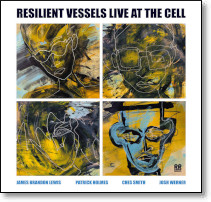


 ) for bullet
items which seem most promising.
) for bullet
items which seem most promising. Andrew Boyd: I Want a Better Catastrophe: Navigating the Climate
Crisis with Grief, Hope, and Gallows Humor (paperback, 2023,
New Society): Subtitle continues: "An existential manual for tragic
optimists, can-do pessimists, and compassionate doomers." In other
words, this is the current state of the climate change crisis, one
where we no longer have the luxury of thinking that we're only talking
about a distant, easily manageable future but have seen enough to start
realizing how unprepared we are even for what's happening now. Boyd
starts out with several charts that plot "progress" vs. time, and
winds up with the one I grabbed and pasted stage right. I'm not much
of a catastrophist here, so that view may seem excessive, even where
his point is "gallows humor." But what does matter to me is whether
we face the very real problems in ways that work collectively, or
stick with the current favorite, which is for everyone to buy guns
and fend for themselves.
Andrew Boyd: I Want a Better Catastrophe: Navigating the Climate
Crisis with Grief, Hope, and Gallows Humor (paperback, 2023,
New Society): Subtitle continues: "An existential manual for tragic
optimists, can-do pessimists, and compassionate doomers." In other
words, this is the current state of the climate change crisis, one
where we no longer have the luxury of thinking that we're only talking
about a distant, easily manageable future but have seen enough to start
realizing how unprepared we are even for what's happening now. Boyd
starts out with several charts that plot "progress" vs. time, and
winds up with the one I grabbed and pasted stage right. I'm not much
of a catastrophist here, so that view may seem excessive, even where
his point is "gallows humor." But what does matter to me is whether
we face the very real problems in ways that work collectively, or
stick with the current favorite, which is for everyone to buy guns
and fend for themselves.


 Greg Grandin: America, América: A New History of the New
World (2025, Penguin Press): Big (768 pp) history of the
entire Western Hemisphere, combining the United States and Latin
America, showing how each affects and reflects the other. This is
not the first time Grandin has looked south of the border for
insights into American history: e.g., Empire's Workshop: Latin
America, the United States, and the Rise of the New Imperialism
(2006); Fordlandia: The Rise and Fall of Henry Ford's Forgotten
Jungle City (2009); The Empire of Necessity: Slavery, Freedom,
and Deception in the New World (2014); one might even note his
Kissinger's Shadow: The Long Reach of America's Most Controversial
Statesman (2015).
Greg Grandin: America, América: A New History of the New
World (2025, Penguin Press): Big (768 pp) history of the
entire Western Hemisphere, combining the United States and Latin
America, showing how each affects and reflects the other. This is
not the first time Grandin has looked south of the border for
insights into American history: e.g., Empire's Workshop: Latin
America, the United States, and the Rise of the New Imperialism
(2006); Fordlandia: The Rise and Fall of Henry Ford's Forgotten
Jungle City (2009); The Empire of Necessity: Slavery, Freedom,
and Deception in the New World (2014); one might even note his
Kissinger's Shadow: The Long Reach of America's Most Controversial
Statesman (2015). Carlos Lozada: The Washington Book: How to Read Politics and
Politicians (2024; paperback, 2025, Simon & Schuster):
Resident book critic at the Washington Post for much of this period,
Lozada previously wrote What Were We Thinking: A Brief Intellectual
History of the Trump Era (2020, so it's tempting to insert "First"
before "Trump Era"), where he surveyed "some 150 volumes claiming to
diagnose why Trump was elected and what his presidency reveals about
our nation." Few subjects have been written about as widely and as
intensively as Trump. It's easy to claim "I read books so you don't
have to," but Lozada actually turns out to be a pretty useful guide
for sorting through this vast thicket. (I've read a couple dozen of
these books, and it tracks well with what I know.) This one covers
more ground and more time, and is mostly assembled from reviews
published in the moment, so I expect it to be somewhat shakier,
but it covers books about important people that I have little if
any desire to read, so the helping hand may be even more useful
here.
Carlos Lozada: The Washington Book: How to Read Politics and
Politicians (2024; paperback, 2025, Simon & Schuster):
Resident book critic at the Washington Post for much of this period,
Lozada previously wrote What Were We Thinking: A Brief Intellectual
History of the Trump Era (2020, so it's tempting to insert "First"
before "Trump Era"), where he surveyed "some 150 volumes claiming to
diagnose why Trump was elected and what his presidency reveals about
our nation." Few subjects have been written about as widely and as
intensively as Trump. It's easy to claim "I read books so you don't
have to," but Lozada actually turns out to be a pretty useful guide
for sorting through this vast thicket. (I've read a couple dozen of
these books, and it tracks well with what I know.) This one covers
more ground and more time, and is mostly assembled from reviews
published in the moment, so I expect it to be somewhat shakier,
but it covers books about important people that I have little if
any desire to read, so the helping hand may be even more useful
here. Pankaj Mishra: The World After Gaza: A History (2025,
Penguin): Big-picture historian, tackled the entire modern world in
Age of Anger: A History of the Present, seems to be jumping
the gun a bit here, as the genocide is far from over. But the bulk
of the book is about how we remember the Nazi Judeocide, with a major
chapter on how "never forget" dominates and pervades everything in
Israel, followed by "Germany from Antisemitism to Philosemitism" and
"Americanising the Holocaust." And as one of the few writers working
today who thinks in genuinely global terms, he also includes chapters
on "The Clashing Narratives of the Shoah, Slavery and Colonialism"
and "Atrocity Hucksterism and Identity Politics." In short, this
looks like a very deep book, although not one where Palestinians
have much volition or responsibility.
Pankaj Mishra: The World After Gaza: A History (2025,
Penguin): Big-picture historian, tackled the entire modern world in
Age of Anger: A History of the Present, seems to be jumping
the gun a bit here, as the genocide is far from over. But the bulk
of the book is about how we remember the Nazi Judeocide, with a major
chapter on how "never forget" dominates and pervades everything in
Israel, followed by "Germany from Antisemitism to Philosemitism" and
"Americanising the Holocaust." And as one of the few writers working
today who thinks in genuinely global terms, he also includes chapters
on "The Clashing Narratives of the Shoah, Slavery and Colonialism"
and "Atrocity Hucksterism and Identity Politics." In short, this
looks like a very deep book, although not one where Palestinians
have much volition or responsibility.


