|
An occasional blog about populist politics and popular music, not necessarily at the same time. LinksLocal Links Social Media My Other Websites Music Politics Others Networking Music DatabaseArtist Search: Website SearchGoogle: Recent Reading
Music DatabaseArtist Search: Website SearchGoogle: |
Blog Entries [1110 - 1119]Monday, August 3, 2015 Music Week
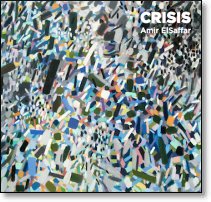
Music: Current count 25234 [25190] rated (+44), 451 [453] unrated (-2). After wrapping up last week's (month's) Rhapsody Streamnotes on Wednesday, I decided I wanted to work on the long-delayed book posts -- two appeared on Friday and Saturday, and a third will probably appear tomorrow -- so I didn't want to think much about what to listen to while I was working. And nothing could have taken less thought than picking off records from the Spin 1985-2014 list, so that's what I did. A week ago there were 31 records on the list I hadn't heard. Now there are 12 -- 9 not on Rhapsody, 3 more I haven't checked yet (Deftones, Green Day, Total 4), so I'll at least check out the latter. (Several people mentioned that the missing albums are on YouTube, a resource I've never used for music -- probably because I've hated watching music videos since they first became mandatory in the '80s. I have occasionally consulted YouTube for plumbing tips.) As the grades below attest, the alt/indie rock albums toward the bottom of Spin's list were pretty awful -- most so bad I didn't bother trying to fill in any other albums I had missed. (I did check out Aerosmith's Greatest Hits and Animal Collective's Feels, which beat the recommended albums, and Cursive's Domestica and M83's Dead Cities, Red Seas & Lost Ghosts, which didn't.) I did go deeper into 2Pac and Lil Wayne (having only heard the former's posthumous Better Dayz, but I've heard most of the latter's later work -- even some of the numerous mixtapes). Main insight I got into 2Pac was that by the time All Eyez on Me arrived he had become so submerged in the process all those posthumous records shouldn't have been a surprise -- after all, his presence hardly matters. Lil Wayne had little presence in his first albums -- they are really just mixtapes (before their time) -- but he emerged as a star as Tha Carter series started. Dimmed after that stint in jail, of course, but the first three Tha Carters are pretty amazing records. (Good chance Tha Carter II would wind up full-A if I spent more time with it.) I also checked out Best of Frankie Knuckles but it just gathers up his early 12-inchers and doesn't find its stride until the second half. He might benefit from the sort of career-spanning treatment Rhino gave Larry Levan in Journey Into Paradise: The Larry Levan Story, but thus far at least I've always found Chicago House a bit dull. As I was going through the Spin list, I noticed new albums by Lil Wayne, Mount Eerie (ex Microphones), and Swervedriver. None turned out to be special. I managed to work a few new jazz CDs into the week, but nothing made much of an impression until Amir ElSaffar. Among other things -- and there are a lot of other things -- this is the first album where he's really made a big splash with his trumpet chops. I don't make anything resembling a systematic effort to track books on music, but I do note some that strike my personal fancy. But in case some readers glaze over when presented with long lists of politics-economics-history, I thought I'd note the music (more or less) books from this spate of book posts (including a sneak peek at tomorrow's):
I've read Christgau's memoir, and have bought Matos' book -- something I want to learn more about, from someone I have immense respect for. The other one I find tempting is Aidi's Rebel Music, which among other things is likely to cognitively baffle most westerners with their preconceptions about Islamic fundamentalism. (I did read Mark LeVine's Heavy Metal Islam: Rock, Resistance, and the Struggle for the Soul of Islam, but I'm less fond of metal than hip-hop.) But the fact is that I have other reading priorities, and have long been coasting on the music knowledge-base I accumulated last century. So most of the music books I have bought over the last decade -- Szwed's Sun Ra biography and George Lewis' A Power Stronger Than Itself: The AACM and American Experimental Music are two important books that come to mind -- remain unread. Ned Sublette's Cuba and Its Music: From the First Drums to the Mambo is the exception (and should be yours). New records rated this week:
Old records rated this week:
Unpacking: Found in the mail last week:
Ask a question, or send a comment. Saturday, August 1, 2015 Book Roundup (2)As I noted yesterday, I had fallen way behind on my book blurb roundups -- almost a year missing until my June 17 post. (By the way, I blame Amazon for much of this, since their immensely useful website is all but guaranteed to crash my browser within a half-dozen pages. Lately I've been using the Chromebook's browser for Amazon, an awkward workflow but less troublesome.) I picked out most of the top political books for the June 27 post, and added most of the top historical books yesterday. That leaves a wide scattering of other subjects -- all at least nominally non-fiction. I don't generally track music books, but there are a few of those here. Some science too -- the main thing I read back in the 1980s, although I've scarcely had time for it in the last decade-plus (although I have at least tracked most of the climate catastrophe books). Some books lead to lists of related books, where I hope the titles are self-explanatory. And there are more of the usual political and historical books -- perhaps a bit more marginal given I've already picked through them in recent posts. Sometimes I pick out a right-wing book to argue with (Brooks, Gairdner, Powers, and Voegeli fit that bill below). Sometimes I don't have much to say about a left-wing book but want to note it anyway. Sometimes I jump the gun before deciding that a book is really interesting, and those pieces tend to get stuck in my draft file until I finally flush them out. I have enough left over for at least one more post, so I may do that tomorrow (instead of Weekend Update, the file for which is empty at the moment). Only one book below I have the cover cached for (i.e., I've already read), although I've also bought a copy of Steele's The Open-Source Everything Manifesto.
Samuel Avery: The Pipeline and the Paradigm: Keystone XL, Tar Sands, and the Battle to Defuse the Carbon Bomb (paperback, 2013, Ruka Press): On Alberta's tar sands and why they represent such a threat to irrevesibly amplify global warming. Also available: Andrew Nikiforuk: Tar Sands: Dirty Oil and the Future of a Continent (rev ed, paperback, 2010, Greystone Books); William Marsden: Stupid to the Last Drop: How Alberta Is Bringing Environmental Armageddon to Canada (and Doesn't Seem to Care (2007; paperback, 2008, Vintage). If you want to explore the other side, there's Alastair Sweeny: Black Bonanza: Canada's Oil Sands and the Race to Secure North America's Energy Future (2010, Wiley), and Ezra Levant: Ethical Oil: The Case for Canada's Oil Sands (2007, paperback, 2011, McClelland & Stewart) -- the latter is an anti-Arab rant, and the former plays on that prejudice while declaring everything else squeaky clean. Robert B Baer: The Perfect Kill: 21 Laws for Assassins (2014, Blue Rider Press): Ex-CIA agent, wrote about his career in See No Evil: The True Story of a Ground Soldier in the CIA's War on Terrorism (2002); also Sleeping With the Devil: How Washington Sold Our Soul for Saudi Crude (2003), and The Devil We Know: Dealing With the New Iranian Superpower (2008). Not clear how critical and/or complicit he his, but this manual for assassins may try to have it both ways -- as if there are two sides to the story. Alex Berezow/Hank Campbell: Science Left Behind: Feel-Good Fallacies and the Rise of the Anti-Scientific Left (2014, Public Affairs): It should be clear by now that there is no single omnipresent Left in America, especially given how easily writers can construct strawman examples to kick about. This book picks on ones that the authors at least associate with the left, although from the list I see many (if not all) of the issues focus more on what corporations do with science and what the potential risks may be than on the science itself. Still, I do know people who might be considered left-leaning who understand very little of science and sympathisize with all sorts of nonscientific nonsense, but that's no less true of ignorant right-leaning people. What is different about the right is the number of people who seriously reject not just the policy application but the scientific principles behind climate change and evolution. John Brockman, ed: What Should We Worried About?: Real Scenarios That Keep Scientists Up at Night (paperback, 2014, Harper Perennial): One thing that should be clear by now is that people aren't very good at assessing risks, especially ones that are large and/or distant, but also ones that are near and/or familiar. This book promises the clarity of science, but many of the pieces are a bit fuzzy ("Tim O'Reilly forsees a coming Dark Age; Douglas Rushkoff fears humanity is losing its soul" -- those are pieces that actually intrigue me more than meteoric catastrophes or financial black holes). Brockman, by the way, has a whole cottage industry editing books along these lines. Recent ones include (all Harper Perennial paperbacks): What Have You Changed Your Mind About?: Today's Leading Minds Rethink Everything (1/2009); This Will Change Everything: Ideas That Will Shape the Future (12/2009); Is the Internet Changing the Way You Think?: The Net's Impact on Our Minds and Future (1/2011); This Will Make You Smarter: New Scientific Concepts to Improve Your Thinking (2/2012); This Explains Everything: Deep, Beautiful, and Elegant Theories of How the World Works (1/2013); Thinking: The New Science of Decision-Making, Problem-Solving, and Prediction (10/2013). David Brooks: The Road to Character (2015, Random House): Always one to jump out in front of a fad, this is a timely guide for those who want to blame social, economic, and political failures on those who have lost out, on their intrinsic character -- a lack of the sort of virtues that are assumed to lead to success. Those virtues, of course, are the usual conservative homilies. As a self-help book this might have some value, but Brooks is nothing if not a political hack, so when, say, he praises civil rights leaders A. Philip Randolph and Bayard Rustin for their "reticence and the logic of self-discipline" he really means to dismiss all the others who don't show enough deferrence to the conservative order. Noam Chomsky/Andre Vltchek: On Western Terrorism: From Hiroshima to Drone Warfare (paperback, 2013, Pluto Press): Chomsky has a tendency to batter you with long list of facts, and one of his favorite lists is the violent, anti-democratic acts of the US and its allies around the world. Unpleasant as the beating is, if you aren't aware of those facts you're likely to fall for the usual sanctimonious explanations that conspire to keep the list growing. Robert Christgau: Going Into the City: Portrait of a Critic as a Young Man (2015, Dey Street Books): Memoir from childhood growing up in Queens through college at Dartmouth and several newspaper jobs through his stretch as music editor at the Village Voice, ending in the early 1980s. Disclosure: he's a friend, and I make a couple brief appearances in the book, plus one in the acknowledgments. More prominent in the book is his wife, Carola Dibbell, who it should be noted has a new novel out, The Only Ones (paperback, 2015, Two Dollar Radio). Niles Eldredge: Extinction and Evolution: What Fossils Reveal About the History of Life (2014, Firefly): Paleontologist, co-author (with Stephen Jay Gould) of the "punctuated equilibria" theory of evolution, which was suggested by the general lack of transitional finds in the fossil record. Illustrated, almost an art book. For a more technical book, see Eldredge's recent Eternal Ephemera: Adaptation and the Origin of Species From the Nineteenth Century Through Punctuated Equilibria and Beyond (2015, Columbia University Press). Over the years I've read a lot by Eldredge, but hadn't noticed: The Fossil Factory: A Kid's Guide to Digging Up Dinosaurs, Exploring Evolution, and Finding Fossils (with Douglas Eldredge, paperback, 2002, Roberts Reinhart); Why We Do It: Rethinking Sex and the Selfish Gene (paperback, 2005, WW Norton); Darwin: Discovering the Tree of Life (2005, WW Norton); and Concrete Jungle: New York City and Our Last Best Hope for a Sustainable Future (with Sidney Horenstein, 2014, University of California Press). Peter Finn/Petra Couvée: The Zhivago Affair: The Kremlin, the CIA, and the Battle Over a Forbidden Book (2014, Pantheon): The book was Boris Pasternak's famous novel, Doctor Zhivago, banned in the Soviet Union -- an opportunity the CIA seized upon by publishing it in Russian as a propaganda coup. The authors managed to get hold of CIA documents on the affair, most likely Russian sources as well. William D Gairdner: The Great Divide: Why Liberals and Conservatives Will Never, Ever Agree (2015, Encounter Books): Author is Canadian, previously wrote books like The Trouble With Canada and The Trouble With Democracy, and the publisher is right-wing, so I don't expect he comes up with much of an answer. I'd say that polarization reflects increasing inequality, which by definition means we have less in common, and that leads to less respect for one another. In a polarized society, people are less likely to compromise on the self-interest of others (unless they are compelled, so the power to do that is increasingly sought). While some of these traits are even-sided, others are asymmetrical. In particular, the right is much more fond of using force to achieve its ends (war, violence, guns, jail). On the other hand, the left is more likely to recognize the humanity of the right than vice versa: the left's definition of "us" is broadly inclusive, the right's is exclusive. And the goals are fundamentally different: the right seeks to preserve the wealth and privilege of the few, whereas the left prefers to share the wealth among all people. Gairdner may muddy this up a bit by sticking to "conservative" and "liberal" labels. Atul Gawande: Being Mortal: Medicine and What Matters in the End (2014, Metropolitan Books): Surgeon, has written several eloquent books on his craft, the health care industry, and sometimes how they don't mesh very well. For instance, hospitals often spend a lot of time and effort (for a lot of money) doing fruitless procedures on people who are dying anyway, often causing more suffering than they can alleviate. Russell Gold: The Boom: How Fracking Ignited the American Energy Revolution and Changed the World (2014, Simon & Schuster): It's long been known that you can boost oil production by pumping liquids into oil fields to force the oil toward the producing wells. That's been done in Saudi Arabia since the 1940s, but hasn't been cost-effective in the US until recently. Hydraulic fracturing goes a step further, opening up oil- (and gas-) saturated shales that otherwise would be too dense to produce. The US has a lot of gas-shale, and that's the base for the so-called boom. US oil production has been diminishing since its peak in 1969, and we're seeing similar limits and declines all around the world -- a phenomenon that validates the "peak oil" hypothesis. Fracking, therefore, to some observers looks like a reversal of the laws of physics rather than just the next increasingly-expensive recovery methods. My view is that the boom is temporary, and that in the US in particular, where there is so little effort aimed at conserving petroleum resources, it's something that we'll burn through pretty quickly (while depositing all that greenhouse gas in the atmosphere, trapping solar energy and cooking the planet). Other recent books (2014 unless noted): Ezra Levant: Groundswell: The Case for Fracking (Signal); Michael Levi: The Power Surge: Energy, Opportunity, and the Battle for America's Future (2013, Oxford University Press); Alex Prudhomme: Hydrofracking: What Everyone Needs to Know (paperback, 2013, Oxford University Press); George Zuckerman: The Frackers: The Outrageous Inside Story of the New Billionaire Wildcatters (2013, Portfolio); but also see: Walter M Brasch: Fracking Pennsylvania: Flirting With Disaster (paperback, Greeley & Stone); and Richard Heinberg: Snake Oil: How Fracking's False Promise of Plenty Imperils Our Future (paperback, 2013, Post Carbon Institute). Richard Goldstein: Another Little Piece of My Heart: My Life of Rock and Revolution in the '60s (2015, Bloomsbury USA): A memoir by a good candidate for America's first rock critic, who started writing "Pop Eye" for the Village Voice in 1966. By the time I started reading him he was mostly writing about politics, which was fine with me. John Michael Greer: Decline and Fall: The End of Empire and the Future of Democracy in 21st Century America (paperback, 2014, New Society): Prime concern is economic sustainability, which he doesn't find much evidence of in the US. Has a number of doom and gloom works, aside from his interest in organic gardening. Mohsin Hamid: Discontent and Its Civilizations: Dispatches from Lahore, New York, and London (2015, Riverhead): Novelist from Pakistan, has lived in those other towns (currently a UK citizen), collects essays on "life, art, politics, and 'the war on terror.'" Simon Head: Mindless: Why Smarter Machines Are Making Dumber Humans (2014, Basic Books): Focuses on Computer Business Systems (CBSs) used to run large businesses, including the supply chains of Walmart and Amazon but also the financial shenanigans of Goldman Sachs. That this sort of technology is used to automate jobs and suppress wages has long been obvious. But who gets dumber as a result? Bob Herbert: Losing Our Way: An Intimate Portrait of a Troubled America (2014, Doubleday): Former New York Times opinion columnist travels around America and finds much to worry, and complain, about. Matthew W Hughey/Gregory S Parks: The Wrongs of the Right: Language, Race, and the Republican Party in the Age of Obama (2014, NYU Press): Looks at how Republicans talk about Obama and finds various ways they exploit lingering racism in America. Kojin Karatani: The Structure of World History: From Modes of Production to Modes of Exchange (paperback, 2014, Duke University Press): Japanese philosopher, has written about Kant and Marx in the past (Transcritique: On Kant and Marx), revisits Marx somewhere between anthopology and globalization. Edward D Kleinbard: We Are Better Than This: How Government Should Spend Our Money (2014, Oxford University Press): An attempt to reframe government taxation/spending debates not on traditional left-right terms but in terms of return on investments regardless of size. I think this is fundamentally right, although the devil will be in the details. There are many useful and important things that government can do more efficiently and more effectively than the private sector -- indeed, there are some that the private sector will only do if plied with exorbitant bribes. Nice to think we're smart enough we can figure this out, but there's little evidence of that. Jon Krakauer: Missoula: Rape and the Justice System in a College Town (2015, Doubleday): A small city, population nearly 70,000, home of University of Montana so about 15,000 students. Local authorities were notoriously lax investigating rape complaints, so Krakauer investigated and this is what he found out. FWIW, I've read five previous books by Krakauer (out of six). Daniel J Levitin: The Organized Mind: Thinking Straight in the Age of Information Overload (2014, Dutton): Brain book, verging into self-help territory. Author has a couple of books on music: This Is Your Brain on Music: The Science of a Human Obsession and The World in Six Songs: How the Musical Brain Created Human Nature. Information overload is a real issue, and a reliable method for coping is something one might desire. However, as long as misinformation is profitable that will be a tall order. Charles Lewis: 935 Lies: The Future of Truth and the Decline of America's Moral Integrity (2014, Public Affairs): IF Stone used to say, "all governments lie." Still, we'd be better off with fewer lies, which I suppose is the point of this. But getting to the truth is surely a more complex process. Lewis is such a stickler for the certainty of truth that his title refers to a documented count of "lies that led to the war in Iraq." Sure, there were lies, many of them, but some were big and some were small, some flowed automatically from others, most from misperceptions about how the world works and how American force functions in that world. Correcting for lies is a worthwhile step, but understanding why powers lie and being able to detect when they do even if you don't know what the truth is are more important still. William McDonough/Michael Braungart: The Upcycle: Beyond Sustainability, Designing for Abundance (paperback, 2013, North Point Press): An architect and a chemist, previously wrote Cradle to Cradle: Remking the Way We Make Things (2002), an engineering ethic that not only dispenses with planned obsolence but goes much farther. Kirsten Powers: The Silencing: How the Left Is Killing Free Speech (2015, Regnery): Billed as a "lifelong liberal," worked in the Clinton administration, etc. But note the publisher, that she's a "Fox news contributor," and that her blurb authors are: Charles Krauthammer, Brit Hume, Juan Williams, Eric Metaxas, Ron Fournier, and George F Will. Or just the subtitle: no one on the left actually refers to the left as such, partly because we realize what they call the left we know to be a wide range of often conflicting views with no effective organizational unity. (We can, of course, speak of the right, with their daily talking points endlessly drummed into their marching base via Fox News, although lately even some of them seem to be going off message.) I have no idea what actual examples Powers has come up with -- maybe the old anti-PC rant that people should be able to express themselves as racists without fear of objection or challenge. It's true that occasionally someone says something racist on mainstream media and gets canned for embarrassing the network, but it's not the left that owns those media. For most of my life the right has been the far more serious threat to free speech -- most chillingly during the McCarthy period, but even now there's a concerted right-wing effort to purge universities of left-leaning professors (something David Horowitz, who uses "left" repeatedly in his book titles, is very active at). One can also mention efforts to prosecute (or "hold in contempt") journalists who reveal classified secrets -- James Risen is a prominent recent case. Since Obama's DOJ went after Risen, and Powers' people regard Obama as part of "the left," maybe that made Powers' list? I doubt it, since that's just the sort of thing the right would do given the opportunity. If you want to find out about real threats to free speech, check with the ACLU. Diana Preston: A Higher Form of Killing: Six Weeks in World War I That Forever Changed the Nature of Warfare (2015, Bloomsbury Press): Historian, has written about the Boxer Rebellion, the Lusitania, and Before the Fallout: From Marie Curie to Hiroshima (2009), and with her husband has written historical fiction pseudonymously as Alex Rutherford. Her six-week window here was April to June 1915, during which the Germans introduced submarine warfare, aerial bombing (from a zeppelin), and poison gas (chlorine) -- innovations which "forever changed the nature of warfare." Her title, by the way, isn't original; see Robert Harris/Jeremy Paxman: A Higher Form of Killing: The Secret History of Chemical and Biological Warfare (paperback, 2002, Random House). Still, the notion that less discriminate forms of killing are "higher" is perplexing. Arundhati Roy: Capitalism: A Ghost Story (paperback, 2014, Haymarket Books): Short political broadside from the famous Indian novelist, critic, and activist. She has a bunch of these, including: Walking With the Comrades (paperback, 2011, Penguin); Field Notes on Democracy: Listening to Grasshoppers (paperback, 2009, Haymarket); An Ordinary Person's Guide to Empire (paperback, 2004, South End Press); Public Power in the Age of Empire (paperback, 2004, Seven Stories Press); War Talk (paperback, 2003, South End Press); Power Politics (2nd ed, paperback, 2002, South End Press); The Cost of Living (paperback, 1999, Modern Library). Asne Seierstad: One of Us: The Story of Anders Breivik and the Massacre in Norway (2015, Farrar Straus and Giroux): In 2011 Breivik killed eight with a bomb and shot and killed sixty-nine more at a Labour Party youth camp -- crimes he justified with a lengthy racist tract. Seierstad, from Norway, has written well-regarded journalism about Afghanistan (The Bookseller of Kabul, Iraq (One Hundred and One Days: A Baghdad Journal, and Chechnya (Angel of Grozny: Inside Chechnya). Micah L Sifry: The Big Disconnect: Why the Internet Hasn't Transformed Politics (Yet) (paperback, 2014, O/R Books): "This is a book for social and political activists." The Internet promised more democracy. It didn't exactly deliver less, but it wrapped it up in so much noise it made many things harder to sort out, and harder to do. By offering us more connection, it's wound up making us more isolated. I read some of this and see the problems, but only a limited slice is available in the preview: any answers he has seem to be beyond the cut. Ain't that just typical? Ken Silverstein: The Secret World of Oil (2014, Verso): Focuses more on the corruption of the finance and trading sides of the industry, as opposed to more mundane matters like exploration and production. Needless to say, there is a lot of corruption to report. Vaclav Smil: Harvesting the Biosphere: What We Have Taken From Nature (2012, MIT Press): Rather technical assessment of how much of the Earth's biosphere has been captured by human beings, and how this affects the carrying capacity of the planet. Important info for that population bomb debate. Robert David Steele: The Open-Source Everything Manifesto: Transparency, Truth, and Trust (paperback, 2012, Evolver Editions): Author started out as a spy, but found that the shroud of secrecy in his business wound up distorting everything. He came up with the idea of Open Source Intelligence as a way of untangling the subversion, then picked up the lessons from Open Source Software and tried to generalize that into Open Source Everything. Needless to say, this sounds right to me -- at least until proven otherwise. John Paul Stevens: Six Amendments: How and Why We Should Change the Constitution (2014, Little Brown): Brief book by retired Supreme Court justice wants to tinker. The subjects: the "anti-commandeering" rule; political gerrymandering; campaign finance; sovereign immunity; the death penalty; the second amendment (gun control). John Szwed: Billie Holiday: The Musician and the Myth (2015, Viking): Biography of the legendary jazz singer, timed to come out 100 years after Holiday's birth. Szwed has written excellent biographies of Sun Ra, Miles Davis, and Alan Lomax, as well as the essential primer, Jazz 101: A Complete Guide to Learning and Loving Jazz (2000). Dominic Tierney: The Right Way to Lose a War: America in an Age of Unwinnable Conflicts (2015, Little Brown): Military theoretician, so no chance he'll advise avoiding conflicts let alone wars. But he's aware that the US hasn't won, by any definition, much of anything since WWII, and that the problem lies in the nature of the conflicts (which American thrashing only aggravates). His formula is surge-talk-leave. This assumes there's some tangible goals short of occupation, but that's probably another book/author. (I could imagine that the credible threat of US invasion might cajole some sort of power-sharing agreement -- that's sort of what happened with Bosnia/Serbia -- but that's hardly the American way.) Author previously co-wrote Failing to Win: Perceptions of Victory and Defeat in International Politics (2006) and wrote FDR and the Spanish Civil War: Neutrality and Commitment in the Struggle That Divided America (2007) and How We Fight: Crusades, Quagmires, and the American Way of War (2010). William Voegeli: The Pity Party: A Mean-Spirited Diatribe Against Liberal Compassion (2014, Broadside Books): A new twist on an old complaint, that liberal programs to help the less fortunate don't work (help the less fortunate) because, well -- fill in the blank. Being an asshole, Voegeli doesn't really care why they don't work, since he rejects the notion that compassion is a good reason to do anything, and he regards people who are compassionate as "unfit to govern" -- most conservatives agree, but try to palm off their mean-spiritedness as something a bit more palatable, like "tough love" (lest they look like assholes). I doubt that Voegeli is really doing his kind any favors here. It strikes me that both conservatives and liberals are more or less equally likely to empathize or be compassionate, but the kind of people conservatives care about is much more limited (to people most like themselves), whereas liberals are less picky about the people they care for. This leads Voegeli to a key misunderstanding: most programs he decries as compassionate (because they benefit people he would regard as pitiable if he wasn't such an asshole) are seen by liberals as self-help -- after all, they help people not unlike oneself. Janine R Wedel: Unaccountable: How Elite Power Brokers Corrupt our Finances, Freedom, and Security (2014, Pegasus): Any doubt that American policy is primarily driven by the profit motive, both for the elites that control it and the corporations that bankroll them, should be dispelled here. This not only delegitimizes policies, it is more often than not dysfunctional, guaranteeing that the sponsored policies will fail. Wedel initially studied corruption in Poland. Then she came home, to see how it is really done. Edward O Wilson: The Social Conquest of Earth (paperback, 2013, Liveright): Invented something I never trusted that he calls sociobiology, but he is one of the foremost writers on the impact of human beings on nature, and there is no doubt that humans have conquered earth, for better or worse. Or maybe this book is just about insect societies? -- another of his major topics. Stephen Witt: How Music Got Free: The End of an Industry, the Turn of the Century, and the Patient Zero of Piracy (2015, Viking): Business writer focuses on how file sharing works and rose in prominence, undermining the recorded music industry. James Wolcott: Critical Mass: Four Decades of Essays, Reviews, Hand Grenades, and Hurrahs (2013, Doubleday): Bio doesn't mention Village Voice, where I know him from, but the music reviews go back that far, and are complemented by pieces on film and TV, books, other things a literate raconteur would bump into over the last 30-40 years. Ask a question, or send a comment. Friday, July 31, 2015 Book RoundupI neglected these short book blurbs for close to a year -- July 3, 2014 to June 17, 2015 -- so I'm still catching up. In fact, I have so much written at this point I'll try to do another tomorrow. For today's selection, I've tried to focus on history books. (Last entry was focused on political books.) Tariq Ali: The Extreme Centre: A Warning (paperback, 2015, Verso): British Marxist, novelist, filmmaker, part of the old New Left Review crowd, wrote a book in 2002 which excoriated extremists on both sides of the terrorism wars (which he dubbed the Oil Wars -- see The Clash of Fundamentalisms: Crusades, Jihads and Modernity). Now he finds comparable trouble in the so-called center, focusing on the UK and Europe where the traditional parties of left and right compete to support corporations. Edward E Baptist: The Half Has Never Been Told: Slavery and the Making of American Capitalism (2014, Basic Books): Argues against the notion that slavery was pre-capitalist or even anti-capitalist by pointing out the how especially in the cotton industry technical innovations (hence capital) were developed to make slavery more productive and profitable. But showing that slavery was compatible with capitalism doesn't lighten its burden -- if anything, the opposite. Some of this was anticipated by Walter Johnson: River of Dark Dreams: Slavery and Empire in the Cotton Kingdom (2013, Belknap Press). Also related: Sven Beckert: Empire of Cotton: A Global Industry (2014, Knopf). Max Blumenthal: The 51 Day War: Ruin and Resistance in Gaza (2015, Nation Books): The title reminds you that while Israel only took six days to defeat the armies of Egypt, Syria, and Jordan, seizing large slices from each's territory, they spent six-and-a-half times as long poking, probing, and pounding the tiny, defenseless Gaza Strip -- with no tangible gains, a repeat of three previous military operations that prooved equally fruitless. Blumenthal's recent Goliath: Life and Loathing in Greater Israel (2013, Nation Books) revealed a profound racism (loathing) growing in Israel's dominant right-wing, so I hope this book goes beyond accounting the casualties and recording testimony of the survivors to get at the viciousness that powers these recurrent eruptions of Israeli wrath. Blumenthal's book is the first out on this latest round, but the following aren't what you'd call dated: Gideon Levy: The Punishment of Gaza (paperback, 2010, Verso); Norman Finkelstein: This Time We Went Too Far: Truth and Consequences of the Gaza Invasion (paperback, 2010, OR Books); Noam Chomsky & Ilan Pappé: Gaza in Crisis: Reflections on Israel's War Against the Palestinians (paperback, 2010, Haymarket Books); or for that matter, Amira Haas: Drinking the Sea at Gaza: Days and Nights in a Land Under Siege (paperback, 2000, Picador). Daniel P Bolger: Why We Lost: A General's Inside Account of the Iraq and Afghanistan Wars (2014, Eamon Dolan/Houghton Mifflin Harcourt): Three-star general, had commands both in Iraq and Afghanistan. Concludes: "at the root of our failure, we never really understood our enemy." True, but "we" also didn't understand much of anything else, least of all how ill fit the US military was for occupying foreign countries. It's refreshing that Bolger admits that the operations were failures, but he doesn't seem to understand that the relentless focus on killing/capturing "enemies" created its own failures, as did the very alien-ness of the US military. Joel K Bourne Jr: The End of Plenty: The Race to Feed a Crowded World (2015, WW Norton): The Green Revolution in the 1960s seemed to background Robert Malthus' population theories, but they're coming back as population grows, land remains constant, technology fails to bridge the gap, and other threats (like global warming) are increasing. Douglas Brinkley/Luke A Nichter: The Nixon Tapes: 1971-1972 (2014, Houghton Mifflin Harcourt): Verbatim transcripts (784 pp of them), the precise history Nixon wanted you to hear, and some he didn't. Good to have this in book form, but I can't imagine wanting to read it. For some reason we have an avalanche of Nixon books, in addition to Rick Perlstein's The Invisible Bridge: The Fall of Nixon and the Rise of Reagan (2014, Simon & Schuster): Patrick J Buchanan: The Greatest Comeback: How Richard Nixon Rose from Defeat to Create the New Majority (2014, Crown Forum); John W Dean: The Nixon Defense: What He Knew and When He Knew It (2014, Viking); Elizabeth Drew: Washington Journal: Reporting Watergate and Richard Nixon's Downfall (paperback, 2015, Overlook Press); Don Fulsom: Treason: Nixon and the 1968 Election (2015, Pelican); Irwin F Gellman: The President and the Apprentice: Eisenhower and Nixon, 1951-1961 (2015, Yale University Press); Ken Hughes: Chasing Shadows: The Nixon Tapes, the Chennault Affair, and the Origins of Watergate (2014, University of Virginia Press); Jeffrey P Kimball/William Burr: Nixon's Nuclear Specter: The Secret Alert of 1969, Madman Diplomacy, and the Vietnam War (2015, University Press of Kansas); Ray Locker: Nixon's Gamble: How a President's Own Secret Government Destroyed His Administration (2015, Lyons Press); Michael Nelson: Resilient America: Electing Nixon in 1968, Channeling Dissent, and Dividing Government (2014, University Press of Kansas); James Robenalt: January 1973: Watergate, Roe v. Wade, Vietnam, and the Month That Changed America Forever (2015, Chicago Review Press); Douglas E Schoen: The Nixon Effect: How His Presidency Has Changed American Politics (2015, Encounter Books); Geoff Shepard: The Real Watergate Scandal: Collusion, Conspiracy, and the Plot That Brought Nixon Down (2015, Regnery); Roger Stone: Nixon's Secrets: The Rise, Fall and Untold Truth About the President, Watergate, and the Pardon (2014, Skyhorse); Evan Thomas: Being Nixon: A Man Divided (2015, Random House); Tim Weiner: One Man Against the World: The Tragedy of Richard Nixon (2015, Henry Holt). Gellman's book is the second part of a multi-volume effort. Treason, by the way, refers to Nixon's back-channel efforts to undermine LBJ's peace talks, elsewhere known as the Chennault Affair. Fulsom previously wrote Nixon's Darkest Secrets: The Inside Story of America's Most Troubled President (paperback, 2013, St. Martin's Griffin). Weiner has written good books about the CIA and FBI, so I suspect his is the most useful of the new books. I read Gary Wills: Nixon Agonistes: The Crisis of the Self-Made Man back when it originally came out (1970) and that's as deep as I ever want to get into that man's mind. Tom Burgis: The Looting Machine: Warlords, Oligarchs, Corporations, Smugglers, and the Theft of Africa's Wealth (2015, Public Affairs): While Africa has about 30% of the world's reserves of hydrocarbons and minerals, and 14% of the world's population, its economies have remained stagnant (e.g., only 1% of the world's manufacturing). The looting began under European colonialism, but continues today, enabled by the corruption of elites. Related: Celeste Hicks: Africa's New Oil: Power, Pipelines and Future Fortunes (paperback, 2015, Zed Books); Luke Paley: The New Kings of Crude: China, India, and the Global Struggle for Oil in Sudan and South Sudan (paperback, 2015, Hurst). Bryan Burrough: Days of Rage: America's Radical Underground, the FBI, and the Forgotten Age of Revolutionary Violence (2015, Penguin): Investigates various fringe radical groups in the 1970s -- the Weathermen, the Symbionese Liberation Army, FALN, the Black Liberation Army -- who resorted to violence to advance their frustrated political ideals, and the federal agents who hunted them down (who themselves "broke many laws in its attempts to bring the revolutionaries to justice"). Also on the FBI's suppression of left radicals: Aaron J Leonard/Conor A Gallagher: Heavy Radicals: The FBI's Secret War on America's Maoists: The Revolutionary Union/Revolutionary Communist Party 1968-1980 (paperback, 2015, Zero Books). Sarah Chayes: Thieves of State: Why Corruption Threatens Global Security (2015, WW Norton): Previously wrote The Punishment of Virtue: Inside Afghanistan After the Taliban (2006), which indicted pretty much everyone for failing to secure a better future for the Afghan people after the US pushed the Taliban out in 2001. She supported that war, and wound up advising the US military, which puts her in an odd position: she identifies corruption as a major security problem for the US in Afghanistan and elsewhere, but misses the fact that the US has never been able to stand up non-corrupt governments anywhere, because American foreign policy is driven by the profit motive in the first place -- you didn't really buy into that altruistic humanitarian horseshit? But corruption delegitimizes government and leads to opposition, and often violence. Meghnad Desai: Hubris: Why Economists Failed to Predict the Crisis and How to Avoid the Next One (2015, Yale University Press): Several variations on this book have appeared, and no doubt more will. Although economists are often asked for predictions, their models are more likely to seek an equilibrium that disallows crisis -- and in turn gives them little reason to research past crises. Still, one way to approach this would be to identify exceptions that did predict the crisis, then ask why no one paid much attention to them. One reviewer notes that lack of any mention of Hyman Minsky "leaves a gaping hole in an otherwise admirable book." I'll add that while failure to predict the crisis was a problem, a bigger one was inability to recognize what it all meant once it happened. Krugman, for instance, didn't predict the crash, but he knew exactly what was going on when it happened. Don H Doyle: The Cause of All Nations: An International History of the American Civil War (2014, Basic Books): A survey of how the war was viewed abroad, finding that monarchists hoped to see the Union (and democracy) fail, while radicals (like Karl Marx and Giuseppe Garibaldi) "called on the North to fight for liberty and equality." Both sides sent diplomats abroad to argue their cases. I don't see much about economic interests here. The best known is England, which leaned toward the Confederacy as a backward source of raw materials (mostly cotton), possibly fearing the Union as a potential competitor in manufacturing -- no doubt some English continued to oppose slavery, but that doesn't seem to have overridden economic interests. On the other hand, the Union tended to play down the issue of slavery in justifying the war effort, at least domestically. I wonder whether their case abroad differed. Douglas R Egerton: The Wars of Reconstruction: The Brief, Violent History of America's Most Progressive Era (2014, Bloomsbury Press): A new history of the post-Civil War period, focusing on the striking advances of newly-emancipated black office holders and the systematic violence they were met with, and finally defeated by. Barry Eichengreen: Hall of Mirrors: The Great Depression, the Great Recession, and the Uses -- and Misuses -- of History (2015, Oxford University Press): Similarities and differences between 1929 and 2008, how the memory of the former affected the response to the latter (and, I hope, how forgetting lessons from the former slowed down recovery from the latter). One thing I noticed at the time was that the initial output drop was almost exactly the same both times, but was soon limited by the much larger public sector in 2008 and much more responsive public policy (especially the frantic cycle of bank bailouts), but having averted a crash as bad as in 1929, the policy czars underestimated the damage, nor were they forced by public opinion to produce necessary reforms. Author has mostly written about currency issues; e.g., Golden Fetters: The Gold Standard and the Great Depression, 1918-1939 (1996), and Exorbitant Privilege: The Rise and Fall of the Dollar and the Future of the International Monetary System (2011). Richard J Evans: The Third Reich in History and Memory (2015, Oxford University Press): Author of a sweeping three-volume history of the Nazi movement -- The Coming of the Third Reich (2003), The Third Reich in Power, 1933-1939 (2005), and The Third Reich at War: How the Nazis Led Germany From Conquest to Disaster (2008) -- returns for a review of how Hitler and company have been remembered. Seems to be an essay collection rather than a systematic treatment, but so much has been written about the subject that one can cover a lot of ground just reviewing whatever books come your way. Eric Foner: Gateway to Freedom: The Hidden History of the Underground Railroad (2015, WW Norton): America's foremost historian not so much of the Civil War per se -- that would be James McPherson -- as the penumbra surrounding it (aboltionism, reconstruction) adds another piece of the story, detailing how slaves escaped to freedom in the North, and how free blacks were often seized by "slave catchers" and forced into bondage. I read Foner's first book, Free Soil, Free Labor, Free Men: The Ideology of the Republican Party Before the Civil War back when it was originally published (1970). Howard W French: China's Second Continent: How a Million Migrants Are Building a New Empire in Africa (2014, Knopf): Not sure how important this is, but China (or Chinese businesses) have been looking to grab a larger slice of Africa's raw resources -- evidently this involves immigration as well as investment. This is reminiscent of western governments and companies, before and after "independence" but perhaps novel as well, given how inexpensively China can move their own people into place. French previously wrote A Continent for the Taking: The Tragedy and Hope of Africa (2004). David A Grimes/Linda G Brandon: Every Third Woman in America: How Legal Abortion Transformed Our Nation (2014, Daymark): Grimes is a doctor, so this focuses on health care matters. Clearly, availability of safe legal abortion procedures was a big advance over illegal and often dangerous procedures. Not clear how far this goes into how abortion rights changed political, economic, and social issues but a book could be written there, too. Nisid Hajari: Midnight's Furies: The Deadly Legacy of India's Partition (2015, Houghton Mifflin): Another book on the bloody history of the British Empire's final "gift" to India: partition in 1947, which led a million deaths, many millions displaced, and set the stage for future wars, subterfuge, and terrorism between India and Pakistan. I've read Alex von Tunzelman's Indian Summer: The Secret History of the End of an Empire (2007), which focuses more on the Mountbattens, and Yasmin Khan's The Great Partition: The Making of India and Pakistan (2007), but there are many other books on this subject, including fictions like Salman Rushdie's Midnight's Children. This is reportedly one of the best. Yuval Noah Harari: Sapiens: A Brief History of Humankind (2015, Harper): From the emergence of modern humans c. 70,000 years ago, a mix of genetics and sociology used to construct a hypothetical prehistory, regardless of the title -- "packed with heretical thinking and surprising facts" one reviewer says. Dilip Hiro: The Longest August: The Unflinching Rivalry Between India and Pakistan (2015, Nation Books): The partition of India in 1947 led immediately to one of the greatest carnages of the post-WWII era, remembered through a continuous conflict that errupted in two more major wars between India and Pakistan and numerous threats and crises. Hiro, b. in Pakistan, has written dozens of books on the Middle East and South and Central Asia -- his reference book The Essential Middle East: A Comrepehsive Guide (2003) is one I keep on an easy-reach shelf; his A Comprehensive Dictionary of the Middle East (2013) would be an update -- so he's well positioned to cover this story. Bruce Hoffman: Anonymous Soldiers: The Struggle for Israel, 1917-1947 (2015, Knopf): Author is some kind of "terrorism expert" -- wrote Inside Terrorism (rev ed, 2006, Columbia University Press), and, w/Fernando Reinares: The Evolution of the Global Terrorist Threat: From 9/11 to Osama bin Laden's Death (2014, Columbia University Press) -- so sees mandatory Palestine as a rare case study where Israeli terrorism "worked": as such, he rather narrowly focuses on the Irgun and LEHI (Stern Gang) from 1939-47, as opposed to the broader question of the militarization of the Yishuv from the death of Joseph Trumpeldor (1920) through the formation of Haganah and Palmach, the Arab Revolt (1937-39), WWII, and the final integration of Irgun and LEHI into the IDF in 1948. No doubt this has a lot of detail as far as it goes, but the broader book seems to have been an afterthought -- little more than jiggering the dates. Also note that it's easy to overrate the effectiveness of Irgun/LEHI terror, since the UK had basically decided to quit Palestine after suppressing the Arab Revolt. Also that the "soldiers" didn't remain "anonymous" for long: Menachem Begin and Yitzhak Shamir parlayed their notoreity as terrorists into successful political careers (both became Prime Minister). Gerald Horne: The Counterrevolution of 1776: Resistance and the Origins of the United States of America (2014, NYU Press): Argues that by 1776 Britain was increasingly likely to abolish slavery, so one major motivation for the American Revolution was the desire of slaveholders to preserve their peculiar institution. Conversely, slave revolts in the British Caribbean were increasing, and likely to spread to the American colonies. Author previously wrote Negro Comrades of the Crown: African Americans and the British Empire Fight the US Before Emancipation (paperback, 2013, NYU Press), and Race to Revolution: The US and Cuba During Slavery and Jim Crow (paperback, 2014, Monthly Review Press). An earlier book with a similiar thesis is Alfred Blumrosen: Slave Nation: How Slavery United the Colonies and Sparked the American Revolution (paperback, 2006, Sourcebooks). Ayesha Jalal: The Struggle for Pakistan: A Muslim Homeland and Global Politics (2014, Belknap Press): A history of Pakistan from 1947 to the present, its Muslim identity, cold war alliances, and ever troublesome relations with India, Afghanistan, and ultimately the United States. Other recent books on Pakistan: Hassan Abbas: The Taliban Revival: Violence and Extremism on the Pakistan-Afghanistan Frontier (2014, Yale University Press); Faisal Devji: Muslim Zion: Pakistan as a Political Idea (2013, Harvard University Press); C Christine Fair: Fighting to the End: The Pakistan Army's Way of War (2014, Oxford University Press); Laurent Gayer: Karachi: Ordered Disorder and the Struggle for the City (2014, Oxford University Press); Husain Haqqani: Magnificent Delusions: Pakistan, the United States, and an Epic History of Misunderstanding (paperback, 2015, Public Affairs); Feroz Khan: Eating Grass: The Making of the Pakistani Bomb (paperback, 2012, Stanford Security Studies); Aqil Shah: The Army and Democracy: Military Politics in Pakistan (2014, Harvard University Press); Rafia Zakaria: The Upstairs Wife: An Intimate History of Pakistan (2015, Beacon Press). Tony Judt: When the Facts Change: Essays, 1995-2010 (2015, Penguin): Selected essays from the late historian, including his famous essay recanting his early Zionism. The title refers to a famous quote that one's views should change in accordance with changing facts. David Kaiser: No End Save Victory: How FDR Led the Nation into War (2014, Basic Books): Covers the period before the attack on Pearl Harbor at least back to 1939, showing how Roosevelt worked to better position the US to fight a war that he considered inevitable. I doubt that this goes into the question of to what extend Roosevelt provoked the Japanese attack (let alone the old conspiracy buff argument that he knew in advance of the attack and didn't tip the military off to maximize the outrage). One Amazon reader panned this, saying "spoiled by a slap at George Bush." A comparison of the two wartime presidents, how they managed their wars, and what the accomplished (or failed) might be worth a book of its own. Related: Nigel Hamilton: The Mantle of Command: FDR at War, 1941-42 (2014, Houghton Mifflin). Fred Kaplan: John Quincy Adams: American Visionary (2014, Harper): A substantial (672 pp.) biography of the sixth US president, his term four years in the middle of a career that started as a teenage diplomat during the revolution and ended as one of the strongest voices against slavery in the House of Representatives. David Madland: Hollowed Out: Why the Economy Doesn't Work Without a Strong Middle Class (paperback, 2015, University of California Press): It shouldn't be hard to make this point. The US economy grew at robust rates from 1945-70 when strong unions were able to capture a fair share of productivity gains, raising the working class to a middle class standard of living. Since then growth rates fell, unions were busted, virtually all productivity gains went to business, and a series of asset bubbles and busts combined with financialization led to a vast increase in inequality, hollowing out the middle class. I don't know whether Madland has a solution. Thomas Geoghegan does, in Only One Thing Can Save Us: Why America Needs a New Kind of Labor Movement (2014, New Press). James McPherson: The War That Forged a Nation: Why the Civil War Still Matters (2015, Oxford University Press): Far and away the bloodiest conflict in American history -- the last real war fought in American soil -- and not always remembered as the triumph for justice all American wars are meant to teach. The afterwar (what us northerners call Reconstruction) certainly divided political life for another century only to be if not re-fought at least re-litigated in the 1960s. Since then the legacy has become stranger, so it would be interesting to get McPherson's take. By the way, while he has wound up writing many books on military aspects of the war, the first book I remember him for was The Negro's Civil War: How American Negroes Felt and Acted During the War for the Union (1965). Mark Perry: The Most Dangerous Man in America: The Making of Douglas MacArthur (2014, Basic Books): This seems to focus on the relationship between MacArthur and Roosevelt (and Marshall) rather than the later period, with MacArthur's successful occupation of Japan and disastrous direction of the Korean War -- as I recall, the title comes from this latter period. Perry has written extensively about WWII-era generals. Richard Rhodes: Hell and Good Company: The Spanish Civil War and the World It Made (2015, Simon & Schuster): Rhodes has written a fine trilogy on the history of nuclear weapons (The Making of the Atomic Bomb, Dark Sun: The Making of the Hydrogen Bomb, and Arsenals of Folly: The Making of the Nuclear Arms Race) and an important book on the Nazi invasions of Poland and Russia (Masters of Death: The SS Einsatzgruppen and the Invention of the Holocaust). The Spanish Civil War (1936-39) immediately preceded those stories, so directly that the US labelled Americans who volunteered to defend democratic Spain against Franco "premature anti-fascists." I don't see the point in blaming Neville Chamberlain for appeasing Hitler's demand for the Sudetenland while ignoring the western powers' failure to stand up to Hitler in Spain. I suppose at this point the best-known book on the Spanish Civil War is Antony Beevor's The Battle for Spain: The Spanish Civil War 1936-1939 (2006), but I'd rather read Rhodes. Bruce Riedel: What We Won: America's Secret War in Afghanistan, 1979-89 (paperback, 2014, Brookings Institute Press): Longtime CIA analyst and Afghanistan hack dates the end of the Afghan War from the point when the Soviet Union withdrew, even though the country has experienced peace at no time since then. But in 1989 the CIA clearly concluded that "we won": one wonders how critical Riedel can be, but surely he recognizes some irony there -- not unlike, say, GW Bush's "Mission Accomplished" moment. Eugene Rogan: The Fall of the Ottomans: The Great War in the Middle East (2015, Basic Books): After a century of losses, especially in eastern Europe, and ten years after a coup that brought a triumvirate of Young Turks to power, the Ottomans allied themselves with Germany and Austria-Hungary in the Great War of 1914. Not clear how much decline this book covers, but the fall came quickly, with the Ottoman's Arab provinces partitioned between Britain and France, the Armenian population decimated, and Ataturk's nationalist movement defeating an invading Greek army and consolidating control of Turkey. This winds up being a very important piece of history, one previously covered by David Fromkin in one of the best-named books ever: A Peace to End All Peace: Creating the Modern Middle East, 1914-1922 (1989). Simon Schama: The Story of the Jews: Finding the Words 1000 BC-1492 AD (2014, Ecco): With a second volume (When Words Fail: 1492-Present) scheduled for November 15, with a PBS tie-in (the first season DVD, covering five episodes, is out). Schama also did a 15-hour PBS A History of Britain, accompanied by three volumes. Nancy Sherman: Afterwar: Healing the Moral Wounds of Our Soldiers (2015, Oxford University Press): Philosophy professor, held a post at the Naval Academy, seems to have had a lot of contact with damaged returning soldiers. I'm suspicious that her "philosophical engagement" is meant to enable more war, but one can certainly find reasons here that argue for less. Also interested in her proposed changes for military courts, which have traditionally treated "shell shock" harshly as some form of cowardice. We seem to have given up any thought of reforming criminals, but right now soldiers are held in such empathy that we may be open to trying to save them, and there may be some lessons there. The book, however, doesn't seem to address cases like Henry Kissinger, where moral lapses are caused not by trauma but by cunning. Emma Sky: The Unraveling: High Hopes and Missed Opportunities in Iraq (2015, Public Affairs): Author went to Iraq to work for the Occupation in 2003 and stayed at least through 2010 (she was political advisor to US General Odierno). Touted as "an intimate insider's portrait of how and why the Iraq adventure failed" -- which is to say highly biased, but even blaming others (like "the corrupt political elites who used sectarianism to mobilize support") reveals much about one's own culpability. (She's British, so has a little distance from the Americans, but prefers the Americans she worked with -- Petraeus, Odierno, Crocker -- to the ones she didn't, and ultimately puts a lot of blame on Iran for the resurgence of sectarian violence under Maliki, a relationship her insider status didn't provide her privvy to.) Cass R Sunstein: Choosing Not to Choose: Understanding the Value of Choice (2015, Oxford University Press): Political theorist, closely associated with Obama (although that probably does both of them a disservice and makes it all a bit creepy; Robert Reich with Clinton is a similar case, although Reich at least is consistently on Clinton's left). Co-wrote a book with Richard H Thaler, Nudge: Improving Decisions About Health, Wealth, and Happiness (2008) arguing for a "libertarian paternalism" which gives people a fig-leaf of options while encouraging them to take the defaults selected for them. He follows up here with examples of how having choices can be burdensome. No doubt, but in a political and economic system so rife with corruption as ours is, it matters who sets defaults, how, and why. Sunstein's recent books seem aware of this, especially Why Nudge? The Politics of Libertarian Paternalism (paperback, 2015, Yale University Press); also: Simpler: The Future of Government (2013; paperback, 2014, Simon & Schuster); Valuing Life: Humanizing the Regulatory State (2014, University of Chicago Press); and Wiser: Getting Beyond Groupthink to Make Groups Smarter (with Reid Hastie; 2014, Harvard Business Review Press). Adam Tooze: The Deluge: The Great War, America and the Remaking of the Global Order, 1916-1931 (2014, Viking): Author of a huge WWII book, Wages of Destruction: The Making and Breaking of the Nazi Economy (2007), looks at the first world war or its aftermath with an eye toward the economy -- after all, economic capacity ultimately proved decisive in both wars. Nick Turse: Tomorrow's Battlefield: US Proxy Wars and Secret Ops in Africa (paperback, 2015, Haymarket Books): One of the few journalists covering nearly every facet of the US military in the world today, and the only one I've seen trying to keep track of the increasing wave of undeclared and unpublicized operations in Africa. Gernot Wagner/Martin L Weitzman: Climate Shock: The Economic Consequences of a Hotter Planet (2015, Princeton University Press): Tries to put a price tag on global warming, factoring in various risky scenarios, some quite severe. We generally know that denialism is rooted in specific economic interests (chiefly coal and oil). But how do those interests stack up against others that have little to gain by doing nothing and potentially much to lose? Bernard Wasserstein: On the Eve: The Jews of Europe Before the Second World War (2012, Simon & Schuster): An encyclopedic survey of Jewish life all across Europe up to the start of World War and the Holocaust. Ask a question, or send a comment. Wednesday, July 29, 2015 Rhapsody Streamnotes (July 2015)At 110 records, the shortest Steamnotes so far this year. Also the longest time between columns -- last one was June 13. The main reason is that I spent three weeks driving northwest and visiting relatives, and didn't bother listening to anything new. (I packed three cases with 200 tried-and-proven CDs for the trip, but mostly just listened to them in the car. I streamed a couple new albums, like Miguel's, but didn't write up anything on them.) See last month's column for a description of the Spin 1985-2014 list project. Most of this month's "old music" came from mopping up albums I hadn't gotten to then. I'm up to about 90% of that list -- when the list came out I had heard 73%. I thought I might give up on the remainders, but as I've been writing this I've picked off a couple more albums from the list -- System of a Down's Toxicity (not as bad as I expected), and Animal Collective's Sung Tongs (far worse). I think Lil Wayne (Tha Carter II) and 2Pac (All Eyez on Me) are up next, and those are things I probably should listen to (sooner or later). A few other things have crept into the old music section, following various strategems: I checked out Silk Degrees to go with the new Boz Scaggs album (but that's as far as I went); I noticed I had an ungraded Uncle Tupelo album while I was working on Wilco, and went on to check out the Mermaid Avenue outtakes; someone sent me the Close Readers CDs. The older Four Tet records could have been filed as old or new: in general "new" means last 2-3 years, but I figured it made more sense to keep them together. Most of these are short notes/reviews based on streaming records from Rhapsody. They are snap judgments based on one or two plays, accumulated since my last post along these lines, back on June 13. Past reviews and more information are available here (6659 records). Recent Releases
Harry Allen's All-Star Brazilian Band: Flying Over Rio (2015, Arbors): Retro-swing tenor saxophonist, has shown an interest in Brazilian music before -- cf. 1997's Eu Não Quero Dançar -- but he's never made this much out of it. The All-Stars I recognize are Nilson Matta (bass) and Duduka Da Fonseca (drums), but Klaus Mueller (piano) and Guilherme Monteiro (guitar) show up my ignorance. Singer Maucha Adnet is a tougher sell when you're expecting Astrud Gilberto, but the extra grit and sass finally turned into a plus. A- Tiffany Austin: Nothing but Soul (2015, Con Alma): Standards singer, associated with SFJAZZ, first album, definitely has a crush on Hoagy Carmichael (6 of 9 songs), offering Johnny Cash ("I Walk the Line") as a change-up, and concludes with a piece by her saxophone player, Howard Wiley. B [cd] Kevin Bachelder/Jason Lee Bruns: Cherry Avenue (2015, Panout Music Group): Singer and drummer, respectively, mostly standards (one Bachelder original, one from saxophonist Ron Blake), including an obligatory Jobim followed up by a Beatles song, both relatively obscure, "Dear Prudence" deservedly so. B- [cd] The Bad Plus/Joshua Redman: The Bad Plus Joshua Redman (2015, Nonesuch): Long-running (since 2000) all-star piano trio -- Ethan Iverson, Reid Anderson, David King -- plus a comparably established (since 1992) tenor/soprano saxophonist that should be a fair match and complement, and that's true to a point: they do manage to wind each other up. I'm just not sure what the value of this intensity is. B+(**) John Basile: Penny Lane (2015, StringTime Jazz): Guitarist, has more than a dozen albums since 1986, plays eleven Lennon-McCartney songs, most of which have proven deadly as jazz standards ("A Day in the Life" is something of an exception). Solo, with some midi programming for percussion; not exactly muzak, not exactly not. B [cd] Bilal: In Another Life (2015, E1): Neo-soul singer with some hip-hop touches, fourth album since 2001 but picking up the pace. B+(**) Terence Blanchard: Breathless (2015, Blue Note): Trumpet player from New Orleans, has dabbled a lot in soundtracks to mixed success. Organized a new quintet here, E-Collective, listed on the cover as "featuring": Charlea Altura (guitar), Fabian Almazan (piano, synths), Donald Ramsey (bass), Oscar Seaton (drums), adding vocalist PJ Morton on three cuts. B+(**) Kenny Carr: Idle Talk (2014 [2015], self-released): Guitarist, AMG lists three previous albums. Wrote all original material and recruited Donny McCaslin, Kenny Wolleson, and Hans Glawischnig to play. The sax can really get your attention. B+(**) [cd] Brett Carson: Quattuor Elephantis (2014 [2015], Edgetone): Leader plays electric keyboard, which meshes nicely with Scott Siler's vibes -- the primary sound here, backed by guitar and drums. The lineup suggests a groove album, but no such thing here. B [cd] Leoanrd Cohen: Can't Forget: A Souvenir of the Grand Tour (2012-13 [2015], Columbia): Relatively rare songs taken from a range of soundchecks and shows -- a tactic which forgoes the satisfaction Live in London and Live in Dublin offered of recognizing long-familiar hits. On the other hand, this is almost like discovering a fresh batch of unknown songs. B+(***) Kris Davis Infrasound: Save Your Breath (2014 [2015], Clean Feed): Avant-pianist from Canada, has had an impressive run of trio and quartet albums, comes out with her largest group ever, led by four clarinetists (Joachim Badenhorst, Andrew Bishop, Ben Goldberg, Oscar Noriega), with guitar (Nate Radley), organ (Gary Versace), and drums (Jim Black) but no bass. The clarinets come in all weights, but are soft-edged and in the end blend into the drone. B+(**) Steve Davis: Say When (2014 [2015], Smoke Sessions): Mainstream trombonist, leading a sextet in the old hard bop model: Eddie Henderson (trumpet), Eric Alexander (tenor sax), Harold Mabern (piano), Nat Reeves (bass), Joe Farnsworth (drums). Mostly JJ Johnson pieces (6 of 11), winding up with "When the Saints Go Marching In." B+(*) Charlie Dennard: 5 O'Clock Charlie (2015, self-released): Organ player based in New Orleans, leads a group with Todd Duke on guitar and Doug Delote and/or Geoff Clapp on drums. Usual funk grooves but nothing wrong with that. B+(*) [cd] Jeff Denson/Lee Konitz: Jeff Denson Trio + Lee Konitz (2015, Ridgeway): Nice to see Konitz finally elected to Downbeat's Hall of Fame, especially while he's still alive and active (albeit 88). He doesn't push any boundaries here, but his brief solos are a delight. Denson is a bassist who sings a few moldy standards ("Body and Soul," "Skylark") and makes them moldier. Trio adds Dan Zemelman on piano and Jon Arkin on drums. B+(*) [cd] Aaron Diehl: Space Time Continuum (2015, Mack Avenue): Pianist, fourth album, mostly trio but some guests drop in, including Joe Temperley and Benny Golson on sax, plus a vocal by Carenee Wade. B+(**) Four Tet: Pink (2011-12 [2012], Text): Kieren Hebden, laptop composer, released most of these tracks as 12-inch singles (the exceptions were "Lion" and "Peace for Earth" but they came out separately later) -- hence this is often considered a compilation, but none came out more than a year before the album, so I figure this for current work. "Peace for Earth" sounds almost like it might work. A- Four Tet: Beautiful Rewind (2013, Text): More laptop, one piece drawing my wife's complaint that it sounds like her tablet bemoaning a low battery but here I find that less disturbing. "Aerial" is a track that got my attention both spins, so maybe the other stuff just isn't consistently at that level. Hard to tell. B+(***) Four Tet: Morning/Evening (2015, Text): Two 20-minute tracks, the first with a nice Lata Mangeshkar sample over the bubbly. The second also harkens to something Asian or Near-Eastern, then runs through a long march-step, not as attractive. B+(*) Nick Fraser: Too Many Continents (2015, Clean Feed): Drummer, from Canada, has a couple previous records including 2013's excellent Towns and Villages. This one is a trio with Tony Malaby (tenor and soprano sax) and Kris Davis (piano). Too abstract for anyone to work up a full head of steam, and Malaby's soprano is shrill where his tenor is invigorating, but the twists and turns are captivating, and Davis is worth the trouble. B+(***) [cd] Chico Freeman/Heiri Känzig: The Arrival (2014 [2015], Intakt): Tenor saxophonist, made a big splash in avant circles in the late 1970s; has recorded pretty regularly since then, although in the 1980s it seemed like he got upstaged by his father, Von Freeman. Bassist Känzig was born in New York but studied in Austria and Switzerland, and currently teaches in Luzern. Duets, very laid back, spare but gorgeous. A- [cd] Satoko Fujii Orchestra Berlin: Ichigo Ichie (2014 [2015], Libra): Extremely prolific Japanese avant-pianist, she's put together a half-dozen orchestras as she's traveled around the world, and this is one of the best. Twelve-piece group, not quite a big band but the three saxes and three trumpets are meant to solo and spar, and the two drummers rumble. A- [cd] Satoko Fujii Tobira: Yamiyo Ni Karasu (2014 [2015], Libra): Pianist-led quartet, with Natsuki Tamura (trumpet), Todd Nicholson (bass), and Takashi Itani (percussion). Gives you a good sense of Fujii's avant-piano, although not at breakneck fury, and adds some splashy trumpet. B+(***) [cd] George Garzone/Jerry Bergonzi/Carl Winther/Johnny Aman/Anders Mogensen: Quintonic (2013 [2014], Stunt): Two legendary tenor saxophonists from Boston, although Garzone is better known as an educator than for his recordings -- partly because most of his recordings were credited to his sax trio, the Fringe (1978-2005), but mostly because literally everyone who studied saxophone in Boston picked up some of his mastery. The others play piano-bass-drums. Not really a joust, much more ducking around Winther's chords than blowing them away, but that's sometimes how masters work. B+(***) Giant Sand: Heartbreak Pass (2015, New West): Howe Gelb's long-running (since 1985) band/front, which always had a sense of rough-hewn Americana nudged even more so in that direction by their new label. B+(*) Vance Gilbert: Nearness of You (2015, Disismye Music): Folksinger, has close to a dozen albums since 1985. Takes on fourteen jazz standards here, giving them crude guitar-vocal treatments, some laughable although "I'm Beginning to See the Light" gave me a brief glimpse of something more. B [cd] Robert Glasper: Covered: The Robert Glasper Trio Recorded Live at Capitol Studios (2014 [2015], Blue Note): Pianist from Houston, picked up by Blue Note for his second album in 2005 and hyped for his supposed hip-hop synthesis, something which never panned out (to my ears at least, although he has a Grammy meant to argue otherwise). Figure this as his "unplugged" album, just trio with Vicente Archer and Damion Reid, mostly covers (not that Bilal, Radiohead, or Kendrick Lamar quite rank as standards) although a 13:01 original sits in the center. Some talk, plus the studio has a live crowd, and uneven, but this is the first time I've enjoyed him. B+(**) Godspeed You! Black Emperor: Asunder, Sweet and Other Distress (2015, Constellation): Instrumental rock, sometimes called post-rock as if rock was just a path to speechlessness and incoherence. Actually, this sort of thing dates back to the early 1970s, to prog and/or fusion, but having arrived later they throw in bits of industrial and, uh, church music. Sometimes they seem to be onto something. Sometimes not. B- Jerry Granelli Trio + 3: What I Hear Now (2014 [2015], Addo): Drummer, started out in piano trios (Vince Guaraldi, Denny Zeitlin), has close to 20 albums as leader since 1988, leaning some towards fusion but broad ranging -- my favorite in the spoken word Sandhills Reunion (2005) -- with this three sax, one trombone sextet venturing deep into free jazz. B+(***) [cd] Devin Gray: RelativE ResonancE (2014 [2015], Skirl): Drummer, second album, another sax-piano-bass-drums quartet but with new collaborators: Chris Speed, Kris Davis, Chris Tordini. Speed, typically, puts a soft edge on his sax, but Davis doesn't pull any punches. B+(***) [cd] David Hazeltine: I Remember Cedar (2013 [2014], Sharp Nine): Mainstream pianist, in a trio with David Williams and Joe Farnsworth, offers bright and lively readings of many compositions by the late Cedar Walton, a couple originals for the occasion, and a thoroughly appropriate "Over the Rainbow." B+(***) Vincent Herring: Night and Day (2014 [2015], Smoke Sessions): Alto saxophonist, much recorded since 1990, in a hard bop quintet with Jeremy Pelt (trumpet), Mike LeDonne, Brandi Disterheft, and Joe Farnsworth. B+(*) Dre Hocevar Trio: Coding of Evidentiality (2014 [2015], Clean Feed): Drummer, b. 1987 in Slovenia, second album, a trio with Bram De Looze on piano and Lester St. Louis on cello, with Sam Pluta doing "electronics, signal processing" on one track. Starts with very attractive broken field piano lead, but moves the focus around, highlighting the cello drone. B+(**) [cd] John Hollenbeck: Songs We Like a Lot (2015, Sunnyside): Drummer, his interests ranging from a big band to the often fabulous Claudia Quintet, returns with a sequel to 2013's Songs I Like a Lot, again with Theo Bleckmann and Kate McGarry singing, Uri Caine on piano, and the Frankfurt Radio Big Band's pomp and circumstance. Mostly songs I don't care about one way or the other, except for "Up Up and Away." B Charlie Hunter Trio: Let the Bells Ring On (2015, CHT Publishing): Seven-string guitarist, has leaned toward fusion but never stuck in one place long. Trio adds trombonist Curtis Fowlkes (Jazz Passengers) and drummer Bobby Previte, and Fowlkes pretty much sets the tone: slow, abstract, profound. B+(**) Ahmad Jamal: Live in Marciac: August 5th 2014 (2014 [2015], Jazz Village): In his 80s, still an impressive performer, a master of melody who can kick it up a notch. With Reginald Veal (bass), Helin Riley (drums, and Manolo Badrena (percussion). [Rhapsody omits 2 cuts + second-disc DVD]. B+(*) Max Johnson Trio: Something Familiar (2014 [2015], Fresh Sound New Talent): Bassist-led trio with Kirk Knuffke on cornet and Ziv Ravitz on drums. Nothing very familiar here, as confounding as their previous outing as The Invisible Trio. Both records sound rather distant to me, but maybe there's more depth on the CDs, or maybe it just takes more effort to break through the inscrutability. B+(***) Joyfultalk: Muuixx (2015, Drip Audio): "Composed, performed and recorded by Jay Crocker at the Prism Ship in Crousetown, Nova Scotia." Aside from Jesse Zubot doing the mastering, that's all the credits I have to go by, but sounds like quasi-industrial guitar, bass, percussion, some synth (presumably all overdubbed by Crocker) and, uh, violin (Zubot?). B+(**) [cd] Ku-Umba Frank Lacy & Mingus Big Band: Mingus Sings (2014 [2015], Sunnyside): The Mingus Big Band dates back to 1993, or as Mingus Dynasty to 1982, shortly after the great bassist-composer's death, so they know the pieces/arrangements here cold -- indeed, the usual knock against them is that they're too cool and assured, where Mingus' own bands lived in constant fear of their leader's tantrums. Lacy started off as a trombonist in Lester Bowie's Brass Fantasy and the Henry Threadgill Sextett, but has lately moved toward singing, his specialty gut-bucket blues. Given limited choices, you get four lyrics from Joni Mitchell, two more from Elvis Costello. B Marsa Fouty: Concerts (2015, Fou): French duo, some sort of play on the names of Fred Marty (contrebasse) and Jean-Marc Foussat (dispositif électro-acoustique) -- bass and electronics. The combo can get loud and ugly, and even the quieter patches can get under your skin. B [cd] Michael McNeill Trio: Flight (2014 [2015], self-released): Pianist from Buffalo, blew me away with his debut (Passageways) and continues to impress, aided by Ken Filiano on bass and Phil Haynes on drums. This is considerably more, uh, nuanced, building slowly, repaying patient attention. A- [cd] Bob Mintzer Big Band: Get Up! (2015, MCG Jazz): Tenor saxophonist, probably best known for several decades in the Yellowjackets, but has been running his big band almost as long. Not exceptional, but his past titles namecheck Trane and Basie, and that gives you the idea. B+(*) [cd] Ashley Monroe: The Blade (2015, Warner Music): Country singer-songwriter, one-third of Pistol Annies, had an album before she started hanging out with the other thirds, then a breakthrough last year -- admittedly, it felt small, almost too easy. This one is less consistent, but takes more risks, and they often pay off. A- Kacey Musgraves: Pageant Material (2015, Mercury Nashville): Country singer-songwriter, second album, knows that not all girls are built for beauty pageants, that you don't get to pick your family, and that life can still be gravy for those who mind their own biscuits. On the other hand, I'm still not sure how "love hard, live fast, die fun" works. B+(***) Simon Nabatov/Mark Dresser: Projections (2014 [2015], Clean Feed): Piano-bass duets. Nabatov was born in Russia, moved to Rome, New York, and eventually to Köln, and has more than two dozen albums since 1988 -- avant-garde with a classical grounding. Dresser, of course, is one of the great bassists of our era, and reminds you why frequently. B+(***) [cd] Gard Nilssen's Acoustic Unity: Firehouse (2014 [2015], Clean Feed): Norwegian drummer, has played in several bands since 2007: Puma, Bushman's Revenge, Lord Kelvin, Cortex (the latter's Live! an A- last year), as well as collaborations with Eirik Hegdal, Tore Brunborg, and Mathias Eick, but I'll score this as his first as leader: an avant-sax trio with Andre Roligheten and Petter Eldh, and everything you'd want there, blistering hot and completely cogent. A- [cd] OZO: A Kind of Zo (2015, Shhpuma/Clean Feed): Portuguese duo, Paulo Mesquita on prepared piano, Pedro Oliveira on prepared drums. The preparations aren't that extreme, and the dynamic is simple enough: the piano sets up a rhythmic vamp, and the drums kick it to another level. A- [cd] Ivo Perelman/Whit Dickey: Tenorhood (2014 [2015], Leo): Tenor sax-drums duets, Dickey most often associated with Matthew Shipp. Title tune plys five more dedicated to eminent tenor saxophonists: Mobley, Webster, Coltrane, Ayler, Rollins. A little schizzy around the edges, sort of a fractal effect. B+(***) [cd] Ivo Perelman/Matthew Shipp: Callas (2015, Leo, 2CD): Tenor sax-piano duos, inspired by opera diva Maria Callas (1923-77), not that there are any words here, nor vocals, just two avant-gardists trying to recapture some imagined spirit. What they come up with is real enough. A- [cd] Ivo Perelman/Mat Maneri/Joe Morris: Counterpoint (2015, Leo): Tenor sax, viola, guitar, all joint improv, with Maneri both the dominant voice and the odd man out. Scratchy, squawky, not clear what Morris is doing but Perelman does a fine job of softening the edges and shining them up. B+(**) [cd] Jack Perla: Enormous Changes (2013 [2015], Origin): Pianist, second album, wrote these songs with lyrics sung by Crystal Monee Hall, Jordan Carp, and Robin Coomer, backed by a band that includes cello and pedal steel but no horns. Moves into soft rock territory without the usual mawkishness. B [cd] R5: Sometime Last Night (2015, Hollywood): Nominally an LA teen pop group with three brothers (like the Beach Boys?) and a sister (unlike the Beach Boys). Not as catchy as they need to be, but off to a nice start. B+(*) Mason Razavi/Bennett Roth-Newell: After You (2015, First Orbit Sounds Music): Guitar-piano duets, Bay Area musicians. Razavi has a couple previous albums. Mix of originals and covers -- Clifford Brown, Joe Zawinul, "Yesterday." B+(*) [cd] Rent Romus' Life's Blood Ensemble: The Otherworld Cycle (2014 [2015], Edgetone): Alto saxophonist, one of the more consistently interesting figures of recent years, assembles fourteen musicians for "a new music Odyssey inspired by ancient Finnish mythology and the Kalevala [a 19th century compilation of epic poetry from Karelian and Finnish oral folklore]." The vocal concept seemed like too much clutter at first, but that was forgotten least once the sinewy grooves kicked in, and the sax approached A Love Supreme's stratosphere. A- [cd] Roots Magic: Hoodoo Blues & Roots Magic (2014 [2015], Clean Feed): Group name not clear from the album cover, nor is there much in the way of liner notes, but label is clear on the point. Alberto Popolla (clarinets), Enrico DeFabritiis (alto sax), Gianfranco Tedeschi (double bass), Fabrizio Spera (drums), plus guest Luca Venitucci (organ, melodica, amplified zither). Can play free but mostly prefer blues riffs. B+(***) [cd] Boz Scaggs: A Fool to Care (2015, 429 Records): In his 70s now, started out in blue-eyed soul occasionally descending into ordinary white pap, but as he's aged the logical progression is into blues, which he's taken at the same langourous pace he's always had. His Memphis was easily overrated, but this more unassuming effort hits the spot: a collage of covers that takes you back without tempting you to play your own oldies. A- Skydive Trio: Sun Moee (2014 [2015], Hubro): Guitar trio, led by Norwegian Thomas T. Dahl (first record as leader), with Mats Eilertsen on bass and Olavi Louhivuori on drums. Understated grooves, the guitar spare but eloquent, only rarely building up much pressure. B+(***) Omar Souleyman: Bahdeni Nami (2015, Monkeytown): Syria's famed wedding singer, who "transformed traditional dabke music into a hyperactive electronic stomp" [Guardian]. With his home turf turned into a battleground between ISIS and the Kurds (and the US and/or Bashar Assad), he's turned west, picking up Kieran Hebden as a producer, who in turn decided to leave well enough alone. A- Terell Stafford: Brotherlee Love: Celebrating Lee Morgan (2014 [2015], Capri): Mainstream trumpet player, eighth album since 1995, hasn't shown a lot of devotion to Morgan over the years but takes the challenge to show off his chops. Hard bop quintet, with Tim Warfield on tenor sax, Bruce Barth on piano, Peter Washington on bass, and Dana Hall on drums, playing seven Morgan compositions, "Candy," and a new one by the leader. B+(**) Ben Stapp & the Zozimos: Myrrha's Red Book: Act 1 (2014 [2015], Evolver): Tuba player, not very prominent here with all the voices, trumpets, clarinets, and cornet although he does produce a distinct bottom if you dig for it. The voices fit the definition of opera, with multiple characters forcing their voices around melodic curves that don't quite fit, exuding drama I don't have the ears for. Some remarkably complex music, and occasionally some shard of libretto lodges in my brain -- I suspect it's all very smart. B+(**) [cd] Tame Impala: Currents (2015, Caroline): Australian alt/indie group led by Kevin Parker, who is credited/blamed for shifting the emphasis from guitar fuzz to cleanly melodic synths. Regarded as a big deal by critics and fans, I've never quite seen the point, although this one went down so easy I scarcely noticed. B+(*) The Warren Vaché Quintet: Remembers Benny Carter (2014 [2015], Arbors): Cornet player, retro when he was young but now seems to have extended his time almost as long as Carter, an alto sax great twenty years before and forty years after Charlie Parker. Flanked by Houston Person on tenor, backed by Tardo Hammer, Lisa Parrott, and Leroy Williams, with Parrott singing several songs, Vaché one. B+(***) Veruca Salt: Ghost Notes (2015, El Camino): Postpunk band from the 1990s (only second album since), quartet fronted by singer-guitarists Nina Gordon and Louise Post, named after a character in Charlie and the Chocolate Factory ("a spoiled child who demands every single thing she wants"). The closer "Alternica" gets a bit heavy-handed, but everything else is sharp and chipper. A- Eyal Vilner Big Band: Almost Sunrise (2014 [2015], Gut String): Alto saxophonist, also plays flute, composed two pieces, arranged and conducted the rest, mostly from swing-schooled boppers, backstopped by Ellington. Six (of 13) cuts have vocals, mostly Charenee Wade. B+(**) [cd] Wayne Wallace Latin Jazz Quintet: Intercambio (2014-15 [2015], Patois): Bay Area trombonist, has run this group for many years now. Includes a few guest slots -- mostly flutes, which may seem like a nice contrast, but I prefer the trombone leads. B+(*) [cd] Johannes Wallmann: The Town Musicians (2013 [2015], Fresh Sounds New Talent): Pianist, fifth album, lively postbop on the hard side; band includes Russ Johnson (trumpet), Gilad Hekselman (guitar), Sean Conly (bass), and Jeff Hirshfield (drums), plus Dayna Stephens (tenor sax) joins on two cuts. Over 75 minutes, everyone makes a strong impression. B+(***) [cd] Wilco: Star Wars (2015, dBpm): Leads off with a guitar skronk instrumental, and even when they settle into recognizable pop they push more boundaries than they had in the last couple albums. B+(***) Tony Wilson 6Tet: A Day's Life (2012 [2015], Drip Audio): Guitarist, based in Vancouver, has a handful of albums, three with this sextet: JP Carter (trumpet, electronics), Jesse Zubot (violin), Peggy Lee (cello), Russell Shulberg (bass), Skye Brooks (drums). One especially strong groove track ("The Train Keeps Rollin'") suggests what they can do when everyone is in sync. B+(**) [cd] Florian Wittenburg: Aleatoric Inspiration (2009-14 [2015], NurNichtNur): German pianist, has a couple previous albums, this one piano miniatures which sometimes grab your attention, and sometimes let it go. B+(*) [cd] Jamie XX: In Colour (2015, XL/Young Turks): Jamie Smith, electronic music producer, first noticed in a band called The XX (more commonly xx although to my typographic eyes it looks like they're using two multiplication signs). First solo album (not counting remixes from a collaboration with Gil Scott-Heron) after two group efforts. B+(***) John Yao and His 17-Piece Instrument: Flip-Flop (2014 [2015], See Tao): Trombonist, big band arranger, his "17-piece instrument" the band, and with musicians like saxophonists John O'Gallagher and Jon Irabagon on not always of one mind. B+(***) Omri Ziegele Billiger Bauer: So Viel Schon Hin: 15 Herbstlieder (2014 [2015], Intakt): Alto saxophonist from Switzerland, sixth album since 2002, three with this nonet (not counting singer Isa Wiss). The autumn songs in German are arch and arty (not that I can follow), Wiss splitting the difference between opera and Weill, as best she can given that the music is so slippery. B+(*) [cd] Recent Reissues, Compilations, Vault DiscoveriesAlex Chilton: Ocean Club '77 (1977 [2015], Norton): At 27, the peak year for baseball players and rock martyrs, the Memphis singer-songwriter already had the AM-savvy Box Tops and the obscure-but-legendary Big Star on his résumé and was starting to sort out a solo career. Still, his live set, backed with bass and drums, mostly looks back, including "The Letter" run through the Big Star grinder. B+(**) Duke Ellington & His Orchestra: The Conny Plank Session (1970 [2015], Grönland, EP): A vault discovery from the estate of German sound engineer Plank (best known for Marlene Dietrich), just three takes of "Alerado" and three takes of "Afrique" (including a vocal). First surprise is the prominence of the organ (Wild Bill Davis), although it's more pronounced in the riff-based "Alerado" than in the trickier "Afrique." Six tracks, 29:21. B+(**) Percussions: 2011 Until 2014 (2011-14 [2015], Text): Rhapsody files this under Four Tet, but most sources say Percussions and refer back to a series of vinyl EPs collected here. I file them under Kieran Hebden, who appears to be the sole artist. Fairly minimal concept pieces -- "Bird Songs" are beats with chirps. B+(**) Old Music
Boredoms: Super AE (1998, Birdman): Japanese band, from Osaka, fifth album, some vocals but mostly instruments, mostly electronic ones; most tracks kicking off with strong beats, framed by some noise, nothing I particularly relate to. B+(**) Billy Bragg & Wilco: Mermaid Avenue, Vol. III (1998-2000 [2012], Nonesuch): Leftovers from a project which released seminal albums in 1998 and 2000, where the English folk provocateur and Americana vet Jeff Tweedy worked up some music for lyrics Woody Guthrie had jotted down but hadn't found melodies for yet. None of the songs appeared before, and while most don't grab you right away, one that does is "Ain'ta Gonna Grieve." B+(**) Billy Bragg & Wilco: Mermaid Avenue: The Complete Sessions (1998-2000 [2012], Nonesuch, 3CD): This wraps all three volumes up in a tidy box, worthwhile if you're missing the first two as the inessential third is at least good for more quirky context. A- C86 [Compact Digital Edition] (1986 [2014], Cherry Red): Originally a cassette released by British rock zine NME, this captured a moment in Britpop's evolution, with a heavy guitar clang, or sometimes jangle. Only four tracks from the original 22, filling out 17 with even more obscurities, so this hardly deserves the same name (which the cover provides, along with "NME 022" -- the original released number). [Docked a notch for making me do the paperwork.] B+(*) The Close Readers: Group Hug (2010 [2011], Austin): New Zealand group, a vehicle for singer-songwriter Damien Wilkins, who won some prizes for writing fiction in the 1990s (but isn't famous enough to dislodge Dominique Wilkins' nephew from Google's search lead). Christgau picked their 2014 The Lines Are Open and after I concurred the back catalog showed up in my mail. On this debut it's clear he studied the Go-Betweens for songcraft while writing songs titled "Elton John" and "Iris DeMent." Gets a little tangled up on "Bipolar," but maybe that's a point. B+(***) [cd] The Close Readers: New Spirit (2012, Austin): Usual sophomore album traits: songs fall off a bit but also get more ambitious, musicianship improves -- they rock more, also try more production tricks. But the basics are solid, especially the lyrics, and if they sound a lot like the Go-Betweens, I'd put that in the plus column. B+(***) [cd] Godspeed You! Black Emperor: F# A# ∞ (1997 [1998], Kranky): Canadian post-rock group, from Montreal, took their name from a Japanese film about a biker gang named the Black Emperors. Title pronounced "F-Sharp, A-Sharp, Infinity." Album originally released as a 32:22 LP (with one of those infinite lock grooves at the end), then a year later was reorganized as a 3-track 63:27 CD. B+(**) Godspeed You! Black Emperor: Lift Your Skinny Fists Like Antennas to Heaven (2000, Kranky, 2CD): Second album, four pieces running 18:57 to 23:17, each a mini-suite, usually resetting toward the middle. B+(*) Janet Jackson: Control (1986, A&M): No one I'm aware of takes her teen efforts seriously, but turning 20 for her third album, Jam & Lewis feed her some serious beats, echoing family trademarks. While she claims control, she's not quite there yet. "Nasty," for instance, is something boys do. B+(*) Jimmy Eat World: Bleed American (2001, Grand Royal): Emo band from Arizona, fourth album, first to chart and only (of 8, 1994-2013) to go platinum. Or that's their rep: emo seems to apply to a range of sounds but depend on lyrics I rarely can follow. All I can say is that they're fairly tuneful and a little baleful. B- Mastodon: Blood Mountain (2006, Reprise): Heavy metal band from Atlanta named after a lumbering prehistoric beast, third album. A band which gets critical support beyond metalheads, although I can't see why. There's the speed drumming and the time shifting slide into cacophony, but it's mostly just the usual deep sludge. B- Mobb Deep: The Infamous (1995, Loud): Gangsta rap duo from Queens, second album, beats came easy, bullshit too. B+(**) Nine Inch Nails: Pretty Hate Machine (1989, TVT): First album by Trent Reznor's industrial rock group, although his notion of industrial is closer to New Order new wave, but with a harder metallic gleam and more dystopian attitude. A- Nine Inch Nails: The Fragile (1999, Interscope, 2CD): Third album, five years after The Downward Spiral, a sprawling set, heavy, dreary, not totally without interest, but lacking something -- charm, maybe? Second disc does get better. B+(*) Nine Inch Nails: With Teeth (2005, Nothing): Even-keeled, showing his future in soundtracks but occasionally turning some songs on. B+(**) Nine Inch Nails: The Slip (2008, The Null Corporation): I see the genre list here includes "dark ambient" -- not something I've run across before, but a reasonable description here. B+(**) Oasis: Definitely Maybe (1994, Epic): First album by Manchester UK group that was taken as the second coming of the Beatles in some parts. I don't hear that: just a loud backbeat and plenty of guitar up front. B+(*) Oasis: Be Here Now (1997, Epic): Third album, makes me want to check my volume levels because they are so dedicated to pumping it up. While I find that annoying I also find it surprisingly invigorating -- enough so that I can see why they became so big, but not enough to become a fan myself. B+(*) Orbital: In Sides (1966 [1997], FFRR, 2CD): British electronica, something like jungle 'n' bass, with industrial touches and occasional references to Satan -- the latter on the bonus disc, added in 1997, ending in a live track with something familiar. B+(**) Raekwon: Only Built 4 Cuban Linx (1995, Loud): Debut album for Wu-Tang rapper Corey Woods. Not following the skits, which presumably knit the concept together, but the beats dazzle, the raps cut, and it seems to add up to some sort of worldview, probably no more strange than the ghetto itself. A- Boz Scaggs: Silk Degrees (1976 [2007], Columbia/Legacy): Far and away his most successful album -- quintuple platinum with his two higest charting singles, "Lowdown" and "Lido Shuffle" -- but while it made a big splash it's not especially memorable, borrowing much of its energy from disco, but not quite the way you remember it. B+(***) Snoop Doggy Dogg: Doggystyle (1993, Death Row): Calvin Broadus, later just Snoopy Dogg, was already a celebrity before dropping this G-funk debut, an upbeat rush of faux-gangsta fables built on P-Funk samples -- my favorite just repeats "tha bomb" every bar. B Sunny Day Real Estate: Diary (1994, Sub Pop): Seattle alt/indie group, usually tagged as emo but not far removed from grunge, at least on this first album. I'm not sure "emo" is the same thing as overwrought, but at least they pound it furiously into shape. B Teenage Fanclub: Bandwagonesque (1991, DGC): Scottish alt/indie group, has that pop twist to the guitar band sound, but not enough spit and polish to make it real. B+(*) Uncle Tupelo: Anodyne (1993 [2003], Rhino/Sire): Seminal alt-country band from Illinois with Jay Farrar (Son Volt) and Jeff Tweedy (Wilco) -- their debut album was taken as the title for genre-defining No Depression magazine -- on their last album. B+(*) Wilco: A.M. (1995, Sire): Debut from Jeff Tweedy's post-Uncle Tupelo group, a more-than-promising mix of vocal twang and uncommonly sharp guitar. A- Wilco: Summer Teeth (1999, Warner Brothers): The end of their notion that true American music should be rooted in the so-called heartland, partly by moving to the California melting pot, which doesn't quite a Beach Boys album make. B+(**) Yo La Tengo: Ride the Tiger (1986 [1996], Matador): Hoboken alt/indie group, Ira Kaplan the main writer/singer, first album, missing among the 19 LPs and EPs Christgau has reviewed (5 A-, 2 A), so the original label (Coyote) must have been awfully obscure in the day. The band had a knack for surfing over the guitar line, a lightness that makes everything crisp and clear. The CD reissue adds some murkier cuts, but that just raises the intensity. A- Yo La Tengo: New Wave Hot Dogs (1987, Coyote): Second album, moves forward, backwards, and sideways from the first, so yeah, less consistent, a mix of punkish raves and more sedate spots. B+(**) Yo La Tengo: President Yo La Tengo (1989, Twin/Tone): I spoke admiringly of the lightness of their debut, but two albums later it's the heaviness you hang onto, especially the guitar squelch of the 10:35 "The Evil That Men Do." [Matador reissued on CD in 1996 with New Wave Hot Dogs and "Asparagus Song" tacked onto the end; this is the version Rhapsody has, but I split it up for review.] A- Yo La Tengo: Fakebook (1990, Bar/None): Mostly a covers album, done simply, although five songs are credited to Ira Kaplan, two of those also to drummer Georgia Hubley. Obscure song choices, not that "Griselda" (Antonia) or "Andalucia" (John Cale) are obscure to me. B+(*) Yo La Tengo: May I Sing With Me (1992, Alias): First album for bassist James McNew, joining Ira Kaplan (mostly guitar) and Georgia Hubley (mostly drums). The greater depth allowed them to move into Sonic Youth territory, and the guitar (in particular) sometimes reminded me of avant-jazz, especially in an extended feedback freakout, but also in certain solos. As an alt/indie band they've long fit into the Velvets lineage, so the growth may just be recessive genes coming back into play. A- Yo La Tengo: Painful (1993, Matador): Sounds like an attempt to consolidate the sonic gains of their recent albums without doing anything shocking or weird or pathbreaking -- a plus for their alt/indie audience, but less interesting for me. Or maybe they just wanted to give their new bass player more leads. B+(***) Yo La Tengo: Genius + Love = Yo La Tengo (1988-95 [1996], Matador, 2CD): Two hours of "rarities, alternate versions, and out-takes" -- the first disc songs with vocals, the second just instrumentals, ranging from an 8-second "Drum Solo" to the 26:22 closer, "Sunsquashed." Obviously something for fans only, but it gives you a fair taste of where they've been, and their sound is distinct enough to justify the latter disc. B+(**) Yo La Tengo: And Then Nothing Turned Itself Inside Out (2000, Matador): Follow-up to I Can Hear the Heart Beating as One -- probably the group's best record: catchy songs, with an impressive flow. This one is similar, but sometimes slower and prettier. Christgau advises "play loud" but can that be right? B+(***) Revised GradesSometimes further listening leads me to change an initial grade, usually either because I move on to a real copy, or because someone else's review or list makes me want to check it again:
Yo La Tengo: Electr-O-Pura (1995, Matador): If Painful didn't quite mark the point where they merged their early songcraft with their hard-earned sonics, this was. [was: B+] A- Additional Consumer News:Previous grades on artists in the old music section:
NotesEverything streamed from Rhapsody, except as noted in brackets following the grade:
Ask a question, or send a comment. Monday, July 27, 2015 Music Week
Music: Current count 25190 [25154] rated (+36), 453 [457] unrated (-4). Bumper crop of A-list records this week: if I kept this up I'd have 400 for the year, which would blow my credibility all to bits. (Actually, I have 58 new and 7 old so far this year, so that's, if anything, below last year's pace.) First two records I graded last week were A- (both jazz but very different: Harry Allen and OZO), then nothing much happened until Saturday when I hit a streak of three (Ashley Monroe, Chico Freeman, Omar Souleyman). In between I went to check out the new Four Tet and found a couple I hadn't heard before, including Pink -- on Christgau's 2013 Dean's List but never reviewed in Expert Witness. Also surprised that I gave Satoko Fujii's Berlin big band the edge over the Tobira quartet -- I usually prefer the small groups, not least because her piano is more prominent. Veruca Salt was a tip from Michael Tatum (a solid A-, he said). I originally had it a notch lower, but a recheck (actually, a couple) convinced me. Among the high B+, Johannes Wallmann most tempted me -- terrific solos by Russ Johnson and Gilad Hekselman, and the piano never quits. I must admit that I ran out of patience with Wilco, but there could be more there. One thing that changed the week around was that I got my crashed "media" computer back up and running. I put a new hard disk drive in ($50 buys one terrabyte these days) and did a fresh install of Xubuntu 14.04.2 (Desktop). I haven't mounted the old disk yet, so I haven't recovered the missing data (mostly downloads), but it was a treat to listen to Rhapsody through decent speakers. (I had been using the Chromebook's built-in speakers, since the Bose Mini-Link had proven unusable.) Veruca Salt especially benefitted. For "old music" I'm still picking at the Spin 1985-2014 list, but losing interest as I'm going along. The unheard records are down to 31, so about 10%. That number will drop a bit in future weeks, but I don't know how much or how fast. I was more interested in finding those missing Four Tet albums. (Kieran Hebden, by the way, is producer on the Omar Souleyman album.) Expect a Rhapsody Streamnotes before the end of the month. It's been more than a month, but I lost those three weeks on the road, so the draft is only average-sized at present (105 records). But that should be big enough for any month. New records rated this week:
Recent reissues, compilations, and vault discoveries rated this week:
Old records rated this week:
Unpacking: Found in the mail last week:
Ask a question, or send a comment. Sunday, July 26, 2015 Weekend RoundupI got an early start this week, writing some of this on Friday, then deciding that was close enough to save up for Sunday. This week's choice links:
Also, a few links for further study:
Ask a question, or send a comment. Wednesday, July 22, 2015 The Usual SuspectsThere is an old adage that goes: those who don't know history are doomed to repeat it. But what happens when someone knows a little bit about history, but gets it all wrong? Take Wesley Clark, for example. Katherine Krueger reports:
Most likely Clark was thinking of the internment camps set up during WWII that held 120,000 Americans of Japanese descent. Those camps were set up during a racist panic on the West Coast after Pearl Harbor was bombed, and were soon regarded as a waste of resources and eventually as a national embarrassment. Nothing similar was done or even proposed for the millions of Americans of German descent: partly because a bout of anti-German hysteria had already occurred during the first world war and was properly remembered as pointless and stupid, partly because we were more likely to distinguish between Nazis and other Germans, and partly because German-Americans were white. Few of us today realize how deep and vicious American racism against Japanese and Chinese had been up through the 1940s. (See John W. Dower: War Without Mercy: Race and Power in the Pacific War; there must be a more general book, but I haven't read one.) As for Clark's assertion that during WWII "supporter[s] of Nazi Germany" were arrested and treated as "prisoners of war" there isn't much evidence. Jeffrey Rogers Hummel has written a thorough review of American prosecution of supposed enemies both before and after Pearl Harbor (see Not Just Japanese Americans: The Untold Story of U.S. Repression During 'The Good War') and he does cite cases where the US used the Alien Enemies Act (dating from 1798) to incarcerate Japanese, German, and Italian immigrants (3,846 of them within 72 hours of the Pearl Harbor attack). There were subsequent prosecutions for sedition, espionage, and even treason -- several Americans were charged in absentia with treason for making anti-American propaganda broadcasts (including poet Ezra Pound and one of the women known as "Tokyo Rose"). A few thousand conscientious objectors were rounded up and put into camps akin to jails, and the anti-sedition laws were used to repress various fringe groups, like Trotskyites and Jehovah's Witnesses. But aside from the Japanese-Americans, I don't see anything in Hummel's long list that suspended judicial processes or that treated American citizens as prisoners of war. I should interject here that just because the US did something in WWII doesn't make it right or appropriate, either then or now. Every American war started with an effort to suppress dissent, ostensibly to form and demonstrate national unity but not incidentally to cover the warmongers' asses. In WWI dissenters as famous as Eugene V. Debs were chucked into jail for "crimes" that even Wesley Clark would now recognize as free speech. (Debs was jailed for giving an actualspeech.) If FDR's WWII government has a reputation as less repressive, it's most likely because the war was much less unpopular. Moreover, both wars were followed by notorious "red scare" periods: the latter, recalled as McCarthyism, peaked during the Korean War, and was most effective at cowering opposition to that war. McCarthy himself flamed out shortly after the Korean War ended, but by then anti-communism had become deeply entrenched throughout the government, academia, and even labor unions, even while HUAC, the John Birchers, and Barry Goldwater seemed like fringe figures. The Vietnam War wasn't marketed (as the later Iraq Wars would be). It was just entered into reflexively, with as little thought as the "gunboat diplomacy" operations of the early 20th century, until it swelled to the point of becoming America's longest and least popular war. The FBI did what it could to suppress dissent, but opposition to the war grew too extensive to quell with prosecutions -- not that the government didn't try (e.g., the Chicago 7). If nothing else, opposition to the Vietnam War established that Americans have the right to assemble and speak out against the nation's wars. Still, the war party doesn't like dissent, and they go to great lengths if not so much to suppress it then to crowd it out. The war drums so dominated the media after 9/11/2001 that it was impossible to raise even the most modest of doubts in public. I went to peace demonstrations in New York City in the following weeks, but how many of you even knew that they happened? None of New York's Congressfolk voted against the war authorization. Fourteen years later that war seems to be on autopilot, periodically refreshed by minor incidents like the shootings in Chattanooga Clark was responding to, because we cannot bring ourselves to reconsider how we got into this mess in the first place. Returning to Clark's proposal, we have to ask: (1) what is it he's really asking for? (2) how does that reflect on us as a people and a nation? and (3) will it work anyway? Unfortunately, he hasn't made even the first question easy. Clarks speaks of "internment camps": the only real precedent for that is the internment of Japanese-Americans during WWII. Clark speaks of "prisoners of war" and "segregat[ing] them from the normal community for the duration of the conflict." In the context of WWII that can only mean captives who were wearing enemy uniforms, but that hardly applies to anything in "the global war on terror," which is not a war against an identifiable nation, nor is it a war that can be expected to terminate clearly in the near future. It is true that some of Bush's lawyers tried to apply parts of the law on "prisoners of war" to some aliens captured abroad, and argued that as the basis for keeping those prisoners at Guantanamo, but Clark is talking about "American muslims" -- a group estimated at anywhere from 5 to 12 million people. He isn't necessarily talking about rounding up all of them: he wants to grab those who are "radicalized," who may as a result of that try to "hurt us." Even if you take the lower estimate, 5 million American muslims is twice as many people as are currently in jail in the US, so Clark is potentially talking about tripling the size of America's prison complex (already the largest in the world). Of course, most American muslims aren't radicalized (at least not yet), but how do you tell which is which? Clark's suggestion here is to look for young men recently jilted by girlfriends, or whose "family doesn't feel happy here." Criteria like that is rather hard to determine. At the very least, it would require the US to do a lot of spying on our own citizens -- something which is, uh, illegal. (But then any initial division of the population according to religion is also illegal -- a violation of civil rights law.) The points which violate specific laws could conceivably be fixed, but I can think of a bunch of places where such an internment program would bump up against the constitution. The idea that you should lock up people because they might be inclined to commit a future crime is totally alien to American jurisprudence (if not necessarily to American history). My second question above must be answered "no." As to the third question ("will it work anyway?") it's hard to see any way to answer "yes." For starters, the scheme can fail in two ways: it can intern people who would never have committed crimes, and it can miss people who do. It may seem hard to "proove the negative" but you can get an idea of the former by counting the number of radicalized muslims who have actually committed crimes over the past few years -- the shooter in Chattanooga, the Tsarnaev brothers in Boston, the two guys who attacked Pamela Geller's Mohammad-bashing festival in Dallas, a few more here and there -- you can even add in the guys the FBI set up and "stung" and not drive the total up more than a few dozens. How many people would Clark sweep off the streets? If it's only a couple hundred or so the majority would have been jailed unnecessarily and falsely. If it's thousands or more the injustice is only magnified. On the other hand, if you hold the number of detainees down to, say, 5000, you're letting at least 999 of every 1000 muslims off the hook. That almost certainly means that some "terrorists" will blend into the pack and escape internment. Of course, the problem doesn't end there. The program itself, with its blatant discrimination and spying, will radicalize more muslims, while at the same time driving muslim radicals underground, making them harder to detect. Given the already low number of terror incidents due to radicalized muslims, it's quite possible that Clark's internment program would result in many more incidents than it was initially meant to stop. So worse than "not working," Clark's concentration camps are most likely to make the problem worse -- on top of all the other negatives. It's safe to say that Clark's proposal won't be adopted, but it is interesting that he even bothered to blurt it out. I could come up with a long list of reasons why, but I'll just leave you with three: (1) he hugely overestimates the problem (the number of "terrorist incidents") and has no sense of proportionality versus the muslim population in America; some of this is simple innumeracy (John Allen Paulos' term for people who can't envision relationships between numbers), some is that fear of terrorism is promoted by certain interest groups that profit from it (e.g., the military and its suppliers), and some is common prejudice against islam; (2) he has insufficient respect for America's traditions regarding justice and democracy, favoring power instead; and (3) he refuses to consider the real alternative, which would have the United States withdrawing from its history of interfering with other countries by supporting and encouraging violence (either against those countries or in favor of elites against the people of those countries). Ask a question, or send a comment. Monday, July 20, 2015 Music Week
Music: Current count 25154 [25120] rated (+34), 457 [462] unrated (-5). Came back from my trip exhausted, and if anything grew wearier over the course of the week. Unpacking has been slow, and while I managed to catalog all the waiting CDs last week I still have a pile of snail mail to read (or otherwise dispose of). I did at least start to get back into a music routine, at least until disaster struck. I've been using a recycled Linux machine for streaming music, downloading PR links, playing DVDs, and occasionally checking up on Facebook. I've kept this machine rigorously up to date, so when I got back there were a huge number of software updates ready. I started to install them while I was streaming something, and a few minutes later the machine crashed with a kernel panic. It seemed to reboot, but a few minutes later froze up, with I/O errors on the console. Repeated attempts merely shortened the time to freeze. At the very least the software installation has been left in an inconsistent state. Also possible that the disk drive is malfunctioning. I had another (not-so-good) computer setup for streaming, so the main effect of losing the machine was that I lost all of the download music I had received over the last six months -- mostly from ECM and Cuneiform, since I don't bother with most other links that come my way. They're always a pain, and I had been slow at dealing with them anyway, so I was well behind reporting on them. Also, ECM's links are time-limited, and I think Cuneiform's are locked against multiple downloads. And going forward, my methodology for downloading them is broken, so that's something else to bother with. In the long run I'll probably be able to recover the lost data by mounting the disk on a working machine, but that's also in principle true of the previous "media machine" that crashed in 2014 and is still sitting on the sidelines. (It ran Windows Vista, and was similarly corrupted by a software update. My understanding is that I can fix the corruption if I can find the original installation discs, but thus far I haven't found them. If/when I give up on that search I can still try to mount the discs on a Linux system and scrounge around for useful data, but that hasn't been much of a priority.) Meanwhile, the new streaming setup is the one I used on the road: a Toshiba Chromebook and Bose MiniLink Bluetooth speakers. The latter, even when they're working properly, are much inferior to the Klipsch computer speakers on the "media machine," which are in turn much inferior to the B&O speakers on my now aged stereo system. (The speakers and the Yamaha receiver are close to 30 years old.) But it turns out that the Bose speakers rarely work right: the bluetooth connection often fails, and the auxiliary connection -- a direct wire with stereo jacks from the computer to the speakers -- has a really weird effect that I'll explain below. (It's quite possible that both of these problems are the fault of the Toshiba, which among other things has very little in the way of diagnostic tools.) The upshot is that I've had to fall back on the Toshiba's built-in speaker, lame and tinny as you'd expect. That possibly puts the streamed records at a disadvantage, even more than usual. Factor that in if you like, but looking at the grade list below I suspect I've already done so. The weird effect? When I streamed Frank Lacy's Mingus Sings I was surprised to find that the record had virtually no vocals -- maybe some vocal rumbling submerged in the background. I was mostly streaming jazz and hadn't noticed much amiss, but when I switched to Boz Scaggs' A Fool to Care again the vocals were buried, leaving a lushly attractive guitar groove album. OK, I thought. The Leonard Cohen showed evidence of background vocals but no Cohen, and that, too, had some appeal. I didn't pull the plug until I got to Kacey Musgraves and thought her doing an instrumental album was just too bizarre. And when I pulled the plug, her voice popped right up -- on the Toshiba's built-in speaker. Evidently there is such a thing as a "vocal eliminator" filter, which is used to create karaoke versions from standard stereo. How such a thing got into the Bose and/or the Toshiba beats me. (The bluetooth path to the Bose speakers didn't filter out the vocals, so it was only the wired connection. The Toshiba manual describes the jack as "headphone/microphone" but when I plug the Bose in it is recognized as a headphone, and I can't find any more audio controls. Just spent an hour researching and testing this and I know nothing more than I did.) After discovering this glitch, I went back and relistened to about ten albums. Oddly enough, I wound up grading the Lacy and Hollenbeck albums down. The others didn't move much, although the vocals are certainly a plus for Scaggs, Cohen, and Musgraves. The filter had also knocked Joshua Redman's sax out of the Bad Plus album, but that was neither much of a loss or gain. Could be that I've misheard more of the [r] albums below, so take them with more than the usual grain of salt. (I think the list that I didn't recheck was: Blanchard, Davis, Diehl, Garzone, Glasper, Hazeltine, Herring, Hunter, Jamal, Johnson, Skydive Trio; most were probably heard accurately enough. I didn't notice a problem with the old [r] records -- Bragg, Uncle Tupelo, Wilco -- so the problem must have occurred after I heard several of the above jazz records. I did recheck Silk Degrees, which improved a lot.) I should probably add a note on the two A- records this week. I've given Rent Romus and Michael McNeill A- grades in the past, and gave these two records more than the usual fair chance -- McNeill probably wound up with eight or more plays. Both have corresponded with me -- McNeill even weirded me out when he said he'd check out Vijay Iyer on my recommendation. Could it be that I'm softening up and playing favorites? I'll stick with them: in fact, the clincher for McNeill was that I want to hear the album again. By the way, Devin Gray, Max Johnson, and Skydive Trio were recommended by Chris Monsen on his Fave Jazz of 2015 mid-year list: 3 of the 9 records I hadn't heard, all good ones. Of the other B+(***) albums, the one I'd definitely spin again if I had the CD is Warren Vaché's. Scaggs and Cohen were hinted at in Christgau's parting missive (as well as the Nelson-Haggard album I like, and "giant sand/springsteen/bishop" -- I'd guess the latter is Elvin's Can't Even Do Wrong Right, which is as right as he's gotten in a long time, but I have no idea about the others). I may get around to Rhapsody Streamnotes near the end of the week. Certainly by the end of the month. New records rated this week:
Recent reissues, compilations, and vault discoveries rated this week:
Old records rated this week:
Unpacking: Found in the mail last week:
Ask a question, or send a comment. Sunday, July 19, 2015 Weekend RoundupAnother week with the usual scattered links:
Also, a few links for further study:
Ask a question, or send a comment. Thursday, July 16, 2015 My Big Fat Greek PostIn America we tend to think of Europe, with its unions, high taxes, and (relatively) generous safety net, as well to our left, often noting that right-leaning politicians there are committed (or at least resolved) to more progressive policies than our nominal Democrats. For instance, take a look at Thomas Geoghegan's paean to the workers' paradise that is Germany: Were You Born on the Wrong Continent? How the European Model Can Help You Get a Life -- and follow that up with Geoghegan's Only One Thing Can Save Us: Why America Needs a New Kind of Labor Movement, which argues that America's economy needs European-style labor unions to finally crawl out of the morass the Great Recession, on top of thirty years of union-busting, plunged us into. Given this, it's disconcerting that Europe as a whole has done an even poorer job than the US has in recovering from 2008, and it takes some careful analysis to understand why. Economists like Paul Krugman were quick to blame the Euro, and there can be no doubt now that the idea of having a common currency without a common commitment to the economic vitality of the entire region is a recipe for disaster. Since its inception, the Euro has been tightly controlled by its (mostly German) central bankers, but it was the 2008 crash which made the problems clear. Before crash, the Euro built up both sides, encouraging the north to loan money to the south and fueling a real estate bubble in the latter. After, both sides were hit with depression, but the debt burden turned them against each other. As lenders, the north (mostly Germany) wanted to hold the value of the Euro firm, while the debt-hampered south needed debt relief and restructuring, things normally done by inflating the currency. What followed wasn't a compromise. The central bankers held firm, oblivious to the pain they caused in the south. Similar problems afflicted Italy, Spain, Portugal, and Ireland, but were worse in Greece, partly because Greece had played a rather loose game with EU debt rules in the past (Michael Lewis covers this in Boomerang: Travels in the New Third World). But what has made the situation in Greece much worse has been a brutal austerity program insisted on by the central bankers -- one suspects as much intended as punishment as reassurance that the debts would be paid. So far the results are a super-depressed economy with over 25% unemployment, the election of an anti-austerity leftist political party (Syriza), a banking crisis, an increasing polarization between Greece and Germany (to the extent that Greeks have started to bring up the issue of reparations for German WWII atrocities). Indeed, since Syriza was elected, the demands of the central bankers seem to have focused as much on undoing the election results as permanently burdening the Greek economy. Unfortunately, it now appears that the Syriza government has capitulated to a "$94 billion bailout package" that the Greek voters decisely rejected just a week ago. (For some details, see the image below. It appears that the real beneficiaries of the "bailout" are the lending banks, that the Greek government will remain saddled with crippling debt indefinitely, and that the Greek government will be stripped of assets and prohibited from doing anything that might stimulate economic recovery.)
I say "unfortunately" because I see Greece as the first major breakpoint in what will become a worldwide struggle against debt. As you know, inequality of income and wealth has been increasing all around the world since the 1970s. There are lots of reasons for that, notably globalization which has allowed capital to seek greater profits while arbitraging wages, the practice of virtually all governments of managing their currencies through the banks, and the ever-increasing corruption of democratic institutions in favor of the oligarchy. By the 1990s, inequality had grown to the point where it was starting to suppress demand for products and services. But rather than increasing wages to stimulate demand, the problem was temporarily avoided by opening up access to debt. The idea behind debt, after all, was to preserve the power of the rich even while they let you (temporarily) sample a bit more wealth. The 2008 crash occurred when the debt overhang became insupportable, but rather than solving the problem by reducing the excess debt (by writing it down, or inflating it away, or otherwise making it easier to repay) the political system, including most of the nominal left, conspired to defend (both ideologically and through massive bailouts) the oligarchy. (See Philip Mirowski's Never Let a Serious Crisis Go to Waste: How Neoliberalism Survived the Financial Meltdown.) As Steve Fraser documented (see The Age of Aquiescence: The Life and Death of American Resistance to Organized Wealth and Power), it wasn't long after the abolition of slavery in the US that workers started referring to the "free labor" system as "wage slavery." The idea was that the conditions of wage work offered workers little real freedom. Similarly, debt constricts freedom. For individuals this may just be a matter of binding you to rat race with little hope of ever breaking free. But as Greece shows, whole nations can be reduced to debt slavery, their democratic will put aside, their people's hopes and prospects put on hold while their creditors pick their pockets. If this seems too harsh, consider this description from Alex Gourevitch:
This kind of control through debt isn't new: it's reminiscent of similar "austerity" programs imposed on many third world countries. But those deals fell out of fashion after Argentine bucked the IMF in 2000, and the IMF has since appeared to be more sensitive to the underlying welfare of the countries it previously victimized. (The IMF has even been relatively sane regarding Greece: see Paul Krugman: An Unsustainable Position). Still, one might have expected Greece to catch a break: as a member of the EU, Greece might reasonably have expected special consideration to keep its economy functioning within European norms. It also might have expected other Eurozone members to help keep it in the zone rather than pushing it out. The decision to make an example out of Greece suggests that the powers that be fear that Greece may not be an isolated example: sooner or later others are going to revolt against the yoke of their debts. In the meantime, of course, it could just be that the creditors are feeling invincible. In Europe, the chief evidence for this is the lacklustre ambivalence of the so-called left: why, for instance, is there so little evident solidarity between labor in the rich north and the depressed south? France has a "socialist" prime minister who seems more comfortable as the caretaker of neoliberalism than as its undertaker. The latest left-party governments in Germany and the UK have been major embarrassments, unable even to turn the right's austerity fads into meaningful political gains. I cited Fraser's book on the loss of class consciousness in America, but clearly a comparable book could be written about Europe, even if some of the particulars differ. I've been hoping that Syriza will hold firm in rejecting the central bankers' demands, even to the point of resurrecting their own currency (and hopefully burying the dread term "Grexit" -- how sophomoric can you get?). Even if euro exit was intended as punishment (which appears to be the case in promulgating such onerous terms), and even if it hurt plenty, it would sever the bonds strangling the economy and paralyzing the party's efforts to rebuild a more just nation. It wouldn't be easy, but Greece could then rebound, and with it we might discover a viable left alternative. (Iceland was the country in worst shape after the 2008 crash, but having its own currency it devalued, stiffed its creditors, and rebounded remarkably fast.) More countries could join Greece, and/or a broader struggle -- and/or greater calamities -- might force the EU to reform. But at least there would be an alternative to the oligarchs' desperate struggle to control everything. I have an unread book on a shelf somewhere whose title begins Another World Is Possible -- a concept that lots of people seem to have a lot of trouble grasping. (It's by Susan George, from 2004, and the title continues, rather ominously, If . . . , to remind us that activism, not just imagination, is required.) Some more interesting links:
|