Blog Entries [1160 - 1169]Sunday, March 8, 2015
Weekend Roundup
Some scattered links this week:
David Atkins: Missing Selma: The Final Death of GOP Minority Outreach:
When I saw the movie Selma, I couldn't help but think of how much
that was gained by the civil rights movement in the 1960s has been lost
in the last decade due to Republican courts, state legislatures, and the
failure of Congress to renew voting rights protections. (Of course, more
than renewal is needed: voting rights protections need to be extended
beyond the deep South to everywhere Republicans hold power.)
Facing demographic reality after their devastating defeat in 2012,
Republicans issued a report saying they needed to consider policy changes
to court minority voters. That olive branch lasted a few weeks before
their base and its mouthpieces on AM radio urgently reminded them that
bigotry is a core Republican value and would only be dismissed at the
peril of any politician that didn't toe the Tea Party line.
Now the party finds itself shutting down Homeland Security to protest
the President's mild executive order on immigration and almost ignoring
the Selma anniversary entirely. The minority outreach program is not just
dead: it's a public embarrassment and heaping ruin.
[ . . . ]
And they will continue to try to disenfranchise as many minority voters
as possible -- one of the reasons why the Selma memorial is so problematic
for them. Republicans are actively trying to remove as many minority voters
as possible from the eligible pool, and have no interest in being reminded
of Dr. King's struggle to achieve the end of Jim Crow and true voting
rights for African-Americans.
The GOP has made it abundantly clear that things are going to get much
uglier before they get better. Their base won't have it any other way.
This is probably as good a place as ever to hook a link to
Kris Kobach Floats Idea Obama Wants to Protect Black Criminals From
Prosecution. Of course that's taken a bit out of context --
Kobach is obsessed with voting irregularities and has repeatedly
pleaded with the Kansas state legislature to give him authority to
prosecute voting infractions (seeing that county prosecutors rarely
do so, preoccupied as they are with killing and stealing), and his
actual examples are voting-related. Still, he was unwilling to raise
any objection to a caller who repeated the whole racist canard, and
by adding his own parochial examples the caller no doubt considered
his paranoia confirmed.
Conservatives Who Hate "Big Government" Are, Shockingly, Not Up in Arms
About Ferguson: References
Adam Serwer, who dug through the DOJ's report on police abuses in
Ferguson, Missouri (those protests last year weren't only about police
shooting an unarmed teenager -- that sort of thing happens all over
the country -- but were rooted in a long pattern of predation).
You're probably aware that Ferguson used the cops and courts to generate
tax revenues. How extreme were the fines? From the report:
[O]ur investigation found instances in which the court
charged $302 for a single Manner of Walking violation; $427 for a
single Peace Disturbance violation; $531 for High Grass and Weeds;
$777 for Resisting Arrest; and $792 for Failure to Obey, and $527
for Failure to Comply, which officers appear to use interchangeably.
Now, here's the thing: Isn't this the sort of thing right-wingers
ought to be complaining about? Government charging you a three-figure
fine for walking wrong, or not cutting your grass properly? Aren't
some of these an awful lot like taxes? Don't right-wingers hate taxes?
Don't they hate government attempts to micromanage citizens' lives?
Isn't turning "high grass and weeds" into a rime punishable by large
fines a sort of aesthetic political correctness?
[ . . . ]
Oh, but of course. . . .
Available data show that, of those actually arrested by FPD only because
of an outstanding municipal warrant, 96% are African American.
And:
Data collected by the Ferguson Police Department from 2012 to 2014 shows
that African Americans account for 85% of vehicle stops, 90% of citations,
and 93% of arrests made by FPD officers, despite comprising only 67% of
Ferguson's population.
So I guess it doesn't matter that this is oppressive Big Government
using jackbooted-thug powers to restrict citizens' FREEDOM!!!! and
shovel more and more cash into the insatiable maw of the bureaucracy --
because, y'know, that stuff doesn't matter when it happens to Those
People.
No More Mr. Nice Blog also reports that
This Frigid Winter Is Not Frigid in the West (see the map).
And on that front, see
Florida Officials Banned From Using Term 'Climate Change'. Not clear
whether this also means that Floridians will be banned from calling for
help when the last glaciers melt and their state vanishes under the rising
ocean. (The article points out that "sea-level rise" is still a permitted
term.)
It's always tempting to shame conservatives for their hypocrisies and
frequent lack of principles, much as it's tempting to point out that the
movement to change the existing order to make it even more hierarchical
and inequal (and usually more brutal) is more properly termed fascist.
My own pet example is abortion/birth control, which used to be more
closely associated with the right (albeit often tainted with racist
"eugenics" concerns) than the left. More properly, conservatives should
support abortion/birth control rights because: (a) it is a matter of
personal freedom in an area where the state has no legitimate interest;
(b) we expect parents to assume a great deal of responsibility for their
children, and the assumption of such responsibility should be a matter
of choice (whereas pregnancy is much more a matter of chance). If you
want, you can add various secondary effects: unwanted children are more
likely to become burdens on the state, to engage in crime, etc. But the
Republicans sniffed out a political opportunity for opposing abortion --
mostly inroads into traditionally Democratic religious blocks (Roman
Catholic and Baptist), plus the view resonated as prohibitionist and
anti-sex, reaffirming their notion of the Real America as a stern
patriarchy, and adding a critical faction to the GOP's coalition of
hate.
Conservatives should also be worried by unjust and discriminatory
law enforcement such as we've seen in Ferguson -- after all their own
property depends on a system of law that is widely viewed as basically
fair and just. They also should worry about global warming, which in
the long run will disproportionately affect property owners -- that
they aren't is testimony to the political influence bought by the oil
industry (along with the short-sightedness of other businesses). But
again these worries are easily swept aside by demagogues seeking to
discredit science, reason, and decency.
Ed Kilgore: How Mike Huckabee Became the New Sarah Palin: I always
thought that had Huckabee run in 2012 he would have won the Republican
nomination: he was as well established as the "next guy in line" as
Romney, we would have captured all of the constituency that wound up
supporting Rick Santorum (I mean, who on earth really wanted Santorum?).
I'm less certain he's got the inside track in 2016, but he's kept up
his visibility and he's learned a few tricks from his fellow Fox head,
Sarah Palin. On the other hand, it's hard to look at Huckabee's new
book title -- God, Guns, Grits and Gravy -- and not wonder
whether he's toppled over into self-caricature.
While nobody has written a full-fledged manifesto for conservative cultural
resentment, Mike Huckabee's new pre-campaign book is a significant step in
the direction of full-spectrum cry for the vindication of Real Americans.
It is telling that the politician who was widely admired outside the
conservative movement during his 2008 run for being genial, modest,
quick-witted, and "a conservative who's not mad about it" has now released
a long litany of fury at supposed liberal-elite condescension toward and
malevolent designs against the Christian middle class of the Heartland.
[ . . . ]
In a recent column recanting his earlier enthusiasm for Sarah Palin,
the conservative writer Matt Lewis accused La Pasionaria of the
Permafrost of "playing the victim card, engaging in identity politics,
co-opting some of the cruder pop-culture references, and conflating
redneck lowbrow culture with philosophical conservatism." The trouble
now is that she hardly stands out.
Speaking of Huckabee, he's been pushing this
placcard on twitter, proclaiming "Netanyahu is a Churchill in a
world of Chamberlains." This vastly mis-estimates all checked names.
Neville Chamberlain's reputation as a pacifist is greatly exaggerated:
he did, after all, lead Britain into WWII when he decided to declare
war against Germany over Poland after having "appeased" Hitler in
letting Germany annex a German-majority sliver of Czechoslovakia.
From a practical standpoint, his war declaration did Poland no good
whatsoever, so it's impossible to see how declaring war any earlier
would have had any deterrence or punitive effect. (Moreover, declaring
war over Poland definitely moved up Hitler's timetable for attacking
France, leading to the British fiasco at Dunkirk.) Of course, by the
time Chamberlain declared war, hawks like Churchill were on the rise
in Britain, and Churchill took over once Britain was committed to war
with Germany.
Churchill is generally given high marks for leading Britain through
WWII, but more so in America than in England, which voted him out of
office as soon as the war was over. A more sober assessment is that as
a military strategist he didn't make as many bad mistakes in WWII as he
had in the first World War (at least nothing on the scale of Gallipoli).
But he failed miserably in his attempt to keep the British Empire intact,
in large part because he was so tone deaf about it. If you look at his
entire career, you'll see he did nothing but promote war and imperialism,
and in doing so he left his stink on nearly every disastrous conflict
of the 20th century. Indeed, he got a head start in the 1890s in the
Sudan, then moved on to the Boer War in South Africa. His penchant for
dividing things led to the partitions of Ireland, India, and Palestine,
each followed by a series of wars. He was a major architect of Britain's
push into Palestine and Iraq (and, unsuccessfully, Turkey) during the
first World War, and followed that up by supporting Greece against
Turkey and the "whites" in the Russian Civil War. As WWII was winding
down he sided in yet another Greek Civil War and attempted to reassert
British control of Malaya. After WWII he is credited with the keynote
speech of the Cold War, which led to virtually all of the world's
post-WWII conflicts (up to 1990) aside from his post-partition wars.
He also was the main instigator behind the 1953 US coup in Iran, so
give him some credit for all that ensued there -- including Netanyahu's
speech this week. Churchill died in 1965, but even today he is invoked
by hawks in the US and UK as the patron saint of perpetual war and
injustice. He should be counted as one of the great monsters of his
era.
Netanyahu, on the other hand, is a much smaller monster, if only
because he runs a much smaller country. Still, even within Israeli
history, he hasn't had an exceptionally violent career: certainly he
ranks far behind Ariel Sharon and David Ben Gurion, nor does he have
the sort of intimate sense of blood-on-his-hands as Menachem Begin
or Yitzhak Shamir or even Ehud Barak, nor the sort of military glory
of Yitzhak Rabin or Moshe Dayan. I'm not even sure I'd rank him above
Shimon Peres, the political figure most responsible for Israel's own
atom bomb project, but he certainly moved up on the list with last
year's turkey shoot in Gaza (and to a lesser extent the West Bank).
But for two decades of rant about the "existential threat" posed by
Iran, he's stayed out of actual war. What he is really exceptional
at is avoiding peace. He was the most effective politician in Israel
when it came to sabotaging the Oslo "peace process" and he has been
singularly effective at wrecking Obama's peace efforts. Indeed, his
entire Iran obsession makes more sense as an anti-Palestinian stall
than as a real concern. What makes Netanyahu inordinately dangerous
isn't so much what he can do directly as prime minister of Israel as
his skill at persuading official opinion in the US: as we saw, for
instance, when he helped parlay the 9/11 attacks into a Global War
on Terror, or when he shilled for Bush's invasion of Iraq, or his
longstanding efforts to drive the US to war against Iran. Huckabee's
attempt to ride on Netanyahu's coattails should show you just how
dangerous Netanyahu can be, and what a fool Huckabee is.
Paul Krugman: Larry Kudlow and the Failure of the Chicago School:
On the conservative predeliction for economic frauds:
Jonathan Chait does insults better than almost anyone; in his recent
note on Larry Kudlow, he declares that
The interesting thing about Kudlow's continuing influence over
conservative thought is that he has elevated flamboyant wrongness
to a kind of performance art.
And Chait doesn't even mention LK's greatest hits -- his sneers at
"bubbleheads" who thought something was amiss with housing prices, his
warnings about runaway inflation in 2009-10, his declaration that a high
stock market is a vote of confidence for the president -- but only,
apparently, if said president is Republican.
But what's really interesting about Kudlow is the way his influence
illustrates the failure of the Chicago School, as compared with the
triumph of MIT.
But, you say, Kudlow isn't a product of Chicago, or indeed of any
economics PhD program. Indeed -- and that's the point.
There are plenty of conservative economists with great professional
credentials, up to and including Nobel prizes. But the right isn't
interested in their input. They get rolled out on occasion, mainly as
mascots. But the economists with a real following, the economists who
have some role in determining who gets the presidential nomination,
are people like Kudlow, Stephen Moore, and Art Laffer.
[ . . . ]
Maybe the right prefers guys without credentials because they really
know how things work, although I'd argue that this proposition can be
refuted with two words: Larry Kudlow. More likely, it's that affinity
fraud thing: Professors, even if they're conservative, just aren't the
base's kind of people. I don't think it's an accident that Kudlow still
dresses like Gordon Gekko after all these years.
Also see Krugman's
Slandering the 70s. Some time back I read Robert J. Samuelson's
The Great Inflation and Its Aftermath: The Past and Future of
American Affluence, which tries to argue that the stagflation
of the 1970s was every bit as disastrous as the Great Depression.
I figured out that Samuelson's mind was permanently wedged -- a
conclusion that's been repeatedly reaffirmed ever since -- but I
never quite understood why he was so agitated. Krugman's third
graph suggests an answer: changes in income for the top 1% only
rose by about 1% from 1973-1979, vs. 72% for 1979-1989, 55% for
1989-2000, and 13% for 2000-2007. Moreover, median income 1973-79
was up nearly 4%, so the elite 1% actually trailed the economy as
a whole. Still, no one actually came out and said that the right
turn from 1979 through Reagan's reign was needed because capital
returns during the 1970s were insufficient. But that does seem to
be the thing that motivated the rich to so brazenly exploit the
corruptibility of the American political system to advance their
own interests. And they succeeded spectacularly, so much so that
there doesn't seem to be any countervaling power that can bring
the system back toward equilibrium. On the other hand, the second
surprise in the chart is the relatively anemic gains of the 1%
under Bush, as the increasingly inequal economy started to drag
everyone down -- an effect Bush was desperate to hide behind tax
cuts, booming deficits, and the real estate bubble.
Mike Konczal: Why Are Liberals Resigned to Low Wages? I'm not
sure that Konczal's term "liberal nihilism" helps us in any way,
but I am reminded that throughout history liberals, unlike labor
socialists, have sucked up the notion of free markets -- one source
of our political dysfunction is that even left-of-center we tend to
confuse two rather different sets of political ideas. But Konczal
is right that the stagnant or declining wages -- one part of the
increasing inequality problem -- has little to do with the "stories"
you hear urging resignation to the status quo. He explains:
But wage growth is also a matter of how our productive enterprises
are organized. Over the past thirty-five years, a "shareholder
revolution" has re-engineered our companies in order to channel
wealth toward the top, especially corporate executives and shareholders,
rather than toward innovation, investments and workers' wages. As the
economist J.W. Mason recently noted, companies used to borrow to invest
before the 1980s; now they borrow to give money to stockholders.
Meanwhile, innovations in corporate structures, including contingent
contracts and franchise models, have shifted the risk down, toward
precarious workers, even as profits rise. As a result, the basic
productive building blocks of our economy are now inequality-generating
machines.
The third driver of wage stagnation is government policy. As
anthropologist David Graeber puts it, "Whenever someone starts talking
about the 'free market,' it's a good idea to look around for the man
with the gun." Despite the endless talk of a "free market," our economy
is shaped by myriad government policies -- and no matter where we look,
we see government policies working against everyday workers. Whether
it's letting the real value of the minimum wage decline, making it harder
to unionize, or creating bankruptcy laws and intellectual-property
regimes that primarily benefit capital and the 1 percent, the way the
government structures markets is responsible for weakening labor and
causing wages to stay stuck.
Konczal delves deeper into the robots story
here. Various links on or related to the Netanyahu speech:
-
Mondoweiss: Annotated text of Netanyahu's address to Congress: Closest
thing I've found to instant, contextual correction of Netanyahu's numerous
lies and misrepresentations. Still woefully incomplete; e.g.: "But
unfortunately, for the last 36 years, Iran's attacks against the United
States have been anything but mock. And the targets have been all too
real." That presumably includes the occupation of the US Embassy in
Tehran in 1979 and the ensuing hostage crisis, but what are the other
attacks? It was the US that send a commando force into Iran supposedly
to extract those hostages. It was the US that shot down an Iranian
airliner full of civilians, and that shot up an Iranian oil platform.
It was the US and Israel that engaged in the "Stuxnet" cyberterrorism.
What else?
- James Fallows: A whole series of pieces:
On the Use and Misuse of History: The Netanyahu Case;
The Central Question: Is It 1938?;
The Mystery of the Netanyahu Disaster, and a Possible Explanation;
The 'Existential' Chronicles Go On;
On 'Existential' Threats (subhed: "A word that has replaced thought").
-
Gareth Porter: The Long History of Israel Gaming the 'Iranian Threat':
As you probably know, Israeli spokesmen started hyping the Iranian Threat
in the early 1990s, often projecting schedules for Iran building nuclear
arms within five years (or less). Iran moved to the top of Israel's enemies
list after Iraq was disabled in the 1991 Gulf War: it seems that Israel
always has to keep an "existential threat" on the horizon, both to justify
continued militarism long after peace agreements with Egypt and Jordan
and effective deterrence against Syria, and to trivialize and excuse its
continuing unjust occupation of Palestinian territories and exile of
millions of Palestinians.
-
Tony Karon/Tom Kutsch: Netanyahu's hard line on Iran: A four-point reality
check: is this an existential threat? is Iran "hellbent on conquest
and subjugation"? would an agreement "all but guarantees that Iran gets
nuclear weapons"? would the allies "get a much better deal" by killing
the current deal? Netanyahu is wrong on all four counts.
-
Max Blumenthal: Top Republicans to welcome Netanyahu, who called 9-11 attacks
"very good," said anti-US terror helps Israel: by the way, I remember
seeing 9/11 interviews both with Netanyahu and Shimon Peres where they were
beside themselves with glee in anticipation that the attacks would force
the US to become ever more like Israel.
-
Matt Taibbi: After Netanyahu Speech, Congress Is Officially High School:
"First of all, the applause from members of the House and Senate was so
over the top, it recalled the famous passage in the Gulag Archipelago
about the apparatchik approach to a Stalin speech: 'Never be the first one
to stop clapping.'"
-
Brank Marcetic: Netanyahu's Crime Isn't Playing Politics -- It's
Warmongering
-
Uri Avnery: The Speech: Numerous impressions, the sheer nonsense of
Netanyahu's speech evident in how far afield Avnery's mind wanders,
from "the moral imposter" Elie Wiesel and the fake Holocaust fetish
to the security of Israel's "second strike" capability which, if Iran
did attack Israel, "would annihilate Iran within minutes."
-
Philip Weiss/Adam Horowitz: It was a bad week for the Israel lobby:
Not just Netanyahu's folly, but Obama finally appointed Rob Malley to
his top Mideast security post ("Malley has said that only international
pressure will make Israel do anything about the occupation"), and it
looks like Netanyahu's leading Democratic stooge on Iran, Sen. Robert
Menendez (D-NJ) will be indicted for corruption.
-
Jim Newell: Netanyahu blew it: How he misunderstood Congress &
inadvertently ruined his own goals
-
Josh Marshall: Can an Israeli Government End the Occupation?:
Gives you some background on how Palestinian parties have been frozen
out of government coalition building in Israel. Palestinians in the
West Bank and Gaza can't vote in Israeli elections, but "Palestinian
Citizens of Israel" amount to about 20% of the electorate, and have
typically claimed about 10% of Israel's Knesset membership (voting
turnout is typically light, and some Arabs vote for Zionist parties).
-
Bill Moyers/Michael Winship: "We are hostage to his fortune": Sheldon
Adelson, Benjamin Netanyahu and America's dark money conspiracy:
I've long warned that one reason Israel is so dangerous for American
democracy is that neocons idolize Israel's stealthy belligerence as a
model for American foreign policy, which given US size and worldwide
interests would be even more disastrous. However, with Adelson trying
to export America's money-politics to Israel, Israelis should also
worry about the fate of their own democracy (as if right-wing efforts
there to trample on non-Jewish rights weren't ominous enough).
Actually, Adelson is worse than either: his serious proposal for
dealing with Iran is to drop a "demonstration" nuclear bomb in
their desert, then follow it up with "the next one in the middle
of Tehran" if they refuse to surrender.
Also, a few links for further study:
Andrew Bacevich: How to Create a National Insecurity State: Much here
going back to Vietnam, occasioned by Christian Appy's new book, American
Reckoning: The Vietnam War and Our National Identity, but in the plus
ça change, plus c'est le même chose spirit I want to point out this
paragraph on Obama's new Defense Secretary, Ash Carter:
So on his second day in office, for example, he dined with Kenneth Pollack,
Michael O'Hanlon, and Robert Kagan, ranking national insecurity intellectuals
and old Washington hands one and all. Besides all being employees of the
Brookings Institution, the three share the distinction of having supported
the Iraq War back in 2003 and calling for redoubling efforts against ISIS
today. For assurances that the fundamental orientation of U.S. policy is
sound -- we just need to try harder -- who better to consult than Pollack,
O'Hanlon, and Kagan (any Kagan)?
Subhankar Banerjee: Arctic Nightmares: Author of Arctic Voices:
Resistance at the Tipping Point, on oil exploration in the Arctic
Ocean, what it entails, and where it's taking us.
Lee Drutman: A Lobbyist Just for You: Businesses have hired lobbyists
in Washington to defend and advance their interests in all matter of ways.
Sometimes they seek advantages over other businesses, as in the recent
squabble between retailers and banks over "cash card" fees, but mostly
they seek to cheat the less organized "public interest" -- i.e., you. We
could seek to limit their predation by regulating lobbying, but courts
have increasingly viewed that as a restriction of free speech (the idea
that corporations should enjoy individual rights weighs in here, even
though "free speech" for corporations is mostly a matter of money pushing
its weight around -- there's nothing free about it). So Drutman poses
another approach, which is to support public interest lobbyists as an
antidote to private interest lobbyists. He also proposes more transparency
in lobbying, and more competent staff for Congress to sort through the
pros and expose the cons of lobby propaganda. It's a useful start, but
he ignores another aspect, which is all the PAC money going to elect
Congress in the first place.
Phillip Longman: Lost in Obamacare: A review of Steven Brill:
America's Bitter Pill: Money, Politics, Back-Room Deals, and the
Fight to Fix Our Broken Healthcare System, promising "Buried in
Steven Brill's convoluted tome are important truths about how to
reform our health care delivery system." That does indeed take some
digging, even in the review, but here's one point:
What Brill gets most importantly right about the political economy of
health care is the role that provider cartels and monopolies increasingly
play in driving up prices. He provides excellent on-the-ground reporting,
for example, on how the University of Pittsburgh Medical Center has
emerged as a "super monopoly" dominating the health care market of all
of western Pennsylvania -- first by buying up rival hospitals or luring
away their most profitable doctors, and now by vertically integrating to
become a dominating health insurance company as well.
Brill similarly reports how the Yale-New Haven Hospital gobbled up
its last remaining local competitor in 2012 to become a multibillion-dollar
colossus. Importantly, Brill shows readers how, after the merger, an
insurer could not "negotiate discounts with Yale-New Haven," because "it
could not possibly sell insurance to area residents without including the
only available hospital in its network and the increasing share of the
area's doctors whose practices were also being bought up by the hospital."
Obamacare essentially attempted to rebalance the health care industry
on a basis of universal coverage as opposed to the previous (and worsening)
basis of discriminatory insurance pricing (which had pushed most Americans
out of the market, often into "safety net" programs), while leaving the
rest of the profit-seeking industry unchanged. That was a real improvement,
but a rather temporary one as the industry adjusts to the changes. Clearly
one such adjustment is increasing consolidation and monopoly rents. I know,
for instance, that the largest hospital in Wichita (Via Christi) has been
buying up previously independent physician groups. At the very least, this
calls for aggressive antitrust enforcement -- something Bush destroyed and
Obama has been loathe to resurrect. Or single-payer. Or both.
Ask a question, or send a comment.
Monday, March 2, 2015
Music Week
Music: Current count 24592 [24560] rated (+32), 499 [493] unrated (+6).
Surprised at all the mail that came in this past week, especially
today. (I don't always get Monday's mail added into Unpacking, but
this week I did.) In particular, I've gotten more than a few packages
from publicists who seemed to give up on me years ago. I'm not sure
whether I should be gratified by the recognition. I've actually been
quite bummed this winter with my inability to move on to what seem
to me to be more serious writing projects.
A mid-week check suggested that the ratings rate was falling off,
possibly because the
EOY Aggregate File seems
finally to be finished. (Don't know what happened to the Dean's List
I promised last week.) But bad weather kept me inside, and the growing
queue encourage me to pick some items off. May also have helped that
I have more than the usual number of recommendations to make this week.
I started off last week checking out some records featuring the late
trumpet player Clark Terry: Dinah Washington was the first of a great
many singers to tap Terry; I only found one record he recorded with
Coleman Hawkins, but it grew on me (as Hawk almost always does); the
Buddy Tate didn't include Terry (some confusion on my part, but I
followed through anyway).
I looked for the Tristano several months ago but it wasn't available.
I haven't received Uptown's vault releases for a couple years now, but
have tried to catch them when they showed up on Rhapsody. I usually
found them disappointing -- often sound, sometimes annoying patter or
just uninspired performances, but Chicago 1951 grabbed me right
away. There are other good examples of the interplay between Warne
Marsh and Lee Konitz, but this is the best example I've found of
Tristano's innovative playing. Braxton's duets with Dave Holland are
also remarkable: Braxton has often been much easier to follow on
standards than through his own knotty compositions, but you rarely
get to focus so intently on his bass playing. The relationship
between the two musicians goes back a couple years earlier, at
least to Holland's 1972 album Conference of the Birds, with
one of Braxton's most virtuosic performances ever.
Three new jazz albums made the grade -- all on European labels.
Chris Lightcap's album jumped to the top of my nascent
2015 list. Non-jazz 2015 A-list albums continue to lag: I could
cite Ghostface Killah's disc as the first of the year, but even there
top billing went to the Canadian jazz group BadBadNotGood. I was
tempted by A Place to Bury Strangers, but didn't feel like a second
spin would make a difference.
Also in today's mail were copies of Robert Christgau's new memoir,
Going Into the City: Portrait of a Critic as a Young Man, and
Carola Dibbell's first published (but not first written) novel, The
Only Ones. I read an early draft of the former, and my wife read
an even earlier draft of the latter. Christgau's book was released
last week, so I've been gathering links of reviews and interviews for
possible use on his website. I'm not sure how many of these we will
use on the website, but here is my current, unexpurgated list:
-
Alex Pappademas: Maximum Bob: The Dean of American Rock Critics' Memoir
Is Revealing, Rewarding, and Full of Copulating (Grantland, Feb. 19,
2015)
-
Kate Tuttle: Books (The Boston Globe, Feb. 21, 2015)
-
Leah Carroll: Almost Famous: The B+ Adventures of Robert Christgau
(The Concourse, Feb. 23, 2015)
-
Jack Dickey: How to Survive 13,000 Album Reviews (Time, Feb. 24, 2015)
-
Dwight Garner: Robert Christgau Reflects on His Career as a Rock Critic
(New York Times, Feb. 24, 2015)
-
Dan Buyanovsky: "I'm a Good Writer" - Robert Christgau on the Life and
Legacy of Robert Christgau (Noisey, Feb. 24, 2015)
-
Dan Weiss: Q&A: Robert Christgau on His Memoir 'Going Into the City'
and Not Loving the War on Drugs (Spin, Feb. 24, 2015)
-
Mark Athitakis: Going Into the City (BN Review, Feb. 25, 2015)
-
Jon Foro: Authentic Voices; New Memoirs from Kim Gordon and Robert
Christgau (Omnivoracious, Feb. 25, 2015)
-
Kevin J.H. Dettmar: 'Going Into the City,' rock critic Robert Christgau's back pages
(Los Angeles Times, Feb. 26, 2015)
-
Jon Dolan: Robert Christgau, Rock & Roll Radical (Rolling Stone,
Feb. 27, 2015)
-
Devin McKinney: Guts on the Page: Notes on the Absolute Unity of Robert
Christgau (Critics at Large, Feb. 28, 2015)
-
Arum Rath: Robert Christgau Reviews His Own Life (NPR, Mar. 1, 2015)
Margaret Eby: The Dean's List: Robert Christgau's 10,000 Opinions
(Brooklyn Magazine, Mar. 2, 2015)
For more on Carola's novel, look
here.
New records rated this week:
- BadBadNotGood & Ghostface Killah: Sour Soul (2015, Lex): a very noir-ish (if not exactly jazzy) soundtrack for "pimping ain't easy" raps [r]: A-
- Daniel Bennett Group: The Mystery at Clown Castle (2014 [2015], Manhattan Daylight): saxophonist, can cruise with a good beat but too much shout/circus/flute here [cd]: B+(*)
- Mike Campbell: Close Enough for Love (2014 [2015], ITI): standards singer, makes the most of Steely Dan, much less of Kenny Loggins [cd]: B+(*)
- Chamber 3: Grassroots (2013 [2015], OA2): guitar-sax-drums trio + bassist for good measure, not a chamber jazz lineup, even when coverng Nirvana [cd]: B+(*)
- Lainie Cooke: The Music Is the Magic (2014 [2015], Onyx Music): standards singer, draws more on jazz repertoire than cabaret, gets help from Myron Walden [cd]: B
- Paul Elwood: Nice Folks (2011 [2015], Innova): banjo player recapitulates career, starting with folk songs, moving on to avant and/or worldly groove [cd]: B+(***)
- Otzir Godot: In- (2014 [2015], Epatto): Finnish percussionist cuts a solo album; tunings are unique but I prefer the drumming to the ambient noise [cd]: B+(**)
- Milford Graves & Bill Laswell: Space/Time · Redemption (2013 [2015], TUM): legendary drummer gets help from bassist who adds just enough body [cd]: A-
- Mark Helias Open Loose: The Signal Maker (2014 [2015], Intakt): puzzling over why Tony Malaby never breaks loose, I see the bassist wrote the tunes [cd]: B+(***)
- Eddie Henderson: Collective Portrait (2014 [2015], Smoke Sessions): trumpet-led classic hard bop quintet, Gary Bartz on alto, George Cables riffing blues [r]: B+(**)
- I Never Meta Guitar Three (2011-13 [2015], Clean Feed): Elliott Sharp's invitational for solo avant-jazz guitarists, looking to break new ground, or strings [cd]: B+(**)
- The Susan Krebs Chamber Band: Simple Gifts (2014 [2015], GreenGig Music): jazz singer backed by piano-reeds-percussion-violin/viola, a crucial weepy effect [cd]: B+(***)
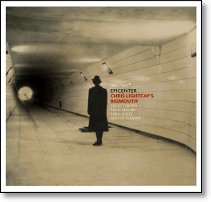
- Chris Lightcap's Bigmouth: Epicenter (2013 [2015], Clean Feed): two saxes (Malaby & Cheek), stellar work by Craig Taborn, especially on the VU cover [cd]: A-
- Chad McCullough & Bram Weijters: Abstract Quantities (2014 [2015], Origin): Dutch-US (Seattle) quartet, postbop so skilled I never noticed a thing [cd]: B+(*)
- Tatsuya Nakatani/Kris Tiner/Jeremy Drake: Ritual Inscription (2012, Epigraph, LP): avant-jazz from Bakersfield, ground fractured forever shifting [bc]: B+(**)
- Not Twice: Flight Plans (2014, Epigraph, EP): avant-trumpeter Kris Tiner backed with keybs/electronics, not much traction for trumpet, short too [bc]: B
- Kate Pierson: Guitars and Microphones (2015, Lazy Meadow Music): B-52s singer goes solo, sets up the classic beat but doesn't quite hit the punch lines [r]: B+(*)
- A Place to Bury Strangers: Transfixiation (2015, Dead Oceans): sort of heavy metal shoegaze, trading fuzzy noise for something harder [r]: B+(***)
- Chris Potter Underground Orchestra: Imaginary Cities (2013 [2015], ECM): still kicks ass when he solos, still struggles as a big band arranger [dl]: B+(**)
- Reggie Quinerly: Invictus (2014 [2015], Redefinition Music): drummer-led quintet, the vibes-guitar-piano adding up to frothy lightness [cd]: B+(*)
- Schlippenbach Trio: Features (2013 [2015], Intakt): with Evan Parker and Paul Lovens, together since 1972, free jazz fractured but superbly balanced [cd]: A-
- Songsmith Collective: Songsmith Collective (2014 [2015], Blujazz): Andrew Rathbun's homework assignment: take a poem, compose a score, sing it backed by jazz nonet [cd]: B
- Jack Wright/Ben Wright/Kris Tiner: For Instance (2014, Epigraph): father-son sax-bass duo, avant-wilderness wanderers, meet trumpeter with label [bc]: B+(*)
Recent reissues, compilations, and vault discoveries rated this week:
- Anthony Braxton: Trio and Duet (1974 [2015], Delmark/Sackville): an amusingly abstract puzzle for trio, plus you-focused standards with Dave Holland [cd]: A-
- The Rough Guide to African Rare Groove: Volume 1 ([2015], World Music Network): one suspects that what makes it rare is the not quite fully realized groove [r]: B+(**)
- Lennie Tristano: Chicago April 1951 (1951 [2014], Uptown, 2CD): with disciples Lee Konitz and Warne Marsh, of course, a slightly stranger shade of bebop [r]: A-
Old records rated this week:
- Coleman Hawkins/Clark Terry: Back in Bean's Bag (1962 [2014], Essential Jazz Classics): relaxed mainstream swing masters, with Tommy Flanagan; reissue adds much[r]: A-
- Buddy Tate Quartet & Quintet: Tate a Tete: At La Fontaine, Copenhagen (1975 [1999], Storyville): Texas tenor goes to Denmark, picks up local band including Tete Montoilu [r]: B+(**)
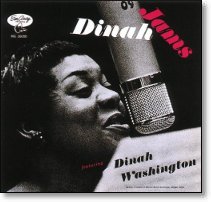
- Dinah Washington: Dinah Jams (1954 [1997], Verve): one party everyone wanted to jump into; trumpets alone: Brown, Terry, Ferguson [r]: A-
- Dinah Washington: Sings Fats Waller (1957 [2010], Fresh Sound): Eddie Chamblee's duets don't mesh, but she gets under the skin of "Black & Blue" [r]: B+(**)
- Dinah Washington: Sings Bessie Smith (1957-58 [2010], Fresh Sound): she's more polished but savors Smith's grit and sass while the trombone gets dirty [r]: B+(***)
Unpacking: Found in the mail last week:
- Christian Artmann: Fields of Pannonia (self-released): April 7
- Atomic: Lucidity (Jazzland): March 17
- Dewa Budjana: Hasta Karma (Moonjune)
- Anat Cohen: Luminosa (Anzic): March 17
- Dahi Divine: The Element (Right Direction): April 7
- John Fedchock Quartet: Live: Fluidity (Summit)
- Janice Friedman Trio: Live at Kitano (CAP)
- Milford Graves & Bill Laswell: Space/Time · Redemption (TUM)
- Mikko Innanen: Song for a New Decade (TUM, 2CD)
- Jenna Mammina & Rolf Sturm: Spark (Water Street Music): April 7
- Myra Melford: Snowy Egret (Enja/Yellowbird): March 24
- Merzbow/Balasz Pandi/Mats Gustafsson/Thurston Moore: Cuts of Guilt/Cuts Deeper (Rare Noise, 2CD): advance, April 7
- Levon Mikaelian: United Shades of Artistry (self-released): April 7
- Billy Mintz: The 2 Bass Band . . . Live (Thirteenth Note): May 12
- Kyle Nasser: Restive Soul (AISA): March 24
- Hailey Niswanger: PDX Soul (Calmit Productions): April 7
- Kim Pensyl: Foreign Love Affair (Summit)
- Roberta Piket: Emanation (Solo: Volume 2) (Thirteenth Note): May 12
- Raoul: The Spanish Donkey (Rare Noise): advance, April 7
- Sachal: Slow Motion Miracles (Okeh): advance, April 7
- Benny Sharoni: Slant Signature (Papaya): March 17
- Ryan Truesdell: Lines of Color (Blue Note/ArtistShare): March 17
- Mark Wingfield: Proof of Light (Moonjune)
Ask a question, or send a comment.
Sunday, March 1, 2015
Weekend Roundup
The Kansas state legislature has past the half-way point in their
scheduled session this year, and the Republicans there have already
succeeded in their most evident goal: to make Kansas the laughing
stock of the nation (with all due respect to the state legislatures
of Texas and Missouri). Crowson's cartoon:

This primarily refers to a bill that passed the Senate (see
Luke Brinker: Kansas could put teachers in prison for assigning books
prosecutors don't like), but the war on public schools has gone
through a number of skirmishes: first and foremost a massive funding
cut -- from levels that the courts had already established were the
minimum required by the state constitution. But also there have been
two bills to rejigger the election of local school boards (a festering
ground for people likely to sue when the state doesn't deliver its
mandated funding): one is to move the election dates and make them
partisan (assuming the Republican brand holds; voters have been known
to accidentally elect Democrats in non-partisan elections), and another
to make it illegal for any schoolteacher or relative of a schoolteacher
to run for any school board (this would, for instance, disqualify 2014
Democratic gubernatorial candidate Paul Davis). There is also a bill,
still pending, where the state would pay foster parents more for foster
children who are privately- or home-schooled.
Some more scattered links this week:
Dean Baker: Robert Samuelson's 'Golden Age' Mythology: I actually
read Samuelson's book The Great Inflation and Its Aftermath: The
American Dream in the Age of Entitlement (2008), where he argues
that the inflation spiral of the 1970s was every bit as damaging as
the Great Depression in the 1930s -- a point my parents, who lived
through both, would have found incredible. So I'm well prepared to
reject anything Samuelson has to say, but note the following:
Robert Samuelson (Washington Post, 2/22/15) was inspired by a graph in
the new Economic Report of the President to tell readers that the
real problem for the middle class is not inequality but rather productivity
growth. His point is that if we had kept up the rates of productivity
growth of the Golden Age (1943-73), it would have mattered much more to
middle-income families' living standards than the rise in inequality
since 1980.
This is true in the sense of "if I were six feet five inches, I would
be taller than I am," but it's not clear what we should make of the point.
We don't know how to have more rapid productivity growth (at least not
Golden Age rates), so saying that we should want more rapid productivity
growth is sort of like hoping for the Second Coming.
Superficially, Samuelson is just grasping at straws to dismiss the
obvious effects of increasing inequality. Sure, if we had much more
productivity growth, the middle class might be better off, but only if
it were possible for the middle class to capture a substantial share of
that productivity growth -- but in recent years, no share of productivity
growth has gone to increased wages. As Baker points out:
If we can only sustain the 1.5 percent annual productivity growth of the
slowdown years (1973-1995), this would still imply income gains of almost
60 percent over three decades. While it would of course be better to have
Golden Age productivity growth, since we don't know how to get back such
rapid growth, why not pursue the policies that we know will be effective
in restoring middle class income growth?
It is also worth noting that these equality enhancing policies are also
likely to provide some boost to productivity. We know that the most important
determinant of investment is growth in demand. This means that if we push
the economy, rather than have the Fed slam on the brakes with higher interest
rates, we will likely see more investment in new plant, equipment and
software, and therefore more productivity growth.
In addition, in a tighter labor market workers will leave low-productivity
jobs for jobs with higher productivity that offer higher wages. A reason that
many workers, including many with college degrees, have taken jobs in
restaurants is that there are not better-paying jobs available. If the
economy were stronger, better jobs would be available causing productivity
to rise due to a shift in composition.
The bulk of the article reviews Samuelson's period breakdown and shows
where his effort to force history into his preconceived periods breaks
down. Baker skips over the question of why 1946-64 productivity levels
are no longer attainable, but James K. Galbraith wrote a whole book on
the subject: The End of Normal: The Great Crisis and the Future of
Growth (2014) -- something I'll get around to writing about sooner
or later.
By the way, see Galbraith's
Reading the Greek Deal Correctly. He sees the recent agreement
between Greece's new left-leaning government and the ECB not as a
defeat for Greece's voters so much as a way everyone can save face
by kicking the ball down the road a few weeks.
Josh Marshall: Kerry's Clean Hit: When John Kerry pointed out how
wrong Benjamin Netanyahu's predictions supporting the 2003 Iraq War
were, I recalled how Kerry had voted for the Iraq War Resolution in
2002 and wrote them off as two peas in the same pod. Marshall argues
that Kerry's position was more, uh, nuanced than my memory recalled:
There's some important background on this new intrusion of the Iraq War
into the current debate about Iran, Benjamin Netanyahu and the Israeli
election. It's true that like a number of Senate Democrats, John Kerry
voted for the Iraq War resolution in late 2002. That was due to a mix
of belief in national unity, political cowardice and a credulous
assumption that President Bush was actually on the level when he said
he needed the authorization to wage war to avoid it, to get inspectors
back into Iraq. It was or should have been clear that this was not true,
that inspectors and Weapons of Mass Destruction were not the goal that
made the threat of war necessary. They were cudgels and covers to help
make the war a fait accompli.
Many Democrats either didn't think Saddam would relent or thought
that if he did, Bush would lose his casus belli. I don't exonerate
them. They were helped along in these maybe misunderstandings by a
health dose of cowardice and what they saw at the time as political
self-preservation. As it happened, when Bush lost his rationale
for war, he simply invaded anyway.
This was mainly obvious at the time, not entirely obvious to everyone.
But to suggest that Secretary Kerry 'supported' the Iraq War like
President Bush or Benjamin Netanyahu is silly.
That brings us to Netanyahu. Some believe that the Israeli government
either wanted the Iraq War to happen or goaded the Americans into the
attack. In fact, the Israeli security establishment was very divided on
the wisdom of the US administration's policy. Indeed, Ariel Sharon
pointedly warned President Bush of the dangers of what he was planning.
Indeed, the best account of his discussions with President Bush suggests
his warnings were highly prescient -- about the spillover of radicalism
growing out of a US occupation, the zero sum empowerment of Iran and
more.
It was Netanyahu, then technically a private citizen, though he would
soon enter Sharon's government in late 2002 who not only supported a US
attack on Iraq but advocated for it endlessly within the US.
Italics in the original; I added the bold. Of course,
the practical effect of Kerry, Clinton, Edwards, and others in voting
for Bush's Iraq War Resolution was to rubber-stamp the invasion. (As
I recall Marshall at least wobbled on the war plans: in particular,
I recall him praising Kenneth Pollack's influential pro-war book,
The Threatening Storm: The Case for Invading Iraq.) But he is
right that Netanyahu's warmongering went much further, both in words
and in actually lining up his rich American donor network to lobby
war support. Marshall also includes a video of Netanyahu testifying
before a House committee promoting the war. Even among Israelis few
politicians have that sort of chutzpah. Of course, no one's dredging
this episode up because we're interested in learning from history.
Netanyahu's past record of influencing Congress matters right now
because he's still at it, with an invitation by House Republicans
to address Congress to try to undo any progress Obama might make on
negotiating a deal that would ensure that Iran not develop nuclear
weapons. I haven't bothered collecting links on the various aspects
of this -- either the propriety of Natanyahu's speech (widely opposed
both in Israel and in the US) or on the tortuous negotiations (often
hamstrung by hypothetical scenarios only Americans can imagine). (OK,
if you are curious, check out:
Paul R Pillar;
Gareth Porter, also
here;
Robert Einhorn;
William J Perry, et al.;
Jeffrey Simpson;
JJ Goldberg;
Stephen M Walt (interview);
Philip Weiss;
Richard Silverstein.) Also, let's quote from
Jeffrey Goldberg: A Partial Accounting of the Damage Netanyahu Is Doing
to Israel (recalling that Goldberg has a long history of parrotting
whatever Israel's current propaganda line is on Iran):
Netanyahu is engaging in behavior that is without precedent: He is
apparently so desperate to stay in office that he has let the Republicans
weaponize his country in their struggle against a Democratic president
they despise. Boehner seeks to do damage to Obama, and he has turned
Netanyahu into an ally in this cause. It's not entirely clear here who
is being played.
For decades, it has been a cardinal principle of Israeli security and
foreign-policy doctrine that its leaders must cultivate bipartisan support
in the United States, and therefore avoid even the appearance of favoritism.
This is the official position of the leading pro-Israel lobbying group in
Washington, AIPAC, as well, which is why its leaders are privately fuming
about Netanyahu's end-run around the White House. Even though AIPAC's
leadership leans right, the organization knows that support for Israel
in America must be bipartisan in order for it to be stable. "Dermer and
Netanyahu don't believe that Democrats are capable of being pro-Israel,
which is crazy for a lot of reasons, but one of the main reasons is that
most Jews are Democrats," one veteran AIPAC leader told me.
In Israel, cynicism about Netanyahu's intentions is spreading.
"Netanyahu, who purports to be the big expert on everything American,
subordinated Israel's most crucial strategic interests to election
considerations, and the repercussions will endure for some time,"
Chuck Freilich, a former deputy head of Israel's National Security
Council, wrote last week.
Robert Wright: The Clash of Civilizations That Isn't: Reaction to
Roger Cohen's polarizing rant, "Islam and the West at War," along with
Graeme Wood's Atlantic piece, "What ISIS Really Wants" (links
in the article if you really want them). You may recall that GW Bush
(aside from a momentary slip-of-the-tongue about "crusades") was very
careful to make clear that his Global War on Terror wasn't a campaign
against his family friends in Saudi Arabia. (Indeed, Bush was practically
the only politician in America to defend a deal that would sell US ports
to Abu Dhabi: proof, if you want it, that for him at least money always
trumps identity.) But most Americans have never been very disciplined
or principled about distinguishing the targets of our wars from anyone
else who might share superficial traits, so it isn't surprising that
prolonged war with self-identified Muslims should result in more than
random acts of slander and violence. In the days of purely nationalist
wars (e.g., the two World Wars), this was mostly ugly and repaired easy
enough once the war ended. (Indeed, the anti-Kraut hysteria of WWI was
much reduced in WWII, as the embarrassment of the former provided a
vaccination against repeat in the latter -- not that Japanese-Americans
were spared.) But in more recent wars -- let's call them "post-colonial" --
US entry is predicated on dividing populations into groups we call allies
and enemies, one we support and the other we kill, and in such wars any
mental generalization undermines the mission and ultimately loses the war.
(Vietnam is as good an example of the dynamic as Afghanistan or Iraq, but
the downside was much more limited there: it ultimately turned into a
nationalist war, with the US deciding that perpetual scorn and isolation
was still some measure of victory.)
Those post-colonial wars have, without exception that I am aware of,
been fools' missions, but they would pale compared to the fevered notion
that "the West" must wage war with all of Islam -- well over one billion
people, including a few million already resident in "the West." Wright
points out that this insanity can point to an intellectual pedigree:
In 1996, when I reviewed Samuel Huntington's book The Clash of
Civilizations for Slate, I fretted that Huntington's world view
could become "a self-fulfilling prophecy." This was before 9/11, and
I wasn't thinking about Islam in particular. Huntington's book was
about "fault lines" dividing various "civilizations," and I was just
making the general point that if we think of, say, Japanese people as
radically different from Americans -- as Huntington's book, I believed,
encouraged us to do -- we were more likely to treat Japan in ways that
deepened any Japanese-Western fault line.
Since 9/11, I've realized that, in the case of Islam, the forces that
could make the clash of civilizations a self-fulfilling prophecy are
particularly powerful. For one thing, in this case, our actual enemies,
such as Al Qaeda and ISIS, themselves favor the clash-of-civilizations
narrative, and do their best to encourage it. When the Atlantic tells
us that ISIS is "very Islamic" and the New York Times runs the headline
"Islam and the West at War," it's party time in Mosul. Order up another
round of decapitations! Get Roger Cohen more freaked out! Maybe he'll
keep broadcasting a key recruiting pitch of both Al Qaeda and ISIS:
that the West is at war with Islam! (Wood noted, a week after his
article appeared, its "popularity among ISIS supporters.")
Wright doesn't go very deeply into the people in "the West" that
buy into this "clash of civilizations" malarkey, except to note:
I don't think it's a coincidence that commentators who dismiss attempts
to understand the "root causes" of extremism tend to be emphatic in
linking the extremism to Islam, and often favor a massively violent
response to it.
By the way, the wind is at their backs. Last week, CBS News reported
that, for the first time, a majority of Americans polled -- fifty-seven
per cent -- favored sending ground troops to fight ISIS in Iraq and
Syria.
Haven't we seen this movie? The Iraq War, more than any other single
factor, created ISIS. After the 2003 invasion, Abu Musab al-Zarqawi, a
Jordanian who led an obscure group of radical Islamists, rebranded it as
an Al Qaeda affiliate and used the wartime chaos of Iraq to expand it.
Al-Zarqawi's movement came to be known as Al Qaeda in Iraq, and then
evolved into ISIS.
Note that more and more post-colonial rationales -- the idea that
we're fighting for some (good) Afghanis/Iraqis/Muslims against other
(bad) ones -- is giving way to outright nationalist/colonialist ideas
(not yet with Obama and his echelons but with the people most loudly
beating the war drums).
Also worth quoting Paul Woodward on
ISIS and the caliphate:
Millions of Muslims, without being extremists of any variety, see the
Islamic world as having been carved up by Western colonialism, robbed
of its sovereignty, and placed under the control of compliant and corrupt
rulers. Broadly speaking, what's on offer right now is a brutal ISIS
caliphate vs. a fractious status quo. That seems like a lousy choice.
As Iraq, Syria, Egypt, and Libya demonstrated over the last half
century, the project of pan-Arab secular nationalism was a spectacular
failure.
On the other hand, the Arab monarchies have the durability of a
chronic disease -- their ability to survive has accomplished little
more than cripple the region.
If ISIS and the other forms of Islamic extremism are seen for what
they are -- symptoms of a disease, rather than the disease itself --
then the remedy cannot be found by merely looking for ways to suppress
its symptoms.
Also, a few links for further study:
Henry Farrell: Dark Leviathan: Subhed: "The Silk Road might have
started as a libertarian experiment, but it was doomed to end as a
fiefdom run by pirate kings." As a libertarian experiment, this reminds
me of some of those Murray Rothbard schemes I typeset for the Kochs
back in the 1970s -- especially the naive notion that trust can be
comoditized and brokered through a marketplace.
All of these petty principalities are vulnerable to criminals trying
to extract ransom, and increasingly to law enforcement, which has
inveigled its way into trusted positions so that it can gather
information and destroy illicit marketplaces. The libertarian hope
that markets could sustain themselves through free association and
choice is a chimera with a toxic sting in its tail. Without state
enforcement, the secret drug markets of Tor hidden services are
coming to resemble an anarchic state of nature in which self-help
dominates.
Nancy Le Tourneau: The Scott Walker Antidote: Minnesota: Compares
and contrasts the results of Democratic government in Minnesota under
Mark Dayton and Republican government in Wisconsin with Scott Walker.
You can follow up with
Ed Kilgore: Scott Walker's Koch Angle: you don't have to be as
screwed up as Kansas to get screwed. For more on Walker, see
A Noun, a Verb, and "Union Thugs".
Ask a question, or send a comment.
Monday, February 23, 2015
Music Week
Music: Current count 24560 [24527] rated (+33), 493 [501] unrated (-8).
Wichita got hit by two snowstorms last week. Cumulative damage is about
an inch on the grass, less on the concrete. I figure that if I don't pay
it any attention it'll vanish by tomorrow afternoon. Cold today, though.
The weather did keep me inside, and I bagged the usual bounty of records.
Three of this week's four A- records came from very late-breaking, currently
unpublished EOY lists: Lucas Fagen came up with a half-dozen albums I had
yet to hear of -- mostly K-Pop and Middle Eastern pop or classical, with
Nancy Ajram the one that clicked hardest. Ladysmith Black Mambazo and
Wormburner appeared on Robert Christgau's Dean's List (or should appear
when it's published at BN Review, most likely this week). Those bring my
2014 A-list to 155 records (plus 24 compilations). I think that
qualifies as the longest EOY list this year --
John Mulvey stopped at 154 albums,
Jason Gubbels at 150,
Under the Radar at 140) -- oops, metal-friendly (but not exclusively so)
Louder Than War went all the way to 200 albums, but figure that as a
staff (not an individual) list. The secret to a long list is listening to
a lot of records (in my case, 1206 last year) and having broad taste and
a relatively open mind. I couldn't have come remotely close to that much
coverage had it not been for streaming services like Rhapsody, freely
streamable albums such as one finds on Bandcamp, and more or less legit
downloadables (although frankly I've taken very little advantage of the
latter). Still, there were hundreds of albums I searched for but couldn't
find, and who knows how many worthwhile items I never knew about. As long
as recorded music is treated as private monopoly instead of as a public
resource we're cheating ourselves out of a higher standard of living and
cultural understanding.
Robert Christgau's memoir, Going Into the City: A Portrait of a
Critic as a Young Man (Dey Street Books) will be released tomorrow
(Tuesday, February 24). I read an early draft of the book, so know that
it starts with his childhood, goes through adolescence, college, his
discovery that "a rock and roll critic is something to be" (my phrase
with a hat tip to the Byrds -- I used it in my contribution to his
Festschrift),
his tenure editing the music section at The Village Voice, up
to 1985 when he became a father. I've known him since 1975, when he
invited me to write for Voice music section (and befriended me),
so I know some of this firsthand, some more secondhand, and learned
much more. I'll write more once I've seen the published book, but
can recommend it heartily to anyone even remotely interested in
thinking about popular culture in the pivotal decade of the 1970s.
Meanwhile, those of you in New York should consider two book launch
events this week:
- Tuesday, Feb. 24, 7-8pm with Jody Rosen at Powerhouse Arena in Brooklyn
[link]
- Wednesday, Feb. 25, 7-8pm with Rob Sheffield at Strand Books in Manhattan
[link]
Also, several excerpts from the book have been posted:
Not much on his website yet
about the book, but I'm working on that.
Clark Terry died last week, age 94. My favorite tweet:
Christian McBride @mcbridesworld
Every musician in the world who ever met Clark Terry is a better musician
& person because of it. He now belongs to the ages. RIP, sir.
According to
Tom Lord, Terry recorded 902 sessions from February 1947 to July
2008 (114 as leader and 788 as sideman; PDF
here).
Some Clark Terry records I recommend (mostly side credits although
hardly ever marginal; he raised everyone's game, but the records he
led were only rarely exceptional):
- Count Basie: America's #1 Band: The Columbia Years (1935-50 [2003], Columbia/Legacy, 4CD): Terry played with Basie 1948-51, so only caught the end of this.
- Duke Ellington and His Orchestra: Ellington Uptown (1947-52 [2004], Columbia/Legacy)
- Dinah Washington: Dinah Jams (1954 [1997], Verve)
- Duke Ellington and His Orchestra: Such Sweet Thunder (1955-56 [1999], Columbia/Legacy)
- Duke Ellington: Ellington at Newport 1956 (Complete) (1956 [1999], Columbia/Legacy)
- Thelonious Monk: Brilliant Corners (1956 [2008], Riverside)
- Clark Terry Quintet: Serenade to a Bus Seat (1957 [1992], Riverside/OJC)
- Ella Fitzgerald: Sings the Duke Ellington Songbook (1956-57 [1999], Verve, 3CD)
- Clark Terry Quartet with Thelonious Monk: In Orbit (1958 [1987], Riverside OJC)
- Duke Ellington: Blues in Orbit (1958-59 [2004], Columbia/Legacy)
- Duke Ellington: Jazz Party (1959 [1991], Columbia/Legacy)
- Duke Ellington: Anatomy of a Murder (1959 [1991], Rykodisc)
- Jimmy Heath's Big Band: Really Big! (1960 [2007], Riverside)
- Budd Johnson: Budd Johnson and the Four Brass Giants (1960 [1999], Riverside OJC): with Nat Adderley, Harry Edison, and Ray Nance
- Dizzy Gillespie and His Orchestra: Gillespiana/Carnegie Hall Concert (1960-61 [1993], Verve)
- Tubby Hayes/Clark Terry: New York Sessions (1961 [1990], Columbia)
- Coleman Hawkins/Clark Terry: Back in Bean's Bag (1962 [2014], Essential Jazz Classics)
- Oscar Peterson: Trio + One: Clark Terry (1964 [1984], Emarcy)
- Billy Strayhorn: Lush Life (1964-65 [2000], Red Baron)
- Earl Hines: Once Upon a Time (1966 [2003], Impulse)
- Jimmy Rushing: Every Day I Have the Blues (1967 [1999], Impulse)
- Duke Ellington: . . . And His Mother Called Him Bill (1967 [1987], RCA)
- Swing Fever: Grand Masters of Jazz (1998-2001 [2013], Open Art): with Buddy DeFranco, Terry Gibbs, Jackie Ryan
- Clark Terry/Max Roach: Friendship (2002 [2003], Eighty-Eights/Columbia)
- Jon Faddis: Teranga (2005 [2006], Koch)
- Louie Bellson/Clark Terry: Louie & Clark Expedition 2 (2007 [2008], Percussion Power)
Probably a lot more where those came from. Some other musicians who
show up with albums in Terry's discography (I'm just looking at leaders;
Lord has counted 2504 musicians Terry played with):
Cannonball Adderley,
Henry "Red" Allen,
Gene Ammons,
Louis Armstrong (Terry picked up the horn when Armstrong couldn't play
on "What a Wonderful World"),
Charlie Barnet,
Art Blakey,
Bob Brookmeyer,
Ray Brown,
Ruth Brown,
Ray Bryant,
Kenny Burrell,
Benny Carter,
Ray Charles,
Al Cohn,
Chris Connor,
Eddie "Lockjaw" Davis,
Arne Domnerus,
Harry "Sweets" Edison,
Roy Eldridge,
Bill Evans,
Art Farmer,
Bud Freeman,
Stan Getz,
Paul Gonsalves,
Benny Goodman,
Wendell Gray,
Johnny Griffin,
Bengt Hallberg,
Woody Herman,
Lionel Hampton,
John Hicks,
Johnny Hodges,
Billie Holiday,
Freddie Hubbard,
Milt Jackson,
J.J. Johnson,
Hank Jones,
Elvin Jones,
Quincy Jones,
Lee Konitz,
Yusef Lateef,
Abbey Lincoln,
Herbie Mann,
Marian McPartland,
Jay McShann,
Charles Mingus,
Blue Mitchell,
Modern Jazz Quartet,
Wes Montgomery,
James Moody,
Gerry Mulligan (Concert Jazz Band),
Oliver Nelson,
Babatunde Olatunji,
Flip Phillips,
Bud Powell,
Dianne Reeves,
Sonny Rollins,
Pee Wee Russell,
Lalo Schifrin,
Shirley Scott,
Tony Scott,
Horace Silver,
Jimmy Smith,
Martial Solal,
Sonny Stitt,
Buddy Tate,
Billy Taylor,
Cecil Taylor,
Cal Tjader,
Big Joe Turner,
Stanley Turrentine,
McCoy Tyner,
UMO Jazz Orchestra,
Sarah Vaughan,
Ben Webster,
Randy Weston,
Ernie Wilkins,
Joe Williams,
Gerald Wilson,
Teddy Wilson. (Incomplete, of course.)
It's too late for me to even bother trying to knock out tweet-views
of this week's newly rated albums. We'll start next week with a clean
slate -- and there will be reviews of all these albums in the next
Rhapsody Streamnotes column, most likely in early March.
New records rated this week:
- Nancy Ajram: Nancy 8 (2014, In2musica): [r]: A-
- Béatrice Alunni/Marc Peillon: Dance With Me (2014 [2015], ITI): [cd]: B+(*)
- Andy Brown: Soloist (2014 [2015], Delmark): [cd]: B+(*)
- Harley Card: Hedgerow (2012 [2015], self-released): [cd]: B
- Ernesto Cervini: Turboprop (2014 [2015], Anzic): [cd]: B+(**)
- Dena DeRose: Travelin' Light: Live in Antwerp, Belgium (2010 [2012], MaxJazz): [r]: B+(*)
- Laura Dickinson: One for My Baby: To Frank Sinatra With Love (2013 [2014], Blujazz): [cd]: B+(**)
- Justin Townes Earle: Absent Fathers (2015, Vagrant): [r]: B+(*)
- Silke Eberhard/Dave Burrell: Darlingtonia (2010 [2012], Jazzwerkstatt): [r]: B+(***)
- Silke Eberhard/Ulrich Gumpert: Peanuts & Vanities (2011 [2012], Jazzwerkstatt): [r]: B+(**)
- Gramatik: The Age of Reason (2014, Lowtemp): [r]: B+(**)
- Scott Hesse Trio: The Stillness of Motion (2014 [2015], Origin): [cd]: B+(*)
- The Ted Howe Jazz Orchestra: Pinnacle (2013 [2015], Hot Stove): [cd]: B
- Ibeyi: Ibeyi (2015, XL): [r]: B
- Kitten: Kitten (2014, Elektra): [r]: B+(**)
- Ladysmith Black Mambazo: Always With Us (2010-12 [2014], self-released): [r]: A-
- Nilson Matta: East Side Rio Drive (2014 [2015], World Blue): [cd]: B+(*)
- Chris McNulty: Eternal (2013 [2015], Palmetto): [cd]: B+(*)
- John O'Gallagher Trio: The Honeycomb (2014 [2015], Fresh Sound New Talent): [cdr]: A-
- Ahmet Özhan: Gülmira (2014, Esen Musik): [r]: B+(***)
- Lisa Parrott: Round Tripper (2014 [2015], Serious Niceness): [cd]: B+(**)
- Renaud Penant Trio: Want to Be Happy (2014 [2015], ITI Music): [cd]: B+(**)
- John Petrucelli Quintet: The Way (2014 [2015], self-released, 2CD): [cd]: B+(*)
- Lucas Pino: No Net Nonet (2013 [2015], Origin): [cd]: B+(**)
- Potsa Lotsa Plus: Plays Love Suite by Eric Dolphy (2014 [2015], Jazzwerkstatt): [r]: B+(**)
- John Stowell/Michael Zilber Quartet: Live Beauty (2012 [2015], Origin): [cd]: B+(***)
- Gebhard Ullmann/Johannes Fink/Jan Leipnitz/Gebhard Gschlößl: Gulf of Berlin (2012 [2014], Jazzwerkstatt): [r]: B+(***)
- Wormburner: Pleasant Living in Planned Communities (2014, Dive): [r]: A-
Old records rated this week:
- Moppa Elliott: Moppa Elliott's Mostly Other People Do the Killing (2004 [2005], Hot Cup): [r]: B+(***)
- Tangerine Dream: Phaedra (1974, Virgin): [r]: B+(**)
Unpacking: Found in the mail last week:
- Ab Baars Trio: Slate Blue (Wig)
- Ab Baars Trio & NY Guests: Invisible Blow (Wig)
- Lainie Cooke: The Music Is the Magic (Onyx Music): March 17
- I Never Meta Guitar Three (Clean Feed)
- The Susan Krebs Chamber Band: Simple Gifts (GreenGig Music): March 3
- Chris Lightcap's Bigmouth: Epicenter (Clean Feed)
- Open Field + Burton Greene: Flower Stalk (Cipsela)
- Reggie Quinerly: Invictus (Redefinition Music): March 17
- Carlos "Zingaro": Live at Mosteiro de Santa Clara a Velha (Cipsela)
Ask a question, or send a comment.
Sunday, February 22, 2015
Weekend Roundup
I've been very lazy when it comes to politics the last few weeks.
Much of what's wrong is so wrong on so many levels it boggles the
mind. You can try to organize it, boxing various articles up into
bins like "Republicans acting dumb," "Democrats acting dumb," "The
bipartisan Washington foreign policy mandarins fumbling one stupid
war after another," and so on -- the common thread is a chronic
inability to think clearly about anything. There was a piece in
the Eagle today about a "post-mortem" report some Democratic Party
bigwigs cobbled together (can't find the Eagle link, but here's a
similar one at
CNN). The "report" includes lines like this:
It is strongly believed that the Democratic Party is loosely
understood as a long list of policy statements and not as people with
a common set of core values (fairness, equality, opportunity). This
lack of cohesive narrative impedes the party's ability to develop and
maintain a lifelong dialogue and partnership with voters.
What these party bigwigs fail to recognize is for the party to win
it has to go beyond touting common values and articulate a set of viable
self-interests that will motivate popular support. A classic example of
this was the 1860 Republican platform, which instead of decrying slavery
or declaring the sanctity of the union crassly declared: "vote yourself
a farm -- vote yourself a tariff." Even today, Republican appeals are
scarcely less crass: vote yourself a tax cut, vote for guns everywhere,
vote to outlaw abortion. If the Democrats wanted to compete, they should
consider a slogan like "vote yourself a government that works for you" --
and if they wanted to scare the bejesus out of the Republicans, they could
add: "vote yourself a union."
Instead, there was a story this week about the head of the Democratic
Party in Kansas testifying in favor of a Republican state bill that would
double the limits for political contributions. That may make his particular
job a bit easier, but it would move the party away from the people it needs
votes from, and it would reinforce the notion that elections are up for
sale.
The report lays out brutal losses since Obama swept into office in
2008: Democrats have shed 69 House seats, 13 Senate seats, 910 state
legislative seats, 30 state legislative chambers and 11 governor's
offices.
Obama deserves a substantial amount of blame for those offices --
not so much for his policies, mediocre and unfocused as they've been,
as for his messaging, and for undermining the party for his personal
benefit. By messaging, I mean his failure to clearly break from the
Bush administration's manifest disasters as well as to keep the public
focused on the partisan responsibility for those disasters, But he
also wrecked the Democratic Party organization that won elections in
2006-08. Just because he personally could raise money to beat McCain
and Romney doesn't mean that he was right to ignore the problem of
money in politics. He has, after all, done nothing to counter the
Kochs' threat to raise $900 million to buy 2016. If anything, he's
made their corruption all the more inevitable.
So while it's possible to make fun of the Republicans in Kansas,
as Crowson does here:

Still, it's not that funny. Most of the Kansas legislature's bills
have been predictable, but this one breaks new ground in terms of being
wrong on so many levels:
Kansas bill would reward foster parents who are married, faithful,
alcohol-free. Among other things, the bill treats foster care as
a business, offering incentive pay for behaviors which the drafter
believes to be morally superior, and hidden within it is "state
education aid to either home school or send their foster kids to
private school" -- yet another ploy to undermine public schools and
the idea that everyone has an equal right to a quality education.
As for church going, my recollection is that some of the worst
scandals in the history of foster care involve churches.
Nor is Kansas the only state where absolute Republican power has
corrupted absolutely. See
Kansas not only state trying to prevent LGBT protections. Brownback
recently revoked a Kansas executive order extending various protections
to LGBT workers. Arkansas wants to go one step further and prevent any
local governments from offering anti-discriminatory protections to its
workers.
A few more scattered links this week:
Justin Gillis/John Schwartz: Deeper Ties to Corporate Cash for Doubtful
Climate Researcher: You always hear from right-wingers about how the
scientific research on anthropogenic climate change ("global warming")
is conflicted. One major source of that conflict is Wei-Hock Soon, "who
claims that variations in the sun's energy can largely explain recent
global warming."
But newly released documents show the extent to which Dr. Soon's work
has been tied to funding he received from corporate interests.
He has accepted more than $1.2 million in money from the fossil-fuel
industry over the last decade while failing to disclose that conflict
of interest in most of his scientific papers. At least 11 papers he has
published since 2008 omitted such a disclosure, and in at least eight
of those cases, he appears to have violated ethical guidelines of the
journals that published his work.
The documents show that Dr. Soon, in correspondence with his corporate
funders, described many of his scientific papers as "deliverables" that
he completed in exchange for their money. He used the same term to describe
testimony he prepared for Congress.
-
Ali Khedery: Iran's Shiite Militias Are Running Amok in Iraq: I think
Khedery puts more emphasis on Iran's relationship to the Shiite militias
than is warranted. The US was actively organizing those same militias to
fight Saddam Hussein before and during the 2003 invasion, and they've
alternately been turned loose or reined in at various times during the
American occupation: I doubt they are wholly tools either of the US or
Iran so much as autonomous agents only loosely aligned with Iraqi shiite
political parties, but what should be clear by now is that they cannot
be trusted to implement a disciplined military campaign -- such as the
much-touted plan to retake Mosul.
Countless memories haunt me after a decade of service in Iraq. Gripping
the hands of an assassin-felled member of the provisional government as
the life slipped out of her body in 2003; watching al Qaeda's beheadings
of American hostages in 2004; seeing photos of young Sunni prisoners
raped and tortured by Iran-backed Shiite militias serving within the
Iraqi police in 2005; and sitting helplessly at the U.S. Embassy in
Baghdad as news came in of al Qaeda's 2006 bombing of al-Askari Mosque,
one of the holiest sites for Shiite Islam, ushering in the civil war.
[ . . . ]
The Iraqi government is hopelessly sectarian, corrupt, and generally
unfit to govern what could be one of the world's most prosperous nations.
Washington's response to the Islamic State's (IS) advance, however, has
been disgraceful: The United States is now acting as the air force, the
armory, and the diplomatic cover for Iraqi militias that are committing
some of the worst human rights abuses on the planet. These are "allies"
that are actually beholden to our strategic foe, the Islamic Republic of
Iran, and which often resort to the same vile tactics as the Islamic State
itself. [ . . . ]
There is no reason to believe that the militias will disarm and disband
after IS's defeat. Indeed, with the central government weaker than ever,
trillions of dollars of Iraqi oil wealth up for grabs, and the U.S. military
no longer deployed in large numbers to constrain them, the militias have
more incentive than ever to stay in business. And let's not forget that it
is in Iran's strategic interest to use these militias to consolidate its
gains over Iraq and the Levant, and to advance its ambitions for regional
hegemony, which Iranian commanders are now publicly flaunting.
Iran's "ambitions for regional hegemony" is one of those things that
could (and should) be covered in bilateral talks between the US and Iran --
indications are that Iran would see more value in normalizing relations
with the US than in vying for "hegemony" over wastelands like Iraq and
Syria.
Paul Krugman: Rip Van Skillsgap:
What strikes me about this paper -- and in general what one still hears
from many people inside the Beltway -- is the continuing urge to make
this mainly a story about the skills gap, of not enough workers having
higher education or maybe the right kind of education.
[ . . . ]
But if my math is right, the 90s ended 15 years ago -- and since then
wages of the highly educated have stagnated. Why on earth are we still
hearing the same rhetoric about education as the solution to inequality
and unemployment?
The answer, I'm sorry to say, is surely that it sounds serious. But,
you know, it isn't.
I'm not even sure how serious it is: it's just that the right doesn't
have many options for addressing increasing inequality that don't impact
the gains of the rich. Prescribing more education is a way of punting,
knowing that it might help a few individuals -- at least compared to peer
individuals, as opposed to the effect it had several decades ago -- and
for everyone else it will take time to fail. But as a general rule, it is
already clear that more education isn't an answer: given stagnant wages,
the rising cost of education (and it has risen a lot) mean the return on
investment in more education has been negative, and growing more so. And
if there really is a "skills gap" that loss has depressed the economy.
Of course, if the "skills gap" was seriously regarded as a real problem,
the people conscious of it would be proposing real programs to solve it:
they would be hard at work increasing wages for workers with the needed
skills, and they would be urging the government to shoulder more of the
costs of education to get those needed workers trained. You don't exactly
see that happening. In fact, you see right-wingers working to undercut
education all the way from pre-school to college, and to make what
education is still available more class-stratified -- something the rich
can still provide for their own children through private channels while
everyone else rots or struggles.
Chris Stephen: Libya's Arab spring: the revolution that ate its
children: It's worth considering Iraq and Libya as two models of
what can go wrong in establishing post-intervention states. In Iraq
the US dug in and tried to micromanage every aspect of nation building
following the 2003 invasion -- an approach that failed not just because
the Bush administration was clueless and had its own peculiar interests
but because the US military became a symbol and target of occupation.
On the other hand, NATO's intervention in Libya left no troops on the
ground as competing militias turned on each other resulting in chaos.
The latest development in Libya has been the emergence of ISIS -- I
suspect more as an idea than an outgrowth of the rump Islamic State
in war-torn Syria and neighboring Iraq -- which in turn has provoked
further military intervention by Egypt. (ISIS has proven a potent
brand both of rebellion and for deadly foreign intervention.) I have
no real idea how to fix this -- even less so than Syria where much
of the problem is tied to foreign interests. The gist of the article
is that many of the people who initially supported the revolt against
Gaddafi have come to regret their stands. On the other hand, I doubt
that many of the better-dead-than-red types in the NSC or CIA have
had second thoughts. After all, they never risked their own lives on
the outcome, and they enjoy the luxury of putting their ideals above
the lives of real people.
Talking Points Memo's sense of politics remains skin deep at most,
but today's headlines are even shallower than usual -- gotcha news like
Giuliani: Obama Influenced by Communism At Young Age,
Giuliani Says He Received Death Threats After Comments On Obama,
Scott Walker Says He Doesn't Know If Obama Is Christian, and
Issa: 'We Should Thank' Giuliani For Comment On Obama's Patriotism.
(No
More Mister Nice Blog has an amusing story about how while Obama's
grandfather served during WWII, Giuliani's father did not -- because he
was a convicted felon.) Only slightly deeper is
Is Obama Failing the YAARRRR! Test?, which compares Obama's anti-ISIS
war rhetoric unfavorably to Mel Gibson in Braveheart.
Also, a few links for further study:
James Carden: Here's Why Arming Ukraine Would Be a Disaster: Well,
some of the reasons, anyway. It's not clear to me to what extent Russia
is actually arming or otherwise supporting separatist groups in eastern
Ukraine, but it certainly is true that if Obama chose to add more fuel
to the fire, Putin could more than reciprocate in kind. (Carden quotes
Putin as saying, "if I want to, I can take Kiev in two weeks." Russia
didn't go that far in Georgia when the latter tried to quash separatist
provinces in 2008, but could easily have.) Also see
Barry R. Posen: Just Say No: America Should Avoid These Wars --
Ukraine leads the list, but the list doesn't stop there.
Dylan Scott: Meet the Man at the Center of the Unprecedented US-Israeli
Rift: A report on Ron Dermer, Israel's ambassador to the US since
2013, and evidently the person who worked out the deal for Netanyahu to
speak before the US Congress "just days before elections in Israel" --
evidently to do what he can to torpedo any deal Obama works out to limit
(or eliminate) Iran's alleged "nuclear program." Dermer was well placed,
having been born in the US and having worked for Newt Gingrich before
emigrating to Israel.
Imraan Sidiqi: Hate in the aftermath of Chapel Hill: On February
10 three Muslim students in Chapel Hill, NC were murdered. Sidiqi
notes other recent examples of violence directed at American Muslims.
That isn't the only possible context --
Michael A. Cohen argues that the killer was a gun nut and that
the crime fits the pattern of a long list of gun-enabled crime. No
doubt that has something to do with "how" but as so much gun crime
is "senseless" it doesn't explain "why" -- for that we have to look
at the continuing series of wars where the US has sent hundreds of
thousands of soldiers to abroad to kill (and be killed by) Muslims.
The US has never engaged in a war abroad where Americans didn't also
project the hatred of war onto those fellow Americans most similar
to foreign enemies. So it isn't surprising that it is happening
again now, or that it is worst among the racist, militarist bigots
of the far right. Nor that it is one of the things that makes war
so poisonous, here as well as there.
Ask a question, or send a comment.
Monday, February 16, 2015
Music Week
Music: Current count 24527 [24491] rated (+36), 501 [500] unrated (+1).
I shot most of my wad on Friday's
Rhapsody Streamnotes, but since then I was pleasantly surprised by
three straight jazz vocal albums: Denia Ridley's became an old friend
over three plays; the late Maureen Budway caught my attention with a warm
"White Cliffs of Dover," annoyed me with a song about fireworks and freedom,
then redeemed real American music with a marvelous Gershwin medley; and
young Katie Thiroux came up with a novel approach to singing standards
while playing bass, helped by superb spots for guitar and sax. Never heard
of any of these women before (although pianist David Budway does sound
familiar -- let's see, I had his 2011 A New Kiss as a mid-B+, and
he played behind Chris McNulty on a forgettable 2005 album). Was also
pleasantly surprised by H2 Big Band's vocals, although a check of the
credits reveals the name of René Marie, who's often on that level. Those
are four albums I wouldn't have bothered searching out to stream, but
I listened to them because publicists took the trouble to mail hard copies
to me. More often, big bands and singers are the bane of my existence,
so this just goes to show you never can tell.
Still, two of those four albums will most likely be packed away to
the basement, never to be played again. I have five of those cheap six-row
120-CD cases on top of a desk blocking a window, which were filled with
Jazz CG albums several years ago. I've been going through them, packing
everything B+(**) and below into baskets to carry to the basement --
effectively that opens up about half of those shelves, soon to be filled
with higher-rated CDs currently in piles on the floor. The half that
remained are all exceptionally good, often great albums, virtually none
of which have been played since I reviewed them. I've always liked the
idea of maintaining a library, but despair of ever finding time to use
it. Same problem exists, to a greater or lesser extent (I'm not sure),
with print. I probably have enough surplus to endow a small library.
Wonder how one goes about doing that.
By the way, while I only added a half dozen or so lists to the
EOY Aggregate last week,
but they managed to make two changes in the top ten: Caribou had run
in 5th place ever since the near-beginning but slipped to 6th behind
Flying Lotus a week ago; since then it shot back to 5th, even opening
up more space (6 points) than Flying Lotus enjoys over 7th place
Aphex Twin (3 points). The other big change is that Angel Olsen moved
into 10th place, 3 points ahead of Beck (now tied for 11th with Spoon).
Also worth noting that Taylor Swift has continued to climb, now in
15th place, as has D'Angelo, now in 20th. Can't say there will be no
changes in the future -- actually waiting on one promised email, and
I'll add Christgau's list if he ever parts with it (or I'll just pick
it up in dribs and drabs, like Tune-Yards and TV on the Radio from
last week's
Expert Witness).
By the way, Christgau's memoir, Going Into the City: Portrait of
a Critic as a Young Man, will be released on February 24 (preorder
links from
Amazon and
Barnes & Noble; and here's an excerpt just posted at
Rolling Stone). I haven't heard anything about promoting it on
the website yet, but I imagine I'll have to get busy on that. Carola
Dibbell's novel The Only Ones comes out on March 10, and we've
already done a lot more work on
promoting it.
New records rated this week:
- Rez Abbasi Acoustic Quartet [RAAQ]: Intents and Purposes (2014 [2015], Enja): guitar-vibes-bass-drums quartet, has a nice intricacy but short on juice [r]: B+(*)
- Tony Allen: Film of Life (2014, Jazz Village): Afrobeat drummer works the electronics to add shimmer and chime; too bad the vocal slumps [r]: B+(**)
- Andrew Barker/Paul Dunmall/Tim Dahl: Luddite (2012 [2014], New Atlantis): avant sax trio, drummer earns top billing, saxophonist sometimes at his peak [r]: B+(**)
- Big Lazy: Don't Cross Myrtle (2014, Tasankee): guitar-bass-drums trio, prefer tight and tidy rockish tunes, especially surf guitar, to improv [r]: B+(***)
- Blu: Good to Be Home (2014, Nature Sounds, 2CD): long mixtape, beats merely functional but raps get stronger as he goes on (and on) [r]: B+(***)
- Wade Bowen: Wade Bowen (2014, Amp): Texas variant of the standard hard touring Nashville country hound, ambivalent about success and still arrogant [r]: B+(*)
- Maureen Budway: Sweet Candor (2014 [2015], MCG Jazz): late jazz singer's belated debut album showcases a fine voice; Gershwin medley tops Americana [cd]: B+(**)
- Cornershop: Hold On It's Easy (2015, Ample Play): 20th anniversary memento, recasts first album with lots of Elastic Big Band brass [r]: B
- The Cunninlynguists: Strange Journey, Volume Three (2014, Bad Taste): underground rap mixtape, exceptional flow when they hit their stride [r]: B+(***)
- Disappears: Irreal (2015, Kranky): postpunk band, started with short sharp songs but have now moved over to repeated Wire-like figures [r]: B+(***)
- Bob Dylan: Shadows in the Night (2015, Columbia): makes his long-feared crooner move, minus the voice and arrangements, even the songs, he needs [r]: C
- Emika: Klavirni (2015, Emika): electronica artist shows off her classical piano chops on meditative miniatures, cheating once in a while [r]: B+(*)
- George Ezra: Wanted on Voyage (2014, Columbia): heard that a "big voice" is something good to have, tried it and became overbearing [r]: B-
- Free Nelson Mandoomjazz: Awakening of a Capital (2014 [2015], RareNoise): Scottish trio, fuzzy electric bass riffs smeared with snarling sax, a formula [cdr]: B+(***)
- Chantale Gagné: The Left Side of the Moon (2014 [2015], self-relased): pianist from Quebec, picked up her perfect band: S Wilson/P Washington/L Nash [cd]: B+(***)
- Rhiannon Giddens: Tomorrow Is My Turn (2014, Nonesuch): roots songster employs T-Bone Burnett for coming out, casts wide net, catches some [r]: B+(**)
- Ja, Panik: Libertatia (2014, Staatsakt): I figure they're Germany's answer to TV on the Radio, maybe crossed a bit with Flaming Lips [r]: B+(*)
- Oliver Lake/William Parker: To Roy (2014 [2015], Intakt): dedicated to late trumpeter Roy Campbell, alto sax-bass duet, somber but stirring [cd]: A-
- Lupe Fiasco: Tetsuo & Youth (2015, Atlantic): I thought the woefully misunderstood "Lasers" was marvelous, but have no clue about this [r]: B+(*)
- J.D. McPherson: Let the Good Times Roll (2015, New Rounder): Okie singer-songwriter, dresses his country impulses up as rockabilly [r]: B+(**)
- Gurf Morlix: Eatin' at Me (2015, Rootball): folksy singer-songwriter, songs pretty easy going -- this time, anyhow [r]: B+(**)
- Mr Twin Sister: Mr Twin Sister (2014, Twin Group/Infinite Best): electropop group, added "Mr" to name, presumably to suggest they've grown up -- less bubbly, more angst [r]: B-
- Pitbull: Globalization (2014, Polo Grounds/RCA): highly commercial party rap, no critical visibility, sales tanked too, crass but I get a charge off it [r]: B+(**)
- Denia Ridley & the Marc Devine Trio: Afterglow (2014 [2015], ITI Music): standards singer, front-loaded with Gershwin/Porter, ends on a blues note [cd]: B+(***)
- Sleater-Kinney: No Cities to Love (2015, Sub Pop): strategic comeback, 90+ metacritic scores; strikes me as their blandest, not most irritating [r]: B+(*)
- Jim Snidero: Main Street (2014 [2015], Savant): mainstream alto sax guy, but with a glorious tone and a rhythm section that mixes things up [cd]: A-
- Jazmine Sullivan: Reality Show (2015, RCA): grappling with success, or putting on a front, running the gamut from "Dumb" to "Stupid Girl" [r]: B+(***)
- Jamie T: Carry On the Grudge (2014, Virgin): transposes pop hooks with Clash power, not that I detect corresponding principles [r]: B+(**)
- Aki Takase/Ayumi Paul: Hotel Zauberberg (2014 [2015], Intakt): builds a magic mountain of piano-violin minimalism, then sneaks in Bach/Mozart [r]: B+(***)
- Katie Thiroux: Introducing Katie Thiroux (2014 [2015], BassKat): bassist-singer, superb standards, guitar and sax help out but bass ties it together [cd]: A-
- Paul Thorn: Too Blessed to Be Stressed (2014, Perpetual Obscurity): country singer-songwriter bemoans mediocrity, resigns himself to stray dogs and Jesus [r]: B+(**)
- Joanna Wallfisch with Dan Tepfer: The Origin of Adjustable Things (2014 [2015], Sunnyside): Brit singer-songwriter backed by piano only for intimate feel [cd]: B+(*)
Old records rated this week:
- Cornershop: Hold On It Hurts (1993, Merge): missed that first album, pop barely emerging from a punk cocoon, weird then, almost prophetic now [r]: B+(***)
Grade changes:
- Cornershop: Woman's Gotta Have It (1995, Warner Brothers): rechedked this, nearly as gnarly as the first and just a bit more of a missing link [r]: [was: B+] B+(***)
Unpacking: Found in the mail last week:
- Daniel Bennett Group: The Mystery at Crown Castle (Manhattan Daylight)
- Laura Dickinson: One for My Baby: To Frank Sinatra With Love (Blujazz)
- Paul Elwood: Nice Folks (Innova)
- Otzir Godot: In- (Epatto)
- Ross Hammond: Flight (Prescott): advance, April 14
- Tony Malaby/Mark Helias/Tom Rainey: The Signal Maker (Intakt): advance, March
- Nilson Matta: East Side Rio Drive (World Blue)
- Chris McNulty: Eternal (Palmetto): March 24
- John Raymond: Foreign Territory (Fresh Sound New Talent): advance, April 28
- Schlippenbach Trio: Features (Intakt): advance, March
- Bjørn Solli: Aglow: The Lyngør Project Vol. 1 (Lyngør): May 4
- Songsmith Collective (Blujazz)
Ask a question, or send a comment.
Friday, February 13, 2015
Rhapsody Streamnotes (February 2015)
Coincidentally, today's
Expert Witness touts three records I don't much care for:
Sleater-Kinney's No Cities to Love [*], Tune-Yards' Nikki
Nack [**], and TV on the Radio's Seeds [B]. Could be I was
overly abrupt in dismissing the latter -- I thought Dear Science
and Nine Types of Light were pretty good, even though neither
is a sort of record I look out for (or, I'm afraid, much remember).
The other two are groups that appeal to me on principle but little
else, and my reactions to both have been consistent throughout their
catalogs.
Nor is my disagreement just with Christgau (who has S-K graded at
{ A-, A, A, A, A-, A, A, A }, T-Y at { A, A, A- }; my S-K grades are
{ **, B+, B, B+, B+, B+, **, * }, T-Y { **, *, ** }). Starting with
their Call the Doctor in 1996, Sleater-Kinney finished Pazz &
Jop { 3, 4, 23, 10, 5, 4 }; Tune-Yards' debut came in 70th, and this
year's album finished 29th, but their second album won the 2011 poll.
(TV on the Radio's Dear Science won P&J in 2008, and this
year's album came in 39th.) I don't think there are right or wrong
answers in rating records, but I have generally found that consensus
picks of knowledgeable, broadly focused critics almost always hold
up well in the long run. I grew up with a strong skeptical streak,
so I can give you many examples of artists I doubted at first before
coming around. So I don't doubt that I have some sort of blind spots
regarding these artists, but none of those grades (with the possible
exception of Seeds) came lightly.
On the other hand, there are lots of things going on in music that
I can hear, and you'll find a fair number of them are below. About half
of the records are 2015 releases, but thus far I haven't explored far
beyond the jazz I get in the mail: the four 2015 A- records (counting
the Red Garland vault discovery) are all jazz (three alto saxophonists),
reviewed from CD. Everything else that looked promising fell short or
flat: I certainly didn't expect B- records from Diana Krall or Matana
Roberts, let alone a C from Bob Dylan. For that matter, B+(*) records
came as letdowns from jazz musicians who have previously turned in A-
work: Rez Abbasi, Lotte Anker, Steven Bernstein, Rudresh Mahanthappa.
The new year is going to take some work, although I haven't explored
much beyond familiar names.
The 2014 releases, of course, mostly come from EOY lists -- though
Pitbull turned out to be conspicuous in his absence (not a single
mention in over 600 lists, nor did he show up in Billboard's
Top 200). Added a couple more jazz and electronica albums to my own
A-list, but didn't spend enough time with a couple hip-hop mixtapes
(Blu, Cunninlynguists) to make the difference. Another dozen-plus
high B+ grades strike me as having little chance of improvement --
more likely I even overrated a couple. Trying to keep an honest,
consistent scale even though much of what's on it is incomparable
(er, cannot appropriately be compared).
These are short notes/reviews based on streaming records from
Rhapsody. They are snap judgments based on one or two plays,
accumulated since my last post along these lines, back on
January 24. Past reviews and more information are available
here (6034 records).
New Releases (More or Less)
Rez Abbasi Acoustic Quartet [RAAQ]: Intents and Purposes
(2014 [2015], Enja): Guitarist from Pakistan, plays acoustic (steel
string, fretless and baritone) here, backed by vibes (Bill Ware), bass
(Stephan Crump), and drums (Eric McPherson). Has a nice intricacy and
intimacy to it, but a little short of juice.
B+(*)
Cyrille Aimée: It's a Good Day (2014, Mack Avenue):
Standards singer, from France although everything here is in English
(or generic scat) and she has or shares credits in four (of 13) cuts.
Guitar-bass-drums backing leans toward Django Reinhardt. Can get a
little cutesy.
B+(*)
Jovan Alexandre: Collective Consciousness (2014
[2015], Xippi): Tenor saxophonist, first album, quintet with both
piano and guitar, no one I've heard of. Fast, boppish. Cites René
McLean as his mentor. Time rolls on, even if the music doesn't
much change.
B+(**)
Tony Allen: Film of Life (2014, Jazz Village): Drummer
from Nigeria, long part of Fela Kuti's band, continues working the
Afrobeat groove. Relatively new here are the electronics, adding some
shimmer and chime to the drum-focus. Only one vocal piece slumps.
B+(**)
Lotte Anker/Fred Frith: Edge of the Light (2010 [2015],
Intakt): Tenor sax an guitar duo, tempting to compare this to last year's
duo between Frith and John Butcher, although this was actually recorded
several years earlier. Frith is more prickly here, Anker more reticent,
which makes the combo more tentative and erratic.
B+(*)
Ballister: Worse for the Wear (2014 [2015], Aerophonic):
Free sax trio led by Dave Rempis, with Paal Nilssen-Love on drums and
Fred Lonberg-Holm on cello and electronics -- sometimes he manages a
guitar-like sound -- instead of bass. The sax starts out with a menacing
growl, and there are stretches when the it all seems to click.
B+(***) [cd]
Andrew Barker/Paul Dunmall/Tim Dahl: Luddite (2012
[2014], New Atlantis): Avant sax trio, Dunmall the saxophonist (of
course -- Wikipedia lists 102 albums he led or co-led since 1986,
36 more side credits, and doesn't appear to be very up-to-date).
Barker plays drums, Dahl bass. Sometimes this seems like the top
of Dunmall's game, sometimes it gets a bit tedious.
B+(**)
Dave Bass: NYC Sessions (2012 [2015], Whaling City
Sound): Pianist, in his 60s but only has a couple albums, does draw
on some guest stars here: Karrin Allyson and Paulette McWilliams
sing two songs each; Phil Woods plays alto sax on five tunes and
penned a nice blurb; and the rhythm section -- Harvie S and Ignacio
Berroa -- are always ready for a little Latin discursion (especially
when Conrad Herwig and/or Enrique Hernandez drop in); or you can
settle for some nice lounge piano.
B+(*) [cd]
Steven Bernstein/Paolo Fresu/Gianluca Petrella/Marcus Rojas:
Brass Bang! (2014 [2015], Bonsaï Music): Brass quartet,
two trumpets (or slide trumpet, flugelhorn, cornet, effects) plus
trombone and tuba -- the middle players well known in Italy, Rojas
a veteran of Dave Douglas' Brass Fantasy.
B+(*)
Big Lazy: Don't Cross Myrtle (2014, Tasankee):
Guitar-bass-drums trio from New York, more likely to be filed as
instrumental rock than as jazz, partly because leader Stephen
Ulrich has a bent for surf guitar, partly because he wraps every
song up into a neat package. Had three albums 2000-02; this is
only their second album since.
B+(***)
Nat Birchall Quintet: Live in Larissa (2013 [2014],
Sound Soul and Spirit): British tenor/soprano saxophonist, b. 1957
but discography seems to be relatively recent (six albums since 1999).
For a long time it seems like everyone wanted to sound like Coltrane.
Birchall not only does that, his band gets the background ambiance
down pat, with stray percussion, fifth-member Corey Mwamba's vibes
and bells, and Adam Fairhall's Tyner-esque piano. Lead cut is even
called "John Coltrane," although "Divine Harmony," "Journey in
Satchidananda," "World Without Form," or "Sacred Dimension" would
suffice. I only worry about derivatives when they send me back to
the original.
A-
Blu: Good to Be Home (2014, Nature Sounds, 2CD):
Underground rapper, NoYork! is recommended, this could be
as solid if I put the time into it, but that's a tall order given
how merely functional the beats are. Still, gets stronger as he
goes.
B+(***)
Boozoo Bajou: 4 (2014, Apollo): German electronica
duo (Peter Heider, Florian Seyberth), first album in 2001 and while
this may be their their fourth, that ignores various compilations
and remix jobs. Generically downtempo, has an ethereal, ambient
feel, lovely in itself, even more interesting when it picks up a
beat.
A-
Wade Bowen: Wade Bowen (2014, Amp): Country
singer/songwriter from Waco, Texas, half dozen albums since 2002,
seems ambivalent about the Nashville sound, adopting what he needs
to tour hard but doesn't reek like the formula stars. He offers
"Honky Tonk Road" almost as an afterthought.
B+(*)
Buzzcocks: The Way (2014, 1-2-3-4 Go): A great group
in its day but that was forty years ago. Now touted as "old school punk,"
their sole EOY list placement in Classic Rock Magazine.
B
Joey Calderazzo: Going Home (2014 [2015], Sunnyside):
Pianist, longtime fixture in Branford Marsalis Quartet, mostly trio
here but Marsalis looms as the fourth credit on the back cover and
slams home a couple tunes.
B+(**)
Cherub: Year of the Caprese (2014, Columbia): Second
album by Nashville-based electropop duo Jason Huber and Jordan Kelley.
B+(*)
Clark: Clark (2014, Warp): Brit techno producer Chris
Clark, seventh album since 2001. Rather busy, cluttered, although for
a moment "There's a Distance in You" threatens to make it work.
B
George Colligan & Theoretical Planets: Risky Notion
(2014 [2015], Origin): A well known, rather important jazz pianist --
AMG lists 28 albums since 1996 -- plays drums here, mostly quartet with
two slippery tenor saxes (Nicole Glover, Joe Manis) and bass, augmented
with trumpet (Tony Glausi) on two tracks.
B+(**) [cd]
Cornershop: Hold On It's Easy (2015, Ample Play):
Label calls this "the Easy Listening treatment." The object is an
instrumental-only remake of their 1993 album, Hold On It Hurts
played by the Elastic Big Band, which is to say with lots of brass.
Just good enough it makes me want to play something else by them.
Maybe even check out that first album.
B
Jamie Cullum: Interlude (2014 [2015], Blue Note):
British jazz singer, big hype a decade ago and I've never cared for
him, but this has some agreeable quirks -- a Randy Newman song that
fits, a "Lovesick Blues" that's just odd enough, a Ray Charles that
can't quite make the grade, a "Make Someone Happy" that can't fail.
One misstep is a duo on "Don't Let Me Be Misunderstood," unless the
point is to remind you that he's not as overbearing as Gregory Porter.
B
The Cunninlynguists: Strange Journey, Volume Three
(2014, Bad Taste): Underground rap group out of Lexington KY. Wikimedia
distinguishes between five studio albums and six mixtapes, listing
this (and two previous Strange Journey volumes) among the
latter. Consistency is a problem here, but at best they strike me
as having perfect flow.
B+(***)
Disappears: Irreal (2015, Kranky): Postpunk band from
Chicago, noted for short, sharp songs on their first few albums, but
they've started to stretch them out: only two of the eight songs here
run less than 5:15, the longest 7:11, using reps that increasingly
remind one of Wire.
B+(***)
Akua Dixon: Akua Dixon (2014 [2015], Akua's Music):
Cellist, b. 1948, was married to Steve Turre 1978-2012, has a few
scattered credits (some as Akua Dixon-Turre) but as far as I can
tell this is her first album. Several violinists, including Regina
Carter, rotate through the lead slot, supported by cello, sometimes
bass, only once drums. All covers, including "Haitian Fight Song,"
"Besame Mucho," "Poinciana," pieces from Cachao and Piazzolla, with
a couple vocals -- Andromeda Turre on "Lush Life,", the leader on
"It Never Entered My Mind."
B+(***) [cd]
Andrew Drury: The Drum (2014 [2015], Soup & Sound):
Drummer, from Seattle, has a handful of records. This one has "acoustic
solo improvised compositions recorded on a single floor form with a few
additional objects (faucet escutcheon, bell, aluminum sheet)." Starts
with a horrible screech, followed by lengthy exploration of feedback
loops before you get any indication of percussion. The exploration of
new (and decidedly unusual) sounds isn't without interest, but offers
very little pleasure.
B- [cd]
Andrew Drury: Content Provider (2014 [2015], Soup
& Sound): Group record, two saxophonists (Briggan Krauss on alto,
Ingrid Laubrock on tenor), Brandon Seabrook on guitar, the leader on
drums. Loud, discordant, ugly sax has always been an avant risk, but
this is closer to the guitarist's avant-industrial klang -- his fans,
and I know and respect some, may well be thrilled.
B [cd]
Bob Dylan: Shadows in the Night (2015, Columbia):
Something I always found weird was that Frank Sinatra hosted the TV
show that welcomed Elvis Presley back from the Army: part of it was
the unseemly clash between Old Money and New Money, and part may have
been the sudden realization that both were suddenly Has-Beens, but
at least both had definitive voices. Dylan was just starting up, a
brilliant songwriter with an unsettled, iffy voice. Fifty years later,
his voice has firmed up enough he could probably do a more than passable
album of Presley songs (i.e., of other people's songs that Presley made
famous), but for some reason he decided to go straight to songs Sinatra
did (and not really the top tier at that). He's simply not up to it.
C
Echoes of Swing [Colin T. Dawson/Chris Hopkins/Bernd Lhotzky/Oliver
Mewes]: Blue Pepper (2013, ACT): German group -- trumpet (and
three rather dry vocals), alto sax, piano, drums -- with several albums
already, rooted in swing but not stuck there.
B+(*)
Emika: Klavirni (2015, Emika): Ema Jolly, born in
Britain, based in Berlin, mother was Czech. Past records were electronica
(dubstep, trip hop) but this is solo piano (evidently "klavirni" is Czech
for "piano": a baker's dozen numbered pieces following three on a 2013
EP. Meditative, closer to classical than to jazz (or new age), although
she does cheat a couple times.
B+(*)
Fantasma: Eye of the Sun (2014, Soundway, EP):
South African group with rapper Spoek Mathambo mixing up "electronica,
hip-hop, traditional Zulu maskandi music, shangaan electro, South
African house, psych-rock and punk" -- at least that's the plan.
Five cuts, 22:37.
B+(*)
Dom Flemons: Prospect Hill (2014, Fat Possum):
Ex-banjo player and sometime singer in Carolina Chocolate Drops,
styles himself as "The American Songster" -- prominent type above
his name on the album cover and below his name on his website. The
phrase was common among early 20th century black musicians later
forced into the blues category. If Flemons isn't reproducing their
work, he's synthesizing it authoritatively.
B+(**)
Chantale Gagné: The Left Side of the Moon (2014
[2015], self-relased): Pianist, from Quebec, third album, all (but
one) original compositions. Mainstream postbop, but she picked out
the perfect band, with Steve Wilson (alto and soprano sax, flute)
floating and riffing, Peter Washington on bass, and Lewis Nash on
drums.
B+(***) [cd]
Polly Gibbons: Many Faces of Love (2014 [2015], Resonance,
CD+DVD): British standards singer, has a couple previous albums but this
is touted as her US debut. Packaging is deluxe, with a DVD I doubt I'll
ever bother with. Pianist Tamir Hendelman did the arrangements, Anthony
Wilson plays guitar, Christian Howes dubbed in the strings.
B+(*)
Rhiannon Giddens: Tomorrow Is My Turn (2015, Nonesuch):
Singer from Carolina Chocolate Drops goes solo, gets T-Bone Burnett to
produce. While Burnett's bag is adapting Southern roots music for folks
more inclined to shop MOR, Giddens got him to cast the net wide -- a
bit too wide.
B+(**)
Aaron Goldberg: The Now (2009-14 [2015], Sunnyside):
Pianist, eighth album since 1999, this a trio with Reuben Rogers on
bass and Eric Harland on drums -- one of a large number of pianists
who impress me with their skills without making me care much. Last
cut was recorded later, with Kurt Rosenwinkel on guitar but initially
struck me as flute.
B+(*) [cd]
Richie Goods & Nuclear Fusion: Three Rivers (2014
[2015], Richman): Electric bassist, based in Pittsburgh ("the youngest
person ever inducted into the Pittsburgh Jazz Hall of Fame"), feints
toward funk-fusion but not clear that's where he really wants to go.
He slows down for three undistinguished singers, and reaches out to
Chris Botti for a "feat." title.
B [cd]
Mary Halvorson: Reverse Blue (2014, Relative Pitch):
Guitarist, leads a quartet trading leads with Chris Speed (tenor sax
and clarinet), backed by Eivind Opsvik and Tomas Fujiwara. Halvorson
has some radical moves, but Speed's clarinet tends to smooth them
over, taking some of the danger away.
B+(***)
Alexander Hawkins: Song Singular (2012 [2014], Babel):
British jazz pianist, a rising star, has done EST-like trio romps
(including some organ) and worked with avant groups, and acquitted
himself well in all contexts. First solo piano album, an inevitable
rite of passage for such a sharp young player, with all the usual
caveats.
B+(*)
The Hot Sardines: The Hot Sardines (2014, Decca):
New York band led by a French singer known as Miz Elizabeth and Evan
Palazzo on piano -- she also plays washboard, and they use a tap
dancer for percussion, plus some horns. Old songs -- two by Fats
Waller -- or throwbacks to same. One brilliant idea was to cut "Bei
Mir Bist Do Schoen" with "Digga Digga Doo." Bette Midler, eat your
heart out.
A-
Hypercolor: Hypercolor (2014 [2015], Tzadik): Guitarist
Eyal Maoz, with James Ilgenfritz (bass) and Lukas Ligeti (drums), call
this a "jazz-rock trio" -- meaning they like it hard, employing distorted
rock tunings but nothing you'd mistake as fusion. As for the "Israeli
melodies" and "African rhythms," that may just be a figment of their
"Dadaist" fascination.
B+(**) [cdr]
Iceage: Plowing Into the Field of Love (2014,
Matador): Danish rock group, sounded "young, smart, and very angry"
(AMG) on their first album, but already they're getting older,
confused, and prone to tantrums, but they're still not awful.
B
Ja, Panik: Libertatia (2014, Staatsakt): Berlin-based
rock group, originally from Austria, fifth album, showed up on high on
several German EOY lists (Musikexpress: 4, Intro: 5, Plattentests: 6,
Zündfunk: 7) -- enough to pique my curiosity. Sound tends toward soft
alt, a mix of guitar and keyb, their German relatively clear with
occasional lines of English dropped in (two album titles are English,
and "Libertatia" is a fictional state).
B+(*)
Wilko Johnson/Roger Daltrey: Going Back Home (2014,
Chess): Johnson was leader of British pub rock band Dr. Feelgood,
which was kind of a big deal over there in 1975-76 but fizzled in
the US (where Columbia didn't bother releasing their first album).
Back then Johnson left most of the vocals to Lee Brilleaux; here,
facing cancer, he recruited a more famous singer for an album of
basic rock and roll -- all but the Dylan by Johnson, some I recall
from way back when. I'm not sure you can even call it revivalism
any more.
B+(***)
Nick Jonas: Nick Jonas (2014, Island/Safehouse):
Ex-teen pop star leading the Jonas Brothers, has had a couple side
projects but this is meant to establish him as some kind of sex
icon -- I suppose, but don't quite get it, as nothing really stands
out.
B
Manu Katché: Live in Concert (2014 [2015], ACT):
French drummer, parents from Cöte d'Ivoire, worked with Jan Garbarek
who made all the difference on Katché's 2006 Neighbourhood.
Tore Brunborg is the saxophonist here, a worthy substitute, his
leads the bright spot. Also with Luca Aquino on trumpet and Jim
Watson on piano/organ.
B+(**) [cd]
Justin Kauflin: Dedication (2014 [2015], Qwest/Jazz
Village): Pianist, lost his eyesight at age 11. Second album, a mix
of trio and quartet, the latter adding Matt Stevens on guitar, also
one track with Etan Haziza on nylon guitar. Moves along very smartly.
B+(**) [cd]
Kenosha Kid: Inside Voices (2014 [2015], self-released):
Guitarist Dan Nettles, from Athens GA, takes his name from a character
in a Thomas Pynchon novel. Sextet, with trumpet and two saxes (Peter
Van Huffel on alto), some kind of postbop -- but hell, played it four
times today, and nothing proved memorable.
B [cd]
Ted Kooshian: Clowns Will Be Arriving (2014 [2015],
Summit): Pianist, fourth album since 2004, for standards picks the
TV themes to "I Dream of Jeannie" and "Get Smart," for originals
writes tributes to various comic strip characters, plops a Napoleon
Murphy Brock vocal into the middle of the album, "Christmas Day, My
Favorite Day," and ends with "When You Wish Upon a Star." All rather
amusing, although for me the hook is Jeff Lederer's saxophone.
B+(***) [cd]
Diana Krall: Wallflower (2014 [2015], Verve): Searching
for new standards, she reprises soft rock ballads "from her youth" -- she
was born in 1964, so "California Dreaming" was fast becoming an oldie,
Dylan's title song was only known through Doug Sahm, and McCartney's she
only heard in 2012. She's still a great singer, but the song selection
leaves lots to be desired -- "Desperado" I could see but not a second
Eagles song, let alone "I'm Not in Love" -- the string arrangements die
on the vine, and the duet vocalists are wankers. Breaks a string of three
straight A- records (not counting a Very Best Of that isn't).
Deluxe edition includes a really lovely "In My Life."
B-
Oliver Lake/William Parker: To Roy (2014 [2015],
Intakt): Dedicated to the late trumpet player Roy Campbell, who
otherwise seems to have little to do with proceedings -- except,
perhaps, for the somber tone. Or maybe that's just Parker's bass
taking charge, a fair match for Lake's voluble alto sax.
A- [cd]
Jon Lundbom and Big Five Chord: Jeremiah (2014 [2015],
Hot Cup): Guitarist, has a handful of albums with this quintet -- Jon
Irabagon on soprano sax, Bryan Murray on tenor sax, Moppa Elliott on
bass, and Sam Monaghan on drums -- expanded here with Justin Wood on
alto sax and flute and Sam Kulik on trombone. Lundbom originals, aside
from two pieces with Wiccan origins. Best when it frees up and the
guitar chases all those horns around.
B+(***) [cd]
Machinedrum: Vapor City Archives (2014, Ninja Tune):
"Left-field" electronica producer Travis Stewart, ten albums since
2001 (with this alias, one of several), this one either a sequel to
or leftovers from 2013's Vapor City.
B+(***)
Rudresh Mahanthappa: Bird Calls (2014 [2015], ACT):
One of the top alto saxophonists in the world today turns his attention
to Charlie Parker, perhaps inevitably but he's determined not to sound
like the imitators, and at least succeeds on that count. Eight tunes
are credited as "based on" Parker standards, and they are feathered out
with five improvs called "Bird Calls." The lineup is standard quintet,
with Adam O'Farrill (trumpet), Matt Mitchell (piano), François Moutin
(bass), and Rudy Royston (drums). The band has no trouble matching
Parker's speed but much of this seems forced and regimented, short
on what Parker called "dexterity."
B+(*) [cdr]
Eugene Marlow's Heritage Ensemble: Mosaica (2014,
MEII Enterprises): Subtitle (or hed): "Reimagines Popular Hebraic
Melodies," the cover also plugging "Special Guest Vocalist Shira
Lissek," a cantor featured on four tracks.
B+(**)
Charles McPherson: The Journey (2014 [2015], Capri):
Alto saxophonist, back in the day a fairly shameless Charlie Parker
imitator -- his first album was 1964's Be-Bop Revisited --
who developed into an exquisite ballad player (his Beautiful!,
from 1975, spent a couple years in my bedtime rotation). Well into
his 70s, this one is his most upbeat in many years, with Keith Oxman's
tenor sax chasing him around, and Chip Stephens turning out his best
Bud Powell licks.
A- [cd]
Meridian Brothers: Salvadora Robot (2014, Soundway):
Colombian group, started in salsa but has evolved into something else --
sooner or later someone is bound to dub this psychedelia. Takes a while
for the rhythms to kick in.
B+(**)
John Mills: Invisible Designs (2014 [2015], Fable):
Saxophonist, plays all weights, based in Austin, not sure if this is
his first record. Features vocalist Carmen Bradford, who winds her
way through texts "rescued" from H.G. Wells, "imagined" from Henry
James, "evolved" from Charles Darwin, "improvised" from O. Henry,
"transformed" from Robert Louis Stevenson, "misconstrued" from Mark
Twain, etc. So, art-rock, or jazz-operetta, or something else that
seemed like a better idea on paper.
B- [cd]
Pharoahe Monch: P.T.S.D.: Post Traumatic Stress Disorder
(2014, W.A.R. Media): One-time underground rapper, goes heavy this time
with tales of shock, awe, and horror.
B+(**)
Moody Good: Moody Good (2014, Owsla): Eddie Jeffreys,
formerly of 16bit, prefers rappers to chanteuses, blips that sound like
video games but juxtaposed with more bone-rattling bass, beats that
don't necessarily go anywhere.
B
Gurf Morlix: Eatin' at Me (2015, Rootball): Folksy
singer-songwriter, songs pretty easy going -- this time, anyhow.
B+(**)
Kassem Mosse: Workshop 19 (2014, Workshop): German
(Gunnar Wendel) electronica, house (I'm told) though the dance beat
doesn't overwhelm you -- comes and goes, with all sorts of sly and
clever asides.
A-
Mr Twin Sister: Mr Twin Sister (2014, Twin Group/Infinite
Best): Long Island electropop group, released a 2011 album as Twin Sister --
reportedly much bubblier, whereas this is, well, not much of anything.
B-
Mario Pavone: Street Songs (2013 [2014], Playscape):
Bassist, has a long and notable catalog going back to 1982, leads a
sextet: Dave Ballou (cornet/flugelhorn), Peter Madsen (piano), Adam
Matlock (accordion), Carl Testa (a second bass), Steve Jones (drums).
All originals, the accordion offering a Euro-folk feel but nothing
else that basic.
B+(**)
Pitbull: Globalization (2014, Polo Grounds/RCA):
Cuban-American rapper from Miami, Armando Pérez, got his break
guest-rapping on early crunk albums (Lil Jon), developed that into a
highly commercial "party rap" -- eight albums now. This is the first
I've heard: he seems to be invisible to critics (this record is still
missing from my 6500-line metacritic file), and the only time I've run
into him was in ads hyping music awards shows he was emcee of. This is
at once crass and corporate, each song crediting 4-10 writers, all but
one with featured guests, a wide mix of producers (most frequently
Dr. Luke, but never alone), but I got a charge out of it. Just can't
imagine why they picked "Wild Wild Love" over "Fireball" as the lead
single, or even "Celebrate" (which, needless to say, reminded me of
Three Dog Night -- a band with similar virtues but from simpler,
less jaded times).
B+(**)
Steve Reich: Radio Rewrite (2014, Nonesuch): Two things,
although the match is fair enough: Jonny Greenwood performs Reich's
1987 composition "Electric Counterpoint" -- on guitar and bass, I gather --
and gets the minimalist vibe right. Second is Reich rewriting Radiohead,
a messier proposition that meanders in ways Reich rarely allowed himself
before. Can't say much more, as none of the few things I've liked by
Radiohead have stuck with me.
B+(***)
Matana Roberts: Coin Coin Chapter Three: River Run Thee
(2014 [2015], Constellation): Alto saxophonist from Chicago, part of a
younger generation inspired by AACM. This is the third installment in
her meditations on American history, keyed off a freed Louisiana slave
aned Marie Therese Coincoin. I thought the two previous "chapters" were
ambitious and messy, the oratorios breaking up the flow of the powerful
music. Here, finally, the vocals bury the music, so much so I can't
make sense of either.
B-
Samo Salamon Bassless Trio: Little River (2013 [2015],
Sazas): Jazz guitarist, from Slovenia, has a dozen or so albums. Trio,
with Paul McCandless on soprano sax, oboe, and bass clarinet, plus
Roberto Dani on drums, recorded live on tour, some free, some ambient,
both most notable when the guitar breaks out.
B+(**) [cd]
Irène Schweizer/Jürg Wickihalder: Spring (2014,
Intakt): Umpteenth duo album for the great Swiss avant-pianist,
this one with a Zurich-based saxophonist, mostly playing soprano,
sometimes tenor. Originals from either/both, plus two Monks and
"Just a Gigolo." Instruments don't mesh very well.
B+(*)
Marc Seales: American Songs Volume 3: Place & Time
(2012 [2015], Origin): Pianist, based in Seattle, with Jeff Hamilton
on guitar, Jeff Johnson or Dave Captein on bass, Gary Hobbs on drums.
Four originals, four covers -- "Wichita Lineman," Stevie Wonder, two
from Curtis Mayfield.
B+(*) [cd]
Derek Senn: The Technological Breakthrough (2014,
self-released): Singer-songwriter with a guitar, mostly mild-mannered
but he can raise the intensity, has some things to say but afterwards
all I can recall is the line about popcorn causing diverticulitis. I
figure that's my bad.
B+(**)
Ed Sheeran: X (2014, Atlantic): One of the bestselling
albums of 2014 -- platinum in the US (21st on Billboard's year-end Top
200), 6X platinum in the artist's native UK (1st on Official Charts' Top
40), 9X in Ireland, 2X in Canada, 4X in Australia -- and got scant support
from critics (123rd in my Aggregate count, 67 Metacritic, 0 P&J votes).
As songster he sometimes reminds me of Paul Simon (not praise coming from
me but perhaps a measure of respect), but having been born fifty years
later, he grew up with an understanding of hip-hop which is as inorganic
but invigorating as Simon's grasp of mbaqanga, and that adds up to a
pretty listenable album, with a couple singles I wouldn't mind hearing
rather frequently ("Sing" is one I jotted down).
B+(**)
Matthew Shipp Trio: Root of Things (2014, Relative
Pitch): Piano trio, with Michael Bisio on bass and Whit Dickey on
drums -- Shipp's regular partners on several albums now. Remains a
distinctive pianist with one of the strongest left hands in the
field, still for all the rumble and jive this never quite breaks
out into something more.
B+(***)
Judy Silvano with Michael Abene: My Dance (2014 [2015],
JSL): Jazz singer, close to a dozen albums since 1991, backed by Abene
on piano and that's it. Puts a lot of pressure on the singer to fill up
all the space, and she responds by shoveling a ton of scat.
B- [cd]
Sylvie Simmons: Sylvie (2014, Light in the Attic):
Singer-songwriter, first album although she has a notable career as
a writer, ranging from novels to rock crit (including biographies of
Leonard Cohen and Serge Gainsbourg) -- originally from London, but
mostly based in San Francisco. Weak voice, plays ukulele, songs feel
frail but have some appeal.
B+(*)
Sleater-Kinney: No Cities to Love (2015, Sub Pop):
Always seemed like a good band, just not one I ever wanted to listen
to, my main complaint that the voices unnerved me like air raid sirens,
but Tatum wrote me, swearing this is "so good, even you might
really like it." And it's currently the top ranked 2015 record at
Album of the Year (critic score 90/23 reviews; only one 2014 record
topped that, Black Messiah at 93 but only 20 reviews) -- looks
like they timed the reunion perfectly, especially on top of accolades
for last year's big box. Still seem like a good band, and the vocals
are much less irritating than in the past. But after two plays I've
yet to find anything I feel like investing in. And I wouldn't be
surprised if a backlash develops by EOY list time.
B+(*)
Jim Snidero: Main Street (2014 [2015], Savant):
Mainstream alto saxophonist, twenty albums since 1987's Mixed
Bag, fabulous tone, speed, dexterity -- only thing he needs
is a rhythm section that keeps him at the top of his game. Like
this one: Fabian Almazan (piano), Linda Oh (bass), Rudy Royston
(drums). "The Streets of Laredo" closes strong.
A- [cd]
Harry Sokal Groove: Where Sparks Start to Fly (2013,
Cracked Anegg): Austrian tenor saxophonist, long-time member of Vienna
Art Orchestra, organizes his work around a half-dozen projects: this
a organ trio with Raphael Wressing on the Hammond and Alex Deutsch on
drums. Has some soul jazz affinities, but the main purpose of a groove
is to lift off and soar (and honk a little).
B+(***)
Harry Sokal/Heiri Känzig/Martin Valihora: Depart Refire
(2013 [2014], Intakt): Sokal (tenor sax) and Känzig (bass) have recorded
as Depart for some time, but picked up a new drummer here, so Sokal thinks
of this as a new project, but looks to me like a new title. More varied
pace, shows Sokal's range off nicely, bass solos too.
B+(***)
Swamp Dogg: The White Man Made Me Do It (2014, SDEG):
First new record in six years, offers a couple political songs that
find racism persisting despite everything, and a couple of those '50s
Coasters/Clovers covers he can knock out in the bathroom.
B+(*)
Jamie T: Carry On the Grudge (2014, Virgin): British
singer-songwriter, Jamie Treays, has an interesting mix of pop hooks,
rap-influenced cadences, some raw power and slow muscle. Second play
got a lot meatier: "Peter" sounds like the Clash without principles,
and "Zombie" better than that.
B+(**)
Aki Takase/Ayumi Paul: Hotel Zauberberg (2014 [2015],
Intakt): Piano-violin duo, two Japanese-Germans, the pianist in her 60s,
well established on the avant-garde and the principal composer here,
drawing on Thomas Mann's The Magic Mountain (Der Zauberberg)
for inspiration; the violinist several decades younger, more classical,
sneaking in covers from Bach and Mozart.
B+(***) [cd]
Thee Silver Mt. Zion Memorial Orchestra: Fuck Off Get Free
We Pour Light on Everything (2014, Constellation): Montreal
group, dates back to 1999 but released first album as A Silver Mt.
Zion, and the name went through several permutations before settling
here in 2010. The synth washes give it a churchly aspect, and I'm
not paying enough attention to tell whether that might grow wearing,
but it makes for moderately intriguing background.
B
Vance Thompson's Five Plus Six: Such Sweet Thunder
(2014 [2015], Shade Street): Big band, almost: three trumpets (including
the leader) and two trombones ("Five") plus three reeds and piano-bass-drums
("Six").
B+(**) [cd]
Paul Thorn: Too Blessed to Be Stressed (2014, Perpetual
Obscurity): Country-ish singer-songwriter, born in Wisconsin but raised
in Tupelo, eighth album since 1997. Bemoans the political system in
"Mediocrity Is King" ("Republicans and Democrats are breaking my heart/I
can't tell the sons of bitches apart"), but then later on he discloses
that "old stray dogs and Jesus are all the friends I got." He's blessed
in his ignorance, and luckier than some.
B+(**)
Meghan Trainor: Title (2015, Epic): Singer-songwriter,
self-released three acoustic albums in her teens but having just turned
21 turned pop singer, with two hit singles last year ("All About the
Bass," "Lips Keep Movin'") and her chart-topping albums has at least
two more songs that catchy ("Dear Future Husband" and "Title").
B+(***)
Gebhard Ullmann Basement Research: Hat and Shoes
(2013 [2015], Between the Lines): Prolific avant saxophonist (tenor,
bass clarinet), group name goes back to his 1995 album and passes
through his 2007 New Basement Research, a fair description
of a band rooted in the lower frequencies. Quintet: Julian Argüelles
(baritone sax), Steve Swell (trombone), Pascal Niggenkemper (bass),
Gerald Cleaver (drums).
B+(***) [cd]
Mark Wade Trio: Event Horizon (2014 [2015],
self-released): Bassist-led piano trio, with Tim Harrison on piano
and Scott Neumann on drums. Helps that the bass gets a little edge
in the mix.
B+(**) [cd]
Joanna Wallfisch with Dan Tepfer: The Origin of Adjustable
Things (2014 [2015], Sunnyside): British singer-songwriter
(wrote 8 of 12 songs here, covering Tim Buckley, Radiohead, "Wild
Is the Wind," "Never Let Me Go"), first album (I think), backed by
Tepfer on piano for an intimate feel.
B+(*) [cd]
Chuck E. Weiss: Red Beans & Weiss (2014, Anti):
"Roots rocker" on a label into that sort of thing, although I'm not
sure that his infrequent albums since 1981 so qualify -- most likely
the common thread is comedy, as in "Tupelo Joe ain't no schmo."
B+(*)
Wolff & Clark: Expedition 2 (2014 [2015], Random
Act): Pianist Michael Wolff and drummer Mike Clark, with either Christian
McBride or Daryl Johns on bass, five (of 12) cuts with Hailey Niswanger
on sax, two of those with Wallace Roney on trumpet. Wolff has about 15
albums since 1993, and wrote four songs here (one co-credited to Clark),
one called "Mulgrew." "Sunshine of Your Love" and "1999" are novel adds
to the standards songbook, mostly on the jazz side here -- Gillespie,
Heath, Coleman, two Monks, all delightful.
B+(***) [cdr]
Nate Wooley/Dave Rempis/Pascal Niggenkemper/Chris Corsano:
From Wolves to Whales (2014 [2015], Aerophonic): Trumpet
player Wooley shows up in a lot of avant groups and never seems to
make much difference one way or the other. Nearly everything that
sticks with you here comes out of Rempis' sax, and that's rather
spread out.
B+(**)
XY Quartet: XY (2013 [2014], Nusica): Italian group,
sometimes you see it billed as "Fazzini Fedrigo XY Quartet," suggesting
that Nicola Fazzini (alto sax) and Alessandro Fedrigo (acoustic bass
guitar) are leaders, with Saverio Tasca (vibes) and Luca Colussi (drums)
something less. However, it's their percussion which keeps this group
on edge, even while the sax is what captivates.
A-
Reissues, Compilations, Vault Discoveries
The Falcons: The Definitive Falcons Collection: The Complete
Recordings (1956-63 [2014], History of Soul, 4CD): At least
for someone of my generation, there's something deeply satisfying in
listening to black vocal groups from the 1950s into the 1970s -- the
quality summed up in the mid-1960s as "soul," I suppose. Over recent
years labels like Numero Group have been competing to find little
known regional soul groups, usually with middling results, but this
Detroit group I had never heard of -- billed on the cover as "the
world's first soul group" -- holds up remarkably well, way beyond
their one chart single ("You're So Fine," #17 in 1959) or the brief
(1960-63) tenure of their most famous member: Wilson Pickett. Not
all great, of course, and the sound quality leaves something to be
desired. Hat tip to Milo Miles for recommending this.
A- [cd]
Red Garland Trio: Swingin' on the Korner (1977 [2015],
Elemental Music, 2CD): A bebop pianist, recorded tons 1955-58 when he
was the center of Miles Davis' first great Quintet, leader of his own
Trio, and especially on the side with the Quintet's saxophonist, one
John Coltrane. He was so famous that when Art Pepper cut a record with
them, it was simply titled Meets the Rhythm Section. Like most
jazz musicians of his generation, Garland's discography tapers off
after 1962, although he picked up a bit in 1977 recording for Pepper's
label, Galaxy, then died in 1984. Still, I wouldn't have picked him as
someone we need to unearth more music by, but while I wouldn't say
these live trio sets reveal anything new, it's hard to exaggerate how
delightful they are. With Philly Joe Jones from his early trio, and
Leroy Vinnegar on bass (not Paul Chambers, but not a step down either).
A- [cd]
The Jazz Couriers [Tubby Hayes/Ronnie Scott]: England's Greatest
Combo . . . The Message From Britain (1958-59 [2014], Fresh Sound):
Two LPs on one CD, the first originally attributed to Scott over Hayes
and titled England's Greatest Combo: The Couriers of Jazz, the
latter credited to "The Jazz Couriers featuring Tubby Hayes and Ronnie
Scott." The leaders were Britain's premier bebop saxophonists -- aside
from Hayes moving over to vibes a couple cuts on each LP -- and that's
where they shine.
B+(**)
Muwei Power: Sierra Leone in 1970s USA (1975-76 [2014],
Soundway): Formed c. 1970, split up by 1979, the group's only recordings
occurred on this US tour. Multi-voiced, a bit of highlife guitar and
horns, lots of percussion. LP-length: 5 cuts, 30:46.
B+(***)
Bud Powell: Birdland 1953 (1953 [2014], ESP-Disk, 3CD):
Live club tapes from a dozen 1953 sets scattered from February 7 to
September 26 of 1953, mostly trios with various bassists (Oscar Pettiford,
Franklin Skeetes, Charles Mingus, George Duvivier, Curley Russell) and
drummers (Roy Haynes, Sonny Payne, Art Taylor), two cuts with Dizzy
Gillespie, three with Charlie Parker (two of those add Candido). Not
sure how many times this material has been reissued: 1993's Burning
in U.S.A. 53-55 (Mythic Sound) has much of it, as does 2004's
Birdland 1953: The Complete Trio Recordings (Fresh Sound's 2CD
comes up about 33 minutes short of this set). The time frame spans the
highly regarded Jazz at Massey Hall sets -- the middle sets are
pretty comparable (I'm actually more impressed with Parker here).
Strikes me as rather redundant to Powell's studio work.
B+(***)
Old Music
Cornershop: Hold On It Hurts (1993, Merge): First
album, twenty-some years ago, two years before I noticed them on
Woman's Gotta Have It,, four years before they released one
of the very best records of the 1990s (When I Was Born for the
Seventh Time). Turns out their pop emerged from a punk cocoon.
Retrospectively you can hear them, and half the time their attitude
sounds like a viable alternate path.
B+(***)
Natty Dominique: Natty Dominique's Creole Jazz Band
(1953 [1994], American Music): Trumpet player from New Orleans, moved
to Chicago in 1913, played regularly in Johnny Dodds' band. These
seem to be the only recordings under his name, a septet with Baby
Dodds on drums. A couple interview segments mixed in with the trad
pieces.
B+(**)
Bunk Johnson: In San Francisco (1943-44 [1994],
American Music): Regarded as one of New Orleans' top trumpet players
way back in 1905-15, Johnson was rediscovered around 1939, fitted
with a new set of dentures and finally recorded from 1942 up to his
death in 1949. Fittingly convened in a museum, the announcer talks
about "original jazz" (and "real jazz" and "true negro jazz") as if
it were long-buried treasure. That half-hour is as much a showcase
for pianist Bertha Gonsoulin, but Johnson shines after that.
B+(*)
Bunk Johnson: 1944 (1944 [1991], American Music):
Old-time New Orleans jazzmen including George Lewis (clarinet) and
Baby Dodds (drums), a septet, bring on the old-time polyphony around
the old-time trumpet legend: familiar songs, done with such natural
élan they feel less revived than timeless.
A-
Bunk Johnson: 1944 Second Masters (1944 [1992],
American Music): Outtakes from the same sessions on 1944,
with eight songs repeated, plus six new titles -- five with "Blues"
in the title ("Clarinet Marmalade" is the other). So you might deem
this redundant, but if it was, say, the second in a two-disc set,
it wouldn't detract at all from the first -- if anything, the
blues have more meat than the displaced rags. One thing is that
this lacks the frenzy of so much trad jazz -- sounds easy and
natural.
B+(***)
Bunk Johnson: 1944/45 (1944-45 [1994], American Music):
Several more sessions with the New Orleans trumpeter's sextet, the
instrumentals roughly on par with Johnson's more famous 1944 recordings,
the vocals a bit more scattershot.
B+(***)
Bunk Johnson: Bunk's Brass Band and Dance Band 1945
(1945 [1992], American Music): Cover reads "Bunk's Brass Band &
1945 Sessions" but all discographic sources I've seen give the title
as I did. Penguin Guide singles this one out for its "Core
Collection" -- I see little reason to prefer this over 1944,
but the series is very consistent.
A-
The George Lewis Band: With Elmer Talbert 1949/1950
(1949-50 [2007], American Music): The clarinetist more or less took
over Bunk Johnson's mid-1940s band, rotating several New Orleans
trumpet players, including Talbert (who died in 1950). Mixed bag,
some pieces sounding very old, others more sprightly (especially
when the clarinet pierces the sky). Several vocals, probably Talbert.
B+(**)
Herb Morand: 1949 (1949 [1994], American Music):
Another New Orleans trumpet player (1905-52), best known as a member
of Harlem Hamfats (their 1936-1938 compilation on EPM Blue is
worth seeking out). One of the few sessions under his own name, he
sings some, has Albert Burbank on clarinet, Andrew Morgan on tenor
sax, Louis Nelson on trombone, Johnny St. Cyr on guitar, and the
usual rhythm section. Rhapsody files this under George Lewis, but
it's one of the few trad jazz records of the period Lewis didn't
play on.
B+(***)
Wooden Joe Nicholas: Wooden Joe Nicholas (1945-49
[1992], American Music): Early New Orleans trumpet player, b. 1883,
was well into his 60s when the Dixieland revival finally got him
recorded.
B+(**)
Kid Ory: '44-'46 (1944-46 [1994], American Music):
New Orleans' first great trombone player, b. 1886, led bands early on,
moved to Los Angeles in 1919, recording in 1921, then to Chicago in
1925, joining Louis Armstrong for the Hot Fives and Hot Sevens.
Various groups here, with the cover noting Mutt Carey, Albert
Nicholas, Barney Bigard, and Leadbelly (two singalongs at the end).
B+(***)
Ed Sheeran: + (2011, Atlantic): Brit singer-songwriter,
mild-mannered, soft-edged, easy on the ears, nothing I expect to remember
tomorrow but nothing I mind right now.
B
Swamp Dogg: Cuffed, Collared & Tagged (1972
[2013], Fat Possum): Jerry Williams, one-time Atlantic producer,
went his own way for one of the most erratic, idiosyncratic careers
in soul music. One of his few albums with covers -- without credits
the ones I'm sure of are "Sam Stone" and "Lady Madonna" (choices
as strange as you might imagine, and while he doesn't own either,
he sure leaves his mark on them).
B+(*)
Swamp Dogg: Gag a Maggot (1973 [2008], SDEG): Jerry
Williams' fourth album, not as cosmic as Total Destruction to Your
Mind (1970) but he's worked out his soul formula -- his cover of
"Midnight Hour" is as protean as the hit -- and he's figured out some
angles around the marital bind: when not "Choking to Death" he's into
being a "Wife Sitter." And if "Mighty Mighty Dollar Bill" wasn't cosmic,
at least it was prescient.
A-
Swamp Dogg: ??? Greatest Hits ??? (1976, Stone Dogg):
Aside from remaking a 1973 single ("Buzzard Luck" and "Ebony and Jet"),
everything here was new -- it's not like he actually had any hits to
displace. Still, not everything is new to me: three cuts show up in
his 1982 The Best of Swamp Dogg, one of those plus two more in
his 1996 Best of 25 Years, and "I've Never Been to Africa"
should have.
B+(***)
Swamp Dogg: The Best of Swamp Dogg: 13 Prime Weiners, Everything
on It (1970-76 [1982], War Bride): Best-of originally came out in
1982, leans excessively on his two best albums (Totaly Destruction
to Your Mind and Gag a Maggot), with filler from the 1976
pseudo-Greatest Hits album, so I prefer the longer, deeper,
farther ranging 1995 CD, Best of 25 Years: F*** the Bomb, Stop the
Drugs (which, by the way, shuts out the A+ debut, with only two
repeats from here).
A-
Swamp Dogg: I'm Not Selling Out/I'm Buying In (1981,
Takoma): Nothing terribly wrong here (unless you want to nitpick lyrics,
always possible with Williams) but the songs go by easy without much of
anything sticking out, which isn't what got your attention before. Well,
maybe the one about apocalypse in California.
B+(*)
Swamp Dogg: I Called for a Rope and They Threw Me a Rock
(1989, SDEG): His heartbreak song is called "Myocardial Infarction," maybe
what he gets for starting off with "I'd Lie to You for Your Love." Actually,
of two minds on just about everything, deciding "We Need a Revolution" but
settling for "Let the Good Times Roll."
B+(***)
Revised Grades
Sometimes further listening leads me to change an initial grade,
usually either because I move on to a real copy, or because someone
else's review or list makes me want to check it again:
Cornershop: Woman's Gotta Have It (1995, Warner Brothers):
More prophetic than I realized at the time, but still nearly as gnarly
as their debut album.
[was: B+] B+(***)
Ask a question, or send a comment.
Monday, February 9, 2015
Music Week
Music: Current count 24491 [24455] rated (+36), 500 [503] unrated (-3).
Four of five A- records this week were 2004 releases -- three identified
from the still unfinished year-end list
aggregation, the fourth the last
2014 CD I had ungraded (got it after year-end from one of the musicians in
Italy; worth noting that there is a lot of new jazz each year released in
Italy and I normally get virtually none of it). Eleven of this week's new
records are 2015 releases, but so far I've only found one new record (Charles
McPherson's The Journey) and one vault job (Red Garland Trio's
Swingin' on the Korner) satisfy the A- threshold. That works out to
5.5% (2/36), a mere 37% of my 2014 A-list ratio (176/1189). Too early to
suggest the new year sucks, but partly small sample size and partly working
mostly from my mail queue instead of seeking out well regarded albums. For
instance I haven't heard any of the top 25 records rated so far by
Album of the Year. (Well, I did start to stream Sleater-Kinney's
top-rated No Cities to Love, but it crapped out before I heard
enough to bother with. Still, not much on that list strikes me as
promising -- maybe Lupe Fiasco, Belle & Sebastian, Disappears,
but the critic scores are 77-73-72, so part of the problem may be a
slow start.)
I'm going through last year's checklist file and seeking out a few
missing year-end lists -- recent adds include Earmilk, The Finest Kiss,
I Listen So You Don't Have To, Music That Isn't Bad, My Kind of Country,
The Needle Drop, and a bunch of Jazz Journalists Association lists (25).
Only change toward the top of the list is that Caribou finally surrendered
5th place to Flying Lotus. Taylor Swift is now tied for 14th (with Mac
DeMarco), Sturgill Simpson is up to 19th, and D'Angelo to 22nd -- those
three records have been gaining all along.
Jazz albums got a boost on the main list but I don't see any clear
trends inside the genre, and they're still pretty far back: Wadada Leo
Smith (100th), Steve Lehman (119th), Ambrose Akinmusire (137th), Mark
Turner (148th -- tied with Lily Allen), Marc Ribot and Sonny Rollins
(160th), and Bad Plus (168th). (Smith is only up from 106th, Lehman
from 133rd, Akinmusire from 168th, Turner from 164th.) The total jazz
list now includes 976 albums. The overall new albums list counts 4947
albums with one or more list mention. The actual data file has 5616
entries, plus 703 for reissues/compilations/etc.
Good chance I'll post a Rhapsody Streamnotes by the end of the week.
Draft file currently has 95 reviews.
Recommended music link:
-
"What are 3 or 4 of your favorite jazz record albums of the 1970s?":
Found this by chance. I approve of everyone who didn't mention Weather
Report (e.g., Gary Giddins). I wasn't asked, but my first pass at such
a list: Miles Davis: A Tribute to Jack Johnson (1970), Jimmy
Rushing: The You and Me That Used to Be (1971); Dave Holland:
Conference of the Birds (1972); Charles Mingus: Changes One;
Roswell Rudd: Flexible Flyer (1974), Ornette Coleman: Dancing
in Your Head (1975); Arthur Blythe: Lenox Avenue Breakdown
(1978); Air: Lore (1979); Art Pepper: Straight Life. Down
to three: probably Rushing, Rudd, and Coleman (although Rushing was
more a figure of the '50s or '30s).
New records rated this week:
- Cyrille Aimée: Collective Consciousness (2014, Mack Avenue): standards singer from France but in English, backed with Django-ish guitar, a bit cutesy [r]: B+(*)
- Nat Birchall Quintet: Live in Larissa (2013 [2014], Sound Soul and Spirit): saxophonist channels Coltrane down to the echoes-of-big-band ambient background [r]: A-
- Clark: Clark (2014, Warp): Brit techno-phile goes eponymous for his seventh album -- short of ideas? still feels busy, cluttered, desperate [r]: B
- Jamie Cullum: Interlude (2014 [2015], Blue Note): Brit jazz singer reins in his idiosyncrasies, almost becomes likeable, but Gregory Porter cameos [r]: B
- Echoes of Swing [Colin T. Dawson/Chris Hopkins/Bernd Lhotzky/Oliver Mewes]: Blue Pepper (2013, ACT): trumpet-altosax-piano-drums quartet, occasional vocals dry, rooted in swing but not stuck there [r]: B+(*)
- Richie Goods & Nuclear Fusion: Three Rivers (2014 [2015], Richman): electric bassist from Pittsburgh, feints funk-fusion but slows down for singers [cd]: B
- Mary Halvorson: Reverse Blue (2013 [2014], Relative Pitch): jazz guitarist has dope radical moves, but Chris Speed tends to blunt her edge [r]: B+(***)
- Alexander Hawkins: Song Singular (2012 [2014], Babel): Brit jazz pianist going places, equally adept at avant and organ grinds, files a solo brief [r]: B+(*)
- The Hot Sardines: The Hot Sardines (2014, Decca): French singer known as Miz Liz loves Fats Waller, plays washboard, hooked a Brooklyn band for such pleasures [r]: A-
- Diana Krall: Wallflower (2014 [2015], Verve): my favorite jazz chanteuse picks the worst songs of the '70s, buries them in strings and wanker duets [r]: B-
- Jon Lundbom and Big Five Chord: Jeremiah (2014 [2015], Hot Cup): guitarist chasing two hot saxes (Jon Irabagon, Bryan Murray), catches the guest flute [cd]: B+(***)
- Machinedrum: Vapor City Archives (2014, Ninja Tune): left-field electronica, this a sequel to or leftovers from "Vapor City" -- actually better [r]: B+(***)
- Eugene Marlow's Heritage Ensemble: Mosaica (2014, MEII Enterprises): reiminagining popular Hebraic melodies, with special guest cantor but lost the clave [r]: B+(**)
- John Mills: Invisible Designs (2014 [2015], Fable): saxophonist with singer Carmen Bradford, lit-based texts, between art-rock and jazz-operetta [cd]: B-
- Kassem Mosse: Workshop 19 (2014, Workshop): German electronica, house but beat doesn't overwhelm, just sets up sly and clever asides [r]: A-
- Mario Pavone: Street Songs (2013 [2014], Playscape): bassist, leads sextet with accordion for Euro-folk feel, piano for jazz, cornet to fire things up [r]: B+(**)
- Matana Roberts: Coin Coin Chapter Three: River Run Thee (2014 [2015], Constellation): alto saxophonist's history lesson overwhelmed by voices/noise [r]: B-
- Samo Salamon Bassless Trio: Little River (2014 [2015], Sazas): guitarist from Slovenia, with Paul McCandless on reeds, plus drums, free or ambient [cd]: B+(**)
- Irène Schweizer/Jürg Wickihalder: Spring (2014, Intakt): avant duo, piano vs soprano sax, doesn't mesh well, nor does the piano explode [r]: B+(*)
- Marc Seales: American Songs Volume 3: Place & Time (2012 [2015], Origin): piano-guitar quartet, four originals, four covers, two from Curtis Mayfield [cd]: B+(*)
- Ed Sheeran: X (2014, Atlantic): bestselling album in UK last year, reminds me of Paul Simon and not in the worst ways, but doesn't hit often enough [r]: B+(**)
- Matthew Shipp Trio: Root of Things (2014, Relative Pitch): avant piano trio with Michael Bisio and Whit Dickey, something they do often [r]: B+(***)
- Swamp Dogg: The White Man Made Me Do It (2014, SDEG): what? release a batch of throwaways on his own label? long live the Coasters! [r]: B+(*)
- Thee Silver Mt. Zion Memorial Orchestra: Fuck Off Get Free We Pour Light on Everything (2014, Constellation): with titles like that who needs tunes? [r]: B
- Meghan Trainor: Title (2015, Epic): all about the hits, four or five catchy enough, not that she couldn't use (or doesn't need) more [r]: B+(***)
- Gebhard Ullmann Basement Research: Hat and Shoes (2013 [2015], Between the Lines): bass clarinet, baritone sax, trombone, love those deep bottom tones [cd]: B+(***)
- Mark Wade Trio: Event Horizon (2014 [2015], self-released): bassist-led piano trio, Tim Harrison on the keys, but nice to get the bass up in the mix [cd]: B+(**)
- XY Quartet: XY (2013 [2014], Nusica): percussion (drums + vibes) keeps group on edge, and Nicola Fazzini's alto sax dances magnificently up there [cd]: A-
Recent reissues, compilations, and vault discoveries rated this week:
- Bud Powell: Birdland 1953 (1953 [2014], ESP-Disk, 3CD): third or fourth time these live tapes have been expanded to bait the hardcore fans, up to 3CD now [r]: B+(***)
Old records rated this week:
- Ed Sheeran: + (2011, Atlantic): mild-mannered Brit singer-songwriter, soft-edged, easy on ears, nothing I mind or remember [r]: B
- Swamp Dogg: ??? Greatest Hits ??? (1976, Stone Dogg): not having had any hits, Jerry Williams was free to write new ones, some of which should be [r]: B+(***)
- Swamp Dogg: The Best of Swamp Dogg: 13 Prime Weiners, Everything on It (1970-76 [1982], War Bride): aka "The Best of Swamp Dogg," leans hard on his two best albums, so yeah! [r]: A-
- Swamp Dogg: I'm Not Selling Out/I'm Buying In (1981, Takoma): songs go easy with little sticking out, except maybe the apocalypse in California [r]: B+(*)
- Swamp Dogg: I Called for a Rope and They Threw Me a Rock (1989, SDEG): looks up heartbreak in his thesaurus and finds myocardial infarction [r]: B+(***)
Unpacking: Found in the mail last week:
- Ernesto Cervini: Turboprop (Anzic)
- Scott Hesse Trio: The Stillness of Motion (Origin): February 17
- The Ted Howe Jazz Orchestra: Pinnacle (Hot Stove): March 3
- The H2 Big Band: It Could Happen (Origin): February 17
- Lucas Pino: No Net Nonet (Origin): February 17
- Jim Snidero: Main Street (Savant)
- John Stowell/Michael Zilber Quartet: Live Beauty (Origin): February 17
Ask a question, or send a comment.
Sunday, February 8, 2015
Weekend Roundup
If I was much younger and had ambitions in journalism, I'd go up to
Topeka and hang out with Republican legislators, trying to draw them
out on the logic behind a plethora of bills being bandied about. In some
ways, it seems inconceivable that in an age of ubiquitous information
technology we could ever forgo and forget knowledge and understanding
on the level of the Dark Ages of medieval Europe, yet that's what is
on display strive to build their utopian society upon near-absolute
power at the state level. The big headlines, of course, still belong
to the governor and his disastrously failed experiment in Lafferism --
see
David Atkins: More Kansas Fallout: Brownback Doubles Down on His Failed
Policies, or just take a look at Richard Crowson's editorial cartoon
in the Eagle today:

Brownback, you may recall, created a huge deficit hole by pushing
a major state income tax reduction (including complete exemption from
income taxes for "small businessmen" like Charles Koch), at a time when
the state was losing a lawsuit for unconstitutionally underfunding
public schools. (Ironically, when the state legislature increased
state funding before the 2014 elections, Brownback's ads touted that
as proof of his support for education.) This year, Brownback's fix
for the fiscal hole has been to propose increasing taxes on cigarettes,
slashing school funding, and a variety of schemes to raid a long list
of dedicated funds (like highway maintenance and pensions -- even
some federal money related to Obamacare). In other words, the idea
is to cover up a big hole with lots of little holes, each hoping to
kick the problem a bit further into the future: cheat workers out of
their pensions and they may not realize the effect for many years,
until they retire; stop maintaining roads and it may be years before
they're eaten up with potholes; cheap out on educating children and
it may be decades before it fully dawns on employers how few people
are prepared for work. And so on, as these decisions add up, as
political interests forget that they could ever be solved, the
future grows ever dimmer: dark ages ahead.
Brownback's folly is the straightforward result of a right-wing
propaganda coup that you can trace back to the 1970s, when a few
disgruntled businessmen decided to wage a war of attrition against
the very idea of government. What they objected to was the idea
that a democratic government might work for the benefit of the vast
majority of the people, as opposed to merely protecting the property
and prerogatives of the rich. (Right-wingers never had a problem with
authoritarian states they controlled; the state only became a problem
when it might be used to reduce the influence and control of the rich.)
Of course, they had good reason to fear that, because it had in fact
been working that way for forty years, from the New Deal through the
Great Society.
The key point here is how successful they've been at characterizing
government as a vicious cycle of "tax and spend" -- with the corrolary
that tax money would have been spent more wisely by those who originally
earned it than by the government bureaucrats who merely took it. A good
example of this mindset appeared in a letter to the Eagle today (Delores
Jennison:
Let rich invest):
"Robbing the rich to feed the idle" does not work very well. It
does not produce any food. Better let the rich invest with those who
do produce things we want, so we can all share.
Most propaganda is dressed up more plausibly than this. By "robbing"
she probably means taxing, since most real robbers don't feed anyone but
themselves, and by "the idle" she most likely means "the disadvantaged" --
most of whom work harder at underpaid jobs than many rentiers (I'm much
more familiar with the phrase "the idle rich" than any alternative). To
figure out what "works" you need some criteria. For "feeding" you might
think something like "reduce the number of people who are malnourished,"
in which case you can collect and test data. Food stamps is one government
program that comes to mind, and by that standard it works very well. Even
the sort of rationing that the US practiced during WWII "worked" by most
conceivable criteria.
Jennison's last sentence is even more problematical. Even if the rich
invest wisely, absent taxation how is it that "we can all share" in their
returns? The notion that we somehow all benefit by basking in the light
reflected by the rich hard to imagine, let alone quantify. Even if some
might draw inspiration and enjoy enough good fortune to become rich
themselves, the numbers must surely be very limited. And how does one
become rich? Very few such people do so by investing in the production
of food or anything else broadly usable. It's not inconceivable that
some entrepreneur might found a business and produce something that
makes our lives better, but it's certainly not the rule.
What's so odd about this mindset isn't that disgruntled businessmen --
the Kochs being prime examples both in the 1970s (my first encounter
with them was typesetting Murray Rothbard books in the mid-1970s) and
now -- would underwrite this sort of propaganda. After all, they've
used it to make and sheltered billions of dollars, and capitalism is
nothing if not a cult of self-interest. But it's pure hubris to insist
that their greed is a blessing for everyone else -- a propaganda line
that is the greatest con of the era.
In the past, Republicans were more cynical about their shit. For
instance, it's well established that increased government spending
stimulates the economy -- and that the American economy depends on
such stimulation. Republicans are dependable deficit scolds whenever
a Democrat is president, but Reagan and the Bushes were happy to run
huge deficits -- they just preferred to build them from tax cuts and
war spending. However, it was only a matter of time before the rank
and file started believing the GOP party line, and thanks largely to
Thomas Frank, Kansas learned that lesson harder than most. Frank's
What's the Matter With Kansas? made a big point about how the
single-issue fringe groups Republicans depended on for votes rarely
got any satisfaction: Republicans may campaign against abortion and
for guns but in office all they seemed to do was to further line the
pockets of the already rich.
Of course, Brownback's income tax cuts (and, by the way, sales tax
increases) and budget hole is mostly a sop to the rich, but the Kansas
legislature has been dilligent about passing new anti-abortion and
pro-gun legislation every year. There's a bill pending this year to
allowed "concealed carry" without a permit or any training -- among
other things that makes it much more difficult to apprehend gun-toting
felons. That's just one example of this year's legislative fever. One
proposal is to move non-partisan municipal elections and make them
partisan -- the sponsor is worried that school teacher unions might
take advantage of low turnout to dominate school boards, and there's
always the risk that a closet Democrat might slip through a nonpartisan
election. Another bill seeks to give police special rights to avoid
prosecution for misdeeds. Another will let teachers be prosecuted for
providing any "harmful information" to students (evidently, accurate
information about sex counts). I've lost the links to these things,
and the Eagle website isn't much help. Like I said, this would make
a good journalism project. On the other hand, there's this --
Texas Republican wants fetuses to have lawyers and "a voice in court" --
so Kansas isn't the only place to observe this insanity.
Also, some scattered links this week (briefly, because I'm running
so late):
Nick Hanauer: Stock Buybacks Are Killing the American Economy:
As economic power has shifted from workers to owners over the past 40
years, corporate profit's take of the U.S. economy has doubled -- from
an average of 6 percent of GDP during America's post-war economic heyday
to more than 12 percent today. Yet despite this extra $1 trillion a year
in corporate profits, job growth remains anemic, wages are flat, and our
nation can no longer seem to afford even its most basic needs. A $3.6
trillion budget shortfall has left many roads, bridges, dams, and other
public infrastructure in disrepair. Federal spending on economically
crucial research and development has plummeted 40 percent, from 1.25
percent of GDP in 1977 to only 0.75 percent today. Adjusted for inflation,
public university tuition -- once mostly covered by the states -- has more
than doubled over the past 30 years, burying recent graduates under $1.2
trillion in student debt. Many public schools and our police and fire
departments are dangerously underfunded.
Where did all this money go?
The answer is as simple as it is surprising: Much of it went to stock
buybacks -- more than $6.9 trillion of them since 2004, according to data
compiled by Mustafa Erdem Sakinc of The Academic-Industry Research Network.
Over the past decade, the companies that make up the S&P 500 have spent
an astounding 54 percent of profits on stock buybacks.
[ . . . ]
In the past, this money flowed through the broader economy in the
form of higher wages or increased investments in plants and equipment.
But today, these buybacks drain trillions of dollars of windfall profits
out of the real economy and into a paper-asset bubble, inflating share
prices while producing nothing of tangible value.
Hanauer cites a paper,
James Montier: The World's Dumbest Idea, critiquing the dogma of
"shareholder value maximuzation" -- the main rationalization (when
greed won't quite cut it) behind stock buybacks. Sample quote:
From a theoretical perspective, SVM may well have its roots in the work
of Arrow-Debreu (in the late 1950s/early 1960s). These authors demonstrated
that in the presence of ubiquitous perfect competition and fully complete
markets (neither of which assumption bears any resemblance to the real
world, of course) a Pareto optimal outcome will result from situations
where producers and all other economic actors pursue their own interests.
Adam Smith's invisible hand in mathematically obtuse fashion.
However, more often the SVM movement is traced to an editorial by Milton
Friedman in 1970. Given Friedman's loathing of all things Keynesian, there
is a certain delicious irony that the corporate world is so perfectly
illustrating Keynes' warning of being a slave of a defunct economist! In
the article Friedman argues that "There is one and only one social
responsibility of business -- to use its resources and engage in activities
designed to increase its profits . . ."
Friedman argues that corporates are not "persons," but the law would
disagree: firms may not be people but they are "persons" in as much as
they have a separate legal status (a point made forcefully by Lynn Stout
in her book, The Shareholder Value Myth). He also assumes that
shareholders want to maximize profits, and considers any act of corporate
social responsibility an act of taxation without representation -- these
assumptions may or may not be true, but Friedman simply asserts them, and
comes dangerously close to making his argument tautological.
Paul Krugman: The Fraud Years: As with my Kansas intro, sometimes
it's hard to stop writing, to merely suggest the whole horror of the
subject:
As the Bush II administration fades in the rear view mirror, there's a
tendency -- indeed, an avid desire on the part of many people in the
media -- to blur the reality of what happened, to make it seem as if
were just an ordinary time when a Republican happened to be president.
But it wasn't. We were lied into war; torture became routine; raw
dishonesty about everything from national security to the distributional
effects of tax cuts became the norm.
And then there were the people. I had almost forgotten, but Bush
nominated Bernie Kerik to run Homeland Security. Let me repeat that:
he nominated Bernie Kerik to head Homeland Security.
One can, and probably should, go on (and on and on) -- the list of
bad things the Bush II presidency did to us is very long and very dirty
(much like Brownback in Kansas but more slippery, in part because Bush's
deficit hole was easily papered over with debt while the conservative
debt scolds held their tongue -- or in Cheney's case, muttered "deficits
don't matter"). Being less familiar with Kerik (not that I don't get the
point), I might have ended off with Bush's "Healthy Forests Initiative" --
a program to increase logging on public lands, not that they could very
well market that.
By the way, also see Krugman's
Greece: The Tie That Doesn't Bind, both for its sanity and the
suggestion that Syriza's leaders won't be as easily bought off as,
say, "center-leftists" like Tony Blair.
David Lightman: 2016 election campaign will debate U.S. troops to stop
Islamic State: When the Eagle repeated this McClatchy piece, the
title changed to "2016 election likely to focus on terrorism, use of
troops" -- rather misleading because nobody on either side (evidently
not even Rand Paul) seems likely to question "the war on [Islamic]
terrorism" -- i.e., the implicit assumption that the US is entitled
to fly drones over the Middle East, South Asia, and Africa and kill
anyone we suspect of disrespecting us. As for "ground troops" that
discussion will be hedged, as indeed it is in the test quotes here,
with hawks merely wanting to suggest they're tougher than Obama, and
no one standing up for sanity. The death of a Jordanian pilot seems
to have unleashed another pro-war propaganda flurry, with the Eagle
running the latest missives by Charles Krauthammer and Trudy Rubin,
but nothing counter. Israel links:
-
Kate: Druze IDF soldier attacked by Israeli Jews for speaking Arabic:
and dozens of other stories.
-
Richard Silverstein: Israeli Journalist, Ben Caspit: "Kill IDF Refusers":
I'm not sure how far back Israel's policy of "targeted assassination"
goes -- the 1947 murder of UN Mediator Count Folke Bernadotte was an
outlier in that the victim wasn't Palestinian and that Israel had yet
to declare independence, but suggests that the notion that the way to
beat your enemies is to kill them off one-by-one was baked in from the
very beginning. At any rate, in recent years state-sponsored murder has
been so routine that it's hardly surprising that some Israelis would
want to do the same to other Israelis. But there was a day when Israelis
celebrated their own integrity and diversity of opinion. That's passed.
-
Adam Horowitz: Finkelstein on Joan Peters' legacy (and Dershowitz's legal
troubles): the author of From Time Immemorial: The Origins of the
Arab-Israeli Conflict over Palestine died in January. Interview with
Norman Finkelstein, whose book Image and Reality of the Israel-Palestine
Conflict did much to expose Peters' fraudulent claims.
-
Philip Weiss: Gideon Levy's argument for Netanyahu: Quotes from
Levy's Haaretz column,
A Labor
win will only entrench the occupation. I've never been a fan of
the argument that you shouldn't differentiate between lesser evils,
and I've long been soft on the soft left -- I was pleased to see
François Hollande elected in France though I can't think of anything
good he's done since, and I even sort of miss Tony Blair, but Israel's
last Labor PM (Ehud Barak) certainly left a bitter taste. What gives
Levy credence is that for much of the last 40 years Labor has been
more efficient and effective at cementing "the facts on the ground"
than Likud (although the latter is more responsible for the poisonous
culture of racism and violence). I didn't read Levy's article as a
brief for Netanyahu so much as an argument that the uglier the face
of Zionism is the sooner the world will turn against it. (I've seen
Richard Silverstein make the same argument, but would have to search
for the link.) Still, it wasn't the ugliest Afrikaner who broke with
Apartheid, nor the ugliest Stalinist who broke up the Soviet Union.
The agents of change there were insider-reformers, and that rules
out Netanyahu. There's no reason to trust Tzipi Livni, but when it
happens it will be someone like her. (On the other hand, Labor leader
Isaac Herzog launched his campaign by accusing Netanyahu of being
soft on Hamas.)
-
Richard Silverstein: IDF Chief Warns of International Intervention if
Israel Doesn't Solve Palestine Conflict: "Unlike any other Israeli
politician, general or spy chief before him, Gantz offered a warning
that if Israel didn't make progress on negotiating a peace deal with
the Palestinians, it should not expect the world to remain uninvolved
[ . . . ] Whether or not Israel wanted, the world
sees Israel-Palestine as bound up in other dangerous regional conflicts.
These are so critical to the interests of foreign powers that there's
no chance Israel will be allowed to pursue its own interests unhindered."
I doubt he means "intervene" in the sense Lindsey Graham is fond of,
but it does imply pressure -- possibly a lot of pressure. Article also
includes quotes from Mossad chief Tamir Pardo undercutting Netanyahu's
Iran position. Gantz and Pardo are among the unelected people who
really run Israel, and it's auspicious that they're getting nervous.
-
Jason Ditz: Netanyahu Vows to Sabotage Iran Nuclear Deal: A deal
would not only eliminate Iran as a potential nuclear threat, it would
preclude a preemptory Israeli war against Iran, would align Iran with
US interests in Iraq, and could possibly lead to some progress in
settling the civil war in Syria (if Obama wanted to go that far), so
sure, you can see why Netanyahu is so up in arms.
-
Richard Silverstein: Ukrainian Oligarch Fugitives Wanted by Interpol,
Pay Bribes for Israeli Citizenship: Someone named Yuri Borisov,
"suspected of looting $40-million in U.S. foreign aid meant for Ukraine."
Scroll through Silverstein's blog and you'll find several scandals like
this, ranging from
Haaretz Removes Report that Netanyahu Pressured Japanese Regulators to
Approve Adelson Casino Bid to
Bayit Yehudi MK, Settlement Leader Questioned in Bribery-Kickback Scandal.
Also, a few links for further study:
Christian Appy: Burying Vietnam, Launching Perpetual War:
Intro to Appy's new book, American Reckoning: The Vietnam War and
Our National Identity.
Joe Conason: Bush lied about his military service, and so did Reagan:
Doesn't mention Brian Williams, but does mention a couple others who
tried to puff up their war records.
Bill Curry: Yes, we're stuck with Hillary: "Progressives waiting for
Democrats to change are dangerously deluded. It hurts to admit that their
leaders are addicted to money and to the sense of emotional security
consultants provide in lieu of insight -- and worse, they can't see it
or change."
Tom Engelhardt: I.F. Stone and the Urge to Serve: I'll add that
I subscribed to I.F. Stone's Weekly for several years, possibly
up to its end in 1971. Sample quote:
Among the eeriest things about reading Stone's Vietnam, Laos, and Cambodia
coverage, 14 years into the next century, is how resonantly familiar so
much of what he wrote still seems, how twenty-first-century it all is. It
turns out that the national security state hasn't just been repeating
things they've done unsuccessfully for the last 13 years, but for the
last 60.
William Greider: Obama Is Leading the Way Toward Economic Catastrophe:
"Surrounded by Wall Street expertise and conventional political actors,
[Obama] didn't understand the larger bonfire raging in the global economy
or else was persuaded not to take it seriously."
Mike Konczal: How Radical Change Occurs: An Interview With Historian
Eric Foner
Ask a question, or send a comment.
Monday, February 2, 2015
Music Week
Music: Current count 24455 [24422] rated (+33), 503 [497] unrated (+6).
The year-in-progress file for 2014 is now
frozen, as of January 31.
As of the same date, I've stopped adding things to the
Best Jazz and
Best Non-Jazz
files. I'll continue to the
2014 file until December 31, 2015,
with the late additions in green. (I've added four such records so
far.)
I've also stopped updating the
Music Tracking 2014 file --
I actually stopped several weeks ago. It's job was to remind me of
what's out there, and in that regard it's been supplanted by the
2014 EOY Aggregate.
I'm not quite done with this file. Most of what I've done in the
last week has been to add to the "comments" field. I've added all
of Robert Christgau's grades (to date). I've added many ratings
from Album of the Year (top 500) and Metacritic. I've found very
few new lists to add in, but I did add a selection of P&J
ballots, and I violated my neutrality principle there: I added
in every ballot that included a vote for Nicki Minaj's The
Pinkprint. That nearly doubled Minaj's votes (18 to 37) and
bumped her from 221 to 113. Her voters were almost all names I
had never heard of (more than half female), and I was curious
what else they might like (not that Azealia Banks, now in 25th,
came as a big surprise). Also helped move D'Angelo up to 22nd.
Also Run the Jewels 2 finally opened up some breathing
room over War on Drugs at the top of the list.
One thing I still expect to do is to add my own A-list into
the count. I'll add Christgau's Dean's List if/when it appears.
If you have a list I don't have already (check
here) let me know. But
for all practical purposes the list is about done. I don't
know whether it's been useful for anyone else, but I've found
a lot of surprising new records through it.
I figured my new jazz mail would continue to decline in the
new year, but it picked up this week, including two new records
from Intakt in Switzerland. (They haven't serviced me in 4-5
years, but their records are on Rhapsody, so I wrote up nine
of them last year, including A- for Tom Rainey: Obbligato
and Michael Griener: Squakk: Willisau & Berlin, plus
four high HM for Harry Sokal, Aki Takase [twice], and Trio 3.)
Also got an advance of the new Free Nelson Mandoomjazz -- first
CD to come my way from that publicist since last year's record,
which I was virtually the only one to have noticed.
One fairly pointless exercise I did was to pick up all the
Metacritic.com
scores for every 2014 release they rated and add them into the comment
section of the EOY Aggregate File. That came to 1241 titles, including
189 that had not yet appeared on a single EOY list (remarkably, more
than half of the latter were already in my own M-file list, although
chances are a good many originally came from Metacritic.com). The data
would have been much more useful had the scores been accompanied by
sample size. For instance, the top-rated records are:
- Machine Head: Bloodstone & Diamonds (Nuclear Blast) 96/5
- D'Angelo: Black Messiah (RCA) 95/30
- Every Time I Die: From Parts Unknown (Epitaph) 92/6
- Behemoth: The Satanist (Metal Blade) 92/10
- The Hotelier: Home, Like Noplace Is There (Tiny Engines) 91/8
- I Am the Avalanche: Wolverines (I Surrender) 90/4
- St. Vincent: St. Vincent (Universal) 89/40
- Run the Jewels: RTJ2 (Mass Appeal) 89/35
- Trophy Scars: Holy Vacants (Monotreme) 89/4
- Swans: To Be Kind (Young God) 88/35
As you can see, four of the top ten records were reviewed 30+ times,
and those four finished 1-4-2-19 in Pazz & Jop (26-4-2-8 in my EOY
aggregate; D'Angelo was hurt in the latter by late released date, Swans
in the former because it's something of a cult item even though it
managed to get widely reviewed). Of the other six, the highest in P&J
was Hotelier in 116th place; Behemoth's P&J rank was 134th, but did
a little better in the EOY aggregate (128th; Hotelier was 177th). Only
one of the other four managed as much as a single P&J vote (Every
Time I Die). Machine Head was tied for 253rd in the EOY Aggregate, and
Every Time I Die for 341st. I Am the Avalanche didn't place on a single
EOY list.
Three of the top four above are metal albums. As I've noted before,
metal is a sizable enough niche that some mainstream rock publications
will hire a metal specialist, but not so big that mainstream critics
feel any need to ever listen to the stuff (unlike pop, which alt/indie
critics often hate, or hip-hop, which they sometimes like). A small
sample size is a recipe for outliers, and that's what Metacritic.com's
methodology delivers. (In practice, the sample sizes for jazz, country,
and blues are too small to even register much at Metacritic.com.) The
other three marginally reviewed albums are somewhere on the hard (or
punk) end of rock. I Am the Avalanche's four reviewers were Rock Sound,
Alternative Press, Absolute Punk, and Kerrang! Three of those four also
reviewed Every Time I Die (out of 6 total); two also reviewed Machine
Head (out of 5 total).
I also looked at
Album of the Year's Best Albums of 2014 list (well, just the first
500 albums so far). AOTY doesn't survey as many music review sources
as Metacritic, but their list makes it easier to find out how many of
their sources reviewed each album. (Their minimum is also higher at 5,
vs. 4 for Metacritic.) For instance, the number of reviews for St.
Vincent drops from 40 to 25; Run the Jewels 2 from 35 to
23, and Black Messiah from 30 to 20. I started to build up a
chart that sorted records by how many AOTY reviews they got, and was
surprised to find that the most reviewed album of 2014 was Warpaint's
eponymous effort (with 27 reviews and an average score of 74, same as
MC). Beyond it, the most reviews were 26 (FKA Twigs), 25 (Beck, St.
Vincent), 24 (Aphex Twin, Flying Lotus, Stephen Malkmus, New Pornographers,
Spoon, Swans, War on Drugs), and 23 (How to Dress Well, Liars, Perfume
Genius, Run the Jewels). The top records beyond those 16 in my Aggregate
are: 6. Caribou (21), 9. Sun Kil Moon (19), 10. Angel Olsen (13), Sharon
Van Etten (21), 14. Mac DeMarco (18), 15. Taylor Swift (17), Todd Terje
(19), 18. Future Islands (21), 19. Sturgill Simpson (7), and 20. Lana
Del Rey (20).
Warpaint wound up 51st on my list (90th in Pazz & Jop).
The highest rated (my list) albums with Mc:74 or less (with AOTY review
count in parens): 20. Lana Del Rey (20), 39. Alt-J (21), 40. Temples
(16), 51. Warpaint (27), 57. Black Keys (17), 59. Jungle (16), 62.
Jessie Ware (20), 66. Metronomy (18), 95. Banks (15; by the way, the
only album on this list to finish beyond AOTY's top 500, with a 67
critic score). Aside from Warpaint, I'd say that each of those
albums has a niche advantage (pop, prog, and psych for the top three),
but the general rule is that the more reviews the higher a record
places.
New records rated this week:
- Jovan Alexandre: Collective Consciousness (2014 [2015], Xippi): tenor saxophonist backed by guitar-piano quintet, fast, boppish, as ever [cd]: B+(**)
- Lotte Anker/Fred Frith: Edge of the Light (2010 [2015], Intakt): avant tenor sax/guitar duo, both prickly, difficult, uncertain (I suspect) [r]: B+(*)
- Dave Bass: NYC Sessions (2012 [2015], Whaling City Sound): pianist, fits in nicely with his guests, including two singers, Phil Woods, a Latin rhythm section [cd]: B+(*)
- Steven Bernstein/Paolo Fresu/Gianluca Petrella/Marcus Rojas: Brass Bang! (2014 [2015], Bonsaï Music): brass quartet, two trumpets but they double and differ [r]: B+(*)
- Boozoo Bajou: 4 (2014, Apollo): German electronica duo, downtempo by rep but sound more ambient, though perhaps too sumptuous for that [r]: A-
- Buzzcocks: The Way (2014, 1-2-3-4 Go): nice that they're still having fun; sad that their fan base is limited to self-described classic rock fans [r]: B
- Joey Calderazzo: Going Home (2014 [2015], Sunnyside): pianist, the trio if anything livelier than the quartet, but Branford Marsalis doesn't hurt [cd]: B+(**)
- Cherub: Year of the Caprese (2014, Columbia): electropop duo tries to overcome handicaps, like being based in Nashville [r]: B+(*)
- Andrew Drury: The Drum (2014 [2015], Soup & Sound): "acoustic solo" sounds more like amplifier feedback, the drum itself only rarely breaking the nuissance [cd]: B-
- Andrew Drury: Content Provider (2014 [2015], Soup & Sound): drummer, with two noisome saxes and Brandon Seabrook's avant-industrial strum und klang [cd]: B
- Dom Flemons: Prospect Hill (2014, Fat Possum): ex-Carolina Chocolate Drops, old-timey songster with banjo, synthesized authoritatively [r]: B+(**)
- Hypercolor: Hypercolor (2014 [2015], Tzadik): Eyal Maoz's jazz-rock trio, favors distorted rock guitar-bass tunings mixed with exotic rhythms [cdr]: B+(**)
- Iceage: Plowing Into the Field of Love (2014, Matador): Danish rockers age fast, growing confused, weary, prone to tantrums [r]: B
- Wilko Johnson/Roger Daltrey: Going Back Home (2014, Chess): facing death, WJ dusts off his better old songs, hires famous has-been to sing [r]: B+(***)
- Nick Jonas: Nick Jonas (2014, Island/Safehouse): ex-teen-pop star comes out, offering himself as some sort of sex icon with rubbery soul, but nothing stands out [r]: B
- Ted Kooshian: Clowns Will Be Arriving (2014 [2015], Summit): pianist, raids TV themes for standards, writes paeans to comics; Jeff Lederer stars [cd]: B+(***)
- Rudresh Mahanthappa: Bird Calls (2014 [2015], ACT): a pilgrimage to the all-but-inevitable alto sax Mecca; speed no problem, but feels forced [cdr]: B+(*)
- Pharoahe Monch: P.T.S.D.: Post Traumatic Stress Disorder (2014, W.A.R. Media): ex-underground rapper, goes heavy with tales of shock, awe, horror [r]: B+(**)
- Moody Good: Moody Good (2014, Owsla): Brit electronica producer goes solo, prefers rappers to chanteuses, blips that sound like video games, nowhere beats [r]: B
- Steve Reich: Radio Rewrite (2014, Nonesuch): Jonny Greenwood plays Reich, works out better than Reich rearranging Radiohead for avant-orchestra [r]: B+(***)
- Derek Senn: The Technological Breakthrough (2014, self-released): singer-songwriter with guitar, a modest demeanor and a feel for the folk [r]: B+(**)
- Sylvie Simmons: Sylvie (2014, Light in the Attic): rock writer of some note changes sides, plays ukulele, frail voice but songs have some appeal [r]: B+(*)
- Harry Sokal Groove: Where Sparks Start to Fly (2013, Cracked Anegg): Austrian sax-organ-drums trio, uses the groove to lift off, soar, and honk [r]: B+(***)
- Harry Sokal/Heiri Känzig/Martin Valihora: Depart Refire (2013 [2014], Intakt): avant sax trio, less speed than his organ trio, more bass solos [r]: B+(***)
- Chuck E. Weiss: Red Beans & Weiss (2014, Anti): tries his hand at roots rock, but I suspect he was a comic/prankster all along [r]: B+(*)
Recent reissues, compilations, and vault discoveries rated this week:
- The Falcons: The Definitive Falcons Collection: The Complete Recordings (1955-63 [2014], History of Soul, 4CD): many iterations of Detroit's (no, the world's) "first soul group" [cd]: A-
- The Jazz Couriers [Tubby Hayes/Ronnie Scott]: England's Greatest Combo . . . The Message From Britain (1958-59 [2014], Fresh Sound): Tubby Hayes + Ronnie Scott -- bebop comes to the UK [r]: B+(**)
Old records rated this week:
- Natty Dominique: Natty Dominique's Creole Jazz Band (1953 [1994], American Music): another New Orleans trumpet player, played regularly with Johnny Dodds, takes charge here [r]: B+(**)
- The George Lewis Band: With Elmer Talbert 1949/1950 (1949-50 [2007], American Music): the clarinetist took over Bunk Johnson's group, adding Talbert on trumpet [r]: B+(**)
- Herb Morand: 1949 (1949 [1994], American Music): New Orleans trumpet player's only name group, although he was widely recorded with Harlem Hamfats [r]: B+(***)
- Wooden Joe Nicholas: Wooden Joe Nicholas (1945-49 [1992], American Music): last recordings from a New Orleans trumpet player who predates King Oliver, let alone Louis Armstrong [r]: B+(**)
- Kid Ory: '44-'46 (1944-46 [1994], American Music): New Orleans' premier trombone player leads various groups, ending with two Leadbelly singalongs [r]: B+(***)
- Swamp Dogg: Cuffed, Collared & Tagged (1972 [2013], Fat Possum): Jerry Williams' third album, covers feel weird, originals underdeveloped [r]: B+(*)
- Swamp Dogg: Gag a Maggot (1973 [2008], SDEG): earns his "Midnight Hour" cover with his proud tale as a "Wife Sitter"; takes on the mighty dollar [r]: A-
Unpacking: Found in the mail last week:
- Béatrice Alunni/Marc Peillon: Dance With Me (ITI)
- Anthony Braxton: Trio and Duet (1974, Delmark/Sackville)
- Andy Brown: Soloist (Delmark)
- Maureen Budway: Sweet Candor (MCG Jazz)
- Mike Campbell: Close Enough for Love (ITI)
- Harley Card: Hedgerow (self-released)
- Free Nelson Mandoomjazz: Awakening of a Capital (RareNoise): advance, March 2
- Chantale Gagné: The Left Side of the Moon (self-relased): March 3
- Oliver Lake/William Parker: To Roy (Intakt)
- Jon Lundbom and Big Five Chord: Jeremiah (Hot Cup): February 10
- John O'Gallagher Trio: The Honeycomb (Fresh Sound New Talent): advance, February 28
- Samo Salamon Bassless Trio: Little River (Sazas)
- Spin Marvel: Infolding (RareNoise): advance, March 2
- Aki Takase/Ayumi Paul: Hotel Zauberberg (Intakt)
- XY Quartet: XY (Nusica)
Ask a question, or send a comment.
prev -- next
|