|
An occasional blog about populist politics and popular music, not necessarily at the same time. LinksLocal Links Social Media My Other Websites Music Politics Others Networking Music DatabaseArtist Search: Website SearchGoogle: Recent Reading
Music DatabaseArtist Search: Website SearchGoogle: |
Blog Entries [1220 - 1229]Thursday, August 21, 2014 Rhapsody Streamnotes (August 2014)Three-and-a-half weeks since last time, this one snuck up on me: with the summer doldrums I'm as surprised as anyone to count 101 squib-reviews below. New jazz slowed to a trickle more than a month ago, with occasional advances for September-October releases. I've scratched the bottom of my barrel, and consulted most of the usual authorities. Still, unless you've been following my Twitter feed, you're unlikely to have run across more than two of nine A- new records this month. (Golem's Tanz and Spoon's They Want My Soul -- also the Calypso set further down -- appeared in Michael Tatum's A Downloader's Diary; The Green Seed got a passing mention in one of those Expert Witness messages via Facebook.) Clean Feed and Intakt are labels I key on (although cf. Hassler and Laubrock below). I saw mention of Ricardo Lemvo and Jonah Tolchin (and Jessica Hernandez) in PopMatters -- not my idea of a reliable review source, but one has to look somewhere. Aside from a couple jazz records that dropped straight into my mailbox, everything I bother with has some critical rep behind it somewhere. I don't have a real metacritic file this year -- just a crib sheet of little use to me and probably none to you. In the old music section, I've been following my Penguin Guide 4-star search list less than my nose: recent records on Intakt (Michael Griener, Aki Takase, Trio 3) led me down several rabbit holes, and reminded me that I had never finished those Nobu Stowe records the artist sent in many years ago. The Punk 45 compilations were recommended by Jason Gubbels (a third one is not yet on Rhapsody). Soul Jazz (and subsidiary Universal Sound) is another label I'd like to key on -- hence the Sergio Mendes one-shot. Unfortunately, looks like a lot of their catalog isn't available, especially the Studio One compilations. These are short notes/reviews based on streaming records from Rhapsody. They are snap judgments based on one or two plays, accumulated since my last post along these lines, back on July 30. Past reviews and more information are available here (5201 records). New Releases (More or Less)
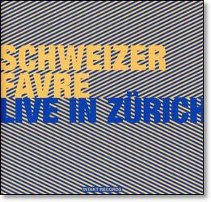
Laurie Antonioli: Songs of Shadow, Songs of Light: The Music of Joni Mitchell (2013 [2014], Origin): Bay Area jazz singer, several albums since Soul Eyes in 1985, this a collection of Joni Mitchell songs, done much like Mitchell did them -- similar voice, keybs, guitar, only slightly burnished by Sheldon Brown's reeds. B [cd] Clarice Assad: Imaginarium (2014, Adventure Music): Brazilian singer, daughter of guitarist Sergio Assad, straddles pop, jazz, and classical, but in "A Morte Da Flor" falls off the deep end of the latter. B- Auction Project: Slink (2014, self-released): Quintet, name comes from a 2010 album credited to alto saxophonist David Bixler and pianist Arturo O'Farrill, with violinist Heather Martin Bixler unnamed but on cover, and bass and drums. This one adds featured guest guitarist Mike Stern on two cuts and uillean pipes on one. B+(*) [cd] Baloni: Belleke (2012 [2014], Clean Feed): String trio, no violin but viola (Frantz Loriot), cello (Joachim Badenhorst), and bass (Pascal Niggenkemper), touted as "slow boiling, chamber jazz-like, surrealistic soundscapes" -- I'd scratch the "chamber" clause, which implies a degree of politesse not evident here. Rather, you get a scratchy search for a profound sound that generally eludes them. B+(**) [cd] Benyoro: Benyoro (2014, self-released): New York-based group playing West African pop music, led by vocalist Yacouba Sissoko-Kora, from Mali. One of the percussionists also hails from Mali, the bass player from Martinique, the Djembe player from New Rochelle, but authenticity isn't a problem here -- it just doesn't soar quite as high as you'd like. B+(***) Bolt: Shuffle (2013 [2014], Driff): Avant quartet -- Jorrit Dijkstra (alto sax, lyricon, analog electronics), Eric Hofbauer (guitar), Junko Fujiwara (cello), Eric Rosenthal (drums, percussion) -- offers scratchy little miniatures -- 19 that they recommend you shuffle -- too impolite and eccentric for chamber jazz, uprooting expectations. B+(***) [cd] Anthony Branker & Word Play: The Forward (Towards Equality) Suite (2014, Origin): Composer and director of a septet plus singer Alison Crockett, with guest spoken word from schoolchildren who have some serious wishes for a better world (none of which involve cutting taxes on the rich). Mainstream with soul flair, the horns -- David Binney (alto sax), Ralph Bowen (tenor/soprano sax, flute), and Conrad Herwig (trombone) especially striking. B+(***) [cd] Bobby Broom: My Shining Hour (2014, Origin): Guitarist, started out in soul jazz with Charles Earland, has close to a dozen albums on his own as well as side credits in groups like Deep Blue Organ Trio. This is a trio with bass and drums, all standards, no breakthroughs but very listenable, especially songs with a little zip like "Sweet Georgia Brown" and "Jitterbug Waltz." B+(**) [cd] Henry Butler/Steven Bernstein: Viper's Drag (2014, Impulse): Bernstein is a trumpet player who started avant with an interest in the tradition and became arranger for Robert Altman's Kansas City project, which in turn led to his Millennial Territory Orchestra. Butler is a New Orleans pianist/singer who first worked with Bernstein on Kansas City and has bumped into him a couple times since -- not clear if this was recorded at their 2012 Jazz Standard sets or that was merely the point when this concept came together. They call their nine-piece band the Hot 9 after Armstrong's Hot Fives and Hot Sevens, and there's the rub: Bernstein isn't Armstrong, nor is Butler Earl Hines (nor as a singer can he carry Jimmy Rushing's tune), and the band is full of talented musicians who can play classic jazz but none are specialists who live it. That isn't a crippling complaint -- the record is great fun and I'd love to see the band live -- but it is a bit more than a nitpick. B+(***) Calle 13: MultiViral (2014, El Abismo/Sony Music Latin): Puerto Rican rap group, with a reggaeton streak although that's hardly the only genre they can jump, and the few bits I can understand show some political smarts (as does a guest list that includes Silvio Rodriguez, Tom Morello, John Leguizamo, and Eduardo Galeano). Even in purely musical terms, I like the hard raps best. B+(***) Mario Castro Quintet/Strings: Estrella de Mar/Promotional Edition (2014, Interrobang): Young tenor saxophonist, from Puerto Rico, graduated Berklee, sounds like a slightly scruffier David Sanchez, promising enough, but the quintet is cluttered, the strings are crappy, and the singer, well, unnecessary. "Promotional Edition" is printed prominently on the cover in what otherwise is fancier packaging than most commercial releases see, so I decided to honor the fact rather than puzzle over it. Of course, it puts an unfathomable distance between what I heard and what you might be able to buy. B- [cd] Collier & Dean: Sleek Buick (2013-14 [2014], Origin): Tom Collier plays vibes, marimba, xylophone, and keyboards. Don Dean bass, percussion, keyboards, ukelele, classical guitar. Backup varies, with appearances by Don Grusin (piano) and Ernie Watts (tenor sax), and drums split between Ted Poor and Alex Acuña. Bubbly, frothy groove music. B [cd] Wayne Coniglio/Scott Whitfield: Fast Friends (2012 [2014], Summit): Two mainstream trombonists, looks like Coniglio's first album but Whitfield has close to a dozen since 1997. Three originals (one Coniglio, two Whitfield), "I'm Confessin'" a gem among the not-very-standard covers. B+(**) [cd] Cortex: Live! (2014, Clean Feed): Norwegian avant jazz quartet patterned on Ornette Coleman's classic, two previous albums but no one I've heard of: Thomas Johansson (cornet), Kristoffer Alberts (reeds), Ola Høyer (bass), Gard Nilssen (drums). I have a nagging doubt that anyone so inspired could do this: rather than breaking rules and blazing new paths the sax-cornet interplay just seems so right, although it wouldn't without a lot of innovation that now seems so normal. A- [cd] Sylvie Courvoisier/Mark Feldman Quartet: Birdies for Lulu (2013 [2014], Intakt): Piano and violin for the leaders, bass (Scott Colley) and drums (Billy Mintz) fill the group out. He paints curtains of ice, she breaks them. B+(**) Jorrit Dijkstra: Music for Reeds and Electronics: Oakland (2013 [2014], Driff): Five reed players -- Dijkstra, Phillip Greenlief, Kyle Bruckmann, Frank Gratkowski, Jon Raskin -- including clarinet, oboe, and English horn as well as various saxes, three players also credited with electronics. Can get ugly in the lower reaches, or squeaky in the upper. B+(*) [cd] Diva: A Swingin' Life (2001-12 [2014], MCG Jazz): Drummer Sherry Maricle's long-running all-female big band, two cuts featuring Nancy Wilson recorded at MCG in 2001, the rest with quite a bit of turnover from an engagement in Lincoln Center eleven years later, with Marlena Shaw singing on two pieces, including a Basie "Blues Medley" they were born to swing. A lot of pop in the brass section. B+(**) [cd] Dr. John: Ske-Dat-De-Dat: The Spirit of Satch (2013 [2014], Concord): Starts with "What a Wonderful World" from the wrong end of Louis Armstrong's songbook, then segues into the worst version of "Mack the Knife" I've ever heard -- a judgment I rendered even before Mike Ladd's rap. Hard to blame the trumpet players (Nicholas Payton, Terence Blanchard, Arturo Sandoval), but the rest of the band cuts the wrong rug, and the good Dr.'s slurred vocals slide all over the place -- a sharp contrast to Armstrong, who always had his unwieldy voice under perfect control. Of course, a tribute doesn't have to sound like its target -- if it did, what would be the point? But nothing here comes close, except Bonnie Raitt's cameo, and "When You're Smiling." C Jorge Drexler: Bailar en la Cueva (2014, Warner Music Latina): Singer/songwriter from Uruguay, based in Spain, has a dozen (or so) albums since 1992. Strikes me as closer to MPB than to salsa -- for a guy who can't tell Spanish from Portuguese he reminds me mostly of Caetano Veloso, with a slightly more eccentric beat. B+(**) John Ellis & Andy Bragen: Mobro (2011 [2014], Parade Light): Saxophonist, has an interestingly eclectic catalog which takes an odd turn here, providing the music for a play by Bragen, the combined effect way more operatic than I can handle. B- Dave "Knife" Fabris: Lettuce Prey (2010 [2014], Musea): Guitarist, has appeared on several albums with pianist Ran Blake (who gets "featuring" credit here), but this seems to be his first album. It's a "kitchen sink" conglomeration with a wild mix of fusion and classical -- a Ginastera string quartet, some Prokofiev, "Sabre Dance," one of those horrible operatic sopranos -- and some smaller pieces, including a nice bit of "Mood Indigo" at the end. B- [cd] FKA Twigs: LP1 (2014, Young Turks): "Half-Jamaican" UK native singer-songwriter, Tahilah Barnet, nicknamed Twigs, has two EPs, now an LP, backed with trip-hoppy electronics. Her thin, warbly voice is something Tricky led us to expect, and as long as this can pass for Tricky pop it holds up OK, but doesn't have anywhere else to go. B Danny Fox Trio: Wide Eyed (2012 [2014], Hot Cup): Pianist, second album, trio with Chris Van Voorst Van Beest on bass and Max Goldman on drums. Played this several times and have very little to say about it -- a nice mix of Evans-esque melodic sense with a more Jarrett-like rhythmic push, I guess. B+(***) [cd] Golem: Tanz (2014, Discos Corason): Punk-klezmer group led by accordionist-singer Annette Ezekiel Kogan, with Aaron Diskin as a second singer, the band anchored by violinist Jeremy Brown and noted jazz trombonist Curtis Hasslebring. Several albums, this the first on a Mexican label, produced by Tony Maimone (Pere Ubu). A- Grand Fatilla: Global Shuffle (2014, self-released): Boston group, a spinoff from world-jazz eclectics Club D'Elf, pared down to a quartet: Robert Cassan (accordion), Matt Glover (electric mandolin), Mike Rivard (double bass, sintir), and Fabio Pirozzolo (percussion, voice): Argentine tangos, Italian Tarantellas, Turkish sacred Sufi songs, Irish reels, Moroccan trance, Bulgarian dance, all erudite and enjoyable, but nothing that shakes the rafters. B+(*) [cd] The Green Seed: Drapetomania (2014, Communicating Vessels): Two rappers, two DJs, all the vinyl scratch sounds like a throwback to the '80s but the samples are more fluid, and the underground message is conscious, even when conflicted on matters of the heart. Matters of state, those are more obvious. A- Michael Griener/Rudi Mahall/Jan Roder/Christof Thewes: Squakk: Willisau & Berlin (2012-13 [2014], Intakt): Some parsing options here: Griener (drums), Roder (bass), and Thewes (trombone) previously recorded an album called Squakk, effectively the group name here, but Griener is listed above Squakk, the others, including newcomer Mahall (bass clarinet, clarinet, baritone sax), below. Mahall not only adds a useful change of pace, he refocuses the group. A- Haitian Rail: Solarists (2014, New Atlantis): Rough avant-jazz group, plenty of thrash especially between the guitar (Nick Millevoi) and trombone (Daniel Blacksberg). Bassist Edward Ricart also contributes a song -- the only band member who doesn't is drummer Kevin Shea, already famous for MOPDTK, less famous for Talibam and other marginal noise projects. B+(**) Hans Hassler: Hassler (2011 [2013], Intakt): Folk background, "the true Swiss king of accordion," leads a quartet with two jazz clarinetists (Jürgen Kupke, Gebhard Ullmann on bass), plus percussion. Feels rushed and cramped. B Hercules & Love Affair: The Feast of the Broken Heart (2014, Moshi Moshi): Disco group, fifth album including a DJ-Kicks. I figure cartoonishness is a bit of their shtick, but sometimes they overdo it, and more often they cut short the beats. B Jessica Hernandez & the Deltas: Secret Evil (2014, Instant): Detroit group, has a straightforward, almost trad rock and roll form, the singer-songwriter's voice slightly off in a way that ultimately distinguishes her. First album after a couple EPs, one titled Weird Looking Women in Too Many Clothes. B+(***) Wayne Horvitz: 55: Music and Dance in Concrete (2012 [2014], Cuneiform): Pianist, although he only composed and mixed these pieces, collaborating with Yukio Suzuki (choreography and dance), Yohei Saito (video artist) and Tucker Martine (producer/engineer). They were recorded at Fort Worden in Port Townsend, WA (out on the Olympic Peninsula), using the concrete bunkers and cistern for resonance. The group includes five horns (trumpet, trombone, clarinet/bass clarinet, alto and soprano sax) plus strings and voice (Maria Mannisto), for a quasi-classical effect. B [cdr] Ibibio Sound Machine: Ibibio Sound Machine (2014, Soundway): British group with roots in Nigeria, led by singer Eno Williams with musicians from Ghana and Brazil. Framed by bits of gospel, deeper beats in the middle. B+(*) Darius Jones/Matthew Shipp: Cosmic Lieder: The Darkseid Recital (2011-13 [2014], AUM Fidelity): Alto sax-piano duets, performed live at various spots following the 2011 studio album Cosmic Lieder. Jones is an intense player, sometimes extraordinary (cf. Man'ish Boy (A Raw & Beautiful Thing)) and sometimes just a pain in the ears (his Little Women albums, especially Lung). Shipp's dense clustering mostly slows him down, precluding either extreme. B+(*) Pandelis Karayorgis Quintet: Afterimage (2014, Driff): Boston-based pianist with a mostly local live in Chicago group -- Dave Rempis (alto, tenor, baritone saxes), Keefe Jacckson (tenor sax, bass clarinet), Nate McBride (bass), and Frank Rosaly (drums). It's almost too much to work with, as the patches where the horns drop out reveal. B+(***) [cd] Ryan Keberle & Catharsis: Zone (2014, Greenleaf Music): Trombonist, second album with his quartet Catharsis -- Mike Rodriguez on trumpet, also bass and drums -- adding guests Scott Robinson (tenor sax) and Camila Meza (voice). The vocals offer an intriguing tangent, but wind up too much. B+(*) [cd] Rebecca Kilgore with the Harry Allen Quartet: I Like Men (2013 [2014], Arbors): Standards singer collects a list of songs about men: "The Man I Love," of course, also "The Gentleman Is a Dope," "He's a Tramp," "He's My Guy," "Marry the Man Today," "The Man That Got Away," and so forth -- the biggest turnoff for me was "Goldfinger." Saxophonist Allen should be a big help here, but he doesn't add much. B+(*) Jonas Kullhammar/Jørgen Mathisen/Torbjörn Zetterberg/Espen Aalberg: Basement Sessions Vol. 3: The Ljubljana Tapes (2013 [2014], Clean Feed): Two tenor saxophonists (the former also credited with soprillo sax and flute), bass, and drums. The two previous volumes were trios without Mathisen, and Vol. 2 was most impressive. This live successor has its hot spots, but also tends to slip on by. B+(**) [cd] Lake Street Dive: Bad Self Portraits (2014, Signature Sounds): Singer Rachel Price reminds me of Elvin Bishop recycling blues clichés, but Bishop was slighter and had more fun. B+(*) Adam Lane's Full Throttle Orchestra: Live in Ljubljana (2012 [2014], Clean Feed): An octet, with two trumpets (Nate Wooley, Susana Santos Silva), trombone (Reut Regev), three saxes (David Bindman, Avram Fefer, Mat Bauder), drums (Igal Foni), and the leader's bass mixed up so it's always audible, the heartbeat of a growing, growling organism -- the most Mingus-like of bassists, both for his compositions that sum up all worthwhile jazz history and as a bandleader who can whip a group up into something larger than itself. A- [cd] Ingrid Laubrock Octet: Zürich Concert (2011 [2014], Intakt): German avant saxophonist, her octet limited to two horns (Tom Arthurs' trumpet is the other), with guitar-cello-bass strings, accordion in addition to piano, and drummer Tom Rainey doubling on xylophone. Intricate layering without much solo punch, but that seems to be the idea. B+(*) Azar Lawrence: The Seeker (2011 [2014], Sunnyside): Tenor saxophonist, cut his first album in 1974 and doesn't have many since, but he's such a powerful presence if you've ever heard him pop up anywhere, even on the side, you're likely to remember the name. Quintet with Nicholas Payton (trumpet), Benito Gonzalez (piano), Essiet Okon Essiet (bass), and Jeff "Tain" Watts (drums). Big, dramatic sound, overwhelming all else. B+(**) Gordon Lee with the Mel Brown Septet: Tuesday Night (2014, Origin): Lee is a pianist-composer, wrote everything here (lifting a bit from Rachmaninoff), and is counted in drummer Brown's septet (two saxes, trumpet, trombone, piano, bass, drums). Feels cluttered and rushed, the solos indistinct. B- [cd] Ricardo Lemvo/Makina Loca: La Rumba Soyo (2014, Cumbancha): The most Cuban-sounding of Congolese stars, this has outsided salsa rhythms with soukous guitar supercharge, for an unrelenting up, up, up. Crazy machine, indeed. A- Vincent Lyn: Live in New York City (2013 [2014], Budo): Pianist and kung-fu master, several albums, I don't doubt his proficiency but the charm here is tenor saxophonist Melissa Aldana. B+(*) [cd] Bob Mamet: London House Blues (2014, Blujazz): Pianist, from Chicago, brother of playwright David Mamet, half dozen or so albums since 1994, evidently spent some time in smooth/crossover jazz although this is an exemplary mainstream trio, two originals, familiar standards, bright, sparkling even. B+(**) [cd] Jessica Lea Mayfield: Make My Head Sing . . . (2014, ATO): Singer-songwriter with two previous albums produced by Dan Auerbach (Black Keys). This one done with husband Jesse Newport (mostly bass) and a drummer, is distinguished first of all by the crunchy guitar, supposedly a tribute to '90s grunge. B+(**) Medeski Martin & Wood + Nels Cline: Woodstock Sessions Vol. 2 (2013 [2014], Indirecto): Last heard with John Scofield, as natural a fit for the organ-drums-bass trio as one could imagine, I have to say they've traded up. Cline is a guitarist more inclined to cut against the grain than go with the flow, which makes this a much rougher-edged combination. M & M (if not necessarily W) have been moving in more avant circles since their early success, and that, too, pays dividends here. B+(***) Nicole Mitchell's Black Earth Ensemble: Intergalactic Beings (2010 [2014], FPE): She plays flute, a minor part of the sound and action here, mostly roiling around the dirty bass end with David Boykin's tenor sax/bass clarinet, Jeff Parker's guitar, Joshua Abrams' bass, and (especially) Avreeayl Ra's often stunning percussion. You also get strings (violin/cello), trumpet, and Mankwe Ndosi's voice in the messy mix. B+(***) Hafez Modirzadeh: In Convergence Liberation (2011 [2014], Pi): Tenor saxophonist, born in North Carolina, has a Ph.D. in ethnomusicology, probably started with his father, Jamal Modir, a Persian percussionist, but he's been all over, studying Persian, South Indian, West African, and Japanese music (among others), but most importantly he is a George Russell protégé -- his first album was called In Chromodal Discourse (1992), and the one prior to this one was Post-Chromodal Out! (2012). This one comes with equations and sketches resembling particle physics. The music itself I find even more daunting, with strings everywhere (ETHEL, a quartet), those quasi-classical vocals I hate so much, and lots of santur, plus a bit of Amir ElSaffar trumpet. B+(**) [cd] Joe Morris Quartet: Balance (2014, Clean Feed): Guitarist, with Mat Maneri (viola), Chris Lightcap (bass), and Gerald Cleaver (drums) in a strings thing, with Maneri doing the main job of shaping the scratchy, abstruse sounds. B+(**) [cd] Sam Most: New Jazz Standards (2013 [2014], Summit): Jazz flautist, cut his first records in 1953, this one sixty years later -- a month before his death, in many ways this sums up his whole career: the high bebop lines, a side of baritone sax, a goofed up scat vocal. B+(**) Myriad 3: The Where (2014, ALMA): Canadian piano trio -- Chris Donnelly (piano), Dan Fortin (bass), Ernesto Cervini (drums, winds) -- dabbling sometimes in electronic synths. Second album, all three write (but mostly Donnelly), postbop but suggests a bit of EST niche if not influence. B+(**) [cd] Tom Petty & the Heartbreakers: Hypnotic Eye (2014, Reprise): A personable young retro-rocker in the late 1970s when he introduced his lightweight "classic rock" formula, he remains personable and listenable 35 years later, and doesn't seem all that much older. B+(*) Picastro: You (2014, Static Clang): Intriguing little group, basically slowcore with falsetto vocals, occasional fracturing or crazing around the edges. B+(*) Pink Martini & the Von Trapps: Dream a Little Dream (2013 [2014], Heinz): With the last surviving member of the Trapp Family Singers, Maria von Trapp, passing at age 99, the legacy vocal group is mostly filled with great-grandchildren, doing August von Trapp originals, Rodgers and Hammerstein (you know, The Sound of Music), a tango, pieces from Africa and China, and bits of schmaltz from Brahms and ABBA. Such postmodern eclecticism is a Pink Martini trademark and this is very much their album, the extra voices adding an excessively somber air. B+(*) Greg Reitan: Post No Bills (2014, Sunnyside): Pianist, fourth album since 2009, a trio with Jack Daro and Dean Koba. Three originals, seven covers, two of those standards ("Stella by Starlight," "I Loves You, Porgy"), the others by fellow pianists (Jarrett, Sample, Silver, Corea, Zeitlin). B+(*) Dylan Ryan/Sand: Circa (2014, Cuneiform): Drummer, group includes Timothy Young (guitar) and Devin Hoff (bass). Second album, jazz-rock fusion pushing hard on the guitar. B+(*) [cdr] Irène Schweizer/Pierre Favre: Live in Zürich (2013, Intakt): The great Swiss pianist cut a series of duo albums from 1986 on with various drummers, and Favre's entry was possibly the best -- the closest competitor was Han Bennink. This rematch gives you a sense of the dynamics, plus an unexpected boogie-blues at the end. A- 75 Dollar Bill: Olives in the Ears (2014, self-released): Lo-fi guitar-drum project, guitarist Che Chen credits a teacher from Mauritania for his mix of Arabic modes and Saharan blues, plus drummer Rick Brown, and some others chip in here and there. Available on cassette tape as well as digital download. B+(***) [bc] Rotem Sivan Trio: For Emotional Use Only (2013 [2014], Fresh Sound New Talent): Guitarist, originally from Israel, now based in New York, second album, backed with bass and drums. B+(**) [cd] Sohn: Tremors (2014, 4AD): Toph Taylor, from London, first album, singer-songwriter with electronics. Moby-ish if not quite Moby-like. B+(*) Spoon: They Want My Soul (2014, Anti-): Texas rockers with a long history of corraling pop hooks unveil an edgier sound without losing their knack -- if anything, they've upped their game. A- Steve Swallow/Ohad Talmor/Adam Nussbaum: Singular Curves (2012 [2014], Auand): Electric bass, tenor sax, drums, respectively. Talmor, b. 1970 in France, is best known for his collaborations with Lee Konitz, but those feature his string arrangements, where he it is a delight to hear his mellow saxophone -- e.g., the closing "You Go to My Head," which more than once convinced me to give this another spin. B+(***) [cdr] Aki Takase/La Planète: Flying Soul (2012 [2014], Intakt): Starts like chamber jazz with violin (Dominique Pifarély), cello (Vincent Courtois), clarinet (Louis Sclavis) and piano/celesta (Takase), but no one -- least of all Pifarély -- wants to leave it at that, yielding a rather bracing diceyness as it develops. B+(***) Jonah Tolchin: Clover Lane (2014, Yep Roc): First album for a young singer-songwriter from New Jersey with a vintage country/folk feel, a knack for smartly structured, sensitive and sensible songs -- if anything, reminds me most of T-Bone Burnett. A- Trio 3 & Vijay Iyer: Wiring (2013 [2014], Intakt): Fifth album for Oliver Lake's sax trio supergroup -- Reggie Workman and Andrew Cyrille -- formed in 2001, plus superstar pianist Iyer for his second ride. Remarkable talents all around, the pianist especially, but Lake doesn't grab me like he can. Cyrille's closing "Tribute to Bu" is hard to top. B+(***) Matt Ulery: In the Ivory (2013-14 [2014], Greenleaf Music, 2CD): Chicago bassist, has a habit of thinking big, as this sprawling opera indicates. "Contemporary classical music" always seemed like an nomenclature, but then it's never been clear what else to call new works in the Euroclassical tradition -- I, for one, am reluctant to call them jazz although as jazz gains an ever deeper toehold in the academy jazz musicians are increasingly inclined and prepared to veer that way. This sounded awful to me at first, but then the piano reps, and then the strings -- Zack Brock is the featured violinist -- started to cohere. In the end even the singers (Grazyna Auguscik and Sarah Marie Young) aren't that bad. Not that I wouldn't rather hear something that swings or bops or honks or skronks or blasts out in some new direction. B+(*) [cd] Harvey Wainapel: Amigos Brasileiros Vol. 2 (2013 [2014], Jazzmission): Bay Area Sax/clarinet player, follows up his 2007 Amigos Brasileiros with another volume, this with nine songs encountering nine groups of "great Brazilian musicians" for some lush lounge music. B [cd] Seth Walker: Sky Still Blue (2014, The Royal Potato Family): Blues singer-songwriter with a handful of albums, both guitar and voice strike me as rather tepid (presumably that's not just white). Only song that hits paydirt is "Jesus (Make My Bed)." B Reggie Watkins: One for Miles, One for Maynard (2014, Corona Music): Trombonist from West Virginia, second album, plays one Davis song, one Ferguson, one from McCoy Tyner, two from his tenor saxophonist Matt Parker (who has a postmodern feel for older jazz), three of his own. Swings hard throughout, and piles on the horns for the Ferguson piece. B+(**) [cd] Anna Webber: Simple (2013 [2014], Skirl): Canadian flutist, mostly plays tenor sax here, second album, trio with Matt Mitchell (piano) and John Hollenbeck (drums) doing much to stretch and skew the album. Best when all three thrash, but has a few spots when nothing much seems to be happening. B+(***) [cd] The Whammies: Play the Music of Steve Lacy Vol. 3: Live (2014, Driff): Six-piece group dedicated to exploring Steve Lacy's slippery music take their act to Italy after two superb studio albums. All recognizable names: Jorrit Dijkstra (alto sax, lyricon), Pandelis Karayorgis (piano), Jeb Bishop (trombone), Mary Oliver (violin, viola), Jason Roebke (bass), and Han Bennink (drums). Slips a bit here and there, but many strong passages. B+(***) [cd] Walter White: Most Triumphant (2013 [2014], Summit): Trumpet player, from and likely still based in Michigan, refers to a "30 year career" but only a couple albums as leader. This is a quartet with piano-bass-drums, half originals, half covers ranging from Chopin to "Bye Bye Blackbird" -- easy to fall for the latter. Gets a bright, sharp tone, and while the band isn't exceptional they do move things along smartly. B+(*) [cd] Steve Wilson/Lewis Nash Duo: Duologue (2013 [2014], MCG Jazz): Sax-drums duets, not sure if Wilson plays anything but alto but it's mostly in that range. Three Wilson originals, two Ellingtons, Fats Waller, two Monk medleys, Gillespie, Ornette Coleman, "Freedom Jazz Dance." Wilson is fine, but this is an even better showcase for Nash, probably the best mainstream drummer since, well, ever. B+(***) Tom Wolfe: Solerovescent (2014, Summit): Guitarist, probably his second record although with gray hair and such a common name I may not be looking hard enough. Bright postbop, with Ken Watters on trumpet, both electric and acoustic bass, and drums. B+(*) [cd] Wooden Wand: Farmer's Corner (2013 [2014], Fire): Brooklyn-based singer-songwriter James Jackson Toth, has something like sixteen albums since 2004. Mostly guitar, providing a nice, shambling, country-ish air. B+(**) J.J. Wright: Inward Looking Outward (2013 [2014], Ropeadope): Pianist, leading a trio with Ike Sturm and Nate Wood, manages to stake out a rumbling beat and ride it a long ways. B+(**) [cd] Reissues, Compilations, Vault Discoveries
Calypso: Musical Poetry in the Caribbean 1955-1969 (1955-69 [2014], Soul Jazz): Probably too many songs about reincarnation, a common trope for wits with doubts about the human condition. These wordslingers, after all, are all wits -- I'm particularly amused by the one who'd rather talk to Khrushchev than Bulganin -- and the lightweight beatwise music is always a delight. A- Smoke Dawson: Fiddle (1971 [2014], Tompkins Square): Folk musician born in Brooklyn in 1935, played banjo alongside Peter Stampfel's fiddle in MacGrundy's Old-Timey Wool Thumpers in 1960 -- no album, but a group name worth repeating. His only album was this 1971 solo violin effort, a cult item limited to 750 copies. Only for aficionados of the old-time music, but fine for that. B+(***) Arto Lindsay: Encyclopedia of Arto (1996-2012 [2014], Northern Spy, 2CD): First appeared in the late-1970s New York No Wave band DNA, rooting him in avant-noise, but as he moved on into the 1980s he revealed a second side rooted in Brazil, where he spent time growing up. First disc here collects studio tracks from 1996-2004 (O Corpo Sutil, Mundo Civilizado, up through Invoke and Salt). Second disc is taken from 2011-12 live shots and is rather dicier, more primitive, sometimes abstract, sometimes wrapped in noise, often remarkable. A- Sergio Mendes & Brasil '66: Stillness (1971 [2014], Universal Sound): Roughly the end of pianist Mendes' hit period which began with the bossa nova in the year he named the band. Lani Hall is the singer, quick to cover L.A. stalwarts like Stephen Stills and Joni Mitchell. B+(*) Punk 45: Underground Punk in the United States of America, Vol. 1: Kill the Hippies! Kill Yourself! The American Nation Destroys Its Young (1973-80 [2013], Soul Jazz): Only two songs here I know well ("The Modern Age" and "Chinese Rocks"), the remaining groups more unknown than not -- the best known, the Flamin' Groovies, shows up with a single from 1973, harder-edged than their 1969-71 albums let alone anything in their lame post-1976 pop period. While there are songs called "Kill the Hippies" (Deadbeats) and "Kill Yourself" (Lewd), they are barely proto-hardcore, way short of the Reagan-era Let Them Eat Jellybeans hardcore comp, so without seeing the booklet -- always a strong suit with this label -- it's hard to credit their "American nation destroys its young" thematic. Doesn't sound like that; just art going into a postmodern primitivist phase with more product than usual falling through the cracks. B+(***) Punk 45: Underground Punk and Post-Punk in the UK 1977-81, Vol. 2: There Is No Such Thing as Society: Get a Job, Get a Car, Get a Bed, Get Drunk! (1977-81 (2014), Soul Jazz): More obscurities -- e.g., none of these bands showed up on Rhino's 1993 DIY: UK Punk I: Anarchy in the UK, only three I recall (Television Personalities, Swell Maps, very early Mekons). Nothing here strikes me as especially great, but they're nowhere near scraping the bottom of the barrel, as the clatter and clank flow surprisingly well. B+(***) Old Music
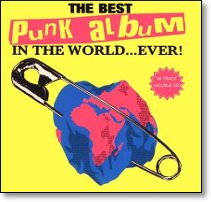
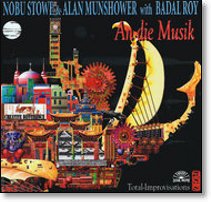
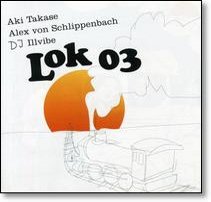
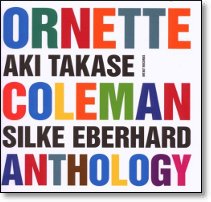
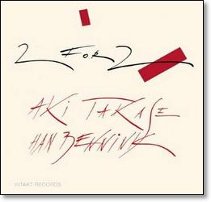
The Best Punk Album in the World . . . Ever! (1975-84 [1995], Virgin, 2CD): After listening to the first two Punk 45 compilations and noting their obscure provenance, I recalled this UK set (graded A by Christgau), and while it's long out-of-print, I had little trouble finding the songs and lining them up in Rhapsody's mixer (the only one missing is Adam and the Ants' "Deutscher Girls," perhaps for the better). Each disc starts with the Sex Pistols and never hits that level of punk fury again -- no Clash or Vibrators, the US picks rarely get out of New York (Jonathan Richman, Devo, and the Tubes are exceptions) -- so they encroach upon new wave for hits, picking out relatively crunchy tunes even from Elvis Costello and Joe Jackson. Not as tight thematically as Rhino's 1993 two DIY: UK Punk volumes, but no one I knew in New York in the late 1970s listened to just punk or new wave: we jumped back and forth, like the compilers here. A- Michael Griener/Jan Roder/Christof Thewes: Squakk (2008 [2009], Jazzwerkstatt): Avant-trombone trio, the drummer and bassist listed first, perhaps alphabetically. Unfamiliar with Thewes but this seems like par for the course as far as German trombonists go -- a course including Albert Mangelsdorff and Conrad Bauer. B+(**) Richard Hell: Spurts: The Richard Hell Story (1973-92 [2005], Rhino): Bassist Hell doesn't seem to have played on all of these cuts, but those he missed he (co-)wrote and/or remixed -- Neon Boys, Television, Heartbreakers, Dim Stars, bands he played with at some point or other -- and tracks 4-13 recapitulate his 1977-82 heyday with the Voidoids. Discogs credits the liner notes to Robert Christgau and Carola Dibbell, but they're not (yet) on the website. I stumbled upon this by sheer accident. Nice best-of plus brilliant trivia, at least until they get to the dimly remembered Steve Shelley-Thurston Moore Dim Stars. B+(**) Oliver Lake: Heavy Spirits (1975 [1995], Black Lion): Second album for the alto saxophonist, pasted together from two sessions -- a quintet with Olu Dara (trumpet) and Donald Smith (piano), followed by three tracks with two violinists, a solo track, then one with trombonist Joseph Bowie plus drums. Shows promise but packs too many different looks. B+(*) The Oliver Lake String Project: Movement, Turns & Switches (1996, Passin' Thru): Lake tries to burnish his bona fides as a composer by building this around a string quartet, some piano (Donal Fox), even laying out on a cut. Not that it doesn't work, but not really what one turns to him for. B Oliver Lake Quintet: Talkin' Stick (1997 [2000], Passin' Thru): A typical album for the alto saxophonist, the quintet including Geri Allen on piano and Jay Hoggard on vibes instead of a second horn. B+(**) Oliver Lake Steel Quartet: Dat Love (2003 [2004], Passin' Thru): Lyndon Achee's steel pan drums provide the group name and add a measure of mellow to what otherwise is a typical Lake sax trio, extended blowing on a high level, although also a bit more mellow than usual. B+(***) Ted Rosenthal: My Funny Valentine (2007 [2008], Tokuma): Piano trio, playing "11 standards from the vast repertoire of vocalist Helen Merrill," which is to say eleven of the juiciest standards around, from "You'd Be So Nice to Come Home To" to "'S Wonderful." B+(***) Nobu Stowe & Alan Munshower with Badal Roy: An die Musik (2006 [2008], Soul Note): Japanese pianist, based in Baltimore, with drums and tabla, not exactly a piano trio but the rich, repetitive mid-to-uptempo piano riffs limit the need for a bassist and the extra complexity to the percussion is a plus. Stowe sent me a pile of discs quite some time ago, and if this isn't the best, it's at least the easiest to get into. A- [cdr] Nobu Stowe: L'Albero Delle Meduse (2009 [2010], self-released): Scant evidence of this ever being released -- I'm working off an advance and assume pianist Stowe is the leader only because he sent it to me. The pieces are joint improvs (except for the closer, Jim Pepper's "Witchi-Tai-To"), and Achille Succi (alto sax, bass clarinet) is listed ahead of Stowe, the rest: Daniel Barbiero (bass), Alan Munshower (drums), Lee Pembleton (sound). B+(***) [cdr] Nobu Stowe-Lee Pembleton Project: Hommage an Klaus Kinski (2006 [2007], Soul Note): Pembleton's credit here is "sound" -- whatever that means. Better known are the clarinetists, Perry Robinson and Blaise Siwula, the latter doubling on tenor sax. Veers a bit toward soundtrack territory -- presumably Pembleton's responsible for the bird and bug sounds -- which also gives the pianist an excuse to get melodramatic, something his richly textured style is built for. B+(**) [cdr] Aki Takase/Alex von Schlippenbach/DJ Illvibe: Lok 03 (2004 [2005], Leo): Two avant pianists who have duetted in the past but not like this, mediated as it is by Illvibe's turntables and kitchen sink-ism, amplifying the noise level of musicians who can really bring it. A- Aki Takase/Silke Eberhard: Ornette Coleman Anthology (2006 [2007], Intakt, 2CD): Eberhard plays alto sax, clarinet, and bass clarinet, in duos with the pianist on a long list of Ornette Coleman tunes (plus one Takase original). Hot stuff, the piano jumping all over the tunes, the sax/clarinet providing just enough color contrast. A- Aki Takase/Louis Sclavis: Yokohama (2009, Intakt): Sclavis plays clarinet, bass clarinet, and soprano sax, a lighter tone and calmer demeanor than Eberhard had on those Coleman tunes, and the pianist adjusts accordingly. Thoughtful, often lovely. B+(***) Aki Takase/Han Bennink: Two for Two (2011, Intakt): A piano-drums duo, again a marvelous outing for the drummer, especially when the moment calls for a bit of swing although he's fine with any or no time, and he's equally adept at setting the pianist up or just amusing himself while she surprises us. A- Tama: Rolled Up (2009, Jazzwerkstatt): Avant piano trio -- Aki Takase (piano), Jan Roder (bass), Oliver Steidle (drums) -- hits hard for the most part, block-chorded fury, not that it isn't tightly controlled. B+(***) Leroy Vinnegar Sextet: Leroy Walks! (1957 [1989], Contemporary/OJC): Bassist, nicknamed "The Walker" for his walking bass lines, a theme integrated into most of his handful of album titles (from his first album here to 1992's Walkin' the Basses). Cut in Los Angeles with a light, almost frothy West Coast group -- Gerald Wilson (trumpet), Teddy Edwards (tenor sax), Carl Perkins (piano), Victor Feldman (vibes), Tony Bazley (drums). B+(**) Ask a question, or send a comment. Monday, August 18, 2014 Music Week
Music: Current count 23658 [23534] rated (+24), 536 [546] unrated (-10). Not sure why the rated count slipped this past week -- maybe just the drag of the server problems, not to mention the drag of all sorts of everyday hassles. The server problem is that more often than not the database connections used by the serendipity blog software have failed (either not established or dropped), resulting in various cryptic error messages or plain old indefinite hangs. The ISP (addr.com) has been even more unresponsive, but through all this time (3-4 weeks now) the server has been up, it's been serving static pages (i.e., everything on the website below ocston), although it's hard for people to tell that when the root index is inaccessible. Moving the whole blog to another database on another server is a huge and daunting task -- one that I don't doubt will be necessary, but still a ways away. So it occurred to me that a short-term kluge around the database problem would be to write up a bit of PHP code to manage the most recent part of the blog with static files. I have that code sort of working now, so I'll install it and replace the root index page with something that will explain the problem and offer either the "real blog" or the "fake blog" options. In the future, I will initially install new posts using the "fake blog" system, then try the "real blog." I may add some bells and whistles to the "fake blog," but most likely it will just be a temporary bridging system until I can get something stable working. Trouble finding new A-list albums this week, although three (of four) releases on Driff sorely tempted me -- I had given A- grades to the first two Whammies albums, a Pandelis Karayorgis album (Mi3: Free Advice) was a Jazz CG Pick Hit back in 2007, and Eric Hofbauer's The Blueprint Project was an A- in 2003. But some combination of bad attitude and excessive nitpicking held me back on all three -- as, by the way, it did on the two Punk 45 compilations Jason Gubbels praised last week (couldn't find the third on Rhapsody), and for that matter the first two records after played after I closed this week's tally: Steven Bernstein's Viper's Drag and Anna Webber's Simple. The only new record to top A- was the Calypso comp Michael Tatum wrote about last week -- I'm always a sucker for that beat and wordplay. The other A- doesn't exist on Rhapsody, but I pieced together a mixer list from other resources and came up with 47 (of 48) songs, close enough. Still, I'm of two minds about the record. I can't knock so many great songs, but I'm not sure how useful the compilation really is, or whether I'd even want a copy. And I am sure that if I was the sort of person who liked to put playlists together, I could easily top The Best Punk Album in the World . . . Ever -- so much for the title. Reviews on all these records are accumulating, and should trigger a Rhapsody Streamnotes later this week -- assuming nothing else awful happens in the meantime, these days pretty wishful thinking. One aside: Publicist Matt Merewitz wrote today to nudge me on the Lee Konitz First Meeting: Live in London Volume 1 album out in June. I wrote back, and thought I might as well share this as it bears repeating:
Recommended music links: New records rated this week:
Recent reissues, compilations, and vault discoveries rated this week:
Old records rated this week:
Unpacking: Found in the mail last week:
Ask a question, or send a comment. Sunday, August 17, 2014 Weekend RoundupIt's been a very distracting week, what with the blog sometimes working and more often not. I've been working on a "pseudo-blog" system that should prove more robust -- throughout the troubles of the last few weeks we've always been able to serve static pages -- and I should unveil that soon. Meanwhile, a few scattered links this week:
Also, a few links for further study:
Ask a question, or send a comment. Monday, August 11, 2014 Music Week
Music: Current count 23634 [23599] rated (+35), 546 [554] unrated (-8). I've been struggling with MySQL database performance problems at my ISP (ADDR.COM), and got a frightful scare this morning when I realized they not only aren't responding to trouble reports, their "live chat" and "callback" service options are broken, and worst of all I got a message that they're not accepting phone calls. The static pages on the website continue to be served. I can login, update my files, and sometimes even login to the MySQL server. I week or so ago I was able to get an almost complete mysqldump of the blog database, but in three files as I went through the grind table-by-table, and in the end one table was hopelessly lost. Looking at the code that accesses that table, I decided that there's nothing important there, and tried hacking the code to avoid the table. Then I dropped and rebuilt the table, which didn't seem to help but is certainly cleaner. I also tried thinning out the very large "exits" table, which again isn't really useful -- unless one gets obsessive about user use patterns, and I'm not sure even then. But late today the blog seemed to be working OK, so I posted yesterday's Weekend Update and if luck holds I'll follow up with this post. I'm not under any illusions that this will continue to work, or that I want to continue to do business with ADDR.COM. So I'm working on a couple of things to replant the site. The static pages are no problem, since I have a complete clone of them on a local machine. The blog is a problem in that it's updated on the server and not replicated elsewhere. I use a piece of free software called "serendipity" for it, and it has evolved quite a bit since I last updated the server. So for it I need to download a new copy, then figure out how the database dumps fit in with the new code. I also need to decide whether I want to continue using that code -- I've started using the competing "wordpress" code for other blog projects, mostly because it looks to be easier to train other people to use, and also because it seems to be simpler to keep up to date. And I need to decide whether to move the website to my "hullworks" server -- which has had its own problems lately -- or to go with another virtual server deal. As a transition strategy, I'm working on a very simple version of blog software, one that uses the file system for storage and a small amount of PHP code to grease the wheels. I have some of it working now, will get more of it tonight, and if need be -- e.g., if I can't post this tonight -- I should be able to put it into use (with a limited data set and no comments or RSS feeds) tomorrow. Right now the main problem is figuring out how to use Apache URI rewrite rules, but that's only necessary to view single posts with more/less compatible pathnames. The bigger problem will be how much old data to collect under what should be temporary riggings. But enough about my problems. Just finished a pretty productive music week, bringing the Rhapsody Streamnotes draft file up to 56 records (41+1+14). The two A- new jazz records were finds on the outstanding Swiss Intakt label -- one I hadn't noticed from 2013. Intakt also provided two A- old jazz records by Japanese-German pianist Aki Takase (the third A- Takase is on Leo, again accessible to me only through Rhapsody). The Nobu Stowe records had fallen through the cracks from a couple years back. (He's not even listed in Penguin Guide -- their loss.) I'm not normally such a piano fan, so this week is something of a fluke. New records rated this week:
Recent reissues, compilations, and vault discoveries rated this week:
Old records rated this week:
Unpacking: Found in the mail last week:
Ask a question, or send a comment. Sunday, August 10, 2014 Weekend RoundupSome scattered links this week:
Also, a few links for further study:
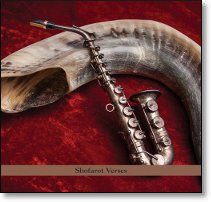
Ask a question, or send a comment. Thursday, August 7, 2014 Downbeat Readers PollI was queried the other day about the deadline for Downbeat's [79th] annual readers poll. Not sure when it is, but voting is currently open (link). I vote in their Critics Poll, which takes a lot more work: we generally pick three candidates in each category, and there are "rising star" subcategories (formerly "talents deserving wider recognition"), but less work means less trouble, so I voted anyway. If you have any degree of interest and expertise, you should too. If you want to compare notes, mine follow: Hall of Fame: Lee Konitz. He's 87, and the leading candidate for the past decade. What, you want he should die first? Isn't it bad enough you voted for Pat Metheny last year? Others, la crème de la crème on the ballot: Han Bennink, Anthony Braxton, Don Cherry, Tommy Flanagan, Abdullah Ibrahim, Illinois Jacquet, Misha Mengelberg, Tito Puente, George Russell, Tomasz Stanko. Baseball HOF thinkers divide between ultra-exclusivists (who doubt that Sam Rice or Al Kaline were really such big stars) and more-inclusivists (who are more likely to think that Bid McPhee and Bill Mazeroski got snubbed). I've usually aligned with the latter (McPhee at least, but maybe not Mazeroski: both era-defining fielders, but the latter didn't have much bat, except on the day he broke my 10-year-old heart). So, sure, many more good names on the ballot -- more than they'll ever get to at the rate of two per year. Off ballot: Red Allen, Billy Bang, Don Byas, Cab Calloway, Leroy Jenkins, Budd Johnson, Louis Jordan, Herbie Nichols, Pérez Prado, Don Pullen, Don Redman, Jimmy Rushing, Sonny Sharrock, Lucky Thompson, Mal Waldron, David S. Ware, Barney Wilen -- all dead and done. Among the living: Vinny Golia, Sheila Jordan, Joe McPhee, David Murray, William Parker, Houston Person, Roswell Rudd, Irène Schweizer, Bob Wilber, and of course one could add and add and add. Wynton Marsalis is on the ballot, so why not Dave Douglas? Wadada Leo Smith? Dennis González? Jazz Artist: Anthony Braxton. It's a special year for him. On ballot: Dave Douglas, John Hollenbeck, William Parker, Matthew Shipp, Wadada Leo Smith, Ken Vandermark, John Zorn. Jazz Group: Mostly Other People Do the Killing. Off ballot: Ideal Bread, the Whammies. Big Band: ICP Orchestra. On ballot: Steven Bernstein's Millennial Territory Orchestra. Off ballot: Ken Vandermark/The Resonance Ensemble. Jazz Album (June 2013-May 2014): Roswell Rudd: Trombone for Lovers (Sunnyside '13). Off ballot (and I'm very surprised by this, because the label tends to finish very well in polls but also the artist has earned a real following): Steve Lehman Octet: Mise en Abîme (Pi '14). [PS: Release date turns out ot be June 24, so the record is eligible next year. I was assuming that everything in my 2014 list is eligible for the ballot, but some of those records were released after May 31, so the lower percentage of 2014 A-list on the ballot should be expected.] I have three other full-A albums listed from the period: William Parker: Wood Flute Songs (AUM Fidelity); Paul Shapiro: Shofarot Verses (Tzadik); and Digital Primitives: Lipsomuch/Soul Searchin' (Hopscotch) -- only Parker is on the ballot. Total nominated records: 175. My grade breakdown: A (2); A- (15); B+(***) (31); B+(**) (29); B+(*) (18); B (10); B- (9). Ungraded: 61 (34.8%). Last year's ungraded percentage was 31%, so I'm slipping a bit, but not an awful lot. The grade distribution has slipped downward a bit too (overall graded is up 29.5%, but A/A- is down from 20 to 17, and B/B- is up from 8 to 19). The six-month offset makes it hard to compare to my yearly lists, but within 2014 only 11 of my 42 jazz A/A- records (26.1%) were listed on the ballot (Jenny Scheinman, Craig Handy, Regina Carter, Mary Halvorson, Bobby Avey, Dave Douglas, Catherine Russell, Eric Revis, Sonny Rollins, Vijay Iyer, James Brandon Lewis). Full breakdown on the ballot albums below the fold. Historical Album (Released June 2013-May 2014): Art Pepper: Unreleased Art Vol. VIII: Live at the Winery (Widow's Taste). Despite my long interest in Recycled Goods, I get very few "historical" albums: only 10 of the 42 (23.8%) on the ballot. Given this small sample, I won't bother with grade breakdowns (other than to note that I had 4 A- records), or whatever competitive off ballot records I had (other than one A- this year: Enrico Pieranunzi: Play Morricone 1 & 2). Trumpet: Dave Douglas. On ballot: Ralph Alessi, Steven Bernstein, Taylor Ho Bynum, Peter Evans, Rob Mazurek, Randy Sandke, Wadada Leo Smith, Tomasz Stanko. Off ballot: Dennis González, Darren Johnston, Matt Lavelle, Paul Smoker, Warren Vaché, James Zollar. Trombone: Roswell Rudd. On ballot: Ray Anderson, Joe Fiedler, Curtis Fowlkes, Phil Ranelin, Steve Swell, Steve Turre. Off ballot: Conrad Bauer, Samuel Blaser. Soprano Sax: Evan Parker. On ballot: Jan Garbarek, Vinny Golia, Bob Wilber. I'm not quite ready to add Dave Liebman, but he tries hard and has become notably more tolerable in the last couple years. Off ballot: Brent Jensen. Few specialists, and nearly everyone plays better on larger saxes (including Parker). Alto Sax: François Carrier. On ballot: Tim Berne, Anthony Braxton, Ornette Coleman, Mike DiRubbo, Marty Ehrlich, Jon Irabagon, Lee Konitz, Oliver Lake, Rudresh Mahanthappa, Michael Moore, Ted Nash, Dave Rempis, Yosvany Terry, Henry Threadgill, Bobby Watson, Miguel Zenón, John Zorn. Off ballot: Martin Küchen, Steve Lehman, Mark Whitecage. Tenor Sax: Ellery Eskelin. On ballot: Harry Allen, Jerry Bergonzi, James Carter, Joel Frahm, Jan Garbarek, Jon Irabagon, Charles Lloyd, Joe Lovano, Tony Malaby, Branford Marsalis, Joe McPhee, David Murray, Larry Ochs, Evan Parker, Ivo Perelman, Houston Person, Chris Potter, Sonny Rollins, Grant Stewart, Marcus Strickland, Ken Vandermark. Off ballot: Juhani Aaltonen, Rodrigo Amado, Chris Byars, Rich Halley, Scott Hamilton, Billy Harper, Dave Rempis, Archie Shepp, Tommy Smith, Assif Tsahar. Baritone Sax: Howard Johnson. On ballot: Hamiet Bluiett, James Carter, Claire Daly, Vinny Golia, Brian Landrus, Scott Robinson, Gary Smulyan, John Surman. Not sure why we hear so little from Bluiett; otherwise no obvious choices, so I thought I'd vote for the tuba great. Clarinet: Michael Moore. On ballot: Andy Biskin, Don Byron, Evan Christopher, Anat Cohen, Marty Ehrlich, Ben Goldberg, Rudi Mahall, Perry Robinson, Louis Sclavis, Gebhard Ullmann, Mort Weiss. Off ballot: Lajos Dudas, Avram Fefer. Flute: Juhani Aaltonen. On ballot: Robert Dick, Nicole Mitchell. Piano: Satoko Fujii. On ballot: Kenny Barron, George Cables, Uri Caine, Marilyn Crispell, Kris Davis, Abdullah Ibrahim, Ethan Iverson, Vijay Iyer, Keith Jarrett, Brad Mehldau, Myra Melford, Misha Mengelberg, Jason Moran, Enrico Pieranunzi, Gonzalo Rubalcaba, Matthew d Shipp, Chucho Valdés, Denny Zeitlin. Off ballot: Nik Bärtsch, Ran Blake, Bill Carrothers, Cooper-Moore, David Hazeltine, Pandelis Karayorgis, Joachim Kühn, Steve Kuhn, Russ Lossing, Irène Schweizer, Aki Takase, Albert Van Veenendaal. ELectronic Keyboard: Nik Bärtsch. Doesn't actually play electronic, which makes what he does all the more remarkable. Organ: Brian Charette. Guitar: Marc Ribot. On ballot: Rez Abbasi, Howard Alden, Peter Bernstein, Nels Cline, Bill Frisell, Mary Halvorson, Jeff Parker, Bucky Pizzarelli. Off ballot: Raoul Björkenheim, Pierre Dørge, Marc Ducret, Scott Dubois, Gordon Grdina, Billy Jenkins, Luis Lopes, Pete McCann, Wolfgang Muthspiel, Anders Nilsson, Kevin O'Neil, Samo Salamon, Brad Shepik, Ulf Wakenius. Bass: William Parker. On ballot: Ben Allison, Arild Andersen, Pablo Aslan, Harrison Bankhead, Avishai Cohen, Mark Dresser, Moppa Elliott, Ingebrigt Håker Flaten, Michael Formanek, Drew Gress, Barry Guy, Charlie Haden, John Hébert, Mark Helias, Dave Holland, Marc Johnson, Christian McBride, Gary Peacock, Eric Revis, Peter Washington, Reggie Workman. Off ballot: Jason Ajemian, Reid Anderson, Michael Bates, Ken Filiano, Adam Lane, John Lindberg, Mario Pavone. Electric Bass: Steve Swallow. Violin: Jenny Scheinman. On ballot: Charles Burnham, Regina Carter, Jason Kao Hwang, Aaron Weinstein, Carlos Zingaro. Drums: Hamid Drake. On ballot: Barry Altschul, Joey Baron, Han Bennink, Jim Black, Gerald Cleaver, Andrew Cyrille, Jack DeJohnette, Joe Farnsworth, Gerry Hemingway, John Hollenbeck, Billy Martin, Lewis Nash, Paal Nilssen-Love, Mike Reed, Tyshawn Sorey, Nasheet Waits, Matt Wilson. Off ballot: Harris Eisenstadt, Pierre Favre, Louis Moholo, Kevin Norton, Warren Smith, Günter Sommer. Vibes: Kevin Norton. On ballot: Jason Adasiewicz, Joe Locke, Matt Moran, Warren Smith. Percussion: Han Bennink. On ballot: Kahil El'Zabar, Marilyn Mazur, Satoshi Takeishi. Miscellaneous Instrument: Rabih Abou-Khalil (oud). On ballot: Erik Friedlander (cello), Howard Johnson (tuba), Fred Lonberg-Holm (cello), David Murray (bass clarinet), Bob Stewart (tuba). Male Vocalist: Freddy Cole. Female Vocalist: Sheila Jordan. On ballot: Leena Conquest, Diana Krall, René Marie, Catherine Russell, Fay Victor. Composer: Steve Lehman. Arranger: Steven Bernstein. Record Label: Clean Feed. Blues Artist or Group: Lurrie Bell. Blues Album (June 2013-May 2014): Leo Welch: Sabougla Voices (Big Legal Mess). I graded eight blues albums from the ballot (2 A-: Leo Welch, Lurrie Bell). My ungraded rate is 90.0% (72 of 80). Not that I dislike blues, but it's not exactly a cutting edge art form. Beyond Artist or Group: The Roots. Can't really deal with this concept. Beyond Album (June 2013-May 2014): M.I.A.: Matangi (Interscope). I graded 27 albums from the ballot (4 A/A-: MIA, Arcade Fire, The Road to Jajouka, Janelle Monáe; B+ split 5-7-4; B or lower 7). My ungraded rate is 40.0% (18 of 45). Looking over my ballot, I'll note several things. One is that I always went with someone on the ballot, even though in a couple slots a write-in might be the better candidate. I do more write-ins in the Critics Poll, but figure the larger voting population here makes them even more invisible (plus they take more time than it's worth). Also, sometimes I skipped the player I generally take as best-established to pick out someone I'm especially fond of (e.g., Eskelin over Murray at tenor sax). Third, in the thinner categories I just grabbed someone and didn't sweat the details. If I filled out the ballot again tomorrow I'd probably make some changes. Indeed, from last year, I changed: Jazz Artist (was Wadada Leo Smith), Big Band (Steven Bernstein Millennial Territory Orchestra), Trumpet (Wadada Leo Smith), Alto Sax (Oliver Lake, Tenor Sax (David Murray), Baritone Sax (Vinny Golia), Electric Keyboard (Matthew Shipp), Organ (John Medeski), Guitar (Mary Halvorson), Electric Bass (Stomu Takeishi), Drums (Han Bennink), Vibes (Warren Smith), Percussion (Kahil El'Zabar), Miscellaneous Instrument (Howard Johnson), Composer (Ben Allison), Blues Artist (Eric Bibb), Beyond Artist (Neil Young). Those all look like pretty good answers, but so are this year's picks. Ask a question, or send a comment. August 5, 2014 Music Week
Music: Current count 23599 [23570] rated (+29), 554 [541] unrated (+13). Music Week is a day late this week. No holiday schedule or suchlike, just a lot of tsuris, which among other things pushed Weekend Roundup from its usual Sunday to Monday. My blog has been under the weather for a couple weeks now. I've complained to the ISP (addr.com) and gotten no help whatsoever (at least none they've explained to me). I did tweak the software (serendipity, or s9y as they prefer) a bit to avoid a table that seems to be damaged and really doesn't do much good. My plan now is to try to rebuild the blog on my own server, and if it proves mobile I may very well move it to another server. The dedicated server I lease remains a problem. I set up four stub accounts there last week, including my first attempt to use WordPress for a website but have a lot to learn there, and I'm still not happy with that ISP. Other computer problems include several flurries of mailing list bounces, some caused by an listing at Spamhaus that erroneously spanned my IP addresses, others by overzealous DMARC processing -- and of course nothing frays my brain cells more than email debugging. More pedestrian things that have broken during the last week include a faucet/lavatory drain, a toilet, a shade, an oven, and various car problems including an overnight at the garage and two trips to the tire shop. I'm pleased to report that at least I've managed to fix the plumbing issues. I've also been much more agitated than usual about politics -- obviously the situation in Gaza is especially dire, and I agree with Daniel Levy that the US (meaning Obama) could have stopped it at any point (including before anyone noticed), but I am every bit as chagrined with Obama for his mishandling of Iraq and Ukraine, so this point is the lowest regard I've ever held him in. On the other hand, today is primary day in Kansas, with virtually all the action on the Republican side (not my registration, and only true believers are allowed to vote there). There is a well-funded "tea party" challenge to Sen. Pat Roberts (polls put Roberts ahead by 30 points but I expect it will be much closer), and two incumbent Congressmen face strong challenges: ultra-right Tim Huelskamp burned a lot of bridges in the rural 1st district getting kicked off the Agriculture Committee and voting against the big farm bill. In the 4th district Mike Pompeo (R-Koch) is being challenged by eight-term former congressman Todd Tiahrt (R-Boeing). When in Congress Tiahrt was a DeLay crony with an extreme right social record and a taste for big money, but he's been trying to run to Pompeo's left, attacking him for sponsoring Monsanto's anti-GMO-labelling law and backing NSA spying. A lot of money in that race. Sam Brownback is so unpopular Jennifer Winn will get some votes for governor. Four years ago the right was carrying out a purge of the last of the moderate Republicans, but one of the few who survived is running against neanderthal Richard Ranzau for the Sedgwick County Commission, and another moderate is trying to save us from Secretary of State Kris Kobach. The net result is that we've been flooded in anti-Obama propaganda, none of which has managed to sympathize with the guy. Rather, this feels like the further advance of Dark Ages as politicians who have done nothing but harm promise to create jobs and make government work for us. Meanwhile, of course, there is music. Much of this appeared in last week's Rhapsody Streamnotes. Since then I've slowed down a bit -- it's just been hard to concentrate. Lot of mail came in last week, and I jumped right into the Clean Feed package. Neither A- was clear the first time through, but I wound up playing them quite a bit. Recommended music links: New records rated this week:
Recent reissues, compilations, and vault discoveries rated this week:
Old records rated this week:
Grade changes:
Unpacking: Found in the mail last week:
Ask a question, or send a comment. August 4, 2014 Weekend RoundupRunning a day behind and coming up short as I try to sum up what's been happening around the world and how Israel/Gaza fits into it. The blog, by the way, has experienced intermittent failures, something the ISP (addr.com) has thus far been completely unhelpful at fixing. Sorry for the inconvenience. Music Week will also run a day late (assuming no further outages). This week's links will once again focus mostly on Israel's continuing assault on Gaza. It is not the only significant war in the world at the moment -- the governments in Syria, Iraq, and Ukraine are simultaneously engaged in brutal campaigns to bring their own people back under central state control -- but it is the one that most immediately concerns us in the US, partly because American partisanship in largely responsible for the conflict (i.e., the failure to resolve the conflict peacefully); partly because Israel's thinking and practice in power projection and counterterrorism is seen as an ideal model by many influential American foreign policy mandarins (the so-called "neocons," of course, but many of their precepts have infiltrated the brains of supposedly more liberal actors, notably the Clintons, Kerry, and Obama); and partly because Israel has managed to recapitulate the violence and racism of our own dimly remembered past, something they play on to elicit sympathy even though a more apt reaction would be horror. I don't want to belittle the three other "civil wars": indeed, the US (almost entirely due to Obama) has actively sided with the governments of Iraq (the US has sent a small number of ground troops and large amounts of arms there) and Ukraine (the US has led the effort to sanction and vilify Russia). On the other hand, the US condemned and threatened to bomb Syria, and has sent (or at least promised) arms to "rebels" there, although they've also (at least threatened) to bomb the "rebels" too. But we also know relatively little about those conflicts, and probably understand less, not least because most of what has been reported has been selected for propaganda effect. For instance, when "separatists" in Ukraine tragically shot down a Malaysian airliner, that story led the nightly news for more than a week, but hardly anyone pointed out that Ukraine had been shelling and bombing separatist enclaves, and that anti-aircraft rockets had successfully shot down at least one Ukrainian military plane before the airliner. (The effective blackout of news of the conflict, including the use of anti-aircraft missiles in the region, should bear at least some measure of blame for the airliner tragedy.) Similarly, we hear much about extreme doctrines of the breakaway "Islamic State" in Iraq, but virtually nothing of the Maliki government practices that have managed to alienate nearly all of northwestern Iraq (as well as the Kurdish regions, which have all but declared their own breakaway state, one that the US is far more tolerant of -- perhaps since it doesn't serve to flame Islamophobic public opinion in the US). Syria is a much messier problem, for the US anyhow. The state was taken over by the Ba'ath Party in 1963, and led by the Assad family since 1971. Syria fought against Israel in the 1948-49 war, and again in 1967, when Israel seized the Golan Heights, and again in 1973. At various times Syria made efforts to ally itself with the US (notably in the 1990 coalition against Iraq), but several factors prejudiced US opinion against the Assads: the border dispute with Israel and intermittent Syrian support for the PLO, Syria's resort to Russia (and later Iran) as its armaments supplier, the repressive police state and the brutality with which the Assads put down rebellions (e.g., they killed at least 10,000 people in the Hama massacre of 1982 -- a tactic much admired by Israeli military theoreticians like Martin Van Creveld). One might think that Syria's lack of democracy would be an issue, but the US has never objected to other tyrants that could be counted as more reliable allies, such as the kings of Jordan and Saudi Arabia. But when Assad fired on Arab Spring demonstrations, prejudice turned Obama against Assad, as the revolt became militarized he chipped in guns, as it became Islamicized he waffled. Obama set a "red line" at the use of chemical weapons, and when that appeared to have been violated, he felt it was his place to punish Syria with a round of gratuitous bombings, but Congress demurred, and Putin interceded with an offer by Syria to give up their chemical weapon stocks. Since then, Obama has promised more arms to Syrian "rebels" and also threatened to bomb those rebels connected with the revolt in Iraq, and he ruined his relationship with Putin -- the only real chance to mediate the conflict -- for recriminations over Ukraine. Meanwhile, Israel (always seen as a US ally even though usually acting independently) bombed Syria. At this point there will be no easy resolution to Syria. One obvious problem is how many foreign countries have contributed to one side or the other (or in the case of the US to both, if not quite all). So the first step would be an international agreement to use whatever pressure they have to get to a ceasefire and some sort of power-sharing agreement, but obvious as that direction is, the other ongoing conflicts make it impossible. Just to take the most obvious example, the US (Obama) is by far more committed to marginalizing Russia in Ukraine than it is to peace anywhere in the Middle East, least of all Israel. Russia is likewise more focused on Ukraine than anywhere else, although it doesn't help that its main interest in Syria and Iraq appears to be selling arms (it supports both governments, making it a US ally in Iraq as well as an enemy in Syria, blowing the Manichaean minds in Washington). Saudi Arabia and Iran are far more invested against or for Syria and Iraq. One could go on and on, but absent any sort of enlightened world leader willing to step outside of the narrow confines of self-interest and link the solution to all of these conflicts, their asymmetries will continue to grind on, and leave bitter legacies in their paths. In Syria alone, over more than three years the estimated death toll is over 250,000. In Iraq estimated deaths since the US exit in 2011 are over 21,000, but much more if you go back to 2003 when the US invaded and stirred up much sectarian strife. (I couldn't say "started" there because US culpability goes back to 1991, when Bush urged Iraqi shiites to rise up against Saddam Hussein, then allowed the Iraqi army to crush them mercilessly, then instigated "no fly" zones with periodic bombings, along with sanctions lasting until the 2003 invasion.) As for Israel's latest assault on Gaza, in three weeks Israel has killed over 1,800 Palestinians -- I won't bother trying to separate out "civilians" and "militants" since Gaza has no organized military (like the IDF). That may seem like a small number compared to Syria above, but if you adjust for the relative populations (22.5 million in Syria, 1.8 million in Gaza) and length of war (171 weeks for Syria, 3 for Gaza) the kill rate is about five times greater in Gaza (333 per million per week vs. 65 per million per week in Syria). Moreover, the distribution of deaths is extremely skewed in Gaza, whereas in Syria and Iraq (I have no idea about Ukraine) they are close to even (to the extent that "sides" make sense there). The distinction between IDF and "civilians" makes more sense in Israel, especially as nearly all IDF casualties occurred on Gazan soil after Israel invaded. The ratio there is greater than 600-to-one (1800+ to 3), a number we'll have to come back to later. (The first Israeli killed was a settler who was voluntarily delivering goodies to the troops -- i.e., someone who would certainly qualify as a "militant"; another was a Thai migrant-worker, and some tallies of Israeli losses don't even count him.) The number of Israeli soldiers killed currently stands at 64, some of which were killed by Israeli ("friendly") fire. (The first IDF soldier killed was so attributed, but I haven't seen any later breakdowns. There have been at least two instances where an Israeli soldier was possibly captured and subsequently killed by Israeli fire -- IDF forces operate under what's called the Hannibal Directive, meant to prevent situations where Israeli soldiers are captured and used as bargaining chips for prisoner exchanges, as was Gilad Shalit.) Even if you counted those IDF deaths, the overkill ratio would be huge. But without them, it should be abundantly clear how little Israel was threatened by Hamas and other groups in Gaza. In 2013, no one in Israel was hurt by a rocket attack from Gaza. This year, in response to Israel and Egypt tightening Gaza borders, to Israel arresting 500+ people more or less associated with Hamas (many released in the Shalit deal) in the West Bank, and to Israel's intense bombardment now lasting three weeks, more than a thousand rockets were launched from Gaza at Israel, and the result of all this escalation was . . . 3 dead, a couple dozen (currently 23) wounded. Just think about it: Israel gave Gazans all this reason to be as vindictive as possible, and all it cost them was 3 civilian casualties (one of which they don't even count). In turn, they inflicted incalculable damage upon 1.8 million people. The trade off boggles the mind. Above all else, it makes you wonder what kind of people would do such a thing. A little history here: Zionist Jews began emigrating from Russia to the future Israel, then part of the Ottoman Empire, in the 1880s, following a breakout of pogroms (state-organized or -condoned attacks on Jews) following the assassination of Czar Alexander. Britain went to war against the Ottoman Empire in 1914, and made various promises to both Arabs and Jews of land they would seize from the Ottomans, including Palestine. In 1920 the British kept Palestine as a mandate. They took a census which showed the Jewish population at 10%. The British allowed Jewish immigration in fits and spurts, with the Jewish population ultimately rising to 30% in 1947. Britain's reign over Palestine was marked by sporadic violence, notably the Arab Revolt of 1937-39 which Britain brutally suppressed, using many techniques which Israel would ultimately adopt, notably collective punishment. Meanwhile, the British allowed the Zionist community to form a state-within-the-state, including its own militia, which aided the British in putting down the Arab Revolt. In 1947, Britain decided to wash its hands of Palestine and returned the mandate to the then-new United Nations. The leaders of the Jewish proto-state in Palestine lobbied the United Nations to partition Palestine into two parts -- one Jewish, the other Arab (Christian and Moslem) -- and the UN complied with a scheme that offered Jewish control of a slight majority of the land, Arab control of several remaining isolated pockets (West Bank, West Galilee, Gaza Strip, Jaffa), with Jerusalem a separate international zone. There were virtually no Jews living in the designated Arab areas, but Arabs were more than 40% of the population of the Jewish areas. The Arabs rejected the partition proposal, favoring a single unified state with a two-to-one Arab majority. The Zionist leadership accepted the partition they had lobbied for, but didn't content themselves with the UN-specified borders or with the international zone for Jerusalem. When the British abdicated, Israel declared independence and launched a war to expand its territory, swallowing West Galilee and Jaffa, capturing the west half of Jerusalem, and reducing the size of the Gaza Strip by half. Several neighboring Arab countries joined this war, notably Transjordan, which was able to secure east Jerusalem (including the Old City) and the West Bank (including the highly contested Latrun Salient), and Egypt, which wound up in control of the reduced Gaza Strip. During this war more than 700,000 Palestinian Arabs were uprooted and fled beyond Israeli control, to refugee camps in Gaza, the West Bank, Lebanon, and Syria, leaving the land occupied by Israel as 85% Jewish. Israel signed armistice agreements in 1949-50 with its neighbors. Jordan annexed its occupied Palestinian territories and gave their inhabitants Jordanian citizenship, not that that meant much in an monarchy with no democratic institutions. Egypt didn't annex Gaza; it styled itself as a caretaker for a fragment of a future independent Palestinian state, which left its inhabitants in limbo. Israel passed a series of laws which gave every Jew in the world the right to immigrate to Israel and enjoy citizenship there, and denied the right of every Palestinian who had fled the 1948-50 war to ever return, confiscating the lands of the refugees. Palestinians who stayed within Israel were granted nominal citizenship, but placed under military law. Gazan refugees who tried to return to Israel were shot, and Israel repeatedly punished border incidents by demolishing homes in Gaza and the West Bank. (Ariel Sharon first made his reputation by making sure that the homes he blew up in Qibya in 1953 were still occupied.) Israel was never happy with its 1950 armistice borders. After numerous border incidents, Israel launched a sneak attack on Egypt in 1967, seizing Gaza and the Sinai Peninsula up to the Suez Canal, then quickly expanded the war into Jordan (grabbing East Jerusalem and the West Bank) and Syria (the Golan Heights). The UN resolution following the 1967 war called for Israel to return all the lands seized during the war in exchange for peace with all of Israel's neighbors. The Arabs nations were slow to respond to this "land-for-peace" proposal, although this was the basis of the 1979 agreement that returned the Sinai Peninsula to Egypt, and would be the basis of subsequent peace proposals backed by every nation in the Arab League -- the sole difference is that Jordan has since renounced its claim to the West Bank and East Jerusalem, so those as well as Gaza might form the basis of an independent Palestinian state, as originally envisioned by the UN. The PLO has agreed to this solution, and Hamas has announced tacit approval (they have what you may call a funny way of putting things, one that unfortunately allowed for a large measure of distortion by Israeli "explainers" [hasbara-ists]). So if Israel ever wanted peace, both with its neighbors and with its current and former Palestinian subjects, that simple deal is on the table (as well as several subsequent ones which allow Israel additional concessions, although those are less universally accepted). The rub is that Israel has never wanted peace, and nowadays the political consensus in Israel is further than ever from willing to even consider the notion. This is a hard point for most people to grasp -- who doesn't want peace? -- but nothing Israel does makes any sense until you realize this. We can trace this back over history, or you can just look at the current fracas. Israel, after all, could have decided to handle the June 12 kidnapping-murder as a normal police matter. Despite everything they've done since, they haven't caught their two prime suspects, so they couldn't have done less as to solving the crime, and they would have gotten a lot more credit and sympathy. But rather than react as any normal country would, they went out and arrested 500 people who had nothing to do with the crime, and in the process of doing that they killed another nine Palestinians. The rockets, which in any case did no real damage, were primarily a response to the arrests, and more basically to Israel's blockade of Gaza, which is itself a deeper manifestation of Israel's belligerency. Even then, Israel could have ignored the rockets. The decision to start shelling/bombing Gaza was completely their own, as was the decision to send troops into Gaza to destroy tunnels that hadn't caused any actual harm to Israel. In short, all that destruction is the direct result of Israel reacting the way Israel always reacts to provocations: by escalating the level of violence. And that's simply not the way a nation that wants to live in peace behaves. I can think of several reasons why Israel has chosen to be a state of perpetual war:
Those four points are all true, self-reinforcing in various combinations at various times. They help explain why David Ben-Gurion, for instance, sabotaged his successor for fear that Moshe Sharrett might normalize relations with Israel's Arab neighbors, turning Israel into an ordinary country. They help explain why Abba Eban was so disingenuous following 1967, giving lip service to "land-for-peace" while never allowing any negotiations to take place. They help explain why a long series of Israeli politicians -- Shimon Peres and Ariel Sharon are the two that stand out in my mind -- tied up so much land by encouraging illegal settlements, and why today's West Bank settlers retrace the steps both of the Yishuv's original settlers and of even earlier Americans encroaching on Indian lands. They help explain why Israelis habitually label anyone who crosses them a terrorist (something John Kerry was accused of last week), and why Israel habitually refuses to negotiate with those it sees as enemies. They help explain why Israel places so little value on the life of others. (One irony is that a nation which has no capital punishment for its own citizens, even when one kills a Prime Minister, yet has casually engaged in hundreds of extrajudicial assassinations.) I've gone on at some length here about Israel's innate tendencies because there seems to be little else directing Netanyahu's process. It used to be the case that the Zionist movement depended on forming at least temporary alliances with foreign powers to advance their goals. For instance, they got the UK to issue the Balfour Declaration and commit to creating a "Jewish homeland" in Palestine. Later, when the UK quit, the nascent Israel depended first on the Soviet Union then on France for arms. Eventually, they found their preferred ally in the US, but for a long time US presidents could limit Israel's worst instincts, as when Eisenhower in 1956-57 pressured Israel into withdrawing from Egypt's Sinai, or when Carter in 1978 reversed an Israeli effort to enter Lebanon's Civil War. (Neither of those limits proved long-lasting: Israel retook Sinai when a more accommodating LBJ was president, and moved recklessly into Lebanon in 1982 under Reagan's indifference.) As late as 1992, voters were sensitive enough to Israel's US relationship to replace obdurate Yitzhak Shamir with the much friendlier Yitzhak Rabin (a former Israeli ambassador to the US and initiator of the Oslo Peace Process -- ultimately a sham, but one that broke the ice with the US, and got him killed by a right-wing fanatic). But since then Bush II turned out to be putty in Ariel Sharon's grubby hands, and Obama has proven to be even more spineless viz. Netanyahu. So whatever limits America might have posed to Israeli excesses have gone by the wayside: Israeli cabinet ministers can accuse Kerry of terrorism just for proposing a ceasefire, confident that such rudeness won't even tempt Congress to hold back on an extra $225M in military aid. Still, you have to ask, "why Gaza?" Two times -- in 1993 when Israel ceded virtually all of Gaza to the newly formed Palestinian Authority, and in 2005 when Israel dismantled its last settlements in Gaza -- Israel signaled to the world that it had no substantive desire to administer or keep Gaza itself. (It is still possible that Israel could annex all of the West Bank and Jerusalem and extend citizenship to Palestinian inhabitants there -- there are Israelis who advocate such a "one-state solution" there as an alternative to trying to separate out a Palestinian state given the scattering of Israeli settlements in the territory, but there is no way that Israel would entertain the possibility of giving citizenship to Palestinians in Gaza.) However, Israel has continued to insist on controlling Gaza's borders and airspace, and limited its offshore reach to a measly three kilometers. Then in 2006 Palestinians voted for the wrong party -- a slate affiliated with Hamas, which was still listed by the US and Israel as a "terrorist entity" (as was the PLO before it was rehabilitated by signing the Oslo Accords). The US then attempted to organize a coup against Hamas, which backfired in Gaza, leaving the Strip under Hamas control. From that point, Israel, with US and Egyptian backing, shut down the border traffic between Gaza and the outside world -- a blockade which has severely hampered Gaza ever since. Hamas has since weaved back and forth, appealing for international help in breaking the blockade, and failing that getting the world's attention by launching small rockets into Israel. The rockets themselves cause Israel little damage, but whenever Israel feels challenged it responds with overwhelming violence -- in 2006, 2008, 2012, and now in 2014 that violence has reached the level of war. In between there have been long periods with virtually no rocket fire, with resumption usually triggered by one of Israel's "targeted assassinations." Between 2008-12 the blockade was partially relieved by brisk use of smuggling tunnels between Gaza and Egypt. In 2013 Gaza benefited from relatively free above-ground trade with Egypt, but that came to an end with the US-backed military coup that ended Egypt's brief experiment with democracy (another case of the "wrong" people, as viewed by the US and Israel, getting elected). With Egypt as well as Israel tightening the blockade of Gaza, followed by the mass arrest of Hamas people in the West Bank, rocket fire resumed, only to be met by the recent widespread slaughter. Hamas has thus far insisted that any ceasefire include an end to the blockade. As I've written before, that seems like a completely reasonable demand. Israel has mistreated Gaza ever since occupying it in 1967, and that treatment became even worse after 2005, becoming little short of sadistic. Hamas has even offered to turn its control of the Gaza administration back over to a "unified" PA, which would be backed but not controlled by Hamas. (In my view an even better solution would be to spin Gaza off as an independent West Palestine state, totally free of Israeli interference.) Israel's assertions regarding Gaza are inevitably confused: they claim they need to blockade Gaza for security against missiles that in fact are fired mostly to protest the blockade (the other cases are a weak response to Israel's far more powerful arsenal). On the other hand, Israeli control keeps Gaza from ever developing a normal economy, and Israel's tactics (like targeted assassinations) keep Gaza in a state of constant terror. Throughout history, there have been two basic approaches to counterterrorism: one is to kill off all the terrorists one-by-one; the other is to negotiate with the terrorists and let them enter into responsible democratic political procedures. The former has worked on rare occasions, usually when the group was extremely small and short-lived (Che Guevara in Bolivia, Shining Path in Peru). The outer limit was probably the Algerian anti-Islamist war of 1991-94 where Algeria killed its way through more than ten generations of leaders before the movement self-destructed, but even there the conflict ended with negotiations and amnesty. Israel's practice of collective punishment pretty much guarantees an endless supply of future enemies. As long as you understand that Israel's intent and desire is to fight forever, such tactics make sense. And as long as Israel can maintain that 600-to-1 kill ratio, someone like Netanyahu's not going to lose any sleep. Inside Israel military censorship keeps the gory details out of sight and out of mind, reinforcing the unity that makes this such a happy little war, but elsewhere it's all becoming increasingly clear: how flimsy Israel's excuses are, how much they destroy and how indifferent they are to the pain they inflict, indeed how callous and tone-deaf they have become. Moreover, this war shows what chumps the US (and Europe) have become in allying themselves with Israel. No matter how this war ends, more people than ever before are going to be shocked that we ever allowed it to happen. Even more so if they come to realize that there was never any good reason behind it. Back in June, when all this crisis amounted to was three kidnapped Israeli settler teens and Israel's misdirected and hamfisted "Operation Brother's Keeper," I argued that someone with a good journalistic nose could write a whole book on the affair, one that would reveal everything distorted and rotten in Israel's occupation mindset, possibly delving even into the warped logic behind those kidnappings. Since then, I've been surprised by three things: the scale of human tragedy has become innumerable (at least in a mere book -- only dry statistics come close to measuring the destruction, and they still miss the terror, even for the few people who intuit what they measure); how virulent and unchecked the genocidal impulses of so many Israelis have become (the trend, of course, has been in that direction, and every recent war has seen some outbursts, but nothing like now); and how utterly incompetent and impotent the US and the international community has been (aside from Condoleezza Rice's "birthpangs of a new Middle East" speech during the 2006 Lebanon War, the US and UN have always urged a ceasefire, but this time they've been so in thrall to Netanyahu's talking points they've scarcely bothered to think much less developed any backbone to act). It's a tall order, but this may be Israel's most senseless and shameful war ever. This week's scattered links:
Ask a question, or send a comment. Wednesday, July 30, 2014 Rhapsody Streamnotes (July 2014, Part 2)Fewer new records, but more old ones, for one of the larger Rhapsody Streamnotes posts of the year. I've written about the various factors driving my old music searches, especially in Monday's "Music Week," so won't try to repeat that here. New records have been harder to find, so I jumped on three of this week's releases: Jenny Lewis, Shabazz Palaces, La Roux. Each came close, but only Lewis improved on the second, and not quite enough to crack the A-list. Those with a better memory than me will recall that I folded Jazz Prospecting into Rhapsody Streamnotes back in January (and no sooner). I got confused when I expected and failed to find the William Parker box in the Rhapsody Streamnotes index, so I dusted off last year's best jazz list review and included it here. Then I realized my mistake when I looked for more omissions and found more than I thought possible. Still, I kept the revised Parker review, if for no reason than I had bumped the grade up. Everything of note has been tweeted about -- the easiest way to follow my researches is to follow my twitter feed here. The tweets are then rolled up in my weekly Music Week posts, along with some comments. Then, sooner or later, Rhapsody Streamnotes appears, rolling it all up with blurbs not limitd to 140 characters. These are short notes/reviews based on streaming records from Rhapsody. They are snap judgments based on one or two plays, accumulated since my last post along these lines, back on July 8. Past reviews and more information are available here (5100 records). New Releases (More or Less)
Dee Alexander: Songs My Mother Loves (2014, Blujazz): Standards singer out of Chicago, started out in gospel but the concept here gives her a secular album with classic songs -- "As Long as You're Living," "Now or Never," "What a Difference a Day Makes," two takes of "Perdido." Mostly piano-bass-drums, but the bassist is Harrison Bankhead, and the guest horns Ari Brown, Oliver Lake, and Corey Wilkes. B+(**) [cd] Al Basile: Swing n' Strings (2013 [2014], Sweetspot): Basically a light-toned blues singer with a touch of Mose Allison in his voice, also plays cornet, with more than ten records since 2001. The strings here turn out to be two guitars, Fred Bates and Bob Zuck (who also sings a couple). No drums, but a bit of sax. B+(**) [cd] Gerald Beckett: The Messenger (2013 [2014], Summit): Flute player, from Beaumont TX, studied at UNT, has a couple albums. Artwork here is very dark, but the album sloshes along agreeably, the sax boppish and the flute buoyant, flittering even. B [cd] Kris Berg & the Metroplexity Big Band: Time Management (2014, Summit/MAMA): Bassist-led big band, second album, drew some guest stars here including Phil Woods and Wayne Bergeron. B+(*) [cd] Todd Bishop Group: Travelogue (2014, Origin): Drummer, has a couple previous albums, leads a quartet with Richard Cole (not Richie Cole) on saxes, bass clarinet, and flute; Jasnam Daya Singh (better known as Weber Iago) on piano and fender rhodes; and Chris Higgins on bass. Flighty postbop, don't quite see the point. B [cd] Drew Ceccato/Adam Tinkle: Eidolon (2014, Edgetone): Sax duets, Ceccato playing tenor and baritone, Tinkle alto, free and prickly but rather tethered in. B+(*) [cd] Alan Chan Jazz Orchestra: Shrimp Tale (2013 [2014], Crown Heights Audio Network): Pianist, based in Los Angeles, debut album featuring a 17-piece big band, not many names I recognize but sharp and contemporary, with a spoken word narrative that works. B+(*) [cd] Dagens Ungdom: Dagens Ungdom (2014, Metronomicon Audio): Norwegian pop/rock group, debut album, recommended by Chris Monsen: "[their] sophisticated lyrical wit may not easily translate into English, but their melodies should to anyone attuned to preppy and jangly British or Kiwi guitarpop from the 80's." I wouldn't say jangly (let alone preppy, something I have no sense of), given the elegant flow. B+(***) Jason Derulo: Talk Dirty (2014, Warner Brothers): He's always had a knack for singles hooks, finally stringing together a full album of them -- admittedly a short one (37:56), with none of eleven songs topping 3:53. A- Drumheller: Sometimes Machine (2014, Barnyard): Canadian group, second album, best known member is drummer Nick Fraser (whose Towns & Villages I recommend), but alto saxophonist Brodie West, guitarist Eric Chenaux, trombonist Doug Tielli, and bassist Rob Clutton all contribute songs. Interesting free-ish work, but nothing really jumps out. B+(*) [cd] Dub Thompson: 9 Songs (2013 [2014], Dead Oceans, EP): Two 19-year-olds from Agoura Hills (near LA), Matt Pulos and Evan Laffer, debut with an eight-track 29:36 mini-album, postmodern postpunk, loud and brash but at one point ("Dograces") dissolving into distant circus sounds. A- The Equity & Social Justice Quartet: The Whisper of Flowers (2013 [2014], Edgetone): Bay Area group, led by bassist Markus Hunt, with Henry Hung (trumpet), David Boyce (sax), and and Timothy Orr (drums). Album benefits the Homeless Children's Network in San Francisco, not that there's a huge market payback for such understated, disciplined free jazz. B+(**) [cd] Grenier/Archie Pelago: Grenier Meets Archie Pelago (2014, Melodic): Archie Pelago is a New York trio, classically trained, acoustic instruments (sax, trumpet, cello), providing the texture here for DJ Grenier's synth beats -- all they need to move the chamber music to the dancefloor. B+(***) Paul Heaton & Jacqui Abbott: What Have We Become (2014, Virgin): Heaton was the voice of the Housemartins and Beautiful South, recording some of my favorite albums, like, ever, and Abbott added her voice to the latter. I haven't sussed out all the meanings here -- is the title track only about obesity? what does "lost him to a DIY" mean? why, exactly, must Phil Collins die? -- but I'm hooked enough on the music. A- [cd] Jazzhole: Blue 72 (2014, Beave Music): Acid jazz duo, Warren Rosenstein and Marion Saunders, sixth album since 1995, a set of 1972 pop tunes stretched into a languid downtempo groove with vocals by Saunders and several women -- Michelle Lewis, Rosa Russ, Lindsey Webster. The bossa-fied "Rocket Man" is particularly attractive. B+(**) [cd] Jua: Colors of Life (2014, Chocolate Chi Music): Jua Howard, first name Swahili for "sun," second album, tries to cross between neo-soul and jazz, the latter helped by pianist-producer Onaje Allen Gumbs. B- [cd] Sherie Julianne: 10 Degrees South (2014, Azul Do Mar): Singer, from the Bay Area, first album, Brazilian standards, produced by pianist Marcos Silva, who knows what he's doing. B [cd] Dave Kain: Raising Kain (2014, Stop Time): Guitarist, third album (after Citizen Kain and No Pain, No Kain), a trio with bass and drums. All originals, nice tone, plays inside but doesn't fall into any obvious schools or traps. Vic Juris praises him. Dom Minasi too. B+(**) [cd] Søren Kjaergaard/Ben Street/Andrew Cyrille: Syvmileskridt (2014, ILK Music): Piano trio, fourth album for Danish pianist, his rhythm partners well known, not pushed very hard in a rather stately album -- almost a series of slow march pieces, though there is much more to it than that. B+(***) [bc] La Dispute: Rooms of the House (2014, Vagrant): Considered a "post-hardcore" group, they do grind out heavy guitar riffs but they also make way for Jordan Dreyer's more spoken than sung (or screamed) vocals, in part because he has something worthwhile to say. B+(***) La Roux: Trouble in Paradise (2014, Cherrytree/Interscope): Elly Jackson is the singer and co-writer of all nine songs, danceable, mostly about sex. B+(***) Le1f: Hey (2014, Terrible/XL, EP): Underground rapper, Khalif Diouf, started on Greedhead (Das Racist) and is inching his way into a major label with this 5-track, 15:36 EP. Beats are bleepy and words tumble fast but more funny than furious, until an end which could be a pop hook but hasn't snagged anything yet. B+(**) Jenny Lewis: The Voyager (2014, Warner Brothers): I'm a sucker for women with pop hooks and brains, and this, like everything she does, at least meets the minimal formal requirements. But looking back it's possible I overrated her three previous albums (including the one with Johnathan Rice but I'm not counting Rilo Kiley here), and nothing here much impressed me until "Love U Forever," soon followed by the mythifying title tune. Gained a bit on the second play. B+(***) Paul Marinaro: Without a Song (2014, Myrtle): Crooner, throwback to the 1950s, in fact starting with an acetate of his father singing "That Old Black Magic" -- nostalgia in many ways. B+(*) [cd] Terry Marshall: Arrival (2014, self-released): Pianist, from DC, wouldn't quite call this smooth jazz but it is worn down into something very ordinary. Several songs have vocals from Iva Ambush or Kendra Johnson, one of the latter a particularly stilted duet with DeCastro Brown. C+ [cd] ¡Mayday x Murs!: ¡Mursday! (2014, Strange Music): Third album for "genre-buster" hip-hop group Mayday!, first to feature underground rapper Murs, nearly every track jumping the grooves. Much more here than I can sort out at the last moment, which is when I found this. Could move up. A- Mark Meadows: Somethin' Good (2014, self-released): Pianist, sings some, has a couple previous records. This one closer to neo-soul than smooth jazz, not that either side offers much. Covers include "Come Together" and "Groovin' High." B- [cd] Roscoe Mitchell: Conversations II (2013 [2014], Wide Hive): A trio with Craig Taborn (piano) and Kikanju Baku (drums), like its predecessor a set of improvs where the saxophonist gets downright nasty, although not so often or so much as to spoil the adventure. B+(*) Bob Mould: Beauty & Pain (2014, Merge): I liked Hüsker Dü well enough back in the day -- my grades usually trail Christgau's by a notch -- but hated Sugar, totally ignored Mould's solo career, and haven't listened to any of it in well over a decade, so reports that this is a return to form didn't exactly send me rushing to check it out. But yeah, those reports are mostly right: that guitar echo/rattle is his sound and he does his best to sing under it, and some of the fast ones remind one of the allure, but breaks clear on occasion (e.g., "Let the Beauty Be") and that's more promising. B+(**) William Parker: Wood Flute Songs: Anthology/Live 2006-2012 (2006-12 [2013], AUM Fidelity, 8CD): Got this box after reviewing three-fourths of it as digital releases -- that much appeared on Rhapsody -- then discovered much later that while I wrote this up for my year-end list I neglected it here. Let's focus on the two discs I missed: a septet live at the Vision Festival in 2009 with Billy Bang, Bobby Bradford, and James Spaulding joining Parker's stellar Quartet (Lewis Barnes, Rob Brown, and Hamid Drake -- they've been together since the extraordinary O'Neal's Porch in 2000); and a big band (William Parker Creation Ensemble) live shot at AMR Jazz Festival in Geneva in 2011. Both discs zing, as does, really, the rest of the box. The two early live sets weren't as consistent as I'd like (cf. 2005's Sound Unity), but their top spots are rarely equalled, and the last two discs -- an expansion of the group that cut Raining on the Moon and a revival of In Order to Survive with an outstanding performance by Cooper-Moore on piano -- just raise the bar. Music at this level deserves to go on and on and on. A [cd] PJ Rasmussen: Another Adventure (2013 [2014], Third Freedom Music): Guitarist, second album, claims "inspiration from the classic Blue Note tradition," works with piano-bass-drums plus three horns, expanded to five on two cuts. Varied program, the last piece meditative and, well, I forget the rest -- a postbop mix, I think. B [cd] Real Estate: Atlas (2014, Domino): Third album, easy-rolling tunefulness, the gentle lope touched up with a bit of guitar jangle. B+(**) Ellynne Rey: A Little Bit of Moonlight (2013 [2014], self-released): Standards singer, first album, including a Jobim ("Dindi") and an English "Besame Mucho," a Monk mixed in with the Berlin and Styne. Band includes scrawny piano-bass-drums-percussion but the one thing you soon focus on is Gene Bertoncini's guitar, a sweet spot in an otherwise rather dry album. B [cd] Rent Romus' Life's Blood Ensemble: Cimmerian Crossroads (2014, Edgetone): Plays alto and soprano sax, sometimes (judging from pictures) at the same time. Has close to ten records since 1995 -- the first I heard was last year's Truth Teller, and I'm turning into a fan. I wouldn't have ID'ed the fourth cut as Ornette Coleman because it sounds to me like what Charlie Parker should have sounded like if he was really as great as they say. (But Coleman was my first alto sax crush, so I'm easily swayed on the subject.) Romus' other alto master is Arthur Blythe, who wrote one piece and is subject of another. A- [cd] Jochen Rueckert: We Make the Rules (2014, Whirlwind): Drummer, has a couple albums, this a quartet with Mark Turner (tenor sax), Lage Lund (guitar), and Matt Penman (bass). This sort of thing is becoming the new norm for postboppers, relying most on guitar with the sax for extra flavor. B+(**) [cd] Amanda Ruzza/Mauricio Zottarelli: Glasses, No Glasses (2013 [2014], Pimenta Music): Guitar and drums; expecting that I was surprised by the keyboards, their prominence and how they center this fusion, and surprised again that the keyboardist is Leo Genovese, whose name (unlike the headliners) I recognize. B+(***) [cd] Nicky Schrire: To the Spring (2013 [2014], self-released, EP): Singer, London-born, grew up in South Africa, based in New York, has a couple albums. This six-song EP runs 30:06, backed by Fabian Almazan on piano and Desmond White on double bass. All originals, a detectable nod to Joni Mitchell (although her website also mentions Tori Amos). B- [cd] Shabazz Palaces: Lese Majesty (2014, Sub Pop): Hip-hop duo from Seattle on an alt-rock label, descriptions range from "left-field rap" to "Basquiat-styled broken boombox boom-bap" -- emphasis I would say on "broken" as this chugs-a-lug-on, a couple points so broken I doubt it can ever recover, but more often it remains interesting. B+(***) Paul Shapiro: Shofarot Verses (2013 [2014], Tzadik): Saxophonist, plays alto/soprano/tenor here, also shofar, the ram's horn on the cover drawfing the alto, part of Tzadik's "Radical Jewish Culture" series although it will mostly appear to jaded r&b fans, featured in the comic, "The Book of Shapiro: A Tale of Rhythm & Jews." Not sure how that's packaged, but aside from the leader, the stars here are Adam Rudolph (frame drums, udu drum, shakers, bell) and Marc Ribot (guitar) -- the latter's most scorching performance to date. A [cdr] Mitch Shiner and the Blooming Tones Big Band: Fly! (2014, Patois): Drummer, originally from Milwaukee, first album, an 18-piece big band, recorded in Bloomington, Indiana. Has a fondness for schmaltz standards, most obviously "When You Wish Upon a Star" and "Raindrops Keep Falling on My Head." Docked for the last-track vocal. B- [cd] Sia: 1000 Forms of Fear (2014, RCA): Sia Furler, has a voice similar to Shakira but not that Latin tinge -- Australia, which at least gives her a little distance from the gloom of so many of her Anglo contemporaries. B Donna Singer: Destiny: Moment of Jazz (2014, Emerald Baby): Standards singer, has a couple previous albums including an Xmas thing I have but haven't bothered with. Nice voice, ably backed by the Doug Richards trio (Billy Alfred on piano, Richards on bass) with various special guests. Competent enough the songs decide: I'm a sucker for "Time After Time" and "Where or When," but not "Yesterday" let alone something called "I Believe I Can Fly." B [cd] Vinnie Sperrazza: Apocryphal (2012 [2014], Loyal Label): Drummer ("et cetera"), has a handful of albums and many side credits, wrote everything here for a superb quartet: Loren Stillman (alto sax), Brendon Seabrook (guitar), Eivind Opsvik (bass). Can get sludgy or weepy at times, but the guitarist, in particular, is a powerhouse. B+(**) [cd] Isabel Stover: Her Own Sweet World (2010 [2014], self-released): Standards singer, debut album, "Nature Boy" and "The Song Is You" are two of the better ones, with Taj Mahal an outlier. Dave Tidball's sax is a plus. B+(*) [cd] Tilting: Holy Seven (2013 [2014], Barnyard): Montreal quartet led by bassist Nicolas Caloia, adopting as group name the group's first title. Jean Derome plays freewheeling baritone sax and bass flute to fit the bass tones, with Guillaume Dostater on piano and Isaiah Ceccarelli on drums. B+(***) [cd] Peter Van Huffel/Michael Bates/Jeff Davis: Boom Crane (2013 [2014], Fresh Sound New Talent): Alto sax-bass-drums trio, the leader (from Canada, based in New York) also has a "punk-jazz" group called Gorilla Mask but achieves a comparable roughness here, the main difference being the really superb rhythm section here. A- Anne Waldman: Jaguar Harmonics (2014, Fast Speaking Music): Poet, website lists 53 "books & pamphlets" going back to 1968 -- the highpoint of my interest in beat poetry although I don't recall her, a missed connection, as she would have impressed me back then. Website also mentions 18 audio recordings (but not this one), the last four with music by Ambrose Bye (her son), credited with "sounds and percussion" here. Striking music from cellist Ha-Yang Kim, plus free jazz horns by Daniel Carter and Devin Brahja Waldman (her nephew). A- [cd] Reissues, Compilations, Vault Discoveries
Cabaret Voltaire: #7885 Electropunk to Technopop (1978-85 [2014], Mute): Dismissed by Christgau as "dadaist dance musicians," I got to them late and have scarcely scratched the surface, but I was blown away by a 2003 comp, The Original Sound Sound of Sheffield '83/'87. This, which favors shorter 7-inch versions over the 12-inchers that so impressed me, does much the same, the beats all but regimented but irresistible, with talkie vocals marking time. A- Miles Davis: Miles at the Fillmore (Miles Davis 1970: The Bootleg Series, Vol. 3) (1970 [2014], Columbia/Legacy, 4CD): The complete four sets from June 17-20 at Fillmore East, doubling the material previously released as Miles Davis at Fillmore: Live at Fillmore East ([1997], Columbia/Legacy, 2CD). This was one of the weakest of the five 2-CD "electric Miles" sets issued in 1997, but without comparison to the others expands nicely to full sets, and people tell me the sound is much improved (but they have CDs). The band had Steve Grossman on sax (tenor/soprano), Chick Corea on electric piano, Keith Jarrett on electric organ, Dave Holland on bass, Jack DeJohnette on drums, and Airto Moreira on percussion. Their fusion is still loose and funky, but the real attraction is the leader's knack for picking his spots. B+(***) Nancy Harrow: Wild Women Don't Have the Blues/You Never
Know (1960-62 [2014], Fresh Sound): Two LPs, one on Candid
back by Buck Clayton's Jazz Stars, the other on Atlantic with Gary
McFarland Orchestra and a quartet/quintet led by John Lewis. Clayton's
group is indeed stellar, with Buddy Tate and Dickie Wells standouts,
although the disclosure in Ida Cox's song is worth pondering: "wild
women are the only kind that really get by." In this company Harrow
sounds like Helen Humes, but she comes more into her own with
McFarland's relatively nondescript backing. Harrow wasn't heard
from again until 1979's Anything Goes, starting a string of
16 albums up to 2010.
B+(***) Craig Leon: Early Electronic Works: Nommos Visiting (1981-82 [2013], Aparte): Best known as the producer of rock albums, starting in the 1970s with eponymous LPs Ramones, Blondie, and Suicide along with Richard Hell & the Voidoids' Blank Generation, later Dwight Twilley, The Bangles, and the Go-Betweens' Tallulah, and much later classical albums, but in the early 1980s he released these two albums of electronic music -- too beatwise for "new music" but not snappy enough for techno, closest in spirit to the ambient exotica Jon Hassell was developing, but sui generis nonetheless. [Also available on 2LP as Anthology of Interplanetary Folk Music Vol. 1: Nommos/Visiting (RVNG Intl.); Rhapsody omits one 15:20 track.] A- Enrico Pieranunzi/Marc Johnson/Joey Baron: Play Morricone 1
& 2: The Complete Recordings (2001-02 [2014], CAM Jazz, 2CD):
A marvelous pianist who's made a study of all the major Italian film
composers, building on Morricone's melodies without bothering with the
rhythm or sonics of the composer's best known electronics -- puts this
back into the whitewater of piano jazz. The trio, by the way, started
long before and extends long after this peak recording. The second set
may be a bit excessive, but the reissue is a deal.
A- Old Music
George Adams/Don Pullen: Don't Lose Control (1979 [1980], Soul Note): Tenor sax and piano, joined Charles Mingus and drummer Dannie Richmond around 1973 and kept the group going after Mingus passed, subbing Cameron Brown at bass. Pullen was by far the more adventurous player. Adams had a gorgeous tone and enough speed to keep up, and he was a credible blues singer so you get some of that, and he lays out on Pullen's choppiest romp, then returns with fractured flute over percussion, more like Brown tapping his box than anything coming off the drum set. B+(***) George Adams/Don Pullen Quartet: Earth Beams (1980, Timeless): Adams can growl and wail with anyone, but this really takes off four songs in with Pullen's stratospheric piano runs -- no one else has ever played piano like this. The song is "Saturday Nite in the Cosmos," and it loses little when Adams switches to flute, not that we don't appreciate the tenor's imminent return. Nothing else hits that peak, but how could it? A- George Adams-Don Pullen Quartet: Life Line (1981, Timeless): Featuring Dannie Richmond (drums) and Cameron Brown (bass). Mixed bag of swing, postbop and avant, a couple blues with Adams singing, though nothing he aces. B+(*) George Adams & Don Pullen: Melodic Excursions (1982, Timeless): Just a duo, the former's buttery tenor sax and some exceptional piano runs by the latter, but also a bit too much flute. B+(*) George Adams-Dannie Richmond: Gentlemen's Agreement (1983, Soul Note): Feat. Jimmy Knepper (trombone), Hugh Lawson (piano), Mike Richmond (bass), same as their 1980 Hand to Hand. The tenor saxophonist is a more vigorous leader here, at least to start, but the record tails off a bit. B+(*) George Adams/Don Pullen Quartet: Decisions (1984, Timeless): Ends with one of Adams' blues pieces, actually a song about marriage which he sings as a blues and the band swings around, happy for once to just play and not have to invent. B+(**) The Chris Anderson Trio: Inverted Image/My Romance (1960-61 [2012], Fresh Sound): Two early trio albums for the Chicago pianist, and pretty much all he recorded until the 1990s -- see the album below with Charlie Haden, my introduction to him. All standards, everything above mid-tempo with a brisk vitality and playful touch, the minority ballads touching in various ways. Certainly no clue here why he didn't have a career on a par with, oh, Sonny Clark, or Ahmad Jamal. A- Conrad Bauer: Hummelsummen (2002 [2003], Intakt): The trombonist with Zentralquartett (more below), has about twenty albums more/less under his own name (sometimes as Conny Bauer, or as Konrad Bauer, some with brother trombonist Johannes Bauer). This is solo, something few trombonists try: with few exceptions, the pieces feel thin, like practice, but not without interest. B+(**) Conrad Bauer/Johannes Bauer: Bauer Bauer (1993 [1995], Intakt): Both brothers play trombone and have substantial careers, so a duo was inevitable sooner or later. Nothing especially rough: they tend to build harmonically, getting a richly layered sound but still wholly trombone. B+(**) Conrad Bauer/Peter Kowald/Günter Sommer: Between Heaven and Earth (2001 [2003], Intakt): Kowald sets the tone here with his unmatched mastery of every odd sound one can squeeze out of the big bass fiddle, first pushing the trombonist to his own exploration, then opening up into more vigorously avant fare. A- Ron Carter/Herbie Hancock/Tony Williams: Third Plane (1977 [1983], Milestone/OJC): Piano trio, a reunion of the rhythm section of Miles Davis' legendary 1960s quintet, playing "Stella by Starlight," three Carter tunes, one each by the others. The bass is mixed way up and is a thing of beauty, and the pianist is refreshing, playing off the lines instead of hijacking them. B+(***) Duke Ellington and Ray Brown: This One's for Blanton (1972-73 [2000], Pablo/OJC): Bassist Jimmy Blanton joined Ellington's band in 1939, playing until he was sidelined with tuberculosis in 1941 (dead in 1942 at age 23). His tenure coincided with a golden age for Ellington, and his impact was such that the group was informally dubbed The Blanton-Webster Band -- the title of a 3-CD RCA set covering the period. These are piano-bass duets, most from the day, along with a 4-part "Fragmented Suite for Piano and Bass." B+(***) Art Farmer: Out of the Past (1960-61 [1996], Chess): Rolls up two albums on Argo (Art and Perception, minus one track each), both quartets, one with Tommy Flanagan on piano, Harold Mabern on the other. Mostly ballads, the latter half Farmer's first all-flugelhorn album. B+(***) Charlie Haden: Quartet West (1986 [1987], Verve): With Ernie Watts (tenor sax), Alan Broadbent (piano), and Billy Higgins (drums), the first of seven albums (with Lawrence Marable replacing Higgins), a series that grew increasingly sentimental and schmaltzy over time (not that I wasn't enchanted by Haunted Heart, with dubbed-in vocals by Billie Holiday, Jo Stafford, and Jeri Southern). This is closer to standard Haden, a mix of Ornette Coleman and his own tunes, a Charlie Parker, "Passion Flower," "My Foolish Heart." B+(**) Charlie Haden/Chris Anderson: None but the Lonely Heart (1997, Naim): Bass-piano duets, Anderson (1926-2008) only lightly recorded over a long career -- two 1960-61 trios recently reissued on Fresh Sound, several 1997-98 solo and duo albums on Naim. Mostly standards, these are especially touching. A- Fred Hersch: Fred Hersch Plays Rodgers & Hammerstein (1996, Nonesuch): Solo piano, the famous songs hewing none too close to the standard form, presumably the point. B+(***) Earl Hines: Blues in Thirds (1965 [1989], Black Lion): Solo piano from one of the all-time greats, remarkable both how much he does and how easy he makes it look. Not much of a singer, though. A- Earl Hines: One for My Baby (1974 [1995], Black Lion): Another superb solo outing, seven Harold Arlen tunes, stretching "I Gotta Right to Sing the Blues" out to 12:01 (without singing any). A- Earl Hines: Plays Duke Ellington, Volume Two (1971-75 [1997], New World): Originally four LPs (Volume One was 2-CD, leaving just a little over an hour here), a major survey by a pianist who was a contemporary of Ellington's and in many ways a significant figure even earlier, but Hines kept up with the times and has a lot of fun playing circles around Duke's indelible melodies. B+(***) Johnny Hodges/Earl "Fatha" Hines: Stride Right (1966, Verve): Starts with three Hines staples, followed by five prime pieces of Ellingtonia and something called "Tippin' In" -- nothing here to break a sweat on, but the principals handle the pieces as you'd expect, sublimely. As does guitarist Kenny Burrell, still several years away from his masterful Ellington Is Forever (1975). A- New Orleans Rhythm Kings: The Complete Set: 1922-1925 (1922-25 [2001], Retrieval, 2CD): One of the first significant jazz groups to come out of New Orleans -- a white group, although some of their recordings were joined by pianist Jelly Roll Morton -- they were considerably more advanced than the better known Original Dixieland Jazz Band (from 1917), and the latter half of this historical milestone set really starts to jump. A Don Pullen: Healing Force (1976, Black Saint): Solo piano, a marvelous player although this early he exhibits more muscle than finesse, and hadn't yet developed his knuckle-bruising crescendos. B+(**) The Don Pullen Quintet: The Sixth Sense (1985, Black Saint): More advanced as a pianist, but he comes up with an oddly matched quintet, with Olu Dara on trumpet and Donald Harrison on alto sax, Fred Hopkins on bass and Bobby Battle on drums. After fluttering around, they go trad on the closer, but it only lasts 1:58. B Art Tatum: Classic Early Solos (1934-1937) (1934-37 [1991], MCA): Not really a proponent of the stride school, just a guy who played piano with both hands so deftly you sometimes wondered if he had more. But here at least the two hands are clear, making this a fair place to start. B+(***) Art Tatum: The Standard Sessions: 1935-1943 Transcriptions (1935-43 [1991], Music & Arts, 2CD): Sixty-one standards ranging from "Tiger Rag" through what's since become known as the Great American Songbook, given the Tatum treatment and compiled from radio shots -- great songs always help, and here give the wizard much to work with. A- Art Tatum: The Art Tatum Solo Masterpieces: Volume One (1953 [1992], Pablo/OJC): One of Norman Granz's "get rich slow" (Robert Christgau's term) projects: from 1953-56 he corralled Tatum in a studio, getting him to record 119 solo pieces and a similar number of small group pieces, eventually released on 15 CDs (8 Solo Masterpieces, 7 Group Masterpieces). Tatum died in 1956 so effectively they're his last testament, blessed with the best sound quality of his career. It's impossible to casually sort through the solo discs, each studded with a few breathtaking performances, and a lot of the highly ornamental pianistics that only Tatum could perform. B+(***) Art Tatum: The Art Tatum Solo Masterpieces: Volume Two (1953-55 [1992], Pablo/OJC): Ho hum. B+(**) Art Tatum: The Art Tatum Solo Masterpieces: Volume Three (1953-55 [1992], Pablo/OJC): Hum ho. B+(***) Art Tatum: The Art Tatum Solo Masterpieces: Volume Six (1953-55 [1992], Pablo/OJC): Not at his most athletic, but sometimes he takes a song you know well and turns it inside out so many times it's totally reinvented, and that's what happens on "Night and Day" here. He does that sort of thing a lot, but it's easier to follow on songs you know well. Several here give this a slight edge for me, but his more devoted fans will tell you he does it all the time. A- Art Tatum: The Art Tatum Solo Masterpieces: Volume Seven (1953-55 [1992], Pablo/OJC): Not peak material, either in terms of songs or performance, but only when he slows down do you get a sense of how much thought he puts into his readings. B+(***) Art Tatum: The Art Tatum Solo Masterpieces: Volume Eight (1953-56 [1992], Pablo/OJC): It's not clear to me how the eight volumes are organized, but this seems to be the only disc with pieces from the final August 1956 session. Nor do I know where the last two cuts ending in live applause come from, but this "Willow Weep for Me" is one of the series' highlights. B+(***) Art Tatum: The Complete Pablo Solo Masterpieces (1953-56 [1991], Pablo, 7CD): Originally released on 13 LPs c. 1975, the 8 volumes available individually on CD run 15-16 songs each, but the box here saves a disc by squeezing in 18-21 songs per. I've been surprisingly resistant to the individual discs, not that I didn't recognize remarkable moments or the overall high level of consistency, but that's partly because none of them really stood out -- ok, Volume Six, barely; I'll also note that Volume Four and Volume Five were previously rated at B+. Usually when I review multi-disc sets, the grade sinks to the lowest common denominator, but as a whole this enterprise adds up to something slightly greater than its parts. It's not the pinnacle of Tatum's solo art, but it does give you a sense of how massive his accomplishment was. A- The Cecil Taylor Quartet: Looking Ahead! (1958 [1990], Contemporary/OJC): Taylor's second album, after Jazz Advance, is a piano trio plus Earl Griffith's vibraphone to add that extra percussiveness. B+(***) Cecil Taylor: Silent Tongues (1974, Arista/Freedom): Solo piano, something Taylor's done dozens of times and can, like Tatum, be impossible or pointless to sort out. This one was live at Montreux Jazz Festival, a big venue, and the sustained energy blows you away. Close reading of Penguin Guide, where they credit Taylor with more 4-star albums than anyone else, suggests that they prefer For Olim (1986) and The Tree of Life (1988) among the solos. I'd say this smokes them. A- Cecil Taylor: Algonquin (1999 [2004], Bridge): A duo with Mat Maneri on violin, a dark and dapper cloak around Taylor's still-powerful pianistics. B+(***) Trevor Watts Moiré Music Trio: Moire (1995, Intakt): British alto saxophonist, appears at many critical junctures in the avant-garde -- e.g., cut one of the great albums in 1969 (Amalgam's Prayer for Peace) -- but only has a spotty discography to show for it, including a large hole from 1981 to this date. With Colin McKenzie on bass guitar and Paapa J. Mensah (from Ghana) on drums, African percussion, and occasionally vocals, Watts rides the riddims looking for patterns, mixing a fair amount of soprano sax into the complex weave. A- Trevor Watts: The Deep Blue (2008 [2009], Jazzwerkstatt): Solo, but not just alto and soprano sax: Watts has dubbed in keyboard and percussion tracks, so he winds up playing with himself, a formula John Surman developed much earlier. The difference is that Watts' fascination with African rhythms make this a much livelier outing, upbeat and enchanting, and while at first it seems a bit pat, like another point of view might help, the backing is remarkably vivid, and the sax profound. A- Zentralquartett [Conrad Bauer/Ulrich Gumpert/Ernest-Ludwig Petrowsky/Günter Sommer]: Zentralquartett (1990 [2001], Intakt): Trombone, piano, alto saxophone/clarinet/flute, and drums, the same group previously recorded as Synopsis (1974-77) and Günter Sommer et Trois Vieux Amis (1984), but have since adopted this album title as their group name, and it should be applied here too. Bauer is central here, but not enough of a virtuoso to pull off anything especially remarkable, not that the others don't have interesting ideas to thrash about. B+(***) Zentralquartett: Plié (1994, Intakt): Trombone, drums, piano, alto sax -- the trombone central for the depth of vamps and riffs and so much resonance they can dispense with a bass, in turn allowing the alto to spend much time in the stratosphere. The pianist aspires to Monkishness, but he can also kick up a fairly convincing boogie woogie. Quite extraordinary when it all comes together. A Zentralquartett: Careless Love (1997 [1998], Intakt): A maturing group, evoking chaos one minute then dropping into something slow and semi-minimalist with African overtones ("Fünf Andere Miniaturen"), starting the W.C. Handy title cover at a crawl then opening up the brass at something more like a fox trot. Each musician gets his due, and they all add up to an exceptional group. A- Zentralquartett/Synopsis: Auf Der Elbe Schwimmt Ein Rosa Krokodil (1974 [2008], Intakt): FMP's 1976 release was credited to Synopsis, but same lineup so the reissue is credited as above. This is completely of its time in Europe's early avant-garde: discordant, harsh even, with Petrowsky's alto sax clearly in the lead, the others criss-crossing chaotically. Interesting, then on the final piece ("Mehr Aus Teutschen Landen") simply amazing -- credit Ulrich Gumpert for kickingout the jams. A- Additional Consumer News:Nothing above on the small group sessions Norman Granz organized for Art Tatum, subsequently collected in The Art Tatum Pablo Group Masterpieces (1954-56 [1991], Pablo, 6CD), because I previously graded all eight volumes separately. For the record, the grades:
I haven't reviewed The Complete Pablo Group Masterpieces, but I suspect that the individual volumes are better in that they keep the sessions separate, whereas to squeeze everything into six discs required splitting the sessions up, so each disc gives you part of one and part of another. Notes:Everything streamed from Rhapsody, except as noted in brackets following the grade:
Ask a question, or send a comment. Monday, July 28, 2014 Music Week
Music: Current count 23570 [23527] rated (+43), 541 [548] unrated (-7). Finally got hot here in Wichita last week, so I spent most of my time inside, listening to music, trying to add some flesh to the bones of a Rhapsody Streamnotes column that should be posted before July burns out. The new jazz queue is running low, and much of what remains (possibly including some records below) doesn't officially release until September, so I focused on Rhapsody. So I wound up going for old jazz, glancing at my Penguin Guide 4-star list but digging a little deeper when something caught my fancy -- for instance, Trevor Watts' The Deep Blue was never reviewed by Penguin Guide (although an earlier, similar solo album was). The Chris Anderson and Nancy Harrow twofers also came out later: Anderson I looked up when I was doing his Charlie Haden duo last week, and I noticed Harrow as a side-effect. The big discovery was Conrad Bauer's wonderful Zentralquartett. I had previously heard (and graded A-) their 2006 album, 11 Songs -- Aus Teutschen Landen, back when I was on Intakt's mailing list, and had long had Plié on my "shopping list," so I expected good things and found even better. Intakt is making more and more of their catalogue available on Rhapsody, and I'm picking them up about as fast as I can find them: 27 in past Streamnotes columns (including a deep dive into Irène Schweizer's work -- her Portrait and Alexander von Schlippenbach's Monk's Casino were the two top releases of my tenure with the label) -- and eight more below. I'll also note that when I received them, their jewel boxes were packed precisely into indestructible mailers, by far the most impressive attention to detail I've seen. (Swiss, you know.) Not much in the mail this week, but there was one prize, a book by Rick Lopez: The William Parker Sessionography: A Work in Progress. Back cover says, "Attempting a complete historical arc." The book comes to 482 large (8.5x11-inch) pages with 370 illustrations, paperback, weighs 3.2 lbs., and sells for $50 list. The data has long been accumulating on Lopez's website, conveniently in one huge file here, and it chronicles everything Parker played since January 19, 1974 (or February 1, 1974, since Parker noted that he was not at the previous concert), up to the moment. The book, of course, will be instantly obsolete -- the last entry there is for the four sets Parker played at the Nineteenth Annual Vision Festival June 11-15 this year, but it's lovely just to thumb through. Presumably I got my copy because Lopez used a quote of mine as a blurb: "I want to point out the wonderful discographies that Rick Lopez has produced . . . -- treasure troves of information, some of the finest scholarship available on the internet today." As the plural indicates, Parker has not been the only musician blessed with Lopez's attention, but he has been by far the most prodigious. The quote saves me from writing a review -- not that I won't someday -- but for now let's add that it's also, or should soon be, some of the finest scholarship available in America's finer libraries. My quote, by the way, comes from a piece I originally wrote for Static in 2003, called Bass Fiddles and Nu Bop: A Consumer Guide to William Parker, Matthew Shipp, et al., which offered Consumer Guide-style reviews to 57 albums. (The link goes to my archive, which includes many additional notes -- that's where you'll find the blurb comment.) The idea for the piece came up after Shipp and Thirsty Ear sent me a huge pile of albums for my Rolling Stone Record Guide entry on Shipp, then Steven Joerg of AUM Fidelity matched that with a deep selection of Parker's work for his label. Several other musicians and label heads helped out, and I made a few strategic purchases. At the time, I distilled a discography from Lopez's data (and other non-Parker sources), listing 259 records, 97 of which I had heard. At some point I should collect all the subsequent reviews and create an updated page -- there must be another 50-100 records since 2003, depending on tightly we narrow the focus on Parker. A couple more listening notes: I finally broke down and gave the new Miles Davis bootleg one fast 4-hour spin, so the grade there is very perfunctory. The Jarrett-Corea combo is more famous than great, with neither doing what they do best but having fun nonetheless. There's a good chance that comparative listening would have found some chunks (relatively speaking) in this particular set -- certainly Dark Magus and Live at Philharmonic Hall are superior. I note that the one the new release build on is the second weakest of the five -- the worst is the slightly earlier Miles Davis Live at the Fillmore East (March 7, 1970), with Jarrett-Corea the main culprits. Still, I haven't listened to any of those records in years, so it's possible that I was swayed by the reacquaintance with the always attractive trumpet-on-rhythm shtick. On the other hand, the 4-CD set offers more choices that are less exhausting than one 4-hour fly-through. And like I said, listening through my computer I can neither confirm nor deny reports of superior sound. In a set this size, all this matters more than usual. This is one case where I requested a copy and didn't get a reply. The New Orleans Rhythm Kings also got a relatively cursory one-shot listen. Again, actual CDs would have been a plus, but I was inclined to be generous: I have about half of this on a 1992 Milestone release (the Jelly Roll Morton sides), a set I love, and the sound here (even on computer) is clearly better; the record is a Penguin Guide Crown selection, historically important -- the sort of thing many of us would want to have just to have a proper overview of the history -- and the last third or so simply blew me away. Normally, I wouldn't give a full A to a record heard just once, but consider this a very educated guess. That's probably true of Cecil Taylor's Silent Tongues as well, but being a single I gave it two spins. What I didn't do was any comparative listening to other Taylor solos, of which there are many. Penguin Guide has this at 4-stars, but they rate two others even higher (For Olim and The Tree of Life, both in their "core collection"). I have those records at B and B+ respectively, last heard long ago and quite possibly underrated. With Taylor as with Tatum, you are probably an all-or-nothing type -- at least most critics are, Morton & Cook included. I'm not: I admire both but don't want to be inundated by either, and I recall I went through a stage where a lot of Taylor's stuff turned me off. More depth on all of this in Rhapsody Streamnotes, out later this week. Don't know whether I'll continue this pace into August. Maybe travel of something to take a break. By the way, three A- records among the relatively hit-and-miss new records. One was recommended by Jason Gubbels, one came off Chris Monsen's list, one came from both plus Michael Tatum (who gave me the first heads up). Also one A which just popped up in my mailbox. Recommended music links:
New records rated this week:
Recent reissues, compilations, and vault discoveries rated this week:
Old records rated this week:
Unpacking: Found in the mail last week:
|