|
An occasional blog about populist politics and popular music, not necessarily at the same time. LinksLocal Links Social Media My Other Websites Music Politics Others Networking Music DatabaseArtist Search: Website SearchGoogle: Recent Reading
Music DatabaseArtist Search: Website SearchGoogle: |
Blog Entries [720 - 729]Monday, November 5, 2018 Music Week
Music: current count 30559 [30524] rated (+35), 292 [293] unrated (-1). October's Streamnotes came out last week. Four of the week's A- records made it into that column. Three of those had been pick hits in Robert Christgau's Expert Witness columns. By the way, there is a new batch of XgauSez on Christgau's website. More things I'd like to write about here, but absolutely no time to do so. I'm exhausted after Weekend Roundup once again took much too long to write, while once again I wound up not getting to scads of material worth reading. In particular, I wanted to say something about Downbeat's Readers Poll, which suggested some of the recent records this week. Also about my nephew's birthday dinner, which I'm afraid puts my own recent efforts to shame. New records rated this week:
Recent reissues, compilations, and vault discoveries rated this week:
Old music rated this week:
Unpacking: Found in the mail last week:
Ask a question, or send a comment. Monday, November 5, 2018 Weekend RoundupLast pre-election post. One measure of the impact of elections is that I've been writing about 50% more on politics since Trump and the Republicans won big in 2016, as compared to the previous four years under Obama. And it's not like I didn't have things to complain about with Obama -- although I wrote much more then about foreign affairs and wars, including a lot on Israel (which hasn't in any way changed for the better with Trump, but has been crowded out of consciousness). And the fact is, the ratio would be even greater if I had the time and patience to dig through everything that matters. One thing I learned long ago is that elections don't fix problems, but if they go the wrong way they can make many of our lives worse off. You can't expect that the people you elect will do good things with their power -- in fact, power doesn't make anyone a better person -- but you can at least try to weed out the ones you know better than. I can't really blame people who thought they were doing us a favor in 2016 by retiring Hillary Clinton. I could have written a long book on why she should never have been considered for president, so I'm not surprised that many other people didn't like or trust her. Of course, that doesn't justify them voting for Trump. Elections are almost always about "lesser evils," and it helps to weigh them out carefully, even to lean a bit against your prejudices. While it was easy to see why people might think Hillary "crooked," you have to flat-out ignore tons of evidence to judge Hillary more crooked than Trump. Nor was that the only dimension: build a list of any trait you might think matters in a president, and if you're honest about the evidence, Trump will lose out to her. Electing him was a glaring lapse of judgment on the part of the American people. Nor was it their first. My first election was 1972, when we had the change to elect one of the most fundamentally decent people who ever ran for high office, but by a large margin the American people preferred Dick Nixon. Given that Nixon was even less of an unknown than Reagan, the Bushes, or Trump, that's a pretty damning reflection on the American people. I've regularly been disappointed by elections. After my 1972 experience, I didn't vote again until 1996, when I was living in Massachusetts but couldn't ignore the opportunity to vote against Bob Dole (who was second only to Nixon among the villains I voted against in 1972 -- people forget what a rat bastard he was in his first couple of terms). Still, worse than Trump's election in 2016 was the Republicans seizing complete control of Congress. Not only did this make Trump much more dangerous, it shows that voters haven't fully realized the monolithic threat that Republicans represent. I think a lot of the blame here belongs to Obama and the Clintons, who pursued their presidential campaigns with scant concern for the welfare of the rest of the party, largely by not leading the public to understand what Republicans were up to. In particular, Clinton focused her campaign on picking up Trump-averse Republicans in the suburbs with little concern for Trump-attracted working class Democrats. When the 2016 returns came in, Republicans who didn't particularly like Trump still voted for him due to party loyalty, as did independents who for various reasons (deplorable and sometimes not) happened to like Trump. Even now, when I meet up with Democrats, they're more likely to want to talk about who they like for president in 2020 than winning Congress here and now. My answer is simple: whoever works hardest to put the party ahead of themselves, but no Democratic president is going to be worth a damn without a solid partisan base. I've never been a diehard Democrat, but Republicans have left us no other choice. I wouldn't call these links recommendations, but here's a brief list of things I'm looking at to get a feel for the current elections:
Silver's piece above mentions a number of historical and current trends, and how they weigh on the elections. Obviously, one reason people are leery about predicting big Democratic gains is that Trump in particular and Republicans in general did better in 2016 than the polls suggested. That has people worried that Republicans are being systematically undercounted, and we won't know if that's the case until the votes are counted. Could just be a statistical fluke with no relationship to past or future elections. To the extent that any correction needed to be made, it's likely that pollsters have done that already. My own view is that Republicans have developed a very effective get-out-the-vote system, which Democrats (except for Obama, and then mostly for himself) never matched. (Clinton was especially lax in that regard.) My own reservations about the Democrats' prospects are mostly due to respect for their "ground game" -- their ability to keep their base motivated, angry, hungry, and responsive to their taunts and jeers. The Democrats totally dropped the ball in 2010, and didn't fare much better in 2014. One thing you have to credit Republicans with is not letting up in 2018. And while Obama seemed aloof from his party, Trump has been totally committed to rallying his voters. Moreover, he does have a fairly robust economy to tout, and no big new wars to be mired in, and he was saved from blowing a huge hole in health care coverage. A lot of things he's done will eventually cost Americans dearly, but many of the effects are incremental. So he should be in pretty good shape, he's clearly trying hard, and his party machinery remains very efficient. Also, he's fortunate in having a playing field very tilted in his favor: the House is so thoroughly gerrymandered Republicans can lose the popular vote by 5-7% and still wind up with control, and the break on Senate seats favors the Republicans even more. The fact there is that even not counting California (where the top two open primary finishers are both Democrats, so there's no Republican on the ballot), the Democrats can win the popular vote by 10% or more without gaining a seat. On the other hand, even though Trump has managed to hang on to virtually all of his supporters (and in many cases he's delighted them), he never has been very popular, and people who dislike him really detest him. By making the election so much a referendum on himself, he's drawing many young and disaffected people out to vote against Republicans, pretty much everywhere. Silver identifies two important points favoring the Democrats. One is that they've done a very strong job of raising money. Even more important (although the two aren't unrelated) the Democrats have recruited exceptionally strong candidates to contest virtually every election. Some other briefly-noted stories on campaigns, polls, and some more general statements of principles:
Some scattered links this week:
Ask a question, or send a comment. Wednesday, October 31, 2018 Streamnotes (October 2018)New records relatively light this month, and mostly jazz, although I made a last-minute effort to catch up with Robert Christgau's latest picks. I should also note that Christgau's new essay collection, Is It Still Good to Ya? Fifty Years of Rock Criticism 1967-2017 came out last week. The long list of old music mostly came from my investigation of Will Friedland: The Great Jazz and Pop Vocal Albums. Over the month, I increased my rated share of the 57 albums reviewed there from 33.3% to 89.4%, while picking up a few extra albums in the neighborhood. I also managed to check out a few albums by the late baritone saxophonist Hamiet Bluiett. Most of these are short notes/reviews based on streaming records from Napster (formerly Rhapsody; other sources are noted in brackets). They are snap judgments, usually based on one or two plays, accumulated since my last post along these lines, back on September 30. Past reviews and more information are available here (11969 records). Recent Releases
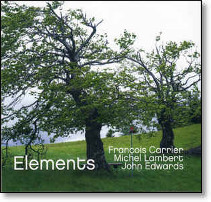
David Ake: Humanities (2017 [2018], Posi-Tone): Pianist, postbop, several previous albums, gets stellar support here, especially from Ralph Alessi (trumpet), but also Ben Monder (guitar), Drew Gress (bass), and Mark Ferber (drums). B+(***) Alchemy Sound Project: Adventures in Time and Space (2016 [2018], ARC): Septet, was momentarily confused by only six names on back cover but they're probably just the writers of the six pieces, one each: Samantha Boshnack (trumpet), Erica Lindsay (tenor sax), Salim Washington (tenor sax/flute/bass clarinet), Sumi Toonka (piano), David Arend (double bass), who play with Johnathan Blake (drums). B+(***) [cd] Eric Alexander: Song of No Regrets (2017, High Note): Mainstream tenor saxophonist, a steady producer since 1995, best when he sticks to basics, which here is his familiar quartet: David Hazeltine (piano), John Webber (bass), and Joe Farnsworth (drums). Doesn't strictly do that here, adding trumpet (Jon Faddis and Joshua Bruneau) on two tracks (one he plays organ on), and dabs of Latin percussion (mostly Alex Diaz). B+(**) Danny Bacher: Still Happy (2018, Whaling City Sound): Standards singer, wrote two songs here ("Joi de Vivre" and "In Spite of All of This, I'm Still Happy"), plays soprano sax, also acts, has a previous album. Opts for "happy" songs -- "Laughing at Life," "Lucky to Be Me," "Hooray for Hollywood," and, of course, "Get Happy" (hard to top that one). Booklet says this was recorded October 17-18, 2018 (i.e., a couple weeks after I got my copy). B+(*) [cd] Joey Baron/Robyn Schulkowsky: Now You Hear Me (2016 [2018], Intakt): Percussion duo, both Americans, Baron well known in jazz circles, Schulkowsky's discography since 1991 more in the domain of avant-classical. B+(**) The Bottle Rockets: Bit Logic (2018, Bloodshot): Alt/indie band from St. Louis, principally Brian Henneman, has leaned toward country since Bloodshot picked them up in 2002, but this seems rather unexceptional. B+(*) Jakob Bro: Bay of Rainbows (2017 [2018], ECM): Danish guitarist, fifteen albums since 2003, recorded this one live at the Jazz Standard in NYC, trio with Thomas Morgan (bass) and Joey Baron (drums). B+(**) François Carrier/Michel Lambert/John Edwards: Elements (2015-16 [2018], FMR): Another superb outing for the Canadian alto sax-drums duo, this time joined by the British bassist. Three pieces, two sessions. A- [cd] Ernesto Cervini's Turboprop: Abundance (2013-16 [2018], Anzic): Canadian drummer, fourth album, second with this sextet: Tara Davidson (alto/soprano sax), Joel Frahm (tenor sax), William Carn (trombone), Adrean Farrugia (piano), Dan Loomis (bass). Lively postbop, nice horn dynamics. B+(**) [cd] Mike Clark & Delbert Bump: Retro Report (2018, Ropeadope): Drummer, played with Herbie Hancock back in his funk-fusion heyday (1974-77), with Jack Walrath in the 1980s, finally headlined his own group in 1989 (Give the Drummer Some, followed by The Funk Stops Here). Bump plays organ, appeared on a pretty good Clark album in 2010, has a record by his own Organ Trio. This is soul jazz with extra kick on the one, with Elias Lucero's guitar snazzy enough he'll be headlining some day soon, and a couple spots for horns. B+(**) Drums & Tuba: Triumph! (2018, Ropeadope): Started in Austin in 1995 as a duo with Tony Nozero on drums and Brian Wolff on tuba, adding various others while recording eight albums 1997-2005, including two for Ani DiFranco's Righteous Babe Records, then nothing until this album. The vocals and drums mark this as ordinary rock, but the tuba is fun. B+(*) Colin Edwin & Lorenzo Feliciati: Twinscapes Vol. 2: A Modern Approach to the Dancefloor (2018, RareNoise): Two bass players, plus drummer Roberto Gualdi with a couple of spot guests, present a minimal concept groove album -- can't assure you it's danceable, but it's closer to that than it is to jazz (not that I mind). B+(**) [cdr] Espen Eriksen Trio With Andy Sheppard: Perfectly Unhappy (2018, Rune Grammofon): Norwegian piano trio, with Lars Tormod Jenset (bass) and Andreas Bye (drums), fifth album since 2010. I doubt the piano would command enough attention as the lead, but it does a fine job of supporting Sheppard's sax, which is flat-out gorgeous. A- Fat Tony: 10,000 Hours (2018, self-released): Rapper from Houston, Nigerian-American (Anthony Lawson Jude Ifeanychukwu Obiawunantu), fifth album, been impressed by earlier releases (at least the ones I've heard), less so here. B+(*) [bc] Jonathan Finlayson: 3 Times Round (2018, Pi): Trumpet player, New York, often works with Steve Coleman, Steve Lehman, and Mary Halvorson. Third album, sextet with Lehman (alto sax), Brian Settles (tenor sax/flute), Matthew Mitchell (piano), John Hebert (bass), and Craig Weinrib (drums). Postbop, often spectacular, a few spots seem off and give me doubts, but they invariably blast them away. A- [cd] Nick Finzer's Hear & Now: Live in New York City (2018, Outside In): Trombonist. Went looking for last spring's No Arrival (Posi-Tone), found this, with no discographical info. Probably sextet: Lucas Pino (tenor sax/bass clarinet), Alex Wintz (guitar), Glenn Zaleski (piano), Dave Baron (bass), Jimmy Macbride (drums). Possibly recorded at Smalls, Sept. 6, 2017. Good postbop band. Surprisingly striking: "A Flower Is a Lovesome Thing" (not a tune I've ever associated with trombone). B+(**) The Vinny Golia Sextet: Trajectory (2017 [2018], Orenda/Nine Winds, 2CD): Plays all saxes, clarinets, some flute, percussion too; born in New York, long based in Los Angeles, has a huge discography since 1977, mostly on his own Nine Winds Records, mostly unheard by me (but not for lack of interest). Sextet adds Gavin Templeton (alto sax), Daniel Rosenboom (trumpet), Alexander Noice (electric guitar), Miller Wrenn (acoustic and electric bass), and Andrew Lessman (drums). The rhythm section likes to rock, but Golia's compositions can make that tricky. B+(***) The Marie Goudy 12tet Featuring Jocelyn Barth: The Bitter Suite (2018, self-released): Trumpet player, from Toronto, all original material, complex flow, Barth's vocals fit awkwardly. B [cd] Devin Gray: Dirigo Rataplan II (2016 [2018], Rataplan): Spine only lists the drummer, whose name lofts above his illustrious bandmates: Ellery Eskelin (tenor sax), Michael Formanek (bass), Dave Ballou (trumpet). Second group album, fractured freebop, never quite takes off but always seems on the verge. B+(***) [cd] Hamell on Trial: The night Guy at the Apocalypse: Profiles of a Rushing Midnight (2018, Saustex): Folkie singer-songwriter, originally from Syracuse, has 15 albums since 1989, possibly his best last year (Tackle Box). Christgau likes this one as much, and I suppose I should at least acknowledge its unique appreciation of down-and-out humanity, but all I'm hearing about are drunken louts and saints stumbling thoughtlessly into what normal people would call crimes. B+(*) Hofbauer/Rosenthal Quartet: Human Resources (2017 [2018], Creative Nation Music): Eric Hofbauer (guitar) and Dan Rosenthal (trumpet/flugelhorn), backed by bass and drums, the horn adding flair and feathering to the guitarist's customarily incisive lines. B+(***) [cd] Idles: Joy as an Act of Resistance (2018, Partisan): British post-punk band, second album, currently the highest-rated 2018 album at AOTY (88 critic score on 23 reviews), DIY says: "No hyperbole needed, IDLES are the most important band we have right now." Which should make them comparable to the Clash in 1979, but whatever they are, they aren't that. B+(***) José James: Lean on Me (2018, Blue Note): Standards singer, has done Bill Withers songs in the past, goes for an entire album of them here. It's easy going for James, the most effortlessly listenable album of his career, but one that doesn't give you much reason to choose it over the original. B+(*) Mark Kavuma: Kavuma (2017 [2018], Ubuntu Music): Trumpet player in England, born in Uganda, debut album, backed by two tenor saxophonists, guitar, piano, drums, and bass. Upbeat starter gets you going. Uneven after that. B+(*) Shai Maestro: The Dream Thief (2018, ECM): Israeli pianist, trio with Jorge Roeder (bass) and Ofri Nehemya (drums). Thoughtful work, builds on rhythmic rolls. Ends with a bit of Obama spoken word, which seems appropriate. B+(**) Dave McMurray: Music Is Life (2018, Blue Note): Tenor saxophonist, from Detroit, was a member of Was (Not Was) back from the 1980s on, but released little under his own name aside from three 1999-2003 jazz albums. However, with Don Was in charge of Blue Note, he's getting another shot. Blows hard, enjoys the funk (even covers "Atomic Dog"). B+(**) Ryan Meagher: Lost Days (2017 [2018], Fresh Sound New Talent): Guitarist, pronounces his name "marr," grew up in California, moved to New York, then to Portland, where he's part of the PJCE. Sixth album, with strong support from Bill McHenry (tenor sax) and George Colligan (keys), plus bass and drums. B+(*) Ryan Meagher: Evil Twin (2018, PJCE): Used to call this improv, but now "collectively and spontaneously composed music by a double bassless trio of two guitars, two saxophones, and two drummers." Feels unplanned, tentative, but eventually attains a pleasant ambience. B Myra Melford's Snowy Egret: The Other Side of Air (2017 [2018], Firehouse 12): Pianist, made a strong impression with her first trio recordings in 1990, and has only grown from there. This group refers back to a 2015 album with this same group: Ron Miles (cornet), Liberty Ellman (guitar), Stomu Takeishi (bass guitar), and Tyshawn Sorey (drums). She lays back a bit on the piano, letting the group work her tricky music out. A- [cd] Allison Miller/Carmen Staaf: Science Fair (2018, Sunnyside): Drummer and pianist, a trio with bassist Matt Penman, plus tenor saxophonist Dayna Stephens (4/9 tracks), also trumpeter Ambrose Akinmusire (2 of those 4). Pianist can get heavy-handed, but the trumpet very impressive at start, horns solid throughout. B+(*) Joe Morris/Ben Hall/Andria Nicodemou: Raven (2016 [2017], Glacial Erratic): Guitar, drums, vibraphone, the latter two also credited with percussion. Guitar has some interesting spots, the percussion just scattered around.. B+(*) [bc] Moskus: Mirakler (2016-17 [2018], Hubro): Norwegian trio, fourth album, Anja Lauvdal on piano/organ, Fredrik Luhr Dietrichson on bass, Kans Hulbaekmo on drums, vibes, keyboards, musical saw. B+(**) Kjetil Møster/John Edwards/Dag Erik Knedal Andersen: Different Shapes/Immersion (2014 [2018], Va Fongool): Sax-bass-drums trio, Møster also plays clarinet. Two long improv pieces, live at Café Oto. B+(*) John Moulder: Decade: Memoirs (2009-17 [2018], Origin): Guitarist, couple decades under his belt, cut this in three widely separated spurts (middle one in 2014), presumably with the same sextet. At times, Tim Garland (soprano sax/bass clarinet) and/or Gwilym Simcock (piano) threaten to run away with the album, but it keeps falling back. B [cd] Maria Muldaur: Don't You Feel My Leg: The Naughty Bawdy Blues of Blue Lu Barker (2018, The Last Music Company): A veteran of Jim Kweskin's 1960s Jug Band, went on to a duo with husband Geoff, then a solo act, starting with one of my favorite early-1970s singles -- seemed like a one-shot, but over the 1980s and 1990s the blues saved her bacon, and she struck gold with a Memphis Minnie tribute in 2001, Richland Woman Blues. She's traded in sex for some time now, but one can imagine her saving Barker for her 70s. Backed by Dave Torkanowsky's hot dixieland band, suggested by Barker's New Orleans roots if not by her music. A- Wolfgang Muthspiel: Where the River Goes (2018, ECM): Guitarist from Austria, has produced some very attractive records -- 1990's fusion-oriented Black and Blue is my favorite, followed by his more lyrical Bright Side and Friendly Travelers (2006-07). He joined ECM in 2013, which seems to have put a damper on him -- even with all-star support here: Brad Mehldau (piano), Larry Grenadier (bass), Eric Harland (drums), and Ambrose Akinmusire (trumpet). B+(**) Aaron Parks: Little Big (2018, Ropeadope): Pianist, first album on Blue Note in 2008, has a couple more on ECM, but cut another he called Groovements on a Danish label, which is probably what caught this label's attention. Trio plus guitarist Greg Tuchey, more focused on adding to the groove than showing off his own lines. B+(***) [cd] Matt Penman: Good Question (2017 [2018], Sunnyside): Bassist, from New Zealand, studied at Berklee, moved to New York, then San Francisco, where he is part of SFJazz. This one is built around a trio with Aaron Parks (piano, Rhodes, organ, vibraphone) and Obed Calvaire (drums), adding tenor saxophonist Mark Turner on 6 (of 9) cuts, Nir Felder (guitar, on 2), with Will Vinson (soprano sax) and Rogerio Boccato (percussion) on one cut. Strikes me as the best of Turner's recent performances: still floats in the air, so the rhythm section deserves much of the credit. A- Madeleine Peyroux: Anthem (2018, Decca): Jazz singer, born in Athens, GA, but moved with her mother to Paris at 13 and launched her career from there. Her early albums were strongly marked by Billie Holiday's phrasing, but I hear little of that here, as she's grown into her own less distinctive style. Mostly originals with hints of politics, more sentimental (I'd say) in the title song (from Leonard Cohen) and the one French standard ("Liberté"). B+(*) Mikkel Ploug/Mark Turner: Faroe (2018, Sunnyside): Danish guitarist, has toured with saxophonist Turner and decided to write a set of original duet pieces: intimate, calm, atmospheric. B+(**) R+R=Now: Collagically Speaking (2018, Blue Note): Filed this jazz/funk/rap fusion under Derrick Hodge (bass), who co-produces and has a writing credit on all eleven tracks, although his other co-producers appear on most: Christian Scott aTunde Adjuah (trumpet), Robert Glasper (keyboards), Justin Tyson (drums), Taylor McFerrin (synth), and Terrace Martin (synth/vocoder/sax). Also eleven vocalists, five listed as "featuring," none on multiple tracks. The raps (three, I think) are much the more interesting. The la-la shit is more like a satire of the music. B Marc Ribot: Songs of Resistance 1942-2018 (2018, Epitaph): Guitarist, has done a wide range of work, turns to political songs here -- musicians are jazzbos, but singers are more scattered, including Fay Victor, Tom Waits, Steve Earl, Sam Amidon, Meshell Ndegeocello, Tift Merritt, Syd Straw. Proceeds to the Indivisible. B+(***) Riton + Kah-Lo: Foreign Ororo (2018, Riton Time): British DJ, Henry Smithson, started recording in 1999 but first time I've bumped into his, the breakthrough here the addition of Nigerian singer-rapper (songwriter?) Faridah Seriki. Beats skew toward grime, accent too but a bit less, starts with a hit and pads it out superbly. A- Robyn: Honey (2018, Konichiwa/Interscope): Swedish dance pop star, started at 16 in 1995, peaked in 2010 with Body Talk (cobbled together from three EPs that year). This is her first solo album since then, but I now a bunch of EPs along the way. I should go back and take another listen to her early albums, maybe some of the EPs as well. Two plays in, this is nice but underwhelming. B+(**) Anne Sajdera: New Year (2018, Bijuri): Pianist, from San Francisco area, second album, first was explicitly samba-oriented, this more conventional postbop, featuring Miroslav Hloucal (trumpet, flugelhorn) and Jan Feco (alto sax), with various others popping up here and there -- Bob Mintzer rates a "special guest" for one track. B+(*) [cd] Cécile McLorin Salvant: The Window (2018, Mack Avenue): Jazz singer, father Haitian, mother French, took the critics polls by storm with her second album (first promoted by a real label). I was impressed but never became much of a fan, so I was surprised to see this panned in an early review. The complaint seems to be that it's too minimal, with just Sumner Fortner's piano for accompaniment (plus a bit of Melissa Aldana tenor sax that I've already forgotten). Strong, clear voice; impeccable timing; a couple songs in French (I'm always a sucker for that). B+(*) Christian Sands: Reach Further EP (2017-18 [2018], Mack Avenue): Pianist, from Connecticut, Wikipedia page credits him with albums recorded in 2002 and 2004, but he would have been 12-15 at the time. A decade later he got noticed playing piano in Christian McBride's trio, with the label picking him up for a well-received 2017 album, Reach. This 5-song, 42:50 "EP" is an afterthought, with his trio offering three live takes of Reach songs plus two new ones. The live pieces kick out real energy. B+(**) Christian Sands: Facing Dragons (2018, Mack Avenue): The pianist expands his trio, adding trumpet (Keyon Harrold), sax (Marcus Strickland), guitar (Caio Afune), two percussionists, but is still careful to keep the piano central. Impressive energy and sweep, but doesn't leave me with much. B+(**) JP Schlegelmilch/Jonathan Goldberger/Jim Black: Visitors (2018, Skirl): Organ/guitar/drums, Schlegelmilch most familiar from his group Old Time Musketry, which released two good records 2012-15. Strong guitar lead here, but between the "blurry shoegaze" and "drone-heavy psychedelic rock" doesn't quite mesh. B+(*) Elliott Sharp Carbon: Transmigration at the Solar Max (2009 [2018], Intakt): Guitarist, also soprano sax and electronics, tons of records as his initial avant-garde take eventually found a home on jazz labels. Trio with Zeena Parkins (electric harp) and Bobby Previte (drums). B+(***) Jared Sims: The New York Sessions (2018, Ropeadope): Baritone saxophonist, second album, also plays tenor this time. Mainstream quartet, with piano (Chris McCarthy), bass (Alex Trembley), and drums (Evan Hyde). B+(**) [cd] Tyshaw Sorey: Pillars (2017 [2018], Firehouse 12, 3CD): Drummer, has occasionally ventured into long-form compositions before, as with his debut That/Not (2007), but really goes overboard here, with over three hours of slow-moving drone, filled with eerie tension if you bother to listen close enough. Eight musicians listed on the back cover, four on double bass (one of those, Joe Morris, also plays electric guitar, as does Todd Neufeld). B+(**) [cd] Alister Spence/Satoko Fujii: Intelset (2017 [2018], Alister Spence Music): Spence is Australian, plays keyboards (here: Fender Rhodes electric piano, preparations and effects), was also on Kira Kira's Bright Force -- my favorite so far of Fujii's 60th birthday celebration monthly discs. This is the gloomiest, although my ears perk up when I hear the real pianist poke through. B+(**) [cd] Mike Steinel Quintet: Song and Dance (2017 [2018], OA2): Trumpet/flugelhorn player, seems to be his first album although I've found side credits as far back as 1978 (recently with Michael Waldrop's big band), has taught at North Texas since 1987. Wrote these nine songs -- one lyric by vocalist Rosana Eckert. Trumpet really lovely. B+(**) [cd] Chad Taylor: Myths and Morals (2018, Ears & Eyes): Drummer, originally from Tempe, Arizona. I associate him with Chicago, mostly since he's been the strong backbone of Chicago Underground Duo, Trio, etc., but Bandcamp page locates him in Philadelphia. This is a duo with Elliot Bergman on electric kalimba. Not sure about the latter, but Taylor runs a far-ranging clinic on percussion. B+(*) Tropical Fuck Storm: A Laughing Death in Meatspace (2018, Tropical Fuck Storm/Mistletone): Australian band, from Melbourne, formerly the Drones, first album under their new moniker, sometimes conveniently abbreviated TFS (citing PIL for PUblic Image Ltd.). Has some politics, some spunk, is loud and unruly, not so tropical. B+(**) [bc] Mark Turner/Ethan Iverson: Temporary Kings (2017 [2018], ECM): Tenor sax/piano duets, credits 6-2 in favor of the pianist, with one cover, a Warne Marsh piece. Cautious flow, deliberate. B+(**) Steve Turre: The Very Thought of You (2018, Smoke Sessions): Trombone player, leads a veteran quartet with Kenny Barron (piano), Buster Williams (bass), and Willie Jones III (drums), plus "special guests" George Coleman (tenor sax on 2 tracks), Russell Malone (guitar on 4), and "strings" (string octet arranged by Marty Sheller, on 4 tracks). Goes for sentimental ballads, played as pretty as a trombone can. Weak spot, unsurprisingly, is the strings. B+(*) Colter Wall: Songs of the Plains (2018, Young Mary's): Canadian country singer, from the plains of Saskatchewan, second album. B+(**) Jeff "Tain" Watts: Travel Band: Detained in Amsterdam (2017 [2018], Dark Key): Drummer, played for Wynton Marsalis 1982-86 and for Branford Marsalis 1983-2009, also appearing with Kenny Garrett and Michael Brecker in the late 1990s. Also has a dozen albums under his own name, including a previous live one called Detained at the Blue Note (2004). This, recorded at Bimhuis, is a trio with Paul Bollenback on guitar and Orlando le Fleming on bass. Starts with "Brilliant Corners," then takes some more. B+(***) [bc] Walt Weiskopf: European Quartet (2017 [2018], Orenda): Tenor saxophonist, originally from Georgia, has been a solid player since his 1989 debut. Picked up this group -- Carl Winther (piano), Daniel Franck (bass), and Anders Mogensen (drums) -- for a tour of Denmark, Germany, and Norway, then cut this at the end, with each contributing a song, with a couple of covers. A little flashier than his usual mainstream. B+(**) Brad Whiteley: Presence (2016 [2018], Destiny): Pianist, second album (3 cuts), part trio but mostly quintet (6) or quartet (2) with Tom Guarna (guitar) and/or Michael Eaton (sax). B+(**) [cd] Chip Wickham: Shamal Wind (2017 [2018], Lovemonk): Plays flute, alto flute, and baritone sax. Second album, recorded in Spain, "adds some Arab-influence percussion to the mix" (of "Latin and flamenco whispers"). With flute it always helps to keep it upbeat, although the "Persian Gulf winds" don't amount to much. B Patrick Zimmerli Quartet: Clockworks (2017 [2018], Songlines): Tenor saxophonist, from New York, has done quite a bit of classical (which is reflected in song titles like "Waltz of the Polyrhythmic Palindrome" and "Entropic Variation"). Quartet with Ethan Iverson (piano), Christopher Tordini (bass), and John Hollenbeck (drums). B+(**) Recent Reissues, Compilations, Vault Discoveries
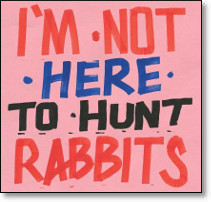
Tohru Aizawa Quartet: Tachibana Vol. 1 (1975 [2018], BBE): Label initials stand for Barely Breaking Even, which is probably more hope than fact. They've started a "J Jazz Masterclass Series" to reissue obscure Japanese jazz, and this certainly qualifies. Aizawa plays piano, leading a quartet with Kyoichiroh Morimura (tenor/soprano sax), bass, and drums. Amusing to see this classified as Latin Jazz (as well as modal and post-bop), but the closing track is called "Samba de Orfeu" (by Ikujiroh Tachibana, as are all five tracks) and it really breaks loose. A- Calm Waters Rolling Swells & Roiling Seas: A Whaling City Sampler (2004-17 [2018], Whaling City Sound): Label sampler, a fairly useless category unless the label is up to something really distinctive -- some exceptions are Thirsty Ear's early Blue Series years, and the French new wave Ze's Zetrospective, and there are probably some in electronica I don't know about. New Bedford's premier jazz label has been a credit to the industry, but the sampler is rather scattered. B [cd] Ella Fitzgerald: Ella at Zardi's (1956 [2017], Verve): Previously unreleased, two sets, twenty-one songs, at Zardi's in Los Angeles, very shortly after she left Decca for Verve. She's backed by Don Abney (piano), Vernon Alley (bass), and Frank Capp (drums) -- no big names there, but as she gets on a roll, all she needs. A- I'm Not Here to Hunt Rabbits ([2018], Piranha): Various artists compilation from Botswana, a patch of desert between South Africa and Zimbabwe, which gives you a rough set of bearings for the music. No idea whether these pieces are new or old. More laid back than mbaqanga, not unlike the drift inland from Senegal and Nigeria to Mali. A- J Jazz: Deep Modern Jazz From Japan 1969-1984 (1969-84 [2018], BBE): I'm not sure how jazz was introduced to and developed in Japan, but this makes clear that by the 1970s it was generating a lot of energy. This label is working on a series of obscure (to us, at least) Japanese jazz reissues, and figured they'd launch it with this sampler. They went for the upbeat stuff, easy to relate to, fast and fancy free. Note that the 10-track digital differs from the 9-track CD (mostly by adding the one artist I had heard of, trumpeter Terumasa Hino) and the 12-track 3-LP. A- Takeo Moriyama: East Plants (1983 [2018], BBE): Japanese drummer, ten records listed at Discogs (1975-2012, the first with Manfred Schoof, the last with Peter Brötzmann). This is a group with two saxophonists (Shuichi Enomoto and Toshihiko Inoue) and bass. Struck by the musicality of the drumming, and the cleverness of concept, almost flirting with circus music, or the Dutch avant-garde. B+(***) Ralph Thomas: Eastern Standard Time (1980 [2018], BBE): Saxophonist (all of them, flute too), from Chicago, early AACM member, worked for Motown in Los Angeles, soundtracks for Quincy Jones, tried his hand at reggae, samba, salsa, more exotic world musics -- wound up in Thailand. This seems to be his only album, strikes me as a cross between soul jazz and highlife with a little Sun Ra in the aether. B+(***) [bc] Old Music
Fred Astaire: The Astaire Story (1952 [2017], Verve): Film star, extraordinary dancer, Wikipedia scarcely mentions that he ever recorded music but offers a long list of songs he "introduced" in his films. Actually, his 1930s records -- see Top Hat: Hits From Hollywood (1994) -- are quite marvelous. In 1952, Norman Granz got Astaire into the studio with Oscar Peterson's trio plus guitar (Barney Kessel), trumpet (Charlie Shavers) and tenor sax (Flip Phillips), to recap his career for a 4-LP box set, more than three dozen now-standards. Fine vocals, occasional tap rhythms, the reissue adding two Peterson romps dubbed "Astaire Blues." B+(***) Fred Astaire: Steppin' Out: Astaire Sings (1952 [1994], Verve): Same sessions, about half of the songs, a bit of interview at the end, some prime pieces but seems to lean a bit to the ballads. B+(***) Tony Bennett and Bill Evans: Together Again (1976 [2003], Concord): These two recorded The Tony Bennett/Bill Evans Album in 1975, a schmoozy set of voice-and-piano duets. I recall a review at the time calling it "the ultimate make-out album." I bought a copy, but it never really delivered on its promises -- probably why I never noticed this sequel (and in turn, why they never recorded a third). Reissue expands the original ten tracks to eighteen. B+(*) Hamiet Bluiett: Birthright: A Solo Blues Concert (1977, India Navigation): Baritone saxophonist, second album, solo, which limits how dynamic he can be, but blues doesn't require much speed -- just depth of feeling. B+(**) Hamiet Bluiett: Resolution (1977 [1978], Black Saint): Bluiett plays clarinet, flute, and bamboo flute in addition to baritone sax. He's backed by Don Pullen (piano/organ), Fred Hopkins (bass), and two percussionists (Jabali, Don Moye). B+(*) Hamiet Bluiett: "Dangerously Suite" (1981, Soul Note): Actually steeped much deeper in blues than classical, the only suspect spot being the bit of vocals (Irene Datcher). Well, and Chief Bey's chants, but they're short. Bob Neloms is no Don Pullen, but he acquits himself fine at piano. Choice cut: "Doll Baby." B+(***) Hamiet Bluiett: Ebu (1984, Soul Note): Quartet, plays alto clarinet as well as baritone sax, backed by John Hicks (piano), Fred Hopkins (bass), and Marvin "Smitty" Smith (drums). B+(**) Hamiet Bluiett & Concept: Live at Carlos 1 (1986 [1997], Just a Memory): The first of three albums recorded at the NYC club, released a decade later when Bluiett's label, Justin Time, set up a series for vault tapes. With Don Pullen on piano, Fred Hopkins on bass, and Idris Muhammad and Chief Bey with percussion -- lots of fast, intense percussion. A- Hamiet Bluiett: Sankofa/Rear Garde (1992 [1993], Soul Note): Baritone saxophonist, or contra-alto clarinet for a change up, backed with guitar (Ted Dunbar), bass (Clint Houston), and drums (Ben Riley), with a song each from Houston and Dunbar, covers from Mingus and Hemphill. B+(**) Hamiet Bluiett: Live at the Village Vanguard: Ballads and Blues (1994 [1997], Soul Note): Same quartet, relaxed, more covers, wider range. B+(***) Hamiet Bluiett: With Eyes Wide Open (2000, Justin Time): Another quartet, another generation, with Ed Cherry (guitar), Jaribu Shadid (bass), and Nasheet Waits (drums). Good case here for why Bluiett has been the pre-eminent baritone saxophonist of the era. A- Rosemary Clooney/Duke Ellington: Blue Rose (1956 [2008], Columbia/Legacy): Pop singer, had a string of hits from 1949 to 1956, appearing in several movies in the early 1950s. She had a rough stretch in the 1960s, but after 1977 bounced back as a jazz standards singer, up to her death in 2002. This date with Ellington and his orchestra is a prestige item in her discography, some nice work by all concerned, but seems like it should sparkle more. B+(**) Rosemary Clooney: Rosie Solves the Swingin' Riddle! (1961 [2004], RCA/Bluebird): Nelson Riddle arranged, a superb job of providing swing and support without showing off, which suits Clooney to a tee -- especially on the fast ones, where the strings are in check (if there at all). A- Rosemary Clooney: Everything's Coming Up Rosie (1977, Concord): After an eight-year hiatus, Clooney returned in 1976 to cut two albums for United Artists, then she signed with Concord, where she reinvented the jazz art of singing standards. Here she's backed by a retro-swing quintet, with Bill Berry on trumpet and young Scott Hamilton on tenor sax. Might seem even more remarkable if they didn't make it look so easy. B+(***) Rosemary Clooney: Sings the Lyrics of Johnny Mercer (1987, Concord): Well into a songbook series which started with Sings the Lyrics of Ira Gershwin in 1980 and Sings the Music of Cole Porter in 1982, this is the one rated 4-star in Penguin Guide. A fine one, with Warren Vaché on cornet and Scott Hamilton on tenor sax, with John Oddo on piano and doing the arranging. B+(***) Nat 'King' Cole: St. Louis Blues (1958, Capitol): Big band album of W.C. Handy songs, arranged by Nelson Riddle, tied to a film "broadly based" on Handy's life, with Cole playing Handy. Strikes me as a bit slick on all sides, but then I mostly know these songs from Louis Armstrong Plays W.C. Handy, which came out a couple years earlier. B+(*) Doris Day: Day by Day (1956, Columbia): Originally Doris Kappelhoff, started as a big band singer, had a big hit with Les Brown in 1945 ("Sentimental Journey"), turned to movies in 1948, but recorded 20 top ten singles through 1958. Standards, her vocals impeccably clear, orchestration by Paul Weston and His Music From Hollywood -- could hardly be lamer. B Doris Day: Day by Night (1957, Columbia): Music by Paul Weston and His Music From Hollywood again, the night theme long on the night-time sky ("Moonglow," "Stars Fell on Alabama") slipping into dreams ("Dream a Little Dream of Me," "Wrap Your Troubles in Dreams"). B Doris Day: 16 Most Requested Songs (1945-58 [1992], Columbia/Legacy): All hits, not quite picked by rank but 14 went top ten, the others 13 and 20. Fine singer, but never had a band to push her. Still, my favorites are the last two songs, where she finally picks up the pace a bit: "Que Sera, Sera" and "Everybody Loves a Lover." B+(*) Doris Day and Harry James: Young Man With a Horn (1950 [1954], Columbia): Tied to the 1950 movie starring Kirk Douglas and Lauren Bacall, featuring Day as a singer, but Day and James (who dubbed Douglas's trumpet parts) had to re-record their bits. By far the jazziest Day ever got, with the LP reissue adding a smashing "Lullaby of Birdland." B+(**) Doris Day/Robert Goulet: Annie Get Your Gun (1963, Columbia Masterworks): Irving Berlin's 1946 musical about Annie Oakley and Buffalo Bill. The original stage soundtrack featured Ethel Merman, while the 1950 movie starred Betty Hutton. Over the years there have been a number of re-stagings, but this was just make-work for Columbia contract vocalists. Goulet got his break as a song and dance man with Camelot in 1960. Day is pretty good here, and Goulet is pretty awful -- at least until he makes a decent showing in "Anything You Can Do." B+(*) Blossom Dearie: Give Him the Ooh-La-La (1957 [1958], Verve): Jazz singer, actual name (after dropping initial Margrethe), born in New York but moved to Paris in 1952, singing in the Blue Stars (which later, without her, became the Swingle Sisters). Norman Granz discovered her there, brought her back to record six albums. Like her eponymous debut, this one is backed by Herb Ellis (guitar), Ray Brown (bass), and Jo Jones (drums), with her piano and vocals. Standards, a bit less obvious than the debut, one in French. B+(**) Blossom Dearie: Once Upon a Summertime (1958, Verve): Ed Thigpen takes over as drummer, with Mundell Lowe on guitar sort of melting into the mix. "Tea for Two" starts out too slow, but others of the well-worn standards are delightful, including "If I Were a Bell," "Teach Me Tonight," and "Love Is Here to Stay." B+(***) Blossom Dearie: My Gentleman Friend (1959, Verve): New guitarist, Kenny Burrell, who is terrific, plus some bits of flute and tenor sax by Bobby Jaspar (married to the singer at the time), with Ray Brown on bass and Ed Thigpen on drums. Her girlish voice stands out a bit more, and I'm a sucker for her two songs in French, and her long, slow burn on "Someone to Watch Over Me." A- Blossom Dearie: Blossom Dearie Sings Comden and Green (1959, Verve): That would be lyricists Betty Comden and Adolph Green, although these ten songs are better known for their composers: Jule Styne, Leonard Bernstein, and André Previn. Cover shows the writers lurking behind her, which may explain why this feels a bit self-conscious at first. B+(**) Blossom Dearie: Soubrette: Blossom Dearie Sings Broadway Hit Songs (1960, Verve): Unclear how to parse the cover, but this makes the most sense. She plays her own piano, but leaves the rest of the music to Russ Garcia and his orchestra. B+(**) Matt Dennis: Plays and Sings Matt Dennis (1954, Trend): Pianist-singer, leads a trio in a live set at The Tally-Ho in Hollywood, plays a dozen of his own songs (written with various lyricists, most often Tom Adair) -- "Angel Eyes" and "Everything Happens to Me" are the ones you know, though you'll never confuse him with Sinatra. Virginia Maxey chimes in on two songs. B+(**) Matt Dennis: Dennis, Anyone? (1955, RCA Victor): Another live date, this one at The Encore, the group expanded to a quartet with Bill Pitman on guitar, a little fancier percussion (e.g., "Devil Talk"), and a bit of scat. B+(**) Matt Dennis: Plays and Sings Matt Dennis: Live in Hollywood (1954-55 [2011], Fresh Sound): Combines two "live in Hollywood" albums, as above. B+(**) Billy Eckstine: Billy's Best (1957-58 [1995], Verve): Jazz singer, from Pittsburgh, played trumpet when he broke in with Earl Hines' big band; formed his own bebop-oriented big band in 1944 with Dizzy Gillespie, Dexter Gordon, Art Blakey, and Sarah Vaughan. These are new recordings, lushly arranged by Henry Mancini and Pete Rugolo, mostly standards. B+(*) Ella Fitzgerald: Lullabies of Birdland (1947-54 [1955], Decca): Early LP compilation of songs from 78 RPM singles, mostly backed by Sy Oliver's orchestra. Nothing special there -- the small groups Norman Granz would match her with were more helpful, but the singer is often spectacular. A- Judy Garland: Judy at Carnegie Hall (1961 [2001], Capitol, 2CD): Originally a double-LP, a very big deal when it first came out, spent 73 weeks on the charts, won four Grammy Awards including Album of the Year (first woman to do so, but list started in 1959 so the male streak was snapped at three). Orchestra plays faultless movie shtick (often lapsing into "Over the Rainbow"), she can really sing but her talk is equally welcome, and the audience adores her. "I know, I'll sing 'em all, and we'll stay all night." I don't think I would have segued from that to "Swanee," even in 1961, but more often than not I'm touched. A- Benny Goodman/Rosemary Clooney: Date With the King (1956, Columbia, EP): Six cut, 10-inch LP (21:12). Goodman's groups are described as Trio and Sextet, but the latter has a couple of lineups. Hot spots for clarinet and trumpet (Buck Clayton), a duet I don't see a credit for, fine vocals by Clooney. B+(**) Eydie Gorme and Steve Lawrence: Sing the Golden Hits (1960 [1990], MCA): Married vocal duo, Jewish (she was born Edith Garmezano, he Sydney Liebowitz). She started recording solo in 1953, he joined in 1958. Original album cover omitted their last names, so just Eydie and Steve, and included a couple Christmas songs omitted in this reissue. Not their hits, but the big band arrangements are spunky, and they're fun together. B+(**) Robert Goulet: 16 Most Requested Songs (1960-69 [1989], Columbia): Emerged in the Broadway musical Camelot, huge voice, got sucked up in Columbia's pop-vocal machinery, a decade too late to actually score any popular hits ("My Love, Forgive Me" peaked at 16 in 1964; next best was "Summer Sounds" at 58 in 1965). Unlike Doris Day, that made it a chore to date these overwrought regurgitations. C Beaver Harris 360 Degree Music Experience: Beautiful Africa (1979, Soul Note): Drummer, from Pittsburgh, given name William Godvin Harris, played baseball as a teenager for the Kansas City Monarchs in the old Negro Leagues, conceived his jazz as world music; played with Ayler, Shepp, and Rudd in the 1960s before leading his own groups from 1975-83; died at 55 in 1991. Quintet with Ken McIntyre (alto sax, bassoon, flute), Grachan Moncur III (trombone), Rahn Burton (piano), and Cameron Brown (bass). B+(**) Dick Haymes: Rain or Shine (1956, Capitol): Born in Argentina, moved to Los Angeles at 17, working as a stunt man and film double, then on to New York where is started singing in big bands, his first chart singles with Harry James (1941-42) and Benny Goodman (1942). The hits ended around 1950, but he continued recording into the 1960s, with this his first LP. Remarkable deep voice, never gets caught on the wrong side of a note. Mostly famous standards, orchestrated by Ian Bernard and (sometimes) Johnny Mandel. B+(**) Peggy Lee: The Man I Love (1957, Capitol): Singer, born Norma Egstrom in North Dakota, joined Benny Goodman's band in 1941, scored her first number one hit in 1942. She recorded for Capitol 1948-52, then Decca, then returned to Capitol for this album, and stayed for a couple dozen more up through 1972. Vocals a bit on the coy side, and Nelson Riddle's arrangements barely move under the dead weight of strings. Frank Sinatra is credited with conducting. Does, however, end on a brassy high ("It Keeps You Young"). B Marilyn Maye: Meet Marvelous Marilyn Maye (1965, RCA Victor): Standards singer, born in Wichita, grew up in Topeka, moved to Chicago, recorded an album in 1961, seven more for RCA 1965-70 (this the first), still (at age 90) lives in Kansas City. Starts with a breakneck "Get Me to the Church on Time," followed by a damp "Misty." She belts the rest out, the best ones fast and happy. B+(*) Marilyn Maye: The Happiest Sound in Town (1968, RCA Victor): The sixth of seven 1965-70 RCA albums. Thought I'd try this one because "happy" seems to perk her up, and was pleased to find the arranger (don't know who) ditched the strings and polished up the brass. B+(***) Anita O'Day: Sings the Winners (1958, Verve): The cover lists plenty of winners -- Duke Ellington, Gene Krupa, Woody Herman, Dizzy Gillespie, etc. -- but the fine print shows that one side is arranged and conducted by Marty Paich, the other by Russ Garcia, doing a little extra to live up to expectations. B+(***) One for All: Too Soon to Tell (1997, Sharp Nine): First album by what turned out to be a long-running mainstream jazz supergroup, although would have been premature to label them then: tenor saxophonist Eric Alexander, who gets big type and "featuring" on the cover, had recorded only his second album a month earlier. Don't know about the others -- Jim Rotondi (trumpet), Steve Davis (trombone), David Hazeltine (piano), Peter Washington (bass), and Joe Farnsworth (drums) -- but you know them now. Still, a little too much. B+(*) Della Reese: Della (1960, RCA Victor): Started as a gospel singer, moved to jazz, acted some. First LP for RCA after five for Jubilee (1957-59). Distinctive voice, sharp and bitter, opens with "The Lady Is a Tramp" and it takes a while to get used to. B+(**) Della Reese: Della Della Cha Cha Cha (1961, RCA Victor): Standards, four from Cole Porter, music by O.B. Masingill with lots of Latin percussion. Between the singer's idiosyncrasies and the congas, sounds to me like a camp classic. A- Robyn: Robyn Is Here (1995 [1997], RCA): Swedish teen pop star, Robyn Carlsson, first album, cut when she was 16 but released in US a couple years later. B+(*) Robyn: My Truth (1999, RCA): Second album, not sure when it was released in the US (Napster dates it 2014, and their version omits the Swedish-language opener). B+(**) Robyn: Body Talk, Pt. 3 (2010, Konichiwa, EP): Last of three 2010 EPs (5 cuts, 18:42), all also included in the Body Talk CD that came out the same day -- seemed pretty useless at the time. (The first two had eight cuts each, with just ten making the album.) The album turned out to be one of my favorites in 2010, but I never put much stock in the EPs. B+(***) Jimmy Scott: The Source (1969 [1970], Atlantic): He was Little Jimmy Scott in the 1950s, with a genetic condition which kept his voice high and his stature small, but various factors I don't understand limited his career, until he made a comeback around 1990. Between 1960 and 1990, his discography shows one album in 1960, two in 1969, and one more in 1976 -- so it's not clear now whether this one was a comeback or a false start. Slow, impassioned, a struggle. B Jimmy Scott: All the Way (1992, Sire): Little no more, Scott mounted a singular comeback in the 1990s, sounding like no one else ever, and here at least taking his ballads slow, wrenching as much emotion as possible from each. Aided by first-rate musicians, including Kenny Barron, Ron Carter, and Fathead Newman. B+(***) Bobby Short: Bobby Short (1956, Atlantic): Singer, mostly standards, played piano, second album, starts out taking risks with rhythm, offers interesting takes on "Bye Bye Blackbird" and "I've Got the World on a String," but I started to lose interest with "Hottentot Potentate." B+(*) Nina Simone: Nina Simone and Piano! (1969 [2011], RCA/Legacy): Sings and plays piano, solo. Legendary deep voice, often remarkable, but can also turn heavy and sodden, and many of her records disappoint. I can see how this minimal setting could show off her undoubted virtues, but it also leaves her limits exposed. B Frank Sinatra: Songs for Young Lovers (1954, Capitol, EP): The beginning of the third (and most remarkable) chapter in his recording career, following his first whiff of fame as a big band boy singer (for Harry James and Tommy Dorsey), and the mixed bag of his years (1946-50) at Columbia. Sinatra broke out of his "slump" in 1953 with a successful movie role (From Here to Eternity) and a new record contract with Capitol. After a couple of singles, he cut this 10-inch LP (eight songs, 22:00) with Nelson Riddle. Remarkable voice, a few classic songs, so-so arrangements. B+(***) Frank Sinatra: Swing Easy! (1954, Capitol, EP): With Riddle again, this time taking over the arrangements, which swing so much the singer really opens up. Eight cuts (19:17), all classics. A Frank Sinatra: In the Wee Small Hours (1954-55 [1955], Capitol): First full-length LP, sixteen cuts, Nelson Riddle arranging and conducting. After Songs for Swingin' Lovers, probably the most legendary of Sinatra's Capitols, although I've always been a bit put off by how slow and weepy it is. Not that he isn't magnificent. A- Frank Sinatra: Close to Me (1957, Capitol): Nelson Riddle arranged and conducted, but instead of running a full orchestra (big band often plus strings), he built this around a string quartet, with a couple of horns (the name that stands out is Harry Edison on trumpet), flute and harp. Makes for a slow one. Sterling voice, of course. B+(*) Frank Sinatra: Come Fly With Me (1957 [1958], Capitol): Billy May takes over as arranger/conductor, alternately piling on the brass and wimping out with strings. The title song leads off a series of travel songs -- "April in Paris," "Autumn in New York," "Moonlight in Vermont," "London by Night," "Blue Hawaii," "Brazil," "On the Road to Mandalay" (which seems to have been controversial, for the wrong reasons). B+(**) Frank Sinatra: Come Dance With Me! (1958 [1959], Capitol): Billy May returns, kicking the fast ones up a notch, but never had a good feel for ballads. B+(***) Frank Sinatra: No One Cares (1959, Capitol): With Gordon Jenkins piping in the music. Goes for down and out. Someone might find this touching, but the title strikes me as its own best review. B- Frank Sinatra: Nice 'n' Easy (1960, Capitol): Title song is a bit too nice and easy, but it sets up the concept, which is to craft the most classically romantic album of the singer's career. Almost everything is slow, and Nelson Riddle lays the strings on extra thick. B+(***) Frank Sinatra: Sinatra's Swingin' Session!!! (1960 [1961], Capitol): A quick and easy wrap to Sinatra's tenure with Capitol, with Nelson Riddle arranging and conducting an old-fashioned big band, and half of the songs recycled from a decade-old Columbia album, Sing and Dance With Frank Sinatra. A little short, but fine songs, impeccably sung, and at least moderately swung. A- Jo Stafford: Capitol Collectors Series (1944-50 [1991], Capitol): Trained for opera, but was drawn into pop, first through a Stafford Sisters act, then as lead in the Pied Pipers, then solo, "and by 1955 had achieved more worldwide record sales than any other female artist." This has less than half of the 53 singles she charted in the period, mostly dropping standards you know from elsewhere -- plus five I don't see on her charts, a couple of them duets. The music, mostly by Paul Weston, is hum-drum period orchestra, her vocals almost too pristine -- it's a relief when she tries on a novelty voice like on "Ragtime Cowboy Joe." B+(*) Jo Stafford: Sings Songs of Scotland (1953-56 [1957], Columbia): Title rambles on, "With Words by Robert Burns, Music by Alton Ranker, Arrangements by Paul Weston." Weston's orchestra, too, as lush (and far from authentic) as can be, framing a voice that has never sounded more gorgeous. I found it a chore, but "Auld Lang Syne" closed on a glorious note. B Jo Stafford: I'll Be Seeing You (1959, Columbia): With Paul Weston and His Orchestra, which goes for swoon over swing every time. The concept refers back to her USO days when she was known as "G.I. Jo," although the cover note actually reads "to 'G.I. Joe'/sincerely/Jo Stafford." Presumably the songs date from WWII, but that's not obvious after Weston's done with them, and I don't feel up to researching that. I will say that the title song [which is the only repeat title from her The Best of the War Years compilation] is exceptionally gorgeous. B+(*) Kay Starr: I Cry by Night (1962, Capitol): Singer, from Oklahoma (her father Iroquois), moved to Dallas then Memphis, started singing on the radio at age 7, sang for Joe Venuti at 15 and working her way through a series of big bands, signing to Capitol in 1946, with a bunch of hits 1948-57. Billie Holiday once called her "the only white woman who could sing the blues." This is in that vein, and while her "Lover Man" is less ethereal than Holiday's, it makes up with fat-bottomed swing. The combo sets a comfortable, laid back groove, but note that the soothing saxophonist is none other than Ben Webster. A- Kay Starr: Capitol Collectors Series (1948-62 [1991], Capitol): Twenty-five songs, mostly singles from her hit years plus a few later pieces which partly reflect the rise of rock and roll -- the last is actually called "The Rock and Roll Waltz." Unlike Jo Stafford, for instance, Starr always had a grounding in blues and jazz, and even early on her bands had a little extra hop to them. B+(**) Maxine Sullivan and Her Jazz All-Stars: Memories of You: A Tribute to Andy Razaf (1956 [2007], Essential Media Group): Much confusion here, as I've seen the same album (song order varies) also listed as Leonard Feather Presents Maxine Sullivan, Vol. II (or Vol. 2), sometimes adding Music of Fats Waller, and in one case attributed to Maxine Sullivan with Charlie Shavers & His Ensemble. Shavers plays trumpet, with Jerome Richardson on sax, Buster Bailey on clarinet, Dick Hyman on piano, Milt Hinton and/or Wendell Marshall on bass, and Osie Johnson on drums. B+(***) Jack Teagarden: Think Well of Me (1962, Verve): Trombone great, from Texas, started around 1928, I know him best from his Big Eight in 1938 and his late-1940s tenure with Louis Armstrong's All-Stars. As a singer, he was pretty limited, but I always detected a broad smile. Creed Taylor produced this, mostly songs by Willard Robison, backed by dishy strings (Klaus Ogerman, Bob Brookmeyer, and Russ Case each had a hand in the arrangements). B Tiny Tim: God Bless Tiny Tim (1968, Reprise): Born Herbert Buckingham Khaury in New York, sung in a childish vibrato, played a tiny ukulele, first album, mostly old vaudeville songs with one, "Tiptoe Through the Tulips," breaking as a novelty single. I always figured him for a joke, but there are some (like Friedland) who credit him as a genius/obscurantist. Still doesn't make him listenable. B- Mr. Tophat Feat. Robyn: Trust Me (2016 [2017], Smalltown Supersound, EP): Swedish DJ/producer Rudolf Nordström, has a pile of singles (mostly with Art Alfie), spins three long dance tracks (34:32) with occasional background vocals B+(**) Mel Tormé With the Marty Paich Dek-Tette: Lulu's Back in Town (1956, Bethlehem): Jazz singer, started as a child, had a group called the Mel-Tones before he got drafted. Started recording under his own name in 1948, hooking up with arranger/conductor Paich here for the first of a bunch of records (including a 1988 Reunion). Original record seems to have been eponymous, but Polydor added the title for their 1969 reissue, and that's how Friedland and others cite the album. B+(***) Mel Tormé and the Marty Paich Dek-Tette: Mel Tormé Sings Fred Astaire (1956, Bethlehem): Songs from Astaire's movies and records, which is to say mostly by Irving Berlin (4) or the Gershwins (4), 2 by Dorothy Fields/Jerome Kern, 1 from Johnny Mercer. Terrific songs, one and all, cleverly arranged. A- Mel Tormé: Tormé (1958 [1959], Verve): The first of a series (up to 1961) of albums for Verve, again with Marty Paich arranging and conducting. Standards, some well known, some less so. B+(**) Mel Tormé: I Dig the Duke/I Dig the Count (1961, Verve): Original LP had one side of Ellington tunes, the other with a nod to Basie (who wrote less of his band's book, but Strayhorn's "Take the 'A' Train" and "Just a Sittin' and a Rockin'" are on the Ellington side). Johnny Mandel arranged and conducted, and Russ Garcia produced. [Album was reissued on CD in 1984 as The Ellington and Basie Songbooks, but reverted to the original title for digital.] B+(***) Mel Tormé: Compact Jazz: Mel Tormé (1958-61 [1987], Verve): The singer's brief stretch with Verve yielded seven albums, enough to fill many a CD sampler -- as the label has done with every sampler series they've run in the CD era. I went with this -- their first -- because Penguin Guide rated it 4-stars, and because I bought a dozen or more of these from back in the day, but later series like My Finset Hour are probably interchangeable. Fine voice, not Sinatra or Cole but give him a good song and don't screw up the arrangement and he's quite pleasing. Bands are stocked with West Coast pros (e.g., the drummers are Mel Lewis and Shelly Manne; when Paich isn't playing piano, Jimmy Rowles is; horns include Art Pepper, Bill Perkins, Teddy Edwards, Jack Sheldon, Art Porcino, and on nearly everything, Frank Rosolino). B+(***) Mel Tormé: The Best of Mel Tormé [20th Century Masters: The Millennium Collection] (1958-61 [2005], UME): Universal wound up owning the Verve catalog, and came out with this budget (max 12 songs) series starting in 1999. I've reviewed most of them -- not sure how I missed this one -- so I figured I'd give it a spin. Only repeats 4 (of 16) songs from Compact Jazz (unfortunately, "The Christmas Song" is on both), and partly makes up for the cut with an 8:04 "Blues in the Night." The other common picks are choice cuts. The differences aren't better here. B+(**) Mark Turner: In This World (1998, Warner Brothers): Fourth (or fifth) album by one of the more impressive mainstream tenor saxophonists to emerge in the 1990s. With Brad Mehldau's early piano trio (Larry Grenadier and Jorge Rossy), plus Kurt Rosenwinkel on guitar. Seems like he can sail through anything -- even turns in a fine Beatles cover ("She Said, She Said"). A- Sarah Vaughan: After Hours (1961, Roulette): Backed minimally by guitar (Mundell Lowe) and bass (George Duvivier), the framework suits Vaughan, showing off her precise timing and masterful phrasing. Standards, most no doubt appear elsewhere in her catalogue, but unlikely to be rendered with such gem-like clarity. B+(***) Sarah Vaughan: The Best of Sarah Vaughan [20th Century Masters: The Millennium Collection] (1954-66 [2004], Hip-O): Twelve songs, from her 1954-67 tenure at Mercury/Emarcy (later sucked up by Universal and reissued through Verve). Like the earlier Columbias, the (mostly string) orchestras are so swingless I find it a chore to listen to her -- not that there's nothing to find here. Odd song out: "Broken-Hearted Melody." B- Sarah Vaughan: Live in Japan: Volume 1 (1973 [1991], Mainstream): Backed by a trio: Carl Schroeder (piano), John Gianelli (double bass), and Jimmy Cobb (drums). This live date originally appeared in 1973 on a 2-LP set. Later on CD the first three sides were grouped as Volume 1, with the fourth side and additional material moved to Volume 2. B+(**) Sarah Vaughan: Live in Japan: Volume 2 (1973 [1991], Mainstream): Opens with a bit of boogie-woogie piano, credited to Vaughan herself, before Carl Schroeder takes over and she reverts to her usual act. No fall off here -- if anything this is a bit more upbeat and fun, though that's not generally what her fans seem to look for. B+(**) Margaret Whiting: Sings the Jerome Kern Songbook (1960, Verve): Popular singer, from Detroit, recorded from 1942 in big bands -- had a hit with "Moonlight in Vermont" with Billy Butterfield's Orchestra in 1943. Signed to Capitol 1946-56, acted some, dabbled in country music (including a hit duet with Jimmy Wakely in 1949), moved on to Dot 1957-60 (originally and later a country label, but at the time based in Hollywood under Paramount). Then came two 1960 albums for Verve: one a duet with Mel Tormé, the other this sprawling (78 minute) songbook project arranged and conducted by Russ Garcia. No complaints about the singer. B Revised GradesSometimes further listening leads me to change an initial grade, usually either because I move on to a real copy, or because someone else's review or list makes me want to check it again: Blossom Dearie: Blossom Dearie (1956 [1957], Verve): Debut album, piano and vocals, backed by Herb Ellis (guitar), Ray Brown (bass), and Jo Jones (drums). [was B+]: B+(***) Robyn: Robyn (2005 [2008], Konichiwa/Interscope): Fourth album, after 2002's Don't Stop the Music was released only in Sweden and Japan, but effectively a career reboot, with a new label, and much sharper disco/electropop, and a nod to hip-hop. [was B]: NotesEverything streamed from Napster (ex Rhapsody), except as noted in brackets following the grade:
Ask a question, or send a comment. Wednesday, October 31, 2018 Music Week
Music: current count 30524 [30499] rated (+25), 293 [287] unrated (+6). Despite the late posting, cutoff was Monday afternoon (including Monday's incoming mail). Count is low mostly because I took time off to shop for and cook Birthday Dinner last week. Went with French, mostly dishes from the South country, definitely nothing gourmet or nouvelle cuisine-ish. Made a terrific cassoulet with duck, an even better veal marengo, a slightly inferior boeuf bourguinon, my usual ratatouille, and a simply divine gratin dauphinois, as well as a few spreadables (chicken liver, duck rillettes, salmon rillettes, herbed cheese, tapenade), and a pretty yummy flourless chocolate cake. Took three solid days: one shopping, two cooking. More extensive notes in the notebook. During that time, I listened to golden oldies, including all of Rhino's The R&B Box. Before (and slightly after) I got stuck in Will Friedland's The Great Jazz and Pop Vocal Albums, playing things he liked that I hadn't heard, and other things by artists listed that I thought might be worthwhile (mostly Frank Sinatra's Capitols). When I first picked up the book at the library, I had heard 19 of 57 listed albums (33.3%). Now I've raised that to 51 (89.4%), unable to find albums by Bobby Troup (Sings Johnny Mercer), Lena Horne (At the Waldorf Astoria), Barb Jungr (Every Grain of Sand), Carmen McRae (As Time Goes By), Jimmy Scott (Lost and Found), and Jo Stafford (Sings American Folk Songs). I don't have time to figure out a grade spread, but safe to say we don't agree on very many of these. One thing I like to do when I'm doing these dives into old music is to knock off U-rated albums in my database, but I had trouble locating (much less finding time for) unrated boxes of Sinatra and Mel Tormé. (I also have an unrated Bing Crosby box somewhere. In fact, I should spend some time with Crosby, but as it happened I had heard Friedland's two Crosby selections, so I skipped over him.) Maybe someday I'll write my own vocals list. It should be very different, as only 13 albums on Friedland's list did A- or better for me. Streamnotes due October 31. Need to get cracking on that. I should also note that Robert Christgau's new essay collection, Is It Still Good to Ya? Fifty Years of Rock Criticism 1967-2017 came out last week. New records rated this week:
Old music rated this week:
Unpacking: Found in the mail last week:
Ask a question, or send a comment. Wednesday, October 31, 2018 Weekend RoundupI haven't written much about the elections this year. Partly, I don't care for the horserace-style reporting, or the focus on polls as a proxy for actual news. FiveThirtyEight currently forecasts that the Democrats have a "1 in 6" chance of gaining control of the Senate, and a "6 in 7" chance of winning the House. The main difference there is that Democrats have a huge structural disadvantage in the Senate: only one third of the seats are up, and Republicans have a large margin among the carryover seats; most of the seats that are contested this year are Democratic, so the Democrats have many more opportunities to lose than to win; and the Senate isn't anywhere near close to uniformly representative of the general population. The House itself has been severely rigged against the Democrats, so much so that in recent years Democrats have won the national popular vote for the House yet Republicans won most of the seats (same as with the 2016 presidential election). Despite those odds, it seems likely that the Democrats will get a larger share of the nationwide Senate vote than the House vote. I'm not sure what the best thinking is on this, but it seems likely to me that the Democrats will have to win the nationwide House vote by 4% or more just to break even. The break-even point in the Senate is probably more like +10%, so a Democratic wave of +6-7% will give you those forecast odds. Of course, one reason for not obsessing over the polls and odds is that Republicans have tended to do better than expected pretty much every election since the Democratic gains in 2006-08. I don't really understand why this has been the case, aside from the hard work Republicans have done to intimidate and suppress voters (but I doubt that's all there is to it). Early this year, I thought a bit about writing up a little book on political eras and strategy, but never got past the obvious era divisions: 1800, 1860, 1932, 1980; 2020 would be about right, especially since Trump has more in common with the dead-end presidents (Adams, Buchanan, Hoover, Carter) than the era-shifters (Jefferson, Lincoln, Roosevelt, and, ugh, Reagan). Maybe I'll return to that after the election, with some more data to crunch. Of course, the real meat of such a book would be a dissection of the Republican political machine: how it works, why it works, who pulls the levers, and why do so many otherwise decent people fall for it. (I don't see much value delving into the so-called deplorables, although two of them snapped and made the biggest news this week -- more on that below.) This should be easier now than it was just weeks or months ago, as Republican campaign pitches have become even more fraudulent and inflammatory as the day of reckoning approaches. Still, I'm not sure I'm up to this task. It's so easy to caricature Trump that most of his critics have failed to notice how completely, and even more surprisingly how deftly, he has merged his party and himself into a single, homogeneous force. On the other hand, the Democrats are still very much the party of Will Rogers, when he famously proclaimed: "I am not a member of any organized political party. I am a Democrat." Despite the recent polarization of political parties -- mostly accomplished by Republican efforts to detach Southern and suburban racists from their previous Democratic Party nests -- Democrats still range over virtually the entire spectrum of American political thought, at least those who generally accept that we live in a complex open society, one that accepts and respects differences within a framework of equal rights and countervailing powers. This contrasts starkly with the Republican Party, which has been captured by a few hundred billionaires, who have bankrolled a media empire which expertly exploits the fears and prejudices of an often-adequate segment of voters to support their agenda of enriching and aggrandizing their class, with scant regard for the consequences. We see the consequences of unchecked Republican power every day, at least since the last general election delivered the presidency to Donald Trump, and allowed the confirmation of two more extreme right-wing Supreme Court Justices and many more lesser judges -- indeed, my Weekend Roundups for the last two years, including the one below, barely scratch that surface. But for all the talk of polarization, the practical situation today is not a stark choice between two dogmatic and opposed political extremes, but between one such party, and another that reflects the often flawed but still idealistic American tradition of progressive equality, an open and free society, and a mixed but fair economy: the traits of a democracy, because they are ideals that nearly all of us can believe in and agree on. So despite the billions of dollars being spent to persuade you, the choice is ultimately stark and simple. Either you vote for a party that has proven itself determined to make America a cruder, harsher, less welcoming, less fair, more arrogant, more violent, and more rigidly hierarchical place, or you vote for Democrats, who may or may not be good people, who may or may not have good ideas, but who at least are open to discussing real problems and realistic solutions to those problems, who recognize that a wide range of people have interests, and who seek to balance them in ways that are practical and broadly beneficial. Republicans only seek to consolidate their power, and that means stripping away anything that gives you the option of standing up to them: pretty much everything from casting a ballot to joining a union. On the other hand, voting for Democrats may not guarantee democracy, but it will at least slow and possibly start to reverse the descent into totalitarianism the Republicans have plotted out. This choice sounds so obvious I'm almost embarrassed to have to bring it up, but so many people are prey to Republican pitches that the races remain close and uncertain. Nor am I worried here just about the polls. I see evidence of how gullible otherwise upstanding people can be every time I look at Facebook. The main reason I bother with Facebook is to keep tabs on my family and close friends. While I have little cause for concern among the latter, my family offers a pretty fair cross-section of, well, white America. So every day now I see disturbing right-wing memes -- most common ones this week were efforts to paint alleged pipe-bomber Cesar Sayoc as a closet Democrat (one also argued that he isn't white). A couple weeks ago it was mostly misleading memes defending Brett Kavanaugh. It's very rare to find these accompanied by even a cursory personal argument. Rather, they seem to be just token gesture of political allegiance. Probably the most important stories of the week were two acts of not-quite-random violence: one (mailed pipe bombs to a number of prominent Democratic Party politicians and supporters) seems to be a simple case of a Trump supporter acting on violent fantasies fanned by the president's reckless rhetoric; the other (a mass shooting at a synagogue in Pittsburgh) erupts from a much older strain of anti-semitism, one that was much more fashionable back in the 1930s when Trump's father was attending pro-Nazi rallies in New York. Republicans, including Trump, were quick to condemn these acts of violence (although, as noted above, there has been a bizarre strain of denialism with regard to the pipe-bomber). I have no doubt that these are the isolated acts of profoundly disturbed individuals. Of course, that's what politicians always say when their supporters get carried away and cross the bounds of law and decency. Still, I think there are cases where political figures set up an environment where it becomes almost inevitable that someone will act criminally. Two fairly convincing examples of this are the murders of Yitzhak Rabin in Israel (called for by prominent rabbis) and of George Tiller here in Wichita (killed on the second assassination attempt after years of being demonized by anti-abortion activists). I don't think either of this week's acts rises to that standard, but the fact is that violence against blacks, Jews, and others vilified by right-wing propagandists spiked shortly after Obama was elected president, and Trump deliberately tapped into that anger during and after the 2016 election. Indeed, right-wing rage has been a feature of American politics at least since it was summoned up by GW Bush in response to the 9/11 attacks, deliberately to put America onto a permanent war footing, something that seventeen years of further war has only increased. That random Americans have increasingly attempted to impose their political will through guns and bombs is no coincidence, given that their government has done just that -- and virtually nothing else but that -- for most of our lives. Some scattered links this week:
Also, saved for future study:
PS: Although I started this back on Saturday, in anticipation of posting late Sunday evening. Actually got the introduction written on Sunday, but the miscellaneous links just dragged on and on and on -- finally cut them off on Wednesday, October 31. After which I still had a Music Week post due on the intervening Monday, and a Streamnotes wrap up by the end of the month (i.e., today). Of course, it's my prerogative to backdate if I wish. But while I didn't make an effort to pick up late stories, inevitably a few snuck in here. So pretend I just had a long weekend. Feels like one. Ask a question, or send a comment. Monday, October 22, 2018 Music Week
Music: current count 30499 [30473] rated (+26), 287 [286] unrated (+1). Forgot to include the grade for the Myra Melford album reported last week, so I'm running it again here. I've had a rough week, and it's left me pretty badly shaken. I used to think of myself as fairly handy, and started the week with several seemingly simple projects to do. One was to repair some office chairs. They have a standard gas lift cylinder to adjust the height. Over time, it can leak, causing the chair to sink under weight, often in startling little bursts. I've replaced them before, and never had any problem. The ends are slightly tapered, so the weight of sitting on the chair presses them into the base and seat frames. You can find YouTube videos that show how easy it is to extract the old cylinder and replace it with a new one. Typically, you use a hammer to tap the cylinder out of the base. It took me a few more blows than the video shows, but I did that part was easy enough. Separating the cylinder from the chair is a little more awkward, so they suggest using a pipe wrench. I tried that and failed. It was stuck so completely that my wrench cut deep gouges in the side of the cylinder without budging it. Nor did spraying WD-40 around the interface help. So I thought, maybe I could tap it out, like the base. I unbolted chair from the metal frame the cylinder was stuck into, so I could hit it from the top. I pulled a clip and moved the handle out of the way. I clamped the unit into a WorkBench. I took a chisel I use for chipping apart masonry that's just a bit smaller than the top of the cylinder, centered it over the cylinder, and smashed it 20-30 times with a heavy mallet. It didn't budge, although it did start cutting into the top. Then I took a gear puller, wrapped it around the frame with the screw centered on the cylinder, and started tightening it with a wrench. No change (except perhaps that the screw, which has a point to help keep it centered, is now drilling into the middle of the cylinder). Only other idea I can think of would be to get a flat steel disc just a bit smaller than the top of the cylinder, and insert that under the screw to spread out the pressure more evenly. I thought about using small stack of quarters, but the amount of pressure I've already put on it would tear a hole in such soft metal. So right now, this looks like a total failure: having bought replacement parts, nothing I can do now but throw the chair away. Second project was to install some covering over the gutter on the garage. We had new gutters and covers installed when we had the house covered with vinyl siding ten years ago, but the garage is detached and a separate deal. I found some material that looked promising at Home Depot, and ordered enough for my garage and my nephew's house (at pre-sale prices, I now see). Should have been a pretty simple installation on the garage -- one 22-foot run, not very high -- but it would up taking me three afternoons. The material had to be bent to fit, I had to cut one piece short, and trim both ends. I bought screws that didn't work very well. But mostly it was just a lot of aches and pains going up and down the ladder. At least I got that little project done. But that still leaves my nephew's house, which will be four times as much work (hopefully, with some help, and having learned some tricks). The more serious problem struck Thursday evening. I figured it was tie to upgrade my main computer from Ubuntu 16 to 18. I've done this upgrade twice before, so expected it to be slow and disruptive, but uneventful. To be safe, I copied all my data off onto another computer, then shut my work programs down and ran the upgrade. It failed, leaving the machine in "unstable" state. The specific error concerned grub, which is the Linux boot loader. There is something called UEFI built into the motherboard software to provide a feature they call "Secure Boot," which will only allow kernels with certain signatures to be booted. The install program normally creates signed kernels, but due to a bug (reportedly since fixed, but somehow still in the upgrade package) it detected unsigned kernels on the system, and aborted the upgrade rather than install a boot loader that might not be able to boot up. I'm not clear on the exact implications of all that: basically, a bunch of stuff got installed, but not everything, so there are possible incompatible versions. More obviously, with the upgrade process aborted, it isn't clear how to identify and fix the problems, and how to restart and finish the upgrade. What happened then was basically my mind froze up and I stopped, not knowing how to back out, and not daring to move forward. The computer itself was semi-functional: indeed, I'm using it now to write this post, and should be able to upload it before I'm done tonight (but between Thursday and now I've done next to nothing). After I'm through with this upload, I'll try rebooting, which may or may not work. Worst case is I have to put a new disc in and do a fresh install, then bring the old disc back and patch it all up. Best is that it will reboot, finish installing the packages it has downloaded, and be stable enough that it can look for updates and finally get a complete up-to-date system installed. Couple other problems this week, but that's enough to chew on. My music work stopped with the computer on Thursday. Most of what's listed below comes from the Will Friedland The Great Jazz and Pop Vocal Albums list. I started a couple weeks ago having only heard one-third of the 57 albums on the list. Now I've heard 47 of the albums: 6 I wasn't able to find on Napster, 4 more I haven't gotten around to checking on. I don't align very well with Friedland's taste here -- I've only rated 12 of 47 at A- or higher -- but three A- records this week all caught me by surprise (Judy Garland, Della Reese, and Kay Starr; the high B+ records by Anita O'Day and Maxine Sullivan were pretty much what I expected, but my previous Garland grades were { C+, C, B, B- }, and I had nothing graded by Reese or Starr). When I resume, I'll probably go deeper on Frank Sinatra than the one I've missed (In the Wee Small Hours, which pretty much everyone regards as A/A+), not least because I actually own (but never rated) the 14-CD Capitol Records Concept Albums box). The others I need to look up are less promising: Mel Tormé (2 rated, 1 B+, The Mel Torme Collection: U), Sarah Vaughan (13 rated, 1 B+(*), 4 B+), and Margaret Whiting (1 rated: C+). Didn't even think about Weekend Roundup yesterday, although I'm pretty sure there were some really terrible things to write about (especially with Trump's America Only foreign policy). Moreover, even if the computer comes back to life painlessly, I don't expect to get much done on it next week. I still have the gutters on my nephew's house to deal with. Also, I'm cooking "birthday dinner" this week, so will try to come up with something fabulous for that. Seems like that, at least, is still a project I can carry off. If not, I'll be even more bummed next week. Doesn't look like I'm cut out for getting old and decrepit. New records rated this week:
Old music rated this week:
Ask a question, or send a comment. Monday, October 15, 2018 Music Week
Music: current count 30473 [30430] rated (+43), 286 [282] unrated (+4). Another week with much more old music than new. One chunk of old music was an attempt to fill in a few holes after baritone sax great Hamiet Bluiett's death. Other A- Bluiett records my database:
I didn't follow up with World Saxophone Quartet albums I may have missed. I didn't care for their early work -- thought they needed something extra beyond the four-sax harmonics, as the few records I wound up liking proved. Still, Napster filed a couple under Bluiett's name, reminding me that I was missing some. I was pointed to the rest of the "old music" by Will Friedland's new book, The Great Jazz and Pop Vocal Albums. I made a list of the 57 albums reviewed at great depth there, found that I had only heard a third of them (19/57), and vowed to improve myself. Usually I went straight to the selected album, but sometimes I dug a little deeper -- e.g., wound up playing all of Blossom Dearie's Verve albums, a couple of extras from Doris Day and Rosemary Clooney, and a second Matt Dennis album (that got compiled into a single CD with the pick). On the other hand, I figured Nat King Cole and Ella Fitzgerald would have turned into vast time sinks (plus I already have 15 Cole and 36 Fitzgerald albums graded; Ella at Zardi's was a vault music album from last year, and too good to skip). I felt more need to check out Billy Eckstine (4 records), but I've never been that much of a fan. As for Robert Goulet, his is a name I remembered from my youth but hadn't heard in as many years -- a mistake I'm not likely to repeat soon. I'll try to knock off some more this week: Judy Garland, Eydie Gormé, Dick Haymes, Peggy Lee, Marilyn Maye, Carmen McRae, Anita O'Day, Della Reese, a dozen more. Friedland's list is skewed pretty strongly to the string-drenched pop of the first few years of the LP era -- basically the pre-rock and anti-rock I grew up rebelling against, so it's not very promising ground for me. Also not finding everything, so I'll probably stop close to 80% (missing so far: Lena Horne, Barb Jungr, Bobby Troup). I did manage a milestone on one months-long project. I've spent a couple years now collecting bits of text from my on-line notebook. My first pass picked up all the capsule reviews of jazz albums, which I sorted into two book files: one on records from 2000 forward, the other on records recorded earlier (20th century). Those volumes added up to 765 pp (pre-2000) and 1650 pp (post-2000). I then went back through the notebooks and started pulling out all of the political notes (four volumes: 1590 pp 2001-08, 1768 pp for 2009-12, 1666 pp for 2013-16, and 858 pp since 2017), plus another file for various personal notes (memoir, health crises, dinners, deaths, plus some movies and tv: another 780 pp). When I finished those, I realized that there were still a couple of major chunks of writing unarchived from the notebook: non-jazz capsule reviews (1863 pp) and miscellaneous music writings (e.g., intros to my CG posts, year-end notes, obits: 1735 pp). I finished my initial pass on Sunday, so the total for the nine volumes is 12,685 pages, which works out to about 5.4 million words. While most of what I've written since 2001 is either in the notebook or accessibly linked from it, I still need to look at other files on the website and fold them in where appropriate. Biggest chunk here is probably the longer music reviews, but I also have fragments of book drafts and project plans, and other things. Would be nice if I can recover my email files -- lost in my early-summer server crash, but perhaps not hopelessly. Other things I need to do:
Ultimately, I see these files as resources for constructing various other books and/or websites. Laura has read through the first of the political files (2001-08), but we haven't yet had any substantial discussions on where she thinks it should go. I have various scattershot ideas on these things, but won't try to develop them here and now. I understand that essentially no one will want to sit down and read any of these "books" straight through, I find that a fair amount of the writing has held up over time (some still useful, some even amusing). One good thing for me about this process is that it's given me something tangible (and relatively non-taxing) to do over the past two year. But now it's starting to come to a point where I need to move on: pick a project (or two or three) and focus on that. End of the year might be a good deadline for wrapping this up and figuring that out. A couple more notes: Allen Lowe (on Facebook) recommended a 20-CD box from Sony (Canada) called The Perfect Roots & Blues Collection. This looks like a series of CDs Sony/Legacy issued in the early 1990s. If so, I've heard (and own) nearly all of them, and I agree that they've been a really superb series. Even at Amazon's own price ($93.99) it's a bargain, but they have dealers in the UK offering it for much less. When I looked it up, I noticed another tempting 20-CD box, Jazz From America on Disques Vogue -- jazz recorded by American artists in Paris late 1940s/early 1950s. RCA released a series of these in the early 1990s. I have a dozen or more, most quite good. I've never bought any of Sony's massive boxes, so I can't speak as to packaging and documentation, but I did write a bit about The Perfect Jazz Collection back in November 2011. For me, and possibly for you, the problem's always been owning so many of the packaged albums the big boxes, even when quite cheap, are still not cost-effective. Still, one can imagine others these sets would be perfect for. Sony also has massive collections of Miles Davis and Johnny Cash, as you can well imagine. I also want to point out two books that came out last week, that my wife, Laura Tillem, edited:
Both authors live here in Wichita, and are good friends of ours. New records rated this week:
Recent reissues, compilations, and vault discoveries rated this week:
Old music rated this week:
Grade (or other) changes:
Unpacking: Found in the mail last week:
Ask a question, or send a comment. Sunday, October 14, 2018 Weekend RoundupThe big story of the week seems to be the evident murder of dissident Saudi journalist Jamal Khashoggi. He had moved from Saudi Arabia to Virginia, but entered the Saudi consulate in Istanbul to "finalize some paperwork for his upcoming marriage to his Turkish fiancée." He never emerged from the consulate. The Turkish government has much evidence of foul play, and there are reports that "US intelligence intercepted communications of Saudi officials discussing a plan to 'capture' Khashoggi" -- something they made no attempt to warn Khashoggi about. Some links (quotes above are from Hill, below):
The week started with Nikki Haley's resignation as US ambassador to the UN, but a week later it's hard to find any mention of it. Then the Florida panhandle got demolished by Hurricane Michael. Then there was some sort of White House summit between Trump and Kanye West. Meanwhile, elections are coming. Some scattered links this week:
Ask a question, or send a comment. Monday, October 8, 2018 Music Week
Music: current count 30430 [30390] rated (+40), 282 [280] unrated (+2). Everything below is jazz. Most of it is new stuff I wasn't serviced on (unless someone sent me a download link which I didn't open; i.e., it was streamed, either from Napster or Bandcamp). Only a couple of CDs I did receive, mostly because I took so long making up my mind about the Jonathan Finlayson record (A-, but just barely). Most of my tips came from Phil Freeman's monthly Ugly Beauty column at Stereogum. Biggest find there was the trove of Japanese jazz from the 1970s (for once, the sampler is the place to start). The only old music was a Penguin Guide 4-star I had missed, by a saxophonist who showed up on at least three of this week's new discs (to best effect with Matt Penman). I've walked Freeman's columns back to March, which gets increasingly into things I've already heard. One thing I didn't know was that Buell Neidlinger died back on March 16. He was the bassist in Cecil Taylor's 1956-61 groups -- in at least one case the album was initially under his name (New York City R&B). My database credits him with four A- records from the 1980s: Swingrass '83, Across the Tracks, Rear View Mirror, and Locomotive (all recorded 1979-87, but most got delayed releases -- Swingrass '83 was the first I noticed, and fell in love with. The great baritone saxophonist Haimet Bluiett also died last week. I need to take some time and dive into his dicography -- I see, for instance, that Napster has Birthright, a PG 4-star from 1977. Some A- records I have heard: Live at Carlos I: Last Night; Young Warrior, Old Warrior; Makin' Whoopee: Tribute to the Nat King Cole Trio; The Calling. Bluiett also batted clean up in the World Saxophone Quartet, and he was particularly prominent on their best-ever Political Blues. I did a little work on my project of collecting the last bits from my on-line notebook into book form. I'm up to February 2015 with a volume of miscellaneous music notes (1343 pp) and another of non-jazz capsule reviews (1515 pp). I doubt the former (which largely consists of introductions like this one) will be of any real interest, but think it would be handy to get it into searchable form. It turns out that 2011-13 were big years for misc. notes, mostly because that was when Robert Christgau's Expert Witness at MSN encouraged comments, and that resulted in a lot of community commentary. I jotted down pretty much everything I contributed -- often answering questions on recommended CDs, or extemporaneously venting on subjects like Charlie Parker. I always figured my non-jazz capsule reviews were too spotty for any sort of reference book/website, but it turns out that there are enough of them to provide a decent starting point if other people got interested in adding to them. I interrupted work on this to post another batch of Robert Christgau's Xgau Sez questions and answers. At some point I'd like to adapt that framework to offer a similar service here. I've struggled for many years to crank out pieces I think might be of public interest. It might be a relief to let other people direct me for a while. I noticed this week that Tom Smucker has finally published a whole book on what's long been one of his favorite topics: Why the Beach Boys Matter. I have a copy on order. Ironically, my own original foray into rock criticism came from arguing with Don Malcolm over the Beach Boys. I'm surprised he never got around to writing his own book. Also noticed and ordered a copy of a new edition of Vince Alletti's The Disco Files 1973-78. I actually knew both Vince and Tom during my few years in New York, so I consider them old friends. Posting of this got delayed as I was trying to figure out when I was done with Weekend Roundup. I had started intending to write something different on Brett Kavanaugh, but never really got past the preface. I have some sympathy for the argument that something that happened over 35 years ago shouldn't permanently tar a person. I think that many interactions between the sexes are confusing, and best forgotten. I think we should be more tolerant and forgiving of what are often just human foibles. On the other hand, I'm not sure that of my general sensitivities actually offer Kavanaugh much benefit. I could see why a normal person might not recall details or motives of the charges, but such a person would at least recognize the horror and pain behind the charges, and sympathized with the victim. Kavanaugh didn't do that. His blanket denial effectively repeated the original attacks. And his insistence that the charges were purely political, a "hit job" ordered by the Democrats, pure "borking," effectively said that he thought he should be exempt from his actions and consequences purely because of his politics. As it turned out, Kavanaugh's final testimony was one of the most disgusting performances I have ever seen -- something that should have disqualified him all by itself. Before you can forgive sins, you first must recognize them and make amends. Kavanaugh didn't come close to doing that. Indeed, his entire career, and the broader agenda of the political movement he furthers, offers little more than repeated examples of the strong trampling the weak and the rich abusing the poor. New records rated this week:
Recent reissues, compilations, and vault discoveries rated this week:
Old music rated this week:
Grade (or other) changes:
Unpacking: Found in the mail last week:
Ask a question, or send a comment. Sunday, October 7, 2018 Weekend RoundupStory of the week: It's official: Brett Kavanaugh just became the least popular Supreme Court justice in modern history. The Senate vote was 50-48, almost a straight party vote. The Republican advantage in the Senate is 51-49 (counting Angus King and Bernie Sanders as Democrats). Trump's first Supreme Court nominee, Neil Gorsuch, was confirmed by 54-45, with all Republicans and three Democrats (Manchin, Heitkamp, and Donnelly). Opposition was clearly political: Republicans had made it so by their refusal to even hold so much as a hearing on Merrick Garland, Obama's moderate nominee for the seat, turning it into a spoil for the 2016 election winner. But other than being cut from the same political cloth, Gorsuch had no personal baggage that made his nomination controversial. Republicans have dreamed and schemed of reversing the Court's "liberal bent" -- really just an honest belief that the Constitution protects individual and minority civil rights -- ever since Nixon's "southern strategy" nominated Clement Haynsworth and, failing that, G. Harrold Carswell in 1969. The Republican campaign took an even more extremist turn when Reagan nominated the blatantly ideological Robert Bork in 1987 (after having slipped Antonin Scalia by in 1986). But only with GW Bush did Republicans consistently apply a rigorous ideological litmus test to their nominees. (Bush's nomination of Harriet Myers was quashed by hard-liners who didn't trust her to be conservative enough. They were still livid that his father's appointment didn't turn out to be as reliably reactionary as Scalia and Clarence Thomas.) Kavanaugh turned out to be a very different story (from Gorsuch), yet the result was nearly the same. Only one Democrat (Manchin) voted for Kavanaugh, while one Republican opposed the nomination (Murkowski, who wound up not voting in an offset deal with an absent Republican senator). The first problem Kavanaugh faced was that he would replace Anthony Kennedy, who's run up a dreadful record in recent years but was still regarded as a moderate swing vote between the two polarized four-member camps. Kavanaugh would tilt that balance 5-4, allowing conservatives to rule almost arbitrarily for their political sponsors. Second, he was a person whose entire career was spent as a political operative: most notably as part of the Ken Starr prosecution of Bill Clinton, and later in the Bush White House where he argued for ever greater presidential power (at least for Republicans). A big part of the early debate over his nomination concerned discover of the paper trail of his partisan activities against Clinton and for Bush. His supporters in the White House and Congress made sure that those documents were never made available, and as such the extent of his partisan corruption was never properly aired. His record as a DC Circuit Court judge was also largely unexamined, although his ruling, since overturned, against a detained immigrant girl who wanted to obtain an abortion, is a pretty clear signal that his views on abortion show no respect for "settled law." This case also shows his contempt for immigrants and refugees, his willingness to apply the law differently for different classes of people, and his reticence to restrain abuses of government power (at least against some people). I've long believed that the proper role for the Supreme Court is to build on the best aspirations of the Constitution to make government serve all the people, to protect the rights of minorities and individuals from the all-too-common abuses of power. Through much of my life, the Court at least leaned in that direction -- often not as hard as I would like, but their rulings against segregation, to defend a free press, to establish a nationwide right to abortion and most recently to marriage, have been major accomplishments, consistent with the understanding of America I grew up with, as a free, just, and egalitarian nation (ideals we haven't always achieved, but that we most often aspired to). So, when I'm faced with the question of whether a given person should be given the responsibility of serving on the Supreme Court, the only question that matters to me is whether that person will understand and shape the rule of law in ways that promote greater freedom, equality, and justice, or not. After a fair investigation, I see nothing whatsoever that suggests to me that Brett Kavanaugh is a person who should be entrusted with that responsibility. In fact, what evidence I've seen suggests that he would actually be worse than any of the four partisan conservative judges currently on the court. To my mind, that should have been enough to settle the matter -- although between the fact that Republicans tend to vote as an arbitrary pack, and the tendency of many "moderate" Democrats to defer to Republican leadership, that wouldn't have been enough to defeat Kavanaugh. However, Kavanaugh's confirmation didn't solely hinge on whether he'd be a good or bad Justice. It wound up turning on whether he was guilty of sexual assault, and whether he lied under oath about that charge (and ultimately about many other things). With these charges, Kavanaugh's confirmation wound up recapitulating that of Clarence Thomas back in 1991. The charges are slightly different. Thomas was accused of making grossly inappropriate office comments, which was especially grievous given that he ran (or mis-managed) the Reagan administration office responsible for regulating such matters. The initial charge against Kavanaugh was that as a high school student he had committed a drunken assault on a girl, which stopped barely short of rape. (Others subsequently came forward to charge Kavanaugh with other acts of drunken, sexually charged loutishness, but none of those women were allowed to testify or further investigated.) You can read or spin these charges in various ways. On the one hand, sexual assault (Kavanaugh) is a graver charge than sexual harassment (Thomas); on the other, Kavanaugh was younger at the time and the event took place at a party when he was drunk, whereas Thomas was at work, presumably sober, and effectively the boss of the person he harassed. It is unclear whether this was an isolated incident for Kavanaugh, or part of a longer-term pattern (which is at least suggested by subsequent, uninvestigated charges, plus lots of testimony as to his drinking). Still, the one thing that was practically identical in both cases is that both nominees responded with the same playbook: blanket denials, while their supporters orchestrated a smear campaign against the women who reluctantly aired the complaints, while trying to portay the nominees as the real victims. Thomas called the charges against him a "lynching." Kavanaugh's preferred term was "hit job." Neither conceded that as Supreme Court nominees they should be held to a higher standard than criminal defendants. In the end, in both cases, marginal Senators wound up defending their vote as "reasonable doubt" against the charges. There was, after all, nothing admirable about being charged or defending themselves in such a disingenuous way. Both cases have wound up only adding to the cynicism many of us view the Courts with. I'll tack on a bunch of links at the end which will round up the details as we know them, as well as other aspects of the process, not least the political rationalizations and consequences. But one thing that I think has been much less discussed than it should be is that neither Thomas nor Kavanaugh promoted or defended themselves on their own. I don't know who was the first Supreme Court nominee to hire lawyers and publicists to coach in the confirmation process, but the practice goes back before Thomas. I was reminded of this when John Kyl was appointed to fill the late John McCain's Senate seat. At the time Kyl was working for a DC law form representing Kavanaugh for his confirmation, so Kyl instantly became Kavanaugh's most secure vote. That nominees need help managing their egos and loose tongues was certainly proved by Bork, who managed to alienate and offend 58 Senators (almost all of whom had previously voted for Scalia, not exactly known for his tact). Mostly this handling means to make sure that the nominee doesn't say anything substantive about the law that may raise the hackles of uncommitted Senators, so the handlers only get noticed in the breech of an inadvertent gaffe. However, when something does go wrong, the first decision is whether to fight or flee -- since Nixon fought for Haynsworth (and lost), over a dozen nominees have simply withdrawn, often when faced with far less embarrassing charges than Thomas or Kavanaugh. As we saw with Myers, a nominee with no natural Democratic support can be brought down by a handful of vigilant Republicans, allowing the fringe of the party to insist on a harder candidate. With a 51-49 majority, it wouldn't have taken much more than two Republicans to force Trump to withdraw Kavanaugh, but in the end only Murkowski opposed, and she was offset by Manchin (not that Pence wouldn't have been thrilled to cast a 50-50 tiebreaker). A couple of Republicans waffled a bit, but Collins and Flake have a long history of feigning decency then folding, and most simply don't care how bad a candidate looks (e.g., they voted for Betsy DeVos). They're quite happy to win with a bare minimum of votes, even when the polls are against them (e.g., their corporate income tax giveaway), figuring they can always con the voters again come election day. The problem with replacing Kavanaugh with a less embarrassing candidate came down to timing: restarting the process would have pushed it past the election into lame-duck territory, and possibly into the next Congress, which will likely have fewer Republicans (although not necessarily in the Senate). Never let it be said that the Republicans have missed an opportunity to gain an advantage -- and there are few prize they covet more than control of the Supreme Court. Further links on the Cavanaugh Nomination:
Some scattered links this week:
|