|
An occasional blog about populist politics and popular music, not necessarily at the same time. LinksLocal Links Social Media My Other Websites Music Politics Others Networking Music DatabaseArtist Search: Website SearchGoogle: Recent Reading
Music DatabaseArtist Search: Website SearchGoogle: |
Blog Entries [760 - 769]Monday, June 25, 2018 Music Week
Music: current count 29859 [29839] rated (+20), 348 [349] unrated (-1). I expected many distractions last week to depress this week's rated count. Indeed, I didn't manage to play any new music until Friday, when my nephew flew out after nine days of photographing my late sister's art. We did a big mixed grill bash on Thursday to wrap things up -- chicken wings; kebabs of lamb, pork, and swordfish; quail, squid, thin-sliced steak, with a range of marinades from Turkey, Iran, China, and Korea. Added a sweet potato platter, horiatiki salad, soft shell crabs, and grilled Japanese eggplant with spicy peanut sauce. Date pudding for dessert. Only thing there I had never done before was the pork, but I found some fresh ham, cut it into cubes, and mixed up a hoisin/bean sauce. Very tasty. Should be memorable. We gave most of the excess away, but I kept the lamb and made Turkish yogurtlu kebap with the leftovers. Friday I started working on the intro to yesterday's Weekend Roundup. After finding the latest Satoki Fujii in the queue, I turned to my tracking file looking for jazz I could find on Napster, figuring I would have trouble mustering the requisite attention for sorting out new pop records but I could multitask new jazz easily enough. Wound up playing a lot of records (some old) on the Danish SteepleChase label, and they all went pretty fast (although the new Pierre Dørge merited a couple of extra spins). Moved on to Clean Feed, and I'm still working there. Meanwhile, my website/system recovery work has slowed down. I probably have about half of the robertchristgau.com files working at this stage. I did manage to implement a new feature but it hasn't been announced yet: something similar to the Ask Greil thing, where you can ask questions and Bob can answer (if he deigns them worthy of an answer, or maybe just if he thinks his answer would be worthwhile). I suppose I could consider offering something similar here, if there's any interest. I've long suspected I would be more productive on demand-driven projects (or in collaborations where I'd feel more compelled to keep up my end). I'm still not doing complete updates of any of my websites. I'm not aware of a lot of unfixed problems with this one, but need to get some testing in before I feel confident to update. Nor have I extracted and tested my old disk drives. One thing I did want to do was to replace my cheap keyboard here with a fancy mechanical one. To that end I bought a Corsair Strafe, only to find out it doesn't work at all with my computer. So back to the drawing board on that. Month runs out on Saturday, so I should post Streamnotes no later than then. Draft file currently runs to 99 records (100 counting the new Lily Allen, which I'm not done with yet), of which 72 are new (65 new music, 7 compilations). Despite the shortfalls the last two weeks, should wind up as a pretty average month. Also, despite scant A-list records the last two weeks, should wind up pretty solid in that regard too. New records rated this week:
Recent reissues, compilations, and vault discoveries rated this week:
Old music rated this week:
Unpacking: Found in the mail last week:
Ask a question, or send a comment. Sunday, June 24, 2018 Weekend RoundupSometime last week I got the feeling that the Trump administration has entered a new phase or level. From the start, they said and often did bad things, but they came off as confused, stupid, and/or evil, and they weren't very good at following through, so most people didn't feel any real change. The administration seemed to be collapsing into chaos, while a highly motivated resistance was scoring political points even when they fell short of disrupting Trump's agenda. It's still possible to look at last week that way, especially as public outrage forced Trump to make a tactical retreat from his policy of breaking up and jailing refugee families at the border. Nonetheless, as I've watched clips of Trump and read stories of his cronies this week, I've started to see a potentially compelling story coming together. And as I've watched the late-night anti-Trump comics fumble and flail in their attempts to skewer the news, I'm reminded of that line about how the Democrats managed to misunderestimate Bush on his way to a second term. For me, the clearest example was how the big three (Colbert, Kimmel, Meyers) all jumped on a Trump line where he bragged about eliminating more regulations within 500 days than any previous president -- regardless of how many years they served ("4, or 8, or in one case 16 years"). All three pounced on "16 years" as the big lie, pointing out that while Franklin Roosevelt was elected to four four-year terms, he died a couple months into his fourth, so actually only served 12 years. If I didn't know better, I'd suspect Trump tossed that in just to throw them off the scent. The real problem -- the things that critics need to focus on -- is the claim of eliminating a record number of regulations in whatever time frame you want to use: Trump's "500 days," a whole term, full tenure, etc. I have no way of checking -- it's not like anyone's been keeping records on this -- but Trump's claim is at least plausible. I suppose you might nominate Harry Truman, who ended rationing, wage and price controls, and many other regulations after WWII ended, but none of those were ever intended to last beyond wartime. But much of "deregulation" during Truman's first term was done by Congress, most extensively after Republicans won Congress in 1946, in some cases passing laws (like Taft-Hartley) over Truman's veto. Carter and Reagan did some deregulating, but mostly through Congress. Congress has helped Trump out a little, but nearly all of his "deregulation" has been done by executive order and/or through the discretionary acts of his political appointees. Trump's boast assumes that cutting regulations is always a good thing, but that isn't necessarily the case. Each regulation needs to be reviewed on its own merits. Often they need to be revised, curtailed, or expanded, based on how effective (including cost-effective) they are at achieving stated goals. But it must be understood that some degree of regulation is necessary to protect the public from unscrupulous and/or simply sloppy operators -- especially businesses, which always feel pressure to cut corners. Trump's own motivations are twofold: first, he seems hell bent on obliterating everything Obama signed his name to; second, he's eager to shower favors on any business/lobbyist he or his cronies deem to be in their corner. In short, Trump's deregulation boast is a perfect storm of vanity, ego, ideological extremism, and graft. There's no shortage of things to criticize there. Nitpicking over when FDR died misses it all. The thing is, unless you start tearing apart the vanity and corruption of Trump's "deregulation" record -- I'm tempted to put it into quotes because it's not just eliminating regulations, it also involves changing them to favor private over public interests, or to signal what will and will not be enforced -- will congeal into a positive story that lots of people will find attractive. (After all, few things are less favorably viewed than government red tape -- salmonella, for instance, or airplane crashes and oil spills.) Trump's trade moves and tariffs are another case. Democrats haven't figured out a workable counter to Trump's emerging story here, and if no one really seems to understand the issues, Trump's likely to score a political coup hurling a simple "fuck you" at China and Canada. Lots of Americans will eat that up. Meanwhile, the economy is not significantly worse for most people, and is downright peachy for the very rich. It looks like Trump has scored some sort of win against ISIS, and maybe a diplomatic break with North Korea, and none of the other wars he's left on autopilot have blown up in his face yet (although the Saudis seem to be making a real mess of Yemen). And Congress has passed a few truly odious bills recently, including serious damage to Dodd-Frank and a farm bill with major cuts to SNAP. Six months ago one could point out how little Trump has actually accomplished, but it's beginning to look like quite a lot -- nearly all bad, but who exactly notices? I'm not even sure Trump's losing on immigration. Sure, he's had a bad week with the family separation/incarceration fiasco, but even after his retreat, he's still got the incarceration part working: so the net result is that refugee-immigrants will be detained in places that look less like jails and more like concentration camps? He had a similar bad week when he ended DACA, and while he seemed to wobble for a while, he's emerged more hardcore than ever. If Democrats get stuck with the impression that they're more concerned with immigrants than with native-born American citizens, that's bound to hurt. Nor do I have any hope that Mueller's going to come up with anything that changes the game. Sure, he's got Russian hackers, but he hasn't come up with any interaction between Trump's hackers and Russians, which is where collusion might amount to something. The higher-level meetings are mostly between idiot-functionaries -- lying for them is habitual, so catching them hardly matters. Then there is the corruption around the fringes -- Flynn, Manafort, Cohen -- which will give Mueller some scalps, but change nothing. As long as Mueller stays within the parameters of Russia and the 2016 election, there's not enough there, and Trump can keep his followers in tow with his "witch hunt" whines. The Democrats have to move beyond those parameters, which for starters means they have to realize that Russia's favoring Trump reflects the same interests and analysis as other corrupt and authoritarian regimes (notably Saudi Arabia and Israel), and that Trump's courting of crooks abroad is just a subset of his service to America's own moguls (not least himself). One effect of this unique confluence of paranoia, fanaticism, and buckraking is that the hopes some had that sensible Republicans would turn on Trump have been shattered. The first clue, I suppose, was when Senators Flake and Cocker decided not to risk facing Trump candidates in their primaries. Then there was Ryan's decision to quit the House. Since then the tide in Trump's direction, at least within increasingly embattled Republican ranks, has only strengthened. As long as Trump seems to be getting away with his act, there's little they can do but protect and cling to him. The highlight of Trump's week was his rally in Duluth, where he said a bunch of stupid things but seemed to be glowing, basking in the adulation of his crowd. A big part of his speech was a pitch to get more Republicans elected in 2018, so unlike Obama in 2010, he's going to try to turn the election into a referendum on himself -- instead of passively letting the other party run roughshod. I'm not sure it will work -- an awful lot of Americans still can't stand anything about the guy -- but he's showing a lot more confidence than just a few months ago. Some scattered links this week:
Ask a question, or send a comment. Tuesday, June 19, 2018 Music Week
Music: current count 29839 [29818] rated (+21), 349 [344] unrated (+5). A day late and a few records short of a normal week. We attended a reception for the opening of the Sacred Space Exhibition at Wichita State University. My nephew, Mike Hull, came to Wichita for the reception, and has stayed on to continue photographing artwork my late sister Kathy Hull. My modest contribution to all this hasn't gone much beyond cooking, including a roast chicken last night, and some Korean ribs today. Unfortunately, I didn't feel up to doing a big Korean thing today, so I decided to accompany with my everyday Chinese fried rice and lima beans. [PS: Wound up also making three distinctly Korean little dishes: sliced cucumbers with garlic, sesame, and Korean red pepper; dried shiitake mushrooms, soaked and stir-fried with garlic, sesame, and scallions; and dried squid softened up in a sweet-and-spicy glaze.] Started working on the Korea piece back on Thursday, thinking of a different entry angle -- one that would focus on how Democrats should talk about Trump when he veers away from neocon warmongering. But I didn't do my due dilligence there, and as the dumb chatter died down decided not to beat myself up over it. (When Colbert last night announced he'd be doing something "after the break" on Kim, Trump, and Putin, I hit delete.) And, as I noted, the family separation at the border story has taken over. I have little to add there, and don't even feel much like piling on. (Although, here's a link to a video Mike and Ellyssa Roberson did on a demonstration here in Wichita.) Nor am I the least bit obsessive about the Russia collusion/obstruction news, but it's hard to believe that even Trump's diehard supporters aren't picking up on how guilty he's managing to look -- of course, some of them are actually get off on his criminal side. Mixed bag of records this week, including four very different ones at A-. Also a couple of lower-than-usual grades. Not much jazz. I wasn't able to find the new Skadedyr record Chris Monsen likes, so checked out the old ones but didn't get into them. Next week should be similar, maybe even shorter. New records rated this week:
Recent reissues, compilations, and vault discoveries rated this week:
Old music rated this week:
Unpacking: Found in the mail last week:
Ask a question, or send a comment. Sunday, June 17, 2018 Korea on My MindThe evening after the short and sweet Singapore summit between Donald Trump and Kim Jong Un, I watched the reactions from late show hosts Stephen Colbert, Seth Meyers, and Jimmy Kimmel. One expects them to take some liberties with the facts, but since Trump's election in 2016 they've generally tried to do so in ways that help illuminate the world they are satirizing. However, they botched this big story almost completely Tuesday night. And Colbert was so bad Wednesday I wound up walking out of the room. Thanks to DVR, we've watched Colbert and Meyers almost nightly since the election, and as I've noted, I've often taken heart in their daily reminder that there are many people -- some with public platforms -- that can't stand Trump and the cruel, vicious, and avaricious regime he heads. But the only way their humor works is when it's rooted in a deep and critical understanding and and a sense of empathy that goes beyond mere partisan advantage. They blew the Singapore summit because they don't know or understand the history of how we got here, and because they don't appreciate the costs and risks of perpetuating the state of belligerency that's prevailed in Korea for 68 years now. Meyers at least conceded that it's better that Trump and Kim are talking than shooting, but he invariably followed that concession with a "but," like it was something his lawyer forced him to disclaim. All three repeatedly described Kim as "murderous dictator" (sometimes just "brutal dictator"). Granted, a couple of times they built jokes implying that Trump, too, is (or wants to be) a dictator. But they wouldn't dare characterize Trump as murderous, even though as president he's rung up by far the larger body count. And while people think it's ironic that Kim is fat while millions of North Koreans starve, no one bothered to mention how US and UN sanctions impose hardships on the North Korean people (without, obviously, cramping the style of regime leaders like Kim). It is easy for many Americans to fall into the rut of hurling crude slurs at North Korea and ad hominem attacks on Kim. Such were a staple of Cold War propaganda, going back to the "yellow peril" fears of the 1940s -- originally Japan, but readily remapped by racist minds to China, Korea, Vietnam. In the anti-communist mind we are free, and they are enslaved, ruled by brutal dictators in the name of atheistic, collectivist ideology. The Cold War mindset thawed a bit after the collapse of the Soviet Union in 1992, but when North Korea (and China, Vietnam, and Cuba -- coincidentally the only Communist states the US had actually fought hot wars and imposed long-term embargos against) persisted, the old tropes were available for recycling. And no nation has been treated more harshly by the US than North Korea. Some relevant history: Organized states in Korea date back to Goguryeo in 37 BCE, with various kingdoms coming and going, broken up by periods of foreign (mostly Chinese) domination. Korea had become a borderland repeatedly attacked by foreign powers, like Japan in 1592-98, the Manchus in 1627 and 1636. After the Manchus established the Qing Dynasty in China, Korea became a vassal. As China weakened in the 19th century, Britain, France, Russia, and Japan ventured into Korea. The US also got into the action, sending gunboats (ostensibly to "open trade") to Korea, notably conflicts in 1853, 1866, and 1871 -- the latter killing 243 Koreans, one of those incidents that they remember but we don't. Japan fought a war with China in 1894-95. One result was the short-lived Korean Empire, annexed by Japan in 1910, and occupied until the Empire was defeated in World War II. American gunboats sailed into Tokyo Bay to force Japan to open itself to foreign trade in 1853. This resulted in a revolution in Japan that transformed the nation into an imperial state (the Meiji Restoration), as the Japanese scrambled to adopt western technology and empire-building. Japan fought a war against China in 1894-95, capturing Taiwan (Formosa), breaking Korea off, and establishing a toehold on the Chinese mainland. In 1905 Japan defeated Russia, grabbing some Russian territory and concessions in Manchuria. In 1910 Japan annexed Korea. During WWI Japan declared war on Germany, capturing a number of German islands in the west Pacific. In 1929, Japan invaded Manchuria and set up a puppet kingdom there. In 1936, Japan expanded its war against China, occupying major cities and much of the coastline. In 1940, Japan signed the Tripartite Act, allying itself with Nazi Germany and Fascist Italy, but in April 1941 Japan signed a Neutrality Pact with the Soviet Union, sparing Russia the risk of having to fight a two-front war against Germany and Japan, while allowing Japan to direct its imperial aims south. In December 1941, Japan attacked the US Navy in Pearl Harbor, as part of a major offensive in which they quickly overrun Malaya, Indonesia, and the Philippines. Thus the US entered World War II. In 1945, with Germany defeated, Truman begged the Soviet Union to join in the war against Japan. Japanese forces had "fought to the death" against American invaders, especially on Okinawa, and Americans were fearful that they would prove even more fatalistic when, in late 1945, the US could finally mount an invasion of Japan itself. However, Japanese resolve collapsed in August 1945 after the Soviet Union entered the war, driving through Manchuria, and the US dropped its first atom bombs on Hiroshima and Nagasaki. The sudden victory gave the US more leverage viz. its allies in Asia than it had in Europe, where Stalin was able to insist on a partition of Germany and Austria (but not Italy, which like Japan was under exclusively American control). The Japanese themselves were desperate to avoid any form of Russian occupation, but the US had no troops in Korea, so offering the split the country at the 38th Meridian was more of a Russian concession than an American one. Both the US and the USSR installed congenial dictators over their respective partitions. Both had spent the war in exile, garnering favors from their respective hosts: Syngman Rhee was the toast of cocktail parties in New York and Washington, and Kim Il Sung commanded a small guerrilla unit biding its time in Siberia. Once in power, both waged brutal crackdowns on those they deemed "subversives" while vowing to reunite Korea under their domination. History tells us that the North invaded the South on June 25, 1950, but that act was at least in part precipitated by massive arrests in the South. Kim's forces nearly overran the entire peninsula before the US was able to muster a counteroffensive, which in turn by October nearly reached Korea's northern border. Then on October 25 a large number of Chinese "volunteers" entered Korea, bringing the war to a stalemate formalized in the 1953 Armistice line. By the time Eisenhower replaced Truman and signed the Armistice, over 36,000 US soldiers had been killed, some 183,000 Chinese, and pproximately 3 million Koreans -- more than 10% of the Peninsula's total population, higher in the North, where the US dropped more tons of bombs than it had dropped on Japan during WWII. Although the front had stabilized in early 1951, the war ground on for two more years. Even in signing the Armistice, neither side was willing to admit that its aims had failed. The US retained massive bases in the South and nearby regions. Both sides engaged in provocative behavior and extravagantly belligerent rhetoric. North Korea made enormous, self-hampering investments in defense, maintaining a huge army, digging bunkers deep underground, developing massive artillery, rocketry, and ultimately nuclear warheads. All along the US refused to end the formal state of war and normalize relations, even to the extent it normally accorded other Communist states. After the Soviet Union collapsed, and after China introduced a degree of capitalism that attracted western interests, North Korea became even more isolated. Meanwhile, South Korea overthrew their US-backed military dictatorship, and developed a vibrant export-led economy, becoming one of the wealthiest nations in Asia while the North stagnated in isolation, its orthodox communist party evolving into a strange quasi-religious cult around the "dear leader." Or so it seemed, because the extreme isolation made it almost impossible for Americans (or anyone) to understand what life was like there -- of course, that didn't stop our so-called experts from playing up their "human rights violations" and decrying their sanctions-imposed shortcomings. North Korea's economy rapidly deteriorated after the Soviet Union ended its subsidies in 1991, with China only grudgingly offering a trade relationship. Kim Il Sung's health deteriorated, and he died in 1994, replaced by his son Kim Jong-il. North Korea has long been haunted by its lack of petroleum and coal resources, so started to look at nuclear power, which was its right as a member of the NPT (Non-Proliferation Treaty). The US, recognizing the potential use of any nuclear power technology for developing warheads, raised a huge stink and tightened its restrictions on North Korea even further. This came to a head in 1994, when Jimmy Carter trekked to Pyongyang and negotiated the "Agreed Framework" between the US and North Korea, but Clinton's residual cold warriors sandbagged the deal, and GW Bush blew it up completely, ominously grouping North Korea into his "Axis of Evil" along with two countries it had no relations with -- two countries which had fought a decade-long war against each other, Iran and Iraq. Bush invaded and desroyed Iraq, while his lieutenants joked about taking on Iran next ("real men go to Tehran"). North Korea responded to the threat by withdrawing from the NPT and accelerating their nuclear weapons and missile work, testing a bomb in 2006. That may have dampened Bush's ardor to attack, but Iraq was already turning out to be more than Bush's army could handle. Still, the "weapons of mass destruction" pitch Bush had used to sell his invasion of Iraq was easily retooled for Iran and North Korea, with harsh sanctions the preferred stick for coercion, but no enticing carrot -- "normalization," maybe, but most hard-liners wouldn't accept anything less than regime change. Obama did sign an agreement which allowed them to continue low-grade enrichment while ending any possible advance toward nuclear weapons, but the deal fell far short of normal diplomatic relations, allowing US sanctions not tied to Iran's "nuclear program" to continue -- and Trump, bowing to pressure from Israel and Saudi Arabia, reneged from even that modest deal. (One hesitates to refer to Israel and Saudi Arabia as America's allies, given how Trump has subordinated America's interests to their parochial whims. But clearly neither country takes Iran's "nuclear threat" seriously enough to give up the immediate value their leaders find in isolating Iran.) Whereas the nuclear programs Iraq, Iran, and Libya supposedly posed were never serious, North Korea does have bombs (including hydrogen-boosted) plus they have missiles capable of delivering them to the continental America. After Bush provoked North Korea to accelerate their program, Obama largly ignored them. Trump, on the other hand, panicked, mocking "little Rocket Man" and threatening "fire and fury like the world's never seen" if Kim didn't surrender. As near as I can tell, four things changed his course and attitude:
I don't care to speculate on what will happen next, but there's no good reason why the state of hostility shouldn't end, including the sanctions that have imposed such fear and hardship on the Korean people. Both Korea should dial back their militaries, with the US withdrawing its forces from South Korea. Trade and travel should be eased, and diplomatic relations established. I doubt that North Korea will make any significant changes to its politico-economic system, but that shouldn't be a problem for the US: while many Americans claim to be sensitive about North Korean "human rights violations," the US government (especially under Trump) has been remarkably unbothered when its ostensible allies are concerned (e.g., Israel, Saudi Arabia, China, the Philippines). Trump has promised that if Kim follows his lead, North Korea will become prosperous, but there is zero evidence that the prescriptions known as "the Washington consensus" actually raise living standards. More likely, Kim will look at other models, like the mix of a closed political system and private incentives that China has used to generate persistent double-digit growth rates. As a leftist, I may not approve, but as an American I can hardly object. What concerns me more is how people ostensibly on the left/democratic end of the American political spectrum react to Trump's summit and to the possible opening up of North Korea. The reaction so far has been very mixed, with much of it -- as with the late-night comics I started with -- downright atrocious. This matters because it's critical that Democrats take smarter positions on world affairs, especially on matters of war and peace. While most Democrats (and really most Americans) have grown weary of the perpetual war machine, Democratic politicians have reflexively bought into the world-hegemonic mindset, styling themselves as the true believers in Americanism -- the civic religion that thinks American leadership will save the world by conquering it. (Republicans, on the other hand, cynically expect power to cower the world, reaping profits. Neither approach has worked lately, partly because condescension is no more appealing than arrogance.) Oddly enough, Trump is on a mini-roll. While there is much to disagree with, Democrats need to talk intelligently about these issues, rather than just fall back on familiar tropes to score cheap points. Consider:
I haven't had time or stomach to track down many of the stupid things Democratic pundits and politicos have said about Trump and North Korea. (I have seen a few wretched examples on Twitter, and my wife has been fuming about many more, so I've been aware of more than I've read.) I've been using Vox as my first source on most things political, so the first post-summit piece I read was Zack Beauchamp/Jennifer Williams: 4 winners and 4 losers from the Trump-Kim summit. They saw Kim as a clear winner, describing him as "a brutal dictator who starves and imprisons his own citizens." His triumph? "And he just got the president of the United States to fly halway around the world to meet, shake his hand, and cencel military exercises with his greatest enemy -- all without giving up anything major in return." How quickly the authors forgot that North Korea had already released three American prisoners (search for "hostages" or you'll miss the story), halted all nuclear and missile tests, and destroyed his nuclear test site; also that the US and South Korea had called off their scheduled "war games" as a pre-summit gesture. For months now we've been hearing that Kim's real goal was to get world legitimacy by being photographed with Trump. And here they're still clinging to this line a mere week after Steph Curry and LeBron James went out of their way to make sure they wouldn't get a White House invite from Trump. (Granted, Kim may be more hard up for attention than they are, but on the other hand, the US hasn't been organizing "war games" to terrorize the NBA. Worse still, the authors listed South Korea as the big loser in the summit, because they lost out on participating in those "war games," therefore undermining their confidence that the US would defend them from an attack from the North. Moreover, they claimed that South Korea wasn't even consulted before Trump sold them out -- another case of the US double-crossing its faithful allies. In point of fact, South Korea had previously agreed to canceling the "war games," and after the fact reassured Trump of their agreement. But the most important fact forgotten here is that South Korea has by far the most to lose in a war between the US and North Korea, and therefore the most to gain by agreements for peace. Except maybe for the "suffering North Koreans," also counted among the summit's losers, because nothing concrete was agreed to relieve their suffering at the summit -- as if the only way out of their conundrum would be an American "humanitarian war." Even if "hundreds of thousands of Koreans have died in these gulags over the past several decades," a renewed war would surely kill more than the three million killed with relatively primitive weapons 65 years ago. After thinking about it a couple more days, Vox revised its winner-loser calculations, concluding The big winner of the Trump-Kim summit? China. Again, their calculus was based exclusively on geopolitical strategic concerns: if the US withdraws troops from South Korea, that would make it easier for the Chinese military to flex its muscles in the region. Of course, no consideration was given to other reasons why China might benefit from avoiding a new war in Korea: most obviously the threats of stray radiation and massive refugees. Several links worth reading on the Singapore summit:
Also on the G7, see George Monbiot: Donald Trump was right. The rest of the G7 were wrong. I wouldn't go so far as to say that Trump's opposition to NAFTA and other trade deal is right, because I doubt that his reasoning on the subject. On the other hand, sometimes you have to credit unlikely allies for doing the right thing, even if for the wrong reasons. By the way, I haven't run across nearly as many dumb Dem-leaning articles on the summit as I expected, probably because many of the writers so-inclined have moved onto safer moral high ground, attacking Trump for the new policy of separating children from parents at the border. That has become by far the big story of the past week. Ask a question, or send a comment. Monday, June 11, 2018 Music Week
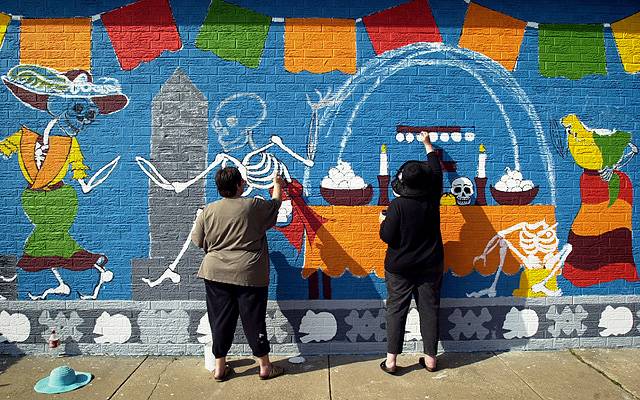
Music: current count 29818 [29786] rated (+32), 344 [339] unrated (+5). Not much to say about music this week. Just sort of feeling my way around the new computer. One thing I noticed is that it's much easier to go straight to a download/stream from email now that I'm doing both on the same machine. In particular, I used to get a lot of CDs from the world music publicist Rock Paper Scissors, but for the last few years all they've sent was email, which I almost never dealt with. But a couple records below (Diali Cissokho, Ginkgoa, Parliament) came out of their mail. I also made a point of thumbing through the July issue of Downbeat and looking up most of the reviewed records I didn't receive. Neither of those strategies led to great discoveries, but they did turn up some pretty good records. Overall count for the week was solid. Most likely it will fall off next week, as we're expecting company for a big event on Wednesday, 4:30-7:00 PM, at McKnight Art Center on the campus of Wichita State University: Sacred Space Exhibition Reception. This is a set of seven large portals: doorways opening to views of the world through various prisms of religion. The artwork was originally constructed and painted back in 2002, under the direction of the late Diane Thomas Lincoln, with my sister, Kathy Hull, taking a major role. I have write ups and some pictures from the original development and exhibit here. The artwork has been in storage for much of the intervening time. Before her fatal accident this spring, my sister had campaigned to remount the exhibit, and she conspired with my nephew Mike Hull to produce a documentary on the work. This project won't come off quite as originally intended, but Mike will be here to film what he can, and we'll try to be helpful. The exhibit will be on view, free to the public, 9 A.M.-5 P.M. at the Clayton Staples Gallery, second floor of McKnight Art Center West, through August 31, 2018. Coincidentally, I just heard this week that another of Kathy's major projects -- a mural based on the Mexican Day of the Dead celebration on the south side of a laundromat at Arkansas and 25th St N here in Wichita -- is going to be painted over sometime soon. I only found one Google image search picture, here, as it was being painted (Linda Jordan left, Kathy right). I also have a finished photo in my archives, as well as a picture of Kathy holding her sketch in front of the work-in-progress which at the time appeared in the Wichita Eagle. Ram Lama Hull posted a couple more recent photos on Facebook: here and here. Ram commented:
Mike has already photographed a lot of Kathy's art, and I expect he will be doing more this week, including some "last shots" of the mural. Actually, I guess I do have a couple of brief notes on music. Michael Tatum has been doing one of those "10 records in 10 days" things on Facebook. His first three picks recapitulate my own evolving tastes in the years just before I started writing rock crit: The Byrds, Sweetheart of the Rodeo; Rhino's disco compilation, Turn the Beat Around (1974-1978); and Roxy Music, Siren. I would have picked Stranded, and tried to work in Al Green, I'm Still in Love With You, and Brinsley Schwarz's New Favourites, but Michael is definitely onto something. Given that I've archived his work in the past, I've started to squirrel away these new posts. I'll also note that Robert Christgau's latest Expert Witness has two A records that I gave very solid A- grades to some time back: Parquet Courts: Wide Awaaaaake!, and No Age: Snares Like a Haircut. I see now that I screwed up the news roll notice for that post -- sorry about that. I've been making slow progress fixing my local copy of the website, but I'm still a long ways away from being able to do a general update. (Same, really, for my own websites.) I'll also note that I played the new Lily Allen album (No Shame) a half-dozen times today without being able to grade it A-. May still happen: I've decided to back off and give it some time, but it's clearly not going to be my album of the year, as her last two were. Not that I don't still adore her, but only a few songs reinforce that (like "Waste"). On the other hand, a couple songs are very bland, and "Cake" is way too much of a cliché. And only on the last play did it sink in that "Three" is meant to be in the voice of her daughter. Sure, makes sense that way, but doesn't sound right. New records rated this week:
Recent reissues, compilations, and vault discoveries rated this week:
Old music rated this week:
Unpacking: Found in the mail last week:
Daily LogMiscellaneous Album Notes:
Ask a question, or send a comment. Sunday, June 10, 2018 Weekend RoundupBig news this coming week will be the Singapore summit between Donald Trump and Kim Jong-un. No one I've read has any idea what the Koreans (either North or South) are thinking going into the summit, nor do they seem to have any grasp on the Trump administration -- not just because Trump has been even cagier than usual (by which I mean his peculiar habit of masking ignorance with uncertainty and whimsy and passing it all off as unpredictability). Still, one piece I tried to read was Alex Ward: Trump just made 3 shocking statements about North Korea. I've cited Ward's pieces on Korea before, and expect something more or less sensible from him, but this isn't that. First problem here is that I can't find any statements, much less "shocking" ones, by Trump here. Actually, the most ignorant statements appear to be coming from Ward, such as: "Presidents don't habitually welcome murderous dictators to the White House"; and "Experts I spoke to said that's [a "normal" relationship with the US] something North has wanted for years because it would legitimize the Kim regime in the eyes of the world." Isn't it a little late to think that meeting with Donald Trump will legitimize anyone? Having been shunned by the Philadelphia Eagles and the Golden State Warriors, isn't Trump the one left with a desperate craving for legitimization? The most shocking statement in the article is a subhed: "Kim has given little away. Trump has offered a lot." What exactly has Trump offered, other than his passive-aggressive willingness to meet, most recently couched in a vow to walk out of the meeting within ten minutes if he doesn't like the vibe? Ward cites an Ankit Panda tweet as "on table for June 12 should things go well, as of Trump's recent remarks":
The first point is really a no-brainer. The War effectively ended 65 years ago, and nobody wants to restart it. Normalization should also be, and should move directly into some degree of sanctions relief -- certainly for trade of non-military goods. The US had diplomatic relations with the Soviet Union long before it broke up, and with China long before they adopted any market reforms, and it's certain that even the constrained degree of normalization there helped bring about reform. The US hasn't been willing to engage with North Korea because Americans bear grudges over the 1950-53 war they couldn't win, because North Korea is a useful enemy to bolster defense spending, and because (unlike China, to pick an obvious example) businesses don't forsee a lot of profit opportunity there. In short, it has, thus far, cost the US very little to perpetuate a state of hostility, and until North Korea developed ICBMs with nuclear warheads, there never seemed to be any risk. There really isn't much risk even now: Kim certainly understands that any offensive use of his new weapons will only result in the obliteration of his country. It's become abundantly clear that the only value anyone has ever gained with nuclear weapons is deterrence against foreign attack. Still, no one likes being tested, let alone intimidated, and dread makes a fragile foundation for peace. Closed, hostile relations are lose-lose. Open, equitable relations can be win-win: most obviously by opening up free trade. What's happened over the past two years is that North Korea first put on a show of force to get US attention, then followed that up with a series of conciliatory gestures opening up the prospect of normal relations and mutual economic growth. If the US had sensible people in charge of foreign policy, this whole process would be straightforward. Unfortunately, we have Trump, and Trump has Bolton, but even people who should know better (like Ward) keep falling back into unhelpful habits. The big question this summit faces is whether Trump and Kim can figure out a way to sequence steps they ultimately seem to be willing to agree to: ending the official state of hostilities, normalizing relations (which both includes ending sanctions and deescalating military threats). The Bolton position insists on North Korea giving up everything before the US gives in on anything, and Bolton is ideally positioned to whisper in Trump's gullible ear. I could write something about what I think should happen, but it won't. As Trump says, "we'll see." Still not doing full website updates, although I've been making plodding progress fixing the massive breakage from the crash. One thing of particular note is that I lost various passwords for my wife's media accounts. I've restored a couple, but not all of them, and I'm getting annoying complaints for lack of the rest. Thus far a more conspicuous problem is that I'm running Firefox without an ad blocker, so for the first time in years I'm experiencing the entire torrent of hideousness that supposedly keeps the internet free. I guess I'll chalk it up to experience, but the irritation factor is immense, and I'm not sure how long before I break down and try to defend myself. Still, I can imagine some sort of add-on short of a blocker that would make it more tolerable: some way to point at an object and either delete or cover it up. Keyboard still giving me aggravation, but I have a replacement ready to plug in: a mechanical (brown) switch gaming thing with red LED backlighting. Certainly the most expensive keyboard I've bought since my typesetting days, or maybe my old IBM Selectric. Some scattered links this week:
Ask a question, or send a comment. Monday, June 4, 2018 Music Week
Music: current count 29786 [29759] rated (+27), 339 [344] unrated (-5). Rated count better than expected, but mostly due to listening to old (often familiar) music -- only 11 new releases below. Could be that I listened to/rated/reviewed a few albums between last Monday's update and my catastrophic computer crash. If so, I'll have to go back and redo. But I did find a couple of bookkeeping discrepancies that added to the rated count. Current computer status:
As some point I may push a few of the more volatile music files onto the server. (Maybe I should try writing an explicit pathname archival tool today, since that would be useful now and again in the near future? OK, that's done.) A couple of notes on this week's music. Back in December, Cuneiform announced that they wouldn't be releasing any new music -- you can still buy their back catalog, and they've put it up on Bandcamp so you can actually listen to it. (They've always been a holdout from streaming services.) So I was surprised when the two new Thumbscrew releases showed up in the mail. Looks like they have some more digital-only releases, but these are (or soon will be) physical. And they're so good I went back and tried to play Mary Halvorson's other new record this year, Code Girl. I still don't like it, the problem a singer who grates on my nerves. Vocals also undermine the Phil Haynes double, but his No Fast Food album is possibly the best showcase in recent memory for Dave Liebman. The unpacking queue has thinned out considerably in the last month, and not having time to do much research, I've resorted to using Napster's very limited "featured" offerings. That got me to Chvrches, Gift of Gab, Pusha T, and Kanye West. I wound up giving West's 7-track "album" an extra play after a Facebook friend raved about it, and another stressed how much better it got after multiple plays. I also followed links to reviews by Rob Harvilla. Meaghan Garvey, and Lindsay Zoladz, none of which turned out to be all that positive. I looked the album up on Metacritic, where its average score is 67 for 20 reviews (user score is 7.4 on 397 ratings). I wound up bumping the album one slot, but was already regretting that before "Ghost Town" finished. I'm counting the 7-cut (21-23 minute) West productions as EPs. In the past I've often lowballed EPs, not because I think they lack value but because usually a record takes some time to make itself felt. Still, two of my A- grades this week are EPs (both six cuts, one a mere 21:16, the other a near-LP 28:40). Both are terrific, but also feel pretty substantial to me. Between the vinyl revival and the dominance of digital formats, that sort of length range is becoming common, making labels awkward. As for my "old music," one of the scripts I tested was the one that prints out my grade database for a given artist. I used the Rolling Stones as my test case, and noticed the ungraded Black and Blue and a few albums I've never heard. Most were available on Napster, so I figured they'd make for easy listening while I was working on the website. Once I caught up with the missing items, I decided to go back and pick up the UK versions of early albums I knew from US editions. (One thing that inspired me here was Michael Tatum's review of Out of Our Heads -- US edition, although I had to look that detail up. By and large, the UK editions turned out not to be as good -- or maybe they just sounded a bit thin (on the computer) and dated? I didn't do any rechecking. I also didn't prepare cover images, even when they rose to A- or even A. I imagine I'll follow similar strategies in coming weeks, and see where it all leads me. But I'll also take a look at Phil Overeem's latest list and see what else pops up. Played the new Sidi Touré album while writing this, realizing (again) there are old ones I should catch up with. New records rated this week:
Recent reissues, compilations, and vault discoveries rated this week:
Old music rated this week:
Unpacking: Found in the mail last week:
Ask a question, or send a comment. Sunday, June 3, 2018 Weekend RoundupImpossible to put the usual amount of work into this weekly feature, but filling out and posting something of a stub is at least a step back toward normalcy, as well as something I can look back on for a timeline to this miserable period in the nation's storied but increasingly sorry history. The main problem is that I'm still waylaid by the crash of my main working computer. I've restored local copies of my websites, but the shift to a new computer, running newer software, has resulted in massive breakage. I'm making slow but steady progress there, but this website in particular is nowhere near stable enough for me to do my usual update. So while I'm doing the usual work locally, the only files I'm updating on the server are the blog posts. A secondary problem is that my workspace has been disrupted, which among other things leaves me facing a different (even more cluttered) desk, using a different (and less comfortable) keyboard and mouse, with less satisfactory lighting, and other minor nuisances. Among other things, expect more typos: the keyboard touch is worse (although this one is less prone to dropping 'c'), a subtle change in emacs drops spaces where I expect to have to delete them (so I've caught myself deleting first characters of words), and a spellcheck script I wrote is gone and will have to be reinvented. Also note that where I used to keep twenty-some news/opinion sites permanently open, I've yet to re-establish the practice, nor have I looked up passwords to the few sites I have such access to, so my survey this week will be especially limited. I'm also running a browser without NoScript or even an ad blocker, so we'll see how long I can stand that. Got email from Facebook reminding me that today is Bill "Xcix" Phillips' birthday. I usually don't bother with such notices, but last year I did, only to find out that Bill had died a few months earlier. So today's email reminds me that he's still dead, and how dearly I miss him. Some scattered links this week:
Ask a question, or send a comment. Thursday, May 31, 2018 Streamnotes (May 2018)Back on Monday, when I posted Music Week, I figured I had a couple more days to add to my already substantial Streamnotes draft. But then disaster struck: my main computer seized up, losing (at least for now) what little additional work I had added. What happened was some kind of power surge worked its way through the UPS that supposedly protected the computer, into the computer's power supply and evidently on to the motherboard. Whether it also damaged the hard drives is yet to be determined, but replacing the power supply failed to light the motherboard's always-on LED, so something is probably seized up there. (On the other hand, there are no visible signs of physical damage, like popped capacitors or unseemly burn or smoke residue.) Realizing that I couldn't repair/rebuild the computer anytime soon, I switched plans: I have a secondary computer which I use for listening to music and occasionally watching video. I rebuilt it a year or two ago, and it's actually a pretty solid machine: AMD 8-core CPU, ASUS motherboard, 32 GB RAM, 1 TB hard disk, a medium-low end video card. Most important, it's up to date, with Ubuntu 16.04 (vs. Ubuntu 12.04 on the dead machine). The outdated software has been a fairly serious problem: among other things, I wound up having to use the newer machine for Facebook and Twitter, and a Chromebook for Amazon (partly why Book Roundups have been rare lately). The newer machine is running Firefox much faster than the dead one ever did. On the other hand, up-to-date software is causing me other problems, as websites which worked on the older versions have cracked in numerous ways. Most of my work, including my book drafts, has been hidden away on my website, so I figured I could get going again by retrieving data from the server. This is also true for a half-dozen other websites which I built and manage, so getting them back and running again will at least allow me to work going forward. I'm still out a fair amount of data, but the most critical parts (especially to other people) are on those websites. I ran across a fairly daunting task last night, when I realized that PHP dropped the old mysql database interface module in favor of the "improved" mysqli module, necessitating a complete rewrite of all of the Consumer Guide database at Robert Christgau's website. I tried some band-aid solutions last night, and managed to successfully connect to the database, but that was it. I decided today I need to go back and RTFM ("read the fucking manual") until I actually understand how to use the new "object model." The code is scattered over about 30-40 files, and there is real risk that the rewritten to run under PHP 7 here will break on a server which is still running PHP 5.6. So I decided to go after (hopefully) simpler problems today. In particular, realizing that today is the last day of May, I thought I should make an effort at posting May's Streamnotes column. The first problem was that when I initially brought up the blog roll, the only thing that appeared was the banner image. So I had to do some research on how to turn error messages on, then march through the wreckage. First problem was that the function split() had been dropped from PHP 7, in favor of explode(), but one of the arguments also had to be tweaked. I won't bore you with further details, but after a couple hours I managed to get the blog roll and individual posts looking right. Then I figured I could prepare a new blog post, and copy that one file to the server, with a reasonable expectation that it would work. So I went through my usual motions of preparing a Streamnotes post, including opening next month's draft file and indexing this month's records. Of course, I couldn't see anything until I fixed a couple more split() calls, plus a more serious character set matter. But once I finish writing this introduction, all I'm going to upload is the blog file -- lest I inadvertently break something else. I'm not planning on doing a full update until I get a real handle on things. One thing I can't do now is take the time to write up general comments on the records below. You can find some commentary in my various Music Week posts over the past week -- especially the one linked to above. I will note an exceptional number of A/A- records this month, and a pretty diverse set at that. Most of these are short notes/reviews based on streaming records from Napster (formerly Rhapsody; other sources are noted in brackets). They are snap judgments, usually based on one or two plays, accumulated since my last post along these lines, back on April 28. Past reviews and more information are available here (11180 records). Recent Releases
3hattrio: Lord of the Desert (2018, Okehdokee): Folk group, from the southwest corner Utah near Zion National Park; banjo, fiddle, stand-up bass, sounding pretty rustic, although the bassist is a ringer from Florida who knows his way around the Caribbean. B+(**) Idris Ackamoor & the Pyramids: An Angel Fell (2018, Strut): Tenor saxophonist, born Bruce Baker in Chicago, based in San Francisco, dates his group back to 1972 at Antioch College, where Cecil Taylor taught, but disbanded in 1977, not regrouping until 2012. Band is funky, with guitar and violin for texture, congas as well as drums. Sax is often terrific, but vocals disappoint. B+(**) Bill Anschell: Shifting Standards (2017 [2018], Origin): Mainstream pianist, grew up in Seattle, spent a decade in Atlanta before moving back. Trio with Jeff Johnson (bass) and D'Vonne Lewis (drums), playing nine standards -- two from Gillespie, Mal Waldron's "Soul Eyes," Fats Waller's "Jitterbug Waltz," the rest from the Berlin-to-Bernstein songbook, all smartly done. B+(***) [cd] Anteloper: Kudu (2017 [2018], International Anthem): Duo, Jaimie Branch (trumpet, had a widely praised debut album in 2017) and Jason Nazary (drums, played in groups Bear in Heaven and Little Women). I don't know who is into electronics, but I figure that's the source of the dark atmospherics, with the trumpet blending in more often than standing out. B+(**) [bc] Tiffany Austin: Unbroken (2018, Con Alma): Jazz singer, writes some lyrics, born in Los Angeles, based in San Francisco. Gospel voice, scats a lot, good horns, and a stellar Cyrus Chestnut/Rodney Whitaker/Carl Allen rhythm section. B+(*) [cd] Cardi B: Invasion of Privacy (2018, Atlantic): Rapper Belcalis Almanzar, first album after two Gangsta Bitch Music mixtapes and a chart-topping single, "Bodak Yellow," that won last year's Pazz & Jop song category. Big investment here: scads of songwriters, producers, guests, yet consistent, hooky, unpredictable. A- Alice Bag: Blueprint (2018, Don Giovanni): Alicia Armendariz. lead singer in LA punk band the Bags (1977-80), later chronicled the LA punk scene, wrote an autobiography (Violence Girl: East LA Rage to Hollywood Stage: A Chicana Punk Story), and finally launched a solo career with her eponymous 2016 album. Opens with a foursquare rocker, even brings some punk rage, but the album falls off a bit midway. B+(*) MC Paul Barman: (((Echo Chamber))) (2018, Mello Music Group): Rapper, several albums since Paullelujah! in 2002, for some reason feels the need to note that he's white in the second song here -- not really necessary as LA Weekly included him in their "Top 20 Whitest Musicians of All Time" list, but I can't fault him for feeling the need to make anti-racialist points that should be common sense by now. Fast, scratchy, high pitched, a lover of words, but not quite as funny as his best past work. B+(***) Kenny Barron Quintet: Concentric Circles (2018, Blue Note): Timed to coincide with the pianist's 75th birthday, marking 50 years of recording -- actually longer, side credits going back to 1961 with Perry Robinson's Funk Dumpling (1962) an early triumph; his own records start in 1968, with Peruvian Blue (1974) an early landmark; his Stan Getz duos People Time (1991) and Swamp Sally (1995, with Mino Cinelu) are my favorites. New quintet adds Dayna Stephens (tenor sax) and Mike Rodriguez (trumpet) to his recent trio with Kiyoshi Kitagawa (bass) and Johnathan Blake (drums). Young group, well schooled in contemporary postbop -- all these years Barron has made the bulk of his living teaching, and is justly legendary, but academic jazz still has its limits. B+(**) Berry: Everything, Compromised (2018, Joyful Noise): Rock band, principally guitarist/vocalist Joey Lemon and drummer Paul Goodenough, formed on Martha's Vineyard in 2002, shortly moving to Chicago. At some point they start sounding like late Beatles, minus hooks and catchy melodies and clever lyrics. Kind of like Badfinger, but badder. B- Black Foxxes: Reiði (2018, Spinefarm): British alt-rock band, from Exeter, a tuneful guitar swarm. Some hear echoes of Smashing Pumpkins, Jeff Buckley, and Radiohead, but even with their incomprehensible title I don't find them anywhere near that pretentious. Melodramatic? Maybe. B Terence Blanchard: Live (2018, Blue Note): Trumpet player, has done a lot of soundtrack work, pulled this from concerts in Minneapolis, Cleveland, and Dallas, in each case thinking of recent shootings, either by or of police. (The way I'm reading the hype sheet, they're providing dates of the shootings, not of the concerts.) Quintet called E-Collective, with Charles Altura (guitar), Fabian Almazan (piano/synths), David "DJ" Ginyard (bass), and Oscar Seaton (drums). Dense, uplifting, doesn't show off his trumpet very well. B+(*) Andrea Brachfeld: If Not Now, When? (2017 [2018], Jazzheads): Flute player, eighth album since 2001, started studying classical but followed her instrument into Latin jazz, where she has a couple of "lifetime achievement awards." That's less evident here, where she's backed by Bill O'Connell (piano), Harvie S (bass), and Jason Tiemann (drums). Mostly original pieces, some co-written by O'Connell (strong performance from him), ending with "Amazing Grace." B+(*) [cd] Greg Burk: The Detroit Songbook (2017 [2018], SteepleChase): Pianist, Michigan native, bunch of records since 2005, trio here, with Matteo Bortone (bass) and John B. Arnold (drums), all originals, smartly executed. B+(**) David Byrne: American Utopia (2018, Nonesuch): He has a distinctive sound, especially rhythmic, but not as spry as it used to be, which at worst steers him into self-caricature. First solo album since 2004, one that aims at more optimism -- it's part of "a larger multimedia project titled Reasons to Be Cheerful -- than seems warranted, not least by the music. Exception: "Everybody's Coming to My House." B Jonas Cambien Trio: We Must Mustn't We (2018, Clean Feed): Portuguese pianist, trio adds André Roligheten (soprano/tenor sax, bass clarinet, flute) and Andreas Wildhagen (drums, plus a bit of trumpet), with guest trumpet on two tracks (Torstein Lavik Larsen). Opens strong with lots of rhythmic friction, varying thereafter as Roligheten works through his arsenal. B+(***) François Carrier/Michel Lambert/Rafal Mazur: Beyond Dimensions (2016 [2018], FMR): Alto sax-drums duo from Quebec, have produced a lot of albums since 1999, often trios with a guest pianist or bassist or, here, their fourth album with Polish acoustic bass guitarist Mazur. Some superb stretches, a shade less satisfying than their Oneness (2017) or Unknowable (2015). B+(***) [cd] Playboi Carti: Die Lit (2018, AWGE/Interscope): Atlanta rapper Jordan Terrell Carter, had an eponymous mixtape last year that turned some heads, returns with first studio album. Same herky jerk, rhythmic appeal that repeatly snags you then lets you go. B+(*) Dan Cavanaugh/Dave Hagedorn: 20 Years (2017 [2018], UT Arlington): Piano/vibraphone duets, the musicians meeting as undergrads 20 years prior. Several free improvs, also tunes from Ornette Coleman, Trent Reznor, Herbie Nichols, and an original arrangement of "Maple Leaf Rag." B+(*) [cd] Cavern of Anti-Matter: Hormone Lemonade (2018, Duophonic): Berlin-based trio, third album, Holger Zapf's electronics plus two guys from electropop group Stereolab, playing their own twist on Krautrock grooves. B+(**) Ceramic Dog [Marc Ribot/Shahzad Ismaily/Ches Smith]: YRU Still Here? (2018, Northern Spy): Guitarist Marc Ribot's group, second by the trio after eponymous debut, the others play bass and drums but also everyone dabbles in electronics and sings -- leads seem to be Ribot, with lyrics on half of the pieces, maybe more, plus guest horns on a couple. Not sure I get all the politics, or that it really matters. The anger is sure palpable, as is the Arab-Jewish fusion. A- Chamber 3: Transatlantic (2016 [2018], OA2): I don't know of any formal definition of "chamber jazz," but usually look for a soft instrument (clarinet or violin/viola) and absence of drums. Principals here are Christian Eckert (guitar), Steffen Weber (tenor sax), and Matt Jorgensen (drums), but they're not even a trio -- Phil Sparks plays bass, though his name didn't make the front cover -- actually just a rather nice little postbop sax quartet. Disc is packed, and "When You Wish Upon a Star" is radiant. B+(*) [cd] Chloe x Halle: The Kids Are Alright (2018, Parkwood/Columbia): Sisters Chloe and Halle Bailey, less than two years apart, harmonize everything, play sumptuous pop which probably wouldn't be recognized as r&b without an assist from the eyes -- even with guest spots for GoldLink and Joey Bada$$. Could grow on you. B+(**) The Nels Cline 4: Currents, Constellations (2017 [2018], Blue Note): Guitarist, in a two guitar quartet with Julian Lage -- Cline and Lage did a duo album in 2014 -- backed by Scott Colley (acoustic bass) and Tom Rainey (drums). All Cline pieces except for one from Carla Bley. The rhythm section helps. B+(*) Freddy Cole: My Mood Is You (2018, High Note): Nat King Cole's little brother, 86 now, his eerily reminiscent voice finely aged, takes a set of slow ones, not so much because he's wearing out as enjoying the sublime. With John di Martino (piano), Randy Napoleon (guitar), Elias Bailey (bass), and Quintin Baxter (drums), plus Joel Frahm on tenor sax -- hope Houston Person is OK, but Frahm is well poised to pick up his session work. B+(***) J. Cole: KOD (2018, Roc Nation): Popular rapper, fifth studio album, all chart toppers. Title repeatedly spelled out, supposed to mean Kids on Drugs or King OverDosed or Kill Our Demons. B+(**) Confidence Man: Confident Music for Confident People (2018, Heavenly): Dance pop quartet, fronted by a man and woman in white with pseudonyms, backed by two people totally in black, faces hidden behind hoods. Don't know where they're from -- one source says Missoula, MT, another Melbourne down under, their label website only showing UK dates. Reminds me of various things, especially from 1980s new wave disco, which doesn't offer great promise for future efforts, but for now those are all things I enjoy, and there's something to be said for living in the moment. A- Ry Cooder: The Prodigal Son (2018, Fantasy): Three clever originals, the rest obscure covers, mostly blues/gospel, four by three gents known as Blind -- Willie Johnson, covering all the bases, doubles up. Took several plays to sink in, and still feels a little slick, but hardly glib. A- Frankie Cosmos: Vessel (2018, Sub Pop): Singer-songwriter Greta Kline, famous actor parents (Kevin Kline/Phoebe Cates), acted some as a child, third album, started DIY as Ingrid Superstar and doesn't get fancy now that she's got label backing. Not exactly awkward, but not untroubled either, or uninteresting. B+(***) Elysia Crampton: Elysia Crampton (2018, Break World, EP): Electronica, artist has a couple previous albums. Cover here says Ocelote but I've yet to see anyone used that as the title. Six songs, 18:45, big beats, hard and quasi-industrial. B+(*) Czarface/MF Doom: Czarface Meets Metal Face (2018, Silver Age): The former originally a 2013 album by 7L & Esoteric (George Andrinopoulos and Seamus Ryan, 7 albums 1999-2010) and Wu-Tang Clan member Inspectah Deck, now joined into a "supergroup," now with four subsequent albums. Needless to say, their comic book/underground rap fusion was right up Doom's alley -- indeed, MF stands for "Metal Face." Of course, I'm not properly following the plot, but even at my superficial level this is great fun. A- Dead Composers Club [Noah Preminger/Rob Garcia]: Chopin Project (2017 [2018], Connection Works): Compositions by Frederic Chopin, arrangements by Preminger (tenor sax) or Garcia (drums), with Nate Radley (guitar) and Kim Cass (bass). Being a classical music phobe, nothing I recognize here, nor anything that triggers my traditional gag reflex. The drummer certainly helps. B [cd] Benoît Delbecq 4: Spots on Stripes (2017 [2018], Clean Feed): French pianist, with Mark Turner (tenor sax), John Hébert (bass), and Gerald Cleaver (drums), doing original material, prickly and rather abstract. B+(**) Robert Diack: Lost Villages (2018, self-released): Drummer, from Toronto, first album, quartet with guitar (Patrick O'Reilly), piano (Jacob Thompson), and bass (Brandon Davis) -- giving the short-ish album a luxurious shimmer. B+(*) [cd] Ron Di Salvio/Bart Plateau: The Puglia Suite (2017 [2018], Blujazz): Piano and flutes, respectively, a duo as far as I've noticed, Di Salvio the main composer. Sometimes I wonder if I'm being too hard on flute players -- I do tend to prefer deeper instruments -- but then there's this, which among other things reminds one how hard it is for flute to escape its role in classical music. B- [cd] DJ Koze: Knock Knock (2018, Pampa): German DJ/electronica producer Stefan Kozalla, third album, a bit slow finding the groove this time. Mixed bag after that. B Yelena Eckemoff Quartet: Desert (2015 [2018], L&H Production): Russian pianist, trained under the Soviets in classical music, moved to US in 1991 and took a shot at jazz in 2009. Back cover shows the diminuitive redhead surrounded by three giants with white (or no) hair: Paul McCandless (oboe, English horn, soprano sax, bass clarinet), Arild Andersen (double bass), and Peter Erskine (drums). Lovely pastorales, the piano and reeds alternately delightful. B+(***) [cd] Kat Edmonson: Old Fashioned Gal (2018, MRI): Singer-songwriter from Houston, fourth album, harkens back to the jazz and pop of the 1940s (more or less). Cute voice, some clever lyrics, including a slam against pop-up ads. B+(*) Adrean Farrugia/Joel Frahm: Blues Dharma (2017 [2018], GB): Piano/tenor sax duets, the pianist from Canada, teaches at York, two previous albums, not someone I've noticed before but he's forceful here, driving the rhythm, building on it. Frahm is a saxophonist I've often admired, but usually on other people's albums. He's masterful here, a delight. A- [cd] Fickle Friends: You Are Someone Else (2018, Polydor): British indie pop group, Natassja Shiner sings, plays some keyboards. First album after two EPs and a dozen singles. Bright and bouncy. B+(**) Flatbush Zombies: Vacation in Hell (2018, Glorious Dead): Hip hop group from Brooklyn, second album after a couple mixtapes. Long, catchy, lot to sort out. B+(***) Dave Gisler Trio: Rabbits on the Run (2017 [2018], Intakt): Swiss guitarist, backed by Raffaele Bossard (bass) and Lionel Friedli (drums), both names prominent on cover. Starts with an easy atmospheric piece, followed by hard groove with impressive drumming, then works back and forth. B+(***) [cd] The Go! Team: Semicircle (2018, Memphis Industries): Indie pop band modeled on a high school cheerleader squad, with conceptmeister Ian Parton turning the vocals over to Ninja and adding the Detroit Youth Choir for depth. B+(**) Benito Gonzalez/Gerry Gibbs/Essiet Okon Essiet: Passion Reverence Transcendence: The Music of McCoy Tyner (2016 [2018], Whaling City Sound): Pianist, born in Venezuela, based in New York, three previous albums. All three have ties to Tyner, who wrote the first nine pieces and dropped in for some booklet photos. Tenth piece is by Coltrane. Last three are tributes, one each. B+(***) [cd] Jean Grae & Quelle Chris: Everything's Fine (2018, Mello Music Group): Rap duo, Tsidi Ibrahim (daughter of Abdullah Ibrahim and Sathima Bea Benjamin) and Gavin Tennille -- reports are they are engaged or married. Underground beats, often recycling to the title refrain. More his raps than hers, but his sly offhand delivery has never been better framed. A- Danny Green Trio Plus Strings: One Day It Will (2017 [2018], OA2): Pianist, "Danny Green (6)" at Discogs, they don't show much discography but I've heard four previous records. The strings are a conventional quartet. They're usually the kiss of death, but are just about right here, adding depth and resonance without getting in the way. B+(**) [cd] Bill Hart Band: Live at Red Clay Theatre (2017 [2018], Blujazz): Guitarist, from Onbatio, has taught in Atlanta for 25 years, sixth album since 1999, leads a sextet with Alex McGinnis on sax, Pat Strawser on keyboards, plus bass, drums, and extra percussion. B [cd] Eddie Henderson: Be Cool (2018, Smoke Sessions): Trumpet player, well into his 70s now with a discography starting in 1973, substantial although he's rarely claimed the spotlight. Starts here like hard bop still has some tricks to show -- group is a quintet with Donald Harrison (alto sax), Kenny Barron (piano), Essiet Essiet and Mike Clark -- but soon moves into ballad territory, which (especially with Barron) also shines. B+(***) Fred Hersch Trio: Live in Europe (2017 [2018], Palmetto): Piano trio, Hersch has a lot of these since 1985, including eight on this label. This one was recorded in Belgium, with John Hébert (bass) and Eric McPherson (drums). Seems about par for the course, with two covers each from Monk and Shorter on the ends, originals in the middle. B+(**) [cd] Hieroglyphic Being: The Red Notes (2018, Soul Jazz): Jamal Moss, from Chicago's acid house movement, long instrumental vamps with a touch of jazz in the air. B+(***) Tyler Higgins: Blue Mood (2016 [2018], Shhpuma): Guitarist, long list of instruments here including lap steel and celesta, backed by Paul Stevens on drums and piano, with Ellen Higgins voice (not that I particularly noticed). Harsher than ambient, but shades in that direction. B+(*) Amos Hoffman/Noam Lemish: Pardes (2017 [2018], self-released): Guitar/oud and piano, respectively, based in New York and Toronto but with Israeli roots, in a quartet backed by bass and drums, plus a couple of guest spots (notably the cut with Jacob Gorzhaltsan on clarinet). B+(*) [cd] Dave Holland: Uncharted Territories (2018, Dare2, 2CD): British bassist, first album (Conference of the Birds, 1972) was a landmark of the 1970s avant-garde, but he edged into the postbop mainstream over the years, winning many polls for his quintet and big band efforts. In some ways he returns full circle here, in a quartet with Evan Parker (tenor sax), Craig Taborn (piano, keyboards, organ, electronics), and Ches Smith (percussion). Still, nothing hair-raising here, with Parker at his most measured. Second disc dials it back further, in case you want to enjoy the bassist. A- [cdr] Hookworms: Microshift (2018, Domino): British group from Leeds, third album, leans pop in a prog-ish sort of way, not as hooky as their first (especially) or even their second. B+(*) Hop Along: Bark Your Head Off, Dog (2018, Saddle Creek): Indie band from Philadelphia, third album, singer-songwriter Frances Quinlan is key, having started as a solo act (as Hop Along, Queen Ansleis), with brother Mark Quinlan drums and a couple others. A bit fancy, as the lyrics stretch around slightly off-kilter melodies. B+(*) Jon Hopkins: Singularity (2018, Domino): English electronica producer, keyboards, bright and shiny, mostly with a good beat, or some gentle ambience, which works too. B+(***) Hot Snakes: Jericho Sirens (2018, Sub Pop): From San Diego, post-hardcore group, three albums 2000-04, a live one in 2006, then they broke up, with John Reis moving on to Rocket From the Crypt. Reunited in 2011, but this is their first album from their second life. Dense grind, not something I ever want to hear again, but not bad for what it is. B Kira Kira: Bright Force (2017 [2018], Libra): Part of Japanese pianist Satoko Fujii's record-a-month celebration of turning sixty, resoundingly answering my complaint about last month's entry by returning her piano to center stage -- at least I assume it's her, as the quartet includes a second keyboardist, Alister Spence, on "Fender electric piano, effects pedals and preparations" (actually, pretty easy to keep them straight). With Natsuki Tamura on trumpet (also inspired) and Ittetsu Takemura on drums. A- [cd] Hayley Kiyoko: Expectations (2018, Empire/Atlantic): Singer-songwriter, dropped her last name (Alcroft), started out in a band called the Stunners before going solo, acts some, first album, electropop but more dream than glitz. B+(*) Matt Lavelle/Lewis Porter/Hilliard Greene/Tom Cabrera: Matt Lavelle Quartet (2016 [2017], Unseen Rain): Trumpet player, also plays flugelhorn (natch) and alto and bass clarinets -- has a unique style on the latter. Backed by piano/bass/drums, freebop with the leader's Jekyll/Hyde horn shifts. Porter seems to want to split the distance between Kenny Barron and Oscar Peterson, and succeeds pretty niftily. B+(***) [bc] Matt Lavelle's 12 Houses: End Times (2014 [2017], Unseen Rain): Larger group, I count 16 musicians including Lavelle (credits: cornet, flugelhorn, alto clarinet, conduction) -- not a big band formula, nor an orchestral arrangement, but a powerful array of solo voices erupting out of the matrix -- Anders Nillson (guitar) and Jack DeSalvo (banjo) make an early impression. "12 Houses," by the way, is an Ornette Coleman reference. B+(**) [bc] Bettye LaVette: Things Have Changed (2018, Verve): Soul singer, cut an album for Motown in 1982, a second album in 1991, a third in 2000 in Europe where she finally started to find some traction. Did an album of Brit Rock songs in 2010 which seemed like a waste, but turned to Dylan here, much more impressively. Probably helps that she steers away from songs you recognize -- mostly from the '80s, I gather. Gives them more charge and depth than Dylan ever did. A Azar Lawrence: Elementals (2018, High Note): Tenor saxophonist, from Los Angeles, I thought his 1974 debut Bridge Into the New Age was brilliant, but he only released one album between 1976 and 2008 before mounting a comeback that has bounced from label to label. With Benito Gonzales (keyboards), Jeff Littleton (bass), Marvin Smith (drums), Munyungo Jackson (percussion), and a few guest shots. B+(**) Mike LeDonne and the Groover Quartet: From the Heart (2018, Savant): Organ player, quartet probably dates back to his 2009 album The Groover: Eric Alexander (tenor sax), Peter Bernstein (guitar), and Joe Farnsworth (drums), although Mike Clark drums on two cuts. Those are all marquee names, with the guitarist adding especially tasty licks, but to limited appeal. B+(*) Bongwool Lee: My Singing Fingers (2016 [2018], Origin): Pianist, from Seoul, South Korea, based in New York, studied classical music before discovering Oscar Peterson. Trio, first album, all originals except for "Bye Bye Blackbird," nicely done. B+(**) [cd] Igor Lumpert & Innertextures: Eleven (2017 [2018], Clean Feed): Tenor saxophonist from Yugoslavia (Slovenia), cut an album called Innertextures in 2004 and clearly likes the term. Mostly trio with Christopher Tordini (bass) and Kenny Grohowski (drums), plus occasional guests like Greg Ward and Jonathan Finlayson. B+(***) Stephen Malkmus and the Jicks: Sparkle Hard (2018, Matador): Former leader of Pavement (1992-99), seventh album since 2000, most citing his band. At his best, he made music so improbable that it redeemed his obviously inept voice, but decades of recording and touring have narrowed the gap. B+(*) Ben Markley Quartet: Basic Economy (2017 [2018], OA2): Pianist, several albums including a tribute to Cedar Walton, Director of Jazz Studies at University of Wyoming but seems to be most active in/around Denver. Adds alto saxophonist Greg Osby to his trio. Haven't heard much from him lately, but he's stellar here. B+(**) [cd] Walter Martin: Reminisce Bar & Grill (2018, Family Jukebox): Singer-songwriter, fourth album, perhaps better known as bassist for the Walkmen, a band I've never had any use for. Don't have much use for him either, although he's not nearly so annoying, and more songs like "Ride Down the Avenue" make me wonder. B Deanne Matley: Because I Loved (2018, self-released): Singer, from Calgary, wrote four (of twelve) songs here. Band touches all the bases, including a string quartet, but stays nearly tucked into the background. Ranee Lee drops in for "Necessary Evil." B+(*) [cd] Solon McDade: Murals (2017 [2018], self-released): Bassist, from Edmonton, started out in the McDade Family Band (folk music), later the McDades, moving on to study jazz at McGill in Montreal. First album as leader, composed all the pieces, played by a bright postbop quintet with two saxes, piano, and drums. B+(**) [cd] MJO Brothers Present: Hip Devotions (2017, Blujazz): "Meditative jazz improvisations devoted to sacred and secular song titles." Three Hanrahans: Curt (saxes), Warren (drums), and Timothy (bass), plus guitar and vibes, with "chant recordings" by the Racine Dominicans. First half tunes are by names I recognize: McLaughlin, Shorter, Coltrane, Ellington. Second half not so much. Both have stretches that are very pretty. B [cd] Lello Molinari: Lello's Italian Job Volume 2 (2018, Fata Morgana Music): Bassist, both acoustic and electric, teaches at Berklee, has a previous album from 1992, a Vol. 1 from 2015. Lots of Italian names in the band -- Dino Govoni (reeds), Marcello Pellitteri (drums), Sal DiFusco (guitar) -- but don't know anything about them. Mixed up nicely, adding a Meena Murthy (violincello) on a couple cuts. B+(**) [cd] Janelle Monáe: Dirty Computer (2018, Bad Boy): Third album, continuing her evolution from dancing android to flesh and blood pop star, conscious enough to opine that "everything is sex, except sex is power." Her funk channels Prince rather than George Clinton and James Brown, so it slides off the one, aiming for something more slippery. A- Van Morrison and Joey DeFrancesco: You're Driving Me Crazy (2018, Legacy): Morrison continues to release records faster than he can write new songs. The last couple, delving into blues standards (Roll With the Punches and Versatile), have been duds. Here he goes with a jazz group: Joey DeFrancesco (organ), Dan Wilson (guitar), Michael Ode (drums), and Troy Roberts (sax, which Morrison also plays). Half originals, from the jazzy side he has long cultivated; the better known standards (like "Miss Otis Regrets") bigger reaches. Not terrific. Still, his timing and phrasing shames such highly touted male jazz vocalists as Elling and Porter. B+(***) Mount Eerie: Now Only (2018, PW Elverum & Sun): Phil Everum, has been making albums under this moniker since 2005, with this the second since his wife, Geneviève Castrée, died in 2016. I'm not unsympathetic, and I don't doubt that 2017's A Crow Looked at Me and now this album have something to say about the grieving process -- indeed, I can't even excuse myself by noting how poorly my ears pick up lyrics, as his music offers scant camouflage. But the words are nearly as haphazard as the bare guitar-and-voice music. So art, maybe, but nothing I look for in music. B+(*) Kate Nash: Yesterday Was Forever (2018, Girl Gang): English singer-songwriter, also acts, which kept her busy the last five years, between albums three and four. This one seems more scattered, but all four are terrific. A- Meshell Ndegeocello: Yesterday Was Forever (2018, Naïve): Singer-songwriter, originally Michelle Lynn Johnson, plays bass and other instruments, "sparked the neo soul movement," lately has feigned toward jazz -- e.g., with her 2012 Nina Simone tribute. Covers here: only one I got immediately was "Atomic Dog," but seems like all have been stretched out to make them more sinuous (if not necessarily sensual). B+(*) Willie Nelson: Last Man Standing (2018, Legacy): New songs, working harder to prove he ain't dead yet than he has in quite some time. Gives him a new perspective on life. A- Angelika Niescier Trio: The Berlin Concert (2017 [2018], Intakt): German saxophonist, alto mostly, discography dates back to 2000. Trio, with Christopher Tordini on bass and Tyshawn Sorey on drums. B+(***) [cd] Nuance Crusaders: Reflections (2017, Blujazz): Compositions by Mark R. Baldridge, lyrics (not many) by Andrea Litzenberger, played by other musicians I've never heard of, split into two tiers -- a sax/piano/bass/drums quartet and extra guitar, sax, violin (OK, Diane Delin), and the Swing City Express Big Band. Group name some kind of oxymoron, not that I'm inspired to figure it out. B- [cd] Orquesta Akokán: Orquesta Akokán (2018, Daptone): Afro-Cuban big band, "Akokán" a Yoruba word meaning "from the heart," recorded in Havana. B+(***) Juan Andrés Ospina Big Band: Tramontana (2017 [2018], self-released): Colombian pianist, also in Banda Magda, with a sprawling international big band -- I count ten countries represented, 27 musicians. Plenty of Latin tinge, but not much more. B [cd] Parquet Courts: Wide Awake! (2018, Rough Trade): Previously the most consistent Velvets-rooted alt/indie band in the land, here they try to mix things up to sometimes odd effect, not least by employing Dangermouse as producer. Still, half or more of the songs come through as loud and clear as anything this year. Not impossible that deeper exposure will tie up the rough edges. A- Jeremy Pelt: Noir En Rouge: Live in Paris (2018, HighNote): Mainstream trumpet player, impressed early on with his chops, but I've rarely been impressed by his records. (NB: I've missed three well-received 2015-17 albums in the label drought.) With Victor Gould (piano), Vincente Archer (bass), Jonathan Barber (drums), and Jacquelene Acevedo (percussion). B+(**) Matt Piet & His Disorganization: Rummage Out (2017 [2018], Clean Feed): Pianist, Chicago area, has a number of records since 2015 -- the one I noticed was a trio with Dave Rempis and Tim Daisy. This is a two-horn quartet with Josh Berman (cornet), Nick Mazzarella (alto sax), and Daisy (drums), with piano rumble filling in for the missing bass, as well as adding flourishes. B+(***) Matt Piet/Raoul van der Weide/Frank Rosaly: Out of Step: Live in Amsterdam (2017, self-released): Avant piano trio, pianist and drummer from Chicago, bassist local. Improvised live, two pieces, intensely rhythmic. B+(***) [bc] Matt Piet/Paul Giallorenzo: Wood, Wire, and Steel (2017, self-released): Two Chicago avant pianists, duets, both can work up a sweat, or wax elegant. B+(**) [bc] Matt Piet & Tim Daisy: Strike One; Strike Two (2017, self-released): Piano-drums duets, two pieces (35:38), strikes hard. B+(***) [bc] Matt Piet: The Bitter Angles of Our Nurture (2017, self-relesaed): Solo piano, one 40:32 piece. Strong performance, especially rhythmically. B+(**) [bc] Prefuse 73: Sacrifices (2018, Lex): Electronica producer Scott Herren, bunch of albums 2001-11, but this is only second since. Gets catchier as it lumbers along. B Princess Nokia: A Girl Cried Red (2018, Rough Trade, EP): New York rapper Destiny Nicole Frasqueri, first album turned some heads, but this set of eight tracks (20:14) is something else, with few raps and much singsong -- not so interesting, at least at first. B+(*) Charlie Puth: Voicenotes (2018, Atlantic): Pop star, second album, strives to be soulful, claims to be danceable, sometimes is. B+(*) Reggie Quinerly: Words to Love (2017 [2018], Redefinition Music): Drummer, from Houston, third album, piano trio (Orrin Evans) plus Jaleel Shaw on alto sax on 4/8 cuts, plus lyrics and voice -- either Milton Suggs or Melanie Charles, everyone reminding you they learned in church. B [cd] Rival Consoles: Persona (2018, Erased Tapes): British electronica producer Ryan Lee West, fourth studio album plus bunches of EPs. Attractive beats and colors, a couple notches above ambient. B+(*) Kristo Rodzevski: The Rabbit and the Fallen Sycamore (2017 [2018], Much Prefer): Singer-songwriter from Macedonia, based in New York, day job psychiatrist, also plays guitar, third album, gets classified as avant-garde jazz but sounds more like the Go-Betweens. The confusion is explained by the band: Mary Halvorson (guitar), Kris Davis (piano), Ingrid Laubrock (tenor sax), Brian Drye (trombone), Michael Blanco (bass), Tomas Fujiwara (drums and co-producer). OK, they're slumming playing such straightforward rock, except that's not all they do. B+(***) [cd] Rolo Tomassi: Time Will Die and Love Will Bury It (2017 [2018], Holy Roar): British mathcore (progressive rock, hardcore punk, art punk, post-hardcore) band, singer Eva Spence and synth player James Spence the only constants since 2005. Not sure what the difference between this and death metal, say, except this is consistently listenable, not least because it regularly reverts to normal levels of volume and rage. Still, more of both than I generally care for. B+(***) Saba: Bucket List Project (2016, Saba Pivot): Chicago rapper Tahj Malik Chandler, underground, nice flow, several pieces pivot back to bucket list concept. B+(**) Samo Salamon/Tony Malaby/Roberto Dani: Traveling Moving Breathing (2017 [2018], Clean Feed): Slovenian guitarist, composer, produced, his name along on the spine, the three names in order on the cover. Not one of those albums where Malaby blows the lid off, but nice shadings and a few strong runs. B+(***) [cd] Rob Schwimmer: Heart of Hearing (2018, Sunken Heights Music): Pianist, also plays Theremin and Haken Continuum (a variable pitch control surface, although software can split the space up into scales). Mostly solo, although there is a credit for Jay Anderson (bass) and Jeff Hirschfield (drums), and some voice. Some Chopin, and several "Hallucinations on Popular Songs." B- [cd] Matthew Shipp: Zero (2018, ESP-Disk): Solo piano. Recognizable with his bold march through dense block chords, but doesn't do much to lively up the progression. Indeed, most song titles return to zero. B+(*) Matthew Shipp Quartet: Sonic Fiction (2018, ESP-Disk): His regular piano trio -- Michael Bisio (bass) and Whit Dickey (drums) -- plus Polish saxophonist Mat Walerian (lto sax/bass clarinet/clarinet), whose led several recent albums with Shipp. Has some flair when they're all working together, but dull spots in between. B+(**) Susana Santos Silva: All the Rivers: Live at Panteão Nacional (2016 [2018], Clean Feed): Portuguese trumpet player, prolific since 2013, solo here, also credited with tin whistle and bells, one 42:04 track, aiming at picking up resonance from the "marble acoustics and huge reverberation" of Santa Engrácia's Church in Lisbon. B+(**) Edward Simon: Sorrows & Triumphs (2017 [2018], Sunnyside): Pianist from Venezuela, dozen or so albums since 1995. Terrific sax solo on the opener (David Binney), nice piano throughout, guests include Adam Rogers (guitar), Gretchen Parlato (vocals), and the Imani winds (flute, oboe, bassoon, clarinet, French horn), in declining order of interest. B+(*) [cd] Sly & Robbie Meet Nils Petter Molvaer Feat. Eivind Aarset and Vladislav Delay: Nordub (2016 [2018], Okeh): Risks too many cooks, although reggae's premier rhythm section usually work within the borders of the Norwegian trumpeter's jazztronica -- the main difference being the extra resonance of acoustic drums. Aarset is Molvaer's usual guitarist, so I'm not sure why he gets billing while keyboardist/producer Jan Bang doesn't -- probably because Delay's electronics seek to square the circle. A- Gary Smulyan: Alternative Contrafacts (2017 [2018], SteepleChase): Baritone saxophonist, broke in with Woody Herman in 1978, a dozen or so albums since 1991, often near the top of DownBeat's polls but I haven't heard much. Describes contrafacts as "a music making method that shares the chord progressions with other compositions" -- credits here include Mal Waldron, Jimmy Giuffre, Al Cohn, Ted Curson, Coleman Hawkins, one original. Trio with David Wong (bass) and Rodney Green (drums). Good showcase for his horn. B+(***) Soccer Mommy: Clean (2018, Fat Possum): Sophie Allison, born in Switzerland but grew up in Nashville. First album after some DIY dating back to 2015. Acoustic guitar strum, tuneful, attractive, starts stronger than it ends. B+(**) Soccer Mommy: Collection (2017, Fat Possum): Eight songs, 27:13, cheap keyboard and electric guitar on cover but her main instrument is acoustic guitar. One song recycled from her debut EP but time suggests it was recut and I'm not locating the others, so the suggestion that this is her label-signing DIY retrospective is unconfirmed. B+(*) Sonar With David Torn: Vortex (2017 [2018], RareNoise): Swiss band (two guitars, electric bass, drums), handful of albums including two on Cuneiform and two on Nik Bärtsch's Ronin Rhythm Records (one with Markus Reuter). Classified math/art/prog rock, which doesn't mean much to me. This is instrumental with strong guitar riffing, probably the band's default but also guitarist Torn's preferred metier. B+(***) [cdr] Speedy Ortiz: Twerp Verse (2018, Carpark): Band led by Sadie Dupuis, named after a comic book character, third album. Long on guitar, some attractive thrash, not much I can make sense of. B+(*) Jon Rune Strøm Quintet: Fragments (2017 [2018], Clean Feed): Norwegian bassist, both acoustic and electric, leads a group with Thomas Johansson (trumpet), André Roligheten (tenor sax), Christian Meaas Svendsen (more bass), and Andreas Wildhagen (drums). Some strong ensemble work, plus bass duets. B+(**) Hans Teuber & Jeff Johnson: Deuce (2017 [2018], Origin): Saxophone and bass duets, Teuber credited with tenor, alto, and alto flute. Couple standards, mostly joint compositions. Easy as these things go. B+(*) [cd] Henry Threadgill: Double Up, Plays Double Up Plus (2017 [2018], Pi): Threadgill's Ensemble Double Up debuted in 2015, recording Old Locks and Irregular Verbs, the Jazz Critics Poll album of 2016. The idea was two alto saxes, two pianos, and two . . . well, one each: tuba, cello, drums. "Plus" adds a third piano -- unless the point is it takes two pianists (David Bryant and Luis Perdomo) to replace Jason Moran. Threadgill doesn't play (Curtis Macdonald and Roman Fíliu return on alto), but composed the tricky, slippery score. Not quite the tour de force of the previous album, but perhaps he was thinking ahead to his larger ensemble. A- [cd] Henry Threadgill 14 or 15 Kestra: Agg: Dirt . . . and More Dirt (2017 [2018], Pi): Recorded over three days starting on the date of Double Up, the group expanded from 8 to 15, with composer Threadgill (alto sax, flutes) and producer Liberty Ellman (guitar) joining in, two trumpets, two trombones, bass, an extra drummer, but only two pianists (Davids Bryant and Virelles). Two pieces in multiple parts, alternately grand and fancy. Takes a while to sink in. A- [cd] Tune-Yards: I Can Feel You Creep Into My Private Life (2018, 4AD): Singer-songwriter Merrill Garbus, with Nate Bronner on bass and co-credited on all tracks. Fourth album, the first three huge critical favorites, especially among Christgau's followers -- second album, Whokill, won the Pazz & Jop poll -- but this one doesn't seem to be anyone's fave (Metacritic score 79 on 31 reviews, so not ignored). Alfred Soto panned it as "for fans only." I've never been one, embracing neither the glitchiness nor the warble, but I can't say this is inferior to her other work. Well, perhaps less personable. B Kali Uchis: Isolation (2018, Virgin EMI): Pop singer, born in Colombia but raised in Virginia, real name Karly Loaiza, her stage name seems to have been a childhood nickname. First album after a mixtape. Doesn't really fit under any of the assigned genres (hip hop, Latin, funk/soul; I've also seen bossa nova, reggaeton, and trip hop mentioned). Joe Levy tried "vintage and futuristic." Not especially glitzy, but it does grow on you, not like anything you'd expect, but still cozy comfortable. A- Marike Van Dijk: The Stereography Project Feat. Jeff Taylor and Katell Keinig (2018, Hert/Membran): Dutch alto saxophonist, seems to be based in Brooklyn, released a previous record called The Stereography Project in 2015 so I adjusted the title here. Two sets of songs, the first five written and sung by Taylor, the remaining six by Keinig, all arranged by Van Dijk, with two distinct groups. Plodding, Rather arty. B [cd] Vin Venezia: Fifth and Adams (2015-16 [2018], Blujazz): Guitarist, haven't found any bio or previous albums but a picture shows gray hair. Recorded over three sessions with varied casts, including a duo with guitarist Mike Stern, another with percussionist Manolo Badrena, but most with David Budway (piano/organ), Harvie S (bass), and Richie Morales (drums), plus Bob Magnuson (tenor sax) on the opener. B [cd] WoodWired: In the Loop (2017 [2018], UT Arlington): Duo, Drs. Cheyenne Cruz (bass clarinet) and Hannah Leffler (flute), based in Dallas, the former teaches at UT Arlington, the latter graduated from and teaches at UNT. Don't see any other credits but their website notes "their groundbreaking use of live electronics in a chamber music setting" -- sounds like drums to me, plus the occasional bird tweet. The two instruments sound good together, and the extra rhythm helps. B+(**) [cd] Wussy: Getting Better (2018, Damnably, EP): Talk about stopgap efforts: four songs, all covers, 13:35, the title song from the Beatles, striking me first as a nobel gesture despite overwhelming evidence to the contrary, then ultimately as bitter irony. Don't know the other songs: "Runaway," "Nomenclature," "Retarded." B+(*) Wussy: What Heaven Is Like (2018, Shake It): The Cincinnati group's shoegaze album: lots of jangly guitar drowning out the two vocalists, who elsewhere usually have something to say. Not that I have any complaints about the guitars. B+(***) The Xcerts: Hold on to Your Heart (2018, Raygun): Scottish power pop trio, Murray Macleod the singer-guitarist, a bit over the top for my taste but not exactly lacking in chops and/or impression. B Darryl Yokley's Sound Reformation: Pictures at an African Exhibition (2018, Truth Revolution): Tenor saxophonist, also plays some alto, from Los Angeles but based in Philadelphia, played in Captain Black Big Band. Second album, with Zaccai Curtis (piano), Luques Curtis (bass), and Wayne Smith Jr. (drums), with Nasheet Waits (drums) listed as "special guest." Draws inspiration from painter David Emmanuel Noel, also from Mussorgsky. Sounds like there are more horns than the credits show. I was losing track and interest, but the sax storm in "Genocide March" shook me. B [bc] Young Fathers: Cocoa Sugar (2018, Ninja Tune): Scottish trio, two black (one born in Liberia, the other second generation from Nigeria). I initially filed them as hip-hop, but they sing more than rap. I never warmed to their two previous albums or two earlier mixtapes, but this is pretty solid all around and not much like anything else. A- YoungBoy Never Broke Again: Until Death Call My Name (2018, Never Broke Again/Atlantic): Rapper Kevin Gaulden, from Baton Rouge, age 18, first album after a stack of mixtapes starting April 2015. Still, nothing here suggests teen rap. B+(**) Recent Reissues, Compilations, Vault Discoveries
Eliane Elias: Music From Man of La Mancha (1995 [2018], Concord): Brazilian pianist, started singing mid-career but sticks with piano here, backed by Marc Johnson (bass) and Satoshi Takeshi (drums) or Eddie Gomez (bass) and Jack DeJohnette (drums), with Manolo Badrena (percussion) on 8/9 tracks. The music is from the 1964 musical rendition of the Don Quixote story -- not all that familiar, but she gives it a strong ride. B+(*) William Parker: Voices Fall From the Sky (1993-2018 [2018], AUM Fidelity, 3CD): Legendary bassist, has composed hundreds of pieces since 1971 (the earliest date here), occasionally songs with lyrics like his 1991-93 Song Cycle, which provides the earliest songs here. Results have been decidedly mixed -- by far my favorite is the Raining on the Moon group with Leena Conquest. The old recordings on CD-2 suggest a compilation, but nearly everything else has been recorded over 2017 sessions (lapping into January 2018), so the set is much more new than not. Parker uses various musicians and no less than 17 vocalists -- some I recognize from past efforts or from their own notable jazz careers (like Fay Victor), but many I don't. It would take me many hours to sort this all out, but the main thing I'm struck by in two passes is how much of it I never want to hear again: operatic sopranos, arch art-song, avant-warbling. Doesn't all grate, but enough does to make me want to move on. B [cd] Liz Phair: The Girly Sound Tapes (1991 [2018], Matador, 3CD): Phair recorded as Girly-Sound three cassettes of solo demos -- just guitar and voice -- a couple years before her career took off in 1993 with the instant classic Exile in Guyville. There's a 25th Anniversary box, Girly-Sound to Guyville available cheap ($22) as 3-CD or expensive ($100) as 7-LP which combines the album with the demos, but streaming sources have this alternative: just the demos -- eleven recut for Exile in Guyville, more that trickled out on later albums. I played these in two long stretches, finding the first stretch compelling, still fresh and striking after a quarter century, the second a bit less so. [Amazon prices above; Matador's own store has cheaper prices, except that the demo-only The Girly Sound Tapes MP3 costs more than the 3-CD Girly Sound to Guyville. Caveat emptor.] B+(***) Liz Phair: Girly-Sound to Guyville: The 25th Anniversary Boxset (1991-93 [2018], Matador, 3CD): Classic album on first disc, demo cassettes crammed into two more, and actually cheaper on CD than MP3. A- Otis Redding: Dock of the Bay Sessions (1967 [2018], Rhino): Dead in a plane crash at age 26, four of his first five albums (1964-66) went top-10 r&b, but peaked at 54 on the pop charts, with his Carla Thomas duets (King & Queen) and his Live in Europe (both 1967) doing only slightly better. He cut many singles, but 21 and 25 were his highest places. Then, after his death, "(Sittin' on) The Dock of the Bay" hit number one, the album number four. More posthumous releases -- four through 1970, and a half dozen live albums -- trickled out. The Dock of the Bay album was thrown together to cash in on the single, mostly collecting singles dating back to 1965. This recapitulates the hit in the context of contemporary recordings -- I haven't seen any dates, so I don't know how tight the window is, but there isn't any patter or false starts: all twelve songs are in finished form, making this effectively a sampler of Redding posthumous albums: The Immortal Otis Redding (5 cuts), Love Man (3), and Remember Me (2). B+(***) Old Music
Tommy Flanagan: Giant Steps: In Memory of John Coltrane (1982, Enja): Piano trio, with George Mraz (bass) and Al Foster (drums), playing six Coltrane tunes, starting with the infections "Mr. P.C." Slows down a bit for "Naima" but then ends on a rousing "Giant Steps." A- Bettye LaVette: Tell Me a Lie (1982, Motown): Born in Michigan, raised in Detroit, cut a single in 1962 when she was 16, a few more over the decade, an album for Atco in 1972 that got shelved, and a decade later this one-shot. Huge voice, already sounds dated -- a plus on the soul ballads, if not the disco. B+(**) Bettye LaVette: Child of the Seventies (1962-73 [2006], Rhino Handmade): "The Complete Atlantic/Atco Recordings": her previously unreleased 1972 Muscle Shoals album, two 1972 singles plus an unreleased one from December 1973, topped off with four tracks from 1962 singles, back when she was 16. The lost album is no great shakes, but not really because the singer came up short -- the Muscle Shoals crew is a little loose. The early singles aren't unforgettable, but they deserve notice. B+(*) Bettye LaVette: I've Got My Own Hell to Raise (2005, Anti-): Her breakthrough album was A Woman Like Me, released on a small label in 2003. That got her a contract with a notable indie rock label, one with scant experience in r&b but willing to let her do her thing. B+(**) Bettye LaVette: Worthy (2015, Cherry Red): Everything she sings sounds like a struggle, and most of the time she overcomes. B+(**) Otis Redding: The Immortal Otis Redding (1967 [1968], Atco): Second posthumous album, short (30:01), eleven songs from three weeks of sessions just weeks before his death -- but only five on the new Dock of the Bay Sessions -- starting with the magnificent "I've Got Dreams to Remember" and ending with "Amen." Not sure why they sound so much better here. A- Otis Redding: Tell the Truth (1967 [1970], Atco): Fourth posthumous album, following Love Man. "Demonstration" shows they haven't hit the bottom of the barrel yet, but the fact that they didn't bother with a fifth one until 1992 suggests they were beginning to harbor doubts. Still, some terrific stuff here. Who else has ever been able to credibly cover James Brown and Little Richard? B+(***) Otis Redding: Remember Me: 22 Previously Unissued Tracks (1962-67 [1992], Stax): No dates on these tracks, but Redding joined Stax in 1962 and died in 1967 and several compilations I have dates for reflect that. Redding's leftovers got combed through pretty thoroughly after his death, so you might not expect much here. The last eight cuts are alternate versions, including two takes of "The Dock of the Bay," but the first fourteen would make a remarkable album -- indeed, they've been released separately as It's Not Just Sentimental. B+(***) Gary Smulyan Quartet: Homage (1991 [1993], Criss Cross): Baritone saxophonist, probably his second album (after the Quintet The Lure of Beauty), album notes "featuring Tommy Flanagan" (piano), but also notable are Ray Drummond (bass) and Kenny Washington (drums). The rhythm section is right at home playing eight songs written by the homage subject, fellow baritonist Pepper Adams. B+(***) Gary Smulyan: The Real Deal (2002 [2003], Reservoir): Mainstream quintet, two originals by the baritone saxophonist and a batch of standards and jazz covers, with Joe Magnarelli (trumpet/flugelhorn), Mike LeDonne (piano), Dennis Irwin (bass), and Kenny Washington (drums). B+(*) NotesEverything streamed from Napster (ex Rhapsody), except as noted in brackets following the grade:
Ask a question, or send a comment. Monday, May 28, 2018 Music WeekMusic: current count 29759 [29733] rated (+26), 344 [351] unrated (-7). Rated count down a bit. I spent most of Monday and Tuesday cooking a fairly large Indian dinner to mark my late sister's birthday, so I took the time to enjoy old favorites. After that, I made a small dent in my CD queue, which had partly been impoverished by my picking out the most promising titles earlier this month. Still, I expected good things from François Carrier's latest -- largely delivered, although I detected a bit of unsteadiness compared to recent efforts -- and a 3-CD William Parker collection. The latter samples Parker's 1991-93 Song Cycle (with Ellen Christie and Lisa Sokolov), adds some later vocal pieces, and throws in two discs of new recordings. I find most of them hard to take -- an aversion to opera, art song, and avant warble I've long held. I also sought out some recent Clean Feed releases -- long my favorite label but less so since they stopped servicing me. I also found a few recent HighNote/Savant releases on Napster -- back catalog isn't there yet, but one hopes -- and took a look at Chicago pianist Matt Piet's Bandcamp pages (but didn't bite on the 3-hour Live in Chicago). Also checked out Robert Christgau's latest picks (Frankie Cosmos and Speed Ortiz; I had already played his HMs), and Prefuse 73 (a friend was curious). Still, none of those struck me as A- records: Carrier came closest, and Piet impressed me as someone worth keeping an ear open for. Expect a Streamnotes compilation by the end of the month. I currently have 19 new A/A- releases (plus one new compilation), which is actually well above average for a month. The 2018 A-list only totals 40 so far, so nearly half of them have come in May. Ignoring January (usually just previous year catch-up) that comes to 10/month, or 120/year. That's actually a bit down from 2017, which totals 144 new A-list records (including 5 added since the Jan. 31, 2018 freeze date). I have 320 new records rated so far this year, so an average of 80/month, projected to 960 for the year. For 2017 the current total is 1177 (42 added since freeze date), so I'm down a bit this year. No real surprise given how the year has gone. The May Streamnotes draft file currently has 128 new records (including compilations), well above my average this (or practically any) year. Not much unpacking this week, but after reports that Cuneiform had closed down back in January, I was very pleasantly surprised to see two new Thumbscrew (Mary Halvorson) records show up in my mail box. New records rated this week:
Recent reissues, compilations, and vault discoveries rated this week:
Unpacking: Found in the mail last week:
|