Blog Entries [800 - 809]Sunday, February 25, 2018
Weekend Roundup
Too late to write an intro, but you know the drill.
Some scattered links this week:
Matthew Yglesias: The 4 biggest political stories of the week, explained:
President Trump endorsed some gun reforms -- well, sort of, but he also
endorsed nonsense like arming teachers (at least any who were ex-Marines);
Robert Mueller's investigation heated up -- especially for Paul Manafort;
HHS is undermining the Affordable Care Act ("Insurers will be able to deny
coverage to people with preexisting conditions on these short-term plans,
meaning a better deal for those who don't have any preexisting conditions --
but that will drain the regular market of many customers, leaving those
with significant health care needs facing higher costs"); Pennsylvania
got a new congressional map. Other Yglesias posts this week:
Jill Abramson: Do You Believe Her Now? "It's time to reexamine the
evidence that Clarence Thomas lied to get onto the Supreme Court -- and
to talk seriously about impeachment." "Her" is Anita Hill, and I believed
her then (unlike. e.g., Joe Biden). One thing worth reminding ourselves
of is that a big part of the reason Hill's charges carried so much weight
was that Thomas ran the government office responsible for investigating
and enforcing charges of sexual harassment, so there was some reason
for holding him up to a higher standard. As for impeachment, I've long
thought that the best case against Thomas would be for the longstanding
conflict of interest caused by his wife working for a right-wing lobby
shop. Republicans have long felt like they had a problem with appointees
drifting toward more liberal positions. One solution to that was to pick
more ideological candidates, and another was to keep them on a tight
payroll leash. Thomas fits both bills (as, by the way, did Scalia). Not
going to happen, of course, but worth recalling.
Julia Belluz: Guns are killing high school kids across America at alarming
rates: "Firearms killed more 15 to 19 year olds than cancer, heart
disease, and diabetes combined in 2016." Total 16,111 from 2010-2016,
an average of 2300 per year, "more deaths than the next 12 leading causes
of teen deaths combined." Meanwhile, Donald Trump wants to arm teachers,
claiming that will deter kids from bringing guns to school. His proposal
is so insane I expected it to be laughed away almost instantly, but he's
stuck to it, doubled and tripled down, despite the revelation that there
were armed guards at Parkland High School and they did nothing to stop
the shooter. Some links:
German Lopez: Why the NRA wants you to talk about arming teachers:
"Arming teachers isn't just a ridiculous idea. It's a deliberate
distraction. When something like this consumes attention, the public
and lawmakers don't talk about the real issue."
This is also true about the focus on mental health care. Every time
there's a mass shooting, gun rights activists -- including Republicans
and the NRA -- argue that the real problem behind mass shootings is
the shooter's mental health.
Don't have the link, but I read a column last week by Cal Thomas
arguing that we need to put some serious investment into mental health,
with the focus more on locking up crazies than on helping them. There's
virtually no chance that Thomas would actually back a serious program
on mental health, even one that was overwhelmingly punitive.
Jane Coaston: Donald Trump said an armed teacher "would have shot the hell
outta" the Parkland shooter.
German Lopez: Trump: armed officer at Florida school "was not a credit to
law enforcement, that I can tell you".
"There's never enough training," Coby Briehn, a senior instructor at
Advanced Law Enforcement Rapid Response Training, told Klepper. "You
can never get enough."
The FBI's analysis of active shooters between 2000 and 2013 has
another relevant data point: "Law enforcement suffered casualties in
21 (46.7%) of the 45 incidents where they engaged the shooter to end
the threat." These are people trained to do this kind of thing full
time, and nearly half were wounded or killed.
Emily Stewart: Multiple armed officers hung back during Florida school
shooting, reports say.
Rachel Wolfe: Trump: 10 to 20 percent of teachers are "very gun adept."
Reality: not even close.
Matt Martin: I've been shot in combat. And as a veteran, I'm telling you:
allowing teachers to be armed is an asinine idea.
German Lopez: The case against arming teachers.
Juan Cole: Top Ten Signs the US Is the Most Corrupt Nation in the World
(2018 Edn.). Cole dismisses Afghanistan right out of the box, then
makes his case by toting up the money at stake and in play. It's been a
while since I looked at Cole's site -- he was an essential blogger back
in the heyday of the Bush/Iraq War -- but I also noticed his
What Does Netanyahu Corruption Case Tell Us About Trump's Fate? I should
also note that he's been covering energy issues; e.g.,
Despite Coal Lobby, Australia to Double Solar Energy in 2018; and
In Anti-Trump Surge, Renewables Make 18% of US Electricity and Impel Job
Growth.
Antonio Garcia Martinez: How Trump Conquered Facebook -- Without Russian
Ads: Actually, this does explain how some of the Russian trolls worked,
much like Trump's own social media minions. This includes both efforts to
zero in on possible Trump supporters and to bum out likely Hillary voters,
hopefully suppressing the vote. Among other things, this article shows that
Trump got more bang for the advertising buck by creating more outrageous
ads and aiming them at people more likely to pass them along.
Emily Stewart: Study: Conservatives amplified Russian trolls 30 times more
often than liberals in 2016. I'm rather skeptical of several of these
findings; e.g., "Conservatives approach the situation from the start with
greater reactivity to threat, a greater prior belief of danger in the world."
I think many conservatives would disagree, pointing out how liberals are
the ones who constantly harping on pseudo-threats, everything from guns
to fracking to global warming. On the other hand, I suppose I can accept
that "liberals appear to have more of a need to think critically than
conservatives." But what the basic numbers show is that Russian trolls
were much more aligned with American conservatives, and that they fed
each other in symbiotic ways. They were amplified because they fed into
this alignment, and in many ways they simply amplified conservatives'
own political interests. Why Russia should do this doesn't make a lot
of sense. One theory is that Russia wants to undermine democracy and
general welfare in America, and many conservative policies effectively
do just that. Another is that oligarchs and/or nationalists -- Putin
at various times wears both of those hats -- seem to have some sort of
mutual admiration society, which is the most obvious common denominator
between the foreign leaders Trump most obviously admires.
Recently in my Twitter feed I noticed an image of an article which
proclaims: "Russia 'is a bigger threat to our security than terrorists'."
I eventually tracked this down to a piece published in England, and
while I couldn't read the actual article -- it was behind some sort of
paywall -- I gather that the gist was that Britain should spend more
money on "defense" weaponry, which is the same pitch neocons here in
America have made of anti-Russian alarmism for ages. Still, even if
you agree that the threat of terrorism has been overhyped, isn't the
exaggeration of "Russian threat" more of a provocation than a solution?
Would North Korea, to pick a timely example, be even more of a threat
had we simply ignored them once it was clear that the truce had held,
instead of repeatedly attempting to isolate and cajole them? America's
"enemies" these days are virtually all enemies of convenience: countries
we could have better relations with but we hold old grudges, pick at
festering wounds, and feel the need to project the dual threats of our
military might and our universalist ideology. And all that generates
unnecessary blowback, sometimes acts of terror but more often in the
form of petty resentments, like trolling for Trump.
Some more, generally skeptical, links:
Matthew Avery Sutton: Billy Graham was on the wrong side of history:
Graham, who died last week at 99, was a big deal in the 1950s when I was
a child. My grandmother, especially, loved him. She was the most bigoted
person I knew back then, a model for me to rebel against. And while I
gave the fundamentalist church of my parents a fair try, going so far
as to earn a Boy Scouts God & Country medal, even back then I was
more than a little suspicious of Graham (or for that matter of any of
the evangelists who got their mugs on television). The turning point for
me was the Vietnam War. And while even then I must have recognized that
there were lots of perfectly respectable Christians opposed to the war,
the media savvy that Graham had plied so successfully in making himself
the face of Christian America had much to do with my rejection of both
God and Country. Graham faded, at least from my view, after Nixon, but
I did notice that he was the pastor the Bushes called to get wayward
George W. back on the straight and narrow. Last I noticed was his son
Franklin, picking up the family business, vowing to follow US troops
into Iraq to convert the heathens -- a mission that wasn't so warmly
embraced by the Occupation generals. As Sutton notes, the evangelical
movement Graham did so much to politicize has gotten more narrow-minded
and vindictive over the years, becoming a pillar of a Republican Party
that increasingly makes the Book of Revelations' locusts look benign.
Some others who remember Graham:
Ask a question, or send a comment.
Monday, February 19, 2018
Music Week
Music: current count 29386 [29345] rated (+41), 375 [375] unrated (+0).
Only one record from my jazz queue this week, and only two other
"new" records: a guitar band from Niger recommended by
Christgau, and a slice (two of three CDs) from the first serious
effort to cash in on Ornette Coleman's death -- courtesy of a reader
who didn't think the third leg of this stool was worth the trouble.
I played the latter at least three times before deciding that it
would be recommended if you didn't have to pay much more than I did --
but I certainly can't see forking over $100 for the "budget" edition.
Makes me wonder if Benardo has been taking business correspondence
courses along with the world's most demanding home schooling on the
drums.
Only one recent reissue/compilation, too, sort of a consolation
prize as the new Youssou N'Dour bootleg Christgau recommended in
the same post proved too elusive for my hacking talents (or, rather,
beyond my patience). Maybe it, too, will someday show up unbidden
in my post. Meanwhile, I've been playing old jazz, partly because
I've been working hard on my Jazz Guides, and partly because it was
easier than thinking up (or, ugh, researching) new things to check
out.
There is, actually, a small bit of logic to the old picks. I
started by looking for old jazz records marked in my database with
a U: stands for "ungraded," the initial default state of my
new mail, but also used for old records that I haven't played since
I started keeping grades, and otherwise don't remember well enough
to specify. These constitute most of the "375 unrated" noted above,
and it occurred to me that it would be easier to stream them than
to dig the LPs out (assuming I still have them), dust off the old
turntable, and flip the damn things over.
Then, once I played the unrated Kenny Barron record (Scratch),
I noticed a PG 4-star album by Barron (Green Chimneys), and
found it as well. Everyone else on the old music list had at least
one unrated album (although I didn't actually find any of the unrated
DeJohnettes). How many more depended on how quickly my interest waned,
with the exercise not yielding much to crow about. Still, I'll most
likely keep poking around a bit as I try to wrap up the Jazz Guide(s).
Next on my search list is Ricky Ford, but neither of his two unrated
records are on Napster. Still, pointed me to a Mal Waldron record I
missed. Alas, not a great one.
Substantial progress on the Jazz Guide(s) last week. I finished
going through the gigantic
Jazz 00's file, and
started working back through a scratch file of Streamnotes reviews,
including the year-and-a-half's worth written since I started
compiling the book(s). I've worked backwards through about four
months of them. This brings my page totals to 1616 (21st Century)
+ 756 (20th Century). Both files are growing at this point, the
newer one 4-5 times as fast as the older -- but given that I have
to jump around to add each entry, "fast" really isn't the right
word. I have no way of estimating how much longer this mop-up
phase will take. I also need to look through my JCG/JP/RG file
to see if there are any marginal entries I missed, and I need
to take another pass through compilations and archival releases.
Still, at this point I'm not trying to be too perfectionist. I
just want to get to a point where I can say I've packaged what
I've written over the past fifteen years, and this is what it
looks like. Turning that into a real book (or books) and/or a
website, cleaning up the writing, filling in holes, etc., is
a next stage thing, hard even to imagine at this point. Before
I move on, I'd at least like to be able to distribute what I
have, at least to a few friends and associates. How I do that?
Right now I have no real idea.
New records rated this week:
- Ornette Coleman: Celebrate Ornette: Brooklyn Prospect Park (2014 [2016], Song X, 2CD): [cdr]: A-
- Samo Salamon/Howard Levy: Peaks of Light (2017 [2018], Sazas): [cd]: B+(***)
- Tal National: Tantabara (2018, Fat Cat): [r]: B+(***)
Recent reissues, compilations, and vault discoveries rated this week:
- Youssou N'Dour: Africa Rekk: Réédition (2016 [2017], Jive/Epic): [r]: B+(**)
Old music rated this week:
- Kenny Barron: Scratch (1985, Enja): [r]: B+(**)
- Kenny Barron: Green Chimneys (1983-87 [1988], Criss Cross): [r]: B+(***)
- Carla Bley: Tropic Appetites (1973-74 [1974], Watt): [r]: B+(*)
- Carla Bley: Dinner Music (1976 [1977], Watt): [r]: B+(**)
- Carla Bley: Social Studies (1980 [1981], Watt): [r]: B+(*)
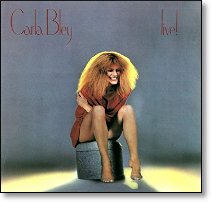
- Carla Bley: Live (1981 [1982], Watt/ECM): [r]: A-
- Carla Bley: Heavy Heart (1983 [1984], Watt/ECM): [r]: B+(**)
- The Carla Bley Band: I Hate to Sing (1981-83 [1984], Watt/ECM): [r]: B+(***)
- Carla Bley: Night-glo (1985, Watt/ECM): [r]: B-
- Carla Bley: Sextet (1986-87 [1987], Watt/ECM): [r]: B+(*)
- Carla Bley: Fleur Carnivore (1988 [1989], Watt/ECM): [r]: B+(***)
- Carla Bley/Steve Swallow: Go Together (1992 [1993], Watt/ECM): [r]: B+(*)
- Carla Bley: Big Band Theory (1992 [1993], Watt/ECM): [r]: B+(**)
- Carla Bley/Andy Sheppard/Steve Swallow: Songs With Legs (1994 [1996], Watt/ECM): [r]: B+(**)
- The Carla Bley Big Band: Goes to Church (1996, Watt/ECM): [r]: B+(*)
- Carla Bley: Fancy Chamber Music (1997 [1998], Watt/ECM): [r]: B
- Carla Bley/Steve Swallow: Are We There Yet? (1998 [1999], Watt/ECM): [r]: B+(*)
- Carla Bley: 4X4 (1999 [2000], Watt/ECM): [r]: B+(*)
- Jack DeJohnette: The DeJohnette Complex (1968 [1969], Milestone): [r]: B
- Jack DeJohnette: Pictures (1976 [1977], ECM): [r]: B-
- Jack DeJohnette: New Directions (1978, ECM): [r]: B+(*)
- Jack DeJohnette: Special Edition (1979 [1980], ECM): [r]: B+(**)
- Jack DeJohnette New Directions: In Europe (1979 [1980], ECM): [r]: B+(*)
- Any Denio/Pavel Fajt/Csaba Hajnóczy/Gabi Kenderesi: The Danubians (1999 [2000], Cuneiform): [bc]: B+(***)
- Keith Jarrett/Jack DeJohnette: Ruta and Daitya (1971 [1973], ECM): [r]: B+(**)
- Keith Jarrett: Facing You (1971 [1972], ECM): [r]: B+(**)
- Keith Jarrett: Arbour Zena (1975 [1976], ECM): [r]: B-
- Keith Jarrett: The Survivor's Suite (1976 [1977], ECM): [r]: B+(**)
- Keith Jarrett: Nude Ants (1979 [1980], ECM, 2CD): [r]: B+(**)
- Keith Jarrett: Personal Mountains (1979 [1989], ECM): [r]: B+(**)
- Michael Mantler: Something There (1983, Watt/ECM): [r]: B
- Michael Mantler With Don Preston: Alien (1985, Watt/ECM): [r]: B+(*)
- Michael Mantler: Live (1987, Watt/ECM): [r]: B-
- Michael Mantler: Many Have No Speech (1987 [1988], Watt/ECM): [r]: C+
- Michael Mantler: Folly Seeing All This (1992 [1993], ECM): [r]: B
- Michael Mantler: Cerco Un Paese Innocente (1994 [1995], ECM): [r]: B+(*)
Unpacking: Found in the mail last week:
- Heather Bennett: Lazy Afternoon (Summit)
- Dogwood: Hecate's Hounds (Nusica.org)
- Thomas Johansson: Home Alone (Tammt Z)
- Lucas Niggli: Alchemia Garden (Intakt): March 16
- Aruän Ortiz Trio: Live in Zürich (Intakt): March 16
- Sara Serpa: Close Up (Clean Feed): March 18
- Bill Warfield Big Band: For Lew (1990-2014, Planet Arts): March 9
Ask a question, or send a comment.
Sunday, February 18, 2018
Weekend Roundup
Late. No time for an introduction. This is what I came up with in
a day of checking the usual sources. Obviously, there's much more to
report, but the framework remains the same.
Some scattered links this week:
Matthew Yglesias: The 4 stories that drove politics this week:
A gunman killed 17 at a Florida high school; All the different
immigration bills failed in the Senate; The White House's Rob Porter
story unraveled; There were a bunch of other scandals:
including expense abuses at EPA and VA. Other Yglesias pieces:
Andrew J Bacevich: The War That Will Not End: Review of Steve
Coll's new book, Directorate S: The C.I.A. and America's Secret
Wars in Afghanistan and Pakistan, effectively a sequel to his
2004 book Ghost Wars: The Secret History of the CIA, Afghanistan,
and Bin Laden, From the Soviet Invasion to September 10, 2001:
it's oft remarked that "9/11 changed everything," but as far as
America's perverse interest in Afghanistan is concerned, 9/11 was
merely a convenient dividing line for two lengthy volumes on the
same tale of ignorance, arrogance, and misadventure. Bacevich's
opening paragraph is chilling:
Steve Coll has written a book of surpassing excellence that is
almost certainly destined for irrelevance. The topic is important,
the treatment compelling, the conclusions persuasive. Just don't
expect anything to change as a consequence.
Bacevich notes that the American delusion continues past the
scope of Coll's book, quoting Mike Pence's recent pronouncement,
"I believe victory is closer than ever before."
And by the way, US military forces are deployed many more places.
The only reason people noticed Niger, in the central Sahara, is that
four US soldiers were killed there last year. For a long report:
Rukmini Callimachi, et al.: 'An Endless War': Why 4 U.S. Soldiers Died
in a Remote African Desert.
Alexia Fernandez Campbell: This is America: 9 out of 10 public schools
now hold mass shooting drills for students. As the conclusion states,
"This trend is super depressing." I don't actually recall any of those
"duck and cover" atomic attack drills back in the 1950s, even though we
all knew that Wichita was a prime target, with military industries, an
Air Force base, and a ring of Titan missile silos. I do recall drills
for fires and tornadoes -- neither was very likely, but not unheard of.
One thing about drills is that they tend to normalize and routinize the
threat. We stopped doing atomic bomb drills not because the threat went
away but because we realized such drills really didn't do any good. And
while I imagine fire and storm drills have continued, the main thrust
there has long been prevention: build safer buildings, and prevent fire
hazards. On the other hand, mass shooting drills seem to be driven by
the fear that nothing can be done to prevent such incidents -- that
they are as inevitable as storms and earthquakes. That's pretty much
the gist of
Josh Marshall: Our Collective Impotence Feeds the Power of Guns,
but it shows a lack of political will to face the mythology that's
built up around guns and killing (see Taibbi, below). By the way,
one of the myths is exploded in
Paul Ratnet: Just 3% of Americans own more than half of the country's
guns.
Joyce Chen: Donald Trump's Alleged Affair With Playboy Playmate: 6 Things
We Learned. This is a separate story from the one Chen reported on in
Stormy Daniels Details Alleged Donald Trump Fling: 8 Things We Learned,
although the "things" are pretty much all of a piece. Still, some details
may gross you out; e.g.: "Trump told Daniels that he believed his wealth
and his power are linked to his hair."
Ryan Cooper: The rise and fall of Clintonism: Reviews two books --
Michael Tomasky: Bill Clinton and Amie Parnes/Jonathan Allen:
Shattered: Inside Hillary Clinton's Doomed Campaign -- but the
books themselves don't fully support the author's overarching thesis,
nicely summed up in his conclusion:
In the context of postwar politics, the upper class accommodated itself
to a truce in the class war, for about three decades. But when the system
came under strain, the elites launched a renewed class war, leveraging
stagflation to destroy and devour the welfare state. Clintonism could
work in the early stages of that process, buoyed by the economic bubble
of the 1990s. But when the inevitable disaster struck, it would become
an anchor around the neck of the Democratic Party -- and it remains one
to this day.
Thomas Frank's Listen, Liberal: Or, What Ever Happened to the Party
of the People? provides a more trenchant critique of Clintonism, but
Cooper's outline occasionally adds something.
Masha Gessen: Trump Has Created an Entire Class of People Who Are Never
Safe:
Many Americans understand how important it is for every person in this
land to feel safe. The most commonly advanced argument for sanctuary
cities (or towns, or states) is that immigrants must feel safe reporting
crimes -- they must know that the police will not be monitoring their
immigration status. This is the simplest expression of the thesis that
none of us are safe unless all of us are safe.
Trump seems to understand this instinctively. Tyrants -- or aspiring
tyrants -- thrive when populations feel unstable and under threat. His
Administration's ongoing attack on sanctuary cities is more than the
belligerent demand for total compliance: it is part of an effort to
insure that some of us are never safe, in order to insure that no one
is ever really safe.
Rakeen Mabud/Eric Harris Bernstein: Does America believe in public
infrastructure anymore? Yglesias explains the mechanics of Trump's
infrastructure proposal above, but one thing he doesn't make clear
enough is that the only real reason for designing the plan that way
is to pave the way for auctioning off public works to private owners,
allowing them to set up toll traps to recoup their investments and
to further line their pockets. Such a scheme should be laughable but
lots of people have been snowed by the argument that the public can't
be trusted to safeguard let alone advance the public interest, so
we're better off handing the job over to private interests. Give it
a mere minute's thought and you'll realize that's nuts, yet I read
an op-ed in the Wichita Eagle (some "Fox News contributor," I forget
who) arguing that the TVA and other government properties should be
privatized.
Still, see
Paul Krugman: Trump Doesn't Give a Dam:
And even the $200 billion is essentially fraudulent: The budget proposal
announced the same day doesn't just impose savage cuts on the poor, it
includes sharp cuts for the Department of Transportation, the Department
of Energy and other agencies that would be crucially involved in any real
infrastructure plan. Realistically, Trump's offer on infrastructure is
this: nothing.
That's not to say that the plan is completely vacuous. One section says
that it would "authorize federal divestiture of assets that would be better
managed by state, local or private entities." Translation: We're going to
privatize whatever we can.
Krugman also wrote:
Budgets, Bad Faith, and 'Balance'.
Andrew Prokop: The new Mueller indictments tell us a lot about Russian
trolls: The link promised "What Mueller's new Russia indictments
mean -- and what they don't." The indictments seem to show that various
Russians were acting as internet trolls, spreading false information
to influence the 2016 elections, but doesn't directly tie them either
to Putin or to Trump. None of the Russians are likely to be arrested
or tried, so I suspect this is merely the foundation to something else.
There was, by the way, another new indictment, a Richard Pinedo, of
which we know very little; see
David Kurtz: Mueller Playing It So Damn Close to the Vest. Next
on the burner, see
Emily Stewart: Rick Gates is reportedly about to plead guilty to
Robert Mueller.
Also, in light of the indictments, Nate Silver tries to factor
How Much Did Russian Interference Affect the 2016 Election? He
doesn't come up with an answer, but he does note "the magnitude of
the interference revealed so far is not trivial but is still fairly
modest as compared with the operations of the Clinton and Trump
campaigns" and "thematically, the Russian interference tactics were
consistent with the reasons Clinton lost." In other words,
"the Russians were at least adding fuel to the right fire." Still,
I'm struck by how much more the Trump and Clinton campaigns spent --
$617 million by Trump and pro-Trump super PACs, $1.2 billion by
Clinton. Alignment between Trump and Russia doesn't prove collusion,
but it is some form of symbiosis. As for Clinton, the burning issue
remains what did she do with all that money? And why didn't she get
more value for what she spent? That's the same question I was left
with after reading Shattered. Also, note that other Russian
activities haven't been factored in here -- e.g., the DNC email hacks,
which many believe to have been Russian work but haven't been proven.
Of course, it's not just the Russians who meddle in other people's
elections. For a primer, see
Scott Shane: Russia Isn't the Only One Meddling in Elections. We Do It,
Too.
Richard Silverstein: If Israeli Police Take Down Bibi, Don't Expect Much
Good to Come of It: Pretty detailed explanation of the corruption
case against Netanyahu.
Matt Taibbi: If We Want Kids to Stop Killing, the Adults Have to Stop,
Too:
Over two decades ago, I traveled to a city in the Russian provinces
called Rostov-On-Don to interview a psychiatrist named Alexander
Bukhanovsky.
Bukhanovsky, now deceased, was famous. If you've seen the movie
Citizen X, about the capture of serial killer Andrei Chikatilo,
Bukhanovsky was the guy played by Max Von Sydow. He was the Soviet
Union's first criminal profiler.
One of the first things he said was that both Russia and America
produced disproportionate shares of mass killers.
"Giant militarized countries," he said, "breed violent populations."
Bukhanovsky at the time was treating a pre-teen who had begun killing
animals. He told me this young boy would almost certainly move on to
killing people eventually. He was seeing more and more of these cases,
he said.
Nikolas Cruz, the 19 year-old just arrested for shooting and killing
17 people in Parkland, Florida, supposedly bragged about killing animals.
He reportedly even posted photos of his work on Instagram.
There will be lots of hand-wringing in the coming days about gun
control, and rightfully so -- it's probably easier to get a semi-automatic
rifle in this country than it is to get some flavors of Pop Tarts -- but
with each of these shootings, we seem to talk less and less about where
the rage-sickness causing these massacres comes from.
The single most salient fact of life during my lifetime -- nearly
seventy years -- is that the US has continuously been at war abroad.
Even during the decade between the approximate end of the Cold War
and the advent of the War on Terror, the militarist ethos was so
imbued in American thought that we came up with "humanitarian"
rationales for a half-dozen interventions (Iraq, Somalia, Bosnia,
Haiti, Colombia, Kosovo, East Timor, what'd I miss?). And since
2001, that attitude has hardened into an obsession with targeting
and killing individuals. Taibbi notes:
In an era of incredible division and political polarization, military
killing is the most thoroughly bipartisan of all policy initiatives.
Drone murders spiked tenfold under Obama, and Trump has supposedly
already upped the Obama rate by a factor of eight. The new president
apparently killed more civilians in his first seven months in office
than Obama did overall, making use of our growing capacity for
mechanized murder.
"We are killing these sons of bitches faster than they can grow
them now," a CIA official reportedly told a subordinate with glee
some years back. Another CIA vet told the Washington Post
the agency had become ""one hell of a killing machine." . . .
These aren't just scenes from bad movies. They're foundational
concepts in our society. We're conditioned to disbelieve in the
practicality of nonviolence and peace, and to disregard centuries
of proof of the ineffectiveness of torture and violence as a means
of persuasion.
On the other hand, we're trained to accept that early use of
violence is frequently heroic and necessary (the endless lionization
of Winston Churchill as the West's great realist is an example here)
and political courage is generally equated with the willingness to
use force. JFK's game of nuclear poker with Nikita Khruschev is another
foundational legend, while Khruschev is generally seen as a loser for
having backed down. . . .
Gun control? I'm all for it. But this madness won't stop until we
stop believing that killing makes us strong, or that we can kill
without guilt or consequence just by being "precise." What beliefs
like that actually make us is insane and damaged, and it's no surprise
that our kids, too, are beginning to become collateral damage.
Note that the Florida shooter wasn't a veteran, but was in ROTC, so
war and the military were very much on his mind. Also that the gun used
in the Florida shooting, and indeed in many recent mass shootings, was
designed for America's wars abroad. See:
Tim Dickinson: All-American Killer: How the AR-15 Became Mass Shooters'
Weapon of Choice. Also related:
Marcus Weisgerber: Obama's Final Arms-Export Tally More Than Doubles
Bush's.
Ask a question, or send a comment.
Friday, January 12, 2018
Music Week
Music: Current count 29345 [29288] rated (+57), 375 [378] unrated (-3).
Surprised by the high initial rated count (48), but there were 49 records
listed below, so I actually undercounted. I went back and found the error,
plus another record I reviewed last week (bringing the list below to 50),
plus two more older grades I had failed to register, so I manually added
them in. [PS: Also manually added in the Curlew albums I played after my
normal cutoff, to keep them together.]
I took a break last week from compiling EOY lists, and as such from
searching for 2017 records I had missed, to compiling my old reviews
into my Recorded Jazz in the 21st Century guide book. Even made
some notable progress on it, finishing the
Jazz '00s artist list, and
reaching midway in the groups list (52% to be precise, Le Boeuf Brothers).
That brings the draft file up to 1518 pages. I'll probably finish up
the groups this week, reaching a little over 1550 pages. I then need
to go back and pick up things I missed, mostly because I've continued
to write new reviews since I started compiling in August 2016, but
also because there's some fringe stuff I wanted to include but it's
filed elsewhere in the database (e.g., Latin, African, rock).
Once I've done all that -- end of February is a possibility but not
a lock -- I'm not sure what happens next. I'll probably make a PDF
available and issue an RFC (request for comments). I need to look
into tools for converting LibreWriter files into E-book format(s).
I'm sure it would take a massive further effort to edit it into a
worthwhile book -- maybe more than I can ever do (especially given
that I don't have a lot of time to work with). I really don't know
what happens next. I certainly didn't expect to be stuck at this
stage for eighteen months, but that's the size of it.
A side effect of working on the Jazz Guide(s) is that I started
checking out old jazz records. First one was the Italian group
Scoolptures, in my database but with nothing I'd heard, so seemed
like a good idea to give them a try. After that I found it easier
to think of old records to check out than new ones, and they sort
of took over the week.
At some point I looked at
Milo Miles' blog -- probably because he had an RIP post on John
Perry Barlow, and as I scrolled through past posts I noticed a long
one on Cuneiform Records: they're going on some kind of hiatus, where
they'll continue to take orders but not release new records -- usual
gripes there about the forces killing the record business. For some
time now, they've used Bandcamp as a promo tool but made very little
music available to the public there, but last week I noticed that
the entire second Fast 'N' Bulbous album was available. (I reviewed
it, Waxed Oop, gave it an A-.) Turns out that virtually all
of their records are on Bandcamp now, so I started filling in some
of the jazz titles I had missed.
I've also noticed that ECM's back catalog is now mostly up on
Napster. Thus far the only things I've looked up have been a couple
of records that intersect with other artists I've been looking up --
Raoul Björkenheim has several albums on Cuneiform, but also two
Krakatau albums on ECM, so it made sense to serialize them below.
Still, a lot more unheard ECM to work through sooner or later.
I've been working on this stuff pretty quickly, looking for wider
rather than deeper coverage. Sometimes that's easy, sometimes it's
frustrating. The Tippett-Dunmall-Dean albums tend to blur together.
I'm listening to a series of Curlew albums now, and they're even
more of a mixed bag.
One last note on Barlow. Seems like he was always identified as
a Grateful Dead lyricist, but I never knew or cared whatever that
was supposed to signify. I knew him through his work in Electronic
Frontier Foundation (EFF), where he was an important advocate for
free software and a free internet. The recent FCC decision to end
net neutrality is just further proof that his work is more needed
now than ever.
New records rated this week:
- David Bertrand: Palmyra & Other Places (2017, Blujazz): [cd]: B+
- Girma Bèyènè & Akalé Wubé: Éthiopiques 30: "Mistakes on Purpose" (2017, Buda Musique): [r]: A-
- Nick Biello: Vagabond Soul (2016 [2018], Blujazz): [cd]: B+(**)
- Harley Card: The Greatest Invention (2015 [2018], self-released): [cd]: B+(*)
- Fred Farell: Distant Song (2016 [2018], Whaling City Sound): [cd]: B+(*)
- Craig Fraedrich: Out of the Blues (2017, Summit): [cd]: B-
- Brad Garton/Dave Soldier: The Brainwave Music Project (2017 [2018], Mulatta)
- James Hall: Lattice (2016 [2018], Outside In Music): [cd]: B+(*)
- Jupiter & Okwess: Kin Sonic (2017, Glitterbeat): [bc]: B+(**)
- Rich Krueger: Life Ain't That Long (2017 [2018], Rockink): [r]: B+(**)
- Julian Lage: Modern Lore (2018, Mack Avenue): [r]: B
- David Murray feat. Saul Williams: Blues for Memo (2016 [2018], Motéma): [r]: B+(**)
- Negative Press Project: Eternal Life: Jeff Buckley Songs and Sounds (2017, Ridgeway, 2CD): [cd]: B+(*)
- Quelle Chris: Being You Is Great, I Wish I Could Be You More Often (2017, Mello Music Group): [bc]: B-
- Cecilia Sanchietti: La Verza Via (2017 [2018], Blujazz): [cd]: B+(*)
- Dr. Lonnie Smith: All in My Mind (2018, Blue Note): [r]: B-
- Spellling: Pantheon of Me (2017, self-released): [bc]: B
- Edgar Steinitz: Roots Unknown (2017 [2018], OA2): [cd]: B+(***)
- Bobo Stenson Trio: Contra La Indecisión (2017 [2018], ECM): [r]: B+(**)
- Hideo Yamaki/Bill Laswell/Bjorn Björkenheim/Mike Sopko/Dominic James: Inaugural Sound Clash for the 2 Americas (2017, MOD Technologies): [r]: B+(***)
Recent reissues, compilations, and vault discoveries rated this week:
- Mulatu Astatke: Mulatu of Ethiopia (1972 [2017], Strut): [r]: B+(***)
Old music rated this week:
- Raoul Björkenheim & Krakatau: Ritual (1988-90 [1996], Cuneiform): [bc]: B+(***)
- George Cartwright: Dot (1994, Cuneiform): [bc]: B+(*)
- George Cartwright: The Memphis Years: Terminal Moraine (2000, Cuneiform): [bc]: B+(**)
- Curlew: Live in Berlin (1986-87 [1990], Cuneiform): [bc]: B+(***)
- Curlew: Bee (1990 [1991], Cuneiform): [bc]: B+(***)
- Curlew: A Beautiful Western Saddle (1993, Cuneiform): [bc]: B+(*)
- Curlew: Paradise (1996, Cuneiform): [bc]: B+(**)
- Curlew: Fabulous Drop (1998, Cuneiform): [bc]: B+(***)
- Curlew: Meet the Curlews (2002, Cuneiform): [bc]: B+(**)
- Curlew: Mercury (1998, Cuneiform): [bc]: B+(***)
- Elton Dean/Howard Riley/Paul Rogers/Mark Sanders: All the Tradition (1990, Slam): [r]: B+(***)
- Elton Dean: The Vortex Tapes (1990, Slam): [r]: B+(**)
- Elton Dean Quintet: Silent Knowledge (1995 [1996], Cuneiform): B+(***)
- Elton Dean Quartet: Rumours of an Incident (1996 [1997], Slam): [r]: B+(**)
- Elton Dean/Paul Dunmall/Tony Levin/Paul Rogers/Roswell Rudd/Keith Tippett: Bladik (1996 [1997], Cuneiform): [bc]: A-
- Paul Dunmall Octet: The Great Divide (2000 [2001], Cuneiform): [bc]: B+(*)
- Paul Dunmall/John Adams/Mark Sanders: Totally Fried Up (1998 [1999], Slam): [r]: B+(**)
- Vinny Golia/Aurora Josephson/Henry Kaiser/Mike Keneally/Joe Morris/Damon Smith/Weasel Walter]: Healing Force: The Songs of Albert Ayler (2006 [2007], Cuneiform): [bc]: B+(***)
- Franz Koglmann: Schlaf Schlemmer, Schlaf Magritte (1984 [1993], Hat Art): [r]: B+(*)
- Franz Koglmann: About Yesterday's Ezzthetics (1988 [1989], Hat Art): [r]: B+(*)
- Franz Koglmann: A White Line (1989 [1990], Hat Art): [r]: B+(**)
- Eero Koivistoinen: Helium (1999 [2001], Texicali): [r]: B+(**)
- Eero Koivistoinen & UMO Jazz Orchestra: Arctic Blues (2005-16 [2016], Svart, 2CD): B+(*)
- Krakatau: Volition (1991 [1992], ECM): [r]: B
- Krakatau: Matinale (1993 [1994], ECM): [r]: B+(*)
- Mujician: The Journey (1990, Cuneiform): [bc]: B+(**)
- Mujician: Poem About the Hero (1994, Cuneiform): [bc]: B+(**)
- Mujician: Colours Fulfilled (1997 [1998], Cuneiform): [bc]: A-
- Mujician: Spacetime (2001 [2002], Cuneiform): [bc]: B+(***)
- Scoolptures: Materiale Umano (2009, Leo): [r]: B+(**)
- Scoolptures: White Sickness (2009 [2011], Leo): [r]: B
- Scoolptures: Please Drive-by Carefully (2012 [2013], Leo, 2CD): [r]: B+(**)
- Scorch Trio: Brolt! (2007 [2008], Rune Grammofon): [r]: B+(**)
- Keith Tippett: Mujician Solo IV (Live in Piacenza) (2012 [2015], Dark Companion): [r]: B+(**)
Grade (or other) changes:
- Raoul Björkenheim//Ingebrigt Håker Flaten/Paal Nilssen-Love: Scorch Trio (2002, Rune Grammofon): [bc]: was A-, B+(***)
Unpacking: Found in the mail last week:
- Peter Kuhn: Dependent Origination (FMR -17)
- Peter Kuhn Trio: Intention (FMR)
- Roberta Donnay & the Prohibition Mob Band: My Heart Belongs to Satchmo (Blujazz): February 28
- Electric Squeezebox Orchestra: The Falling Dream (OA2): February 16
- Hal Galper Quartet: Cubist (Origin): February 16
- Sergio Galvao/Lupa Santiago/Clement Landais/Franck Enouf: 2X2 (Origin): February 16
- Mike Jones/Penn Jillette: The Show Before the Show: Live at the Penn & Teller Theater (Capri): March 16
- Joe Lovano & Dave Douglas: Sound Prints: Scandal (Greenleaf Music): April 6
- Sahkers n' Bakers: Heart Love (Little i Music): February 14 (digital)/May 26 (CD)
Ask a question, or send a comment.
Thursday, January 11, 2018
Weekend Roundup
I've been reading David Frum's Trumpocracy: The Corruption of the
American Republic, and generally finding it useful in its clear and
principled critique of Trump's vanity, authoritarianism, and corruption,
and how Frum's fellow conservatives have squandered whatever principles
they may have had (probably not many) in becoming toadying enablers to
such a public menace. Among other things, he's finally convinced me
that the Russians had something to do with electing Trump, especially
(not quite the same thing) by releasing the Podesta hack mere hours
after the "Access Hollywood" tape. (By the way, what we need to really
clarify the issue isn't a more complete record of Trump-Russia contacts,
but a much better understanding of the various Trump/Republican cyber
efforts, which seem to have had an outsized impact on election day.
My guess is that expertise and data flowed both ways, not that I've
seen any proof of that. We do have proof of high-level contacts, which
suggests intent to collude, but how did that get turned into meaningful
acts?)
The book is not without faults, such as his fawning over General
H.R. McMaster (among other things a Vietnam War defeat denier), or
his own background as a G.W. Bush speechwriter (reportedly the guy
who coined the "axis of evil" phrase). Based on the intro, at some
point I expected him to finally explain why Trumpism is bad for
conservatives, and he finally takes a shot at that on pp. 206-207:
Maybe you do not much care about the future of the Republican
Party. You should. Conservatives will always be with us. If
conservatives become convinced that they cannot win democratically,
they will not abandon conservatism. They will reject democracy. The
stability of American society depends on conservatives' ability to
find a way forward from the Trump dead end, toward a conservatism that
can not only win elections but also govern responsibly, a conservatism
that is culturally modern, economically inclusive, and environmentally
responsible, that upholds markets at home and US leadership
internationally.
He then spends another page expanding on what enlightened, principled
conservatives believe in and should be doing -- none of which has any
currency within the actual Republican Party, at least as constituted in
the White House and Congress. He doesn't say this, but the closest match
to his ideal conservative politician is Barack Obama. On the other hand,
his beloved Republicans have already realized that they cannot win fair
democratic elections, so grasp at every campaign trick and every tactical
manoeuvre at their disposal: huge money, bald-faced lies, gerrymandering,
filibusters, packing the courts. They know full well that their policies
are extremely unpopular, but they persist in pushing them through, hoping
that come election time they can turn the voters' ire against opponents
who are often caught up in their own corruption and incompetence.
If you look back at how the Republicans formed their coalition -- one
that has never been overwhelmingly popular, one that has often had to
depend on low voter turnout to edge out narrow wins -- you'll find that
they have repeatedly swapped away responsible establishmentarian (which
is a form of conservative) positions to capture blocks willing to vote
against their own economic interests. It wouldn't be difficult to imagine
conservatives who didn't pander to racial or other prejudice, who accepted
that abortion is a private matter, who favored sensible restrictions on
guns, who favored a much lower profile for the military, who didn't feel
threatened by immigration, who understood the need to protect and preserve
the environment, who recognized that equal justice is essential for any
sort of free and fair society. Republicans took those positions not out
of ideological conviction but because they hoped to capture significant
blocks of irrational voters. Indeed, it's not uncommon for conservatives
in other countries to accept high progressive taxes and a robust social
welfare net, because those policies have proven effective at building
stable middle class nations. (For example, right-leaning parties in
Switzerland and Taiwan were responsible for creating universal health
care systems -- if only to take the issue away from left-leaning
parties.)
But not only have Republicans undermined their traditional values
by opportunistic demagoguery, they've surrendered control of the party
to a very small cabal of extremely wealthy donors, who've imposed an
extreme laissez-faire economic doctrine on top of all the bigotry and
invective they've built the Party on. The problem there is not only
does their ideology not work for the Party's base voters, it doesn't
work as a governing philosophy. Thus far, Republican rule has blown
up three times: under Nixon's skullduggery, under Bush I's corruption,
and under Bush II's war and much more. And the prospects of Trump
solving any of those problems are about as close to zero as you can
get. The fact that Republicans keep bouncing back after each disaster
is the chief political problem of our times, especially as it appears
they've doubled down each time. Until they're totally repudiated,
nothing in the party will get better.
Some scattered links this week:
Matthew Yglesias: The 4 most important stories in politics this week:
The government shut down for six hours; What the bill actually does: the
budget deal that ended the shutdown; DREAMers in the balance: one of the
most pressing problems not addressed in the bill; Another senior White
House official resigned in disgrace: Rob Porter. The first three were
all tangents of the shutdown/budget deal, so I expected more. Other
Yglesias pieces this week:
Congress still isn't taking the opioid crisis seriously: compares
$6 billion for opioid issues in the budget deal to that extra $160
billion for the Pentagon. I'm not sure that's a very useful way to
look at the problem: the real fix to the opioid crisis is an overhaul
of the whole healthcare system, not just some band-aid clinics. On
the other hand, the defense budget should be determined by the risk
left in the international system after the diplomats have done what
they can to ensure peace, and that's the exact opposite of what Trump
et al. are doing.
The proof is in: Republicans never cared about the deficit: Actually,
this has been clear for a long time, especially when Republicans want to
pass tax cuts -- deficits exploded following the Reagan and Bush tax cuts,
and no one doubts they will again following Trump's own $1.5 trillion cut.
Similarly, none of the military build-ups under Reagan, Bush, or Trump
were funded with additional taxes; indeed, they were done same time taxes
were being cut, simply adding to the deficits. So the only thing new here
was that the Republicans allowed some non-military spending that Democrats
particularly wanted -- stuff that if anything makes the Trump regime look
a bit less brutal and callous.
Democrats flipped a Missouri state legislature seat that Trump won by 28
points: Democrats lost another Missouri seat 53-47, in a district
Trump won by 59 points.
Congress should swap a DACA fix for something Republicans actually care
about: Yglesias suggests further tax cuts, but that's already been
done, and was done with no Democratic support whatsoever, so I don't
see how this works. Moreover, there's not a lot that Republicans want
to do that Democrats can in good conscience go along with. Wall funding,
maybe, because the wall is stupid and wasteful but ultimately changes
very little.
The Trump Show is addling our brains and blinding us to what matters.
Offers a sample list of stories that have gotten buried under Trump's
tweets:
- Ben Penn reported that
Labor Department political appointees spiked an internal economic analysis
of a new rule governing the handling of tips received by millions of workers
in the food service industry. If the suppressed report is correct, the rule
the Trump administration is promulgating could cost workers billions of
dollars in lost income.
- The Centers for Disease Control reported that
flu hospitalizations in the United States are taking place at a record
pace, while Vox's own Sarah Kliff reported on how Congress's defunding
of Community Health Centers is creating a
crisis of health care access for 26 million Americans.
- In separate CDC news, Lena Sun of the Washington Post reported that
CDC efforts to halt new outbreaks of exotic infectious diseases abroad are
headed for an 80 percent cut.
- Kriston Capps reported for CityLab that the Department of Housing and
Urban Development is
considering new work requirements for recipients of public housing
assistance, measures that would impose hardship on some of the most deprived people in the country.
- Separately, Rachel Cohen and Zaid Jilani of the Intercept reported
on HUD consideration of proposals to
raise rents for public housing users.
- Yet another HUD story has reporters from
both the Washington Post and
CNN uncovering considerable evidence that HUD Secretary Ben Carson's
son, who does not work at HUD, is nonetheless intimately involved in HUD
business mostly in ways designed to benefit himself personally.
- Mick Mulvaney, who is still serving as acting director of the Consumer
Financial Protection Bureau while Trump fails to nominate anyone at all to
fill the job on a permanent basis,
stripped the CFPB's fair lending office of enforcement powers.
- Alan Rappeport of the New York Times reported that not only has the
payday lending industry won a number of regulatory favors from the Trump
administration, they'll be repaying the president personally by holding
their
annual retreat at the Trump Doral Golf Club.
- We had
two significant train derailments, even as Trump revealed his
infrastructure "plan" to be
essentially a giant magic asterisk.
By the way, for more on the CFPB, see
Sheelah Kolhatkar: The Steady, Alarming Destruction of the Consumer
Financial Protection Bureau.
Jeff Bezos' Quest to Find America's Stupidest Mayor: So Amazon is
taking bids from cities/counties/states to host their "HQ2," offering
some large number of office jobs to the winner, i.e., the taxpayers
willing to offer them the biggest kickback. Businesses do this all
the time, and the bigger the prize they can offer, the more saliva
they have to wade through. Is this a good deal, even locally? Most
likely not. Of course, it's even worse for the federal government,
where the zero sum game adds up to zero. There should be a federal
law to either outlaw tax allowances for developments or to tax them
punitively. That wouldn't end all such bidding, but it would be a
good start, and taxing other enticements could follow. As for the
supposed paybacks:
However, most research indicates that the cost to state and local
governments for these subsidies typically outweighs the benefits in
terms of employment and tax revenue, including in the cases of Amazon's
growing network of fulfillment centers.
A new analysis by the Economic Policy Institute looking at employment
in counties that managed to land a fulfillment center in the last 15
years found no evidence that overall employment increased, and in some
instances employment even fell relative to comparison counties. The
implication was that the commitments made to win Amazon's facilities --
subsidies likely worth over $1 billion dollars in total -- usually were
enough of a drag on the rest of the economy, either by imposing a higher
tax burden or diverting resources, to more than offset any jobs and
spending created by Amazon.
One side note: Contrary to the article, Amazon has collected sales
tax here in Kansas (one of the highest in the country) for many years
now, but in our case at least that has little if any effect on whether
we buy locally or through Amazon. Price, selection, and home delivery
are our main reasons for buying on Amazon. I realize some people hate
Amazon on principle, but I'm not one of them. Still, doesn't mean I'm
not bothered about some of the shit they pull. For instance, the reason
we pay sales tax is they opened a distribution center in southeast KS,
with a lot of local perks for the jobs. They closed that as soon as
the initial perks expired (but they still collect KS sales tax).
Baker also wrote:
Three Percent GDP Growth and Democrats' Irresponsible Opposition to Trump
Tax Cuts. Note that he's not saying that opposition was irresponsible.
Just that some of the reasons Democrats gave for opposing the bill were
less than helpful: especially worries about increasing federal debt, and
the argument that a 3% GDP growth rate was impossible -- although he does
admit that nothing in the bill gets us anywhere near 3%. He should also
acknowledge that an extra $1.5 trillion in debt will place downward
pressure on public spending, and that would hurt the economy, as well
as the people's valuation of government services. We would, for instance,
be better off if the government left tax rates unchanged and simply spent
an extra $1.5 trillion, especially on infrastructure but actually on
pretty much anything. He goes into more nuts and bolts on GDP growth,
but the bottom line there is that lowering taxes on the rich doesn't
do a thing for GDP growth. The trick there -- what is needed to get
past our current sluggish recovery -- is to pay workers more, creating
more demand and luring more currently unemployed people into the
workforce (standard unemployment rates are exceptionally low now, but
labor participation rates are still well below 2007 levels, which helps
explain why this recover doesn't feel as strong as previous ones.)
Dan Balz: White House under John Kelly is not so calm and competent after
all: That's still mostly Trump, but people who thought Kelly himself
was "calm and competent" have begun to have doubts -- and, really, this
dates back before the Porter/Sorensen scandals. In particular, it's been
pretty clear that Kelly was instrumental in getting Trump to back down
from any bipartisan DACA deal, so he seems as much an ideology-driven
activist as guys he's banished like Bannon and Gorka. I think he's still
safe from external cries for his head (e.g.,
John Nichols: John Kelly Has Got to Go) but having embarrassed the
petulant president, he's suddenly on thin ice. Another Kelly piece:
Heather Digby Parton: John Kelly's True Self and ICE's Mission Creep:
Tyranny Is Spreading.
David Dayen: Senate Republicans Kept Provision to Fight High Drug Prices
Out of Spending Bill, Democrats Say.
Leo Gerard: Donald Trump's broken trade promises:
The U.S. Commerce Department announced this week that the 2017 trade
deficit rose to the highest level since 2008. . . . The Commerce
Department reported the trade deficit rose 12 percent during Trump's
first year in office, that the goods deficit with China jumped 8
percent to a record $375.2 billion, that the overall non-petroleum
goods deficit shot up to an unprecedented high of $740.7 billion.
Those terrible numbers testify to an administration dawdling, not
performing for American workers who voted for Donald Trump based
on campaign promises of quick and easy action to cure bad trade.
I note this because I'm a bit surprised by the numbers, although
most likely they're a continuation of past trends. Trade deficits
dropped after 2008 because the economy crashed, resulting in less
trade. If nothing else changed (and damn little did), it makes
sense that trade deficits would have risen with the slow recovery.
On the other hand, I've heard charges that Trump's treasury has
been suppressing the dollar to improve exports, and I've noticed
several instances of "punitive" tariffs (one that Boeing lobbied
for would have added three times the cost of competing Canadian
aircraft; it has since been struck down). I wouldn't go as far as
the author in crediting "right thinking" to Trump officials like
Wilbur Ross or Peter Navarro, nor would I whine about China
"stealing trade secrets from American companies." Trump may be
trying to renegotiate NAFTA, but he's finding that he's up not
just against Canada and Mexico but many US businesses (including
farmers) that have a stake in the status quo. Indeed, a big part
of the rationale for his tax bill was that it would make it more
attractive for foreigners to invest capital in the US. For that
to happen, the US will need to run higher trade deficits, so
foreigners will have more capital to return to the US. And what
happens then is less that the new capital will generate jobs than
that it will inflate asset prices, increasing inequality, while
turning more and more American businesses into siphons for the
rich abroad.
Thomas Gibbons-Neff: Trump Wants a Military Parade. But Not Everyone
Is in Step. The official story is that Trump got the idea watching
a Bastille Day parade in France. He assumed that if a second-rate
power like France could put on a good show, a nation which spends
more than ten times as much on soldiers and high-tech gadgetry could
put on something really spectacular -- something he might cite as
proof that he had "made America great again." Of course, it might
have just been his fetish for large crowds and high ratings. But
the first image that popped into my mind was stock footage of the
parades of missiles and tanks the Soviet Union used to put on --
used by the American press to whip up Cold War fears, not least by
reminding us that the Soviet system was close-minded, militaristic,
and sinister. (Nowadays the same footage is most often used to
represent North Korea.) The second image, of course, was of Nazi
parades meant to psych up the Volk to launch WWII. The third was
the military parade in Egypt where Sadat was assassinated. None
of these images seem fitting for a peaceful democracy -- although
you can appreciate Trump's confusion, as the America he seeks to
"make great again" scarcely qualifies on either count. Indeed,
one wonders why France march-steps: nostalgia for their former
globe-spanning empire? some kind of complex over their having
been reduced to a bit role in NATO? maybe they feel some need
to intimidate their revolution-minded citizens? Colbert reacted
to Trump: "He knows Bastille Day is about poor people chopping
off rich people's heads, right?"
Among the reactions to Trump's parade:
Jonathan Freedland: Trump's desire for a military parade reveals him as
a would-be despot;
Alex Ward: Ex-Navy SEAL calls Trump's military parade idea "third
world bullshit".
Umair Irfan: Puerto Rico's blackout, the largest in American history,
explained.
Fred Kaplan: No Time to Talk: "Trump's foreign policy is all military,
no diplomacy. We're starting to see the consequences." Trump's tilt toward
the military reflects a belief that force (and only force) works -- that
all America has to do is act like a Great Power (which Obama manifestly
failed to do) and the world will fall in line. In such a world, adding to
the military reinforces US primacy, while diplomacy (successful or not)
undercuts it. Accordingly, Nikki Haley's job at the UN isn't to negotiate
consensus; it's to bark out threats and orders. The problem is that the
only way conflicts actually end is through agreement. Sometimes this can
be very one-sided, as in the German and Japanese surrenders in WWII, but
usually it's more complicated, involving more give-and-take. That's a
worldview Trump cannot even conceive of, and that's not likely change,
as it suits the neocons in his administration. They believe that it's
actually good for conflicts to fester indeterminately, as long as the
only response the president can conceive of is building up more power.
Obama and Kerry (if not necessarily Clinton) could occasionally see
another way out, but Trump cannot.
Kaplan also wrote on nuclear strategy:
Mattis Goes Nuclear: "Trump's secretary of defense has recently adopted
some dubious and dangerous ideas about nuclear strategy." This piece fits
in neatly with
Matt Taibbi: Donald Trump's Thinking on Nukes Is Insane and Ignorant.
It's certainly the case that Mattis isn't ignorant, and it's possible
he's not insane either, but he's certainly deluded if he thinks he can
see any strategic use for nuclear weapons. While Taibbi makes occasional
reference to Trump's mental state, his article is actually more focused
on the US military's latest strategizing on nuclear weapons, including
the proliferation of "low-yield" warheads as part of a trillion dollar
"modernization" program -- i.e., he's at least as troubled by what
"adults" like Mattis are thinking as what Trump might foolishly do.
One thing Taibbi and Kaplan don't do is explain why the nuclear bomb
mandarins are pushing such an ambitious program now, and why it makes
sense to people like Trump (aside from the obvious points about insanity
and ignorance). What we're seeing is the convergence of two big ideas:
the neocon notion that world order can only be enforced by a single
global power, one that forces everyone else to tremble and pay tribute,
and the conservative notion that the rich are rightful (and righteous)
rulers. This trillion dollar nuclear "modernization" is the sort of
thing big businesses do precisely because their smaller competitors
cannot afford to. This actually fits well with the neocon hysteria
over other countries' "nuclear ambitions" -- how dare anyone else try
to compete with us?
By the way, one other point occurs to me. Trump has long styled
himself as the consummate dealmaker, so many people assumed he'd
use his skills to negotiate (and in some cases re-negotiate) deals
with America's adversaries. But actually, the deals Trump has done
throughout his career are a very limited subset: alliances, based
on mutual greed, to be satisfied at the expense of someone else (or,
rather often it seems, his investors). About the only deal he's
worked so far was with the Saudis: he sold them arms (and blanket
support for their imperial ambitions in Yemen and elsewhere). But
even that deal only worked because the Saudis were so eager to suck
up to him -- a posture he's used to in the business world, but much
rarer in world affairs. Of course, even that wasn't his own work.
It was, at best, something others pitched to him in ways he could
understand.
Patrick Lawrence: A major opening at the Pyeongchang Olympics -- but
not from Mike Pence: "Kim Jong-un's sister and the South Korean
president have lunch, while Mike Pence rattles the sabers ever louder."
Lawrence makes several points:
First, we can discard all assertions in the American press that Moon,
the South Korean president, had suddenly turned hostile toward the
North in conformity with U.S. policy after his election last May. . . .
Second, there is as of now no evident intention in Washington to
approach the negotiating table, as all other nations traditionally
involved in the Korean crisis urge. This appears to hold true under
any circumstances. . . .
Third, in view of Pence's remarks in Tokyo and Seoul, we must
conclude that there are no moderating voices on foreign policy left
in the Trump administration -- to the extent, I mean, that there may
have been any from the beginning. There had been intermittent
suggestions that tempering perspectives in the executive were
keeping things at least minimally civilized. Read Pence's remarks
and imagine they were uttered by Mattis or H.R. McMaster, Trump's
ever-belligerent national security adviser; either of the other two
could have made those statements verbatim. By all appearances, these
figures are now interchangeable. In short, the military runs the
White House on the foreign policy side -- this without any inhibiting
pressure one can detect from other quarters.
Dara Lind: Trump's draft plan to punish legal immigrants for sending US-born
kids to Head Start: "Or getting insured through the Children's Health
Insurance Program, or getting assistance to heat their homes."
Anna North: Trump's long history of employing -- and defending -- men accused
of hurting women: Rob Porter, of course, but note the list also includes
Andrew Puzder, Trump's Secretary of Labor nominee who was forced to withdraw
due to assaulting his (now ex-) wife. Related:
Jen Kirby: John Kelly has a history of believing men over women.
And since these articles appeared, Kirby has also written about Trump
speechwriter David Sorensen:
A second White House aide resigns over domestic abuse allegations.
Also see:
David Remnick: A Reckoning With Women Awaits Trump: One reason the
spousal abuse charges against Porter, Sorensen, and ultimately Kelly,
blew up so fast is that they fit in perfectly with what we know and
despise about Trump himself:
Donald Trump is the least mysterious figure in the history of the
American Presidency. His infantile character, duplicity, cold-heartedness,
and self-dealing greed are evident not merely to the majority of the
poll-answering electorate but, sooner or later, to those who make the
decision to work at his side. . . . Sooner or later, Trump's satraps
and lieutenants, present and former, come to betray a vivid sense of
just how imperilled and imperilling this Presidency is. In their
sotto-voce remarks to the White House press, these aides seem to
compete in their synonyms for the President's modesty of intelligence
("moron," "idiot," "fool"); his colossal narcissism; his lack of human
empathy. They admit to reporters how little he studies the basics of
domestic policy and national security; how partial he is to autocrats
like himself; how indifferent he is to allies. They are shocked, they
proclaim, absolutely shocked. In the past few days, it has been Trump's
misogyny, his heedless attitude toward women and issues of harassment
and abuse, that has shocked them most. And those who know him best
recognize the political consequences ahead.
Mark Schmitt: The Art of the Scam:
Most American workers this month will see their take-home pay go up,
some a little and a few quite a bit, as the new tax act takes effect
and less money is withheld for federal income taxes.
But for many, the gift will be short-lived. Because the law was
rushed and written in a partisan frenzy, withholding may not be
accurate and you might owe money to the I.R.S. next year. You might
even be advised to file new forms so that more money is withheld --
and then the forms and withholding amounts are likely to change again
later in the year and then again every year thereafter as the cuts
for individuals head toward expiration. . . .
It's the experience of the scam economy, where nothing is certain
and anything gained might disappear without warning. It's an economy
where risk is shifted onto individuals and families, financial predators
lurk behind every robocall and pop-up ad, work schedules are changed
without notice and Americans have endless choices about savings,
education, health care and other needs but very little clear guidance
about how to make those choices wisely or safely. . . .
A proposal for paid family leave recently floated by Ivanka Trump
and Senator Marco Rubio takes the policy of "give with one hand, take
away with the other" to an absurd extreme: New parents could pay for
leave from their future Social Security payments, trading a week of
paid leave for a week of retirement benefits, as if people could make
a rational, informed choice between needs that will typically fall
40 years apart in the life cycle.
Finally, this administration has eagerly taken down the guardrails
intended to protect individuals from the worst predators: the "fiduciary
rule," which had required investment advisers to act in the interest of
their clients; the hard-fought rules that protect students from worthless
for-profit colleges and student loans they can't repay; and even the
recent Labor Department rule requiring that employees receive the tips
that are intended for them. Virtually every enforcement action of the
Consumer Financial Protection Bureau has been put on hold or canceled --
even the investigation of the Equifax hack that disclosed the financial
records of millions of people -- exposing all of us to even more scams
and tricks.
It bears noting that all this is happening at the same time people
are encouraged to grab as much money as they can now because without
it their future looks increasingly bleak -- a practice increasingly
free of scruples, as certain political leaders attest.
Alex Ward: Israel just attacked Syria. That's scary, but nothing new.
I've been reading that the US military's favorite option for dealing with
North Korea is what they call a "bloody nose" attack: the US swoops in,
blows some shit up, causes some hurt, but in a limited way that doesn't
invite the escalation of a full-scale response. This is basically what
Israel has been doing to Syria, repeatedly, since well before civil war
broke out, and it's happened a half-dozen times or more during the war.
Syria doesn't want to fight Israel, so they don't respond in kind, let
alone escalate. The assumption is that North Korea doesn't really want
to fight either, so would hold back and be humiliated rather than risk
massive destruction. If you believe that, you have to ask yourself why
you let North Korea's missiles and nuclear bombs worry you in the first
place. Of course, introspection isn't a strong trait of anyone in the
Trump administration, least of all the blowhard-in-chief.
By the way, for more on what we're risking in Korea see:
Yochi Dreazen: Here's what war with North Korea would look like.
Also, a reminder of the last time the US made war on North Korea:
David McNeill: Unknown to most Americans, the US 'totally destroyed'
North Korea once before.
Ask a question, or send a comment.
Monday, February 5, 2018
Music Week
Music: Current count 29288 [29253] rated (+35), 378 [378] unrated (+0).
I got to most of this week's count after posting
January Streamnotes, but
there are a couple of surprises below. I've continued to add to my
EOY Aggregate. One new
list was Ann Powers'
Top 10 Underheard Albums, and three of those records were unknown
to me, all on the folk side of Americana. One, by Anna Tivel, proved
quite good (the others, well, not so good), so that was my first
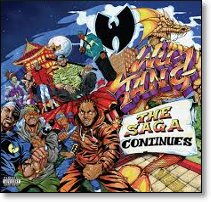
post-freeze A-. The second was Wu-Tang's The Saga Continues,
which first showed up at number 100 on the
Banquet Records list. The Stampfel album wasn't available when
I looked last year, but showed up when I went looking for this year's
album (unavailable on Napster).
Shortly after posting
Weekend Roundup,
I noticed several quoteworthy tweets:
From LOLGOP (presumably satire, quoting Paul Ryan's presumably
sober "pleasantly surprised her pay up $1.50 a week," but the perspective
rings true):
Charles, a Koch brother in Wichita, said he was pleasantly surprised
that his pay went up $26,923,076 a week . . . he said [that] will more
than cover the cost of buying several more Paul Ryans.
From Rep. Keith Ellison (also a bit of a stretch, but shows
some understanding of how corporate CEOs think these days):
"Kimberly-Clark, maker of paper products like Kleenex, Viva paper
towels, Cottonelle bathroom tissue and Huggies diapers, announced
earlier this month it would use its tax cut windfall to pay the
costs of closing 10 factories and dumping as many as 5,500 workers."
I also want to link to a piece by Dean Baker, which provides a bit
of plausible corrective to expectations of financial collapse under
Trump (like yesterday's link to
Nomi Prins):
It Actually Doesn't Feel at All Like 2006: Refusing to Learn the Lesson
of the Housing Bubble. I've come to similar conclusions based on
a few less informed hunches: we're beginning to see a small housing
bubble, but I doubt anything comparable to 2006 is possible now --
partly because banks are a bit better regulated (although Republicans
hope to change that), but more importantly because I can't see that
ordinary Americans will again be willing (or, perhaps more important,
able) to take on the extraordinary debt they did in the run up to 2008.
This doesn't mean the economy won't run into some severe bumps in the
years ahead. Baker mentions some problem areas, like the stock bubble.
Two more I'll mention are: I expect corruption and deceit to spread
out from the White House into even more corporate boardrooms, leading
to a long series of scandals and failures; and deregulation is likely
to channel capital investment into increasingly risky ventures, some
of which will turn into major disasters. I might add a third point,
but I'm less certain about how it will play out: over the last forty
years, the rich have made a huge power play to amass ever greater
wealth, which at least in the US has largely involved capping and
withering the welfare and prospects of an overwhelming majority of
Americans. Surely they can't keep tightening the screws indefinitely
without something snapping.
Paul Krugman covered this same turf last Friday, asking
Has Trumphoria Finally Hit a Wall. Baker responded:
Taking Issue with Paul Krugman, We're Still Not at Full Employment.
I suspect Krugman would agree with Baker's point. All of this appears
to have been written before Monday's big market slip -- for that, see
Matt Phillips: Dow Jones and S&P Slide Again, Dropping by More Than
4%. Probably not coincidentally, Trump's pick to take over the Fed,
Jerome Powell, was sworn in today, replacing Janet Yellen. My impression
is that for once Trump didn't pick the worst possible nominee, but that
remains to be seen -- he's certainly got investors nervous.
I've started reading David Frum's Trumpocracy: The Corruption of
the American Republic, which 50-pages in is sober and useful, not
that there aren't occasional embarrassments: e.g., his description of
Gen. Michael Flynn as a "battlefield commander" (he was an "intelligence"
officer), his ridiculous praise for Gen. H.R. McMaster, and his line
about the "wise men" of the American foreign policy establishment,
immediately followed by a quote from Sen. John McCain. Frum is smarter
than most arch-conservatives, but one should not forget that he made
his own pitch for membership in the "wise man" club by inserting the
"axis of evil" line into GW Bush's 2003 SOTA.
New records rated this week:
- Samuel Blaser With Marc Ducret/Peter Bruun: Taktlos Zurich 2017 (2017 [2018], Hatology): [r]: B+(*)
- Dawn Clement: Tandem (2017 [2018], Origin): [cd]: B+(*)
- George Cotsirilos Quartet: Mostly in Blue (2017 [2018], OA2): [r]: B+(*)
- Rose Cousins: Natural Conclusion (2017, Old Farm Pony): [r]: B
- Duchess: Duchess (2015, Anzic): [r]: B+(**)
- Duchess: Laughing at Life (2016 [2017], Anzic): [r]: B+(*)
- Harris Eisenstadt: Recent Developments (2016 [2017], Songlines): [r]: B+(**)
- Satoko Fujii: Solo (2017 [2018], Libra): [cd]: B+(**)
- Camilla George Quartet: Isang (2016 [2017], Ubuntu Music): [r]: B+(*)
- Dua Lipa: Dua Lipa (2017, Warner Brothers): [r]: B+(**)
- Kate McGarry/Keith Ganz/Gary Versace: The Subject Tonight Is Love (2017 [2018], Binxtown): [cd]: B+(**)
- Mdou Moctar: Sousoume Tamachek (2017, Sahel Sounds): [r]: B+(*)
- Juana Molina: Halo (2017, Crammed Discs): [r]: B+(*)
- Musique Noire: Reflections: We Breathe (2017, self-released): [cd]: B+(*)
- Arturo O'Farrill & Chucho Valdes: Familia: Tribute to Bebo & Chico (2017, Motema): [r]: B+(**)
- Allison Pierce: Year of the Rabbit (2017, Masterworks): [r]: B
- Stuart Popejoy: Pleonid (2017, Leo): [r]: B+(**)
- Margo Rey: The Roots of Rey/Despacito Margo (2017 [2018], Origin): [cd]: B+(**)
- Jamie Saft: Solo a Genova (2017 [2018], RareNoise): [cdr]: B+(***)
- Ryuichi Sakamoto: Async (2017, Milan): [r]: B+(*)
- Peter Stampfel and the Brooklyn & Lower Manhattan Fiddle/Mandolin Swarm: Holiday for Strings (2016, Don Giovanni): [r]: A-
- Anna Tivel: Small Believer (2017, Fluff and Gravy): [r]: A-
- Traxman: Tekvision (2017, Teklife): [r]: B-
- Ty Dolla Sign: Beach House 3 (2017, Atlantic): [r]: B+(*)
- Michael Waldrop: Origin Suite (2017 [2018], Origin): [cd]: B-
- Wu-Tang: The Saga Continues (2017, eOne): [r]: A-
Recent reissues, compilations, and vault discoveries rated this week:
- Louis Armstrong: The Standard Oil Sessions (1950 [2017], Dot Time): [r]: B+(**)
- Azar Lawrence: Bridge Into the New Age (1974 [2017], Prestige): [r]: A-
- Lucky Thompson: In Paris 1956: The All Star Orchestra Sessions (1956 [2017], Fresh Sound): [r]: B+(*)
- Lucky Thompson: Complete Parisian Small Group Sessions 1956-1959 (1956-59 [2017], Fresh Sound, 4CD): [r]: A-
- Trevor Watts Amalgam: Closer to You (1976 [2018], Hi4Head): [bc]: B+(***)
Old music rated this week:
- Derek Bailey/Evan Parker/Hugh Davies/Jamie Muir/Christine Jeffrey: The Music Improvisation Company (1970, ECM): [r]: B
- Cecil Taylor: Garden 2nd Set (1981 [2015], Hatology): [r]: B+(***)
- Colin Vallon Trio: Ailleurs (2006, Hatology): [r]: B+(**)
Grade (or other) changes:
- Mary Gauthier: Rifles & Rosary Beads (2018, In the Black): [r]: [was B+(***)] A-
Unpacking: Found in the mail last week:
- Dan Block: Block Party: A Saint Louis Connection (Miles High)
- Owen Broder: Heritage: The American Roots Project (ArtistShare): March 1
- Dave Liebman/Tatsuya Nakatani/Adam Rudolph: The Unknowable (RareNoise): cdr, February 25
- Bobby Previte: Rhapsody (RareNoise): cdr, February 25
- Steve Tyrell: A Song for You (New Design): February 9
Ask a question, or send a comment.
Sunday, February 4, 2018
Weekend Roundup
Can't say as I really felt any energy or appetite for doing a
roundup this weekend. Still, practically wrote itself:
Some scattered links this week:
Matthew Yglesias: 4 big stories from a very weird week in Washington:
It's a "new American moment" (Trump's "state of the union" speech);
we talked a lot about a memo (the Nunes memo, accusing the FBI of
picking on Trump for "deep state" political reasons); Trump has an
infrastructure plan ("all that's missing, basically, are the details");
Amazon is (maybe) going to revolutionize health care (maybe) -- some
kind of new joint venture between Amazon, Berkshire, and JP Morgan.
Other Yglesias pieces:
The Steele dossier, explained, with Andrew Prokop.
Trump's new infrastructure "plan," explained: "No money, no details,
and no explanation of how it works." Well, some numbers, but they're
beyond ridiculous. The federal government would pony up $200 billion,
but from spending cuts elsewhere (and presumably not military), not
from new revenues (which the tax bill will shrink by $1.5 trillion),
so the net stimulus effect will be negative. The expectation is that
the federal money would then be matched at a 6.5/1 ratio by state and
local governments, despite the fact that the latter have nowhere near
that kind of borrowing power -- so the key idea is to nudge them into
forming "public-private partnerships," which will put tollgates on
everything they do, so the public will wind up paying much more for
the infrastructure development than would be the case if government
did it all itself. Why?
A more cynical view would be that the main issue here is Trump likes
to talk about the idea of a big infrastructure package, but Trump
doesn't actually run the Trump administration. Neither congressional
Republicans nor the veteran GOP politicians and operatives who do run
the Trump administration want to see a big federal infrastructure
package. If they wanted one, they would have done a deal with Barack
Obama when he was president and called over and over again for one.
What they actually want is cuts in the social safety net -- cuts
that Democrats aren't going to agree to and that aren't especially
popular.
Now Trump has a thing that he can say is his plan, congressional
conservatives can propose paying for it with safety net cuts that
Democrats won't agree to, and Republicans can try to pass the whole
thing off as an example of gridlock or obstruction rather than
reflecting the fact that conservatives don't favor spending more
money on federal infrastructure.
If Trump acted normal, he'd be an unpopular president with an unpopular
agenda: actually, he is, but if he acted normal, we'd be talking
about how unpopular that agenda is, instead of what a boor and moron
he is.
It's worth emphasizing that the Trump Show does have some real strategic
benefits for Trump.
For starters, it ensures that all but the very biggest policy stories
are deprived of oxygen. The typical American has never been exposed to a
robust news cycle about the administration's move to allow broadband
internet providers to sell private user data, its various assaults on
non-climate environmental policy, the dismantling of the Consumer
Financial Protection Bureau, or budget proposals that starve the very
job training and vocational education programs Trump touted in his
State of the Union address.
While some of Trump's antics and culture war battles are misfires
that turn off even voters who might be sympathetic to his policy agenda,
overall, he does better during the Trump Show. In moments when he
manages to effectively fracture American society along racial lines,
he regains the loyalty of the white voters who continue to make up a
large majority of the electorate. Trump's actual execution of the
politics of racial demagoguery is often not so deft, but the basic
concept of elevating racial conflict and downplaying banal public
policy debates makes perfect sense for him. . . .
Whether his erratic behavior sinks him in the end, meanwhile, is
likely to have less to do with political perceptions than with actual
policy outcomes. During campaign 2016, I worried -- as did many
observers -- that Trump's erratic, impulsive behavior would get the
country ensnared in a disastrous war or crash the American economy.
So far, he hasn't done either of those things.
That's a low bar, to be sure. But it's not a given that a president
will clear it; just ask George W. Bush.
In Kennedy's speech, Democrats rediscovered Barack Obama's compelling
vision: "America is about equality, across all dimensions."
Trump's game is to pit people against each other and get them so caught
up in their internecine games that they don't notice the wholesale
looting of America that's taking place under his administration.
Donald Trump as no solutions for America's big problems: Useful
list here.
The Puerto Rico saga is marginal to American politics because Puerto Rico
itself is a marginal part of the country -- an island physically separated
from the mainland, whose residents lack representation in Congress or the
right to vote in presidential elections.
But the sad state of that island is worth dwelling on, because the
devastation of Hurricane Maria remains the one real crisis that Trump's
dealt with that hasn't simply been self-inflicted. He's been inattentive,
ill-informed, dishonest, and ineffective, capping it with tonight's solemn
pledge of solidarity that's totally disconnected from the actual reality
on the ground.
Most of the problems Trump is ignoring are chronic rather than acute,
and if the country needs to suffer through a few more years of neglect
we'll make it. Puerto Rico is facing acute problems and the president is,
likewise, doing nothing.
If we're lucky, those of us on the mainland won't have to find out
what it's like to live through that. But Trump makes it clear on a daily
basis that if we ever do, there's no way he's going to rise to the occasion.
Trump's approval rating is below 50% in 38 states: Map is interesting.
Note that he's below 50% here in Kansas, as well as Nebraska and Utah,
Mississippi and South Carolina. He's only under 40% in one state that
he actually carried, but it's a big one: Texas.
The truth about the Trump economy, explained: The low unemployment
rates Trump touted in his SOTA, like most other growth statistics, are
easily explained as extensions of trends established over the past 5-6
years, which is to say under Obama. Trump hasn't caused them, but he
hasn't blown them up either. On the other hand, that growth partly masks
a longer-term weakness in the economy, which is why workforce participation
is still below 2000 levels: there may be a lot of jobs, but not very good
ones. The one area where Trump has had a discernible effect is the stock
market boom, which started under Obama but has been boosted further by
Trump's deregulation agenda, and now by business tax cuts. Nonetheless,
last week was a rough one for Wall Street, which has been blamed on fear
of interest rate hikes, but like all bubbles is mostly a matter of the
investor class having more money than it knows what to do with.
It's largely forgotten now, but back during the mid-aughts (a time of
more rapid wage growth than what we saw in 2017, incidentally), it was
commonplace in conservative circles to proclaim that we were living
through a "Bush Boom" touched off by his game-changing tax cuts and
deregulation. That story, obviously, eventually ended in tears, as a
poorly supervised financial system channeled inequitably shared growth
into an unsustainable pyramid of debt that eventually collapsed.
For another explanation of the current economy, see
Dean Baker: It's Still the Yellen-Obama Economy. For a view of how
it may end, see:
Nomi Prins: Here Comes the Next Financial Crisis.
An immigration crackdown is a recipe for national decline.
Yglesias also contributed to:
The real state of the union in 2018, explained.
Glenn Greenwald: In a Major Free Speech Victory, a Federal Court Strikes
Down a Law that Punishes Supporters of Israel Boycott: Story has
a local angle, as it was a Kansas Mennonite who challenged the state
law. Note that the governor who signed that law is the new US "ambassador
at large for religious freedom."
Jacob Hacker: Trump's tax cuts are worse than fiercest critics claim:
Introduces a term that's unlikely to mean anything to anyone:
The problem isn't just that the cuts will make inequality worse -- if
that were the case, then adding more tax cuts for the middle class and
poor would fix things. Nor is the issue that driving up the debt will
threaten popular social programs like Social Security and Medicare --
though it certainly will.
The fundamental problem concerns not redistribution but
predistribution: all the ways in which government rules and
activities change how American capitalism distributes its rewards in
the first place. Predistribution policies -- like public investments
in infrastructure, education, research and development, and the
regulation of labor and financial markets -- built the American
middle class. And the collapse of such investment and regulations
is the main reason that the middle class has experienced stagnant
wages, plummeting bargaining power and a declining share of national
income since the late 1970s. If we are going to tackle American
inequality, we need to take seriously the imperative of changing
how markets work. . . .
Thus, the biggest defect of tax cuts -- any tax cuts -- is that they
represent a huge lost opportunity to invest in our future. If the past
generation has taught us anything, it's that tax cuts for investors
and a soaring stock market do little or nothing to help most Americans.
By contrast, we know that public investments in productive physical
and human assets do help, and they disproportionately help the less
well off. Rich people have plenty of private capital to invest. Those
who aren't rich have their human capital (which rests on public
investments) and the public capital that we all share as citizens:
transportation and communication networks, shared scientific knowledge
fostered by public R&D spending, civic institutions and so on.
If we really want to boost growth, we need to return to the successful
investment model that really made America great in the 20th century. And
that requires more revenues, not less; a more effective IRS, not a weaker
one; and, yes, new taxes, such as a levy on carbon emissions that
threaten our planet and a surcharge on short-term financial speculation
that threatens our economy.
Two (possibly more) points here: the real sources of inequality lie
outside of the tax code: the real engine of inequality is the drive for
profit, which we tend to overlook by viewing it as the natural state of
capitalism. In fact, inequality can be limited or even rolled back by
political policies which: increase competition, which both reduces and
spreads out profits; strengthen labor, which distributes gross margins
more equitably to workers; and progressive taxation, which redistributes
profits through public works and services. Conversely, inequality can
be increased by opposite policies, as we've seen repeatedly over the
past forty years. Hacker's "predistribution" policy point is important,
but relatively minor -- effectively, a subset of the third point, that
reducing government income is itself an intrinsic goal of the right's
push for tax cuts. It's not just that the right doesn't want government
to help people; the right doesn't want people to get in the habit of
looking to government to help themselves. (On the other hand, they can
get pretty agitated when they need help themselves.)
Hacker's leaning against the fact that the only time we tend to talk
about inequality is when considering tax bills, and even there the right
likes to muddy the waters by offering chump change to the masses. It is
true that strongly progressive taxation (combined with direct income
redistribution) could compensate for inequality built into the private
sector economy, but hardly anyone on the left is pushing for rates that
would effectively cap private wealth (or, beyond occasional mentions of
a "basic income" for significant income support). Rather, both sides
struggle to move the scrimmage line a bit (for marginal income rates
between 33-39%, although the right has been more ambitious in their
proposals to eliminate estate taxes and vastly reduce taxes on capital
gains and business income -- matters of import to the very rich, but
esoteric to most people). [PS: Just noticed this, pace my generalization:
Hamilton Nolan: The Estate Tax Should Be 100 Percent. Nolan also wrote:
The Entire Rationale for These Tax Cuts Is Bullshit. Found these links
by following
Alex Pareene: Tom Steyer Has Too Much Money.]
Ezra Klein: How democracies die, explained: Ruminations based on
a new book by Steven Levitsky and Daniel Ziblatt, How Democracies
Die.
Demagogues and authoritarians do not destroy democracies. It's established
political parties, and the choices they make when faced with demagogues
and authoritarians, that decide whether democracies survive.
"2017 was the best year for conservatives in the 30 years that I've
been here," Senate Majority Leader Mitch McConnell said this week. "The
best year on all fronts. And a lot of people were shocked because we
didn't know what we were getting with Donald Trump."
The best year on all fronts. Think about that for a moment.
If you want to know why congressional Republicans are opening an assault
on the FBI in order to protect Trump, it can be found in that comment.
This was a year in which Trump undermined the press, fired the director
of the FBI, cozied up to Russia, baselessly alleged he was wiretapped,
threatened to jail his political opponents, publicly humiliated his
attorney general for recusing himself from an investigation, repeatedly
claimed massive voter fraud against him, appointed a raft of unqualified
and occasionally ridiculous candidates to key positions, mishandled the
aftermath of the Puerto Rico hurricane, and threatened to use antitrust
and libel laws against his enemies.
And yet McConnell surveyed the tax cuts he passed and the regulations
he repealed and called this not a mixed year for his political movement,
not a good year for his political movement, but the best year he'd ever
seen.
Richard J Evans has written a couple of relevant book reviews on the
the most exercised of analogies:
A Warning From History and
Rule by Fear -- the former on a new biography of Hitler, the latter
a broader history of "the rise and fall of the Third Reich." Back during
the Bush years I found the analogy tempting enough that I bought a copy
of Evans' own book, The Coming of the Third Reich, but I never
got around to reading it. (I read Cullen Murphy's more explicitly topical
Are We Rome? instead, partly because at the time I knew considerably
less about Rome. Most recently I've been reading Tony Judt's essays from
the Bush years, When the Facts Change, which reminds me how awful
Bush was, while at the same time bringing to mind Michael Lewis' intro to
the 2010 reprint of Liar's Poker, his book about financial scandal
in the 1980s, a tale he finally had to deem "how quaint.")
PR Lockhart: Trump's reaction to the NFL protests shows how he fights
the culture war. Not sure this subject is worth this much reading,
but I'll note that I think the reason many conservatives take a special
delight in football is that they relate to the idea of the strong
dominating the relatively weak through force and violence. That's a
view peculiar to fans. The players, and observers who actually watch
the play and not just the markers, know that what really matters is
teamwork. And while most plays are intricately planned, there's also
a fair amount of leeway for improvisation. You also see teamwork in
baseball and basketball, but in no other sport is it so central as
it is in football. That makes the players more like workers, and
helps foster solidarity -- a point which more than any (other than
opportunism, I guess) explains Trump's vituperation. He's bothered
less by supposed disrespect for the flag than by his disgust that
the owners can't control their workers.
Josh Marshall: First Take: The 'Nunes Memo' Is Even Weaker Than Expected.
Also see:
Zack Beauchamp/Alex Ward: The 9 biggest questions about the Nunes memo,
answered;
Alex Emmons: Nunes Memo Accidentally Confirms the Legitimacy of the
FBI's Investigation.
Dylan Scott: Trump's abandoned promise to bring down drug prices,
explained: Something Trump mentioned in the SOTA, then gestured
to Democrats that now would be a good time for them to applaud.
Emily Stewart: The Trump administration's surprising idea to nationalize
America's 5G network, explained: "Nobody thinks it's a good idea,
including the FCC." Well, as their handling of the "net neutrality"
matter shown, the FCC doesn't work for the public interest any more;
it's been captured by the industry it was meant to regulate. I doubt
Trump's people will pursue this further, because it's a non-starter
with the corrupt cabal known as the Congressional Republicans, and
the communications industry has been more bipartisan than most, so
they have a fair number of Democrats in their pocket as well. But
on the surface, sure, why not nationalize the 5G network? It would
be easier (and cheaper) for the federal government to raise the
investment. They wouldn't have to engineer all sorts of cutouts
and paywalls to recoup their investment. And they could make it a
point to provide inexpensive, reliable service everywhere instead
of having private companies cherry-pick a few lucrative markets.
This sort of thing hasn't happened often in the past because it's
rare for Congress to interfere in a market private companies think
they can make money. (The Post Office and the TVA are two such
exceptions.)
Stewart also wrote:
Paul Ryan tweets -- then deletes -- brag about public school worker who
saw $1.50 pay raise. Fact check: that's a weekly pay check, so the
deduction change nets out to less than four cents per hour.
Ask a question, or send a comment.
Wednesday, January 31, 2018
Streamnotes (January 2018)
With 154 records below (not counting 3 regrades), this is a pretty
substantial collection -- down a shade from 161 in December, but otherwise
the most of any month in 2017 except for January (155). January is
usually a big month because I can draw inspiration from the great many
EOY lists summing up the previous year. Still, while this year's yield
is comparable to past years, it feels strangely incomplete. The most
obvious difference is that last
January I discovered 9
new A- records from 2016, whereas this month's total is down to 4
(the other 3 A- records this month are 2018 releases, but January
2017 had 8 new releases at A-, so the overall drop is from 17 to 7).
More evidence: looking at my 2017 EOY lists for
Jazz and
Non-Jazz, the A-list
split between Jazz/Non-Jazz is 81/56. In most years the Jazz/Non-Jazz
split is relatively even (e.g., 81/83 in 2015, although they diverged
a bit more in 2016: 75/67). Aside from some random statistical noise,
I assume these changes are mine and not the world's. I have some
theories about this, but right now they're so off-the-wall I don't
dare try to enumerate them.
As I do every year, I just copied off my working
Year 2017 list to keep a
frozen copy (the former list
will continue to collect 2017 releases for another year). My 2017 list
currently includes 1037 new albums, by grade: A: 0; A-: 139; ***: 167;
**: 290; *: 275; B: 117; B-: 39; C+: 7; C: 2; C-: 0; D+: 1, ungraded: 8.
It also includes 97 old music albums, by grade: A: 1; A-: 20; ***: 25;
**: 21; *: 18; B: 8; B-: 2; C+: 1. C-: 1, ungraded: 2. Total albums
1134. This is actually up a bit from 2016 (1074) and 2015 (1110, but
down from the last few years, like 2014 (1166).
The main source for my list suggestions is my
EOY Aggregate, which
currently lists 2615 records from 281 lists. This is down quite a
bit from 2016, which probably has something to do with my own
shorter-than-usual non-jazz A-list. (Also hurts that the Village
Voice has only published their top 100 albums, whereas most years
the list tops 1500 albums. Jazz is better represented because I've
credited at least one point to every album mentioned in the
Jazz Critics Poll.)
While I've no doubt missed a lot of obscure gems, I'll note that
(thanks to streaming) I've heard 94 of Pazz & Jop's top-101 albums
(exceptions: Power Trio (at 65), Elder, Ty Dolla Sign, Converge, Ariel
Pink, Juana Molina, U2); also 97 of my EOY Aggregate's top-101 (save:
The Horrors (73), Grizzly Bear, Mac DeMarco, Kevin Morby). Maybe one
of the reasons I haven't found as much good non-jazz this year as usual
is that I've spent too much time listening to stuff other people seem
to like.
Most of these are short notes/reviews based on streaming records
from Napster (formerly Rhapsody; other sources are noted in brackets).
They are snap judgments, usually based on one or two plays, accumulated
since my last post along these lines, back on December 31. Past reviews
and more information are available
here (10685 records).
Recent Releases
21 Savage/Offset/Metro Boomin: Without Warning (2017,
Epic): Atlanta rappers, Shayaa Bin Abraham-Joseph and Kiari Kendrell
Caphus (of Migos), with producer Leland Wayne. Underground beats, so
understated you're never quite sure what's up.
B+(*)
Fatima Al Qadiri: Shaneera (2017, Hyperdub, EP):
Electronica producer, born in Senegal, grew up in Kuwait, based in
Berlin, has two albums and a bunch of EPs. Whiffs of Arab music
mixed in with the electronics. Five cuts, 21:09.
B
Wali Ali: To Be (2016-17 [2017], Mendicant): Guitarist,
Discogs describes him as "disco-soul guitarist," noting he did session
work for Rick James, Patrice Rushen, Teena Marie, Gladys Knight, Marvin
Gaye, etc. He doesn't mention any of those names on his website, but
has an alternative list of names including Taj Mahal, Peter Tosh, and
Stanley Turrentine, and the Broadway musical "Mule Bone." He also says
"his sound combines the music of Miles and Trane with that of Hendrix
and Santana," but I'm mostly hearing Wes Montgomery, and rather liking
that.
B+(**) [cd]
As Is Featuring Alan & Stacey Schulman: Here's to Life
(2017 [2018], self-released): Guitar and vocals, standards (more or
less), backed by various musicians with some strings, sax (David Binney),
and featured spots for Grégoire Maret (harmonica). Some sweet spots.
B [cd]
Cardi B: Gangsta Bitch Music Vol. 1 (2016, KSR):
Rapper Belcalis Almanzar, from the Bronx, got major label push for
the hit single "Bodak Yellow" -- top song of 2017 according to the
Pazz & Jop critics poll -- but no albums yet, just a bunch of
singles and two short mixtapes. This one runs 33:10 with four skits
that could easily be disposed of, and songs that tease you without
quite delivering.
B+(**)
Cardi B: Gangsta Bitch Music Vol. 2 (GBMV2) (2017,
KSR): Shorter at ten cuts, 28:26, skits down to just one, but guests
up -- learning to delegate, or cut corners. Released in January, well
before her big single in June.
B+(*)
Jeff Baker: Phrases (2017 [2018], OA2): Jazz singer,
handful of albums since Jeff Sings Chet in 2003, writes about
half of his songs here, drawing on Bonnie Raitt, Billy Joel, and Ryan
Adams for standards. Brings in some first-rate musicians including
Darrell Grant (piano), Steve Wilson (alto sax), Geof Bradfield (tenor
sax), and Marquis Hill (trumpet), plus a string quartet.
B [cd]
Julien Baker: Turn Out the Lights (2017, Matador):
Singer-songwriter from Memphis, not that anything she does suggests
Memphis or Tennessee or any particular geography, other than perhaps
the Moon. Slow, full of striving and, I guess, regret; nothing I'm
particularly partial to, but not unappealing, either.
B
Django Bates' Beloved: The Study of Touch (2016
[2017], ECM): British pianist, has bounced around a lot since 1990,
ranging from avant to fusion, playing with Dudu Pukwana and George
Russell, recently doing a big band Saluting Sgt. Pepper
(not very good). This is a mainstream piano trio, with Petter Eldh
(bass) and Peter Bruun (drums).
B+(*)
Stefano Battaglia: Pelagos (2016 [2017], ECM, 2CD):
Italian pianist, prolific since 1988 including several volumes of
Bill Evans Compositions, picked up by ECM in 2005. Solo here,
sometimes prepared.
B+(**)
Beck: Colors (2017, Capitol): Slacker hero back in
the 1990s, turned soul man for his peak run, maturing into some kind
of pop icon -- this is his 6th straight top-10 album, starting with
Sea Change in 2002; i.e., the point when I stopped taking any
real interest in whatever he was doing. Clearly he knows a lot about
working the studio. Less clear why he bothers.
B
Dave Bennett: Blood Moon (2017, Mack Avenue): Clarinet
player, first album was a tribute to Benny Goodman, second subtitled
Songs of Great Clarinetists, on 2013's Don't Be That Way
he became one himself. Continues in a retro-swing vein, with Reg
Schwager on guitar and Dave Restivo on piano.
B+(**)
Bibio: Phantom Brickworks (2017, Warp): Electronica
producer Stephen Wilkinson, from England, caught my ear with the more
pop Mind Bokeh (2011), but has lately settled into ambient,
best just a bit of piano with synth washes.
B
Bicep: Bicep (2017, Ninja Tune): DJ/production duo
from Belfast in Northern Ireland, Andrew Ferguson and Matthew McBriar.
First album, after a long run of singles and EPs since 2010. Nice
mix of bounce and sonic flair.
B+(**)
Big K.R.I.T.: 4Eva Is a Mightly Long Time (2017,
Multi Alumni/BMG, 2CD): Not as big as it looks -- 22 cuts, 84:48 --
but clearly could have been edited into something more impressive,
stunning even. As is, it no doubt takes a lot more effort to sort
through than I can give it, and I can't swear it's worth it, but
I'd give it fairly decent odds. I'm surprised this hasn't gotten
more EOY list support.
B+(***)
Raoul Björkenheim Triad: Beyond (2016 [2017],
Eclipse Music): Trio, recorded in Helsinki, the guitarist joined
by Ville Rauhala on double bass and Ilmari Heikenheimo on drums.
Playing this after the Ecstasy quartet, I can't help but feel
that something's missing. But not the guitarist.
B+(**)
Blanck Mass: World Eater (2017, Sacred Bones):
Solo project by electronica producer Benjamin John Power, also dba
Fuck Buttons. Massively orchestrated shards of sound, something I
usually hate but find somewhat rousing here.
B+(*)
Samuel Blaser With Marc Ducret/Peter Bruun: Taktlos Zürich
2017 (2017 [2918], Hatology): Trombone-guitar-drums trio,
fractures in interesting ways.
B+(*)
Anouar Brahem: Blue Maqams (2017, ECM): Oud player
from Tunisia, filed under jazz due to the company he keeps -- here:
Django Bates (piano), Dave Holland (bass), Jack DeJohnette (drums),
with Manfred Eicher producing, making sure nothing untoward happens.
With different company he'd be New Age, but not as good.
B+(**)
Bully: Losing (2017, Sub Pop): Alt/indie band,
principally singer Alicia Bognano, from Minnesota but studied
audio engineering in Nashville and worked an internship in
Steve Albini's Chicago studio. Second album.
B+(**)
Daniel Caesar: Freudian (2017, Golden Child):
Canadian singer-songwriter, Ashton Simmonds; soft, slow, slinky
neo-soul in a near-falsetto, often beguiling, can drag a bit.
B+(*)
Chronixx: Chronology (2017, Soul Circle Music/Virgin):
Jamaican singer-songwriter Jamar McNaughton, second album, father was
a singer known as Chronicle, so he started out as Little Chronicle.
In a sort of "neo-trad" move, would like to revive the classic sound
of '70s reggae, but Jah doesn't seem to be willing.
B+(*)
Cigarettes After Sex: Cigarettes After Sex (2017,
Partisan): Slowcore band, originally from El Paso, principally Greg
Gonzalez -- an appealing idea, I once thought, but this is the first
group that delivers on the concept, perhaps because I hear more than
a little Neal Tennant in his voice. Still doesn't find redemption in
dance, or much of anything else, so this may be a passing fancy.
A-
Cleric: Resurrection (2017, Figure, EP): Jorden
Hodgetts, techno DJ/producer from Manchester [UK], 18 records (mostly
EPs) since 2012. Five cuts, 23:15. Tasteful beats. [Napster has this
mixed in with another Cleric, see below.]
B+(*)
Cleric: Retrocausal (2018, Web of Memory): Avant-metal,
post-hardcore, and/or noisecore band from Philadelphia. Played this by
accident, expecting more mild techno, but didn't find the initial thrash
unlistenable, but are the blood-curdling screams really necessary? [Rare
case where I halted album midway.]
B-
The Clientele: Music for the Age of Miracles (2017,
Merge): British indie band, initially formed in 1991 but waited until
2000 to release their debut album, took a break after 2010, so this
is some sort of comeback. Rather lush, strings even, horns too, adding
to its catchy grace.
B+(***)
George Cotsirilos Quartet: Mostly in Blue (2017 [2018],
OA2): Guitarist, born in Chicago, based in Berkeley, sixth album,
mostly trios but adds pianist Keith Saunders here. All originals,
mostly genteel postbop groove pieces.
B+(*) [cd]
The Courtneys: II (2017, Flying Nun): Vancouver girl
group qua alt/indie band, guitar-bass-drums, landed on a label now
owned by Warner but famous for breaking guitar-pop groups from New
Zealand (The Bats, The Chills, The Clean), mostly because the shoe
fits -- although I'd say they sound more like the Feelies.
B+(**)
Sylvie Courvoisier Trio: D'Agala (2017 [2018], Intakt):
Swiss pianist, based in New York; following AllMusic I filed her under
Avant-Garde -- an early album was titled Music for Barrel Organ,
Piano, Tuba, Bass and Percussion -- but she's regularly worked in
avant-jazz circles, especially since moving to Intakt in 1999. Trio
here with Drew Gress (bass) and Kenny Wollesen (drums).
B+(***) [cd]
CunninLynguists: Rose Azura Njano (2017, A Piece
of Strange Music/RBC): Hip-hop crew from Lexington, Kentucky, around
since 2002 (Will Rap for Food). Underground beats, r&b a
little soft around the edges, but I like the rapper -- seems like the
voice of reason.
B+(**)
CupcakKe: Ephorize (2018, self-released): Chicago
rapper Elizabeth Harris, with her fifth album in three years, coming
off her Marilyn Monhoe and Queen Elizabitch tours, coming up on her
21st birthday in March -- talk about living fast. More audio porn,
less social realism, sometimes you wish she'd slow it down a bit and
relish how ridiculous life can get.
B+(***)
Scott DuBois: Autumn Wind (2017, ACT): Guitarist,
quartet gets front cover mention -- Gebhard Ullmann (tenor sax/bass
clarinet), Thomas Morgan (bass), Kresten Osgood (drums) -- but the
fine print reveals more wind instruments (flute, oboe, clarinet,
bassoon) and a string quartet, recorded separately after the fact.
I'm not sure that the extras matter much, although sometimes the
winds do kick up mightily.
B+(***)
EABS: Repetitions (Letters to Krzysztof Komeda)
(2017, Astigmatic): Polish group, acronym stands for Electro-Acoustic
Beat Sessions, the electric including guitar, bass, and turntables,
plus trumpet, tenor sax, drums, with Marek Pedziwiatr playing both
piano and synths. The compositions draw on the legendary pianist,
dating from 1962-67, but juiced up with the beats and even a rap
intro (and some later vocals, in English).
B+(***) [bc]
EMA: Exile in the Outer Ring (2017, City Slang):
Singer-songwriter, initials for Erika Michelle Anderson, from
South Dakota, third studio album, dense electopop, some spoken
word.
B+(**)
Eminem: Revival (2017, Aftermath/Shady/Interscope):
Starts with a bitch about how he's lost his stardom, but he somehow
managed to snag the sample of the year -- no less than Beyoncé
singing the "Walk on Water" refrain. It's clearer than ever that he
has a signature style: tightly wound raps rising from fierce to
batshit crazy, played off against irresistible pop hooks. Sometimes
the batshit even rings true, especially when he takes on Trump and
racism.
A-
Peter Evans/Agustí Fernández/Mats Gustafsson: A Quietness
of Water (2012 [2017], Not Two): Trumpet, piano, unspecified
sax, none of these players particularly noted for calm contemplation
of nature. They play an elaborate shell game where the instruments
pretend to be something else or merely hide in each other's murk.
B+(*)
Agustí Fernández/Albert Cirera/Ramon Prats: The Liquid Trio
Plays Bernoulli (2017, Sluchaj Fundacja): All originals, jointly
credited, only Bernoullis I can find mention of are Swiss mathematicians --
Wikipedia has pages on seven of them, most famously Jacob (1654-1705,
Bernoulli numbers) and Daniel (1700-1782, Bernoulli's principle).
Piano, saxophones, and drums, in an often-exciting thrash.
B+(***)
Fleet Foxes: Crack-Up (2017, Nonesuch): Seattle
"baroque pop" group, third album since 2008, the top-rated EOY
Aggregate album that I hadn't bothered checking out -- number 27
as I write this -- and for good reason. Not that it's really
awful. More like it's bland and affectless, leaving one to wonder
what anyone hears in it.
C+
Danny Fox Trio: The Great Nostalgist (2016 [2018],
Hot Cup): Pianist, based in New York, has a couple previous albums,
mostly trios like this one with Chris van Voorst van Beest (bass)
and Max Goldman (drums).
B+(***) [cd]
Charlotte Gainsbourg: Rest (2017, Because Music):
Daughter of French singer-songwriter Serge Gainsbourg and British
actress Jane Birkin, born in England, first album in 1986, second
in 2006, this her fifth overall. Synth-based music, dream pop,
lyrics effortlessly flowing between English and French -- the
latter I'm unable to follow but find charming nonetheless.
B+(**)
Hillary Gardner/Ehud Asherie: The Late Set (2017,
Anzic): Standards singer, based in Brooklyn, one-third of the vocal
group Duchess. Just the pianist for accompaniment, with Asherie
turning in a particularly sensitive job.l
B+(*)
Mary Gauthier: Rifles & Rosary Beads (2018, In
the Black): Folk singer, has some good records under her belt, co-wrote
these songs with veterans and spouses with their peculiar experiences
and their usual rationalizations for their "service" -- no jingoism
here let alone bloodlust, nothing that challenges my anti-military
instincts, but I come away with little interest or empathy, no matter
how remarkable the social realism. [PS: On further reflection, I was
a bit harsh. The multiple writers make this less consistent than Becky
Warren's War Surplus, but diversity has its merits and charms.]
A-
Ghostpoet: Dark Days + Canapés (2017, Play It Again Sam):
British singer-songwriter Obaro Ejimiwe, not really a rapper but not much
of a singer either. Fourth album, nice groove, not as down as trip hop.
B+(**)
Perfect Giddimani: Live My Life Again (2017, Giddimani):
Greg Rose, from Jamaica, adopted the name Perfect for his first album
back in 2006, title Giddimani, merging those names in 2011 for
Back for the First Time. Includes a catchy song on Trump, but
mostly hit and miss.
B+(*)
Justin Gray & Synthesis: New Horizons (2017 [2018],
self-released): Bassist, from Toronto, plays electric but preferred
instrument seems to be bass veena, which seems to pair well with tabla
(Ed Haney), strings and lots of percussion.
B+(**) [cd]
Jeff Hamilton Trio: Live From San Pedro (2017 [2018],
Capri): Drummer, best known as co-leader of the Clayton-Hamilton Jazz
Orchestra, runs a splashy little piano trio on the side, with Tamir
Handelman and Christoph Luty. One song each from Hamilton and Handelman,
two from J. Clayton, a few other standards including "In Walked Bud."
The pianist is swift and deft, but you notice the cymbals plenty too.
B+(**) [cd]
Natalie Hemby: Puxico (2017, GetWrucke): Singer-songwriter,
first album, named for her Missouri hometown. Based in Nashville, where she
has a couple dozen songwriting credits, including co-credits on a big chunk
of Miranda Lambert's last two albums.
B+(**)
Nona Hendryx & Gary Lucas: The World of Captain Beefheart
(2017, Knitting Factory): Lucas' project (labor of love?): he played guitar
in Beefheart's Magic Band in the 1980s, and in 2005 formed a jazz group
with Philip Johnston called Fast 'N' Bulbous. Otherwise, he pops up in
all sorts of odd places -- my database shows him with Pulnoc and doing
a Max Fleischer tribute. Hendryx is a singer, the strongest voice in '70s
Labelle, but she's wanders downtown, most memorably working with Bill
Laswell's Material. Mixed bag of songs, but most as unexpected as Monk,
which gives them plenty to chew on, and leaves you with "Tropical Hot
Dog Night" stuck in your synapses.
A-
Robyn Hitchcock: Robyn Hitchcock (2017, Yep Roc): English
singer-songwriter, twenty-first studio album since 1981. I'm surprised not
to find any of them previously rated in my database, as I'm pretty sure I
had an old LP or two -- none of the titles look familiar, but Globe of
Frogs (1988) has a song I recall ("Balloon Man").
B+(*)
Ibeyi: Ash (2017, XL): French duo, second album, twin
sisters Lisa-Kaindé Diaz (vocals/piano) and Naomi Diaz (percussion),
born in Paris, the name Yoruba for twins, their father Cuban percussionist
Anga Diaz, their mother French-Venezuelan singer Maya Dagnino.
B+(*)
Ishmael Ensemble: Songs for Knotty (2017, Banoffee
Pies, EP): Principally Pete Cunningham (sax, bansuri, keyboards,
synthesizer), with Russel Ramirez (trombone), others coming and
going (clarinet, guitar, drums, two different vocalists). Filed
it under jazz due to the horns, but closer to electronica, ambient
sometimes. Four songs, 21:51.
B
Japanese Breakfast: Soft Sounds From Another Planet
(2017, Dead Oceans): Singer-songwriter Michelle Zauner, from Oregon,
of Korean and Jewish descent, previously fronted several bands, went
solo in 2016 and this is her second album. Guitar layered over keyb,
plays both ends of alt/indie and electropop, making it look remarkably
easy.
B+(**)
Sharon Jones & the Dap-Kings: Soul of a Woman
(2017, Daptone): Retro soul singer, formed the Dap-Kings and started
recording in 2002, never great but she made a strong effort. Not sure
when this was recorded, but Jones suffered a stroke while watching
the 2016 election returns and died a few days after, making her one
of the first victims of that mega-disaster.
B+(*)
Stacey Kent: I Know I Dream: The Orchestral Sessions
(2017, Okeh): Jazz singer, originally from New Jersey, studied in
England, where she married saxophonist Jim Tomlinson and stayed.
Tomlinson produced, rounding up a huge orchestra which fits neatly
in place, occasionally adding nice touches, never crowding the
singer -- adept in her usual several languages.
B+(**)
Kondi Band: Salone (2017, Strut): Based in Brooklyn,
a collaboration between Sorie Kondi, a thumb piano player from Sierra
Leone, and producer DJ Chief Boima, an American who traces his own
roots back to Sierra Leone.
B+(***)
The Koreatown Oddity: Finna Be Past Tense (2017,
Stones Throw): Los Angeles "MC/Producer," has ten albums (most
only available as cassettes, if that) since 2013, this the first
on a label you've heard of. Starts with two songs about dinosaurs.
Interesting, but gets sloppy toward the end.
B+(**)
LeeAnn Ledgerwood: Renewal (2016 [2017], SteepleChase):
Pianist, from Ohio, has a record as far back as 1990 but not sure
how many since. Trio, with Ron McClure on bass and Billy Hart on
drums. Two originals, covers a mix of songbook and jazz standards
plus a piece from Hindemith.
B+(**)
Ted Leo: The Hanged Man (2017, SuperEgo):
Singer-songwriter from Indiana, in various mostly punkish groups,
most notably Ted Leo and the Pharmacists (1999-2010), first album
under just his own name. Some catchy moments, but don't stick
with you.
B
Gregory Lewis: Organ Monk Blue (2017 [2018],
self-released): Organ player, the fifth of his Organ Monk
titles, returning to trio format after his more expansive (and
trans-Monkish) Breathe Suite. I've always regarded his
albums as a clever gimmick, but he gets more out of less here
than I imagined possible. Obvious credit goes to guitarist Marc
Ribot, but the organ continues to do the heavy lifting, gliding
in and out of recognizable Monk, funk, and soul.
A- [cd]
Lil Uzi Vert: Luv Is Rage 2 (2017, Atlantic):
Symere Woods, rapper from Philadelphia, first studio album after
several mixtapes, including Luv Is Rage (2015) and an EP
Luve Is Rage 1.5 (earlier 2017). Tight beats, tight raps,
runs long, doesn't sink in.
B+(*)
L'Orange: The Ordinary Man (2017, Mello Music Group):
Seattle-based beatmaster, nine releases since 2011 mostly with a
co-headline rapper, goes with featured guests here. A little scattered,
but stays interesting.
B+(***)
Luka Productions: Fasokan (2017, Sahel Sounds):
Luka Guindo, from Mali, "rapper, producer, and multi-instrumentalist,"
second album, describes this as "new age music from Africa" but it's
closer to ambient electronica, with mostly spoken words over the very
spare beats.
B+(**)
Daniele Luppi/Parquet Courts: Milano (2017, 30th
Century/Columbia): Short album (9 songs, 29:58), the concept an
evocation of Milan in the 1980s. Luppi was born in Italy in 1972,
based in Los Angeles but known more as a soundtrack composer and
producer, his best known record a collaboration with Danger Mouse
called Rome. He plays synthesizer, celesta, violin, and
electric harpsichord and is credited with editing, mixing, and
art direction. This time he recruited Parquet Courts for a retro
punk feel and added vocalist Karen O on four songs and some horns --
the highlight of the closer ("Café Flesh"), possibly the year's
jazz-funk masterpiece.
B+(***)
Mad Professor/Jah9: Mad Professor Meets Jah9 in the Midst of
the Storm (2017, VP): Prolific dub produces, born Neil Fraser
in Georgetown, Guyana, with younger Jamaican singer Janine Cunningham.
Plods along under lots of echo at an easy pace, intrinsically appealing
without leaving much of an impression.
B+(**)
Aimee Mann: Mental Illness (2017, SuperEgo):
Singer-songwriter, in 'Til Tuesday before going solo in 1993, nine
studio albums since, this the first I've heard since 1995's I'm
With Stupid. Acoustic guitar, strings, sounds surprisingly like
Joni Mitchell, although I can't quite remember why.
B+(*)
Roc Marciano: Rosebudd's Revenge (2017, Quality
Control/300/Atlantic): Rakeem Calief Myer, from New York, has several
albums/mixtapes, shows an interest in the drug trade but otherwise
seems firmly grounded in underground culture.
B+(**)
Marker: Wired for Sound (2017, Audiographic): Ken
Vandermark group: two guitars, Macie Stewart on keyboard and violin,
plus a drummer, Vandermark credited with reeds. At times they play
like a guitar band or an organ outfit -- fun when Vandermark honks
along or takes a squawk break, but they lack economy, stretching two
(of three) pieces past 20 minutes, and can get tedious. Still, there
are stretches where they might be onto something.
B
JD McPherson: Undivided Heart & Soul (2017, New
West): Retro-rocker, could be rockabilly but doesn't rock that hard.
B+(*)
Michete: Cool Tricks 3 (2017, self-released, EP):
Underground pop star, touted by Pitchfork as "the worst queer rapper
you need to listen to," fresher when the first batch came out --
lyrics like "I'm a stupid girl/I'm a dumb bitch" and "I wanna get
hit by a car" need to be funnier, if not smarter.
B [sc]
Miguel: War & Leisure (2017, ByStorm/RCA): Soul
man, Miguel Pimentel, from San Pedro [CA], fourth studio album, an
album I go back and forth, up and down on, catchy enough but I must
be missing something.
B+(*)
Roscoe Mitchell: Discussions (2016 [2017], Wide Hive):
Art Ensemble of Chicago founder, AACM legend, still going strong at 77,
although his instrumental credit is down to sopranino saxophone. Large
group, 19 pieces including a string quartet, oboe, bassoon, tuba, two
flautists, two percussionists, electronics. Arch, awkward, refuses to
settle into anything resembling a groove, yet remarkable in its own
peculiar way.
B+(**)
Mdou Moctar: Sousoume Tamachek (2017, Sahel Sounds):
Tuareg guitarist from Niger, recorded this in Portland, OR, solo, so
while he may be thinking rock he rarely pops out of his low-key,
almost hypnotic groove.
B+(*)
Mount Kimbie: Love What Survives (2017, Warp):
British electronica duo, Dominic Maker and Kai Campos, third album.
Genres include post-dubstep, future garage, and art pop -- latter
makes more sense, for better or worse.
B
Mr. Lif & Brass Menazeri: Resilient (2017,
Waxsimile): Boston rapper, underground, several excellent albums
both on his own and by his group the Perceptionists. Teams up
here with a Bay Area Balkan brass band, sometimes rapping over
the deep brass, often laying back and letting them run. Not as
inspired (or maybe I mean frenzied?) as their old country models
(at least the ones I've heard), but has some novelty value.
B+(*)
Simon Nabatov/Max Johnson/Michael Sarin: Free Reservoir
(2016 [2017], Leo): Russian avant-pianist, left for Rome in 1979, studied
at Julliard in New York, since 1989 based in Köln. Piano trio, sharp and
vibrant.
B+(***)
Youssou N'Dour: Seeni Valeurs (2017, Jive/Epic):
From Sénégal, emerged from Etoile de Dakar quite young as a star,
and has dominated since the mid-1980s, but while his Nonesuch
albums (2002-10) got notice in the US, his more recent releases
hardly cause a ripple. First I heard of this was in an isolated
EOY list, and I've yet to find a single review or press release --
it does show up on numerous streaming sites, and for sale as a
download. Strikes me as masterful, especially as the rhythm adds
layers upon layers.
A-
Maciej Obara Quartet: Unloved (2017, ECM): Polish
alto saxophonist, first record on ECM, with Dominik Wania (piano),
Ole Morten Vågan (bass), and Gard Nilssen (drums), recorded in
Oslo. Obara originals plus one Komeda cover, but he yields a lot
of space to the piano, adding little beyond soft shadings.
B
The Ed Palermo Big Band: The Adventures of Zodd Zundgren
(2017 [2018], Cuneiform): Saxophonist, has led this big band since 1977,
mostly pursuing an unhealthy obsession with Frank Zappa. Here he refracts
Todd Rundgren songs through a Zappa prism and scales them up to big band
size. Back in the 1970s I was a big fan of Rundgren, even writing a
feature piece on him for the Village Voice -- one that I calculated
took a full 24 hours just to make a single pass through his discography.
I lost interest after that, but recognize a few bits here, most obviously
"Hello It's Me." About the best I can say for Zappa was that I enjoyed
a few minutes of Hot Rats. He always struck me as pretentious,
his art a peculiar "freakiness for squares," and I've never found jazz
efforts, either to canonize or to riff on him, fruitful -- Jean-Luc
Ponty's 1969 King Kong is probably the most famous, and barely
a B. I'd normally go easy on Palermo's pop culture humor and schmaltz,
but the more Zappa he injects, the less amusing I find it.
C+ [cdr]
Evan Parker/Mikolaj Trzaska/John Edwards/Mark Sanders: City
Fall: Live at Café Oto (2014 [2017], Fundacja Sluchaj): What
I think of as Parker's everyday trio -- as opposed to his venerable
trio with Barry Guy and Paul Lytton, with at least 15 albums over 30
years (1983-2013) -- plus the Polish alto saxophonist (also on bass
clarinet). Recorded on Parker's 70th birthday, he sticks with tenor,
B+(**) [bc]
Reverend Peyton's Big Damn Band: Front Porch Sessions
(2017, Family Owned): Three-piece country blues outfit from Brown County,
Indiana, with Jayme Peyton as the Reverend, playing antique guitars
(1930 steel-bodied National, 1934 wood-bodied National Trojan Resonator,
a 1994 reproduction of a 1929 Gibson acoustic, and "a three-string cigar
box guitar"), backed by Breezy Peyton on washboard and Max Senteney on
drums, suitcase, and five-gallon plastic bucket. Young enough to have
picked up pointers from Squirrel Nut Zipper records, although Charley
Patton remains the holy grail.
B+(**)
Lucas Pino: The Answer Is No (2017, Outside In Music):
Tenor saxophonist, calls his group the No Net Nonet (a previous album
title). Does a nice job weaving in the horns, one result being that
the solos that stood out were trumpet and trombone.
B+(***)
Leslie Pintchik: You Eat My Food, You Drink My Wine, You Steal
My Girl! (2018, Pintch Hard): Pianist, seventh album since 2004,
mostly trio plus percussion (Satoshi Takeishi), adding horns (Ron Horton
and Steve Wilson) on two cuts, accordion on two others. Mostly originals,
two standards, "Smoke Gets in Your Eyes" especially nice.
B+(**) [cd]
Stuart Popejoy: Pleonid (2017, Leo): Bass guitarist,
member of Bassoon ("avant-riffmetal trio") and Iron Dog ("electric
improvisation trio"), first album, a single 59:35 composition hacked
out by algorithms and played by Sarah Bernstein (violin), Avram Fefer
(alto sax), Steve Swell (trombone), and Kenny Wollesen (vibes/drums).
B+(**)
Portico Quartet: Art in the Age of Automation (2017,
Gondwana): British instrumental jazz-rock group, half-dozen albums
since 2007, early albums distinguished by their use of hang, but
that was replaced by samples after Nick Mulvey left in 2011, and
their new work is mostly electronic groove music, rather fetching.
B+(**)
Protomartyr: Relatives in Descent (2017, Domino):
Detroit alt/indie band, Joe Casey singing, backed by guitar-bass-drums,
fourth album, sort of a cross between the Fall and the Hold Steady,
an impressive trick but less urgent and distinctive than either.
B+(***)
Dan Pugach Nonet: Plus One (2017 [2018], Unit): Drummer,
based in Brooklyn, large band comes in a couple of configurations -- one
with Ingrid Jensen on trumpet. Given to bombast, with Nicole Zuraitis
on four vocals that add little other than a change of pace.
B- [cd]
Queens of the Stone Age: Villains (2017, Matador):
I figured them for more of a hard rock outfit, which they were
twenty-some years ago when I first made their acquaintance, but
this is well within alt/indie norms, moderately catchy, a little
bit interesting, as best I recall.
B
Real Estate: In Mind (2017, Domino): Alt/indie band
from New Jersey, Martin Courtney the voice, fourth album since 2009,
has an easy pop feel but not much jangle (so not another Feelies).
B
The Regrettes: Feel Your Foolings Fool! (2017, Warner
Brothers): Nominally a punk band led by singer Lydia Night and guitarist
Genessa Gariano, no doubt got their major label deal because they know
a thing or two about pop hooks as well.
B+(**)
Dave Rempis/Matt Piet/Tim Daisy: Hit the Ground Running
(2017, Aerophonic): Alto/tenor sax-piano-drums, a rather impromptu
show arranged as a benefit to Planned Parenthood (or Refugee One)
on the occasion of Trump's inaugural -- something to take one's mind
off the great American catastrophe. Pretty diverting while it lasts.
B+(***) [bc]
Margo Rey: The Roots of Rey/Despacito Margo (2017
[2018], Origin): Mexican-American singer-songwriter/actress takes a
turn as a jazz standards singer, scattering a couple of songs in
Spanish among "The Nearness of You," "Nature Boy,' "Speak Low."
Distinctive voice, thoughtful band.
B+(**) [cd]
Eve Risser/Kaja Draksler: To Pianos (2017, Clean Feed):
Piano duets, Risser from France, Draksler from Slovenia. Both are fine
pianists, but don't generate the energy, say, of the Kris Davis-Craig
Taborn duets, although some of the problem here may be that it's so
quiet at times that I lost track.
B
Ryuichi Sakamoto: Async (2017, Milan): Japanese
keyboardist, first noted in the rock group Yellow Magic Orchestra,
vast discography: Wikipedia counts 19 studio albums since 1978,
6 live albums, 6 compilations, 5 EPs, and uncounted soundtracks.
First album after a battle with throat cancer, which isn't evident
except perhaps that he tried a little harder.
B+(*)
Christian Sands: Reach (2017, Mack Avenue): Mainstream
pianist, looks like he cut four albums 2002-09 then this one, with a
bunch of side credits in between -- mostly with Bobby Sanabria or
Christian McBride. Steady hand, mixes his guests up with Marcus
Strickland (tenor sax/bass clarinet) most notable, two covers from
Bill Withers and Barry Mann-Cynthia Weill-James Horner.
B+(**)
Rev. Sekou: In Times Like These (2017, Zent): Raised
in rural Arkansas, based in New York, full name Osagyefo Uhuru Sekou,
public intellectual, political activist, Pentecostal pastor, recruited
Luther and Cody Dickinson to beef up his blues licks, preaches truth
to power but I can't say much for the music.
B-
Serengeti: Jueles/Butterflies (2017, self-released):
Credits: "David Cohn as Kenny Dennis, Jade as Jueles, Nedelle Torissi
as Stace, Rob Kleiner as Presto Stevens." More singing than rapping,
what spoken vocals there are usually buried as background noise, so
harder than ever to follow.
B+(*)
Nadine Shah: Holiday Destination (2017, 1965):
British singer-songwriter, mixed Norwegian and Pakistani descent,
third album plus a couple EPs. Nothing especially exotic about
her music, but it flows and hangs together well.
B+(*)
Siama: Rivers: From the Congo to the Mississippi
(2016, Siama Music): Last name Matuzungidi, from Congo, played in
various soukous bands there, and later as things got dicier migrated
through Uganda, Kenya, Dubai, and Japan. He's picked up some nuances
over the years, but what impresses here are the echoes of soukous.
B+(**)
Steve Slagle: Dedication (2017 [2018], Panorama):
Alto saxophonist, mainstream with terrific tone and poise, also
plays soprano on one cut and flute on another, backed by piano trio
(Lawrence Fields, Scott Colley, Bill Stewart), Roman Diaz's congas
on five cuts, and long-time collaborator, guitarist Dave Stryker,
on more.
B+(***) [cd]
Peter Sommer Septet: Happy-Go-Lucky Locals (2017,
self-released): Tenor saxophonist, also plays clarinet, group covers
the big band bases without the depth that makes those bands big --
a second saxophonist, a trumpet, a trombone, piano, bass, and drums.
Three originals, some Ellingtonia (including Mingus' "Duke Ellington's
Sound of Love"), a Monk, a Gershwin tune.
B+(**) [cd]
Sparks: Hippopotamus (2017, BMG): Brothers Ron and Russell
Mael, from Los Angeles, cut their first record in 1972, flashed their wit
with their sophomore album title, A Woofer in Tweeter's Clothing
(not actually much good), enticed me briefly when they were picked up by
Island -- a label I listened to everything on in 1974, not just because
they were the only label that regularly serviced me -- then fell out of
my favor and beneath my radar. Indeed, their only record since 1980 I've
noted existence of was 1994's Gratuitous Sax & Senseless Violins --
easily their second best title (way better than Terminal Jive,
Whomp That Sucker, Angst in My Pants, or Music You Can
Dance To). As crass and garish as their prime, but closer to light
opera. Inadvertent self-critique qua song: "I Wish You Were Fun."
B
Mavis Staples: If All I Was Was Black (2017, Anti-):
Jeff Tweedy produced and wrote all the songs -- three, including the
title track, co-credited to Staples. Political songs, but I wouldn't
call them protest songs -- more about building things, like movements.
I won't argue with the "when they go low, we go high" sentiment, but
it offers no clue as to how low they actually go.
B+(***)
Harry Styles: Harry Styles (2017, Columbia): English
singer-songwriter, famous (in some circles) as one-fifth of the boy
band One Direction (2010-15; after Zayn Malik's departure they carried
on as a quartet, until they split up in 2016), appeared in Dunkirk
so can claim to be an actor, debut album: something hard, something
soft, the accumulated life experiences of a 23-year-old celebrity.
B
Kevin Sun: Trio (2017 [2018], Ectomorph Music): Tenor
saxophonist, also plays C-melody (2 cuts) and clarinet (3), based in
Brooklyn although this was cut near Boston. First album, with Walter
Stinson on bass and Matt Honor on drums. The original pieces -- two
group-credited -- take a while to sink in, but the album really comes
alive on the one cover, a resplendent "All of Me." Sun also writes a
blog worth checking out. He's young enough to cite Steve Lehman as a
"key influence," but I find his writing about Lester Young more
interesting.
A- [cd]
Steve Swell: Music for Six Musicians: Hommage À Olivier
Messiaen (2017, Silkheart): Avant trombonist, many records
since 1996, second recent Hommage to a modern classical
composer -- the previous Kende Dreams to Bartók. The strings --
Jason Kao Hwang on violin/viola, Tomas Ulrich on cello, but no bass --
got on my nerves a bit at first, and I still could use more trombone.
With Rob Brown (alto sax), Robert Boston (piano/organ), and Jim
Pugliese (drums). The Messaien references, of course, are way over
my head.
B+(***) [cd]
Thiefs: Graft (Le Greffe) (2017 [2018], Jazz & People):
Nominally a French-American trio -- Christophe Panzani (sax, woodwinds,
electronics), Keith Witty (bass, electronics), David Frazie Jr. (drums,
acoustic and electric) -- augmented by Aaron Parks (piano, keyboards)
on 6 (of 11) cuts plus five guest vocalists: best known is spoken word
artist Mike Ladd, most interesting is "rappeur franco-rwandais" Gaël
Faye.
B+(**) [cd]
Tricky: Ununiform (2017, False Idols): Trip hop
producer Adrian Thaws, 13th album since 1995, slow and smoky, with
a wide range of guest vocalists.
B+(*)
The United States Air Force Band Airmen of Note: Veterans of
Jazz (2017, self-released): Big band, standard 17 pieces plus
vocals from "Technical Sgt. Paige Wrobel," with "Colonel Larry H. Lang,
Commander and Conductor." You've no doubt heard that "military justice
is to justice as military music is to music" (a Robert Sherrill book
title) and variations on that. This isn't exactly the music they were
referring to, but it isn't much better. In particular, they've managed
to wring all the spontaneity and individual flair out of jazz, once
again saving the village by destroying it.
D+ [cd]
Valley Queen: Destroyer (2017, self-released, EP):
Los Angeles group, Natalie Carol vocals/guitar, Shawn Morones
guitar/vocals. Five songs, 24:26; Bandcamp as a bonus: a cover
of a Destroyer song.
B-
Ecca Vandal: Ecca Vandal (2017, Dew Process):
Australian pop star, first album, fairly low budget, runs hot and
cold, the hot stuff (e.g., "Price of Living") most impressive.
B+(**)
Ken Vandermark: Momentum 2 & 3 (2016 [2017],
Audiographic, 2CD): Website treats album as eponymous but the
previous Momentum 1: Stone (a 6-CD box with various lineups)
was credited to Vandermark -- not that this matches any of those.
Nor is the "&" clear: one group here, a sextet, performing
two pieces (the 10-part "Brüllt" and the 2-part "Monster Roster")
on one day, totalling 104:45. With Nate Wooley (trumpet), C. Spencer
Yeh (violin, voice, electronics), Christof Kurzmann (ppooll), Jasper
Stadhouders (electric bass, electric guitar), and Tim Daisy (drums).
The horns are everything you'd expect, but without them the rhythm
and electronics rarely amount to much.
B+(*) [bc]
David Virelles: Gnosis (2016 [2017], ECM): Pianist,
born in Cuba, moved to Canada around 2001 and studied at University
of Toronto. Fifth album, fairly large group with flute, clarinet,
strings, and lots of percussion. Impressive piano player, but this
winds through a lot of ponderous spots.
B+(*)
Mark Wade Trio: Moving Day (2017 [2018], self-released):
Bassist-led piano trio, with Mark Harrison on piano and Scott Neumann
on drums. Second album, originals plus two covers.
B+(**) [cd]
Trevor Watts/Veryan Weston/Alison Blunt/Hannah Marshall: Dialogues
With Strings: Live at Café Oto in London (2017, Fundacja Sluchaj):
The former a long-running duo, alto/soprano sax and piano; the latter
another duo, violin and cello. The interaction is heated, the strings
if anything more feverish and far harsher than the piano-sax.
B+(*) [bc]
Weird Beard [Florian Egli/Dave Gisler/Martina Berther/Rico Bauman]:
Orientation (2017 [2018], Intakt): Swiss saxophonist, also
plays clarinet, the group adding guitar, electric bass, and drums to
an album which is far from weird, a pleasant groove which occasionally
rises to something more.
B+(**) [cd]
Wiki: No Mountains in Manhattan (2017, XL): Patrick
Morales, grew up on Manhattan's Upper West Side, joined the hip-hop
collective Ratking, out now with his first album. Voice has a wry
twist, lyrics too.
B+(**)
Roy Woods: Say Less (2017, OVO Sound/Warner Brothers):
Young r&b singer-songwriter from Ontario, actual name Denzel Spencer,
first album after an EP.
B+(**)
Msafiri Zawose: Uhamiaji (2017, Soundway): From
Tanzania, grew up in a famous musical family, plays a style called
Gogo-Fusion, has several previous albums. Mostly breaks down to
soft-toned trance-like rhythms, seductive but going nowhere.
B+(*)
Zola Jesus: Okovi (2017, Sacred Bones): Nicole Hummel,
aka Nika Roza Danilova, born in Phoenix, grew up in Wisconsin, four EPs,
five albums, touring band mostly synths and drums, dark, inflated, and
melodramatic -- what they call "goth," I guess.
B
Recent Reissues, Compilations, Vault Discoveries
Acetone: 1992-2001 (1992-2001 [2017], Light in the Attic):
The pitch: "what if Chet Baker had played with the Velvet Underground?"
Los Angeles trio, cut four albums and an EP 1993-2000. Bassist-singer
Richie Lee doesn't sing much like Baker let alone play trumpet, while
guitarist Mark Lightcap's Velvets licks don't go much beyond "Pale Blue
Eyes" -- not that anything here is that fetchingA sampler with nine
previously unreleased tracks (out of 16) trying to make a case for the
group. Soft, slow, at best they remind me of another (better) '90s group:
the Vulgar Boatmen.
B
Airstream Artistry: Jim Riggs' Best of the TWO (1991-2008
[2017], UNT, 3CD): Various UNT student bands directed by Riggs. The early
material, in particular, struck me as relatively bright and pleasing, but
not so much so as to preclude fatigue by the third disc -- not sure if
it's them or me, nor do I much care to find out.
B+(*) [cd]
Otim Alpha: Gulu City Anthems (2004-15 [2017], Nyege
Nyege): From Uganda, as is the label, touted as the originator of
"electro acholi," culled from eleven years of recordings with producer
Leo Palayeng, "a mixture of traditional Acholi 'Larakaraka' wedding
songs and bubblegum electronics." Intense rhythm, but rather one-note.
B [bc]
Louis Armstrong: The Standard Oil Sessions (1950 [2017],
Dot Time): A radio shot for "Musical Map of America," recorded in San
Francisco but meant to represent New Orleans, never broadcast, acetates
long languishing among Armstrong's collection. Features Jack Teagarden
and Earl Hines on the cover, Lyle Johnson (clarinet) and Clancy Hayes
(guitar) in the fine print, and unknown bass and drums. Standard set,
too much talk, but typically brilliant.
B+(**)
Boombox: Early Independent Hip Hop, Electro and Disco Rap
1979-82 (1979-82 [2016], Soul Jazz, 2CD): No prehistory
here -- nothing antedates "Rapper's Delight," the only names I know
are Spoonie Gee and the Treacherous Three. More imitation than
innovation, but as a collection of party rhymes this is hard to
beat.
A-
Boombox 2: Early Independent Hip Hop, Electro and Disco Rap
1979-83 (1979-83 [2017], Soul Jazz, 2CD): Like the previous
volume, nothing here you're likely to have heard before -- some
relevant numbers: after the first hit, "Rapper's Delight," in 1979
50-some rap records appeared by the end of the year, and over 100
more the following year, so there's a lot of obscurities to choose
from. Just not a lot of variety, as everyone's recycling the same
party beats, and pretty much the same rhymes.
B+(***)
Kenny Burrell: A Generation Ago Today (1966-67 [2018],
Verve): Guitarist, started in bop in the fifties but had developed a
silky smooth sound by the mid-sixties, nicely suited to swing tunes,
including three from Benny Goodman here -- although the dedication is
more specifically to Goodman's pioneering guitarist, Charlie Christian.
Phil Woods helps out on alto sax.
B+(*)
Dancehall: The Rise of Jamaican Dancehall Culture (1977-93
[2017], Soul Jazz, 2CD): New edition of a 2008 compilation, seems to
differ by dropping songs, although with various product configurations
it's hard to be sure. Dancehall evolved from reggae and rocksteady much
like new wave did from disco, mostly by tightening and compressing the
groove and favoring talkie singers. Not sure how this stacks up against
the only other dancehall comps I have in my database -- VP's Dancehall
101 (released in two volumes in 2000; I've only heard Vol. 1,
which came with a remix disc) -- but my impression is that this leans
earlier, and is no doubt better documented. Mostly artists I've heard,
even some memorable songs ("Murder She Wrote," "Diseases").
B+(***)
Deutsche Elektronische Musik 3: Experimental German Rock and
Electronic Music 1971-81 (1971-81 [2017], Soul Jazz, 2CD): Two
previous albums, one from 2010 with more of the obvious Krautrock
stars: Can, Amon Düül, Tangerine Dream, Faust, Cluster, Popol Vuh,
Neu, Ash Ra Tempel; a second from 2013, most returning with a few
more names (Michael Hoenig, Michael Rother); now this one, where the
names I recognize are a small minority. Choice cut: "White Overalls,"
by La Düsseldorf.
B+(*)
Gary Husband: A Meeting of Spirits (2005 [2017], Edition):
British jazz/fusion/prog drummer/keyboardist, long associated with Allan
Holdsworth, Billy Cobham, and (lately) John McLaughlin. Recorded this solo
piano album about the time he was recruited for McLaughlin's 4th Dimension
band, and it makes for a helluva job application -- six originals set as
interludes among ten McLaughlin tunes.
B+(*)
Azar Lawrence: Bridge Into the New Age (1974 [2017],
Prestige): Tenor saxophonist, cut three albums 1974-76 then nothing
until 2007. This is his first, five pieces, as many lineups, just
piano (Jo Bonner) and percussion for the shortest track, much more
for the others -- Woody Shaw and Jean Carn on two, the vocals not
too intrusive; Arthur Blythe and Mtume on the other two, with Julian
Priester (trombone) and Hadley Caliman (flute) on one of those.
Still, all unfied by the leader's fierce saxophone, seeking to
merge avant and black power into something cosmic: a sign of times
that didn't last.
A-
Legacy: Neil Slater at North Texas (1982-2015 [2017],
UNT, 4CD): The big one, four discs and a very substantial booklet
chronicling Slater's direction of various UNT lab bands over three
decades. Big band music, sometimes notable, often generic but never
sloppy or half-assed. Not something I spent much time on (other than
the half-day it took just to play it once), but UNT has produced
more top-notch jazz musicians than any other college outside of
the New York-Boston nexus, and Slater most likely had a lot to do
with that.
B [cd]
The Lloyd McNeill Quartet: Asha (1969 [2017], Soul
Jazz): Flute player, recorded a handful of albums from 1968-80, later
becoming better known for his drawing and painting. Quartet includes
Eugene Rush (piano), Steve Novosel (bass), and Eric Gravatt (drums),
Postbop, some would say "spiritual."
B+(*)
The Lloyd McNeill Quartet: Washington Suite (1970
[2017], Soul Jazz): Marshall Hawkins takes over the bass slot for
a similar first side, but the second turns toward Third Stream with
an additional woodwind quintet.
B
Willie Nelson: Willie's Stash Vol. 2: Willie Nelson and
the Boys (2011-12 [2017], Legacy): A dozen standards -- one
old Nelson song and no less than seven Hank Williams tunes -- from
the sessions that produced Heroes (2012), with songs Lukas
and Micah as "the boys." Nice, but Nelson tended to hide behind his
guests on Heroes, and the boys don't give him much cover.
B+(*)
New Orleans Funk Vol. 4: Voodoo Fire in New Orleans 1951-77
(1951-77 [2016], Soul Jazz): First New Orleans Funk volume came
out in 2000. I thought it was terrific when I reviewed it in Recycled
Goods, but didn't notice later volumes until this one. Mixed bag, but
the high points are revelations, and the rest is pretty hopped up. The
exception in many ways -- among them the only song I recognize, is
James Waynes' "Junco Partner" (one of those highlights, perhaps my
favorite version ever).
A-
Hermeto Pascoal & Grupo Vice Versa: Viajando Com O
Som: The Lost 1976 Vice Versa Session (1976 [2017], Far Out):
Brazilian composer, multi-instrumentalist, producer, all around legend,
his discography starting in 1961 and continuing past his 80th birthday.
First side strikes me as sloppy psychedelia but the folk tune expanded
into the 26:36 closer is a rhythmic romp that could have inspired the
Miles Davis accolades the label likes to quote.
B+(**)
Punk 45: Les Punks: The French Connection: The First Wave of
French Punk 1977-80 (1977-80 [2016], Soul Jazz): Following
five volumes of UK and US punk -- all good, my favorite their survey
of Cleveland and the Mid-West, Extermination Nights in the Sixth
City -- nineteen mostly short (three 4:07-4:09 cuts, only 4 more
over 3:00) cuts by groups I've never heard of (including a Stooges
cover). Mostly in English, mostly derivative, still much fun.
B+(***)
The Replacements: For Sale: Live at Maxwell's 1986
(1986 [2017], Rhino, 2CD): Major 1980s alt-rock band, recorded this
after their two greatest albums -- Let It Be and Tim --
and before original guitarist Bob Stinson left, after which it was
shelved, leaving the band's only live recording as 1985's The Shit
Hits the Fans (a cassette-only 1985 release of a show from 1984).
Reasonably well behaved here, but still harsh and jerky, raw.
B+(**)
Space, Energy & Light: Experimental Electronic and Acoustic
Soundscapes 1961-88 (1961-88 [2017], Soul Jazz): Early electronica,
mostly before it transformed from avant to dance music, although minimalists
rarely neglected their beats. Released on 3-LP, with one piece trimmed to
fit onto a single CD (81:17 drops down to 78:55). Only a couple artists
familiar to me, an interesting mix but a bit spacey.
B+(**)
Sun Ra: Discipline 27-II (1972 [2017], Strut/Art
Yard): Just the keyboardist's name on the cover, although I've
also seen this co-credited to His Astro Intergalactic Infinity
Arkestra, more or less his long-time large band with Marshall
Allen and John Gilmore the best-known names. The music is as
shambling as ever, I could have done without the "space ethnic
voices" that show so little discipline on the long title cut.
B
The Revelators: We Told You Not to Cross Us . . . [20th
Anniversary Edition] (1997 [2017], Crypt): Garage punk band
from Columbia, Missouri. Reissues their first album, adding six bonus
cuts, a healthy dose of angst and thrash with a beat you can pogo to.
B+(***) [bc]
Soul of a Nation: Afro-Centric Visions in the Age of Black
Power: Underground Jazz, Street Funk & the Roots of Rap 1968-79
(1968-79 [2017], Soul Jazz): A fertile area to explore, as soul got
markedly more political from 1968 to 1972, as did avant jazz, and
the two spawned various cross-currents, some famous, many underground.
Aside from Gil Scott-Heron's famous "The Revolution Will Not Be Televised" --
lately familiar as the theme to the TV series Homeland -- this
leans toward jazz, not a bad idea, but only Joe Henderson breaks out
from the African grooves (in the least topical piece here). Meanwhile,
the "roots of rap" idea vanishes after Scott-Heron.
B+(*)
Buddy Terry: Awareness (1971 [2017], Mainstream/Wewantsounds):
Tenor saxophonist, third of five 1967-72 albums, started with Prestige
playing soul jazz but this pushes some edges, at least well into postbop
territory. With Stanley Cowell (piano), Cecil Bridgewater (trumpet),
guitar, two basses, drums, and Mtume's congas.
B+(**)
Lucky Thompson: In Paris 1956: The All Star Orchestra Sessions
(1956 [2017], Fresh Sound): Collects four sessions from March-May 1956,
in Paris with large (8-10 piece) French bands led by Henri Renaud, Gérard
Pochonet, and Dave Pochonet -- I can't attest to their "all star" status,
although Martial Solal is in on twelve cuts. The bands offer too much of
too little, but the saxophonist is often superb.
B+(*)
Lucky Thompson: Complete Parisian Small Group Sessions
1956-1959 (1956-59 [2017], Fresh Sound, 4CD): One of the great
post-WWII tenor saxophonists, born in South Carolina, grew up in Detroit,
joined Erskine Hawkins' big band straight out of high school, certainly
understood bebop -- he played on Charlie Parker's legendary septet --
but retained a swing feel. He moved to Paris in 1956 and cut these
luscious small group sides with various locals (notably pianist Martial
Solal) and American expats like Kenny Clarke and Emmett Berry.
A-
Trevor Watts Amalgam: Closer to You (1976 [2018],
Hi4Head): Alto/soprano saxophonist, a major figure in the British
avant-garde from 1969 on although he didn't get into the habit of
releasing records under his own name until after 2000. Amalgam was
his first group, a sax trio, and their first record, Prayer for
Peace (1969) is a landmark. This is a later edition of the
group, with Colin McKenzie (bass guitar) and Liam Genockey (drums),
the first four cuts released by Ogun in 1979. Reissue adds five
more tracks (24:04) to the original four tracks (40:30). Fast bits
are immediately compelling; slower parts take longer to sort out.
A- [bc]
Old Music
EABS: Puzzle Mixtape (2012-15 [2016], self-released):
Mixtape assembled from sets at Klub Puzzle in Wroclaw, with the
Electro-Acoustic Beats System septet and various guests, starting
with rapper Jeru the Damaja. Mixed bag after that, like they're
trying to come up with a Robert Glasper-like hip-hop/jazz fusion,
but are more scattered.
B+(*) [bc]
Fast 'N' Bulbous: Waxed Oop (An Impetuous Stream Bubbled
Up) (2009, Cuneiform): Guitarist Gary Lucas formed this
Beefheart tribute band in 2005 with Philip Johnston (Microscopic
Septet) leading the septet's horn section -- Rob Henke on trumpet,
but more important are anchors Dave Sewelson (bari sax) and Joe
Fiedler (trombone), waxing eloquent and adding some swing to Don
Van Vliet's blues base. Opens and closes with the guitarist's
twisted blues licks, making me wonder (even though I love the
horns) if he doesn't have a more stripped down album somewhere.
A- [bc]
Luka Productions: Mali Kady (2016, Sahel Sounds):
Bamako-based DJ/producer Luka Guindo, something (unlike his later
"new age" album) you could infer from this mashup, a mix of Malian
styles speeded up with hefty dose of hip-hop.
B+(*)
New Orleans Funk Vol. 3: Two-Way-Pocky-Way, Gumbo Ya-Ya &
the Mardi Gras Mambo (1959-84 [2013], Soul Jazz): All but two
cuts 1964-70: a Professor Longhair classic early, and a Dirty Dozen
Brass Band retro-grinder late (if indeed I got the date right), which
makes it more soul than funk, at least compared to Vol. 4.
B+(***)
The Replacements: All for Nothing/Nothing for All
(1985-90 [1997], Reprise, 2CD): The early albums, up through Let
It Bleed (1984) were on independent Twin/Tone, after which the
group got a major contract and released four albums on Sire. The
first disc here samples those four albums, taking four cuts from
each (my grades: A, A-, B, ?). All but two cuts on the second disc
are previously unreleased. The former are still front-loaded. Nothing
spectacular on the latter but you often glimpse the rowdiness that
made them so attractive in the first place.
B+(***)
The Replacements: All Shook Down (1990, Sire): The
last group album before Paul Westerberg went solo, one I didn't bother
with back at a time when I only heard records I bought. Probably more
disappointing at the time than it is now: it has more in common with
Westerberg's later solo career than with the raucous band he led.
B+(*)
The Revelators: Let a Poor Boy Ride . . . (1998 [2009],
Crypt): A second album, recorded in Austin, but I'm not finding any
evidence it was released at the time. It builds on its predecessor,
a bit less punk, a bit more rave up, the extra space filled up by
fierce growl and soaring riffs.
A- [bc]
Cecil Taylor: Garden 2nd Set (1981 [2015], Hatology):
Previously known as Garden Part 2, released in 1990, the six
original cuts reduced to five but expanded from 41:23 to 47:13. Solo
piano, typically deep and frequently explosive.
B+(***)
Revised Grades
Sometimes further listening leads me to change an initial grade,
usually either because I move on to a real copy, or because someone
else's review or list makes me want to check it again:
Raoul Björkenheim Ecstasy: Doors of Perception (2017,
Cuneiform): Finnish guitarist (born in Los Angeles but grew up in
Finland and has bounced back and forth), plays well-amped electric
but not fusion or any other obvious style. Group, often styled with
uppercase C-T-S, is a quartet, with saxophonist Pauli Lyytinen adding
seamless harmonic depth (especially with the bass sax), Jori Huhtala
(bass), and Markku Ounaskari (drums). By the way, right on for the
cover poster: "Donald, eres un pendejo."
[was: B+(***)] A-
Jason Isbell and the 400 Unit: The Nashville Sound
(2017, Southeastern): Second songwriter in Drive-By Truckers, on his
own for a decade now and folks who've followed him and care swear
this is his masterpiece. I can't fault the songcraft or doubt his
authority, but don't care much either.
[Was: B+(**)] B+(***)
Princess Nokia: 1992 Deluxe (2017, Rough Trade):
Nuyorican melting pot rapper, Destiny Nicole Frasqueri, released a
single as Wavy Spice, guested with Ratking, repackaged last year's
mixtape into this debut studio album. Beats no flashier than recent
DIY norms (Lil Uzi Vert and Wiki come to mind), and sometimes she
submerges in them, but sometimes she pops up and surprises you.
[Was: B] B+(***)
Notes
Everything streamed from Napster (ex Rhapsody), except as noted in
brackets following the grade:
- [cd] based on physical cd
- [cdr] based on an advance or promo cd or cdr
- [bc] available at bandcamp.com
- [sc] available at soundcloud.com
Ask a question, or send a comment.
Monday, January 29, 2018
Music Week
Music: Current count 29253 [29219] rated (+34), 378 [373] unrated (+5).
Ran out of time again, so I'll have to let the lists speak for
themselves. The reviews will show up in Streamnotes later this
week/month, so I probably mean Wednesday, although I'm not sure
how I'll manage that either. My mother's birthday -- she would
have been 105 -- I usually mark the day with some home cooking
(or Chinese, which is most of what we ate together in 2000). But
I'm likely to take a break this year and go out for some inferior
fried chicken. (I can match hers, but for some reason Strouds
can't.)
Wednesday is also the likely freeze date for my
2017 list. Seems too early,
partly because I didn't get much closure from the Village Voice
Pazz & Jop poll. Some hope they will eventually manage to
post the ballots, but I'm informed their web platform change
made that difficult. Nothing on Glenn McDonald's
site either,
so they've probably frozen him out -- I have little doubt that
if he had the data it'd be up now. Still, I noticed a few more
pieces dribbling out at the Voice. Here's what I know about so
far:
After a long hiatus, I did manage to make a bit of progress on the
jazz guides. Up to Adam Schroeder in the
Jazz '00s file, 80% (minus
the groups which I've been collecting for later), bringing the 21st
Century guide to 1351 pages. Still, progress is erratic, and I wouldn't
bet on much soon.
As I said, no time left to comment, but I will note that one album
I initially graded B+(***) based on a download but bumped up after the
publicist sent a CDR. Doesn't happen often, but sometimes extra plays
do help (at least if the record is good to start with).
New records rated this week:
- Cardi B: Gangsta Bitch Music Vol. 1 (2016, KSR): [r]: B+(**)
- Cardi B: Gangsta Bitch Music Vol. 2 (2017, KSR): [r]: B+(*)
- Stefano Battaglia: Pelagos (2016 [2017], ECM): [r]: B+(**)
- Beck: Colors (2017, Capitol): [r]: B
- Dave Bennett: Blood Moon (2017, Mack Avenue): [r]: B+(**)
- Bibio: Phantom Brickworks (2017, Warp): [r]: B
- Bicep: Bicep (2017, Ninja Tune): [r]: B+(**)
- Raoul Björkenheim Triad: Beyond (2016 [2017], Eclipse): [r]: B+(**)
- The Clientele: Music for the Age of Miracles (2017, Merge): [r]: B+(***)
- The Courtneys: II (2017, Flying Nun): [r]: B+(**)
- Charlotte Gainsbourg: Rest (2017, Because Music): [r]: B+(**)
- EMA: Exile in the Outer Ring (2017, City Slang): [r]: B+(**)
- Peter Evans/Agustí Fernández/Mats Gustafsson: A Quietness of Water (2012 [2017], Not Two): [r]: B+(*)
- Mary Gauthier: Rifles & Rosary Beads (2018, In the Black): [r]: B+(***)
- Nona Hendryx & Gary Lucas: The World of Captain Beefheart (2017, Knitting Factory): [r]: A-
- Robyn Hitchcock: Robyn Hitchcock (2017, Yep Roc): [r]: B+(*)
- Ibeyi: Ash (2017, XL): [r]: B+(*)
- Ted Leo: The Hanged Man (2017, SuperEgo): [r]: B
- Aimee Mann: Mental Illness (2017, SuperEgo): [r]: B+(*)
- The Ed Palermo Big Band: The Adventures of Zodd Zundgren (2017 [2018], Cuneiform): [cdr]: C+
- Leslie Pintchik: You Eat My Food, You Drink My Wine, You Steal My Girl! (2018, Pintch Hard): [cd]: B+(**)
- Christian Sands: Reach (2017, Mack Avenue): [r]: B+(**)
- Rev. Sekou: In Times Like These (2017, Zent): [r]: B-
- Siama: Rivers From the Congo to the Mississippi (2016, Siama Music): [r]: B+(**)
- Harry Styles: Harry Styles (2017, Columbia): [r]: B
- Kevin Sun: Trio (2017 [2018], Ectomorph Music): [cd]: A-
- Steve Swell: Music for Six Musicians: Hommage À Olivier Messiaen (2017, Silkheart): [cd]: B+(***)
- Zola Jesus: Okovi (2017, Sacred Bones): [r]: B
Recent reissues, compilations, and vault discoveries rated this week:
- Kenny Burrell: A Generation Ago Today (1966-67 [2018], Verve): [r]: B+(*)
- The Replacements: For Sale: Live at Maxwell's 1986 (1986 [2017], Rhino, 2CD): [r]: B+(**)
- Buddy Terry: Awareness (1971 [2017], Wewantsounds): [r]: B+(**)
Old music rated this week:
- Fast 'N' Bulbous: Waxed Oop (An Impetuous Stream Bubbled Up) (2009, Cuneiform): [bc]: A-
- The Replacements: All Shook Down (1990, Sire): [r]: B+(*)
- The Replacements: All for Nothing/Nothing for All (1985-90 [1997], Reprise, 2CD): [r]: B+(***)
Grade (or other) changes:
- Raoul Björkenheim Ecstasy: Doors of Perception (2017, Cuneiform): [cdr]: was B+(***) A-
Unpacking: Found in the mail last week:
- Louise Baranger: Louise Baranger Plays the Great American Groove Book (Summit)
- Sarah Buechi: Contradiction of Happiness (Intakt): February 16
- Kaze: Atody Man (Libra)
- Daniel Levin/Chris Pitsiokos/Brandon Seabrook: Stomiidae (Dark Tree)
- \\livingfossil//: Never Die! (self-released): February 2
- Evan Parker/Barry Guy/Paul Lytton: Music for David Mossman: Live at Vortex London (Intakt): February 16
- Samo Salamon/Howard Levy: Peaks of Light (Sazas)
- Dolores Scozzesi: Here Comes the Sun (Café Pacific): March 1
- Mike Vax & Ron Romm: Collaboration (Summit)
Ask a question, or send a comment.
Sunday, January 28, 2018
Weekend Roundup
I figured the big political story of the week was Trump going to Davos,
announcing "America is open for business," and hat-in-hand begging foreign
capitalists to invest in America. He'd probably tell you that the reason
he's courting foreign investment is to create jobs for Americans, but
that's merely a second-order side-effect. The reason capitalists invest
money is for profits -- to take more money back out of America than they
put in. By "open for business" Trump means "come rip us off -- we'll make
it easy for you."
Trump's Davos mission effectively ends any prospect that Trump might
have actually tried to implement some sort of "economic nationalist"
agenda. The odds that he would do so were never very good. The balance
of corporate power has swung from manufacturing to finance, and that
has driven the globalization that has undermined America's manufacturing
base while greatly increasing the relative wealth of the top percent.
Trump himself has benefited from this scheme, not really by working the
finance and trade angles as by offering rich investors diversifying
investments in high-end real estate.
None of this was really a secret when Trump was campaigning. To the
extent he had concrete proposals, they were always aimed at making it
easier for businesses, including banks, to screw over customers (and
employees), policy consistent throughout his own long career. Given
that's all he ever wanted to do, it's not just laziness for him to kick
back and let the Republican Party policy wonks go crazy. It's not even
clear that Trump cares about his signature anti-immigration stance. Sure,
the hard-liners he's surrounded himself with have been able to keep him
in line (although his occasional thrashing adds confusion to the issue,
and thus far camouflage -- much ado last week about his seemingly generous
offer on the "dreamers" wrapped up in numerous unpalatable demands).
Some scattered links this week:
Matthew Yglesias: The 4 most important politics stories of the week:
The government reopened (until February 8, anyhow); Trump released his
hostage demands; Mueller is working on obstruction of justice; Pennsylvania
Republicans got some bad news: embattled Rep. Pat Meehan is retiring, and
the Supreme Court ruled against a gerrymander map which gave Republicans
a 13-5 House margin. Other Yglesias pieces this week:
Dean Baker: The Corporate Tax Cut Bonanza.
Jane Coaston: In 2008, Hillary Clinton's faith adviser was accused of
sexual harassment -- and was kept on: More telling, his victim was
reassigned. Still, for me the more shocking (at least more dispiriting)
aspect of the story is that she had a "faith adviser." Didn't that sort
of role go out of fashion with Rasputin?
Masha Gessen: At Davos -- and Always -- Donald Trump Can Only Think in
the Present Tense: Notes that Trump managed to get through Davos
without making any outrageous faux pas, while media ignored anything
of longer-term import:
Reading the U.S. media, you would think that all the attendees of Davos
2018 cared about was whether Donald Trump obeyed the teleprompter and
sounded reasonably civilized while inviting the moneybags of the world
to invest in the United States. [George] Soros's remarks got a bit of
coverage, while the more visionary conversation seemed not to register at
all. This shows how provincial we have become. Our chronic embarrassment --
or fear of embarrassment -- when it comes to our President may be a new
phenomenon, but our lack of imagination is not. The American political
conversation has long been based on outdated economic and social ideas,
and now it's really showing.
By the way, I haven't seen this in any piece on the web, but Seth
Myers, in a subordinate clause, mentioned that no American president
had attended Davos before Trump since 2000. That means the last US
president to take advantage of the opportunity to pander before the
global elites was . . . Bill Clinton. Even there, it's possible that
the lame duck was more interested in lining up contributors to his
future foundation than anything else. I think I actually recall a
story about Clinton in Davos: if memory serves, he skipped out on
the ill-fated Camp David negotiations between Barak and Arafat --
his inattention contributing to both failure and the breakout of the
so-called Al-Aqsa Intifada following that failure. Should be some
sort of cautionary tale, but it's probably true that Trump had
nothing better that he was capable of doing.
For more on what Soros had to say, see:
John Cassidy: How George Soros Upstaged Donald Trump at Davos.
Ryan Grim/Lee Fang: The Dead Enders: "Candidates who signed up to
battle Donald Trump must get past the Democratic Party first."
German Lopez: Marshall County, Kentucky, high school shooting: what we
know: For starters, two dead, eighteen others injured. Among the
factoids:
- The shooting comes a day after another shooting at a high school
in Italy, Texas, where a 16-year-old student shot a 15-year-old girl,
who is now recovering from her injuries.
- This part of Kentucky has seen school shootings in the past, the
AP reported: "Marshall County High School is about 30 minutes from Heath
High School in Paducah, Kentucky, where a 1997 mass shooting killed three
and injured five."
- So far in 2018, there have been at least 11 school shootings . . .
Kali Holloway: Trump isn't crazy, he's just a terrible person:
Interview with Allen Frances, the psychiatrist who wrote the DSM entry
on narcissistic personality disorder. Frances also has a more general
book: Twilight of American Sanity: A Psychiatrist Analyzes the Age
of Trump. Such a book could be interesting, but his answers in the
interview don't guarantee that it will be.
Patrick Lawrence: Now the US is playing spoiler role in Korea, Syria
and elsewhere. But why? News items include new, arbitrary and
unilateral sanctions against North Korea and Russia, and an avowal
to leave US troops in Syria after ISIS has been defeated (meaning,
driven from its previous territory). One can think of other cases
where the US is acting aggressive arbitrarily with no evident hope
or interest in advancing a diplomatic solution. Trump's mandarins
seem to regard diplomacy with such phobia they can't even imagine
how to accept surrender, much less consider any form of compromise.
On Syria, also see
Patrick Cockburn: By Remaining in Syria the US Is Fuelling More Wars
in the Middle East.
Charlie May: The Koch brothers are "all in" for 2018 with plans to spend
up to $400 million: As Charles Koch said, "We've made more progress
in the last five years than I had in the previous 50."
Sarah Okeson: Making the world safe for loan sharks: "Trump's consumer
protection office helps payday loan companies exploit borrowers." Moreover,
they don't even have to try changing the law. They can just stop enforcing
it:
Paul Kiel: Newly defanged, top consumer protection agency drops
investigation of high-cost lender.
Andrew Prokop: Trump's attempt to fire Robert Mueller, explained:
The event in question actually happened last June, when the White House
counsel threatened to resign rather than carry out the order. Trump was
subsequently talked down by White House staff. Strikes me as one of many
cases where Trump's default position is to think he can do anything he
wants -- even something which is not a very good idea. Very likely Trump
ran into problems like that even before becoming president: businessmen
routinely check with lawyers before carrying out their arbitrary whims,
and probably get shot down a lot. So I wouldn't make a big deal out of
this particular incident, but it does illustrate that Trump thinks he's
above the law, and that could well turn into a problem. For more, see:
Emily Stewart: Lindsey Graham: firing Mueller "would be the end" of the
Trump presidency;
Esme Cribb: Gowdy to GOP Colleagues: Mueller Is 'Fair' So 'Leave Him the
Hell Alone';
Jeffrey Toobin: The Answer to Whether Trump Obstructed Justice Now Seems
Clear.
Daniel Rodgers: The Uses and Abuses of "Neoliberalism", plus comments
Julia Ott: Words Can't Do the Work for Us,
Mike Konczal: How Ideology Works,
NDB Connolly: A White Story, and
Timothy Shenk: Jargon or Clickbait?, plus a
reply by Rodgers. I haven't sorted through all of this, but Konczal is
certainly right that there is a coherent and dangerous ideology there, even
if the word "neoliberalism" isn't an especially good summation of it. My
own experience with the word is largely conditioned by the following:
- I first encountered the word as used by British leftists like David
Harvey -- author of A Brief History of Neoliberalism (2005); also
see his interview,
Neoliberalism Is a Political Project,
Thinking Through David Harvey's Theorisation of Neoliberalism, and (more
graphically)
RSA Animate: Crises of Capitalism -- so
it always struck me as an Anglicism, preconditioned by the fact that in
British politics the Liberal party is distinct from Labour and rooted in
19th century laissez-faire. Similar liberals once existed in the US, but
they generally made their peace with labor in the New Deal Democrats,
while conservatives have turned "liberal" into a broad curse word meant
to cover any and all leftist deviancies.
- Granted, since the 1970s a faction of Democrats have wanted to
stress both their traditional liberal beliefs and their opposition to
social democracy/welfare state, usually combined with support for an
aggressive anti-communist foreign policy. Some actually called themselves
neoliberals. Later the term became useful to opponents for describing
so-called New Democrats, with their eager support for business interests,
globalization and ("humanitarian") interventionist foreign policy -- the
Clintons, most obviously.
- Meanwhile, a group which single-mindedly promoted an aggressive,
hegemony-seeking foreign policy came to call themselves neoconservatives.
While they tended to support conventional conservative causes in domestic
policy, they frequently styled their prescriptions for other countries
as neoliberalism -- presumably to give it a softer edge, although the
agenda meant to impose austerity in government while liberating capital
everywhere. For a while I was tempted to treat this as a unified ideology
and call it "neoism."
Danny Sjursen: Wrong on Nam, Wrong on Terror: Reviews a long list
of books about America's Vietnam War seeking to reverse in theory the
actual results of the war: failure, withdrawal, and defeat. (One book
he doesn't get around to is Max Boot: The Road Not Taken: Edward
Lansdale and the American Tragedy in Vietnam.) Sjursen points out
that many of today's prominent War on Terror architects became officers
shortly after Vietnam, so their education was formed in understanding
(or more often misunderstanding) that war's lessons. That should give
them a head start in rewriting imaginary Wars on Terror -- you know,
the kind where we get to win.
Matt Taibbi: How Donald Trump's Schizoid Administration Upended the
GOP: Taibbi continues to worry about the health of our two-party
system.
Pre-trump, the gop was a brilliant if unlikely coalition -- a healthy
heaping of silent-majority racial paranoia, wedded to redundant patriotism
and Christian family values, in service of one-percenter policies that
benefited exactly the demographic the average Republican voter hated most
of all: Richie Rich city dwellers who embraced globalist economics, read
The Economist and may even have been literally Jewish. In other
words, Jared Kushner.
Just 12 months later, all of those groups are now openly recoiling
from one another with the disgusted vehemence of a bunch of strangers
waking up in a pile after a particularly drunken and embarrassing keg
party. Polls show that conservative Christians, saddled with a president
who pays off porn stars and brags about grabbing women by the pussy,
are finally, if slowly, slinking away from the Trump brand.
Yacht-accident victim Rupert Murdoch and other GOP kingmakers are
in a worse spot. They've watched in horror as once-obedient viewers
shook off decades of Frankensteinian programming and went rogue. Since
2016, the audience has turned to the likes of Breitbart and Alex Jones'
InfoWars for more purely distilled versions of the anti-government,
anti-minority hysteria stations like Fox once pumped over the airwaves
to keep old white people awake and agitated enough to watch the
commercials. An October Harvard-Harris poll showed 61 percent of
Republicans support Bannon's movement to unseat the Republican
establishment. . . .
A year into this presidency, in other words, the Republicans have
become a ghost ship of irreconcilable voter blocs, piloted by a madman
executive who's now proved he's too unstable to really represent any
of them, and moreover drives party divisions wider every time he opens
his mouth.
Taibbi misunderestimates Republicans at all levels. For the base, it
would be nice to think that they flocked to Trump over fifteen generic
conservative clones because they wanted a candidate who would protect
safety nets like Social Security, who would "drain the swamp" of moneyed
special interests, who would avoid war, and who might even have the bold
imagination to replace crappy Obamacare with single payer. You can find
support for all those hopes in Trump's campaign blather, but if you paid
more than casual attention you'd realize he was simply the biggest fraud
of all. Rather, it's more likely that the base flocked to Trump because
they recognized he was as confused and filled with kneejerk spite as they
were. Where they misjudged him wasn't on policy; it was in thinking that
as a billionaire he must be a functional, competent sociopath -- someone
who could act coherently even with an agenda that made no sense.
On the other hand, all the Republican donor establishment really wanted
was a front man who could sell their self-interest to enough schmoes to
seize power and cram their agenda through. While Trump wasn't ideal, they
realized he had substantial appeal beyond what more reliable tools like
Paul Ryan and Mike Pence could ever dream of. Perhaps some recognized the
downside of running a flamboyant moron, but even so they've managed to
overcome incredible embarrassments before and bounce right back: witness
the Tea Party outburst and their triumphant 2010 election just two years
after GW Bush oversaw the meltdown of the entire economy. So Trump proves
to be a complete disaster? They'll steal what they can while they can,
maybe lose an election, and bounce right back as if nothing that happened
was ever their fault.
For more on how they do this, see:
Ari Berman: How the GOP Rigs Elections.
Rachel Wolfe: The awards for 2018's quintessentially American restaurants
all went to immigrants.
Ask a question, or send a comment.
prev -- next
|