Blog Entries [910 - 919]Monday, April 3, 2017
Music Week
Music: Current count 27981 [27951] rated (+30), 400 [397] unrated (+3).
Most of this week's records were rolled up in the
March Streamnotes,
and for that matter look there for tips on how I found what.
As you'll see, one event that set me off searching for albums
was the death of alto saxophonist Arthur Blythe. I'm not sure
why, but a reader in Australia (chpowell) sent me a letter with
a batch of links -- all to AMG, which I'm boycotting at present,
but if you're not (my grades where I have them):
As these links suggest, it would be nice to have a more comprehensive
Blythe discography. I was unaware of the two Roots albums that showed up
on Napster and are listed below. I checked Spotify and they have a couple
items I couldn't find on Napster. At some point I need to decide whether
to sign up for their "premium" service, but I've never found much there
not on Napster (not that searching is any easier). They do, for instance,
have the Joey Baron album I've heard, but not the one I haven't.
One grade below will probably prove controversial, if not downright
offensive. Pretty much everyone I know likes the Magnetic Fields' 50
Song Memoir -- Christgau, Tatum, Ryan Maffei posted that "50 Song
Memoir sampler is an A+." I finally looked it up on Napster and found
that they only had 16 songs posted, so I played them. Probably not a
sufficient sample to proclaim anything a masterpiece -- rule of thumb
is the stuff they leave out isn't as good as what they're pitching you
with -- but I disliked it so thoroughly I figure the sample is good
enough for a (low) grade. Admittedly, not without its occasional charm,
and possibly catchy if you can acclimate yourself to his voice, but it
left me with no desire to pursue the matter further. Even made me
suspect I've overrated him in the past. (I'm certainly not as fond
of 69 Love Songs as my A- grade suggests, though I should
also note that my wife, who has impeccable taste in music, adores
all of it, and probably enjoyed what she heard of the new one much
more than I did.)
Jazz Guide compilation continues sporadically -- haven't touched it
for a couple days around
Weekend
Roundup and this post -- currently at 575 pages (20th century)
and 272 pages (21st century). Next artist in the
1960s jazz file is
Freddie Hubbard.
Apologies for dragging my feet on new jazz. Pending queue is
up to 46 now, and I've mostly been handling it FIFO. I'm reminded
of this because
Tim Niland is up
to Volume 4 of the six Ivo Perelman-Matthew Shipp CDs, and
he's broken that series up to review a couple AUM Fidelity releases
I wasn't at all aware of (one with Shipp, the other by William
Parker).
By the way, if anyone can offer some pointers on converting the
Christgau website to a smartphone app, please send them my way.
Seems like a reasonable thing to do, but right now I'm at the wrong
end of the learning curve.
Recommended music links:
New records rated this week:
- Iro Haarla: Ante Lucem (2012 [2016], ECM): [dl]: B+(**)
- Jü: Summa (2016 [2017], Rare Noise): [cdr]: B
- The Magnetic Fields: 50 Song Memoir (2017, Nonesuch, 5CD): [r]: B-
- Laura Marling: Semper Femina (2017, More Alarming): [r]: B+(*)
- MEM3: Circles (2011 [2017], self-released): [cd]: B+(**)
- Bill O'Connell: Monk's Cha Cha: Live at the Carnegie-Farian Room (2016 [2017], Savant): [cd]: B
- Orchestra Baobab: Tribute to Ndiouga Dieng (2017, Nonesuch/World Circuit): [r]: A-
- Rocco John: Peace and Love (2014 [2016], Unseen Rain): [cd]: A-
- Trygve Seim: Rumi Songs (2015 [2016], ECM): [dl]: B
- University of Toronto Jazz Orcherstra: Sweet Ruby Suite (2016 [2017], UofT Jazz): [cd]: B+(*)
- University of Toronto 12Tet: Trillium Falls (2016 [2017], UofT Jazz): [cd]: B
- David Virelles: Antenna (2016, ECM, EP): [dl]: B+(**)
- Daniel Weltlinger: Samoreau: A Tribute to the Fans of Django Reinhardt (2016 [2017], Rectify): [r]: B+(**)
- Jim Yanda Trio: Home Road (2016 [2017], Corner Store Jazz, 2CD): [cd]: B+(*)
Recent reissues, compilations, and vault discoveries rated this week:
- Count Ossie and the Mystic Revelation of Rastafari: Tales of Mozambique (1970-75 [2016], Soul Jazz) **
- Nigeria Soul Power: Afro Funk, Disco and Boogie (1970s-80s [2016], Soul Jazz): [r]: B+(*)
- Jim Yanda Trio: Regional Cookin' (1987 [2017], Corner Store Jazz): [cd]: B+(*)
Old music rated this week:
- John Abercrombie/Arthur Blythe/Terri Lyne Carrington/Anthony Cox/Mark Feldman/Gust Tsilis: Echoes (1996 [2005], Alessa): [r]: B+(*)
- Arthur Blythe: Put Sunshine in It (1985, Columbia): [r]: B
- Lester Bowie: The 5th Power (1978, Black Saint): [r]: C+
- Herbie Hancock: Inventions & Dimensions (1963 [1964], Blue Note): [r]: B+(*)
- The Leaders: Unforseen Blessings (1988 [1989], Soul Note): [r]: B+(*)
- Roots [Arthur Blythe/Sam Rivers/Nathan Davis/Chico Freeman/Don Pullen/Santi Debriano/Tommy Campbell]: Salutes the Saxophone (1991 [1992], In+Out): [r]: A-
- Roots: Stablemates (1992 [1993], In+Out): [r]: A-
- Gust William Tsilis & Alithea With Arthur Blythe: Pale Fire (1988, Enja): [r]: B
Grade changes:
- Syd: Fin (2017, Epic): [r]: [was: B+(***)] A-
Unpacking: Found in the mail last week:
- Chris Greene Quartet: Boundary Issues (Single Malt): April 14
- Larry Ham/Woody Witt: Presence (Blujazz)
- Allegra Levy: Cities Between Us (SteepleChase)
- Jesse Lewis/Ike Sturm: Endless Field (Biophilia)
- Mas Que Nada: Sea Journey (Blujazz)
- Michael Morreale: Love and Influence (Blujazz)
- Renaud Penant: In the Mood for a Classic (ITI Music): April 7
- Torben Waldorff: Holiday on Fire (ArtistShare): April 30
Ask a question, or send a comment.
Sunday, April 2, 2017
Weekend Roundup
Let's start with a tweet from Dak Zak, in response to someone asking
"Why couldn't they have done this before the election!?!":
Newspapers everywhere did this before the election. Editorial after
editorial said "stop this man." People didn't hear, listen or care.
As best I can tell (the twitter links are circuitous) the original
question refers to the Los Angeles Times' editorial
Our Dishonest President (the first of a promised four-part series
running through Wednesday, not that I wouldn't be surprised if they find
enough new material for a fifth installment by Thursday. Zak's response
is pretty much true, but he underestimates the media's failure by an order
or magnitude or more. Sure, they warned us to "stop this man," but they
were also so thoroughly bemused by him, and enticed by the ratings his
campaign offered, that they repeatedly let him slip the hook. But more
important, they didn't say "stop this party" -- because ultimately what
makes Trump so disastrous is not that he's "a narcissist and a demagogue
who used fear and dishonesty to appeal to the worst in American voters"
(to quote the LA Times), but that he was swept into power with complete
control of Congress ceded to the Republican Party and its agenda to rig
politics and the economic and social systems to perpetuate oligarchy.
Trump may be especially flagrant (or perhaps just embarrassingly
transparent) but the Republican Party has embraced demagoguery and
dishonesty as essential political tactics for well over a generation.
Trump is more a reflection of the party's propaganda machine than he
is a leader. For proof, look how often he gets caught up in obvious
contradictions and incoherencies, yet always resolves them by moving
in the direction of party orthodoxy.
On the other hand, there is ample evidence that the media is still
being bamboozled by the aura of Republican legitimacy, even while
individual cases like Trump and Kansas Gov. Sam Brownback turn into
public embarrassments. For instance, south-central Kansans will go
to the polls a week from Tuesday to elect a replacement for Trump's
CIA director Mike Pompeo. The Wichita Eagle, which we often think of
as a voice for moderation in Kansas, endorsed Republican Ron Estes,
a Brownback flunky lacking a single original thought (they like to
describe him as "affable"). The Eagle even singled out Estes' vow
to repeal Obamacare as one of their reasons -- even without the
usual nostrum "and replace," even with the editorial facing a
Richard Crowson cartoon slamming Brownback for vetoing a bill
passed by Kansas' Republican legislature to expand Medicaid under
the ACA. You'd think a public-interested media would easily see
through a partisan hack like Estes, especially given that the
Democrats have nominated their strongest candidate in decades
(
James Thompson -- saw one of his ads tonight and I can't say
I was pumped by the gun bits or even the concern for veterans and
jobs, but those things have their constituencies; also thought
he should have hit Trump harder, but if he wins that'll be the
takeaway).
More fallout from the GOP's health care fiasco:
Angela Bonavoglia: The Fight to Save the Affordable Care Act Is Really
a Class Battle
EJ Dionne: The lessons Trump and Ryan failed to learn from history:
Also some lessons they never learned:
But the bill's collapse was, finally, testimony to the emptiness of
conservative ideology. . . . To win the 2012 presidential nomination,
Romney could not afford to be seen as the progenitor of Obamacare
because conservatism now has to oppose even the affirmative uses of
government it once endorsed.
Lee Fang: GOP Lawmakers Now Admit Years of Obamacare Repeal Votes Were a
Sham
Richard Kim: The Tea Party Helped Build the Bridge to Single-Payer:
Picture shows a young guy holding a sign that reads "Health care is a
human right." That, of course, has nothing to do with the Tea Party,
and the argument here is forced:
Since the first year of Obama's presidency, the Republican establishment
has allowed its extreme right-wingers to run off the leash. It has amplified
their every outburst, fed every conspiracy theory, nurtured every grievance,
and enabled every act of hostage-taking. Now, it -- and the vandal in chief
that the Tea Party helped elect president -- is their hostage. In the
battles ahead on infrastructure spending, taxation, and the debt ceiling,
there's no reason to believe that the GOP will behave in any less
dysfunctional a manner.
A better way to look at it is this: during the Obama years, the Tea
Party acted as the "shock troops" of Republican obstruction, and somehow
their role there has come to be viewed as a success. So why shouldn't
the Tea Party/Freedom Caucus continue to obstruct, even with Republicans
controlling Congress and the White House, if they still do things that
the insurgents find objectionable? That's what's happening, and mainline
Republicans don't have the margins they need to rule without the Caucus,
and sometimes realize that catering to them will cause even worse things
to happen. Given that the mainliners are pretty awful on their own, we
might as well enjoy the Caucus's obstruction, but that doesn't get us
to anywhere we need to go.
Sam Knight: Bannon-Style "Administrative Deconstruction" of Obamacare Is
Coming: Aside from the Bannon-speak, the point here is that the guy
in charge of the Obamacare system is its arch-enemy, Tom Price, and there
is still a lot of harm bad administration can do, even if it's nominally
pledged to support the law. Reminds me that the OEO (Office of Economic
Opportunity, one of LBJ's main "War on Poverty" programs) had done quite
a bit of good until Nixon appointed Donald Rumsfeld to run it.
Mike Konczal: Four Lessons from the Health Care Repeal Collapse: I
mentioned this piece in Monday's post, but it's worth mentioning again.
I also just noticed Konczal's December 2, 2016 piece:
Learning From Trump in Retrospect. Probably could only be written
between the election and the inauguration, a period when one could
balance off the sensations of surprise and disgust. Two months into
his reign and we're back to wondering how anyone could have been
taken in by this shallow fraud.
Charles Krauthammer: The road to single-payer health care:
Rest assured he's against it, and wants to see something far worse
than Obamacare even, but he understands the logic that universal
coverage, even in its corrupt Obamacare form, makes more efficient
solutions like "single payer" ("Medicare for All") more attractive.
Paul Krugman: How to Build on Obamacare: Krugman has long been
the most persuasive propagandist for the ACA, so no surprise that
he sticks within its limits: urging that we spend more money to lower
deductibles and make policies more attractive, and revive the "public
option" to provide more marketplace competition. His point is that
"building on Obamacare wouldn't be hard," but Trump would rather see
it "explode," and just for the satisfaction of blaming Democrats --
a tactic which proved viable when Democrats were in power, but looks
pretty puerile at the moment.
Krugman also wrote
Coal Country Is a State of Mind, picking on West Virginia, where:
Why does an industry that is no longer a major employer even in West
Virginia retain such a hold on the region's imagination, and lead its
residents to vote overwhelmingly against their own interests?
Coal powered the Industrial Revolution, and once upon a time it did
indeed employ a lot of people. But the number of miners began a steep
decline after World War II, and especially after 1980, even though coal
production continued to rise. This was mainly because modern extraction
techniques -- like blowing the tops off mountains -- require far less
labor than old-fashioned pick-and-shovel mining. The decline accelerated
about a decade ago as the rise of fracking led to competition from cheap
natural gas.
So coal-mining jobs have been disappearing for a long time. Even in
West Virginia, the most coal-oriented state, it has been a quarter century
since they accounted for as much as 5 percent of total employment.
What, then, do West Virginians actually do for a living these days?
Well, many of them work in health care: Almost one in six workers is
employed in the category "health care and social assistance."
Oh, and where does the money for those health care jobs come from?
Actually, a lot of it comes from Washington.
West Virginia has a relatively old population, so 22 percent of its
residents are on Medicare, versus 16.7 percent for the nation as a whole.
It's also a state that has benefited hugely from Obamacare, with the
percentage of the population lacking health insurance falling from 14
percent in 2013 to 6 percent in 2015; these gains came mainly from a
big expansion of Medicaid.
It's true that the nation as a whole pays for these health care
programs with taxes. But an older, poorer state like West Virginia
receives much more than it pays in -- and it would have received
virtually none of the tax cuts Trumpcare would have lavished on the
wealthy.
Now think about what Trumpism means for a state like this. Killing
environmental rules might bring back a few mining jobs, but not many,
and mining isn't really central to the economy in any case. Meanwhile,
the Trump administration and its allies just tried to replace the
Affordable Care Act. If they had succeeded, the effect would have been
catastrophic for West Virginia, slashing Medicaid and sending insurance
premiums for lower-income, older residents soaring.
A couple quick points here. First is that we live in a time when
business is gaining increasing influence on politics, so while coal
companies represent a vanishingly small number of jobs, they dominate
the political discourse in states like West Virginia. (If, indeed,
jobs mattered you wouldn't find politicians backing company schemes
like mountain-top removal, which is profitable primarily because it
reduces jobs -- well, as long as the companies don't have to pay the
costs of their pollution.) Second, while Democrats are more dependable
supporters of effective transfers to poorer states like West Virginia
(and Mississippi and much of the South), they almost never campaign on
the fact, as they have very little presence in states that have swung
against them primarily on race. Rather, Democrats focus on states where
they have more upscale supporters, and cater to the businesses of those
states (like high-tech in California and Massachusetts, and banking in
New York).
Bill Moyers: Trump and the GOP in Sickness and Health
Charles Ornstein/Derek Willis: On Health Reform, Democrats and Republicans
Don't Speak the Same Language
Jon Queally: Sen. Bernie Sanders Will Introduce "Medicare for All" Bill;
also see
Zaid Jilani: Bernie Sanders Wants to Expand Medicare to Everybody -- Exactly
What Its Architects Wanted.
Kate Zernike et al.: In Health Bill's Defeat, Medicaid Comes of Age
Some scattered links this week in the world of Trump:
Stephen Braun/Chad Day: Flynn Earned Millions From Russian Companies:
OK, that's the jump headline. The article itself is "Document Dump Reveals
Flynn's Russian and Turkish Income Sources." And the "millions" shrink to
"$1.3 million for work for political groups and government contractors, as
well as for speeches to Russian companies and lobbying for a firm owned by
a Turkish businessman." Doesn't seem like much, but then what else can a
former general do? You don't expect him to live on his exorbitant pension,
do you? Lachlan Markay has more:
Michael Flynn Failed to Disclose Payments From Russian Propaganda
Network. Also:
Zack Beauchamp: Michael Flynn's immunity request, explained:
More fundamentally, it's hard to see Democrats granting one to a widely
disliked former Trump official when there's still a chance the FBI might
prosecute him for allegedly lying to the bureau about his contacts with
the Russian envoy to the US. The Trump administration's call for Flynn
to appear before Congress, in Sean Spicer's Friday press briefing, could
very well harden their resolve against immunity.
This is all very bad news for Flynn, who ironically said that asking
for immunity was proof that you had done something wrong when discussing
Hillary Clinton's email scandal during the campaign. "When you are given
immunity, that means that you have probably committed a crime," he told
NBC's Chuck Todd in an interview.
Esme Cribb: Trump Will Sign Repeal of Obama-Era Internet Privacy Rules:
The bill, which passed Congress on straight party votes, allows Internet
service companies to track your on-line activity and sell that information
to other companies without your permission or awareness.
Amy Davidson: Trump v. the Earth: About Trump's executive order to
pretend that burning coal doesn't have any impact on the environment.
Or, as Trump put it, "Promoting Energy Independence and Economic Growth":
President Trump said that his order puts "an end to the war on coal."
In reality, it is a declaration of war on the basic knowledge of the
harm that burning coal, and other fossil fuels, can do. Indeed, it
tells the government to ignore information. The Obama
Administration assembled a working group to determine the "social cost"
of each ton of greenhouse-gas emissions. Trump's executive order disbands
that group and tosses out its findings. Scott Pruitt, the new E.P.A.
administrator -- who, as attorney general of Oklahoma, had joined a
lawsuit attempting to undo the endangerment finding -- announced that
the agency was no longer interested in even collecting data on the
quantities of methane that oil and gas companies release.
Robert Faturechi: Tom Price Intervened on Rule That Would Hurt Profits,
the Same Day He Acquired Drug Stock: Actually $90k in stocks of six
drug companies, so his payback would more closely model the industry-wide
average. "Price was among lawmakers from both parties who signed onto a
bill that would have blocked a rule proposed by the Obama administration,
which was intended to remove the incentive for doctors to prescribe
expensive drugs that don't necessarily improve patient outcomes." This
was back when Price was in Congress, before joining Trump's cabinet.
Related:
Fired US Attorney Preet Bharara Said to Have Been Investigating HHS
Secretary Tom Price; also
When a Study Cast Doubt on a Heart Pill, the Drug Company Turned to
Tom Price.
Ane Gearan: US leads major powers in protesting UN effort to ban nuclear
weapons: Nikki Haley asks, "Is it any surprise that Iran is supportive
of this?" Nearly every nation signed the NPT renouncing nuclear weapons on
the understanding that the grandfathered nuclear powers would disarm as
well -- something which hasn't happened, largely because the US feels it's
important that someone like Donald Trump should have the option of blowing
the world up.
Michelle Goldberg: Why Won't Republicans Resist Trump? That's the link
headline. The article title is even funnier: "Where Are the Good Republicans?"
We're talking about people in Congress whose singular mission over the past
eight years (and this really dates back to the arrival of Newt Gingrich as
House Speaker in 1995) has been to make Democrats look bad. They've refused
to even consider Obama appointees. They passed bills to repeal the ACA fifty
times but couldn't agree on anything to replace it with this year. They've
tried to extort favors by holding the federal debt limit hostage. And when
you ask them for anything they'd consider working with Obama on, the only
things they can come up are points that would make Obama look bad to the
Democratic Party base (like TPP, or more war). If any Republican member of
Congress has felt the slightest twinge of shame over this behavior, he or
she has done a good job of hiding it. And their bottom line is that Trump's,
well, not their leader but their winner, the guy whose surprise win has
allowed them to advance their agenda, which may have some more
hopeful aims but for all practical purposes is to wreck, ruin and despoil
America, to the detriment of nearly everyone who lives here. And really,
the only examples we've seen so far of dissent within Republican ranks
have come from the fringe right, who feel Trump and Ryan and McConnell
aren't moving fast or hard enough toward the end times. Even there the
media is struggling to salvage Republican reputations; see. e.g.,
Ross Barkan: Give Donald Trump credit: the Freedom Caucus really is
terrible.
Malak Habbak: War Correspondents Describe Recent US Airstrikes in Iraq,
Syria, and Yemen.
Ben Hubbard/Michael R Gordon: US War Footprint Grows in Middle East, With
No Endgame in Sight: Anyone who thought that Trump might tone down the
War on Terror -- and I gave that non-zero but not very good odds -- has by
now been thoroughly disabused of such wishful thinking:
The United States launched more airstrikes in Yemen this month than during
all of last year. In Syria, it has airlifted local forces to front-line
positions and has been accused of killing civilians in airstrikes. In Iraq,
American troops and aircraft are central in supporting an urban offensive
in Mosul, where airstrikes killed scores of people on March 17.
Two months after the inauguration of President Trump, indications are
mounting that the United States military is deepening its involvement in
a string of complex wars in the Middle East that lack clear endgames.
Rather than representing any formal new Trump doctrine on military action,
however, American officials say that what is happening is a shift in military
decision-making that began under President Barack Obama. On display are some
of the first indications of how complicated military operations are continuing
under a president who has vowed to make the military "fight to win."
The suggestion is that the only thing that has happened is that the
military has been freed of whatever limiting or inhibitory role Obama
played: Trump's basically given them carte blanche to keep doing what
they've been doing so badly for years. On the other hand, Trump hasn't
gotten involved enough to really screw things up with his "fight to win"
slogan. The fact is the US hasn't "fought to win" since WWII for the
simple reason that there's never been anything you could actually win
by fighting. Rather, US military policy has been to make any challenge
to US power and hegemony as painful as possible, to deter challengers
from even raising the issue. Arguably, that has yielded diminishing
returns as it's become increasingly obvious that US forces are vulnerable
to asymmetric strategies (ranging from guerrilla war to "terrorism") and
because the US has become increasingly inept at occupying hostile areas.
Still, the solution to that problem isn't resolving to "fight to win" --
it's reducing the need to fight at all.
Charles Pierce: The Trump Administration Has Pushed the Limits of American
Absurdity: If one were to teach a writing class, that title might be
a good little assignment. I can imagine dozens of ways to approach it, all
equally valid, and I'd still be surprised when Pierce handed in a piece
with a piece starting with an Ignatius Donnelly quote. (And I'm one of
the few people around who knows who Donnelly was, having read him as a
teenager back before Paul Ryan, for instance, lost his mind in Ayn Rand.)
Of course, Pierce soon moves on to more disturbing, although curiously
mundane, realms of fantasy: namely Sean Spicer's press conferences.
Daniel Politi: Judge: Lawsuit Against Trump Can Proceed, Inciting
Violence Isn't Protected Speech
David E Sanger/Eric Schmitt: Rex Tillerson to Lift Human Rights Conditions
on Arms Sale to Bahrain
Jon Schwarz: Russia Investigation Heading Toward a Train Wreck Because
Republicans Don't Care What Happened: Not a subject I'm at all
partial to, mostly because it seems to cast a Cold War gloss on what
strikes me as ordinary corruption, and partly because it skips over
decades of stories about US interference in other peoples' politics,
as well as the much more common (and I think damaging) Israeli efforts
to steer American politics (anyone remember Netanyahu's campaigning
for Romney, or his collusion with Boehner?). Still, if Republicans
(and Democrats) learned anything from the Clinton years it's that
unbridled investigations take on a life of their own, where being
investigated is never a good omen.
Unfortunately, on this planet we're on a trajectory to the worst possible
outcome. It's now easy to imagine a future in which Trump and Russia become
the millennials' equivalent of the John F. Kennedy assassination: A subject
where no one can honestly be sure whether there was no conspiracy or a huge
conspiracy, the underlying reality concealed by the thick murk of government
secrecy, and progressives exhausting themselves for decades afterwards
trying to prove what really happened.
Lisa Song: As Seas Around Mar-a-Lago Rise, Trump's Cuts Could Damage
Local Climate Work: This is an amusing little piece. I've long
thought that the people who should be most worried about global warming
are the rich -- the people who own nearly all of the property endangered
by climate change, especially from rising sea levels. Yet Republicans
have been oblivious to the threats. They've convinced themselves of the
importance of protecting the rights of individuals to practice predatory
capitalism, and they pretty much completely deny that there can be any
public interest separate from private profit-seeking (although they
somehow believe that no those private interests are harmful to others,
and that the sum of them must be good for everyone). I can't think of
any idea more misguided and dangerous, but they've built not just an
ideology but a political movement around it. I just wonder: when
Mar-a-Lago is underwater, is Trump still going to be thrilled that
those coal and oil magnates were able to make all that money?
Jessica Valenti: Mike Pence doesn't eat alone with women. That speaks
volumes: Evidently, the VP can't pull his mind out of the gutter
long enough to consider sharing a meal with a woman other than his
wife. But then these are strange times, especially in the company
Pence does keep:
The same week the first lady gave a speech at the state department's
International Women of Courage Awards, insisting: "We must continue
to fight injustice in all its forms, in whatever scale or shape it
takes in our lives," the White House press secretary, Sean Spicer,
chastised the veteran reporter April Ryan for "shaking her head" at
him. (Just last month, Trump asked Ryan if the those in the
Congressional Black Caucus were "friends" of hers.)
While the president was asking a room full of women if they had
ever heard of Susan B Anthony, the conservative Fox News host Bill
O'Reilly was under fire for making a racist and sexist comment about
the California congresswoman Maxine Waters' hair and an Iowa legislator
said that if a pregnant woman found out her fetus has died, she should
carry the pregnancy to term anyway.
And while Pence trended on Twitter for his old-school sexism, what
went largely unremarked on was that the vice-president cast the
tie-breaking vote to push forward legislation that allows states to
discriminate against Planned Parenthood and other healthcare providers
that provide abortion when giving out federal Title X funds.
Matthew Yglesias: So far, Donald Trump as delivered almost nothing on
his trade agenda:
On trade, exactly nothing has happened. The long-dead TPP is still dead,
but NAFTA is very much still with us. No new protective measures have
been put in place, and American companies have been subject to no punitive
retaliations. No legislation appears to be in the works.
This status quo acknowledges rising anti-trade sentiment on the left
and right by halting forward progress on any new trade and investment
deals, while refusing to take the risk of altering any existing arrangements.
Part of the reason is that those "existing arrangements" all have
big business supporters, especially among the Goldman-Sachs wing of
the Trump administration, whereas Trump has yet to pick an unemployed
auto-worker or coal miner for any post of influence (they shot their
wad on Nov. 9 and won't get another chance for four years). Yglesias
doesn't mention the "border adjustment tax" here, but it does show up in
The 7 big questions Republicans have to answer on tax reform.
Taxes look to be the next big Congressional battle for Trump and
Ryan, and their proposals are likely to be every bit as unpopular
as what they came up with for health care. Again, their problem
won't be Republicans coming to their senses, but ones who want to
seize the opportunity to make things even worse. At least you
can't say you weren't warned.
Also a few links less directly tied to Trump, though sometimes still
to America's bout of political insanity:
Eric Alterman: The Perception of Liberal Bias in the Newsroom Has Nothing
Whatsoever to Do With Reality: Unlike, say, the conservative bias in
the board rooms. But even that oversimplifies the story. Conservative
scapegoating both presses and seduces the media, with its completely normal
self-image as fair and objective, into legitimizing outrageous claims from
the right and gives viewers/listeners/readers a readymade excuse to doubt
everything they see/hear/read. Moreover, it's not entirely wrong. The fact
is no one can be free from biases any more than one can escape experience
or language. Critical self-reflection helps, as does a willingness to
question one's own precepts. A friend recently asked me how these days
one can figure out who to trust. My reaction is that I never trust anyone
beyond what I can make sense of and verify. If, for instance, you told me
that cutting marginal tax rates on the rich would make the economy grow
in ways that helped people beyond those who saved on their tax bills, I
could look for test cases and see how they turned out. Same if you told
me that spending more money on the military would make it less likely
that a country would be attacked by others. It so happens that there is
a lot of evidence on both of these questions, and the evidence strongly
disputes the assertions. If you look at many such questions, you may
start to think that some sources are more trustworthy than others, but
you should never cease to question them, especially when they don't
make sense.
To take a slightly different perspective, and I find it often helps
to try to refocus from different angles, I've been worrying about (and
distrusting) "liberal bias" since the mid-1960s, when liberals tended
to take political positions I disagreed with (like supporting the US
war in Vietnam). Liberals back then had an active fantasy life, as they
in some cases still have today (e.g., their obsession with Russia).
Both then and now it's fairly easy to pick apart issues where they
are wrong and where their errors are self-serving (the Russia thing
seems to be a way Clinton-supporters can avoid the shortcomings of
their candidate). It shouldn't be surprising that conservatives are
pretty adept at spotting and exploiting cases where liberals spin
things to their own advantage. Nor vice versa -- perspective often
gets clearer from a distance. Still, in reality, bias and interest
isn't symmetrical between right and left, and it is a grave error to
think otherwise. The right, by definition, serves private interests,
often at the expense of the public. The left takes the opposite tack,
favoring the broadest class interest over the most elite. We should
at least be able to agree on that much, but the right has struggled
mightily to confuse the issue, not least with their charges that the
media is rife with "liberal bias."
To understand this, you need to recognize that America was founded
on liberal (Enlightenment) principles, notably on the notion that "all
men are born equal" and share "equal rights under the law," a law meant
to advance "the common welfare" and which is vouchsafed through a system
of democracy. And those principles have been so internalized that even
the right, which at all times has defended the claims of "virtuous elites"
to rule over everyone else, has had to pay lip-service to democracy and
to argue that their self-serving policies benefit some greater good. To
do so they've dressed up their rhetoric with all sorts of market-tested
claims, often disguising themselves as "populists" while practicing their
art of divide-and-conquer -- flattering one part of the demos as the only
true Americans while derogating others as deservedly inferior. And the
more their claims fail, the harder they work as obfuscating their failures.
One way they've done this has been to convince their followers that any
unseemly facts are the product of "liberal bias." Of course, such charges
ring hollow to anyone who's bothered to examine the right's own agenda,
but thus far they've gotten quite a bit of mileage out of this ruse. To
get an idea of how much, consider the Occupy Wall Street formulation
that divides us between a 1% (which is clearly the orientation of the
Republican platform) and the remaining 99%. If politics were understood
this way, the Republicans should never win an election, yet somehow they
manage to keep their share around 30% (vs. a more/less equal 30% for the
Democrats and 40% for those who don't vote). Of course, relatively even
results aren't solely due to the skill of Republican machinations --
many Democrats, including Obama and the Clintons, seem to be very cozy
with the 1% and have a mediocre record of serving the 99%, both making
them vulnerable to the "populist" ploys of a Trump.
Dean Baker: Trade Denialism Continues: Trade Really Did Kill Manufacturing
Jobs: Rebuts and debunks "a flood of opinion pieces and news stories
in recent weeks wrongly telling people that it was not trade that led to
the loss of manufacturing jobs in recent years, but rather automation."
Baker also wrote
The Fed's Interest Rate Hike Will Prevent People From Getting Jobs.
Pepe Escobar: North Korea: The really serious options on the table
Chris Hayes: Policing the Colony: From the American Revolution to
Ferguson: Adapted from Hayes' new book, A Colony in a Nation,
on the persistence of racism in America, explained by the tendency to
even now treat black people as something different from equal citizens
under the law. One sample paragraph:
In Ferguson, people were enraged at Michael Brown's death and grieving
at his passing, but more than anything else they were sick and tired of
being humiliated. At random, I could take my microphone and offer it to
a black Ferguson resident, young or old, who had a story of being harassed
and humiliated. A young honors student and aspiring future politician told
me about watching his mother be pulled over and barked at by police. The
local state senator told me that when she was a teenager, a police officer
drew a gun on her because she was sitting in a fire truck -- at a fireman's
invitation. At any given moment, a black citizen of Ferguson might find
himself shown up, dressed down, made to stoop and cower by the men with
badges.
John Judis: Can Donald Trump Revive American Manufacturing? An Interview
With High-Tech Expert Rob Atkinson: Short answer: well, someone could,
but clearly not Donald Trump.
Greg Kaufmann: A Cruel New Bill Is About to Become Law in Mississippi:
"Legislation passed this week would enrich a private contractor while
throwing people off public assistance." Not Trump's fault, per se, but
another example of the Republicans at work, preying on the poor.
Richard D Wolff: Capitalism Produced Trump: Another Reason to Move Beyond
It
Democratic Mega-donor Saban Doesn't Rule Out Hillary Clinton 2020
Run: More proof that cluelessness is endemic among billionaires.
Ask a question, or send a comment.
Friday, March 31, 2017
Streamnotes (March 2017)
Feeling rather negligent this month. New records count dropped to
52 from 120 (February) and 138 (January). Of those 17 were 2016 releases,
and 2 go back to 2015, so 33 are 2017 releases (63.5%). Of the 2017
releases, 6 were non-jazz (18.2%): five of those were Christgau picks
(Nnamdi Ogbonnaya, Orchestra Baobab, Whitney Rose, Sunny Sweeney, Syd),
so that leaves only one I checked out on my own hunch (Murs). So I seem
to have moved past 2016, but not really into 2017. On the other hand,
when I look at, say, Album of the Year's
The Highest Rated Albums of 2017 I'm not real inspired (Mount Eerie?
Magnetic Fields? Valerie June? OK, I liked the last Laura Marling album,
and I have found three A- records among the top 25 -- Jesca Hoop, XX,
Tinariwen -- but I've also wasted my time with Sampha and Loyle Carner;
aside from Magnetic Fields, the only Christgau picks in the top 50 are
Syd at 34 and Jens Lekman at 43). By the way, Napster only has 16 of
Magnetic Fields' 50 songs, as if I didn't already have reasons enough
to ignore the thing.
On the other hand, more old music this time than in quite some time.
The deaths of Chuck Berry and Arthur Blythe triggered most of them. I
knew Berry from his compilations (including the 3CD Chess Box,
and the earlier LP-era Golden Decade volumes and Rarities,
so I thought it might be interesting to work my way through his albums.
I was fortunate to find (after some digging) all of them on Napster,
but I did stop short of the "complete Chess recordings" boxes (two are
online, the early one not).
Pickings for the late great alto saxophonist were harder to come by,
with most of the Columbias unavailable (including the great In the
Tradition), and nothing on India Navigation, CIMP or Savant -- his
last masterpiece, Focus, appeared there in 2002. Also, he played
a lot in groups (I knew about the Leaders, but the Roots albums below
are finds) and as side credits, and not infrequently stole the show on
the latter. (The John Abercrombie and Lester Bowie albums below feature
Blythe; I'm listening to another by Gust William Tsilis as I'm writing
this.)
Other things driving me to old music: collating the jazz guides got
me to look up a few things -- Gato Barbieri, Bob Brookmeyer, Barney
Kessel, Vic Juris. Old albums by Swans and Peter Van Huffel followed
from new albums. I noticed Napster finally added Al Green Is Love,
which Christgau had bumped up from B+ to A a few years ago (I've moved
it to A- myself), so that got me looking at some albums I had missed --
mostly his mid-life gospel phase. Stopped when I couldn't find I Get
Joy (1989), but I haven't missed much since then.
I also took a long look at Ken Vandermark's
Bandcamp page, partly
looking for new (or at least recent) material but also finding some
older records I had missed (going back as far as 1993's Big Head
Eddie, his first quartet). Still a few things I haven't gotten
to on that page: especially the big boxes. If it all seems daunting,
a good place to start is Spaceways Inc.: Version Soul. Or
Vandermark 5's early risk-taking on Target or Flag (which
was the one that convinced me).
Most of these are short notes/reviews based on streaming records
from Napster (formerly Rhapsody; other sources are noted in brackets).
They are snap judgments based on one or two plays, accumulated since
my last post along these lines, back on February 28. Past reviews and
more information are available
here (9400 records).
Recent Releases
Greg Abate/Tim Ray Trio: Road to Forever (2016 [2017],
Whaling City Sound): Saxophonist, credits here list soprano, tenor, and
alto in that order, but he also plays quite a bit of flute. Ray is a
pianist, also plays keyboards, and his bassist switches between acoustic
and electric. Postbop, fluid and eloquent.
B+(*) [cd]
AMP Trio: Three (2016 [2017], self-released): New
York-based Piano trio: Addison Frei (piano, Fender Rhodes), Perrin
Grace (acoustic bass), Matt Young (drums). Third album. Played it
twice and it does nothing for me, but not bad when I force myself
to concentrate.
B [cd]
Courtney Marie Andrews: Honest Life (2016, Mama Bird):
Singer-songwriter from Phoenix, based in Seattle, qualifies as Americana
with its plain-spoken songs and modest (give or take some strings)
accompaniment.
B+(*)
Jason Anick & Jason Yeager: United (2016 [2017],
Inner Circle Music): Anick plays violin and mandolin, Yeager piano.
As a duo, or backed with bass and percussion, they make nice chamber
jazz, but the occasional horns perk things up, most monumentally the
cut with tenor saxophonist George Garzone.
B+(**) [cd]
Animal Collective: Painting With (2016, Domino):
Having observed (but I must say never understood) how their albums
like Meriweather Post Pavilion (2009) captured critics' polls,
I was surprised that the group's tenth album hardly generated a blip
this year (only one vote in Pazz & Jop, tied for 279 in my EOY
Aggregate). Also surprised that its bounciness no long annoys.
B+(*)
Ballrogg [Klaus Ellerhusen Holm/Roger Arntzen/Ivar Grydeland]:
Abaft the Beam (2014-15 [2017], Clean Feed): Clarinets,
double bass, various guitars (first listed pedal steel, last banjo,
also drum machine). Sort of avant-ambient fusion, which is to say it
doesn't try to melt into background but doesn't really go anywhere
either.
B+(**) [cd]
Bat for Lashes: The Bride (2016, Parlophone): British
singer-songwriter Natasha Khan, fourth album, full of weepy ballads sung
in an artificially pretty timbre.
B-
Battle Trance: Blade of Love (2016, New Amsterdam):
Saxophone quartet, all tenors -- Travis Laplante, Patrick Breiner,
Matt Nelson, Jeremy Viner). One piece (40:12) split into three parts,
stuck in one narrow tone band bud they fiddle with it a lot.
B+(*) [bc]
Sam Beam & Jesca Hoop: Love Letter for Fire
(2016, Sub Pop/Black Cricket): Beam's own albums are released as
Iron and Wine -- six since 2002, including a 2015 duo credited
to Iron and Wine & Ben Bridwell. Hoop has a similar number of
albums since 2007, including one this year I like a lot (Memories
Are Now). Voices mesh nicely, which helps him more than her.
B+(*)
Carlos Bica & Azul: More Than This (2016 [2017],
Clean Feed): Portuguese bassist, currently in Berlin, released a
record called Azul in 1995 and kept the name. Group is a trio
with Frank Möbus on guitar and Jim Black on drums.
B+(***) [cd]
Chicago Edge Ensemble: Decaying Orbit (2016 [2017],
self-released): Guitarist Dan Phillips composed all the pieces here,
but the edge comes from Mars Williams on saxophones and Jeb Bishop
on trombone. They can crack up, loose, or any which way.
A- [cd]
Alex Cline's Flower Garland Orchestra: Oceans of Vows
(2016 [2017], self-released, 2CD): Drummer, staged a monumental work
here, lots of strings and gongs and a soprano singer, Areni Agbabian,
and other sampled voices, all things I normally detest, yet it's all
quite lovely and unaccountably moving -- well, maybe if I figured out
the packaging and followed the text and all that . . .
B+(***) [cd]
DIIV: Is the Is Are (2016, Captured Tracks):
Brooklyn indie rock band, initially called (and presumably still
pronounced) Dive, second album, with Zachary Cole Smith lead singer,
and keyboards adding a bit of dream pop catchiness to the guitar
grind.
B+(**)
Dinosaur Jr: Give a Glimpse of What Yer Not (2016,
Jagjaguwar): One of the genre-defining alt/indie bands back in the
1980s, slogged on despite Lou Barlow's departure in 1989 to 1997,
then regrouped with J Mascis' solo career going nowhere and Barlow
returning in 2006. Eleventh album, sounds like they could go on
forever.
B+(*)
Akua Dixon: Akua's Dance (2016 [2017], Akua's Music):
Third album, launching a career after turning 60, plays baritone
violin and cello this time, backed by guitar, bass, and Victor Lewis
on drums -- she certainly has a good sense of how to layer strings
together. Sings one too, and not bad at that.
B+(**) [cd]
Marc Ducret Trio+3: Métatonal (2014 [2015], Ayler):
French guitarist, cuts with a sharp metallic edge, his trio adding
double bass and drums, the "+3" horns: saxophonist Christophe Monniot,
trumpeter Fabrice Martinez, and trombonist Samuel Blaser, but they
only let loose when following the leader.
B+(**)
Krzysztof Dys Trio: Toys (2014 [2016], ForTune):
Polish pianist, has at least one previous album, this a trio with
bass (Andrzej Swies) and drums (Krzysztof Szmanda). One original
piece at the end, one Jobim, the rest bop classics (Monk, Davis,
Coltrane, Silver, Evans, Hancock, Shorter), all handled with aplomb.
B+(**) [bc]
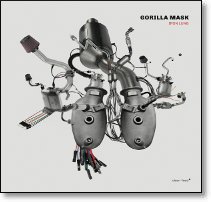
Gorilla Mask: Iron Lung (2016 [2017], Clean Feed):
Avant-jazz sax trio, the leader alto saxophonist Peter Van Huffel
(Canadian, Belgian roots, based in Berlin), with Roland Fidezius
(electric bass, effects) and Rudi Fischerlehner (drums). The bass
gives this a certain rockish foundation, which the saxophonist
regularly blows up.
A- [cd]
Bill Hart: Touch of Blue (2016 [2017], Blue Canoe):
Guitarist, plays fusion, backed by bass, keys, drums, and percussion,
a lot of riffing up and down.
B- [cd]
Jill Jack and the American SongBook Band: Pure Imagination
(2016, UpHill Productions): Singer from Detroit, has a dozen albums
since 1997, evidently wrote most of her songs previously but for this
project she picks prime standards from "All of Me" to, ugh, "Bridge
Over Troubled Water." Pianist Dale Grisa leads a solid jazz combo
with guitar and sax. Some interesting twists, but basically as good
as the songs.
B+(*) [cd]
Sarah Jarosz: Undercurrent (2016, Sugar Hill): Austin
singer-songwriter, plays mandolin and banjo, originally slotted as
bluegrass, fourth album, doesn't seem to belong to any genre, just
the work of a talented and sometimes touching songsmith.
B+(**)
Norah Jones: Day Breaks (2015 [2016], Blue Note):
I've collected her reviews for my jazz guide, mostly given her label,
but she's never fit very well. Still, the band here is jazzier than
ever, as are her originals, and she covers Ellington and Silver (and
Neil Young), all the while sounding remarkably sweet.
B+(**)
Jü: Summa (2016 [2017], Rare Noise): Avant-fusion trio:
Ádám Mészáros (guitars, kalimba, percussion), Ernö Hock (bass guitar,
bass ukulele, percussion), and András Halmos (drums, bells, kalimba),
with a couple guests on one track. Kjetil Møster's sax is a nice touch,
but that's about it.
B [cdr]
Doug MacDonald: A Salute to Jazz Composers: Jazz Marathon 2
(2016 [2017], BluJazz, 2CD): Guitarist, based in Los Angeles where this
was recorded live, has a dozen albums going back to 1981 -- no evidence
of a Jazz Marathon 1. Horn players are mostly names I recognize --
sax section is Lanny Morgan, Pete Christleib, and/or Ricky Woodard (some
churn from cut to cut). Compositions mostly date from the 1950s, roughly
Charlie Parker to Sonny Rollins, with one original (MacDonald's "Bossa
Don") and an Ellington medley on the margins. So nothing new here, but
it's all pretty delightful.
B+(***) [cd]
Kirk MacDonald Jazz Orchestra: Common Ground (2015
[2017], Addo, 2CD): Tenor saxophonist, from Canada, discography goes
back to 1990, fronts a big band with five trumpets and a couple extra
reeds, none of which especially stand out.
B [cd]
Ben Markley Big Band: Clockwise: The Music of Cedar Walton
(2016 [2017], OA2): Pianist, has a couple of previous albums, teaches
as Director of Jazz Studies at the University of Wyoming, his big band
leaning on Denver musicians plus guest trumpet player Terrel Stafford.
Walton always had a knack for writing for horns, so his music scales
up easily here, a very brassy concoction.
B+(*) [cd]
Lisa Mezzacappa: Avant Noir (2015 [2017], Clean Feed):
Bassist, has a couple albums, leads a sextet here with just one horn
(Aaron Bennett on tenor sax) and no piano: the other spots are electric
guitar, vibes, electronics, and drums.
B+(**) [cd]
The Milwaukee Jazz Orchestra: Welcome to Swingsville!
(2016 [2017], BluJazz): Big Band from University of Wisconsin Milwaukee,
"managed" by Kyle Seifert (tenor sax) and Julia Rose Bustle, main name
I recognize trumpeter Russ Johnson. Notes brag about this program being
played "live and unrehearsed." That may explain why this gets a slow
start, but they hit their stride on "Caravan."
B+(*) [cd]
Nicole Mitchell: Mandorla Awakening II: Emerging Worlds
(2015 [2017], FPE): Flute player, based in Chicago since 1990 although
since 2001 she has taught at University of California Irvine. Booklet
credits this to her Black Earth Ensemble, a group with shakuhachi, viola,
cello, guitar, bass, and percussion. Effectively this is two records,
and long enough that both are well developed: it begins and ends with
instrumental grunge, something like a jazz elaboration on industrial
but a bit more ethereal; in between, we get an extended vocal harangue
from "avery y young." I've played this four times, and I'm still
ambivalent about both halve, but this is pretty unique, and for once
I'm not bitching about the flute.
B+(**) [cd]
Murs: Captain California (2017, Strange Music): LA
rapper, underground, has a couple albums I like a lot, more I never
heard. This one, packed with featured guests I've never heard of and
nine different producers, wanders all over the place.
B+(**)
Bill O'Connell: Monk's Cha Cha: Live at the Carnegie-Farian
Room (2016 [2017], Savant): Solo piano, the title tune an
original, the other material -- originals plus covers of "Afro Blue,"
"Dindi," and "The Song Is You" -- not pushing either interest very
hard or far.
B [cd]
Nnamdi Ogbonnaya: Drool (2017, Father/Daughter/Sooper):
From LA (or Chicago), sings more than he raps, a Christgau pick but
while some of this prog trickiness sounds promising I find much of it
unlistenable.
B-
Miles Okazaki: Trickster (2016 [2017], Pi): Guitarist,
has an airy style with a slight metallic tinge, leads a quartet here
with pianist Craig Taborn impressive as usual.
B+(**) [cd]
Eivind Opsvik: Overseas V (2016 [2017], Loyal Label):
Norwegian Bassist, based in New York, has released four Overseas
albums with a core group of saxophonist Tony Malaby and pianist Jacob
Sacks, joined here (as on Overseas IV by Brandon Seabrook (guitar)
and Kenny Wolleson (drums). Dense and intricate, the guitar and sax
blunted and folded back into the group, where the focus is more on
sustaining rhythmic force.
B+(***) [cd]
Orchestra Baobab: Tribute to Ndiouga Dieng (2017,
Nonesuch/World Circuit): One of Senegal's most important bands, their
1970s shrined in multi-volume compilations called La Belle Epoque,
with more albums since 1992, one of the best (Specialist in All
Styles) from 2002, the last before this in 2008. Dieng (1947-2016)
was the group's long-time singer, though he is ably replaced here.
A-
The Radio Dept.: Running Out of Love (2016, Labrador):
Swedish electropop group, a bit of a throwback to 1980's new wave (with
a dash of shoegaze), the final cut a hint of Pet Shop Boys but rather
austere.
B+(**)
Rocco John: Peace and Love (2014 [2017], Unseen Rain):
Alto saxophonist (also soprano and piano) Rocco John Iacovone, leading
a group he calls the Improvisational Composers Ensemble in a tribute to
Will Connell (1938-2014), a saxophonist with a slim discography (most
notably the 1981/83 Commitment recordings with William Parker) who
"lived his music." Group is an octet with Ras Moshe Burnett (bells,
tenor sax, flute), violin, bass clarinet, guitar, double bass, drums,
and percussion. Group hits hard, but is equally interesting when they
spread out, chill out, or aim for the heavens.
A- [cd]
Whitney Rose: South Texas Suite (2017, Six Shooter, EP):
Singer-songwriter from Prince Edward Island up in Canada, moved to Austin
and after two albums I never noticed came up with this remarkable six cut,
22:19 EP.
B+(***)
Adam Rudolph's Moving Pictures: Glare of the Tiger
(2016 [2017], Meta/M.O.D. Technologies): Percussionist, mostly hand
drums here, with two other drummers (Hamid Drake and James Hurt) in
the ensemble, along with horns -- Graham Haynes (cornet, flugelhorn)
and Ralph M. Jones (flutes, clarinets, saxes) -- keyboards, guitar,
and electric bass. Strong suit is rhythm, colors changing from darker
to lighter.
B+(***) [cd]
John K. Samson: Winter Wheat (2016, Anti-):
Singer-songwriter from Winnipeg, came out of a couple bands I've
heard of (Propagandhi, The Weakerthans), third solo album.
B+(*)
Jenny Scheinman: Here on Earth (2017, Royal Potato
Family): Violinist, working on a soundtrack for the film Kannapolis:
A Moving Portrait, based on 1936-42 archival footage by H. Lee
Waters of small town folks in North Carolina during the Great Depression.
Some scenes included fiddle-banjo-guitar, so she recruited Danny Barnes,
Robbie Fulks, Bill Frisell, and Robbie Gjersoe -- reminds me that Frisell
hired Scheinman for his very similar Arkansas-based Disfarmer.
B+(***)
Andy Shauf: The Party (2016, Anti-): Singer-songwriter
from Saskatchewan, started out as drummer in a "Christian pop punk band,"
third solo album here. This is pretty sedate, or pretty but sedate.
B
Swans: The Glowing Man (2016, Young God, 2CD): Michael
Gira's industrial/noise group, toiled in near-complete obscurity from
1983's Filth through 1996's Soundtracks for the Blind,
but since regrouping in 2010 they've garnered effusive press and even
a bit of commercial acceptance. That fell off a bit on this fourth
post-hiatus album, perhaps because its length reinforces the sense
of sameness.
B+(*)
Sunny Sweeney: Trophy (2017, Aunt Daddy): Country
singer, cowrote most of her songs -- don't have the credits but
evidently Lori McKenna was involved. The backing is nondescript,
and they drag a little, but every one hits its mark, even a couple
I'd rather not deal with.
B+(***)
Syd: Fin (2017, Columbia): Vocalist for the Internet tries
a solo album. Small voice, matter-of-fact beats, picks up toward the end
with a couple of featuring credits (who is this Steve Lacy?) and a song
about "Insecurities" -- whoever's doing that low voice is helping a lot.
A-
Teenage Fanclub: Here (2016, Merge): Alt/indie band
from Scotland (or "Northern Britain" as one title put it), long time
since anyone here was a teenager, their tenth album losing much of
their jangle but keeping light pop harmonies.
B-
University of Toronto Jazz Orcherstra: Sweet Ruby Suite
(2016 [2017], UofT Jazz): Subtitled The Music of Kenny Wheeler featuring
Norma Winstone and Dave Leibman (lyricist/singer and soprano saxophonist),
so this is a minor milestone in the evolution of jazz repertory, as well as
a sentimental tribute to one of Canada's greatest jazz figures (1930-2014).
Not a direction I relish or a piece of opera I'm particularly fond of, but
I'm not unsentimental (nor unimpressed).
B+(*) [cd]
University of Toronto 12Tet: Trillium Falls (2016
[2017], UofT Jazz): Terry Promano directed and composed a couple
pieces, and Noam Lomish added his piano to his track. Notable covers
come from Strayhorn and Ellington. Nice flow, but sometimes I wonder
why bother?
B [cd]
Keith Urban: Ripcord (2016, Capitol Nashville): Country
singer-songwriter, born in New Zealand, moved to Australia when he was
17 and broke through there, released his first US album in 1999, married
actress Nicole Kidman in 2006, moved to Nashville at some point and
became a US citizen, becoming a judge on American Idol. Ninth
studio album, first I've heard. A formidable voice and a flexible
student of pop hooks, mixing in Carrie Underwood on one track and
Nile Rodgers and Pitbull on another. Could catch on if I gave it the
chance, but I can remember so little of it after one play I doubt I
will.
B
Velkro: Too Lazy to Panic (2016 [2017], Clean Feed):
Recorded in Portugal but mixed in Norway, don't know anything about
the trio -- Bostjan Simon (sax, electronics), Stephan Meidell (guitar,
bass, percussion, electronics), and Luis Candelas (drums, percussion) --
other than that their 2014 debut blew me away. They describe this one
as "a step forward and a dive inward," which is to say the deep sound
of their dense fusion takes much longer to sink in.
A- [cd]
Nate Wooley/Ken Vandermark: All Directions Home (2015,
Audiographic): Duets, trumpet and reeds, recorded over two nights in
Milwaukee. This actually works out quite nicely, either likely to set
up rhythmic vamps the other can slide against, neither in a mood to
burn the joint down.
B+(***) [bc]
Michael Zilber: Originals for the Originals (2016
[2017], Origin): Saxophonist (tenor/soprano), originally from Canada,
now based in San Francisco after a long east coast stay (Boston and
New York -- his debut seems to have been 1992's Stranger in
Brooklyn). Originals dedicated to other saxophonists -- most
obviously Michael Brecker, Sonny Rollins, Wayne Shorter, John
Coltrane, Paul Desmond), mostly backed by piano-bass-drums (David
Kikoski, James Genus, Clarence Penn).
B+(**) [cd]
Recent Reissues, Compilations, Vault Discoveries
Count Ossie and the Mystic Revelation of Rastafari: Tales of
Mozambique (1970-75 [2016], Soul Jazz): Born Oswald Williams
(1926-76), he was one of the innovators of nyabinghi, a primitivist
hand drumming style wrapped up in the Rastafari cult. His drumming
with chants and the occasional horn are simple and seductive.
A-
Nigeria Soul Fever: Afro Funk, Disco and Boogie
(1970s-80s [2016], Soul Jazz): A big country, roughly the population
if not nearly the physical size of Brazil (173.6 vs. 200.4 million
people), its diversity another reason for adopting so many western
musical styles. Label has a good record for compilations, but this
often sounds second-hand, even if more energetically so.
B+(*)
Old Music
John Abercrombie/Arthur Blythe/Terri Lyne Carrington/Anthony Cox/Mark
Feldman/Gust Tsilis: Echoes (1996 [2005], Alessa): All names
on front cover, in alphabetical order, but Blythe (alto sax) only appears
on two (of ten) cuts, and Feldman (violin) on one. On the other hand,
they dominate their cuts to the point of suggesting the album could turn
into something. Otherwise, the guitarist is most chameleon-like, leaving
Tsilis' vibes to shine.
B+(*)
Gato Barbieri Quartet: In Search of the Mystery
(1967, ESP-Disk): Tenor saxophonist from Argentina, played with
Lalo Schifrin in the late 1950s/early 1960s before following John
Coltrane into the avant-garde, leading to this debut album, with
Calo Scott (cello), Norris Jones (bass), and Bobby Kapp (drums).
Strong stuff, but mostly his screech is barely controlled, and
sometimes it slips.
B+(*)
Gato Barbieri: The Third World (1969 [1970], Flying
Dutchman): Front cover just says "Gato" under the title. Album opens
with flute, then a little vocal, before blossoming into one of the
most identifiable tenor sax tones ever. Interesting line up here,
with the first hints of his Latin/tango rhythm melded with Roswell
Rudd's trombone growl.
B+(***)
Gato Barbieri: Fenix (1971, Flying Dutchman): This
is where he set the pattern for his best albums of the following
decade: he cranked up the Latin percussion (adding Gene Golden on
bongos and congas and Na Na on congas and berimbau), let the rhythm
section (Lennie White III on drums, Ron Carter on electric bass,
and Lonnie Liston Smith on keyboards) ham it up, and blew his sax
way past them all.
A-
Gato Barbieri: El Pampero (1971 [1972], Flying
Dutchman): Same instrumental lineup with considerable shuffling of
personnel (Lonnie Liston Smith on piano and Na Na on berimbau are
the constants), with the saxophonist if anything even more towering.
A-
Chuck Berry: After School Session (1955-57 [1957],
Chess): I discovered Berry through compilations -- Chuck Berry's
Golden Decade, which later morphed into The Great Twenty-Eight
and the slightly enlarged 30-cut (picking up his 1972 novelty hit "My
Ding-A-Ling") The Definitive Collection -- and I've heard the
3-CD Chess Box, but on his death, I figured why not check out
as many old LPs as I could find? This was his first, only the second
issued by the label, with five classics ("School Days," "Too Much Monkey
Business," "No Money Down," "Brown Eyed Handsome Man," "Havana Moon"),
a forgotten single ("Wee Wee Hours" from 1955), and filler -- plucky
instrumentals plus less developed ballads.
B+(***)
Chuck Berry: One Dozen Berrys (1957 [1958], Chess):
Second album, follows the same formula, with four classics -- "Sweet
Little Sixteen," "Oh Baby Doll," "Reelin' and Rockin'," "Rock and Roll
Music" -- and mostly instrumental filler (though "It Don't Take but a
Few Minutes" is a charming oddity).
B+(***)
Chuck Berry: Chuck Berry Is on Top (1955-59 [1959],
Chess): Third album, possibly his best known, rounded up non-album
singles as far back as "Maybellene" (1955) and "Roll Over Beethoven"
(1956). Eight of twelve songs made The Great Twenty-Eight,
two other singles dropped from the canon ("Anthony Boy" and "Jo Jo
Gunne"), and there are two odd little pieces of filler ("Hey Pedro"
and "Blues for Hawaiians").
A-
Chuck Berry: Rockin' at the Hops (1960, Chess):
Only one canon song ("Let It Rock"), but three other songs were
released as singles, and they and a couple others (including a
cover, "Too Pooped to Pop") are unmistakable Berry.
B+(**)
Chuck Berry: New Juke Box Hits (1961, Chess):
Not really: "I'm Talking About You" is the only canon song, and
some of the covers had been around the block too many times
("Route 66," "Rip It Up").
B+(*)
Chuck Berry: Twist (1955-61 [1962], Chess): A
stopgap released with Berry in jail, the title suggesting something
new to cash in on Chubby Checker's twist craze, the fourteen songs
old singles (though this was the first album for three: "Oh, Baby
Doll," "Come On," "Back in the U.S.A."). It's all brilliant, but
docked a bit as misleading, and because later compilations were
able to double the length without slipping one bit. [Reissued a
year later as More Chuck Berry. That title was then recycled
for a 1964 UK release with a different songlist -- only "Reelin'
and Rockin'" appears on both.]
A-
Chuck Berry: On Stage (1963, Chess): Berry was in
jail in August when this was released -- had been from February 1962
up to October -- so the label faked this, dubbing applause in over
studio tracks, with "Surfin' USA" highlighted on the cover but not
in the song listings (oh, yeah, "Sweet Little Sixteen"). Napster
adds 12 cuts, probably from a later CD reissue I can't locate --
they appear to be the undubbed originals.
B-
Bo Diddley/Chuck Berry: Two Great Guitars (1964, Chess):
Each side of the original LP starts with a sub-three-minute instrumental,
followed in turn by 10:39/14:23 jam, the first side leaning toward Berry,
the second McDaniel. A reissue added four bonus tracks, longest 3:44.
Grooveful, but might have been more exciting if not just a duo.
B+(*)
Chuck Berry: St. Louis to Liverpool (1957-64 [2004],
Chess): Back from jail, buoyed by royalties from the Beatles and the
Beach Boys (after having sued the latter), he wrote ten (or twelve)
songs, including three of his greatest ("No Particular Place to Go,"
"You Never Can Tell," and "Promised Land"). The forgotten songs are
pretty solid too, and the reissue adds three cuts.
A-
Chuck Berry: Chuck Berry in London (1965, Chess):
Cover says "recorded in England" but offers no further details --
no evidence of an audience, nor that the recording location matters.
But it does feature new material, only three covers (two name-checking
St. Louis), nothing that wound up in the canon (although "Dear Dad"
and "I Want to Be Your Driver" come close), but the guitar is sui
generis even when the blues are generic.
B+(***)
Chuck Berry: Fresh Berry's (1965, Chess): Last album
for Chess, effectively the end of the era, but none of the songs here
made the canon, the only one coming close "My Mustang Ford." Ends with
a reworking of an early single, this time called "Wee Hour Blues" --
a fitting end. (Berry returned to Chess in 1970, and had a one-shot
hit single in 1972, but never regained his 1957-64 genius.)
B+(**)
Chuck Berry: Chuck Berry's Golden Hits (1966 [1989],
Mercury): Freed from Chess Records, the first thing Berry's new label
has him do is re-record a dozen of his Chess hits (well, eleven, as
"Club Nitty Gritty" is new, a non-hit single in 1966; expanded to 15
songs for the reissue). While I can't swear the songs are vastly
inferior to the originals, they do feel a bit off. And while the back
cover notes they were recorded "in October and November, 1966" and
"Chuck himself was in full charge of the sessions from beginning to
end," this can't escape the whiff of fraud (although this practice
wasn't unusual -- I'm still soft on The Very Best of the Everly
Brothers, recorded for Warners in 1964, because that's where I
started with them). Chess answered almost immediately with the 2-LP
24-cut Chuck Berry's Golden Decade, which is where I dove in.
B-
Chuck Berry: Chuck Berry in Memphis (1967, Mercury):
The second of five post-Chess albums Berry cut for Mercury (two live
plus that bogus Golden Hits). Two more re-recorded hits, a
couple of passable outtakes, a batch of soul ballad covers which are
pure filler, and more stress on the horns.
B+(*)
Chuck Berry: Live at Fillmore Auditorium (1967, Mercury):
A proper live album, but Berry had already fallen into the mode of working
with whatever local pick up band he could find, drawing what was still
known as the Steve Miller Blues Band here. Someone must of whispered in
Berry's ear that the hippies dug blues, because he leads off with a long
string of blues covers before delving into his own catalog, with only the
last three songs recognizably his own (one of them his first recorded take
of "My Ding-a-Ling").
B
Chuck Berry: From St. Louie to Frisco (1968, Mercury):
Seems to be working hard, wrote a batch of new songs -- though "My
Tambourine" is just a gloss on "My Ding-a-Ling," and he that's far
from the only recycling -- but he's falling behind and further into
obscurity.
B+(*)
Chuck Berry: Concerto in B-Goode (1969, Mercury):
First side offers four new songs, all blues, far from bad but not
especially memorable. Second side is an 18:40 instrumental, built
from familiar licks, evidently intended to roll Beethoven back
over. Neither strikes me as a good idea, but he makes them work
(sort of).
B+(*)
Chuck Berry: Back Home (1970, Chess): Well, back in
Chicago with Chess, anyway, leading off with "Tulane" -- probably
his best song since 1964. Follows up with blues and instrumentals,
both better than par.
B+(***)
Chuck Berry: San Francisco Dues (1971, Chess):
I'm curious why Berry has so many San Francisco titles, especially
given that whenever he thinks of that town he slows down and melts.
B-
Chuck Berry: The London Chuck Berry Sessions (1972,
Chess): One side (five songs) cut in the studio, including a Little
Walter cover. The other side was live, just three songs: "Reelin' and
Rockin'" and "Johnny B. Goode" sandwiched 11:33 of Dave Bartholomew's
"My Ding-a-Ling" structured as an audience sing-along. Berry had
recorded the song before (as well as its alter-ego "My Tambourine"),
but this was somehow turned into Berry's one and only chart-topping
single ("Sweet Little Sixteen" peaked at 2, "School Day" at 3,
"Maybellene" at 5, with three more cracking the top ten).
B
Chuck Berry: Bio (1973, Chess): Seven original songs
show a lot of care if not much genius, but I find the easy and almost
effortless pace rather appealing. The band, which fills in seamlessly,
also does business as Elephant's Memory.
B+(**)
Chuck Berry: Chuck Berry (1975, Chess): Mostly covers,
a mix of blues and country and "Shake Rattle and Roll," with "Swanee
River" adapted to be most Berry-like. It's schlock, but he makes it
sound easy and natural, like he's figured out the art of coasting.
B+(**)
Chuck Berry: Rock It (1979, Atco): Having left Chess
for the second time, his first and only album for the Warners combine,
and it would turn his last album before his death in 2017 (although a
new one is rumored, the posthumous market for legends never richer).
Christgau liked this one much more than his previous five (or maybe,
probably, more), and it certainly is cheerier, but too much rubs me
the wrong way -- not least the "Havana Moon" accent -- to get at all
excited.
B+(*)
Chuck Berry: Rock 'N Roll Rarities (1957-64 [1986],
Chess): I wouldn't have bothered with this except I recall having it
on vinyl. Some misdirection in that the songs themselves are far from
unknown -- 11 of 20 are on The Great Twenty-Eight, which was
the standard compilation at the time, and 4 of the remaining 9 were
chart singles. Still, the fine print explains that most are demos or
alternate takes, some just stereo remixes. And none of the variants
stray far. Still, one terrific song was previously unknown ("Time Was"),
and I hadn't noticed "Oh Yeah" elsewhere.
B+(***)
Arthur Blythe: Put Sunshine in It (1985, Columbia):
The late great alto saxophonist, came out of Horace Tapscott's circle
in Los Angeles, cut a couple albums on small labels, then got a shot
on Columbia and responded with two of the major jazz albums of the
late 1970s, Lenox Avenue Breakdown and In the Tradition.
This was his eighth album at Columbia (out of ten up to 1988), and
by then he was struggling for something bright and pleasing. With
cello and tuba instead of bass, guitar, and drums (congas on one
track), this doesn't push anyone's buttons.
B
Lester Bowie: The 5th Power (1978, Black Saint):
AACM trumpet player, with Arthur Blythe (alto sax), Malachi Favors (bass),
Amina Myers (piano), and Phillip Wilson (drums). Five pieces, Myers
wrote and sings a "traditional gospel" that doesn't stay true, the
rest of the pieces are sketchy and tentative.
C+
Bob Brookmeyer: The Dual Role of Bob Brookmeyer
(1954-55 [1990], Prestige/OJC): The valve trombonist's first album,
cobbled together from two four-cut sessions: the first featuring
guitarist Jimmy Raney, with Teddy Kolick (bass) and Mel Lewis
(drums); the second with Teddy Charles (vibes), Kolick, and Ed
Shaughnessy (drums), plus one nondescript vocal. Leader plays some
fancy piano too (opposite Charles).
B+(**)
Double Tandem [Ab Baars/Ken Vandermark/Paal Nilssen-Love]:
OX (2012, dEN): Two tenor saxes (Vandearmark also on
baritone, both also switching off to clarinet), jousting mightily
with the drummer refereeing.
B+(***) [bc]
FME: Live at the Glenn Miller Café - Feb. 27, 2002
(2002, Okka Disk): Ken Vandermark free jazz trio, active 2002-05,
with Nate McBride on bass and Paal Nilssen-Love on drums. Terrific
example of Vandermark in avant-honk mode, weakened only by a couple
spots of regrouping.
B+(***) [bc]
FME: Montage (2005 [2006], Okka Disk, 2CD): Last
album for the group, although Vandermark has recorded a half-dozen
or more duo albums with drummer Paal Nilssen-Love, and has often
employed bassist Nate McBride, so it wouldn't take much for them
to regroup. Problem here is that at double the length, they space
out the moments of brilliance, and while the anticipation may add
something to live performance, it just makes us impatient here.
B+(**) [bc]
Al Green: Truth N' Time (1978, Hi): His last album
before switching over to gospel music. Shows some but not a lot of
decline, voice still extraordinary, groove compelling, but nothing
really great, and pretty short for an LP (8 songs, 26:39).
B+(**)
Al Green: Tokyo . . . Live (1978 [1981], Motown):
Live double, should fit on a single CD (76:49). Great songs, the
two covers long owned, the band proficient, the sound a bit distant
compared to the studio cuts you know like the back of your hand.
B+(***)
Al Green: Precious Lord (1982, Myrrh): Green's
third gospel album, after the tentative The Lord Will Make a
Way and the more sure-footed Higher Plane. Traded his
Memphis groove section for Nashville and more choir, which turned
off some, but this is chock full of familiar songs which have
rarely been raised so high to the rafters.
B+(***)
Al Green: I'll Rise Again (1983, Myrrh): Back in
Memphis so sure, a better groove record. Not sure of the credits but
nothing I recognize, or listened to closely enough to get turned off
or on. Wish the title prophesied the soul singer, not Jesus.
B+(**)
Al Green: Trust in God (1984, Myrrh): His gospel
albums have become so perfunctory I only noticed one song here.
Looking at the credits there should have been two.
B
Al Green: He Is the Light (1986, A&M): Discogs
says this was originally titled Going Away (after the lead
song), but I doubt the record was released in the UK before the US,
where this has always been the title. Willie Mitchell returns as
producer, helping to focus the groove. Favorite lyric: "I feel like
shoutin' for joy."
B+(**)
Vic Juris: Songbook (1999 [2000], SteepleChase):
Guitar trio with Jay Anderson (bass) and Jeff Hirshfield (drums).
Title piece is an original, plus two standards by Kern, one each
by Jobim and Mancini, the rest jazz touchstones from "Nuages" to
"Milestones," all played so modestly none stand out.
B
Barney Kessel With Shelly Manne and Ray Brown: The Poll
Winners (1957 [1988], Contemporary/OJC): Guitar-drums-bass
trio, not sure what poll they claimed but at ages 30-36 they were
early in their careers, and milked that group title for several more
albums. One original, eight standards, Kessel's thin lines and mild
metallic tone fast on their way to becoming hegemonic.
B+(*)
Barney Kessel With Shelly Manne & Ray Brown: Poll Winners
Three! (1959 [1992], Contemporary/OJC): Third group record
for the guitar trio, Kessel having released a couple albums on his
own between each. Again, one Kessel original, another by Brown, the
rest standards swung a bit harder this time out.
B+(***)
The Leaders: Unforseen Blessings (1988 [1989], Soul
Note): All-star group came together in 1986 with Lester Bowie (trumpet),
Arthur Blythe (alto sax), Chico Freeman (tenor sax), Kirk Lightsey
(piano), Cecil McBee (bass) and Don Moye (drums). Third album with
that lineup -- they'd go on to cut one more in 1994, but their 2006
reunion replaced Bowie and Blythe with Eddie Henderson and Bobby
Watson. The rhythm section also recorded an 1988 album as the
Leaders Trio, and Lightsey also seems to be in the helm here --
the horns tentative until they close with a blues.
B+(*)
Lean Left: Live at Area Sismica (2012 [2014],
Unsounds): Ken Vandermark and drummer Paal Nilssen-Love, their
duo joined by two guitarists from the Dutch punk band Ex, left
to play free and joust with the sax. Group came together in
2008 and recorded four live albums up to this one.
B+(***) [bc]
Rara Avis: Mutations/Multicellulars Mutations (2012
[2013], dEN, 2CD): Ken Vandermark group recorded in Rome, with Stefano
Ferriari as a second saxophonist (soprano/tenor), Simone Quatrana
(piano) Luca Pissavini (double bass), and SEC_ (Mimmo Napolitano:
electronics, effects). First disc are group improvs. Second, much
shorter, breaks down to duos and trios. Some sonic surprises, as
well as hard-charging sax.
B+(*) [bc]
Rara Avis: Rara Avis (2013 [2015], Not Two): Same Vandermark
in Italy group, some months later on the road in Poland, improvising
nine unnamed pieces. Piano is more prominent, and SEC_'s electronics
prod things in interesting directions, while second saxophonist
Stefano Ferriari does a pretty solid Mars Williams impression.
B+(**) [bc]
Reed Trio: Last Train to the First Station (2008-10
[2011], Kilogram): Another live Ken Vandermark in Poland album (this
time Gdansk), joined by Mikolaj Trzaska and Waclaw Zimpel who like
Vandermark keep a couple clarinets in their toolkits (Zimpel also
has a tarogato). Much less aggressive than Sonore (Vandermark's trio
with Peter Brötzmann and Mats Gustafsson), partly because the softer
reeds predominate, partly because the group often drops down to solo
or duo.
B+(*) [bc]
Roots [Arthur Blythe/Sam Rivers/Nathan Davis/Chico Freeman/Don
Pullen/Santi Debriano/Tommy Campbell]: Salutes the Saxophone
(1991 [1992], In+Out): Four saxophones plus piano-bass-drums, doing
nine standards every saxophonist must know by heart, with swing-era
warhorses like "Cottontail" and "Lester Leaps In" raising the hottest
jams. Still, the breakout star is the pianist, especially on his first
two solos.
A-
Roots: Stablemates (1992 [1993], In+Out): Names remain
prominent on front cover, the only change Idris Muhammad moving in on
drums. Mostly pieces by band members, others merely arranged. Pullen
has several jaw-dropping moments, but as impressive this time is the
sax layering, especially the exquisite altos (mostly Blythe, but also
Freeman and Davis).
A-
Swans: Public Castration Is a Good Idea (1986 [1999],
Thirsty Ear): Michael Gira's noise rock band, had a run from 1982 to
1997 then regrouped in 2010. This was their first live album, heavy,
plodding, not without a certain rogueish charm but nothing that might
qualify as wit.
B
The Vandermark Quartet: Big Head Eddie (1993, Platypus):
I think this counts as Ken Vandermark's first album, recorded shortly
after he moved from Boston to Chicago, credited with "reeds," joined by
Michael Zerang (drums), Kent Kessler (bass), and Todd Colburn (guitar).
Some parts feel overdubbed, but maybe it's just not clear what the guitar
is up to.
B [bc]
Vandermark 5: Drink, Don't Drown (1997, Savage Sound
Syndicate): Practically a bootleg, recorded live at the Empty Bottle
in Chicago and released in a jewel case with photocopied artwork. Front
cover reads, above the title: "Every Tuesday at the Empty Bottle the
VANDERMARK 5 will pour an ocean of sound into your bucket." This is
the original lineup with Ken Vandermark and Mars Williams (reeds), Jeb
Bishop (trombone, guitar), Kent Kessler (bass), and Tim Mulvenna (drums),
shortly after their . Sound rather dampened, but they do have their
moments.
B+(*) [bc]
Vandermark 5: Thinking on One's Feet (1998 [1999],
Savage Sound Syndicate): Same deal, a year later, with Dave Rempis
(alto sax) in lieu of Mars Williams. Front cover, above the title,
reads: "Every Tuesday at the Empty Bottle the battle for supremacy
continues: the VANDERMARK 5 vs. SANTO, El Enmascarado de Plata." A
bit chaotic, but group was in a feisty mood, especially trombonist
Jeb Bishop.
B+(**) [bc]
Ken Vandermark/Tim Daisy: August Music (2006
[2007], self-released): Reeds/drums duo, Daisy at the time was drummer
in Vandermark 5, live at the Empty Bottle in Chicago, originally a
limited edition of 200 copies. Album cover has two sets of initials,
"td" on left and "kv" on right, and Discogs fell that way, but I
went with the spine. The sax is as powerful as ever, and Daisy makes
the clarinet work as well, pecking adroitly around the edges. Applause
is enthusiastic, but I doubt the crowd numbered over two dozen.
A- [bc]
Ken Vandermark/Tim Daisy: The Conversation (2010-11
[2011], Multikulti): Cover suggests the drummer should be listed first,
but Bandcamp page belongs to Vandermark. More duos, drums and various
reeds, recorded on two dates in Chicago clubs, impressive work although
the high clarinet came off a bit constrained.
B+(***) [bc]
Ken Vandermark/Paal Nilssen-Love: Letter to a Stranger
(2011 [2012], Smalltown Superjazz): Sax-or-clarinet and drums duo, by
my count the eighth between these two (half list the drummer's name
first), not to mention a couple dozen group albums. Strongest on tenor
sax, also impressive on baritone, and the drummer is always attentive.
B+(***) [bc]
Peter Van Huffel/Michael Bates/Jeff Davis: Boom Crane
(2013 [2014], Fresh Sound New Talent): Alto sax trio (plus some clarinet),
with bass and drums. All three originally hail from Canada, though are now
based in Berlin (Van Huffel) and New York (the others). Not as aggressive
as the leader's Gorilla Mask group (formed at the same time), but a good
showcase for the individual talents.
B+(**)
Witches & Devils: Empty Bottle Chicago (1997
[2000], Savage Sound Syndicate): The first of several Ken Vandermark
groups to take the name of a famous album (cf. School Days, Free Fall),
this one was more conventionally a tribute album, with three of four
pieces written by Albert Ayler. Sextet, Mars Williams joins in on
reeds, Jim Baker on keyboards, Fred Lonberg-Holm on cello, leading
to collisions and pile-ups, but in the end you'd swear the Holy Ghost
is tapping feet.
B+(*) [bc]
Jimmy & Mama Yancey: Chicago Piano Volume 1 (1951
[1991], Atlantic): A boogie woogie pianist of some note, playing solo
(bluesy but not terribly fast) on more than half of the tracks, with
Estelle Yancey (wife, not mother) singing on the rest -- a straight up
blues singer.
B+(*)
Additional Consumer News:
Previous grades on artists in the old music section.
- John Abercrombie: 15 other albums
- Gato Barbieri: 13 other albums
- Chuck Berry: The Great Twenty-Eight (1955-64 [1984], Chess): A+
- Chuck Berry: The Definitive Collection (1955-72 [2006], Geffen/Chess/Chronicles): A+
- Chuck Berry: The Chess Box (1955-73 [1988], Chess, 3CD): A
- Arthur Blythe: In Concert: The Grip/Metamorphosis (1977 [1991], India Navigation): B+
- Arthur Blythe: Lenox Avenue Breakdown (1978 [1998], Koch): A
- Arthur Blythe: In the Tradition (1979, Columbia): A-
- Arthur Blythe: Illusions (1980, Columbia): B+
- Arthur Blythe: Basic Blythe (1987, Columbia): B
- Arthur Blythe: Retroflection (1993 [1994], In+Out): A-
- Arthur Blythe/David Eyges/Bruce Ditmas: Synergy (1996 [1997], In+Out): B+
- Arthur Blythe: Night Song (1997, Clarity): B-
- Arthur Blythe/David Eyges: Today's Blues (1997, CIMP): B-
- Arthur Blythe: Spirits in the Field (2000, Savant): A-
- Arthur Blythe: Focus (2002, Savant): A
- Arthur Blythe: Exhale (2003, Savant): B+
- Lester Bowie: 5 other albums
- Bob Brookmeyer: 3 other albums
- FME: Underground (2004, Okka Disk): A-
- FME: Cuts (2004 [2005], Okka Disk): A-
- Al Green: 27 other albums
- Vic Juris: Blue Horizon (2002-03 [2004], Zoho): B
- Vic Juris/Jimmy Bruno/Corey Christiansen: MB3 Jazz Hits Volume 1 (2006, Mel Bay): B+(*)
- Barney Kessel: To Swing or Not to Swing (1955, Contemporary/OJC): B+
- The Leaders: Mudfoot (1986, Blackhawk): A-
- The Leaders: Out Here Like This (1986, Black Saint): B+
- The Leaders Trio: Heaven Dance (1988, Sunnyside): B+
- The Leaders: Spirits Alike (2006 [2007], Challenge): B
- Lean Left: The Ex Guitars Meet Nilssen-Love/Vandermark Duo, Volume 1 (2008 [2010], Smalltown Superjazz): A-
- Lean Left: The Ex Guitars Meet Nilsson-Love/Vandermark Duo, Volume 2 (2008 [2010], Smalltown Superjazz): B+(***)
- Lean Left: Live at Café Oto (2011 [2012], Unsounds): B+(**)
- Swans: 5 other albums
- Ken Vandermark: 90 other albums
- Peter Van Huffel: 4 other albums
Notes
Everything streamed from Napster (ex Rhapsody), except as noted in
brackets following the grade:
- [cd] based on physical cd
- [cdr] based on an advance or promo cd or cdr
- [bc] available at bandcamp.com
Ask a question, or send a comment.
Monday, March 27, 2017
Music Week
 |
 |
Seems like every time I post a
Weekend Roundup, only minutes later I find a piece that I should
have mentioned. This week's major one was
Mike Konczal: Four Lessons from the Health Care Repeal Collapse.
Very thoughtful, very smart piece on what last week's Trump-Ryan
cave in means for now and the near future. First photo in the piece
shows demonstrators with two placards: "Healthcare is a right, not
a privilege!" and "Thanks to the ACA I am having my surgery tomorrow!"
As I tried to stress in yesterday's post, Republicans tried to tout
how their "repeal and replace" agenda would somehow be better for all
(or most, or maybe just some) Americans, but they couldn't spell out
any details on paper that plausibly backed up their claims. Nobody's
denying that someone could come up with a better replacement -- the
big story from last week that I didn't come up with any links for is
how people all over the political map were looking at single-payer
insurance -- but clearly the Republicans' pet ideas would only do the
opposite (stripping some 24 million people of insurance, driving
premiums for everyone else through the roof, protecting insurance
companies from malpractice and fraud claims, providing even more tax
breaks to the very rich).
It's beginning to look like people have somehow managed to sort out
the key concepts behind the ACA -- especially that universal coverage is
the only sane foundation for the health care system -- from its shoddy
and corrupt implementation. One of the most interesting moments from last
week was watching Charles Krauthammer on Fox News lament this very point.
There is much more to be said about this and related issues -- like how
Donald Trump has created a prison for himself in the increasingly psychotic
Republican Party -- but that will have to come later.
Meanwhile, my week in music.
Music: Current count 27951 [27921] rated (+30), 397 [403] unrated (-6).
I've had an extremely weird week, one artifact being that my work
space is in scary disorder. The counts above don't include unpacking
last week's mail -- I didn't do that until this afternoon -- and I've
added one more rated album below even though it's not in the count
above. I've been especially lax on getting to new jazz records -- the
pending queue is up to 46 records. I've also had scant interest in
new 2017 releases (especially
Christgau's pick last week, the 5-CD Magnetic Fields monument --
actually only 50 songs, less than the 69 Stephin Merrit squeezed onto
3-CD on his last excessive binge but still an awful lot from someone
I like to a much more limited degree). So the only thing that's kept
the rated count from collapsing is diving into old music. This week
I continued my Chuck Berry dive to its end in 1979's Rock It --
maybe there are later live albums I haven't noticed.
I also started my way into Al Green's gospel period -- actually
what kicked that off was noticing Al Green Is Love in Napster's
new releases list. (Christgau regraded it significantly up a few years
ago, but it hadn't been available and my LP is long gone, so I've been
wanting to revisit.) I also checked out Gato Barbieri's early work,
stopping at Under Fire and Bolivia, since I reviewed
a twofer of those back in early Recycled Goods days (a very solid A-).
I suppose I should revisit Chapter Four: Alive in New York
since it won its Penguin Guide crown -- I have it at B+(*), as the
weakest of Barbieri's Impulse "Chapters."
What got me looking at Barbieri was working on collecting reviews
and database entries for my jazz guides. I've finished going through
my notebook and the various
column archives, and have gone through the
first four
database files. I'm currently 7% into
Jazz (1960-70s) (i.e., at Gary
Bartz). It's a slow, tiring process, with a lot more to process (looks
like 10,939 rated albums, assuming I am indeed 7% through the current
file). The jazz guides are divided into two books, one for 20th and the
other for 21st century records. The former has virtually all of the known
reviews, so I'm mostly adding stubs for records I rated before I started
blogging everything. It currently stands at 554 pages (260,890 words),
and will probably top 600 pages before I'm done (or start writing new
reviews, like this week's Gato Barbieri records).
The first draft of the
latter was constructed from
Jazz Consumer Guide reviews. I took all of the column reviews and
stuffed them into a huge text file, and I've been pulling those
reviews out and adding them to the book as I go through the database
files. It currently runs 217 pages (91,123 words) and is growing
rapidly. (The text file has 1,097,330 words, but that's inflated
with redundant reviews and metadata, but at least half of that will
eventually be copied over, so I'd swag the 21st Century book upwards
of 1300 pages.)
It remains to be seen whether those books will interest anyone, or
even be fit to be published. There is, for instance, a lot of redundancy
that should be moved to introductions to each artist. There is also the
question of whether what's left, aside from the ratings, will be worth
reading. My opinion waxes and wanes as I sort through this stuff. I also
note lots of stuff missing (I developed my database as a sort of search
list, so it has a lot of stuff that I've seen favorably reviewed but
never got to myself) -- especially early on, while the 21st Century
book has numerous albums of no lasting interest whatsoever.
By the way, I'm using a numeric grading system for both books, but
I needed to map my letter grades mechanically. I considered two possible
scales, one where A- == 8 and another where A- == 9 and B == 5, and
decided to go with the latter (against, I should note, the advice of
pretty much everyone I consulted). One reason is that for all practical
purposes I've stopped issuing A+ grades (the last jazz record to earn one
was James Carter's Chasin' the Gypsy in 2000, and before that you
have to go back to 1990 for Pharoah Sanders' Welcome to Love, then
1986 for Don Pullen's Breakthrough and Sonny Rollins' Plays
G-Man, then 1980 for Art Pepper's Winter Moon). Further back
you'll find a couple dozen A+ albums: a handful each for Armstrong and
Ellington, a couple each for Hawkins and Hodges, a few landmarks from
Fletcher Henderson, Tatum, Monk, Mingus, Coltrane, Coleman, Davis, and
Roswell Rudd (oh, and singers: Holiday, Fitzgerald, and Rushing).
Still, I'm not sure that those records are so much better than the
400 (or so)
plain A jazz records; most took on
added significance for me as I sorted through the tradition. Even those
A records peter out over time: including A+, I count 64 since 2000 (15.2%
of 420); the only repeat artists are: Billy Bang (2), Steve Lehman (2),
Mostly Other People Do the Killing (2), David Murray (3), William Parker
(7), Matthew Shipp (2), Ken Vandermark (5). (One each for: Nik Bärtsch,
Tim Berne, Arthur Blythe, Anthony Braxton, James Carter, Ornette Coleman,
Jon Faddis, Avram Fefer, Rich Halley, Craig Harris, Michael Hashim,
Benjamin Herman, Jim Hobbs, Vijay Iyer, Pandelis Karayorgis, Martin
Küchen, Adam Lane, Mark Lomax, Allen Lowe, Rudresh Mahanthappa, Billy
Martin, Nils Petter Molvaer, Michael Moore, Barbara Morrison, Houston
Person, Roberto Juan Rodriguez, Sonny Rollins, Roswell Rudd, Randy
Sandke, Bernardo Sassetti, Jenny Scheinman, Alexander von Schlippenbach,
Irène Schweizer, Paul Shapiro, Tommy Smith, Sonic Libration Front, Assif
Tsahar, Velkro, David S. Ware, World Saxophone Quartet.)
End of month is coming up fast, so I need to post Streamnotes this
week. Hopefully I'll come up with something new in the next couple days.
Too late for last week's "recommended links," but Robert Christgau
published a piece at Billboard on Chuck Berry:
Yes, Chuck Berry Invented Rock 'n' Roll -- and Singer-Songwriters. Oh,
Teenagers Too.
Added grades for remembered LPs from way back when:
- Chuck Berry: Chuck Berry's Golden Decade (1955-64 [1967], Chess, 2LP): A
- Chuck Berry: Chuck Berry's Golden Decade (1955-64 [1973], Chess, 2LP): Built a playlist to re-check this: contains some of my favorite Berry songs, things that reappear in later one-CD anthologies, but also had a lot of non-canon songs, most of which proved delightful. A-
New records rated this week:
- Greg Abate/Tim Ray Trio: Road to Forever (2016 [2017], Whaling City Sound): [cd]: B+(*)
- Bill Hart: Touch of Blue (2016 [2017], Blue Canoe): [cd]: B-
- Doug MacDonald: A Salute to Jazz Composers: Jazz Marathon 2 (2016 [2017], BluJazz, 2CD): [cd]: B+(***)
- The Milwaukee Jazz Orchestra: Welcome to Swingsville! (2016 [2017], BluJazz): [cd]: B+(*)
- Nicole Mitchell: Mandorla Awakening II: Emerging Worlds (2015 [2017], FPE): [cd]: B+(**)
- Miles Okazaki: Trickster (2016 [2017], Pi): [cd]: B+(**)
- Adam Rudolph's Moving Pictures: Glare of the Tiger (2016 [2017], Meta/M.O.D. Technologies): [cd]: B+(***)
Old music rated this week:
- Gato Barbieri: In Search of the Mystery (1967, ESP-Disk): [r]: B+(*)
- Gato Barbieri: The Third World (1969 [1970], Flying Dutchman): [r]: B+(***)
- Gato Barbieri: Fenix (1971, Flying Dutchman): [r]: A-
- Gato Barbieri: El Pampero (1971 [1972], Flying Dutchman): [r]: A-
- Chuck Berry: Chuck Berry's Golden Hits (1966 [1989], Mercury): [r]: B-
- Chuck Berry: From St. Louie to Frisco (1968, Mercury): [r]: B+(*)
- Chuck Berry: Concerto in B-Goode (1969, Mercury): [r]: B+(*)
- Chuck Berry: Back Home (1970, Chess): [r]: B+(***)
- Chuck Berry: San Francisco Dues (1971, Chess): [r]: B-
- Chuck Berry: The London Chuck Berry Sessions (1972, Chess): [r]: B
- Chuck Berry: Bio (1973, Chess): [r]: B+(**)
- Chuck Berry: Chuck Berry (1975, Chess): [r]: B+(**)
- Chuck Berry: Rock It (1979, Atco): [r]: B+(*)
- Chuck Berry: Rock 'N Roll Rarities (1957-64 [1986], Chess): [r]: B+(***)
- Al Green: Truth N' Time (1978, Hi): [r]: B+(**)
- Al Green: Tokyo . . . Live (1978 [1981], Motown): [r]: B+(***)
- Al Green: Precious Lord (1982, Myrrh): [r]: B+(***)
- Al Green: I'll Rise Again (1983, Myrrh): [r]: B+(**)
- Al Green: Trust in God (1984, Myrrh): [r]: B
Grade changes:
- Al Green: Al Green Is Love (1975, Hi): [r]: [was: B+] A-
- Al Green: Love Ritual (Rare & Previously Unreleased 1968-76) (1968-76 [1989], MCA): [r]: [was: A-] B+(**)
Unpacking: Found in the mail last week:
- Billy Jones: 3's a Crowd (Acoustical Concepts)
- Keith Karns Big Band: An Eye on the Future (Summit)
- Michael Pedicin: As It Should Be: Ballads 2 (Groundblue)
- Jason Rigby: Detroit-Cleveland Trio: One (Fresh Sound New Talent): April 28
- Scott Routenberg Trio: Every End Is a Beginning (Summit)
- Jeannie Tanner: Words & Music (Tanner Time, 2CD): May 5
Ask a question, or send a comment.
Sunday, March 26, 2017
Weekend Roundup
 We went to two funerals on Saturday: the first for long-time peace and
justice activist Mary Harren (91), the second for my last uncle, James
Hull (85), who spent 26 years as a mechanic in the Air Force, and was
well known to Wichita Eagle readers as a right-wing crank. Main
thing I was struck by was the difference in the crowds: close to 300
turned out for Mary, compared to about fifteen (not counting the Color
Guard you taxpayers provided) for James. The former was quite properly
a celebration of a long and fruitful life. The latter was rather sad,
bitter, and pathetic.
We spent much more time with Mary over the last fifteen years: she
was one of the first to welcome us to Wichita's small cadre of anti-war
activists; she was quick to visit whenever we ran into troubles; and
she was a frequent (and delightful) dinner guest. But she was so active
and engaged that even while she made you feel special, you knew that
she had dozens of other people and groups she did the same for. And
she had been doing this for ages, sometimes regaling us with stories
of political struggle over events I only vaguely remember from my teen
years.
My interaction with James dates from those same years. Seems like
he spent most of the 1950s stationed elsewhere -- Germany and somewhere
near Las Vegas are places that stuck in my mind, although he joined in
1950 so was involved in Korea -- but after 1960 he was mostly based at
McConnell AFB here in Wichita, and his family stayed here through two
tours in Vietnam. After I turned 17 he lobbied me hard to sign up, but
by then I was resolutely opposed to the Vietnam War and detested pretty
much everything related to the military, so he was one of the first
people I can recall arguing with about politics. (I was so withdrawn
I'd scarcely speak to anyone, but he was so unflappable you couldn't
help but argue with him.) After I moved away from Wichita, I had very
little to do with him: while he was always very affable and loved a
good (even a dirty) joke, his wife (Bobbie Ann) had terrified me as
a child, and was so dim-witted and erratic I actively avoided her (and
less actively their two shell-shocked sons -- the younger was what we
used to call retarded; he wound up in some kind of special care facility
and died at age 21). But I did run into him a few years ago, after Bobbie
Ann had died, and he was cheerful as ever. He gave me a book he had
written: a memoir plus a compilation of poems and political letters
and a piece of his "scholarly" research which claimed that American
economic performance correlates with frequency of executions, so to
get the country moving again we should execute more felons.
He titled his memoir I Survived!, but there was virtually
nothing in it about his wife or sons, so it's hard to imagine readers
without personal knowledge making sense of his point. His work, and
his bowling, and probably even his politics, make more sense as an
escape from a disappointing home life. One pleasing thing about the
funeral was that the pastor was a neighbor and friend, as was another
person who spoke. So they made an effort to talk about the actual man
rather than wander off into the hereafter. And they pretty much agreed
that the man himself was a difficult, cranky person to be around.
The most revealing story was one where the pastor asked James what he
had been doing today, and James answered "spreading hate and discontent."
Asked what he had done yesterday, James answered the same, as he did when
asked what he was planning on doing tomorrow. I'm not sure exactly what he
thought he meant by that, but his politics was rooted in state violence,
something he celebrated both in war and in his obsession over executions.
Hate just greases the skids toward violence, which is part of why Trump
has escalated the killing in places like Yemen and Syria despite claiming
he opposes the disastrous wars Bush and Obama led. You can't sustain those
wars without engendering and feeding off a lot of hate.
Another possibility was that James was conscious of how he rubbed people
wrong with his crackpot theories. He did on occasion joke about the Secret
Service coming after him after letters he wrote to the president. I suspect
that in some cases he was contrarian for its own sake. Indeed, like with
my father, his sense of humor was often rooted in irony against invisible
foes. Still, at some point his right-wing bent hardened, probably egged on
by the Fox News cabal. (Several people commented on how every time they saw
him he had Fox News blaring -- his father and mine were very hard of hearing,
and having worked around jet engines for many years I'm sure he was too.)
That he wound up bitter and cranky and full of "hate and discontent" was,
I think, baked into his political bent. The contrast to Mary couldn't have
been more stark. She was probably every bit as critical of the world as he,
but everything she did was imbued with hope and love. Even toward the end,
she was full of grace. His pastor talked about grace, too, but it seemed
like a long shot for James.
By the way, speaking of crowd numbers, there also was a "Make America
Great" rally for Trump on Saturday. The Eagle's headline on the story was
Dozens brave cold winds to rally for Trump. Not sure if the numbers
are exaggerated, but the adverse weather sure was.
I got into a bit of a Facebook argument with Art Protin, who had posted
a meme-pic showing the left half of Hillary Clinton's head and the caption
(imagine in all caps): "The next time someone tries to tell you that Hillary
Clinton was a weak candidate, remind them that it took the RNC, Wikileaks,
the FBI and Russia to narrowly bring her down in an election she won by
nearly 3 million votes." Being a reality-based sort of guy, my initial
response was to list a dozen or so areas where she had acted or had taken
positions that proved detrimental to most Americans, as if voters had been
rational in rejecting her. That's not quite it, although we certainly
shouldn't neglect the fact that, rightly or wrongly, she's picked up a
lot of unfavorable baggage over the years, and that she's been the target
of an awful lot of focused political hate -- both personally and due to
her association with two Democratic administrations that promised much
and delivered little to their neediest supporters. Those things worked
to weaken her credibility and to tarnish her integrity, and that's the
main thing we mean when we describe her as a weak candidate.
But really, the more glaring proof of her weakness is that she lost
to DONALD J. TRUMP, who even before the election had the most negative
approval ratings of any major party candidate ever, and who afterwards
was subject to the greatest "buyer's remorse" we've seen since Nixon
in 1972. Clearly, a lot of people hated Clinton so much that they voted
for a guy they didn't like instead. I think a lot of factors entered
into that choice, and I don't think any of them were very rational.
(Sure, she's dishonest and corrupt and much more, but is she worse in
any of these respects than Donald Trump? That comparison should have
been laughably easy, yet somehow lots of people didn't realize it.)
Given all of the points one could make against Trump, it's pretty
much axiomatic that anyone who could still lose to him was an awfully
weak candidate.
The meme also has several other faults. Leave aside the RNC for
the moment, the other three forces arrayed against Clinton are/were
pretty lame: Wikileaks, the FBI, and Russia. What Wikileaks did was
one-sided (does anyone doubt that a hack of the RNC would have made
them look like buffoons?) and Comey's dredging up of the whole email
mess was unfortunate, but it's hard to believe that they had any more
than the tiniest of impacts. And I have no idea what Russia did
(beyond the DNC hack, and that's not clear) other than to soften the
heads of some DNC types, who thought that red-baiting Trump as soft
on Putin would be an easy score -- I can't prove it, but I think the
net effect was to make Hillary look more recklessly hawkish, and
that was something that hurt her. Of course, the continuing Russia
obsession of frustrated Hillary-bots means something else: how hard
it is to them to admit that they might bear any blame for policies
or organization or candidate. Indeed, the whole meme is just another
instance of scapegoating.
The three million vote margin is also at risk of being overplayed.
Sure, it points to a structural problem (which Republicans will never
allow to be fixed), but the problem is not just the structure for how
it has been gamed, not least by the Democrats. Trump supporters can
point out that they lost in states where they hardly campaigned at
all (New York, Illinois, especially California), but the same was true
for the 20-30 states Clinton didn't campaign in at all (including a
couple she thought she'd carry): the net result being that the popular
vote is bogus both ways. I think the net result is a wash, so Trump's
failure to gain a plurality is a leading indicator of his unpopularity,
but that only gets you so far. As Trump likes to say, "I'm president,
and you're not." So while it properly embarrasses him that he only got
paltry inauguration crowds, that his rallies regularly play to empty
seats, and that he can only get 80 marchers out on a Spring day here
in Wichita, it doesn't amount to much.
Biggest story this week was the demise of Paul Ryan's health care
bill, which Donald Trump had pledged full allegiance to. Some links:
Ross Barken: Trump tried to burn down Obamacare. He set his hair on fire
instead
Zoë Carpenter: Donald Trump Can't Make a Deal: "Now that the GOP's
health-care bill is dead, plan B is to sabotage Obamacare."
Michelle Goldberg: The Biggest Lesson From the Trumpcare Debacle:
"It showed us how government by misogynists actually translates into
policy." This fits in with a picture that's been going around, depicting
the "diverse group of people" brought together to craft the bill -- all
white males, about equally divided between those with pattern baldness
and not.
Paul Krugman: The Scammers, the Scammed and America's Fate: Krugman's
favorite sport is "I told you so," and he's been telling us that Ryan is
a fraud for many years now -- he cites a 2010 post called
The Flimflam Man -- so he understands that this is no time to let up.
He notes how the media has repeatedly promoted Ryan, and he think that
this is due to "the convention of 'balance'." "This meant, in particular,
that when it came to policy debates one was always supposed to present
both sides as having equally well-founded arguments." I suspect that the
truth is crasser: that Ryan was a pet project of the Kochs and their
think-tanks long before you heard of him, and the people backing him
have ever since been whispering in the ears of media managers and
pundits.
Tom McCarthy: Health insurance woes helped elect Trump, but his cure
may be more painful: Some Republicans, including most of the
so-called Freedom Caucus who torpedoed the Ryan-Trump bill, believe
that any form of government regulation in the health care markets
is improper, that people should not be required to have insurance,
that businesses should be free to sell any form of insurance (even
policies that don't cover anything). Moreover, such people have no
idea what such a world would look like, in part because nothing
like that has ever been allowed in America. But most Republicans
have done this hand-waving thing, arguing that if they were in
power they'd "replace and repeal" Obamacare with something which
would be so much better for everyone: that costs would go down
and care would improve and everyone would be better off. They've
never detailed how that might work, because they've never been
in a position to pass it, until now, when it turns out that their
proposals would quite obviously, one way or another, make it all
worse. And this is not just health care: Republicans often feel
the need to argue that their proposals will benefit everyone,
even when it's clear that they'll be massively harmful.
Alice Ollstein: Trump to House GOP: Vote Yes on O'Care Repeal or Lose
Your Seat: Early-week threat from the White House. Trump campaigned
in the primaries on a relatively heterodox (or schizophrenic?) platform,
but wound up stuck with a straight Republican Congress (well, actually
one that is split between a hardcore conservative majority and an even
more extreme right-wing faction), with virtually no personal commitment
to the president. The effect is to allow him to pivot only one direction
(right), which means he can only pass what they let him pass. So there's
always been this fleeting fancy that Trump might try to steer the party
his direction by purging uncooperative Republicans in the primaries. So
that's sort of what's going on here, except that Trump didn't produce
his own health care bill -- he acceded to Ryan's bill -- and most of
the successful primary challenges lately have come from the right (Tim
Huelskamp in Kansas was a rare exception, but he was very far out, and
specifically his extreme anti-government stance offended agribusiness
interests, who control damn near all of the economy in his district).
So it's interesting that Trump made this threat, but it didn't work,
and now seems pretty hollow.
Another view of the purge story is:
Daniel Politi: Bannon Pushed Trump to Use Health Care Vote to Write Up
"Enemies List": After all, if Republicans only understand one big
thing, it's how to exploit a list of enemies.
Amber Phillips: Donald Trump is giving a lot of mixed messages about whom
to blame on health care; or pretty much the same thing:
Joanna Walters: Trump blames everyone but himself for failure of GOP
healthcare legislation.
Andrew Prokop: On health reform, Donald Trump followed Republican leaders
into a ditch: Many of these pieces assume that Trump promised something
better (even "really great") and got blind-sided by Ryan. More likely is
that Trump never could care about health care, and was only mouthing words
(including blatant lies) fed to him by right-wing propagandists, because
that's easier than actually thinking.
Heather Richardson: The showdown that exposed the rift between Republican
ideology and reality:
Republicans have been able to paper over the vast gulf between their
ideology and reality, so long as they could blame Democrats for their
inability to put their ideology into law. They could rail about lower
taxes and liberty, and then, when Democrats saved the policies that
voters liked, could blame the socialistic Democrats for Republicans'
own failure to enact their ideological vision. This tactic was at the
heart of their rage against Obamacare, the symbol of their oppression
since it passed seven years ago. Republicans in the House of Representatives
voted more than 50 times to repeal the law, knowing they could count on
Obama's veto to protect them from voters who would, in reality, be furious
at the loss of their healthcare. . . .
The initial draft of the bill reflected Republican ideological principles
by giving the wealthiest Americans an $880bn tax cut. Even still, its
retention of government regulations on healthcare were too much for purists.
Members of the far-right Freedom Caucus insisted that the government must
not interfere in healthcare, defending the principle that the law must be
repealed entirely to resurrect American liberty. Other members of Congress,
swamped by popular outcry against repeal, had to bow to reality: Americans
actually like the law.
The showdown over Obamacare finally brought into the open the fundamental
rift between Republican ideology and reality. Speaker Ryan and President
Trump tried to skirt that gulf by forcing the bill through in an astonishing
17 days. When that failed, Trump tried to bluster it out with the old
Republican narrative, blaming Democrats, who are in the minority, for
this epic failure. Neither worked. Since 1980, the Republican party has
won power by hiding its unpopular ideology under a winning narrative, and
reality has finally intruded.
Also see:
Matthew Sheffield: Downfall of a policy wonk: Paul Ryan becomes the latest
victim of the American right's fundamental dysfunction.
Some more scattered links this week in the Trump swamp:
Philip Bump: Nearly 1 out of every 3 days he has been president, Trump
has visited a Trump property
Roqayah Chamseddine: Despite Campaign Promises, Trump Set to Outdo Obama
on Military Adventurism: Yemen remains a prime example, and last week
saw extensive civilian deaths from American bombing in Mosul.
Michelle Chen: Donald Trump's Rise Has Coincided With an Explosion of
Hate Groups
Lawrence Douglas: Donald Trump's dizzying Time magazine interview was
'Trumpspeak' on display: "Predictably, the president offered nothing
in the way of substantiation or contrition. Instead, he overwhelmed his
interviewer with such a profusion of misstatements, half-truths, dodges
and red herrings that one grows dizzy trying to untangle it all."
John Judis: Democrats Need to Reclaim the Issue of Manufacturing from
Donald Trump
Martin Longman: Trump Built His Own Prison: I don't think Trump ever
had the option of not ruling as a Republican stooge -- joining the party
is a lot like getting a lobotomy (or becoming a zombie) -- but Longman
still likes to fantasize:
Personally, I think Trump should have taken a different route with them
by explaining in no uncertain terms that he didn't run on creating a
health care system anything like what was in the bill, and that he was
already going to take a massive amount of heat for dispossessing tens
of millions of people of their health care. He should have threatened
that if he couldn't rely on the Freedom Caucus on this most important
first test, he'd be forced to cut them out of negotiations on pretty
much everything else and go to the Democrats for his votes for
infrastructure, trade, and tax reform, which would result in a major
defeat for conservative ideology.
Daniel Politi: Trump Reportedly Handed Merkel a $374 Billion Invoice
for NATO: "Trump's statements on NATO suggest he really does not
understand how the alliance is funded. Merkel reportedly 'ignored the
provocation.' She appears to be a bit more adept at diplomacy than
her U.S. counterpart." Also on Trump-Merkel:
Jessica Valenti: Trump did to Merkel what men do to women all the
time.
Eric Roston: The Hidden Risks of Trump's EPA Cuts: Birth Defects, Bad
Air
Mark Joseph Stern: Can Neil Gorsuch Answer a Question? On Trump's
Supreme Court nominee's hearings: "Gorsuch has smiled and quipped. He
has frowned and mused. He has brooded, hedged, dodged, vacillated,
hesitated, temporized, and mulled. What he has not yet done is directly
answer a substantive question posed by a United States senator. Will
he? Can he? That mystery is becoming the central drama of these
hearings." Also on Gorsuch:
Dahlia Lithwick/Camille Mott: The Democrats Must Filibuster Neil
Gorsuch. This, of course, is specifically about Gorsuch. Still,
I wouldn't mind taking a more general approach, such as the Senate
shouldn't confirm any Supreme Court appointee until we have an
election producing an unambiguous presidential winner (which, by
the way, would be a less extreme position than the one Republicans
took on the Garland nomination). Of course, the majority could
abolish the filibuster, but that too would be a long-term win.
Also see:
Bill Raden: "Elections have consequences": What we can expect from
a Justice Neil Gorsuch.
Jacob Sugarman: A Handful of Trump Voters Are Coming to the Painful
Realization That They've Been Had: A predictable headline after
the election. Features four prototypical examples, who misunderstood
Trump in fundamental (but not unusual) ways when he was campaigning,
and have the presence of mind to realize their mistakes now. Just a
trickle at present, but there will be more and more over time.
Matt Taibbi: Trump the Destroyer: A long piece written for the
print issue, a big picture survey of Trump's first 5-6 weeks -- the
high tone seems more and more like a hedge, the author's big fear
that between deadline and publication dates Trump will do something
so astoundingly weird and/or evil the article will have been eclipsed
(a problem he's been hit with several times already). He does manage
to reel off some juicy lines, especially about Trump's cabinet, and
his overarching theme is something folks need to hear.
Also a few links less directly tied to Trump, though sometimes still
to America's bout of political insanity:
Dean Baker: Why the NY Times Is Chiefly Responsible for the Mass Ignorance
About the US Budget
Steven A Cook/Michael Brooks: Bill Maher makes us dumber: How ignorance,
fear and stupid pop-culture clichés shape Americans' view of the Middle
East: "Americans used to be just ignorant about Muslims and the
Middle East. Now we're also fearful, stupid and wrong."
Richard Falk: The Inside Story on Our UN Report Calling Israel an Apartheid
State
Frank Rich: No Sympathy for the Hillbilly: Alerted to this piece by
a Matt Karp tweet: "Elite liberals keep writing about sympathy because
they have no concept of solidarity." Headline-wise this reinforces
stereotypes as much about New York liberals as about hillbillies, Down
in the text Rich cites various (mostly right-wing) studies complaining
that hillbillies are morally degenerate (Charles Murray, really?). Not
that Rich is really that stupid -- I can't object to his pull quote,
"Instead of studying how to talk to 'real people,' might Democrats start
talking about real people?" Also, this starts out accurate enough before
plunging over the deep end:
Trump voters should also be reminded that the elite of the party they've
put in power is as dismissive of them as Democratic elites can be
condescending. "Forget your cheap theatrical Bruce Springsteen crap,"
Kevin Williamson wrote of the white working class in National
Review. "The truth about these dysfunctional, downscale communities
is that they deserve to die. Economically, they are negative assets.
Morally, they are indefensible." He was only saying in public what
other Republicans like Mitt Romney say about the "47 percent" in
private when they think only well-heeled donors are listening.
Besides, if National Review says that their towns deserve to
die, who are Democrats to stand in the way of Trump voters who used
their ballots to commit assisted suicide?
The problem here is that the Republicans aren't the only political
party who have written off the vast expanses of America outside the
mostly coastal urban areas. The Democrats offer a bit more generous
"safety net" but they still make it look and smell like welfare, and
with their trade deals and bank deregulation and indifference to unions
(which in any case are out of reach to most workers) the Democrats been
as complicit in the decline of the heartland as the Republicans. The
main difference is that Republicans have been much more successful at
blaming Democrats for policies that both parties' elites support, at
least in "red states" where Democrats have abandoned and no longer
campaign in -- partly due to the ascendancy of snobs like Rich, and
partly from sheer expediency.
Got a late start on this, so it feels more scattered than usual.
So much crap to deal with these days. So little time.
Ask a question, or send a comment.
Monday, March 20, 2017
Music Week
Music: Current count 27921 [27888] rated (+33), 403 [389] unrated (+14).
More old music than new this week. For one thing, I've been playing
CDs from the travel case when I get up in the afternoon instead of things
I'd have to work on. Rated count still seems robust as I spent the late
nights picking off old Ken Vandermark records I had missed (my rated list
here, although this doesn't pick up things where his name wasn't
listed first -- a quick count shows 35 of those, including a couple of
groups I catalog separately; my chart shows 11 more records I haven't
gotten to, including several multi-disc sets). And over the weekend
I started listening to the late Chuck Berry's old albums. I must have
heard some Berry singles during his heyday, but never owned any of
his records until I got to St. Louis and picked up Chuck Berry's
Golden Decade (released 1967) and followed up with Vol. 2
(1973) -- though I don't recall Vol. 3 (1974). So I've always
known him through compilations, especially the canon-defining The
Great Twenty-Eight (1982), and the even better The Definitive
Collection (2006), but also the 3-CD Chess Box (1988),
which shows the pickings thin out past one disc, but don't disappear
entirely.
I mentioned three deaths up top in yesterday's
Weekend
Roundup post: Chuck Berry, Jimmy Breslin, and James Hull. One
more troubling still is pending: Mary McDonough Harren, reportedly
in the final stage of her terminal cancer. She is the grande
dame of the Wichita peace movement, a founder of the
Peace and Social Justice Center
of South Central Kansas, and a dear friend over the last 15
years. Her passing will leave an unfathomable hole in our lives.
A couple links that popped up on Chuck Berry:
New records rated this week:
- Jason Anick & Jason Yeager: United (2016 [2017], Inner Circle Music): [cd]: B+(**)
- Bat for Lashes: The Bride (2016, Parlophone): [r]: B-
- Alex Cline's Flower Garland Orchestra: Oceans of Vows (2016 [2017], self-released, 2CD): [cdr]: B+(***)
- Akua Dixon: Akua's Dance (2016 [2017], Akua's Music): [cd]: B+(**)
- Jill Jack and the American SongBook Band: Pure Imagination (2016, UpHill Productions): [cd]: B+(*)
- Kirk MacDonald Jazz Orchestra: Common Ground (2015 [2017, Addo, 2CD): [cd]: B
- Ben Markley Big Band: Clockwise: The Music of Cedar Walton (2016 [2017], OA2): [cd]: B+(*)
- Nate Wooley/Ken Vandermark: All Directions Home (2015, Audiographic): [bc]: B+(***)
Old music rated this week:
- Chuck Berry: After School Session (1955-57 [1957], Chess): [r]: B+(***)
- Chuck Berry: One Dozen Berrys (1957 [1958], Chess): [r]: B+(***)
- Chuck Berry: Chuck Berry Is on Top (1955-59 [1959], Chess): [r]: A-
- Chuck Berry: Rockin' at the Hops (1960, Chess): [r]: B+(**)
- Chuck Berry: New Juke Box Hits (1961, Chess): [r]: B+(*)
- Chuck Berry: Twist (1955-61 [1962], Chess): [r]: A-
- Chuck Berry: On Stage (1963, Chess): [r]: B-
- Chuck Berry: St. Louis to Liverpool (1957-64 [2004], Chess): A-
- Chuck Berry: Chuck Berry in London (1965, Chess): [r]: B+(***)
- Chuck Berry: Fresh Berry's (1965, Chess): [r]: B+(**)
- Chuck Berry: Chuck Berry in Memphis (1967, Mercury): [r]: B+(*)
- Chuck Berry: Live at Fillmore Auditorium (1967, Mercury): [r]: B
- Bob Brookmeyer: The Dual Role of Bob Brookmeyer (1954-55 [1990], Prestige/OJC): [r]: B+(**)
- Cinghiale [Mars Williams and Ken Vandermark]: Hoofbeats of the Snorting Swine (1995-96 [1996], Eighth Day Music): [bc]: B+(***)
- Bo Diddley/Chuck Berry: Two Great Guitars (1964, Chess): [r]: B+(*)
- Vic Juris: Songbook (1999 [2000], SteepleChase): [r]: B
- Barney Kessel With Shelly Manne and Ray Brown: The Poll Winners (1957 [1988], Contemporary/OJC): [r]: B+(*)
- Barney Kessel With Shelly Manne & Ray Brown: Poll Winners Three! (1959 [1992], Contemporary/OJC): [r]: B+(***)
- Rara Avis: Mutations/Multicelluars Mutations (2012 [2013], dEN, 2CD): [bc]: B+(*)
- Rara Avis (2013 [2015], Not Two): [bc]: B+(**)
- Reed Trio: Last Train to the First Station (2008-10 [2011], Kilogram): [bc]: B+(*)
- The Vandermark Quartet: Big Head Eddie (1993, Platypus): [bc]: B
- Vandermark 5: Drink, Don't Drown (1997, Savage Sound Syndicate): [bc]: B+(*)
- Vandermark 5: Thinking on One's Feet (1998, Savage Sound Syndicate) B+(**)
- Ken Vandermark/Tim Daisy: August Music (2006 [2007], self-released): [bc]: A-
- Ken Vandermark/Tim Daisy: The Conversation (2010-11 [2011], Multikulti): [bc]: B+(***)
- Ken Vandermark/Paal Nilssen-Love: Letter to a Stranger (2011 [2012], Smalltown Superjazz): [bc]: B+(***)
- Witches & Devils: Empty Bottle Chicago (1997 [2000], Savage Sound Syndicate): [bc]: B+(*)
Unpacking: Found in the mail last week:
- Antonio Adolfo: Hybrido: From Rio to Wayne Shorter (AAM): April 7
- Bryan and the Aardvarks: Sounds From the Deep Field (Biophilia): April 28
- Ernest Dawkins New Horizons Ensemble: Transient Takes (Malcom)
- Duo Baars Henneman & Dave Burrell: Transdans (Wig)
- Tristan Honsinger/Antonio Borghini/Tobias Delius/Axel Dörner: Hook, Line and Sinker (De Platenbakakkerij)
- Abdullah Ibrahim: Ancient Africa (1973, Delmark/Sackville): March 24
- Jentsch Group Quartet: Fractured Pop (Fleur de Son): April 7
- Mike Longo Trio: Only Time Will Tell (2017, CAP): March 31
- Linda May Han Oh: Walk Against Wind (Biophilia): April 14
- Michael Rabinowitz: Uncharted Waters (Cats Paw): April 28
- Sult/Lasse Marhaug: Harpoon (Conrad Sound/Pica Disk): advance
- Ivo Perelman/Matthew Shipp: The Art of Perelman-Shipp, Volume 1: Titan (Leo)
- Ivo Perelman/Matthew Shipp: The Art of Perelman-Shipp, Volume 2: Tarvos (Leo)
- Ivo Perelman/Matthew Shipp: The Art of Perelman-Shipp, Volume 3: Pandora (Leo)
- Ivo Perelman/Matthew Shipp: The Art of Perelman-Shipp, Volume 4: Hyperion (Leo)
- Ivo Perelman/Matthew Shipp: The Art of Perelman-Shipp, Volume 5: Rhea (Leo)
- Ivo Perelman/Matthew Shipp: The Art of Perelman-Shipp, Volume 6: Saturn (Leo)
- Ivo Perelman/Matthew Shipp: The Art of Perelman-Shipp, Volume 7: Dione (Leo)
Ask a question, or send a comment.
Sunday, March 19, 2017
Weekend Roundup
Chuck Berry died.
Jimmy Breslin died. My uncle, James Hull, died.
It's been one of those weeks.
The big thing Trump did this week was to release a new budget proposal.
Some reactions:
Who Wins and Loses in Trump's Proposed Budget; also
The 62 agencies and programs Trump wants to eliminate.
A grim budget day for US science: analysis and reaction to Trump's
plan: E.g., "NIH cuts could mean no new grants in 2016."
Graham Bowley: What if Trump Really Does End Money for the Arts?
Public arts funding has been a political hot potato for many years now, so
it's not surprising that conservative churls would take this opportunity
to slash it, indeed to cut it out altogether. I could nitpick myself, but
I also recall that during the 1930s the WPA financed all sorts of public
art, some of which we're still fortunate enough to enjoy. One cannot even
imagine government funding programs like that today, but if you give it
a wee bit of thought, you might wonder why. Given today's technology, the
ability to digitize sound and vision, to reproduce and disseminate those
bits at zero marginal cost, there has never been a better time to make a
big public investment in the arts. Sure, we need to come up with a funding
scheme that isn't subject to arbitrary commissars, but the costs and risks
are almost trivial. Especially compared to the Defense Department; after
all, without art and entertainment, what is there left to defend?
David S Cohen: Trump's Budget Is Pure Cruel Conservatism
Jeff Daniels: Rural America and farm sector to take a hit with Trump's
budget plan
Zaid Jilani: Trump the Outsider Outsources His Budget to Insider Think
Tank: Explores how "many of the White House proposal's ideas are
identical to a budget blueprint Heritage drew up last year." Also quotes
from a statement put out by Heritage praising the Trump budget, with one
little demur: "it complained that Trump's call for an additional $54
billion in defense spending just isn't big enough."
Eric Levitz: White House Says Cutting Meals on Wheels is 'Compassionate':
Quote comes from White House budget director Mick Mulvaney, who you'll
read more about elsewhere. Levitz also wrote
6 Promises That President Trump's Budget Betrays.
Charles Pierce: This Is the Ending Conservatives Always Wanted:
This budget is short-sighted, cruel to the point of being sadistic,
stupid to the point of pure philistinism, and shot through with the
absolute and fundamentalist religious conviction that the only true
functions of government are the ones that involve guns, and that the
only true purpose of government is to serve the rich. . . .
A lot of this is going to make the members of Congress choke, so
a lot of it may not pass. Its very existence is important, though,
as a document that lays out quite clearly the vision of government
shared almost everywhere in modern conservatism. This is a DeMint
Budget, a Heritage Budget, a Gingrich Budget, a Reagan Budget, and
a Tea Party Budget. It may be crude and lack a certain polish, but
its priorities and goals are clear. There is no modern Republican
Party without movement conservatism, and this budget is the most
vivid statement yet of that philosophy.
By the way, Piece also wrote:
Chuck Berry and Jimmy Breslin Reinvented the English Language.
Jordan Weissmann: Trump's Budget Director Has a Breathtakingly Cynical
Excuse for Cutting Aid to the Poor
Matthew Yglesias: Trump's budget blueprint is a war on the future of
the American economy: I caught a whiff here of Robert Reich's old
scheme for education transforming American workers into highly paid
"symbolic manipulators" -- sure, boring old manufacturing jobs get
stripped due to "free trade" deals, but we'll all wind up richer than
ever. That was bullshit then and is bullshit now, but that doesn't
mean the opposite is even close to right: you don't need Friedman to
realize that business today requires more technical skill than ever
before, and the future more so. So why would anyone push a government
budget that seriously undermines scientific research and education?
But Trump's rhetoric, and now his spending blueprint, don't just push
back against techno-utopianism. They constitute a denial of the obvious
truth that a prosperous society is necessarily going to be one that is
evolving and changing over time. . . .
One of the main things that was good about the "good old days" is
that they were a time of massive progress, expansion of higher education
opportunities into the middle class and rapid development of new products
and cures. This happened while the government invested more -- not less --
on health, education, science, and regional development.
Didn't Trump spend much of his campaign complaining about how we've
neglected essential investments in infrastructure? Science, research
and engineering are what infrastructure is built on, and education is
fundamental to all that.
Some scattered links this week in the Trumpiverse:
Zoë Carpenter/George Zornick: Everything Trump Did in His 8th Week That
Really Matters:
- Released a very skinny budget.
- Moved to loosen fracking rules.
- Delayed chemical-safety regulations.
- Fired 46 US Attorneys nationwide.
- Made a formal apology to United Kingdom over wild spying claims.
- Put military action against North Korea on the table.
Doug Bandow: Why Is Trump Abandoning the Foreign Policy that Brought Him
Victory? Starts by pointing out that Trump was often critical of the
neoconservatives who had plunged America into endless war, quoting him
as saying, "unlike other candidates for the presidency, war and aggression
will not be my first instinct." Indeed, many single-issue neocons like
the Kagans were quick to flock to Hillary Clinton, trusting her record
for hawkishness. Still, although Trump has been able to torpedo much
bruited nominations for the likes of John Bolton and Elliott Abrams,
his administration has done a lot of sabre-rattling so far. But the
author ("a Senior Fellow at the Cato Institute and a former Special
Assistant to President Ronald Reagan") has a selective memory of Trump's
campaign -- he also insisted he'd crush ISIS and increase military
spending. Unlike anti-war conservatives (like Justin Raimondo) who
fell for Trump's promise, I actually considered him more bellicose
and more dangerous than Clinton (and I've repeatedly attacked her on
just this issue). The reasons: the Republicans Trump would surround
himself with would be more consistently hawkish (many Democrats have
better things to do), and Trump himself is ignorant of and prejudiced
about the world, and much given to macho posturing. A good example of
this is the rapidly developing crisis with North Korea; e.g., see two
recent Jason Ditz pieces:
Tillerson: North Korea Diplomacy Has Failed, and
Tillerson: Attacking North Korea Remains an Option;
also
Charles P Pierce: Don't Poke North Korea with a Stick Just to See What
Will Happen.
Michelle Chen: Trump's Obsession With Cutting Regulations Will Make America
Sick
Julie Hirschfield Davis: Trump, Day After Merkel's Visit, Says Germany
Pays NATO and US Too Little: Trump's been complaining for some time
about NATO member not paying enough for their common defense, and he's
sent Rex Tillerson out to shake down America's supposed allies, so this
isn't exactly new. There's much Trump doesn't understand, but one thing
is that a big part of the reason the US has so many subservient allies
is that the US pays for the deference, not just in allowing the US to
base troops on foreign soil but in ways like generous trade deals that
help countries develop through exports. Take those perks away and won't
people start wondering whether it's all worth it?
Allegra Kirkland: Huck: Trump Should Ignore Travel Ban Ruling, Like
Jackson With Trail of Tears: Says a lot when you take inspiration
from one of the most shameful facts in American history, but that's
where many Republicans are at: until they manage to stock the courts
with like-minded conservatives, they invite like-minded executives to
run amuck over niceties like law and constitution. Not clear that
Trump, a man who has put a lot of stock into using the courts for his
own gains, is there yet, or that if he was he wouldn't be facing a
widespread revolt from civil servants forced to choose between the
legal system and his executive ego.
Ezra Klein: Does Donald Trump know what the GOP health bill does?
Conclusion: "maybe not"; more to the point: "the AHCA does literally
none of the things Trump says it does."
Nancy LeTourneau: Checking in on Trump's 'Contract With the American
Voter': This is becoming a staple piece on the left, dredging up
Trump campaign promises and showing how few of them -- especially the
relatively decent ones -- have been implemented, or even followed up
on. This doesn't seem to phase Trump's actual supporters yet: they
have, after all, almost by definition become jaded cynics about the
political process, leaving them more inclined to see Trump's failures
as subversion by unseen forces. On the other hand, LeTourneau's list
includes a lot of "not introduced" Acts, which goes to show how the
Republicans in Congress have proceeded their own agenda, regardless
of how that fits in with Trump's own promises. Ryan, in particular,
seems to view Trump as his stooge, aided by the fact that Trump is
too lazy to work on his own agenda, and too hamstrung by the people
he's allowed himself to be surrounded by. Still, I suspect the day
is coming when we'll consider ourselves lucky anytime Trump breaks
a campaign promise.
Josh Marshall: He Seems Nice: Irony still in plan: "he" is Greg
Knox, described in a Pence tweet as "a small biz owner hurting under
Obamacare." So here's some context: "It shows Knox to be what policy
specialists refer to as a 'toxic right wing asshole.'"
Ian Millhiser: Paul Ryan says he fantasized about cutting health care for
the poor at his college keggers: "Meet the most insufferable frat boy
in human history."
Tessa Stuart: Four Things We Learned About Trump's Tax Returns From
Rachel Maddow: Explained much more succinctly than what you got
from watching Maddow's program.
Amy B Wang: Why Trump's plan to slash UN funding could lead to global
calamity
Paul Woodward: Donald Trump's deceitful and misleading statements have
consequences: This keys off a long quote from
John Cassidy: Donald Trup Finally Pays a Price for His False and Reckless
Words, but I found Woodward's commentary more to the point:
Donald Trump could accurately assert: "I didn't get where I am today by
being honest."
Like many people who believe in the supremacy of will power, he may
believe that being faithful to ones own interests and objectives is all
that matters.
Trump is consistent in his unwillingness to bend to the will of others.
His America First policy is merely an inflation of his Trump
First practice.
The idea that Trump might have the capacity to mend his ways -- to see
that his dishonesty no longer works -- derives, perhaps, from a misreading
of his pragmatism.
Trump isn't bound to any ideology. At the same time, he exhibits no
psychological flexibility whatsoever.
Trump believes in his own innate capabilities with which, in his own
imagining, he is so richly endowed he has no need to learn anything.
This reminds me a bit of another president not bound to any ideology:
Franklin Roosevelt. The difference, of course, was that Roosevelt did
learn from his mistakes. He saw, for instance, that his more conservative
impulses -- especially his fetish for balanced budgets -- were harmful,
while his more generous, more liberal, impulses worked much better. The
result was the most progressive administration in American history, but
few voters imagined that at the start. They simply wanted to try something
different, because the reign of Andrew Mellon and his three presidents
had been so disastrous. The election of Trump was based on much the same
reaction, but less decisive because disaster was much less universally
recognized (let alone commonly understood) in 2016, and because quite a
few people understood that Trump and/or the Republicans didn't offer any
real solutions -- indeed, they were major problems.
Also a few links less directly tied to Trump, though sometimes still
to America's bout of political insanity:
Patrick Cockburn: Yemen Is a Complicated and Unwinnable War. Trump Should
Stay Out. Should, but thus far Yemen is the war Trump has most
dramatically inserted himself in.
Tom Engelhardt: How the Invasion of Iraq Came Home: Actually, his
third-tier title, after "Walled In" and "President Blowback." I'm not
sure "blowback" is correct, because most of the damage done to America
since Trump took office has been self-inflicted: the problem is less
that others are attacking so much as we've internalized the scars of
fifteen-years of the shocks of war:
It's clear, however, that his urge to create a garrison state went far
beyond a literal wall. It included the build-up of the U.S. military to
unprecedented heights, as well as the bolstering of the regular police,
and above all of the border police. Beyond that lay the urge to wall
Americans off in every way possible. His fervently publicized immigration
policies (less new, in reality, than they seemed) should be thought of as
part of a project to construct another kind of "great wall," a conceptual
one whose message to the rest of the world was striking: You are not
welcome or wanted here. Don't come. Don't visit.
All this was, in turn, fused at the hip to the many irrational fears
that had been gathering like storm clouds for so many years, and that
Trump (and his alt-right companions) swept into the already looted
heartland of the country. In the process, he loosed a brand of hate
(including shootings, mosque burnings, a raft of bomb threats, and a
rise in hate groups, especially anti-Muslim ones) that, historically
speaking, was all-American, but was nonetheless striking in its
intensity in our present moment.
TomDispatch also published
Michael Klare: Winning World War II in the Twenty-First Century, on
Trump's nostalgia for the days when America actually won wars -- ignoring
that times have changed as pre-WWII empires have been rolled back on every
front, and that the US is no longer viewed as a country normally content
to mind its own business, that only joins wars when attacked, and that
doesn't plot to keep and plunder other nations. Indeed, the real problems
the US military face today aren't the sort that can be fixed with a few
more ships, planes, and troops.
Matea Gold: The Mercers and Stephen Bannon: How a populist power base was
funded and built: Robert Mercer is a hedge fund exec, the plural
evidently refers to daughter Rebekah, and the article goes into some
depth on how they've sowed their millions to promote right-wing causes,
especially through Trump strategist Steve Bannon.
While other donors gave more to support Trump's presidential bid last
year, the Mercers are now arguably the most influential financiers of
the Trump era. Bannon, who went on to manage the final months of Trump's
campaign before joining the White House, is the senior architect of the
president's policy vision. He is joined in the West Wing by counselor
Kellyanne Conway, a friend of Rebekah Mercer who led the family-funded
super PAC that backed first Cruz and then Trump in the 2016 race.
People who know them say the Mercers, who soured on traditional
political operatives, appreciated Bannon's business savvy and share
his belief that the conversation around politics must be changed for
their ideas to prevail. For all of their power and privilege, both the
family and their longtime adviser see themselves as outsiders, fighting
the grip of elite institutions.
One thing I was surprised by here was a $4 million donation to John
Bolton Super PAC. I wasn't aware of such a thing, but it probably explains
why such a useless and incompetent buffoon keeps managing to get his name
in the news.
Gold also wrote a comparable analysis of the Kochs (in 2014):
Koch-backed political network, built to shield donors, raised $400 million
in 2012 elections; also co-wrote one on the Clintons (in 2015):
Two Clintons. 41 Years. $3 Billion.
William Greider: Here's What You Need to Know About the Federal Reserve:
"We demand way too much from the central bank -- but that's because our
elected politicians have done almost nothing to revive the economy." The
Federal Reserve raised short-term interest rates last week, in an effort
to throttle back the economy lest it grow to the point where wages actually
start to rise. That would normally be bad news for a sitting president,
but not for the bankers who sit with this particular one.
Greider also wrote:
Trump Is Fighting a New Trade War -- and This One Is Intramural,
about the "nasty White House battle [that] has broken out between
right-wing nationalists and globalist financiers," asking the
question: "Who owns this president -- the folks who voted for him,
or the power hitters of big business and banking?" That's actually
a novel question for a Republican president: with leaders like the
Bushes, Republican voters were merely consenting to oligarchic rule,
but didn't Trump promise something else? I'm not sure, but given
how readily Clinton and Obama turned against their voters, I hardly
expect Trump to show much spine.
Eric Levitz: The Case for Countering Right-Wing Populism With 'Left-Wing
Economics': Article spends too much time rebutting a red herring from
Zack Beauchamp. My own suspicion is that the key to making an "Left-Wing
Economics" argument work is to name enemies and show how those enemies
take unfair advantage of working people, especially through their bought
influence on government, how their lobbying perverts the course of justice.
Not that we needed more examples, but the Trump administration is rife with
them. (Trump sure had a field day painting the Clintons that way.)
Richard Silverstein: Knesset Votes to Ban Palestinian Parties, Destroy
Israeli Democracy: In 1951 Palestinians still residing in Israel
were granted citizenship (a right that was not extended after 1967 as
Israel occupied and in some cases annexed additional Palestinian land),
and since then Palestinian political parties have been represented in
Israel's parliament (Knesset) -- to little effect, of course, as ruling
coalitions have very rarely even considered including them, but it's
always been a talking point, a big part of the Israel's claim to be a
democracy.
This paragraph is meant as an aside, but is noteworthy:
Coincidentally, today a UN body issued a report
finding that Israel had become an apartheid state. It further urged
that the UN reactivate the methods, resolutions and commissions it used
to ostracize South Africa, when it too faced international opprobrium
for its racist policies. The new version of the Basic Law further
strengthens such findings.
Ask a question, or send a comment.
Monday, March 13, 2017
Music Week
Music: Current count 27888 [27862] rated (+26), 389 [385] unrated (+4).
Actual new rated count less than above -- I only count 19 records
below. I may have missed something below: seems like every record I
process means I have to add lines to 4-5 files, and sometimes I lose
track of one or more of them. On the other hand, in looking through
the database and comparing it to the 20th Century Jazz Guide, I found
a half-dozen or so reviews that hadn't been registered, so correcting
those added to the count. Thus far I've gone through the Jazz '20-30s
file and most of the Jazz '40s-50s, adding stubs for all of the albums
I've graded but haven't collected reviews for (basically, records I
heard before 2001 or so), and also for all of the artists even if I
haven't heard any albums. One side effect of the latter is that I've
been checking up on artists I didn't have death dates for, and finding
most of them as I go along (and hopefully this trend will change) have
indeed died -- some long ago. Still have a long ways to go -- the '60s
through '90s files are larger still (though will have more post-2000
records), and there are also separate files for vocals, Latin, and pop.
Currently up to 515 pages (254k words).
Almost finished the week without an A- record, but Clean Feed came
to the rescue. Actually, two of Christgau's
Expert Witness picks came real close: Sunny Sweeney and Whitney
Rose. (His other pick, Becky Warren's War Surplus, was an A-
back in
December.) Jennie
Scheinman also came close with an album uncannily similar to Bill
Frisell's Disfarmer. Got a letter from Clean Feed today
hoping to pinch pennies and switch me over to downloads, which
won't stop me from listening but will sure slow me down -- and
make me question why bother. I was tempted to give up reviewing
back when the Village Voice lost interest in Jazz Consumer Guide,
but kept on because labels like Clean Feed kept sending me new
releases. That's effectively the difference between a virtuous
circle and a death spiral.
New records rated this week:
- Battle Trance: Blade of Love (2016, New Amsterdam): [bc]: B+(*)
- Sam Beam & Jesca Hoop: Love Letter for Fire (2016, Sub Pop/Black Cricket): [r]: B+(*)
- DIIV: Is the Is Are (2016, Captured Tracks): [r]: B+(**)
- Dinosaur Jr: Give a Glimpse of What Yer Not (2016, Jagjaguwar): [r]: B+(*)
- Krzyysztof Dys Trio: Toys (2014 [2016], ForTune): [bc]: B+(**)
- Gorilla Mask: Iron Lung (2016 [2017], Clean Feed): [cd]: A-
- Norah Jones: Day Breaks (2015 [2016], Blue Note): [r]: B+(**)
- Murs: Captain California (2017, Strange Music): [r]: B+(**)
- The Radio Dept.: Running Out of Love (2016, Labrador): [r]: B+(**)
- Whitney Rose: South Texas Suite (2017, Six Shooter, EP): [r]: B+(***)
- John K. Samson: Winter Wheat (2016, Anti-): [r]: B+(*)
- Jenny Scheinman: Here on Earth (2017, Royal Potato Family): [r]: B+(***)
- Andy Shauf: The Party (2016, Anti-): [r]: B
- Swans: The Glowing Man (2016, Mute, 2CD): [r]: B+(*)
- Sunny Sweeney: Trophy (2017, Aunt Daddy): [r]: B+(***)
- Teenage Fanclub: Here (2016, Merge): [r]: B-
- Michael Zilber: Originals for the Originals (2016 [2017], Origin): [cd]: B+(**)
Old music rated this week:
- Swans: Public Castration Is a Good Idea (1986 [1999], Thirsty Ear): [r]: B
- Peter Van Huffel/Michael Bates/Jeff Davis: Boom Crane (2013 [2014], Fresh Sound New Talent): [r]: B+(**)
Unpacking: Found in the mail last week:
- Colorado Jazz Repertory Orchestra: Invitation (OA2)
- Tom Dempsey/Tim Ferguson Quartet: Waltz New (OA2)
- Oscar Hernández & Alma Libre: The Art of Latin Jazz (Origin)
- The Jazz at Lincoln Center Orchestra: The Music of John Lewis (Blue Engine): March 24
- Matt Otto With Ensemble Ibérica: Ibérica (Origin)
- Trio 3: Visiting Texture (Intakt)
- Trio Heinz Herbert: The Willisau Concert (Intakt)
Ask a question, or send a comment.
Sunday, March 12, 2017
Weekend Roundup
Donald Trump likes to talk about how he "inherited a mess": here's
one measure of that, a chart of private-sector payroll employment over
Obama's eight years:

Note first that the guy who really did inherit a mess was Obama,
following eight years of Republican misrule under GW Bush. Also, that
by ignoring cuts to public sector employment due to austerity measures
mostly (but not exclusively) pushed by Republicans, this overstates
the overall jobs gains a bit. Still, Trump's going to be hard-pressed
to sustain Obama's rate, given hat he's working with the same "wrecking
crew" that sunk Bush. Of course, you may not know all this, because
Obama spent very little time bitching about the hole Republicans dug
for him: he felt it important to recovery to project confidence, so
he consistently understated the recession early on. In doing so, he
did himself (and the country) a disservice, as he undercut the political
case for more emphatic reforms.
Dean Baker reviews the latest jobs figures:
Prime-Age Employment Rate Hits New High for Recovery in February.
On the other hand, no false modesty from Trump:
Trump keeps claiming he's created US jobs since Election Day. As
the title continues: "Not so." Also:
Spicer: Trump Says Formerly 'Phony' Jobs Numbers Are Now 'Very Real'
For more, see
Matthew Yglesias: Sean Spicer's appalling answer about economic data
shows how far we've lowered the bar for Trump. Spicer's quip: "They
may have been phony in the past, but it's very real now."
Some scattered links this week in the Trumpiverse:
Zoë Carpenter/George Zornick: Everything Trump Did in His 7th Week That
Really Matters: Sub-heads:
- Instituted a new travel ban.
- Sent 400 Marines into Syria.
- Bombed Yemen more in a week than Obama did in a year.
- Broke a federal rule about the jobs report.
I've featured these pieces every week since inauguration, but frankly
the "federal rule" broken in the last point is a really stupid one, on
the order of misusing a comma in a press release. As the rest of this
post shows, there was much more amiss in the Trump world this week --
the purge of federal prosecutors, for instance, which shows the extent
to which partisan politics has taken over law enforcement in the minds
of Republican strategists.
 More fallout on the Paul Ryan's health care hack (graphic right from
Talking Points
Memo):
Zoë Carpenter: The GOP's Health-Care Plan Could Strip Addiction and
Mental-Health Coverage From 1.3 Million: Part of the Republican
effort to roll back Medicaid expansion.
Esme Cribb: Trump Admin Keeps Up Attacks on CBO Before It Scores ACA
Repeal Bill
Jesse Drucker: Wealthy Would Get Billions in Tax Cuts Under Obamacare
Repeal Plan
Jessica Glenza: Trump supporters in the heartland fear being left behind
by GOP health plan
Ezra Klein: Is the Republican health plan designed to fail? This piece
has gotten a lot of attention for Klein's fawning portrait of Paul Ryan:
Paul Ryan isn't an amateur. He is, arguably, the most skilled policy
entrepreneur of his generation. He is known for winning support from
political actors and policy validators who normally reject his brand of
conservatism. The backing he's built for past proposals comes from
painstaking work talking to allies, working on plans with them, preparing
them for what he'll release, hearing out their concerns, constructing
processes where they feel heard, and so on. He's good at this kind of
thing.
The implication is that since he didn't do all that this time he
must not be serious about it.
Paul Krugman has a response:
But has Ryan ever put together major legislation with any real chance
of passage? Yes, he made a name for himself with big budget proposals
that received adoring press coverage. But these were never remotely
operational -- they were filled not just with magic asterisks -- tax
loophole closing to be determined later, cost savings to be achieved
via means to be determined later -- but with elements, like converting
Medicare into a voucher system, that would have drawn immense flack if
they got anywhere close to actually happening.
In other words, he has never offered real plans for overhauling
social insurance, just things that sound like plans but are basically
just advertisements for some imaginary plan that might eventually be
produced. Actually pulling together a coalition to get stuff done? Has
he ever managed that?
What I'd say is that Ryan is not, in fact, a policy entrepreneur.
He's just a self-promoter, someone who has successfully sold a credulous
media on a character he plays: Paul Ryan, Serious, Honest Conservative
Policy Wonk. This is really his first test at real policymaking, which
is a very different process. There's nothing strange about his inability
to pull off the real thing, as opposed to the act. . . .
In other words, maybe this looks like amateur hour because it is.
Ryan isn't a skilled politician inexplicably losing his touch, he's a
con artist who started to believe his own con; Republicans didn't hammer
out a workable plan because there is no such plan, and anyway they have
no idea what that would involve.
Or to put it another way, this could just be more malevolence tempered
by incompetence.
Jordan Weissmann: Trumpcare's Only Fan Is a Massive Insurance Company That
Really Need a Favor Right Now
Matthew Yglesias: The Republican health plan is a huge betrayal of
Trump's campaign promises: As if anything Trump's done as president
isn't.
Julia Belluz: Scott Gottlieb, Trump's FDA pick, explained: "Trump wants
to deregulate the Food and Drug Administration. He chose the right guy for
the job."
Anna Lenzer: Trump's Panama Problem And the Panama story didn't even
make Matthew Rosza's
This week in Donald Trump's conflicts of interest, the juiciest of
which was "Trump opened a hotel in the capital of Azerbaijan with 'The
Corleones of the Caspian' as his partners." Also this quote from Eric
Trump: "The stars have all aligned. I think our brand is the hottest
it has ever been." That quote was pulled from
Eric Lipton/Susanne Craig: With Trump in White House, His Golf Properties
Prosper.
Les Leopold: 6 reasons why Trump is too weak to save American jobs:
All six boil down to the fact that Trump, as a lifelong businessman,
inevitably winds up siding with investors in their pursuit of profits
over concerns for jobs and livelihoods. The "six reasons" are simply
examples of that, and are far from exhaustive.
Dahlia Lithwick: Is Trump's Second Immigration Ban Unconstitutional?
Yes, among other things at least as troubling.
Bill Moyers/Henry A Giroux: Our President Is Up to No Good:
Actually, two pieces. Giroux's is especially stirring (at least,
reading it right after writing the piece on the Olathe shootings
below):
Trump's ascendancy has made visible a plague of deep-seated civic
illiteracy, a corrupt political system and a contempt for reason
that has been decades in the making. It also points to the withering
of civic attachments, the decline of public life and the use of
violence and fear to shock and numb everyday people. Galvanizing
his base of true-believers in post-election rallies, the country
witnesses how politics is transformed into a spectacle of fear,
divisions and disinformation. Under President Trump, the scourge
of mid-20th century authoritarianism has returned, not only in the
menacing plague of populist rallies, fear-mongering, hate and
humiliation, but also in an emboldened culture of war, militarization
and violence that looms over society like a rising storm.
Matthew Nussbaum/Josh Dawsey: Trump's in the White House bubble, and he
loves it: "He's a creature of habit . . . and it works for him."
Janet Reitman: Betsy DeVos' Holy War: Some things you may not know:
Betsy DeVos' father, Edgar Prince, made his fortune manufacturing auto
parts (including perhaps his greatest innovation, the lighted sun visor),
and was one of the single largest donors to the Christian right. "No one
in the United States gave more money to James Dobson's Focus on the Family,
its Michigan Family Forum affiliate or its Washington, D.C., arm, the
Family Research Council, than the late Edgar Prince," notes Russ Bellant,
a Michigan author who has written extensively about the religious right.
After Prince died in 1995, Betsy's mother, Elsa Prince Broekhuizen,
continued funding religious-right causes, as has Betsy's brother, Erik
Prince, founder of the military contractor Blackwater. Among the causes
the Dick and Betsy DeVos Family Foundation has supported is the Foundation
for Traditional Values, which produced multi-media seminars and presentations
on "America's Judeo-Christian heritage," including the "biblical roots" of
government and our education system.
And some stuff you probably did:
Neither Betsy DeVos, who is 59, nor any of her children have ever attended
a public school; her Cabinet post also marks her first full-time job in the
education system. Even before her nomination, she was a controversial figure
in education circles, a leading advocate of "school choice" through student
vouchers, which give parents public dollars to send their children to private
and parochial schools.
There is also a quote from Trump calling school choice the "civil rights
issue of our time." Admittedly, not a fellow well known for his devotion to
civil rights.
Alexandra Rosenmann: Trump supporters call for "liberal genocide" and
deportation of Jews at Arizona rally
Harry Siegel: Trump to US Attorney Preet Bahrara: You're Fired:
This followed a political purge as Trump and Sessions "ordered 46
United States attorneys to resign immediately." When Bahrara didn't,
he was fired. Also see:
US Attorney in NY Fired by DOJ After Trump Previously Promised He'd
Stay On; also
Cleve R Wootson Jr/Amy B Wang: Preet Bharara said he wanted to be a
US attorney 'forever.' Well, he was just fired. One unfortunate
thing here is that focus on Bharara, whose record on prosecuting Wall
Street was checkered at best, has distracted from the bigger story,
which is the extent Trump and Sessions have decided to use federal
prosecutors for their own political agenda. [PS: Belatedly found one
piece that picks up this thread:
Elizabeth Warren says Trump pushed out prosecutors to install
'cronies'.]
Mark Joseph Stern: Donald Trump and the Chamber of Secrets: "The
president's solicitor general nominee Noel Francisco thinks executive
privilege should shield pretty much everything."
Cary Wedler: US Drone Strikes Have Gone Up 432% Since Trump Took Office:
On a per/day basis, compared to Obama's much longer term.
Also a few links less directly tied to Trump, though sometimes still
to America's bout of political insanity:
Bernard Avishai: It's Not Too Early for the Next Democratic Ticket:
Dude, it's way too fucking early. In fact, the subject should be zipped
until way after the 2018 elections, and I wish we could put it off until
well into 2020: partly because it'll do nothing but distract the press
from the real issues, but mostly because the next candidate should
represent the party, not usurp the party to stroke her or his ego
(which is what being the designated leader would do).
Dean Baker: Drugs Are Cheap: Why Do We Let Governments Make Them Expensive?
It's worth remembering that private health insurance was quick to add
pharmaceutical coverage to their plans because drug therapies were often
cheaper than medical interventions. Medicare was slow to follow suit,
and by the time they did drugs weren't so cheap any more. The price rise
was partly the effect of more money being available through insurance,
and partly the increasing callousness of the profit motive, but to cash
in the key has been government-granted patent monopolies, which give
companies the right to push patients (and insurers) to their limits --
a "right" they've lately been exploiting so universally it's become a
major driver of health care cost. There is an easy fix to this, and a
little public investment would more than make up for any reductions
companies might make to r&d.
Baker also wrote a major piece on the track record of his fellow
economists:
The Wrongest Profession.
Thomas Frank: The Revolution Will Not Be Curated: There must be a
better word for what he's getting at, but the people he's talking about
are those who sort and select things (originally art) to be presented
to larger groups of people (originally exhibitions). To call these people
filters suggests they're more passive than they in fact are. Another word
that comes to mind is experts, but that suggests they know more than most
seem to, and that they work by some relatively objective criteria which
we should respect -- in fact, many people who call themselves experts
are distinguished mostly by their partisan support for special interests.
Obviously, much can go wrong with all this curating, but it's impossible
to be broadly informed without tapping into intermediaries who pay much
more attention to specialists. Virtually all of the links in this post
came to my attention through curators I've found worthwhile, and if
you're reading this you're doing the same. Indeed, that makes me a
curator, as I suppose I am in other domains, such as recorded jazz.
Still not sure what Frank's title means, unless it's that in order to
break out of today's debilitating conventional wisdom you have to be
aware of how all this curating limits your options, and seek out info
beyond the commonplace. But as a practical matter, that just means
that you need to find better curators (and, I would add, hold them
to account).
Henry Grabar: Corporate Incentives Cost US $45 Billion in 2015,
Don't Really Work: Photo features Boeing, who recently extorted
$8.7 billion from Washington state for not (for now) moving jobs
elsewhere.
Aamna Mohdin: The Dutch far right's election donors are almost exclusively
American: So rich Americans are trying to buy another election, something
they have a lot of practice doing at home, and as a little reporting would
easily reveal, abroad. For more on right-wing Dutch candidate Geert Wilders:
Michael Birnbaum: The peroxide-blonde crusader who could soon top Dutch
elections. Especially interesting is Wilders' experience of working
on an Israeli kibbutz ("a trip he described as transformative in shaping
his pro-Israel, anti-Muslim views"). Another American publicly supporting
Wilders is Rep. Steve King (R-IA):
Iowa congressman lauds far-right Dutch politician, warning over
'demographics'. Curious how chummy the International Fraternal
Order of Fascists is at the moment, because one lesson history
teaches us is that nationalists ultimately find themselves at war
with one another, or falling obediently into the orbit of stronger
nationalists (as Quisling, Petain, and others prostrated their
nations to Hitler's Germany). Do the Dutch really want to elect
Wilders (or the French Le Pen) to be even more under Trump's (or
Putin's) thumb? [PS: Also on Wilders' funding:
Max Blumenthal: The Sugar Mama of Anti-Muslim Hate.]
Rich Montgomery/Andian Cummings: Arcs of two lives intersect in tragedy
at Austins bar in Olathe: Profiles of the Trump-inspired shooter
(Adam W. Purinton: "51, had long since seen his career as an air traffic
controller come to an end, gaining a reputation as an unhappy drinker as
he drifted from one low-level job to another") and victim (Srinivas
Kuchibbotla, 32, an engineer who had immigrated from Hyderabad, India;
he "had the American dream in his grasp: great job, happy marriage,
new house and plans for children"). Of course, Trump's spokespeople
were quick to disavow the shooting, but aside from its ending (which
they'd prefer to leave ambiguous) the whole Trump campaign was based
on exploiting the frustrations of folks like Purinton and rallying
their furor against people like Kuchibbotla. And it certainly is the
case that American businesses prefer hiring brilliant and optimistic
foreign-born professionals to trying to train undereducated and aging
malcontents like Purinton. We live in a society where even such paltry
welfare efforts as we make are more meant to belittle beneficiaries
than to build them up, so it's easy to see how Trump's supporters can
think the system favors immigrants over natives. And Democrats, having
taken every side of the issue (including for the Clintons a leading
roll in "ending welfare as we know it"), have had no coherent message,
allowing Trump to exploit this simmering wrath -- and to stir it up,
as we see here.
Vijay Prashad: The Rehabilitation of George W. Bush, War Criminal
Paul Rosenberg: Stronger than Tea: The anti-Trump resistance is much
bigger than the Tea Party -- and it has to be.
Danielle Ryan: WikiLeaks CIA dump makes the Russian hacking story even
murkier -- if that's possible: I haven't followed the latest WikiLeaks
dump of confidential CIA documents enough to form an opinion on whether
it's a good or bad or mixed thing, and frankly don't much care. Clearly,
we already knew that the CIA was out of control, which we should have
expected simply due to the cloak of secrecy under which it works. Still,
this article makes some interesting points:
The Vault 7 leaks are not exactly a smoking gun for those who maintain
Russia's innocence where the DNC hacks and leaks are concerned -- but
they're not insignificant either. If anything, the new leaks should make
people think a little harder before putting their complete trust in the
CIA's public conclusions about the acts (or alleged acts) of enemy
states. . . .
The fact that the CIA -- an organization of professionals trained
in the most sophisticated methods of deception -- is front and center
promoting the idea that Assange is a Russian agent, should be enough
for anyone to take that idea with a pinch of salt.
Ask a question, or send a comment.
Thursday, March 9, 2017
Midweek Roundup
Top local story here has been wildfire, the predictable result of
a very dry winter and three or more days of high winds. On Wednesday,
the Wichita Eagle front page, above the fold, consisted of one huge
picture of fire and the headline "Unprecedented." The story revealed
that about 60% of
Clark County (WSW of Wichita, south and a bit east of Dodge City,
at population 2215 pretty much the definition of nowhere) has been
burnt. That fire spread east into Comanche County (pop. 1891), and
there have been more scattered fires near Hays and Hutchinson. For
a rundown as of Wednesday, see
Tim Potter: Over 650,000 acres burned so far, state says. The
wind died down a bit on Thursday, so presumably the worst is over.
Note, however, that the annual record broke last week (a bit early,
don't you think?) dates from just last year.
The big story of the week was that Paul Ryan, with Donald Trump's
evident blessing, unveiled his "repeal-and-replace" health care bill.
He's managed to disgust both the right and the left, and more than
a few people in between. Some reactions:
Jamelle Bouie: How Republicans Botched Their Health Care Bill: Title
from the link, better than "Trumpcare Is Already on Life Support" on the
page itself.
David Dayen: The Republican Health-Care Bill Is the Worst of So Many
Worlds: it "fails on every score -- except cutting rich people's
taxes."
Tim Dickinson: The Dark Strategy at the Core of the GOP Health Care
Plan
Richard Eskow: The American Health Care Act Is a Wealth Grab, Not a
Health Plan
Mike Konczal: The Truth About the GOP Health-Care Plan
Paul Krugman: A Plan Set Up to Fail
Josh Marshall: Let's Agree Not to Lie About GOPCare: Starts with a
rather striking lie: "Here is the simple secret of health insurance and
health care provision policy: You can create efficiencies and savings
by constructing functioning markets." Actually, it's been clear for
decades that health care markets are inherently dysfunctional -- i.e.,
that Marshall's assumption is horribly faulty. His next line is also
untrue: "But at the end of the day, more money equals more care." This
doesn't even demand theory: it implies that the US has 3-4 times more
care than France or Japan, which is empirically false. Marshall then
argues that when Ryan promises to reduce costs, he's really just saying
he'll be offering less care, which is, well, true, but that's mostly
because Ryan isn't trying to change any of the cost factors behind
health care (e.g., by limiting private party profits). He then seems
to endorse right-wing opponents of Ryan's plan, saying "the real way
to do this is simply to repeat the Affordable Care Act root and branch --
no pretending about making it better and 'access' and other nostrums,"
but he doesn't see that happening because "Republicans have essentially
accepted the premise of the ACA: which is to say, the people who got
coverage under the ACA should have coverage." But Republicans
refuse to admit to that position, so Ryan has tailored the program to
fit Republican biases, which is to say to protect the insurability of
people who can afford it and screw everyone else. Marshall ultimately
make some solid points ("The current plan also starts the phaseout of
Medicaid and preps for the phaseout of Medicare -- a key policy goal
for Paul Ryan"), but makes a lot of stupid blunders along the way.
John Nichols: Sean Spicer Is Lying About Trump's Health-Care Debacle:
Joy-Ann Reid: Donald Trump Signs On to Paul Ryan's Let-Them-Die 'Health-Care'
Crusade
Michael Tomasky: It Sure Looks Like Paul Ryan Wants Ryancare to Fail:
"The tip-off to me came Tuesday around noon, when Heritage Action, the
political arm of the Heritage Foundation, issued a tweet condemning the
bill. If Ryan didn't even bother to grease this with Heritage, he's just
not being serious."
Matthew Yglesias: Republicans are now playing the price for a years-long
campaign of Obamacare lies: "Republican leaders and conservative
intellectuals, for the most part, didn't really believe nonsense about
death panels or that Obama was personally responsible for high-deductible
insurance plans. What they fundamentally did not like is that the basic
framework of the law is to redistribute money by taxing high-income
families and giving insurance subsidies to needy ones." I want to add
two points here: the first is that every health care reform going back
at least to Medicare protected industry profits and allowed the industry
to increase those profits by inflating costs, even though this quickly
price health care beyond what most families could afford; and second,
that the Republicans have always had to jump through hoops to pretend
that increasing industry profits was good for the people (at least the
ones they profess to care about). These positions have become increasingly
untenable over time, but Republicans have been able to make political hay
as long as they could get people to blame the Democrats, whose own policies
have only been marginally more viable, and whose reforms have saddled them
with the lion's share of blame for their shortcomings.
Some scattered links this week in the Trumpiverse:
Robert L Borosage: Foreign Policy Elites Have No Answer for Trump:
"Few entities have been more discombobulated by our madcap president
than the bipartisan foreign policy establishment, which former Obama
foreign-policy adviser Ben Rhodes once dubbed 'the blob.'" The Blob,
in the form of "a bipartisan committee of the impeccably credentialed --
eight men, two women, all white" working under the Brookings Institute
trademark, answered Trump with a report rehashing all the nostrums that
have worked so badly over the last 10-20-30 years:
The nabobs recommend a measured course, a posture more muscular than
"the detachment" of Barack Obama and less reckless than the "over-commitment"
of George W. Bush. They detail the elements. We will police the seas and
the heavens. We will allow no rival power to claim even a regional sphere
of influence. We will be dominant militarily in every theater from the
Russian border to the South China Sea to cyberspace.
This requires a major military buildup, including investments in
modernizing our nuclear weapons, "long-range strike capability, armed
unmanned aviation, ISR platforms, undersea warfare, directed energy,
space, and cyber security" and more. Yes, our allies should spend more
too, but we should "not ask to much of fragile Europe."
What does this mean on the ground? They recommend dispatching more
forces to the Russian border to counter "Russian revisionism," including
"a robust US and allied presence in the Baltic States, Central and
Eastern Europe and the Balkans." They want greater assistance to Ukraine
"to help ensure its prosperity and success," with a promise of "lethal
military aid" if Russia escalates its interference.
They propose "increasing engagement" to "restore stability" in the
Middle East, ramping up the fight against ISIS and Al Qaeda. They also
urge continued deployment of military forces in the Gulf "to keep the
oil flowing," even though the United States doesn't need it.
Trump's first erratic weeks in office have already created a horrifying
sense that the commander in chief is not in command of himself. But the
conventional wisdom of the bipartisan foreign-policy establishment is in
many ways even more disconnected from reality than Trump's tweets.
Jordan Charlton: Donald Trump's Hoodwinking of Working Class People Now
Complete
Stephen F Cohen: The 'Fog of Suspicion' and of Worsening Cold War. Also
related:
Matt Taibbi: Why the Russia Story Is a Minefield for Democrats and the
Media
Dan De Luce/Paul McCleary: Trump's Ramped-Up Bombing in Yemen Signals More
Aggressive Use of Military: Trump managed to sow enough ambiguity in
his campaign it wasn't clear whether he's dial back the reckless and often
pointless military adventures of the past 15 years, or escalate them like
crazy. Early evidence suggests the latter, which is why so many of these
links point to possible wars, but this one deals with an active front, a
harbinger of things to come. Also see:
Paul McLeary: More US Troops Bound for Afghanistan, as Marines, Comandos,
Arrive in Syria. The situation in Syria is further complicated by
warfare between ostensible US allies (Turks and Kurds); see:
Liz Sly: With a show of Stars and Stripes, US forces in Syria try to
keep warring allies apart.
Lawrence Douglas: President Donald Trump is the most powerful cornered
animal in the world: I'm not sure we should be reminding him how
powerful he is, and quoting Joseph Welch ("have you left no sense of
decency?") is rather beside the point.
Katelyn Fossett: The Trouble with Trump's Immigrant Crimes list:
Specifically, VOICE (Victims Of Immigrant Crime Engagement).
DD Guttenplan: How Donald Trump Speaks to Ohio's Autoworkers:
Some quotes: "When Barack Obama ran, people here were not afraid of
his blackness. They saw someone who talked about things that had
meaning: getting the health-care system to work. Less focus on
foreign wars." And: "I think the vote in Ohio was as much against
Hillary as it was for Trump." And: "People still perceive NAFTA
and TPP as the root of the problem. Until we say it will never be
profitable to oppress other workers, corporations will always
move for cheap labor."
Dhar Jamail: On Labor and Beyond, Trump Is Following Scott Walker's
Playbook
Patrick Lawrence: Are We Drifting Toward War With North Korea?
Officially, the US is still at war with North Korea, and has been
ever since the "temporary" 1953 armistice, although it's gotten to
the point where it'd be awful costly to renew it, and there's hardly
any cost to maintaining the status quo. At least that's Washington's
view. North Korea is far more affected by sanctions and isolation,
and has been frustrated at every corner in their efforts to move the
status quo. About the only thing they've found that gets the world's
attention is threats, which have repeatedly given American hawks the
opportunity to advocate military actions. What's new, of course, is
Trump, who combines ignorance and antipathy and bully bluster to an
unprecedented degree. I doubt he came into office scheming, as Bush
did viz. Iraq, to start a war, but he's so unstable, and his security
and state picks put so little stock in diplomacy, that any number of
situation could flare up out of control. Korea is an obvious one,
and Iran is another, and some are even worried about China.
Also note:
Jeffrey Lewis: North Korea Is Practicing for Nuclear War: More
inflamatory is the subhed: "It's preparing for a nuclear first strike."
This is a good example of how Washington foreign policy mandarins
exacerbate tension by inflating the threat North Korea poses.
Eric Lipton/Binyamin Appelbaum: Leashes Come Off Wall Street, Gun Sellers,
Polluters and More
Trita Parsi/Tyler Cullis: Trump Didn't Start the Anti-Iranian Fire:
The anti-Iran war lobby goes back many years.
Philip Rucker/Robert Costa/Ashley Parker: Inside Trump's fury: The president
rages at leaks, setbacks and accusations
Rucker and Costa also wrote:
Bannon vows a daily fight for 'deconstruction of the administrative
state': Not sure why he'd use an academic term for deep analysis
(Merriam-Webster:
"a philosophical or critical method which asserts that meanings,
metaphysical constructs, and hierarchical oppositions . . . are
always rendered unstable by their dependence on ultimately arbitrary
signifiers") when he more likely means "dismantling" or "destruction" --
unless, that is, he's one of those all talk, no action guys.
Also a few links less directly tied to Trump, though sometimes still
to America's bout of political insanity:
Dean Baker: Progressives Should Support Policies That Help All Working-Class
People: This is all good; for example:
On trade this means policies designed to reduce the trade deficit. This
issue here is not "winning" in negotiations with our trading partners.
It's a question of priorities in trade negotiations.
Rather than demanding stronger and longer protections for Pfizer's
patents and Microsoft's copyrights, we should be getting our trading
partners to support a reduction in the value of the dollar in order to
make our goods and services more competitive. If we can reduce the trade
deficit by 1-2 percentage points of GDP ($180 billion to $360 billion)
it will create 1-2 million manufacturing jobs, improving the labor market
for the working class.
We should use trade to reduce the pay of doctors and other highly paid
professionals. If we open the door to qualified professionals from other
countries we can save hundreds of billions of dollars a year on health
care and other costs, while reducing inequality.
We should also support policies that rein in the financial sector,
such as reducing fees that pension funds pay to private equity and hedge
funds and their investment advisors. This money comes out of the pockets
of the rest of us and goes to some of the richest people in the country.
A financial transactions tax, which could eliminate tens of billions of
dollars spent each year on useless trades, would also be a major step
towards reducing inequality.
Policies that put downward pressure on the pay of CEOs and other top
executives would also help the working class. This could mean, for example,
making it easier for shareholders to reduce CEO pay. In the nonprofit
sector we could place a cap on the pay of employees for anyone seeking
tax-exempt status. Universities and nonprofit charities could still pay
their presidents whatever they wanted; they just wouldn't get a taxpayer
subsidy.
There is a long list of market-based policies that we can pursue to
reverse the upward redistribution of the last four decades. (For the
fuller list see
Rigged). These are policies that we should pursue because it is the
right thing to do. It will help the working class of all races, including
the white working class.
I've been reading Ira Katznelson's Fear Itself: The New Deal and
the Origins of Our Time, which puts a lot of emphasis on how white
Southern Democrats supported radical New Deal policies up to about 1938,
when many switched sides, most famously joining with Republicans to pass
the Taft-Hartley Act which halted the growth of unions and ultimately
did them great damage. The South was, at the time, by far the poorest
part of the country (well, still is), so as long as New Deal policies
were crafted not to upset the South's Jim Crow racial order politicians
were happy for the help. However, by the late 1930s, especially with
the Wagner Act supporting unionization in 1935, Southern whites started
to feel threatened, and decided they'd rather keep their racial order
pure and poor than do anything that might help both whites and blacks.
It is one of the great shames of American history that one of our few
major periods of progressivism was so fraught with racism. (Actually,
the same combination hampered Wilson's progressivism, and before that
the Populist Party, at least in the South. For that matter, the great
expansion of voting rights in the Jackson-Van Buren era was more often
than not accompanied by disenfranchisement of free blacks.)
Thomas Frank: Don't let establishment opportunists ruin the resistance
movement: I agree that there's a lot of similarity between the
anti-Trump resistance and the anti-Obama Tea Party, but there is very
little symmetry between left and right, either in the streets or among
the partisan establishment (although I suspect the Republicans were
more inclined to feed their protest movement because they considered
it less of a personal threat -- wrongly, perhaps, if you take Trump
to be a Tea Party champion, but for now let's just say that Democratic
party centrists have a lot more to feel guilty about).
Joseph P Fried: Lynne Stewart, Lawyer Imprisoned in Terrorism Case, Dies
at 77
Paul Glastris: Charles Peters on Recapturing the Soul of the Democratic
Party
Rebecca Gordon: Forever War:
During the 2016 election campaign, Donald Trump often sounded like a
pre-World War II-style America First isolationist, someone who thought
the United States should avoid foreign military entanglements. Today,
he seems more like a man with a uniform fetish. He's referred to his
latest efforts to round up undocumented immigrants in this country as
"a military operation." He's similarly stocked his cabinet with one
general still on active duty, various retired generals, and other
military veterans. His pick for secretary of the interior, Montana
Congressman Ryan Zinke, served 23 years as a Navy SEAL.
Clearly, these days Trump enjoys the company of military men. He's
more ambivalent about what the military actually does. On the campaign
trail, he railed against the folly that was -- and is -- the (second)
Iraq War, maintaining with questionable accuracy that he was "totally
against" it from the beginning. It's not clear, however, just where
Trump thinks the folly lies -- in invading Iraq in the first place or
in failing to "keep" Iraq's oil afterward. It was a criticism he reprised
when he introduced Mike Pompeo as his choice to run the CIA. "Mike," he
explained, "if we kept the oil, you probably wouldn't have ISIS because
that's where they made their money in the first place." Not to worry,
however, since as he also suggested to Pompeo, "Maybe we'll have another
chance." Maybe the wrong people had just fought the wrong Iraq war, and
Donald Trump's version will be bigger, better, and even more full of win!
Perhaps Trump's objection is simply to wars we don't win. As February
ended, he invited the National Governors Association to share his nostalgia
for the good old days when "everybody used to say 'we haven't lost a war" --
we never lost a war -- you remember." Now, according to the president,
"We never win a war. We never win. And we don't fight to win. We don't
fight to win. So we either got to win, or don't fight it at all."
Well, if you'd just stop to give it a bit of thought, you'd realize
that no one ever wins a war. Maybe you lose less bad than the other
side does, but everyone comes out worse for the experience. Anyone who
thought we won the 20th century's two world wars simply didn't account
for everything we lost (admittedly, a pretty widespread problem, given
how much money some people who didn't fight made off those wars). And
anyone who tells you we won (or could have won if only we'd shown more
unity and resolve) wars in Korea or Vietnam or Afghanistan or Iraq
simply has their head wedged. What makes Trump so dangerous is his
obsession with winning, and worse still his conviction that's he such
a big winner -- that the only possible result of whatever he chooses
to do will be winning, and indeed that all it takes to "make America
great again" is leadership by a great winner like himself.
Danny Sjursen: I Was Part of the Iraq War Surge. It Was a Disaster.
Ask a question, or send a comment.
prev -- next
|