LinksLocal Links Social Media My Other Websites Music Politics Others Networking Music DatabaseArtist Search: Website SearchGoogle: |
Music Week (9:4)A few select reviews from week 4 of month 9 (September).
I've had a very frustrating week, nearing the end of a very frustrating month, in a year I don't have much complimentary to say about. About all I have to show for the week is a Music Week that splits 14 new albums, 2 new old music albums, and 22 old albums. The new music count was down around 4 back on Tuesday or Wednesday, when I first ran a count. As I explained last week, I took Brad Luen's decade list posts as a challenge, and converted them into my own checklist. I hadn't heard about a third of the 1950s-1970s records listed, mostly African and Latin American "classics." My own acquaintance with those musics isn't trivial — in my database, I count 1194 African albums (+ 140 from North Africa through the Middle East to Turkey and Iran), but my command of Latin America is much spottier (279 from Brazil, 358 from Spanish-language countries, 27 French). Luen picked nearly a third of his albums from African and Latin America, and made a point of digging up original albums of artists I knew mostly from later compilations — or albums, as my own firsthand experience only really started in the mid-1970s, and later for most world music. Most of what Luen picked turns out to be relatively easy to find, either on Spotify or YouTube. (The main problem so far has been early Astor Piazzolla.) Still, it's been frustrating, with no language skills, few references, limited background, and not nearly enough time to give anything a fair hearing. About half of the albums I've checked out cleared A− (10 vs. 9 with lower grades this week). Still, I don't have a lot of confidence in these grades. They're first impressions, not considered ones — although I do feel more secure about the ones closer to my areas of expertise, which is part of the reason I'm including O'Day and Tharpe below. I did decide to cut some corners and not dig up all of the album covers. I could cite various problems, but it's mostly too much (both work and clutter). Another half-dozen or so albums left, so I can see this coming to an end fairly soon (with or without Piazzolla). With most of my demo queue still slated for future release, and my email still screwed, I struggled a bit to find new albums. I did get a boost when Robert Christgau posted his Consumer Guide: September 2026. I broke this down into four lists:
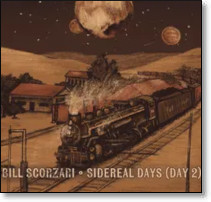
I assume the higher grades (group 2) represent more listening: I like the three albums just fine, even if my grades look hedged. The three adds I'm more skeptical of — I'll include the Terry Allen review below. I like his previous work, and might like this one more if it was more him and less family. In the latter regard, it's similar in concept to a new album of cut-up tapes Federico Ughi just released, My Face Is Dancing, which I have the same problems with (although Ughi is a jazz drummer, and his family is more into hip-hop and electronica). But group 3 bothers me more, because I've spent enough time with those albums to rate them higher. He's consistently rated Staples higher than I have, so we may be tuning into different things. He's topped me with two A− grades for Evans' EPs. I tend to grade EPs down a bit, not so much because I feel cheated on length as because I find it takes a while to settle into an album, and EPs don't offer that time. But the Scorzari mismatch is the one I find unfathomable. I reviewed the album a couple weeks ago, but I didn't include it on Substack because it wasn't out yet. It's out today, so I wanted to show it off here. It's currently my number two album of 2026, just behind the live Laurie Anderson, Let X = X. The three "old music" albums are easy to explain. I've heard a fair amount of Anita O'Day, but missed this essential album. I've heard less by Tharpe, but same deal. On the other hand, I went against the grain for Los Calvos, figuring I might as well try their debut out after the one Luen picked. More of these in the full edition, including good records by artists with great comps like Sunny Adé, Rochereau, Papa Wemba, and Toots & the Maytals. And some obscurities that impressed me, and some I was less taken by. Next week will either be the 5th of September, or the 1st of October. Before then, I'll try to put up a Loose Tabs. Last one was August 27. I currently have 211 links, 11617 words. The way things are going, it's hard to promise anything more. ◆ ◆ ◆ Terry Allen: Blood Sucking Maniacs (2026, Paradise
of Bachelors): Singer-songwriter, born in Wichita, based in Santa Fe,
but mostly associated with Lubbock, thanks to his 1979 album Lubbock
(On Everything) (1979). Album title can also be read as group
name, especially given that Allen only wrote 5 (of 22) songs, while
other Allens (Bale, Bukka, Calder, Kru, Sled, and wife Jo Harvey)
also contributed songs. Strikes me as a bunch of half-baked ideas:
some appealing, some interesting, most requiring more work than I
feel up to. (Two plays, with the closing "Family Tree" the one
that suggests more effort might pay off.)
B+(**) Ran Blake: Voices (2023 [2026], Tzadik): Pianist, b. 1935, so 88 when this was recorded, his umpteenth solo album since 1965, his main alternative format duos — vocalists start with Jeanne Lee in 1961, up to a new one with Dominique Eade this year, but also saxophonists (Houston Person, Clifford Jordan, Anthony Braxton, most recently Jared Sims), pianists (Jaki Byard, Claire Ritter), and various others (Enrico Rava, David Fabris, Kresten Osgood). I might as well admit I have no idea how to evaluate his solo work. That's not just my opinion: I once pitched a column idea to Bob Rusch, who turned me down because he decided, citing one of my Ran Blake reviews, that I wasn't critical enough to write for Cadence. He joined New England Conservatory in 1967, heading their "Third Stream Department," which opened the academic doors to jazz. He won his Guggenheim Fellowship in 1982, and his MacArthur Genius Grant six years later — one of the first jazz musicians so fêted. I don't doubt that he deserves his reputation, but his solo albums usually leave me unmoved, and his others turn on his accompanists: I've credited him with three A− albums: his 1966-67 duets with Lee, his 2017 duo with Ritter, and his unique 1986 quartet, Short Life of Barbara Monk, with Ricky Ford. But his solo albums more often landed on an indifferent B: my solo piano favorites, where even Tatum and Taylor fall short, are Earl Hines and Don Pullen, and even there I'd rather they add a Budd Johnson or George Adams. Here, Blake tiptoes through 19 pieces, mostly standards, most of which I should have recognized anywhere (but only "You Are My Sunshine" registered on first pass; what does it say about my ears to have missed "Hallelujah I Love Her So" or "La Vie En Rose" followed by "Ain't Misbehavin'"?). Still, I feel fortunate to have this, enough so to grade it in the keep range. After all, with Rusch passed, and me nearing the end, what's to be gained by translating my prejudices into snark? B+(***) Bill Scorzari: Sidereal Days (Day 2) (2022-24
[2026], self-released): New York City attorney, originally from
Kansas, decided to try out as a singer-songwriter around 2015,
his productivity and skills picking up after retiring from his
day job. Second batch of songs saved over from the sessions that
produced his 2025 Sidereal Days (Day 1). His scratchy
voice is approaching Tom Waits territory, but he's made good
use of a chorus. The electric guitar has depth and resonance.
The pace is moderate: no need to outrun the songs, which are
deeper than ever. "And my mind's inclined to fix on only things
I truly need."
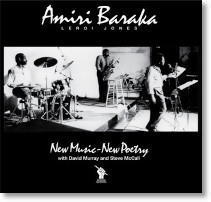
A Neil Young & the Chrome Hearts: Second Song (2026, Reprise): Wikipedia says this is Young's 50th studio album. This is his second studio album with this band, along with a live album. In the long run, this is likely to get lost on the shelves, but on first play, he's rarely sounded so comfortable, or quietly compelling. A− Amiri Baraka: New Music ~ New Poetry (1982 [2026],
Modern Harmonic): Afro-American poet (1934-2014), hard to avoid
mention of race with him, even in reference to his early plays,
essays (Blues People), and novel (The System of Dante's
Hell) published under his original name, Leroi Jones, when he
was celebrated in Greenwich Village, before he moved back to Newark,
getting arrested in the 1967 riots. (Fun fact: his son, Ras Baraka,
wound up as mayor of Newark.) I read much of his early work, and
he made a big impression on me. His Wikipedia has a long list of
"controversies," but they strike me as ephemeral, distractions
from the deeper truths he lived and felt. He's accompanied here
by David Murray (tenor sax/bass clarinet) and Steve McCall (drums),
as if he wasn't intense enough on his own.
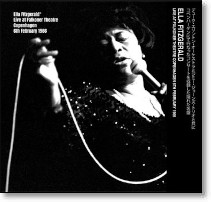
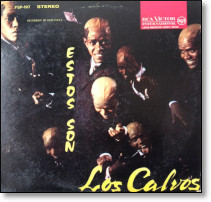
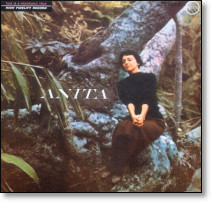
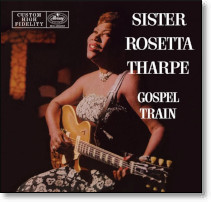
A− Ella Fitzgerald: Live at the Falkoner Theatre Copenhagen 6th February 1966 (1966 [2026], Gearbox): A previously unreleased live tape, recorded the night before The Stockholm Concert, an appearance with Duke Ellington that's been widely available since 1994. Ellington skipped this tune-up, with Jimmy Jones and his trio picking up the slack, but Ellington's horns were out in force, at least for the first seven tracks. One highlight is a scat from "How High the Moon" through "A Tisket, a Tasket" to "A Hard Day's Night." A− [Bandcamp] Los Calvos: Estos Son Los Calvos (1967, RCA): Venezuelan salsa group, led by pianist Ray Pérez, their first album, with one more before Pérez moved on to a solo career that lasted at least through 1992. Brad Luen picked their second, Y Que Calvos!, but this one starts off with an extra noise quotient, which adds excitement and uncertainty to a form which, even served hot, I often find just a bit too cut-and-dry. A− Anita O'Day: Anita (1956, Verve): Jazz singer (1919-2006), née Colton, started with Gene Krupa, had several hit singles including "Let Me Off Uptown" (1941) with Roy Eldridge. She sang with other big bands, then went solo, moving into bop and developing her scat technique, but struggled with drugs and men. In the 1950s, she became a Norman Granz project, with this the first of several albums she recorded for Verve. Buddy Bregman arranged and produced a dozen standards. While the strings are best not dwelled on, she nailed every song. A− Sister Rosetta Tharpe: Gospel Train (1956, Mercury): Gospel singer (1915-73), played electric guitar with such authority she shows up in rock & roll roots anthologies, appeared in John Hammond's 1938 "Spirituals to Swing" concert, and in the big bands of Cab Calloway and Lucy Millinder; she had some crossover r&b hits in the 1940s. This was her first LP, new recordings including some previous hits (e.g., "Up Above My Head There's Music in the Air," from 1947). I haven't tracked the others down, but they sound definitive here. A Notes on Everyday Life, 2026-09-25 |