LinksLocal Links Social Media My Other Websites Music Politics Others Networking Music DatabaseArtist Search: Website SearchGoogle: |
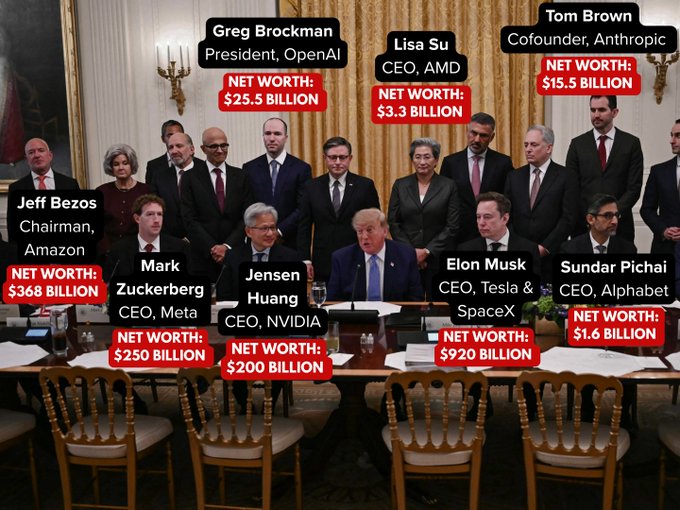
Loose Tabs (9)Further notes on the news of September.On September 30, I published another one of my Loose Tabs compilations, this one picking up from where my previous one, on August 27, left off. As I did last time, I figured a short guide here might be helpful. I'm going to minimize the number of links here, as they may score against the email. The post has a Table of Contents, which may help you find things, or just use your browser's "Find" widget. ◆ ◆ ◆ There's no easy way to wrap this up, but as Miles said to Trane, sometimes you just got to take the horn out of your mouth. I rest assured that anything I missed will only become more glaringly obvious next month, and if it doesn't, good thing I didn't bother. The post, for better or worse, went up Wednesday. My counter shows 326 links, 16399 words, which is nowhere near record length, but substantial enough. I may add some bits to it in the coming days, but will probably start collecting for another one. A good time to publish again would be around the end of October, after Israel's Oct. 27 elections, but before our own (Nov. 3). I'm just going to offer a few quick notes here. While I touched on many subjects, the overwhelming one, sad to say, is Donald Trump. He has his own section, but like a backed up sewer he seems to seep into everything and everywhere, spreading pestilence even where he's not directly responsible. Still, the problem with him is less what he does day-to-day — he's given us almost nothing new of note this month, even though he's led every evening news report — than that he's proven incapable of fixing any of the many things he's broke, or even of understanding them. What he is capable of is keeping anyone else from advancing a solution, or even an alternative analysis. The only good news is that the political tide seems to be turning against him. But as long as Trump is president, which will be the case regardless of whatever "bloodbath" awaits Republicans in November, he will remain as a firm "check and balance" against the people and the world. And I wouldn't be surprised if a wounded Trump proves even more savagely dangerous and despicable than the one we've suffered through the last two years. Trump's month started off with his self-love Trumpapalooza fest in Dallas. It's ending at the UN with possibly the most deranged speech any American political leader has ever given. Well, not quite ending there, and not quite the most deranged UN speech ever, as his Mini-Me, Benyamin Netanyahu, topped him one day later. Trump returned to the White House to roll out the red carpet for China's president Xi Jinping. I don't mind the fawning, or wouldn't if it seemed to be leading somewhere, but Trump fawned even more over his retinue of billionaires, who seem to be using Trump to conduct their own megalomaniacal foreign policy. There is little reporting on just how those close encounters — Trump brought the came coterie with in when he recently visited Beijing — are playing out, but it does underscore the idea that aside from the pleasures of sabre-rattling, Trump's main interest in foreign policy is graft, and that's become an increasingly personal matter. If Trump were a serious politician, he'd focus on the one big thing he could do between now the the election, which is to end his war with Iran. The other big election issues are either too late (affordability, although ending the war would help) or too off-brand (restoring some sense of justice, especially against corruption). The Iran War is, in theory at least, easy to fix: all Trump has to do is to admit that he was wrong to start it — blaming Netanyahu will make his admission go down easier — and try to make post-war Iran as happy and friendly as possible. He could, for instance, offer Iran something like the Marshall Plan: billions of dollars of credits to buy American products. It wouldn't be hard to spin that as a MAGA move. And the only way to ensure that Iran will be friendly, and will remain friendly, is to treat it well. That's what worked with Germany and Japan. And the opposite is what's failed with Iran and all of the other grudges Americans have held since our post-WWII losing streak started. Of course, Trump won't fix his mistakes with Iran. This is arguably a deep-seated character flaw: he's too enamored with power, too vain, too insensitive, too cruel, and too stupid to make even the slightest course correction. But there's a simpler explanation, which is that Netanyahu needs the war to continue, at least through his own re-election campaign. Back in April, I tried to work out the logic of when and how the war would end. The relevant nutshell here is:
I've seen very little reporting on Israel's elections, so they don't really figure in Loose Tabs. One bit of news is that Israel has moved to ban the Arab parties, which would normally command about 10% of the Knesset. (They represent "Arab citizens of Israel," those Palestinians who stayed put during the 1947-49 Nakba. They were given citizenship the same time the refugees were barred from return, with their property confiscated. The many more Palestinians in the Occupied Territories were never offered citizenship, so they have no representation in the Knesset.) In theory they could be a swing bloc, but the stigma against collaboration has denied them any opportunities to moderate the rightward drift. I doubt we'll know much before it happens. Even then, no single party will command a majority, so it may take weeks for a coalition to be negotiated (unless the current one maintains or expands on its slim majority). In the meantime, Israel continues to commit atrocities daily. I note some of these in Loose Tabs, but just to give you a flavor of what's happening. It's impossible to track it all, and brutalizing as well. Meanwhile, Israel's propagandists are steadily losing their grip in America and in Europe, despite increasingly authoritarian efforts at suppressing free speech. To a large extent, they're depending on rich supporters like Robert Kraft to throw their weight around on their behalf. The latest concern is to shut down the film NAZA, not least by death threats against its Israeli filmmakers. I don't really care to speculate on the elections. I will say that it's nice to have competitive Democratic candidates in Kansas, but it means a lot of commercials to fast forward through, and a lot of idiocy and slander on the Republican side. I did notice one Republican ad warning that if we elected the Democrat as governor (which we've done four times since 2000, the main exception being bogeyman Sam Brownback), Kansas could turn into California. Unclear what they think that means, but sounds cool. As far as I can tell, Republican ads are totally lacking in substance. Referring back to the lawyer joke, all they have left is to "pound the table." Let's circle back to Trump's UN speech. I quote Blaise Malley on the speech, and one line was so outrageous, I set it off in bold:
The last year has proved exactly the opposite: that military force and economic pressure resolve nothing (except making you look bad), and the only way out is diplomacy. Moreover, that force/pressure is more likely to make diplomacy more difficult, and will probably wind up in making further compromises, as you've started by discrediting yourself, while raising the other side's requirements. The problem, of course, is that Trump can't even imagine thinking like this. He's so invested in the notion of his greatness, identified simply by wealth and power, that he can only double down. And he's so insulated from reality, both by choice of his company and by sheer obliviousness, that he's unlikely ever to adapt. One more line from the same Trump speech: "Whoever wins superintelligent wins." "SI" is Trump's bid to rename "AI," as he worries that "AI" sounds fake (like his news), but that's just another case of Trump's nominalist fallacy: calling something "super" doesn't make it so, any more than calling his tweets "truths." But the word he has even more difficulty with is "wins": it's not a race in any meaningful sense, in part because it's not a discretely identifiable thing, but even if it were, the assumption that the first mover ("winner") could lock out everyone else and exploit the monopoly is ridiculous. It's also evil, but that's Trump for you. In the Books section, I cite an interview with Susan Neiman, who has written the book I'm currently reading: Call It Evil: Understanding the Trump Era. I share the reluctance of many on the left to call people evil. I've long thought that most people, at least in their own minds see themselves as honorable, principled, and well-meaning, even if they start from deeply flawed ideas about how the world works (tuned essentially to their own special interests — I learned this initially from Eugene Genovese, writing about American slaveholders in The World the Slaveholdlers Made). Neiman doesn't disagree, but insists that those ideas be subject to moral judgment, most succinctly summed up in the words "good" and "evil." One such evil idea is the notion that good and evil are simply matters of convenience. I copied down this quote from the book:
The secret of Trump's political success is that we have, starting shortly after the end of WWII, become so doubtful of our own morality, and so sick and tired of hypocrisy from obviously crooked politicians (and other "elites"), that many of us took Trump's own pathological amorality to be refreshing in its candor. The mistake was in thinking that anything good could come from such evil. The effect has been to undermine what little remained of justice in America. And without justice, before long the economy, society, and culture cease to function. Trust becomes impossible, as does cooperation, at which point the "war of all against all" only escalates. That's obviously bad news for liberal democracy. That's also bad news for the old conservative view of civilization, which tried to temper its social hierarchy with promises of responsibility, hoping that the "small folk" would consent to rule by their "betters" if they see some crumbs of advantage. Of course, that has never quite worked out as advertised, as those with the power to compel and/or punish are often quick to use it. It's only a slight simplification to say that such power inevitably leads to abuse. The recipe has other ingredients, like inequality, and indifference (or worse) to others. Making someone like Trump, so full of ego and devoid of human decency, president is a horrendous scenario. All we can be thankful for is that there is still a fairly large gap between what Trump says he wants to do (like "annihilate Iran") and what he in fact does. It's often unclear what holds him back, but we have no reason to think that it involves scruples, or common sense. There is a growing section on AI in Loose Tabs, but so far I'm just picking up some pretty scattered stories. I've read six books on the subject recently, and I still find myself confused by most of what I read. Perhaps I will learn more when/if I get engaged in some actual products/projects, but I don't expect that will make much difference. For one thing, my interest is mostly for research, possibly small matters of programming, and maybe hacking together some bad art. (Having no talent, the barrier to entry there is very low, but our post-literate world seems to demand pictures, no matter how inane. As for writing, I'm sitting on over 10 million words, so the ability to find something I've already written is more useful than simply cranking out more of it.) What I can say is that the AI business is probably the biggest bubble ever. Like all bubbles, it's based on delusions, but these are more malign than usual: to justify the estimated profits, the technology has to wipe out virtually all human labor, and replace it with machine labor that can be exploited even more profitably, leaving people to do what? One can attack virtually every part of that sentence, but that's a job for a book, or maybe a shelf of sci-fi novels. I'm not ready to write much more on this, but will leave you with a few thoughts: AI is not monolithic, but should be seen as a vast range of demystified technologies; the threat (and only very minimally the promise) comes not from the technology but from the businesses and their overlords; the guardrails we need are on those businesses, not on the tech (which may not be value-neutral, but is relatively harmless); the driving force here is money, not technology; if we wish to manage this at all rationally, the first step should be a controlled demolition of the bubble (or, better than nothing, just burst it). I never have a good graphic for these non-music posts, but I can offer you this one:
These people are your enemies, and they are up to no good. Just in case you've ever wondered what kind of people would voluntarily hang out with Donald Trump. Notes on Everyday Life, 2026-10-02 |