|
An occasional blog about populist politics and popular music, not necessarily at the same time. LinksLocal Links Social Media My Other Websites Music Politics Others Networking Music DatabaseArtist Search: Website SearchGoogle: Recent Reading
Music DatabaseArtist Search: Website SearchGoogle: |
Blog Entries [1010 - 1019]Sunday, June 19, 2016 Weekend RoundupTravel disrupts my normal news browsing. I'm lucky to keep up with my email, find it hard to write on notebook keyboards, never listen to the radio, only watch TV when that's happening somewhere I'm staying (which did get me some History Channel in CT, CNN in Buffalo, and Weather Channel in AR). So I'm catching up here, and this week's links and comments are pretty hit-and-miss.
Also, a few links for further study (briefly noted:
Ask a question, or send a comment. Saturday, June 18, 2016 Krugman's TruthinessI wanted to write about this scurrilous piece [Paul Krugman: The Truth About the Sanders Movement] before my trip -- it was posted May 23 -- but never found the time (and my tools weren't much help). The problem isn't that Krugman claims the high ground of truth, although that's usually a tell of an impending bullshit dump. It starts with a quite from Christopher Achen and Larry Bartels charging that "Mr. Sanders's support is concentrated not among liberal ideologues but among disaffected white men." Rather than finding Sanders' support from "disaffected white men" a damning fault, I'd argue that it is a remarkable breakthrough: it shows that a demographic that has lamentably trended Republican in recent years -- indeed one that seems to be the not just the core but the limits of Trump's constituency -- is less monolithic and more open to a progressive candidate whose articulation of not just their interests is free of the Republicans' customary chauvinism. That sounds like a win to me -- one that Clinton should study and aspire to. As for Sanders' shortfall "among liberal ideologues," that may be because differences between pro-labor social democrats (leftists) and liberals run deep. The latter have always been pro-business individualists -- something partially bridged by the New Deal but which has come roaring back with the New Democrats' hook, line and sinker embrace of the chilling economic doctrines of neoliberalism. Krugman goes on to observe that "Sandersism has been an assemblage of people with a variety of motives," and offers this taxonomy:
I suppose Krugman would consign me to the "purists." I did, after all, vote for Nader in 2000, and have been consistently critical of many of the policy choices made by the Clinton and Obama administrations: especially how they continued with little (Obama) or no (Clinton) critical thought the neocon establishment's imperialistic foreign policy, but also how they (again, Clinton more blatantly) have repeatedly slagged their voters to advance the interests of their financiers. But where Krugman sees me as merely "affirming personal identity," I see real and substantial policy differences, especially regarding war/peace and inequality -- easily the two most important political issues we face today. Implicit in Krugman's argument that we should make pragmatic choices is the assumption that policy options like peace and equality aren't possible, but his logic is circular: as long as we keep picking politicians (like the Clintons) who believe that war and inequality are inevitable, they will be. Sanders offered the first explicit challenge to this paradigm since Nader -- sure, Obama offered vague hope for change but that didn't amount to much -- so my view is that it would have been dishonest and cowardly not to vote for Sanders over Clinton when given the chance. Krugman goes on to speculate that "Purists and CDSers won't back Clinton, but they were never going to anyway." Maybe I'm not such a purist after all, as I've been planning on voting for Clinton (assuming she is nominated) vs. the Republican nominee all along. Granted, I know and respect people who say they won't -- they don't want to feel responsible for the next war she blunders into, and I have to admit that the odds of that happening are scary high. But one lesson I learned from the Nader debacle in 2000 was that most of the people we realistically hope to support leftist candidates will in the end vote Democratic anyway. Sometimes you have to support them in order to get them to support you. Indeed, most of the people I know in Kansas who are planning on supporting third-party candidates will be watching the polls and voting for Clinton if it gets close. Clinton carrying Kansas won't make much difference in the electoral college, but a Democratic win would chip away at the myth of invincibility that helps the Republicans dominate (and ruin) the state. Even "purists" realize that electing lesser evils than Sam Brownback would help reduce the damages caused by Republican extremism. I have less to say about Krugman's other categories, especially idealists and romantics, the sort of fuzzy terms use to dismiss people who haven't yet degraded into embittered cynics. I find it hard to believe that any Sanders supporters are as deluded as the self-described progressives who profess that Hillary is (perhaps secretly) one with them -- and I say that knowing a few that believe just that (including at least four old friends from my recent road trip). Some while back Krugman argued that Obamacare was practically equivalent to single-payer, and I more/less bought his argument. The key equivalency there is that both aim at universal coverage, and my takeaway (which, by the way was also Bernie's) was that it was important to support Obamacare because it would establish universal coverage as basic public policy. Still, Obamacare wasn't as effective at realizing universal coverage as single-payer would have been, and it left every facet of the profit-seeking health care industry intact, in some cases slightly more regulated but in most respects as greedy as ever. And it also meant that Democrats were taking any prospect for a much better health care system off the table, out of their platform, and moving it into "pie in the sky" territory. Krugman seems to be arguing for a similar equivalency between Hillary and Bernie, saying that for all practical purposes neither will achieve more than the other, but at least Hillary is possible (and necessary given that the alternative is Trump), whereas Bernie is off limits, tempting us with more than we can possibly hope for. Some of my friends think the same thing, although Krugman is exceptional in that he claims the laws of economics disprove Bernie -- although few things are more deeply rooted in politics than the so-called laws of economics. It might be amusing to work out a similar taxonomy of Clinton supporters, but it's likely to be equally misleading. There can't be all that many neocons or bank lobbyists, although their money speaks volumes. Mostly she leads the timid, promising them little and, if the past history of campaign populism from Wilson to Obama holds, delivering even less. The one thing you have to credit the Republicans with is that even in abject defeat after colossal failure they strut like they rule the world and cower the mainstream media into fawning cowardice. But part of the problem is that the Democrats have never been able to distinguish friends from foes. How else can you explain them blaming Nader for Gore's loss in 2000, as opposed to packing the Supreme Court, or the media's eagerness to treat the teetotaling GW Bush as America's favorite drinking buddy while never noticing Dick Cheney lurking behind the scenes. And could Bush have done so much damage had no Democrats joined in his tax cuts, deregulation, "no child left behind," Patriot Act, or invasion of Iraq? As with Clinton's NAFTA, "crime bill," "welfare reform," balanced budgets, and repeal of Glass-Steagall, often the most effective enemy of Democratic voters is their own leaders. It's not clear to me how Hillary, whose career is dogged by bad decisions, unreliable allies, and one stupid scandal after another, breaks that mold. Ask a question, or send a comment. Wednesday, June 15, 2016 Music WeekMusic: Current count 26674 [26674] rated (+0), 447 [424] unrated (+23). That is, nothing new rated in the last 15 days, while I've been busy driving around half of the the eastern half of the United States (KS, MO, IL, IN, KY, WV, MD, DE, NJ, NY, CT, MA, PA, OH, AR -- twice missed OK by only 1 mile). Took me a couple extra days to get this post together, so I can report the unpacking, way down below. Also didn't manage to buy a single CD -- I remember past trips of similar length where I brought back a hundred or more. As it was, the only record store I even saw was CDepot in College Park, Maryland: drove by and meant to return but didn't manage it. (I don't think I've ever been there without spending at least $200, so it would have been the one store to go to if I managed to go to one.) Still, I hardly ever buy things these days, so that streak would likely have fallen. I got a rude awakening when I got back: All Music Guide has added some programming to prevent you (or at least me) from seeing any of their pages. Their gripe is that they've detected that I'm using Add Blocker, and they're insisting that either I disable it or "continue with a paid subscription." The $12 annual "ad-free" subscription is actually pretty modest considering how much I've used their website in the past, but the way they're going about this is pretty nasty. I also wonder what happens when they realize I'm also running NoScript and have 11 of their 15 JavaScript domains blocked -- all sorts of hideous, annoying, possibly dangerous shit. So I balked, then turned to All About Jazz to at least get the musician lineup and song list on the album I was streaming, only to find that they want "$20 and we'll hide those six pesky Google ads that appear on every page for a full year!" That doesn't sound like nearly as good a deal. (OK, review-wise AAJ is a cut above AMG, but it's less useful discographically, harder to search, more confusing, and it's only jazz.) They also have a "sign up and become a member" feature, like (or unlike, I'm not sure) AMG introduced a while back. AAJ doesn't charge for membership -- looks like it mostly lets them spam you, and lets you contribute free data to them. But then I'm only allowing 6/12 AAJ script domains, and fear that funding their "website expansion" will add more to the clutter than to content or accessibility (I understand there are some cases where JavaScript might be useful, but all this promiscuous script cross-referencing is a plague on the web). AMG and AAJ are valuable websites, and it can't be easy funding them. But they're also profit-making companies, and they are at least partly built on contributed content (no idea how much if anything they pay writers -- M. Ricci has offered to publish me but hasn't offered to pay me anything). So it's hard to say that adding new revenue streams will offer anything in return to anyone but the owners. And while some websites may be worth paying for, as a practical matter most people cannot afford or justify more than a few such subscriptions. I expect that the effect there is that those sites that succeed at subscriptions will crowd out any others. That may indeed be part of the rationale. But it should also make those sites less popular, and ultimately less valuable. I don't know what the answer is (other than the currently utopian one of publicly supported democratic sites; free markets work OK for rivalrous goods, but are pretty much impossible for non-rivalrous ones). One thing I haven't tried yet is an "anti-adblock killer" like Reek. For one thing, it adds to the arms race between between sites that try to seize control of your browser running on your computer and your basic right to defend yourself against their attacks. For another, it seems to depend on Greasemonkey, a piece of possibly invidious technology that I've never gotten the hang of. (Basically, it allows you to write or use scripts that change the way your browser works, for better or perhaps more often worse.) Two more bits of news on returning:
Lots of ideas pop into my head while I'm driving. I met John Chacona in Erie, PA, and one thing he was interested in was what I was my music cases and what I was listening to on the road. I have two cases with 80 CDs each, plus one more with 40, so I usually take 200 with me. I used to load these things for each trip, but had gotten lazy and had only shuttled a few discs in and out each trip: the first things to go were current jazz I was working on, then I generally cut back on jazz and hip-hop, often in favor of old rhythm & blues, rock & roll, and country -- those seem to work best for driving, although I preferred jazz in the motel room back when I thought to bring a boombox along. (My wife's iPod would eliminate the need for the boombox, but she doesn't always come along.) So I resolved two things: one is to jot down a list of the CDs for this trip; the other is to unpack the cases when I get back, so I can start fresh next time. What follows is the list, with date/label data from the database (which doesn't always match the disc, especially in cases where the CD replaced an LP). Multiple disc sets are noted, and something like "1/3CD" means I only had one of three CDs.
Not necessarily the best 200 CDs I could have taken. There's some amount of accident and drift here, but they're all A- or better (often much better). I probably played a little more than half of these on this trip. I can't say as I was ever disappointed. Unpacking: Found in the mail last couple of weeks:
Ask a question, or send a comment. Monday, May 30, 2016 Music Week
Music: Current count 26674 [26660] rated (+14), 424 [428] unrated (-4). Right. Week cut short on Friday, after I posted Rhapsody Streamnotes on Wednesday. Missed the Festen album there -- you always miss something. RED Trio is pretty good too. The other Clean Feeds will have to await my return, in a couple weeks or so. I'll be checking email, but not much more. Hopefully get some reading done. Maybe even figure out what the fuck I'm doing with my retired, reclusive life. New records rated this week:
Recent reissues, compilations, and vault discoveries rated this week:
Unpacking: Found in the mail last week:
Ask a question, or send a comment. Tuesday, May 26, 2015 Rhapsody Streamnotes (May 2016)No time to write an intro today. For some explanations, see the last month's Music Week posts, somewhere under here. Still haven't heard Merle Haggard's 1990s Curb albums. Would have done Prince, but he isn't on Rhapsody. Didn't list Coleman Hawkins' back catalog because it's huge and I've only added two titles -- nowhere near a complete mop-up. The Joint Venture album is the only thing I've found by the late avant-trumpet player Paul Smoker. Festen was a last minute addition, but I'm glad to have something new to report. Still, all the new A-list records are jazz. Tell Beyoncé to start sending me her shit. Most of these are short notes/reviews based on streaming records from Rhapsody (other sources are noted in brackets). They are snap judgments based on one or two plays, accumulated since my last post along these lines, back on April 28. Past reviews and more information are available here (8163 records). Recent Releases
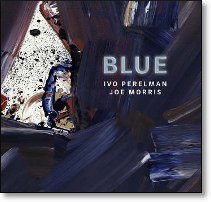
Adult Books: Running From the Blows (2016, Lolipop): Postpunk trio from Southern California (originally Orange County), first album, singer ordinary but the guitar-bass-drums is rock solid, making ordinary riffs seem perfectly functional. B+(*) Bobby Avey: Inhuman Wilderness (2015 [2016], Inner Voice Jazz): Pianist, plays in Dave Liebman's Expansion group and has several albums on his own. This has one solo track, three trios, and four cuts with alto saxophonist John O'Gallagher -- a fine match for the pianist's own edgy style. B+(***) [cd] The Bill Belasco Trio: Three Musicians (2016, Summit): San Francisco drummer, leads a piano trio, with Denny Berthiaume on ("piano and arrangements") and Chuck Bennett on bass. Standards, with one original by the bassist. Cover looks like a cover too. B+(*) [cd] Ran Blake: Ghost Tones: Portraits of George Russell (2010 [2015], A-Side): Age 75 when he recorded this, Blake is an innovative, idiosyncratic, and for me often difficult pianist with a lot of solo work and duos with vocalists. But his subject here is one of my all-time favorite jazz masters, one he should know exceptionally well given that they both taught at New England Conservatory over several decades. A mix of solo and group pieces as he picks over key titles from Russell's discography, thoughtful, testy, and sometimes extraordinary. B+(***) [dl] Jane Ira Bloom: Early Americans (2015 [2016], Outline): Soprano saxophonist, one of the few specialists, seventeenth album since 1980. Postbop, but trio feels exceptionally lively from the start -- helps to have Mark Helias on bass and Bobby Previte on drums. A- [cd] Mike Bogle Trio: Live at Stoney's (2015 [2016], MBP/Groove): Dallas-based piano trio, with Lou Harlas (bass) and Steve Barnes (drums). Pianist has two previous albums, the first from 1994. Five originals; covers from Chick Corea, Dexter Gordon, Billy Strayhorn, Duke Ellington. Can make a splash, maybe even too splashy. B [cd] Charles Bradley: Changes (2016, Daptone): Retro-soul singer, third album since 2011 when he was already in his sixties so you have to figure the James Brown/Wilson Pickett effects were learned young and have only deepened with age. Something I should be a sucker for, but impressed as I am, minor nags keep getting in the way. B+(*) Anthony Braxton: 3 Compositions (EEMHM) 2011 (2011 [2016], Firehouse 12): EEMHM stands for Echo Echo Mirror House Music, a "system" reportedly explained in the 20-page booklet. Each piece fills nearly an hour of disc space, the seven iPod-wielding musicians sloshing back and forth in an endless tumult. Of course, they also play conventional instruments: saxes (Braxton), cornet (Taylor Ho Bynum), guitar (Mary Halvorson), violin (Jessica Pavone), tuba (Jay Rozen), bass (Carl Testa), percussion (Aaron Siegel), doubling on a few others. B+(**) Marialuisa Capurso/Jean-Marc Foussat: En Respirant (2016, Fou): Voice (and "effets, objets") and synth (AKS, and "voix, etc."), three improv pieces recorded live in Berlin. Breathes, but but doesn't do much more. B [cd] Etienne Charles: San Jose Suite (2015 [2016], Culture Shock): Trumpet player, born in Trinidad, studied at Florida State, teaches at Michigan State. Fifth album, looks like it was commissioned by an outfit called San Jose Jazz although he also checked San Joses in Costa Rica and Trinidad. Some Latin grooves, but doesn't really take off until the three-part "Speed City," introduced by Dr. Harry Edwards talking about the institutional racism he encountered at San Jose State University, first as an athlete then as a coach -- crucial history and rousing music. B+(**) [cd] Rhys Chatham: Pythagorean Dream (2016, Foom): Guitarist/trumpeter, roots in post-classical avant-garde (LaMonte Young, Tony Conrad, Eliane Radigue) although he also pops up in experimental rock (e.g., no wave) and possibly jazz (if you wish to take this that way). Instrumental, tends to repeat background patterns as if gargling them, still they have some fascination. More generally a subject for further research (as is Conrad and Radigue -- I have some unplayed records by each). B+(***) [cd] Claudia Quintet: Super Petite (2015 [2016], Cuneiform): Drummer John Hollenbeck's long-running -- eight albums in nineteen years -- bar band, originally named for a conspicuous fan. With soft instruments -- Chris Speed (clarinet, tenor sax), Red Wierenga (accordion), Matt Moran (vibes), Dres Gress (acoustic bass) -- building on rhythm tracks, most of their records have been enchanting. This one less reliably, perhaps because the groove is prone to collapse. B+(**) [cd] Jeremy Cunningham Quartet: Re: Dawn (From Far) (2016, Ears & Eyes): Drummer, seems to be his first album, with Josh Johnson (alto sax), Jeff Parker (guitar), and Matt Ulery (bass). Starts off sounding both edgy and grooveful, but that's mostly Parker. Slows down to merely pretty. B+(*) [cd] Lucy Dacus: No Burden (2016, Egghunt): Singer-songwriter from Virginia, first album, guitar strum is basic but compelling, has something to sing about. B+(***) Dälek: Asphalt for Eden (2016, Profound Lore): Experimental hip-hop crew from Newark, handful of albums since 1998, moved to a metal label for this, which certainly cranks up the reverb. B+(*) Open Mike Eagle + Paul White: Hella Personal Film Festival (2016, Mello Music Group): White, I gather, is the beat guy, not that this is much of a beat album. Eagle is an alt-rapper who keeps things interesting even when I'm not tuning in closely. B+(***) Empirical: Connection (2015 [2016], Cuneiform): British postbop quartet -- Nathaniel Facey (alto sax), Lewis Wright (vibes), Tom Farmer (bass), Shaney Forbes (drums) -- fifth album since 2007. They play fast and hard, and while the sax is a little rough around the edges, the vibraphonist is a talent deserving wider recognition. B+(***) [dl] Brian Eno: The Ship (2016, Warp): Two pieces, the title a 21:19 slab of murky ambience, perhaps a death metaphor, or maybe just deadly boring -- I couldn't help but thinking maybe he's thinking of that downside he produced for the late David Bowie's Low. The other is the three-part "Fickle Sun," the initial 18:03 piece rubbing in the sores opened by the opener, the second blessedly thin, then a rather miraculous 5:18 take of Lou Reed's "I'm Set Free," which delivers the transcendent moment the rest of the album so desperately needed. Almost graded much lower. B+(*) Orrin Evans: The Evolution of Oneself (2014 [2015], Smoke Sessions): Pianist, well established since 1996, comes up with a strong trio with Christian McBride and Karriem Riggins -- two cuts add Marvin Sewell on guitar. A little less than half originals, presumably the other tunes have personal significance -- he certainly plays them that way. B+(***) Festen: Festen (2015 [2016], Clean Feed): Swedish avant quartet, no one I've ever heard of: Isak Hedtjärn (reeds), Lisa Ullén (piano), Elsa Bergmann (double bass), Erik Carlsson (drums). Four pieces, hits spots both sweet and sour, shows there's still room for a pianist in a cutting edge sax quartet as long as she makes enough noise. A- [cd] Field Music: Commontime (2016, Memphis Industries): English indie pop group, echoes too many groups without quite coming together. B Erik Friedlander: Rings (2016, Skipstone): Got the title wrong on unpacking, where I listed this as "Black Phebe" -- the name of the cellist's trio (Shoko Nagai on piano and accordion, Satoshi Takeishi on percussion). Don't know why at his point, as the cover and spine can only be read as Rings. Title comes from three pieces that "use live looping at a compositional process" and jump to a higher energy orbit. B+(***) [cd] The Funky Organics: The Funky Organics (2016, Chicken Coup/Summit): Aptly named organ-drums rhythm section with trumpet (Rick Savage) and sax (Bob Hanlon). B [cd] Kevin Gates: Islah (2016, Atlantic): Gangsta rapper from Baton Rouge, nominally his studio debut after a whole mess of mixtapes. Christgau notes "so much [criminal/sexual] detail" and claims it "has more hooks than a Temptations best-of" but I caught little if any of that (OK, something about pussy) in two plays, nor did I notice the single Dan Weiss has been hyping ("Kno One"). B+(*) Trevor Giancola Trio: Fundamental (2015 [2016], self-released): Canadian guitarist, probably his debut album, a trio with Neil Swainson on bass and Adam Arruda on drums, a few originals but mostly standards ("Just One of Those Things," "You Go to My Head") and jazz tunes, including two from Elmo Hope. Nice postbop middle ground. B+(*) [cd] Glitterbust: Glitterbust (2016, Burger): Experimental guitar duo, Alex Knost (Tomorrows Tulips) and Kim Gordon (Sonic Youth), favors the latter's tunings, finds some chatter to sample, but doesn't aim to signify much, just guitar drone. B+(*) Will Goble: Consider the Blues (2015 [2016], OA2): Bassist, second album, mostly originals, with tenor saxophonist Gregory Tardy in rip roaring form, Louis Heriveaux on piano, and Dave Potter on bass. First cut has a vocal by Tabreeca Woodside, a feint they never follow up on (and just as well). B+(*) [cd] Gunwale: Polynya (2016, Aerophonic): Free sax trio, with Dave Rempis (alto, tenor, baritone) leading, Albert Wildeman on bass, and Ryan Packard on drums (and electronics). Not familiar with the latter, but Rempis took over Mars Williams' slot in Vandermark 5, making a huge impression. He does tend to go ugly here, but there's more to it. B+(***) [cd] Barry Guy: The Blue Shroud (2015 [2016], Intakt): British avant-bassist, founder and leader of London Jazz Composers Orchestra, comes up with another large-scale orchestral piece here, at times an opera with Savina Yannatou's voice, otherwise thirteen pieces including strings (violin, viola, bass), four saxes (one doubling on oboe, another on "reed trumpet"), trumpet, tuba, guitar, piano, two drummers. Difficult music, often remarkable. B+(***) [cd] Cory Healey's Beautiful Sunshine Band: Beautiful Sunshine (2016, Shifting Paradigm): Drummer-led quintet with trumpet (Jake Baldwin), tenor sax (Brandon Wozniak), guitar (Zacc Harris), and electric bass (Erik Fratzke) -- not a fusion outfit, probably just easier to find electric bass and guitar these days. Postbop with some trickiness. B+(*) [cd] Homeboy Sandman: Kindness for Weakness (2016, Stones Throw): Alt-rapper Angel del Villar, specializes in EPs because that's what his vinyl fetish usually weighs out as, but this runs 39:10, and is solid enough. They pretty much all are. Upside: "Speak Truth." Down: "God." B+(***) Mimi Jones: Feet in the Mud (2015 [2016], Hot Tone Music): Bassist, also sings but less so here than on her previous two albums. Produced by Luis Perdomo, with Jon Cowherd on piano and rhodes, Samir Zarif on soprano sax, and Jonathan Barber on drums. Bouncy postbop. B+(*) [cd] The Stan Kenton Legacy Orchestra: Storming Through the South (2016, Summit): Kenton died in 1979. Trumpeter Mike Vax rounded up the Stan Kenton Alumni Band in 1991 to mark the 50th anniversary of Kenton's debut, and they've hung together for 25 years now. Kim Richmond is the only name I recognize, and many of the arrangements are still credited to Kenton -- no revisionism here. But where the original tended to be extravagant and pompous, this outfit is much more fun. B+(*) Linda Gail Lewis: Heartache Highway (2015 [2016], Ball and Chain): Jerry Lee's younger sister, cut two records for Smash when she was 22 -- one Together with the Killer -- then nothing until the only other album I'd noticed, 1990's International Affair (released in Sweden). Looks like she has more than a dozen albums since then. This seems to be another Swedish label -- hard to find anything about it, although Steve Gibbons and Robbie Fulks seem to be involved. Rockabilly, piano central, change-of-pace ballad reminds me a bit of Patsy Cline. B+(***) Linda Gail Lewis: Hard Rockin' Woman! (2015, Lanark): Another recent album, distinguished mostly by its jungle cartoon cover. Her rockabilly is indelible, even when it doesn't rock quite hard enough. B+(**) Lok 03+1: Signals (2016, Trost): Group name comes from the 2005 album Lok 03 with married avant-pianists Aki Takase and Alexander von Schlippenbach and their son Vincent von Schlippenbach, aka DJ Illvibe (turntables, sampler), with drummer Paul Lovens the plus-one (part of the Schlippenbach Trio at least since 1972). B+(**) [bc] Tony Malaby Paloma Recio: Incantations (2015 [2016], Clean Feed): Tenor saxophonist, also plays soprano, as a sideman he often steals the show, but is often more moderate as a leader. This quartet, named for a 2009 album, has Ben Monder (guitar), Eivind Opsvik (bass), and Nasheet Waits (drums). Starts self-effacingly moderate, but catches fire in the end. B+(***) [cd] Mexrrissey: No Manchester (2016, Cooking Vinyl): Ad hoc group of Mexican musicians, including Camilo Lara (Mexican Institute of Sound) and Sergio Mendoza (Calexico), rearrange a batch of Morrissey songs. Has some novelty value, although that's sort of what I thought about the originals, too. B+(*) Nick Millevoi: Desertion (2015 [2016], Shhpuma): Philadelphia-based guitarist, has a couple albums, plans to name this quartet after the album: Jamie Saft (organ, piano), Johnny DeBaso (upright and electric bass), Ches Smith (drums), plus a couple extras on trombone and violin. Guitar has a heavy fusion ring to it, but group skews more avant, keeping it interesting. B+(**) [cd] Myriad 3: Moons (2016, ALMA): Piano trio, Chris Donnelly in the leader's seat, Dan Fortin on bass and Ernesto Cervini on drums, with everyone pulling an extra instrument or two (mostly electric) for variety. Not fusion, but they do like a good groove. B+(*) [cd] Naftule's Dream: Blood (2013 [2016], self-released): Fifth album from a group led by clarinetist Glenn Dickson, or sixth if you count the 1992 album by Shirim Klezmer Orchestra that launched the group name -- Naftule, of course, is the legendary clarinetist Naftule Brandwein (1884-1963). This one's rather dark and twisty, especially Andrew Stern's guitar backed by Jim Gray's tuba. B+(***) [cd] Oddisee: The Odd Tape (2016, Mello Music Group): Amir Mohamed el Khalifa, born in DC, father from Sudan, used to think of him as an underground rapper but this is all instrumental, and I gather not his first. B+(*) Luis Perdomo: Montage (2015 [2016], Hot Tone Music): Pianist, from Venezuela, based in New York since 1993, ninth album, solo, not spectacular but grows on you. B+(*) [cd] Ivo Perelman/Matthew Shipp: Corpo (2016, Leo): Liner notes start (I'll spare you the ALL CAPS): "Warning, contains highly concentrated improvisation. Unless you have engaged in regular meditation or other immersive activity, you may not want to begin with a full dose." I'm a fan of both, and have heard their tenor sax-piano duos (and larger groups) going back to 1996's Bendito of Santa Cruz, so I figured I could take it. But I guess I'm too lazy a listener, too easily annoyed. B+(*) [cd] Ivo Perelman: Soul (2015 [2016], Leo): Brazilian tenor sax man plus Matthew Shipp (piano), Michael Bisio (bass), and Whit Dickey (drums) -- the latter Shipp's regular trio. Everything jointly credited, so figure improv but at least they came up with nine titles. No squawk, nothing over the edge, but the sort of tight avant interplay that keeps circling around on you, rewarding close attention but pleasurable anyway you take it. A- [cd] Ivo Perelman/Karl Berger: The Hitchhiker (2015 [2016], Leo): Tenor sax duets with Berger playing vibraphone. Marvelous at first, but struggles to fill out an hour. B+(**) [cd] Ivo Perelman/Joe Morris: Blue (2016, Leo): Morris plays acoustic guitar here -- not his norm, certainly not powerful enough to deflect let alone direct the tenor saxophonist in any direction, just enough to scuff up the edges, adding fractal detail. Which is to say just enough. A- [cd] Ivo Perelman: Breaking Point (2015 [2016], Leo): Quartet, the other names on the cover but not on the spine: Mat Maneri (viola), Joe Morris (bass), and Gerald Cleaver (drums). Maner can get on my nerves at times, but generally adds a rich dynamic here. B+(***) [cd] ResAUnance: Migration (2014 [2016], FMR): John Bacon (vibraphone, percussion), Jonathan Golove (electric cello), Erin Gunduz (voice), Michael McNeill (piano). Two folk songs from Thrace, two pieces each by Bacon and McNeill. Arty chamber jazz, the vocalist not so hard to take but I'd rather not. Still impressed by the pianist. B+(**) [cd] Dave Rempis/Joshua Abrams/Avreeayl Ra + Jim Baker: Periheleon (2015 [2016], Aerophonic, 2CD): Cover/spine just gives you last names, as if these Chicago avant-gardists are household names. Alto/tenor/baritone sax, bass, drums, plus piano/electronics -- three long pieces, just barely over the single-disc limit so 43:09 + 40:32. Runs the range of their art, with Rempis remaining one of the most impressive saxophonist of his time. A- [cd] Snarky Puppy: Family Dinner Volume Two (2015 [2016], Decca): A jazz group of some sort, formed in Denton, Texas in 2004 but now based in Brooklyn. Group itself led by bassist Michael League, with eighteen members listed, twenty-two guests, plus the group Nola International. Most pieces have vocals, few jazzy (although you do get bits of Latin and African). B- Snarky Puppy: Culcha Vulcha (2016, Decca): Studio album, cranks up the jazz-funk grooves, piling guitars and keybs on so thick the whole thing buckles under the dead weight. Personnel list comes to twenty-one, few obvious guests, virtually no vocals. Stripped down to pure shtick, makes me wonder if I haven't cut them too much slack. C+ Ron Stabinsky: Free for One (2015 [2016], Hot Cup): Pianist, had a debut album last year with Jack Wright, recently joined Mostly Other People Do the Killing. This is an hour of solo improv, not smashing enough to keep my ears turned in, but not without interest either. B+(*) [cd] Tyla Gang: Stereo Tactics (2013 [2015], Cherry Red): Singer for the great pub rock band Ducks Deluxe (1972-75), Sean Tyla did a couple albums as Tyla Gang, then Sean Tyla's Just Popped Out, then hung it up from 1983 until 2007, when he reorganized his Gang and flirted with a possible Ducks Deluxe reunion. This retro risks becoming generic until he checks some politics ("Runaway") and finds a dramatic break ("Chinee Moon"). B+(*) Tyla Gang: Live in Stockholm (2014 [2015], Cherry Red): Don't recognize any song title here, but they play from the middle of a rock tradition they relentlessly affirm -- well, maybe one title (worth quoting anyway), "Texas Chainsaw Massacre Boogie." B+(*) Greg Ward: Touch My Beloved's Thought (2016, Greenleaf Music): Alto saxophonist from Chicago, has a couple previous albums, got a commission for a piece to go with dance and flashed back to Charles Mingus' The Black Saint and the Sinner Lady. Came up with a tentet with three saxes and four brass to cover the harmonics and piano-bass-drums to keep it all moving. A- [cd] Matt Wilson's Big Happy Family: Beginning of a Memory (2015 [2016], Palmetto): Drummer, has fifteen or so albums since 1996 plus numerous side credits -- one of those guys who always seems to be helping others out. Dedicated this to his late wife, Felicia, who died at 50 in 2014. Thirteen musicians listed, but doesn't feel like a big band, probably because the numerous horns express more than arrangements. B+(***) [cd] Recent Reissues, Compilations, Vault Discoveries
Fame: Jon Savage's Secret History of Post-Punk 78-81 (1978-81 [2012], Caroline True): British broadcaster/music writer, wrote England's Dreaming: Sex Pistols and Punk Rock and has assembled at least seven CD compilations. I only recognize a few things here (Noh Mercy's "Caucasian Guilt" is a find), with the ones that lean punk packing a lot more punch than the ones that skew towards industrial/ambient. Would be interesting to read the rationale behind the picks, which I guess means the picks don't speak for themselves. B+(**) Merle Haggard: Best of the Capitol Years (1966-76 [2016], Capitol): The catalog minders return with a new rehash of old product, much as they've done many times before (1990, 1996, 2002, 2004, 2007, 2009, 2012, and that's just the CD era). This one runs 19 cuts -- the same first 19 on 2007's Hag: The Best of Merle Haggard (which samples some later material to get to 26 cuts). It has five not on 2002's 20 Greatest Hits, subs the studio versions of "Okie" and "Fightin' Side," and keeps them in better chronological order. A Coleman Hawkins: Intimate: Duo, Trio, Quartet & Quintet Recordings 1934-38 (1934-38 [2016], Acrobat): The fount of all worthwhile saxophone playing, as one guide put it, he broke with big bands in 1934 when he moved to Europe and found himself recording with small pick-up groups, taking melodic responsibility for whole songs and driving them in ways no one expected. I wouldn't call these "intimate," at least in the sense of later "quiet storm" balladeering. Actually, one tour de force after another. A- Allen Lowe: Julius Hemphill Plays the Music of Allen Lowe (1989-91 [2016], Constant Sorrow): This digital-only release surfaced on Lowe's Bandcamp without any of his customary documentation, but a little digging suggests that the music is from Lowe's first two albums (At the Moment of Impact and New Tango '92). Hemphill, who died in 1995, played alto sax on those albums (Lowe played tenor). Interesting music, even within Hemphill's catalog, although the concept is a little odd. B+(**) [bc] Allen Lowe: Louis Armstrong: An Avant Garde Portrait (1992 [2016], Constant Sorrow): Recorded live at Knitting Factory, originally released as Mental Strain at Dawn: A Modern Portrait of Louis Armstrong (1993, Stash), the band included Doc Cheatham and Robert Rumboltz on trumpet, Paul Austerlitz (clarinet, bass clarinet), David Murray (bass clarinet, tenor sax), Lowe (alto/tenor sax), Loren Schoenberg (tenor sax), John Rapson (trombone), and Ray Kaczynski (drums). Some old, some new, Lowe is clever enough he rarely tips his hand. B+(***) Lyrics Born: Now Look What You've Done, Lyrics Born! Greatest Hits (1997-2015 [2016], Mobile Home): Tokyo-born Tom Shimura, grew up in Salt Lake City and Tampa before settling in Berkeley, first noticed in the duo Latyrx before releasing his solo debut Later That Day in 2003. I have four (of five) albums at A- or higher, or six (of seven) counting Latyrx (two cuts here), so it's not like he needs a compilation to rescue good cuts from bad albums. Includes the two catchiest cuts from last year's Real People -- my top-rated album last year, but deprecated by several critics I more often agree with. A- Joey Negro: Remixed With Love by Joey Negro: Vol. Two (2016, Z, 2CD): British DJ/house producer David Lee, has his alias on dozens of albums, including this title's 2013 predecessor. Source material here is mostly 1970s disco. Mostly artists I recall, but rarely songs -- and while these are certainly danceable, that's only part of the thrill. B+(*) Professor Longhair: Live in Chicago (1976 [2016], Orleans, EP): Roy Byrd (1918-80) didn't record much until the last decade of his life, when he finally cashed in with a batch of live albums, often so moving redundancy didn't matter. This one is of a piece with them, but on the short side -- seven cuts (not counting a 0:19 intro), 29:08, doubt if there's anything here the New Orleans piano master hasn't done many times elsewhere, not that fans will mind. B+(**) Blind Alfred Reed: Appalachian Visionary (1927-29 [2016], Dust-to-Digital): Taking this on faith, as I haven't seen or heard this luxury package: an 84-page hardcover book by Ted Olson with the same 20 cuts as Document's Complete Works plus two tunes by the West Virginia Night Owls, expensive at $30. I can't say that the packaging is worth the premium, but I have been assured by Clifford Ocheltree and Phil Overeem that the remastered sound is a big plus -- so it seems even more irresponsible not to list it than to grade something I haven't heard. A- Old Music
Jane Ira Bloom: Mighty Lights (1982 [1983], Enja): Soprano saxophonist, had a couple self-released albums before but this would have made an impressive debut, especially with Charlie Haden on bass, Ed Blackwell on drums, and a then-little-known Fred Hersch on piano. B+(***) Jane Ira Bloom: Sometimes the Magic (2000 [2001], Arabesque): Another quartet, again with Mark Dresser (bass) and Bobby Previte (drums), with Vincent Bourgey taking over on piano -- who sort of vanishes into the mix (where Fred Hersch competed for your attention). B+(**) Jane Ira Bloom: Chasing Paint: Meets Jackson Pollock (2002 [2003], Arabesque): Hard to describe the inspiration the soprano saxophonist derives from the painter's abstractions, other than that her music is exceptionally vivid here, with her high-pitched horn the perfect tool for flinging squiggles about. And her rhythm section -- Fred Hersch, Mark Dresser, Bobby Previte -- is every bit as inventive. A- Jane Ira Bloom: Like Silver, Like Song (2004 [2005], ArtistShare): Another quartet, with Mark Dresser and Bobby Previte (as before), but with soprano saxophonist Bloom adding electronics to her mix, both personally and via keyboardist Jamie Saft. The electronics tend toward the ambient, which is to say they slow things down, but not to the point where you lose interest. B+(***) Merle Haggard: Strangers (1965, Capitol): Born in 1937 after his parents moved from Oklahoma to California, he was nine, living in a boxcar in Oildale when his father died, and he reacted by running wild, escalating through a series of crimes and detentions until he wound up in San Quentin, just in time to witness Johnny Cash's famous concert there. He got out in 1960, and found himself playing music, writing and singing songs -- and turned out to have one of the most remarkable voices in country music. He cut a single for Tally Records in 1962, and soon got picked up by Capitol, where he recut some singles and recorded this first album. He wrote five pretty good songs here, but the best remembered ones were by others -- Liz Anderson's title song, Wynn Stewart's "Sing a Sad Song," Tommy Collins' "Sam Hill" -- making this a "Bakersfield Sound" breakthrough. B+(***) Merle Haggard and the Strangers: Swinging Doors and the Bottle Let Me Down (1966, Capitol): Second album, group named for his first album and its breakthrough top-ten hit "(My Friends Are Gonna Be) Strangers," this one working its two top-five singles into the title -- two of the greatest drunkard songs in country music. His Bakersfield sound was built for bars, and the filler shows he was already rooted in honky tonk tradition. A- Merle Haggard and the Strangers: I'm a Lonesome Fugitive (1967, Capitol): Liz Anderson was thinking of the David Jansen TV series when she wrote the title song, but it fit Haggard to a tee. Haggard wrote the rest of the songs (including "Life in Prison"), except for Jimmie Rodgers' "My Rough and Rowdy Ways" -- setting up a terrific ending. A- Merle Haggard and the Strangers: Branded Man (1967, Capitol): The title cut is his most personal, which is not to say exclusive, prison confessional -- his pardon was still a few years away -- and Tommy Collins' "I Made the Prison Band" fits too, but "Don't Get Married" is hard to swallow, just one of too many loser songs. B+(**) Merle Haggard and the Strangers: The Legend of Bonnie & Clyde (1968, Capitol): The title song, co-written with Bonnie Owens, had a tie-in with Arthur Penn's 1967 film, but the outlaw theme is ditched after 2:04. Strangely, Haggard oversings his ballads here, even "I Started Loving You Again" -- a song covered over sixty times the next few years, something that wouldn't happen once he was a star (and a more iconic singer). B Merle Haggard and the Strangers: Mama Tried (1968, Capitol): A great doomed outlaw song, and that theme led him to pick several rather obvious covers, including "Green Green Grass of Home" and "Run 'Em Off" and a perfectly fine but unnecessary "Folsom Prison Blues." B+(**) Merle Haggard and the Strangers: Okie From Muskogee (1969, Capitol): Recorded live in Muskogee, Oklahoma -- sort of a victory celebration after his breakout title hit (which he tastefully saves for last), complete with the mayor giving him a key to the city. But beyond the presentations, the concert has weak spots -- a feature for the bassist to sing, the patter about truck drivers and working men, the long intro to the lame "Hobo Bill," a new song about a dead soldier called "Billy Overcame His Size" that I doubt they ever played again -- and while the title song intro helps with context, it also reminds you that Haggard really didn't know much about Muskogee. B Merle Haggard and the Strangers: Pride in What I Am (1969, Capitol): Only one obvious hit, the title song, but accompanied by several memorable songs, including an uncomfortable libertarian anthem, a case that the "good old days" are now, and one of the best Jimmie Rodgers covers I've heard. A- Merle Haggard: A Portrait of Merle Haggard (1969, Capitol): As was his standard practice, give him exceptional hits to kick off two sides -- "Workin' Man Blues" and "Hungry Eyes" -- and he'll fill out an album. Works fairly well here until the strings enter and the second side gets all soggy. B+(*) Merle Haggard and the Strangers: The Fightin' Side of Me (1970, Capitol): Another live album, this one from Philadelphia, which didn't offer him a key to the city but at least came up with a better sound engineer. He barely touches his own songbook here, with "Okie From Muskogee" the only repeater from the previous live album, seguing into his newer, even funnier "jingoistic anthem." Meanwhile, he covers Bob Wills, Jimmie Rodgers, and does a "Medley of Impersonations" (Marty Robbins, Hank Snow, Johnny Cash [thrice], Buck Owens), and Bonnie Owens fails to remember the words to "Philadelphia Lawyer." B+(**) Merle Haggard and the Strangers: Hag (1971, Capitol): "Soldier's Last Letter" was written by Redd Stewart and Ernest Tubb, and repurposed for a much more controversial war, one which had nothing to do with "keep[ing] America free," no matter how fervently the doomed hoped. More political is the one that goes "this world's never been in the awful shape it's in," although the Jesus solution is a cop-out. More telling is "I believe the Lord knows I'm unhappy/cause I can't be myself when I'm with you," and "consider all the hurt I'm going through." B+(***) Merle Haggard and the Strangers: Someday We'll Look Back (1971, Capitol): Nice to be reminded of Roger Miller's "Train of Life" after the title song, plus two Okie work songs -- "California Cottonfield" was borrowed, but "Tulare Dust" was so quintessential it served as title to HighTone's 1994 A Songwriter's Tribute to Merle Haggard. B+(***) Merle Haggard: The Best of the Best of Merle Haggard (1968-71 [1972], Capitol): No idea how they came up with this title, as this is more like a second volume to 1968's The Best of Merle Haggard -- no dupes, so they picked up some minor singles, and offered "Okie From Muskogee" (live) and "Fightin' Side" (studio, for once) as bookends, like they were something special. Christgau called this The Safest of the Best. B+(***) Merle Haggard and the Strangers: Let Me Tell You About a Song (1972, Capitol): Title is the spoken intro to the first side hit, "Daddy Frank (The Guitar Man)." But then every song starts that way (with a woman stepping in for the one about Bob Wills' fiddle), and sometimes the intros expand. Not a good idea in general, but it turns this album very personal. B+(***) Merle Haggard and the Strangers: It's Not Love (But It's Not Bad) (1972, Capitol): A batch of relationship songs that don't come easy and are anything but romantic, and a few about alternatives that don't work out so well either. Plus a lament for "Dad's Old Fiddle," and a song about New York City that isn't as funny as Buck Owens'. B+(**) Merle Haggard: Vintage Collections (1965-72 [1996], Capitol): Circa 1990 Capitol released a series of 20-cut CDs with themed artwork, The Capitol Collectors' Series, a series that included many 1950s crooners plus a couple rockers and country artists. For Haggard they had no problem picking 20 top-five singles from "Swinging Doors" to "Cherokee Maiden" -- then they let Rhino pick from the leftovers and they came up with the even better More of the Best. In 1998 Capitol figured it was time for another trawl through the archives, coming up with their Vintage Collections -- also 20-cuts, but not as many titles. Somewhat perversely, they only repeated eight titles (swapping in live versions of "Okie From Muskogee" and "Fightin' Side"), and they picked eight non-singles, including obscurities like "They're Tearing the Labor Camps Down" and "Family Bible." Nothing terribly wrong here, but much better compilations are possible, as shown by both of the above and the near-definitive 2007 Hag: The Best of Merle Haggard. And do beware of non-Capitol (non-MCA, non-Legacy) compilations, which are likely to have inferior re-recordings of his old hits. B+(**) Merle Haggard and the Strangers: If We Make It Through December (1974, Capitol): Only three original songs here, the title one of his biggest hits, the other two a bit tedious (or do I mean sanctimonious? -- one on "love and honor," the other a gospel). On the other hand, credit him as the only one I've heard to credibly cover Lefty Frizzell, and he owns Floyd Tillman's "This Cold War With You." B+(**) Merle Haggard and the Strangers: Merle Haggard Presents His 30th Album (1974, Capitol): That's just three per year for a decade, although Wikipedia counts this as only his 20th studio album -- figure several live albums, a compilation or two, and instrumental joints by the Strangers, whose very small print I dropped from the title if not the attribution -- that actually seams to be common practice. Draws on bluegrass for "Old Man From the Mountain," waxes poetic on "Things Aren't Funny Anymore," touches on blues and honky tonk and western swing and ventures south of the border. Maybe the title suggests he cuts corners to get a record out, but he doesn't cut them here. A- Merle Haggard and the Strangers: Keep Movin' On (1975, Capitol): Three hits, none of which I'd recognize as a Haggard song save for his unique voice (actually, one is Dolly Parton's "Kentucky Gambler"). The disconnect is furthered by an original, "Life's Like Poetry," which you're more likely to recall in Lefty Frizzell's cover. The Nashville production doesn't help, until the closer, "Man's Gotta Give Up a Lot," where Haggard turns on his best Lefty impersonation. B Merle Haggard and the Strangers: It's All in the Movies (1976, Capitol): One single, always found it rather sweet but at least it's clearly him, as is the not-quite-jingoistic "Let's Stop Pretending," but he seems to be having trouble bagging his limit, resorting to Bob Wills and Dolly Parton on the homestretch. B+(*) Merle Haggard and the Strangers: My Love Affair With Trains (1976, Capitol): Eleven train songs, none by Jimmie Rodgers, only one by Haggard ("No More Trains to Ride"), the concept stitched together with narration and sound effects. B Merle Haggard and the Strangers: The Roots of My Raising (1976, Capitol): Haggard should have written the title tune but Tommy Collins, practically his alter ego, channeled him perfectly. Haggard, in fact, only wrote one song here, but when he saw "roots" in the title he boned up on Jimmie Rodgers (two songs), Lefty Frizzell (a marvelous "I Never Go Around Mirrors"), and Bob Wills ("Cherokee Maiden") -- actually, Cindy Walker wrote it, and Haggard turned it into a hit. B+(***) Merle Haggard and the Strangers: A Working Man Can't Get Nowhere Today (1975-76 [1977], Capitol): Came out a few months after Haggard's first MCA album, so technically a collection of leftovers but actually one of his strongest Capitol albums. "I'm a White Boy" seems, uh, dated, which may be why such a catchy thing never caught on, but the title song is truer today than ever. And the filler -- which includes "Blues Stay Away From Me," "Moanin' the Blues," and "Blues for Dixie" -- has rarely been sung better, and that's saying something. A- Merle Haggard: 20 Greatest Hits (1966-76 [2002], Capitol): A pretty good intro sampler without touching any of his post-Capitol catalog (as 2007's 26-cut Hag: The Best of Merle Haggard does), although you can always quibble on these things. A- Merle Haggard: Ramblin' Fever (1977, MCA): After twelve years with Capitol, Haggard divorced Bonnie Owens and moved to Nashville for a short stint with MCA before moving on to Epic in 1981. He wrote the title cut and co-wrote one more, but not "If We're Not Back in Love by Monday," which always struck me as one of his signature songs. No roots here, and too many strings, but he could really turn a ballad. B+(*) Merle Haggard: My Farewell to Elvis (1977, MCA): Rushed out in October after Presley died in August, with an opening song by Haggard ("From Graceland to the Promised Land") leading into an oddly amusing "In the Ghetto" followed by '50s rockers, "Blue Christmas," and "Are You Lonesome Tonight?" Haggard does a fair impersonation with the Jordanaires helping out but if you want a record that sounds like Elvis, there are obvious alternatives. B- Merle Haggard: The Way I Am (1980, MCA): After the Sonny Throckmorton title song comes "Sky-Bo" -- too big a conceptual stretch to work as a song. Then a bunch of stuff I've already forgotten, until the home stretch where you get "It Makes No Difference Now" and three Ernest Tubb classics. Curious how Haggard replicates Tubb's pace and intonation, invoking the original while cleaning up that notorious nasal twang. B+(**) Merle Haggard: Back to the Barrooms (1980, MCA): More drinking song, practically a sub-genre within country music, one he made his mark in early ("Swinging Doors," "The Bottle Let Me Down"), so no big surprise he'd pick that as an album theme -- even if this didn't coincide with a divorce and too much drinking. "Gin and Misery" is indeed miserable, something I blame on the string-laden production. But the budget didn't allow for Jimmy Bowen to ruin the entire album, so eventually Haggard rights it -- with one from Hank Jr., his own tribute to Tommy Collins, and one more bar classic, "I Think I'll Just Stay Here and Drink." B+(*) Merle Haggard: Rainbow Stew: Live at Anaheim Stadium (1980 [1981], MCA): Moving on to Epic, Haggard sloughed off the two albums he still owed to MCA with a gospel set and this live joint. Starts with four songs from Back to the Barrooms then starts to have fun, probing the back catalogue, breaking for a single with the title cut -- hearing it today makes me think it would work as Bernie's campaign theme song -- a blue yodel and the 3:48 "Fiddle Breakdown." Closes with a remarkable "Sing Me Back Home," where even an audience geared to party recognizes something solemn. B+(***) Merle Haggard: Big City (1981, Epic): After seven 1977-80 albums with MCA, first album with Epic, with Haggard penning (or co-credited) with eight of ten songs. Most look backwards, which is where he's most comfortable. B+(**) Merle Haggard and George Jones: A Taste of Yesterday's Wine (1982, Epic): Label mates at last, so why not? Produced by Billy Sherrill, who assumed the magic would just happen. It doesn't. B Merle Haggard: Going Where the Lonely Go (1982, Epic): Mellowing out, although the two songs from sometime-wife Leona Williams sound like something he was forced to record by couples counseling ("You Take Me for Granted" and "Someday You're Gonna Need Your Friends Again"). And "Why Am I Drinkin'" can't be a healthful sign. B+(*) Merle Haggard: That's the Way Love Goes (1983, Epic): Title song from Lefty Frizzell, sets the tone for about as normal a set of love ballads as he's ever done, unspectacular in every way but the voice. B+(*) Merle Haggard: It's All in the Game (1984, Epic): Freddy Powers wrote or co-wrote five of ten songs, Haggard having a hand in three but only one solo credit. The covers lean mawkish, with the pairing of "Thank Heaven for Little Girls" and "To All the Girls I've Loved Before" particularly creepy, but the nod to the late Ernest Tubb is spot on. B+(*) Merle Haggard: Kern River (1985, Epic): The river in question runs from the slopes of Mt. Whitney through deep canyons down to Bakersfield in the south end of the San Joaquin Valley. The song is about a death in that river, and is suitably gloom. The rest of the album meanders rather than rushes, with "Big Butter and Egg Man" a curious cover, and not the only one that swings. B+(*) Merle Haggard: Amber Waves of Grain (1985, Epic): Short (27:44) live album built around Freddy Powers' Japan-bashing title track ("would we buy our bread and butter from the Toyota man/would an Idaho spud be stamped 'Made in Japan'"), with three old hits ("Mama Tried," "Okie From Muskogee," "Workin' Man Blues") worked into medleys, two lesser-known oldies, and "American Waltz" to close. Inoffensive compared to the Reagan era, but insubstantial too. B- Merle Haggard: A Friend in California (1986, Epic): A fairly solid album, with six originals, a cover of Floyd Tillman's "This Cold War With You," and Freddy Powers' gentle title song, all carried by his voice and the band's practiced swing. B+(**) Merle Haggard: Out Among the Stars (1986, Epic): Two singles here peaked at 21 and 58, a bit better than 1985's Amber Waves of Grain (36 and 60) but a big drop from previous years (like three number one country hits in 1984). Nothing bad here, but the only one I really loved was his Dixieland take on "Pennies From Heaven" -- shows he could have been one helluva jazz singer if he had went that way. B Merle Haggard/George Jones/Willie Nelson: Walking the Line (1987, Epic): Note that none of the songs feature all three singers, and while I haven't tracked them all down those I have appeared on previous duo or solo albums: two each from Haggard's 1982 duos, one with Nelson from Jones' 1979 My Very Special Guests. All the others are songs I recognize, even if I don't recall where. Not bad, but something of a fraud. B- Merle Haggard: 5:01 Blues (1989, Epic): Sobering thought that the song that perks your ears up here is "Sea of Heartbreak" -- shows that he could have carried on as a cornball hack until we lost all interest -- but he recovers a bit at the end with "A Thousand Lies Ago" and "Somewhere Down the Line.' As it was, this was his last album for Epic, and he entered a lost decade -- only three albums on Curb in the 1990s, a mere ten percent of his prime decade. Then in 2000 he rediscovered himself as a grizzled old man, picked up by the same alt-rock label that had resuscitated Tom Waits. B Coleman Hawkins and Chu Berry: Tenor Giants (1938-43 [2000], Polygram): Part of a series of compilations from Milt Gabler's Commodore Records (founded 1938 and folded into Decca after WWII), not sure how I missed picking up this particular one. (I recommend the 2-CD The Commodore Story and single-artist sets by Eddie Condon and Lester Young, probably others if I racked my brain -- not an especially good period for Billie Holiday but not to be avoided.) These were scraps: two sessions each for Hawkins and Berry, none together. Berry, who died young (1908-41) played in the Fletcher Henderson and Cab Calloway bands, but doesn't have much as a leader. His sets here are fine, and Hawk's -- no surprise -- are even better. B+(***) Joint Venture: Ways (1989 [1990], Enja): Group name has been used many times (Discogs lists them as number 10), but this particular one recorded three 1987-94 albums, the principals being: Ellery Eskelin (tenor sax), Paul Smoker (trumpet), Drew Gress (bass), and Phil Haynes (drums). Somewhat hit-and-miss, although both horns have hot streaks. B+(***) Bonnie Owens and Merle Haggard With the Strangers: Just Between the Two of Us (1966 [2015], Capitol): Originally recorded for Tally but picked up and released as part of the deal that brought Haggard to Capitol. Not sure if this was the original attribution -- aside from the 2015 digital-only release, the only cover scan I'm seeing is a 2000 reissue on King that lists Haggard first. She was born Bonnie Campbell, started singing in 1947 and married Buck Owens in 1948, leaving around 1951. She met Haggard much later, married him in 1965, divorced him in 1978. She released six solo albums 1965-70, this one duet album, and backup up until their divorce and some years afterward. Nothing special, but they do sound good together. B+(**) Blind Alfred Reed: Complete Recorded Works in Chronological Order (1927-1929) (1927-29 [2012], Document): Old-time country fiddler-singer, best known for the Depression Era classic "How Can a Poor Man Stand Such Times and Live." Dust-to-Digital has a new edition, Appalachian Visionary, which remasters these twenty songs (plus two from the West Virginia Night Owls), packaged in a fancy 84-page hardcover book, but this is the set I found, and I can't complain about the sound. Several classics I recognize here, including a vision of heaven ("There'll Be No Distinction There") stunningly racist ("we'll all be white in that heavenly light") and sexist ("no aggravating women to boss the men around") and more jaw-droppers I had missed ("Woman's Been After Man Ever Since." Catchy in a primitive way, and sometimes you should face history warts and all. A- Matt Wilson: As Wave Follows Wave (1996, Palmetto): First album, drummer-led tenor sax trio -- Dewey Redman and Cecil McBee -- with Larry Goldings joining in on organ on a couple cuts. B+(**) Matt Wilson Quaret: Smile (1999, Palmetto): Two saxes here, with Joel Frahm (tenor/soprano) the steady hand, Andrew D'Angelo (alto/bass clarinet) the wild card. Yosuke Inoue plays acoustic and electric basses. B+(***) Matt Wilson: Arts and Crafts (2000 [2001], Palmetto): Another quartet, more conventional with piano (Larry Goldings), bass (Dennis Irwin), and one horn -- Terell Stafford on trumpet -- the album the namesake/group he would return to three more times. B+(***) Matt Wilson Quartet: Humidity (2002 [2003], Palmetto): Back to two saxes plus Yosuke Inoue's acoustic and electric bass, only with Jeff Lederer replacing Joel Frahm on tenor/soprano sax -- closer in tone and dynamics to Andrew D'Angelo (alto sax/bass clarinet). They sound like a double-barrel shotgun edition of Ornette Coleman -- not "double your fun" but at least some sort of approximation. A- Additional Consumer News:Previous grades on artists in the old music section.
NotesEverything streamed from Rhapsody, except as noted in brackets following the grade:
Ask a question, or send a comment. Monday, May 23, 2016 Music Week
Music: Current count 26660 [26641] rated (+19), 428 [428] unrated (+0). Another low rated count this past week. Been busy with other stuff, and took my own sweet time with several of these items. Next week promises to be even more distracting, then I'll drive east, making the rounds (DC, NY, parts of New England which may or may not touch Boston, Buffalo, then back through Arkansas and Oklahoma). No real schedule other than June 1-5 in New York City, the main event my nephew's wedding. I haven't driven out of town since October, so I figure I'm overdue for a break from the humdrum. Just not sure how much longer I'll be able to do this sort of thing, so it's also something of a test. Before I leave, I'll post a Rhapsody Streamnotes. Draft file has about 108 records in it, but only 48 are new -- most of the body count came from my Merle Haggard mop up nearly a month back. Very little new non-jazz in the draft file -- nothing A-list (vs. five A-list jazz albums), only three B+(***) (Open Mike Eagle, Homeboy Sandman, Linda Gail Lewis). Actually, until this month the year-in-progress list wasn't so imbalanced: it's currently 18 jazz, 13 non-jazz (counting Gary Lucas as jazz), so a month ago it must have been 13-13. I admit to not having looked very hard, with nearly all of those 13 non-jazz albums recommended by trusted sources: seven A- or higher from Robert Christgau, four more from Michael Tatum (counting Pet Shop Boys, which he wound up dropping to B+, and Gwen Stefani, which I got to first). That leaves Gambari Band and Margo Price (both on Jason Gubbels' First Quarter list. Tatum published his second Downloader's Diary last week, which includes plaudits for two records not yet on Rhapsody: Beyoncé Lemonade and Robbie Fulks' Upland Stories. I'll get to them when I find them, but for now will only note that they are also Christgau-approved -- also haven't heard Kevin Gates' Islah, which Christgau likes (A-) and Tatum doesn't (B-). Only other quibble I have is the pan on Margo Price. Reminds me of the gripes some people had about Gillian Welch, complaining that her "authenticity" was fake because she hadn't earned it. Of course, could be that I have the record overrated -- I'm not terribly picky about clichés, and when I saw her on some late night show she came off quite dull. Should give it another spin at some point. Christgau's column on Beyoncé and Kevin Gates is here. Hope to get an update done on his website by the time I drive off. Maybe he'll finally offer us a 2015 Dean's List? Clifford Ocheltree and Phil Overeem both wrote in to assure me that the remastered sound on Dust-to-Digital's Blind Alfred Reed's book/CD, Appalachian Visionary. I had given a somewhat qualified A- to Document's old Reed compilation, the prosaically titled Complete Recorded Works in Chronological Order (1927-1929), so I took the unprecedented step of writing up an A- entry on the new comp in May's Rhapsody Streamnotes. That way it will show up on my year-end list, which is always hurting for reissues. I should, however, offer two warnings here: one is that the $30 list price is stiff, not that the fancy book won't be interesting; the other is that Reed is not for anyone who is the least bit squeamish about political correctness: he's probably a racist, and definitely a misogynist, and if you can't laugh at his absurdities, you shouldn't bother. New records rated this week:
Recent reissues, compilations, and vault discoveries rated this week:
Old music rated this week:
Unpacking: Found in the mail last week:
Ask a question, or send a comment. Sunday, May 22, 2016 Weekend RoundupNo real time for this today, so I'll just try to note a few brief links without providing much in the way of commentary. Main thing that chewed up time today was my sister's birthday. She wanted a party in the new/very old house, although circumstances pretty much restricted us to the living room (repainted bright blue, wood floors refinished). She set up a table on my sawhorses, and I brought over a large pot of jambalaya and a spice cake -- two old never-fail standbys. Only work on the house today was to reinstall the toilet, but after rebuilding the bathroom floor and covering it with vinyl sheet that feels like a milestone. One minor piece of housekeeping: Laura Tillem urged me to send an excerpt from last week's Blowing Smoke post on Hiroshima and Obama, and something like it was published in the Wichita Eagle's Letters to the Editor today:
OK, one big piece and long quote and comment:
And a few real brief links:
Ask a question, or send a comment. Monday, May 16, 2016 Music Week
Music: Current count 26641 [26610] rated (+31), 428 [425] unrated (+3). Rated count rebounded last week from a low 16 the previous week. Most of the gain came from delving into the back catalog of soprano saxophonist Jane Ira Bloom and drummer Matt Wilson. Both have good new records -- Wilson's Beginning of a Memory was a B+(***) last week, Bloom's Early Americans an A- below -- and sizable back catalogs going back to 1982 (Bloom) and 1996 (Wilson). I didn't find anything I didn't like, and did find a couple of albums that demanded A- grades. For 2016 releases I've been working off several recent "so far" lists from redoubtable sources like Jason Gubbels and Phil Overeem. One recommendation there was a Dust-to-Digital compilation of Blind Alfred Reed called Appalachian Visionary. I couldn't find it but Rhapsody has Document's compilation of Reed's Complete Works, so I gave that a try. (The new compilation contains the same twenty songs plus two more attributed to the West Virginia Night Owls, and is packaged in an 84-page book.) I was conflicted on the grade: on the one hand, it features some of the worst misogynistic lyrics ever, and there's also that line about "we'll all be white in that heavenly light"; on the other the music grabs you even while it's obviously so primitive. And there's something to be said for its historical value. The other old record that came up A- was a new compilation of Coleman Hawkins' European recordings. I didn't bother to check how redundant it is with other compilations I've heard -- I do know that it doesn't include the "Crazy Rhythm" sessions with Benny Carter and Django Reinhardt (one of the great moments in 1930s jazz). The Commodore sessions popped up in a search for something else. I'm pretty sure the Chu Berry sessions previously appeared on CD with some Lucky Thompson recordings: they're not enough to fill out a CD, and not great enough to validate Berry's legend. On the other hand, Hawkins' half could have been rated higher. I hedged because pretty much everything he recorded during the 1940s is brilliant. I should also note that Paul Smoker died last week, age 75. Born 1941, played trumpet on various obscure avant-garde labels. I can't say as I've heard much of his early work, but Michael McNeill sent me his last two albums -- Landings and (with Phil Haynes) It Might Be Spring -- and they both came up A- for me. I'll look around for more -- probably won't find the CIMP albums, but maybe his Joint Venture with Ellery Eskelin? New records rated this week:
Recent reissues, compilations, and vault discoveries rated this week:
Old music rated this week:
Unpacking: Found in the mail last week:
Ask a question, or send a comment. Sunday, May 15, 2016 Blowing SmokeUpdate below. A propos, I guess, of Obama's planned visit to Hiroshima this week, Tom Carson tweeted:
The visit has raised the question of whether Obama should, on behalf of the government he is president of, apologize for the deliberate slaughter of some 200,000 Japanese civilians -- and, for that matter, for the fact that the United States was the first and thus far is the only nation to violate the taboo against using nuclear weapons in a war. We've been assured that he will not, and indeed that he can not offer any such apology -- although Ramesh Ponnuru's reasoning rests on a fairly dubious assumption:
Like many issues, what passes for a consensus here is rooted in a serious lack of historical information and a lot of myths that try to continue justifying war in modern society. The history is complicated and elusive, but the from a pure present-tense view the immorality of the bombings should be obvious. I'm not saying that we should make a habit of revaluating past events through present sensibilities -- I would even go so far as to argue that doing so precludes us from being able to understand why history happened as it did -- but really, you cannot seriously claim that dropping nuclear bombs on two cities is in any sense justifiable morally. Sure, you might try to argue that in some case political and historical exigencies make it necessary to do such a thing, and you may present some calculation that such an act produces results that are less awful than not doing it, but that doesn't alter the matter of morality -- at least I don't see how it could. The historical question was originally muddied by Harry ("the buck stops here") Truman, who as president ordered atomic bombs to be dropped on two Japanese cities (Hiroshima and Nagasaki). Truman claimed that by using the bombs American troops might avoid having to invade and subdue the four main islands of Japan. His argument resonated because in recent battles -- especially Okinawa -- Japanese troops had refused surrender, fighting to the death, and because Japan surrendered unconditionally a few days after using (in Hirohito's words) "a new and most cruel bomb." This view has been repeated ever since, especially in the essay (and later book title) by Paul Fussell, Thank God for the Atom Bomb. (Fussell was a soldier who fought in Okinawa.) Carson gives us a variation of this standard argument in his tweet -- although notably he includes future Japanese dead as well as American soldiers in the toll expected from invading Japan, a consideration that Truman and Fussell did not make in the least. Indeed, one could also include Japanese dead on all of their war fronts, as well as dead of their opponent armies and the civilians killed by both sides, and maybe even factor in some of those who starved or fell to disease, although the cease fire didn't put an immediate end to the latter. The nuclear bombs ultimately killed about 200,000 people, but you wouldn't have had to shorten the war by much to balance that out. But even Carson is assuming here that the war had to be fought to a definitive end, that had the US not used nuclear bombs the only way to end the war would be through invasion, and that the invasion would have been far bloodier than Okinawa had been. (American deaths in Okinawa were 20,195, about 4% of all Americans to die in WWII. Japanese deaths included an estimated 77-110 thousand soldiers and 40-150 thousand civilians, i.e. 13-50% of the total civilian population. Japan had a population of 73 million in 1940.) Hardly anyone talks about the first point, since early in the war Roosevelt declared that he US would only accept unconditional surrender, but it's worth noting that that is rarely the way wars end, and in the end the US accepted a condition that Hirohito be allowed to continue, at least nominally, as Emperor (and not be prosecuted for war crimes). We now know that by mid-1945 Japan was in extremely precarious straits: the US had effectively blockaded the homeland, isolating Japan's troops with no chance of resupply, and preventing import of food and other critical goods, causing widespread famine; and the US had bombed nearly every Japanese city, killing hundreds of thousands and displacing millions; many (perhaps most) government leaders saw that they had lost the war and were contemplating some sort of surrender; the Soviet Union, at the urging of the US, had finally declared war on Japan, which raised the prospect of divided occupation (as had already happened in Germany) -- some historians have suggested that fear of the Soviet Union had more to do with Japan's surrender to the US than the nuclear bombs did. In 1965, Gar Alperovitz published the book Atomic Diplomacy: Hiroshima and Potsdam, which argues that an important factor in the US decision to drop the atom bomb on Japan was a desire to intimidate the Soviet Union. I've never quite bought this argument: if the US had seen the Soviet Union as an adversary at that time, why would Truman have pressed Stalin to enter the war against Japan? For that matter, why invite Stalin if Truman had understood that the bomb would have proven so immediately decisive (and therefore so intimidating)? Stalin himself accelerated the Soviet Union's planned entry into the war, perhaps because he was aware of plans to drop the bomb, but more likely because he was aware of Japanese feelers aimed at negotiating peace -- the Soviet Union had been ostensibly neutral in the US-Japan conflict, so seemed to Japanese leaders like the obvious intermediary. Not clear to me whether Stalin jumped in to restore Russian imperial claims (many lost during the disastrous 1905 war with Japan), to advance communism (as happened with the partition of Korea), or simply to provide a counterweight to the expansion of American interests -- all likely factors. But Stalin commanded a huge mobilized and battle-hardened army that quickly routed the Japanese in Manchuria and would have proved decisive in a ground invasion of Japan. And there can be no doubt that Japan's leaders, both for nationalist and capitalist reasons, feared the Russians much more than they dreaded a purely American occupation. Weighing these factors, I find the Soviet entry to be the more decisive factor behind surrender, but it's easy to understand why that aspect has been forgotten in America, and why the atom bomb has been raised to such a high pedestal. Some major reasons:
The thing to notice here is that the debate is less about the historical war than about later political stances. Still, those who do examine the history tend to raise questions, such as in this piece (which Milo Miles cited in response to Carson): Mark Weber: Was Hiroshima Necessary?. I think Weber makes a good case that a Japanese surrender could have been obtained without the atomic bombings. On the other hand, I also think that there was no way that either the political or military command in America could have decided to show such constraint, and I also believe that the bombings were a fitting end to the era of global imperialist war -- what Arno Mayer called the Thirty Years War of the Twentieth Century -- a demonstration of the futility of such war so graphic that no one could fail to get the point (not that certain vested interests didn't try). As for the inevitability of the decision, you should understand three key things: how profoundly racist the US was regarding Japan (anti-Asian racism was layered on top of anti-African racism, but had a long and deep history in its own right, and that provided a prism even for viewing Japanese successes in stereotypes); how the US leadership had adopted an ethic of total war (something Churchill had practiced in WWI, but which when combined when racism would turn genocidal against Japan -- US firebombing of Japanese cities started well before Hiroshima); and nobody in the US command from Gen. Groves up seems to have really understood that nuclear weapons were anything more than souped up versions of the conventional bombs already used so prolifically, so it never occurred to them not to use a weapon they had invested so much money in (some scientists understood this, and eventually the concept sunk in). No time tonight to unpack these three points, but John Dower's 1987 book War Without Mercy: Race and Power in the Pacific War is the place to start on how racism fed into the war -- a prequel to Dower's Embracing Defeat, cited above. There are also numerous books on the history of anti-Asian racism in the US, not least on the internment of Americans of Japanese ancestry during WWII -- itself a revealing prism into the racial attitudes of the time. There are even more books on the atom bomb project, of which Richard Rhodes' The Making of the Atomic Bomb and Dark Sun: The Making of the Hydrogen Bomb stand out. One additional point I do wish to make is that the argument that had Truman not dropped the bomb the US would have had to invade Japan (as opposed to waiting for surrender) is at least as big and hoary a contrafactual as not dropping the bomb. The fact is that an orderly surrender with the Japanese political system intact was a much preferable solution than an invasion and occupation (as had already happened with Germany in 1945, although the US occupation of Iraq in 2003 is another example). Also, the assumption that an invasion of Japan would have been a repeat of Okinawa scaled up about 150 times was unrealistic (basically a fever dream of American racism, which viewed all Japanese as preferring suicide to submission. Okinawa was a military outpost, where over 20% of the population was uniformed and ordered to sacrifice themselves to make Americans so fearful that they wouldn't dare invade. Japan itself had few soldiers left to defend the island -- most were stranded abroad -- and would have collapsed rapidly (not that the resulting chaos would have been easy to govern -- as I said, an orderly surrender was much preferable). As Americans, we grow up accepting all sorts of self-flattering falsehoods, including the notion that the undoubted evil of the Axis powers' aggression justifies everything that the US did to defeat them. The fact is that the US did many things that later generations should be ashamed of, and apologizing for them would be one small but concrete step toward making sure that they never be repeated again. The genocidal bombing of cities with fire and, ultimately, nuclear radiation is just one glaring example. The fact is we never paid for those war crimes -- justice is something we imposed on defeated regimes without ever aspiring to ourselves, and failing to acknowledge that makes it seem that we needn't restrain ourselves from committing future war crimes (especially those explicitly called for by Trump, most Republicans, and more than a few prominent Democrats). One last book I want to recommend is perhaps the most important, not least because it challenges so much of our accepted understanding of how WWII came about: Nicholson Baker's Human Smoke: The Beginnings of World War II, the End of Civilization (2008). One thing you will find there is documentation about various steps Roosevelt took to provoke the Japanese attack on Pearl Harbor, which unified American public opinion in favor of entering the war. Another thing you will find is that the only people who made any serious efforts at preventing WWII before it broke out were pacifists. Anyone making excuses for the atrocities of war -- indeed for war itself -- is just blowing smoke. UPDATE (May 16, 2016): Woke up Monday morning to find Leonard Pitts writing in the Wichita Eagle that Obama not apologizing for Hiroshima, nor should he. Pitts is normally a liberal thinker especially sensitive to racial slurs, yet he dredges up all the old racist stereotypes to justify his no apology stance:
He then brings up three specific examples of American POWs who were treated horribly by Japan, as if their inexcusable abuse exempts us from having second thoughts about obliterating two cities and 200,000 people. (I'm reminded of the famous Stalin quote where he regards an individual traffic death as a tragedy but the thousands killed in his purges as a mere statistic.) He then gives us of other atrocities that important Americans have apologized for, yet doesn't find anything similar:
So war means never having to say you're sorry? I get that "war is hell," and even that once you are stuck in a war it may be better to do something unspeakably cruel to end that war sooner. But I don't get that there is no place for regrets after a war, or that there's no value in the simple decency of an apology -- regardless of how inadequate the gesture may be. For instance, apologizing for the Trail of Tears didn't return the Cherokee to the Carolinas, but it did say that we are embarrassed that our ancestors force-marched thousands of people over a thousand miles into permanent exile, and it also said that this is something we cannot contemplate ever doing again. I fear that refusing to apologize for Hiroshima and Nagasaki implies that atomic bombing of cities is something we anticipate doing again -- that it's one of those "options" that none of our political leaders want "to take off the table." Indeed, current plans to spend over one trillion dollars to upgrade America's nuclear arsenal suggest that America's leaders are more committed than ever to threatening what we're repeatedly told is "a dangerous world" with instant destruction. On the other hand, if we started to apologize for the atrocities that even Pitts admits America committed, maybe we'd be less prone to repeat them going forward. After Hiroshima, Obama is traveling on to Hanoi, where again he won't find anything for the United States to apologize for -- although the slightest amount of research would unearth volumes (and not just bad things we did to the Vietnamese and Cambodian people -- we did bad things to ourselves as well). We seem to be living under a taboo against conceding that the US has ever done anything regrettable against anyone ever, a delusion that keeps us making the same mistakes over and over. So we owe it not only to past victims to apologize. We owe it to ourselves to reexamine our past behavior and resolve to become better people. Ask a question, or send a comment. Monday, May 9, 2016 Music Week
Music: Current count 26610 [26594] rated (+16), 425 [422] unrated (+3). Huge drop in rated count this week, from +53 to +16. The explanation of the big count was that I was working through a deep catalog of old (and generally short) Merle Haggard albums on Rhapsody. Indeed, four of this week's sixteen were from the tail end of that project. I don't have a good explanation for the drop, although I did spend much more time working on my sister's house, where we've been playing vintage gold from one of my travel cases. Also seems like I had Claudia Quintet in my changer for two (or maybe three) days before I admitted I wasn't getting much out of it. The Ivo Perelman full house also got anywhere from three to six plays each. Other items that popped up came from a Phil Overeem best-of-so-far list (Charles Bradley, Dälek) and from an Expert Witness post (Homeboy Sandman, Lyrics Born). That didn't leave much time for the new jazz queue. No time for a Weekend Roundup either. I was tempted by a piece in the Wichita Eagle (in the recycle now, can't find the link) about how negatively presumptive candidates Donald Trump and Hillary Clinton are viewed (you can find similar data here). The article predicted exceptionally nasty campaigning ahead. After all, you don't have to like your candidate -- just loathe him or her a bit less than the other one. This wouldn't be so much of a problem if the parties and their dark money backers weren't planning on spending upwards of a billion dollars amplifying their hate speech. Makes a good case for draining the money out of political campaigns. One reason for taking a break is that I'm rather disgusted that both Cruz and Kasich quit after the Indiana primary, leaving Trump -- who was by no means a cinch to win on the first ballot, and almost certain to degrade on later ballots -- unopposed. Cruz is somewhat easier to take: his Indiana campaign was one of the worst I've seen, especially after the almost mechanical precision of his caucus wins and dominance of the Wisconsin primary. But Kasich had no expectations from Indiana, and should have gotten a big bump as the last anti-Trump candidate left. The reason they both dropped is likely the standard one: their money dried up as soon as they were seen as lost causes -- and that mattered to a donor class more interested in influence than ideology (which is pretty much uniform among Republicans, including Trump; Sanders, on the other hand, continues to raise money despite far worse odds, because he stands for something different than Clinton). Another article that caught my eye was one predicting that this summer will be exceptionally hot here in Wichita. We've caught a break the last couple years, after heat waves in 2011-12 that broke dust bowl records from 1936. Also predicting an upsurge in severe thunderstorms, including tornados. Hasn't been bad so far, although we had a tornado watch yesterday, and more storms are forecast today (officially just a "severe thunderstorm watch" -- upgraded to "severe thunderstorm warning" as one passed through town around 6pm). I haven't found much good information on the Fort McMurray wildfire, which has caused immense devastation in northeast Alberta, an area that was sparsely populated until recent expansion of tar sands operations. At 490,000 acres the burn area is somewhat larger than the 397,420 acres burned in the Anderson Creek wildfire southwest of Wichita, and the photos are more dramatic -- probably because Alberta is more forested (although I wonder whether all that tar, including waste tailings that have made the area such an environmental disaster, hasn't contributed something to the fire). One last note on the music this week: although I picture two Merle Haggard best-ofs among the A/A- records on the right, the best single-disc Haggard collection remains 2007's Hag: The Best of Merle Haggard. It actually matches the 19 cuts of Best of the Capitol Years and adds six more later cuts. Haggard's post-Capitol stretch at MCA isn't all that good, but he did enough quality work for Epic (1981-87) to make The Essential Merle Haggard: The Epic Years worth having, and his post-2000 work is generally quite solid (no compilation yet). Still, his most famous songs came out on Capitol, mostly in the 1966-72 period. One more note: I got email from a sysadmin today saying that my website (presumably tomhull.com) has been put on a "block list" by OpenDNS for malware. OpenDNS is some kind of commercial service, and all I'm seeing on their website is advertising, so I haven't been able to confirm that this is true, let alone find out why. If anyone can enlighten me, please do. New records rated this week:
Recent reissues, compilations, and vault discoveries rated this week:
Old music rated this week:
Unpacking: Found in the mail last week:
|