|
An occasional blog about populist politics and popular music, not necessarily at the same time. LinksLocal Links Social Media My Other Websites Music Politics Others Networking Music DatabaseArtist Search: Website SearchGoogle: Recent Reading
Music DatabaseArtist Search: Website SearchGoogle: |
Blog Entries [1040 - 1049]Monday, March 7, 2016 Music Week
Music: Current count 26363 [26339] rated (+24), 413 [410] unrated (+3). Rated count is down this week. I can't think of any particular reasons, other than that I'm getting tired and/or lazy. A lot of records stayed in the changer longer than usual. About three-quarters of the records (18 below) are 2016 releases. I didn't consciously decide to move on so much as I started running out of 2015 releases to chase down. I'm not sure how much remains unsearched of the Ye Wei Blog list, but I only see two albums from there listed below (Youth Worship is recommended to people who like that sort of thing -- I called it alt/indie but it's got a heavier sonic depth without being punkish). The live Drive-By Truckers album is one I had been avoiding, partly as redundant but mostly because I didn't want to invest three-plus hours in a sitting. It only got one spin, but I never regretted a minute of it. Then I went back and listened to two early albums I had missed, and a best-of I probably shouldn't have bothered with. I haven't been all that happy with the group's later ATO albums, but all the source albums on New West are superb, each worth having in its own right. The problem with Greatest Hits is that I've hardly ever heard such an album that elevates less over its source material. I wound up giving it two extra plays to see whether I should knock it down, but in the end didn't. Still, not the place to start. The Meridian Brothers compilation, a 2013 release, was featured in Robert Christgau's latest Expert Witness along with two Tom Zé albums -- one old news here (Troplicália Lixo Lógico, an A- from 2012) and a newer one (Vira Lata Na Via Láctea, from 2014), I'm listening to as I'm writing this -- and a long list of HMs from Latin America (or wherever Sidestepper comes from). That list went back as far as 2010 (Anibal Velasquez) but didn't mention two more recent Meridian Brothers albums on Soundway. I can recommend the one album on his HM list I had heard: Haiti Direct: Big Band, Mini Jazz & Twoubadou Sounds, 1960-1978 (an A- in 2014). The Rough Guides continue to drive me crazy. I slogged my way through Psychedelic Salsa [B+(**)] and Psychedelic Samba [B+(***)] a while back, but hadn't notice any of the three he reviewed. I jotted down a list of more/less recent Latin American albums I had noticed and recommended but Christgau hadn't reviewed. Thought I'd share that with you here:
Of course, I'm no expert. I only find out about these discs by accident, don't have much back catalogue to compare to (even compared to, say, African music), don't follow Spanish or Portuguese. There are probably more albums I have misfiled somewhere else, like under jazz or electronica. (I had Fumaca Preta filed under Europe -- its leader is described as Portuguese-Venezuelan.) I skipped over most Latin jazz. I also used 2010 as a cutoff date -- there's a good deal more on older lists. New records rated this week:
Recent reissues, compilations, and vault discoveries rated this week:
Old music rated this week:
Unpacking: Found in the mail last week:
Ask a question, or send a comment. Sunday, January 6, 2013 Weekend RoundupKansas held both Democratic and Republican Party caucuses yesterday. Both had record turnouts, in many cases forcing voters to wait in line for hours. Still the caucus format is so inconvenient that at most 10% of the number of people who will vote in November showed up. I suppose you could argue that that means only the hard core fanatics showed up. You could go further and point out that both caucuses were won by the party's extremists -- Cruz and Sanders -- with both trouncing national favorites (Trump and Clinton) by more than 20 points. Still, while a primary might have narrowed the outcomes, I seriously doubt if it would have overturned either winner. The Republican caucus was a big show here in Wichita, with most (or maybe all) registered Republicans required to head downtown to the Century II Auditorium, where the voting took place after speeches in favor of the candidates. Cruz and Trump represented themselves in person. Marco Rubio was AWOL, his slot filled in by local Congressman (and Bill Kristol favorite) Mike Pompeo. Trump was singled out for a counter-demonstration, and had some hecklers removed from the caucus. When the votes were counted, the results were: Cruz 48.2%, Trump 23.3%, Rubio 16.7%, Kasich 10.7%, out of about 72,000 votes (Romney got 689,000 votes in 2012). The Democratic caucuses were organized by State Senate district. We attended the 25th, at the SEIU union hall on west Douglas. The 25th district covers the near west side of Wichita, between the Arkansas River and the flood control ditch from 25th North to Pawnee (23rd South), plus Riverside (the area between the Little Arkansas River and the big one -- this is where we live) and a chunk of south Wichita from the river east to Hillside, bounded by Kellogg (downtown) on the north and Pawnee on the south (this is the area I grew up in). The district is represented by creepy Republican Michael O'Donnell -- a "preacher's kid" who long lived rent-free thanks to his father's church, and who is best known for authoring a bill passed last year which placed many restrictions on what welfare recipients could do with their money (including a restriction that they couldn't draw more than $25 at a time from an ATM), but who was most recently in the news for providing beer to a party of underaged "campaign supporters." The district is mostly working class, overwhelmingly white -- Wichita is still pretty segregated, and the Republicans who drew up the Senate district map worked hard to put every black person they could find into the 29th district -- the result is that Sedgwick County has only one Democrat in the state senate, compared to 7-9 Republicans (some suburban and rural slivers overlap into other counties). The district was formerly represented by Jean Schodorf, a liberal Republican who was ousted by O'Donnell in the 2012 GOP primary purge. He will be opposed this year by Lynn Rogers, a popular school board member who recently switched parties, so I think he has a good chance to flip the district (until they redraw it -- Republicans control the state senate 32-8). We managed to park about three blocks from the caucus site, and spent a little more than an hour in line to get into the building. By that time, they had decided to run a primary instead of a caucus as they couldn't fit a tenth of the people who turned out into the hall. We saw a couple dozen people we knew (including a couple carrying Hillary signs), and many hundreds we didn't (a great many with Bernie signs or stickers). When we got in, I was chagrined to find that my name wasn't on the voter roll, so I had to register. (Being Democrats, they didn't require ID or proof of citizenship, so I'm not sure how my registration will set with the Voter Suppression Bureau -- or whatever they call it these days. I've been registered here since 1999, but changed from independent to Democrat for the 2008 caucus, so it's possible that the party change didn't stick). The final vote total was 67.7% Sanders, 32.3% Clinton, with 41,000 votes cast (Obama got almost 440,000 in 2012). I've looked around for more local election results, but haven't found much yet. I do know that the 4th Congressional District, which includes Wichita and mostly rural counties southeast to Montgomery (Independence and Coffeyville), broke 70-30% for Sanders -- the highest of any Kansas Congressional District. There's a good chance my caucus went 75-80% for Sanders. It's likely blacks in Kansas broke for Hillary: I saw few, but those who did have signs supported Hillary. Sanders got 81.4% in Lawrence (where Cruz only got 37% and Rubio beat Trump 20-18%), but (as I recall) the 3rd District was the closest, so Hillary must have done better in Wyandotte (largely black) and/or Johnson (KC suburban) counties. The 4th was also Cruz's top congressional district. He slumped a bit in the 3rd (suburban Kansas City, Lawrence) and, a bigger surprise, in the 1st, represented by his most prominent booster in the state, Tim Huelskamp. Good chance Huelskamp's endorsement actually cost Cruz votes: Huelskamp is much hated in the most Republican district in the state, mostly by farmers who don't appreciate his efforts to wipe out the government gravy train. Not a good day for other prominent endorsers either: Gov. Brownback, Sen. Roberts, and Rep. Pompeo all threw their political weight behind Rubio, who came in a distant third, performing well below his statewide average in Pompeo's district. The top Trump supporters -- Kris Kobach (ALEC) and Phil Ruffin (Wichita's other billionaire, like Trump a casino mogul) -- had no discernible effect. One might also add Clinton-backer Jill Docking, possibly the best known Democrat in the state -- she lost a couple statewide races, but bears the name of two former governors and a state office building in Topeka. [PS: Here are some figures by Congressional District: Cruz got 58% in the 4th, 49% in the 1st, 46% in the 2nd, and 42% in the 3rd. Rubio led Trump in the 3rd 22-20%, but with Pompeo's help trailed in the 4th 13-22%. Kasich got 15% in the 3rd, only 6% in the 4th. Sanders did best in the 2nd District (Topeka) with 72%, followed by 70% in the 4th, 69% in the 1st, and 62% in the 3rd.] Sanders also won in Nebraska (57.1-42.9%), while Clinton mopped up in Louisiana (71.1-23.2%). Evidently Clinton finished the day with a slight increase in her delegate edge. Maine votes today, and should go to Sanders. [PS: That indeed happened, Sanders leading 64.2-35.6%.] Michigan and Mississippi vote on Tuesday -- Michigan should be an indicator of whether the Sanders campaign is looking up or down. Recent polls there favor Clinton (60-36%, 57-40%, 55-44%; 538's weighted average is 57.1-37.2%), but Michigan Democrats have been known to think out of the box -- George Wallace and Jesse Jackson are former winners -- and the last-minute focus there will be intense. (Trump is a heavy favorite on the Republican side, leading Cruz 37.0-21.4% with Kasich above Rubio 20.7-18.4%.) Trump won primaries yesterday in Kentucky (35.3-31.6% over Cruz, with Rubio at 16.4% and Kasich 14.4%) and Louisiana (41.4-37.8% over Cruz, with Rubio way out at 11.2% and Kasich half that), while Cruz solidly beat Trump in Maine (45.9-32.6%, Kasich over Rubio 12.2-8.0%). The latter was a surprise to me: Cruz had done very poorly in New England thus far, and Maine is about the last place in the nation where moderate Republicans have any traction. May be worth noting that turnout in Maine was extremely low (18382 votes vs. 292276 for Romney in 2012, so 6.3% -- about half the ratio in Kansas). For more on this round, see 538's How the States Voted on Semi-Super Saturday. They are very impressed by Cruz, at least as unimpressed by Rubio, and quick to dismiss Sanders. You also get things like:
My first reaction to the first line was that there's no division in the Republican party either demographically or ideologically, but then the third line made me think of one: Catholics, especially those who got worked up over race and left the Democratic Party for Reagan. Massachusetts, which Reagan won in 1984, was ground zero for them, but Kansas and Minnesota have far fewer Catholics and a lot less urban/suburban race panic. They are also states where the Republican Party has never made much effort to pander to racism -- I suppose you could say that was "nice" of them, but they didn't really have the need in Kansas, nor the opportunity in Minnesota. Of course, we don't really need to define this group as Catholic: the more generic term is racist, and Trump does very well in those ranks. One thing that 538 does point out is that Carson's votes seem to be going to Cruz, not Trump. I think he's right there, especially in Kansas, where Carson is very highly regarded and would probably have pulled 10% were he still in the race. They also note that while Trump led Louisiana in early ballots, Cruz may have gotten more votes on primary day than Trump. Some scattered links this week:
Also, a few links for further study (briefly noted:
Ask a question, or send a comment. Wednesday, March 2, 2016 Tuesday StuporThe mainstream news media was all hepped up yesterday to declare Super Tuesday as the event that cinched the nominations of Donald Trump and Hillary Clinton, a bias they confirmed by rapidly calling the most obvious states for their heroes: Alabama, Georgia, Arkansas (Trump over Cruz 32.7-30.5%), Tennessee, Virginia (Trump over Rubio 34.7-31.9%), and Massachusetts (Clinton over Sanders -%). Then not much else broke as they expected. Everyone expected Cruz to take Texas (over Trump 43.8-26.7%), but he also won Oklahoma and Alaska. Finally, Marco Rubio won in Minnesota (over Cruz 36.5-29.0%, with Trump at 21.3%, how lowest share of the night). Sanders was a shoe-in for Vermont (86.1-13.6%; Trump prevailed over Kasich there 32.7-30.4%), but he also won impressively in Minnesota (61.6-38.4%) and Colorado (58.9-40.4%), and surprisingly in Oklahoma (51.9-41.5% -- 538's polls and models favored Sanders there, but I didn't really believe them). Clinton won blowouts across the south, sweeping Virginia (64.3-35.2%) and Arkansas (66.3-29.7%) and four states she has no prayer of winning in the fall (she got 65.2% in Texas, 66.1% in Tennessee, 71.3% in Georgia, and 77.6% in Alabama). The only close contest was in Massachusetts, which she won 50.1-48.7%. That seems like a state Sanders should have won (and needed to win to have a shot at the nomination), but having lived there, one thing I recall is that the state harbors some of the most reactionary Democrats in the north, if not the whole country. I don't know how significant that was, but it's something you wouldn't be aware of unless you lived there. It seems pretty clear that Clinton will win the nomination: she's running a little ahead of 538's targets, accumulating a majority of popularly elected delegates, plus she has that huge superdelegate advantage. She also appears to be headed toward some big wins in March primaries: 538's polling averages show her winning handsomely in Michigan (60.7-36.3%), Florida (66.8-29.8%), Illinois (65.5-30.4%), North Carolina (59.7-36.8%), and Ohio (60.1-37.6%). Sanders' next best chance is April 5 in Wisconsin, where polling is close to tied. I'm not seeing any polling for the March 5 caucuses in Louisiana, Kansas, and Nebraska, or March 6 for Maine. I expect Kansas and Nebraska to be close, and Maine to tilt to Sanders, so he may get some good news before the bad. At some point I think Sanders needs to pivot his campaign toward retaking Congress -- say thanks for supporting him by campaigning for his supporters, which would allow him to stay on the campaign trail until November, and build up a party which would pull Clinton to the left. Trump didn't top 50% anywhere (he came close in Massachusetts with 49.3%, followed by 43.4% in Alabama, 38.9% in Tennessee, 38.8% in Georgia, but took less than 35% in his owner wins, bottoming out in Minnesota). And Trump wound up with less than half of the delegates (319 vs. 369 for the not-so-united opposition). He's still the frontrunner and may still be on track to the nomination, but he's not exactly blowing everyone else away. The best you can say for his chances is that no one else looks to have a chance. Kasich finished second in Vermont (close) and Massachusetts (distant, Trump winning 49.3-18.0%). Presumably he'll hang around for Ohio, where he's polling a few points behind Trump. A win there might give him a shot at a broken/brokered convention, as establishment favorite Rubio continues to falter: he won Minnesota, and came in second in Virginia (close) and Georgia (distant), but he specializes in thirds -- eight of them, everywhere else. Carson's best state was Alabama (10.2%), which netted him 0 delegates. Today he conceded that he sees no 'path forward' for his campaign, but rather than suspending it he'll just fade into occlusion (like the last Shiite Imam). Presumably his voters will gravitate toward Trump (if they don't follow their leader into occlusion). That leaves Cruz, who'd like establishment conservatives to realize that he's their last chance to stop Trump -- something that it's safe to say isn't going to happen, if only because many of them despise Cruz even more viscerally than they do Trump. They may, after all, worry that Trump isn't a true conservative, but Cruz is so true he makes their carefully worded rationalizations look like a cruel joke. And while they may not wish to admit it, Trump at least is thoroughly corruptible, with a substantial personal stake in his fortune. Cruz, on the other hand, has the air of a true believer, the sort of fanatic who in his extremism could bring them all down. (Hence Rubio: never in history has a candidate so completely looked the part of a tool of his donors' interests. No wonder he's their favorite.) Some links:
Ask a question, or send a comment. Monday, February 29, 2016 Music Week
Music: Current count 26339 [26298] rated (+41), 410 [420] unrated (-10). Most of this week's haul has already appeared in Rhapsody Streamnotes, if you noticed. I was rather bummed when I posted a link on Facebook and only got three "likes" and no comments. I put a lot of work into that, and I thought I came up with some really interesting records, most of which got very little recognition elsewhere. It seems that even Facebook didn't like the post, as it swallowed the URI and didn't bother picking up an image (a process which became mysterious and unpredictable a year or so ago). I did check that the link works, but maybe it got assigned some super-low priority that kept it out of readers' feeds. I also don't seem to have any way to share my Facebook posts with the Expert Witness group, which would give them a little broader circulation. One thing a bit odd about last week was that most of the A- records pictured to the right and listed below came after the Streamnotes post. Usually I find a few things as I'm wrapping up. but last week only Tribu Baharú appeared in time, with two records (Alberto Pinton and Daveed Diggs) found the day after the post. This week's two jazz records are 2016 releases, from my mail queue. The other two appeared on Ye Wei Blog's 2015 EOY list (although it looks like the Diggs album originally appeared in 2012). About half of this week's records are 2015 releases -- consider that half-full or half-empty as you like. Thought I'd note that we watched the Oscars last night -- using the DVR to speed through commercials, acceptance speeches, and most of those song numbers (my wife had control of the remote). We probably saw a record low number of nominated films, and I've rarely been so ambivalent about the ones I've seen. Some crib notes:
I'll stop there, since most of the rest was won by Mad Max: Fury Road. I can sort of see the logic behind Makeup and Hair Styling, Costume Design, and Film Editing (though I much preferred Carol in the first two and The Big Short in the latter, just to pick the first things that popped into my mind). But the two awards for sound only reinforce my old suspicion that the loudest film wins. By the end I realized that Mad Max: Fury Road would have been less offensive (and probably made more sense) had I turned close captioning on and cut the sound way down. For context, here's a quick, ranked rundown of 2015 movies we did see:
As I said, we didn't see much in 2015. We did catch our first 2016 release, Hail Caesar, today: not an especially good film, but it had more than a few great jokes (and a couple amusing dance numbers) [B+]. The Revenant is still in local theatres, and there's a good chance that Spotlight will get another encore. Less likely that The Hateful Eight will come back, but that's another film that we meant to see but didn't find time. On the other hand I've probably watched more television this year than any time since I was a teenager. While most of it is rather light, I've gotten to where I prefer the pacing of a serial. Something, perhaps, to write about at a later date. Too late for yesterday's political post, but I should note that we can add Kris Kobach's name to the list of Donald Trump endorsers. Had this happened a day earlier, I would have slotted his name in the Trump fanclub list somewhere between David Duke and Ann Coulter. Kobach is Secretary of State here in Kansas, or as he likes to think of it, the guy in charge of rigging elections. But he also freelances writing anti-immigrant legislation for ALEC, most of which has been ruled unconstitutional. A truly repugnant excuse for a human being. New records rated this week:
Old music rated this week:
Unpacking: Found in the mail last week:
Ask a question, or send a comment. Sunday, February 28, 2016 Weekend RoundupHillary Clinton beat Bernie Sanders in South Carolina by a good deal more than I expected (73.5% to 26.0%). This has finally given the media carte blanche to harp on the viability of Sanders' campaign as opposed to his issues and the relative merits (and weaknesses) of the candidates. I expect that will be the rap from now to convention time, so it may be true that the fun part of the campaign is over. In theory, Super Tuesday could mark a turnaround, but that doesn't seem very likely. Nate Silver has a piece where he estimates the share Sanders would take in each state if he split the Democratic vote 50-50 with Clinton (see Bernie Sanders Doesn't Need Momentum -- He Needs to Win These States). The table compares Silver's estimates with actual results through Nevada and polling (where available) later on. Where figures are available, Clinton is consistently beating her estimates -- even in New Hampshire, where Sanders +22 win fell short of his +32 projection. Silver figures Sanders needs to win six (of eleven) Super Tuesday states: Vermont (a cinch), Minnesota-Colorado-Massachusetts (maybe but not much polling, and Mass. is very close), and Oklahoma-Tennessee (which seem pretty hopeless, although the Okla. polling isn't so bad -- Clinton +2). Later in next week, he also lists Sanders as Kansas +18, but polls here favor Clinton. There are some fishy things about the model -- I'd be surprised if Sanders ran the table in the Rocky Mountain and Upper Midwest states like Obama did, and I suspect Clinton has more support in the "white belt" from Oklahoma up through West Virginia than Silver's model suggests (Silver has West Virginia +17 for Sanders, but Bill Clinton won the state, and Obama lost it bad). Still, it's been fun, and regardless of what happens on Tuesday, we'll probably go to the caucus on Mar. 5 and get counted for Sanders. Meanwhile, Donald Trump is increasingly viewed as the Republican winner. 538 has estimates on the following upcoming Republican primaries (some with very little polling data, and many states are still missing). Trump is projected to win all but Texas (Cruz), although his leads in Florida (Rubio) and Ohio (Kasich) aren't unassailable. I've tabled up the raw poll averages below (* indicates only a single poll was used).
They don't seem to have any Kansas polling. As I understand it, Trump is leading among Kansas Republicans, although Rubio has racked up most of the big endorsements (Brownback, Roberts, Pompeo, Dole). Tim Huelskamp has endorsed Cruz. Lynn Jenkins was the first Rep. to endorse Carly Fiorina, so I guess she's due for a do-over. Last two Republican caucuses went to the holy roller -- this year that's split between Carson, Cruz, and Trump (not an evangelical, but he tends to hate the same people evangelicals do, and that seems to be what counts with them). Trump, by the way, has very few endorsements: two sitting governors (Christie and LaPage), one senator (Sessions), two reps; but he has done well among European fascists (Marine Le Pen, Matteo Salvini, Geert Wilders) and with some comparably shady Americans (David Duke, Phyllis Schlafly, Ann Coulter, Sarah Palin, Jerry Falwell). More about Trump in this week's links, below. Didn't even get around to last week's mass shooting incident in Hesston, KS:
Also, a few links for further study (briefly noted:
Ask a question, or send a comment. Thursday, February 25, 2016 Rhapsody Streamnotes (February 2016)I suppose I should be looking past 2015 by now, but 77 (of 120, so 64.2%) new records below were 2015 releases. Also, all but three of the 43 2016 releases are jazz, almost all from my incoming queue. I've mostly weaned myself from updating the 2015 EOY List Aggregate file, although I continue to tack on my own grades when I get around to things. Also continue adding things to my own jazz and non-jazz EOY files -- after trailing all year, the new non-jazz A-list now leads the jazz 81-77. Most of these are short notes/reviews based on streaming records from Rhapsody (other sources are noted in brackets). They are snap judgments based on one or two plays, accumulated since my last post along these lines, back on January 31. Past reviews and more information are available here (7800 records). Recent Releases
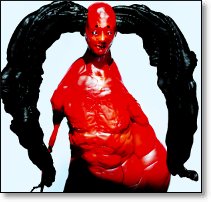
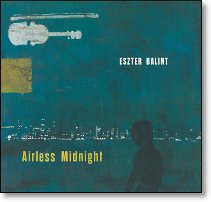
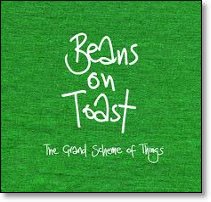
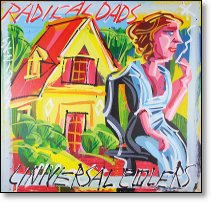
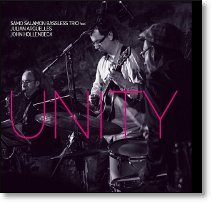
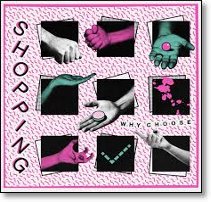
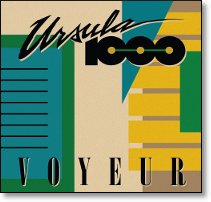
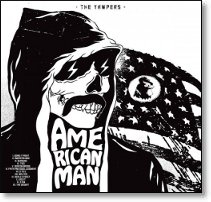
The 3.5.7 Ensemble: Amongst the Smokestacks and Steeples (2014 [2016], Milk Factory Productions, 2CD): Group variously configured as a trio, quintet, or septet, although there's too much fine print for me to sort out which is which: full blown, you get tenor sax, trumpet, clarinet, guitar, piano, bass, drums -- no one I recognize (except maybe pianist Jim Baker). Probably based in Chicago -- one of the few covers is from Fred Anderson (another is a Zimbabwean folk tune). Some stretches make a strong impression, but others drag and in the end I don't much care. B [cd] Andy Adamson Quartet: A Cry for Peace (2015 [2016], Andros): Pianist (credit is "keyboards" but the piano sketch on the cover looks grand enough), first album (although the publicity photo looks like gray hair), a quartet with Dan Bennett on sax, plus bass (some electric) and drums. Original material, upbeat, sax wails. B+(*) [cd] Africans With Mainframes: Commission Number 3 (2015, Bio Rhythm, EP): Chicago house duo, Nolelan Reusse and Jamal Moss (better, but not only, known as Hieroglyphic Being), Discogs credits them with nine singles/EPs since 2001. Three cuts, 21:40, fast beats, went by so fast I'm not sure I heard it all. B+(*) [Boomkat] The Alchemist and Oh No: Welcome to Los Santos (2015, Mass Appeal): Sometime rappers but mostly hip-hop producers, each with more than a half dozen or more records on their own, the schema here is to "present" various artists -- a mix of soul, synthpop, and dancehall with a commercial tie-in to a major video game. B+(*) Ancient Methods: Turn Ice Realities Into Fire Dreams (2015, Hands, EP): Techno producer Michael Wollenhaupt, initiated this alias in 2007 as a duo with Conrad Protzmann but continues solo. Four cuts, 25:49. Engaging enough, but do I detect a bit of martial music, or just the mechanical percussion of factory work? B+(*) Dave Anderson: Blue Innuendo (2015 [2016], Label 1): Saxophonist (tenor and soprano), has a couple previous albums, leads a groove-oriented quartet here -- Pat Bianchi (organ), Tom Guarna (guitar), and Matt Wilson (drums) -- something a little lighter than soul jazz but very pleasant. B+(*) [cd] Thomas Anderson: Heaven (2016, Out There): Singer-songwriter from Oklahoma, based in Austin, cut a self-released album in 1990 that got him some notice and a few records on very small labels before he landed back on his own with an equally fine album in 2012. This one makes eight, and he's never been clearer or more straightforward, but he has rocked harder, and been more amusing. Perhaps like me he never figured heaven would be all that much fun. B+(***) Annie Girl and the Flight: Bodies (2015, United for Opportunity, EP): Bay Area alt-rock group, has a couple albums before this tight and catchy six song, 19:49 EP. Vocalist (who also plays guitar) goes by the name Annie Girl, and signs her songs Annie. B+(**) Arca: Mutant (2015, Mute): Alejandro Ghersi, born in Venezuela, raised in Brooklyn, second album plus a couple EPs. Many short pieces, doesn't settle neatly into a groove, restless I'd say, but more method than frenzy. A- Allison Au Quartet: Forest Grove (2015 [2016], self-released): Alto saxophonist from Toronto, second album, fronts a quartet with keyboards-bass-drums, Felicity Williams credited for voice on three tracks, lively but not exceptional postbop. B+(*) [cd] Adam Baldych & Helge Lien Trio: Bridges (2015, ACT): Violinist from Poland, along with the Norwegian pianist's trio. Hard to put my finger on it, but there's something special about this, uh, chamber jazz. B+(***) Eszter Balint: Airless Midnight (2015, Red Herring): Born in Hungary, not sure when or when she came to the US, but she made her acting debut in 1984 (a Jim Jarmusch movie). She's recorded intermittently, this her third album since 1999. A remarkable set of songs. Also remarkable that no one noticed it until Christgau wrote it up. A- Beans on Toast: The Grand Scheme of Things (2015, Xtra Mile): English folk singer Jay McAllister, much like American folk singers in that he's low tech with simple songs marked by humor and humanity. At some point I should check out the back catalog -- most with the same cover design -- but this one starts with three memorable songs -- his craft ("Folk Singer"), his manifesto ("The War on War"), and more craft ("Fuck You Nashville"), then follows it up with three more memorable ones ("Lizzy's Cooking" is a favorite), or maybe eight. Inspirational lyrics abound, my favorite: "I believe that everyone should just chill the fuck out." A- Debashish Bhattacharya: Slide Guitar Ragas From Dusk Till Dawn (2015, Riverboat): Indian classical musician, b. 1963, plays lap slide guitar, has a shelf full of records so I don't know if this is a sampler or just another example. B+(***) Blue Muse: Blue Muse Live (2015, Dolphinium): From Jacksonville, "specialize in playing jazz in church," although they don't come off as especially gospel-oriented: more postbop, with guitar-piano-bass-drums and vibraphone behind Sarah Lee's sax. Nice, melodic, could function as muzak but doesn't fade so gently into the background. B [cd] Thomas Borgmann Trio: One for Cisco (2015 [2016], NoBusiness): German saxophonist (soprano, tenor, toy melodica), plays free, two twenty-minute-plus improvs with Max Johnson on bass and Willi Killers drums (and voice). One of those limited edition vinyl-only releases. B+(***) [cdr] Brooklyn Blowhards: Brooklyn Blowhards (2015 [2016], Little (i) Music): Mostly the work of Jeff Lederer (tenor/soprano sax), with Petr Cancura (tenor sax), Kirk Knuffke (cornet, slide trumpet), and Brian Drye (trombone) adding to the horn power, accordion but no bass, three drummers, guest spots for Gary Lucas (guitar) and Mary Larose (vocal). Mostly trad sea shanties mixed in with Albert Ayler covers, gospels that get under your skin. Turns solemn toward the end with "Shenandoah" and "The Seaman's Hymn." B+(***) [cd] Jean-Luc Cappozzo/Didier Lasserre: Ceremony's a Name for the Rich Horn (2014 [2016], NoBusiness, EP): Trumpet-drums duo, vinyl limited edition of 300, I'm not seeing the length of these two parts anywhere but the vinyl is 10-inch and Discogs is treating it as an EP, and a fair amount of that is sub- or barely-audible. [PS: total time 19:46] B- [cdr] Brandi Carlile: The Firewatcher's Daughter (2015, ATO): Singer-songwriter, half-dozen albums since 2005, started as a folkie and could pass as country but not in Nashville -- coming from Washington, not her natural milieu anyway. And like Courtney Barnett, she's upped her game by rocking harder, leading with the guitar. B+(***) Chaise Lounge: Gin Fizz Fandango (2015 [2016], Modern Songbook): DC-based cocktail jazz group, seventh album (counting last year's least awful Xmas thing), guitarist-pianist Charlie Barnett the putative leader. Singer Marilyn Older seems intent on disappearing in the cover photo but is front and center on the album. I'm not seeing song credits, but if these aren't standards, some (e.g., "If I Never Get to Paris") should be. [PS: All Barnett originals except for one Older lyric and "It's All Right With Me" by Cole Porter.] B+(***) [cd] Christine and the Queens: Christine and the Queens (2014 [2015], Atlantic/Because/Neon Gold): Electropop project of French singer-keyboardist Héloïse Letissier, the US release recycling cover art and about half of the songs from her 2014 album Chaleur Humaine, shifting some songs to English without losing her cool. B+(**) Benjamin Clementine: At Least for Now (2015, Virgin EMI): Singer-songwriter, b. Benjamin Sainte-Clementine in London, self-taught, busked in Paris, plays piano and guitar, first album, has a broadly dramatic style which picks up bits of classical and French chanson -- Nina Simone stands out among his reference points, although I also hear echoes of David Bowie. Could become insufferably pompous, but for now let's say he's pretty unique. B+(**) Avishai Cohen: Into the Silence (2015 [2016], ECM): Trumpet player from Israel, not to be confused with the bassist of the same name, has at least eight albums, some as Third World Love, some as Triveni. He composed these pieces following his father's death, and they are centered on Yonathan Avishai's piano. With Eric Revis (bass) and Nasheet Waits (drums), plus saxophonist Bill McHenry on three cuts. Inspiring in spots, but mostly lovely. B+(**) [dl] Colleen: Captain of None (2015, Thrill Jockey): French singer-songwriter, Cécile Schott, has a half-dozen albums since 2003, music is mostly electronic, unusually captivating for ambient, vocals mostly in English, much brighter than trip hop. B+(**) Jonah Considine: Golden Flu (2015, Nein, EP): Five mixes of one title, total 32:19, the redundancy convincing me to treat it as an EP. Electronic beats, heavy on the one. B+(*) Roxy Coss: Restless Idealism (2014 [2016], Origin): Tenor saxophonist, first album, self-released five years ago, wasn't much good, but she's got a band, a label, and much more poise now, with a light tone that likes to soar. B+(**) [cd] Czarface: Every Hero Needs a Villain (2015, Brick): Joint venture of rapper Inspectah Deck and hip-hop duo 7L & Esoteric, their second album together. Basically, underground rap for comic book fans. B+(**) Diet Cig: Over Easy (2015, Father/Daughter, EP): New York "slop pop band," actually formed upstate in New Paltz, with a couple singles and this short (five songs, 10:06), catchy EP. B+(*) DJ Sandji: 100% Balani Show (2015, Sahel Sounds): Mixtape of Balani Show hits assembled by a Bamako, Mali DJ. Fast, "regularly pitched up," whizzes right past you. B+(***) [bc] DMX Krew: There Is No Enduring Self (2015, Breakin): British electronica producer Edward Upton, has been in business since 1996. Keyboards, neat little rhythmic figures, doubt they're bouncy enough to dance to but pleasant as they are, they never fade into ambience. B+(***) Dog Party: Vol. 4 (2015, Asian Man): Punk-pop duo from somewhere in Northern California, first cut reminded me of '60s girl groups, but they guy they were fawning over was dead, so maybe they're postmodern after all. Post-Ramones too. Second album, unless (like Rhapsody) you dismiss something that crams 13 songs into 29:36 as an EP. B+(**) Anderson East: Delilah (2015, Low Country Sound/Elektra): Singer-songwriter from Alabama, cut his first album as Mike Anderson before switching names for this major label debut. He draws on various strains but most effectively emerges as a soul man -- I doubt it even helps much to add the "blue-eyed" adjective. B+(***) Harris Eisenstadt: Old Growth Forest (2015 [2016], Clean Feed): Drummer, from Canada, has at least a dozen albums since 2002 (AMG lists 16). Quartet, Jeb Bishop (trombone) and Tony Malaby (tenor sax) the horns, Jason Roebke on bass. I'm a little surprised that the horns don't make a bigger splash, but the rhythm undercuts whatever they do, and is more interesting for that. B+(***) Ari Erev: Flow (2015 [2016], self-released): Pianist, from Israel, third album, half trio, adding Yuval Cohen's soprano sax on five cuts, Gilad Dobrecky's percussion on four of those. B+(**) [cd] Father: Who's Gonna Get F***** First? (2015, Awful): Atlanta MC, also known as Fatheraintshit, promises "12 tracks of pure debauchery," but delivers them with a sly understatement, a precise but cautious monotone over beats which barely register. B+(**) [bc] Mike Freeman ZonaVibe: Blue Tjade (2014 [2016], VOF): Vibraphonist, first record was called The Vibesman, this one is a tribute to Cal Tjader, although the compositions are all Freeman originals so the connection is in the, uh, vibe -- and bassist Ruben Rodriguez, two Latin percussionists, and Jim Gailloreto's flute and tenor sax. Some time ago I tried to figure out who was the most famous jazz musician I didn't have a single record by, and somehow came up with Tjader, so I'm no expert here. Still, the first half or so of this album is really delightful, and it doesn't wind down badly. B+(**) [cd] Bill Frisell: When You Wish Upon a Star (2015 [2016], Okeh): Jazz guitarist, perennial poll winner, may have done more than anyone else over the last 30 years to expand the domain of jazz -- in an early album he ranged from Ives to Madonna, but he's been most successful at picking up strains of folk music. Here he mostly goes for movie and TV themes, most bad unless your appetite for kitsch is unbounded. With Eivind Kang on viola, Thomas Morgan on bass, Rudy Royston on drums, and Peta Haden singing about half the pieces -- her "You Only Live Twice" is horrific but she turns in a marvelous "Moon River" and nails "Happy Trails." B [cdr] Fred Frith/Darren Johnston: Everybody Is Somebody Is Nobody (2013-14 [2016], Clean Feed): Guitar and trumpet, the former with a nice bag of tricks which set the tone here. Johnston never really gets out ahead of this, evidently satisfied to let the senior musician find his way. B+(**) [cd] Donnie Fritts: Oh My Goodness (2015, Single Lock): Born in Florence, Alabama back in 1942, a keyboard player who found success as a studio musician in Muscle Shoals, co-wrote the occasional song with people you've heard of, cut an album in 1974 and a second in 1997. This one is sort of a career recap, a project that attracted quite a few guests but is held together by his quavery amateur voice. B+(***) Abba Gargando: Abba Gargando (2015, Sahel Sounds): Tuareg guitarist from Timbuktu in the dessert of Mali, lays out straightforward rhythmic vamps, some with chantlike vocals. Wedding fare, I gather, though the amplifier distortion sometimes gets to be a bit much, a dull but treacherous edge. B+(***) Charles Gayle/William Parker/Hamid Drake: Live at Jazzwerkstatt Peitz (2014 [2015], Jazzwerkstatt): The leader plays tenor sax on the 28:16 opener, piano on the next three pieces (total 27:54), and returns with his sax for the 10:14 encore. His sax is an old story, raw and searching, and his piano embodies the same spirit. B+(***) Ginkgoa: EP Ginkgoa (self-released, EP): Nicolle Rochelle (from New York) and Antoine Chatenet (from Paris) do "French songs with an American vibe, American songs with French touch," from pop to swing with electro beats. Four of them, anyway, 13:31, but they're onto something. B+(**) [bc] Michael Monroe Goodman: The Flag, the Bible, & Bill Monroe (2015, MammerJam): I could do without two of those three, and I suspect that if cornered Goodman would choose Monroe too. OK, maybe that's wishful thinking, but the title song is more sentimental than jingoistic, and his bluegrass-infused honky tonk is well honed. B+(***) Grandpa's Cough Medicine: 180 Proof (2015, self-released): Urban Dictionary attributes the group's name to the movie Dumb and Dumber: refers to alcohol, the hard stuff, but not necessarily 180 proof. Instrumentally they're a bluegrass band, more fixated on Saturday night than Sunday morning, but they hardly sound as degenerate as they advertise, even when Hank 3 guests. B+(*) William Clark Green: Ringling Road (2015, Bill Grease): Singer-songwriter from Texas, went to college in Lubbock but was a generation removed from the Flatlanders. Fourth album, chock full of songs with country themes -- "Sticks and Stones," "Creek Don't Rise," "Fool Me Once," "Old Fashioned," "Going Home" -- although I find them a bit hard to hear through the heavy riffs and crashing drums. B+(*) Haiku Salut: Etch and Etch Deep (2015, How Does It Feel to Be Loved): Instrumental trio from England, three women with many more instruments, some cuts focused in piano, others more with electronics ("loopery and laptopery"). Wikipedia lists genres as "folktronica, post-rock." I toyed with filing the under electronica and even new age but they were better than that. B+(**) Nigel Hall: Ladies & Gentlemen . . . Nigel Hall (2015, Feel Music Group): Retro soul man, born in DC in 1981, based in New Orleans, first album, half original material, half covers, mostly from the 1970s golden age. Goes for a classic soul sound, and more often than not gets it. B+(***) Ross Hammond and Sameer Gupta: Upward (2015 [2016], Prescott): Guitar-tabla duo. Gupta is from San Francisco, has some classical training but has also worked on a couple albums with jazz pianist Marc Cary (one under Gupta's name). His tabla leads here, while the guitarist nips around the edges. Enchanting background music. B+(***) [cdr] Anna von Hausswolff: The Miraculous (2015, Other Music): Swedish singer-songwriter, normally plays keyboards but opts for a "9,000 pipe Acusticum Organ" here, which gives the album a dank churchly air with a whiff of brimstone. B Heads of State: Search for Peace (2015, Smoke Sessions): Veteran group, some claim to being all stars: Gary Bartz (alto sax), Larry Willis (piano), Buster Williams (bass), Al Foster (drums). Play two Bartz tunes, seven covers -- Strayhorn, Carter, Coltrane, McLean, Tyner for the title cut. Much as you'd expect, except milder -- as if they've found that peace, or are just getting old. B+(**) Don Henley: Cass County (2015, Capitol): Voice still familiar from way back when, though I don't recall hearing any of his albums -- this is only the fifth since 1982. After a 15 year hiatus, he recruited feature guests like a junior grade rapper, though less to be sociable than, I suspect, to gauge his reputation in Nashville. He draws some more estimable names than his own -- Merle Haggard, Dolly Parton, Lucinda Williams, Miranda Lambert, also Mick Jagger and Stevie Nicks. He doesn't need them, but he has his own limits. B+(*) Heroes Are Gang Leaders: Highest Engines Near/Near Higher Engineers (2015 [2016], Flat Langton's Arkeyes): Group founded by poet Thomas Sayers Ellis and saxophonist James Brandon Lewis, with others in unspecified roles. Starts in a school classroom and moves on, at one point the rush of spoken word fragments coming so fast they become disorienting, kind of like modern life. The saxophones (Devin Brahja Waldman also contributes) are terrific. B+(***) [cd] Dre Hocevar: Collective Effervescence (2014 [2016], Clean Feed): Percussionist, from Slovenia, has a couple previous albums. This sounded to me like a bassist's album at first -- lots of tortured low rumblings, but there is no bassist: I must have been noting Lester St. Louis' cello and/or Philip White's electronics and signal processing. Also with Bram De Looze on piano and, notably, Chris Pitsiokos on sax. B+(**) [cd] Inventions: Maze of Woods (2015, Temporary Residence): Electronica duo, Matthew Cooper (Eluvium) and Mark T. Smith (Explosions in the Sky), second album. B+(*) Jason James: Jason James (2015, New West): Country singer from Texas, has a couple self-released albums before this effective debut. Has the trad country sound down pat, can draw out a ballad and go to the honky tonk. B+(***) Matt Kane & the Kansas City Generations Sextet: Acknowledgement (2014 [2016], Bounce-Step): Drummer, originally from Hannibal, Missouri, followed his jazz mue to Kansas City. Has a couple piano trio albums, adds two saxes and a trumpet here, playing a program of Kansas City musicians: Bobby Watson, Pat Metheny, Ahmad Alaadeen (a KC-based saxophonist with several albums in the 1990s). B [cd] Knife Pleats: Hat Bark Beach (2015, Jigsaw): Vancouver alt-rock group, Rose Malberg the singer (as she's been in a series of bands I'd never heard of). Twelve short, snappy songs, nothing over 2:34, total 26:18. B+(*) [bc] Lame Drivers: Chosen Era (2015, Jigsaw): New York alt-rock group, described as their debut album but they seem to have been around for a while. Chipper, catchy even. B+(*) [bc] Left Lane Cruiser: Dirty Spliff Blues (2015, Alive Naturalsound): Blues-rock band from Fort Wayne, Indiana, complete with wailing guitar, crunchy bass, pounding drums, and more than a few reefer songs. B+(*) Urs Leimgruber/Alex Huber: Lightnings (2014 [2015], Wide Ear): Saxophone-and-drums duo. Not specified here, but Leimgruber usually plays tenor and soprano, rather prickly free jazz, doesn't blow you away but keeps teasing at your ears. B+(**) [cd] Marilyn Lerner/Ken Filiano/Lou Grassi: Live at Edgefest (2013 [2016], NoBusiness): Piano-bass-drums trio, the bassist having an especially good outing, the piano probing, never too settled. B+(***) [cdr] Mark Lyken/Emma Dove: Mirror Lands (2015, Time Released Sound): Soundtrack, Dove is the filmmaker working in her native Scotland, Lyken an "audio and visual artist." Calming piano, ambient landscapes, scattered voices, including squawking seabirds. B Made to Break: Before the Code (2014 [2015], Trost): Ken Vandermark group, third album since 2011, with Christof Kurzmann (electronics), Jasper Stadhouders (bass), and Tim Daisy (drums). Another solid free jazz effort, but this particular group has never blown me away. B+(***) J Mancera: Mancera #5 (2015 [2016], self-released): Alto saxophonist Jaime Mancera, from Bogota, Colombia, came to the US in the 1990s, played in the house band at the Copacabana, not sure what else. Debut album, all originals, backed by guitar, bass guitar, keyboards, drums, percussion -- rich but steady grooves, vibrant sax, the tunes sound to me like classic movie themes, or kitsch, or both. B+(**) [cd] Will Mason Ensemble: Beams of the Huge Night (2014 [2015], New Amsterdam): Drummer, his Ensemble adding oboe, alto sax, two guitars, bass, and a lot of voice -- rarely my favorite thing. Aside from the voices, the music starts chamber then turns rockish, picking up interest as it goes. B+(*) Rob Mazurek/Exploding Star Orchestra: Galactic Parables: Volume 1 (2013 [2015], Cuneiform, 2CD): Cornet and electronics from the leader, also big-theme compositions -- "The Arc of Slavery," "Helmets of Our Poisonous Thoughts," "Free Agents of Time" -- done live at a festival in Italy with almost-big band, basically a merger of his Chicago and Sao Paulo Undergrounds plus Damon Locks' spoken word (which at first blush sometimes gets in the way). B+(***) [dl] Mekons/Robbie Fulks: Jura (2015, Bloodshot): A subset -- aven't found a credits list yet, and some press refers to the band as "Mini-Mekons" -- of the great British country-punk band and label mate, cut after a joint tour of Scotland in 2014 and sneak-released on very limited Record Store Day vinyl. By the turn to English folk, I'd guess that the missing Mekon is Jon Langford. Fulks can't quite fill those shoes. B+(***) Buddy Miller & Friends: Cayamo: Sessions at Sea (2016, New West): Allegedly recorded on a cruise ship, something I can imagine a journeyman with a serviceable twang doing, although I have more trouble imagining all his "friends" packed on the same boat, only joining him for one stock cover each. A mixed bag, with Kacey Musgraves, Doug Seegers, and Richard Thompson on the plus side, Kris Kristofferson and Lucinda Williams on the other. B+(*) Whitey Morgan & the 78s: Born, Raised & Live From Flint (2011 [2014], Bloodshot): Honky tonk band from Flint, Michigan with a couple albums under their belt, the titular leader born with the name Eric Allen. Half original drinking and/or cheating songs, half covers ranging no further than Bruce Springsteen, closing with a romp through "Mind Your Own Business." B+(**) Whitey Morgan & the 78s: Sonic Ranch (2015, Whitey Morgan Music): Third studio album, self-released, can't find credits or such, but nothing wrong with it as straightahead honky tonk/rock and roll. B+(***) Gilligan Moss: Ceremonial (2015, EMI, EP): New York electronica producer, first EP (four songs, 18:57), vocals prominent but window dressing, takes some surprising bounces. B+(*) Takami Nakamoto: Opacity (2014, HIM Media, EP): Electronica producer/visual artist, based in Paris, creates a pastiche of fascinating beats and effects, at least for five cuts, 19:28. B+(**) Marius Neset: Pinball (2014 [2015], ACT): Tenor saxophonist from Norway, studied and lives in Copenhagen. Two early albums didn't much impress me, but this is lively, festive even. Backed by piano trio, with Ivo Neame also playing organ and keyboards, and some guest spots -- strings, flutes, percussion. B+(*) No Fun: How I Spent My Bummer Vacation (2014 [2015], Concrete Jungle): Yet another garage punk band, from Germany although they sound more like California to me -- all English songs (except for "Ode an die Freude," which seems self-explanatory enough), short ones (12 add up to 26:37). B+(***) Nonch Harpin': Native Sons (2015 [2016], self-released): Fusion group, I guess, although I'm not sure between what and what -- maybe bebop and smooth jazz? Quintet, keyboards and guitar center, a sax, bass, and drums. Guitarist Andy Markham has most of the writing credits, with one tune credited to King Crimson people, another based on something southeast Asian arranged by saxophonist Chinh Tran. B- [cd] Novelist x Mumdance: 1 Sec EP (2015, XL, EP): Brit grime MC Kojo Kankam -- just EPs, no albums yet -- working with Brit electronica producer Jack Adams. Short (4 cuts, 11:58), snappy. B+(*) Eva Novoa: Butterflies and Zebras by Ditmas Quartet (2015 [2016], Fresh Sound New Talent): Pianist, from Barcelona, based in Brooklyn, third album, a quartet with Michaël Attias (alto sax), Max Johnson (bass), and Jeff Davis (drums), all of whom contribute songs -- Davis' Monkish "Justin" is a highlight, but throughout they break melodies up to set the notes free. B+(***) ObLik: Order Disorder (2014 [2015], Ormo): French free jazz sextet, no one I've heard of: Pierre-Yves Merel (tenor sax), Alan Regardin (trumpet), Alexis Persigan (trombone), Cyril Trocchu (piano), Fabrice Sylvain Didou (bass), L'Houtellier (drums), with the bassist writing the compositions -- something which emphasizes group coherence over freewheeling improvisation. B+(***) [bc] Matt Parker Trio: Present Time (2015 [2016], BYNK): Saxophonist, mostly tenor, some soprano, second album (plus one for his retro group, the Candy Shop Boys). Trio with Alan Hampton (bass) and Reggie Quinerly (drums), plus vocalist Emily Braden on three cuts -- she can also go swing or modern. B+(**) [cd] Ken Peplowski: Enrapture (2015 [2016], Capri): Clarinet and tenor sax, a retro guy but not much of a swinger -- an early album presented him as Mr. Gentle and Mr. Cool. Quartet, backed by Ehud Asherie (piano), Martin Wind (bass), and Matt Wilson (drums). All covers, ranging from Ellington and Waller to Lennon/Ono and Manilow, all gentle and cool, quite lovely. B+(***) Danilo Pérez/John Pattitucci/Brian Blade: Children of the Light (2015, Mack Avenue): Piano-bass-drums trio, all well known to mainstream jazz fans if not exactly household names. The pianist was born in Panama but has never been very close to Latin jazz, and this is a thoughtful, finely detailed mainstream effort. B+(**) Physical Therapy: Hit the Breaks (2015, Liberation Technologies, EP): Daniel Fisher, has a handful of EPs and DJ Mixes since 2012, comes up with six hard-hitting beat tracks, good for 28:30. B+(**) PINS: Wild Nights (2015, Bella Union): Manchester alt/indie quartet, all women, Faith Holgate singer-guitarist. No idea why all sources capitalize group name. Second album, previous is reportedly punkier but this one is crystal clear. B+(**) Pixel: Golden Years (2015, Cuneiform): Norwegian group, bills itself as a pianoless quartet (like Baker-Mulligan, maybe even Coleman-Cherry) with Jonas Kilmork Vemøy on trumpet and Harald Lassen on sax, but bassist Ellen Andrea Wang also sings, which gives them some pop appeal. B [dl] Valery Ponomarev Jazz Big Band: Our Father Who Art Blakey (2014 [2016], Zoho Music): Russian-born trumpet player, emigrated to US in 1973 where he found employment in Art Blakey's Jazz Messengers (1977-80). Benny Golson, who goes back even further with Blakey, guests on two tracks. Mostly tunes from Blakey's bands, with Ponomarev adding to the credits. The band does its job, especially on familiar gems like "Moanin'," and the trumpet solos sparkle. B+(***) Protean Reality: Protean Reality (2015 [2016], Clean Feed): Spine has the title twice, so I'll accept that at the group name. Still, I filed this alto sax trio in my database under Chris Pitsiokis' name. Born 1990, he's been on a tear the last year or two. This one has Noah Punkt (electric bass) and Philipp Scholz (drums). Impressive show of free jazz technique, wears a bit thin. B+(***) [cd] Radical Dads: Universal Coolers (2015, Old Flame): Alt/indie band from Brooklyn, a trio with two very hot guitarists -- singer Lindsay Baker and her husband Chris Diken -- and a drummer from Clap Your Hands Say Yeah, Robbie Guerlin (evidently the other singer), enveloping smart songs with cyclonic sound. A- Jemal Ramirez: Pomponio (2015 [2016], First Orbit Sounds Music): San Francisco-based Latin jazz drummer, first album, co-produced by vibraphonist Warren Wolf who is very prominent here. With Howard Wiley (saxes), Joel Behrman (trumpet), Matthew Clark (piano), John Shifflet (bass), and John Santos (percussion). Wolf and Behrman contribute tunes, the rest coming from jazz sources -- Kenny Garrett's "J'Ouvert" is choice. B+(*) [cd] Renku: Live in Greenwich Village (2014 [2016], Clean Feed): Avant-sax trio -- Michaël Attias on alto, John Hébert on bass, Satoshi Takeishi on drums -- named for their 2004 album. Fine group, nice balance, much of interest, almost state of the art. B+(***) [cd] Rhythm Future Quartet: Travels (2015 [2016], Magic Fiddle Music): Acoustic string band -- violin (Jason Anick), bass (Greg Loughman), two guitars (Olli Soikelli and Max O'Rourke) -- plays a chamber variant of gypsy jazz, unencumbered by drums but with no shortage of rhythm. B+(*) [cd] Pete Rock: PeteStrumentals 2 (2015, Mello Music Group): Hip-hop DJ/producer, had some hits as a 1994-94 duo with rapper C.L. Smooth. Since then he's worked with other groups, occasionally dropping a solo album like his first PeteStrumentals back in 2001. This belated successor isn't all instrumental, but the vocals tend to be repeat riffs, not open raps. B+(**) Roswell Rudd/Jamie Saft/Trevor Dunn/Balasz Pandi: Strength & Power (2015 [2016], Rare Noise): Free jazz quartet, everything joint-credited, presumably improvised on the spot. The trombonist has done things like this in the distant past, none recently, and never has he got the mix this right. Saft has emerged as an exceptional free jazz pianist, and the bassist and drummer know the game. A- [cdr] Samo Salamon Bassless Trio: Unity (2014 [2016], Samo): Guitarist, from and still based in Slovenia, has been prolific since 2003 or so. I don't quite get the significance of this trio being "bassless" -- basically it's a sax trio with Julian Argüelles (sic: should be Arguëlles) on soprano and tenor, John Hollenbeck on drums, and a guitarist who can take charge instead of a bassist to fill out the harmonics. Really takes off when he does. A- J. Peter Schwalm: The Beauty of Disaster (2015 [2016], Rare Noise): German composer, plays guitars, keyboards, drums, and other electronics here, accompanied by various guests here and there. He's cut a couple ambient albums with Brian Eno, and that's roughly where this goes: a very calm, rather lovely piece of furniture music. B+(**) [cdr] Travis Scott: Rodeo (2015, Grand Hustle/Epic): Houston rapper, Jacques Webster, can't say I'm getting anything out of this but also can't say why. Not underground, no bling either. B Seinabo Sey: Pretend (2015, Virgin): Afro-Swedish pop singer, born there but father was a renowned Gambian musician. Debut album after a couple EPs. Reportedly influenced by Alicia Keys and Beyoncé, I hear more distant echoes of Nina Simone. B+(*) Shatner's Bassoon: The Self Titled Album Shansa Barsnaan (2015, Wasp Millionaire): Jazz group from Leeds -- no one here named Barsaan let alone Shatner, and no bassoon. Group name refers to a part of the brain which under suitable drugs produces time distortion. No idea what the title refers to. Two drummers (one, like the bassist and the guitarist, doubling in electronics), electric keyboards, and Oliver Dover on saxes and clarinets. Amusing sound mix, much promise, but runs way long. B+(*) [bc] Shopping: Consumer Complaints (2014 [2015], FatCat): British post-punk trio -- Rachel Aggs (guitar, vocals), Billy Easter (bass), Andrew Milk (drums) -- sharp enough, could amount to something if the lyrics bear out their "healthy distrust of capitalism." Looks like this was self-released in the UK in 2014, then reissued last year when they were picked up by a label. B+(***) Shopping: Why Choose (2015, FatCat): Second album, Christgau regards the two as "pretty much interchangeable," and that's probably true, but this one struck me as a bit cleaner and clearer, and minus a minor stumble in the middle. A- Shopping: Urge Surfing (2015, self-released): Not the British post-punk band above, a self-proclaimed "subway surf punk" band from Brooklyn, or more precisely, "one dude in his laundry room with 3 mics, a couple of guitars and a crappy, high latency interface," plus "his lady" and a friend or two who happened to drop in. Still, he/they make a lot of noise, excitement even. B+(*) Shopping: Gizzard Shingles (2015, self-released): Cover reads "shopppping" -- their first album, 2014's Tuff Noogies, read "SHOPPPING" so let's just say their identity is confused. I'm a little confused too. B SK Simeon & Yaw Faso: Maskya (2015, Big Dada, EP): Two Melbourne, Australia-based artists, at least one with roots in Uganda although the dominant vocals are rooted in Jamaican dancehall. Beats by the aptly named Machinedrum. Four cuts, two attributed to each, 13:46. B+(**) Dr. Lonnie Smith: Evolution (2016, Blue Note): Organ player, got on the bandwagon around 1967, closer to fusion than to soul jazz. He produced records regularly up to 1979, two in 1993-94, and he refound his groove after 2000. First Blue album since 1970, produced by Don Was who draws on labelmates from Robert Glasper to Joe Lovano. flute, and a lot of rhythm. Strikes me as cluttered. B Mike Sopko/Simon Lott: The Golden Measure (2015 [2016], self-released): Guitar-drums duo, the artists' names not on the cover but the packaging is pretty minimal, like the concept: punk jazz about sums it up, but being jazzbos there's nothing so basic as pounding out a chord to a speeded up 4/4. But the attitude fits, and punk has always been more about attitude than technique. B+(***) [cd] The Souljazz Orchestra: Resistance (2015, Strut): Ottawa, Canada-based group, seventh album since 2005, basically a combination of Afro-beat and vintage funk -- I flashed on Charles Wright at one point -- with horns and extra percussion. B+(***) Vladimir Tarasov/Eugenius Kanevicius/Ludas Mockunas: Intuitus (2014 [2016], NoBusiness): Drums (percussion, cimbalom, hunting horn), bass (electronics), and reeds (soprano and tenor sax, clarinet, bass clarinet). Free jazz with some quirks. B+(**) [cdr] Bruce Torff: Down the Line (2014-15 [2016], Summit): Keyboard player, second album, lined up some accomplished musicians -- Lew Soloff (two cuts, his last date, two weeks before his death), Joel Frahm, Pete McCann -- but didn't hire a bassist (Ben Wittman is the drummer). B [cd] Tribu Baharú: Pa'l Más Exigente Bailador (2015, self-released): Colombian afro-champeta, from the Caribbean coast (a champeta is a knife used by fishermen to descale fish), marked by sweet soukous guitar, upbeat percussion, and whoops and shouts with more affinity to zouk and reggaeton than to salsa or cumbia. Some rough spots, but they overpower them. A- Turnpike Troubadours: Turnpike Troubadours (2015, Bossier City): Red Dirt band from Oklahoma, although their label name -- title of their first album -- is a town in the northwest corner of Louisiana. Fourth album. Lots of fiddle mark them as primeval country, but otherwise they're pretty ordinary. B Twin Talk: Twin Talk (2014 [2016], Ears & Eyes): Sax trio -- Dustin Laurenzi on tenor, Katie Ernst on bass, Andrew Green on drums -- not an avant thing. Ernst also sings several songs. B+(*) [cd] Ursula 1000: Voyeur (2015, Insect Queen): EDM project of Alex Gimeno, a Brooklyn producer with nine albums plus EPs and singles and remixes since 1999, spanning glam rock and cha cha and exotica, though this one mostly pushes my disco buttons, the beats sometimes reminding me of DJ Shadow. Ends with a change of pace, a movie theme called "The Shadow of Your Smile" tarted up like in a James Bond film. A- Carlos Vega: Bird's Ticket (2015 [2016], Origin): Saxophonist, seems to be based in Chicago but teaches at Florida A&M. First album I'm aware of -- AMG has it attached to a singer-keyboardist who died in 1998. Quintet, Victor Garcia on trumpet, plus piano/Rhodes-bass-drums. Latin jazz vibe, some strong sax runs. B+(*) [cd] Ward Thomas: From Where We Stand (2015, WTW Music): British country music duo, 20-year-old twin sisters Catherine and Lizzy Ward Thomas. Their country fetish doesn't amount to much more than a hejira to Nashville to record, but their straightforward songs have some appeal, as do their harmonies. B+(*) Dan Weiss: Sixteen: Drummers Suite (2014 [2016], Pi): Sixteen musicians -- counting three vocalists who don't exactly sing -- but only the leader/composer is a drummer. (Well, Stephen Cellucci is credited with percussion, and like Weiss and guitarist Miles Okazaki with "vocal percussion" -- whatever that means.) Some remarkable music here, very slippery, but I invariably gag on the vocal dressing, if not the flutes and harps. Safe to say this will fare well in year-end ballots, just not mine. B [cd] White Reaper: White Reaper Does It Again (2015, Polyvinyl): Garage punk band from Louisville, quartet, includes a keyboard for cheesy hooks that have been likened to bubblegum -- the sound reminds me of punk jokesters like the Rezillos (and, yes, the Ramones), although they probably have more in common with recent bands like the Go! Team. I'm sure I would have loved them back when I was fourteen. B+(***) Saul Williams: Martyr Loser King (2016, Fader): Spoken word artist, i.e., more poet than rapper, six albums since 2001, missed them all so maybe he should be a SFFR. Actually, nearly all of this is sung, not that the lyrics don't jump out from the sometimes catchy, often indecisive music. Politics too, but I'm not getting as much there as I hear I should. B+(***) Worriers: Imaginary Life (2015, Don Giovanni): Brooklyn garage punk band led by singer-songwriter Lauren Denitzio, debut album, rips through 12 songs in 28:04, catchy and crunchy. B+(**) The Yawpers: American Man (2015, Bloodshot): Alt band from Colorado led by Nate Cook, who may thank God he's an American man but doesn't feel too blessed -- more like ashamed. Took a third play to get past the first two songs and see everything else fall into place. Reminds me of the Drive-By Truckers, minus the cornbread and molasses. A- Yelawolf: Love Story (2015, Shady): Michael Wayne Atha, white (well, part Cherokee) rapper from Gadsden, Alabama; started underground, signed to Eminem's label, diversified -- I don't get why this was an EOY pick at Saving Country Music [maybe the fiddle stomp?], but he takes a wide range of rap stances (including a couple of Eminem-like rants) and sings a lot. B+(**) Young Thug: Slime Season 2 (2015, self-released): For some reason Rhapsody only has this volume and not the slightly earlier Slime Season 1 (September 16) or the later Slime Season 3 (February 16) -- such a prolific mixtape artist can really keep the whatever flowing. He never struck me as much of a thug, but his warbly voice is an endless fount of rhymes, some rising to wit, most just enjoying his lowlife self. B+(***) Recent Reissues, Compilations, Vault Discoveries
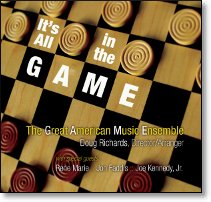
The Great American Music Ensemble: It's All in the Game (2001 [2016], Jazzed Media): Doug Richards has taught at Virginia Commonwealth University since 1979, founding its Jazz Studies program and forming the Great American Music Ensemble (GAME), which played annual Kennedy Center concerts from 1990-97, but while I've found a 1992 Geoffrey Himes piece raving about them, I've yet to find any evidence that they recorded -- until now, that is, and this has been sitting on the shelf since 2001. I don't recognize anyone in the big band, but they exemplify Gary Giddins' notion of repertory concert jazz as well as I can imagine. And special guests violinist Joe Kennedy Jr., singer René Marie, and especially Jon Faddis -- whose Armstrong is as uncanny as his Gillespie -- go the extra mile. Mostly familiar tunes, but that's half the fun. A- [cd] Sheila Jordan: Better Than Anything: Live (1991 [2015], There): A simply marvelous singer, well into her 80s now with nothing new recorded/released since 2008, so these scraps from the past -- like HighNote's 2012 release of Yesterdays, her 1990 duo with Harvie S -- are especially welcome. This one, from a year later, also features the bassist along with pianist Alan Broadbent. She's still remarkably facile, singing out her band announcements, working in impromptu bits to breakneck songs, making scat look easy. B+(***) Joëlle Léandre: No Comment (1994-95 [2016], Fou): Avant bassist from France, has a large discography going back to 1982. Solo, nine numbered "No Comment" pieces picked up from two performances, one in Vancouver, the other in Italy. The bass is fascinating enough, but I can't stand the few short voice bits. B [cd] Nouakchott Wedding Songs (2015, Sahel Sounds): From Mauritania, the northwest corner of the vast expanse of Sahara Desert. Eleven tracks by eight artists -- Hussein Moktar, Sidibou ould Siyed, and Idoumou ould Jeich are the repeaters -- no idea how old vintage or anything else, although they promise a 12-page booklet with the CD. Rough going, but not without moments of exhilaration. B+(**) [bc] Soft Machine: Switzerland 1974 (1974 [2015], Cuneiform): An important prog rock band founded in Canterbury in 1968, but by this Montreux Jazz Festival performance singers Kevin Ayers and Robert Wyatt had left, their seven numbered albums history, leaving only keyboardist Mike Ratledge from the founders, with Allan Holdsworth (guitar), Karl Jenkins (keyboards), and Hohnet Planet (soprano sax, oboe) among the replacements. B+(*) [dl] Old Music
The Catheters: Static Delusions and Stone-Still Days (2002, Sub Pop): Seattle group, seem like serious Stooges fans, singer Brian Standeford sometimes affecting a remarkable Iggy impression. Loud, a little clunky for punk. Phil Overeem loves it. B+(***) The Catheters: Howling . . . It Grows and Grows!!! (2004, Sub Pop): Second (and last) album (having skipped the EP), uncommonly fierce as these garage-punk bands go, not without an occasional hook either. B+(**) Sheila Jordan: Confirmation (1975 [2005], Test of Time): Second album, released on East Wind thirteen years after her 1962 debut (Portrait of Sheila), a year after she appeared on two remarkable Roswell Rudd albums (the long out-of-print Numatic String Band and Flexible Flyer, one of my all-time favorites). Backed by Alan Pasqua (piano), Cameron Brown (bass), Beaver Harris (drums), and Norman Marnell (tenor sax). She shows remarkable poise, especially on the first two songs ("God Bless the Child," "My Favorite Things"), though some of the rest slip past me. B+(***) Sheila Jordan: Believe in Jazz (2003 [2004], Ella Productions): Recorded during her 75th birthday tour, in Switzerland with the Serge Forté Trio. Everything she did in this period was masterful, but few pieces are more definitive than her "Everything Happens to Me" here. A- Sheila Jordan & E.S.P. Trio: Straight Ahead (2004 [2005], Splasc(H)): With Roberto Cipelli's piano trio -- Attilio Zanchi on bass and Gianni Cazzola on drums -- with "special guest" Paolo Fresu (trumpet, flugelhorn). Title song comes from Abbey Lincoln/Mal Waldron, but nothing with Jordan is very straight at this point, as the takes difficult songs and makes them utterly personal. At this point she usually just worked with a bassist, but Fresu is a treat. A- Eva Novoa: Eva Novoa Trio (2010 [2012], Fresh Sound New Talent): Pianist from Barcelona, in a trio with Masatoshi Kamaguchi (bass) and Marc Lohr (drums). All original material, impressive debut. B+(**) Eva Novoa: Eva Novoa Quartet (2010 [2013], Fresh Sound New Talent): Pianist, composed all tracks, adding alto saxophonist Ernesto Aurignac to Masatoshi Kamaguchi (bass) and André Sumelius (drums). Recoded in Barcelona, Novoa's home base, very smart postbop, impressive all around. B+(***) PINS: Girls Like Us (2013, Bella Union): First album. Punkier mostly in the sense that the songs are shorter, but not always faster. B+(*) Saul Williams: Saul Williams (2004, Fader): Second album, reportedly a musical advance although the help Williams brought in comes not from hip-hop but left-leaning rockers -- Serj Tankian, Alex de la Rocha, Ikey Owens. Brings some intensity, but I can't make much out of it, even with politics on one's sleeve. B+(*) Saul Williams: The Inevitable Rise and Liberation of Niggy Tardust! (2007 [2008], Fader): Third album, music mostly provided by Trent Reznor (Nine Inch Nails and various soundtracks). Title echoes David Bowie's Ziggy Stardust, but the album leans forward, often hard. B+(**) Additional Consumer News:Previous grades on artists in the old music section.
Notes:Everything streamed from Rhapsody, except as noted in brackets following the grade:
Ask a question, or send a comment. Wednesday, February 24, 2016 Book RoundupSeems like these book blurb columns involve a lot of "hurry up and wait," or vice versa. Last one was August 9, and before that August 4, August 1, and July 31, 2015. At that point I was so backlogged I was able to pump out four 40-book posts in a little more than a week. I don't have nearly that much backlog now -- certainly enough for one more post, but at the moment a bit shy of two (current backlog count is 61, including a couple books that won't be out until April). Still, if I keep researching, I may get that third post. I'm so far behind that I've managed to read several of these books: Padraig O'Malley: The Two-State Delusion, Roberto Vivo: War: A Crime Against Humanity, and Sarah Vowell: Lafayette in the Somewhat United States. I've also started Jane Mayer: Dark Money, and have Robert J Gordon: The Rise and Fall of American Growth and Joseph Stiglitz: Rewriting the Rules of the American Economy waiting on the shelf. Diane Ackerman: The Human Age: The World Shaped by Us (2014; paperback, 2015, WW Norton): She has written poetry, children's books, and some fifteen non-fiction books, some quite personal but a couple taking on very broad topics -- like A Natural History of the Senses (1990) and A Natural History of Love (1994). This one explores the many ways humans have reshaped the world to their own tastes and interests, an extraordinarily profound story, one that's hard to wrap one's mind around if only because the change has been so pervasive. Mary Beard: SPQR: A History of Ancient Rome (2015, Liveright): A history described both as sweeping and concise (608 pp) of Rome and its Empire from foundation up to 212 CE when Caracalla extended Roman citizenship to all non-slaves throughout the empire -- as good a date as any to avoid having to deal with the Empire's decline and fall. Bill Bryson: The Road to Little Dribbling: Adventures of an American in Britain (2016, Doubleday): An American who writes humorous books about the English language and travels (thus far to English-speaking countries) and occasionally stretches for something like A Short History of Nearly Everything (2003). Born in Iowa, he's spent most of his adult life in Great Britain, writing Notes From a Small Island (1996) before moving back to the US, and now this second travelogue to Britain after returning. Probably charming and amusing, smart too. Hillel Cohen: Year Zero of the Arab-Israeli Conflict 1929 (paperback, 2015, Brandeis): Israeli author, has written two important books on Arab collaborators before and after Israel's founding -- Army of Shadows: Palestinian Collaboration and Zionism, 1917-1948 (2008), and Good Arabs: The Israeli Security Agencies and the Israeli Arabs, 1948-1967 (2010, both University of California Press) -- reviews the pivotal 1929 Arab riots, which led to expansion of the Haganah forces, and in 1936-39 the much larger and deadlier Arab revolt. As for "year zero," historians can pick and choose; e.g., Amy Dockser Marcus opted for 1913 in Jerusalem 1913: The Origins of the Arab-Israeli Conflict (2007, Penguin). Michael Day: Being Berlusconi: The Rise and Fall From Cosa Nostra to Bunga Bunga (2015, St Martin's Press): Biography of the Italian media mogul who parlayed wealth and power into three terms as prime minister of Italy, which helped him gain even more wealth and power, give or take occasionally getting "bogged down by his hubris, egotism, sexual obsessions, as well as his flagrant disregard for the law." All the timelier given how Donald Trump threatens to repeat the feat. By the way, Berlusconi is currently estimated to be worth about three times what Trump is ($12-to-$4 billion), but that's after Berlusconi has been prime minister, and before Trump becomes president. EJ Dionne Jr: Why the Right Went Wrong: Conservatism From Goldwater to the Tea Party and Beyond (2016, Simon & Schuster): Journalist, leans liberal, has covered politics for a long time and written books like Why Americans Hate Politics (1991), They Only Look Dead: Why Progressives will Dominate the Next Political Era (1996), Stand Up, Fight Back: Republican Toughs, Democratic Wimps, and the Politics of Revenge (2004), Souled Out: Reclaiming Faith and Politics After the Religious Right (2008), and Our Divided Heart: The Battle for the American Idea in an Age of Discontent (2012). Much wishful thinking there, oft frustrated by the increasingly fervent (do I mean desperate?) right-wing, which he finally tries to face up to here. Reese Ehrlich: Inside Syria: The Backstory of Their Civil War and What the World Can Expect (2014, Pegasus): It may be decades before anyone writes a definitive history of the many facets of Syria's civil war, if indeed it is over then. Meanwhile, we get small facets of the story from many scattered observers, and I doubt this one is any different (despite the forward by Noam Chomsky, who is nearly always right, unpleasant as that may be). Other recent books on Syria (aside from ISIS, which are probably more numerous): Leon Goldsmith: Cycle of Fear: Syria's Alawites in War and Peace (2015, Hurst); Nader Hashemi/Danny Postel, eds: The Syria Dilemma (2013, The MIT Press); Emile Hokayem: Syria's Uprising and the Fracturing of the Levant (paperback, 2013, Routledge); David W Lesch: Syria: The Fall of the House of Assad (rev ed, paperback, 2013, Yale University Press); Jonathan Littell: Syrian Notebooks: Inside the Homs Uprising (2015, Verso); John McHugo: Syria: A Recent History (paperback, 2015, Saqi); Christian Sahner: Among the Ruins: Syria Past and Present (2014, Oxford University Press); Bente Scheller: The Wisdom of Syria's Waiting Game: Foreign Policy Under the Assads (2014, Hurst); Stephen Starr: Revolt in Syria: Eye-Witness to the Uprising (rev ed, paperback, 2015, Hurst); Samar Yazbek: The Crossing: My Journey to the Shattered Heart of Syria (paperback, 2015, Rider); Diana Darke: My House in Damascus: An Inside View of the Syrian Revolution (paperback, 2015, Haus); Robert Fisk et al: Syria: Descent Into the Abyss (paperback, 2015, Independent Print); Robin Yassin-Kassab/Leila Ali-Shami: Burning Country: Syrians in Revolution and War (paperback, 2016, Pluto Press). Jack Fairweather: The Good War: Why We Couldn't Win the War or the Peace in Afghanistan (2014, Basic Books): I remain stumped about what was so good about the war. The fact that American public opinion was more unified in favor of attacking Afghanistan than Iraq didn't make a bit of difference. The war may have polled as high as the war against Nazi Germany, but there was no depth, no commitment, beyond the polling, and even less understanding. The book is probably stronger on why it all went so wrong. Richard Falk: Palestine: The Legitimacy of Hope (paperback, 2014, Just World Books): A collection of essays since 2008 when Falk was appointed United Nations Special Rapporteur on human rights issues in Occupied Palestine (his tenure there ended in 2014). Falk was a law professor who took an early interest in war crimes, especially regarding the Vietnam War -- cf. Crimes of War (1971, Random House), written and edited with Gabriel Kolko and Robert Lifton. He also has a newer essay collection out, Chaos and Counterrevolution: After the Arab Spring (paperback, 2015, Just World Books). Henry A Giroux: The Violence of Organized Forgetting: Thinking Beyond America's Disimagination Machine (paperback, 2014, City Lights): Canadian educator and culture critic, has written books like Zombie Politics and Culture in the Age of Casino Capitalism (2011, Peter Lang). Essays include "America's Descent Into Madness" -- "The stories it now tells are filled with cruelty, deceit, lies, and legitimate all manner of corruption and mayhem. The mainstream media spin stories that are largely racist, violent, and irresponsible -- stories that celebrate power and demonize victims, all the while camouflaging their pedagogical influence under the glossy veneer of entertainment" -- and "The Vanishing Point of US Democracy." Robert J Gordon: The Rise and Fall of American Growth: The US Standard of Living Since the Civil War (2016, Princeton University Press): For 100 years after the Civil War, technological advances dramatically stimulated growth and raised living standards. However, from about 1970 on, growth rates have slowed markedly, and we seem to have entered a period of long-term stagnation. James K Galbraith, in The End of Normal: The Great Crisis and the Future of Growth, made a similar argument, but this goes much deeper into the changes wrought by the century of high growth. As for the future, we've already seen one consequence of slack growth: to keep profit levels up to expectations, investors have sought political favors and increasingly engaged in predatory behaviors (something often called financialization). Sooner or later the other shoe is bound to drop, as workers (and non-workers) who had been promised growth and wound up suffering from stagnation inevitably seek to regroup. Meanwhile, as Gordon points out, things like increasing inequality further dampen growth, further fueling the need for change. Greg Grandin: Kissinger's Shadow: The Long Reach of America's Most Controversial Statesman (2015, Metropolitan Books): More like America's premier war criminal, a point we need to keep stressing as he continues to woo war-friendly politicians of both major parties. Grandin, whose books include Empire's Workshop: Latin America, the United States, and the Rise of the New Imperialism (2006), wants to delve deeper, going beyond Kissinger's own acts to explore his influence on America's peculiar self-conception as an empire. I'm not sure how much neocon nonsense can really be pinned on Kissinger, but if I did wonder this would be the place to start. Amazon thinks if you're curious about this you'll also be interested in Niall Ferguson: Kissinger: 1923-1968: The Idealist (2015, Penguin Press). You won't be. Ran Greenstein: Zionism and Its Discontents: A Century of Radical Dissent in Israel/Palestine (paperback, 2014, Pluto Press): Surveys various political movements and thinkers based in Israel/Palestine who rejected the politics of Zionist dominance, starting with Ahad Ha'am in the 19th century, continuing through the Communist Party, the various Palestinian movements, and the Matzpen movement up to the 1980s. Ann Hagedorn: The Invisible Soldiers: How America Outsourced Our Security (2014; paperback, 2015, Simon & Schuster): As I recall, when Bush I set out to attack Iraq in 1990, the US moved over 600,000 troops into position. When Bush II decided to invade Iraq, the US went with a little over 100,000 troops. The main difference was that in the intervening years the Military had contracted out vast numbers of support jobs -- logistics, food, that sort of thing. Over the course of the Iraq and Afghanistan wars, the outsourcing expanded to security, and the mercenaries they hired became increasingly common and unaccountable for their actions. (You may recall, for instance, that when Fallujah first revolted, the Americans they hung from that bridge were contractors.) That's what this book is about. I'm a little surprised Hagedorn wrote this book, since the main thing I had read by her was a magnificent slice of history, Savage Peace: Hope and Fear in America, 1919 (2007; paperback, 2008, Simon & Schuster). Jeff Halper: War Against the People: Israel, the Palestinians and Global Pacification (paperback, 2015, Pluto Press): Head of the Israeli Committee Against House Demolitions, and author of one of the most trenchant short analyses of Israel's "matrix of control" over the Palestinians, takes a deeper look at Israel's technologies of control, including how they are exported elsewhere in the world. Doug Henwood: My Turn: Hillary Clinton Targets the Presidency (paperback, 2015, OR Books): All the dirt on Clinton, at least as viewed from the left, a perspective which reveals her as a corporate shill and inveterate warmonger. Henwood mostly writes about economic issues, in Left Business Observer. Other books tackling Clinton from the left include: Diana Johnstone: Queen of Chaos: The Misadventures of Hillary Clinton (paperback, 2015, CounterPunch), and Liza Featherstone, ed: False Choices: The Faux Feminism of Hillary Rodham Clinton (paperback, 2016, Verso [June 16]). Alistair Horne: Hubris: The Tragedy of War in the Twentieth Century (2015, Harper): Argues that the many major wars of what the late Gabriel Kolko summed um as Century of War (1994) turned on excessive hubris of one side or the other ("In Greek tragedy, hubris is excessive human pride that challenges the gods and ultimately leads to total destruction of the offender" -- in reality the US has been a repeat offender without paying the ultimate price). Huge topic, but to provide depth of battle detail Horne limits his study to six cases: Tsushima (1905), Mononhan (1939), Moscow (1941), Midway (1942), Korea (1950), and Dien Bien Phu (1954). Michael Hudson: Killing the Host: How Financial Parasites and Debt Destroy the Global Economy (paperback, 2015, Islet): Unorthodox economist, has seen this coming for a long time and written many books about it -- most recently The Bubble and Beyond: Fictitious Capital, Debt Deflation and Global Crisis (2012), and more presciently an essay on "the coming real estate collapse" in 2006. As I've tried to point out, the function of debt today has little to do with putting savings to productive work, and much to do with allowing people who can't afford it to keep up appearances until they crash. Needless to say, this is unsustainable -- not that governments haven't struggled heroically to keep the bankers solvent. Rafael Lefevre: Ashes of Hama: The Muslim Brotherhood in Syria (2013, Oxford University Press): I pulled this out of the long list of Syria books (see Reese Ehrlich) because it stands out: the focus is on the 1982 Hama uprising and Hafez Assad's brutal suppression (over 20,000 killed, mostly in an artillery barrage of the liberated city). The Muslim Brotherhood led the uprising, and returned two decades later as an activist faction in Syria's "Arab Spring" demonstrations -- also met brutally, resulting in the civil war that has killed another 200,000 (not that any of these estimates are proven). Les Leopold: Runaway Inequality: An Activist's Guide to Economic Justice (paperback, 2015, The Labor Institute Press): Labor economist, previously wrote a couple of primers on how Wall Street has ripped off America -- The Looting of America: How Wall Street's Game of Fantasy Finance Destroyed Our Jobs, Pensions, and Prosperity (2009), and How to Make a Million Dollars an Hour: Why Hedge Funds Get Away With Siphoning Off America's Wealth (2013). Has lots of "easy-to-understand charts and graphs," goes beyond explaining predatory finance to note how other key issues ("from climate change to the exploding prison population") are connected to economic inequality, and offers activists a guide for doing something about this central problem. Mike Martin: An Intimate War: An Oral History of the Helmand Conflict, 1978-2012 (2014, Oxford University Press): Author was attached to British forces occupying Helmand in 2006 -- a Pashtun province on the southern border of Afghanistan, also the locale for Rajiv Chandrasekaran: Little America: The War Within the War for Afghanistan (2012, Knopf) -- but speaks Pashto and was able to record the bewildered thoughts of the locals, as well as the equally confused thinking of the occupiers. The levels of misunderstanding here should give anyone pause. Noteworthy here that he extends his coverage of the conflict to include both Soviet and US/UK forces, occupations with more than a little in common. Paul Mason: Postcapitalism: A Guide to Our Future (2016, Farrar Straus and Giroux): Argues that capitalism will change in the near future, mutating into something new, shifting the economy away from its basis on "markets, wages, and private ownership." He adds, "This is the first time in human history in which, equipped with an understanding of what is happening around us, we can predict and shape the future." I have no idea how he works this out, but I started thinking about "post-capitalism" back in the 1990s. In my case the initial insight was the realization that it is possible to engineer economic systems and thereby consciously direct development instead of waiting for the invisible hand to lead us around. I also realized that the infinite growth required by capitalism must sooner or later give way to ecological limits. These appear to be common themes, but of course the devil's in the details. I would reject, for instance, Hayek's rule that all planning leads to tyranny, but I don't think you can just hand-wave that; there's too much history to the contrary. Jane Mayer: Dark Money: The Hidden History of the Billionaires Behind the Rise of the Radical Right (2016, Doubleday): Give a guy a billion dollars and all of a sudden he thinks he can recruit some politicians and hoodwink the public into voting fot them. It's really just a case of extraordinary hubris, a sense of self-appointed privilege combined with utter disdain for democracy. Take the Kochs, for instance -- Mayer has already reported on them in The New Yorker, and they seem to account for a big chunk of this book, but they are hardly alone. As I recall, Newt Gingrich blamed his loss to Mitt Romney in 2012 to only having one billionaire backer vs. five for Romney. In this state of corruption, sometimes a handful of voters can shape history, maybe even prevent democracy from working to the benefit of the majority. Sean McMeekin: The Ottoman Endgame: War, Revolution, and the Making of the Modern Middle East, 1908-1923 (2015, Penguin): The old adage is "history is written by the victors" -- a rule which has served to distort and largely bury one of the major stories of the early 20th century: the destruction of the Ottoman Empire. Even David Fromkin's brilliant A Peace to End All Peace: Creating the Modern Middle East, 1914-1922 skips over the revolt of the Young Turks and the two Balkan Wars that set the stage for the Ottoman entry into the Great War, which has the effect of making much of what the Ottoman triumvirate did during the war seem nonsensical (and possibly insane). McMeekin attempts to correct this partly by starting earlier, but also by researching deeper into newly opened Ottoman and Russian archives. But also, I suspect, because history has finally shown the Anglo-French "victory" to be hollow and bitter indeed. Aaron David Miller: The End of Greatness: Why America Can't Have (and Doesn't Want) Another Great President (2014, St Martin's Press): Washington on the cover. His most striking trait was a desire to be seen as disinterested, a leader who only sees to the public interest, never to his personal one. Needless to say, such people are scarce today, not so much because they don't exist as because they don't promote themselves in the manner of would-be presidents. On the other hand, there are great egos who would dispute this thesis, notably Donald Trump, who hope to lead a nation to its greatness, doing all manner of great things. For such cases, I can imagine two books: one explaining why they will fail, the other why what they sought was never desirable in the first place. I doubt that Miller has written either. Ian Millhiser: Injustices: The Supreme Court's History of Comforting the Comfortable and Afflicting the Afflicted (2015, Nation Books): Reminds us that throughout history the Supreme Court has more often than not been an entrenched conservative activist -- it is only thanks to Franklin Roosevelt (and a few successors, with Nixon starting the revanchist return) that we have been fortunate enough to have grown up with a Court that actually expanded human rights. Of course, the recent growth of the conservative cabal has given the author more to complain about. Indeed, the subtitle could well be the Roberts' Court's motto. David Niose: Fighting Back the Right: Reclaiming America From the Attack on Reason (2014, St Martin's Griffin): Legal director of the American Humanist Association, has focused defending the secular nature of American democracy -- his previous book was Nonbeliever Nation: The Rise of Secular Americans (2012; paperback, 2013, St Martin's Griffin) -- but is worried not just by the right's religiosity but by its increasingly dogmatic attacks on reason. Padraig O'Malley: The Two-State Delusion: Israel and Palestine -- A Tale of Two Narratives (2015, Viking): Author has extensive experience in the reconciliation of conflicts in Northern Ireland and South Africa, giving him some perspective here. Hard to tell whether the focus on competing narratives is just a license to spin bullshit, but he's right that the power imbalance is what precludes every effort at reconciliation. Actually, I'm curious how he works this out -- as someone who occasionally thinks of writing a book along these lines: why is something so seemingly easy to reason out so impossible for the people who need to do it? The answer, of course, has to do with relative power: in particular, the one side who feel they don't have to do anything. Dirk Philipsen: The Little Big Number: How GDP Came to Rule the World and What do Do About It (2015, Princeton University Press): Gross Domestic Product is a measurement of the overall size of an economy (usually expressed per capita), but it is at best a very coarse number, tied to growth in marketable goods and services, but not so much to a better, let alone a sustainable, standard of living. Many other writers have questioned the value of GDP as a measurement; e.g., Joseph E Stiglitz, et al., Mismeasuring Our Lives: Why GDP Doesn't Add Up (2010). Ted Rall: After We Kill You, We Will Welcome You Back as Honored Guests: Unembedded in Afghanistan (2014, Hill & Wang): A "graphic journalist," Rall made two extended trips to Afghanistan, one shortly after 9/11, the other ten years later, recording his observations here, as well as some history -- if you don't know it, at least it goes down fast and easy. Recent Rall books include The Book of Obama: From Hope and Change to the Age of Revolt (paperback, 2012, Seven Stories Press), and Silk Road to Ruin: Why Central Asia Is the Next Middle East (2nd ed, paperback, 2014, NBM Publishing). Before that, The Anti-American Manifesto (paperback, 2010, Seven Stories Press), which I found excessive, shrill, unfunny. More recently, Rall wrote and illustrated Snowden (paperback, 2015, Seven Stories Press) and Bernie (paperback, 2016, Seven Stories Press). Pierre Razoux: The Iran-Iraq War (2015, Belknap Press): Big (688 pp) book on one of the largest and longest wars of the last fifty years, lasting from 1980-88, costing close to a million lives -- little understood in the West, the US in particular taking an attitude that both sides should kill off the other. This book evidently goes beyond the immediate conflict to look at how other nations related to, and encouraged, the war. Also available: Williamson Murray/Kevin M Woods: The Iran-Iraq War: A Military and Strategic History (paperback, 2014, Cambridge University Press). Before these books, the standard was probably Dilip Hiro: The Longest War: The Iran-Iraq Military Conflict (paperback, 1990, Routledge). Robert B Reich: Saving Capitalism: For the Many, Not the Few (2015, Alfred A Knopf): Supposedly one of Bill Clinton's longtime buds, taught government, staked out his politics in 1989 with The Resurgent Liberal, then in 1991 wrote The Work of Nations: Preparing Ourselves for 21st Century Capitalism which contain two major concepts, one spectacularly wrong (his idea that as trade policies liberalize the US will more than make up losses in manufacturing jobs with new "symbolic manipulator" jobs), the other alarmingly right (that the rich were withdrawing from community life to their gated communities and retreats, from which they will cease to care about the fate of the lower classes). Clinton liked this thinking so much he made Reich Secretary of Labor, a job Reich filled capably if not exactly happily (cf. his memoir, Locked in the Cabinet). Since leaving Clinton, he has continued to wobble leftward, writing optimistic books about politics (Reason: Why Liberals Will Win the Battle for America in 2004) and business (Supercapitalism in 2007), on the other hand reacting when it all goes wrong (Aftershock in 2010 and Beyond Outrage in 2012, the subtitle still ending with How to Fix It. So figure this as more of everything: after all, the only thing wrong with capitalism is the capitalists, who somehow in their personal greed forgot that the magic system is supposed to make life better for everyone. Dennis Ross: Doomed to Succeed: The US-Israel Relationship From Truman to Obama (2015, Farrar Straus and Giroux): Author has been an advisor to three US presidents helping them to screw up numerous efforts to bridge the Israel-Palestine conflict, and in the meantime has worked for Israeli think tanks, his most consistent allegiance. In other words, he is an American who can always be counted on to take the position that "Israel knows best" -- his maxim for reconstructing a longer stretch of history. ("Ross points out how rarely lessons were learned and how distancing the United States from Israel in the Eisenhower, Nixon, Bush, and Obama administrations never yielded any benefits and why that lesson has never been learned.") If the title seems oblique, read it this way: the surest way to doom any chance for peace for Israel and Palestine is to involve Dennis Ross. Andrew Sayer: Why We Can't Afford the Rich (2015, Policy Press): Shows how the rich ("the top 1%") have used their political clout "to siphon off wealth produced by others," and goes further to argue that their predation is something the rest of us can no longer afford -- a far cry from the common notion that we are so obligated to the "job creator" class that we need to sacrifice our own well being to stroke their egos. Author has previously written books like: Radical Political Economy: Critique and Reformulation (1995), The Moral Significance of Class (2005), and Why Things Matter to People: Social Science, Values and Ethical Life (2011). Kevin Sites: Swimming With Warlords: A Dozen-Year Journey Across the Afghan War (paperback, 2014, Harper Perennial): War reporter, previously wrote In the Hot Zone: One Man, One Year, Twenty Wars (paperback, 2007, Harper Perennial), and The Things They Cannot Say: Stories Soldiers Won't Tell You About What They've Seen, Done or Failed to Do in War (paperback, 2013, Harper Perennial). Sites first entered Afghanistan to join the Northern Alliance in 2001, and on his sixth tour retraced his footsteps in 2013 to ask what has changed. Some stuff, but it's not clear for the better. Timothy Snyder: Black Earth: The Holocaust as History and Warning (2015, Tim Duggan): The recent author of Bloodlands: Europe Between Hitler and Stalin (2010) narrows his focus on the Nazi Judeocide, not just what happened but on why. He comes up with a rather original theory of Hitler's mind, something about resources and ecology, and adds that "our world is closer to Hitler's than we like to admit, and saving it requires us to see the Holocaust as it was" -- hence the "warning." I wonder whether obsessing on the need to "save the world" isn't itself an invitation to overreach (not to mention overkill). But then I tend to think of the Holocaust as a contingent quirk of history, not some cosmological constant. Joseph E Stiglitz: Rewriting the Rules of the American Economy: An Agenda for Growth and Shared Prosperity (paperback, 2015, WW Norton): Practical proposals for reducing inequality, restoring the sense that the United States is "the land of opportunity, a place where anyone can achieve success and a better life through hard work and determination." That reputation has been blighted by stagnation as the rich have managed to use their political and economic clout to capture an ever-increasing share of the nation's wealth. Stiglitz, one of our finest economists (Krugman's preferred term is "insanely great"), has been working on this problem for a while now, including his books The Price of Inequality: How Today's Divided Society Endangers Our Future (2012), and The Great Divide: Unequal Societies and What We Can Do About Them (2015). Roberto Vivo: War: A Crime Against Humanity (paperback, 2015, Hojas del Sur): Born in Uruguay, CEO of "a global social communications media firm" in Buenos Aires, has put together a global history and virtual legal brief to outlaw war. The impulse is sensible -- common recognition of the law, whether from respect or fear, is the main reason we haven't sunk into a Hobbesian "war of all against all" mire -- and indeed at some points enjoyed broad international support. That's probably true today, too, but it only takes one country that insists on flexing its muscles and putting its self-interest above peaceful coexistence to spoil the understanding. In the 1930s, for instance, Germany and Japan were such outlaw countries. Today it's mostly the United States and Israel (and one could argue Saudi Arabia, Russia, and/or Turkey). Vivo makes his case logically and succinctly, but he doesn't really face up to the infantile nations that put so much stock in their warmaking skills and so little in international law. Sarah Vowell: Lafayette in the Somewhat United States (2015, Riverhead): Starting with an MA in Art History, she went into radio, wrote some essays, and found a niche writing popular history, starting with Assassination Vacation, her travelogue to the historical sites of murdered presidents. Since then her histories have become more conventional: The Wordy Shipmates (2005, on the Puritans), and Unfamiliar Fishes (on the takeover of Hawaii). Here she recounts the American Revolution by focusing on Washington's French sidekick, and the early nation viewed from Lafayette's 1824 return visit. Lawrence Wright: Thirteen Days in September: Carter, Begin, and Sadat at Camp David (2014, Knopf; paperback, 2015, Vintage Books): A day-by-day account of the 1979 Camp David negotiations between Egypt and Israel over return of the Sinai Peninsula to Egypt and, as it turns out, damn little else -- still, the only significant time that Israel could be bothered to sign a peace agreement with a neighbor. (I don't much count the later treaty with Jordan.) Wright previously wrote The Leaning Tower: Al-Qaeda and the Road to 9/11 (2006, Knopf), a valuable book on the thinking behind the attack. Next batch of 40 sometime next week. Ask a question, or send a comment. Monday, February 22, 2016 Music Week
Music: Current count 26298 [26267] rated (+32), 420 [422] unrated (-2). Skipped Weekend Roundup again. Instead, I cooked up a relatively simple two-dish dinner for my wife's birthday (also my nephew's): a variation on paella valenciana (with chicken, chorizo, sea scallops, shrimp, and a couple lobster tails, but no clams) and a salade niçoise (with canned tuna instead of the now-more-fashionable grilled). For dessert, a flourless chocolate cake with ice cream on the side. Prep took several hours, but it all went fairly leisurely. Good thing, as my back was killing me. The political news I missed commenting on proved uneventful. Trump and Clinton made small, indecisive steps toward eventual nominations: Trump winning South Carolina with about 35% of the vote, Clinton eeking out another close caucus win in Nevada (52.6% to 47.3%). With the party establishment totally behind Clinton, all she has to do to win is not get beat too bad, which thus far has only happened once in three contests. Trump, who still alarms his party's establishment, has more of an uphill climb, and with 32.5% of the vote hardly looks inevitable. Still, he could hardly dream of facing a lamer set of opponents. With Bush dropping out -- he got 7.8% of the South Carolina vote, barely edging John Kashich (7.6%) and Ben Carson (7.2%) for 4th place -- the establishment appears to be stuck with Marco Rubio as their standard bearer. I was surprised that Rubio edged Cruz for second place (22.5% to 22.3%), but Rubio got key endorsements and South Carolina Republicans seem to be relatively good at following orders. Rubio also got key endorsements last week in Kansas: Gov. Sam Brownback and Sen. Pat Roberts, both vastly unpopular even among Republicans, as well as neocon Rep. Mike Pompeo. Still, I find it very hard to take Rubio seriously. Nevada Republicans will caucus on Tuesday, and South Carolina Democrats will vote on Saturday. FiveThirtyEight gives Trump a 64% chance of beating Rubio (25%) and Cruz (10%) in Nevada, and considers Clinton a cinch (>99%) in South Carolina. Their odds greatly exaggerate the voting split: the actual polling averages are 57.5% Clinton, 32.0% Sanders, which is about the flipside of Sanders' margin in New Hampshire. We've been hearing conventional wisdom for weeks now that Sanders will falter once the elections move from "white liberal" states Iowa and New Hampshire to ones that are more "diverse" -- but it now appears that Sanders won a majority of Hispanic voters in Nevada. One link I've been meaning to mention is Matt Karp: Why Bernie Can Win: some things to think about next time you hear we have to all get behind Clinton because she's the "electable" one. On the other hand, see Steve Benen: Sanders' turnout 'revolution' off to an inauspicious start: so far, at least, Democratic Party turnout this year is not up to the levels established in 2008 (and more alarmingly, I suspect, Republican Party turnout is up). Two more links: Nancy Le Tourneau: Post-Policy Republicans Gave Us Donald Trump, which refers back to her earlier post, GOP Chaos: Post-Truth vs. Post-Policy: Over the last eight years, the Republicans have given up on promoting alternative policies -- partly because Republican think tank proposals, like the health care plan Romney implemented in Massachusetts, could be adopted wholesale by Democrats -- and turned into "the party of no." Actually, it would be more accurate to say that they've turned into extortionists, along the lines of "elect us, or we'll really make you suffer." (Note that the only policies Republicans have been willing to work with Obama on are ones intended to split Obama away from the Democratic base: TPP, offshore oil leases, and more war in the Middle East.) A large chunk of this week's records, including both A- albums (Beans on Toast and Ursula 1000), came from Ye Wei Blog's 2015 EOY list, the HMs including: Nigel Hall, Abba Gargando, DMX Krew, and No Fun. Actually a pretty diverse group of records (English folk, disco, soul, Timbuktu guitar, electronica, and a garage punk band from Germany. A similar number of lower grades: electronica, alt-rock along a punk-pop axis, Saharan wedding songs. Huge thanks to Jason Gross for digging all these up. The week's jazz releases include four limited edition LP-only releases that NoBusiness was kind enough to burn on CDR for me. None are great but three would be enjoyed by anyone with an ear for free jazz. The new Saul Williams comes recommended by Robert Christgau, and that led me to check out some of his back catalog. Can't say as I got much out of any of them, not that they aren't interesting. Maybe it's that I've always had trouble fishing lyrics out of their matrix. Maybe I'm confused by that context. Christgau also provides directions on the proper way to listen to the Hamilton soundtrack. My own approach was to stream the whole thing through once, while referring to the synopsis section of the Wikipedia article on the musical. I was thereby able to follow the plot and check it against my own recollection of the history. But unlike Christgau, I didn't make any extra effort to habituate myself to the music, which struck me as hackneyed and wordy -- a common trait of musical drama. My grade reflected that I was duly impressed, not least with the scholarship, but not much interested in hearing it again: B+(**). The Catheters came up thanks to a Phil Overeem facebook post. He compared their first album to the Stooges, and as usual he's right -- although I guess I'm less impressed by the accomplishment. Their second album caught Christgau's attention, and we wound up with the same grade. Never did this before, but here's a link for a Beans on Toast song/video. Good chance I'll post Rhapsody Streamnotes sometime this week. Currently have 104 albums in the draft file. In any case, it has to come out before the end of the month, which is next Monday. Also working on a books post. Haven't done one of them in quite some time. I've even read a couple of the books I'll be reporting on. New records rated this week:
Recent reissues, compilations, and vault discoveries rated this week:
Old music rated this week:
Unpacking: Found in the mail last week:
Ask a question, or send a comment. Monday, February 15, 2016 Music Week
Music: Current count 26267 [26231] rated (+36), 422 [421] unrated (+1). Started to write a Weekend Roundup yesterday, but I lost a big chunk of time when we went out for shopping and sushi, and another when we watched The Good Wife and Downton Abbey. In the meantime I wrote an ill-tempered rant I wasn't very happy with about the late Antonin Scalia, and a short item on the Republican debate. Scalia was one of the most despicable figures in American politics in my lifetime. In his early years he was remarkably adept at twisting the constitution and the law to support his own political prejudices -- economist Martin Feldstein was one of the few I can think of to have debased his craft so thoroughly -- but in his later years he gave up on cleverness and turned into an ill-tempered crank and demagogue. He wasn't the first modern conservative appointed to the court -- Lewis Powell and William Rehnquist are obvious cases -- but he was a movement conservative, not content to rule he went out to campaign. One reason Republicans are so apoplectic about the prospect of Obama naming a replacement is that Scalia had made himself one of the political idols of their movement. To them, he had become sacrosanct, turning every snarky dissent into gospel. I did manage to get out one tweet on Scalia:
Scalia called his legal philosophy "originalism" but what it amounted to was little more than an egomaniacal fraud as Scalia was invariably able to find his own political agenda among the "original intents" of the Founding Fathers. Three obvious problems with this: one is the utter impossibility of anyone growing up in modern America fully understanding the mindset of anyone from the 18th century; the second is that those founders were a remarkably diverse and divisive lot, so there's really no single "original intent" to divine; and third, the common recognition that the genius of the US constitution lies in its flexibility, how it has been adapted over time. Yet Scalia has often been humored (and in some quarters revered) for this nonsense. What he tried to accomplish was to imbue the Constitution with something like the doctrine of papal infallibility, then proclaim himself pope. The arrogance of it all is breathtaking. Anyhow, that's more or less what I meant to write. I also had some links, including two to more moderate pieces by Michael O'Donnell: Alone on His Own Ice Floe, a 2014 book review of Bruce Allen Murphy: Scalia: A Court of One, and the post-mortem It will Be Easy to Replace Antonin Scalia. The latter doesn't refer to the political process, which with the Republican-controlled Senate will be arduous and often embarrassing, but to the impact and stature of the former Justice, who conceded both many years ago (especially in Bush v. Gore, a ruling he explained should never be taken as a precedent elsewhere). My original draft is squirreled away in my notebook, along with various other aborted drafts and more personal notes (plus a lot of what I wound up posting -- it's basically my backup store). I won't go into the other stuff here, other than to mention that when the Kansas Supreme Court ruled last week that the government of Kansas -- which is to say Governor Brownback and the neanderthal state legislature -- had violated the state constitution by failing to adequately and fairly fund public education. Brownback's response? He wants to personally appoint a new Kansas Supreme Court. This isn't the first time the Court has ruled as much: last time the legislature came up with their "block grant" scheme and basically dared the school boards to sue them again. When Scalia died, Brownback issued a moving tribute to his hero. Clearly, one thing Brownback learned from Scalia is that an oath of office swearing to "uphold the constitution" isn't enough to keep a Republican from picking and choosing which parts they want to uphold. Also listened to a few records this past week. The number of A-list jazz records for 2016 increased from two to five, and it's worth noting that trombone great Roswell Rudd has two of those five. Also that one was originally recorded in 2001 but unreleased until now. The other three A- records this week are alt/indie rock. Shopping showed up on Robert Christgau's Expert Witness last week (he swear the earlier Consumer Complaints, *** below, is every bit as good, but my more limited exposure prefers Why Choose). Radical Dads came from Jason Gross's EOY list (at Ye Wei Blog), as did a bunch of HMs listed below: Jason James, Souljazz Orchestra, White Reaper; Czarface, Haiku Salut, PINS, Worriers; The Alchemist/Oh No, Inventions, Seinabo Sey. It's not the best A-list Gross has ever come up with -- most years I discover 4-6 A- records there (like Radical Dads' Rapid Reality, an A- in 2013). The third A- is American Man by the Yawpers, a record that no one I know has gotten onto yet: its only appearance in an EOY list was 19th among Hipersonica's international albums over in Spain -- I checked it out because I've often liked albums on the label, Bloodshot. Perhaps a bit long on American mythos, but struck me as a non-southern Drive-By Truckers with a dash of non-Jersey Bruce Springsteen. But what do I know? Feels weird to me to be the one finding alt/indie and post-punk albums. Definitely not my calling. New records rated this week:
Recent reissues, compilations, and vault discoveries rated this week:
Old music rated this week:
Unpacking: Found in the mail last week:
Ask a question, or send a comment. Friday, February 12, 2016 Post-New HampshireI didn't really want to let myself get sucked into another post-election commentary like last week's Post-Iowa, but enough links have popped up to be worth a brief post. On the Democratic side, it's worth noting that Bernie Sanders thus far is running ahead of Barack Obama in 2008 against Hillary Clinton: sure, Obama won Iowa handily where Sanders only tied, but Clinton beat Obama soundly in New Hampshire, and this year lost that same state by even more. Geography tilts Iowa toward Obama and New Hampshire toward Sanders -- a little bad luck for Clinton there, but doesn't Clinton also have the advantage of having done all this before? In both states Sanders gained 20-30 points over the last six months. That's momentum. Both states are atypical in various ways, and despite all the effort candidates put into winning them, their idiosyncrasies make them poor guides for subsequent primaries, where campaigning is necessarily less personal. The main thing Iowa and New Hampshire seem to do is to winnow down the field. The sixteen Republicans we started with are now down to six: Trump, Kasich, Cruz, Bush, Rubio, and Carson. Not sure if Gilmore still thinks he's running: he got 133 votes, or 0.052%, a figure that trailed three no-longer-running candidates (Paul, Huckabee, Santorum) but at least topped ex-candidates Pataki, Graham, and Jindal; see results here; all 30 names listed were on the Republican ballot, but the list doesn't break out the 1750 write-ins.) Gilmore (and for that matter Santorum) were also beat by Andy Martin, who Wikipedia describes as "an American perennial candidate who has pursued numerous litigations" and "the primary source of false rumors that then-presidential candidate Barack Obama was secretly a Muslim during the 2008 U.S. Presidential election." Just behind Gilmore (and ahead of Pataki) was Richard Witz, a retired school custodian from Spencer, Massachusetts. The low vote getters on the ballot were Matt Drozd, Robert L. Mann, and Peter Messina, with five votes each (Messina is the only one of those three with as much as a website). Chris Christie (6th place, 7%) and Carly Fiorina (7th place, 4%) dropped out after New Hampshire. With most of next month's primaries taking place in the South, they didn't really have anything to look forward to. Further down, Ben Carson (8th place, 2%) and Jim Gilmore (13th place, 0%) seem to still be running (as opposed to "in the running"). [PS: On Friday, after I had written the above, Gilmore gave up the ghost. NBC noted that the Republican field had narrowed to six, then gave a rundown that only mentioned five of them. Ben Carson seems to be turning into the invisible man.] Here are some links to chew on:
|