|
An occasional blog about populist politics and popular music, not necessarily at the same time. LinksLocal Links Social Media My Other Websites Music Politics Others Networking Music DatabaseArtist Search: Website SearchGoogle: Recent Reading
Music DatabaseArtist Search: Website SearchGoogle: |
Blog Entries [1090 - 1099]Saturday, September 26, 2015 Elizabeth Fink (1945-2015)
Elizabeth Fink was an attorney who spent her entire career defending and fighting politically-charged cases, especially against the abuse of power by state and federal authorities. She never suffered any delusions about the innocence and/or righteousness of her clients -- not that some weren't innocent and/or justified -- but she fully recognized how stacked the system is against them, and struggled relentlessly to tilt that system back toward justice. As she said, "justice is what everyone deserves and no one gets." And it should be noted that she was exceptionally effective in the courtroom: as Laura Stevens put it, "Liz had outstanding results in her work, winning case after case that was a loser for almost anyone else." Persistent too: "This applies to Attica not on the facts, which were compelling, but on the process, which would have defeated most people before the first 20 years expired." Liz died on Tuesday, September 22, at age 70, in Brooklyn. She had increasingly dire kidney and heart problems, which forced her to give up her practice a couple years ago. In her last week she was approaching renal failure, and had a hemodialysis shunt installed. She took a short walk on Sunday and fell, possibly breaking her hip. In the hospital, her heart stopped. Laura Stevens, a dear friend ever since college, had spent the previous week with Liz (this is from a personal letter):
She is survived by her brother, photographer Larry Fink, and by numerous friends who miss her dearly. The following pieces will give you a quick guide to her career (although each misses much):
Liz grew up in a left-wing family in Brooklyn, keeping a equally committed but less doctrinaire version of her family's politics. (I know little about her father, who died before I met her, but her mother -- I knew her as Sylvia Kleinman -- was always involved in something political, notably the Gray Panthers. She once walked off Charlie Rose's show because she didn't think he was taking her seriously.) Liz went to Reed College and graduated in 1967. That's where she met "the two Lauras" and they remained lifelong friends -- Laura Stevens, introduced above, and Laura Tillem, who later met and married me. In 1971, the Attica prison revolt was murderously put down on orders from NY Governor Nelson Rockefeller. The state's first instinct there was to prosecute prisoners, among other things charging them with the deaths of the nine prison guards who had been held hostage and were shot and killed by the invading troops. When Liz graduated from Brooklyn Law School, she joined the defense team, helped get the charges dropped, and filed suit against the state, resulting in several trials and the settlement in 2000. She stuck through the entire ordeal. Even in her last days she was working on organizing her archives and trying to force New York to release still-secret documents. I first met Liz shortly after Laura Tillem and I got together. We were living in Boston, and Liz came up frequently -- the "Ohio 7" sedition case was tried in Springfield, so Liz stayed there for the duration of the trial. (Some info here: "the longest and most expensive trial in the history of Massachusetts, . . . When the trial ended with no convictions, it also turned out to be one of the most controversial -- and highly criticized -- trials . . ." -- I remember that we talked at great length about what a staggering waste of public resources the trial was. As I recall the amount of money the government wasted was about five times the capitalization of the start-up company I was working for at the time.) After the trial, she came to Boston less, but we went to New York more. We met up once at her mother's house in New Jersey. On a couple occasions Liz and her mother rented a house way out on Long Island and invited lots of their friends out. Once we flew to Portland for a Reed Reunion -- that was the first time I met Laura Stevens. When Sylvia died we dropped everything and drove to Brooklyn. (A few months earlier Sylvia closed up the NJ home and moved into an assisted living apartment in Brooklyn.) When we moved to NJ, Liz came out many times, including to one of my notorious birthday dinners. After we moved to Wichita, Liz and Laura Stevens stopped on a cross-country drive. We were staying at Liz's when 9/11 happened, and I wound up staying there a month. As Liz's health declined, Laura made several trips to New York to help out. I only made one, in May 2014, at a point when she was doing relatively well. In listing all these encounters, I can't help but feel like I'm bragging, but really I count myself as incredibly lucky. I've heard that when Laura and I first got together, Liz's only question was whether I was "smart enough" for her. I'm pretty sure I passed muster, but really, the most imposing intellect I've ever encountered was Liz's. She read more than anyone I've ever known, comprehended it all, was always incisive in her critiques, and could speak eloquently and poignantly without ever losing your interest. She was, in short, dazzling. One regret I have is that I never saw her in a courtroom, one of the few places where such rigor may prove decisive. A greater regret is that she always resisted my pleas to write. I would have been satisfied had she found a scribe to follow her around and jot down stories (like Ralph Leighton did for Richard Feynman). Terrific stories, thousands of them. If we're lucky, her friends will recall many of them, but too many are already lost. She may have been right that she could never write as well as her favorite writers, but her voice deserves an oral legacy as rich as, well, the other bard who passed this week, Lawrence Peter Berra. But that was just one of many facets to this remarkable person. I'd like to close by quoting several memories that people have written to her Facebook timeline. Gideon Oliver [Sept. 22 at 11:04pm]:
Gideon Oliver [Sept. 22 at 11:35pm]:
Lamis Deek [Sept. 23 at 2:11am]:
Nancy Alisberg [Sept. 23 at 8:02am]:
Cynthia Skow [Sept. 23 at 9:07am]:
Lamis Deek [Sept. 23 at 11:53am]:
Fahd Ahmed [Sept. 23 at 1:14pm]:
Pat Rowbotton [Sept. 23 at 2:53pm]:
Meg Handler [Sept. 24 at 10:06am]:
Susan Slovak [Sept. 24 at 11:28am]:
Gideon Oliver [Sept. 24 at 5:27pm]:
Gideon Oliver [Sept. 24 at 5:35pm]:
Rachel J-s [Sept. 25 at 12:41am]:
Debbie Hrbek [Sept. 25 at 7:10am]:
Gideon Oliver [Sept. 25 at 3:54pm]:
Carmen Jeannette Levasseur [Sept. 25 at 9:30pm]:
Bobby Quackenbush [Sept. 25 at 9:45pm]:
Ben Feinberg-Gerner [Sept. 25 at 11:35pm]:
Edward Hershey [Sept. 26 at 2:05am]:
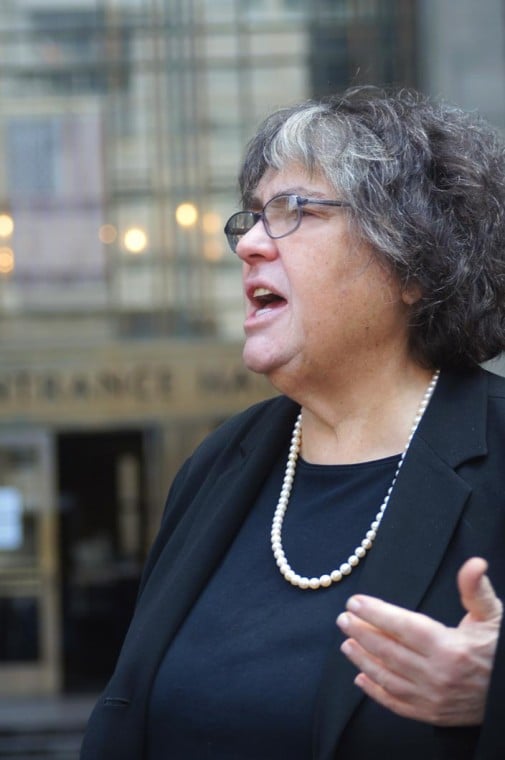
Finally, here's a recent photo, from an interview Mike Hull filmed:
Ask a question, or send a comment. Monday, September 21, 2015 Music Week
Music: Current count 25544 [25500] rated (+44), 434 [436] unrated (-2). I haven't played any Hatology records since last week's Rhapsody Streamnotes, although I expect I will before October's installment -- I'm still updating my checklist, and there's still lots to do (plus I'm finding a few older Hat Art releases). The only Hat A this week (and it's a full A) is Horace Tapscott's The Dark Tree, the latest reissue of a pair of albums I've long treasured. My latest tangent as been 1970s pop/rock. As I was checking out the new Giorgio Moroder Michael Tatum recommended, I noticed that Moroder's 1977 album From Here to Eternity was on a list Pitchfork had assembled of The Top 100 Albums of the 1970s. As usual, I was tempted to fill in all the holes, and doubly so for Moroder -- as background for the new one, and because it's an album I used to own but somehow hadn't listed in the database. (I was on Casablanca's mailing list for a while in the late 1970s.) Turns out that I had previously graded 85/100 albums -- the '70s were my decade, after all. My homework: Nick Drake, T. Rex, Neu!, Can, Saturday Night Fever, Pop Group, Suicide, Specials, Tim Buckley, Cluster, Faust, Van Halen, Nilsson, Throbbing Gristle, King Crimson -- someone at Pitchfork is really into Krautrock. I knocked about half of those off this week. Their list exhibits some unsurprising biases -- among pop/rock entries, 42 Brits but only 8 Afro-Americans, same as the number of Krautrock albums -- but did include 5 jazz albums (4 Miles Davis + 1 Herbie Hancock). There was a severe dry spell in the mid-1970s: only 9 albums for 1974-76. Unlike many lists, they weren't shy about picking 2nd, 3rd, or 4th albums by favorites: 4 each for David Bowie, Miles Davis, Led Zeppelin, Pink Floyd; 3 for Can, Brian Eno, Iggy and/or the Stooges; 2 for The Clash, Elvis Costello, Nick Drake, King Crimson, Kraftwerk, Fela Kuti, Ramones, Talking Heads, Neil Young. Still, I can't complain about the overall quality (unlike many recent lists): they picked 10 A+ albums, another 25 A albums, 25 more A-, and only 7 albums B or lower (only Van Halen much lower). On the other hand, some missing artists: Captain Beefheart, Ornette Coleman, Derek and the Dominos, Nick Lowe, Lynyrd Skynyrd, Bob Marley, Kate & Anna McGarrigle, Van Morrison, Mott the Hoople, New York Dolls, Parliament, Pere Ubu, John Prine, Bonnie Raitt, Lou Reed, Patti Smith, Steely Dan, Donna Summer, Bill Withers. I was tempted to offer an alternative list, but it could easily be as long. By the way, the new Moroder album is unique in his catalog: it's like a compilation of productions for other singers as opposed to the robotized disco albums he released under his own name. At least Moroder's old Casablanca records are on Rhapsody (but not, alas, his 1969 That's Bubblegum). I tried assembling a playlist to match Casablanca's disco sampler Get Up and Boogie, but came up short by half. All the new jazz I had this week was three high-B+ HMs until I gave Ochion Jewell a couple extra spins. Although he may be more impressed that he got Lionel Loueke to play on two tracks, the secret ingredient is the pianist and drummer from Dawn of Midi, offering many surprises. Preoccupied as I've been elsewhere, there's quite a bit of new jazz in the queue. New records rated this week:
Recent reissues, compilations, and vault discoveries rated this week:
Old records rated this week:
Unpacking: Found in the mail last week:
Ask a question, or send a comment. Sunday, September 20, 2015 Weekend RoundupShort post this week. Got a late start, and didn't get beyond the usual US political campaign grist. Rest assured though that the Middle East remains as fucked as ever, that Europe is struggling with a refugee crisis, that Greece is stuck with a choice between two defeatist parties, that the rich still aren't satisfied, and environmental disasters are still multiplying. Meanwhile, our "best and brightest" reporters are mired in what Matt Taibbi calls "the stupid season."
Ask a question, or send a comment. Wednesday, September 16, 2015 Rhapsody Streamnotes (September 2015)August ended in Kansas this year, atypically, without a single 100 degree day, then we had two in a row a week into September, and it's still up in the 90s as I write this. Two days short of a month since last time, with the biggest haul of albums all year (179 -- in fact since November 30, 2013; although, like then, the bulk is down in the Old Music section, as today's 60 new records is the second skimpiest selection this year). Last month I wasn't sure where I would go in Old Music since I had ran out of items from Spin's 1985-2015 list. This month I started out picking up old records from Dee Dee Bridgewater and Sleaford Mods -- two artists with new records this month -- then I found some listings from Werner Uehlinger's legendary Hat label -- one of the key European labels that kept avant-jazz in business since the late 1970s. Over the years I had picked up 76 of their releases, and had 26 (36.1%) listed at A- or above. But I had missed a couple hundred albums, so the prospect that most would now be accessible was too good to pass up. Eighty-six more Hat albums are reviewed below (only 85 graded, 24.7% A- or A: in one case -- also for a non-Hat album by Horace Tapscott -- I wrote a bit but decided I hadn't heard enough to firm up a grade). That still leaves unheard 70 albums from my Hatology checklist, plus an undetermined number from Hat's "new music" (i.e., avant-classical) label Hat[new]Art and Hat's pre-Hatology labels (Hat Musics LPs and Hat Art LPs/CDs). So expect more next month, but probably not as many. Reissues from the last couple years have been slotted in with the Recent Reissues/Compilations/Vault Music, which only seems right. I wouldn't normally have bothered with The Dark Tree, since I've long owned the original CDs, and I usually skip over old music that I've previously graded, even if the packaging it new. In this case two separately-released CDs have been combined, making it a distinct (if not very different) title. Also note that when the combined set was released -- actually as The Dark Tree 1 & 2 in 2000; the new one is a retitled reissue of a reissue -- Penguin Guide gave the set a crown, so it's resided in my database as one of very few crown albums I hadn't graded. Besides, if you weren't aware of it, you should be. I'll note here that I didn't do the same thing with Steve Lacy's finest album, which I have as Morning Joy: Live at Sunset Paris, credited to Steve Lacy Four, recorded in 1986, released on Hat Art in 1989; subsequently reissued as Morning Joy by Hatology in 2001, and again as Morning Joy . . . Paris Live in 2014. The 2001 edition added the 7:38 "Work," same for the 2014 reissue. So not a distinct recording, nor a new one for me, but a great album, a very solid A. For Tapscott, I wound up digging a bit further. Most of his work was privately recorded and ultimately released on Nimbus West. Some of that is on Rhapsody, and some more is on Bandcamp. I didn't get very far into the latter -- certainly not deep enough to make any real sense out of his solo discs. I also got stymied looking up Tapscott's Flying Dutchman debut from 1969, The Giant Is Awakened. I found something that looked like it on YouTube, and started to write a bit on it, but it stopped after the first cut/side. Not enough to grade, but if what I heard is indication, very likely an A-. YouTube played the same trick on me with Live at I.U.C.C., but Bandcamp had the whole thing. Last few months I've been listing previously graded records by artists reviewed in Old Music. That made sense given that I was mostly chasing down the Spin list, filling in holes where it seemed worthwhile in my coverage of mostly rock artists. This time I'm mostly just filling in one label, often in jazz artists I've covered rather extensively before. If I listed everything in my database for all of these artists, this post would get way too long, so for the most part I just give you previously rated Hat albums, plus a raw count of everything else. For what it's worth, including reviews here, these are the top artists (counting first artist listed in credits): Steve Lacy: 58; Anthony Braxton: 54; Sun Ra: 45; Cecil Taylor: 38; Lee Konitz: 37; Peter Brötzmann, Ornette Coleman, Matthew Shipp: 36; David Liebman: 26; Paul Bley: 25; Joe McPhee: 23; Mal Waldron: 22; Billy Bang, Ellery Eskelin: 18; Albert Ayler, Ran Blake: 17. Only one non-jazz record in the Recent Releases: Sleaford Mods, a major group as far as I'm concerned. Probably just a numbers thing -- only 14 of 60 new records are non-jazz. Also may have given up too easy: five B+(***) albums there (Bobby Bare Jr, Carly Rae Jepsen, Lindi Ortega, Rod Picott, Yo La Tengo). I gave the Ezra Furman album a spin -- Tatum gave it an A -- last night and decided not to commit one way or another. On the other hand, good month for new jazz, even if I'm playing catch up on Allen and Bergonzi. Also note that I've caught up with most of ECM's releases (at least those released from March to September -- I missed some earlier ones, including one by Jack DeJohnette that my friends all love). They're marked as downloads [dl], but were actually streamed using MPE Player. Not a great interface, but enough to tell they're not great records either. Most of these are short notes/reviews based on streaming records from Rhapsody. They are snap judgments based on one or two plays, accumulated since my last post along these lines, back on August 18. Past reviews and more information are available here (6976 records). Recent Releases
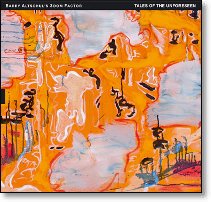
John Adams/San Francisco Symphony/Michael Tilson Thomas: Absolute Jest/Grand Pianola Music (2013 [2015], SFS): Adams caught my interest with his early minimalism, then lost it as he veered into more conventionally classical music (not that I've listened to much of the latter). But this looked like it might be amusing. The former piece (25:38) is symphonic but airy, parts reportedly cribbed from Beethoven, in jest no doubt, but the jokes are too subtle for me. The latter (31:56) combines minimalist tinkle with choral uplift, hitting a crescendo that is quite wonderful, then settling for the merely grand. B+(**) JD Allen: Graffiti (2015, Savant): Tenor saxophonist from Detroit, has ten or so albums since 1999. Always an impressive stylist, goes with a basic trio here -- Gregg August on bass, Rudy Royston on drums -- which opens him up. A- [cd] Barry Altschul & 3Dom Factor: Tales of the Unforeseen (2014 [2015], TUM): Drummer, achieved some prominence in the 1970s as part of Anthony Braxton's quartet, faded away, finally appearing as a venerable elder guest star on tenor saxophonist Jon Irabagon's 2010 Foxy. Irabagon returned on Altschul's 2013 The 3Dom Factor, and again here, although the focus here is more on the drums. Joe Fonda helps out on bass. A- [cd] Animation: Machine Language (2014 [2015], Rare Noise): Group sometimes referred to as Bob Belden's Animation, and this is billed as the late saxophonist's last album. AMG lists about a dozen albums under Animation, but only three belong to this group (all on this label). Fairly elementary jazztronica, nice beat, doesn't strain any of the talent (which includes Bill Laswell on bass). Enjoyable enough, but the spoken word story line -- something about "human machines" and "perfect machines" and "children's dreams" and such -- didn't interest me at all. The narrator, by the way, is Kurt Elling. B [cdr] Bobby Bare Jr.: Don't Follow Me (I'm Lost) [Original Motion Picture Soundtrack] (2015, Bloodshot): Looks like the movie, which went straight to DVD, is a documentary following Bare around on some tour. Much of this sounds like "live in concert" and the rest comes off as even more informal. The offhandedness suits him, not least when it brings out his natural weirdness. B+(***) Stefano Battaglia Trio: In the Morning: Music of Alec Wilder (2014 [2015], ECM): Italian pianist, has close to 40 albums since 1989 (per Discogs). This is a trio with Salvatore Maiore (bass) and Roberto Dani (drums), playing seven tunes from Alec Wilder. Very thoughtful, a bit more zip than the label norm, probably because the melodies are proven, even if none too recognizable. B+(***) [dl] Beat Funktion: Olympus (2015, DO Music): Swedish acid jazz group, more like disco, pick up some themes from Greek mythology and swish and swizzle them around the dance floor. B [cd] Jerry Bergonzi: Rigamaroll (2012 [2015], Savant): Tenor saxophonist, mainstream guy who uses phrases like Tenor Talk and Simply Put for titles (to pick two records I especially like). Quintet with Phil Grenadier (trumpet), Bruce Barth (piano), his usual bassist and drummer, a hard bop set that kicks out the jams. A- [cd] Dee Dee Bridgewater: Dee Dee's Feathers (2014 [2015], Okeh): Veteran jazz singer, came up in bop but ten years after Katrina she's doing a New Orleans theme album. Irvin Mayfield gets second credit on trumpet, and they're backed by the New Orleans Jazz Orchestra -- I don't have the credits, but they sound more like a conventional big band than a New Orleans trad outfit. Of course, the usual guests drop in, and they work in the "Treme Theme Song" -- anything to please the tourists. Lots of brass and swagger. B+(**) Dheepa Chari: Patchwork (2015, self-released): Singer, originally from Vancouver but grew up in Dallas, second album, mostly standards but co-wrote three songs with keyboard player Lars Potteiger. Bio compares herself to Betty Carter ("in the spirit of"), Sarah Vaughan ("the dulcet sultriness of"), Billie Holiday ("the emotional depth and sinuous lyricism of"), and Ella Fitzgerald ("the impeccable phrasing and effortless control of"). Shows she can keep her models straight, even if she can't emulate any of them. B- [cd] Darts & Arrows: Altamira (2015, Ears & Eyes): Guitarist Bill MacKay, has a couple more albums under his and/or his group's name, started thinking of this guitar-keybs-bass-drums quartet as a folk group but somewhere along the way it veered into fusion, the tight grooves punctuated by a dip in the guitar. B+(*) [cd] Dave Douglas Quintet: Brazen Heart (2015, Greenleaf Music): New saxophonist this time, Jon Irabagon, adding to the string of imposing young tenors recruited by Douglas for his Quintets (Chris Potter, Donny McCaslin, Marcus Strickland). Unfortunately, Irabagon doesn't help out much, for this is one of those Douglas discs where the composition -- "a commission from the Ecstatic Music Festival for a program to be performed at the World Trade Center site in downtown New York" -- swamps the musicianship, always potent in Douglas groups (here: Matt Mitchell, Linda Oh, Rudy Royston). B+(**) [cd] Elina Duni Quartet: Dallëndyshe (2014 [2015], ECM): Singer from Albania, left for Switzerland at age 10, second ECM album, mostly trad Albanian folk songs, but she has a first-rate jazz piano trio -- Colin Vallon, Patrice Moret, Norbert Pfammatter -- and she's a memorable stylist. B+(***) [dl] Mathias Eick: Midwest (2014 [2015], ECM): Norwegian trumpet player, third ECM album, with piano (Jon Balke), violin (Gjermund Larsen), and bass (Mats Eilertsen). B+(**) [dl] Electric Squeezebox Orchestra: Cheap Rent (2014 [2015], OA2): Led by trumpeter Erik Jekabson, a pretty conventional big band based in San Francisco -- they have a weekly Sunday night gig at Doc's Lab with a shifting membership (two lineups split this disc). I don't see where the "electric" or "squeezebox" comes in, but they are snappier than the average postbop orchestra. B+(*) [cd] Liberty Ellman: Radiate (2014 [2015], Pi): Guitarist, fourth album since 1998, close to thirty side-credits (not counting the mixing and mastering he's done on at least that many records). Sextet, with three horns giving wide-ranging looks -- Jonathan Finlayson (trumpet), Steve Lehman (alto sax), and Jose Davila (tuba, trombone) -- plus Stephan Crump (bass) and Damion Reid (drums). A- [cd] Ellery Eskelin: Solo Live at Snugs (2013 [2015], Hatology): Solo tenor sax, twenty years after his first solo effort (Premonition: Solo Tenor Saxophone). Four long pieces, deliberately paced and methodical with no real rough spots. B+(**) Daniel Fortin: Brinks (2015, Fresh Sound New Talent): Bassist, from Ontario, first album under his own name but he also co-leads the EST-ish piano trio Myriad 3. Postbop quartet with David French (tenor sax), Michael Davidson (vibes), and Fabio Ragnelli (drums). B+(**) [cd] Funkadelic: First Ya Gotta Shake the Gate (2014, The C Kunspyruzhy, 3CD): Thirty-three years after George Clinton and company hung it up with The Electric Spanking of War Babies, so why not three discs, thirty-three tracks, 3:27:34? (Works out to just one track per year, nothing to break a sweat over.) A couple tracks sound promising, but they don't seem quite up to snuff, and by the time they start covering "Bernadette" you realize they're not going to pull it out. Maybe you can edit this down to something you'd want to play again. B+(*) Michael Gallant Trio: Live Plus One (2014 [2015], Gallant Music): Piano trio, the leader also playing electric keyboard and melodica, with Rob Mitzner on drums and either/both of Dmitry Ishenko/Pepe Gonzalez on bass (former electric, latter acoustic). Gallant has several previous albums. This one is upbeat, sparkling even. B+(*) [cd] Clay Giberson: Minga Minga (2013 [2015], Origin): Pianist, fifth album since 2001, solo, so what? B+(*) [cd] Girlpool: Before the World Was Big (2015, Wichita): Two LA girls, still in their teens but feeling adult to reflect back, get by without a drummer by never running very fast, and get by with slow by having something to say. B+(**) Girlpool: Girlpool (2014, Wichita, EP): Last year's 7-cut, 15:15 debut. A bit riskier lyrically, as if they feel they have to put out, although they never get in too deep. B+(**) Chris Golinski/Tim McNally/Boaz Roberts: Rodeo (2015, Edgetone): Drums-bass-guitar trio, order is probably alphabetical as the guitar is the main thing here, to the extent anything is. The net effect is rather atmospheric, an unlikely goal for suc difficult music. B+(*) [cd] Giovanni Guidi Trio: This Is the Day (2014 [2015], ECM): Young Italian pianist -- turns 30 this year -- already with a stack of records and side credits (especially with Enrico Rava), back for another trio, with Thomas Morgan on bass and João Lobo on drums. One of those delicate, understated piano records producer Manfred Eicher so favors. B+(**) [dl] Emmylou Harris & Rodney Crowell: The Traveling Kind (2015, Nonesuch): Second album together, mostly Crowell's songs (even, I suspect, when Harris shares a credit, about half the time), but aside from a Cajun piece at the end, the covers top them (Amy Allison and Lucinda Williams, of course you know the latter). B+(*) Will Herrington: Solace (2015, self-released): Pianist, based in LA, first album, mostly trio, bright post-bop, two tracks add trumpet (Ambrose Akinmusire), one of those extra percussion, filling out the sound impressively. B+(*) [cd] Hommage à Eberhard Weber (2015, ECM): The German bassist was one of the labels stars from his first album, 1973's The Colours of Chloë until a 2007 stroke left him unable to play bass. Since then he has hung on to release a couple of albums built around older bass solos, and contributes in that ghostly manner to this 75th birthday tribute, recorded live at Theaterhaus Stuttgart with the SWR Big Band and various stars listed on the cover: Pat Metheny, Jan Garbarek, Gary Burton, Scott Colley, Danny Gottlieb, Paul McCandless, Michael Gibbs, Helge Sunde. The album begins with Garbarek's soprano sax circling around the bass tapes, then plunges into ambitious Metheny's 31:33 "Hommage." McCandless and Burton finish up less decisively. B+(*) [dl] Hop Along: Painted Shut (2015, Saddle Creek): From Philadelphia, Frances Quinlan has some impressive guitar chops and a voice I doubt I'll ever acquire a taste for. She called her first album's band "Hop Along, Queen Ansleis" and has since shortened the name while beefing up the group. B+(*) Jon Irabagon: Behind the Sky (2014 [2015], Irabbagast): Tenor saxophonist, made his first (avant) impression with Mostly Other People Do the Killing, then won a Monk Prize which included a record on Concord, so he did something suitably mainstream for them (The Observer -- widely panned but I thought it was pretty good). Since then he's been all over the map, including a fusion thing (Unhinged) I didn't enjoy, some squawky "blues" I didn't get, and key roles in new projects by Barry Altschul and Dave Douglas, plus two of his own records. This one, which he describes as "written with the grieving process," is simultaneously conventional and eclectic, "featuring" Tom Harrell (who often sounds grieving), with Luis Perdomo sneaking in a little clavé. And, of course, some marvelous saxophone. B+(**) [cd] Jon Irabagon: Inaction Is an Action (2015, Irabbagast): Solo sopranino saxophone, wonder if that's ever been done before? The main guy I associate with sopranino is Anthony Braxton, so I wouldn't lay long odds against it. Like Braxton's notorious For Alto, he starts with a piece way below the horn's normal range, and returns there painfully often (not that the high end can't be painful too). It's not all like that -- if you want something to appall your friends (or impress them with how tough you are), stick with For Alto. But this is mostly a novelty. B [cd] Keith Jarrett: Creation (2014 [2015], ECM): Solo piano, selected and sequenced from "improvised solo concerts in Japan, Canada and Europe in April-July" 2014. Unlike his early solo work, you never get the sense he might skid off the rails -- all very deliberate and carefully reasoned. B+(**) Carly Rae Jepsen: E-MO-TION (2015, Interscope/Schoolboy/Silent): A very appealing pop singer, trades on a certain romantic ambivalence perfected last time in "Call Me Maybe," approximated again in "I Really Like You." Nothing else quite so good here, and I'm not quite tempted enough to play it enough to convince myself otherwise. B+(***) Joanna Gruesome: Peanut Butter (2015, Slumberland): Welsh "fuzz-pop" group, Alanna McArdle was the main singer although that's hard to tell here -- reports are she's left now that all the band members have adopted "Gruesome" as surnames (cf. the Ramones, but note no Joanna). Previous album, Weird Sister, ran 28:27, which seemed close enough for ten cuts. This time they squeeze their ten cuts into 21:35. Still hard to call it an EP, given how short their official EPs are. B+(*) Darius Jones Quartet: Le Bébé de Brigitte (Lost in Translation) (2015, AUM Fidelity): Alto saxophonist, has a huge sound and an expansive vision, both of which are as prone to blowing up as growing into something special. He builds this set around vocalist Emillie Lesbros, who wrote the lyrics on four (of six) songs and the music on one. Quartet includes Matt Mitchell (piano, keyboards), Sean Conly (bass), and Ches Smith (drums). B+(**) Anders Jormin/Lena Willemark/Karin Nakagawa: Trees of Light (2013 [2015], ECM): Swedish bassist, more than a dozen albums since 1984, four on ECM, where he had established himself as a sideman with Bobo Stenson, Don Cherry, Charles Lloyd, and Tomasz Stanko. Nakagawa plays 25-string koto, and Willemark, who wrote most of the songs, plays violin and viola and sings. B+(*) [dl] Keith Kelly Ask Not: A Grand Apparatus, Discarded (2014 [2015], Edgetone): Keith Kelly plays saxophones, bass clarinet, and flute; from Bay Area, has a previous record. Ask Not is a group he leads, adding guitar, bass, drums, and vibes. I can't quite say that what they do is ambient -- too dense, but hazy, featureless, background music that doesn't quite stay there. B+(**) [cd] Michael Kocour: Wherever You Go, There You Are (2014 [2015], OA2): Solo piano (some Fender Rhodes), second album, also has a group called Unhinged Sextet. B+(*) [cd] Lona Kozik/Chris Golinski: Spelaeology (2015, Edgetone): Piano and drums, respectively. Only album I can find for Kozik, although Golinski has another new album out, and at least one other shared credit. Title has something to do with caves. Free jazz, three pieces, two longish, not without interest but much of it sails under my ears. B+(*) Shelby Lynne: I Can't Imagine (2015, New Rounder): Country singer, about 15 albums since 1989, moved to the west coast and tries to write soul ballads. Verdict: unclear. B Roberto Magris: Enigmatix (2013 [2015], JMood): Pianist, from Trieste, Italy, leads a trio-plus-percussion through a set of lively originals, closing with two pop/rock covers that are sure to wind up in the jazz canon: "My Cherie Amour" and "Do It Again" (although the latter probably started as a jazz melody I can't quite place). Monique Danielle sings one of the originals. B+(**) [cd] Dave McDonnell Group: The Time Inside a Year (2014 [2015], Delmark): Alto saxophonist, second album, group includes some fairly well known Chicago names -- Joshua Abrams (bass), Frank Rosaly (drums), Jason Adasiewicz (vibes on 2 cuts), Tomeka Reid (cello on on 3), none of which are as critical here as guitarist Welcome, let alone the leader, who favor a rocksteady flavor of postbop. B+(*) [cd] Merzbow/Balasz Pandi/Mats Gustafsson/Thurston Moore: Cuts of Guilt/Cuts Deeper (2014 [2015], Rare Noise, 2CD): Masama Akita (aka Merzbow) is credited with "noise, power electronics." He has well over 100 albums, and the only one I had heard before he started working with this crew was one I hated so much I graded D+ -- Dharma (2001, 2XHNI) if you're curious. Drummer Pandi and saxophonist Gustafsson joined him on a tolerable 2003 album (Cuts: B -- so this title plays off that record). Gustafsson has always enjoyed a long, hard squawkfest, and the famous Sonic Youth guitarist has joined a few. All jointly-credited improv. Still, they don't overdo it, and Pandi is terrific throughout. B+(***) [cdr] Stephan Micus: Nomad Songs (2012-14 [2015], ECM): German musician, plays all sorts of exotic instruments (wind instruments, especially flutes; string instruments, percussion) and sings some (in his own language). AMG files him under New Age, others under World. I find it more otherworldly, something beyond normal experience which doesn't suggest elsewhere so much as the arcanum of one's own mind. B+(*) [dl] Nicole Mitchell/Tomeka Reid/Mike Reed: Artifacts (2015, 482 Music): Flute, cello, drums. It was clear from the very beginning that Mitchell would be the poll-domineering flute player of her generation, but less clear whether we should care. This, however, is terrific on any terms. On the 50th anniversary of the founding of the AACM, she's recorded their songbook -- the Mitchell credit is Roscoe, sandwiched between Braxton and Fred Anderson, with Abrams, McCall (twice), and Wilkerson to come. The cello fits better than a bass would, and the drummer's studied this music all his life. A- The Montgomery Hermann Quinlan Sextet: Hear, Here (2015, Summit): I sometimes see this with slashes separating the names -- Bob Montgomery (trumpet), Al Hermann (trombone), Josh Quinlan (alto/tenor sax) -- which would be clearer. The others who didn't get their names factored into the group: Dave Hanson (piano), Ken Walker (bass), Todd Reid (drums). B [cd] Richard Nelson/Aardvark Jazz Orchestra: Deep River (2015, Heliotrope): Nelson is a guitarist, composer, arranger, and teaches at University of Maine. He mostly goes with trad fare here -- "Deep River Blues," "Old Country Stomp," "Wake Up Jacob," "Make Me a Pallet on Your Floor" -- sung by Marcia Gallagher and Timothy Johnson, played by Mark Harvey's swing-oriented big band. B+(*) [cd] Olavi Trio: Oh, La Vie! (2013 [2015], TUM): Trombone-bass-drums trio from Finland, bear with me while I try to retype these names: Jari Olavi Hongisto, Teppo Olavi Hauta-aho, Niilo Olavi Louhivuori, the middle names adopted in honor of Finnish tango singer Olavi Virta (1915-72) and not used elsewhere (Hauta-aho is one of those bassists who gets around. The trombone isn't an especially strong lead instrument here, so the bass and drums stand out. B+(**) [cd] Lindi Ortega: Faded Gloryville (2015, Last Gang): Country singer-songwriter from Toronto -- the one up in Canada, which I guess makes her alt by definition. Fourth album, has a remarkable voice, and the songs are getting steadily better. B+(***) Gary Peacock Trio: Now This (2014 [2015], ECM): Bassist-led piano trio, with Marc Copland and Joey Baron, released as the bassist -- and author of 7 (of 11) songs -- turns 80. Well established all around: Copland has 35 albums since 1988, eight with Peacock on bass. He has a lovely touch here, but the mix favors the bass. B+(***) Rod Picott: Fortune (2015, Welding Rod): Country singer-songwriter from New Hampshire, moved on to Maine (I think), described his last album as "love songs for the broken-hearted and work songs for the unemployed," and doubles down on that, noting that soldiers don't come home. Mostly lean and slow. B+(***) Enrico Rava Quartet/Gianluca Petrella: Wild Dance (2015, ECM): Italian trumpet player, in his 70s now with at least 70 albums since 1972. Nearly everyone in Italian jazz has passed through his bands, so I'm not surprised I don't know his quartet (Francesco Diodati on guitar, Gabriele Evangelista on bass, and Enrico Morello on drums). The trombonist got some exposure when EMI signed him and Blue Note released a couple of his albums. I wouldn't characterize this as "wild," but it is nimble and artful. B+(**) [dl] Mike Reed's People Places & Things: A New Kind of Dance (2015, 482 Music): Drummer, runs a couple of groups, this one rooted in a golden age of local jazz, which in Chicago means Sun Ra and the AACM. He aims for dance here, not so much dance rhythms as shots of euphoric melody -- in his liner notes, he cites the late Ornette Coleman's Dancing in Your Head. Quartet has two saxes (Greg Ward and Tim Haldeman) plus bass (Jason Roebke), and Marquis Hill and Matthew Shipp drop in for 3-4 tracks each. The kwela cinches it. A- [cd] Andy Sheppard Quartet: Surrounded by Sea (2014 [2015], ECM): British saxophonist (tenor, quite a bit of soprano), formed the impressive Trio Libero in 2011 with Michel Benita (bass) and Sebastian Rochford (drums, adding Eivind Aarset (guitar) here. But rather than plunging forward, they seem to have retreated into a kind of tuneful ambiance. B+(**) Sleaford Mods: Key Markets (2015, Harbinger Sound): Brit post-punks play minimal beats that are to hip-hop as punk is to Springsteen, only less frenzied because Jason Williamson wants his raps to be heard and understood. He has what my mother would have described as "a mouth on him." A- David Torn: Only Sky (2014 [2015], ECM): Solo guitar, some loops but mostly in the minute, some ambient but most not, striving to keep your interest even though it runs rather long (76:10). B+(**) [dl] Mort Weiss: Mort Weiss Is a Jazz Reality Show (2015, SMS Jazz): A clarinet player, Weiss retired from his day job around 2000 and returned to his instrument, recording seven albums 2003-13, swing-bop I found charming and delightful. If anything, the records got better as he approached 80. They even started getting noticed, with Weiss emerging as a "Rising Star Clarinet" in Downbeat's polls. Then I got a letter he was hanging it all up, but two years later he's back. The "Dedication" explains a year of bad health, losing his wife of forty-some years, even losing his dog, then finding someone named "Donna." He also found pianist Don Friedman, whose trio anchors these thirteen tunes, mostly indelible standards. Everything works: the Carmela Rappozzo vocal slot, even his own blues vocal. A- [cd] Juli Wood Quartet: Synnkä Metsä (Dark Forest) (2015, OA2): Tenor saxophonist, from Chicago, fourth album, a collection of Finnish folk songs -- her grandparents' heritage -- with guitarist Alejandro Urzagaste doing most of the arranging, the quartet filled out with bass (Clark Sommers) and drums (Mike Schlick). B+(**) [cd] Savina Yannatou/Primavera en Salonico: Songs of Thessaloniki (2014 [2015], ECM): Greek folk singer backed by a group that includes oud, qanun, and nay, all very solemn but surprisingly alluring. The songs, nearly all trad, reflect the melting pot that Salonica was before the Greek Nationalists and German Nazis purged the city -- Sephardic, of course; Greek, Turkish, Armenian, Bulgarian, "Kosovo Serbian," "Slav-Macedonian," even an Irish ditty called "Salonika." B+(**) [dl] Yo La Tengo: Stuff Like That There (2015, Matador): A Fakebook sequel 25-years-removed, like its predecessor a look back at older songs not excluding their own. Only one track here is overly familiar -- an unconvincing, almost unaffected "I'm So Lonesome I Could Cry" -- I'm sure I've heard their old tunes before, plus covers from the Parliaments and the Lovin' Spoonful and Great Plains though maybe not the closer which nearly makes the album, from "the Cosmic Rays with Le Sun Ra and Arkestra." B+(***) Recent Reissues, Compilations, Vault Discoveries
Tad Britton: Cicada (1992-93 [2015], Origin): Drummer, moved to Seattle in 1990 and shortly after cut these two sessions with Hans Teuber (saxes, keyboards, flute, cowbell), Jeff Johnson (basses), and Pete Fogle (guitar). Slippery postbop, sliding off on various tangents. B+(*) [cd] Peter Brötzmann/Joe McPhee/Kent Kessler/Michael Zerang: Tales Out of Time (2002 [2015], Hatology): Recorded in Chicago, home base for the bassist and drummer, and increasingly a second home for the German saxophonist, what with Ken Vandermark sponsoring Brötzmann's Chicago Tentet -- a group which also includes McPhee (tenor sax, pocket cornet, trumpet). Brötzmann's records are always vigorous and harsh, but this one is exceptionally coherent. A- The Continental Drifters: Drifted: In the Beginning & Beyond (1992-2001 [2015], Omnivore, 2CD): Roots/Americana band from the 1990s, formed as a second act by several non-stars -- Vicki Peterson (Bangles), Susan Cowsill (Cowsills), Peter Holsapple (dBs), Mark Walton (Dream Syndicate) -- cut a 1999 album Christgau liked (Vermillion). This gathers up an early Germany-only LP, a 2001 EP Sandy Denny/Richard Thompson tribute, live cuts, other stuff from I know not where. I'm impressed by the sound, not always by the selection (especially on the second disc). B+(*) Diplo: Random White Dude Be Everywhere (2012-14 [2014], Mad Decent): DJ, rapper, producer, has been cranking out mostly singles since 2004. This set of seven songs and five remixes of said songs is considered a compilation, though I'm not sure how much was issued before the album dropped -- I'm only finding two songs dated before 2014. "Freak" especially reminds me of Diplo's Jack Ü collaborator, Skrillex: too much of a good thing. B+(***) Keith Jarrett: Barber/Bartók (1984-85 [2015], ECM New Series): One of the pianist's occasional turns to classical music, playing Samuel Barber's "Piano Concerto op. 38" (backed by Rundfunk-Sinfonieorchester Saarbrücken), plus Béla Bartók's "Piano Concerto No. 3) and Jarrett's "Tokyo Encore" (with New Japan Philharmonic Orchestra). B- [dl] Manu Katché: Touchstone for Manu (2004-12 [2015], ECM): French drummer, has a half-dozen albums, side credits notably with Peter Gabriel, Joni Mitchell, Sting, and Jan Garbarek. Two to four tracks from each of four ECM albums, shorting the best (2006's Neighbourhood with Garbarek and Tomasz Stanko), then going long on ambient groove. B+(**) [dl] Steve Lacy: Shots (1977 [2015], Hatology): Reissues a 1977 album, originally on Musica Records, of Lacy duets with Japanese percussionist Masa Kawate, although the song order is changed (sensibly moving the one cut with Irène Aëbi (violin, voice) to the end). The percussion helps, but doesn't move this far from being a solo album. [Rhapsody: 6/8 cuts] B+(**) Joe McPhee: As Serious as Your Life (1996 [2014], Hatology): Solo with some overdubs, McPhee credited with "reeds, pocket cornet, piano & electronics" -- I figure him for a saxophonist (mostly tenor), but he's played trumpet (most often pocket trumpet) regularly for most of his career, one of the few jazz musicians to double up like that. Add to that his swirling, crashing piano ("Conlon in the Land of Ra") and the electronic rhythm track to "The Man I Love" sets off a stunning solo. A- Horace Tapscott: The Dark Tree (1989 [2014], Hatology, 2CD): One of the all-time great pianists, moved to Los Angeles when he was nine and pretty much built the jazz scene there, or at least an important subset. This is doubtless his masterpiece, recognized by Penguin Guide with a crown, but owning the two original discs separately I favored the first. Still, running the whole thing in one fell swoop it's hard to pick out the divide. John Carter's clarinet is magnificent, and Cecil McBee on bass and Andrew Cyrille on drums are perfect. A Cecil Taylor: Garden 1st Set (1981 [2015], Hatology): Solo piano, recorded at a concert in Basel, Switzerland but not released until 1993 (as Garden: Part One; a Part Two was released in 1994 and still awaits reissue on Hatology). Taylor cut his first solo album in 1968 (Praxis), a couple more in the 1970s (Indent, Silent Tongues, Air Above Mountains), For Olim in 1986 -- seems like there must have been more, but I've reacted variously and never really tried to sort them out. Takes a while finding himself here, but ultimately builds a suitably complex structure, never quite breaking loose like he does in so many of his group albums. B+(***) Old Music
Albert Ayler: Lörrach, Paris 1966 (1966 [2013], Hatology): Five live tracks from a radio shot in Lörrach, Germany (41:45), plus three tracks from Salle Playel in Paris a week later. Group includes Donald Ayler (trumpet), Michael Sampson (violin), William Folwell (bass), and Beaver Harris (drums). Mostly standard Ayler fare (including two takes of "Ghosts") with the violin most active at building a circus atmosphere. Originally released in 1982. B+(**) Billy Bang & Dennis Charles: Bangception, Willisau 1982 (1982 [1998], Hatology): Violin and drums duo, about five years after Bang started recording, a live set that was planned for LP release in 1988 then shelved a decade until this CD came out. Five cuts, including covers of Ornette Coleman and Thelonious Monk. Rougher, sketchier than his later work. B+(**) Burkhard Beins, Martin Pfleiderer & Peter Niklas Wilson: Yarbles (1996 [1997], Hatology): Sax trio, drummer listed first (Discogs credits him with 13 albums, this his first), bassist last. Pfleiderer plays soprano and tenor. Scratchy inside avant, well done but not that unusual. B+(*) Ran Blake: Plays Solo Piano (1965 [2013], ESP-Disk): Pianist, the first of a great many solo albums. He was at the time regarded as a "third stream" artist -- I've never really made the connection, although he later called one album Third Stream Recompositions and recorded at least one album with a symphony orchestra, and he has a distinugished career as an educator. From the beginning his piano style was utterly distinct: oblique and, I often find, utterly impenetrable, which is what you get here. B Ran Blake: Painted Rhythms: The Compleat Ran Blake Volume II (1985 [1988], GM): The second of a pair of solo piano discs from one 1985 session: short, cryptic takes of standards ranging from Joplin and Blake rags to Sephardic folk tunes and contemporary Spanish art songs. B Ran Blake & Anthony Braxton: A Memory of Vienna (1988 [2009], Hatology): Piano-alto sax duets, eight standards, starting with 11:06 of both avoiding "'Round Midnight," followed by "Yardbird Suite" to pick up the pace. Braxton is often delightful, and Blake has some interesting approaches to running interference. B+(**) Ran Blake: Something to Live For (1998 [1999], Hatology): Plays like solo piano even though a bare majority (10 of 19) tracks have a duet partner, either Guillermo Gregorio (clarinet) or David "Knife" Fabris (guitar), five tracks each. B+(*) Ran Blake: Horace Is Blue: A Silver Noir (1999 [2000], Hatology): Mostly Horace Silver songs, with help from David Fabris on guitar and James Merenda on alto sax, but aside from Fabris opening with the refrain from "Song for My Father" they're mostly consigned to lurking in the corners as the pianist does his thing: no wonder Silver is blue. B+(*) Paul Bley/Gary Peacock: Partners (1989 [1991], Owl): Piano-bass duets (or in a couple cases solos). Both very articulate players, well suited for the intimate space. B+(***) Paul Bley/Jimmy Giuffre/Steve Swallow: The Life of a Trio: Sunday (1989 [1990], Owl): One of several reunions of Jimmy Giuffre's trio from 1961-62, best known for Free Fall (1962), a Penguin Guide crown record and the source name for a Ken Vandermark clarinet-piano-bass group. This follows a Saturday set, and finds Giuffre shadowing Bley more than the other way around. B+(***) Paul Bley: 12 (+6) in a Row (1990 [2008], Hatology): By my count, eight solo piano pieces, three duo, and seven trio, the other players Franz Koglmann (flugelhorn) and Hans Koch (clarinet, sax). Bley's solo improvisations are bone-shaking, so it's nice to mix them up with the horns, even when the latter roughhouse. B+(***) Bobby Bradford-John Carter Quintet: Comin' On (1988 [2011], Hatology): Leaders play trumpet and clarinet, and most of their (mostly quartet) albums together list Carter first. Bradford composed two (of five) tunes here, including the title romp. Still, Carter runs away with the album, playing some of the most energetic clarinet of his career. Rhythm section is superb too: Don Preston earns his keep on piano (and synth), even in a group that usually does without, and Richard Davis and Andrew Cyrille drive hard. A- Anthony Braxton: Quintet (Basel) 1977 (1977 [2000], Hatology): With George Lewis (trombone) as energized as I've ever heard him, Muhal Richard Abrams furiously fast when he gets some solo room, Mark Helias on bass and Charles Shaw on drums. Braxton (alto and sopranino sax, clarinet) is frenzied too, perhaps a bit too much so. B+(***) Anthony Braxton: Performance (Quartet) 1979 (1979 [2007], Hatology): With Ray Anderson (trombone, little instruments), John Lindberg (bass), and Thurman Barker (percussion, xylophone, gong). Anderson is even faster than Lewis, dominating the early going until Braxton makes his big splash. Then it really gets unruly, aside from the silly rhythmic stuff near the end. A- Anthony Braxton: Open Aspects (Duo) 1982 (1982 [1993], Hat Art): Alto and sopranino sax, the duo partner (unnamed on the cover) is Richard Teitelbaum, credited with Moog synth and micro computer -- back when proto-laptops were dubbed "lugables." The electronics have a playful, toy-like appeal, and Braxton is down with that. B+(**) Anthony Braxton: Seven Compositions (Trio) 1989 (1989 [2008], Hatology): Recorded in Amiens, France, with Adelhard Roidinger on bass and Tony Oxley on drums, and the leader playing four saxes (alto, soprano, sopranino, C-melody), clarinet and flute. A tour de force, on the saxes anyway, as is Oxley's kitchen sink clinkering. A- Anthony Braxton: Wesleyan (12 Alto Solos) 1992 (1992 [1995], Hat Art): Twenty-four years after For Alto, another solo outing, a relatively sensible and sedate affair done live where Braxton teaches, with a couple cover pieces (one from Charlie Parker) and polite applause. B+(*) Anthony Braxton: Quartet (Santa Cruz) 1993 (1993 [1997], Hat Art, 2CD): One of the last recordings by one of the greatest quartets in jazz history, with Marilyn Crispell (piano), Mark Dresser (bass), and Gerry Hemingway (drums) -- together since 1985 (John Lindberg was bassist 1983-85; Crispell's association goes back to 1978). Like David S. Ware's later quartet, by the time they were done the rhythm section had blossomed into such an extraordinary machine that they were threatening to eclipse the leader, and that's much of what you hear here. A- Dee Dee Bridgewater: Dee Dee Bridgewater (1976, Atlantic): Born 1950 in Memphis as Denise Eileen Garrett, picked up her surname when she married trumpeter Cecil Bridgewater. Her 1974 debut was a jazz vocal, but she soon went to Broadway and won the 1975 Tony for her role in The Wiz, and cut a few disco albums before returning to jazz c. 1990 -- this is the first, and the first of two eponymous records (the other on Elektra in 1980). No doubt she had all the tools to be a great disco diva -- except a brilliant producer and better songs. B Dee Dee Bridgewater: Dee Dee Bridgewater (1980, Elektra): The fourth/last album of her 1976-80 disco period, with Thom Bell credited on 4 (of 8) songs and Don Renaldo synthesizing the strings and horns. Opens with "Lonely Disco Dancer" -- a hint she's losing interest. Closes slow, already lost. B- Dee Dee Bridgewater: Live in Paris (1986 [1987], Impulse): Post-disco, she continued to act/sing in shows like Sophisticated Ladies and Lady Day, touring France and in 1986 moving to Paris, where she returned to jazz. Backed here by Herve Sellin on piano, Antoine Bonfils on bass, and André Ceccarelli on drums, she opens with "All Blues," works through some standards, closes on "Cherokee" -- all perfectly respectable. B+(*) Dee Dee Bridgewater: In Montreux (1990 [1991], Verve): Again backed by piano trio, drummer Ceccarelli remains with Bert Van Den Brink on piano and Hein Van de Geyn on bass. Has some high spots but seems to falter midway -- "A Child Is Born" and "Strange Fruit" (don't feel like rechecking) -- but the "Horace Silver Medley" turns out to be a good idea. B Dee Dee Bridgewater: Love and Peace: A Tribute to Horace Silver (1994 [1995], Verve): Recorded in France with a local band, although in a couple cases you'll notice the piano or organ jumps to a higher level -- guest spots for Jimmy Smith and Silver himself. Evidently Silver wrote the lyrics as well as the fabulous melodies, the singer brings tremendous energy to the proceedings, and tenor saxophonist Lionel Belmondo is always on target. A- Clusone 3: An Hour With . . . (1998 [2000], Hatology): Michael Moore (alto sax, clarinet, melodica), Ernst Reijseger (cello), Han Bennink (drums) -- their names are on the cover, beneath the ellipsis so could be parsed into the title. A radio shot recorded in Stockholm, five (of seven) pieces are medleys, a witty example "Duck/O Pato/Duck/Turkey in the Straw" (Steve Lacy, Jobim, Moore, trad.). B+(***) Tony Coe: Some Other Autumn (1971 [1983], Hep): British clarinet/sax player, started out in Humphrey Lyttelton's trad jazz band, basically a mainstream player but has worked on soundtracks, in big bands, with Pierere Boulez, Paul McCartney, Derek Bailey, and Tony Oxley: I found this album on trad-oriented Hep while looking to see if they had any of his avant-leaning Hat albums. Quartet with Brian Lemon (piano), Dave Green (bass), and Phil Seamen (drums), with Coe on alto sax and clarinet, live at Ronnie Scott's in London. Neither trad nor avant, but they swing "In a Mellotone" pretty hard. A- Ornette Coleman: The Empty Foxhole (1966 [1967], Blue Note): One of the few items in the late great's catalogue I missed, there is some suggestion that it's been reissued but all I can find are some digital dumps and a possible Japanese import. In any case, aside from remastering (in 1973 and/or 1994 when it finally appeared on CD) this is the same six-cut album, with the leader dabbling in trumpet and violin as well as blowing you away on alto sax, Charlie Haden on bass, and a not-ready-for-prime-time drummer named Ornette Denardo Coleman. B+(***) Marc Copland Trio: Haunted Heart (2001 [2010], Hatology): Piano trio, with Drew Gress on bass and Jochen Rueckert on drums. One original, the rest standards including three short takes of "My Favorite Things." [Originally released 2002 on Hatology as Haunted Heart & Other Ballads; Rhapsody offers both, but they are really the same.] B+(**) Marc Copland/David Liebman Quartet: Lunar (2001 [2002], Hatology): Piano-sax quartet, Liebman credited with soprano over tenor, with Mike McQuirk on bass and Tony Martucci on drums. Copland is a fine postbop pianist with twenty-some records since 1992, and makes the stronger impression here. B+(**) Marc Copland/David Liebman Duo: Impressions (2002 [2011], Hatology): Piano-sax duo, soprano as well as tenor. Mostly jazz standards (Giuffre, Hancock, Coltrane, Evans/Davis, Prez), "When You're Smiling," one original each. Nice fit together. B+(**) Marc Copland: Marc Copland And . . . (2002 [2003], Hatology): Piano trio plus John Abercrombie (5 tracks) or Michael Brecker (2 tracks) -- the three non-guest tracks are all short refrains of Paul Simon's "Old Friends," scattered {1, 5, 10}. Fine work by the guitarist, strong sax bits, the pianist holds it all together. B+(***) Marc Copland: Solo: Time Within Time (2004 [2005], Hatology): If "Duo" and "Trio" designate a group name, why shouldn't "Solo"? That's clearly the label's intent, both typographically on the cover and on their website, but after a moment's reflection I moved Solo into the title, as I've done many times before. Four originals, six covers (not counting the three extra takes of "Some Other Time," scattered {1, 5, 9, 12}.) I've always enjoyed and never particularly loved Copland's piano, so his records have tended to rise or fall marginally on his collaborators (notably John Abercrombie). B+(**) Daniele D'Agaro/Ernst Glerum/Han Bennink: Strandjutters (2002 [2003], Hatology): D'Agaro plays tenor sax and clarinet, was born in Italy but is based in the Netherlands, home of the bassist and drummer in this trio. D'Agaro's clarinet flies off on avant tangents evoking a spirited response from the rhythm section, but he prefers a ballad tone on tenor, especially on a lovely "Old Folks" and the Mercer Ellington closer. B+(***) Daniele D'Agaro/Jeb Bishop/Kent Kessler/Robert Barry: Chicago Overtones (2004 [2005], Hatology): A trip to Chicago, where D'Agaro picked up an avant-ready band -- the trombonist and bassist were in the Vandermark 5 at the time, and the drummer (who's also worked with Vandermark) started out in Sun Ra's Arkestra. D'Agaro still likes to blunt the edges, mixing in a Leadbelly holler and two Ellington's. Bishop sounds especially fine. B+(***) Paul Dunmall/John Adams/Mark Sanders: Ghostly Thoughts (1996 [1997], Hatology): Dunmall plays tenor and baritone sax, has a huge discography since 1986 (AMG lists 46 albums, Discogs 128), some wonderful, some hideous. Adams is a British guitarist (not the American composer or the American bassist) who shows up on at least ten Dunmall albums, and he's very prickly, the real star here. A- Ellery Eskelin/Andrea Parkins/Jim Black: Kulak 29 & 30 (1997 [1998], Hatology): One of my favorite tenor saxophonists in his long-running trio, a second album after the appropriately titled One Great Day. Parkins plays accordion and piano, Black is credited with percussion. Sometimes the accordion threatens to gum up the works, but the tenor blows past all obstacles. B+(***) Ellery Eskelin & Han Bennink: Dissonant Characters (1998 [1999], Hatology): Tenor sax-percussion duo, joint improv pieces plus three Monk tunes (on two tracks). Eskelin is in inspired form throughout. Bennink is good company for anyone willing to really get into it. A- Ellery Eskelin/Andrea Parkins/Jim Black: The Secret Museum (1999 [2000], Hatology): Starts with Parkins' accordion in a dark mood, and never really recovers, although there are certainly fine moments. One Monk tune, two by Eugene Chadbourne. B+(**) Ellery Eskelin: Forms (1990 [2004], Hatology): Tenor sax trio with Drew Gress on bass and Phil Haynes on drums, originally released in 1991 on Open Minds and reissued here. Not as developed as later discs, but an impressive debut as a leader. I especially love the way he tears through "Bebop." A- Ellery Eskelin With Andrea Parkins and Jim Black: One Great Night . . . Live (2007 [2009], Hatology): Sequel, a decade later, to the trio's first album, One Great Day. B+(***) Pierre Favre Singing Drums: Souffles (1997 [1998], Intakt): Swiss drummer, recorded an album called Singing Drums in 1984 and has used that as a group name a couple times since. This cuts the original four percussionists down to two (Favre and Lucas Niggli) and adds two horns -- Roberto Ottaviano (sax) and Michel Godard (tuba) -- a nice touch. B+(***) Pierre Favre: European Chamber Ensemble (1999 [2000], Intakt): Adds some strings -- violin, viola, bass, and most notably Philipp Schaufelberger on guitar -- to the Singing Drums lineup (Ottaviano on sax, Godard on tuba, Niggli and Favre on percussion). B+(***) Jimmy Giuffre 3: Emphasis, Stuttgart 1961 (1961 [1993], Hat Art): Came up as a saxophonist in swing bands, perhaps most famous for writing "Four Brothers," the anthem of the Woody Herman reed section, where he played alongside Stan Getz, Zoot Sims, and Al Cohn. But he soon switched to clarinet and formed a series of trios, notably this most avant 1961-62 edition with Paul Bley on piano and Steve Swallow on electric bass (revived several times later and attributed variously as the side men became more famous). I've always had difficulty with this group, but this is getting interesting. B+(***) Jimmy Giuffre 3: Flight, Bremen 1961 (1961 [1993], Hat Art): Two weeks after the Stuttgart set. Repeats three songs, introducing "Stretching Out" as "Suite for Germany," struggling a bit on the title cut, although the Swallow feature is terrific ("That's True, That's True"). B+(**) Jimmy Giuffre/Paul Bley/Steve Swallow: Emphasis & Flight 1961 (1961 [2003], Hatology, 2CD): Reissued verbatim in more compact packaging. B+(***) Jimmy Giuffre/André Jaume: Momentum, Willisau 1988 (1988 [1997], Hatology): I wonder how many readers even recognize Jaume, a French saxophonist/clarinetist with a couple dozen albums since 1978 -- he only has a French Wikipedia page, no AAJ biography, a brief mention at AMG. I'm no expert with only two (Cinoche at A-), plus he appears on Joe McPhee's Oleo & a Future Retrospective (another A-). He plays tenor sax and bass clarinet here, with Giuffre on clarinet and soprano sax. This, unfortunately, doesn't develop any real, uh, momentum, with the two alternating on solo pieces, only joining on two duets, plus chatter and applause. B+(*) Guillermo Gregorio: Ellipsis (1997, Hatology): Clarinet/alto sax player, originally from Argentina, has lived in the US and Austria, currently in Chicago. Some shuffling, but group mostly includes bass clarinet (Gene Coleman), guitar/accordion (Jim O'Rourke), vibes (Carrie Biolo) and bass but no drums -- a rather irregular chamber music concept. B+(**) Guillermo Gregorio/Mats Gustafsson/Kjell Nordeson: Background Music (1998, Hatology): Two tenor saxes -- Gregorio also plays alto and clarinet, Gustafsson fluteophone -- plus a drummer, no one here particularly known for fading into the background. Still, they do try awfully hard to make nice. B+(**) Guillermo Gregorio Trio: Red Cube(d) (1998 [1999], Hatology): Leader plays clarinet and tenor sax, backed unconventionally by Mat Maneri on electric violin and Pandelis Karayorgis on piano. Call it chamber jazz at your own peril. B+(*) Richard Grossman Trio: Even Your Ears (1990-92 [1998], Hatology): Little-known free jazz pianist (1937-92), from Philadelphia, moved to Los Angeles in 1978, left only a handful of albums -- two 1989-90 albums on Nine Winds are Penguin Guide 4-stars. This is a trio with Ken Filiano (bass) and Alex Cline (percussion). B+(**) Richard Grossman Trio: Where the Sky Ended (1989-92 [2000], Hatology): With Ken Filiano and Alex Cline, again, cobbled together posthumously from three sessions -- more fragmented and inconsistent than the previous set, but that somehow adds to its mystery, and ultimately to its power. B+(***) Mary Halvorson/Reuben Radding/Nate Wooley: Crackleknob (2006 [2009], Hatology): Guitar-bass-trumpet, a relatively early recording by Halvorson. Prickly, scattered. B+(**) ICP Orchestra: Jubilee Varia (1997 [1999], Hatology): Dutch big band, or nearly big (9 pieces), the cover listing out all the member names, most stars in their own right: Misha Mengelberg, Michael Moore, Ab Baars, Thomas Heberer, Wolter Wierbos, Ernst Reijseger, Tristan Honsinger, Ernst Glerum, Han Bennink -- piano, two saxes, trumpet, trombone, two cellos, bass, drums. Two three-part suites, the more avant title jointly composed around the cellos; Mengelberg's "Jealousy Suite" tango-inflected. B+(***) Isotope 217: Utonian_Automatic (1999, Thrill Jockey): Chicago group, a joint venture with members from post-rock Tortoise and avant-jazz Chicago Underground (Rob Mazurek and Jeff Parker), pursuing a vision of "future jazz" or maybe just farting around. B+(***) Isotope 217: The Unstable Molecule (1997, Thrill Jockey): Debut, could be considered an EP at six cuts, 31:03. They find their groove on "Phonometrics" then throw it away on the following cut. B+(*) Pandelis Karayorgis/Nate McBride/Curt Newton: Betwixt (2007 [2008], Hatology): Fender Rhodes-bass-drums trio, from Boston, the latter two were in a trio with Ken Vandermark before the saxophonist moved to Chicago (they later recorded a couple albums as Tripleplay, and cut a very good album with Karayorgis on piano as Mi3). They flirt with funk grooves for a while, a little further out. Later the keyboard sounds more like a horn. B+(**) Pandelis Karayorgis Quintet: System of 5 (2008 [2011], Hatology): Plays piano this time for a sharper, more percussive sound, a big part of his kit. With Matt Langley (tenor/soprano sax), Jeff Galindo (trombone), Jef Charland (bass), and Luther Gray (drums). B+(***) Franz Koglmann: Orte Der Geometrie (1989 [1990], Hat Art): Austrian trumpet player stradling avant with third stream, cut a couple albums in the 1970s, the prime of his career for Hat 1984-97 but hasn't been a reissue priority since he founded Between the Lines in 1999. Most tracks are backed by a 13-piece orchestra conducted by Martin Schelling with French horn, oboe, tuba, and a second pianist, Ran Blake (listed as "guest artist" on the cover), and Koglmann playing flugelhorn. Rather ornate. B Franz Koglmann: O Moon My Pin-Up (1997 [2001], Hatology): Much to dislike here, most obviously that this is opera, with the whole range of high sopranos and melodramatic basso profundos, backed by an orchestra with the requisite oboes and bassoons. The text is from the notorious fascist Ezra Pound, in English so we can't ignore the words. Still, I can't hate it. The music has subtle wit with touches of Weill, and the words are sometimes jarring enough to overcome their awkwardness. B Franz Koglmann: An Affair With Strauss (1999, Between the Lines): But not a very steamy one: reviewers liken the leader's trumpet/flugelhorn to Chet Baker's cool, but if anything he's frostier, although Tony Coe's clarinet/tenor sax and Burkhard Stangl's guitar can break the chill. In fact, they don't get that close to the old waltzes -- the closest is some Rodgers & Hart, or "Goodbye Vienna." B+(**) Franz Koglmann: Venus in Transit (2001, Between the Lines): More arty jazz, or maybe you'd call it jazzy art music, but for once the feel is definitely jazz, especially when Chris Speed plays his clarinet. Less so with Mat Maneri's viola, of course, but nothing guitar and drums can't fix. B+(**) Franz Koglmann: Fear Death by Water (2003, Between the Lines): Another opera, the libretto here from Christian Baier nearly all in German (4 of 17 song titles in English, generously counting "Introduction" and "Hey"). I count thirteen musicians, conducted by Peter Berwick, including violin, French horn, tuba, oboe, and flute. B Lee Konitz/Martial Solal: Star Eyes 1983 (1983 [2009], Hatology): Alto sax/piano duets, recorded in Hamburg, a fact that was included in the title in previous editions. Both artists were born in 1927 and had recorded since the early 1950s. A little deferential from the pianist, but Konitz is in fine form. A- Lee Konitz/Don Friedman/Attila Zoller: Thingin' (1995 [2010], Hatology): Alto sax-piano-guitar. Zoller is a Hungarian, left for Austria in 1948, then Germany, and eventually settled in Vermont. B+(***) Steve Lacy: Clinkers (1977 [2000], Hatology): Solo soprano sax, recorded live at a restaurant in Switzerland. The opener, "Trickles," is especially remarkable. B+(***) Steve Lacy Three: N.Y. Capers & Quirks (1979 [2000], Hatology): Soprano sax trio, with Ronnie Boykins on bass and Dennis Charles on drums -- picked up for an impromptu visit after Lacy had relocated to Paris (Charles had played with Lacy on 1957's Soprano Sax and in Cecil Taylor's early group; Boykins rarely ventured outside of Sun Ra's Arkestra, and this seems to have been his only set with Lacy). The rhythm section is aggressive and boisterous here, which suits Lacy fine. A- Steve Lacy: New Jazz Meeting Baden-Baden 2002 (2002 [2006], Hatology): Tracks pairing Lacy's soprano sax with electronics by Christof Kurzmann or Bernhard Lang, or turntablist Philip Jeck, some also backed by bass and drums, all the titles suggest some sort of remix. No beats in the electronics, mostly darkening, although Lacy remains interesting. B+(*) Jeanne Lee/Ran Blake: The Newest Sound Around (1961 [1962], RCA Victor): Piano-voice duets (plus bass on a couple cuts), first album for either. Blake went on to a remarkably prolific career, marked by many similar duets with female singers, though I suspect none more remarkable than Lee. She died in 2000 having appeared on thirty-some records -- few under her own name, most with avant-jazz notables. Mostly standards, she has a stern voice while the pianist is spare and elegant. B+(**) Urs Leimgruber: Statement of an Antirider (1988 [1989], Hat Art): Swiss saxophonist, second album, a solo affair playing soprano, tenor, and bass sax, plus flute. One of the most successful solo sax albums ever, I think because he recognizes the inherent limitations in the form -- a limited color range, the lack of a faster element to pace him, the absence of dialog -- and makes a virtue of them, mostly tooting out minor rhythmic figures, never overplaying. Still not exhilarating enough to make the grade, but unique among the several dozen solo sax records I've heard. B+(***) [cd] Urs Leimgruber/Adelhard Roidinger/Fritz Hauser: Lines (1990 [1994], Hat Art): Sax-bass-drums trio, the leader playing tenor and soprano -- probably more of the latter. B+(*) [cd] Urs Leimgruber/Joëlle Léandre/Fritz Hauser: No Try No Fail (1996 [1997], Hatology): Sax-bass-drums trio, again more soprano than tenor. Prickly free jazz, probably all improv, something they call a "triologue" as each kicks out terse little statements. B+(*) David Liebman: Colors (2002 [2003], Hatology): Solo tenor sax album, something I've heard too much of lately. Not as deep down ugly as Joe McPhee's Tenor, nor as cleverly thought out as Ellery Eskelin's new one. Still, the high notes get on my nerves, and nothing else makes up for that. A 4-star Penguin Guide record, if you want a second opinion. B- David Liebman: The Distance Runner (2004 [2005], Hatology): Yet another solo sax album, this one a bit more varied with soprano sax and wooden flute in addition to tenor. But it's not just variety: he paces himself, never gets out of sorts, even plays some Sidney Bechet. B+(**) David Liebman/Ellery Eskelin/Tony Marino/Jim Black: Different but the Same (2004 [2005], Hatology): The first of several two-tenor albums Eskelin did with Liebman. I expected some kind of joust, but they mostly play in unison, phat tones that redirect your attention to the marvelous drummer. [Just after writing that, they broke form, but only momentarily.] B+(*) David Liebman/Ellery Eskelin/Tony Marino/Jim Black: Renewal (2007 [2008], Hatology): Now this is more like it: the saxophonist spread out more and hit each other hard. Marino and Black contribute a song apiece, the leaders two, and they cover two burners from Eric Dolphy. A- David Liebman/Ellery Eskelin/Tony Marino/Jim Black: Non Sequiturs (2011, Hatology): First set has two pieces by Liebman plus "Ghosts" by Albert Ayler. Second set is the title "suite in 8 parts" by Eskelin. Much more dynamic than their first album, but less fun than the second. B+(**) Jimmy Lyons & Sunny Murray Trio: Jump Up (1980 [2012], Hatology): Alto sax-bass-drums trio, Murray best known as the drummer who pushed Coltrane over the edge of the avant-garde and out into the cosmos. Lyons was Cecil Taylor's saxophonist all through the 1970s. The bassist was John Lindberg, 21 at the time, having already played with Anthony Braxton and founded String Trio of New York with Billy Bang and James Emery. All three are terrific here. A- Joe Maneri Quartet: Coming Down the Mountain (1993 [1997], Hatology): Credited with "reeds & piano" here, Maneri developed his own very distinct avant strain, one I always found rather stiff and distant. Quartet includes son Mat Maneri on violin, Ed Schuller on bass, and Randy Peterson on drums. Ben Ratliff notes they are "alternatively quiet and piercing," an approach that I find rarely works for recorded music, but here at least the quiet never fades into nothing. B+(**) Joe Maneri Quartet: Tenderly (1993 [1999], Hatology): Same group, the leader just credited with tenor and alto sax. Not what you'd call a ballad album, but they slow down some, and hang two standards ("What's New," "Tenderly") out to dry. B+(*) Joe McPhee: Tenor & Fallen Angels (1976-77 [2000], Hatology): Reissue adds the track "Fallen Angels" to McPhee's solo tenor sax album with its 23:26 title track ("Tenor"). I find myself vacillating here, finding much of this brilliant, but way too often unsettlingly ugly, especially when he pulls a high whine out of what's basically a low-pitched instrument. B- Myra Melford Trio: Alive in the House of Saints (1993, Hat Art): Piano trio, with Lindsey Horner on bass and Reggie Nicholson on drums, recorded live in Germany. Many astonishing runs, but even the more conventional parts are authoritative. Her third album, all trios, but so much to proove. A- Myra Melford Trio: Alive in the House of Saints (1993 [2001], Hatology, 2CD): Reissue adds a second disc, another hour of music, proving so much more. A- Myra Melford & Han Bennink: Eleven Ghosts (1994 [1996], Hatology): Piano-percussion duo, both very explosive players although Melford seems overawed at first, laying out on her partner's solos as if she's unaware that she wields her own powerful percussion instrument. When she does figure that out, she more than holds her own. And I'd love to hear more boogie along the lines of "Some Relief" -- or, yes, "Maple Leaf Rag." A- Misha Mengelberg: The Root of the Problem (1996 [1997], Hatology): Dutch pianist, longtime leader of ICP Orchestra (Instant Composers Pool), the nine pieces here all numbered variants on "IC Root," all duos or trios with Michel Godard (tuba), Thomas Heberer (trumpet), Steve Potts (alto/soprano sax), and/or Achim Kremer (percussion). B+(***) Manuel Mengis Gruppe 6: The Pond (2007 [2008], Hatology): Swiss trumpet player, second sextet album, a group which mixes two sax/clarinet players (Adrian Pflugshaupt and Roland von Flüe) with electric bass and guitar -- gives them a rhythmic pulse that can set Mengis up to play Electric Miles, but the saxes never let him get too comfortable. Worked better, I'd say, on the previous album, Into the Barn. B+(**) Manuel Mengis Gruppe 6: Dulcet Crush (2008 [2010], Hatology): Third album, latest at least on this label, moves toward a denser sound, which is to say more horns playing at once, often in unison. Doesn't seem like an improvement, but they're still a long ways from homogeneity. B+(*) Max Nagl: Daily Bullet (1996 [1998], Leo Lab): Austrian saxophonist, leads a sextet including Berkhard Stangl on guitar and bass, Josef Novotny on piano and keyboards, and Jonathan Bepler on guitar and vocals -- some kind of spoken word, in English (lyrics by Maria Maturana), hard to follow. Rockish lineup but jazz when it coheres. Thom Jurek dubs it "deep no wave art damage." That aspect comes and goes. B+(*) Max Nagl Ensemble: Ramasuri (2000 [2001], Hatology): Ten-piece group, more strings (guitar, violin, cello, two basses, I guest you can count piano) than horns (the leader on sax, Thomas Gansch on trumpet, one of the bassists plays some tuba). Sure, the horns get most of the leads (aside from Noël Akchote's guitar, but this is most impressive when the rhythm gets moving. B+(***) Max Nagl/Steven Bernstein/Noël Akchoté/Bradley Jones: Big Four (2001 [2002], Hatology): Alto sax, trumpet, guitar, bass. The group name refers back to an earlier Big 4 led by Muggsy Spanier (cornet) and Sidney Bechet (soprano sax, clarinet) in 1940 with Carmen Maestren (guitar) and Wellman Braud (bass), but the tones are off, the tunes are new, and the interplay (if not the rhythm) is avant. B+(***) Max Nagl/Otto Lechner/Bradley Jones: Flamingos (2003 [2004], Hatology): Jones is the Big Four bassist. Lechner plays accordion and piano, while Nagl plays alto, baritone, and soprano sax, and composed eight pieces, the other two Mingus tunes. B+(***) Max Nagl Ensemble: Quartier Du Faisan (2004 [2005], Hatology): Down to eight pieces (or nine on the 3/9 with piano), trading most of the strings off for horns (two saxes, two trumpets, trombone). Recorded live, has some scratchy moments but also some remarkable details, and swings like hell -- not unlike Sun Ra's Arkestra or ICP Orchestra. A- Max Nagl/Steven Bernstein/Noël Akchoté/Bradley Jones: Big Four Live (2005 [2007], Hatology): Recorded as Jazzfestival Willisau, as advertised. B+(**) Lauren Newton: Filigree (1982 [1998], Hatology): Avant-vocalist, born in America but based in Europe, reissue (plus one cut) of her first album, called Timbre in 1983 but not to be confused with a 2001 album of that name on Leo. Idiosyncratic, shrill in spots, backed by bass-drums and most prominently vibes. B+(*) Anthony Ortega: New Dance (1966-67 [2003], Hatology): Alto saxophonist from Los Angeles, played with Lionel Hampton and Nat Pierce in the 1950s, cut an album in 1959 called Jazz for Young Moderns (as Tony Ortega), moved toward the avant-garde with this record, a sax trio originally released by Revelation in 1967 (the reissue adds four earlier bass duets). After two plays, he doesn't really remind me of anyone else -- maybe Giuffre (with a dash of Konitz), working in a personal space with little to tie him down, least of all stress. A- Anthony Ortega: Earth Dance (1955-56 [2004], Fresh Sound): Some of the alto saxophonist's earliest tracks, mostly standards, don't have full credits but the first two tracks have some of the worst strings of an era known for sappy strings; the next two cuts favor the trumpet player (Art Farmer?), but Ortega comes into his own after that, and the final set includes pieces where he's almost where he would be ten yers hence. B Anthony Ortega: Afternoon in Paris (1966-2005 [2007], Hatology): Discographies are inconsistent, but I doubt if Ortega recorded more than a dozen albums over 50 years -- Discogs lists eight, the years {1957, 1967-68, 1978, 1992, 1996, 2007}. This one looks like the career capstone, with three solo tracks from 2002, five duos (with Kash Killion on bass or cello) from 2005, and a bass duo from 1966 ("Ornithology"). Ortega himself plays flute and piano as well as alto sax. B+(**) Michel Portal/Léon Francioli/Pierre Favre: Arrivederci Le Chouartse (1980 [2002], Hatology): Portal, a major figure in French jazz with forty-some albums to his credit, plays bass clarinet, alto and tenor sax here; the others bass and drums. Three long pieces, more avant than I'm used to with him, constantly challenging you. Real good drummer, too. A- Max Roach/Anthony Braxton: One in Two -- Two in One (1979 [2004], Hatology): One of the founding drummers of bebop in the 1940s, Roach took a sudden nod toward the avant-garde in 1979 by recording duos with Cecil Taylor, Archie Shepp, and Braxton -- actually his second with the latter after 1978's Birth and Rebirth (on Black Saint). Both musicians stay in character, a curious contrast which gives Braxton some leeway to veer toward bop but loose and free. B+(***) Matthew Shipp Trio: Prism (1993 [2000], Hatology): Avant-piano trio with William Parker (bass) and Whit Dickey (drums), the rhythm section to David S. Ware's early quartet. Shipp's favorite move is the deep rumble, and this threatens to roar all over you. Much of the roar comes from the bass and drums, reinforcing the idea. B+(**) Matthew Shipp String Trio: By the Law of Music (1996 [2002], Hatology): I guess he can count piano among the strings -- the other two being Mat Maneri's violin and William Parker's bass. B+(***) Sleaford Mods: Wank (2012, Deadly Beefburger): Wikipedia and Discogs list four 2007-11 albums, so this isn't their first, but so far it's the earliest I've found. First thing you notice is that the beats are relatively basic, especially when the vocalist tries to sing. Picks up a bit later when he finds his swagger. B+(**) [bc] Sun Ra Arkestra: Sunrise in Different Dimensions (1980 [2010], Hatology): Recorded live at Gasthof Mohren in Willisau, Switzerland. Strong piano intro, three originals, and the rowdier they get the more they dig into their trad songbook -- "Big John's Special," "Yeah Man!," "Queer Notions," "King Porter Stomp," "Take the A Train," "Lightning." Not that they play any of them trad. B+(**) Horace Tapscott Quintet: The Giant Is Awakened (1969, Flying Dutchman): Only one horn, alto saxophonist Arthur Blythe, not yet 30, due to become a major player in the late 1970s and deserving of notice here. The extra slot filled by a second bassist, beefing up the sound but not at much as the pianist, a rhythmic powerhouse and a counter-lead, often at the same time. Aside from The Dark Tree for Hat in 1979, Tapscott didn't record on a well-known label again until 1995-97 when he cut two records for Arabesque. [heard first cut only, on YouTube: "The Giant Is Awakened" (17:23)] Horace Tapscott/Pan-Afrikan Peoples Arkestra: The Call (1978 [2012], Nimbus West): Cover describes Tapscott as "conducting" the group (16 pieces, including saxophonist Jesse Sharps -- credited as "leader" -- and a second pianist, Linda Hill). Some impressive runs here, and some spots where they lose thrust. B+(**) Horace Tapscott with the Pan-Afrikan Peoples Arkestra: Live at I.U.C.C. (1979 [2006], Nimbus West, 2CD): Large orchestra (24 pieces, including three bassists and four percussionists), playing less like a big band than a community trying to channel that pan-Afrikan groove. This satisfies on many levels: the rich interplay of horns (even the flutes), the vibrant groove, even bits of spoken word, most of all the piano. A- [bc] Horace Tapscott: Lighthouse 79, Vol. 1 (1979 [2009], Nimbus West): Quintet with no one I've ever heard of -- Reggie Bullen (trumpet), Gary Bias (alto sax), David Bryant (bass), George Goldsmith (drums) -- with a live set at Ruby Onderwyzer's Lighthouse in Hermosa Beach, CA. Impressive piano, but not much else. Runs 71:58. B+(**) Horace Tapscott: Lighthouse 79, Vol. 2 (1979 [2009], Nimbus West): Next night, same quintet (aside from Roberto Miranda taking over at bass). Only one original, not that the 21:48 "Stella by Starlight" is overly familiar, nor that the Monk-ish closer was penned by Monk. B+(**) Horace Tapscott: The Tapscott Sessions Vol. 8 (1984 [1997], Nimbus West): Tapscott rarely dealt with labels, but Tom Albach bought some tapes off him in 1979 and went on to record quite a bit of solo Tapscott, especially from 1982-84. The first seven volumes were released in a box set of as many LPs, and several more volumes have since come out on CD, starting with this one. Four 9-14 minute pieces from as many piano masters (Monk, Waldron, Weston, and Tapscott). B+(***) Cecil Taylor Unit: The Eighth (1981 [2006], Hatology): This particular group, with Jimmy Lyons' alto sax contending with the leader's explosive piano, dates from their landmark 1965 Nefertiti, the Beautiful One Has Come and extends past Lyons' death in 1986 with Carlos Ward, not that Lyons was really replaceable, but is close to peak form here, with Rashid Bakr on drums and William Parker on bass. A- Mal Waldron & Steve Lacy: Live at Dreher Paris 1981 (1981 [2003], Hatology, 4CD): Rhapsody only has three cuts of this, all takes of "Round Midnight." Pretty impressive but not enough to grade. This material had been previously released (1996) on two 2-CD sets: Vol. 1: Round Midnight, and Vol. 2: The Peak. Additional Consumer News:Previous grades on artists in the old music section. For Hatology artists I've generally only listed previously graded Hat albums, otherwise the lists would get ridiculously long. I've added a few albums that seemed especially relevant (like the first volumes by Ran Blake and Jimmy Giuffre where I reviewed Volume 2 above, and I didn't see point in writing "+1 album" for Richard Grossman when I could just list it.
Ask a question, or send a comment. Monday, September 14, 2015 Music Week
Music: Current count 25500 [25453] rated (+47), 436 [426] unrated (+10). Once again I spent most of the week trawling through the Hatology releases on Rhapsody. The A- rate, which had been declining the last two weeks, even got a bump to 32% (8/25, counting one older Hat Art release; last week was 20.6% [6/29], previous 28.5% [6/21]; previous database was 36.1% [26/72]). I had previously reported on the Myra Melford title (Alive in the House of Saints), but further research revealed that the 2001 Hatology reissue had been expanded to 2CD from the 1993 Hat Art release I previously listened to (then, erroneously, substituted the later cover for). It's one of those "more is more" records, never flagging for a moment. Among the others, the biggest surprise was Austrian saxophonist Max Nagl. His earlier Ensemble album is pretty much as good as the one I picked, and the Big Four records are more than interesting. The Konitz-Solal duo is the most marginal of the picks, probably because I expected more than just support from the pianist, but it is a lovely outing for Konitz, and sometimes that's enough. Jimmy Lyons shows up on two terrific albums: one an oddly named trio, the other soaring over ane specially energetic pianist named Cecil Taylor. I had some trouble playing Taylor's solo disc: a third cut that played long after I thought the album finished should have prodded me to give it another spin, but I let it go. It's a little annoying that Hat only reissued the first of two Garden sets. Sometimes their latest reissues have combined pairs of separate discs (e.g., Horace Tapscott's The Dark Tree), and now we're starting to see them splitting 2-CD sets up (as with Anthony Braxton's Quartet (Santa Cruz) 1993). Strange company. What helped me sort this out was the compilation of a complete Hatology Checklist file, based on the label's own discography plus a lot of checking into Discogs. This shows that I still have yet to get to 73 records (although there may be some redundancies there, plus there are a couple of rejiggered reissues of records I've previously heard -- the 2-CD The Dark Tree is bound to be as great as the older separate CDs). I also haven't dealt with their "contemporary composition and new music" label, Hat[now]Art, but it appears that most of their albums are also on Rhapsody now. Right now, I'm more tempted to add the older Hat Musics and Hat Art labels, as some of the latter's titles have also appeared on Rhapsody. I may take a break from Hat this week as I try to wrap up a Rhapsody Streamnotes column: something like 167 records in the draft file already, but perhaps a little short on new music. I did add three new jazz albums to the 2005 A-list this week -- two with drummer Mike Reed (whom I expect good things from, but not necessarily flute albums). Also good to hear that Mort Weiss is working again. Still, I doubt if I'll find much more new music soon enough for this month's column. Robert Christgau's revived Expert Witness hasn't been offering much I agree with so far -- second A- we agree on in four weeks is Shamir's Ratchet (first was Boz Scaggs' A Fool to Care), although I'll note that I did only give Jamie XX's In Colour a single cursory spin. (The only one I hadn't heard this week, Diplo's Random White Dude Be Everywhere, got two plays. The massive Funkadelic HM, another 2014 album, just got one, and had settled into its grade slot an hour before it expired.) More to check out in Michael Tatum's latest, A Downloader's Diary (42): Ezra Furman, Freedy Johnston, Giorgio Moroder. He had already tipped me off to Songhoy Blues (which I had, along with Bassekou Kouyate, Ashley Monroe, and Mountain Goats, at A-, with Tal National and Yo La Tengo just short at high B+ (I'm not as pleased or amused or whatever the verb should be with Nellie McKay's trawl through '60s pop). Also, can the duds (Iris DeMent, Neil Young) really be so bad? If I don't get to them this week, I will next time. (Or maybe not: I've looked for DeMent but her record isn't yet on Rhapsody.) For those of us who count things, note that Tatum has logged his first thousand Downloader's Diary albums (current count = 1001). See his Archive, in particular the Index. By the way, if someone wants to contribute a banner and suggest a revised color scheme (or a whole new skin) let us know. New records rated this week:
Recent reissues, compilations, and vault discoveries rated this week:
Old records rated this week:
Unpacking: Found in the mail last week:
Ask a question, or send a comment. Sunday, September 13, 2015 Weekend RoundupFriday was the 14th anniversary of the 2001 Al-Qaeda "attack" against America, when nineteen Arabs (mostly Saudis) hijacked four airliners and committed suicide by flying those planes into iconic buildings in New York City and Virginia (and a Pennsylvania corn field). The media went berserk, describing all of America as "under attack." The political class decided this was war, and vowed to return the fight back to foreign lands -- which, after all, is the only experience any of them had ever had of war. Within days the intelligentsia, including way too many who had identified with the left, launched a pre-emptive attack on pacifists and anyone else who tried to talk reason -- especially anyone who expressed doubts that America was wholly innocent of wrong-doing. I experienced those "attacks" from a barely comfortable distance, visting a friend, staying in her apartment above Grand Army Plaza in Brooklyn. I could stick my head out the window and see the smoking (still-standing) towers, and could watch masses of people trudging home on foot as the subways were stopped. One of my first thoughts was that I knew it wasn't an atomic bomb because the pedestrians' panic had subsisted a mere three miles into Brooklyn. I tried to imagine what it must be like to be under siege in Sarajevo -- the most graphic experience of war from the 1990s -- and concluded that this wasn't at all like that. War wasn't something that ordinary people in New York felt that day. War was just a concept in the fevered minds of the people who talk on TV. For people who were in lower Manhattan that morning, of course, it was immediate: a disaster on a scale no one had experienced or was prepared for. But just a few miles away from "ground zero" more than anything else it was damn inconvenient. Like the Con Ed blackout I lived through in the 1970s. Well, in some ways worse, but on that order. Of course, if you knew someone who was killed that day, it also had a tragic dimension. I knew one such person, a niece (the wife of my first wife's nephew), and I spent a fair amount of time the next two weeks with the family, so I did feel something other than inconvenienced. But I didn't experience that as war, but as random, sudden, violent, shattering -- like when my uncle was killed by a drunk driver, leaving his wife and three pre-teen children to fend for themselves. My niece had two children, one so young he'd never remember her. The manner of her death was obscenely worse, giving us days of uncertainty and months before they identified some of her DNA in the megatons of rubble. And something like that happened to nearly 3,000 other people, their families and friends, in not much more than an instant. Still, that's only about one in 2700 New Yorkers (or one in 94000 Americans, just barely one-thousandth of 1%). No one else I knew in New York in those weeks had such bad luck. I wish someone would sift through the new coverage and punditry we saw on TV those first few days and edit a fair sampling of the insanity we saw. I clearly remember Shimon Peres and Benjamin Netanyahu smiling and cackling about how this was "very good" for Israel, and John Major lecturing on how much the Uk could teach America about how to handle terrorism. I remember a bit of fuzzy nighttime footage of a rocket explosion near Kabul being aired over the presumptive banner line "America Strikes Back." I remember the junior senator from New York, Hillary Clinton, standing on the Capitol steps and daring Al-Qaeda to take their best shot at her. I spent much of the day thumbing through a book of photographs called Century, looking at images of the real wars that plagued the past century while the phony warriors nattered on TV. It helped to keep it all in perspective, something almost everyone was losing. For me, it wasn't hard to see that no good would come of such war fever. But how much bad would come was always hard to grasp, or even imagine. One might cite the nominal costs of 14 years of non-stop war, of endless war, of war with no prospect of victory or redemption -- over 6,700 US soldiers dead, many more maimed (physically and/or psychologically), trillions of dollars spent, and many times that much death, destruction, and destabilization that those wars have inflicted abroad -- but I'm ever more worried about the cognitive toll those wars have taken on American society, indeed on the ability of Americans to think clearly and to engage the world constructively. Another thought I had on 9/11 was even rarer, and I think more profound: it occurred to me that the "attacks" were a "wake up call" -- a reminder to look into your own self to see whether anything you've done might have contributed to this tragedy. Needless to say, no notion was more unwelcome in post-9/11 America. The idea isn't to partition blame. Rather, it is to make certain that we do not spread the blame with future acts. Within a few months the United States had done just that: protected against self-awareness, obsessed by a sense of self-righteous victimhood, Bush marshaled the full force of American military power not against the individuals who plotted 9/11 but against whole nations of people who had nothing to do with the "attacks." He thereby greatly compounded the crime many times over, something he could do because so few Americans questioned the assumptions he made: that America's fortunes depended on the world's fear of America's military power; that the "attacks" had been an affront to that power, which could only be restored by reassertion; and that the United States, due to its unique virtue, was uniquely entitled to project that power over the rest of the world; and that the American people would continue to support a bold leader (like Bush) who would restore America to its rightful greatness. It is difficult to overstate the amount of hubris, let alone ignorance, that feeds this worldview. Fourteen years later, by any objective measure, the stance has failed. Yet when Obama, recognizing that America's power to impose its will on Iran's leaders and people was limited, resorted to negotiating a framework that would at least ensure that Iran could not develop nuclear weapons -- the same "hot button" issue that Bush had used to provoke his ill-fated war in Iraq -- every single Republican senator and presidential candidate rose in opposition. Their objections have nothing to do with what Iran may or may not do. They object to the deal because it represents a retreat from their belief that American might (American greatness) is the answer to all problems in the world. Nonetheless, it is not just the Republicans who continue to cling to these core assumptions. You'd be hard pressed to find any example where Obama has rethought why America is involved in the Middle East, or reconsidered what effect that involvement has had. The Iran deal is merely a change of tactics: he continues to assume that Iran is America's (and Israel's) mortal enemy, and that it meant to escape the omnipresent threat of American (and Israeli) attack by developing its own nuclear deterrence. The difference is that Obama chose a more realistic, more effective, and less risky method of preserving nuclear monopoly than, say, Bush did while allegedly pursuing the same goals viz. Iraq. Of course, realism, effectiveness, and risk-limits are among the things Republicans hate about the deal. They suggest that Obama is not a true believer in America's greatness. Perhaps they even recall the Bush-era neocon mantra, "anyone can go to Baghdad; real men go to Tehran." Obama isn't their idea of a real man. Simple as that. Some scattered links this week:
Ask a question, or send a comment. Monday, September 7, 2015 Music Week
Music: Current count 25453 [25408] rated (+45), 426 [429] unrated (-3). Spent nearly the whole week listening to old jazz from Werner Uehlinger's Hatology label (or hatOLOGY, as he prefers), knocking off another 29 albums this week. As expected, the quality (at least as reflected in my grades) is dropping a bit: 6 A- records this week, so 20.6%, down from 28.5% (6/21) last week and 36.1% (26/72) from the previous database. Three of those six were from Anthony Braxton, so that won't happen again, and one of the others featured Ellery Eskelin -- I'm only aware of one more record by him that I haven't heard, something called Arcanum Moderne. Still, the next few weeks -- I have a list of 55 more Hatology albums I haven't heard yet, and I'm only up to about 2006 in Discogs' listings -- are bound to reveal some surprises. As the rated count shows, I've been working very fast. Two Braxton albums fell just short, mostly because at the time I didn't feel like giving either a second spin (the one with Max Roach was most deserving of further attention). I pulled the earlier Urs Leimgruber albums off my unplayed shelf. The first (Statement of an Antirider) was by far the best solo sax album I've heard in the last two weeks, out of way too many. I played it twice, wrote it up as an A-, then dialed it back a notch. I took a couple flings on related non-Hat albums (Ran Blake, Anthony Ortega) but they didn't turn up much. Not much new jazz this week, but I did manage to check out three new albums with saxophonist Jon Irabagon. I was surprised to note that I had only given one of his own albums an A- in the past -- 2010's Foxy -- because he must have more than a dozen side credits rated that or higher (mostly MOPDTK, but most recently Barry Altschul & 3Dom Factor: Tales of the Unforeseen). I took a look at his website calendar for July-August and he was working virtually every day, with almost as many different groups. He may be spreading himself thin, but he sure gets around. I expected better things from the Dave Douglas (with Irabagon) and Irabagon (with Tom Harrell) and gave them plenty of line. Nice things on both, but neither managed to break out of the postbop mold. Still, I came up with one superb album for the week, from guitarist Liberty Ellman. He writes good parts for all three of his horns, and I love Jose Davila's thumping tuba, but the solo that always grabs my attention is by alto saxophonist Steve Lehman. Ellman gets a lot of side credits for mixing, including the last several albums by Lehman and almost everything else on the label they share, Pi. This is the third A-list album of four releases on Pi, the highest batting average of any label (pretty much year after year, by the way, so don't let the small sample size fool you). The others are Henry Threadgill's In for a Penny, In for a Pound and Amir ElSaffar's Crisis are the others; I have Steve Coleman's Synovial Joints way down at B+(***), and a fifth release, Jen Shyu's Sounds and Cries of the World just arrived and in the queue. Probably have enough for a Rhapsody Streamnotes column, but I feel like I'm in the middle of all this Hat stuff. (I do: 128 records; but just 48 new, only 5 A-.) Also, I don't know how useful this file is (even to myself), but I fixed some typos in Music Tracking 2015 so now at least it's viewable. I also added everything in AMG's weekly "featured releases" up through last Friday, although I haven't gone through the other "review sources" in at least three months. Having an absolutely miserable day today -- perhaps a cold on top of the worst allergies I can remember since moving west. Comes on the second straight 100-degree day here, although only the seventh such day this year. (It may be a record hot year for the world world, but not for Kansas.) Happy Labor Day: a good day to remember that working people, and not profits or property, built everything you hold dear in America. New records rated this week:
Old records rated this week:
Unpacking: Found in the mail last week:
Ask a question, or send a comment. Sunday, September 6, 2015 Weekend RoundupThis week's scattered links:
Ask a question, or send a comment. Monday, August 31, 2015 Music Week
Music: Current count 25408 [25368] rated (+40), 429 [426] unrated (+3). Christgau makes a big point about never writing about an album until he is sure what he thinks about it, including a firm grade. I've never been so certain about anything, or at least about music, so I've always regarded my grades as provisional approximations. That doesn't mean that I don't take due diligence. I very rarely grade an album A- on one play, although I also rarely give a second play to a B+(*) to give it a chance to rise of fall a notch, or a B- to see how bad it really is. Still, it seems like the line between B+(***) and A- is unusually cloudy this week. The Barry Altschul album and a couple of the old Hat discs are pretty solid, but all the rest of the A- records are borderline. Some of the B+(***) come close, too -- in particular, it's tempting to bump up everything Ellery Eskelin does, while on the other hand, I rarely get excited enough by Paul Bley and/or Jimmy Giuffre. I finished digging through the ECM records on MPE. They only go back to March (or maybe later, as the label's German and US release dates aren't always the same), so there are still some 2015 ECM releases I missed -- notably everyone's favorite, Jack De Johnette's Made in Chicago. Despite the "[dl]" notation below, everything I rated was based on streaming, and the user interface requires me to login again every time I finish an album, so there's a built-in bias against second plays. The only ECM record I downloaded was Elina Duni's, and I haven't tried burning a copy yet, but it struck me as something I'd be willing to do a little work to hear again. (She's an Albanian folk singer, but works with a first-rate Swiss jazz group, Colin Vallon's piano trio.) Falling just short of that are two other B+(***) albums by Gary Peacock and Stefano Battaglia -- good records, but not as exceptional. Jerry Bergonzi's new record is probably the most borderline of all. I must have played it six, maybe as many as eight, times, and every time I was ready to file it as a high B+ I'd hear something special -- always from the tenor saxophonist. The problem is he get diluted with a second horn -- no knock on Phil Grenadier, whose trumpet sparkles throughout, but I prefer Bergonzi's trios and quartets, albums like Tenor Talk and Simply Put. After Christgau declared Stuff Like That There Yo La Tengo's "loveliest album ever," I almost reflexively considered it an A-, but then I looked up Fakebook in my database and was reminded that I had only given it a B+(*) -- the best thing about their covers album was that it showed that they owned some of the same esoteric records I did. Aside from the Hank Williams, this new batch of covers is even more esoteric, sometimes a plus, sometimes not. And while it is lovely -- it reminded me of one of those later, hitless Everly Brothers albums -- much of the middle wasn't especially distinguished. But it ends on a song so good I started having second thoughts. Just didn't follow up on them. Going into the week, it wasn't clear what I would do down in the old music section, but last week I had followed the new Gary Peacock album with an older Paul Bley duet, Partners -- a 4-star from the Penguin Guide list, and that got me to looking at what else Rhapsody had from Bley that I hadn't heard before. That's when I discovered that Rhapsody had added a sizable chunk of the Hatology (aka Hat Hut and Hat Art and Hat Now) catalogue. Hat was one of a handful of European labels that rescued avant-jazz in the late 1970s -- the only more important label, at least for American avant-gardists, was Black Saint/Soul Note (in Italy), with DIW (Japan) coming a bit later, and Leo (UK) and FMP (Germany) focusing more on European artists. Checking back through my database, I had previously rated 72 Hat albums, and had another 109 in the "shopping" list. To give you a taste, all of the following are rated A- or higher ([A] so marked):
So that's 26 A/A- records, before I added six this week (plus one more after the cutoff, so next week). Possible I'm loosening up the curve: I'd expect the percentage of A-/A records to decline over time, having cherry-picked the best prospects early on. Indeed, it has: the legacy share is 36.1% (26/72), whereas this week's haul is down to 28.5% (6/21). I expect it will drop further as I keep tapping into this resource. By the way, I've run across a couple cases where cuts are missing. If that seems minor, I may just hedge, but Mal Waldron & Steve Lacy: Live at Dreher Paris 1981 was reduced from 4CD to three cuts (all takes of "Round Midnight"), so there's nothing a critic can do about that. Also, I haven't found much here that predates the launch of the Hatology (or as they prefer to style it, "hatOLOGY") label. There are several weird things about Hat's business model. One is that they tout their releases as "limited editions" -- usually that means a run of 3000 units -- so their most popular titles tend to run out of print, while they periodically binge and put the rest on deeply discounted sales (I've picked up a lot of titles for $5 or less over the years). Currently Hatology is used both for new releases and reissues of out-of-print titles. One pair of grades is worth breaking down. The two Joe McPhee discs are both solo, one coming in at A-, the other B-. As near as I can figure it, McPhee's 1976 album Tenor was his answer to Anthony Braxton's 1969 For Alto, an album often held to be brilliant as well as uncompromising -- Penguin Guide awarded it one of their crowns -- but which I've always found to be plug ugly (I gave it a D based on an LP I no longer own). Tenor takes the same approach and, given the larger horn, digs even deeper. If I were to revisit For Alto (and I do have the CD somewhere) I would probably bump it up some, but I found myself anxious for Tenor & Fallen Angels to end long before it did. On the other hand, As Serious as Your Life varies the instruments -- McPhee is also a superb trumpet player (actually, pocket cornet here), and will astonish you on crashing piano, and he adds some electronics to a couple cuts so he actually has a beat to bounce off, so it winds up being a very different album. The Tony Coe album is another Penguin Guide 4-star that I found while looking for Hat releases -- he has a couple of them, a long association with Derek Bailey and/or Tony Oxley, an avant side far removed from his roots with Humphrey Lyttelton in Britain's trad jazz movement. Could be this swing album sounded even better as a break from all the avant-jazz. At any rate, I found it delightful. One more thing to note: with the author's permission, I've revamped the Michael Tatum archive. Hopefully in the future we'll add some more old pieces, but for now it has all of the A Downloader's Diary columns (including his latest), all properly indexed, a total of 978 albums. New records rated this week:
Recent reissues, compilations, and vault discoveries rated this week:
Old records rated this week:
Unpacking: Found in the mail last week:
Ask a question, or send a comment. Sunday, August 30, 2015 Iran DealI want to start with the text of a short speech that Laura Tillem gave at a demonstration at the office of Rep. Mike Pompeo (R-Koch). It does a nice job of summarizing the basic points in favor of the Iran Deal, which Pompeo, in typically kneejerk fashion, opposes.
Of course, this is tailored a bit for the Wichita, Kansas audience. The appeal to "open-minded" and "independent" Republicans is partly because the Republicans have such a stranglehold on elective office in Kansas, but such people have been scarce since the Great 2010 Purge. Still, but Sens. Roberts and Moran embraced Obama's normalization efforts with Cuba (as well as his TPP nonsense), and both opposed Obama's request for authorization to use force against Syria (although they didn't object when Obama didn't ask, as in Libya or later in Syria once ISIS clouded the issue). On the other hand, Pompeo, like Sens. John McCain and Lindsey Graham, never saw a war he didn't want to jump into (he's a West Point grad, has run aerospace and oil businesses, rushed to the head of the NSA fan club, and did yeoman service as one of the Republicans' Benghazi! clowns -- he's so intransigent he made Bill Kristol's dream list of "October Surprise" presidential candidates). The case for supporting the Iran Deal is so overwhelming you have to question the sanity (and/or ethics) of anyone opposing it. Netanyahu opposes it, as far as I can discern, for three reasons: (1) because he is in principle opposed to anything that reduces the usefulness of a marketable enemy (Iran is the prime example, because Americans remain prejudiced against the people who overthrew their beloved Shah, and because Israeli leaders need foreign distractions to avoid talking about the Palestinians); (2) because the internal political dynamics of Israel favors right-wing leader who prove their toughness by never compromising with anyone (even though Israelis negotiated in private with the PLO pre-Oslo, when they refused to agree on a shape of a table for public meetings, and are reportedly negotiating in secret with Hamas now -- if/when such negotiations bear fruit, you can be sure that right-wing leaders like Netanyahu will condemn and undermine them); and (3) Netanyahu has made a personal ploy to bind his party to the Republicans in some sort of grand anti-Obama coalition, which thus far the Republicans are playing along with (among other things, this makes Netanyahu look to his homies like a big player in American politics, and encourages Americans to view Likud as the unified face of Israel). None of these reasons have to do with the effectiveness of the Deal at curbing the Iranian nuclear weapons threat, suggesting Netanyahu never took the threat seriously in the first place. (Gareth Porter wrote a whole book to that effect: Manufactured Crisis: The Untold Story of the Iran Nuclear Scare [2014]. Trita Parsi wrote an earlier [2007] book, Treacherous Alliance: The Secret Dealings of Israel, Iran, and the United States, on the relationship of Iran and Israel over time, pointing out that Israel discovered an existential threat in Iran not when the Ayatollahs came to power but when a new enemy was required after Iraq was disarmed in 1991.) Obama, on the other hand, seems to have taken the Iranian threat seriously, inasmuch as he bothered to build a coalition with Russia and China that put serious teeth into sanctions, then used that leverage to negotiate a strictly verifiable Deal that ensures that Iranian nuclear technology cannot for many years, if indeed ever, be used to build nuclear weapons. Anyone who took the Iranian threat seriously should be delighted by the Deal, and anyone who isn't -- that is, anyone who claims the previous regime of harsh sanctions, clandestine warfare, and periodic threats of Israel and/or the US bombing select targets would be more effective than inspections based on official agreements -- cannot be taken seriously. That means Netanyahu and his AIPAC cronies, and it also means the Republicans. The latter's rejection of the Deal is little more than an effort to tarnish one of Obama's signature accomplishments, built on the casual prejudice that Obama and the Democrats are intrinsically weak on security, and the even more casual assumption that Republicans, by snarling more, are tougher. (I won't bother demolishing this, in large part because I think Obama is already way too belligerent for the nation's good.) So most Republicans see this as a game, one they've been playing without much evident downside (forgetting Bush-Cheney), so they don't expect anyone to call them on their warmongering. On the other hand, it's interesting that they agreed to a process they cannot possibly win -- Obama only needs to sustain a veto, which can be done by the Democratic minorities in either house -- so no matter how much they rant and rave the deal will go through. And if, say, Ronald Reagan's demagogic attacks on Jimmy Carter's Panama Canal Deal in 1980 are any indication, they'll never act on what they're threatening now. (Indeed, even when Reagan's VP became president and invaded Panama, he didn't make any effort to renege on ceding the Canal to Panama.) Still, the Republicans' hot air campaign isn't harmless. Nor should it be painless for them. Every Republican who votes against the Deal should have to account for their stance in the next elections. They should be painted as warmongers: a party that so loathes the idea of diplomacy that they'd rather shoot first, and a party that, despite all the evidence to the contrary, believes that a quick show of force is the answer to all of America's problems in the world. In particular, their opposition to the Iran Deal shows the hollowness of their now common regrets over the Iraq War -- one that was started by Bush in 2003 over the same "WMD" charges, where Bush not only refused to negotiate but insisted that UN inspectors, which had not shown any evidence that Iraq had the alleged WMD, stop their work. What Obama has done is diametrically opposite to what Bush did with Iraq. It very predictably ensures that: (1) Iran will not be able to develop nuclear weapons for the duration of the deal, well beyond 10 years; (2) Iran will continue to be ruled by a stable government, and will not collapse into chaos as Iraq has done; (3) America will not earn new legions of enemies due to attacking another country. In doing this deal, it's hard to see any real cost to the US. Maybe some US defense contractors might lose some Persian Gulf business if Iran seems to be less of a threat. And oil prices may dip as Iran's oil enters the world market. But is that the platform Republicans want to run on in 2016: more arms jobs and higher gas prices? You can see the attraction for someone like Pompeo, but how many Americans actually live in the pockets of the defense and oil industries? -- as compared to, say, how many only pay the bills? (Lest you object that letting Iranian oil out into the world market would accelerate global warming, that's attacking the problem at the wrong end, with the wrong solution. Right now the main cause of cheap oil is conservation, and the main effect is to make particularly nasty oil, such as the Alberta Tar Sands, uneconomical.) On the other hand, the cost of a war to topple and replace Iran's regime would run into trillions of dollars (first approximation: Iraq + Afghanistan + another 50%) -- given the GOP's tax lock that adds to a national debt they already deem insupportable (although they won't say that if there's a Republican deficit -- most of the run up came under Reagan and "deficits don't matter" Cheney). The side-effects of such a war are incalculable, but one is that it will validate the argument that the only defense against American/Israeli aggression is to develop nuclear deterrence. Republicans might try to argue that harsher sanctions would suffice to contain Iran, but the only example of such they can point to is nuclear-armed North Korea, probably the most dangerously deranged state in the world today (unless you count Israel and the US -- i.e., the countries which actually do attack other countries with no thought to the consequences). The biggest problem I see with the deal is that it shows Obama and the Democrats to be not only smart and shrewd but rigorous and tough. The latter trait allows them to sell the deal on the grounds that it will be effective at ending a threat, burying the fact that Iran has never actually threatened to develop, let alone use, nuclear weapons. It allows the Democrats to continue portraying Iran as an international scourge, when in fact the balance of wrongs between the US and Iran is tilted the other way. And by continuing to demonize Iran, we give up opportunities to align with Iran to help stabilize the Middle East. Not that Iran's interests naturally align with America's, but mutual engagement might help both countries move towards peace, stability, democracy with respect for minority rights, open trade -- the sort of things that are mutually agreeable precisely because they are universally aspired to. |