|
An occasional blog about populist politics and popular music, not necessarily at the same time. LinksLocal Links Social Media My Other Websites Music Politics Others Networking Music DatabaseArtist Search: Website SearchGoogle: Recent Reading
Music DatabaseArtist Search: Website SearchGoogle: |
Blog Entries [1120 - 1129]Monday, July 13, 2015 Music Week
Music: Current count 25120 [25116] rated (+4), 462 [439] unrated (+23). Got back from my west coast drive just before midnight Saturday. In retrospect I should have packed a boombox. I did bring along 200 old CDs which we played in the car, but most of most days went music-less. I did make a token effort to stream the new Miguel on Rhapsody, but couldn't tell much (other than that I didn't get into it -- saw him do an amusing skit on Jimmy Kimmel). So the "newly rated" above and below was just what I picked up Saturday (and early today, relatively speaking). Surprised I found an A-list item in that short time. I did manage to get the mail unpacked, below. Even after rechecking everything, there is a minor discrepancy in the numbers: rated count is only +4 but I listed 5 newly rated records below; unrated count is +23, which matches 28 newly catalogued items minus 5 newly rated. It's hard to keep all of my interlocking lists in sync. One thing I wanted to do during the trip was to rethink what I should be doing. It helped to talk through my various book proposals, particularly with my sister, and they all seem to make sense. Harder to tell about my music website RFC: thus far, I've received no serious comments and very little interest, despite the usual boost such project ideas get when Robert Christgau's consumer guide loses its patron (see Expert Witness at Cuepoint/Medium. Recommended music links:
Normally, the unheard items on lists by these particular critics would be priorities for my own listening. Indeed, many of the unheard items on the Soto and Weiss lists are June-July releases. Unfortunately, the machine I use for streaming has been flaky today and just crashed (for the second time). Could be a major setback for me. Mid-year best-of lists are becoming increasingly common. I checked out one from Rolling Stone, and found pretty much what I expected: more not-so-good records, and more stuff I didn't know about or hadn't bothered with. The breakdown: 4 A- (Kendrick Lamar, Courtney Barnett, D'Angelo [they're a bit slow], Mbongwana Star); 7 *** (Madonna, Jack Ü, Jamie XX, Rae Sremmurd, Sufjan Stevens, Joey Badass, Jazmine Sullivan); 4 ** (Pops Staples, Blur, Kamasi Washington, Rhiannon Giddens); 4 * (Sleater-Kinney, Alabama Shakes, Earl Sweatshirt, Death Grips); 2 B (Drake, Father John Misty); 1 C (Bob Dylan); 22 unheard (Björk, Mark Ronson, Mumford & Sons, Kacey Musgraves, Florence, Muse, Kid Rock, Marilyn Manson, Leonard Cohen, Faith No More, Zac Brown, Sonics, Chris Stapleton, Future Brown, Fifth Harmony, Refused, Metz, Leon Bridges, Steven Wilson, Bosse-de-Nege, Downtown Boys, Hop Along). New records rated this week:
Unpacking: Found in the mail when I got back:
Ask a question, or send a comment. Monday, June 22, 2015 Music Week
Music: Current count 25116 [25116] rated (+0), 439 [439] unrated (+0). About three days of work here -- less than half a week. On the fourth day I was totally distracted, and on the fifth day I took off for the upper northwest. Although I spent a good deal of time swapping discs out of and into my travel cases, virtually nothing that I'll be taking with me is new work. Rather, I'll have three weeks to listen to things I really liked at some point but haven't had time to play recently. I don't expect to post much over the next three weeks. I should be reachable via email, at least by the end of the day. Hopefully, I'll get some reading done, and find some time to think about what I want to write about in the future. New records rated this week:
Old records rated this week:
Unpacking: Found in the mail last week:
Ask a question, or send a comment. Wednesday, June 17, 2015 Book RoundupI figure enough books of possible interest come out each month to run a little feature noting 40 of them, but for a variety of reasons I've been lax and haven't run one of these since . . . July 3, 2014, so this is way late. I've tried at least to compensate by selecting the most obviously important books (at least as regards politics). I currently have 97 more grafs in the scratch file, and I still have a dozen or more pages of notes I took in bookstores on my NJ trip last fall. Maybe I'll manage to get a second batch together before my big trip northwest starts on Friday. Meanwhile, here's my top 40. Cover illustrations for those I've actually read in the meantime. (I also have, but haven't read yet, Alexander Cockburn, Thomas Geoghegan, Rick Perlstein, Joseph E Stiglitz's The Great Divide, and Astra Taylor.)
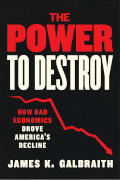
Christian G Appy: American Reckoning: The Vietnam War and Our National Identity (2015, Viking): In the 1950s we were brought up to believe that America was a force for good in the world. The Vietnam War destroyed that self-conception -- at least it did for me and for many of my generation. Appy's brief history reminds us of how dirty the war got -- he starts with a story of GIs playing "gook hockey" (using Jeeps to run down Vietnamese children) -- and reminds us how even LJB but especially Nixon and Kissinger extended the war beyond any hope of success, just to show the world their resolve, to demonstrate how much punishment we could inflict even in defeat. The book goes on to look at how the postwar memory has been sanitized, not least the propagation of a myth that the war was lost not by our brave soldiers but by the cowardly antiwar movement -- America's own Dolchstosslegende (as with Germany's, a license to resume further wars). Worse than defeat, America seems to have learned nothing from Vietnam. With this book, at least, you might learn something. Appy previously wrote Patriots: The Vietnam War Remembered From All Sides (2004), an oral history. Karen Armstrong: Fields of Blood: Religion and the History of Violence (2014, Knopf): One of the better writers on the history of religion, a Christian but not limited thereby. Her thesis in The Great Transformation: The Beginning of Our Religious Traditions (2007) was that the religions that emerged in the first millennium BCE (as well as Greek rationalism) were developed primarily to limit and control violence, so it isn't surprising that she argues that wars today are not driven primarily by religion. I see the point, and recognize that religion provides a framework that supports many pacifists, but I doubt that would be my conclusion. Anthony B Atkinson: Inequality: What Can Be Done? (2015, Harvard University Press): Economist, published his first paper on the subject back in 1970 when the problem seemed less dire, not that there was nothing to study then. Most likely an important book on the subject, not least for a lifetime's thought into how to overcome it. Kai Bird: The Good Spy: The Life and Death of Robert Ames (2014, Crown): Ames was a CIA operative in Beirut, killed in the 1983 bombing of the US embassy there. He evidently had uncommonly good contacts with Arab political figures as well as the ear of Americans up to president Ronald Reagan, which leaves Bird thinking that had Ames lived longer he might have nudged US policy in the Middle East a bit out of its horrible rut. Bird's memoir Crossing Mandelbaum Gate: Coming of Age Between the Arabs and Israelis shows his own distinctive and idiosyncratic sense of the region. Steven Brill: America's Bitter Pill: Money, Politics, Backroom Deals, and the Fight to Fix Our Broken Healthcare System (2015, Random House): First significant book on the political struggle to pass the Affordable Care Act (ACA, aka Obamacare). As you know, Obama tried to come up with a solution that would be non-controversial -- at least in the sense that all the interested business groups could buy in, with the hope that the Republicans would recognize the bill as kindred to their own proposals. None of that worked: the result was a system that no one loved or much cared for, a set of expensive compromises that solved some problems and created many more. The book is reportedly good on explaining the underlying problems as well as the backroom deals, but less critical about the act's shortcomings. Wendy Brown: Undoing the Demos: Neoliberalism's Stealth Revolution (2015, Zone Books Ner Futures): I read Philip Mirowski's Never Let a Serious Crisis Go to Waste in search of an explanation of why the 2008 crash didn't lead to any serious rethinking of what is wrong with conventional economic thought (aka neoliberalism), but that long book didn't get much deeper than pointing out the mental rut no one dared escape. This looks to explain that logic and its grip. Alexander Cockburn: A Colossal Wreck: A Road Trip Through Political Scandal, Corruption and American Culture (2013; paperback, 2014, Verso): A journal of sorts, from 1995 to his death in 2012, offers a sharp (and often shrill) rewind of history, but reading samples here one finds much broader range than his fondness for slagging the Clintons. Andrew Cockburn: Kill Chain: The Rise of the High-Tech Assassins (2015, Henry Holt): This is the Cockburn brother who previously wrote Rumsfeld: His Rise, Fall, and Catastrophic Legacy, as opposed to Patrick (writes mostly about Iraq) and Alexander (until his death one of the new left's most prolific essayists). This is about the US drone program, which makes it possible for the US to surgically assassinate its enemies with unprecedented precision. Of course, the reality is a bit messier than the theory, but the logic of the process is more dangerous. Drone killing is remote, unilateral, shrouded in secrecy. Once a nation decides it can kill its way to victory, that mentality becomes locked in and is impossible to change: after all, victory is only a few notches down your kill list, and you never have to do anything compromising, like negotiating with the real people you've decided are your enemies. Other recent drone books: William M Arkin: Unmanned: Drones, Data, and the Illusion of Perfect Warfare (2015, Little Brown); Peter L Bergen/Daniel Rothenberg, eds: Drone Wars: Transforming Conflict, Law, and Policy (paperback, 2014, Cambridge University Press); Marjorie Cohn, ed: Drones and Targeted Killing: Legal, Moral, and Geopolitical Issues (paperback, 2014, Olive Branch Press); Lloyd C Gardner: Killing Machine: The American Presidency in the Age of Drone Warfare (2013, New Press); Richard Whittle: Predator: The Secret Origins of the Drone Revolution (2014, Henry Holt); Chris Woods: Sudden Justice: America's Secret Drone Wars (2015, Oxford University Press). Patrick Cockburn: The Rise of Islamic State: ISIS and the New Sunni Revolution (paperback, 2015, Verso): Probably a revised reprint of last year's The Jihadis Return: ISIS and the New Sunni Uprising (paperback, 2014, O/R Books). Cockburn has been one of the most reliable reporters on Iraq, so is probably the first book one should look if you want to learn more about ISIS than the standard news media propaganda. He was close to the first out with a book, but there is lots of competition now, many written to drum up support for US entry in the war. Competing books include (all 2015 except as noted, paperback = pb): Carter Andress: Victory Undone: The Defeat of al-Qaeda in Iraq and Its Resurrection as ISIS (2014, Regnery); Charles H Dyer/Mark Tobey: The ISIS Crisis: What You Really Need to Know (pb, Moody); Benjamin Hall: Inside ISIS: The Brutal Rise of a Terrorist Army (Center Street); Loretta Napoleoni: The Islamist Phoenix: The Islamic State (ISIS) and the Redrawing of the Middle East (pb, 2014, Seven Stories Press); Jay Sekulow: Rise of ISIS: A Threat We Can't Ignore (pb, 2014, Howard Books); Andrew Sharp: The Rise of ISIS: The West's New Crusade (pb, 2014, Create Space); Jessica Stern/JM Berger: Isis: The State of Terror (Ecco). Of these, only Stern's book is particularly substantial -- she was on Bill Clinton's NSC and wrote the book Terror in the Name of God: Why Religious Militants Kill (2004), so she's built her career on the War on Terror, while co-author Berger wrote Jihad Joe: Americans Who Go to War in the Name of Islam (2011). Napoleoni is the only leftist in the bunch. She writes about global capitalism as well as about terrorism, and has close to a dozen books: one intriguing title is Maonomics: Why Chinese Communists Make Better Capitalists Than We Do (2012). David S Cohen/Krysten Connon: Living in the Crosshairs: The Untold Stories of Anti-Abortion Terrorism (2015, Oxford University Press): The anti-abortion movement is unusual (although not unprecedented) in the violence its supporters have directed against its supposed enemies -- chiefly doctors and health care professionals. By violence I don't just mean the occasional murder or threat, but the whole range of harrassment directed against providers and clients. Juan Cole: The New Arabs: How the Millennial Generation Is Changing the Middle East (2014, Simon & Schuster): A view of the Arab Spring, at least before it went sour, when it first seemed like an opening for secular progressives. Cole is an expert on Iraq's Shiites, and has written one of the most informative blogs on the Middle East for more than a decade. Angus Deaton: The Great Escape: Health, Wealth, and the Origins of Inequality (2013, Princeton University Press): The "escape" seems to have been from the hardships that plagued life only a few centuries ago in "the developed world," more recently and sometimes still elsewhere. Deaton lists out such progress but also finds many setbacks -- I suspect that the persistance of inequality has much to do with these. William Deresiewicz: Excellent Sheep: The Miseducation of the American Elite and the Way to a Meaningful Life (2014; paperback, 2015, Free Press): Yale professor, sees America's top universities "turning young people into tunnel-visioned careerists, adept at padding their resumes and filling their bank accounts but unprepared to confront life's most important questions." How old-fashioned not to think that careerism isn't the point of college? After all, exactly that education has long been held up as the answer to inequality -- if not for everyone, at least for the select few who give the system a gloss of meritocracy. Jane Jacobs, in Dark Ages Ahead, argued one of the key signs was "credentialism" -- an aspect of this same problem. Of course, that's a more general problem. This book seems to focus on elite universities, hence on future elites. That they're dumbing down is interesting, but only part of the problem. G William Domhoff: The Myth of Liberal Ascendancy: Corporate Dominance From the Great Depression to the Great Recession (paperback, 2013, Paradigm): Sociologist, wrote one of the classic books on the distribution of wealth in America, Who Rules America? The Triumph of the Corporate Rich (1967, latest revision 2013). He shows how even during periods when liberals were able to reduce inequality (roughly 1933-69) business remained under the firm control of an upper class that never compromise their own power and were always poised to launch the conservative counterrevolution of the 1980s (once they lost their fear of revolution). Domhoff also wrote Class and Power in the New Deal: Corporate Moderates, Southern Democrats, and the Liberal-Labor Coalition (paperback, 2011, Stanford University Press). Greg J Duncan/Richard I Murnane: Restoring Opportunity: The Crisis of Inequality and the Challenge for American Education (paperback, 2014, Harvard Education Press): It's long been felt that equal opportunity is more important than equal outcomes, and that the key to equal opportunity lies in improving the public schools system. However, as the economy becomes ever more inequal, the public schools have an ever harder time compensating on the opportunity front, and it isn't clear to me that they're even getting the chance. I don't know how the authors proposed to overcome this but it looks to me like they're trying to solve the symptom rather than the cause: only by reversing the overall economic picture can you start to get some traction from reforming the schools. Duncan/Murnane previously edited: Whither Opportunity? Rising Inequality, Schools, and Children's Life Chances (paperback, 2011, Russell Sage Foundation). Stephen Emmott: Ten Billion (paperback, 2013, Vintage): The number is the projected near future population, raising the question of how such a population can be supported by available resources and technology -- basically an updated broadside along the lines of Paul Ehrlich's The Population Bomb. Ehrlich's book made short-term predictions of doom that didn't come true, so it's become much easier to deny the concern, but there can be no infinite trendlines, at least in a finite world: sooner or later something has to break. On the same subject: Danny Dorling: Population 10 Billion: The Coming Demographic Crisis and How to Survive It (paperback, 2013, Constable). On Ehrlich, see Paul Sabin: The Bet: Paul Ehrlich, Julian Simon, and Our Gamble Over Earth's Future (2013, Yale University Press). Tom Engelhardt: Shadow Government: Surveillance, Secret Wars, and a Global Security State in a Single-Superpower World (paperback, 2014, Haymarket Books): Probably just a collection of TomDispatch posts, worth tracking although a bit more effort into turning them into a current book would be nice. The focus on the so-called intelligence agencies is more relevant than ever as they seem to be driving US military intervention around the world -- the recent discovery and bombardment of the Khorasan group in Syria is a prime example. Then there is the broader issue of how those agencies manage to suck up so much money for doing mischief that has so little value to the American people. Secrecy is a big part of their recipe for success, so any exposure is welcome. Steve Fraser: The Age of Acquiescence: The Life and Death of American Resistance to Organized Wealth and Power (2015, Little Brown): Throughout much of US history most Americans were quick to blame the rich for the inequities all around us, but in recent years that has changed -- giving the rich a free pass, which they have used to great political advantage. James K Galbraith: The End of Normal: The Great Crisis and the Future of Growth (2014, Simon & Schuster): Important book, argues that the economic growth of much of the 20th century was inflated by a tendency to replace household work (not counted as GDP) with commercial outsourcing (counted as GDP), a trend that more recently has been if anything reversed. What this means is that economic growth will be harder to achieve in the future, so policies which depend on growth to work (like slowing down the increase of inequality) will be harder to achieve or fail completely. I should say this again: I thought Galbraith's The Predator State: How Conservatives Abandoned the Free Market and Why Liberals Should Too (2008) was the best political book of the last decade. Thomas Geoghegan: Only One Thing Can Save Us: Why America Needs a New Kind of Labor Movement (2014, New Press): Labor lawyer, first book was a fine memoir -- Which Side Are You On? Trying to Be for Labor When It's Flat on Its Back (1991) -- then a few books more narrowly on law before he wrote an eye-opening book on the German welfare state, Were You Born on the Wrong Continent? (2011). This seems to be more of a political manifesto, and while I'm skeptical that unions are going to save us, I'm not going to reject any of his arguments out of hand. Next up on my reading table. Marie Gottschalk: Caught: The Prison State and the Lockdown of American Politics (2014, Princeton University Press): This so-called "bastion of freedom" is the world's largest jailer, its justice system trapped in a spiral where the only fixes for past mistakes it can conceive of are more mistakes of the same sort. One blurb: "sheds new light on the relationship between criminal justice and the ideological shape, material conditions, and institutional structure of the broader political economy." Looks like an important book. David Graeber: The Utopia of Rules: On Technology, Stupidity, and the Secret Joys of Bureaucracy (2015, Melville House): Radical anthropologist, best known for Debt: The First 5,000 Years (2011), but more recently wrote The Democracy Project: A History, a Crisis, a Movement (2013) based on his involvement with Occupy Wall Street. The focus here is on bureaucracy, how it actually works, and how that affects our perceptions of how the world works (hint: not very well). Johann Hari: Chasing the Scream: The First and Last Days of the War on Drugs (2015, Bloomsbury USA): Wide-ranging history of the world's futile efforts to ban drug use, starting with the first prohibition one hundred years ago and leading up to at least one country that sensibly legalized the whole gamut. Lessons: "Drugs are not what we think they are. Addiction is not what we think it is. And the drug war has very different motives to the ones we have seen on our TV screens for so long." Chris Hedges: Wages of Rebellion: The Moral Imperative of Revolt (2015, Nation Books): Extended screed on the many wrongs of the American state, and a call for resistance, rebellion, revolution. Hedges is such a skilled journalist he has little trouble filling out the critique and making it seem reasonable. Harder to gauge as an action manual, but that's always the hard part. David Cay Johnston, ed: Divided: The Perls of Our Growing Inequality (2014, New Press): Various papers, with overviews by Barrack Obama, Elizabeth Warren, and Adam Smith, and more topical papers, most pretty basic -- focusing perhaps more on the fallout at the bottom of the scale rather than the real action at the top. Jonathan M Katz: The Big Truck That Went By: How the World Came to Save Haiti and Left Behind a Disaster (2013; paperback, 2014, Palgrave Macmillan): The only American news correspondent based in Haiti at the time of the 2010 earthquake, details the international relief effort ($16.3 billion in pledges) and how little it relieved. Harvey J Kaye: The Fight for the Four Freedoms: What Made FDR and the Greatest Generation Truly Great (2014, Simon & Schuster): Everyone knows that the US fought WWII for freedom, but hardly anyone knows about FDR's inspiring definition of what freedom means, probably because two of those four freedoms got junked almost immediately in America's postwar fight to oppose communism and (under more favorable terms to the US) to restore imperialism. I read Cass R Sunstein, who's hardly my idea of a visionary political thinker, The Second Bill of Rights: FDR's Unfinished Revolution -- and Why We Need It more Than Ever (2004), so I have an idea what Kaye is pushing for. I always saw FDR as a man of the upper class, whose aim was always to save capitalism from its own contradictions. But one thing all the Calvin Coolidge worship in the Republican Party has done is to make FDR relevant -- indeed, necessary -- again. These days, those four freedoms look like a pretty good deal. Naomi Klein: This Changes Everything: Capitalism vs. the Climate (2014, Simon & Schuster): Canadian political writer, has written a series of bestselling books which seem to sum up the left's thinking about the rot of capitalism -- No Logo: Taking Aim at the Brand Bullies (2000) on globalization, The Shock Doctrine: The Rise of Disaster Capitalism (2007) factoring in the terrorism wars, and now this one taking notice of climate change. Jeff Madrick: Seven Bad Ideas: How Mainstream Economists Have Damaged the World (2014, Knopf): Author of one of the best historical context books on the recent crash -- Age of Greed: The Triumph of Finance and the Decline of America, 1970 to the Present (2011, Knopf) -- broadens his critique to include a number of key ideas in economics. The ideas range from established zombies to key insights that are often misunderstood and misapplied (like Adam Smith's "invisible hand"). Some economists, like Alan Blinder, were not amused. John Micklethwait/Adrian Wooldridge: The Fourth Revolution: The Global Race to Reinvent the State (2014, Penguin): Journalists for The Economist, they've written upbeat books on globalization (A Future Perfect: The Challenge and Hidden Promise of Globalization), conservatism (The Right Nation: Conservative Power in America, and fundamentalism (God Is Back: How the Global Revival of Faith Is Changing the World). Their new riff is that the future belongs to the elites that are most effectively to usurp the power of the state. In this, they're more impressed by Singapore and China than the US, where the rich are trying to destroy democracy lest it ever yield to the masses. Sendhil Mullainathan/Eldar Shafir: Scarcity: Why Having Too Little Means So Much (2013, Times Books): A piece on behavioral economics, answering much with little: "scarcity creates a similar psychology for everyone struggling to manage with less than they need." Of course, without scarcity there would be no economics, which is a big part of the reason businesses and economists work so hard to enforce scarcity. Also why so much changes when you imagine a transition to post-scarcity conditions. I doubt the authors will go there, but they should give you lots of reasons why you should. Rick Perlstein: The Invisible Bridge: The Fall of Nixon and the Rise of Reagan (2014, Simon & Schuster): Third huge volume in the author's history of the right-wing in America, following Before the Storm: Barry Goldwater and the Unmaking of the American Consensus and Nixonland: The Rise of a President and the Fracturing of America. Not a flashy period for the rise of the US right, but unless you believe Reagan was some sort of deus ex machina, the shift found some kind of traction in the half-decade's turmoil. Robert D Putnam: Our Kids: The American Dream in Crisis (2015, Simon & Schuster): Sociologist, most famous for his study of the breakdown in social bonds in Bowling Alone: The Collapse and Revival of American Community (2000). He returns to his lower middle class home town here, tracks down what happened to his high school class, and finds that fate has been tough, with fewer and fewer Americans enjoying the opportunity for upward mobility. This won't come as a surprise to anyone who can unpack statistics, but the case examples may make an impression where numbers numb. James Risen: Pay Any Price: Greed, Power, and Endless War (2014, Houghton Mifflin): "War corrupts. Endless war corrupts absolutely." Risen has broken several major stories about that corruption, and adds a few more here. I'm not sure it rises to the level of synthesis of the above quote, but it should contribute to one. Shira Robinson: Citizen Strangers: Palestinians and the Birth of Israel's Liberal Settler State (paperback, 2013, Stanford University Press): After 700,000 Palestinians fled the war zone in what became Israel, the remainder (now 15% of Israel's population) were offered a peculiar form of citizenship ("how to bind indigenous Arab voters to the state while denying them access to its resources"), setting up a tension that continues to the present day. This looks to be one of the few books to address this topic. Joseph E Stiglitz/Bruce C Greenwald: Creating a Learning Society: A New Approach to Growth, Development, and Social Progress (2014, Columbia University Press): Lectures from a series named for Kenneth J. Arrow, focusing on the role of learning throughout the economy and society, but "lectures" sells this short -- this is a substantial book, well over 500 pages, and likely an important one (not least given how little regard the right has for learning). Joseph E Stiglitz: The Great Divide: Unequal Societies and What We Can Do About Them (2015, WW Norton): Another volume on inequality, following the author's The Price of Inequality: How Today's Divided Society Endangers Our Future (2012). This is probably a second choice in that it's built from essays written over several years, but Stiglitz is a brilliant economist and the problem is so huge and sweeping you have to come at it from many angles. Astra Taylor: The People's Platform: Taking Back Power and Culture in the Digital Age (2014, Metropolitan Books): Looks like this creates a strawman argument about what a democratic marvel the internet is then knocks it down showing how "a handful of giants" have cornered it and usurped it for their own nefarious ends. Then she tries to rescue the strawman from the giants. She has made documentary films before, including one on Slavoj Zizek and one she converted into the book, Examined Life: Excursions With Contemporary Thinkers (paperback, 2009, New Press). Zephyr Teachout: Corruption in America: From Benjamin Franklin's Snuff Box to Citizens United (2014, Harvard University Press): For a variety of reasons, American politics has always been easy to tempt with corruption. The founding fathers struggled with the problem: George Washington famously strived to counter any suggestion that he might put his personal interests above the public's, while Aaron Burr was possibly the most notorious of many who sought office as a path to seeking riches. So there's a lot to write about here, especially lately. As is often the case, the problem may exist perpetually, but it only becomes really severe when we let our guard down, either by losing the sense of public interest or by glorifying the naked greed of self-interest. Both are flagrant problems these days. Martin Wolf: The Shifts and the Shocks: What We've Learned -- and Have Still to Learn -- From the Financial Crisis (2014, Penguin): Chief economics commentator at the Financial Times in London; previously wrote Why Globalization Works (2005) and Fixing Global Finance (2008), which now seem to be part of the problem. At least he recognizes that there are problems, and Krugman sees value in most of his proposed reforms. Ask a question, or send a comment. Monday, June 15, 2015 Music Week
Music: Current count 25103 [25069] rated (+34), 429 [432] unrated (-3). Most of this week's report was scooped by last week's Rhapsody Streamnotes. Since then I've kept going down the Spin list, picking up Raekwon, Yo La Tengo (hey), and moving into Oasis (ugh). On the new jazz front, I've played all three new Ivo Perelman records, but only rated one (the most marginal; the others need another play or two). I almost have a full basket of unrated new jazz. Not much mail this week. (So little I added Monday's mail to Unpacking but it's not yet factored into the current count above.) Sorry to say I didn't get any time last week to work on the book blurbs. Two days were taken up with people working on the big elm tree in the backyard. (If I recall correctly, Google has an aerial view of the neighborhood where the tree dwarfs the house we live in.) Then there was the Ornette Coleman post, Rhapsody Streamnotes, and a little thing on building a music website. As you may know, Terminal Zone was a one-shot magazine Don Malcolm and I put together in 1977. A few years back I registered the terminalzone.net domain name with the idea of building a music website there. It's gone through three or four (or five or six) design iterations since then, but still isn't anything substantial. But every time Robert Christgau's blog hits the shoals of web-media indifference, I think there might be some value to dusting it off. (Cuepoint failed to post Christgau's June 5 and 12 columns. No word on whether this hiatus is permanent or just a temporary blip.) So I spent a couple days last week touching up the Terminal Zone Website RFC (request for comments, common jargon for Internet specs). I sent it around to a couple people last week but didn't get any response, so I figured I'd mention it here ("run it up the flagpole to see who salutes"). I see two pieces to the website. One is a ratings database, where some number of invited critics file and track record ratings (although in principle it could be used to track non-participating critic ratings, such as Metacritic does). A while back Chuck Eddy suggested that "you" (this was addressed to the Expert Witness Facebook Group) should put together something like the Pazz & Jop Product Report that the Village Voice ran in 1976-77. At the time, I wrote these notes, which of course resemble the new RFC -- PJPR is really just one view into the ratings database. This all requires a fairly substantial amount of programming, which I am interested in doing. In addition to supporting the website, the software could be used for other niche-oriented websites, and could be tailored as an ap for anyone who wants to keep their own personal ratings list. This could be developed as free software, or could have some value if someone wants to build a business around it (and, of course, there are various hybrid options). The other piece would be a blog which mostly consists of diary entries from critics briefly describing what they've been listening to and what they think of it. I'm thinking of something sort of midway between my Music Week and Rhapsody Streamnotes posts, occurring more or less weekly. These wouldn't be full-fledged record reviews, even in the "ultra-brief" sense of CG reviews. But they would have links to the ratings database, so one could scan the diary entries for mention of an interesting record, then click on the link to get more information on the record (including more critics' views). One of the better examples of the diary format is the pieces collected in Philip Larkin's All That Jazz: A Record Diary. My guess is that the minimal thresholds for a useful website would be close to ten diarists and 20-30 raters, and it could scale up to much more. We would need a team of editors to keep the copy flowing and clean. (I'm not looking to be one of the people involved in day-to-day content management.) We might come up with a board of "executive editors" to add some prestige and overall direction. (That's more my speed, although at least initially I'm offering to do software development, provide a server free of charge, and the domain name.) The blog part could be created almost immediately. My own database and writings can be freely plundered for initial content. Initially I don't expect to make any money on this, and assume that contributions would have to be gratis (non-exclusive license granted but all other rights retained). I'm open to other business proposals. By the way, earlier draft were oriented toward doing something more Wikipedia-ish: building a more extensive reference database. Recently I've been looking for something more manageable, easier to do, more simply useful for a certain community -- music fans like you and me who don't find timely information and guidance from the usual music media resources. Write me if you want more info, or to kick this thing around. Especially if you have editing, writing, rating, sysadmin, and/or engineering skills you'd be interested in contributing. My own time is likely to be disrupted over the next 3-4 weeks. I'm planning on taking a long car trip starting Friday (Oregon and Washington, if that makes any difference). Most places are connected, so I should have email pretty much everywhere (if not all the time). I do hope to get some writing done along the way, but I imagine things like website updates will be few and far between. And historically I've never managed to do much music rating/reviewing on the road. New records rated this week:
Recent reissues, compilations, and vault discoveries rated this week:
Old records rated this week:
Grade changes:
Unpacking: Found in the mail last week:
Ask a question, or send a comment. Sunday, June 14, 2015 Weekend RoundupWe'll start with Richard Crowson's cartoon this week, since we can't seem to escape Brownbackistan. The Kansas state legislature had to go way into overtime to finally come up with a deal to patch up a $400 million shortfall in state tax revenues opened up by Brownback's 2011 income tax cuts (the one which notoriously exempted businessmen from having to pay any state income tax). It's hard to get Republicans to raise any kind of taxes, but some reconciled themselves by coming up with the most regressive tax increases they could find. And some held out to the bitter end, hoping instead to wreck the government and all the evil it stands for. Brownback himself took both positions at one point or another, and reportedly broke down and wept during one of many hopeless meetings with state legislators. The final scheme they came up with satisfied no one, but Brownback did manage to keep some semblance of his signature programs in place (story here). One downside of keeping the legislature in session so long was that they passed even more dumb and vicious bills than they had time for during the regular session -- see the Rosenberg piece below.
Chuck Powell sent in a link to a piece posted on Tyler Cowen's blog (thankfully not written by Cowen), The political economy of Kansas fiscal policy. The post makes a number of reasonable points, such as the split between rural and urban Kansas, and factors which distort both Wichita and Kansas City from urban/suburban norms. Also that "cutting the size of government was never a serious option," mostly because the costs of education and health care -- the two main expenses of state government -- have been rising much faster than inflation and economic growth. At one point the author says, "Republicans should be wise enough to not depend on luck, and they should be wiser predicting how trend lines go." But he doesn't go into why our current generation of Republicans are so bad at those things. For one thing, past generations were a different story -- you could argue that their priorities were wrong, but you rarely doubted their basic competence: something which Brownback and many others make you wonder about daily. One could write a whole post on this one question, but for now I think there are two main reasons: (1) the Republicans have created a very effective grass roots political organization, largely peopled by gun nuts and anti-abortion fanatics, backed by local chambers of commerce and big money, and they have become very effective at scamming the system; one result of this is that Republicans rarely have to worry about losing to Democrats -- their only meaningful debate is among themselves, which makes them increasingly isolated from and ignorant of other people and their problems; (2) in other words, they live in a bubble, and this bubble is increasingly saturated with Fox News and other right-wing media, which mostly just teaches them to scapegoat while making them stupid and mean. The latter, of course, is a problem with Republicans all over the nation. What makes Kansas worse than the rest is how hard it is to beat them at the game they've rigged. In 2014, Republicans ran 5-8% above the best polls all across the ballot, on top of the gerrymander that guaranteed them legislative majorities. I wouldn't rule out fraud and intimidation, but most likely that's their superior get-out-the-vote organization. Some more scattered links this week:
The problem with Reagan's deficits isn't that he created them, and certainly not that we enjoy scolding the Republicans for their spendthrift ways (not to mention hypocrisy), but that Americans got so little of real value out of the extravagance: a lot of worthless military hardware -- the Star Wars-marketed anti-missile system still doesn't work, but the stuff that did work and has since been deployed in wars all around the world has been far more damaging -- and a small number of billionaires with their correspondingly inflated egos. Perhaps even worse, that explosion of debt is now commonly seen as crippling our government -- originally conceived of, by, and for the people as a tool for securing the general welfare -- from doing even relatively simple things that need to be done. The single most damaging thing Reagan ever did was to make a joke about "the scariest words in the English language: I'm from the government and I'm here to help." That such a joke can be turned into a full-blown ideology is a testament to a deeper innovation that Reagan wrought: he liberated American conservatism from the bounds of reality, allowing them to focus on imaginary problems, oblivious to whatever consequences their madness may produce. Back in the 1980s he was said to have "Teflon" -- a non-stick coating that protected him from any of his scandals. Looking back, it now seems that the key to his innocence was his very disconnectedness. Maybe someday a biographer will manage to identify the point when his fantasy gave way to Alzheimer's, but for all practical purposes it hardly matters. Ask a question, or send a comment. Saturday, June 13, 2015 Rhapsody Streamnotes (June 2015)Another month (plus one day) since last one, this one by far the largest of the year so far, but actually the new records are way down: 59 (including new compilations) compared to 103 last month, and before that: 101, 114, 97, 132. The difference is a mop-up operation in the old music section, focusing on bands which placed records in a list published by Spin of their Top 300 Albums: 1985-2014. What I've tried to do was not just to fill in grades for listed albums I had missed but to pick up most of the previously unrated records of those artists. In some cases those records were highly recommended by others. In others I just felt like the context would help me out. And for completeness sake, I list the previously rated albums in the Notes below. (The file linked above has the complete list plus all of my grades to date.) That exercise was made possible by streaming from Rhapsody, and in some cases was limited by it. I've only gotten a little more than half way through the list, but thus far I've looked for the following records but not found them:
The second half will have more records to look up. I was originally missing 81 records from the list (27%). Thus far I've whittled that down to 46 (15%). Not surprisingly, as Spin's list gets more obscure, my coverage of it becomes a bit more scanty. Among the missing record artists to come: Aaliyah, Aerosmith, Tori Amos, Animal Collective, The Books, Boredoms, Neko Case, Cursive, The Deftones, The Field, Godspeed You! Black Emperor, Green Day, Janet Jackson, Jimmy Eat World, The Killers, Frankie Knuckles, Lil Wayne, Mastodon, Maxwell, M83, The Microphones, Mobb Deep, My Chemical Romance, Nine Inch Nails, Oasis, Orbital, Ride, Sigur Rós, Slint, Snoop Doggy Dogg, Sunny Day Real Estate, Swervedriver, System of a Down, Teenage Fanclub, The Unicorns, 2Pac, Wilco, Yo La Tengo. Most of those I've heard at least one record by. Just evidently not the right one. During the first two decades of the years in question, I only heard records I bought, and I made a point of only trying to buy records I would probably like. Rhapsody has allowed me to listen to more stuff I wouldn't have bothered with before, and more often than not it proves my instincts right. (Admittedly, I'm not a big alt/indie fan, and my hip-hop proclivities run away from gangsta and toward underground, so Spin has never been a very good predictor of my taste.) Indeed, of the records I've filled in so far, the grade breakdown suggests that I was mostly right to skip those records: A-: 4, B+(***): 4, B+(**): 6, B+(*): 5, B: 13 (40.6%) -- that split suggests some of the latter should have been graded lower, as probably would have happened had I bothered to play them more than once. By the way, Christgau had two of my four A- records at A- (both hip-hop), the other two at ** (but he had a different Built to Spill at A-). Even before the Spin piece, I started on this path by trying to clean up a pair of long-owned but never-graded Bright Eyes CDs. And at the last minute, I added a couple jazz albums while I was working on my Ornette Coleman post. Not big news that the unheard Colemans made the A-list, but I was surprised by two records with sideman appearances (not something he ever did much of). I'll keep chugging away on the Spin records next month, so the new record count may remain depressed. On the other hand, I have been skimming fairly efficiently, coming up with 12 A-list new releases this month vs. 8 last month (albeit 15 in April and 14 in March). Some of what I found this month was due to a premature mid-year best-of from Spin. I expect we'll see more "so far" lists at midyear approaches, so that should help identify prospects. As for the new records, this is landing at a point when Robert Christgau's weekly Expert Witness column has been suspended. I don't have any idea how to get the attention of Medium/Cuepoint and apply any pressure to renew the column -- I gather this isn't hopeless at this point, even if the odds aren't great. If he stops publication, there will certainly be worthwhile new albums that I (or pretty much anyone else) will never notice. I figured I could illustrate that with stats from this column, but it looks like he's only reviewed 2 of my 55 recent releases -- Cracker and Slutever, ones I was totally unaware of before he wrote them up (and don't like as much as he does). Still, those are things I wouldn't have heard of otherwise, and most month there are more of them. It also seems likely that he would eventually weigh in on several albums I like below: Bassekou Kouyate, Shamir, maybe Mbongwana Star and Willie & Merle. I also wonder whether he'll find something in Jason Derulo that eluded me. (And to a lesser extent, in all respects, Young Thug.) On the other hand, he's only noticed Murs on occasion (White Mandingos but no ¡Mursday!), and thus far he hasn't noted Colin Stetson (who may be a jazz guy but that isn't his fan base) at all. Most of these are short notes/reviews based on streaming records from Rhapsody. They are snap judgments based on one or two plays, accumulated since my last post along these lines, back on May 12. Past reviews and more information are available here (6549 records). Recent Releases
Aguankö: Invisible (2015, Aguankö Music): Latin jazz septet led by Alberto Nacif on congas, with trumpet, trombone, sax/flute, piano, bass, more percussion, and guests (including a vocal). Four (of nine) cuts are cha cha chas, two each mambos and guaguankos. B+(**) [cd] All Included: Satan in Plain Clothes (2014 [2015], Clean Feed): Scandinavian freebop group, one I file under saxophonist Martin Küchen's name because he organizes lots of groups like this, but Thomas Johansson's trumpet and Mats Äleklint's trombone are every bit as prominent, and the bass-drums of Jon Rune Strøm and Tollef Østvang keeps it all roiling -- so, yeah, all included. Just not sorted out as well as Küchen's Angles groups. B+(***) [cd] Aimée Allen: Matter of Time (2013-14 [2015], Azuline): Singer-songwriter, born and raised in Pittsburgh but moved to Paris (some songs in French), fourth album, about half originals, half standards, including a particularly nice "Corcovado" with Romero Lubambo. B+(**) [cd] American Wrestlers: American Wrestlers (2014 [2015], Fat Possum): Scottish singer-songwriter Gary McClure, formerly of Working for a Nuclear Free City, moved to St. Louis and came up with this understated but tuneful album. B Priscilla Badhwar: Mademoiselle (2014 [2015], self-released, EP): Not clear where she comes from, but this 6-track (21:17) CD was recorded in Austin, TX, featuring French tunes, some in French, some in English. B+(**) Blur: The Magic Whip (2015, Parlophone): First group album since 2003's Think Tank, although Damon Albarn has been busy in the meantime, with last year's solo album and various projects, most famously Gorillaz, perhaps best 2002's Mali Music. I take it the band has been periodically touring all along, and this album came together when they found themselves with some free time in Hong Kong. Less guitar and more pop than their 1990s albums; likable and professional. B+(**) Randy Brecker/Bobby Shew/Jan Hasenöhrl: Trumpet Summit Prague (2012 [2015], Summit): Three trumpet stars backed by the Czech National Symphony Orchestra and St. Blaise's Big Band, arranged and conducted by Vince Mendoza. The trumpets are fiery enough, but the only tune that gets everyone swinging is "Caravan" (so they play it twice). B [cd] Built to Spill: Untethered Moon (2015, Warner Brothers): First album in six years, only their third since 2001, the new group (aside from leader Doug Martsch) ever farther removed from the old group, except inasmuch as it was only the guitar that really mattered. Opens fiercely, then settles in for the long haul -- recapitulating the band's career. B+(*) Cannibal Ox: Blade of the Ronin (2015, iHipHop): Underground hip-hop duo, Vast Aire and Vordul Megilah, dropped their debut album, produced by El-P, in 2001 (The Cold Vein), went on to three or four solo albums each, and finally regrouped for their second album here (mostly produced by Bill Cosmiq). B+(***) François Carrier/Michel Lambert: Io (2013 [2015], FMR): Alto sax-drum duets, force the former to work harder which usually pays off but leaves some rough edges. B+(***) [cd] François Carrier/Michel Lambert/Rafal Mazur: Unknowable (2014 [2015], Not Two): Recorded live at Alchemia Jazz Klub in Krakow, in most ways comparable to the alto saxophonist's many recent records, with sidekick Lambert on drums, but Mazur's electric bass guitar rounds out the sound, adding a resonance that is missing in the duo. A- [cd] Hugo Carvalhais: Grand Valis (2014 [2015], Clean Feed): Portugese bassist, third album, a lovely avant-chamber thing with Dominique Pifarely on violin, Gabriel Pinto on keyboards (including organ), and Jeremiah Cymerman credited with "electronic manipulation." B+(**) [cd] Joan Chamorro & Andrea Motis: Feeling Good (2012 [2015], Whaling City Sound): Motis is a 20-year-old singer -- 16 when this was recorded -- from Spain who plays up the cuteness in her voice and works her way one fine standard after another -- "Lover Man" twice, once with strings and one without. Charmorro plays bass and tenor sax, leading a band that grows or shrinks almost unnoticeably. Motis also contributes some trumpet and alto sax. B+(***) [cd] Lorin Cohen: Home (2014 [2015], Origin): Bassist, from Chicago, based in New York, first album. I guess we can call the group a hornless septet, unless you want to count Yvonnick Prene's harmonica; the rest of the line up is piano (Ryan Cohan), vibes (Joe Locke), drums, steel pan, and percussion. B [cd] Colours Jazz Orchestra: Home Away From Home: Plays the Music of Ayn Inserto (2013 [2015], Neu Klang): Maybe I should refile this under Ayn Inserto, the conductor as well as composer. She studied at New England Conservatory, most notably under the late Bob Brookmeyer, and teaches and has her own big band in Boston. CJO is based in Italy, where this was recorded. Some nice passages, especially when they mix in that Latin tinge. B+(*) [cd] Cracker: Berkeley to Bakersfield (2014, 429 Records, 2CD): Former Camper Van Beethoven frontman David Lowery's country-rock outfit, off-and-on since 1992, but I don't think I ever noted the connection before. The Berkeley disc is straight-ahead rock, with occasional barbs about billionaires. The Bakersfield one breaks out the steel guitar and goes country, for better music if not politics. B+(***) Cuir: Chez Ackenbush (2014 [2015], Fou): French avant-jazz group: John Cuny (prepared piano), Jérôme Fouquet (trumpet), Jean-Brice Godet (clarinet), Yoram Rosilio (bass), Nicolas Souchai (trumpet) -- part of Jean-Marc Foussat's crazed stable. Rough going at first before they find some sort of interplay. B+(*) [cd] Dan Deacon: Gliss Rifter (2015, Domino): Plays synths and sings, his electronica not especially danceable, most interesting when the beat gets jumbled and trash avalanches from the shelves, but he has yet to marshall that into a real noise aesthetic. B+(*) Jason Derulo: Everything Is 4 (2015, Warner Brothers): I liked his 2014 album Talk Dirty as much as (nearly) anyone, and expected more here. First couple tracks seemed plausible, but then the first guest feat. (K. Michelle) tripped on a pet peeve then got worse. More slumming with the stars doesn't help. B+(*) Deux Maisons: For Sale (2013 [2015], Clean Feed): Avant-chamber group, two French (brothers Théo and Valentin Ceccaldi, violin and cello respectively), two Portuguese (Luis Vicente on trumpet and Marco Franco on drums). The strings scratch and itch, the drums and trumpet help pass the time. B+(**) [cd] Chris Dingman: The Subliminal & the Sublime (2013 [2015], Inner Arts Initiative): Vibraphonist, second album, commissioned by Chamber Music America, an impressive group with Loren Stillman (alto sax), Fabian Almazan (piano), Ryan Ferreira (guitar), Linda Oh (bass), and Justin Brown (drums). Aims for sublime but sometimes that just means pretty, or plodding. B+(*) [cd] The Eye: The Future Will Be Repeated (2015, Ba Da Bing): Experimental rock group from New Zealand, early albums (like 2005's Black Ice) have minimal cover artwork, perhaps with drones even simpler and starker than this minor klang. B+(**) Scott Hamilton: Scott Hamilton Plays Jule Styne (2015, Blue Duchess): Tenor saxophonist, a retro-swing throwback in the late '70s who's scarcely budged an inch since then, except maybe to deepen his feel for ballads. Styne's tunes range from "Sunday" in 1927 to "People" in 1964, a few you'll know instantly. With Tim Ray on piano, Dave Zinno (bass) and Jim Gwin (drums), plus a bit of guitar on one tune. Had I given this a casual spin, I would have said "typically fine," but it's been stuck in my changer for three days and I'll be sad when I have to move on. A- [cd] Fred Hersch Trio: Floating (2014, Palmetto): With John Hébert on bass and Eric McPherson on piano, starts with a rip roaring "You & the Night & the Music," ends with "If Ever I Would Leave You" (Al Lerner) and "Let's Cool One" (Monk), the filler originals dedicated to various contemporaries (as near as I can tell), and all the more exquisite when he slows down. (Came out last year and made a lot of lists.) A- [dl] Joe Hertenstein/Pascal Niggenkemper/Thomas Heberer: HNH2 (2013 [2015], Clean Feed): Drums, bass, and cornet respectively, the latter with the more substantial career (credits back to 1987 including some with ICP Orchestra, at least five albums under his own name), but the drummer gets much larger type as well as first billing (compositions: Hertenstein 4, Heberer 3, group 4). Nothing on the cover to distinguish this title from 2010's HNH but the liner notes refer to HNH2. Free jazz, not very flashy but engaging. B+(**) [cd] I Love Makonnen: Drink More Water 5 (2015, OVO Sound): Rapper Makonnen Sheran, released a legit EP last year and hitched a big single to Drake but returns here with a mixtape, his thirteenth since 2011. Not easy to find a streamable source of this, and I don't quite know what to make of it -- least of all a video I snagged with lots of drugs and exploding heads. Probably meant to be funny. B+(**) [dl] Christoph Irniger Trio: Gowanus Canal (2012 [2013], Intakt): Swiss tenor saxophonist, trio with Raffaele Bossard on bass and Ziv Ravitz on drums. They play free jazz, but mostly at a moderate pace you can follow, logic you can appreciate, and none of that screech or yowl. B+(***) Christoph Irniger Pilgrim: Italian Circus Story (2014, Intakt): Quintet, the leader's tenor sax still the only horn with Stefan Aeby on piano and Dave Gisler on guitar -- Aeby gets a lot of space. B+(**) Christoph Irniger Trio: Octopus (2014 [2015], Intakt): Once again, a mild-mannered free jazz tenor sax trio, impressive logic that sneaks up on you without threatening to blow you away. A- [cd] Eugenie Jones: Come Out Swingin' (2015, Open Mic): Singer, second album, wrote 8 (of 12) songs here, the covers covering ground from "Begin the Beguine" and "All of Me" to "Bye Bye Blackbird" and "It's a Man's Man's Man's World." B [cd] The Knocks: So Classic (2015, Big Beat, EP): NY duo, Ben "B-Roc" Ruttner and James "JPatt" Patterson aim for dance pop, with singles back to 2010 (including one called "Classic" dropped in here in two mixes) and an album in the works. Five tracks, 20:54. B+(*) Bassekou Kouyate & Ngoni Ba: Ba Power (2015, Glitterbeat): Ngoni player from Mali, his group featuring his wife, powerful singer Amy Sacko. Broke out a bit with 2013's Jama Ko, and this is comparably intense. A- Brian Landrus Trio: The Deep Below (2014 [2015], BlueLand/Palmetto): Usually a baritone saxophonist, has at least thre previous records, offers a tour of the deeper single reeds -- six cuts on bari, five on bass clarinet, two on bass flute, one with bass sax. Lonnie Plaxico gets some bass spots too. Billy Hart is the drummer on an album that is not only deep but softly understated. B+(***) [cd] Deborah Latz: Sur L'Instant (2013 [2015], June Moon): Standards singer, also acts, based in New York but recorded this third album in Paris, backed by piano (Alain Jean-Marie) and bass (Gilles Naturel). B+(**) [cd] Ingrid Laubrock Anti-House: Roulette of the Cradle (2014 [2015], Intakt): Tenor (and soprano) saxophonist, from Germany, adopted this group name from a 2010 album, and you can see why she wants to keep the group going: Mary Halvorson (guitar), Kris Davis (piano), John Hébert (bass), and Tom Rainey (drums), joined on two tracks by Oscar Noriega (clarinet). Davis and, especially, Halvorson enjoy some remarkable runs here. B+(***) [cd] Major Lazer: Peace Is the Mission (2015, Mad Decent): Dancehall project of hip-hop producer Diplo, originally with British house DJ Switch (Dave Taylor), although Diplo has a new crew of collaborators here, plus adds featured vocalists on most cuts. B+(*) Mbongwana Star: From Kinshasa (2015, World Circuit): From Congo, led by two musicians (Coco Ngambali, Theo Nsituruidi) from Staff Benda Bilili, at first seem to fall short of the classic soukous romps, but a ballad (of all things) convinced me they are for real, and they pick up the pace when Konono No. 1 drop in to resuscitate the beat, a bit of thumb piano that sweetens the guitar. A- The Gary McFarland Legacy Ensemble: Circulation: The Music of Gary McFarland (2015, Planet Arts): McFarland (1933-71) played vibraphone, but is probably best remembered (when at all) as a composer and associate of Bill Evans and Bob Brookmeyer. Drummer Michael Benedict directed this quintet, with Joe Locke (vibes), Sharel Cassity (sax), Bruce Barth (piano), and Mike Lawrence (bass), as they skip through eleven McFarland pieces. Mostly breakneck bop, the leaders get a terrific workout -- most impressively Locke, his best performance in a long time. A- [cd] Monster Rally & Jay Stone: Foreign Pedestrians (2014 [2015], Gold Robot): Ted Feighan, with several previous albums as Monster Rally, does the beats, while Stone raps -- sometimes: second half is instrumental, sort of like Clams Casino. B+(*) Murs: Have a Nice Life (2015, Strange Music): Underground rapper Nick Carter, ninth album since 1997, although lately he's been most impressive on side projects, like White Mandingos' The Ghetto Is Tryna Kill Me and ¡Mursday! (with ¡Mayday!). Rapid-fire raps run rings around the ups and downs of ghetto life, the usual topics but not the usual take. A- Willie Nelson/Merle Haggard: Django and Jimmie (2015, Legacy): Reinhardt and Rodgers on the tribute, adapted but not penned by the leaders, and not exactly proven here or elsewhere, though they're not the sort of fools not to be fans. Another tune written for them is "It's All Going to Pot," which starts like a Haggard rant but winds up in Nelsonland. Haggard does claim four credits, including a "Swinging Doors" remake and a yarn about Johnny Cash, while Nelson shares four with Buddy Cannon, including a plug for "Alice in Hulaland." The other cover you know is from Bob Dylan, but don't give it a second thought. A- Pixies: Indie Cindy (2014, Pixiesmusic): Band reformed after a 23-year break, evidently a better brand than Frank Black and the Catholics, reuniting with Joey Santiago (guitar) and Dave Lovering (drums) but not Kim Deal (bass). Album is actually a compilation of three EPs, a strategy that diffused the reunion's impact. B Jeff Richman: Hotwire (2015, Nefer): Guitarist, more than a dozen albums since 1986. Credits are broken out cut-by-cut, but most pieces feature Jimmy Haslip (bass, producer), Vinnie Colaiuta (drums), and George Whitty (keybs), with guitarist Mike Stern present on a couple cuts -- only two cuts have horn bits. That all points back to '80s-vintage fusion, with hot guitar in the lead. B+(*) [cd] Shamir: Ratchet (2015, XL): First name, last name Bailey, twenty years old, dropped an EP last year that lots of critics liked, returns with debut LP this year. Sings like a girl without overdoing it, beats are understated, the whole finish leans toward matte so nothing blows you away, but it's still sneaky catchy. A- Slutever: Almost Famous (2015, self-released, EP): Philadelphia-born, Los Angeles-based, two women (nameless on their website but reportedly Rachel Gagliardi and Nicole Snyder), eighth release on Bandcamp but that includes a digital track, a "cassingle," a 7-inch with two songs, 4- and 6-song EPs, an 8-track Demos. This 6-track, 15:51 EP supposedly shows their bigger sound and more accomplished songcraft, and it sort of does. B+(**) [bc] Enoch Smith Jr.: Misfits II: Pop (2013 [2015], Misfitme Music): Pianist, second album, what makes this one "pop" is the vocals, mostly Sarah Elizabeth Charles although the only one I'd hang onto is Dee-1's rap. B [cd] Colin Stetson/Sarah Neufeld: Never Were the Way She Was (2015, Constellation): Saxophone-violin duets, with Stetson's saxes on the low end (tenor and bass sax, and contrabass clarinet) and probably responsible for some evident percussion, while Neufeld is also credited with voice (possibly processed, no clear lyrics). All live, no overdubs (something they're proud of, partly because it isn't obvious). Nominally jazz although Stetson's distribution and following slops over into rock and the duo have some soundtrack background. A- Davide Tammaro: Ghosts (2014 [2015], self-released): Guitarist, from Naples in Italy but a Berklee grad based in New York, first album. With alto sax, various keybs, bass, and drums, pleasant groove without pushing unpleasant fusion buttons. B [cd] Henry Threadgill Zooid: In for a Penny, In for a Pound (2014 [2015], Pi, 2CD): Four album with this group (more or less); Jose Davila (trombone, tuba), Liberty Ellman (guitar), Christopher Hoffman (cello), Elliot Humberto Kavee (drums). Threadgill seems to play less flute this time (or more bass flute), but it's the alto sax you notice, rotating against Davila's low notes, the strings swirling around. He called an earlier band Very Very Circus, but he's rarely juggled this adroitly. Might have squeezed the music onto a single disc (40:14, 38:58). A- [cd] U2: Songs of Innocence (2014, Interscope): First album in five years, backed by producers like Danger Mouse who never sounded like this elsewhere and won't again. Unlike the 1990's albums (below), this captures the grand sound of the band -- i.e., what's always made them rather annoying. B Universal Indians w/Joe McPhee: Skullduggery (2014 [2015], Clean Feed): Seems like McPhee will play with anyone, a trait which has helped maked him such an inspiration to free jazz musicians around the world. He plays pocket trumpet and various saxes in this live recording from Belgium, with John Dikeman on more saxes, Jon Rune Strøm on bass, and Tollef Østvang on drums (the rhythm section from All Included). B+(***) [cd] Frank Vignola & Vinny Raniolo: Swing Zing! (2015, FV): Guitarists, Vignola a specialist at swinging standards, Raniolo previously unknown to me but has an album and acted in Boardwalk Empire. Guests include guitarists Bucky Pizzarelli, Gene Bertoncini, and Julian Lage -- the first two did much to invent Vignola's style, enough for a PBS special on Four Generations of Guitars -- and singer Audra Mariel. B+(**) [cd] Kamasi Washington: The Epic (2015, Brainfeeder, 3CD): Saxophonist, has quite a few side credits since 2001, including groups Young Jazz Giants and Throttle Elevator Music, plus work in Gerald Wilson's big band, with Phil Ranelin, also with Flying Lotus (who produces here) and Kendrick Lamar. His debut album is a monster, not just in length but in the 10-piece funk band, 32-piece orchestra, and 20-voice choir he blows over, through, and up. Still, I find the masses turn anonymous, even the singers (and there's much too much of that). He finds firmer ground when the third disc goes historical, with a sharp take on "Cherokee," some first-rate trumpet, and a Malcolm X sample. B+(**) Juan Wauters: Who Me? (2015, Captured Tracks): Former front-man for Queens-based lo-fi postpunk band the Beets, goes solo, as singer/songwriters do. B+(*) Young Thug: Barter 6 (2015, 300/Atlantic): Originally named Carter 6 in a cheap stab at grabbing some Lil Wayne biz, still hard to take him seriously but perhaps it's better that way. B+(**) Recent Reissues, Compilations, Vault Discoveries
The Ornette Coleman Quartet: The 1987 Hamburg Concert (1987 [2011], Domino, 2CD): On the alto saxophonist's superb 1987 then-and-now album, In All Languages, these guys were billed as "The Original Quartet" -- Don Cherry (cornet), Charlie Haden (bass), and Billy Higgins (drums) -- as opposed to his new-fangled Prime Time fusion group. Live, the old guys play classics, which sound as tricky then (and now) as they did when they knocked the jazz world on its ear back in 1959. A- The Red Line Comp: A DCHC Compilation ([2015], self-released): Twelve-cut compilation of DC-based hardcore bands, presumably of recent vintage, only one cut exceeding 2:04 -- Genocide Pact's "Trials in Nihilism" -- totalling 18:24. B+(*) [bc] Willi Williams: Unification: From Channel One to King Tubby's (1979 [2014], Shanachie): A minor roots rasta singer, had a 1978 hit called "Armagideon Time" that was covered by the Clash. This set was recorded a year later with Yabby You, so predictably it's a bit softer than the era's classics but still sounds terrific. A- Yabby You: Dread Prophecy: The Strange and Wonderful Story of Yabby You (1972-85 [2015], Shanachie, 3CD): Vivian Jackson, left home at age 12 and was hospitalized for malnutrition at 17, leaving him with crippling arthritis but eventually he found Jah and King Tubby, had a signature hit in 1972 called "Conquering Lion," and recorded a good deal of dub in the following decade-plus, more sporadically until his death in 2010. Shanachie took an interest and released two albums -- One Love, One Heart (1983) and Fleeing From the City (1985) -- and now they've assembled this memorial box. To call the first disc "Classics" is a stretch but they sketch out his minor hits, only slightly better known (and better) than the "Rarities" on the third disc. Better still is the middle disc, "The Many Moods of Yabby You," including some of his production work. Reportedly comes with a 30-page booklet which may make the difference. B+(***) Old Music
Aphex Twin: Selected Ambient Works 85-92 (1992, R&S): Presented like a compilation, as far as I can tell all the pieces were initially released on the album. The alias belongs to Richard D. James, from Ireland, his debut album an elegent set of simple synth pieces, less quiet than Eno's early ambient, and not without a few disruptive squiggles. B+(***) Aphex Twin: I Care Because You Do (1990-94 [1995], Sire): Skipping over a second (2CD) volume of Selected Ambient Works, some EPs (later collected as Classics), and an album as Polygon Window (Surfing on Sine Waves) we get to his next (in some ways first) proper album. Mostly drum machine loops with analog synth washes, nothing very ambient. Tempted to dock it for the self-portrait cover, but there's something to be said for the geek moving up front. A- Aphex Twin: Richard D. James Album (1996, Elektra): For the cover, James swapped his crude self-portrait painting in for a more menacing self-photo, perhaps to emphasize his transition from analog synths to digital. The change produces faster beats and some sharper sounds, but it also tempts him to work in some processed voice vocals. B+(***) Beyoncé: B'Day (2006, Columbia): The breakout star from Destiny's Child, second solo album although the intervening group album gives you a chance to forget how bad the first was. This starts out promising enough, but it seems inevitable she's going to pull out something truly wretched (e.g., "Resentment"). B+(*) Beyoncé: I Am . . . Sasha Fierce (2008, Music World/Columbia, 2CD): Divide at the ellipsis to get the concept, originally spread out over two discs to emphasize the contrast, but the combined run-time only comes to 41:40, so later editions crammed it all together, then tacked on a second disc of videos -- her real talent? I suppose the two-disc trick is worthwhile. The second runs at dance tempos, but the first is deadly. C+ Björk: Debut (1993, Elektra): Not really a novice after three albums fronting Iceland's original pop-rock group, the Sugarcubes, though even earlier she appeared in a punk band called Spit and Snot and in a jazz fusion group called Exodus. Has an art streak that threatens to get the best of her, but only "The Anchor Song" risks her beat, which "Violently Happy" raised. B+(*) Björk: Post (1995, Elektra): Her electropop shows some promise, but she also has this penchant for arty dramaturgy which can (and in the future will) spoil an album. B Björk: Greatest Hits (1993-2001 [2002], Elektra): I never regarded her as a singles artist, just a wildly slapdash album conceptualizer, so I'm impressed by how consistently strong the rhythm tracks are at least two-thirds of the way through this, so much so I'm prepared to accept her warblings without trying to make sense of them. B+(***) Mary J. Blige: What's the 411? (1992, Uptown/MCA): Debut album, about 21 at the time, has a strong voice but rather than going all diva on us, exec. producer Puff Daddy goes for a hip-hop beat and framework. B+(**) Mary J. Blige: No More Drama (2001, MCA): Long, ran 76:55 in its original edition, before being reshuffled and reissued in 2002 with a different cover. She knocks out eighteen songs here, like some sort of assembly line, which means for once she doesn't oversing them, or overwrite them. B+(**) Blur: Leisure (1991, SBK): First album by one of the top British rock groups of the 1990s, the sort of group that shows up repeatedly in UK all-time lists (along with Oasis and Manic Street Preachers) but never in US lists (unlike Radiohead). Guitar riffs remind me of the Kinks and the Jam. Songs don't. B Blur: Modern Life Is Rubbish (1993, SBK): After an unsuccessful US tour, the band doubled down on their Britishness, so while the music stayed upbeat the lyrics slumped, and the music occasionally turned circusy. B- Blur: 13 (1999, Virgin): Hit and miss, which I guess is the definition of a singles band. B+(**) Bright Eyes: A Collection of Songs Written and Recorded 1995-1997 (1995-97 [1998], Saddle Creek): I.e., roughly from when Omaha native Conor Oberst was 15-17, a period when he led a group called Commander Venus but this starts out solo vocal with guitar, adds occasional backing but not clear who does what. He doesn't have an appealing voice, and much of this is crudely done, but it feels way too grizzled to be labeled juvenilia. B+(*) Bright Eyes: Letting Off the Happiness (1997-98 [1998], Saddle Creek): Second album, first conceived as such, figure it as more of a band album in that Oberst aims for a coherent sound -- still lo-fi, masking his folkie voice with rough-hewn guitar and bass. Final piece runs 25:46, mostly static drone with too little payback at the end. B Bright Eyes: Fevers and Mirrors (1999 [2000], Saddle Creek): For once I have detailed credits, which show they're not really a band -- Mike Mogis adds something trivial to nearly every cut (piano, guitar, vibes, pedal steel, lap dulcimer, hammer dulcimer, mandolin, guiro, percussion, "atmosphere"; but drummer Joe Knapp only appears on 7 (of 14) songs, and a half-dozen others come and go. Includes a prying radio interview, where he reveals, "I want people to feel sorry for me." Sometimes it's hard to get what you want, and vice versa. B+(*) Bright Eyes: Lifted or the Story Is in the Soil, Keep Your Ear to the Ground (2002, Saddle Creek): This is where Oberst started to get noticed. Starts with a grumble then an exaggerated Dylanish grunt, then seems to evolve before your ears, picking up polish if not quite hooks, and turning into someone you might want to spend some time with. Still only 22, but he's starting to get hold of his voice. B+(**) [cd] Bright Eyes: I'm Wide Awake, It's Morning (2005, Saddle Creek): Conor Oberst has finally worked out all the kinks in his voice and songcraft, in the process shedding his connections to folk music -- economic as much as any other -- yet remains as odd as ever, serenading a woman in a crashing airplane, favoring the winning side in senseless wars, and so forth. B+(***) [cd] Broken Social Scene: You Forgot It in People (2002, Arts & Crafts): Canadian alt/indie group led by Kevin Drew, second album, stretches out with some impressive guitar grind but can still back off for a ballad. B+(***) Broken Social Scene: Broken Social Scene (2005, Arts & Crafts): Third album, Brendan Canning shares all song credits with Kevin Drew. Again they push the guitar hard before opening up into something odder. B+(**) Built to Spill: Ultimate Alternative Wavers (1992, C/Z): Alt/indie band from Boise, first album, murky as you'd expect but sometimes the thrash turns into rave. B+(***) Built to Spill: There's Nothing Wrong With Love (1994, Up): Second album, shows solid advances in songwriting and poise, so the guitar is sparser, but used to greater effect. A- Built to Spill: Keep It Like a Secret (1999, Warner Brothers): Fourth studio album, first to chart (120 US), the sort of group -- guitar-heavy '90s alt/indie -- I tend to find boring, but this is eminently listenable, maybe even substantial. A- Built to Spill: Ancient Melodies of the Future (2001, Warner Brothers): What happens when a group that has always gotten along by framing everything with its distinctive guitar sound tries to change its focus, here to melody -- nice enough, as far as it goes. B Built to Spill: You in Reverse (2006, Warner Brothers): Continues in the previous album's "melodic" vein, but with more muscle, a shift you were probably hoping for. B+(**) Built to Spill: There Is No Enemy (2009, Warner Brothers): The band is clearly slowing down, really just Doug Martsch's vehicle, and he's doing things he's done many times before, including stellar guitar solos. B+(*) Kate Bush: The Kick Inside (1978, EMI America): Not quite 20 for her debut, her warbly voice doesn't seem like much of an asset but does the trick on "Wuthering Heights." B+(**) Kate Bush: Lionheart (1978, EMI America): Just 20, no doubt a hero for bookish young girls, her increasingly sophisticated music reminds me first of opera -- the arena where her soprano is most abused, but I note a comic twist both to her voice and to the shifting melodies. Not sure that it's intentional, but it helps cut the bombast. A very ambitious young lady, and talented enough she's worth indulging. B+(**) Kate Bush: Never for Ever (1980, EMI America): Third album, adds a couple singles for her best-of, otherwise more professional chops, less inspired innovation. B+(*) Kate Bush: The Dreaming (1982, EMI America): After two plays I still have no idea. I do know that she was sole producer this time, and that she threw the kitchen sink into the mix -- dozens of exotic instruments, and I noted Danny Thompson and Eberhard Weber among the bassists. [Also that Spin's actual pick, 1985's Hounds of Love, isn't on Rhapsody.] B Ornette Coleman: Twins (1959-61 [1971], Atlantic): A little something Atlantic cobbled together out of scraps a decade after the fact: outtakes from most of the album sessions, including the 16:56 first take of "Free Jazz" -- the five cuts are spread out on as many discs in Rhino's session-oriented 6-CD Beauty Is a Rare Thing box (which with its booklet is the one you probably want, and not prohibitively expensive). The comp was reissued in 1982 with a different cover, reverted to the original cover for a 2005 digital release by Rhino, then was picked up by Water for a 2008 CD. The opener gives you a good sense of the double quartet album, and there's no obvious reason the rest was shelved -- in fact, the quartet sides are so good this could be a box sampler. A- The Cure: Three Imaginary Boys (1979, Fiction): First album from Robert Smith's long-lived band which later on became an icon of art school intellectualism. At this point they were fashionably new wave, with echoes of Wire on occasion and Joe Jackson more often -- although more strained. B+(*) The Cure: The Head on the Door (1985, Elektra): Sixth studio album -- 1980's Boys Don't Cry isn't on Rhapsody, and the rest are so poorly regarded I didn't see any need to bother. But this starts a run of 1985-89 albums that do have a critical rep (and substantial sales), and it's easy enough to see why. Robert Smith has gained flexibility and range as a singer, and the music sports new looks -- even if they're as derivative as his early new wave, he's kept his models up to date. B+(*) The Cure: Kiss Me Kiss Me Kiss Me (1987, Elektra): Originally 2-LP, squeezed onto a single CD by droping one song (restored in the 2006 reissue). The extra length lets them air out a more expansive sound, more suited to the larger venues their newfound popularity opened up. Louder, but not necessarily better. B The Cure: Disintegration (1989, Elektra): The band gets bigger, as does its music, which by contrast makes the personal impression of Smith that much smaller, not to mention less interesting. B Daft Punk: Homework (1993-96 [1997], Virgin): French electronica duo, big enough they moved into arenas and talented enough to make their arena-pomped sound work, at least on Alive 2007 (if not the more relevant here Alive 1997). Still, this debut seems rather sketchy and gamey. B Depeche Mode: Speak & Spell (1981, Sire): Debut album by British synthpop group, a sizable hit (gold, peak 10) in the UK, barely grazed the US charts (192), a pattern which would gradually improve as they got their videos on MTV, but their first US top-10 album was nine years later. Aside from the last cut, the vocals seem distant, buried under unimpressive beats, none of which prepare you for the "Schizo Remix" of their third single, "Just Can't Get Enough." B Depeche Mode: A Broken Frame (1982, Sire): Second album, where Martin Gore (keyboards) takes over songwriting duties from departed Vince Clarke (keyboards, everyone but lead singer Dave Gahan plays keyboards) -- not that the songs offer much to brag about. Sound is more consistent, but less catchy. B- Depeche Mode: Construction Time Again (1983, Sire): Third album, Alan Wilder (keyboards, of course) joins and writes two songs, Martin Gore the rest. Some evidence of an evolving political consciousness ("the grabbing hands grab all they can"). B Depeche Mode: Some Great Reward (1984, Sire): The dour vocals seem typical of British bands of the period -- Ian Curtis proved more prophetic than Johnny Rotten, at least of the Thatcher era -- but the extra blips on the keyboards offer small delights, and when they sparkle enough you get a single. B+(*) Depeche Mode: Catching Up With Depeche Mode (1980-85 [1985], Sire): US alternative to the UK-released Singles 81-85, dropping four songs (notably "People Are People" -- their highest charting pop single, 4 UK, 13 US) while picking up two B-sides. Their albums suggest they may be a singles band, but roll them up and they sound more like a decent but forgettable album. B+(**) Depeche Mode: Black Celebration (1986, Sire): Dark gloom as a formal aesthetic, even though the keybs would be happier shining up dance grooves. B Depeche Mode: Violator (1990, Sire/Reprise): Their biggest album to date, the scale coming through in the music even if it isn't clear that it signifies anything. B Depeche Mode: Songs of Faith and Devotion (1993, Sire/Reprise): Their only album to top the charts in US as well as UK, followed by a 14-month "Devotional Tour" which ended without Alan Wilder. Heavier, denser, dumber too. B- Destiny's Child: Destiny's Child (1998, Columbia): R&B vocal group, often termed teen pop since the four singers, including lead Beyoncé Knowles, were 16-17 at the time. Still, the producers got an adult sound, blending the voices and inserting guest rappers Wyclef Jean, Jermaine Dupri, Master P, and Pras. B+(*) Destiny's Child: The Writing's on the Wall (1999, Columbia): Second album, still four faces on the cover although they're starting to separate out, with LeToya Luckett and LaTavia Roberson soon to split. This is where they blew up, with two number one singles and the album selling over six million copies. Very professional but not much to get excited about. A personal turn off was the a cappella "Amazing Grace" at the end. B+(**) Destiny's Child: Survivor (2001, Columbia): Down to three, with Beyoncé clearly first among unequals. The title cut always struck me as a cliché, but it's the catchiest single here, even if "Bootylicious" sounds more appetizing. B+(**) J Dilla: Donuts (2006, Stones Throw): Detroit hip-hop producer James Yancey, also recorded as Jay Dee, released his best-known album on his 32nd birthday then died three days later, suffering from the blood disease TTP. This is a pastiche, 31 short pieces, most built around a single loping beat with sampled vocal bits that never turn personal. B Dinosaur Jr.: You're Living All Over Me (1987, SST): Second album, group led by J. Mascis, who has kept it going although he's recorded more solo than group albums since 1996. The singer's drawl could (and eventually would) imply folkiness, but at this point they're still young, and all they really want is to let the guitar(s) squeal. B+(**) The Flaming Lips: The Soft Bulletin (1999, Warner Brothers): Neo-psychedelia from Oklahoma City, the group led by Wayne Coyne already had eight albums I haven't heard before this one got dubbed "the Pet Sounds of the 1990s" -- presumably for the lush melodies, thick vocal harmonies, and shimmering synths, although I could just as well aver kinship to Frank Zappa, as artists who make farce without being particularly funny. B The Flaming Lips: Yoshimi Battles the Pink Robots (2002, Warner Brothers): Robot synths and comic characters mixed in with a few things that are nicely shaped as songs. B+(***) Rolf Kühn & Friends: Affairs (1997 [1998], Intuition): German clarinetist, started recording in 1957, called in a lot of favors for his front cover: Randy Brecker, Ornette Coleman, Eddie Daniels, Buddy DeFranco, Wolfgang Haffner, Dieter Ilg, Dave Liebman, Chuck Loeb, Albert Mangelsdorff -- Coleman and Mangelsdorff only appear on one track each (duets with Kühn), Liebman and Brecker two (the latter on a track called "There Is a Mingus Amonk Us"). But the clarinet reigns, especially when all three join together for "Just Friends" and "Three Bopeteers." A- John Lewis: Jazz Abstractions (1960, Atlantic): Fuller title: John Lewis Presents Contemporary Music 1: Jazz Abstractions: Compositions by Gunther Schuller & Jim Hall. Not clear what MJQ pianist Lewis is doing here, other than that he seems to have cornered the market on Third Stream, a phrase that Schuller invented to describe a jazz-classical fusion. The actual pianist here is Bill Evans, but the strings are more prominent (violin-viola-cello, also George Duvivier and Scott LaFaro on bass and Hall on guitar), the drums supplemented by Eddie Costa's vibes, and the horn section is limited to Eric Dolphy and Ornette Coleman. The first cut is very avant for the period. The others explore their abstractions in various ways, each fascinating in its own way, all expertly done. A- Nas: Illmatic (1994, Columbia): Legendary debut album from Nasir Jones, son of jazz/blues guitarist Olu Dara, it doesn't really grab you from the first spin but grows on you, the beats subtle but richly textured, a rapper who has something to say and the flow to put it over. A- Neutral Milk Hotel: On Avery Island (1995 [1996], Merge): This is singer-songwriter Jeff Mangum's debut, produced by Robert Schneider of Apples in Stereo, the latter playing organ and fuzz bass, with a few guest spots for accordion, violin, flute, and trombone -- folkie lo-fi with a dash of exotica. B Neutral Milk Hotel: In the Aeroplane Over the Sea (1998, Merge): Jeff Mangum's second album, got off to a rocky start but gradually built a substantial cult following. Mangum's voice is rough, his strumming emphatic, a harshness that grates at first then picks up speed and threatens to cohere into an irresistible force. B+(**) Pixies: Come On Pilgrim (1987, 4AD, EP): Boston alt/indie group led by a guy known as Black Francis, cut a demo tape before signing, roughly half of which (eight songs, 20:28) were quickly dumped onto this mini-LP (originally a cassette). I never really got into them for reasons I never bothered to figure out, but their sonic appeal was clear even here, their penchant for slipping in and out of time something that can now been seen as anticipating 1990's groups like Pavement. The rest of the demo tape was released in 2002 as Pixies, but I haven't heard it. B+(*) Pixies: Surfer Rosa (1988, 4AD/Elektra): Official first album. Again, the appeal is primarily sonic, fancy guitar riffs over an urgent beat with little else especially clear. One thing that throws me is a short rant called "You F*ckin' Die" that doesn't seem to be on the original album. B+(*) Primal Scream: XTRMNTR (2000, Astralwerks): Scottish group, best known for their third album, Screamadelica (1991, not on Rhapsody). Dense, industrial-grade guitar-bass with synth washes, often danceable. One might worry about lyrics like "Swastika Eyes," but not the music. A- Radiohead: Pablo Honey (1993, Capitol): First album from one of the biggest groups to emerge in the 1990s. One of the first lyrics I noticed was "I want to be Jim Morrison" -- OK, but at this point this is more of a guitar band, and more impressive for that. B+(**) Radiohead: The Bends (1995, Capitol): Second album, on most songs the guitar gives way to sweet, lonely vocals, so it's good to bump into something like "My Iron Lung" where you get some actual thrash. B Radiohead: Hail to the Thief (2003, Capitol): Sixth studio album, runs 14 songs, 56:31, a lot to focus on for an album that doesn't focus on much of anything. B+(*) Slayer: Reign in Blood (1986, Def American): Speed (and/or thrash) metal group, fast anyway, wish I could quantify that for you but not one of my skills. Words are probably full of shit, but they're fast too, no point pondering. I enjoyed the first wave of bands dubbed metal -- roughly Led Zeppelin to Blue Oyster Cult -- but something happened in the early 1980s that turned metal into a cult music and made it incomprehensible to me, and damn annoying as well. Looking at this band's pics, I'd guess that was Kiss, a group that was always a joke but also provided a seed for young bands that wanted to push their logic into ever more extreme directions. Slayer, I suppose, is transitional, which makes this rather tolerable. (Or maybe it's just Rick Rubin producing?) B Slutever: Sorry I'm Not Sorry (2010, self-released, EP): First recording, notes that "Rachel & Nicole both play guitar, drum, and sing" and that it was "recorded in a bathroom and hot, sweaty room, Philadelphia" and "overdubbed in bedrooms, Seattle and Los Angeles." Six songs, 12:22, sound so tinny I can't make out a word. B Slutever: Slutever Demos (2013, self-released, EP): At eight tracks, 27:53, their most substantial effort ever but they're not the sort who'd risk their no-long-player strategy by packing on too much weight. Two songs they later released as a single ("1994/Spit") verify that these are indeed demos, even if they are much better recorded than their first EP. B+(*) [bc] Smashing Pumpkins: Gish (1991, Caroline): A rather proggish band that emerged on the artier end of the 1990s grunge spectrum, led by Billy Corgan, who eventually became the only constant through their discography. First album, demonstrated their ability to fill a stage. B Smashing Pumpkins: Siamese Dream (1993, Virgin): All Christgau had to say: "hooked on sonics." I'm afraid I didn't even get that much, although "Sweet Sweat" does sound better after the sonic freak-out than it would have on its own. B Smashing Pumpkins: Melon Collie and the Infinite Sadness (1993, Virgin, 2CD): A sprawling 28-track album, 121:39 on 2-CD, longer still on triple (or quadruple) vinyl, with an "extended edition" stretched to 351:19, nearly six hours. There is clearly merit both in the harder and softer tracks, but figuring out what/when/where is a task bound to take a lot more effort than I feel up to. B Elliott Smith: Either/Or (1997, Kill Rock Stars): Singer-songwriter, third album, basically just sweet and melancholy voice over guitar. B The Smiths: The Smiths (1984, Sire): Big group in England during the 1980s, one I didn't notice until they split in 1987. The group's appeal depended on how you reacted to singer Morrissey -- Slant described him as "a mordant, sexually frustrated disciple of Oscar Wilde who loved punk but crooned like a malfunctioning Sinatra" -- but much of the early hype revolved around guitarist-cowriter Johnny Marr, unfathomably regarded as some kind of genius. Both seem fairly ordinary here. B+(*) The Smiths: Hatful of Hollow (1983-84 [1993], Sire): A compilation of early singles and several John Peel sessions, not clear how much of it predates the group's first album, appeared in UK in 1984 to much success but was held back in the US for nine years (with some tracks appearing on the 1987 US compilation Louder Than Bombs). The first thing you notice is that it makes a much better case for Johnny Marr the guitarist. B+(***) The Smiths: Meat Is Murder (1985, Sire): Second studio album, self-produced, I find this rolls past me without anything registering much, even the singer's perpetual whine. Cover photo is from Vietnam, but as they say, "Barbarism Begins at Home." But I think not with meat. B The Smiths: The Queen Is Dead (1986, Sire): Spin picked this as the 5th greatest album of the last 30 years, or should I say slotted it between Daft Punk's Discovery and Radiohead's OK Computer? Title cut definitely takes the music to a new level, which makes much of the rest sound like filler. B+(**) The Smiths: The World Won't Listen (1984-86 [1993], Sire): Guessing on the US release date -- this second odds and sods collection appeared in the UK on Rough Trade in February 1987 and promptly went into Sire's sausage machine to be turned into Louder Than Bombs later that year. The singles mix adds some snap early on, but they run short of material. B The Smiths: Strangeways, Here We Come (1987, Sire): Fourth and last studio album -- Morrissey would move on to a solo career without skipping a beat, while Johnny Marr pretty much vanished (until a 2013-14 mini-comeback). Whatever tension existed between the two is buried in their routine performances, the songs a little wordy but that's the singer's trademark. B The Smiths: Rank (1986 [1988], Sire): Live best-of, a handy contract filler once the group broke up. Not a group I have any sentimental attachment to, but this seemed to pick up a little when Morrissey introduced "Ask" ("latest single"), and I liked the one they rocked out on. B+(*) The Smiths: Singles (1983-87 [1995], Reprise): Eleven singles from the four albums (six in album versions), plus seven more that were collected on compilations (six on Louder Than Bombs). They don't strike me as an especially strong singles band, but the selection is consistently tighter and stronger than the source albums. A- The Smiths: The Sound of the Smiths (1983-87 [2008], Reprise, 2CD): First disc adds five tunes to the 18-cut Singles, and second disc adds more stuff -- mostly b-sides but also the title cut and three other songs from The Queen Is Dead. I figure that makes the first disc a slight improvement over Singles, while the second just broadens the picture. Michael Tatum, who is much more of a fan than I am, favors this option. He could be right, but having slogged through all of this I'm still not sure this is an essential, or even a very important, band. A- The Stone Roses: The Stone Roses (1989, Silvertone): Manchester band, considered a very big deal in the UK when their eponymous debut album dropped. I missed this one but bought and liked their second and last from 1994 (admittedly one I scarcely remember), so I was surprised to see how indifferently Byrds-ish this one started out. Picks up a bit toward the end. B+(*) Jamaaladeen Tacuma: Jamaaladeen Tacuma's Coltrane Configurations (2008 [2009], Jazzwerkstatt): Bass guitarist, closely associated with Ornette Coleman during his Prime Time run. Modelled on the Quartet, with Orrin Evans on piano, Tim Hutson on drums, and Tony Kofi handling the tenor role with great aplomb on alto sax. Starts with a 15:23 "India" and closes with a 11:05 "A Love Supreme." B+(***) Tears for Fears: The Hurting (1983, Mercury): British new wave/synthpop band, principally Roland Orzabal and Curt Smith on guitar and bass, plus extra keyb/drum programming. Debut went number 1 in UK charting three singles that aren't immediately obvious but their cloistered drama grows on you. B+(*) Tears for Fears: Songs From the Big Chair (1985, Mercury): A bigger hit, at least in the US, although only "Shout" stands out, and the preponderance of slow songs undercuts both the new wave grind and the synthpop bubble. B Tears for Fears: The Seeds of Love (1989, Mercury): Third album, another bestseller (UK 1, US 8), but the only single is a belabored Beatles rip ("Sowing the Seeds of Love"), and the dramatic vocals elsewhere range from kitsch to sludge. B- TLC: CrazySexyCool (1994, La Face): Hip-hop era R&B vocal trio (T-Boz, Chilli, Left Eye), cut three albums before 2002 when the latter was killed in a car accident, sold 65 million albums and went bankrupt for their trouble. This is their second, the big one, but I'm having trouble sifting the hits from the filler (OK: "Waterfalls"; "Creep"). B+(**) TLC: Fanmail (1999, La Face): A stronger album, I think, which has as much to do with production values as anything else -- less hip-hop, for instance, but better pop hooks. B+(***) A Tribe Called Quest: Midnight Marauders (1993, Jive): Third album, beats soft and jazzed up a bit, several rappers floating around the rhythm, one of those underground things that threatened to break out, partly because they snuck so much tradition inside. A- A Tribe Called Quest: Beats, Rhymes and Life (1996, Jive): Hard to distinguish this from its two fine predecessors, but I find it a big lighter, airier, and don't deem that a minus. A- A Tribe Called Quest: The Love Movement (1998, Jive): Fifth and final album -- Q-Tip moved on to release Amplified the following year. They stay well within their limits. B+(**) U2: Achtung Baby (1991, Island): In the late 1970s I made a point of tracking down everything Eno was associated with -- even the Portsmouth Synphonia albums -- so expected something more out of this big Irish band than they ever delivered, only to give up before their marginal prog move here. "One" at least is one of their better songs. B+(*) U2: Zooropa (1993, Island): Several surprises here, including receding vocals and electronic textures that finally suggest producer Eno is having an effect -- still, don't believe the reviews that regard this as EDM -- and a country song at the end ("The Wanderer") that sounds like it was written for Johnny Cash, not least because Cash guests on it. B+(**) U2: Pop (1997, Island): Post-Eno, the new producers get a compelling pop thrash on occasion (e.g., "Moto") but then the result sounds nothing at all like U2, and when it does it doesn't. B+(*) Weezer: Weezer (1994, DGC): Los Angeles band's first album, one of those 1990s alt-rock groups that drove me to focus on jazz, not that I paid this particular one enough notice to let them annoy me, nor that their simple rock cheer is all that annoying. First of three eponymous albums (of nine albums through 2014), conventionally color-coded (blue here; green in 2001 and red in 2008). B Weezer: Pinkerton (1996, Geffen): Second album, shows considerable variety compared to the first album's pop-guitar thrash, which isn't always for the better -- a couple of the early rockers are tighter, and the closer is an acoustic ballad, an apologia. B+(*) Revised GradesSometimes further listening leads me to change an initial grade, usually either because I move on to a real copy, or because someone else's review or list makes me want to check it again:
Ornette Coleman: Beauty Is a Rare Thing: The Complete Atlantic Recordings (1959-61 [1993], Rhino/Atlantic, 6CD): Two earlier albums on Contemporary were limited by playing with more conventional jazz musicians, but the young Quartet -- Don Cherry, Charlie Haden, and Ed Blackwell -- is where he blew everyone's mind, a revolution that was consciously reflected in the album titles: The Shape of Jazz to Come, Change of the Century, and This Is Our Music. Then came his fully improvised Double Quartet and their 37-minute jam, Free Jazz. Atlantic went on to squeeze several more albums out of the outtakes, and the box here shuffles them back into order. At the time I wasn't sure that was a good idea, but over the years this has become canonical, the place to start for, well, read those titles again. [was A-]: A Additional Consumer News:Previous grades on artists in the old music section:
Ask a question, or send a comment. Friday, June 12, 2015 Ornette Coleman
As I'm sure you know by now, Ornette Coleman died yestertoday, age 85. He was the first jazz musician I developed a real interest in and affection for. That was in the mid-1970s, at least 15 years after Coleman made his initial big splash, about the time he was inventing a second wave of jazz-rock fusion, one much more radical than the funk-oriented Miles Davis or the prog of John McLaughlin. Coleman was part of the first wave of jazz avant-gardists, a group which variously sought to explore and find novel sounds, rhythms, and harmonics -- to violate the known rules of jazz, to do things that are wrong and somehow make them sound right. (Mingus put it most succinctly: "It's like organized disorganization, or playing wrong right.") Most of that wave wound up contributing to the postmodern synthesis jazz students today are taught: what we call postbop. Martin Williams was so impressed with Coleman that he concluded his Smithsonian Collection of Classic Jazz with three Coleman pieces (plus a Coltrane), arguing that [early] Coleman was the endpoint of the classic jazz tradition. Yet even today most novices find [early] Coleman puzzling before they are swept away. I saw this at work when my hip-hop-loving nephew wanted to get acquainted with jazz and I handed him The Shape of Jazz to Come. Later Coleman pushed further and harder, but by the time he cut his last album, 2006's Sound Grammar, all the stars aligned: no jazz record in the past decade (or really, ever -- and I've been involved in a lot of critic polling on such things) has been so universally exclaimed. It even won the Pulitzer Prize that had so notoriously been denied Duke Ellington. Yet it sounded so offhand you could imagine him knocking sequels out every year -- so it seems odd that it came ten years after his previous album, and nine years before his death. He had remained active well into last year -- playing at a tribute concert in his honor in Brooklyn (and suing to keep the ablum from being released). He never got comfortable with the record business as he hopped from label to label, taking long breaks, never settling in -- he didn't even seem to be happy with his own labels, going back to Artist House in the late 1970s. One imagines he has hoards of tapes that greedy heirs will eventually dump onto the market. Or respectful ones, given that his son Denardo has been his preferred drummer ever since puberty in the 1970s. (Denardo first played on an album in 1966 when he was 10, but it took him a while to finally push Ed Blackwell, Billy Higgins, and Shannon Jackson out of the picture.) My semi-obligatory database dump: Mainline Albums:
Miscellaneous Albums: side-credits, compilations, live albums that only appeared much after the fact:
Selected albums I have not heard:
Miscellaneous unheard live albums:
I expect many more live albums will appear in the future, especially as his estate swings into action, and as Europe's 50-year copyright limit legitimizes more bootlegs. An informal scan indicates that at least 500 albums have Ornette Coleman compositions on them (maybe more than 600; I couldn't check, but "Lonely Woman" is undoubtedly the song leader). I'd hazard a wild guess that two dozen or more albums are tributes/dedicated to Ornette Coleman: most obviously, everything by Old and New Dreams (Don Cherry, Dewey Redman, Charlie Haden, Ed Blackwell -- note that Coleman outlived all the members of his ghost band); also (hard to check this precisely): Affinity [Joe Rosenberg], Borah Bergman, Paul Bley, Charlie Haden, Dave Liebman, Pat Metheny, Paul Motian, Jamaaladeen Tacuma, John Zorn. Ornette Coleman was one of the few jazz musicians Robert Christgau continued to review regularly. His own Consumer Guide reviews are here. This reminds me that the first time I heard Dancing in Your Head was when Bob played it for me. The symphony theme was the most deliriously joyful piece of music I had ever heard. That wasn't the first time I heard Coleman, but it pushed my interest to a higher level. Some links as others write about Coleman:
Some older pieces:
For a final word, Sonny Rollins (quoted in Gans, above):
Ask a question, or send a comment. Monday, June 8, 2015 Music Week
Music: Current count 25069 [25024] rated (+45), 432 [422] unrated (+10). When I counted the number of newly rated records below, I found more than my count this week. I went back and rechecked the database, and found four albums listed as unrated that I should have filled in grades for. Then the count exceeded the list, so I went to the Streamnotes draft file and checked what I had written up against the Music Week lists, and found more discrepancies. I added them to the list below, and now the list is longer than the rated count increase again. Most likely that's the Pixies, who probably should have been reported last week. (At least seems to me like it's been a while.) Of course, if I had a system where I didn't have to update my records 4-5 times when I file a grade, I'd make fewer mistakes. But they'd also be harder to fix, so I guess there's that. The large quantity of old music is due to my attempt to fill in the holes in Spin's Top 300 Albums: 1985-2014 list. I'm a little more than a third of the way through the list. I'm not just doing albums on the list: if I find something else that has a substantial rep and/or looks interesting, I'll slip it in too. Still working on Built to Spill. Next up is Kate Bush (list isn't alphabetical). I'm not spending a lot of time with them, although the A- records get at least two spins, as do some near misses. I'm also not reviewing anything I've graded before, even though some of them look like I may have underrated a bit. It's impossible to keep a list as long as mine in lockstep. New records include two jazz A-listers from old favorites, albeit of very different stripes. But I have been dragging my feet on the jazz queue, which has been growing at a surprising rate. The main source of new records this week was Spin's 50 Best Albums of 2015 . . . So Far (my comp list is buried in the June 1 notebook). That led me to: American Wrestlers, Cannibal Ox, Dan Deacon, Eye, I Love Makonnen, Knocks, Bassekou Kouyate and Ngoni Ba, Monster Rally & Jay Stone, Colin Stetson/Sarah Neufeld, and Young Thug -- two more A-list records there, with Cannibal Ox real close and nothing real bad. I expected Jason Derulo on that list too -- it was plugged as "Spin album of the week" on the same page, and has gotten rapturous reviews from critics I usually agree with, and I loved Talk Dirty as much as they did. I played it twice and it irritated me more than my low B+ grade reveals. The other two new A-list records were obvious things to listen to (Murs, Willie Nelson/Merle Haggard). For a while last week I was logging so many A- records I wondered if I was going soft. As you may have noticed, Medium's music venture Cuepoint hasn't added any new content since June 2, notably missing last Friday's expected appearance of Robert Christgau's Expert Witness. I don't have any inside info on what's happening, but there's evidently some sort of shakeup going on. The basic idea behind Medium is to sucker people into contributing free content, but Christgau at least has been paid from the start. It wasn't unreasonable at first to seed the free content with some commissioned pieces, but sooner or later some bean counter is going to insist on cutting expenses, and freelancers are easy to stiff. So one possibility is that Medium is tightening the screws. Another is that the "vertical" websites like Cuepoint built on Medium's platform haven't clicked. I think one problem with Cuepoint is that they've never had anyone else doing the sort of thing Christgau does -- either as a columnist with a regular schedule or as a reviewer. Everything else is feature writing, and I only recognize two writers on their current homepage, so they're not exactly trying to build a prestige roster. One result is that I've never found anything other than Christgau worth reading there. You may recall that something similar happened at the previous home of Christgau's consumer guide, MSN Music. They had a slightly better music site, probably because living off the fat of Microsoft's monopoly they had more money to throw at it. They had a few columnists, although none generated as much as 5% of Christgau's comment traffic. They hired Christgau to write some live reports, and occasionally you could find something else worth reading there, but it was never organized very well. There are other music websites that seem to be successful, but they do so by cultivating a niche audience and covering that niche at considerable depth -- I'm thinking of Pitchfork, PopMatters, All About Jazz, not that I know how much money they really make. But both MSN Music and Cuepoint seemed to have the idea that they could build a mass audience by covering music at the most superficial level. That they failed should not be a big surprise. Christgau wrote for MSN Music and for Cuepoint for the most pedestrian of reasons: because they paid him to do something he wanted to do anyway. If Cuepoint folds this could be the end of Christgau's Consumer Guide. Or he could find another web angel willing to lose money on him (though it's hard to imagine an infinite chain of them). He could even publish a few CG reviews in a non-paying outlet -- he had written a number of them during his last hiatus just because writing had become an integral part of the way he understands records, and was thinking about giving them to Odyshape (which more or less suspended operations last September). I'd be happy to publish them on his website, where at least they'd add value and interest. Or he could just hang it up -- something I think about, even after I reconciled myself to writing for free. Could be time to start thinking about a post-Christgau website. Expect a Rhapsody Streamnotes later this week. Current draft has 50 new records, 3 new compilations, and 75 old records, so that should be plenty. I'm also working on a series of book blurb posts. I came back from New Jersey last fall with many pages of notes I took in various bookstores, but technical problems have kept me from working on them. The last Book Roundup was on July 3, 2014, so nearly a year. There should be several hundred books worth mentioning in that time. New records rated this week:
Recent reissues, compilations, and vault discoveries rated this week:
Old records rated this week:
Unpacking: Found in the mail last week:
Ask a question, or send a comment. Sunday, June 7, 2015 Weekend RoundupSome scattered links this week:
Also, a few links for further study:
Ask a question, or send a comment. Monday, June 1, 2015 Music Week
Music: Current count 25024 [25005] rated (+19), 422 [420] unrated (+2). Missed four days for my trip to Arkansas. Fortunately, caught a break in the moonsoon on both travelling days, although it rained a lot the two full days at my cousin's house. They let me cook. I opted for comfort food on Friday -- boiled chicken with biscuits with green beans on the side -- and for blowout eight-dish Chinese on Saturday. Still, best meal was probably the standard Arkansas breakfast my second cousin put together Sunday morning -- including the chocolate gravy her grandmother (my aunt) was famous for, although I prefer the sausage gravy on my biscuits. For "old music" I continue to pick off unheard albums from Spin's 1985-2014 list. Sometimes I go deeper into back catalogs I never paid much attention to back in the day, and sometimes not. In the case of Blur I started with a couple of early unheard albums, then skipped to the one selected (13), then checked out this year's reunion album, but I left a few holes I didn't bother with. I started from the git go with Depeche Mode, but doubt I'll go beyond the list album (1990's Violator). Running across more records not on Rhapsody, like Dr. Dre's The Chronic and Guided by Voices' Bee Thousand. Didn't get to much new jazz last year, but did find two surprises: a teenaged standards singer from Spain, Andrea Motis, and a tribute album to little-remembered vibraphonist Gary McFarland. I wrote a little tweet-review of the former mostly to share the bandcamp link. The McFarland tribute was an even bigger surprise: I hear a lot of fine mainstream postbop, but almost by definition the genre sticks with ordinary conventions. But after sitting on the fence for a couple plays, the sparkling performances paid off here. New records rated this week:
Old records rated this week:
Unpacking: Found in the mail last week:
|