Blog Entries [1140 - 1149]Tuesday, April 28, 2015
Today in Kansas
Some items I pulled out of the Wichita Eagle today -- working
off the hard copy, so I'll leave it to you to find online versions at
their website. The common theme is
corruption and/or stupidity in high places, which in these parts means
Republicans. There's always some of this evident, but today's load is
particularly pungent:
Uber hires former Brownback campaign manager: Front page
article. Back story is that the KS legislature passed a bill this
session to insist on more restrictive (i.e., expensive) standards of
insurance for anyone who participates in Uber's ride sharing business
than the standards that Uber has been pushing state legislatures to
adopt. Uber declared that they would boycott Kansas if the bill became
law. Governor Sam Brownback vetoed the bill -- I think that's the only
bill he's vetoed this term, although there have been dozens that should
have been blocked. Uber then announced they would expand their business
in Kansas. Now we see who got the check. Earthquake shakes Kansas, Oklahoma: Only measured 4.1,
with center 9 miles northeast of Guthrie, OK, a little more than 60
miles south of the KS state line, a little more than 20 miles west
of the major pipeline center of Cushing. Cause is almost certainly
wastewater injection into oil wells, which is necessary because oil
wells in the region are so depleted they pump out more water than
oil. Since the practice started, the number of earthquakes ranging
from 4.0 up to about 5.8 has increased from zero to a couple hundred
per year. Former U.S. Rep. Tiahrt takes job with D.C. lobbying firm:
Tiahrt was a Boeing employee before he ran for Congress in 1994, and
during his sixteen years in the House he was for all practial purposes
a full-time Boeing lobbyist -- so identified with the company that
G.W. Bush nicknamed him "Tanker Todd." He left to run for the Senate,
losing the Republican primary to Jerry Moran, then tried to regain
his old House seat, only to loose again (this time to the Kochs' guy).
Meanwhile he's run his own consulting firm, notably advising Boeing
on abandoning sixty years in Wichita for even more anti-labor states
(first to go was his beloved tanker program). We always figured he'd
wind up with a posh DC lobbying firm, and now it's happened. Brownback to re-enact signing of abortion bill: The
bill in question is "the nation's first ban on an abortion procedure
that is used in the second trimester of pregnancy." Brownback signed
the bill when it was passed, but he's so excited it he's going to
travel to four corners of the state and re-enact his signing. Three
of the locations are Catholic high schools (Pittsburg, Wichita, and
Hays). The fourth is a Catholic church in Lenexa (near Kansas City).
Catholics are a small minority in Kansas. Brownback converted to
Catholicism as he became ever more bizarrely obsessed with
anti-abortion ideology. George W. Bush to visit Garden City on Tuesday: "to
attend a private luncheon, according to several local officials."
Garden City is about 200 miles west of Wichita. It is home to a
number of feed lots and the main meatpacking center in west Kansas.
The last time I drove through, I noted that there were no clouds
in the sky, but there was a layer of white fog 4-8 feet above the
ground, mostly the result of trucks that drive around town spraying
perfume to counter the stench of cattle manure. The majority of the
working population there is of Mexican descent, but it's unlikely
that they will be lunching with Bush. More likely the local plant
and yard owners, who are most likely to recall fondly Bush's "guest
worker" program. Brownback vs. the Topeka board of education? Well,
it's Brownback (and the Republical state legislature) against every
local school board, but this quotes the superintendant in Topeka. Man to plead guilty in Jewish site shootings: The
man is white supremacist Glenn Miller, who shot and killed three
people at a Jewish Community Center and a Jewish retirement home
in Overland Park. Miller, 74, is ill and unlikely to live much
longer anyway. Reportedly, he's willing to plead guilty so he
can make a racist speech in court: one final gesture to inspire
the white race.
Seems like there was another story about the county commissioners
and a real estate boondoggle -- maybe in the part of the paper we've
already recycled.
Ask a question, or send a comment.
Monday, April 27, 2015
Music Week
Music: Current count 24889 [24855] rated (+34), 404 [408] unrated (-4).
Another very frustrating week, leaving me very little to say here.
The two A- compilations are marginal, but scratched particular itches.
The Cleveland comp should be even better with the missing Pere Ubu
and Rocket From the Tombs cuts restored (the latter was "Life Stinks,"
which later appeared on Pere Ubu's The Modern Dance -- a good
candidate for my all-time top ten). Soul Jazz generally has excellent
booklets, but I haven't seen this one. The three previous Next Stop
Soweto comps got various shades of B+. They nibble around the edges
of South African pop, but what made the difference here wasn't better
songs so much as a trashier, more amusing (and more upbeat) vibe.
Lots of Christgauvians will go for the Low Cut Connie (see
Jason Gubbels) but I fear that no one I know will like the Mowgli's.
First thing I read about them talked about Beach Boys-Byrds L.A. pop,
but they're closer in spirit and feel to the Fifth Dimension -- stuff
that I thought was hopelessly square back in the day, but gives me hope
today. Best jazz record this week is probably Kirk Knuffke (again, see
Gubbels; also for the Mavis Staples EP, which has a couple of the
week's best songs). Or maybe Ben Goldberg -- in both cases I'm working
off Rhapsody, while letting my own queue of promo CDs age a bit.
I ordered a copy of Michaelangelo Matos' new book, The Underground
Is Massive: How Electronic Dance Music Conquered America, expected
to arrive on its release date, tomorrow. I don't have much time to read
about music these days, but this is one combination of author and subject
I couldn't miss.
New records rated this week:
- Alabama Shakes: Sound & Color (2015, ATO): [r]: B+(*)
- Juan Pablo Balcazar: Reversible (2013 [2015], Fresh Sound New Talent): [r]: B+(**)
- Pat Bianchi Trio: A Higher Standard (2015, 21-H): [cd]: B+(*)
- Nicki Bluhm & the Gramblers: Loved Wild Lost (2015, Little Sur): [r]: B+(**)
- Michael Dees: The Dream I Dreamed (2014 [2015], Jazzed Media): [cd]: B+(***)
- Hugo Fernandez: Cosmogram (2014 [2015], Origin): [cd]: B+(**)
- Ben Goldberg: Orphic Machine (2015, BAG): [r]: B+(***)
- José James: Yesterday I Had the Blues: The Music of Billie Holiday (2015, Blue Note): [r]: B+(*)
- Kirk Knuffke: Arms & Hands (2015, Royal Potato Family): [r]: B+(***)
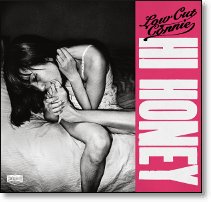
- Low Cut Connie: Hi Honey (2015, Ardent Music/Contender): [r]: A-
- Harold Mabern: Afro Blue (2015, Smoke Sessions): [r]: B
- Donny McCaslin: Fast Future (2014 [2015], Greenleaf Music): [r]: B+(*)
- Marcus Miller: Afrodeezia (2015, Blue Note): [r]: B+(*)
- The Mowgli's: Kids in Love (2015, Republic): [r]: A-
- Peach Kelli Pop: Peach Kelli Pop III (2015, Burger, EP): [r]: B+(*)
- Pascal Niggenkemper: Look With Thine Ears: Solo (2014 [2015], Clean Feed): [cd]: B+(**)
- Mario Pavone: Blue Dialect (2014 [2015], Clean Feed): [cd]: B+(***)
- Gloria Reuben: Perchance to Dream (2014 [2015], MCG Jazz): [cd]: B+(**)
- Eve Risser: Des Pas Sur La Neige (2013 [2015], Clean Feed): [cd]: B
- Mavis Staples: Your Good Fortune (2015, Anti, EP): [r]: B+(***)
- Sult: Svimmelhed (2014, Humbler/Conrad Sound): [cd]: B+(**)
- Boubacar Traoré: Mbalimaou (2014 [2015], Lusafrica): [r]: B+(**)
- Daniel Weltlinger: Koblenz (2012-13 [2015], Rectify): [cd]: B+(**)
- Ben Williams: Coming of Age (2014 [2015], Concord Jazz): [r]: B-
- Young Fathers: White Men Are Black Men Too (2015, Big Dada): [r]: B+(*)
Recent reissues, compilations, and vault discoveries rated this week:
- Next Stop Soweto, Vol. 4: Zulu Rock, Afro-Disco and Mbaqanga 1975-1985 (1975-85 [2015], Strut): [r]: A-
- Punk 45: Burn Rubber City, Burn! Akron, Ohio: Punk and the Decline of the Mid West 1975-80 (1975-80 [2015], Soul Jazz): [r]: B+(***)
- Punk 45: Extermination Nights in the Sixth City: Cleveland, Ohio: Punk and the Decline of the Mid-West 1975-82 (1975-82 [2015], Soul Jazz): [r]: A-
Old records rated this week:
- Ben Goldberg: Eight Phrases for Jefferson Rubin (1996 [1998], Victo): [r]: B+(**)
- Paul Motian: The Story of Maryam (1983 [1984], Soul Note): [r]: B+(**)
- Paul Motian Quintet: Jack of Clubs (1984 [1985], Soul Note): [r]: B+(**)
Unpacking: Found in the mail last week:
- Randy Brecker/Bobby Shew/Jan Hasenöhrl: Trumpet Summit Prague (Summit): May 12
- Cuir: Chez Ackenbush (Fou)
- Marilyn Crispell/Gerry Hemingway: Table of Changes (Intakt)
- Dave Douglas: High Risk (Greenleaf Music): June 23
- Claire Ritter: Soho Solo (Zoning): May 26
- Harvie S/Sheryl Bailey: Plucky Strum (Whaling City Sound)
- Katharina Weber/Fred Frith/Fredy Studer: It Rolls (Intakt)
Ask a question, or send a comment.
Sunday, April 26, 2015
Weekend Roundup
Geology trumped the news twice this week: first with a volcanic
eruption in Chile, then a massive earthquake in Nepal. Worth noting
that bad things can still happen that can't be attributed to bad
policies of the political right. Also in the news: anniversaries
keep happening, including this week the 100th anniversary of one
of Winston Churchill's most immediately obvious blunders, the
Battle of Gallipoli in Turkey. Churchill got his first taste of
battle at Omduran in the Sudan and found it totally exhilarating.
Had he been present at Gallipoli he would have gotten a taste of
what the Sudanese experienced. Also 100 years ago, the Ottomans
started their genocide against the Armenians, ultimately killing
up to 1.5 million of them. Turkey has refused to acknowledge what
Taner Akcam termed A Shameful Act, which has the accidental
benefit of letting Britain and Russia -- who tried to cultivate
the Christian Armenians as a "fifth column" against the Ottomans --
off the hook.
Some scattered links this week:
Brendan James: Michele Bachmann: Thanks Obama for Bringing On the
Apocalypse: As Bachmann explains:
"Barack Obama is intent, it is his number one goal, to ensure that Iran
has a nuclear weapon," she said. "Why? Why would you put the nuclear
weapon in the hands of madmen who are Islamic radicals?"
Bachmann, however, then seemed to approve of the President moving
mankind into "the midnight hour."
"We get to be living in the most exciting time in history," she said,
urging fellow Christians to "rejoice."
"Jesus Christ is coming back. We, in our lifetimes potentially, could
see Jesus Christ returning to Earth, the Rapture of the Church."
"These are wonderful times," she concluded.
Now, I come from a long line of "Revelations scholars" -- I can still
recall (and I was less than ten at the time) my grandfather asking me
whether I thought Israel's founding was a sign that the rapture was near.
My father, too, spent a lifetime studying "Revelations" -- mostly, as
best I could figure out, to prove that his father had understood it all
wrong. (My own theory was that the "book" was tacked onto the end just
to discredit the whole Bible, as if the other "books" weren't proof
enough of some sick hoax.) So I do have a little trouble treating the
people who believe in the rapture as batshit crazy, but there is at
least one difference between Bachmann and my forefathers: the latter
didn't go around acting like it's going to happen any day now.
Paul Krugman: The Fiscal Future I: The Hyperbolic Case for Bigger
Government: Turns out Clinton threw the baby out with the bath
water when he declared that "the age of big government is over."
Back in the 1990s some conservatives were arguing that the ideal
size of government relative to GDP was set during the Coolidge
administration and we should lock that into law. Others preferred
to idealize the McKinley administration, and Grover Norquist just
wanted to shrink the whole thing so small he could drown it in the
bathtub. It's taken a while for someone like Brad DeLong to come
along and argue that the opposite is the case: that government
should grow even larger.
So, how big should the government be? The answer, broadly speaking,
is surely that government should do those things it does better than
the private sector. But what are these things?
The standard, textbook answer is that we should look at public
goods -- goods that are non rival and non excludable, so that the
private sector won't provide them. National defense, weather
satellites, disease control, etc. And in the 19th century that was
arguably what governments mainly did.
Nowadays, however, governments are involved in a lot more --
education, retirement, health care. You can make the case that there
are some aspects of education that are a public good, but that's not
really why we rely on the government to provide most education, and
not at all why the government is so involved in retirement and health.
Instead, experience shows that these are all areas where the government
does a (much) better job than the private sector. And Brad argues that
the changing structure of the economy will mean that we want more of
these goods, hence bigger government.
He also suggests -- or at least that's how I read him -- the common
thread among these activities that makes the government a better provider
than the market; namely, they all involve individuals making very-long-term
decisions. Your decision to stay in school or go out and work will shape
your lifetime career; your ability to afford medical treatment or food
and rent at age 75 has a lot to do with decisions you made when that
stage of life was decades ahead, and impossible to imagine.
Now, the fact is that people make decisions like these badly. Bad
choices in education are the norm where choice is free; voluntary,
self-invested retirement savings are a disaster. Human beings just
don't handle the very long run well -- call it hyperbolic discounting,
call it bounded rationality, whatever, our brains are designed to cope
with the ancestral savannah and not late-stage capitalist finance.
When you say things like this, libertarians tend to retort that if
people mess up on such decisions, it's their own fault. But the usual
argument for free markets is that they lead to good results -- not
that they would lead to good results if people were more virtuous
than they are, so we should rely on them despite the bad results
they yield in practice. And the truth is that paternalism in these
areas has led to pretty good results -- mandatory K-12 education,
Social Security, and Medicare make our lives more productive as well
as more secure.
I'm not wild about calling this stuff "paternalism" -- one of the
things that has made government spending objectionable is how often
it is subject to political propriety. (For instance, art is generally
a public good, especially when it can be reproduced at zero marginal
cost. It would be a good public investment to pay lots of artists to
produce lots of art, but not such a good idea if every piece had to
be approved by a local board of prudes.)
I think there's also a macroeconomic argument. For a variety of
reasons, it strikes me that the private sector economy has become
increasingly incapable of sustaining full employment, and as such
needs permanent, possibly increasing, stimulus. (It could be that
the deficit is the result of increasing inequality, which depresses
demand while producing a savings glut. And/or it could be due to
technology which keeps reducing the number of work hours needed to
produce a constant amount of goods and services. Most likely both.)
Krugman followed up with
The Fiscal Future II: Not Enough Debt?. This is more technical,
so I won't bother quoting it here. The upshot is that you can grow
government without having to pay for all of it through increased
taxes.
Caitlin MacNeal: White House: Two Hostages Killed in US Counterterrorism
Attack: Quotes the White House statement disclosing that the CIA had
killed two Al-Qaida hostages with a drone strike "in the border region
of Afghanistan and Pakistan" (evidently doesn't matter which side of the
border was struck). Also that two US citizens involved with Al-Qaida were
killed (but not targeted) in drone strikes "in the same region." Of the
hostages, "No words can fully express our regret over this terrible
tragedy." Of the other two, well, stuff happens. The statement goes on:
"The President . . . takes full responsibility for these operations."
The statement doesn't explain how Obama intends to "take responsibility":
Will he turn himself over to the ICC or local authorities to be tried?
Will he change US policy to prevent any repeat of these tragedies? Or
is he just enjoying one of those "the buck stops here" moments? What
should be clear is that the CIA has no fucking idea who they're killing
and maiming with their Hellfire missiles. Lacking such "intelligence"
all they're doing is embarrassing themselves (and Obama and the nation)
and aggravating and escalating animosities. Indeed, by going into their
back yards to kill anonymous people with no hint of due process they're
conceding the moral high ground as surely as Al-Qaida did on Sept. 11,
2001 when they launched attacks on American soil.
For more on the drone strikes, see
Spencer Ackerman: Inside Obama's drone panopticon: a secret machine
with no accountability:
Thanks to Obama's rare admission on Thursday, the realities of what
are commonly known as "signature strikes" are belatedly and partially
on display. Signature strikes, a key aspect for years of what the
administration likes to call its "targeted killing" program, permit
the CIA and JSOC to kill without requiring them to know who they kill.
The "signatures" at issue are indicators that intelligence analysts
associate with terrorist behavior -- in practice, a gathering of men,
teenaged to middle-aged, traveling in convoys or carrying weapons. In
2012, an unnamed senior official memorably quipped that the CIA considers
"three guys doing jumping jacks" a signature of terrorist training.
Civilian deaths in signature strikes, accordingly, are not accidental.
They are, as Schiff framed it, more like a cost of doing business -- only
the real cost is shielded from the public.
An apparatus of official secrecy, built over decades and zealously
enforced by Obama, prevents meaningful open scrutiny of the strikes. No
one outside the administration knows how many drone strikes are signature
strikes. There is no requirement that the CIA or JSOC account for their
strikes, nor to provide an estimate of how many people they kill, nor
even how they define legally critical terms like "combatant," terrorist
"affiliate" or "leader." The American Civil Liberties Union (ACLU) is
suing an obstinate administration to compel disclosure of some of the
most basic information there is about a program that has killed thousands
of people. [ . . . ]
Schiff's reaction condensed the root argument of the administration's
drone advocates: it's this or nothing. The Obama administration considers
the real alternatives to drone strikes to be the unpalatable options of
grueling ground wars or passive acceptance of terrorism. Then it
congratulates itself for picking the wise, ethical and responsible
choice of killing people without knowing who they are.
[ . . . ]
No Obama official involved in drone strikes has ever been disciplined:
not only are Brennan and director of national intelligence James Clapper
entrenched in their jobs, David Barron, one of the lawyers who told Obama
he could kill a US citizen without trial as a first resort, now has a
federal judgeship.
Beyond the question of when the US ought to launch drone strikes
lie deeper geostrategic concerns. Obama's overwhelming focus on
counter-terrorism, inherited and embraced from his predecessor,
subordinated all other considerations for the drone battlefield of
Yemen, which he described as a model for future efforts.
The result is the total collapse of the US Yemeni proxy, a regional
war Obama appears powerless to influence, the abandonment of US citizens
trapped in Yemen and the likely expansion of al-Qaida's local affiliate.
A generation of Yemeni civilians, meanwhile, is growing up afraid of the
machines loitering overhead that might kill them without notice.
Sinéad O'Shea: Mediterranean migrant crisis: Why is no one talking
about Eritrea?:
Horror has been expressed at the latest catastrophe in the Mediterranean.
Little has been said, however, about Eritrea. Yet 22% of all people
entering Italy by boat in 2014 were from Eritrea, according to the UN
refugee agency, the UNHCR. After Syrians, they are the second most
common nationality to undertake these journeys. Many who died this
week were from the former Italian colony.
So why is it so rarely discussed? The answer is essentially the
problem. Eritrea is without western allies and far away. It is also
in the grip of a highly repressive regime. This week, it was named
the most censored country in the world by the Committee to Protect
Journalists, beating North Korea, which is in second place. Reporters
without Borders has called it the world's most dangerous country for
journalists.
Nobody talks about Eritrea because nobody (ie westerners) goes
there. In 2009, I travelled there undercover with cameraman Scott
Corben. We remain the only independent journalists to have visited
in more than 10 years. There we witnessed a system that was exerting
total control over its citizens. It was difficult to engage anybody
in conversation. Everyone believed they were under surveillance,
creating a state of constant anxiety. Communications were tightly
controlled. Just three roads were in use and extensive documentation
was required to travel. There were constant military checks. It is
one of the most expensive countries in the world to buy petrol. Even
maps are largely prohibited. At the time, Eritreans had to seek
permission from a committee to obtain a mobile phone.
Dissent is forbidden. It is thought there are more than 800
prisons dispersed across the country. Some take the form of shipping
containers in the desert. Torture is widespread.
[ . . . ]
Eritreans are thus faced with a terrible choice. They must either
live in misery or risk death by leaving. I met a number of people who
were preparing to go. Despite a shoot-to-kill policy on the border,
thousands still leave each month.
Of course, one reason some of us don't talk much about bad countries
is that we don't want the US to attack, invade, and "fix" them.
Also, a few links for further study:
Christian Appy: From the Fall of Saigon to Our Fallen Empire: Appy
has a new book out, American Reckoning: The Vietnam War and Our
National Identity, which I've just started reading. This piece
is written for the 40th anniversary of the "fall of Saigon" (or the
end of Vietnam's American War). Subtitle: "How to Turn a Nightmare
into a Fairy Tale."
Oddly enough, however, we've since found ways to reimagine that
denouement which miraculously transformed a failed and brutal war
of American aggression into a tragic humanitarian rescue mission.
Our most popular Vietnam end-stories bury the long, ghastly history
that preceded the "fall," while managing to absolve us of our primary
responsibility for creating the disaster. Think of them as silver-lining
tributes to good intentions and last-ditch heroism that may come in
handy in the years ahead.
The trick, it turned out, was to separate the final act from the
rest of the play. To be sure, the ending in Vietnam was not a happy
one, at least not for many Americans and their South Vietnamese
allies. This week we mark the 40th anniversary of those final days
of the war. We will once again surely see the searing images of
terrified refugees, desperate evacuations, and final defeat. But
even that grim tale offers a lesson to those who will someday
memorialize our present round of disastrous wars: toss out the
historical background and you can recast any U.S. mission as a
flawed but honorable, if not noble, effort by good-guy rescuers
to save innocents from the rampaging forces of aggression.
The worst thing about the Vietnam War wasn't losing it, nor
even not learning anything from the experience. It was the lies
we told ourselves to keep from facing what actually happened,
including how much responsibility the US bore for making the
whole debacle far more horrendous than it was bound to be. We
wouldn't, for instance, have wound up with any more of a loss
had we allowed democratic elections in 1956, as agreed to in
Geneva in 1954. Instead, we escalated again and again, unleashing
new horrors for no practical gain. I've always thought the worst
of those escalations was Nixon's "incursion" in Cambodia, which
soon destabilized the neutral Prince Sihanouk and delivered the
country to "the killing fields" of Pol Pot. Millions died because
Lyndon Johnson and Richard Nixon couldn't face losing the war,
and while they clearly cared nothing at all about the Vietnamese,
the damage they did to their own country may have seemed relatively
trivial -- 58,000 Americans dead, many billions of dollars wasted --
it went far deeper and lasted much longer. The war was founded on
lies, even well before the fake "Gulf of Tonkin Incident," and in
the end that lying became a way of life. Nixon himself must have
set some record for mendacity, but it was Ronald Reagan who recast
American politics on a basis of sheer narcissistic fantasy, and
no American politician has ever looked at reality squarely again.
The Vietnam War was the worst thing that ever happened to America,
not because we lost it but because we were wrong in the first place
and never learned better. That in turn led to the recapitulation
in Iraq and Afghanistan: the main differences there were that the
latter wars had less effect on everyday life so they generated
less anti-war movement, while the undrafted army proved somewhat
more resilient, allowing the propagandists more leeway to cover
up the debacle. Appy himself concludes:
The time may come, if it hasn't already, when many of us will forget,
Vietnam-style, that our leaders sent us to war in Iraq falsely claiming
that Saddam Hussein possessed weapons of mass destruction he intended
to use against us; that he had a "sinister nexus" with the al-Qaeda
terrorists who attacked on 9/11; that the war would essentially pay
for itself; that it would be over in "weeks rather than months"; that
the Iraqis would greet us as liberators; or that we would build an
Iraqi democracy that would be a model for the entire region. And will
we also forget that in the process nearly 4,500 Americans were killed
along with perhaps 500,000 Iraqis, that millions of Iraqis were displaced
from their homes into internal exile or forced from the country itself,
and that by almost every measure civil society has failed to return to
pre-war levels of stability and security?
The picture is no less grim in Afghanistan. What silver linings can
possibly emerge from our endless wars? If history is any guide, I'm
sure we'll think of something.
Ben Branstetter: 7 whistle-blowers facing more jail time than David
Petraeus: OK, that's a low bar, given that Petraeus avoided all
jail time, punished with two years of probation after pleading guilty
to passing classified secrets to his mistress-hagiographer Paula
Broadwell. But then his intent was never to help Americans understand
that their government is doing in secret. It was just self-promotion,
business-as-usual for the ambitious general. On the other hand,
Chelsea Manning has been sentenced to 35 years in prison -- nearly
twice as long as Albert Speer was sentenced for running Nazi Germany's
armaments industry.
Chris Wright: Always Historicize!: Chews on the old Leninist bone
of what-is-to-be-done, the perennial of those who think of themselves
as activists, as opposed to us normal folk who only occasionally get
swept up in the tides of history. Wright starts with the pitiful state
of the Left, concluding that to be unsurprising given that the Left is,
by nature of its constituency, always starved of resources, and "one
needs resources to get things done." Yet this does nothing to explain
the few cases when everything suddenly lurches toward the Left. That
happens not when the balance of resources shifts from Right to Left,
but when the Establishment collapses in chaos, opening up opportunity
for the Left to save the day, provided some combination of ideas and
organization. Wright sort of understands this. He is skeptical of the
notion that "radical social change is a matter mainly of will and
competence . . . pushing back against reactionary institutions so as,
hopefully, to reverse systemic trends." He argues, instead, that "the
proper way for radicals to conceive of their activism, on a broad
scale, is in terms of the speeding up of current historical trends,
not their interruption or reversal."
I suppose that all depends on what trends you're talking about,
but the notion that historical trends are for the better hasn't
been born out by history: I can think of a few that turned rotten
after initial promise, and others that were rotten from the start.
The trend Wright identifies is "the protracted collapse of corporate
capitalism and the nation-state system itself." I'm not so sure of
that myself -- not that I don't see some problems there, but they
mostly come from overreach, something not all that far removed from
panic. (The Right's massive attempt to corner the political system,
which has much to do with the resource imbalance cited above, seems
more rooted in fear than in greed, not that its sponsors can ever
free themselves of the latter. Sometimes it looks like the Right is
winning, but their successes rarely go beyond the most corruptible
of institutions, and when they do seize power they often crash and
burn.)
I keep coming back to ideas and organization. While there are a
lot of the former floating around, it's proven remarkably difficult
to get them into common circulation -- the point, I would say, of
Philip Mirowski's Never Let a Serious Crisis Go to Waste,
showing how a prison of constantly reiterated neoliberal ideology
kept politicians from even considering alternatives after an economic
collapse caused by precisely that thinking. That suggests to me that
ideas have to be channeled through organization -- a role that unions
filled during the industrial revolution but are unlikely to recover
and repeat in the future. Figure that out and the Left won't look so
lame. Don't and we run the risk that no one will be able to pick up
the pieces after the Right fucks everything up.
Ask a question, or send a comment.
Saturday, April 25, 2015
Downbeat Critics Poll 2015
Earlier this week I filled out my ballot for Downbeat's 2015 Critics
Poll. I took my usual
copious notes, but I'll just
give you the highlights here -- follow the link for more details. The
poll is very time-consuming: I've never finished it in a single day
(took two this time, at least ten hours). The big problem is that they
ask about fifty questions: mostly to identify the best (or most important
or something like that) musicians by instrument (or some other category
like composer or arranger), and for each question they have a second
ballot slot for "rising star." They used to call the latter TDWR, an
acronym for "talent deserving wider recognition," which makes much more
sense to me. Even if I wanted to, I'm not sure what sense it would make
to try to rank musicians. So all I can try to do is to mention a few
people I think we should be aware of.
Sometimes those people are obvious -- until their deaths, Steve Lacy
on soprano sax and Billy Bang on violin were automatic choices. Often
they aren't, in some cases because there's so much competition -- piano,
bass, and drums are the top tier; trumpet, alto sax, tenor sax, and
increasingly guitar the second -- and sometimes because there is so
little (flute, baritone sax -- a special case here is an instrument
mostly played by non-specialists, like soprano sax, electric bass,
and electric keyboards). Still, in all cases, the picks I made were
spur of the moment, subject to the limited information I could think
of and whatever whims occurred to me. More often than not, I limited
my picks to names listed on the ballot form. This was especially so
in nebulous categories like "Jazz Artist" or things I don't keep
good mental tabs on (like "Arranger," "Composer," and "Producer").
I have fewer qualms about ranking albums. It's all too true that
it is often impossible to weigh the relative merits -- even on such
a subjective basis as personal pleasure -- of any pair of albums.
The only consistent criteria I can think of would be the order in
which I'd buy albums. Of course, that is the most subjective scale
of all, which makes it pretty arbitrary when anyone else looks at
it. Such rank lists should be easy for me give that I've already
spent much effort at constructing them -- e.g., see my
2014 EOY Jazz List.
(I haven't assembled a 2015 Jazz List yet, but the list-in-progress
can be sorted out from my
2015 List.) One complication is
that Downbeat insists on skewing the eligibility list to run from
April 1, 2014 through March 31, 2015 release dates instead of using
the previous (2014) calendar year. I don't generally keep track of
release dates below year granularity, so it would be a huge effort
at this point to research 2014 release dates. (Actually, I can't
even trust 2015 release dates: I already have several April releases
in my 2015 file. So I can save myself some work by limiting my vote
to Downbeat's ballot. The problem here is that Downbeat only lists
10-12 albums I consider A-list, out of 60-70 albums I grade that
high. Writing in a name sometimes encourages Downbeat to include
that name on future ballots, but writing in an album won't have any
future effect. So I tried to apply my rank list (interpolating early
2015 releases in place of early 2014 releases) to their ballot, with
the result that I voted for my number 1 and 24 2014 albums plus one
2015 album that will probably wind up close to number 20. I took the
same approach to Historical Album, Blues Album, and Beyond Album
(surprised that Wussy got nominated in the latter). The notes file
provides the full breakdowns for the album votes. One reason I make
a point of jotting down all of the records I haven't heard is that
they give me a reference for future listening (although, frankly,
they put a lot of albums on these lists I know better than to bother
with).
Each category allowed me to split 10 points among three candidates.
I followed their earlier convention of spliting those points 5-3-2
for the two three picks. Write-ins are italicized below. So, without
further ado, my votes:
- Hall of Fame: Lee Konitz (5), George Russell (3),
Don Byas (2).
- Jazz Artist: Anthony Braxton (5), William Parker (3),
Ken Vandermark (2).
- Rising Star -- Jazz Artist: Steve Lehman (5), Mary
Halvorson (3), Craig Taborn (2).
- Jazz Album of the Year (April 1, 2014-March 31, 2015):
Steve Lehman Octet, Mis En Abime (Pi) (5);
Charles McPherson, The Journey (Capri -15) (3);
Bobby Avey, Authority Melts From Me (Whirlwind) (2).
- Historical Album (April 1, 2014-March 31, 2015):
Sun Ra, In the Orbit of Ra (Strut) (5);
Charles Lloyd, Manhattan Stories (Resonance) (3);
Charlie Haden/Jim Hall, Charlie Haden -- Jim Hall (Impulse!)
(2).
- Jazz Group: Microscopic Septet (5),
Mostly Other People Do the Killing (3),
Rova (2).
- Rising Star Jazz Group:
Revolutionary Snake Ensemble (5),
Mostly Other People Do the Killing (3),
Digital Primitives (2).
- Big Band:
Steven Bernstein Millennial Territory Orchestra (5),
ICP Orchestra (3),
Ken Vandermark's Resonance Ensemble (2).
- Rising Star Big Band:
Ken Vandermark's Resonance Ensemble (5),
Ghost Train Orchestra (3),
Howard Wiley and the Angola Project (2).
- Trumpet:
Dave Douglas (5),
Wadada Leo Smith (3),
Steven Bernstein (2).
- Rising Star Trumpet:
Peter Evans (5),
Taylor Ho Bynum (3),
Darren Johnston (2).
- Trombone:
Roswell Rudd (5),
Steve Swell (3),
Joe Fiedler (2).
- Rising Star Trombone:
Joe Fiedler (5),
Samuel Blaser (3),
Jacob Garchik (2).
- Soprano Saxophone:
Sam Newsome (5),
Bob Wilber (3),
Vinny Golia (2).
- Rising Star Soprano Saxophone:
Mike Ellis (5),
Jason Robinson (3), Jasmine Lovell-Smith (2).
- Alto Saxophone:
Oliver Lake (5),
François Carrier (3),
Anthony Braxton (2).
- Rising Star Alto Saxophone:
Steve Lehman (5),
Dave Rempis (3),
Mike DiRubbo (2).
- Tenor Saxophone:
David Murray (5),
Ivo Perelman (3),
Ken Vandermark (2).
- Rising Star Tenor Saxophone:
Ellery Eskelin (5),
Assif Tsahar (3),
Rodrigo Amado (2)
- Baritone Saxophone:
Mats Gustafsson (5),
Scott Robinson (3),
Gebhard Ullmann (2).
- Rising Star Baritone Saxophone:
Gebhard Ullmann (5),
Brian Landrus (3),
Josh Sinton (2).
- Clarinet:
Ben Goldberg (5),
Marty Ehrlich (3),
Michael Moore (2).
- Rising Star Clarinet:
Avram Fefer (5),
Rudi Mahall (3),
Gebhard Ullmann (2).
- Flute:
Juhani Aaltonen (5),
Henry Threadgill (3),
Lew Tabackin (2).
- Rising Star Flute:
Kali Z. Fasteau (5),
Idan Santhaus (3).
- Piano:
Irène Schweizer (5),
Myra Melford (3),
Marilyn Crispell (2).
- Rising Star Piano:
Kris Davis (5),
Nik Bärtsch (3),
Russ Lossing (2).
- Electronic Keyboard:
Matthew Shipp (5),
Uri Caine (3),
Craig Taborn (2).
- Rising Star Electronic Keyboard:
Nik Bärtsch (5),
George Colligan (3),
Rob Mazurek (2).
- Organ:
Gary Versace (5),
John Medeski (3),
Brian Charette (2).
- Rising Star Organ:
Alexander Hawkins (5),
Vince Seneri (3),
Wayne Peet (2).
- Violin:
Jason Kao Hwang (5),
Jenny Scheinman (3),
Carlos Zingaro (2).
- Rising Star Violin:
Szilard Mezei (5),
Jesse Zubot (3),
Aaron Weinstein (2).
- Guitar:
Marc Ribot (5),
Bill Frisell (3),
Marty Grosz (2).
- Rising Star Guitar:
Raoul Björkenheim (5),
Samo Salamon (3),
Anders Nilsson (2),
- Bass:
William Parker (5),
Reggie Workman (3),
Peter Washington (2).
- Rising Star Bass:
Adam Lane (5),
Ken Filiano (3),
Moppa Elliott (2).
- Electric Bass:
Steve Swallow (5),
Bob Cranshaw (3),
Ingebrigt Haker Flaten (2).
- Rising Star Electric Bass:
Chris Morrissey (5),
Stomu Takeishi (3),
Nate McBride (2).
- Drums:
Andrew Cyrille (5),
Gerry Hemingway (3),
Lewis Nash (2).
- Rising Star Drums:
Tom Rainey (5),
Tyshawn Sorey (3),
Paal Nilssen-Love (2).
- Vibes:
Jason Adasiewicz (5),
Kenny Wolleson (3),
Warren Smith (2).
- Rising Star Vibes:
Mulatu Astatke (5),
Kevin Norton (3),
Bryan Carrott (2).
- Percussion:
Han Bennink (5),
Adam Rudolph (3),
Kahil El'Zabar (2).
- Rising Star Percussion:
Kevin Diehl (5),
Lukas Ligeti (3),
Ravish Momin (2).
- Miscellaneous Instrument:
Bob Stewart (tuba) (5),
Richard Galliano (accordion) (3),
Rabih Abou Khalil (oud) (2).
- Rising Star Miscellaneous Instrument:
Colin Stetson (bass sax) (5),
Fred Lonberg-Holm (cello) (3),
Cooper-Moore (diddley-bow) (2).
- Male Vocalist:
Freddy Cole (5),
James Blood Ulmer (3),
Mose Allison (2).
- Rising Star Male Vocalist:
Jamie Davis (5),
Mark Winkler (3),
Ku-umba Frank Lacy (2).
- Female Vocalist:
Sheila Jordan (5),
Barbara Morrison (3),
Marlene VerPlanck (2).
- Rising Star Female Vocalist:
Fay Victor (5),
Catherine Russell (3),
Lisa Sokolov (2).
- Composer:
Carla Bley (5),
Wayne Shorter (3),
John Zorn (2).
- Rising Star Composer:
Steve Lehman (5),
Adam Lane (3),
Anthony Branker (2).
- Arranger:
Steven Bernstein (5),
Misha Mengelberg (3),
Carla Bley (2).
- Rising Star Arranger:
David Weiss (5),
Michael Bates (3),
Marcus Shelby (2).
- Record Label:
Clean Feed (5),
Intakt (3),
No Business (2).
- Producer:
Joe Fields (5),
John Zorn (3),
Don Was (2).
- Rising Star Producer:
John Corbett (5),
Taylor Ho Bynum (3),
Leo Feigin (2).
- Blues Artist or Group:
Maria Muldaur (5),
James Blood Ulmer (3),
Duke Robillard (2).
- Blues Album (April 1, 2014 to March 31, 2015):
Dave Alvin and Phil Alvin, Common Ground: Dave Alvin & Phil Alvin
Play the Songs of Big Bill Broonzy (Yep Roc) (5);
Leo Welch: Sabougla Voices (Big Legal Mess) (3);
John Hiatt, Terms of My Surrender (New West) (2).
- Beyond Artist of Group:
The Roots (5),
Merle Haggard (3),
Aretha Franklin (2).
- Beyond Album (April 1, 2014 to March 31, 2015):
Wussy, Attica! (Shake It) (5);
Jason Derulo, Talk Dirty (Beluga Heights/Warner Bros.) (3);
D'Angelo, Black Messiah (RCA) (2). This is limited to
their ballot. For a more expansive list (just 2014) look
here.
Ask a question, or send a comment.
Monday, April 20, 2015
Music Week
Music: Current count 24855 [24826] rated (+29), 408 [398] unrated (+10).
Third straight week at 29, so I guess that's the new 30. Wouldn't
have hit that but for a lark decision to check out the early Charles
Lloyd records on Rhapsody after the new one underwhelmed me. They,
at least, were relatively short, but ultimately merged into a solid,
indistinguishable mass -- aside from Keith Jarrett's outstanding
rhythm work. Very little of Lloyd's post-1970 work is on Rhapsody,
so it's hard to say anything definitive about his now obscure 1970s
and 1980s records. In 1989 he joined ECM and patiently rebuilt his
career, hitting a peak when he started working with another amazing
pianist, Jason Moran. Make what you will that the new one marks his
move from ECM to Blue Note, and that Moran is out, replaced by a
pianist whose name I've already forgotten. On the other hand, Blue
Note's pairing of Joe Lovano and Dave Douglas works as expected.
I spent a good deal of time this past week sorting through old
shelves of jazz CDs. Currently the work area is still quite some
mess, but I expect to make some progress this week. I had planned
on keeping all of the Jazz CG-era B+(***) and A-list albums in a
set of six modular shelf units, but it now looks like the number
needed is eight. I have the extra two nearby, but their contents
need to be moved elsewhere, and I'm cleaning out that elsewhere.
The next space likely to be exhausted is the basement hell where
the most unwanted items go to linger. Those I need to start to
cull -- although the general high quality of jazz these days has
led me to consign more than a few good records by obscure artists
or interesting failures by better known musicians there. Could be
a neverending struggle. For some reason the incoming mail picked
up this week.
Not so many A-list records this week, although eight high-B+
records came close. Milo Miles put Ayelet Rose Gottlieb at the
top of his
1st Quarter 2015: Jazz list and, if memory recalls, had previously
touted Tal National. Michael Tatum is a big fan of the Skrillex/Diplo
record. My own favorites among the three-stars are Sergi Sirvent's
Unexpected piano trio and Oleg Frish's kitschy standards duets, although
Hu Vibrational got the most spins (five, I think).
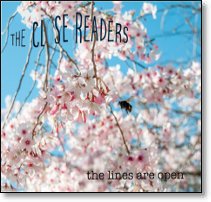
Incoming mail included unsolicited copies of all three albums by
Damien Wilkins' New Zealand group, The Close Readers. Christgau
reviewed their latest and I concurred in last week's
Rhapsody Streamnotes.
I was tempted to check out the earlier titles -- they're
here (via bandcamp) --
but let my mind wander elsewhere. Now I feel obligated to go back.
As a down payment, we'll include the album cover and note the known
grade in unpacking.
I need to get cracking on my Downbeat Critics Poll ballot. Expect
a report later this week.
New records rated this week:
- Perry Beekman: S'Wonderful: Perry Beekman Sings and Plays Gershwin (2015, self-released): [cd]: B
- Oleg Frish: Duets With My American Idols (2014 [2015], Time Out Media): [cd]: B+(***)
- Ghost Train Orchestra: Hot Town (2013 [2015], Accurate): [cd]: B+(***)
- Ayelet Rose Gottlieb: Roadsides (2014, Arogole Music): [r]: B+(***)
- Hu Vibrational: The Epic Botanical Beat Suite (2014 [2015], MOD Technologies): [cd]: B+(***)
- Steve Johns: Family (2014 [2015], Strikezone): [cd]: B+(**)
- Tyler Kaneshiro & the Highlands: Amber of the Moment (2013 [2015], self-released): [cd]: B+(**)
- Charles Lloyd: Wild Man Dance (2013 [2015], Blue Note): [r]: B+(**)
- Joe Lovano & Dave Douglas: Sound Prints: Live at Monterey Jazz Festival (2013 [2015], Blue Note): [r]: A-
- The Magic Words: The Day We Ran Away (Magic Words Demos) (2015, self-released): [bc]: B+(*)
- Barney McClure: Show Me! (2014 [2015], OA2): [cd]: B+(*)
- Michael Oien: And Now (2014 [2015], Fresh Sound New Talent): [cdr]: B+(***)
- Plunge: In for the Out (2014 [2015], Immersion): [cd]: B+(*)
- Adam Shulman Sextet: Here/There (2014 [2015], OA2): [cd]: B
- Skrillex/Diplo: Skrillex and Diplo Present Jack Ü (2015, Mad Decent/OWSLA): [r]: B+(***)
- Tal National: Zoy Zoy (2015, Fat Cat): [r]: B+(***)
- John Tropea: Gotcha Rhythm Right Here (2014 [2015], STP): [cd]: B-
- Tyler, the Creator: Cherry Bomb (2015, Odd Future): [r]: B+(*)
- Unexpected: Munchies (2013 [2014], Fresh Sound New Talent): [r]: B+(***)
- Dwight Yoakam: Second Hand Heart (2015, Warner Brothers): [r]: B
Recent reissues, compilations, and vault discoveries rated this week:
- Dion: Recorded Live at the Bitter End August 1971 (1971 [2015], Omnivore): [r]: B
Old records rated this week:
- Charles Lloyd: Discovery! (1964, Columbia): [r]: B+(**)
- Charles Lloyd: Nirvana (1962-65 [1968], Columbia): [r]: B+(**)
- The Charles Lloyd Quartet: Dream Weaver (1966, Atlantic): [r]: B+(***)
- Charles Lloyd: Forest Flower: Charles Lloyd at Monterey (1966 [1968], Atlantic): [r]: A-
- The Charles Lloyd Quartet: The Flowering of the Original Charles Lloyd Quartet (1966 [1971], Atlantic): [r]: B+(**)
- The Charles Lloyd Quartet: Charles Lloyd in Europe (1966 [1968], Atlantic): [r]: B+(**)
- The Charles Lloyd Quartet: Love-In (1967, Atlantic): [r]: B+(***)
- The Charles Lloyd Quartet: Journey Within (1967, Atlantic): [r]: B+(*)
- The Charles Lloyd Quartet: Charles Lloyd in the Soviet Union (1967 [1970], Atlantic): [r]: B+(***)
- Charles Lloyd: Soundtrack (1968 [1969], Atlantic): [r]: B+(***)
Grade changes:
- Gorka Benitez: Solo La Verdad Es Sexy (2003 [2004], Fresh Sound New Talent): [was B+] B+(***)
- Eddie Gale: Afro-Fire (2004, Black Beauty): [was B+]: B+(***)
- Lafayette Gilchrist: The Music According to Lafayette Gilchrist (2004, Hyena/Shantytone): [was B+]: B+(***)
- The Great Jazz Trio: Someday My Prince Will Come (2002-03 [2004], Eighty-Eights/Columbia): [was B+]: B+(***)
- Charles Lloyd: Just Before Sunrise (1966-67 [1999], 32 Jazz, 2CD): reissue combines Dream Weaver and Love-In: [was B]: B+(**)
- Paradigm Shift: Shifting Times (2004, Nagel Heyer): [was B+]: B+(***)
- Randy Sandke: Cliffhanger (1999 [2003], Nagel Heyer): [was B+]: B+(***)
- Ignasi Terraza Trio: IT's Coming (2004, TCB): [was B+]: B+(***)
Unpacking: Found in the mail last week:
- David Berkman: Old Friends and New Friends (Palmetto): May 5
- The Dan Brubeck Quartet: Celebrating the Music and Lyrics of Dave & Iola Brubeck (Blue Forest, 2CD): April 28
- The Close Readers: Group Hug (2011, Austin)
- The Close Readers: New Spirit (2012, Austin)
- The Close Readers: The Lines Are Open (2014, Austin) [A-]
- Wild Bill Davison: The Jazz Giants (1968, Delmark/Sackville)
- Lorenzo Feliciati: Koi (Rare Noise): advance, May 26
- Rich Halley 4: Creating Structure (Pine Eagle)
- Lauren Henderson: A La Madrugada (self-released): May 19
- Heikki Koskinen/Teppo Hauta-Aho/Mikko Innanen: Kellari Trio (Edgetone)
- Joe Locke: Love Is a Pendulum (Motéma): May 26
- Phil Maturano: At Home Everywhere (self-released): May 19
- Metallic Taste of Blood: Doctoring the Dead (Rare Noise): advance, May 26
- Pascal Niggenkemper: Look With Thine Ears: Solo (Clean Feed)
- Mario Pavone: Blue Dialect (Clean Feed)
- Eve Risser: Des Pas Sur La Neige (Clean Feed)
- Elliott Sharp: Octal: Book Three (Clean Feed)
- Eli Wallace/Jon Arkin/Karl Evangelista: Cabbages, Captain, & King (Edgetone)
- Zubatto Syndicate: Zubatto Syndicate 2 (Boscology): advance, June 9
Ask a question, or send a comment.
Monday, April 20, 2015
Weekend Roundup
Late start but I had the Civil War links, and added a couple more.
Plus, for local color, let's start with Crowson's cartoon today:

By the way, babyfaced State Senator O'Donnell (R) happens to represent
my district. You can read more about his bill in, well,
The Guardian, or
The Chicago Tribune. Jordan Weissmann looks at what welfare
recipients actually spend money on
here. One thing I haven't seen much discussion of is how this law
is to be enforced. Will the state be assigning accountants to go over
welfare recipients' books? Or will we expect movie ticket takers to
rat out customers they suspect of being on welfare?
Gregory P Downs: The Dangerous Myth of Appomattox: When I was 10
years old the centennial of the Civil War seemed like such a big deal,
whereas I hadn't noticed any 150th anniversaries until someone wrote
that Lee's surrender at Appomattox should be a national holiday. Back
in 1960 you could still practically taste the gunpowder residue. I
knew, for instance, that my great-great-grandfathers had fought in
that war -- on my father's side from Pennsylvania, a man who after
the war homesteaded in western Kansas and named his first son Abraham
Lincoln Hull; on my mother's side from Ohio, a man who then moved to
northern Arkansas and became sheriff of Baxter County (in other words,
one of those oft-villified "carpetbaggers"). Back then Kansas still
identified with the North, and I saw enough of the South to reinforce
my belief in civil rights, because by then the South had reconstituted
its racist caste system as if their "war for independence" had won out.
(Downs quotes Albion Tourgée saying that the South "surrendered at
Appomattox, the North has been surrendering ever since.")
Over the course of the Civil War's Centennial the tide of surrender
had shifted with the passage of landmark civil rights acts. Fifty
years later we're more inclined to memorialize the 50th anniversary
of the Selma-to-Montgomery voting rights march than the 150th of
Lee's surrender. Not that we shouldn't worry about erosion of voting
rights. But one thing we don't worry about over is that the South
will secede again -- indeed, when various Texans spout off to that
effect, the usual reaction is "good riddance." But celebration of
Appomattox has always been something of a ruse. As Downs points out,
the war didn't really end there, nor has the reunification of the
country gone smoothly. Indeed, one of the great ironies of American
history is that the party of Lincoln -- the party my great-greats
fought for -- has lately been captured by the sons of the Confederacy
(often, amusingly enough, in the guise of adopted sons with names
like Jindal, Cruz, Rubio, and Bush).
Meanwhile, Downs is more concerned with the problems the postwar
occupation (aka reconstruction) ran into:
Grant himself recognized that he had celebrated the war's end far too
soon. Even as he met Lee, Grant rejected the rebel general's plea for
"peace" and insisted that only politicians, not officers, could end
the war. Then Grant skipped the fabled laying-down-of-arms ceremony
to plan the Army's occupation of the South.
To enforce its might over a largely rural population, the Army
marched across the South after Appomattox, occupying more than 750
towns and proclaiming emancipation by military order. This little-known
occupation by tens of thousands of federal troops remade the South in
ways that Washington proclamations alone could not.
And yet as late as 1869, President Grant's attorney general argued
that some rebel states remained in the "grasp of war." When white
Georgia politicians expelled every black member of the State Legislature
and began a murderous campaign of intimidation, Congress and Grant
extended military rule there until 1871.
Meanwhile, Southern soldiers continued to fight as insurgents,
terrorizing blacks across the region. One congressman estimated that
50,000 African-Americans were murdered by white Southerners in the
first quarter-century after emancipation. "It is a fatal mistake,
nay a wicked misery to talk of peace or the institutions of peace,"
a federal attorney wrote almost two years after Appomattox. "We are
in the very vortex of war."
Downs has a book that sounds interesting: After Appomattox:
Military Occupation and the Ends of War. It is inevitable that
any such book written these days will reflect the manifest failures
of the US occupation of Iraq. One recalls that in the run up to the
invasion of Iraq, Bush's intellectuals studied up on the post-WWII
occupations of Germany and Japan -- held to be a model of enlightened
reconstruction, although that conceit took a good deal of misreading
both of history and of the current state of Bush politics to come to
that cheery conclusion. But in all cases, the fiasco is the consequence
both of poorly understood goals and corrupt practices.
Also worth reading:
Christopher Dickey: The Civil War's Dirty Secret: It Was Always About
Slavery. A sequel could be written on how racism went from being
a rationale for slavery to becoming a proxy. In any case, the two are
so inextricably linked that the iconography for one, like the continuing
cult of the Confederacy, supports the other. That's why if you don't
like the one, you shouldn't make excuses for the other.
Mark Mazzetti/Helene Cooper: Sale of US Arms Fuels the Wars of Arab
States: Even if we overlook Israel, the most intensely militarized
nation in the world, the Middle East has long been a bonanza for arms
dealers -- and not just for American ones, although the US remains by
far the largest purveyor of lethal hardware. And to paraphrase Madeleine
Albright, what's the point of having this magnificent military technology
if you never use it? That's been a conundrum for many years, but more
and more nominal US allies like Saudi Arabia, Jordan, Qatar, even Egypt,
are discovering targets they can safely attack: the ad hoc militias of
destabilized neighbors like Yemen, Libya, and Syria. All they have to
do is to pin a label like Al-Qaeda, ISIS, or Iran, and the US blesses
them with further supplies. For example:
Saudi Arabia spent more than $80 billion on weaponry last year -- the
most ever, and more than either France or Britain -- and has become the
world's fourth-largest defense market, according to figures released
last week by the Stockholm International Peace Research Institute,
which tracks global military spending. The Emirates spent nearly $23
billion last year, more than three times what they spent in 2006.
Qatar, another gulf country with bulging coffers and a desire to
assert its influence around the Middle East, is on a shopping spree.
Last year, Qatar signed an $11 billion deal with the Pentagon to
purchase Apache attack helicopters and Patriot and Javelin air-defense
systems. Now the tiny nation is hoping to make a large purchase of
Boeing F-15 fighters to replace its aging fleet of French Mirage jets.
Qatari officials are expected to present the Obama administration with
a wish list of advanced weapons before they come to Washington next
month for meetings with other gulf nations.
American defense firms are following the money. Boeing opened an
office in Doha, Qatar, in 2011, and Lockheed Martin set up an office
there this year. Lockheed created a division in 2013 devoted solely
to foreign military sales, and the company's chief executive, Marillyn
Hewson, has said that Lockheed needs to increase foreign business --
with a goal of global arms sales' becoming 25 percent to 30 percent
of its revenue -- in part to offset the shrinking of the Pentagon
budget after the post-Sept. 11 boom. [ . . . ]
Meanwhile, the deal to sell Predator drones to the Emirates is
nearing final approval. The drones will be unarmed, but they will be
equipped with lasers to allow them to better identify targets on the
ground.
If the sale goes through, it will be the first time that the drones
will go to an American ally outside of NATO.
There's very little here to keep these wars from spinning out of
control. The US has allied itself with dictatorial oligarchs, and
enabled them to suppress all manner of popular movements, including
peaceful demonstrations for democracy. And when the most violent of
those movements blowback against the US, that just reinforces the
war mentality. Sure, some worry about putting US troops in harm's
way, but we're pretty cavalier about getting Arabs to kill other
Arabs, especially when Arabs are paying us for the gear -- think of
all those "good jobs" proxy wars will create. Invading Iraq in 2003
was still a hard sell, but spinning up ISIS as an enemy was a breeze.
Also see Richard Silverstein's comment on this article,
War is America's Business.
Justin Logan: Iraq 2.0: The REAL Reason Hawks Oppose the Iran Deal:
Let's be honest for a second: 90-plus percent of supporters of the Iran
framework would have supported any framework the Obama administration
produced (this author included). Close to 100 percent of the opponents
of the framework would have opposed any framework it produced.
What's going on here? Why are we having this kabuki debate about a
deal whose battle lines were established before it even existed? At
Brookings, Jeremy Shapiro suggests that "the Iranian nuclear program
is not really what opponents and proponents of the recent deal are
arguing about."
Shapiro says the bigger question is about what to do regarding
"Iran's challenge to U.S. leadership" in the countries surrounding
Iran and whether to "integrate Iran into the regional order."
One could put this more baldly: anti-agreement hawks want to
preserve a state of belligerency (non-cooperation at the very least)
between the US and Iran; agreement supporters want to defuse the
state of belligerency, ultimately by normalizing relations between
the two countries. One reason the hawks have is the profits from
arms sales generated through the Middle East's growing set of proxy
wars (see the Mazzetti/Cooper article above). It's also likely that
oil profits would skyrocket if there was any disruption of Persian
Gulf exports -- something which may matter more than usual given
how invested US oil companies are in expensive sources (like shale
and offshore oil). But there's also a more basic ideological reason:
right-wingers believe in a world where conflict, like hierarchy, is
inevitable and brutal, whereas left-wingers believe that conflicts
can be resolved and people can cooperate to level up everyone's
standard of living.
After torching Palestinian cafe and painting 'Revenge' on its door,
4 Israeli teens get community service;
Before prayers finished Friday, Israeli military began firing teargas
canisters and rubber-coated bullets;
A 22-year-old Palestinian dies after imprisonment, then his cousin, 27,
is killed at his funeral:
'Passover siege' in Hebron: Palestinians endure military lockdown so
Israelis can enjoy holiday in occupied West Bank:
more of Kate's remarkable compilations of Israeli news reports.
Also see
Alice Rothchild: The most massive child abuse int he world:
"Not a single house has been rebuilt in Gaza since the end of the
devastating war 9 months ago, UNRWA reports."
Ask a question, or send a comment.
Tuesday, April 14, 2015
Rhapsody Streamnotes (April 2015)
Four days shy of a month this time. About the same length as
last time, but took a
few more days to compile. A few of the records under "New Releases"
are more than five years old: things I received as promos and sat
on until some recent housecleaning. Needless to say, nothing there
I really missed out on. The "old music" remains opportunistic: e.g.,
the guy in the Paranoid Style used to be in the Mendoza Line, so I
thought I'd sample one of their better regarded albums; Chris Farlowe
was the only one of Van Morrison's duetists who impressed me, so I
thought I'd check out something more; I recalled Tim Berne's
pre-Snake Oil groups more fondly (especially Marc Ducret and Tom
Rainey), so scrounged up a previously unheard Big Satan --
unfortunately, no better than the new one; Milford Graves, Woody
Herman, and Eddie Higgins (and maybe some more) just popped up on
browse lists.
Percy Sledge died today. He only had one real hit, but he fills
out a single-disc best-of remarkably well. Robert Christgau recommended
Rhino's 1998
The Very Best of Percy Sledge. I'm satisfied with Atlantic's 1998
compilation, The Ultimate Collection (graded A long ago).
Another notable who just died is Uruguayan writer Eduardo Galeano
(NYT
obit). You may recall that Hugo Chávez, when he met Barack Obama
in 2009, gave the president a copy of Galeano's Open Veins of Latin
America. For a small taste of Galeano, see
these ten quotes. For instance, this one captures the basic ethic
behind this column: "One writes out of a need to communicate and to
commune with others, to denounce that which gives pain and to share
that which gives happiness."
These are short notes/reviews based on streaming records from
Rhapsody. They are snap judgments based on one or two plays,
accumulated since my last post along these lines, back on
March 18. Past reviews and more information are available
here (6272 records).
Recent Releases
Action Bronson: Mr. Wonderful (2014 [2015], Atlantic/Vice):
Former chef Arian Arslani gets his major labor debut after several
strong mixtapes, runs through his pieces at a fever pitch. Can't say
as I caught much, or approve of what I did catch, but he makes enough
of a joke of it the ride doesn't quite make you queasy.
B+(***)
Albare: Only Human (2014 [2015], Alfi): Guitarist, born
in Morocco, grew up in Israel and France, wound up in Melbourne down under.
Album cover offers 24 snapshots of people all over the world, and the
groove, even the rap that ends the title cut, aims to be universally
embraced.
B+(**) [cd]
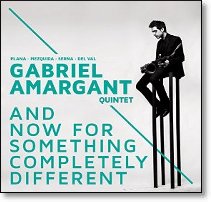
Gabriel Amargant Quintet: And Now for Something Completely
Different (2014 [2015], Fresh Sound New Talent): Tenor
saxophonist, second album, recorded in Girona, in the far northeast
corner of Spain, backed with piano, guitar, bass, and drums, with all
pieces by the leader. I can't say the title is completely true, but
I'm hard pressed to remember the last time a tenor saxophonist took
the stage with such fluid mastery -- Tommy Smith, maybe.
A-
Oren Ambarchi: Quixotism (2014, Editions Mego):
Prolific avant-garde experimentalist -- AMG lists 5 albums for 2014,
only 3 in 2013 but 9 in 2012 and I wouldn't be surprised if they've
missed some collaborations -- initially playing drums but has moved
on to guitar and synths. One of the more attractive ambient albums
I've heard recently, just interesting drumming with clouds of synth.
Docked a bit for long quiet patches (although it's often hard to get
the volume right on the computer).
B+(**)
Christian Artmann: Fields of Pannonia (2014 [2015],
self-released): Flute player, leads a quarter with piano-bass-drums.
Not my favorite horn, but the alto flute adds some depth, and the
stealthy impressionism is pleasantly attractive.
B+(*) [cd]
Joey Bada$$: B4.DA.$$ (2015, Cinematic Music Group):
Jo-Vaughn Virginie Scott, I suppose that's a name a rapper would have
to change, but the dollar signs just push "Bad-Ass" to an even higher
level of crassness. Actually, his first studio album is far from crass,
with its sharper-than-underground sound, a couple nods to his Caribbean
ancestors, even a dance anthem ("Teach Me," one of two bonus tracks).
B+(***)
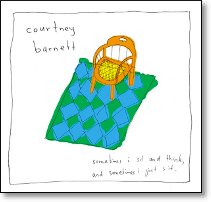
Courtney Barnett: Sometimes I Sit and Think, and Sometimes
I Just Sit (2015, Mom + Pop Music): Australian singer-songwriter,
got some attention last year when she combined two EPs into a debut
calling card, but initially struck me as a folkie troubadour, a wordy
one at that. This has a wordy title too, but the first thing you notice
is the guitar.
A-
Antoine Berjeaut: Wasteland (2013 [2014], Fresh Sound
New Talent): The French trumpet player's music is appropriately dreary
with occasional sparks, including tenor sax on four cuts. What gives
it all narrative force is Mike Ladd's spoken words, but a bit on the
melodramatic side.
B+(*)
Tim Berne's Snakeoil: You've Been Watching Me (2014
[2015], ECM): Alto saxophonist, third group album all for ECM, with
Oscar Noriega on clarinet/bass clarinet, Matt Mitchell on piano, Ches
Smith on drums, and newcomer Ryan Ferreira on guitar. The two horns
remind me of Berne's apprenticeship with Julius Hemphill, but like
some of Hemphill's work, this can get stiff and awkward, not that
the group isn't capable of powering through any obstacles they run
into.
B+(***) [dl]
Andrew Bishop: De Profundis (2015, Envoi): Saxophonist,
teaches at University of Michigan, third album, a trio with Tim Flood
on bass and Gerald Cleaver on drums. His credits as listed here: flute,
clarinet, bass clarinet, soprano and tenor sax -- although I hear more
of the latter. All original pieces, six "reimagined" from "De Profundis"
by Josquin Des Prez (c. 1440-1521) -- transposed into free jazz.
B+(***) [cd]
Bossa Brasil and Maurício de Souza Group: Here. There . . .
(2010, Pulsa Music): Organized half under each group, the credits are
more ambiguous with drummer de Souza and bassist Morrie Louden on all
tracks, the others on scattered tracks on both sides -- only difference
I see is that Bossa Brasil jazz up Brazilian tunes whereas the latter
takes jazz pieces (Joe Henderson, Cedar Walton, Chick Corea, "I Can't
Get Started") and gives them a Brazilian twist.
B+(*) [cd]
Jakob Bro Trio: Gefion (2013 [2015], ECM): Guitarist
from Denmark, has a number of previous albums on a small label so this
is something of a coming out. Trio, with Thomas Morgan on bass and Jon
Christensen on drums.
B+(**) [dl]
Dewa Budjana: Hasta Karma (2014 [2015], Moonjune):
Guitarist from Surabaya in Indonesia, mostly worked in a pop/rock band
called Gigi while developing a more jazz-oriented solo career. This
comes off as fusion with some eastern spiritual airs, although the
band is certifiably postbop -- Joe Locke on vibes, Ben Williams on
bass, Antonio Sanchez on drums.
B+(*) [cd]
Will Butler: Policy (2015, Merge): Arcade Fire
bassist, apparently a secondary figure behind brother Win Butler,
tosses out his own album, distinguished by upbeat rockers that
put most alt/indie outfits to shame.
B+(**)
Chastity Belt: Time to Go Home (2015, Hardly Art):
Punk girl band from Walla Walla, Washington; second album, conscious
but rather contained, as if pressurizing for an explosion that never
comes.
B+(*)
The City of Prague Philharmonic Orchestra: The Symphonic
Celtic Album (2011, Silva Screen): The songs are not just
Celtic, or even vaguely Celtic: nearly all come from soundtracks --
Miller's Crossing, Lord of the Rings, Barry
Lyndon, Braveheart, Titanic, Rob Roy,
Highlander, Gladiator, Riverdance (oddly,
best thing here), and a half-dozen more of that ilk. The Czechs
try to take this shit seriously.
C- [cd]
Clem Snide: Girls Come First (2015, Zaphwee): Eef
Barzelay's alt/indie band, originally from Boston but now transplanted
to Nashville where they feature both lap and pedal steel guitars. But
for all the band members listed, this feels small and intimate, the
work of a lonely, claustrophobic voice -- at least until "Like Lightning
Flashes," loose with glimmering steel.
B+(**)
The Close Readers: The Lines Are Open (2014, Austin):
A New Zealand novelist, Damien Wilkins, doesn't worry about coming up
with a distinctive sound when leaning on the Go-Betweens and the Chills
works so well.
A-
Tom Collier: Alone in the Studio (2014 [2015], Origin):
born 1950 in Washington, moved to Los Angeles in 1974, back to teach
at University of Washington in 1980. Cut a record in 1991 and several
more since 2004. Credits here: vibraphone, marimba, piano, drums, bass
synthesizer. Four originals, three at the end. Listenable, but hard to
see the point.
B
Bruce Cox Core-Tet: Status Cymbals (2012, self-released):
Minimal jacket, explains why this literally fell into a crack. Drummer,
second album after debut in 1997, about 40 side credits going back to
1992 (Fred Wesley). Mostly Cox originals, four covers (Monk, Shorter,
Benny Goldson?), sax quartet: Abraham Burton carries the day.
B+(*) [cd]
Stephan Crump/Mary Halvorson: Secret Keeper (2013
[2015], Intakt): Bass-guitar duo, second album together. Crump has
a real knack for using guitar to extend his range, but Halvorson may
not be the right guitarist to do this with -- not so much that she
runs away with the bait as that she doesn't.
B+(**) [cdr]
Isaac Darche: Team & Variations (2014 [2015],
Challenge): Guitarist, based in Brooklyn, originally from California.
Second album, quintet with Chad Lefkowitz-Brown on tenor sax, Glenn
Zaleski on piano, Desmond White on drums, and EJ Strickland on drums.
Smart postbop, moves along nicely
B+(**) [cd]
Ernest Dawkins: Live the Spirit Residency Big Band: Memory
in the Center: An Afro Opera: Homage to Nelson Mandela (2014
[2015], Dawk): Chicago saxophonist contents himself to be composer,
conductor, arranger and producer here, having lined up four other
saxophonists to carry the load, plus three trumpets, two trombones,
piano-bass-drums, poet Khari B, and singer Dee Alexander. I might
normally complain about the vocals (which can get operatic), but
the political rant is inspired, and the muscular exuberance of
the band sweeps you away. And when they work in a little township
jive, so much the better.
A- [cd]
Andrew DiRuzza Quintet: Shapes and Analogies (2015,
self-released): Guitarist, first album, quintet with Robert Espe on
tenor sax, Michael Jarvey on keyboards, plus bass and drums.
B+(**) [cd]
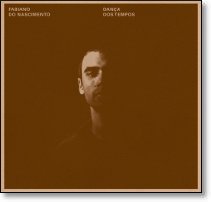
Fabiano do Nascimento: Dança Dos Tempos (2015,
Now-Again): Debut from Brazilian guitarist, based in Los Angeles,
backed by Airto Moreira on percussion and Ricardo Pasillas on
drums, with occasional vocals from Nascimento and Kana Shimanuki.
This never settles into pleasantries, even at its most intimate.
A-
Lila Downs: Balas y Chocolate (2015, RCA): Born
in Oaxaca, Mexico; father American, mother Mixteca; grew up in
California, chased the Grateful Dead, hooked up with a jazz pianist,
wound up back in Mexico. Heavy norteño vibe, sometimes seems like
she's pulling off something new, but the ballads come off as corny.
B+(*)
Drake: If You're Reading This It's Too Late (2015,
Cash Money/Motown): Rapper from Canada, not too long ago the next
big thing but after a couple dud albums this one dropped with nary
a splash -- one excuse I see is that this was planned as a mixtape
but with all the griping about money they (label? artist?) decided
at the last minute to cash in. Typical lyric: "I'm turning into a
nigger that thinks about money and women 24/7." Actually, that's
about all he has to say about women. Or thinking.
B
DRKWAV: The Purge (2015, Royal Potato Family):
A jazz organ trio transposed into a realm of high-power electronica,
fast and furious: Skerik on sax, John Medeski on keyboards, and
Adam Deitch on drums.
B+(***)
Eliane Elias: Made in Brazil (2015, Concord): Jazz
pianist from Brazil, has more than two dozen albums since 1986,
most with little to do with Brazilian music. Her early Plays
Jobim was disappointing, but she started singing on 1998's
Sings Jobim and I doubt that anyone has done it better.
This she actually recorded in Brazil with a local band (plus her
husband, bassist Marc Johnson) and more singers than she needs.
B+(*)
Charles Evans: On Beauty (2014 [2015], More Is More):
Baritone saxophonist, made something of a splash when his debut was
a solo album titled The King of All Instruments. This treatise
on beauty is distinguished by its ugliness, even if that isn't the
impression he wants to leave. Dave Liebman, playing soprano sax, is
the main malefactor. With Ron Stabinsky on piano and Tony Marino on
bass.
B [cd]
John Fedchock Quartet: Live: Fluidity (2013 [2015],
Summit): Trombonist, best known for his New York Big Band recordings,
backed by piano-bass-drums here, makes a good case for trombone as
a lead instrument.
B+(***) [cd]
Joe Fiedler Trio: I'm In (2015, Multiphonics Music):
Third good trombone record this week (after Steve Turre and John
Fedchock), and easily the best. Rob Jost's bass rises above rhythm
and harmony for contrasting solos, Michael Sarin hits the right spots
on drums, and Fiedler runs rings around the competition.
A- [cd]
Tomas Fujiwara & the Hook Up: After All Is Said
(2014 [2015], 482 Music): Drummer, has two previous albums with this
group -- Brian Settles (tenor sax), Jonathan Finlayson (trumpet), Mary
Halvorson (guitar), various bassists (Michael Formanek here) -- duos
with Taylor Ho Bynum, a group called Thumbscrew (with Halvorson and
Formanek), side credits with Anthony Braxton. The horns skew various
ways, but focus on the prickly interplay between guitar and drums, a
sketchy rhythm always in turmoil.
A-
The Go! Team: The Scene Between (2015, Memphis Industries):
British pop-rock group: they sounded very young on their refreshingly
bright 2004 debut; less so on this their fourth album, but they keep it
bright with lots of electricity and a group fervor which unfortunately
makes it harder to follow.
B
Colleen Green: I Want to Grow Up (2015, Hardly Art):
Singer-songwriter coos over drum machines, or at least that was her
original sound -- something to emulate for the live drummers she can
now afford, but that compromises her lo-fi sympathy. If only the songs
rose to the challenge. But she's trying.
B
Marty Grosz Meets the Fat Babies: Diga Diga Doo
(2013-14 [2015], Delmark): The Fat Babies are a Chicago trad jazz
outfit with a couple fine albums if you can't get enough of that
old timey sound. Grosz, the son of the famous Weimar caricaturist,
fled the Nazis in the early 1930s and grew up on the first trad
jazz revival, learning guitar and banjo. He keeps the group loose,
and I won't complain that he talks too much toward the end, or
that he sings a couple. One of the two sessions adds Jim Dapogny,
another legend, on piano.
A- [cd]
Susie Hansen: Representante de la Salsa (2010,
Jazz Caliente): Violinist-singer, third album, with George Balmaseda
and Kaspar Abbo also taking lead vocals. Salsas, some mambo and cha
cha, runs hot, aimed at the feet.
B
Heems: Eat Pray Thug (2015, Megaforce): Himanshu Suri,
born and raised in Flushing, Queens, New York -- all-American, as
shocked as any of us by 9/11, yet when the kneejerk reaction set in
he's out buying American flags not because his knee is jerking but
as camouflage, for his name and less-assimilated Punjabi family.
That story appears often enough here to amount to a theme, at one
point breaking out in a chant of "USA" that I could do without.
"Suicide by cop" is another line repeated too often. At points the
rawness becomes unpleasant. On the other hand, it's all remarkably
different and humane.
A- [cd]
Ray Wylie Hubbard: The Ruffian's Misfortune (2015,
Bordello): Long past his Cowboy Twinkies days, also retirement age,
his songwriting has sharpened -- in one song he concludes he'd be
"better off with the blues" than with a certain woman -- and the
music has gotten tougher and harder. Cuts out the flab too, doing
ten songs in 33:40.
A-
Vijay Iyer Trio: Break Stuff (2014 [2015], ECM):
Piano trio, with Stephan Crump on bass and Marcus Gilmore on drums --
third album with this trio, after Historicity (2009) and
Accelerando (2012), both A- in my book although my reaction
to piano trios is so gut-level I can't begin to tell you why. What
I can say is that while typically masterful this doesn't break much --
not even the covers of Monk, Strayhorn, and Coltrane.
B+(***) [dl]
Tobias Jesso, Jr.: Goon (2015, True Panther Sounds):
Young Canadian singer-songwriter, plays piano, reminded me of Billy
Joel at first then I realized John Lennon c. Imagine was a
closer match, not that Jesso is in that league. Still refreshing to
hear.
B+(**)
Steve Johns: Family (2014 [2015], Strikezone):
Drummer, considers his "recording debut as a leader" but shares a
2002 album with his name ahead of saxophonist Peter Brainin, and
has several dozen side-credits at least back to 1987 -- Thomas
Chapin and Mario Pavone are names that jump out at me. His family
here includes saxophonist-wife Debbie Keefe Johns and bassist-son
Daryl Johns, and they're joined by guest guitarists Bob DeVos and
Dave Stryker.
B+(**) [cd]
The Kandinsky Effect: Somnambulist (2014 [2015],
Cuneiform): Sax-bass-drums trio from France, third album, closer
to post-rock with its thick slab sound than to avant -- both
saxophonist Warren Walker and bassist Gaël Petrina are also
credited with "effects."
A- [dl]
Kaze: Uminari (2014 [2015], Circum-Libra): Two trumpets
(Christian Pruvost and Natsuki Tamura), piano (Satoko Fujii), and drums
(Peter Orins) -- third album under this group name, one of many groups
Tamura and Fujii have conjured up. Shock out of the gate, turning into
exceptionally invigorating avant-jazz, but later one runs into stretches
where not much seems to be happening, though if you dig deeper (or just
stay patient) it will.
B+(***) [cd]
Robert Kennedy Trio: Big Shoes (2014 [2015],
self-released): Organ trio, debut release, Kennedy on the Hammond,
Mason Razavi on guitar, Cody Rhodes on drums.
B+(*) [cd]
Oded Lev-Ari: Threading (2014 [2015], Anzic): Pianist,
from Israel, graduated from New England Conservatory, studying under
Bob Brookmeyer. Shows several looks here, including two vocal songs
(Alan Hampton, Jo Lawry), often indulging in lush strings, or making
space for Anat Cohen's luscious clarinet.
B+(**) [cd]
Earl MacDonald: Re: Visions (2008 [2010], Death Defying):
Pianist, composed most of this and arranged the rest (subtitle: "Works for
Jazz Orchestra"), using a standard big band (5 reeds, 4 trumpets, 4 trombones,
guitar-piano-bass-drums), about half familiar names.
B+(**) [cd]
Ethan Mann With Chip Crawford & Greg Bandy: It's All About
a Groove (2009 [2010], Petunia): Credits read guitar, keyboards,
drums, but mostly sounds like organ, just perhaps a bit lighter.
B- [cd]
Laura Marling: Short Movie (2015, Ribbon Music):
Brit singer-songwriter, fifth album, has a folkie rep for framing her
songs with guitar, but so did Dylan, or Ani DiFranco. I'm reluctant
to put her at that level, but every album has something substantial
and this has more than a few things.
A-
Chris Massey's "Nue Jazz Project": Vibrainium
(2010, Chris Massey Music): Drummer, first album, leads a quintet
with trumpet (Donald Malloy), alto/soprano sax (Benjamin Drazen),
piano (Evgeny Lebedev), and bass (David Ostrem). Don't confuse
with Nu Jazz: a Nue is a Japanese folklore creature with the head
of a monkey, the body of a raccoon dog, the legs of a tiger, and
a snake as a tail. Three pieces by the leader, three more by band
members, covers from Joe Henderson and Chick Corea. Basically,
high energy hard bop.
B+(*) [cd]
The Mavericks: Mono (2015, Valory): Raul Malo's
group flirted with country when they moved to Nashville two decades
ago, but never really fit the mold, or broke it in any interesting
ways. All but one Malo originals (five co-credits), throwbacks (or
sly allusions) to early-'60s rock 'n' pop, some with Latin beats
and/or sax, just nothing you'd think of as classic. The cover?
Doug Sahm's "Nitty Gritty," but "(Waiting For) The World to End"
would have fooled me.
B+(**)
Makaya McCraven: In the Moment (2014 [2015],
International Anthem): Chicago drummer, recorded 28 improv shows,
48 hours, and mixed that down to 19 short pieces here, what he
calls "organic beat music." The cast must shuffle in and out,
with guitar (Jeff Parker) and vibes most common, and a bit of
Marquis Hill trumpet the high point.
B+(***) [bc]
Nellie McKay: My Weekly Reader (2015, 429 Records):
After her fine tribute to Doris Day, McKay moves into the 1960s,
mostly Brit Invasion pop including the Kinks and Beatles, Herman's
Hermits and Small Faces, "Don't Let the Sun Catch You Crying" and
"Red Rubber Ball," along with a few American tunes in that vein.
B+(*)
Levon Mikaelian: United Shades of Artistry (2014 [2015],
self-released): Keyboardist-singer Mikaelian's name is nowhere obvious
on the cover, but the hype sheet attributes the album to him, and the
back cover lists him as composer, band leader, and producer, in a group
which also includes guitar, bass, and drums/percussion. They build a
tight little groove album, helped by guest slots for Gary Thomas on
tenor sax (4 cuts) and Randy Brecker on trumpet (one). Just one vocal
(more than enough).
B [cd]
Jason Miles/Ingrid Jensen: Kind of New (2014 [2015],
Whaling City Sound): Miles is a keyboard player with fifteen records
since 1994, many tributes like Celebrating the Music of Weather
Report and 2 Grover With Love, plus a side interest in
Brazil (including an Ivan Lins tribute). Then there's his connection
to Miles Davis: well before his mediocre 2005 tribute Miles to
Miles, he actually played for Davis (on Tutu, very close
to the end of the line. Here he returns to Davis' fusion vibe with
a first-rate trumpet player on familiar-sounding original material
(plus one Wayne Shorter tune). Does sound a bit like Davis but writ
small, even with a dozen guest spots scattered about.
B [cd]
Moonbound: Confession and Release (2005-07 [2008],
Unsung): International prog-rock band, produced by Fabio Trentini
who also plays and sings, with cohorts from Germany, Austria, and
America. Not quite as awful as my reaction implies, but not worth
sorting out why.
C [cd]
Van Morrison: Duets: Re-Working the Catalogue (2015,
RCA): Sixteen songs, a few I recognize but nothing that showed up on,
say, his canonical 1990 The Best of Van Morrison (although
two songs repeat from 2007's 37-song Still on Top: The Greatest
Hits). I'd also say that except for Taj Mahal he hasn't really
sought out the top tier of possible duetists -- the only one I think
adds much is Chris Farlowe ("Born to Sing").
B+(*)
The Mountain Goats: Beats the Champ (2015, Merge):
Looking back, comparing Robert Christgau's and my own grades for
eight or so albums by John Darnielle's singer/songwriter vehicle,
I see no real pattern: sometimes I'm up (The Sunset Tree,
Heretic Pride), sometimes I'm down (All Eternals Deck,
Transcendental Youth), and the splits seem arbitrary. So
I can't tell you why I rate this one with the former two, above
the latter two. Fact is I never follow lyrics closely enough to
make fine distinctions. Also that Darnielle always sounds more
coherent than whatever other singer/songwriters I'm listening to
at the time.
A-
Curtis Nowosad: Dialectics (2014 [2015], Cellar Live):
Drummer, second album, basic hard bop quintet lineup, with Derrick
Gardner the standout on trumpet, Jimmy Greene on tenor/soprano sax,
Steve Kirby on acoustic bass, and Will Bonness on piano. Liner notes
describe this as "straight-ahead jazz" then offer "neo-hard bop" as
an alternative. Certainly has fresh drive and sparkle within a proven
framework.
B+(***) [cd]
Old Time Musketry: Drifter (2013 [2015], NCM East):
Quartet: JP Schlegelmilch plays accordion and piano and writes most
of the pieces, Adam Schneit plays tenor sax and clarinet and wrote
two tunes, Phil Rowan is on bass and Max Goldman on drums/melodica.
The accordion gives the melodies a thick, robust texture, a popular
anchor no matter how everyone else twists and turns.
A- [cd]
Panda Bear: Panda Bear Meets the Grim Reaper (2015,
Domino): Noah Lennox, like his well known group Animal Collective,
makes a kind of prog psychedelia that is cleverly off-kilter often
enough, but it always runs the risk of turning annoying, and not
infrequently does. Imagine Sgt. Pepper, without the songs,
done by Frank Zappa, without the jokes, then tone everything but
the reverb down a couple notches. I know: surprising you have
anything left.
B
The Paranoid Style: The Purposes of Music in General
(2013, Bar/None, EP): Christgau recommends a cassette reissue (limited
edition of 100) that adds four songs to this six song (23:42) EP --
title The Power of Our Proven System, the cover touting "A
Decade of Excellence," "Includes Psychic Benefits!," "Now 33% More
Paranoid!!" -- but this is the one I found. Timothy Bracy learned the
indie craft in the Mendoza Line, and wife Elizabeth sings (probably
more).
A-
The Paranoid Style: Rock and Roll Just Can't Recall
(2015, Worldwide Battle, EP): Better recorded but slimmer at 5
songs, 16:21, and I suspect slighter too.
B+(***)
Sarah Partridge: I Never Thought I'd Be Here (2014 [2015],
Origin): Singer-songwriter, jazz elements -- including Scott Robinson on
tenor sax and flute -- but no standards here. Fifth album since 1998.
B+(*) [cd]
Kim Pensyl: Foreign Love Affair (2014 [2015], Summit):
Commonly identified as a pop-jazz/new age keyboardist/trumpeter, has
at least 17 albums since 1988. This one is respectable enough it could
pass for mainstream jazz, but whereas jazz is normally collaborative
(and often conflicted), Pensyl plays everything here -- bass, guitars,
trumpet, flugelhorn, melodica, drums, and lots of piano.
B [cd]
Luis Perdomo & Controlling Ear Unit: Twenty-Two
(2014-15 [2015], Hot Tone Music): Pianist, from Venezuela, based in
New York, has a half-dozen albums. Trio, with Mimi Jones on bass and
Rudy Royston on drums.
B+(**) [cd]
Natalie Prass: Natalie Prass (2015, Spacebomb): First
album, long on strings, sometimes just talked (or whispered) through,
oddly effective (although "It Is You" sounds like it belongs in a
Disney cartoon).
B+(*)
Project Trio: Project Trio (2010, Project Trio):
Flute-cello-bass trio (Greg Pattillo, Eric Stephenson, Peter Seymour).
Two covers, one from Dave Brubeck ("Blue Rondo a la Turk"), the other
Guns n' Roses ("Sweet Child o' Mine"). Helps that the flute is blown
in sharp bursts, almost making up for the lack of a drummer. Also
that the cello as well as the bass keeps this moving.
B+(*)
Rae Sremmurd: Sremm Life (2015, Eardrum/Interscope):
Atlanta-based rap duo, doubt they are teens but they play at it, the
beats chugging along, the hormones flowing, still not quite as much
fun as they promise.
B+(***)
Raoul: The Spanish Donkey (2014 [2015], Rare Noise):
Avant-jazz power trio, with Joe Morris on guitar, Jamie Saft on organ
and keyboards, and Mike Pride on drums. Saft cuts a thick swath, and
Morris is all muscle -- almost unsettlingly so.
B [cdr]
Mark Rapp: Token Tales (2008 [2009], Paved Earth):
Trumpet player, first album, although he's had several since, including
The Strayhorn Project with Don Braden. Feints toward funk at
first, but shows wider range.
B+(*) [cdr]
Sachal: Slow Motion Miracles (2014 [2015], Okeh):
Last name Vasandani, from Chicago, considered a jazz singer but isn't
a standards guy, has three previous albums. Does have some vocal chops
plus an easy-going lilt. Doesn't have any songs I care to hear again.
B [cdr]
Phil Sargent: A New Day (2010, Sargent Jazz): Guitarist,
second album, has a couple side credits. Backed with bass and drums, plus
piano on a couple cuts, and accompanied by Aubrey Johnson's voice --
attractive in song but annoying as scat. The guitar trends toward fusion,
sometimes impressive.
B- [cd]
Lalo Schifrin: Invocations: Jazz Meets the Symphony #7
(2010 [2011], Aleph): Argentine pianist, worked with Dizzy Gillespie,
hacked out a lot of soundtracks, wound up with this series of jazz
tunes done by classical orchestra -- the ever-affordable Czech National
Symphony Orchestra. Not without some stirring moments (notably "Groovin'
High"), but still a sop to the old "high culture" snobbery.
B [cd]
Alex Sipiagin: Balance 38-58 (2014 [2015], Criss Cross):
Trumpet/flugelhorn player, moved from Russia to US in 1991, has 16 albums
since 1998. Mainstream player with serious chops, band here is fashionably
postbop with David Binney (alto/soprano sax), Adam Rogers (guitar), John
Escreet (piano), Matt Brewer (bass, sometimes electric), and Eric Harland
(drums). Guitar is exceptionally well integrated. Last song turns rockish.
B+(***)
Bjørn Solli: Aglow: The Lyngør Project Vol. 1 (2013
[2015], Lyngør): Norwegian guitarist, third album, came up with an
impressive line-up for this: Seamus Blake (tenor sax), Ingrid Jensen
(trumpet), Aaron Parks (piano), Matt Clohesy (bass), Bill Stewart
(drums). Lyngør is a small island village about 50 miles southwest
of Oslo, the site of an 1812 navel battle, now considered one of
Europe's best preserved villages (at least in 1991 -- no cars has
something to do with this). Blake takes charge early.
B+(**) [cd]
Soulive: Rubber Soulive (2010, Royal Family): Organ
trio, with Neal Evans on Hammond (and piano), Eric Krasno on guitar,
and Alan Evans on drums. All Beatles songs (three Harrisons). I've
said many times that the Beatles are unjazzable, but most of these
tunes hold up relatively well to a layer of soul jazz funk.
C+ [cdr]
Sufjan Stevens: Carrie & Lowell (2015, Asthmatic
Kitty): On some level an elegy for his late mother -- Lowell would be
his step-father. The eleven songs are done simply, usually just his
angelic folkie voice with minimal backing, not that you don't get
glints of sparkle.
B+(***)
Dave Stryker: Messin' With Mister T (2014 [2015],
Strikezone): Mainstream guitarist, has about thirty albums since
1991 which may (or may not) include his long-running group with
saxophonist Steve Slagle. This one's a tribute to Stanley Turrentine,
with organ (Jared Gold), drums (McLenty Hunter), extra percussion
on half the tracks, and a parade of ten saxophonists, led off by
Houston Person and ending with Tivon Pennicott -- two generations
of Mr. T devotees. Class of the field: Chris Potter.
B+(***) [cd]
Earl Sweatshirt: I Don't Like Shit, I Don't Go Outside
(2015, Columbia/Tan Cressida): Odd Future rapper, Thebe Kgositsile,
born in Los Angeles, father a South African poet absent since six,
mother a UCLA law professor. Short album, runs 29:56, beats dense and
dull, as if the murk is its own reward.
B+(*)
Jacky Terrasson: Take That (2014 [2015], Impulse):
Pianist from Germany, has a couple dozen albums since 1994. Backed
with bass, drums, extra percussion (Adama Diarra, from Mali), four
originals, seven covers, some with vocal scat/beatbox (Sly Johnson).
B+(**)
Times 4: Eclipse (2010, Groove Tonic Media): San
Francisco quartet -- Greg Sankovich (keys), Kevin Lofton (bass),
Lincoln Adler (sax), Maurice Miles (drums) -- third album, keep a
sound groove going, sax has some bite to it. Better, I'd say, than
the average Yellowjackets album, if that's your thing.
B+(*) [cd]
TRP (The Reese Project): Eastern Standard Time (2008
[2009], In the Groove): Flute player Tom Reese, Laurie Reese on cello,
Bobby Brewer on guitar, Aaron Walker on drums, and a guest percussionist --
the strings show more affection for bluegrass, and the drummer makes
sure no one thinks chamber jazz.
B
TRP (The Reese Project): Evening in Vermont (2011,
Rhombus): Flute-player Tom Reese and cellist Laurie Reese replace
guitar with piano -- yet another Reese, Kirk -- use a different
drummer (Dave Young), and give a guest spot to Tish Brown (violin
and viola). Several trad pieces, mostly upbeat, and an "All Wood"
medley long on Norwegian.
B- [cd]
Steve Turre: Spiritman (2014 [2015], Smoke Sessions):
Major trombone player, close to twenty albums sinjce 1987 , this a
quintet with Bruce Williams (alto/soprano sax), Xavier Davis (piano),
Gerald Cannon (bass), and Willie Jones III (drums). Strong trombone
leads, nice shadowing with the sax, basic blues have the most oomph,
but bop and ballads work too.
B+(**)
Unexpected: Munchies (2013 [2014], Fresh Sound New
Talent): Spanish piano trio, led by Sergi Sirvent Escué (who wrote
six of seven pieces), with Esteban Hernández on bass and Daniel
Dominguez on drums. Sirvent has a very percussive style, ripping
through these pieces.
B+(***)
Unhinged Sextet: Clarity (2014 [2015], OA2): Debut
group album, seems like I've run across several of these guys before:
Will Campbell (alto sax), Mike Olson (tenor sax), Vern Sielert (trumpet),
Michael Kocour (piano), Jon Hamar (bass), Dom Moio (drums), all but the
drummer contributing compositions. Postbop, group dynamic emphasizes
harmony, turns slick -- group name strikes me as a misnomer.
B [cd]
Javier Vercher: Wish You Were Here (2014 [2015],
Musikoz): Tenor saxophonist, from Spain, imposing over a first-rate
rhythm section -- Lionel Loueke (guitar), Sam Yahel (piano), Larry
Grenadier (bass), and Francisco Mela (drums).
B+(***) [cd]
The Michael Waldrop Big Band: Time Within Itself (2014
[2015], Origin): Drummer, studied at UNT and Memphis; played in Bob
Belden's quartet, did big band arrangements for Pat Metheny, taught in
Colorado and Washington, not sure where he is now but this conventional
big band (plus guitar and vocals on two tracks) was recorded in Dallas
with no one I've heard of.
B [cd]
Waxahatchee: Ivy Tripp (2015, Wichita): Katie Crutchfield,
from Alabama, third album under this name but there are earlier ones with
her sister Alison as PS Eliot. The least generic style suggested by AMG
is "Twee Pop" but this isn't really either. It doesn't come easy, with an
off-color dirge up front and an even slower, but more touching, "Half Moon"
toward the end.
B+(**)
Leo Welch: I Don't Prefer No Blues (2015, Big Legal
Mess): Delta bluesman, made his debut last year at 81 (Sabougla
Voices) and he's evidently in a hurry now. Much grit in his voice,
dirt in the guitar, and a hard-rocking band. Nothing Hound Dog Taylor
hasn't already done, but it's been a while.
B+(***)
Lenny White: Anomaly (2010, Abstract Logix):
Drummer, played with Chick Corea in Return to Forever in the 1970s,
moving on to cut his own fusion projects, close to 20 albums since
1975. Some names I recognize in the band -- Tom Guarna (guitar),
George Colligan (keyboards), Victor Bailey (bass) -- but much of
the fine print is illegible. The thick fusion stew isn't really
unlistenable, but nothing I hear makes me want to. (Well, sax
isn't bad, but not much of it, and vocals are worse.)
C+ [cd]
Bradley Williams: Investigation (2014 [2015], 21st
Century Entertainment, 2CD): Pianist, sings some, originally from Kansas,
played in one of Woody Herman's herds. This seems to be his first album,
one disc of swing-oriented instrumentals powered by a nine-piece band, a
second with vocals -- Williams but mostly the ladies, Jennifer Graham
and London McIlvane: "Solid Potato Salad," "Someone Else Is Steppin' In,"
"These Boots Are Made for Walkin'," "Use Me," some Jobim and Veloso,
"What a Little Moonlight Can Do." All but one of the instrumentals are
Williams originals; the ringer, Duke Ellington.
B+(***) [cd]
Cassandra Wilson: Coming Forth by Day (2015, Legacy):
One of many albums themed to honor Billie Holiday's centennary, in
this case from a singer who approaches Lady Day's stature without in
any way imitating her sound. Mostly strings, perhaps inspired by the
maudlin death-bed Lady in Satin, the songs creep along, each
trapped in its own gloomy dungeon of sound. More effective than I
would have expected.
B+(**)
Mark Wingfield: Proof of Light (2014 [2015], Moonjune):
British guitarist, has a dozen or so albums since 2001, some closer to
classical, but most jazz, in this case reminding me of fusion, but more
basic backed only with acoustic bass (Yaron Stavi) and drums (Asaf
Sirkis).
B [cd]
Recent Reissues, Compilations, Vault Discoveries
David Borden: Music for Amplified Keyboard Instruments
(1981 [2015], Spectrum Spools): Minimalist composer and electronic
music pioneer, best known for leading one of the 1970s' most accessible
avant-electronics groups, Mother Mallard's Portable Masterpiece Company.
This set came from beta testing Robert Moog's modular synths, and while
the repeating rhythmic figures come from minimalism it doesn't feel
skimpy or sketchy at all -- if anything, over the top.
B+(***)
James Clay: The Kid From Dallas: Tenorman (1956-57
[2015], Fresh Sound): Tenor saxophonist, originally from Dallas but
grew up in Los Angeles, was just 20 when his debut was recorded --
originally attributed to "The Lawrence Marable Quartet featuring
James Clay," with Sonny Clark on piano, Jimmy Bond on bass, and
Marable on drums. This adds six tracks, an earlier one with Bobby
Timmons on piano, five later with Lorraine Geller, Red Mitchell,
and (mostly) Billy Higgins. Straddles bebop, opening up on the blues.
Younger than the more famous "Texas tenors" but he fits in.
B+(***)
Dance Mania: Ghetto Madness (1989-98 [2015], Strut):
Collects various dance singles from Chicago house label Dance Mania --
nothing famous, the repeating artists are Jammin Gerald, DJ Deeon, and
DJ Funk. Nearly every track is built on a minimalist repeating beat
and line no longer than titles like "Pump That Shit Up" or "Give Me
Ecstasy."
B+(**)
Highlife on the Move: Selected Nigerian & Ghanaian Recordings
From London & Lagos 1954-66 (1954-66 [2015], Soundway, 2CD):
Pre-juju, pre-Afrobeat (although there are two early Fela cuts), I'm
tempted to say pre-highlife although that can't be true -- just early,
coarsely developed, although the flow is seductive enough over the long
haul.
B+(***)
Humphrey Lyttelton: Humphrey Lyttelton in Canada
(1983 [2015], Sackville/Delmark): Trumpet player, a major figure in
Britain's trad jazz movement from the late 1940s. A much younger Jim
Galloway (baritone and soprano sax) joins him up front (including on
the cover), with Ed Bickert (guitar), Neil Swainson (bass), and Terry
Clarke (drums). Not really Lyttelton's prime, but a very strong outing
for Galloway, who (by the way) just died in 2014.
B+(***)
LeAnn Rimes: All-Time Greatest Hits (1996-2007 [2015],
Curb): Had a Patsy Cline-y hit, "Blue," as a 13-year-old, and has
belted out ten albums since then, selling 37 million copies, but
I doubt that she's ever recorded a better song. I thought her 2013
album Spitfire wasn't bad, but this stops with the chart hits
in 2007. She's got a voice, but the arrangements are mostly dreck,
and most of the songs don't even deserve better.
C+
Old Music
Big Satan: I Think They Liked It Honey (1996 [1997],
Winter & Winter): Free sax-guitar-drums trio -- Tim Berne (alto
and baritone sax), Marc Ducret, and Tom Rainey -- the first of three
albums under this group name (both had appeared in other Berne groups,
together in Bloodcount). Quite remarkable when they break loose, but
less commanding when they tangle up close.
B+(***)
John Carter & Bobby Bradford Quartet: Flight for Four
(1969, Flying Dutchman): The first recording of a legendary avant-jazz
quartet -- I doubt they were the first to set the "piano-less" two-horn
quartet lineup free, but it later became one of the staple configurations
for the art. Carter went on to play more clarinet, but he gets a harder
edge on alto and tenor sax, clashing more vibrantly with Bradford's
trumpet. With Tom Williamson on bass and Buzz Freeman on drums. Reissued
in 2014 by International Phonograph and in 2015 by BGP (Ace).
A-
John Carter/Bobby Bradford: Self Determination Music
(1970, Flying Dutchman): Presumably the same quartet as above, but
only the leaders got their names on the packaging. Two cuts per side,
21-23 minutes, doesn't jump as high as the earlier album but makes up
for that in intricacy.
B+(***)
Chris Farlowe: The R&B Years [Charly R&B Masters Vol.
5] (1962-67 [1994], Charly): John Henry Deighton, sometimes
recorded as Chris Farlowe & the Thunderbirds, one of the 1960s
British R&B singers/groups who didn't make the Invasion. Hard to
tell how early this is -- it includes some songs that appeared as
singles in 1965-67 on Immediate, but omits his 1964 hit ("Out of
Time") and is padded out with early covers.
B
Milford Graves: Percussion Ensemble With Sunny Morgan
(1965 [2003], ESP-Disk): Two drummers so the effect isn't far removed
from a 33:56 drum solo -- more complex, with more tinkles for sure.
Graves was 23 at the time, playing notably with New York Art Quartet,
eventually destined to become something of a legend, albeit rarely
recorded and little known. Morgan (more often Sonny), even more obscure,
recorded into the mid-1970s.
B+(*)
Woody Herman and His Thundering Herd: Keep on Keepin' On:
1968-1970 (1968-70 [1998], Chess/GRP): Stumbled onto this
and figured why not? Herman's heyday was in the late 1940s with
his "Four Brothers" band, but Woody's Winners in 1965 was
a second peak. This isn't. In fact, the big band stomp through
contemporary pop fare like "Aquarius," "I Say a Little Prayer,"
"My Cherie Amour," "Smiling Phases," and "Light My Fire" is at
best camp. But the Herd is as hot as ever, and they never flag
through 13:43 of "Blues in the Night."
B+(*)
Eddie Higgins Quartet: My Funny Valentine (2004
[2006], Venus): A bebop pianist who cut his first album in 1958 and
had added fifty more by his death in 2009. This is Higgins' third
Quartet album "featuring Scott Hamilton" -- all standards, and the
tenor saxophonist has rarely sounded more magnificent. With Jay
Leonhart on bass and Joe Ascione on drums.
A-
Louis Jordan: Five Guys Named Moe (1943-46 [1993],
Charly): I picked this up for $1.99 more than a decade ago, and never
bothered with it partly because it comes with no documentation, nor
is much available on the web -- the dates above come from AMG, but
their review reads like a different disk. But one song clearly labels
itself as a WWII-era V-Disc ("You Can't Get That No More"). Actually,
this has 12 of Jordan's 14 V-Disc titles, plus eight more tracks. Not
bad, but pails against MCA's more canonical The Best of Louis
Jordan [1975 as 2LP, but also on CD] and Five Guys Named Moe:
Vol. 2 [1992], or Proper's 4-CD budget box, Jivin' With
Jordan.
B+(**) [cd]
Larry Levan Live at the Paradise Garage (1975-79
[2000], Strut/West End, 2CD): The hefty booklet of notes explains
this was recorded live at Levan's Soho dance haven in 1979. It's
a superb set of vintage disco 12-inchers, not the genre's greatest
hits but not obscurities either.
A- [cd]
The Mendoza Line: Lost in Revelry (2002, Absolutely
Kosher): Named for the shortstop whose lame batting average came to
define the lower bound of acceptability even for a brilliant fielder
(nine years in the majors, 1337 AB, 4 HR, 101 RBI, .215 BA). Fourth
album (earliest on Rhapsody), band is low key alt, like their mentor
adept at digging out grounders but unable to rack up any hits.
B+(*)
Tomasz Stanko: Bluish (1991 [1992], Power Bros.):
Trumpet player, one of the few Polish jazz musicians to make a name
in the West while still based in Communist Poland. Trio with two
Norwegian stars: Arild Andersen on bass and Jon Christensen on drums.
Not flashy, but draws out Stanko's lyricism.
B+(***)
Randy Weston: Blues to Africa (1974, Arista/Freedom):
American jazz pianist, one of the first to take a serious interest in
Africa for his compositions, not that the influence is all that clear
from the music. This is solo, the last cut ("Sahel") with a spoken
word bit.
B+(**)
Randy Weston/The Gnawa Master Musicians of Morocco: Spirit:
The Power of Music (1999 [2003], Sunnyside): Recorded live
in Brooklyn, Weston starts with solo jazz piano, adds bass and a
couple Moroccan genbri, then the singers take over for three trad
cuts, then everyone (including Talib Kibwe on flute and alto and
Benny Powell on trombone). Not a synthesis but a party for sure.
B+(***)
Revised Grades
Sometimes further listening leads me to change an initial grade,
usually either because I move on to a real copy, or because someone
else's review or list makes me want to check it again:
Duke Ellington: The Afro-Eurasian Eclipse (1971 [1991],
Fantasy/OJC): One of Ellington's last recordings, only released a year
after his death in 1974, for some reason I graded this low and forgot
about it -- until someone reminded me that Morton-Cook selected it for
a crown in the first edition of Penguin Guide for Jazz, although
they dropped the crown in the second edition and never restored it,
despite being more/less continuously in print. The Far East Suite
(1966) is one of my favorite records, and I now hear faint echoes of
that -- though I had to turn it up to get there. True that the band is
starting to fray around the edges -- or at the center since Johnny
Hodges died.
[was: B] A- [cd]
Notes:
Everything streamed from Rhapsody, except as noted in brackets
following the grade:
- [cd] based on physical cd
- [cdr] based on an advance or promo cd or cdr
- [bc] available at bandcamp.com
- [sc] available at soundcloud.com
[os] some other stream source
- [dl] something I was able to download from the web; may be freely
available, may be a bootleg someone made available, or may be a publicist
promo
Ask a question, or send a comment.
Monday, April 13, 2015
Music Week
Music: Current count 24826 [24797] rated (+29), 398 [404] unrated (-6).
Another sub-30 week, again just shy by one. Possible reason this
week is that all those A- records took extra spins to verify, not to
mention enjoy. (Except perhaps Heems, where I can't say my enjoyment
was up to the grade, caught as the album is between sucking up to a
jingoism that both of us know better than.) In fact, none of the A-
records really blew me away: they're all huddled in the lower half
of my
2015 list-in-progress (well, Marty
Grosz and Old Time Musketry are just above the mid-point). So maybe
I blew out my curve. Or maybe the stars just aligned.
Expect a Rhapsody Streamnotes this week -- probably tomorrow. The
draft file has 112 records at present. Certainly doesn't need any
more -- longer than most since I switched to flexible scheduling.
Still, closer to four weeks than three -- another dimension in which
I'm slipping, if only a bit. With this week's bumper crop, the A-list
is up to 27 records about 15 weeks into the year: still well below
where I expect it to wind up
(2014 is up to 156, not that I
expect to listen to as much this year), and still tilted heavily
toward jazz (17-10, counting Nascimento in the non-jazz, although
that's pretty borderline).
Thought I might try to drive out to EMP in Seattle this year,
but I couldn't get organized in time. Instead, I'm suffering through
one of the worst spring allergy funks I've had since moving to KS.
My progress in cleaning up the office, sorting and shelving CDs,
etc., has largely stalled -- albeit in a much better place than it
was. The recent jazz sort has mostly been by grade, and I was a bit
surprised to find that the shelves I allocated for recent B+(***)
and higher jazz are well short of what I need.
I've decided to start donating some CDs to WSU's library, and
will try to dump the first box off later this week. The recycle
dumpster, which I largely filled with paper more than a week ago,
should be emptied in the morning, so I can resume packing it. Still
have vast quantities of music magazines I'll never do anything
constructive with. Hate to just throw them away, but it doesn't
look like I'll have any takers.
I've fallen way behind in many other projects -- notably a much
needed update to Robert Christgau's website. Also failing to make
any progress on my own larger writing projects. Hard even to read
much when your eyes are bleary and you can hardly breathe. Probably
hasn't helped my productivity that I've fallen into watching more
TV than in ages -- even such obvious trainwrecks as American
Crime (just completely dispicable), The Good Wife (a
former good show gone bad -- half-dedicated to killing off Kalinda
Sharma [at least Will Gardner went quick], half drowning Alicia
in a political campaign we always thought she was too smart to get
taken by, and ending it as badly as possible), and Empire
(probably the worst season finale I've ever seen). At least still
hoping that Justified will end in decent shape. (Finally
finished the second season of Orange Is the New Black, and
that finale was remarkably satisfying.)
Another week without tweet reviews. Just been hard hanging in there.
New records rated this week:
- Albare: Only Human (2014 [2015], Alfi): [cd]: B+(**)
- Tim Berne's Snakeoil: You've Been Watching Me (2014 [2015], ECM): [dl]: B+(***)
- Jakob Bro: Gefion (2013 [2015], ECM): [dl]: B+(**)
- The City of Prague Philharmonic Orchestra: The Symphonic Celtic Album (2011, Silva Screen): [cd]: C-
- Ernest Dawkins Live the Spirit Residency Big Band: Memory in the Center: An Afro Opera: Homage to Nelson Mandela (2014 [2015], Dawk): [cd]: A-
- Andrew Diruzza Quintet: Shapes and Analogies (2015, self-released): [cd]: B+(**)
- Fabiano Do Nascimento: Dança Dos Tempos (2015, Now-Again): [r]: A-
- Tomas Fujiwara & the Hook Up: After All Is Said (2014 [2015], 482 Music): [r]: A-
- Marty Grosz Meets the Fat Babies: Diga Diga Doo (2013-2014 [2015], Delmark): [cd]: A-
- Heems: Eat Pray Thug (2015, Megaforce): [cd]: A-
- Ray Wylie Hubbard: The Ruffian's Misfortune (2015, Bordello): [r]: A-
- The Kandinsky Effect: Somnambulist (2014 [2015], Cuneiform): [dl]: A-
- Robert Kennedy Trio: Big Shoes (2014 [2015], self-released): [cd]: B+(*)
- The Mountain Goats: Beat the Champ (2015, Merge): [r]: A-
- Lalo Schifrin: Invocations: Jazz Meets the Symphony #7 (2010 [2011], Aleph): [cd]: B
- Soulive: Rubber Soulive (2010, Royal Family): [cdr]: C+
- Sufjan Stevens: Carrie & Lowell (2015, Asthmatic Kitty): [r]: B+(***)
- Waxahatchee: Ivy Tripp (2015, Wichita): [r]: B+(**)
- Cassandra Wilson: Coming Forth by Day (2015, Legacy): [r]: B+(**)
Recent reissues, compilations, and vault discoveries rated this week:
- Highlife on the Move: Selected Nigerian & Ghanaian Recordings From London & Lagos 1954-66 (1954-66 [2015], Soundway, 2CD): [r]: B+(***)
- Humphrey Lyttelton: Humphrey Lyttelton in Canada (1983 [2015], Sackville/Delmark): [cd]: B+(***)
Old records rated this week:
- Big Satan: I Think They Liked It Honey (1996 [1997], Winter & Winter): [r]: B+(***)
- Louis Jordan: Five Guys Named Moe (1943-46 [1993], Charly): [cd]: B+(**)
- Larry Levan Live at the Paradise Garage (1975-79 [2000], Strut/West End, 2CD): [cd]: A-
Unpacking: Found in the mail last week:
- Perry Beekman: S'Wonderful: Perry Beekman Sings and Plays Gershwin (self-released): June 5
- Pat Bianchi Trio: A Higher Standard (21-H): June 5
- Michael Dees: The Dream I Dreamed (Jazzed Media): May 12
- Harris Eisenstadt: Golden State (Songlines)
- Hugo Fernandez: Cosmogram (Origin): April 21
- Oleg Frish: Duets With My American Idols (Time Out Media): May 19
- Hu Vibrational: The Epic Botanical Beat Suite (MOD Technologies): May 19
- Barney McClure: Show Me! (OA2): April 15
- Adam Shulman Sextet: Here/There (OA2): April 15
- Daniel Weltlinger: Koblenz (Rectify)
Ask a question, or send a comment.
Saturday, April 11, 2015
Weekend Roundup
 The big, and for that matter good, news today is
Chapa, the missing beaver, returns home to Riverside Park.
That Hillary Clinton chose today to launch her 2016 presidential
campaign just shows she doesn't have the sort of control over the
news cycle she'd like. If you want to fret about Clinton, you can
start with
Bill Curry: Hillary Clinton just doesn't get it: She's already
running a losing campaign. Still, for me, the most interesting
line was:
The big, and for that matter good, news today is
Chapa, the missing beaver, returns home to Riverside Park.
That Hillary Clinton chose today to launch her 2016 presidential
campaign just shows she doesn't have the sort of control over the
news cycle she'd like. If you want to fret about Clinton, you can
start with
Bill Curry: Hillary Clinton just doesn't get it: She's already
running a losing campaign. Still, for me, the most interesting
line was:
On Friday, Clinton's campaign let slip its aim to raise $2.5 billion;
maybe that's not the best way to say hello to a struggling middle class.
A couple months ago, the Koch's made news by threatening to raise
just shy of $1 billion for their war on democracy in 2016. Suddenly,
that doesn't look like such a daunting amount of money. And the fact
is, Clinton is probably a good investment for her big-money donors --
at least compared to the sort of morons running for the Republican
nomination. And while the middle class aren't likely to get much from
Clinton, they're not where that $2.5 billion is coming from. Main
thing they can hope for is less collateral damage in the partisan
struggle between pro-growth money and the people who'd rather wreck
the economy than see any of their spoils levelled down.
I've paid very little attention to the Republicans who aspire to
be president. The "tea party" reaction did little more than double
down on the dumbest, crudest platforms of the party, and now there
is nothing left there. For example, one thing that has been popping
up a lot is the idea of convening a constitutional convention to
pass an amendment forbidding the federal government from running a
deficit. They might as well poke their eyes out -- that's the level
of self-mutilation such an amendment would produce. Clinton has
nothing to offer, but at least she's not that stupid. Or take Iran:
Clinton has frequently made her mark as a hawk, but she's not so
delusional as to think we'd be better off rejecting negotiations
with Iran that gave us every assurance we wanted.
I opposed Clinton in 2008 and I would do so again given any real
chance of winning something tangible. But I don't see who else is
going to raise the sort of money she can raise, and more and more
it looks like that money will be needed to make it plain enough how
necessary it is to beat the Republicans in 2016. I just hope to see
some of that money trickle down the party ticket.
Some more scattered links this week:
Patrick Cockburn: A Young Prince May Cost Syria and Yemen Dear:
Someone could write a very interesting book on the waxing and waning
of Saudi outreach -- a broad term ranging from strategic investments
to salafist proselytizing to armed intervention -- since the 1970s
(with some pre-history back to WWI contacts with the British and
FDR's WWII meeting with Kind Saud), how they viewed their mission,
and how it did or didn't dovetail with US interests. It would be
hard to get the nuances right. For instance, when Bill Casey would
meet with King Fahd, neither was playing with a full deck, nor no
matter how much they seemed to agree were their intents aligned.
While it is clear that the US pressed the Saudis to pump a lot of
money for arms into the Afghan muhajideen, was the salafist export
part of the deal, or just part of the price? Lately, the Saudis
seem to be taking charge: I doubt that Obama would be plotting his
own intervention in Yemen, but he didn't hesitate in supporting
the new Saudi king.
Part of the explanation may lie with the domestic politics of Saudi
Arabia. Madawi al-Rasheed, a Saudi visiting professor at LSE's Middle
East Centre, says in the online magazine al-Monitor that Saudi
King Salman's defence minister and head of the royal court, his son
Mohammed bin Salman, aged about 30, wants to establish Saudi Arabia
as absolutely dominant in the Arabian Peninsula. She adds caustically
that he needs to earn a military title, "perhaps 'Destroyer of Shiite
Rejectionists and their Persian Backers in Yemen,' to remain relevant
among more experienced and aspiring siblings and disgruntled royal
cousins." A successful military operation in Yemen would give him the
credentials he needs.
A popular war would help unite Saudi liberals and Islamists behind
a national banner while dissidents could be pilloried as traitors.
Victory in Yemen would compensate for the frustration of Saudi policy
in Iraq and Syria where the Saudis have been outmanoeuvred by Iran.
In addition, it would be a defiant gesture towards a US administration
that they see as too accommodating towards Iran.
Yemen is not the only country in which Saudi Arabia is taking a
more vigorous role. Last week, President Bashar al-Assad of Syria
suffered several defeats, the most important being the fall of the
provincial capital Idlib, in northern Syria, to Jabhat al-Nusra which
fought alongside two other hardline al-Qaeda-type movements, Ahrar
al-Sham and Jund al-Aqsa. Al-Nusra's leader, Abu Mohammed al-Golani,
immediately announced the instruction of Shia law in the city. Sent
to Syria in 2011 by Isis leader Abu Bakr al-Baghdadi to create
al-Nusra, he split from Baghdadi when he tried to reabsorb al-Nusra
in 2013. Ideologically, the two groups differ little and the US has
launched air strikes against al-Nusra, though Turkey still treats
it as if it represented moderates.
One thing I'm always struck by is how viscerally divergent our
views are of the Islamic State we know (in Saudi Arabia) and the
one we don't know (ISIS). The two have much in common, including a
great fondness for beheadings and an intolerance of non-Muslims.
One difference is that ISIS proclaims its leader to be Caliph, but
the Saudi royal family is similarly blessed by the Wahabbi ulema,
and the Saudi possession of the "holy cities" of Mecca and Medina
confers great prestige. What sets the Saudis apart for US officials
may be nothing more than the size of Saudi bank accounts. The old
notion that advancing Saudi hegemony over the Muslim world in any
way helps us looks ever more misguided.
Michelle Goldberg: Indiana Just Sentenced a Woman Convicted of Feticide
to Twenty Years in Prison: More disturbing than Indiana's Religious
Bigotry law:
On Monday, 33-year-old Purvi Patel, an unmarried woman from a conservative
Hindu family who bought abortion drugs online, was sentenced to twenty
years in prison for the crimes of feticide and neglect of a dependent.
It was not the first time that feticide laws, passed under the guise of
protecting pregnant women from attack, have been turned against pregnant
women themselves. Indiana, after all, was also the state that jailed Bei
Bei Shuai, an immigrant who tried to commit suicide by poisoning herself
while pregnant, and whose baby later died. But the Patel case is still
a disturbing landmark. "Yes, the feticide laws in other states have been
used to arrest and sometimes punish the pregnant women herself," says
Lynn Paltrow, executive director of National Advocates for Pregnant
Women, which advised Patel's defense. "This is the first time it's
being used to punish what they say is an attempted self-abortion."
The feticide law has an exception for "legal abortion" so I have
to wonder about the quality of legal representation afforded these
immigrant women. The great fear we always had about feticide laws
was that prosecutors would abuse their authority. In some ways the
suicide attempt bothers me more: if the woman was depressed enough
to try to kill herself before, I don't see how locking her up in
jail will improve her spirits.
Nicola Perugini/Neve Gordon: How Amnesty International Criminzliaes
Palestinians for Their Inferior Weapons:
Unlawful and Deadly, Amnesty International's recent report on
'rocket and mortar attacks by Palestinian armed groups during the 2014
Gaza/Israel conflict,' accuses Hamas and others of carrying out
'indiscriminate attacks' on Israel: 'When indiscriminate attacks
kill or injure civilians, they constitute war crimes.'
[ . . . ]
There is an implied contrast with Israel's superior technological
capabilities, which the IDF claims allow it to carry out airstrikes
with 'surgical precision.' But the figures tell a different story. At
least 2100 Palestinians were killed during Israel's military campaign
in Gaza last summer; around 1500 are believed to have been civilians
(according to Amnesty some of them were killed by stray Palestinian
rocket fire). On the Israeli side, 72 people were killed, 66 combatants
and six civilians. These numbers point to a clear discrepancy. It is
not only that Israel killed 300 times as many Palestinian civilians,
but that the proportion of civilian deaths among Palestinians was much
greater: 70 per cent of those killed by Israel were civilians, compared
to 8 per cent of those killed by Palestinians. These figures clearly
indicate that there is no correlation between precision bombing and
distinguishing combatants from civilians. Hi-tech weapons systems can
kill indiscriminately too.
I don't have a problem declaring that Palestinian rockets shot
into Israel constitute some kind of crime -- I am, after all, of the
belief that all war under all circumstances is criminal -- so long
as doing so doesn't distract from the proportionate responsibility
for the violence, and the original responsibility for setting the
conditions and context within which such violence occurs. The above
statistics give you some idea of proportion -- which is to say that
nearly all of the violence was launched by Israel against Gaza and
its population. I might even quibble that the stats understate how
disproportionate Israeli firepower was. As for responsibility for
the context of war, that is totally due to Israel's occupation.
One might even argue that Palestinian violence aimed at freeing
Gaza from Israel's grip is justified, whereas Israeli violence to
curb the revolt and prolong the occupation is not. I wouldn't go
that far because I don't believe that the ends excuse the means,
but those of you who view fighting for freedom as a noble cause
should find it harder to condemn those who fight for Palestine.
One can make other arguments, too. It occurs to me that the
inaccuracy and extreme inefficiency of Palestinian rockets makes
whoever fires them less culpable: who's to say that they're not
mere "warning shots"? On the other hand, launching "precision
munitions" clearly shows the intent to kill. Still, the real
problem with the Amnesty International report, as with the
Goldstone report on previous Israeli atrocities in Gaza, is
that by criminalizing Palestinian rockets they suggest a false
equivalence between both sides. There is in fact nothing equal
about Israel and Gaza.
By the way, Perugini and Gordon have a forthcoming book on
how "human rights" arguments can be used to extend and expand
Israeli occupation:
The Human Right to Dominate.
Also, a few links for further study:
Grégoire Chamayou: Manhunters, Inc.: An excerpt from Chamayou's
book, A Theory of the Drone, offering a fairly lengthy history
of drone development and applications. E.g.:
In 2001, U.S. Secretary of Defense Donald Rumsfeld had become convinced
that "the techniques used by the Israelis against the Palestinians could
quite simply be deployed on a larger scale." What he had in mind was
Israel's programs of "targeted assassinations," the existence of which
had recently been recognized by the Israeli leadership. As Eyal Weizman
explains, the occupied territories had become "the world's largest
laboratory for airborne thanatotactics," so it was not surprising that
they would eventually be exported. [ . . . ]
Within the United States, not all the high-ranking officers who were
informed of these plans greeted them with enthusiasm. At the time,
journalist Seymour Hersh noted that many feared that the proposed type
of operation -- what one advisor to the Pentagon called "preemptive
manhunting" -- had the potential to turn into another Phoenix Program,
the sinister secret program of murder and torture that had once been
unleashed in Vietnam.
Chamayou goes on to talk about "hunting warfare" ("a competition
between the hiders and the seekers"), "network-centric warfare,"
"nexus topography," "effects-based operations" ("targeting a single
key node in a battlefield system has second, third, n-order effects"),
and "prophylactic elimination." The jargon suggests that the campaign
is endless, that there is no way to determine when the enemies list
has been exhausted, let alone when it might become counterproductive.
Steve Fraser: Plutocracy the First Time Around: An excerpt from
Fraser's new book, The Age of Acquiescence: The Life and Death of
American Resistance to Organized Wealth and Power.
Rivka Galchen: Weather Underground: About injection wells and the
sudden surge in earthquakes in Oklahoma, not that you can get a straight
answer from the state government. I always thought that the reason there
are pumping oil wells on the state capitol grounds had less to do with
making money than with reminding the legislators who they work for.
Seymour M Hersh: The Scene of the Crime: Hersh returns to Vietnam
to see how the massacre at My Lai, which he first reported back in 1969,
is remembered.
Mike Konczal: Liberal Punishment: Book review of Naomi Murakawa's
The First Civil Right: How Liberals Built Prison America
(2014, Oxford University Press). Focuses on anti-crime initiatives
by liberals connected to racial violence in the 1940s, 1960s, and
prison revolts in the 1970s. No doubt that's part of the story, but
conservatives have contributed too, only partly because they pushed
liberals into a corner where they wound up competing to see who is
the more draconian.
Jill Lepore: Richer and Poorer: A survey of recent literature on
increasing inequality, including: Robert Putnam, Our Kids: The
American Dream in Crisis (Simon & Schuster); Steve Fraser,
The Age of Acquiescence: The Life and Death of American Resistance
to Organized Wealth and Power (Little Brown); and Anthony Atkinson,
Inequality: What Can Be Done? (Harvard). Fraser's book is the one
I rushed out to buy. One of my own theories that I'll test against
Fraser is that the Cold War's celebration of capitalism was meant as
much to cower the working class into submission and impotence. Another
is that the evident acquiescence is concentrated in the media.
David Palumbo-Liu: Business of backlash: GOP cashes in on Koch/Adelson
anti-BDS donations: Based on a report, "The Business of Backlash:
The Attack on the Palestinian Movement and other Movements for Social
Justice," by a group I'm not familiar with, the "International Jewish
Anti-Zionist Network," this starts to identify a who's who of the
secret funders who always seem to come down whenever some academic
says something politically incorrect about Israel. I'm a bit surprised
to see the non-Jewish Koch brothers listed alongside Sheldon Adelson
and the usual suspects. Makes me wonder about extending BDS.
Richard Silverstein: South African Intelligence Cables Expose Mossad
Africa Operations: Long and fascinating survey of Israeli spying
in Africa, both in cooperation with Apartheid-era South Africa and
beyond. A couple points that particularly struck me: one was about
Mossad's use of El Al Airlines as a cover; another was the estimate
that Mossad has 4,000 "sayanim" (voluntary spy assets) "in the UK
alone" -- make me wonder whether certain people here in Wichita have
Mossad handlers.
Matt Taibbi: The Year's Most Disgusting Book: "From Jailer to
Jailed: My Journey From Correction and Police Commissioner to Inmate
#8488-054," by Bernard Kerik -- famous NYC Corrections Commissioner
and Police Commissioner, contractor hired to help train the Baghdad
police, Bush nominee for Secretary of Homeland Security before all
the dirty laundry came out and he wound up in jail, where he finally
discovered that US prisons are run poorly, counterproductively even.
Taibbi remains a stickler for hypocrisy, preferring the prison memoir
of an unrepentant asshole like G. Gordon Liddy. Meanwhile, I can
think of a few other candidates for "most disgusting book of the
year" -- Mike Huckabee's God, Guns, Grits, and Gravy leaps
to mind, but I'm sure there would be others if I took a bit of time
to research the subject.
Tzvia Thier: My personal journey of transformation: An Israeli
reexamines what she's been taught:
It has been hard work to examine my own mind. Many questions that leave
me wondering how could I have not thought about them. My solid identity
has been shaken and then broken . . . I have been an
eyewitness to the systematic oppression, humiliation, racism, cruelty
and hatred by "my" people towards the "others" and what you see, you
can no longer unsee . . .
Ask a question, or send a comment.
Monday, April 6, 2015
Music Week
Music: Current count 24797 [24768] rated (+29), 404 [399] unrated (+5).
Close enough to thirty, which is, after all, only an arbitrarily
roundish number, I doubt I have any need to apologize. Or even note
that the 29th record (Bradley Williams') was a double which got more
plays than needed because it made for good ambiance while focusing on
last night's Iran opus. Two new A- records, although if so inclined
you might enjoy Leo Welch or Rae Sremmurd as much. Welch's 2014 debut,
Sabgoula Voices, made a deeper impression, possibly because it
came first. Christgau likes Sremm Life, but I didn't find the
"party rap" as fun as advertised -- then again I didn't give it the
second and third plays rap records often need. The other high B+
items are more certainly where they belong.
Two old-music A- records, too. I played the second Carter-Bradford
first and had it at A-, then dialed it back when Flight for Four
came in much clearer. The records show up now because I gather they've
been reissued on one of Ace's labels (BGP?), but the digital copies
correspond to the original Flying Dutchman LPs, so I credit them as
such. If Ace -- one of the world's premier reissue companies -- wants
to start sending me shit, I'll show them more respect. Rhapsody listed
the Eddie Higgins album under Scott Hamilton. I always jump on unheard
Hamilton, and he really shines on these standards.
Van Morrison's useless Duets got me to check up on Chris
Farlowe, but I only found the one early compilation and doubt that
it's as good as could be -- holes include his only UK hit single.
He does have the only voice on the album that adds something to
Morrison's, but evidently he didn't always have it.
I've finally made some significant progress at sorting out the many
piles and baskets of CDs that made walking in my office area treacherous.
I had the idea that I could put all of the Jazz CG A-/B+(***) CDs into
seven of those cheap $20 CD cases -- six on a desk blocking the window
behind me, one to my left for the most recent ones -- but I keep finding
more such records. Plan B is to empty out two more cases that currently
house especially interesting B+(**) records and fill them up with surplus
B+(***). Anything graded lower goes into storage downstairs, unless it's
by someone I keep in the upstairs shelves. Unless I slow down, I should
make it through the rest in another week. After that, I'll be able to
move around enough to install a new router and a long-planned network
upgrade. The next huge mess will be sorting out the tools.
It's possible that I have enough storage now for all of the books
and CDs, but I'm feeling increasing pressure to finally start weeding
out the least useful items. I've never sold CDs -- I did sell off most
of my vinyl when I moved from New Jersey in 1999 (a bad experience) --
so I'm inclined to start donating them (Wichita State University is
interested). (I know I've threatened/promised to do this before, but
this time seems likely to actually happen.) I figure I'll work on this
gradually, in batches of 100 or so, and see how it feels. In deference
to the efficiencies of the market, I'd consider running a private sale
list if anyone wants to pick up something I'd otherwise give away. Let
me know, and if there's enough interest I'll put something together.
One of the first things that should go is the hoard of music mags
I've been saving up over the last fifteen years (I doubt if there's
anything older than the 1999 move). One reason I kept these was that
I was thinking of going back through them and extracting quotes for
my long-planned music review website. It's pretty clear now that I'm
never going to do that. (There may still be a site with a lot of my
writing but not with that research investment.) There should be
complete decade-or-longer sets of Jazz Times, Downbeat,
and Cadence (except for the last year or two). Also large
stacks of Wire and Blender, Signal to Noise and
Mojo, and scattered other titles. I've organized everything
from upstairs but that still leaves a row about eight feet long in
the basement plus a large bin full of Cadence. Any (or all)
of that is free to the first person who wants to haul it off. WSU
isn't interested, although I may get them to post a notice for their
students. (I may change my mind and keep Wire, although I
stopped buying new ones several years ago.) Rolling Stone is
already gone. Recycle bin is currently full of paper, but won't be
picked up for another week.
I thought about driving to EMP this year, but couldn't get myself
organized in time. Everyone tells me it's interesting, plus I have
an ulterior motive, in that I want to track down some long estranged
relatives in Washington. So I still want to make the trip sooner or
later this year. Just not this week.
Did manage to knock out tweets on the new records this week. I also
passed on a link to Old Time Musketry's Gather, which is on
Bandcamp
here. I
imagine I'll do a Rhapsody Streamnotes later this week. Draft file
is currently close to 90 records.
New records rated this week:
- Joey Bada$$: B4.DA.$$ (2015, Cinematic Music Group): I loathe the crass typographic quirks, but a blindfold test suggests he's not thoughtless nor dull [r]: B+(***)
- Andrew Bishop: De Profundis (2015, Envoi): title from Josquin Des Prez (1440-1521), whose work is "reimagined" for free jazz sax trio [cd]: B+(***)
- Will Butler: Policy (2015, Merge): Arcade Fire bassist's solo album, notably upbeat rockers tossed off with an ease few alt/indies match [r]: B+(**)
- Chastity Belt: Time to Go Home (2015, Hardly Art): punk girl band from Walla Walla, conscious and pressurized but short on release [r]: B+(*)
- Lila Downs: Balas y Chocolate (2015, RCA): Mexican pop singer with roots up north, upbeat norteno vibe stirring but ballads corny [r]: B+(*)
- Drake: If You're Reading This It's Too Late (2015, Cash Money/Motown): "so intelligent, so articulate, so (relatively) decent" -- yet has nothing to say [r]: B
- Eliane Elias: Made in Brazil (2015, Concord): thinking, hoping, a trip home might warm those old bones, but "Sings Jobim" had its own heat [r]: B+(*)
- Charles Evans: On Beauty (2014 [2015], More Is More): baritone saxophonist, with Dave Liebman on soprano mocking the title, piano and bass but no drums [cd]: B
- Tobias Jesso, Jr.: Goon (2015, True Panther Sounds): piano-playing crooner-songwriter, splits difference between John Lennon and Billy Joel -- do we care? [r]: B+(**)
- Oded Lev-Ari: Threading (2014 [2015], Anzic): pianist, loves lush strings, Anat Cohen's luscious clarinet; makes way for a couple singers [cd]: B+(**)
- Laura Marling: Short Movie (2015, Ribbon Music): the best of those folkie-ish Brits; I should at last stop confusing her with Sharon Van Etten [r]: A-
- Earl MacDonald: Re: Visions (2008 [2010], Death Defying): pianist-composer-arranger with a sharp big band rehearsing his "Works for Jazz Orchestra" [cd]: B+(**)
- Jason Miles/Ingrid Jensen: Kind of New (2014 [2015], Whaling City Sound): the compositions are new, but the sound is recycled from a higher Miles [cd]: B
- Van Morrison: Duets: Re-Working the Catalogue (2015, RCA): odd mix of relatively obscure songs and duetists, none up to the master [r]: B+(*)
- Old Time Musketry: Drifter (2013 [2015], NCM East): accordion roots this in popular melodies, sax roughs up the textures and edges [cd]: A-
- Panda Bear: Panda Bear Meets the Grim Reaper (2015, Domino): "Sgt. Pepper" without songs, Zappa sans jokes, everything toned down but the reverb [r]: B
- Rae Sremmurd: Sremm Life (2015, Eardrum/Interscope): Atlanta rap duo, not teens but they play at it, promising fun but delivering somewhat less [r]: B+(***)
- Earl Sweatshirt: I Don't Like Shit, I Don't Go Outside (2015, Columbia/Tan Cressida): Odd Future rapper, short album, beats dense and dull, murk its own reward [r]: B+(*)
- Javier Vercher: Wish You Were Here (2014 [2015], Musikoz): tenor saxophonist, loud and clear over a first-rate guitar-piano-bass-drums rhythm section [cd]: B+(***)
- Leo Welch: I Don't Prefer No Blues (2015, Big Legal Mess): primal bluesman lived 80 years before his debug "Sabgoula Voices"; one more for sequel [r]: B+(***)
- Bradley Williams: Investigation (2014 [2015], 21st Century Entertainment, 2CD): big band pianist, one disc of originals recall swing, one with vocals updates cabaret [cd]: B+(***)
Old records rated this week:
- John Carter & Bobby Bradford Quartet: Flight for Four (1969, Flying Dutchman): [r]: A-
- John Carter/Bobby Bradford: Self Determination Music (1970, Flying Dutchman): [r]: B+(***)
- Chris Farlowe: The R&B Years [Charly R&B Masters Vol. 5] (1962-67 [1994], Charly): [r]: B+(*)
- Eddie Higgins Quartet: My Funny Valentine (2004 [2006], Venus): [r]: A-
- Randy Weston/The Gnawa Master Musicians of Morocco: Spirit: The Power of Music (1999 [2003], Sunnyside): [r]: B+(***)
Grade changes:
- Duke Ellington: The Afro-Eurasian Eclipse (1971 [1991], Fantasy/OJC): [cd]: [was: B] A-
Unpacking: Found in the mail last week:
- Albare: Only Human (Alfi): May 15
- Beauty School: Residual Ugly (Humbler): cassette
- Steve Coleman and the /Council of Balance: Synovial Joints (Pi): April 28
- Ernest Dawkins Live the Spirit Residency Big Band: Memory in the Center: Homage to Nelson Mandela (Dawk)
- Ghost Train Orchestra: Hot Town (Accurate): May 12
- Marty Grosz Meets the Fat Babies: Diga Diga Doo (Delmark)
- Oded Lev-Ari: Threading (Anzic): April 28
- Humphrey Lyttelton: Humphrey Lyttelton in Canada (1983, Sackville/Delmark)
- Brad Myers: Prime Numbers (Colloquy): June 5
- Luis Perdomo & Controlling Ear Unit: Twenty-Two (Hot Tone Music); May 19
- Plunge: In for the Out (Immersion): April 20
- Gloria Reuben: Perchance to Dream (MCG Jazz): April 14
- Sult: Svimmelhed (Humbler/Conrad Sound)
- John Tropea: Gotcha Rhythm Right Here (STP): May 15
Ask a question, or send a comment.
prev -- next
|