Blog Entries [1190 - 1199]Monday, December 1, 2014
Music Week
Music: Current count 24105 [24067] rated (+38), 518 [519] unrated (-0).
My 2014 jazz stocks are dwindling: the pending list is down to 12
records, including two of last week's Clean Feeds. (The package was,
by the way, a little light, with only four of eight new titles. Hope
they split the shipment rather than start to cut me off.) Beyond that,
there's no one I recognize: many singers, at least one flute record.
(I've been putting off dealing with 2015 titles -- I have 10 of them,
and a few of them are more promising.) I'll square away my jazz ballot
sometime in the next few days.
I continue to revise the current
jazz and
non-jazz lists --
currently I have 58 A-list records on the jazz side, 56 on the other.
(By the way, I still need to rewrite the intros and factor the late
2013 releases into those lists. Also need to work on the 2% lists.)
I've been looking at available EOY lists, and I've started to count
them up. The legend is
here, and the new records
count is
here. Almost 40 lists
counted to date, most of the early ones coming from UK/Europe (main
resources for me:
Acclaimed Music Groups,
Ilxor; still waiting for
Large Hearted Boy; also see the tabulations at
AOTY).
Previous metacritic files have included review grades as well as EOY
lists, so I get some idea of how the year is shaping up well ahead of
list season. This year I just started the file this past week, and the
only data in it are EOY lists, so it started out really skewed when
five of the first six lists were from UK mags and record stores (the
latter often go 100 deep, since they have that more to sell; the mags
usually draw the line around 50, which is about where most serious
fans draw the line between A- and B+). The first time I noticed from
those lists was the near complete shutout of US rap/r&b albums.
For comparison, in 2013 US rap/r&b finished (and I'll throw in
the usually higher Pazz & Jop finish in brackets):
- Kanye West: Yeezus [1]
- Chance the Rapper: Acid Jazz [5]
- Janelle Monae: The Electric Lady [8]
- Danny Brown: Old [27]
- Earl Sweatshirt: Doris [42]
- El-P/Killer Mike: Run the Jewels [22]
- Drake: Nothing Was the Same [18]
- Pusha T: My Name Is My Name [30]
- Beyoncé: Beyoncé [4]
- ASAP Rocky: Long.Live.ASAP [123]
- Eminem: The Marshall Mathers LP 2 [58]
- DJ Rashad: Double Cup [73]
- Charles Bradley: Victim of Love [131]
- Valerie June: Pushin'; Against a Stone [61]
Also finishing P&J top 100:
- Ka: The Night's Gambit [69]
- Ghostface Killah/Adrian Younge: Twelve Reasons to Die [91]
- The Uncluded: Hokey Fright [75]
That strikes me as a pretty typical year, and while it's helped by
a few big names (Kanye West, Janelle Monae, Drake, Beyonce, Eminem) it
includes a fair number of names you probably hadn't heard of before
the year started (Chance the Rapper, Danny Brown, Earl Sweatshirt,
etc.). The shutout of the first few lists has opened up a crack, but
still this is looking like the year critics forgot about black music.
Currently all I see:
- Flying Lotus: You're Dead
- Neneh Cherry: Blank Project
- El-P/Killer Mike: Run the Jewels 2
- Freddie Gibbs and Madlib: Piñata
- Shabazz Palaces: Lese Majesty
- La Roux: Trouble in Paradise
- Pharrell Williams: Girl
That's less than half as many records, and some of those are pretty
marginal. (Cherry grew up in England and Scandinavia, is on a Norwegian
record label, and isn't really hip-hop.) Nor do I see much in the wings.
Christgau predicts that Black Portland will "finish P&J"
(i.e., top 40), but that record has only one mention so far (31 on
Rolling Stone's list). Nor have any of Christgau's other A-list
hip-hop records this year garnered even a single mention (Atmosphere,
Jason Derulo, Homeboy Sandman, Roots -- I could also add Babyface/Toni
Braxton, Iggy Azalea [not US but not FKA Twigs either], Kool A.D., and
with one mention Azealia Banks). From my list, aside from Pharrell only
Statik Selektah has one mention, while Mursday, Green Seed, Grieves,
and Serengeti are shut out. I dug up yet another list, XXL's
25 best from mid-year, and it, too, fared very poorly: only 3 (of 25)
records there had been mentioned (at least when I checked; may be
one or two more now).
So just because Kanye West sat this year out doesn't mean the records
aren't there. What's lacking is the recognition. I suppose one reason
that bugs me more than usual is news like Ferguson and the elections.
Still, when I shared my early findings with Christgau, he wrote back:
"And in case you didn't know, the sites you aggregate are generally
speaking black-music clueless, stupidly anti-pop, heedlessly prog, and
fatally faddish. . . . PJ will be better." Sure, because it is even
more US-biased than my early list returns have been UK/Europe-biased,
and because it still polls a lot of newspaper critics (who generally
have to write about popular music once in a while, or at least
be flexible enough to do so -- something not required of bloggers).
But looking at the data, I have no reason to overestimate the smarts
and taste of the lists: after all, the current top-10 includes four
B/B- records by my counting (FKA Twigs, Beck, Sharon Van Etten, Mac
DeMarco), and three more not enough better to actually recommend
(Caribou, Damon Albarn, Future Islands).
By the way, I didn't get around to tweeting on the Young Thug records --
for one thing, don't have much to say -- but I have warmed somewhat on
Black Portland.
New records rated this week:
- Damon Albarn: Everyday Robots (2014, Parlophone): threatening to turn into an old geezer, tries to make the best of it by singing like Robert Wyatt [r]: B+(*)
- Fatima Al Qadiri: Asiatisch (2014, Hyperdub): Kuwaiti jet setter, leery of how orientalism works, rolls her own Chinese caricatures [r]: B+(**)
- Aurelio: Lándini (2014, Real World): surname Martinez, from Honduras, plays paranda or garifuna, looser and lighter than salsa [r]: B+(***)
- Iggy Azalea: Reclassified (2014, Def Jam): 5-cut EP padded to LP-length with 7 recycles from her debut, the catchy ones if you still need them [r]: B+(**)
- Beck: Morning Phase (2014, Capitol): no longer a "loser" or a "soul vulture"; now just pretty and soft and flat, nearly featureless [r]: B-
- Caribou: Our Love (2014, Merge): utilitarian electronica, whatever works to frame and fashion his pleasant and forgettable pop songs [r]: B+(**)
- Eric Church: The Outsiders (2014, Capitol Nashville): still one of Nashville's better singer-songwriters, except when working with Casey Beathard [r]: B+(*)
- Ron Di Salvio: Songs for Jazz Legends (2006 [2014], Blujazz): "Mingustino," "Bud's Blossom," "Mulligan's Stew," like that, for '50s-style vocal quartet [cd]: B
- Far East Movement: KTown Riot (2014, Interscope, EP): 5-cut EP, featuring monster funk grooves and guest rappers not quite up to them [r]: B+(*)
- Fucked Up: Glass Boys (2014, Matador): post-hardcore vocal snarl, but the turbulent music is subtler with a sense of popcraft [r]: B+(**)
- Johnny Griffith: Dance With the Lady (2014, GB): name reminds you of Johnny Griffin, and so does his sax; hard bop quintet with Jeremy Pelt [cd]: B+(*)
- David Guetta: Listen (2014, Atlantic): hit producer trades quality for quantity, finds he strikes out more often than not; we find that annoying [r]: B
- Grünen [Achim Kaufmann/Robert Landfermann/Christian Lillinger]: Pith & Twig (2012-13 [2014], Clean Feed): German avant-piano trio, led by Achim Kaufmann but bass and drums play a fully equal role, lots of flex [cd]: B+(***)
- Hookworms: The Hum (2014, Weird World): Brit drone band with catchy melodies and pop hooks, would be even more impressive with less organ on top [r]: B+(***)
- Hurray for the Riff Raff: Small Town Heroes (2014, ATO): surprised to see this worthy New Orleans folkie pop up on so many UK EOY lists [r]: B+(**)
- Jonas Kullhammar: Gentlemen (2014, Moserobie): Swedish saxophonist plays extra nice with Bernt Rosengren joining in, sort of like Sonny and Hawk [cd]: A-
- Michel Lambert: Journal des Épisodes II (1992-2014 [2014], Jazz From Rant): 97 fragments from a journal, most piano trio, some strings, nicely interleaved [cd]: B+(***)
- Nikki Lane: All or Nothin' (2014, New West): alt-country singer, short of voice, makes up with songs looking for right time to do wrong thing [r]: B+(*)
- Luis Lopes Lisbon Berlin Trio: The Line (2014, Clean Feed): electric guitarist, plays the feedback as much as the guitar, w/bass-drums from Grunen [cd]: A-
- Brian Lynch and Emmet Cohen: Questioned Answer (2012 [2014], Hollistic Musicworks): trumpet-piano quartet (Boris Kozlov, Billy Hart), more in common than they think [r]: B+(**)
- Wolfgang Muthspiel: Driftwood (2013 [2014], ECM): guitar trio turns down the heat, busts up the groove, as if looking for his inner Ralph Towner [dl]: B+(*)
-
- Naomi Punk: Television Man (2014, Captured Tracks): math rock trio, loud, a little stilted, but isn't spasticky just an awkward stage of youth? [r]: B
- Old Crow Medicine Show: Remedy (2014, ATO): Virginia band, grew up on grunge but found they could play fiddle and banjo faster and louder [r]: B+(**)
- Old Style Sextet (2014, Blujazz): Illinois music profs, young enough to think trad jazz was invented in the 1960s, mostly by Art Blakey [cd]: B+(*)
- Parker Abbott Trio: The Wayfinders (2012-13 [2014], self-released): Toronto keybs by Teri Parker and Simeon Abbott (plus drummer), somewhat more than pop jazz [cd]: B
- Peaking Lights: Cosmic Logic (2014, Weird World): husband-wife duo make lo-fi synth pop, neither here nor there but not without plain appeal [r]: B+(***)
- Rich Pellegrin Quintet: Episodes IV-VI (2014, OA2): pianist-led hard bop quintet with some postbop tricks, horns shine, surprises scarce [r]: B+(*)
- Louis Sclavis Quartet: Silk and Salt Memories (2014, ECM): French clarinetist, has drawn on Euro-folk in the past and wanders east here [dl]: B+(***)
- Brandon Seabrook: Sylphid Vitalizers (2014, New Atlantis): banjo/guitar shredder wreaks havoc solo, give or take Dr. Vitalizer's drum programming [r]: B+(*)
- Sleaford Mods: Chubbed Up (2013-14 [2014], Ipecac): odds and sods from bitter, angry, sarcastic, not exactly cynical Brit neo-punk duo [r]: B+(***)
- Sam Smith: In the Lonely Hour (2014, Capitol): young Brit has doo-wop vocal chops, but torturing songs doesn't make them soulful [r]: B-
- The Soundcarriers: Entropicalia (2014, Ghost Box): Brit group, more prog/psych than anything else, no feel for the jungle, but garish and fun [r]: B+(**)
- Sunny Sweeney: Provoked (2014, Aunt Daddy): Nashville striver with a chip: "here's to the working class, everyone else can kiss my ass" [r]: B+(*)
- Mark Turner Quartet: Lathe of Heaven (2013 [2014], ECM): saxophonist gains strength, but the two-horn quartet format could use a hotter trumpet [dl]: B+(**)
- Marcin Wasilewski Trio w/Joakim Milder: Spark of Life (2014, ECM): renowned Polish piano trio (Kurkiewicz! Miskiewicz!) adds sax appeal [dl]: A-
- Bill Watrous/Pete Christlieb/Carl Saunders/The Gary Urwin Jazz Orchestra: A Beautiful Friendship (2014, Summit): semi-stars join the latter's big band [r]: B
- Young Thug & DJ Swamp Izzo: I Came From Nothing (2011, self-released): [r]: B+(*)
- Young Thug: I Came From Nothing 2 (2011, self-released): [r]: B+(*)
- Young Thug: I Came From Nothing 3 (2012, self-released): [r]: B+(***)
- Young Thug/Rich Homie Quan/Birdman: Birdman Presents Rich Gang: The Tour Pt. 1 (2014, Cash Money): [r]: B+(*)
Recent reissues, compilations, and vault discoveries rated this week:
- Keith Jarrett/Charlie Haden/Paul Motian: Hamburg '72 (1972 [2014], ECM): recaptured bootleg honors the late greats, shows off a minor sax genius [dl]: A-
- Salsa de la Bahia: A Collection of SF Area Salsa and Latin Jazz: Vol. 2, Hoy Y Ayer (1983-2013 [2014], Patois, 2CD): not where I'd go looking for boogaloo, but makes a case for respecting the SF Latin scene [cd]: B+(**)
Unpacking: Found in the mail last week:
- Friends & Neighbors: Hymn for a Hungry Nation (Clean Feed)
- Grünen [Achim Kaufmann/Robert Landfermann/Christian Lillinger]: Pith & Twig (Clean Feed)
- Justin Kauflin: Dedication (Qwest/Jazz Village): January 13
- Luis Lopes Lisbon Berlin Trio: The Line (Clean Feed)
- Vance Thompson's Five Plus Six: Such Sweet Thunder (Shade Street): January 6
- Velkro: Don't Wait for the Revolution (Clean Feed)
Ask a question, or send a comment.
Monday, November 24, 2014
Music Week
Music: Current count 24067 [24030] rated (+37), 519 [527] unrated (-8).
The high rated count comes from hustling for last week's
Rhapsody Streamnotes.
More generally, I'm trying to sort out year-end lists -- the working
files are here for
jazz and
non-jazz. By some
quirk of fate, both lists currently have 55 A-list albums. I think
in past years I've had a fair amount more records in the jazz column,
but I'm getting less and less jazz these days. For instance, Tim Niland,
whose blog a few years back ran very parallel to mine, posted his Jazz
Critics Poll ballot
today, and his top-ten includes four records I haven't heard (John
Zorn, Audio One, Lean Left, and Brandon Seabrook), and two more I didn't
receive (Chicago Underground Duo, Raoul Björkenheim).
I haven't seen much else in the way of year-end lists, although they
should start appearing any day now (indeed: Mojo: Beck, War on
Drugs, Sleaford Mods, Jack White, St. Vincent, Steve Gunn; Q:
War on Drugs, Alt-J, Damon Albarn, Manic Street Preachers, Beck, St.
Vincent; American Songwriter: Sturgill Simpson, War on Drugs,
Strand of Oaks, Taylor Swift, Ryan Adams, Hurray for the Riff Raff,
St. Vincent at 21). Still don't have a plan on how to do a year-end
list metacritic file, but thinking about it.
Did some resorting on the year-end lists, resulting in a couple
of grade promotions. I'm not able to find time to play many of my
favorite records after rating, but Revolutionary Snake Ensemble and
Jenny Scheinman have been exceptions.
New records rated this week:
- Afro Latin Vintage Orchestra: Pulsion (2014, Ubiquity): misnomers all around, closer to electric Miles Davis than anything else, maybe denser [r]: B+(***)
- Eric Bibb: Blues People (2014, Stony Plain): soft-spoken blues archaeologist spreads his net wide, comes up with mixed bag (maybe the guests?) [r]: B+(*)
- Big Freedia: Just Be Free (2014, Queen Diva): New Orleans bounce artist, bangs his rap rhymes so hard they double for beats [r]: B+(*)
- Chumped: Teenage Retirement (2014, Anchorless): punkish group fronted by Anika Pyle, cuts through the gloom, give this a fresh face [r]: A-
- Dee Daniels: Intimate Conversations (2012 [2014], Origin): standards singer takes it slow, gets little mileage out of a star-studded backing band [cd]: B-
- Deerhoof: La Isla Bonita (2014, Polyvinyl): polymorphuously perverse noise-pop band thinks of Madonna; for once their twists aren't so ridiculous [r]: B+(**)
- Michael Denhoff/Ulrich Phillipp/Jörg Fischer: Trio Improvisations for Campanula, Bass and Percussion (2014, Sporeprint, 2CD): for campanula (a tricked-up cello), bass, and drums [cd]: B+(***)
- Paul Dietrich Quintet: We Always Get There (2013 [2014], Blujazz): Chicago trumpeter plays conventional postbop, with tenor sax, piano, Bjork cover [cd]: B+(*)
- Ani DiFranco: Allergic to Water (2014, Righteous Babe): staying happy in New Orleans, music not lazy or indifferent, but no tilting at windmills either [r]: B+(*)
- Expansions: The Dave Liebman Group: Samsara (2013 [2014], Whaling City Sound): Dave Liebman's new quintet, with second reedist (Matt Vashlishan), Bobby Avey on piano, adventurous postbop [cd]: B+(*)
- Bryan Ferry: Avonmore (2014, BMG): title plays off Ferry's last triumph, but that was 1982; you can't go home, just dream wistfully about it [r]: B+(*)
- David Friesen Circle 3 Trio: Where the Light Fails (2013 [2014], Origin, 2CD): bassist-led piano trio, plus guitarist Larry Koonse enough to mix it up [cd]: B+(**)
- Danny Green Trio: After the Calm (2014, OA2): postbop piano trio, works on that Latin tinge thing, finds it often enough [cd]: B+(**)
- Lefteris Kordis: "Oh Raven, If You Only Had Brains . . .": Songs for Aesop's Fables (2010 [2012], Inner Circle Music): Aesop's fables scored whimsically, narrated, way too often divafied [cd]: B
- Kronomorfic [David Borgo & Paul Pellegrin]: Entangled (2013 [2014], OA2): long suite, engaging postbop, septet/octet/more led by David Borgo (sax) and Paul Pellegrin (drums) [cd]: B+(*)
- Little Dragon: Nabuma Rubberband (2014, Republic): bland Swedish electropop fronted by exotically named but also bland singer (Yukimi Nagano) [cd]: B
- Low Society: You Can't Keep a Good Woman Down (2014, Icehouse): nor can you shut up a Janis Joplin wannabe, not one so armed with '60s blues licks [r]: B+(*)
- Thurston Moore: The Best Day (2014, Matador): thinner and lighter than your average Sonic Youth album, better for the austere/luxurious guitar [r]: A-
- Naked Wolf (2014, El Negocito): Dutch group, instrumental passages show jazz prowess but vocals move this into rock, at least skronk [r]: B+(*)
- The New Basement Tapes: Lost on the River (2014, Island): T-Bone's friends add music to Dylan lyrics, the last gasp of a Woody Guthrie wannabe [r]: B+(*)
- Sam Newsome: The Straight Horn of Africa: A Path to Liberation [The Art of the Soprano, Vol. 2] (2014, self-released): more art of the soprano, helped by drums and good humor ("Good Golly Miss Mali") [cd]: A-
- Jim Norton Collective: Time Remembered: Compositions of Bill Evans (2013 [2014], Origin): Bill Evans arranged for an almost-big band, lush with lots of lovely detail [cd]: B+(**)
- Pink Floyd: The Endless River (2014, Rhino): absence makes the heart grow fonder, especially since the samples revive much of the band's heyday [r]: B+(*)
- Plymouth: Plymouth (2014, Rare Noise): Jamie Saft project so the organ runs roughshod over avant guitars (Joe Morris, Mary Halvorson), not your old soul jazz [r]: B+(*)
- Serengeti: Kenny Dennis III (2014, Joyful Noise): third round with the Chicago rapper's fictional mentor, pretty much the same story as last time [r]: A-
- Noura Mint Seymali: Tzenni (2014, Glitterbeat): griot nobility from Mauritania, conjures up a trance groove for Paris as well as Timbuktu [r]: B+(**)
- Brian Swartz & the Gnu Sextet: Portraiture (2014, Summit): mainstream postbop, but Swartz's trumpet shines bright, and the rhythm swings some [cd]: B+(**)
- Natsuki Tamura/Alexander Frangenheim: Nax (2013 [2014], Creative Sources): duets, scratchy avant trumpet and inscrutable double bass [cd]: B+(*)
- Temples: Sun Structures (2014, Fat Possum): Brit psychedelia, flashback to '60s guitar drone around great clarity with King Crimson flashes [r]: B+(*)
- TV on the Radio: Seeds (2014, Harvest): fifth album, full of arena-scale grandeur but avoiding pomposity, a good sign but not enough to care [r]: B
- Piet Verbist/Zygomatik: Cattitude (2014, Origin): Belgian bassist leads quintet w/two saxes -- the baritone is strategic -- and electric keyb [cd]: B+(**)
- Jessie Ware: Tough Love (2014, Interscope): Brit pop singer masquerading as a soft soul sister; good enough at that, but still looking for a hit [r]: B+(*)
Recent reissues, compilations, and vault discoveries rated this week:
- Peter Brötzmann/Sonny Sharrock: Whatthefuckdoyouwant (1987 [2014], Trost): you're in the wrong house if you expect them to turn it down or make nice [r]: B+(**)
- Illinois Jacquet/Leo Parker: Toronto 1947 (1947 [2013], Uptown): who says honking r&b sax is incompatible with the breakthroughs of bebop? [r]: B+(***)
- Howard McGhee: West Coast 1945-1947 (1945-47 [2013], Uptown): weird scenes from the birth pangs of bebop, with Teddy Edwards, Sonny Criss, Hampton Hawes [r]: B+(**)
Old records rated this week:
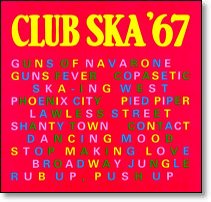
- Club Ska '67 (1967 [1980], Mango): 1980 Mango LP catches up on reggae's backstory, one key year anyway [dl]: A-
Grade changes:
- The Coathangers: Suck My Shirt (2014, Suicide Squeeze):
[was: B+(**)] A-
- Revolutionary Snake Ensemble: Live Snakes (2014, Accurate):
[was: A-] A
- Jenny Scheinman: The Littlest Prisoner (2014, Masterworks):
[was: A-] A
Unpacking: Found in the mail last week:
- Akua Dixon: Akua Dixon (Akua's Music): January 13
- Red Garland Trio: Swingin' on the Korner (1977, Elemental Music, 2CD): January 20
- Johnny Griffith: Dance With the Lady (GB)
- Manu Katché: Live in Concert (ACT): January 15
- Jonas Kullhammar: Gentlemen (Moserobie)
- Wolff & Clark Expedition: Expedition 2 (Random Act): advance, February 24
Ask a question, or send a comment.
Sunday, November 23, 2014
Weekend Update
This week's notable links follow, especially on Israel, where this
summer's Gaza war and the coming elections, on top of nearly twenty
years of Likud rule (minus two years for Ehud Barak, 1998-2000) and
far-right demagoguery have left a great many Israelis more racist
and bloodthirsty than ever. When I talk to people about Israel, they
usually throw their hands up in the air, but this is important --
not least because the US is becoming increasingly Israelized, as
you can see from Obama's latest escalations in Afghanistan, Iraq,
and Syria, and as is portended by the Confederate/Tea Party revolt --
the lynchings the latter dream about are now real in Israel.
Michael Konczal: Frenzied Financialization:
The financialization revolution over the past thirty-five years has moved
us toward greater inequality in three distinct ways. The first involves
moving a larger share of the total national wealth into the hands of the
financial sector. The second involves concentrating on activities that
are of questionable value, or even detrimental to the economy as a whole.
And finally, finance has increased inequality by convincing corporate
executives and asset managers that corporations must be judged not by
the quality of their products and workforce but by one thing only:
immediate income paid to shareholders. [ . . . ]
But the most important change will be intellectual: we must come
to understand our economy not as simply a vehicle for capital owners,
but rather as the creation of all of us, a common endeavor that creates
space for innovation, risk taking, and a stronger workforce. This change
will be difficult, as we will have to alter how we approach the economy
as a whole. Our wealth and companies can't just be strip-mined for a
small sliver of capital holders; we'll need to bring the corporation
back to the public realm. But without it, we will remain trapped inside
an economy that only works for a select few.
Bill McKibben: Congress is about to sabotage Obama's historic climate
deal: Slams Sen. Tom Carper (D-DE) for voting in favor of the
Keystone/XL pipeline, despite praising Obama for his "climate deal
with China." But that's just an example.
By now it should be clear that giving in to the Republicans does not
"pave the way" for future compromises -- that's the Lucy-with-the-football
lesson that President Obama has spent his entire term in office learning.
Much more fundamentally, though, the problem is this: you can't cut
carbon without, you know, cutting carbon.
The president's accord with China doesn't actually do anything except
set a target. To meet that target you have to do things. If you don't do
things -- if you keep approving pipelines and coal mines and fracking
wells -- then you won't meet the target.
For the moment, Keystone is the best example of this principle. So
far we've stopped it for three years, and in the process pushed companies
to pull $17 billion in investment out of the tar sands. That money would
have built projects that would have dumped the carbon equivalent of 700
new coal-fired power plants into the atmosphere. We've done something
real -- something that will actually help, say, Delaware which has a,
you know, coastline.
Israel links: There's been a steady stream of reports of
communal violence between Israelis (especially West Bank and Jerusalem
settlers) and Palestinians, which might seem to be symmetrical except
for the Israeli state, which holds a practical monopoly on violence
and directs it at Palestinians. The number of incidents of attacks by
Palestinians against Israelis (an errant car here, a stabbing there,
five killed in a Jewish synagogue) has triggered speculation that a third
Intifada is in the works. Like the first two, all a third will prove
is how intransigent and unengaging Israeli politics has become -- an
old story where pent-up frustration gets the best of caution, even
knowing that Israel will take every provocation as an excuse for ever
greater violence. However, what is different this time is the degree
that Israeli civilians have taken the lead in attacking Palestinians,
both violently and economically through their campaign to rid Jewish
businesses of Palestinian workers. This is happening partly due to
the unchecked racism in Israeli political discourse, and to the loss
of restraint in Israel's legal system. So the question this time isn't
whether there will be an intifada but why there is already a pogrom --
a state-backed civilian riot against a hated ethnic minority.
-
Kate: Israeli government plans 185 miles of new Jewish settler roads in
the West Bank: That's just one of dozens of press reports: Israel
to approve 200 units in Jerusalem settlement; Palestinian shot dead by
Israeli forces in al-Arrub; Palestinian worker shot dead in Israel;
Body of Palestinian man found with signs of torture; Soldier stabbed
in Tel Aviv dies; Palestinian suspect shot; Israeli forces open live
fire at Palestinians during clashes [in Bethlehem]; 58 Palestinians
kidnapped in various Arab towns; Israeli settlers torch mosque in
Ramallah-area village; Israeli settlers accost Palestinian officers
near Nablus; Gun-toting settlers attack female students near Bethlehem;
Jews threaten to kill head teacher for having Arab workers at school.
Also a
link about the Rasmea Odeh case which shows that Israeli injustice
is practiced even in Chicago.
-
Kate: Hate attacks in Jerusalem and Israel include one by settler girls:
Also: Palestinian woman run over by Israeli near Shu'fat; 2 Israelis
stabbed in fight with Palestinians in East Jerusalem; Child seriously
injured during interrogation in Jerusalem; Vandals deface car of Acre
imam who called for tolerance after J'lem attack. It was also the 20th
anniversary of Baruch Goldstein's massacre of 56 worshippers at the
Ibrahimi Mosque in Hebron -- often cited as the pivotal event that
wrecked the Oslo Peace Process. Goldstein died during the attack, and
has been treated as a martyr: "At his funeral, Goldstein was eulogized
as a hero, with one speaker, Rabbi Yaacov Perrin, declaring that even
1 million Arabs 'are not worth a Jewish fingernail,' while attendees
shouted, 'We are all Goldsteins!' and 'Arabs out of Israel!' Following
the slaughter, Goldstein was also lauded by Rabbi Dov Lior, who was
and continues to be the chief rabbi of Kiryat Arba and one of the most
influential figures in the religious Zionism movement, who called
Goldstein, 'holier than all the martyrs of the Holocaust.'" And many
more reports along these lines.
-
Annie Robbins: Kahanists attack school after synagogue killings:
In Hebron, where the martyred murderer Goldstein is buried, so I
figure the "provocation" was merely convenient. Nor was that the
only case of settler violence reported here: "And speaking of
stories that the mainstream is not covering, Yusuf Hasan al-Ramouni,
32, a Palestinian husband, father, son, and brother was lynched
Sunday in a bus in Mount Scopus, which adjoins Jewish settlements
in East Jerusalem." Robbins also has
videos of Israeli forces spraying "skunk spray" in Palestinian
neighborhoods.
-
Gideon Levy: In Israel, only Jewish blood shocks anyone: In Israel,
five Israelis killed in a Jerusalem synagogue is a world-class outrage,
but 2200 Palestinians killed in Gaza is a statistic. "But this is a
society that sanctifies its dead to the point of death-worship, that
wears thin the stories of the victims' lives and deaths, whether it be
in a synagogue attack or a Nepal avalanche. It's a society preoccupied
with endless commemorations in the land of monuments, services and
anniversary ceremonies; a society that demands shock and condemnation
after every attack, when it blames the entire world."
-
Philip Weiss: Netanyahu's 'battle for Jerusalem' can't end well for
any of us: When some horrible act of violence occurs, the instinct
of most political leaders is to call for calm, but Netanyahu's speech
following the killing of five Israelis in a Jerusalem synagogue was,
as Weiss puts it, "blood curdling."
-
Jeff Halper: Israel sows despair and senseless violence: "And the
'Zionist answer' to the downward cycle of senseless violence in which
Jerusalem finds itself: house demolitions, mass arrests, revoking the
'residency' of native-born Jerusalemites, closing Palestinian neighborhoods
with concrete blocks, arming Israeli Jewish vigilantes and cheap shots
at the last person who believes in a two-state solution, Abu Mazen.
Everything, that is, except an end to occupation and a just political
solution. This is what happens when a powerful country forgoes any
effort to address the grievances of a people under its control and
descends into raw oppression."
-
Isabel Kershner: Israeli Cabinet Approves Nationality Bill: Could
use more detail here, but the legislation appears to be aimed at stripping
rights away from "Arab citizens of Israel," including citizenship in some
cases. Intriguing sentence: "In what appeared to be a political deal, Mr.
Netanyahu promised government support for the hard-line versions of the
bill in a first reading in Parliament this week on the condition that the
law would be moderated before any final approval."
-
William Saletan: Hate Thy Neighbor: Subtitle: "How Israel teaches its
citizens all the wrong lessons." For instance, there's the policy of
demolishing the homes of the families of already-killed "terrorists":
"In other words, the logic of the policy is that it punishes people who
don't commit acts of terror. Terrorists want to die, so they aren't
deterred. Israel targets their loved ones, who would suffer more acutely,
in the hope that this "price" will intimidate the would-be perpetrator.
That is the logic of hostage taking, and of terrorism."
-
Michael Wilner: Cornered but unbound by nuclear pact, Israel reconsiders
military action against Iran: So the sabre-rattling resumes, just
as the US and Iran are putting the finishing touches on a deal promising
to return Iran to the good graces of the NPT, certified as a state that
is not developing nuclear weapons. Of course, Netanyahu wants to torpedo
that deal (and is probably expecting the Republican congress to do his
dirty work for him -- after all, they were elected precisely for their
inability to think independently). He also no doubt wants to bring up
the spectre of Iran any time the US suggests he negotiate peace with
the Palestinians. But wasn't it just a few months ago when he admitted
that his last round of sabre-rattling was nothing more than a scam to
hustle the dumb Americans, and that Israel never had any intention of
attacking Iran in the first place?
I also want to single out
Richard Silverstein: Terror Rules Jerusalem: He points out that the
"heinous synagogue terror attack by Palestinians in the West Jerusalem
neighborhood of Har Hof" took place on grounds of the former Palestinian
village of Deir Yassin, "where the Irgun murdered 100 Palestinians as
part of the pre-war (1948) violence that eventually led to the Nakba,"
adding "It's horrible to think that this single place could be the site
of two such tragedies." He doesn't mention that the ratio of dead is
close to the historical norm for matched sets of Israeli and Palestinian
massacres. He then quotes
Jerry Haber:
In the next few days, after the IDF and the settlers will have taken
their vengeance, under the Orwellian cover of "deterrence," life will
go on. The settlers who commit price-tag attacks will be condemned
for a day, then understood, then arrested, maybe, convicted maybe,
and pardoned, probably. The soldiers and police will do whatever they
want with impunity, B'tselem cameras or not. Land will be expropriated,
freedoms eliminated, the matrix of control and, most of all, the routine
will continue until the next time, when Jews die, and the clueless
Israelis hold everybody and everything but themselves responsible.
Silverstein then moves on to the death of Yusuf Al-Ramuni, who was
found hung in an egged bus he drove. The Israelis promptly declared
the death a suicide, although there is evidence that he was lynched.
Further, in the media rush to cover the horrific attack on the Har Nof
synagogue, let's not forget that this incident preceded it. Terror
always has a context. Do not forget that no matter how heinous an
event, something equally heinous preceded and incited it.
While the world justifiably gasps at an attack on a Jewish house of
worship, let's remember that Palestinians see their own mosques and
cemeteries torched and desecrated by settler price taggers. They see
hundreds of heavily armed Israeli Police defiling the sacred precinct
of Haram Al Sharif. Does anyone believe that a Muslim is not as
horrified by this encroachment as a Jew is by an assault on praying
Jews?
It takes two, and Palestinian rage derives from Israeli provocation.
Certainly, the settlers who murder Palestinians believe the converse.
So why not credit Palestinian rage as much as Israeli?
[ . . . ]
Examine once again Bibi's response to the Kafr Kana police murder.
He dispensed with rote regret altogether. He launched into barely
controlled rage at Palestinian protests against this cold-blooded
murder and warned they would be "dealt with" severely if they didn't
learn to behave themselves.
Bibi doesn't mind the current level of civil unrest. It plays into
his hand for upcoming elections, and this is literally all he cares
about. Israelis flock to the strong man, even if he's utterly unable
to stifle Palestinian terror. The problem will be that Bibi will win
an election, but have no more idea how to quell the rebellion after
the election than he does now.
Silverstein thinks a Third Intifada is already here, "but unlike
the earlier Intifades, this one is a mutual affair in which Jewish
terror (whether official and State-sponsored or vigilante-based)
responds to Palestinian terror (or vice versa)." Actually, he
forgets the overwhelming preponderance of Israeli violence in
both previous Intifadas -- a term which gives Palestinians more
strategic credit than they deserve. (In fact, I've long argued
that the second Intifada should have been named for Shaul Moffaz,
the man who started it, and looking back Pogrom might have been
more accurate; looking forward it certainly will be.)
You might also read Silverstein's later post,
In Race for Next Shin Bet Chief, May Worst Man Win. In the US we're
so used to voting for "lesser evils" that the "may worst man win" notion
is not just alien, it's downright terrifying. Ever since the German CP
really did let the worst man win, we've been popular frontists -- partly
because the world has never been so vile, nor the hope for revolution so
sweet, to let the world crash so dismally. (The right, on the other hand,
with its distorted vision and messianic fervor, has often done just that.)
On the other hand, Silverstein has become so pessimistic about Israel that
the only chance he sees is complete breakdown. It's a scary argument.
Also, the US war machine is heating up: If Republicans
want to pick a fight over the arbitrary, unilateral abuse of presidential
power, they're welcome to start here:
Also, a few links for further study:
Paul Krugman: The Structure of Obamacare: This is fairly basic, but
still above most heads, so worth explaining:
It's important to be clear what this does NOT mean -- it doesn't mean
that there is a huge hidden burden on the public. For the most part,
people buying health insurance would have bought it anyway. Under
single-payer, they would have stopped doing that, and paid taxes
instead; under the ACA, they continue to pay premiums but don't pay
the extra taxes. There's no secret extra cost.
So, why was Obamacare set up this way? It's mainly about politics,
but nothing that should shock you. Partly it was about getting buy-in
from the insurance industry; a switch to single payer would have
destroyed a powerful industry, and realistically that wasn't going
to happen. Partly it was about leaving most people unaffected:
employment-based coverage, which was the great bulk of private
insurance, remained pretty much as it was. This made sense: even
if single-payer would have been better than what people already had,
it would have been very hard to sell them on such a big change. And
yes, avoiding a huge increase in on-budget spending was a consideration,
but not central.
The main point was to make the plan incremental, supplementing the
existing structure rather than creating massive changes. And all of
this was completely upfront; I know I wrote about it many times.
Most single-payer advocates will counter that the health insurance
industry deserved to be destroyed. Of course, I agree, and would like
to go further in nationalizing health care -- the insurance industry
isn't the only sector that rips the public off, even if it is unique
in how little value it adds to the system. However, if the obstacle to
single-payer is the political power of the health insurance industry,
it would be worthwhile looking at reforms to ACA that would knock that
industry down a notch or two. The "public option," which was a key
part of the original act, was one: this would weaken the industry in
two ways: by drawing customers away, and by reducing profit margins
through tougher competition.
I suspect the main source of opposition to the ACA is the kneejerk
belief common on the right that prefers policy made by profit-seeking
private companies over the public-servants of government bureaucracies.
It's hard to see why anyone should believe that, but sometimes business
doesn't cut its own throat, and sometimes government does.
Krugman writes more about ACA and partisan blinders
here:
The mind reels. How is it possible for anyone who has been following
politics and, presumably, policy for the past six years not to know
that Obamacare is, in all important respects, identical to Romneycare?
It has the same three key provisions -- nondiscrimination by insurers,
a mandate for individuals, and subsidies to make the mandate workable.
It was developed by the same people. I and many others have frequently
referred to ObamaRomneycare.
Well, I've know for years that many political pundits don't think
that understanding policy is part of their job. But this is still extreme.
And I'm sorry to go after an individual here -- but for God's sake, don't
you have to know something about the actual content of a policy you
critique?
And what's actually going on here is worse than ignorance. It's pretty
clear that we're watching a rule of thumb according to which if Republicans
are against a proposal, that means it must be leftist and extreme, and the
burden on the White House is to find a way to make the GOP happy. Needless
to say, this rewards obstructionism -- there is literally nothing Obama can
do to convince some (many) pundits that he's making a good faith effort,
because they don't pay any attention to what he does, only to the Republican
reaction.
Nancy Le Tourneau: Understanding the Threat of a Confederate Insurgency:
Starts with a long quote from Doug Muder's
Not a Tea Party, a Confederate Party, which makes the point that the
first war the US lost was the Civil War -- not in 1865, when the Confederate
Army was disbanded, but by 1877, when Reconstruction ended with the restoration
of the Confederate aristocracy, setting the stage for Jim Crow and all that.
If I understand LeTourneau correctly, she's arguing that the explosion of
neo-Confederates is a last-ditch reaction against change -- something more
likely to be a sporadic nuisance than a gathering wave. Nonetheless, the
ability of the right to resist and even roll back reform is a repeated
theme in American history, and we're seeing way too much of it now.
Ask a question, or send a comment.
Saturday, November 22, 2014
Rhapsody Streamnotes (November 2014)
Three weeks into November and enough to report. I'll probably do
two more Streamnotes columns in December, one aimed at the post-season
polls (Jazz Critics Poll ballot due December 7, don't know about Pazz
& Jop but last year it was due December 24). I've started to get
my ducks ordered in two currently unofficial draft files, one for
jazz, the other
non-jazz. Since
the polls close before the year ends, it is customary to include
post-Thanksgiving releases in the following year (and maybe some
date discoveries from earlier in the year), but I haven't researched
that part yet. I also caution you that the sorting is likely to
change quite a bit. This is mostly because I don't spend much time
during the year sorting the A-list. I just look for some approximate
context and insert new records as I find them. (The problem was even
worse below the A- level until I just decided to artist-alphabetize
each grade niche.)
One thing I need some help on is the section in the year-end files
that goes: "records I haven't heard estimated to have a 2% (or better)
chance of making the A-list if/when I finally hear them." I haven't
made a serious pass through the
Music Tracking 2014 file yet, which
is my next step toward filling them out. I'll also start looking at
some early year-end lists, but what I'd really like would be for readers
to write in with their suggestions: ideally records not on my rated
list (although I won't have much trouble weeding out the duplicates).
I'm not going to keep track of who suggested what, drop names, or
spoil your year-end lists (although I might be motivated to listen
to something I wouldn't have gotten to anyway). But the quality of
those lists would greatly benefit from your input. Thanks in advance.
I'm also thinking about starting to construct a metacritic file with
year-end list data -- I'm not about to go back and collect the year's
review grades, but I am interested in what an aggregate year-end list
might look like. I'm also not dissuaded by the fact that the lists I
recognize skew slightly toward my own tastes -- that is sort of the
point. I still may not do this -- the fact that I haven't started is
one piece of evidence, but the underlying technology intereste me as
much as the data does, so there's a chance (and if I do it it'll be
useful in projects going forward).
First thing to say about this column is that the total number of
records isn't record breaking (106 vs. 109 for March 19, or to go back
into 2013 (when I only posted once per month) there was November 30
(185), October 30 (139), December 29 (131), July 27 (116), and May 29
(107). But in the past I've almost always gotten large totals by piling
up old records, whereas this column is very heavily skewed toward new
records (92 of 106; the only larger new record count was November 30,
2013, with 100 of 185).
The old records were mostly accidents. Christgau featured Jinx Lennon
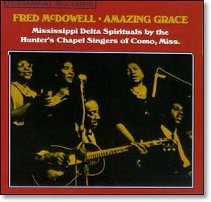
in an Expert Witness column. Fred McDowell and Club Ska '67 were
mentioned by EW fans on Facebook. Another fan likes a recent Ross Johnson
compilation: couldn't find it, but settled for this one. I checked out
Bette Midler's first live album after panning her new one: a Christgau
A- but rather dated. I had Jerry Lee Lewis before Christgau wrote it up
for EW, but went back and bumped up the grade a bit. (Christgau didn't
bother with the new one, but it's an improvement over Mean Old Man.
Christgau also skipped the new Parkay Quarts EP. I may have underrated
the first one -- Tally All the Things That You Broke, what with
my general disinterest in EPs -- but I doubt I've overrated the new one.)
With all the new records, I'm surprised that there isn't more to
recommend (or recommend more heartily). I expect I'll have a few
regrades next time as I try to shape up the year-end list.
These are short notes/reviews based on streaming records from
Rhapsody. They are snap judgments based on one or two plays,
accumulated since my last post along these lines, back on
October 31. Past reviews and more information are available
here (5574 records).
New Releases (More or Less)
Greg Abate Quartet: Motif (2014, Whaling City Sound):
Saxophonist, plays alto/soprano/baritone here (plus some flute),
always seemed to look back to bebop as the golden age -- early
1990s albums include Bop City and Bop Lives!. Leads
a superb mainstream quartet with piano-bass-drums -- no one I've
heard of, but note Tim Ray the pianist. Fast, brilliant sound,
the rare mainstream album that jumps at you.
A- [cd]
Afro Latin Vintage Orchestra: Pulsion (2014, Ubiquity):
Sometimes ALVO, based in California, led by Masta Conga, misnomers
pretty much all around. Rather, they produce keyb-based electronica,
dense and evocative, with trumpet and sax for expression -- reminiscent
of electric Miles, though more of a production.
B+(***)
Allison Au Quartet: The Sky Was Pale Blue, Then Grey
(2012 [2014], self-released): Alto saxophonist from Toronto, debut
album, leads a quartet with piano-bass-drums through some haunting
postbop, with bits of spoken word.
B+(**) [cd]
Omer Avital: New Song (2014, Motéma): Bassist, from
Israel, has recorded quite a lot since he moved to New York. Standard
quintet, with Avishai Cohen on trumpet, Joel Frahm on tenor sax, and
Yonathan Avishai on piano. Mostly easy rhythms building up momentum
toward groove.
B+(*)
Azealia Banks: Broke With Expensive Taste (2014,
Prospect Park): Twenty-something hip-hopper, had a breakout video
a couple years ago ("212") which got her a record deal this album
evidently lost. Fast tunes, the words rarely breaking the surface,
sounds promising when they do.
B+(***)
Batida: Dois (2014, Soundway): Angolan/Portuguese
DJ Pedro Coquenão's project, a mix of beats that suggest but don't
quite belong to Africa, blips of modern electronica, and samples
and raps of international hip-hop.
B+(**)
Tony Bennett & Lady Gaga: Cheek to Cheek (2014,
Interscope): Fine Italian names, Anthony Benedetto (88) and Stefani
Germanotta (28), rip through eleven "jazz classics" (or fifteen on
the 44:28 "deluxe version"), promising a "modern twist" but falling
back on the shlock orchestral and big band arrangements of Bennett's
youth -- the flutes on "Nature Boy" are the low point. His voice is
fine, hers relatively anonymous but spirited, good enough for the
fast ones.
B+(*)
Eric Bibb: Blues People (2014, Stony Plain): Takes
his title from Amiri Baraka's book and uses it to recount folklore,
his own soft-spoken style one aspect in what turns out to be a very
mixed bag (probably with too many guests).
B+(*)
Big Freedia: Just Be Free (2014, Queen Diva):
Freddie Ross, from New Orleans, started as a backup singer for bounce
artist Katey Red. Doesn't really rap here so much as spit out words
fast enough for beats. Kind of one note, but different.
B+(*)
Maggie Björklund: Shaken (2014, Bloodshot): Pedal
steel guitarist/singer/songwriter, originally from Denmark, given
to open plains and melancholy with an odd shimmer about it.
B
Otis Brown III: The Thought of You (2014, Blue Note):
Drummer, plays in Joe Lovano's Us Five group. First album, produced
by Derrick Hodge with input from Robert Glasper, forces at Blue Note
pushing for some sort of crossover breakthrough, which here involves
guest vocals from Bilal, Gretchen Parlato, and Nikki Ross. None of
those hit the spot, but saxophonist John Ellis helps, and trumpeter
Keyon Harrold makes a strong impression.
B
Chingari [Ranjit Barot, U Shrinivas, Etienne Mbappé]: Bombay
Makossa (2014, Abstract Logix): Drums, electric mandolin,
bass, the latter from Cameroon via Paris, the others from Mumbai.
Fusion, gets by on groove, loses a bit with vocals.
B+(*)
Chumped: Teenage Retirement (2014, Anchorless):
Post-punk band fronted by Anika Pyle, who gives them an intelligible air,
variously humane and exuberant -- and contagious, the sentiment echoed
by the drums, lifting this well above the norm.
A-
Gary Clark, Jr.: Live (2014, Warner Brothers, 2CD):
Young bluesman from Texas, his 2011 EP made him look like a breakout
star, but his 2012 debut album fell awful flat. This is a corrective,
but it's still not clear why we should care.
B+(*)
Nels Cline & Julian Lage: Room (2014, Mack Avenue):
Two jazz guitarists, duets although I rarely hear more than one guitar
at a time, producing a quiet, melodious intimacy I don't really identify
with Cline. Lage is much younger (b. 1988 v. 1956), got a big push when
he landed a major label deal at 21, and has shown a fondness for duos.
B+(*) [cdr]
Freddy Cole: Singing the Blues (2014, High Note):
An odd collection of songs, something like "The Ballad of the Sad
Young Men" is certainly down and out but lacks resiliency, which
is what turns the blues back into a source of strength. Like his
brother, Cole tends to ease on through -- aided by saxophonist
Harry Allen here.
B+(**)
Alessandro Collina/Rodolfo Cervetto/Marc Peillon/Fabrizio Bosso:
Michel on Air (2014, ITI): "Michel" is pianist Michel
Petrucciani, who wrote all but two of eleven pieces -- the covers
are from Ellington ("In a Sentimental Mood") and Strayhorn ("Take
the 'A' Train"). Piano, drums, bass, and trumpet respectively --
the trumpet grabbing you from the start, piano sneaking up.
B+(***)
Kevin Conlon/The Groove Rebellion: In Transit (2014,
Blujazz): Bassist, also sings on most cuts, plays some keyboards,
guitar, and percussion -- sort of a retro-crooner effect. The band,
with Mark Secosh on sax, various guitarists and drummers (no keybs),
and occasional extra percussion, moves along nicely but doesn't have
any funk to fake, which I'll take to be a plus.
B+(*)
Chick Corea Trio: Trilogy (2010-12 [2014], Concord,
3CD): No fusion, no scientology, just back to basics in a no nonsense,
unconstrained piano trio with Christian McBride and Brian Blade. Runs
3:24:42, compiled from numerous shows scattered over three years and
at least that many continents. Reminds you why people adored him in
the first place, but not without the occasional wart -- err, "guest
appearance."
B+(***)
Tara Davidson: Duets (2014, Addo): Saxophonist,
alto and soprano, in a series of duets with piano (Laila Biali,
David Braid), guitar (David Occhipinti), bass (Andrew Downing),
and other saxophonists (Mike Murley and Trevor Hogg). Scattered,
but mostly free and often liberating.
B+(**) [cd]
Michael Denhoff/Ulrich Phillipp/Jörg Fischer: Trio Improvisations
for Campanula, Bass and Percussion (2014, Sporeprint, 2CD):
Denhoff composed the pieces. His campanula is a bowed string instrument,
similar in size to a cello but with extra tunable strings to provide
more resonant harmonies. Effectively, the campanula melts into the bass,
extending its range and complexity.
B+(***) [cd]
Paul Dietrich Quintet: We Always Get There (2013
[2014], Blujazz): Trumpet player from Chicago, first album, quintet
with tenor sax, piano, bass, drums. All originals except for a
Björk cover, all very conventional postbop -- a cut or two above
ordinary, with an exceptionally lovely close.
B+(*) [cd]
Ani DiFranco: Allergic to Water (2014, Righteous Babe):
Resettled in New Orleans from Buffalo, pregnant, as she explains, "I'm
pretty much happy all the time," and she doesn't even try to make a
point of it (unlike in her previous Which Side Are You On?).
Good for her, but that doesn't leave much edge.
B+(*)
Brian Eno/Karl Hyde: High Life (2014, Warp): Second
album this year, but where Hyde seemed like a spare wheel on Someday
World this feels much more integral. Riffing guitar replaces the
ambient blips of yore, every bit as captivating but more substantial.
A-
Ex Cops: Daggers (2014, Downtown): Second album
featuring singer Amalie Bruun (ex-Minks), with more pop aura than
I expected -- "Modern World" is a choice cut.
B+(*)
Ex Hex: Rips (2014, Merge): Punkish trio led by Mary
Timony, previously involved in bands like Helium and Wild Flag plus a
few solo albums (one from 2005 titled Ex Hex). She doesn't have
a lead voice like Wild Flag's Carrie Brownstein (which in that specific
case I count as a plus), so this depends a lot on flow and crunch --
abundant enough but lacking whatever it takes to get you to ignore the
recycling.
B+(***)
Expansions: The Dave Liebman Group: Samsara (2013
[2014], Whaling City Sound): Quintet, Matt Vashlishan providing a
second reed instrument (alto sax, flute, clarinet), Bobby Avey is
a notable pianist. Fancy postbop, more adventurous than academic
but still, you know, a bit slick.
B+(*) [cd]
Marianne Faithfull: Give My Love to London (2014,
Easy Sound): Seeking fresh blood, she recruits an odd assortment
of songwriters -- Steve Earle, Roger Waters, Anna Calvi, Nick Cave --
but only on "Mother Wolf" does she fully channel the fury and disgust
she's uniquely capable of. On the other hand, her parched reading of
"I Get Along Without You Very Well" suggests she's not through with
the songbook.
B+(*)
Farmers by Nature: Love and Ghosts (2011 [2014], AUM
Fidelity, 2CD): Piano trio, one I've tended to file under drummer Gerald
Cleaver because his name comes first, but that list may just be alphabetical,
followed as it is by Wiliam Parker (bass) and Craig Taborn (piano). These
days Taborn is the star, dancing all over the keyboard, but the rhythm
section consistently raises his level.
A-
Bryan Ferry: Avonmore (2014, BMG): Title hints at a
return to 1982's Avalon, Ferry's last triumph although at the
time it was credited to his band, Roxy Music. The music this time
proves you can't go home again, although you can dream wistfully
about it.
B+(*)
Jean Luc Fillon: Oboman Plays Cole Porter: Begin the
Night . . . (2013 [2014], Soupir Editions): Fillon plays
oboe and cor anglais, and he's backed by João Paulo on piano and
Frédéric Eymond on viola -- a nice little chamber group for a
bunch of Cole Porter tunes that normally call for more lascivious
treatment.
B [cd]
Flying Lotus: You're Dead (2014, Warp): Dense and
dervishy, the elements I can identify as jazz make me Steven Ellison
could have had a future in the family business -- he's related to
John and Alice Coltrane -- but he's probably too warped for that any
more. There are also whiffs of hip-hop and dance beats and other
shit, but this mostly belongs to a soundtrack to a movie I don't
want to see.
B+(**)
David Friesen Circle 3 Trio: Where the Light Fails
(2013 [2014], Origin, 2CD): Bassist, 50th album since 1975, another
sixty-some side credits, could be the most prolific or even important
jazz musician not in my database until this record showed up. Mostly
piano trio, with Greg Goebel on piano and Charlie Doggett on drums,
with guitarist Larry Koonse joining on 9 (of 19) cuts. Mainstream,
very nice, especially if you cue in on the bass.
B+(**) [cd]
Fumaça Preta: Fumaça Preta (2014, Soundway): Dutch
band, led by Portuguese/Venezuelan drummer Alex Figueira, they play
a rhythmically complex take on garage rock with airs of Brazilian
psychedelia, a mix so unique reviewers grasp at analogous straws --
AMG mentions Os Mutantes, Jimi Hendrix, Arthur Lee, "Zappa-esque
chamber music," and "Latin boogaloo meets Bollywood sitar music and
breakbeats." My first thought was Pulnoc, but then I noticed a
chintziness that veered toward Red Hot Chili Peppers and concluded
they're pretty unique. Full of shit, maybe, but uniquely so.
A-
Ananda Gari: T-Duality (2013 [2014], Auand): Italian
drummer, know very little about him, least of all how he wound up
fronting a trio of American all-stars -- Tim Berne (alto sax), Rez
Abbasi (guitar), Michael Formanek (bass).
B+(**)
Brad Goode Quartet: Montezuma (2013 [2014], Origin):
Postbop trumpet player from Chicago, leads a quartet with Adrean
Farrugia on piano, elegant and spacious with knots of tension,
the sort of background trumpet was meant to break through.
B+(**)
Vincent Herring: Uptown Shuffle (2014, Smoke Sessions):
Alto saxophonist, has always run a little hot which is why the bebop
keeps poking through the postbop. Backed by mainstreamers Cyrus Chestnut
and Joe Farnsworth, plus bassist Brandi Disterheft.
B+(**)
Eric Hofbauer Quintet: Prehistoric Jazz Volume 1: The Rite
of Spring (2014, Creative Nation Music): I must have heard
Igor Stravinsky's Le Sacre du Printemps at some point, but
I wouldn't bet on it. As best I recall, Charlie Parker was a fan,
and Teddy Adorno wasn't. I certainly haven't heard the recent Bad
Plus version, but even if you credit Iverson's super powers, the
horns -- trumpet and clarinet -- give this version an edge in
firepower, and it's hard to imagine dispensing with the leader's
guitar (reinforced by cello).
B+(***) [cd]
Eric Hofbauer Quintet: Prehistoric Jazz Volume 2: Quintet
for the End of Time (2014, Creative Nation Music): Same
group tackles Olivier Messiaen's "Quatour pour la fin du temps" --
no way I've ever heard that before. The emphasis falls much more
on Junko Fujiwara's cello, but when the band breaks out all sorts
of interesting things happen.
B+(**) [cd]
Will Holshouser/Matt Munisteri/Marcus Rojas: Introducing Musette
Explosion (2014, Aviary): Accordion, guitar/banjo, and tuba,
with the accordion dominant, in a "musical style that somehow combines
a French joie de vivre with the wistfulness of Brazilian saudade."
B+(**) [cd]
Javon Jackson: Expression (2014, Smoke Sessions): Tenor
saxophonist, impressive when he first appeared on Blue Note in the 1990s,
but in a rut lately. He rights himself here, falling back on basics --
a straightforward quartet with Orrin Evans on piano.
B+(*)
Darius Jones: The Oversoul Manual (2014, AUM Fidelity):
One of the most imposing alto saxophonists to emerge in the last decade
puts his horn down to conduct a quartet of operatic female voices, the
Elizabeth-Caroline Unit. Something about planet Or'gen, a sacred manual,
and rituals for imparting wisdom and experience to children. Not as awful
as all that sounds like, but a little disjointed and uninteresting.
B-
EG Kight: A New Day (2014, Blue South): Initials stand
for Eugenia Gail, hails from Georgia but on hearing Koko Taylor she traded
in her country/gospel roots for blues and headed for Chicago. I fell for
her 2003 record Southern Comfort and don't know any others, but
her formula ensures consistency.
B+(**)
Lefteris Kordis: "Oh Raven, If You Only Had Brains . . .":
Songs for Aesop's Fables (2010 [2012], Inner Circle Music):
Greek pianist-composer, has several albums including a group called
Bebop Trio. The texts, I assume, are from the ancient Greek fabulist,
and are sung operatically by Panayota Haloulakou. Aside from that,
the music is charmingly whimsical, and Darryl Harper (clarine) is
always welcome.
B [cd]
Jonathan Kreisberg: Wave Upon Wave (2014, New for Now
Music): Guitarist, ten or so records since 1997, seems to be in the
middle of the dominant post-Montgomery mainstream, controlling the
tempo and sound even when Will Vinson slips in some sax, or Vinson
or Kevin Hays sits down at the piano.
B+(*) [cd]
Kronomorfic [David Borgo & Paul Pellegrin]: Entangled
(2013 [2014], OA2): Borgo plays sax (tenor/soprano), Pelegrin drums, in
a 7-or-8-piece group, plus extras -- flute, trombone, marimba, a second
bass (Mark Dresser), for the 20-minute title suite. Postbop, sometimes
a bit more.
B+(*)
Jerry Lee Lewis: Rock & Roll Time (2014, Vanguard):
At 79, he welcomes the help -- Keith Richards, Neil Young, Ron Wood,
Robbie Robertson, Nils Lofgren, Shelby Lynne -- even if he doesn't need
it. But producers Steve Bing and Jim Keltner do make a difference, and
it's worth noting that while Lewis spent much of his career in Nashville,
in the endgame he's come home to Memphis.
B+(**)
Little Dragon: Nabuma Rubberband (2014, Republic):
Bland Swedish electropop group fronted by exotically named but also
bland singer Yukimi Nagano.
B
Logic: Under Pressure (2014, Def Jam): Young rapper
from Maryland, Sir Robert Bryson Hall II, first album after four
mixtapes.
B+(**)
Low Society: You Can't Keep a Good Woman Down (2014,
Icehouse): Blues rockers, guitarist Sturgis Nikides and Houston-born
singer Mandy Lemons left New York for Memphis to root around. Gritty,
upbeat, almost a cariacature of a Janis Joplin wannabe, but "Up in
Your Grave" ("I'd rather see you dead") hits its target.
B+(*)
Corb Lund: Counterfeit Blues (2014, New West): Country
singer from north of the border, calls his band the Hurtin' Albertans
and has a song to that effect. Knows his way around the high plains,
knows buckin' horses and highland steers and claims he roughest neck
around.
B+(*)
Harold Mabern: Right on Time (2014, Smoke Sessions):
The label is a spinoff for the NYC club, Smoke, and their initial
2014 releases form a who's who of mainstream jazz. Mabern is a postbop
pianist from Memphis who started recording for Prestige in 1968,
survived the slack years recording for Japanese and Canadian labels,
Piano trio with John Webber (bass) and Joe Farnsworth (drums), with
a real feel for blues but the fast stuff is less impressive.
B+(*)
Michael Mantler: The Jazz Composer's Orchestra Update
(2013 [2014], ECM): Trumpet player, co-founded the JCOA in 1964 with
Carla Bley (he was the second of Bley's three famous husbands) as a
collective support system for large-scale avant-jazz works. This dusts
off and spruces up some of Mantler's old compositions, but rather than
reorganizing JCOA he picks up a European orchestra (Nouvelle Cuisine
Big Band) and a string quartet (radio.string.quartet.vienna), for a
big sound that rarely rises above the clutter.
B [dl]
Thomas Marriott: Urban Folklore (2013 [2014],
Origin): Trumpet player from Seattle, eighth album since 2005, a
quartet with an exceptional rhythm section -- Orrin Evans (piano),
Eric Revis (bass), Donald Edwards (drums) -- with the trumpeter
making much of his leads.
B+(*) [cd]
Delfeayo Marsalis: The Last Southern Gentlemen (2014,
Troubadour Jass): The trombonist in the family band, younger than
Branford and Wynton and less prolific, only a half-dozen albums since
1992. My eyes preclude me from slogging through the liner notes,
which I expect to be interesting. The music, however, is painless:
mostly standards, the trombone backed by piano-bass-drums (Ellis
Marsalis, John Clayton, Smitty Smith), the leads sombre and quite
respectable.
B+(***) [cd]
Ross Martin/Max Johnson/Jeff Davis: Big Eyed Rabbit
(2014, Not Two): Guitar-bass-drums. Don't know much about the guitarist,
but he has trouble emerging here.
B
Bette Midler: It's the Girls! (2014, East/West):
Her girl group shtick had an element of camp back in the 1970s but
today could just be nostalgia or repertory or lack of other ideas.
First problem here is leading off with two Spector hits that stiffen
up the production. After them, "Bei Mir Bist du Schön" is a whiff
of fresh air, but it's soon stranded as she reverts to early 1960s
fare, hitting here and missing there.
B
Tony Monaco: Furry Slippers (2014, Summit): Hammond
B-3 player, over ten albums since 2001's Burnin' Grooves, this
one backed by guitarist Fareed Haque, with pianist Asako Itoh (Monaco)
tabbed as a "special guest." Does move a bit away from groove formula,
especially with covers of "Round Midnight" and "But Beautiful."
B [cd]
Jemeel Moondoc/Connie Crothers: Two (2012, Relative
Pitch): Avant jazz duets, alto sax and piano, each has its own strength,
but they stay closely in sync, partly because neither pushes too hard.
B+(*)
Naked Wolf: Naked Wolf (2014, El Negocito): Dutch
group, although the names seem to come from all over (Gibson, Provan,
Szafirowski, Jäger, Ex, Klemperer, vocalist Seb El Zin). Closer to
rock than jazz, with its mixed vocals trumping the twisted rhythms
and horns, although maybe skronk is an apt compromise -- the jazz
part I find much the more appealing.
B+(*)
The New Pornographers: Brill Bruisers (2014, Matador):
A band with several viable solo performers, none of which I've ever
been enamored of either solo or together, but they know their way
around pop hooks and throw out plenty here.
B+(*)
Sam Newsome: The Straight Horn of Africa: A Path to Liberation
[The Art of the Soprano, Vol. 2] (2014, self-released): Soprano
sax, went solo on Vol. 1 but usually adds percussion here with
these African and African-inspired melodies, including the three-part
"Microtonal Nubian Horn" experiment and one called "Good Gooly Miss
Mali."
A- [cd]
Miho Nobuzane: Simple Words: Jazz Loves Brazil (2014,
self-released): Pianist, from Japan, based in New York, second album.
The band, with Filó Machado (guitar, vocals) and Mauricio Zottarelli
(drums) does a nice job with the Brazilian thing.
B+(*) [cd]
Karen O: Crush Songs (2006-10 [2014], Cult, EP):
Yeah Yeah Yeahs singer knocks out fourteen demo-quality ballads,
only two over 2:27 (four over 1:47) for a total of 25:04. Rather
interesting for such a miniscule, even crude, effort.
B+(*)
O'Death: Out of Hands We Go (2014, Northern Spy):
Brooklyn band, although Greg Jamie's vocals suggest a bit of the
Irish even though they took their name from the Dock Boggs tune.
B+(***)
Parquet Courts: Parkay Quarts: Content Nausea (2014,
What's Your Rapture?): Considered an EP, but runs 12 songs, 34:59
(even with three not breaking one minute, but one runs 6:26). Nor
is the throwaway cover of "These Boots (Are Made for Walking)"
worthless. Their post-Velvets drone isn't wasted on shlock; it
thrives there.
A-
Clarence Penn & Penn Station: Monk: The Lost Files
(2012 [2014], Origin): Drummer, leads a group with Chad Lefkowitz-Brown
on sax, Donald Vega on piano, and Yasushi Nakamura on bass (acoustic
and electric), through ten Monk tunes plus one original.
B+(*) [cd]
Plymouth: Plymouth (2014, Rare Noise): Organ player
Jamie Saft seems to be the prime mover here, but rather than signing
up the usual soul jazzers he picked two avant-guitarists (Joe Morris
and Mary Halvorson), backed by bass (Chris Lightcap) and drums (Gerald
Cleaver). Three pieces, averaging 20-minutes, feel like a free twist
on fusion.
B+(*)
Bobby Previte: Terminals (2014, Cantaloupe): Drummer,
composed five pieces (running 13:02 to 18:11) for percussion quartet,
a role filled by SO Percussion. Each piece allows a guest soloist to
improvise over the percussion, so we get: Zeena Parkins (harp), Greg
Osby (alto sax), Nels Cline (guitar), Previte (drums), and John Medeski
(organ). The sax sounds like a conventional jazz idea. Cline doesn't.
B+(*)
Rex Richardson & Steve Wilson: Blue Shift (2014,
Summit): Wilson limits himself to alto sax here. He's well known,
both for his own albums, as an accompanist, and for his big band
work. Richardson is news to me: his discography includes big band
work (with Bill O'Connell) and classical music (a 2005 album is
subtitled New Virtuoso Trumpet Music by American Composers).
But he plays trumpet and flugelhorn with exceptional verve, and
nearly runs away with this album. Backed by guitar-bass-drums --
Trey Pollard has some nice spots on guitar.
B+(***) [cd]
Doug Seegers: Going Down to the River (2014, Rounder):
Nashville singer-songwriter in his 60s, first album, a throwback to
honky tonk with a few quirks and one out-of-character market sop --
a gorgeous cover of Gram Parsons' "She" (replete with Emmylou Harris).
Oddly enough, after the front-loaded stuff turns to filler he finds
new depths to his songs.
A-
Pat Senatore Trio: Ascensione (2008-12 [2014],
Fresh Sound): Bassist-led piano trio, with Josh Nelson on the keys
and Mark Ferber on drums. Evidently didn't qualify for the label's
New Talent series due to the age of the leader, even though this
is only his second album -- he attributes his interest in bass to
hearing Scott LaFaro, and his closest brush to fame was as musical
director for Herb Alpert. Two sessions here. That Nelson favors
lushness is an understatement.
B+(**) [cd]
Noura Mint Seymali: Tzenni (2014, Glitterbeat):
Moorish griot from Mauretania, step-daughter of Dimi Mint Abba --
whose 1990 Moorish Music From Mauritania was for long the
only available entry point into the desert nation -- aims for
hypnotic trance groove that plays in Paris as well as Timbuktu.
B+(**)
Ryan Shultz Quintet: Hair Dryers (2013 [2014],
Origin): Plays bass trumpet, based in Chicago, presumably not the
same-named Chicago-based painter. Group includes electric guitar
(Chris Siebold), keyboard, and bass, which opens up a fusion angle.
B+(*) [cd]
Tyshawn Sorey: Alloy (2014, Pi): Drummer, I first
noticed him with Vijay Iyer and he's been on most of Steve Lehman's
records. His debut album, 2007's What/Not was a sprawling
2CD affair with a long stretch of piano -- as I recall, Francis
Davis ranked it number two that year but the publicist snubbed me,
deciding I wouldn't take it as seriously as it deserved. (Found it
on Rhapsody and gave it an A-, not that you should take that as a
serious review.) This returns to his piano compositions, a trio
with Corey Smythe on piano and Christopher Tordini on bass. Mostly
ambles aleatorically, although there is one stretch where they
find a beat and some intensity -- I'm a sucker for that.
B+(***) [cd]
The Spin Quartet: In Circles (2013 [2014], Origin):
Chad McCullough (trumpet), Geof Bradfield (tenor sax), Clark Sommers
(bass), Kobie Watkins (drums): all four have solo albums, the horn
players doing most of the writing here (one piece by Sommers, plus
covers of Nick Drake and Gilberto Gil).
B+(**)
Lyn Stanley: Potions: From the 50's (2014, A.T. Music):
Standards, mostly from the early 1950s, at least pre-rock (although
"Love Potion Number Nine" makes the cut). Can't begin to read all the
fine print here, but the arrangements are tastefully conservative,
the sax much appreciated. And her website starts off describing her
as "known for her lush low notes" -- for once, exactly right.
B+(**) [cd]
Vince Staples: Hell Can Wait (2014, Def Jam, EP): West
coast rapper, has a couple mixtapes tied to Odd Future and/or Cutthroat
Boyz, good for seven songs, 23:30 here.
B+(*)
Aki Takase/Alexander von Schlippenbach: So Long, Eric!: Homage
to Eric Dolphy (2014, Intakt): Culled from two nights in Berlin
with a big band led by the wife-and-husband avant pianists -- actually
two piano trios, five horns (Rudi Mahall, Tobias Delius, Henrik Walsdorff,
Axel Dörner, and Nils Wogram), and Karl Berger on vibes -- tackle nine
Dolphy tunes.
B+(***)
Natsuki Tamura/Alexander Frangenheim: Nax (2013
[2014], Creative Sources): Trumpet-bass duets, the former scratchy,
the latter inscrutable.
B+(*) [cd]
Temples: Sun Structures (2014, Fat Possum): First
album from Brit psychedelic rock group, echoes of '60s guitar drone
with flashes of King Crimson -- not sure you can call them flashbacks,
but then I'm never sure what psychedelia really means (and am extra
dubious with a pop band this coherent). Topped the first "best of
2014" list published (Rough Trade), but I doubt it'll have legs.
B+(*)
T.I.: Paperwork (2014, Grand Hustle): Atlanta rapper,
Clifford Harris, earned his gangsta rep the dumb way, but is smart
enough to go to Pharrell for his pop hooks. Front-loaded the rote
stuff, knowing the album's long enough he can catch up on the
backstretch.
B+(**)
Touch and Go Sextet: Live at the Novara Jazz Festival
(2012 [2014], Nine Winds): Four horns -- Aaron Bennett (tenor/baritone
sax), Sheldon Brown (alto sax, bass clarinet), Ben Goldberg (clarinet),
Darren Johnston (trumpet) -- provide a wide range of intriguing leads,
while Lisa Mezzacappa (bass) and Vijay Anderson (drums) stir the pot.
B+(***) [cd]
Piet Verbist/Zygomatik: Cattitude (2014, Origin):
Belgian bassist, previous album was called Zygomatik so that
continues as the band name. Quintet, two saxes -- Vincent Brus on
baritone is most strategic for amplifying the bass -- with keyboard
player Bram Weijters favoring Wurlitzer over Fender Rhodes.
B+(**)
Marlene VerPlanck: I Give Up, I'm in Love (2014,
Audiophile): A "songbird," as the liner notes put it, b. 1933 in
Newark as Marlene Pampinella -- she was married to arranger Billy
VerPlanck for 52 years, until his death in 2009. No date on when
this was recorded, but nothing suggests it isn't recent, other
than that she looks and sounds so great. Standards, some with
the Glenn Franke Big Band for that brassy Sinatra-ish feel, the
rest with intimate groups highlighted by Warren Vaché or Harry
Allen. I should delve into her back catalog some time, but I'd
be surprised to find better albums than this one.
A- [cd]
Elio Villafranca and His Jazz Syncopators: Caribbean Tinge:
Live From Dizzy's Club Coca-Cola (2011-12 [2014], Motéma):
Cuban pianist based in New York, compiled this from two sets with
different groups -- Sean Jones and Greg Tardy in one, Terell Stafford
and Vincent Herring in the other, combining Lewis Nash with a lot of
Latin percussion -- even the latter barely qualifies as tinge.
B+(*)
Ernie Watts Quartet: A Simple Truth (2013 [2014],
Flying Dolphin): Tenor saxophonist, nearing 70, always had great tone
and command especially on ballads. With piano-bass-drums, no one I
recognize but European. Sprints through "Bebop" for the exercise.
B+(**)
Luke Winslow-King: Everlasting Arms (2014, Bloodshot):
A mild singer-songwriter from northern Michigan, transplanted to New
Orleans, but he's also studied Czech music in Prague and worked with
Blue Gene Tyranny, so the idea that he's gone over to jazz strikes me
as a stretch.
B+(*)
Jason Yeager Trio: Affirmation (2014, Inner Circle Music):
Piano trio, second album, with Danny Weller (bass) and Matt Rousseau
(drums) plus "special guests" on five (of twelve) cuts -- saxopohonist
Noah Preminger looms large, especially on the cut trumpeter Jean Caze
joins in. On the other hand, Aubrey Johnson sings two -- have I mentioned
recently how much I detest "Julia"?
B [cd]
Yelle: Complètement Fou (2014, Kemosabe): French singer
Julie Budet, assumed the name of her dance-pop group. Not as crazy as
she thinks.
B+(**)
Peter Zak Trio: The Disciple (2013 [2014],
SteepleChase): Pianist, has a dozen albums since 1989, in a trio
with Peter Washington on bass and Willie Jones III on drums.
Three originals, seven covers, the latter all notable pianists
(well, I'm not so sure of Alexander Scriabin), with Horace
Silver and Thelonious Monk the standouts.
B+(***)
Miguel Zenón: Identities Are Changeable (2014, Miel
Music): Alto saxophonist, from Puerto Rico, won a MacArthur "genius"
grant and scaled his superb quartet up to a slick big band, cutting
their lush melodies with samples of Puerto Rican New Yorkers trying
to sort out their identities (although their later stories are more
interesting). For a musician in a postmodern world identity can provide
a distinct flavoring even when it has to be recovered (e.g., Jason Kao
Hwang, Rudresh Mahanthappa). Zenón's 2005 quartet album Jíbaro
got the mix right, but since then identity has become something of a
rut, even dressed up with big band and dialogue (here) or strings
(elsewhere). [My CD has a weird repeating glitch after the last
listed song -- presumably a defect -- so I rechecked on Rhapsody.]
B+(*)
Reissues, Compilations, Vault Discoveries
Peter Brötzmann/Sonny Sharrock: Whatthefuckdoyouwant
(1987 [2014], Trost): Live improv sax-guitar duets -- the former playing
alto, tenor, and bass saxes as well as tarogato. Fans of Sharrock's
legendary solo Guitar will find much of interest here, although
this is predictably rougher-going: when you come to play with Brötzmann,
expect to bring the noise, otherwise it'll just be handed to you.
B+(**)
Illinois Jacquet/Leo Parker: Toronto 1947 (1947 [2013],
Uptown): Tenor and baritone sax, respectively, combining r&b fire
without conceding the aesthetic high ground to bebop -- trumpet players
Joe Newman and Russell Jacquet could swing or bop as long as they broke
through, while bebop pianist Sir Charles Thompson wouldn't dream of
playing anything else. Sound quality is variable, but the intensity
isn't.
B+(***)
Jerry Lee Lewis: The Knox Phillips Sessions: The Unreleased
Recordings (1970s, Time-Life): Cut in the late 1970's for
Sam Phillips' son Knox -- you'd think something that recent could
be dated more precisely -- ten cuts, 43:11 thanks to a long, sloppy
"Bad, Bad Leroy Brown" and a Chuck Berry medley.
A-
Howard McGhee: West Coast 1945-1947 (1945-47 [2013],
Uptown): An early bebop trumpeter, featured on live shots from a club
in Hollywood and Philo and Dial studio sessions, with a band including
saxophonists Teddy Edwards and Sonny Criss and pianist Hampton Hawes.
McGhee had headed west with Coleman Hawkins and was present when Dizzy
Gillespie and Charlie Parker swung through LA, and he added "A Night
in Tunisia" and "Ornithology" to his repertoire.
B+(**)
Hailu Mergia and the Walias: Tche Belew (1977 [2014],
Awesome Tapes From Africa): Keyboard player from Ethiopia -- I think
he wound up driving a cab in BC -- offers very enchanting if slightly
cocktail-ish grooves, the simplicity all the more charming. The label
released a slightly later (1985) tape last year and it's every bit as
enjoyable.
A-
Old Music
Club Ska '67 (1967 [1980], Mango): Thirteen-cut LP
back when Island was filling in historical gaps, having cornered the
US market for 1970s reggae with Marley, Toots, Burning Spear, and
many others. Most songs are classics, although this is less canonical
than Music Club's This Is Ska! or the first disc of Island's
indispensible 4-CD box Tougher Than Tough: The Story of Jamaican
Music, or as deep as Sanctuary/Trojan's Rough and Tough: The
Story of Ska 1960-1966 or Heartbeat's Ska Bonanza: The Studio
One "Ska" Years. For that matter, Island/Mango issued at least
two more comparable LPs: Intensified: Original Ska 1962-1966
and The King Kong Compilation: The Historic Reggae Recordings.
A- [dl]
Ross Johnson: Make It Stop!: The Most of Ross Johnson
(1979-2006 [2008], Goner): A drummer, his credits going back to Alex
Chilton's 1979 Like Flies on Sherbert. Over the years he played
with Tav Falco, Monsieur Jeffrey Evans, and led a band called AMF (for
Adolescent Musical Fantasy). A perpetual sideman, his jokes a little
too obvious and a little two crude, his voice better suited to talk
and that's how he walks through songs that become jokes just by
association.
B+(***)
Jinx Lennon: Know Your Station Gouger Nation!!!
(2006, Septic Tiger): A spoken word album from Ireland, although
like the best of the genre it's the music -- sometimes fractured,
sometimes busy, sometimes basic (as with the hymn that goes,
"you're not a scumbag" -- that carries the album along, but
whereas singing necessarily simplifies what can be said, talk
is rapidfire, sometimes scabrous. Started here because this
is reportedly his best, and so far, so good.
A- [bc]
Jinx Lennon: Live at the Spirit Store (2000,
Septic Tiger): Early on he tried harder to sing but wasn't very
good at it, the words overrunning the rhymes except when he
falls into broken record mode, repeating a line for what seems
like way too long. Nor does the music go much beyond hard-strummed
guitar.
B+(*) [bc]
Jinx Lennon: 30 Beacons of Light for a Land Full of Spite,
Thugs, Drug Slugs, and Energy Vampires (2002, Septic Tiger):
Few of the 32 cuts run long -- one at 4:46, five more top 3:00 --
but most plant a thought and grind it into the dirt. Cumulatively,
they add up to a worldview.
B+(**) [bc]
Jinx Lennon: Trauma Themes Idiot Times (2009,
Septic Tiger): Backup singer Paula Flynn helps smooth out the
rough spots, not that the roughness doesn't still scratch through --
the songs need that.
A- [bc]
Jinx Lennon: National Cancer Strategy (2010, Septic
Tiger): More focus on the songs, perhaps because they're so traumatic,
but they lift the music a notch.
B+(***) [bc]
Fred McDowell: Amazing Grace (1966 [1994], Shout!/Testament):
Subtitle: "Mississippi Delta Spirituals by the Hunter's Chapel Singers of
Como, Miss." McDowell tends to sink in the vocal mix but his guitar is
the only accompaniment here, both pacing and accenting the women as they
work their way through mostly traditional tunes -- McDowell claims three
of them, and they sound as venerable as the rest.
A-
Bette Midler: Live at Last (1977, Atlantic): Her first
live album, with a lot of stage shtick plus a wide range of songs.
B+(*)
Ask a question, or send a comment.
Monday, November 17, 2014
Music Week
Music: Current count 24030 [23996] rated (+34), 527 [531] unrated (-4).
Rated count topped 24,000 this week. It passed 23,000 the week of
March 24, 2014, a bit less than eight months ago. That probably means
June-July, 2015 for 25,000, although I wouldn't be surprised if I
started to slow down. New records are down at least a hundred this
year.
Francis Davis has arranged with NPR to keep his Jazz Critics Poll
going for another year. Ballots have been sent out, and I have one.
Even though I've listened to close to 500 new jazz albums this year,
I have virtually no idea who the leading candidates are this year,
let alone who will win. I barely even have a sense of who I might
vote for, and that's after I went to the trouble to split out my
2014-in-progress file into two
more presentable year-end lists: one for
Jazz and another for
Non-Jazz. Each
picks up (at least initially) the text and cover scan from Rhapsody
Streamnotes. As I was doing this, the first thing that occurred to
me was my haphazard insertions into the list throughout the year
are far from adding up to a sort. Before I declare anything even
tentatively official -- the Jazz Critics Poll deadline is December
7 -- I expect to do a lot of resorting.
I still need to do quite a bit of work on the files. I'll
probably reorganize them to reflect Davis' revised rules on
reissue/historical. (I've moved a couple records over, but not
all of them.) I also need to go back and dig up December (or
post-Thanksgiving) 2013 releases, since they weren't available
early enough for last year's premature ballots). Then there
is the "prospect" list in the notes: technically, any record
I'm aware of existing that I think might have a 2% (or greater)
chance of panning out into an A-list release. This involves
looking at the
prospect file and various
other resources.
Much more unpacking than usual this week, but nothing I'm
especially looking forward to. (It occurs to me that David
Friesen must be one of the best-regarded jazz musicians I've
never listened to an album by, and now I got a double. Only
four more names strike me as familiar, and they're not all
that memorable.)
By the way, the Fred McDowell album popped up as a new digital
dump, but I cited the older CD. I found the Ross Johnson set when
I was looking for something newer (though probably still old) by
him, and got curious.
The draft file for Rhapsody Streamnotes has about 80 records
in it now. I expect I'll post it later this week, then probably
do two in December as the 2014 year-end lists appear. (I will
say that the two leading candidates there are St. Vincent and
War on Drugs, and while neither made my A-list, neither is
totally undeserving either.)
New records rated this week:
- Omer Avital: New Song (2014, Motéma): bassist's generic Middle Eastern grooves plus horns (Avishai Cohen, Joel Frahm), as if that's all it takes [r]: B+(*)
- Azealia Banks: Broke With Expensive Taste (2014, Prospect Park): young rapper lives fast, offers her take on her corner of the human condition [r]: B+(***)
- Batida: Dois (2014, Soundway): Angolan-Portuguese DJ project, with post-African beats, electronica blips, international hip-hop raps and samples [r]: B+(**)
- Freddy Cole: Singing the Blues (2014, High Note): not really a blues guy but he knows from "sad young men," and saxophonist Harry Allen helps [cd]: B+(**)
- Chick Corea Trio: Trilogy (2010-12 [2014], Concord, 3CD): 3 discs of piano trio from 3 years of touring, a fine pianist when his head's not fused or lost [r]: B+(***)
- Tara Davidson: Duets (2014, Addo): alto/soprano saxophonist cycles through various duet partners -- piano, guitar, bass, other saxophonits [cd]: B+(**)
- Ex Cops: Daggers (2014, Downtown): feigned punk, but Amalie Bruun offers more pop aura than expected [r]: B+(*)
- Marianne Faithfull: Give My Love to London (2014, Easy Sound): recruits an odd assortment of songwriters, but none measure up to Hoagy Carmichael [r]: B+(*)
- Ananda Gari: T-Duality (2013 [2014], Auand): Italian drummer gets his name of a merely average Tim Berne-Rez Abbasi-Michael Formanek album [r]: B+(**)
- Darius Jones: The Oversoul Manual (2014, AUM Fidelity): puts down his sax to conduct a quartet of operatic female voices through some bs mythology [r]: B-
- Thomas Marriott: Urban Folklore (2013 [2014], Origin): Seattle trumpet player moving up in the world -- at least getting a world-class rhythm section [cd]: B+(*)
- Tony Monaco: Furry Slippers (2014, Summit): Hammond B-3 groove merchant adds guitarist Fareed Haque, but settles for ballads in the end [cd]: B
- Parquet Courts: Parkay Quarts: Content Nausea (2014, What's Your Rupture?): another throwaway EP, but their post-Velvets drone isn't wasted on shlock; it thrives there [r]: A-
- Rex Richardson & Steve Wilson: Blue Shift (2014, Summit): saxophonist as solid as ever, but Richardson's trumpet should turn some ears [cd]: B+(***)
- Ryan Shultz Quintet: Hair Dryers (2013 [2014], Origin): bass trumpet adds a note of gravity (and distinction) to a fusion-inclined group [cd]: B+(*)
- Tyshawn Sorey: Alloy (2014, Pi): drummer-led piano trio with Corey Smythe and Christopher Tordini, mostly ambles aleatorically [cd]: B+(***)
- Lyn Stanley: Potions: From the 50's (2014, A.T. Music): from the 1950s, including "Love Potion #9" but tending toward pre-rock, somehow missing ole black magic [cd]: B+(**)
- Aki Takase/Alexander von Schlippenbach: So Long, Eric!: Homage to Eric Dolphy (2014, Intakt): German avant big band, led by two pianists, recalls nine Dolphy tunes [r]: B+(***)
- T.I.: Paperwork (2014, Grand Hustle): enough with the gangsta shit, especially when all it takes to sell out is to hire Pharrell for some wack hooks [r]: B+(**)
- Marlene VerPlanck: I Give Up, I'm in Love (2014, Audiophile): octogenarian songbird sings standards, both big band and small swing impeccable [cd]: A-
- Jason Yeager Trio: Affirmation (2014, Inner Circle Music): piano trio helped by guests -- Noah Preminger looms large, but the singer is stuck with "Julia" [cd]: B
- Peter Zak Trio: The Disciple (2013 [2014], Steeplechase): smart pianist, covers the greats (Monk & Silver are the standouts), writes originals that fit [cd]: B+(***)
Recent reissues, compilations, and vault discoveries rated this week:
- Hailu Mergia and the Walias: Tche Belew (1977 [2014], Awesome Tapes From Africa): Ethiopian keyboardist spins enchanting, slightly cocktail-ish grooves, charming [r]: A-
Old records rated this week:
- Ross Johnson: Make It Stop: The Most of Ross Johnson (1979-2006 [2008], Goner): Alex Chilton sideman's collected jokes, pranks, rockabilly primitivism [r]: B+(***)
- Fred McDowell: Amazing Grace (1966 [1994], Shout!/Testament): blues primitive goes to church, finds Hunter's Chapel Singers, puts his guitar at their service [r]: A-
Grade changes:
- Jerry Lee Lewis: The Knox Phillips Sessions: The Unreleased Recordings (1970s, Time-Life): [was B+(**)] A-
Unpacking: Found in the mail last week:
- Malonie Carre: Forever (self-released)
- Ron Di Salvio: Songs for Jazz Legends (Blujazz)
- David Friesen Circle 3 Trio: Where the Light Fails (Origin, 2CD): November 17
- Polly Gibbons: Many Faces of Love (Resonance, CD+DVD): February 3
- Danny Green Trio: After the Calm (OA2): November 17
- Maggie Herron: Good Thing (self-released)
- Anthony Jefferson: But Beautiful (self-released)
- Paul Jones: Short History (Blujazz)
- Collette Michaan: Incarnate/Encarna (self-released): December 2
- Jim Norton Collective: Time Remembered: Compositions of Bill Evans (Origin): November 17
- Old Style Sextet (Blujazz)
- Rich Pellegrin Quintet: Episodes IV-VI (OA2): November 17
- Sonya Perkins: Dream a Little Dream (self-released)
- Diane Roblin: Reconnect (self-released)
- Joanne Tatham: Out of My Dreams (Cafe Pacific): December 2
- Piet Verbist/Zygomatik: Cattitude (Origin): November 17
Ask a question, or send a comment.
Monday, November 10, 2014
Music Week
Music: Current count 23996 [23966] rated (+30), 531 [540] unrated (-9).
Thought the odds I might cross the 24000 rated level this week were
pretty good, but despite a fairly productive week I fell a bit short.
Next week for sure. Probably not tonight. Most likely tomorrow. Just
a number, and in some ways a rather low one. I recall talking to John
Rockwell back in the 1970s when he had twenty-some thousand LPs in his
collection. If he only had the pedestrian habit of keeping lists and
jotting down grades, he could have well over 100,000 by now. I only
started doing this as an aide de memoire in the 1990s, when I had
about 3000 LPs and less than a thousand CDs. However, as so often
happens when you start to measure something, it takes on a life of
its own. I doubt Cap Anson had any clue that he had 3000 hits, nor
that Sam Crawford realized he retired just short (2961). Al Kaline
was conscious enough of his stats that he hung on to get 3007 hits,
but I remember him saying that had he realized that 400 home runs
would have put him into one of those exclusive clubs, he would
have hit more. (He wound up with 399.)
Didn't get any new records this past week -- the three listed
below came today, and two of those have 2015 release dates. I've
had to open 2015 files, not that there is anything interesting
in them yet. The 2014
metafile is currently up to
2615 records (807 rated or owned). I worked a little on it last
week, mostly trying to fill in some missing jazz records -- that
led me to Smoke Sessions, a generally good mainstream label (if
that's your bag).
The Jinx Lennon records are on
Bandcamp. Liam Smith
is a fan, and he turned Robert Christgau onto them, resulting in
last week's
Expert Witness. I (more or less) agree, although I'll add that
I didn't find Lennon's outrage either comforting or cathartic. I
just find so much of what's happening today to be sad and pathetic --
not least because it wouldn't take much intelligence, sensitivity,
and good will to come up with very different outcomes.
I didn't
tweet about the
Jinx Lennon albums, mostly because my own longer write-ups aren't
very coherent. Ideally, I'd take another run at the writing (if
not the albums) before Rhapsody Streamnotes posts (probably next
week rather than this, although I currently have 56 reviews in
the draft file).
New records rated this week:
- Greg Abate Quartet: Motif (2014, Whaling City Sound): alto saxophonist with mainstream quartet leaning bebop, plays fast, brilliant sound, jumps right out [cd]: A-
- Allison Au Quartet: The Sky Was Pale Blue, Then Grey (2012 [2014], self-released): Toronto group, alto sax-piano-bass-drums, moody postbop with spoken word [cd]: B+(**)
- Otis Brown III: The Thought of You (2014, Blue Note): drummer, would like to break out if not cross over, but gets comflicting advice/help [r]: B
- Kevin Conlon/The Groove Rebellion: In Transit (2014, Blujazz): bassist-crooner, the guitar-bass-drums groove more swing than funk, nice sax too [cd]: B+(*)
- Farmers by Nature: Love and Ghosts (2011 [2014], AUM Fidelity, 2CD): piano trio -- Gerald Cleaver, William Parker, Craig Taborn -- my how Taborn has grown! [r]: A-
- Jean Luc Fillon: Oboman Plays Cole Porter: Begin the Night . . . (2013 [2014], Soupir Editions): along with Pianoman and Violaman, a nice little chamber jazz trio, actually too nice [cd]: B
- Brad Goode Quartet: Montezuma (2013 [2014], Origin): trumpet quartet, elegant, spacious with knots of tension, poised for the trumpet to break through [cd]: B+(**)
- Vincent Herring: Uptown Shuffle (2014, Smoke Sessions): alto saxophonist, leading a very mainstream quartet (Chestnut, Farnsworth), runs a little hot [r]: B+(**)
- Eric Hofbauer Quintet: Prehistoric Jazz Volume 1: The Rite of Spring (2014, Creative Nation Music): Stravinsky for jazz quintet, the classical lurch modern and campy, the guitar sweet [cd]: B+(***)
- Eric Hofbauer Quintet: Prehistoric Jazz Volume 2: Quintet for the End of Time (2014, Creative Nation Music): Messiaen for jazz quintet, focus cello but interesting when chaos breaks [cd]: B+(**)
- Will Holshouser/Matt Munister/Marcus Rojas: Introducing Musette Explosion (2014, Aviary): accordion-guitar-tuba for folkish, semipop jazz [cd]: B+(**)
- Javon Jackson: Expression (2014, Smoke Sessions): tenor saxophonist goes back to basics with a straightforward quartet, notably Orrin Evans on piano [r]: B+(*)
- Jonathan Kreisberg: Wave Upon Wave (2014, New for Now Music): guitar jazz that doesn't break out of the Montgomery mode, always a comfort zone [cd]: B+(*)
- Harold Mabern: Right on Time (2014, Smoke Sessions): veteran postbop pianist, never quite lost his Memphis roots, plays a trio with Webber/Farnsworth [r]: B+(*)
- Michael Mantler: The Jazz Composer's Orchestra Update (2013 [2014], ECM): scores from JCOA's 1960s heyday, but outsourced to cost-effective pros [dl]: B
- Delfeayo Marsalis: The Last Southern Gentlemen (2014, Troubadour Jass): trombonist leads piano-bass-drums through genteel, sombre, charming standards [cd]: B+(***)
- Ross Martin/Max Johnson/Jeff Davis: Big Eyed Rabbit (2014, Not Two): guitar-bass-drums, didn't know the guitarist, and still don't [r]: B
- Bette Midler: It's the Girls! (2014, East/West): girl group repertoire, great songs done respectably, but didn't she used to be a bit subversive? [r]: B
- Miho Nobuzane: Simple Words: Jazz Loves Brazil (2014, self-released): Japanese pianist, picks up a Brazilian band in Brooklyn, get the vibe right [cd]: B+(*)
- O'Death: Out of Hands We Go (2014, Northern Spy): Brooklyn alt-rock band with a bit of Irish, mostly filtered through folkies like Dock Boggs [r]: B+(***)
- Clarence Penn & Penn Station: Monk: The Lost Files (2012 [2014], Origin): drummer-led sax quartet, ten Monk tunes, one never tires of hearing them [cd]: B+(*)
- Doug Seegers: Going Down to the River (2014, Rounder): honky tonker, fell through cracks of Nashville, discovered by a Swedish tourist [r]: A-
- The Spin Quartet: In Circles (2013 [2014], Origin): postbop, trumpet-tenor sax-bass-drums, all names you don't know with own albums but stronger together [cd]: B+(**)
- Vince Staples: Hell Can Wait (2014, Def Jam, EP): west coast rapper with some mixtapes, got a label now but only a seven-song, 23:30 EP budget [r]: B+(*)
- Touch and Go Sextet: Live at the Novara Jazz Festival (2012 [2014], Nine Winds): Lisa Mezzacappa (bass) and Vijay Anderson (drums) stir up four horn leads [cd]: B+(***)
- Ernie Watts Quartet: A Simple Truth (2013 [2014], Flying Dolphin): tenor saxophonist, always recognizable, and still able to sprint through "Bebop" [r]: B+(**)
Old records rated this week:
- Jinx Lennon: Live at the Spirit Store (2000, Septic Tiger): [bc]: B+(*)
- Jinx Lennon: 30 Beacons of Light for a Land Full of Spite, Thugs, Drug Slugs and Energy Vampires (2002, Septic Tiger): [bc]: B+(**)
- Jinx Lennon: Know Your Station Gouger Nation!!! (2006, Septic Tiger): [bc]: A-
- Jinx Lennon: Trauma Themes Idiot Times (2009, Septic Tiger): [r]: A-
- Jinx Lennon: National Cancer Strategy (2010, Septic Tiger): [bc]: B+(***)
- Bette Midler: Live at Last (1977, Atlantic): [r]: B+(*)
Unpacking: Found in the mail last week:
- Ballister: Worse for the Wear (Aerophonic): January 6
- Michel Lambert: Journal des Épisodes II (Jazz From Rant): November 18
- Nate Wooley/Dave Rempis/Pascal Niggenkemper/Chris Corsano: From Wolves to Whales (Aerophonic): January 6
Ask a question, or send a comment.
Sunday, November 9, 2014
Weekend Update
Thought I'd do a quickie on post-election links but I've been so
bummed and lethargic this week it's taken until Sunday anyway. Not
just the elections, either, nor the news that the Supreme Court will
practice its ideological activism on insurance subsidies for people
unfortunate enough to live in states that couldn't (actually, wouldn't)
get their act together under the ACA.
The takeaway from the election seems to be that voter suppression
and nearly infinite money works for Republicans. The 4% "skew" toward
the Democrats that Nate Silver found in the polls seems to be people
who intended to vote but at the last minute either didn't or couldn't.
That was enough to tilt about 5-6 senate races. But also Democrats
didn't do a good job of articulating issues -- it's noteworthy that
progressive issues won pretty much across the board when they weren't
attached to candidates who could be linked to Obama. To pick on one
example: Mark Pryor's campaign consisted of a vacuous slogan ("Put
Arkansas First") and ads warning that Tom Cotton wanted to kill off
Medicare and Social Security. That's not inaccurate, and would have
won if voters really took Cotton to be that much of a threat, but
many voters concluded that the risk wasn't that great. On the other
hand, Cotton's ads did nothing more than equate Pryor with Obama.
I can't tell you why that mattered, or why that worked, but it did.
Ryan Cooper: What Democrats get wrong about inequality: Lots of
things.
There are various complex models for this, but the general explanation
is fairly intuitive: Modern economies are built on a mass market. But
if the great majority of people don't have much (or any) disposable
income, then there is no mass market, and it's harder to start a
business relying on any kind of mass sales. And with weak consumer
spending, existing businesses have little reason to invest in growth,
and instead disgorge their profits to shareholders, exacerbating the
trend. In the end, you get a hollowed-out, bifurcated economy, where
low-grade goods are sold to the broke masses on razor-thin margins,
while incomprehensible sums slosh around weird luxury markets.
There's more to it than this. The breakdown of capital controls
makes it easy to reinvest profits abroad, where there is more potential
for middle-class growth. (I first noticed this in the early 1990s,
when Greenspan lowered interest rates to stimulate the economy, and
virtually all of that cheap money went abroad -- mostly, it seemed,
into currency speculation, resulting in busts in East Asia, Mexico,
and elsewhere. Conversely, foreign investors buy up assets in the US --
there was a tremendous boom in this during the 1980s, and while less
commented on the trend continues.)
By the way, I accidentally clicked on a link in Cooper's article
and it led to a fascinating article by J.W. Mason,
Disgorge the Cash:
If you read the business press, you're used to these kinds of stories.
A company whose mission is making something gets bought out or bullied
into becoming a company whose mission is making payments to shareholders.
Apple is only an especially dramatic example. But the familiarity of this
kind of story is a sign of a different relationship between corporations
and the financial system from what prevailed a generation ago.
Prior to the 1980s, share repurchases were tightly limited by law, and
a firm that borrowed in order to pay higher dividends would have been
regarded as engaging in a kind of fraud. Shareholders were entitled to
their dividends and nothing more -- neither a share in any exceptional
profits, nor a say in the management of the firm. In the view of Owen
Young, the long-serving chairman of General Electric in the early 20th
century, "the stockholders are confined to a maximum return equivalent
to a risk premium. The remaining profit stays in the enterprise, is paid
out in higher wages, or is passed on to the customer."
This, of course, has all changed since the 1980s, and it's worth
underscoring that changes in law, and therefore political policy,
were necessary to enable it. Much more of interest here -- I like
the line on the post-WWII corporation: "Whether the managerial firm
was the 'soulful corporation' of Galbraith or the soul-crushing
monopoly capital of Baran and Sweezy, it was run according to its
own growth imperatives, not to maximize returns to shareholders."
Then there's this:
Keynes's call for the "euthanasia of the rentier" toward the end of
The General Theory is typically taken as a playful provocation.
But as Jim Crotty has argued, this idea was one of Keynes's main
preoccupations in his political writings in the 1920s. In his 1926
essay "The End of Laissez Faire," he observed that "one of the most
interesting and unnoticed developments of recent decades has been the
tendency of big enterprise to socialize itself." As shareholders' role
in the enterprise diminishes, "the general stability and reputation of
the institution are more considered by the management than the maximum
of profit for the shareholders." With enough time, the corporations
may evolve into quasi-public institutions like universities, "bodies
whose criterion of action within their own field is solely the public
good as they understand it." Veblen, observing the same developments
but with a less sunny disposition, imagined that the managers of
productive enterprises would eventually tire of "sabotage" by the
notional owners and organize to overthrow them, seizing control of
production as a "Soviet of engineers."
Of course, that never happened, but maybe it should have -- the
"euthanasia of the rentier" if not necessarily the "Soviet of
engineers."
Kathleen Geier: Inequality, the Flavor of the Month: From June, but
linked to post-election to remind us how little mileage the Democrats
gained from the great issue of our time.
Truth be told, it was never clear how serious Obama ever was about
fighting inequality. Though his big inequality speech marked a step
forward, as many of us noted at the time, it also contained serious
omissions. The economist Max Sawicky observed that much of that
speech didn't actually concern inequality. Rather, it was about
social mobility, which is something entirely different.
Writer Anat Shenker-Osorio pointed out that perhaps the most
glaring omission of all in Obama's inequality speech was a simple one:
a villain. To hear Obama and the Democrats tell it, inequality is
something that just happened. An awful lot of sentences in Obama's
speech used passive voice constructions -- phrases like "the deck
is stacked," "taxes were slashed," and so on. His speech failed to
craft any compelling narrative about exactly who did what to whom.
Inequality remained an abstract concept.
The timidity of Obama's rhetoric -- a faintness of heart that
extends to many other Dems -- stands in sharp contrast to the
talking points of many Republicans. Right-wing populists consistently
point the finger at a rogues' gallery of liberal elitists, government
bureaucrats, and the like. In the past, not only did economically
progressive presidents vilify the plutocratic enemies of the American
people, but they went about it with a certain gusto. Theodore Roosevelt
issued thundering denunciations against "malefactors of great wealth."
In his "I welcome their hatred" speech, FDR attacked as "tyrants" the
"employers and politicians and publishers" who opposed the pro-labor
policies of the New Deal.
But today's Democratic Party is a different animal. By default,
Democrats are the party of working Americans, and sometimes they do
pass legislation that helps the majority. But they are also deeply
corrupted by their own corporate ties. The Democrats' anti-equality
agenda is a case in point. The party supports some admirable policies
targeted at helping low-income Americans -- like raising the minimum
wage, expanding the Earned Income Tax Credit, and universal pre-K.
But party leaders are far more ambivalent about policies that challenge
the one percent and the power of capital -- stricter financial regulations,
cracking down on CEO pay, a return to confiscatory income tax rates, fair
trade, and intellectual property reform. Unless we rein in the wealth and
power of the one percent, inequality will continue to spiral out of control.
Paul Krugman: The Uses of Ridicule: Case example is billionaire hedge
fund operator Paul Singer, who has discovered proof that hyperinflation
is actually happening:
Meanwhile, a quick hit.
Matt O'Brien has a lot of fun with Paul Singer, a billionaire inflation
truther who is sure that the books are cooked because of what he can see
with his own eyes:
. . . check out London, Manhattan, Aspen and East Hampton real
estate prices, as well as high-end art prices, to see what the leading
edge of hyperinflation could look like
Hyperinflation in the Hamptons; hard to beat that for comedy, although
Matt adds value with the Billionaires Price Index.
Actually, I noticed this long ago (so long it certainly doesn't suggest
Weimar- or Zimbabwe-style hyperinflation). When workers' wages rise, we
worry about inflation, assuming those rises will be factored into future
prices (because, heaven forbid, they can't possibly come out of profits).
On the other hand, when asset prices rise, we assume they're finding their
true value, even though the 2008 collapse of the housing bubble shows us
that there is no such thing. That all seems awfully convenient for asset
holders (and damn unfortunate for wage earners). But doesn't basic economic
theory tell us that prices reflect the balance of supply and demand? When
demand goes up relative to supply, prices rise -- and how is that different
from inflation? We happen to live in a world where the rich is getting so
much richer so fast that there simply isn't enough rich-folk-goods (Hamptons
real estate, high-end art) to go around, so of course they bid up, and
therefore inflate, the prices. That's really all there is to the bubble
in Hamptons real estate. And the corrollary to that is that a lot of very
rich people currently own assets that aren't really worth anything like
they think: there is a substantial real transfer of wealth going on from
the 99% to the 1%, but also this asset inflation bubble. If, say, there
was a serious effort to rein in the super rich -- increasing income (and
capital gains) taxes up toward 70%, regulating hedge funds and other
rentiers out of business -- that asset bubble would collapse.
Krugman makes other good points, but the best come from this
golden oldie by Molly Ivins (from 1995, on Rush Limbaugh, but
how little has changed?).
Psychologists often tell us there is a great deal of displaced anger
in our emotional lives -- your dad wallops you, but he's too big to
hit back, so you go clobber your little brother. Displaced anger is
also common in our political life. We see it in this generation of
young white men without much education and very little future. This
economy no longer has a place for them. The corporations have moved
their jobs to Singapore. Unfortunately, it is Limbaugh and the
Republicans who are addressing the resentments of these folks, and
aiming their anger in the wrong direction.
In my state, I have not seen so much hatred in politics since the
heyday of the John Birch Society in the early 1960s. Used to be you
couldn't talk politics with a conservative without his getting all
red in the face, arteries standing out in his neck, wattles aquiver
with indignation -- just like a pissed-off turkey gobbler. And now
we're seeing the same kind of anger again.
Martin Longman: Waning Power for Blacks and Democrats: No coincidence
that 2014 was the first election without the Voting Rights Act to protect
black voters in the Old South. The Republicans have put a lot of effort
into eradicating white Democratic office holders in the South, no matter
how little ideological difference they present. The effect is reduce
visible Democratic office holders to the black minority, reinforcing
the Republican brand as the White People's Party. Whether they've done
this because they are racists or just because it's a winning strategy,
the effect is to prolong racism in the South and elsewhere. Assuming
Landrieu is toast, the only Democratic senator in the old confederate
states are in outliers Virginia and Florida, and neither is easy.
There's no point in sugar-coating this. In the Deep South, the Democratic
Party is now the non-white party, and minority politicians don't have the
white partners they need to exercise any but the most local political
power. While the problem is less severe in the border states, it has
clearly made advances there. You can look at pretty much the whole
Scots-Irish migration from the Virginias to Oklahoma and see that the
Democrats were trounced last Tuesday. They badly lost Senate elections
in West Virginia, Kentucky, Tennessee, Georgia, Mississippi, and Arkansas,
and they actually lost two Senate elections each in South Carolina and
Oklahoma. Their seat in Virginia was only (just barely) saved by the
DC suburbs in the northeastern part of the state.
Longman also has a detailed piece on the House elections,
The Midterm Results Were Not Completely Preordained, if you're
still interested. If not, you might consider this paragraph -- one
recipe for an exceptionally low turnout is the media message that
these elections didn't matter:
Regardless, you can say that your models predicted a big night for the
Republicans all you want, but I still blame the media. I blame the media
for creating the first federal election season in my lifetime in which
the elections weren't the top story for the last two months of the
campaign. By focusing so heavily on other stories, like ISIS and the
Ebola virus, the media smothered the Democratic message.
Wendy R Weiser: How Much of a Difference Did New Voting Restrictions Make
in Yesterday's Close Races?: The 2014 election was the first one run
without the protections of the Voting Rights Act. It was also the first
midterm election run under a spate of new voter suppression laws ushered
in by Republicans after 2010 to keep turnout low. Weiser cites close
election cases in North Carolina, Kansas, Virginia, and Florida, with
various studies showing 2-3% drops due to new laws. "Under Florida's
law, the harshest in the country, one in three African-American men is
essentially permanently disenfranchised." Weiser also points out that
while the Texas governorship was decided by more than "the 600,000
registered voters in Texas who could not vote this year because they
lack IDs the state will accept" those citizens' inability to vote has
an effect up and down the ticket, and indeed makes it that much harder
for Democrats to run candidates. One thing that's rarely commented
upon is that voter restriction laws not only prevent some people from
exercising their voting rights, they intimidate many more from even
trying.
For more, see
Brad Friedman: The Results Were Skewed Toward Republicans, which
cites Wieser but goes much further, as well as casting a jaundiced
eye at Nate Silver's conclusion that the polls were skewed.
Also, a few links for further study:
Q&A: James K Galbraith on the Myth of Petpetual Growth, How Language
Shapes Economic Thought, and More: An interview with Galbraith,
whose new book, The End of Normal: The Great Crisis and the Future
of Growth is next on my reading list. Galbraith seems to doubt
Ryan Cooper's argument that we need to counter inequality to increase
growth. I've long agreed with Cooper (and Stiglitz, but not Krugman)
that inequality is depressing demand at least in the US, but Galbraith
seems to be arguing that growth is being hampered by more than just
inequality -- e.g., that technology has something to do with it. One
thing I'm pretty sure of is that technological advances have done
much to blunt the political impact of inequality -- in effect, big
TVs and smart cell phones make us less bitter about the rich getting
richer. The new book is certain to be interesting. I've said many
times that Galbraith's The Predator State: How Conservatives
Abandoned the Free Market and Why Liberals Should Too is the
best political book of the last decade.
Mike Konczal/Bryce Covert: The Real Solution to Wealth Equality:
"Instead of just giving people more purchasing power, we should be
taking basic needs off the market altogether." Social Security does
this. So would universal healthcare and free education. Konczal and
Covert have expanded this into a regular column in The Nation.
All of these are worth reading:
Peter Van Buren: What Could Possibly Go Right? Iraq War 3.0, he calls
it. Ignoring 1.0, I'm reminded more of Marx's quip about the Bonapartes:
history repeats itself, first as tragedy, then as farce -- although for
all concerned it'll look more like tragedy all over again: it's only from
an insensitive distance that one can sit back and revel in how ridiculous
everyone involved is.
Ask a question, or send a comment.
Wednesday, November 5, 2014
Post Hoc Ergo Propter Hoc
Got up this morning. The sky was clear, the air crisp, a really lovely
day. People went to work. Some drove by. Others walked their dogs. The
mail came. It all seems like a normal day. The ramifications of yesterday's
elections will take some time to manifest themselves. It occurs to me that
maybe I shouldn't fret so much. I'm 64. By the time the Republicans destroy
Obamacare I'll be 65 and eligible for Medicare. By the time they kill
off Medicare, I'll be dead. And otherwise I'm relatively immune to the
scourges of Republican rule: I don't need decent or affordable schools,
I'm unlikely to be harrassed by police or criminals (and the odds of a
self-righteous gun nut striking me aren't much higher than the odds of
being struck by lightning or mowed down by a tornado). I'm out of the
job market, but (for now at least) don't need welfare either. And I
don't have children, so while I wish good things for generations to
come I don't have much skin in that game. If other Americans don't
care what happens to them, why should I?
What happened? Nate Silver's postmortem claims
The Polls Were Skewed Toward Democrats. I wish he had phrased this
differently: the takeaway is likely to be that the pollsters were biased,
something Republicans are always whining about (although Democrats usually
suspect the opposite). Other reasons are possible: late shifts, volatile
voter turnout levels. Pollsters try to limit their samples to "likely
voters" but that can be hard to guess ahead of the fact. I don't have
much data on turnout so far, but accepting the premise that people who
don't vote are generally more liberal than people who do -- there's
quite a bit of evidence for that -- a Democratic vote shortfall suggests
a lower-than-expected turnout.[1] One turnout figure I have is Sedgwick
County in KS (Wichita), where turnout was 51.5% -- actually a bit less
than in 2010, despite much more competitive races this year. I suspect
a variation on the so-called Bradley Effect (where people tell pollsters
something that sounds better than the truth): I suspect more people told
pollsters they would vote than actually did.
Silver's data shows that Republican Senate candidates did better
than their weighted poll averages in 26 (of 34) races (he leaves KS
off the list; Orman ran as an independent, but everyone treated him
as a Democrat, especially since the Democratic nominee dropped out
and wasn't on the ballot); Republican Gubernatorial candidates did
better in 28 (of 35) races. Had the polls been right, the Democrats
would have won two Senate seats (North Carolina, Alaska) and four
governorships (Florida, Illinois, Kansas, Maryland) they lost, but
they would have lost Connecticut. Had the Democrats run two points
better than their polls, they would have saved or picked up three
Senate seats (Colorado, Georgia, Iowa) and three governships (Maine,
Michigan, Wisconsin). That would have turned into a decent night.
Still, polling wasn't the reason Republicans won. I hadn't taken
it that seriously, but the main reason's been staring me in the face
every time I visited
Talking Points Memo: in
their "PollTracker" Obama has had a steady job approval rating of
42.9%, ten points below is 52.9% disapproval. That number hasn't
budged in months, and it's hard to imagine what Obama could do to
move it. He can't legislate anything without help from Congress,
and that's something the Republicans won't permit. He could, like
Harry Truman when faced a Republian-controlled Congress in 1948, go
out on the campaign trail and attack his "do-nothing Congress," but
that's not his style (and anyway, he's not up for election). Nor
does he really have much to talk about: the economy is recovering
but it's not doing most people much good (nor did he do it much good);
he has positive stories on issues ranging from domestic oil surpluses
to reducing the national debt, but who cares?; he's managed to get
back into Iraq and involved in Syria without having a clue where
that's going; then there's the panic on Ebola, where the message is
a boring we're doing what needs to be done. The quiet competency
and subtle nudges he's always aimed for don't move anyone.
The rest of TPM's widget doesn't look so bad for Democrats: their
unfavorable rating is 8 point higher than their favorable (46-38),
but the Republicans are 20 points unfavorable (50-30). One troubling
point is that even though Republicans are less liked and more loathed
voters still give them a +2.4% (45.7% to 43.3%) edge in the generic
congressional ballot (plus, in the House, they have more incumbents
due mostly to gerrymandering). One reason I dismissed the top line
is that some people, like me, disapprove of Obama but wouldn't think
of defecting to the Republicans over it. (My main gripe is Obama's
handling of what I call the Four Wars of 2014 -- Syria, Iraq, Gaza,
and Ukraine.) But evidently there aren't many of us. On the other
hand, in race after race Republicans figure all they have to do is
to identify the Democrat (or in Kansas, independent Greg Orman) with
Obama and voters will snap. I expected most people to see through
something that transparent, but for various reasons (including but
not limited to racism) lots of people are ready to blame Obama for
whatever bugs them, no matter what. And a big chunk of the $3.6
billion spent on the campaign went into driving that one point home.
Matt Yglesias explained what's been happening in a post on Mitch
McConnell's reëlection:
In the winter of 2008-2009, the leaders of the Obama transition
effort had a theory as to how things would go and mainstream
Washington agreed with them.
The theory went like this. With large majorities in the House and
Senate, it was obvious that lots of Democratic bills would pass. But
the White House would be generous and make concessions to Republicans
who were willing to leap on the bandwagon. Consequently, incumbent
Republicans from states Obama won (Maine, New Hampshire, Ohio, North
Carolina, Indiana, Nevada) would be eager to cut deals in which they
backed Obama bills in exchange for key concessions. With that process
under way, many Republicans who weren't even that vulnerable would be
eager to cut deals as well, in search of a piece of the action. As a
result, bills would pass the Senate with large 70- to 75-vote
majorities, and Obama would be seen as the game-changing president who
healed American politics and got things done.
McConnell's counter plan was to prevent those deals. As McConnell
told Josh Green, the key to eroding Obama's popularity was denying him
the sheen of bipartisanship, and that meant keep Republicans united in
opposition:
"Reporters underestimate how powerful the calendar is," says Jim
Manley, the former communications director for Harry Reid, the
Democratic Senate leader. "Say you want to break a filibuster. On
Monday, you file cloture on a motion to proceed for a vote on
Wednesday. Assuming you get it, your opponents are allowed 30 hours of
debate post-cloture on the motion to proceed. That takes you to
Friday, and doesn't cover amendments. The following Monday you file
cloture on the bill itself, vote Wednesday, then 30 more hours of
debate, and suddenly two weeks have gone by, for something that's not
even controversial." All of this has slowed Senate business to a
crawl.
"We worked very hard to keep our fingerprints off of these
proposals," McConnell says. "Because we thought -- correctly, I think --
that the only way the American people would know that a great debate
was going on was if the measures were not bipartisan. When you hang
the 'bipartisan' tag on something, the perception is that differences
have been worked out, and there's a broad agreement that that's the
way forward."
To prevent Obama from becoming the hero who fixed Washington,
McConnell decided to break it. And it worked. Six years into the
affair, we now take it for granted that nothing will pass on a
bipartisan basis, no appointment will go through smoothly, and
everything the administration tries to get done will take the form of
a controversial use of executive power.
It's been ugly. But in most voters' mind, the ugliness has attached
to Obama and, by extension, Democrats.
Anyone who's paid much attention is aware of Republican obstruction
and hostage taking -- some approving and some aghast -- but many don't
notice until it's too late, and it's easy for them to blame Obama,
especially with the right-wing media attacking Obama for pretty much
everything they can imagine. The one exception that reflects back on
Republicans seems to be shutting down the government, but folks rarely
notice when the safety net is shredded until they fall through and go
splat. Similarly, who notices when jobs (e.g., judges and ambassadors)
go unfilled as long as they don't affect you personally. But the idea
isn't just to obstruct Obama, it's to make life so difficult that the
Democrats don't even try to do new things -- and that has the effect
of making Obama and the Democrats look ineffective, like they aren't
even trying.
What McConnell and the Republicans have done isn't unprecedented --
indeed they did much the same thing to Clinton -- except in frequency
and persistence: there's never been anything quite like that before.
The Senate, in particular, has many arcane rules ripe for abuse, and
only limited by conscience -- something rarely seen among a group who
increasingly favor incompetent and unrepresentative government. Like
most schemes, the only way around it is to cut through it, exposing
the ill intent and holding all sides to a higher standard of public
interest. One might expect the mainstream media to do just that, but
their sense of even-handedness blinds them to asymmetric behavior.
Nor does it help that the media are held by large corporations, not
the public trust (an idea increasingly regarded as quaint).
I'm not interested in speculating on what Obama can or cannot, should
or should not do during the last two years of his term. I will say that
the Democratic Party needs a spokesman independent of the White House,
and that they need to rebuild the party from the roots up, much like the
Republicans did in the early 1990s. Obama blew his opportunity to get
much done when he lost Congress in 2010, much as Clinton did in 1994.
That plus eight much-worse-than-wasted years with GW Bush has left us
with an increasing roll of problems, little wherewithal to solve them,
and it seems even less imagination. Until the latter opens up, we're
stuck in this hopeless game, where nothing is possible because nothing
viable can be imagined. In this, I'd say the Democrats are as blind
as the Republicans, albeit somewhat less cynical.
It's worth noting that nearly all of the actual issues on the various
ballots were won by progressives, including a higher minimum wage in
Arkansas, more thorough gun control checks in Washington, guaranteed
sick leave in several states, and decriminalization of marijuana. (A
medical marijuana initiative in Florida lost when it fell just short
of a 60% supermajority requirement, after Sheldon Adelson spent millions
against it.) Perhaps more Democrats should have run on issues, instead
of shying away from them. It's been observed that the election results
will most likely end medicare expansion in Arkansas, Kentucky, and West
Virginia, but that's due to Republican gains, not to referenda on the
issue. Indeed, it's doubtful most voters in those states realize what
they've done. All they think they've done is to have thwarted Obama
and his nefarious plots.
[1] Indeed, the first turnout numbers show
Preliminary Turnout Numbers Are Way Down From 2010 and 2012, the
overall percentage voting dropping from 40.9% in 2010 to 36.6% in 2014.
(The presidential elections Obama won in 2008 and 2012 drew 56.8% and
53.6% respectively.) Turnout varied from 59.3% in Maine to 28.5% in
Texas; Kansas was 42.8%. Although the bottom of the barrel was solid
red (Texas, Tennessee, Mississippi, Oklahoma), some Democratic-leaning
states had low turnouts (New York: 30.2%; California: 34.8%). I think
there are at least two factors here: there is an underlying variation
by state (e.g., Minnesota, which ranked 5th this year, is usually near
the top, while Texas is almost always at the bottom), which are then
tweaked somewhat by having competitive races.
There is also a map which compares 2014 to 2010. States with higher
turnout in 2014 are: Nebraska (+7.6), Louisiana, Wisconsin, Maine,
Arkansas, Alaska, New Hampshire (+3.1). Kansas was +1.1, a pretty
small gain compared to campaign spending (through the roof). Colorado
was +1.8, Kentucky +1.8, North Carolina +1.5, Florida +1.4.
Also, Ed Kilgore reports
(What
the Hell Happened to the Democratic Vote):
Comparing yesterday's exit polls to those of 2012, the first thing
that jumps out at you is a big shift in age demographics: under-30
voters dropped from 19 percent of the electorate in 2012 to 13 percent
in 2014, while over-65 voters climbed from 16 percent in 2012 to 22
percent in 2014. That's quite close to the age demographics of
2010.
[2] By the way, here's a report on Kansas:
How the Kansas Democratic Party Drove Itself to Near Extinction (Pt 1):
I can't really vouch for this -- I know some people who are active in the
party, but I'm not one of them -- but certainly the lack of organization,
offices, and candidate support is a big problem here. The Democrat who
ran for an empty Senate seat against Jerry Moran did so with a total
budget of about $23,000 (vs. about $5 million, if memory serves). This
makes me wonder whether the Democratic gubernatorial ticket this year
would have been stronger with Jill Docking on top and Davis slotted
for Lieutenant Governor. For one thing, Docking wouldn't have been
characterized as a "Lawrence liberal" (she's from Wichita), nor would
she have been subject to those lurid "strip club" ads. Women have a
good track record in KS politics: the last two Democratic governors
were women, and before that two previous Democratic governors were
named Docking (Jill married into a rather famous family, as by the
way did Kathleen Sebelius).
Also see
Pt. 2.
Ask a question, or send a comment.
Monday, November 3, 2014
Music Week
Music: Current count 23966 [23933] rated (+33), 540 [543] unrated (-3).
Week didn't start until Wednesday, when I posted last Music Week,
so the rate count rate was exceptionally high -- 30 is a very solid
7-day week, ridiculous for a 5-day week. Played a lot of new stuff
on Rhapsody, including a couple records I had acquainted myself with
on the road. While the top-rated records all got multiple spins, I
didn't dawdle on the clear misses (other than Dan Weiss favorite
Ex Hex).
I've especially been missing the recommendations of Jason Gubbels,
so was glad to see his
Third Quarter 2014 Wrap-Up -- really just a cribsheet. He tabs
five records as "pretty great": Run the Jewels, Angaleena Presley,
Leonard Cohen, Spider Bags, and Aphex Twin. I had three of those,
but "ran the jewels" way too fast a week back to get any real feel
for the record, not that I didn't like what I heard [**]. I gave
Spider Bags another play: I probably have it too low [*], but not
so much so that I felt compelled to regrade it. I only know about
half of the "pretty goods" (including Elio Villafranca and Changari
below), but only have Orlando Julius' Jaiyede Afro at A-.
No major disagreements below that, although the "pretty meh" Bill
Frisell was well received by my friends on the Cape (I wound up at
[***]), and I dislike Jason Moran's All Rise more than my
grade [*] suggests.
Thought I noticed a blip in B+(**) grades this week, so I went
to the year-in-progress file
to check. I assumed B+ grades would be evenly distributed, but
there is a small bell curve in the middle: 168-185-162. Actually,
that bump was much more pronounced last year: 222-318-262. And
now that I think about it last year's distribution makes more
sense: there should be fewer higher-rated records than lower,
but my actual lower-rated counts are progressively attenuated
as we get ever deeper into records I don't consider prospects.
Consider this sequence, comparing this year's count-per-grade to
last year's: [A-] 68.7%, [***] 75.6%, [**] 58.1%, [*] 61.8%,
[B] 52.9%, [B-] 76.9%. The way I read this, I'm listening to
less crap this year -- probably because I don't have the
metacritic file to make me conscious of lousy records other
people like.
By the way, adding up all these numbers shows I only have
64.2% as many records in the 2014 (738) file as in 2013 (1149
and still growing until I freeze it end of December). It seems
unlikely I'll ever make that deficit up (although 1000 is
probably a 50-50 proposition).
Get out and vote tomorrow. It's the only day of the year when
you get to act like you live in a democracy, even though your choices
aren't likely to amount to much and the powers-that-be have done all
they could to rig the results. Also the day you can blame your fellow
citizens for their foolish choices, as opposed to every other day
when the problem is more likely to be the corruption of the system.
New records rated this week:
- Allo Darlin': We Came From the Same Place (2014, Slumberland): I don't follow lyrics well enough to be sure these are as deep as they might be [r]: A-
- Tony Bennett & Lady Gaga: Cheek to Cheek (2014, Interscope): Italian-Americans bonding over their roots: great songs with shlocky arrangements [r]: B+(*)
- Maggie Björklund: Shaken (2014, Bloodshot): singer-songwriter from Denmark to LA, given to open spaces and melancholy with steel guitar shimmer [r]: B
- Chingari [Ranjit Barot/U Shrinivas/Etienne Mbappé]: Bombay Makossa (2014, Abstract Logix): two Indians (mandolin, drums) and a bassist from Cameroon fusion with fusion jazz then sing about it [r]: B+(*)
- Gary Clark, Jr.: Live (2014, Warner Brothers, 2CD): major Texas blues hopeful returns to his strong suit after that awful debut LP, then stretches too long [r]: B+(*)
- Chris Dundas: Oslo Odyssey (2014, BLM, 2CD): LA pianist goes to Norway, picks up a band with a saxophonist suited to his pace, a bass great too [cd]: B+(***)
- Brian Eno/Karl Hyde: High Life (2014, Warp): rough-edged guitar replaces synth for the riffwork, like Fripp minus the Frippertronics [r]: A-
- Ex Hex: Rips (2014, Merge): Mary Timony leads a tight pop-punk trio, no vocal presence, second hand riffs, but they're close to irresistible [r]: B+(***)
- Flying Lotus: You're Dead (2014, Warp): and you've gone to hell with a soundtrack that taunts you with talent then slams the door, repeatedly [r]: B+(**)
- Fumaça Preta: Fumaça Preta (2014, Soundway): Dutch band led by Portuguese-Venezuelan drummer is rooted in garage rock but sports exotic psychedelia and more [r]: A-
- Benjamin Herman: Trouble (2013 [2014], Dox): polishing up standards, stretched and strained by Daniel von Piekartz's sentimental piano and vocals [r]: B+(*)
- EG Kight: A New Day (2014, Blue South): blueswoman from Georgia via Chicago stays close to classic form, which keeps her consistent [r]: B+(**)
- Jerry Lee Lewis: Rock & Roll Time (2014, Vanguard): at 79 has turned full circle back to Memphis; appreciates the guest help but doesn't need it [r]: B+(**)
- Logic: Under Pressure (2014, Def Jam): young rapper makes debut after four mixtapes, avoids guests, does a fair job justifying his name [r]: B+(**)
- Jemeel Moondoc/Connie Crothers: Two (2012, Relative Pitch): alto sax-piano duets, free but far from rough partly because they don't aim for speed [r]: B+(*)
- The New Pornographers: Brill Bruisers (2014, Matador): much viable talent, many pop hooks, often a bit bruised which isn't the problem; caring is [r]: B+(*)
- Karen O: Crush Songs (2006-10 [2014], Cult, EP): Yeah Yeah Yeahs singer goes lo-fi (more like demo quality and EP-length), crude but not without interest [r]: B+(*)
- Tineke Postma/Greg Osby: Sonic Halo (2013 [2014], Challenge): two alto saxes play like one (only better), spur Matt Mitchell to try to steal the show [r]: B+(***)
- Bobby Previte: Terminals (2014, Cantaloupe): five pieces match SO Percussion with a guest; Greg Osby brings jazz, Nels Cline something beyond [r]: B+(*)
- Sylvain Rifflet & Jon Irabagon: Perpetual Motion: A Celebration of Moondog (2013 [2014], Jazz Village): saxophonists toast Moondog, but they also drag a choir in, so texts matter? [r]: B+(*)
- Pat Senatore Trio: Ascensione (2008-12 [2014], Fresh Sound): Josh Nelson plays piano in bassist-led trio, loves the lush harmonies until they're squishy [cd]: B+(**)
- Elio Villafranca and His Jazz Syncopators: Caribbean Tinge: Live From Dizzy's Club Coca-Cola (2011-12 [2014], Motéme): Cuban pianist does two shows uptown, toning down that tinge [r]: B+(*)
- Ezra Weiss Sextet: Before You Know It: Live in Portland (2013 [2014], Roark): live in home town Portland, the gritty horns warm up the joint, a gorgeous ballad closes [cd]: A-
- Luke Winslow-King: Everlasting Arms (2014, Bloodshot): overeducated eclectic singer-songwriter can't quite figure out what to do in New Orleans [r]: B
- Yelle: Complètement Fou (2014, Kemosabe): French electronica leaning toward dance-pop, not crazy at all let alone crazy enough [r]: B+(**)
Recent reissues, compilations, and vault discoveries rated this week:
- Jerry Lee Lewis: The Knox Phillips Sessions: The Unreleased Recordings (1970s [2014], Time-Life): at 44(?) he drowns his mid-life crisis, threatening to kick your ass but doesn't [r]: B+(**)
Unpacking: Found in the mail last week:
- Paul Dietrich Quintet: We Always Get There (Blujazz)
- Aaron Goldberg: The Now (Sunnyside)
- Tony Monaco: Furry Slippers (Summit)
Ask a question, or send a comment.
Sunday, November 2, 2014
Weekend Roundup
Tuesday is election day. Six years ago Barack Obama was elected
president with 69 million votes -- 52.9% of the 132 million voters
(56.8 of the voting-age population, the highest share since 1968) --
and the Democrats swept both houses of Congress, even achieving what
was widely touted as a "fillibuster-proof Senate" (not that I can
recall them breaking any fillibusters with narrow partisan votes,
aside from the ACA health care reform). Almost immediately, right
wing talk radio exploded with hatred for Obama and the Democrats,
and the Republican members of Congress turned into intransigent and
remarkably effective obstructionists.
Meanwhile, Obama quickly pivoted from promising to change Washington
to doing whatever he could to salvage the status quo, starting with the
banks that had crashed the economy and Bush's military misadventures in
the Middle East. Instead of using his congressional majorities, he plead
for bipartisan support, often compromising before he even introduced a
plan -- as when he sandbagged his own stimulus program by saddling it
with ineffective tax cuts, or introduced health care reform and global
warming proposals that were originally hatched in right-wing think
tanks. He gave the incumbent Republican Federal Reserve chair an extra
term, and he kept on the incumbent Republican Secretary of Defense --
and both screwed him in short form. Moreover, like Bill Clinton when
he won in 1992, Obama dismantled a successful national Democratic Party
leadership and replaced them with cronies who promptly threw the 2010
congressional election.
The 2010 elections rival 1946 as one of the dumbest things the
American people ever did. The Republicans took over the House, not
only ending any prospect of progressive legislation but constantly
threatening to shut down the federal government. Republicans also
took over many governorships and state houses, and used those power
bases to consolidate their power: by gerrymandering districts, and
by passing laws to make it harder to vote. It turns out that the
difference between 2008 and 2010 was not just a matter of Republican
enthusiasm and Democratic lethargy: it registered as a massive drop
in the number of voters, from 132 million to 90 million, from 56.8%
of voting-age population to 37.8%
(link;
note also that the 2006 turnout was only 37.1% and that produced
a Democratic landslide, so it's somewhat variable who stays home).
In 2012, when Obama finally took a personal interest in an election,
he was again able to get out the vote (albeit still a bit off from 2008
with 130 million, 53.6%). Obama won again, the Democrats increased their
share of the Senate, and won a majority of the vote for the House (but
not a majority of seats, thanks to all that gerrymandering, so the last
two years have seen the same level of obstruction as the previous two).
If those trends hold, turnout will be down again this year, and that
will give the elite-favoring Republicans an edge: at this point, nobody
expects them to lose the House, and most "experts" expect the Republicans
to gain control of the Senate. That would be a horrific outcome, which
makes you wonder why the Democrats don't seem to be taking it seriously,
and more generally why the press doesn't talk about it as anything but
a horserace. That trope suggests a race between two more-or-less equals,
horses, whereas the actual race is between predator and prey: if the
Democrat is a horse, the Republican is more like a lion, or a pack of
wolves (or an army of flesh-eating ants). The Republicans don't back off
when a Democrat wins a race. They don't socialize, and don't compromise.
They keep attacking, figuring that no matter how much damage they do,
the public will blame the incumbent.
 |
| An old, but not outdated, Crowson cartoon |
It's a long story how the Republicans have gotten to be the menace
they currently are -- one I can't go into with any hope of posting
today. Suffice it to say they've managed to combine three threads:
- An anti-democratic campaign ethic ranging from Nixon's "dirty tricks"
to voter suppression to flooding the airwaves with bile, baldfaced lies,
and carefully vetted pet phrases -- anything to seize power.
- Their single substantial political position is to help the rich grow
richer, a position that has hardened even as business has become more
predatory -- indeed, their individualist, "greed is good" ideology has
hardened into self-destructive dogma.
- Since anti-populism is an inherently losing strategy in a democracy,
they've built a diverse base by cultivating "single issue voters" --
especially ones who can be focused to hate proxy groups (including those
so-called "cultural elites," but mostly the non-white, the poor, single
women, deviants, peaceniks, policy wonks, anyone who doesn't like guns).
I know that this sounds like a recipe for disaster, and indeed every
time the Republicans have tried to put their ideas into practice they
have backfired. (Reagan got away relatively free although his S&L
deregulation disaster was a harbinger of things to come, and his arming
of the mujahideen in Afghanistan still haunts us. But the Bushes plunged
us into endless, bankrupting war, and the latter's laissez-faire bank
policy wrecked the economy, while Katrina exposed the moral rot caused
by Bush's privatization of government services. And right now Kansas is
reeling from Gov. Brownback's "experiments" -- they say that "absolute
power corrupts absolutely," and the total hammerlock of the RINO-purged
ultra-right party in the Sunflower State offers further proof.) Yet
much of the country, led by the fawning mainstream media, continues to
accord Republicans a measure of respect they've done nothing to earn.
For while the Republicans could care less about destroying the social
fabric of the nation, they are always careful to honor the rich, their
businesses, the military, the nation's self-important legacy, and, of
course, almighty God -- their idea of the natural order of things,
one no Democrat politician dare challenge. (Indeed, the Democrats'
cheerleader-in-chief for those verities has been Barrack Obama --
the very man most Republicans insist is the root of all evil.)
When the dust settles the amount of money spent on this election
will be staggering, not that many people will move on to the next
obvious question: since businessmen always seek profits, what sort
of return do the rich expect from their largesse? Thanks to modern
technology -- caller ID to screen calls and a DVR to skip through
commercials -- we've managed to avoid most of the deluge, but I've
managed to catch enough to get a sense of how bad unlimited campaign
spending has become. Kansas and Arkansas both have competitive races
for Governor and Senator, and in both cases the Republicans, with
their sense of entitlement, have pulled out all the stops. However,
their commercials are one-note attacks on Obama, as if that's the
magic word that boils voters' blood.
That acrimony is hard to fathom: a combination of prejudice and
ignorance and, well, gullibility if not downright stupidity. For
anyone who's paid the least bit of attention over the last six years,
Obama is a very cautious, inherently conservative politician -- one
who goes out of his way not to ruffle feathers, least of all of the
rich and powerful. Indeed, that makes perfect sense: all his life
he's strove to conform to the powers that exist, and he's been so
adept at it that he's been richly rewarded for his service. The idea
that he's surrepititiously out to destroy the country that so flattered
him by making him president is beyond ridiculous, yet judging from
their cynical ads, Republicans don't just believe this -- they take
it as something so obvious they need merely to repeat it. And that's
just one of many cases where the Republicans think they can simply
talk their way out of reality.
Some scattered links this week:
Dean Baker: Economists Who Saw the Housing Bubble Were Not Worried
About a Depression: The article doesn't really explain the title,
but the main point is worth repeating:
It is quite fashionable among Washington elite types to insist that
we would have had another depression if we didn't save the Wall Street
banks, but do any of them have any idea what they mean by this?
The first Great Depression was the result of not having enough
demand in the economy. We got out of it finally in 1941 by spending
lots of money. The motivation for spending lots of money was fighting
World War II, but the key point was spending the money. It might have
been difficult politically to justify the spending necessary to
restore the economy to full employment without the war, but that
is a political problem not an economic problem. We do know how to
spend money.
In effect, the pundits who say that we would have had a depression
if we did not bail out the banks are saying that our economic policy
is so dominated by flat-earth types that we would have to endure a
decade or more of double-digit unemployment, with the incredible
amount of suffering it would cause, because the flat-earthers would
not allow the spending necessary to restore full employment.
That characterization of our political process could be accurate,
but it is important to be clear what is being said. The claim is not
that anything about the financial crisis itself would have caused a
depression. The claim is rather that Washington economic policy is
totally controlled by people without a clue about economics.
In fact, let's repeat it again. One of the most basic things we
know from macroeconomics is that government can restore a depressed
economy to full employment by sufficiently increasing spending, and
that if the depression is caused by insufficient demand, government
spending is the only way that works. We know that this depression
is due to insufficient demand because businesses are sitting on cash
instead of investing in more capacity, and giving them more money
doesn't change a thing. So the only way to bring employment is for
government to spend more, and there are several obvious benefits to
that. For one thing, investments in infrastructure pay dividends
well into the future, and they are never cheaper than during a
depression. That's also true of investments in "human capital" --
education, science, engineering, the arts. But even plain transfers
are a plus, as they move money from people who have more than they
spend to people who need to spend more. One obvious thing to do
when the housing bubble burst was to make it possible to refinance
mortgages -- it would have helped banks clean up their balance
sheets and it would have help people hang onto their homes -- but
it wasn't done, for purely political reasons.
In fact, virtually none of this was done, again for political
reasons -- and that mostly means because of Republican obstruction
(although in states with Republicans in power, like Kansas, they
did considerably worse). Of course, the Democrats weren't too sharp
here either. Obama's belief in "the confidence fairy" was so strong
that he spent his first two years insisting that the economy was in
better shape than it was, foolishly believing that business would
believe him (and not their own accountants) and stop deleveraging.
By the time he realized that wasn't working: he had missed the
opportunity to blame the whole mess on Bush, he had settled for
a stimulus bill way too small, he missed the opportunity to unwind
the Bush tax cuts for the rich (and therefore found himself in a
gaping deficit hole), and then he stupidly bought into the argument
that deficit reduction was more important than cutting unemployment.
It's easy enough to see why the Republicans didn't mind sandbagging
the economy: it weakened labor markets, scarcely touched monopoly
profits, reduced government (and the possibility that government
might do something for the people), and in the end people would
blame Obama anyway. It's harder to understand why Obama inflicted
all this misery on himself, his party, and his voters.
Forty years ago all this was common sense -- so much so that
Richard Nixon proclaimed, "We are all Keynesians now." But the US
was more of a democracy then, and the economic effects of government
were more clearly seen for what they were. Nixon was a Keynesian
because he wanted to get reëlected, and that was what worked. With
Obama, you have to wonder.
Henry Farrell: Big Brother's Liberal Friends: "Sean Wilentz, George
Packer and Michael Kinsley are a dismal advertisement for the current
state of mainstream liberal thought in America. They have systematically
misrepresented and misunderstood Edward Snowden and the NSA." Intellectuals
like those three, who spend [at least] as much time trying to separate
themselves from the left as they invest in their proclaimed liberalism,
are why I felt such contempt for liberals during the Vietnam War (and
its broader Cold War context).
Why do national-security liberals have such a hard time thinking straight
about Greenwald, Snowden and the politics of leaks? One reason is sheer
laziness. National-security liberals have always defined themselves against
their antagonists, and especially their left-wing antagonists. They have
seen themselves as the decent Left, willing to deploy American power to
make the world a happier place, and fighting the good fight against the
knee-jerk anti-Americans.
This creates a nearly irresistible temptation: to see Greenwald, Snowden
and the problems they raise as antique bugbears in modern dress. Wilentz
intimates that Greenwald is plotting to create a United Front of
anti-imperialist left-wingers, libertarians and isolationist
paleoconservatives. Packer depicts Greenwald and Snowden as stalwarts of
the old Thoreauvian tradition of sanctimonious absolutism and moral idiocy.
Kinsley paints Snowden as a conspiracy-minded dupe and Greenwald as a
frustrated Jacobin.
Yet laziness is only half the problem. A fundamental inability to
comprehend Greenwald and Snowden's case, let alone to argue against it,
is the other half. National-security liberals have enormous intellectual
difficulties understanding the new politics of surveillance, because
these politics are undermining the foundations of their worldview.
I suspect that part of that worldview is a desire to see themselves
as part of the security state, something they project as having their
own morality, even though there is no evidence of such. This makes
them defensive when confronted with an outsider like Greenwald or a
turncoat like Snowden. It also makes them gullible to campaigns like
the Bush snow job on invading Iraq: their sense of belonging with the
state isolates them from adverse consequences to others, even while
they justify their acts by pointing to supposed benefits to others
(whom I doubt they are actually capable of relating to).
Another quote:
Snowden and Greenwald suggest that this project is not only doomed but
also corrupt. The burgeoning of the surveillance state in the United
States and its allies is leading not to the international spread of
liberalism, but rather to its hollowing out in the core Western
democracies. Accountability is escaping into a realm of secret
decisions and shadowy forms of cross-national cooperation and
connivance. As Princeton constitutional scholar Kim Lane Scheppele
argues, international law no longer supports national constitutional
rights so much as it undermines them. U.S. efforts to promote
surveillance are hurting civil liberties at home as well as abroad,
as practices more commonly associated with international espionage
are redeployed domestically, and as security agencies (pursuing what
they perceive as legitimate goals) arbitrage the commingling of
domestic and international data to gather information that they
should not be entitled to.
Thomas Frank: Righteous rage, impotent fury: the last days of Sam Brownback
and Pat Roberts: I'm still skeptical that Brownback and Roberts will
fall on Tuesday, but he's right that it's close, and that it's notable in
a year when so much of the conventional wisdom expects Republican gains.
It's worth noting that Brownback and Roberts got to this point by two
very different routes, but they're likely to fall for the same reasons.
Six years ago Roberts was cruising to an easy third term, and Brownback
was up in Iowa campaigning for president. Brownback fizzled embarrassingly,
losing the caucuses not just to Mike Huckabee -- his rival for the pious
church crowd -- but to everyone else as well. He then decided to burnish
his credentials with some executive experience, so he gave up his own
safe senate seat in 2010 to run for governor. He won easily, then set
out to establish his presidential bona fides by overhauling everything
in state government to meet state-of-the-art Republican standards. He
was, after all, convinced that his ideology worked, and meant to run
not just on theory but on proven success. For starters, he had Kansas
hire the memorably named Arthur Laffer to come up with a tax proposal:
one that eliminated all state income taxes for "small business" owners,
which in Kansas includes billionaires like Charles Koch. Laffer assured
us that the taxes would be a "shot of adrenaline" straight into the
Kansas economy. The only effect they had was to blow a monster hole
in the state budget, which led to cutbacks all across the state, which
. . . stalled the economy. With Republicans controlling both houses
of the state legislature, Brownback had no trouble getting his
"experiments" approved, but in 2012 he didn't like the occasional
no vote from the few remaining moderate Republicans, so he arranged
a purge of the so-called RINOs -- pushing the legislature even more
to the right. Resistance against Brownback has been growing almost
since the day he took office. The taxes are just one of dozens of
issues Brownback has been offensive on, ranging from fanciful new
restrictions against abortion providers to a campaign to exterminate
the lesser prairie chicken (before the federal government can declare
it an "endangered species" -- some kind of inconvenience to ranchers).
Roberts, on the other hand, had nothing to fear but fear itself,
but being the very definition of chickenshit, when the tea partyfolk
started questioning his fanaticism he lurched suddenly to the right,
even going so far as to vote against the Agriculture bill most Kansas
farming corporations depend on. He barely escaped a primary where he
was tagged as "liberal in Washington, rarely in Kansas" (indeed, he
had to fire a campaign manager who told the press that Roberts had
"gone home to Virginia"). And then when he assumed that he'd have no
trouble with whoever the Democrats nominated, he wound up facing a
well-to-do independent, Greg Orman, with the Democrat bowing out.
Since then, his campaign commercials have never risen above the level
of trying to equate Orman with Obama and Harry Reid. Orman's ads also
identify Obama and Reid as problems in Washington, but add Mitch
McConnell and Pat Roberts to the list. Where Brownback is some sort
of true believer in things that clearly don't work, Roberts is a
mere poster boy for the usual run of Washington corruption. Neither
approach is very popular anywhere, but Kansas offers exceptionally
vivid choices.
What Frank doesn't do is take credit for causing this debacle. His
book, What's the Matter With Kansas? How Conservatives Won the Heart
of America (2004) made a big point about how Republicans took
advantage of rank-and-file cultural conservatives, catering to them
with election rhetoric then only implementing business favors once
elected. Since Frank's book came out, the rank-and-file revolted,
and they've pushed their crazy agenda through the legislature --
that's why, for instance, Kansas passed a law to nullify federal
gun laws, and another to allow conceal/carry into all government
office buildings. Under the old pre-Frank scheme, electing far-right
nuts helped the rich get richer but didn't impact many others. Now,
everyone's affected, which is one reason for the backlash. Another
is the purge, which has rallied hundreds of prominent RINOs to
campaign against Brownback.
Stephen M Walt: Netanyahu's Not Chickenshit, the White House Is:
Israeli pawn/propagandist Jeffrey Goldberg quoted an anonymous White
House aid as describing Benjamin Netanyahu as "chickenshit" -- evidently
for not attacking Iran like the Israelis promised Goldberg they'd do --
so the Israelis got worked up into a snit fit and demanded apoligies,
a diplomatic nicety the US didn't bother to demand a few weeks ago
when Naftali Bennett accused John Kerry of anti-semitism. Evidently,
Netanyahu has a very prickly sensibility, whereas we all know that
Obama is used to sloughing off far worse insults. Walt covers the
whole "chickenshit-gate" affair here. I've said a lot of things
about Netanyahu, but I'd never call a politician who wields nuclear
weapons "chickenshit" -- even if he was, I wouldn't dare taunt him.
Actually, I doubt that Netanyahu is that thin-skinned. Rather, he
saw this as an opportunity to remind his supporters how completely
he has Obama under his thumb. When Netanyahu came to power in the
wake of Obama's victory, I figured it would be short order before
his narrow coalition would fall. All the nudge it would take would
be a clear signal from Obama that Netanyahu wasn't someone we could
work with, and that decision wouldn't take long. There even were a
few hints, but nothing Netanyahu couldn't wiggle out of. After a
couple years Obama stopped trying, threw in the towel on settlements,
and he's been Netanyahu's bitch ever since. For more, see
Gideon Levy: Who's the real chickenshit?.
The United States' policy can only be described as "abject cowardice."
Netanyahu, at least, is acting according to his ideology and belief.
Obama is acting against his -- and that's pure cowardice. A captive
of internal politics and a victim of the de-legitimization campaign
in his country, the president didn't have the guts to overcome those
obstacles, follow his world view and bring an end to the occupation.
Yes, he could. Israel is totally dependent on America and he is
America's president. Instead Obama continued the policy of automatic
support for Israel, believing, in vain, that flattery will change
its policy.
Obama was destined to be the game changer in the Middle East.
When he was elected, he ignited the hope that he would do that.
But he preferred to stay with his cowardice. To grovel before
Israel and turn his back on the Palestinians. To talk about peace
and support Israel's built-in violence.
Now, in the winter of his career, he is showing signs of being
fed up with all this. He can still change things, but not with
insults, only with deeds that shake Israel up. Two years are time
enough for an American president to make it clear to Israel that
its corrupt banquet is over. But for that we need a president who
isn't a chickenshit.
Some stupid politics links (from TPM, where it's impossible to
find stories more than two days old, but they carry roughly a dozen
like these every week):
Then there is:
Also, a few links for further study:
Larry Diamond: Chasing Away the Democracy Blues: It bothers me when
pundits get on their high horse about democracy and use that to dismiss
states with basic democratic institutions that offend them for some other
reason -- usually that they have elected leaders the US doesn't approve
of for one reason or another. Diamond, for instance, doesn't think much
of Russia, Iran, Turkey, or Venezuela, but he likes Ukraine much better
since a coup deposed its last democratically elected president. Of course,
I don't like restrictions on free press like we've seen in Russia and
Turkey recently, nor restrictions on who can run for office like those
practiced in Iran, but few political systems cannot be improved. I'll
add that while I agree with Diamond and virtually everyone else that
China is not a democracy, my impression is that the Chinese government
is more popular and a more effective public servant than the governments
of many nominal democracies. Diamond's US-centric list of democracies --
you don't find Hungary mentioned anywhere, but the antidemocratic laws
recently passed there aimed at perpetuating the power of a right-wing
party look like something ALEC would work up for the Republicans here --
shows widespread decay which a more balanced list might reduce, but
the following paragraph raises an interesting point:
Like many of you who travel widely, I am increasingly alarmed by how
pervasive and corrosive is the worldwide perception -- in both autocracies
and democracies -- that American democracy has become dysfunctional and
is no longer a model worth emulating. Fortunately, there are many possible
models, and most American political scientists never recommended that
emerging democracies copy our own excessively veto-ridden institutions.
Nevertheless the prestige, the desirability, and the momentum of democracy
globally are heavily influenced by perceptions of how it is performing in
its leading examples. If we do not mobilize institutional reforms and
operational innovations to reduce partisan polarization, encourage
moderation and compromise, energize executive functioning, and reduce
the outsized influence of money and special interests in our own politics,
how are we going to be effective in tackling these kinds of challenges
abroad?
Of course, one answer is that maybe we shouldn't -- especially as long
as we seem incapable of distinguishing public interests from the parochial
private interests and imperial hubris that dominate US foreign policy.
Winston Churchill used to quip that democracy was the worst possible form
of government, except for all the rest. I've long thought that the key
virtue of democracy was that it offers a way to remove leaders like
Winston Churchill from power without having to shoot them. Democracy
promises stability even where leadership changes, and stability is
reason enough to want to see democracy propagated throughout the world.
There are, of course, others, like accountability of leaders to subjects,
an essential element of justice, which is in turn essential for the
mutual trust that every modern society requires.
Mark Kleiman: Cannabis Legalization in Oregon: Is Measure 91 Close Enough
for Government Work?: I don't get (or care for) all the quibbles,
but I am glad to see progress on this front.
Corey Robin: Jews, Camps, and the Red Cross: Recent research shows
that Israel ran several "detention camps" from 1948 into the 1950s
where they kept Palestinians as prisoners and subjected them to the
usual concentration camp degradations, including forced labor. I'm
not sure if this is news -- Israel has run its gulags as long as I
can recall, so 1948 is a plausible starting date. I've long known
that Israel's military rule regime ran from 1948-67, when it was
dismantled a few months before being reconstituted for the Occupied
Territories. I've been reading Shira Robinson's Citizen Strangers:
Palestinians and the Birth of Israel's Liberal Settler State,
which covers this period fairly well.
Juliet Schor: Debating the Sharing Economy: A fairly long survey
both of commercial and nonprofit sharing organizations with various
pluses and minuses -- something that is analogous to my Share the
Wealth project but not clear what I want to do. (I suppose the
nonprofits are close to what I have in mind, but my own thoughts are
far from developed.) Schor has a series of interesting books, the
most recent and relevant True Wealth: How and Why Millions of
Americans Are Creating a Time-Rich, Ecologically-Light, Small-Scale,
High-Satisfaction Economy (2011), which among other things goes
into makerspace technology at great length.
Ask a question, or send a comment.
prev -- next
|