|
An occasional blog about populist politics and popular music, not necessarily at the same time. LinksLocal Links Social Media My Other Websites Music Politics Others Networking Music DatabaseArtist Search: Website SearchGoogle: Recent Reading
Music DatabaseArtist Search: Website SearchGoogle: |
Blog Entries [980 - 989]Monday, September 5, 2016 Enough AlreadyI didn't get around to writing up a Weekend Roundup yesterday. I was working on something else (more below) and, as I tweeted last night, I've really gotten sick and tired of this election and its dominance of the news cycle. At least we had a fairly serious earthquake to distract us: about 100 miles south of Wichita, in near Pawnee OK, a town I've occasionally driven through, noting the red sandstone building in the center of town that is now ruined. We were woken with about a minute of ominous shaking, but aside from a few knick-knacks tumbling we were spared any damage. Oklahoma's state government responded to the 5.6 earthquake, the worst in the state's history, by ordering that 37 waste water injection wells be shut down (out of 4200 in the state). In case you haven't been following the story, up until around 2006 Oklahoma suffered an average of two small (3.0) earthquakes per year. Since then the numbers have increased astronomically, to over 900 (3.0 and higher) last year. These directly correlate with waste water injection -- not the same thing as hydraulic fracturing, or fracking, which also injects toxic fluids deep into the earth -- a practice which has increased dramatically over the last decade. (Probably due to Obama's coddling of the oil and gas industry, not something he gets credit for nor that he brags about, but his administration has reversed decades of declining oil production, mostly by increasing the yields of older, largely depleted oil patches like Oklahoma's.) No earthquake this morning (at least nothing above 4.0 -- I've arranged to get USGS notices whenever one strikes in Oklahoma or Kansas). Instead, when I got up today, my wife told me that Twitter was all abuzz about recent pieces claiming that Hillary Clinton was being done dirty by the New York Times -- notably, Paul Krugman: Hillary Clinton Gets Gored, and Josh Marshall: You Failed, Chumps. As it happens, I had already flagged two precursor pieces for Weekend Roundup: Katherine Krueger: NYT Scrambles to Rewrite Botched Story on Trump's Immigration Speech, and Annie Rees: In NYT's Hillary Clinton Coverage, An Obsession With 'Clouds' and 'Shadows'. As someone who's never been a fan of the New York Times, I don't find any of this surprising. It's inevitable that reporters will shade their limited view of the facts with prejudices, including desire to please the corporate hierarchy above them, and the editors who assign and select and (let's face it) edit their stories are one step closer to the moneyed power that runs their world. So with Trump flailing, of course they'll cut him slack on scandals that dwarf any hints of Clinton wrongdoing. And they certainly won't point out the more basic difference: that while Clinton stands accused of using her influence to help other people ("pay to play") the only person Trump has ever sought to help was himself. Still, I wouldn't get all that gloomy about the Times' double standards. The right has made hay for decades by attacking the biases of the "liberal media" -- the New York Times serving double duty, first as an icon of the former, then as a source of legitimacy and validation when they cower to the right (e.g., in their promotion of the Iraq War, or more recently in their adoption of the Clinton Cash book). In doing so they've stolen a page from the Earl Weaver management handbook: always argue with the umpires; even when you lose today it makes a bit more likely to give you the next call. In retrospect it was crsystal clear that the mainstream media spun story after story for Bush and against Gore in 2000. I think that's a tendency that is inherent in their trade, and you see it happening all over again for Trump and against Clinton. So I can't blame Krugman, Marshall, et al., for raising a stink -- Earl Weaver would do no less. But what I do blame Krugman, Marshall, et al., for is their earlier claims that Clinton has already "been vetted" -- that, unlike Bernie Sanders, she has already faced the worst smear campaigns the right can throw up, and has overcome them. Really? If she had really withstood them, she wouldn't be stuck with negative favorability ratings all year long, and she wouldn't be unable to crack 50% against Donald Trump in any nationwide poll. Moreover, she's not just facing the old Whitewater and Benghazi charges, which were whipped up from practically nothing. Her problem today is relatively new stuff, things a smart person running for president should have known better than. While I think her private email server is utter crap, the basic thrust of Peter Schweizer's lurid bestseller -- Clinton Cash: The Untold Story of How and Why Foreign Governments and Businesses Helped Make Bill and Hillary Rich, published with the New York Times' blessing in May 2015 -- is basically true. Indeed, the Clintons themselves validated it when they released their tax returns, showing a $12 million annual income from a skill set consisting of little more than shaking hands and giving speeches. Sure, you can argue that the Clinton Foundation isn't doing anything different than, say, GW Bush's Foundation -- both are basically receptacles for delayed graft for the many favors both presidents showered on their backers -- but one difference is that Laura Bush isn't running for president (and Jeb, not that he ever came close, isn't obviously connected), so only the Clintons have set themselves up for selling graft futures. Maybe that wasn't the intent, but her decision to run made the Foundation inevitably look like a giant political slush fund, and she's never had the credibility to overcome that. That fact is, having set up the Foundation, she shouldn't have run. Too bad the 22nd Amendment didn't also bar the spouses and children of presidents from running. After all, wasn't a major point of the Revolution of 1776 to put an end to aristocratic rule? To give you an idea of how bad a candidate Hillary Clinton is, see Barry Blitt's Polls: If the Election Were Held Today . . . cartoon. I'm not denying that we're stuck with her. The alternative is Donald Trump, and he is clearly the greater evil in every respect I can reckon, including measures of personal character and integrity that I think are overrated. I wouldn't even say that she's the "lesser evil" -- I'd say she's objectively 'not bad" in a good many respects (admittedly a big one, war, is not one of those). I'll be pleased if she wins, and saddened if she doesn't. But one thing I don't need is another 90 days of wealth-squandering least-common-denominator campaigning to sway my mind. Like, I think, most sentient Americans, I'm settled. Now, please, shut up. Ask a question, or send a comment. Monday, September 5, 2016 Music Week
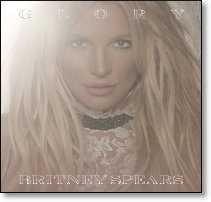
Music: Current count 27090 [27056] rated (+34), 369 [370] unrated (-1). I've been having a lot of trouble thinking of things to listen to, although the list below is still pretty substantial. I finished looking up all the new jazz albums in Downbeat's Readers Poll ballot. Final tally is that I've listened to and rated 165 of 186 (88.71%) nominated albums, adding 53 albums since filling out the ballot. The remaining 21 by label: High Note/Savant: 7, CAM Jazz: 2, 1 each for 12 other labels (notably Anzic, ArtistShare, Cuneiform, Dark Key, Destiny, Fuzzy Music, Nessa -- at least those are the ones I've heard of). I should probably see whether Joe Fields is willing to turn service back on. The final grade tally: [A-] 18, [***] 31, [**] 47, [*] 41, [B] 16, [B-] 8, [C+] 1, [C] 1, [C-] 1. The grade curve bent slightly lower as I added more records, but last week's batch did reveal one more A- record, by Omar Sosa. Done with that, I scrounged around a few other lists. I checked out several Scandinavian jazz releases that Chris Monsen likes: Anna Högberg, Moskus, Hanna Paulsberg, Rønnings Jazzmaskin; also, less impressively, Monsen's non-jazz favorites: Bent Shapes, Cobalt, White Denim. I checked out a couple of well-regarded recent rap albums -- De La Soul, Young Thug -- the former is a favorite of my nephew, but I had trouble focusing on it. Also liked Britney Spears, recommended by Robert Christgau -- his other pick, Tegan and Sara's Love You to Death, was an A- here back in July. Still boycotting All Music Guide. For all its problems, that's taking a toll on my ability to find information necessary for reviewing records off streaming services. One thing I did use last week, for the first time in several years, was Spotify. Hard to search, and I rather hate the user interface, but I found two records there that had eluded me on Napster (Rhapsody): Anna Högberg: Attack and Waco Brothers: Going Down in History. Both came highly recommended, got two plays, and wound up high-B+. But by and large I'm not finding much there that's not already available on Napster, so I'm not convinced I need to pay up yet. That project I mentioned above: I've started assembling all of my old Jazz Consumer Guide columns into reference book form, using a wysiwyg word processor (Libre Office) instead of my usual hand-coded HTML. I've finished sorting the 27 columns (26 from the Village Voice), a little more than 1000 records from 2004-11, which with default formats runs 120 pages -- looks a lot like this index. A few decisions to date: I've decided to separate the individual artist and group records, and to pull the pre-2000 archival material out into an appendix at the end. I've changed the grade scale to 1-10, with A- at 8 (but I've generally nudged pick hits up to 9), so B is at 4 and the lower grades are mushed together. This is part of a broader project to collect my writings and recast them as a series of books -- this is the third I've opened, but the only one so far I've put much writing into. Working title is Recorded Jazz in the Early 21st Century: A Consumer Guide. Like the Jazz Consumer Guide, it mostly consists of nugget-sized reviews and one-liners. I expect to add a brief biographical intro to each artist/group, which will allow me to cut some redundancies out of the reviews. Then the much larger task will be to go through my thousands of other reviews -- the oldest prospect and surplus notes, Jazz Prospecting, Recycled Goods, and Rhapsody Streamnotes -- and pick out records worth mentioning and recast them into form. Then there's the question of what's missing and should be added. I'm thinking it would be nice for the project to span two decades, 2000-2019, although obviously I'm missing a few year fore and aft. Also not sure how much more work I want to put into this, so I may consider the option of recruiting a collaborator to finish it off. But it's pretty clear from looking at what I got so far that I've already put in most of the work, and that I can offer a wider-ranging survey of contemporary jazz than pretty much anyone. When I clean things up a bit, I figure the next step will be to post a PDF and solicit comments. More on that later. By the way, Michael Tatum's latest brilliant A Downloader's Diary is archived here. I'm pleased to provide an archive and indexing for all of his columns. New records rated this week:
Recent reissues, compilations, and vault discoveries rated this week:
Unpacking: Found in the mail last week:
Ask a question, or send a comment. Monday, August 29, 2016 Music Week
Music: Current count 27056 [27020] rated (+36), 370 [359] unrated (+11). Published Streamnotes last week, so most of the finds (4 of 5 pictured albums) are already known to you. I wrote there about catching up with the Downbeat Readers Poll albums ballot, and I've continued doing that -- only eleven more that I haven't looked up, so I'll probably finish this week, even if that means listening to Yellowjackets. Of course, that leaves 20 records I tried finding on Rhapsody (and often on Bandcamp) but failed. Of those, the ones I most miss are the HighNotes/Savants (JD Allen, Kenny Burrell, George Cables, Joey DeFrancesco, Tom Harrell, Jeremy Pelt, The Power Quintet) and Roscoe Mitchell's Celebrating Fred Anderson (Nessa). I'll publish a revised grade breakdown when I hit the bottom of the list. Needless to say, the curve has been edging down, with only the George Coleman and David Murray records (ones I picked off on the first day) joining the A-list. I got a letter from Oliver Weinding, who runs Babel Label and the Vortex Jazz Club in London, a while back, noting he's putting on a series of showcases for Intakt artists and mentioning my review of "the Lucas Niggli album" -- that would be Kalo-Yele, which I filed under the first name, Aly Keita, a balafon player from Côte D'Ivoire. That, by the way, is still my top-rated record this year. Don't know whether this will result in me getting any physical mail, but I'll point out that Babel's catalog is pretty much all on Bandcamp, and I think their material is well represented on Napster. I've long associated the label with guitarist Billy Jenkins, who I credit with five A- records and one full A: 1998's True Love Collection. I wanted to give you the Bandcamp link, but there doesn't seem to be one, and to top that it's out of print. Basically '60s cheese ("Mellow Yellow," "Everybody's Talking," "Feelin' Groovy," "Sunny," "Dancing in the Streets," with avant twists connecting it all together, including terrific work by Django Bates and Iain Ballamy. It's on my all-time list. Meanwhile, the Paul Dunmall record is here. I stopped using All Music Guide this week. Recently they added some JavaScript that broke on my browser, so whenever I went to a page they printed a message about something horrible happening then looped forever. I could still see their pages on a Chromebook I keep open on the desk nearby, but they decided to escalate their anti-Ad Blocker campaign and make their site unavailable unless users either allow ads, pay them money, or something else I don't understand (seems to be some kind of scam to sell your name to other advertisers). I'm not unsympathetic to people who'd like to make some money off their hard work, and I could probably afford to pay them something as much as I use their site, but I'm also retired, have no income to speak of, make all of my web work available gratis, and have contributed numerous corrections to their site, but mostly I don't like the way this has gone down. It does, however, mean that I have less access to information -- mostly using Discogs a lot, and should find a way to better use MusicBrainz, which is more dependably free, and which I contributed to for a while -- and that's bound to hurt my reviews (main frustrations to date: verifying dates and credits). More bad web news: I gather that Spin is shutting down its review section, starting by firing staff reviewers including Dan Weiss (check him out here). Back when I followed webzines better, Spin had one of the more reliable and adventurous review sections anywhere, including more hip-hop than any other non-specialist source. Supposedly Spin will limp on doing news and features, but even when I bought whole copies of their print magazine I rarely read anything but reviews -- I really don't know what else they have to offer. Weiss is so knowledgeable and so prolific I expect he'll land somewhere else, but those opportunities are vanishing -- and not just because people like me are too cheap to pay for professional work ("content-providers" get squeezed from both directions). Unpacking picked up this week with nearly everything I received actually scheduled for September or October release. But part of the reason for the uptick is that I went ahead and added six releases I received today -- I usually hold Monday's mail for the following week. PS: Just noticed Michael Tatum has a new Downloader's Diary. New records rated this week:
Recent reissues, compilations, and vault discoveries rated this week:
Unpacking: Found in the mail last week:
Ask a question, or send a comment. Sunday, August 28, 2016 Weekend RoundupNot very happy with all that follows, let alone all that I haven't gotten to, but it looks like there's enough to chew on for now. Latest odds at 538 show Clinton as having slipped to a 80.9% chance of winning as Georgia and Arizona have tilted back in Trump's favor. Clinton's big problem is that she's still unable to crack 50% of the popular vote -- seems like an awfully flawed, weak candidate given that all she has to beat is Trump, and he's pretty handily beating himself. I suspect the media deserves much of the blame for normalizing and legitimizing Trump, and also for tarring Clinton with an endless series of silly scandals -- the biggest eye-opener for me was to discover that GW Bush's Foundation, even with no prospects of future dynasty, has been raking in even more money than the Clinton Foundation. While I don't doubt the corruption inherent in the latter, I find it curious that no one ever mentions the former. Matt Taibbi attacked the media this year in a piece called The Summer of the Shill, lamenting especially the partisanship of news channels like Fox and MSNBC, where one airs nothing but Hillary "scandals" and the other little but Trump "gaffes." Still, it's not clear to me that the quality has dropped much since Taibbi wrote up his brilliant Wimblehack series in 2004 (cf. his book Spanking the Monkey), and at least there's more parity now. Still, I guess you have to make do with the candidates you got. Some scattered links this week:
Ask a question, or send a comment. Thursday, August 25, 2016 Streamnotes (August 2016)Mostly jazz records this month, plus a few Christgau picks (Konono No. 1, The Kropotkins, Leland Sundries, Lori McKenna, Dawn Oberg, Walter Salas-Humara, Mestre Cupijó, Joi, Pylon, Senegambia Rebel). I only count two new records that are exceptions: Atmosphere and Hieroglyphic Being -- artists I somehow noticed and checked out based on previous reputation. (Had I done more scouting Dan Weiss might have scared me off Atmosphere, but having played the record twice before finding his review, all he accomplished was to get me to do an extra sanity check spin -- as far as I'm concerned the record passed.) The new jazz is probably more mainstream than usual. My own mail queue continues to dwindle (or perhaps the seasonal lull in August is just exceptionally severe this year) so probably for the first time since I folded Jazz Prospecting into Streamnotes most of the new jazz records below were downloaded or streamed. But what makes them more mainstream than usual is that I spent most of my time looking for records on Downbeat's Readers Poll ballot that I hadn't heard (74/186 at the time, or 39.79%). I've knocked more than a third of that list off (27 by my running count), and I'll probably get close to 50% before I run out of records available on my streaming service (Napster, formerly Rhapsody). That list did get me to two of the best jazz releases of the year -- tenor saxophonists George Coleman and David Murray -- records I wasn't previously aware of but gravitated to the first day I started scouring that list. Still, in the month since nothing else has proven even remotely as good -- my other streamed A- new jazz records (by Paul Dunmall and Paal Nilssen-Love) weren't on the Downbeat ballot. The recent compilations section has a couple sets I hadn't heard about but looked interesting: some Africana (Penny Penny, Sunburst), proto-electronica (Close to the Noise Floor). The new Lovano record got slotted there because the tape is 10+ years old. Senegambia Rebel is probably all new, but I decided to file all various artist compilations there -- not sure that's been a consistent standard, but it's one for now. Old music is mostly tangential to new music. The Peter Kuhn was a belated discovery after I reviewed his old and new music last month. Ellery Eskelin is on the new Stephan Crump album, and he has a new album on Hatology I couldn't find -- instead I came up with an old one I had missed. Barbara Dane and Lori McKenna have good new albums. I didn't get very far with Chucho Valdés, but at least knocked off one of my ungraded CDs -- probably just a bookkeeping error since it wasn't on an ungraded shelf. Most of these are short notes/reviews based on streaming records from Rhapsody (other sources are noted in brackets). They are snap judgments based on one or two plays, accumulated since my last post along these lines, back on July 30. Past reviews and more information are available here (8483 records). Recent Releases
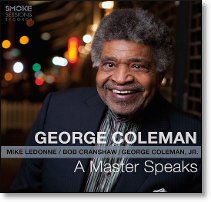
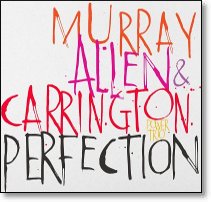
Greg Abate & Phil Woods with the Tim Ray Trio: Kindred Spirits: Live At Chan's (2014 [2016], Whaling City Sound, 2CD): Two alto saxophonists, backed by pianist Ray's trio with John Lockwood (bass) and Mark Walker (drums). Woods, who died at 83 thirteen months after these sets, got his start running errands for Charlie Parker, but the 16-years-younger Abate may be the even more resolute bebopper. B+(**) Joey Alexander: My Favorite Things (2014 [2015], Motéma): Pianist, born Josiah Alexander Sila in Bali, Indonesia in 2003, so that makes him like eleven years old when he recorded this debut, starting with 10:15 of "Giant Steps," 8:13 of "Lush Life," and 4:15-6:50 takes of six other standards plus an original named "Ma Blues" ("inspired" by "Moanin'"). He's joined by adults on bass and drums, and a bit of trumpet on one piece. I'm little inclined to credit prodigies, but this is a pretty enjoyable set of mainstream jazz. B+(**) Karrin Allyson: Many a New Day: Karrin Allyson Sings Rodgers & Hammerstein (2015, Motéma): Jazz singer from Kansas, has been working the songbook hard since 1992. Blandly sung, backed rather sparely by Kenny Barron on piano and John Patitucci on bass. B Livio Almeida: Action and Reaction (2014 [2016], self-released): Tenor saxophonist from Brazil, studied (and presumably lives) in New York, part of Arturo O'Farrill's sextet. This taut, professional postbop was produced by O'Farrill, with sons Adam (trumpet) and Zack (drums), plus Vitor Gonçalves (piano), and Eduardo Belo (bass). B+(*) [cd] Atmosphere: Fishing Blues (2016, Rhymesayers Entertainment): Underground rap duo from Minneapolis, nothing fancy in the beats, just enough to move it along; nothing fancy anywhere else either, just slice-of-life shit that may be him or may be some other fictional dude, but one no more exciting than he be. Typical lines: "I'm not perfect but I try"; "I might be unprepared but I still be here." And yeah, a song about fishing. A- Audio One: The Midwest School (2014, Audiographic): Another large Ken Vandermark ensemble -- 10 pieces, Chicago locals, sax heavy (Vandermark, Mars Williams, Dave Rempis, Nick Mazzarella), with cornet (Josh Berman), trombone (Jeb Bishop), viola (Jen Paulson), vibes (Jason Adasiewicz), bass (Mick Macri), and drums (Tim Daisy). Pieces by Julius Hemphill, Anthony Braxton, Henry Threadgill, and (best of all) AEC's "Theme De Yoyo." B+(**) [bc] Karlis Auzins/Lucas Leidinger/Tomo Jacobson/Thomas Sauerborn: Mount Meander (2015 [2016], Clean Feed): Of course, the group name is Mount Meander -- nothing else on the spine, and the individual names are barely legible on the cover. Respectively: tenor/soprano sax, piano, double bass, drums. Recorded in Denmark. Ambitious compositions, pushing limits, they don't always pay off but produce more than a few fine moments. B+(***) [cd] Lucian Ban Elevation: Songs From Afar (2014 [2016], Sunnyside): Pianist from Transylvania (modern day Romania), home of three trad songs here (one "sorrow" and two "wedding"), sung with much drama by Gavril Tarmure. The band members merit their front cover billing: Abraham Burton (tenor sax), John Hébert (bass), and Eric McPherson (drums), with Mat Maneri (viola) added on 5 (of 9) tracks. The 7:02 solo piano piece in the middle is only one of several things that slow this down. B+(*) Peter Bernstein: Let Loose (2016, Smoke Sessions): Guitarist, been recording since the early 1990s, his sweet tone and long-lined grooves always a nice touch on other people's albums, but maybe not quite enough to carry his own. With Gerald Clayton on piano, Doug Weiss on bass, and Bill Stewart on drums, a good example of what he's good at. B+(*) Jim Black Trio: The Constant (2015 [2016], Intakt): Terrific drummer, has played in numerous important groups -- just to pick a couple, Dave Douglas's Tiny Bell Trio, Ellery Eskelin's Trio, Tim Berne's Bloodcount -- has a dozen or so albums on his own. This is a piano trio, his songs, Elias Stemeseder on piano, Thomas Morgan on bass. Snappy material, especially around the edges. B+(***) [cd] Black Top: #Two (2014 [2015], Babel): Avant-jazz duo with Pat Thomas on piano and Orphy Robinson on drums, either likely to switch to a wide range of electronic gadgets. On their first album they were joined by saxophonist Steve Williamson, so here they go with another guest, saxophinst Evan Parker. Recorded live. The electronics are sketchy, but the piano breaks up time in interesting ways, and it doesn't take Parker long to jump ahead of the learing curve. B+(***) [bc] Carate Urio Orchestra: Ljubljana (2015 [2016], Clean Feed): Seven-piece group based in Antwerp, Belgium, probably led by Sean Carpio (drums, guitar, voice), with several musicians I've run across before -- Joachim Badenhorst (clarinets, sax), Pascal Niggenkemper (bass), Frantz Loriot (viola). Complex, some voice (which doesn't help), passages that fade into ambience and others that rise up grandly. B+(*) [cd] Teri Lyne Carrington: The Mosaic Project: Love and Soul (2015, Concord): Drummer, has a wide range of jazz credits going back to 1984 but she veered into R&B for her 2011 Mosaic Project album, and returned here. Very long credits list, but nearly all of the voices and musicians are female (I see one cut with Billy Dee Williams listed as narrator). The ever-changing guest vocalists give this an air of anonymity. B+(**) George Coleman: A Master Speaks (2015 [2016], Smoke Sessions): Tenor saxophonist, still remembered primarily as the guy who preceded Wayne Shorter in the Miles Davis Quintet, but he was a master -- his 1991 album My Horns of Plenty is an all-time favorite -- and at 80, recording his first album since 2002, he still is. Classic sax quartet, with Mike LeDonne pacing him splendidly on piano, Bob Cranshaw on bass, and George Coleman Jr. on drums. A- Cortex: Live in New York (2015 [2016], Clean Feed): Norwegian avant-jazz quartet -- Thomas Johansson (trumpet), Kristoffer Alberts (saxophones), Ola Høyer (bass), Gard Nilssen (drums) -- second album on Clean Feed, may have more but share no relationship I can find with the 1975-79 French avant band Cortex. They can really kick up a storm, making this relatively short live album (35:38) pretty huge. A- [cd] Larry Coryell: Heavy Feel (2014 [2015], Wide Hive): Guitarist, a fusion pioneer with more than one hundred albums since Chico Hamilton introduced him in 1966. Quartet, produced by Gregory Howe (who has a hand in 4/9 songs), with soprano sax (George Brooks), electric bass (Matt Montgomery -- also credits for 4/9 songs), and drums (Mike Hughes). Fusion, wouldn't call it heavy but not light either. B+(*) Stephan Crump: Stephan Crump's Rhombal (2016, Papillon): Bassist, ten or so albums since 1997, I especially like his knack for mixing the bass up so it balances evenly with the other instruments -- harder to do here in a two-horn quartet, but he manages it nonetheless. With Adam O'Farrill (trumpet), Ellery Eskelin (tenor sax), and Tyshawn Sorey (drums). A- [cd] Barbara Dane with Tammy Hall: Throw It Away . . . (2016, Dreadnaught Music): Folksinger, born in Detroit in 1927 of parents who migrated north from Arkansas, moved to San Francisco in the 1950s. I've long regarded her 1959 Anthology of American Folk Songs as a classic, and vaguely recall her longstanding political activism -- her recording career petered out in the early 1970s with FTA! Songs of the GI Resistance and I Hate the Capitalist System -- but wasn't aware she wrote songs with Lu Watters, cut albums with Lightnin' Hopkins and the Chambers Brothers, or one called Livin' With the Blues (with Earl Hines, Benny Carter, and Shelly Manne). She's 88 now, thanks Mose Allison's "My Brain" for getting hers back to work, and her voice has aged fine. Hall's piano trio turns her into a jazz singer, guest harmonica and sax flesh out the blues. Starts with Memphis Minnie, then Leonard Cohen, Abbey Lincoln, Paul Simon, then gets more personal, and political, and/or corny. When she sketches out her dream society and asks "What Kind of Country" that would be, "socialism" is so obviously the answer she doesn't need to mention it (or Bernie). A- [cd] Kris Davis: Duopoly (2015 [2016], Pyroclastic): Avant-pianist, from Canada, has a dozen or more albums since 2003 establishing herself as a major figure. Duets here with eight partners -- guitarists Bill Frisell and Julian Lage, pianists Craig Taborn and Angelica Sanchez, drummers Billy Drummond and Marcus Gilmore, also Don Byron (clarinet) and Tim Berne (alto sax) -- one tune and one shorter free improv each. All interesting, but Byron and especially Berne are most compelling. Comes with a DVD encrypted so I can't play it on my computer (may be my problem, but not one I feel up to dealing with). B+(***) [cd] Whit Dickey/Kirk Knuffke: Fierce Silence (2015 [2016], Clean Feed): Drums and trumpet duo, Dickey mostly associated with Matthew Shipp since the late 1980s. Usual caveats about avant duos apply, but hard to fault the interplay. B+(***) [cd] Paquito D'Rivera: Jazz Meets the Classics (2012 [2014], Paquito/Sunnyside): Cuban-born clarinetist, played in the famous group Irakere there but fled in 1981 to US, recording 55+ albums since then. I passed on this one for obvious reasons -- not least the cover image of six guys dressed up like 19th century plantation owners and martinets. Those are presumably the band, with Diego Urcola (trumpet), Alex Brown (piano), electric bass, drums, and percussion (Arturo Stable). The repertoire is mostly Beethoven, Mozart, and Chopin with one piece from Ernesto Lecouna, all served con clavé, which helps. B Paquito D'Rivera & Quinteto Cimarron: Aires Tropicales (2012 [2015], Paquito/Sunnyside): Another trawl through classical music Cuban style. The Quinteto Cimarron is a group of Cuban expats based in Spain, a classical string quintet (adds contrabass to the usual two violins, viola, and cello), with only the leader's clarinet to spice things up. Starts with five of D'Rivera's pieces then wanders off through more or less obscure Cuban composers (I assume -- I only see one piece by a member of the Quintet). B- Paquito D'Rivera/Armando Manzanero: Paquito & Manzanero (2016, Paquito/Sunnyside): Manzanero is a Mexican pianist and singer, composer of some 400 songs, now 80. These are his songs, played by the clarinetist's sextet, and he adds his fragile but romantic croon to a few. B+(*) Paul Dunmall/Matthew Bourne/Steve Davis/Dave Kane: Mandalas in the Sky (2013 [2015], Babel): Avant-sax quartet, with the leader on tenor and flute, plus piano, drums, and bass respectively. Dunmall remains focused throughout, and the stretch where he sits back and lets the piano take over demands our attention too. A- [bc] Oran Etkin: What's New? Reimagining Benny Goodman (2015, Motéma): Clarinetist (regular and bass), so of course he's been thinking about Goodman. But he starts with a "Prelude" that doesn't allow any measure of swing, and only sporadically rectifies that -- even his cheery, bouncy "King Porter Stomp" only swings in passing. With Sullivan Fortner (piano), Steve Nelson (vibes), Matt Wilson (drums), and Charenee Wade singing two tunes. B+(***) Sullivan Fortner: Aria (2014 [2015], Impulse!): New Orleans pianist, won a prize and jumped straight to the big leagues for his debut -- not that Universal's Verve group (mostly dba Impulse! these days) actually releases enough, in the US anyhow, to still qualify. The operatic title spooked me away, but turns out this is a very solid sax quartet, with Tivon Penticott on tenor (and soprano), Aidan Carroll on bass, and Joe Dyson on drums. B+(***) Kenny Garrett: Do Your Dance! (2016, Mack Avenue): Alto saxophonist, one of the major mainstream figures of the 1990s, with Coltrane the obvious influence. Tries for funky here, but no matter how upbeat he keeps it, he can't shake postbop convention, even when he brings in those hippity-hop rappers. B+(*) Wycliffe Gordon: Somebody New (2015, Blues Back): Mainstream trombonist, more than two dozen albums since 1996, leads the Lexington, Kentucky-based DiMartino/Osland Big Band here -- founded by Miles Osland (alto sax) and Vince DiMartino (trumpet, but I don't see a credit for him here). The band swings, and Gordon turns out to be a pretty fair singer (e.g., "Basin Street Blues"). B+(**) Mark Guiliana Jazz Quartet: Family First (2015, Beat Music Productions): Drummer-led sax quartet, all members fairly well known: Jason Rigby (sax), Shai Maestro (piano), Chris Morrissey (bass). Postbop, fast ones hold up pretty well, slow ones less commanding. B+(**) Joel Harrison 5: Spirit House (2013 [2015], Whirlwind): Filed on Napster by "Joel Harrison Octet," but I only count the expected five musicians: Harrison (guitar), Cuong Vu (trumpet), Paul Hanson (bassoon), Kermit Driscoll (bass), and Brian Blade (drums) -- Harrison and Blade also credited for voice, so presumably they're responsible for "Some Thoughts on Kenny Kirkland." MVP is the trumpeter. B+(*) Cory Henry: The Revival (2016, Ground Up): Organ player, first album, live, sings a bit and has a drummer backing but that's it. Reminds me how ugly solo organ can be, but every now and then comes up with something to make me forget. B- Hieroglyphic Being: The Disco's of Imhotep (2016, Technicolour): Chicago house producer Jamal Ross, has a real flair for beats, strong again here until he fizzles a bit near the short end. Nine tracks, 33:56. B+(***) Charlie Hunter: Everybody Has a Plan Until They Get Punched in the Mouth (2016, Ground Up/Decca): Seven-string guitarist, has close to twenty albums since 1995, some with even longer titles, offers a fair approximation of Scofield groove but is more likely to deviate into avant and/or rockish territory. Here he leads a quartet more dominated by horns -- cornet (Kirk Knuffke) and trombone (Curtis Fowlkes) -- with frequent collaborator Bobby Previte on drums. Fave piece is a bit of smeared trombone funk. B+(***) Grace Kelly: Trying To Figure It Out (2016, Pazz Productions): Alto saxophonist, born Grace Chung in 1992, I first noticed her as a 15-year-old co-leading a pretty good album with Lee Konitz, and recently in Jon Batiste's Late Show band. This one is all over the map with guests who help and some who don't, but she mostly seems to be aiming for something in Terri Lyne Carrington's Mosaic Project's bailiwick. B+(*) Stacey Kent: Tenderly (2015 [2016], OKeh): Singer, originally from New Jersey but based in England, has close to twenty albums since 1997, sings standards here (including one from Brazil), backed primarily by Roberto Menescal's guitar, with Jeremy Brown on bass and husband Jim Tomlinson on flute and tenor sax. Her voice is well suited to this low key approach. B+(***) Masabumi Kikuchi: Black Orpheus (2012 [2016], ECM): Japanese pianist, Discogs lists 19 albums since 1970, died in 2015 leaving this solo set as his final testament. B+(*) [dl] Kirk Knuffke: Lamplighter (2014 [2015], Fresh Sound New Talent): Cornet player, has been prolific since 2008, including six records on Steeplechase I haven't heard. Avant, but rather thin, sketchy, slippery, with Stomu Takeishi on bass and two percussionists. B+(**) Konono No. 1/Batida: Konono No. 1 Meets Batida (2016, Crammed Discs): Batida is Pedro Coquenão, a DJ born in Angola and based in Lisbon, Portugal, with two albums on Soundway (I recommend the eponymous 2012 Batida). He probably adds something here, but the band's home-brewed Congotronics rule. A- The Kropotkins: Portents of Love (2015, Mulatta): Named for the Russian anarchist, fourth album since 1996 if we count the eponymous debut, credited at the time to avant-violinist (and sometime banjoist) Dave Soldier. Current lineup includes co-founder Jonathan Kane (snare drum), Lorette Velvette (vocals), Charles Burnham (violin), and Moe Tucker (drums), doing a hillbilly/blues thing several times removed. B+(**) Steffen Kuehn: Leap of Faith (2015-16 [2016], Stefrecords): Trumpet player, fourth album, funky little thing although the band, with four horns, guitar/keyboards, extra percussion, and various guest stars (best known Bob Mintzer) is more than ample. B+(*) Zach Larmer Elektrik Band: Inner Circle (2016, self-released): Guitarist, based in Miami, first album, electric keyboards and bass leaning toward funk, but his guest spots for horns up his game -- John Daversa on trumpet and EWI, even more so Brian Lynch on trumpet and Aldo Salvent on tenor sax. B+(*) [cd] Le Boeuf Brothers + JACK Quartet: Imaginist (2014 [2016], Panoramic/New Focus): The brothers are Pascal (alto sax) and Remy (keyboards), their group including Ben Wendel (tenor sax) and bass and drums. JACK is a string quartet. The first three cuts show some slippery promise, but then comes the long "A Dream" where the strings go classical and Paul Whitworth narrates something about "Josef K." Closes with another extended instrumental set in much the same vein. B- [cd] Steve Lehman: Sélébéyone (2016, Pi): Alto saxophonist, Anthony Braxton student, has had a couple records of the year (and not just in my book: Mise en Abime topped the Jazz Critics Poll). Goes for something else here, with HPrizm rapping and Gaston Bandimic singing in Wolof, rhythms borrowed from hip-hop and mbalax then freed up some more by drummer Damion Reid. I really don't know what to make of it, but I do love the shifty in-between music, with Maciek Lasserre's soprano bouncing off the alto, Carlos Homs' keyboards, and Drew Gress holding it all together on bass. A- [cd] Leland Sundries: Music for Outcasts (2016, L'Echiquier): Brooklyn band led by singer-songwriter Nick Loss-Eaton -- thought the name sounded familiar but couldn't find any further discography until AMG credited him with publicity on a Bruce Springsteen album, and I found some saved mail from him hawking albums by artists I don't recall at all. First album after a couple EPs, will appeal to Americana fans but strikes me as much bigger and bolder, though I'm not sure that adds up to better. B+(***) [bc] Joey Locascio: Meets the Legend (2016, Blujazz): No hype sheet, promo doesn't identify any credits. When I got it, I assumed this must be pianist Joe LoCascio, but I have my doubts now: websites don't indicate any previous records and no one but me seems to have filed this under the pianist. He sings here, and I've seen a picture of him playing guitar. "The Legend" seems to be organ player Joey DeFrancesco. He starts with a parody called "Joey's a Tramp" and rarely strays far from caricature. B+(*) [cd] Mack Avenue Superband: Live From the 2015 Detroit Jazz Festival (2015 [2016], Mack Avenue): The Detroit-based jazz label has been showcasing their roster at their hometown festival since 2012. The lineups vary from year to year, this one featuring Freddie Hendrix (trumpet), Tia Fuller (alto/soprano sax), Kirk Whallum (tenor sax), Christian Sands (piano), Christian McBride (bass), Gary Burton (vibes), and Carl Allen (drums). Hotter than average mainstream, main takeaway is to be reminded of how much talent Whallum wastes on his own albums. B Christian McBride Trio: Live at the Village Vanguard (2014 [2015], Mack Avenue): Bassist, earned his headline credentials in the hard bop revival of the early 1990s, leads a trio with Christian Sands on piano and Ulysses Owens Jr. on drums. Sands is fast, flashy, boppish -- put his name on this group and he'd be more famous, but if he had to hire another bassist his group wouldn't be as good. B+(**) Lori McKenna: The Bird & the Rifle (2016, CN/Thirty Tigers): Singer-songwriter from the country side of Massachusetts, writes good songs and sings them right. Title cut sounds like a case for gun control and an explanation why it isn't happening. A- Merzbow/Keiji Haino/Balasz Pandi: An Untroublesome Defencelessness (2016, RareNoise): Electronics, guitar and more electronics, drums, resulting in better than average fusion thrash. B+(**) [cdr] Camila Meza: Traces (2016, Sunnyside): Singer and guitarist from Chile, based in New York, band has jazz credentials -- Shai Maestro (piano, keyboards), Matt Penma (bass), Kendrick Scott (drums), Jody Redhage (cello), Bashin Johnson (percussion) -- but the songs, most in Spanish but some in English, don't swing much. B Allison Miller's Boom Tic Boom: Otis Was a Polar Bear (2016, Royal Potato Family): Drummer-led sextet, built around the brilliant quartet from her first album -- Myra Melford (piano), Jenny Scheinman (violin), Todd Sickafoose (bass) -- with the addition of two horns: Kirk Knuffke (cornet) and Ben Goldberg (clarinet). Terrific group, with spots of dazzle but also patches that don't. B+(**) Modular String Trio: Ants, Bees and Butterflies (2014 [2016], Clean Feed): Sergiy Okhrimchuk (violin), Robert Jedrzejewski (cello), Jacek Mazurkiewicz (contrabass, electronics), but there's also a less obvious, unexplained credit: Lukasz Kacperczyk (modular synth). I'm not all that fond of chamber jazz, for for that matter string ensembles, but these plucky abstractions hold my interest. B+(***) [cd] Murray, Allen & Carrington Power Trio: Perfection (2015 [2016], Motéma): That's David Murray (tenor sax, bass clarinet), Geri Allen (piano), and Terri Lyne Carrington (drums) -- "Power Trio" would have been redundant had they just spelled out those names. I missed this, and passed up Murray on my latest ballot because I hadn't heard anything by him since 2013. My bad. A- Quinsin Nachoff: Flux (2012 [2016], Mythology): Tenor saxophonist, has a couple albums, this one adds a second sax (David Binney on alto), plus piano (Matt Mitchell) and drums (Kenny Wolleson) but no bass. Jittery postbop, impressive as far as it goes. B+(**) [cd] Aaron Neville: Apache (2016, Tell It): Unmistakable voice, a New Orleans legend and then some, still mostly generic songs -- exception is the closer, "Fragile World," which I'm tempted to call cosmic but it's actually so down to earth. B+(**) Paal Nilssen-Love Large Unit: Ana (2015 [2016], PNL): Fourteen-piece ensemble, short on horns (two reeds, one trumpet, one trombone, two tubas), long on percussion including Latin and African specialists, electronics, guitar, two basses, no piano. Three longish pieces, many remarkable passages with blaring horns over electronic squiggles and all sorts of complex rhythm. A- [bc] Nine Live: Sonus Inenarribilis: Nine Live Plays the Music of John Clark (2016, Mulatta): Clark is a French horn player with a handful of albums from 1980-2003, his side credits including four Gil Evans albums. He wrote the music here, conducted by Thomas Carlo Bo, and is credited with "horn." Group leans toward classical instrumentation, with strings (violin-viola-cello), clarinet, bassoon, keyboards, and 7-string electric bass. B [cd] Northern Winds and Voices: Inside/Outside (Sisällä/Ulkona) (2016, Edgetone): Sub: "Finnish music imagines in new ways." The other name on the cover is Heikki Koskinen, who plays piano, flutes, kantele, and electric trumpet ("e-tpt"). Steve Heckman and Rent Romus play various reed instruments, Noah Schenker bass, and Kati Pienimaki Schenker sings (mostly in Finnish). Despite the jazzbos, still pivots on folk/classical foundation, often lovely, sometimes arch. B+(*) [cd] Dawn Oberg: Bring (2015, Blossom Theory): Christgau split an EW post between her catalog and rapper DejLoaf's, no doubt relishing the contrast. I gave a respectful nod to her 2012 album Rye but not a second spin, so missed whatever literary quirks sold him on the album. I note here big words and twisty melodies -- Wikipedia lists her genres as "cabaret, jazz" -- but the only songs I get are the one hooked with "suck" and the super-obvious "Republican Jesus" -- sharpest political song I've heard in years. Nine songs, 27:38. B+(***) Adam O'Farrill: Stranger Days (2016, Sunnyside): Trumpet player, son of pianist Arturo O'Farrill, grandson of arranger Chico O'Farrill, has a couple albums as The O'Farrill Brothers with brother Zack O'Farrill (drummer here), but this is the first under his own name. Quartet with Chad Lefkowitz-Brown (tenor sax) and Walter Stinson (bass), moving formidably away from the family's Afro-Cuban roots, leaning slightly to the avant side of postbop. B+(**) Arturo O'Farrill Sextet: Boss Level (2013 [2016], Zoho): Cuban-American pianist, actually born in 1960 in Mexico in between countries, but grew up in the family trade -- his father was a famed big band arranger -- and has two sonns in his group: Adam on trumpet and Zack on drums. Also Livio Almeida (tenor sax), Travis Reuter (guitar), and Shawn Conley (bass). Seems intent on pushing boundaries here, no matter how often they trip him up. B+(*) Nils Økland Band: Kjølvatn (2012 [2016], ECM): Norwegian violinist, also plays viola d'amore and hardanger fiddle, has a dozen or so albums since 1986. Backed by saxophone, harmonium, double bass (Mats Eilertsen), and percussion/vibraphone, none adding more than tinges to the brooding strings. B+(**) Francisco Pais Lotus Project: Verde (2016, Product of Imagination): Guitarist from Portugal, has a couple previous albums. This one has Myron Walden (tenor sax), Godwin Louis (alto sax), Julian Shore (piano), Connor Schultz (bass), and Ferenc Nemeth (drums). Mixed bag, including some shifting rhythmic interest but also a couple of rather ordinary Pais vocals. B+(*) [cd] Aaron Parks/Thomas Fonnesbaek/Karsten Bagge: Groovements (2014 [2016], Stunt): Pianist from Seattle, was kind of a big deal in 2008 when his debut album, after work with Terrence Blanchard, landed on Blue Note. Picked up this bassist and drummer in Copenhagen, and they fit like a glove. B+(**) Sergio Pereira: Swingando (2016, self-released): Brazilian guitarist, based in US after a decade in the Netherlands, sings some, band includes some top names: Helio Alves (piano), Nilson Matta (bass), Duduka de Fonseca (drums). B+(*) [cd] Gregory Porter: Take Me to the Alley (2016, Blue Note): Jazz singer, songwriter too I presume, fourth album since 2011, highly regarded if you believe the polls. Has a nice rich baritone and doesn't indulge in the tics and idiosyncrasies that I find so annoying in male singers, yet he always strikes me as an empty shell, puffed up and vacuous. So again and again, just when I think this isn't so bad I notice that it's still pretty dumb. B- Herlin Riley: New Direction (2016, Mack Avenue): Drummer from New Orleans, only his third album although he has dozens of side credits since 1985, especially with Ahmad Jamal and Wynton Marsalis. With Bruce Harris (trumpet), Godwin Louis (alto/soprano sax), Emmet Cohen (piano), Mark Whitfield (guitar), Russell Hall (bass), Pedro Martinez (congas). Often flashy, but the thing I most related to was the leader's home town vocal at the end. B+(*) Jason Roebke Octet: Cinema Spiral (2014 [2016], NoBusiness): Chicago avant-bassist, has a few albums of his own and more with other Chicago players, many of whom he rounded up for his octet: Josh Berman (trumpet), Jeb Bishop (trombone), Keefe Jackson (tenor/soprano sax, contrabass clarinet), Greg Ward (alto sax), Jason Stein (bass clarinet), Jason Adasiewicz (vibes), Mike Reed (drums). The rhythmic foundation is always shifting, and the horns sway to and fro or just shoot out in odd directions, a universe in perpetual turmoil. B+(***) [cd] Roji: The Hundred Headed Woman (2016, Shhpuma/Clean Feed): Basically a duo, with Gonçalo Almeida (bass and loops) and Jörg A. Schneider (drums) laying down an avant-noise foundation, and guests Susana Santos Silva (trumpet) and Colin Webster (baritone sax) joining for three tracks each (out of seven). B+(***) [cd] Jim Rotondi: Dark Blue (2015 [2016], Smoke Sessions): Mainstream trumpet player, sixteen albums since 1997, all on labels that specialize in that sort of thing. With Joe Locke (vibes), David Hazeltine (piano), David Wong (bass), and Carl Allen (drums). B+(*) Jerome Sabbagh/Simon Jermyn/Allison Miller: Lean (2014 [2016], Music Wizards): Tenor sax trio, Sabbagh also plays soprano, with Jermyn on electric bass and effects, Miller on drums and more effects. Sabbagh, originally from France, has a half-dozen albums, started postbop but never got too comfortable there. B+(**) [cd] Walter Salas-Humara: Work: Part One (2015, Sonic Pyramid): Singer-songwriter, has mostly worked in the long-running alt-indie band the Silos, also associated with a band I remember more fondly, the Vulgar Boatmen, but he's kicked out a couple solo albums -- one in 1988, another in 1995, more recently. This seems to be new "acoustic" versions of old 1980s-vintage songs, with Richard Brotherton's guitar/dobro/banjo/mandolin, Mary Rowell's violin/viola, and Amy Allison's "supporting voice." B+(**) Walter Salas-Humara: Explodes and Disappears (2016, Sonic Pyramid): New songs, clear and straightforward, easy-going and catchy. B+(***) Susana Santos Silva/Lotte Anker/Sten Sandell/Torbjörn Zetterberg/Jon Fält: Life and Other Transient Storms (2015 [2016], Clean Feed): Trumpet player from Portugal, saxophonist from Denmark, piano-bass-drums from somewhere in Scandinavia. Two long pieces, joint improvs at Tampere Jazz Happening in Finland, pretty much an ordinary day in the life of the European jazz avant-garde, including no short amount of complex and exhilarating. B+(***) [cd] Ches Smith: The Bell (2015 [2016], ECM): Drummer, with Craig Taborn (piano) and Mat Maneri (viola) also listed on the cover but after the title, hence my parsing. Smith wrote all the pieces. ECM's Manfred Eicher has a knack for making free jazz sound like easy listening: no sharp edges here, the viola sounding typically weepy, but occasional patches sound compelling. B+(*) [dl] Luciana Souza: Speaking in Tongues (2015, Sunnyside): Brazilian jazz singer, dozen albums since 1998, this one backed by Lionel Loueke (guitar), Gregoire Maret (harmonica), Massimo Biolcati (bass), and Kendrick Scott (drums), her tongues Portuguese, English, and scat -- I suspect mostly the latter. B Bill Stewart: Space Squid (2014 [2016], Pirouet): Drummer, close to a dozen albums since 1995. With Seamus Blake (tenor/soprano sax), Bill Carrothers (piano), Ben Street (bass). Surprisingly soft for Blake, but the piano has some bite. B+(*) Stirrup: Cut (2016, Clean Feed): String-driven avant trio: Fred Lonberg-Holm (cello, guitar), Nick Maori (double bass), Charles Rumback (drums). Seems pretty straightforward: propulsive beat, string drone, easier on guitar but the cello has more bite. A- [cd] Markus Stockhausen/Florian Weber: Alba (2015 [2016], ECM): Trumpet player, son of famed avant-garde composer Karlheinz Stockhausen, leads with flugelhorn here, in duets with the pianist. Eloquent, serene, very lovely. B+(***) [dl] John Stowell/Michael Zilber Quartet: Basement Blues (2012-15 [2016], Origin): Guitar and alto sax (plus some piano), backed by bass (John Shifflett) and drums (Jason Lewis). Pair have had several albums together, and Stowell has a long career in jazz guitar. Flows easy, lyrical and tasteful. B+(**) [cd] Marcus Strickland's Twi-Life: Nihil Novi (2016, Blue Note): Saxophonist, initially a tenor who also played a pretty mean soprano but he spreads out here to alto and bass clarinet, and sings some too. His group has spread out too, starting as a power trio and now up to five or six plus guests including singers and narrators and producer (and sometime bassist) Meshel Ndegeocello. Jean Baylor's songs rarely rise above nu soul, the band favoring soft funk, with the saxophone rarely rising above the groove. B- Sundae + Mr. Goessl: Makes My Heart Sway (2016, self-released): Goessl is guitarist Jason, who provides minimal but adequate backing for standards singer Kate Voss, who treats songs like "Young at Heart" and "After You've Gone" with respect, as if they're fragile. (Exception: "Pretty Little Thing.") B+(**) [cd] Chucho Valdés: Tribute to Irakere (Live in Marciac) (2015, Jazz Village): Phenomenal Cuban pianist, founder in 1973 of the popular group Irakere, which continues to be led by his son, Chuchito, while he's moved on, but here takes a reflective look back. Hard to judge on limited tracks and info, but it's hard to top his piano solos. [NB: based on 3/6 cuts, 23:17/69:38] B+(**) Marlene VerPlanck: The Mood I'm In (2015, Audiophile): Standards singer from Newark (née Pampinella, married trombonist Billy VerPlanck for fifty-some years until his death in 2009), has recorded since 1955 with one of her best 2014's I Give Up, I'm in Love. She's past 80 now, though the only indication I hear of that is that she's picking more obscure songs, bringing them vibrantly to life. With Andy Panayi (sax/flute), Mark Nightingale (trombone), John Pearce (piano), Paul Morgan (bass), and Bobby Worth (drums). B+(***) Miroslav Vitous: Music of Weather Report (2010-11 [2016], ECM): Czech bassist, a beneficiary of that good old Communist focus on classical music, finagled a scholarship to Berklee in 1966, dropped out and headed for New York where he was toasted as a jazz prodigy, falling in with the crowd that turned into fusion supergroup Weather Report -- a group I must admit I've never developed any real fondness for, but which, given his age, he could easily recall as the high point of his life. He looked back in 2009's Remembering Weather Report, and again here, although he also wants to nudge the music in directions both more avant and classical, in effect to rewrite history in his own image. He doubles up at soprano/tenor sax (Gary Campbell and Roberto Bonisolo) and drums (Gerald Cleaver and Nasheet Waits), and he occasionally sets aside his bass to help Aydin Esen out on keyboards. B+(**) [dl] Charenée Wade: Offering: The Music of Gil Scott-Heron and Brian Jackson (2015, Motéma): Jazz vocalist, first album, bites off a group of songs with lyrical, political power and more than a little quirk. Perhaps a bit too respectful, but worth rehearing this way. B+(***) Recent Reissues, Compilations, Vault Discoveries
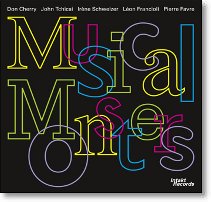
Joe Castro: Lush Life: A Musical Journey (1954-66 [2015], Sunnyside, 6CD): Bebop pianist (1927-2009), born in Arizona, grew up in Bay Area and worked there and in Hawaii before moving to New York in 1956, recorded three albums there before moving back west. Doesn't seem like an especially significant figure -- my only prior reference to him was Zoot Sims with the Joe Castro Trio Live at the Falcon Lair, recorded in 1956 but released on Pablo much later. Lacking the booklet, I have to wonder why Castro doesn't play on one full disc ("Joe Castro's Friends: The Teddy Wilson Jam Sessions") and 4 (of 12) cuts on another (an previously unreleased album by the Teddy Edwards Tentet). High points include fine small group sessions with Stan Getz, Lucky Thompson, Sims, and/or Edwards. B+(**) Don Cherry/John Tchicai/Irène Schweizer/Léon Francioli/Pierre Favre: Musical Monsters (1980 [2016], Intakt): Recorded at Willisau in north-central Switzerland, hence the all-Swiss rhythm section, the headliners playing trumpet and alto sax. Danish-born Tchicai joined the New York avant-garde in the mid-'60s, picking up a pronounced Ayler influence (and shout), while Cherry started out with Ornette Coleman and went global. Impressive piano too, and terrific work from Favre. A- [cd] Close to the Noise Floor: Formative UK Electronica 1975-1984 (1975-84 [2016], Cherry Red, 4CD): Mostly obscure -- I recognize maybe 10 names out of 61, and only a couple of those count as famous -- this runs closer to what we used to call new wave, with side glances into industrial and proto-noise, than to what later emerged as electronica, and not just due to minimal danceability. Booklet probably adds some historical value, and this may provide a starting point for exploring various paths. B+(*) Mestre Cupijó E Seu Ritmo: Siriá (1973-78 [2014], Analog Africa): Brazilian band led by an alto saxophonist, hails from somewhere in Brazil's Amazonian backwaters (Cametá), far enough from the coastal cities that the music here bears more likeness to Colombian cumbia (or even salsa) than to bossa nova or even forró, and better than average cumbia at that. I don't see where anyone says so, but this looks to have been compiled from four 1973-78 albums, including one called Siriá and another Siriá Siriá. A- Joi: Joi Sound System (1999-2007 [2016], RealWorld, 2CD): Originally two British brothers, Farook and Haroon Shamsher (mother from India, father from Bangladesh), mixed strong electronic dance beats with occasional Bengali spices on their 1999 debut album, released the year Haroon died. A second album in 2001 started with field recordings Haroon had made before his death, and a third album appeared in 2007. This compilation is a "best-of," although at this length they couldn't have left much out. A- Daunik Lazro/Joëlle Léandre/George Lewis: Enfances 8 Janv. 1984 (1984 [2016], Fou): Alto sax, bass, trombone (and toys), all very rough, with Léandre singing some, if that's what you want to call it -- operatic screech is more like it, but at least it blends into the general chaos rather than towering above it. B+(*) [cd] Joe Lovano Quartet: Classic! Live at Newport (2005 [2016], Blue Note): Major tenor saxophonist, the reigning guy in Downbeat's polls, his annual albums have slowed down a bit lately with nothing from the studio since 2012, and now this vault item. With Hank Jones (piano), George Mraz (bass), and Lewis Nash (drums), doing three originals, two songs by the pianist's brother Thad, and one from Oliver Nelson. Solid outing, of course, especially strong finish, and it's nice to hear the late pianist again. B+(***) Joe McPhee/Paal Nilssen-Love: Candy (2007-14 [2015], PNL, 7CD): Sax-drum duets, McPhee often switching off to pocket trumpet. The first was previously released in 2008 as Tomorrow Came Today: I gave it an A- at the time, and still find it remarkable, but I don't really have the patience to sort out the rest -- three from Norway 2007-08, two Milwaukee 2012-14, one Chicago 2012, and one Japan 2013. Suffice it to say that the closer you pay attention, the more you'll be dazzled. [Available individually as downloads.] B+(***) [bc] Penny Penny: Shaka Bundu (1994 [2013], Awesome Tapes From Africa): First album from the Shangaan star, a Tsonga from northeast South Africa, near the Mozambique border, recorded just after the Apartheid regime fell. Bouncy enough, the chorus packed behind the singer, but not exactly awesome. B+(**) [bc] Pylon: Live (1983 [2016], Chunklet): Athens GA band, not as much fun as the B-52s nor as tuneful as R.E.M. but a proximate missing link, issued their best album (Chomp) the same year as this live set. Don't recall it clearly enough to compare, but this strikes me as leaner, common in live recordings of the period. B+(***) Senegambia Rebel (2016, Voodoo Rebel): Filed this under African VA compilations, which it is at first glance, but the various artists are mostly European remixers, the African input limited to field samples that are given beats so primitive and so very complex they belong to Africa, and could only really be at home there. A- [dl] Sunburst: Ave Africa: The Complete Recordings 1973-1976 (1973-76 [2016], Strut): Tanzanian group, lead singer from Zambia, issued their only LP in 1973 (Ave Africa), collected here with various singles and radio tapes -- there also seems to be a "limited cassette" with early demos. Key instrument is organ, which gives it something of garage rock feel. B+(*) Old Music
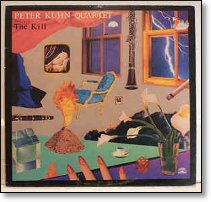
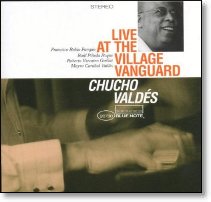
The Chambers Brothers: Time Has Come: The Best of the Chamber Brothers (1966-71 [1996], Columbia/Legacy): Soul group, started out in a Baptist choir in Mississippi, relocated to Los Angeles in the 1950s, finally put an album out in 1965 and scored their only top-20 hit in 1968 ("Time Has Come Today"). Nothing essential here: two singles edits of their hit, a better one called "Funky," a 10:25 live "Wade in the Water." More rock than soul, more limited but similar to the Isley Brothers. B+(**) Barbara Dane: Trouble in Mind (1957 [2011], Stardust): First album, all blues -- six (of ten) so titled -- backed by San Francisco Dixielanders, with trumpet (Pete Stanton), trombone (Bob Mielke), clarinet (Darnell Howard), piano (Don Ewell), and bass (Pops Foster) but no drums. Seems slightly off, although Maria Muldaur later built a career along these lines -- more jug band, no clarinet, but it's the latter I like best. B+(*) Barbara Dane/Earl 'Fatha' Hines and His Orchestra: Livin' With the Blues (1959 [2013], Fresh Sound): Not the famous big band Hines had given up but a septet of all stars (except for the two trombonists): Benny Carter (trumpet), Plas Johnson (tenor sax), Leroy Vinnegar (bass), Shelly Manne (drums). The pianist is hard to mistake, but the band plays tight behind a singer who only adds something beyond a fine voice to the songs -- "Why Don't You Do Right" is the standout. B+(**) Barbara Dane: On My Way (1962 [2013, Fresh Sound): The original Capitol cover adds: "soul, shoutin' and the blues . . . the exciting voice of Barbara Dane." Another jazz group, this one led by cornetist Kenny Whitson, with piano, bass, guitar, bass, drums, and congas -- no one I've heard of -- with background vocals by the Andrews Sisters ("of Berkeley"). Kind of splits the difference between the Dixielanders and the All-Stars. Helps that the songs are more varied, although "The Hammer Song" and "Mama Don't Allow No Twistin'" go a bit too far. B+(***) Barbara Dane & Lightning Hopkins: Sometimes I Believe She Loves Me (1961-65 [1996], Arhoolie): Five cuts previously released on the back side of a 1966 Hopkins album, fifteen more that had to wait three decades for the CD era. Includes some solo Dane in her folkie mode, but the best cuts are balanced with Hopkins' sly drawl. B+(**) Barbara Dane/The Chambers Brothers: Barbara Dane and the Chambers Brothers (1966, Folkways): Soul group, started out in a Baptist church choir in Mississippi before moving to Los Angeles, and would have a minor hit in 1968 and fade by 1972. A church singer herself, she finds common ground in gospels and civil rights anthems. B+(*) Barbara Dane: FTA! Songs of the GI Resistance (1970, Paredon): Dane and husband Irwin Silber started their own label in 1970, putting aside all political inhibitions. She recorded this in coffee houses near army bases in Texas, Georgia, and North Carolina, eliciting a fair amount of sing-along, even for the line about "Viva Che Guevara." B+(***) Barbara Dane: I Hate the Capitalist System (1973, Paredon): Politically abrasive folk music, singer and guitar, augmented by guests on a few cuts which hardly change the tone. The title song, written by Sara Ogan Gunning, is awkward as you'd expect. Moves on to more conventional folk themes, including two songs with "Massacre" in the title. B+(*) Ellery Eskelin/Andrea Parkins/Jim Black: Arcanum Moderne (2002 [2003], Hatology): Tenor sax trio, one of several albums they put together from 1996-2009 establishing Eskelin as one of the finest avant saxophonists of the time. Parkins plays accordion as well as piano, and is credited with sampler, many options for filling out the sound. A- Don Ewell Quartet: Man Here Plays Fine Piano (1957, Good Time Jazz): A stride pianist, played with many trad jazz bands including a stint with Jack Teagarden from 1956 to 1962. Quartet adds Darnell Howard (clarinet), Pops Foster (bass), and Minor Hall (drums). Songs are good ole good uns, from "Everybody Loves My Baby" to "Keepin' Out of Mischief Now." B+(**) Don Ewell: Denver Concert (1966 [2004], Storyville): Singer Barbara Dane featured on the cover, but the original album was built around three medleys with just piano and bass: one each from Jelly Roll Morton, Earl Hines, and Fats Waller. Barbara Dane joins in for songs like "Nobody Knows You When You're Down and Out" and "Wild Women Don't Have the Blues" -- the extra cuts added to the CD all feature her. B+(**) Irakere: The Best of Irakere (1978-79 [1994], Columbia/Legacy): Cuban band, a pioneer in Afro-Cuban folkloric/jazz fusion, founded in 1973 by pianist Chucho Valdés, they managed to get two US albums released on Columbia before Paquito D'Rivera and Arturo Sandoval defected. They are combined here, minus one song from Irakere and two songs from 2 -- at least the first one a live concert tape. They showcase a wide range of looks, some quite remarkable. B+(***) Peter Kuhn Quartet: The Kill (1981 [1982], Soul Note): Clarinetist (B flat, bass), the last of several albums Kuhn recorded before his long hiatus (ended in 2015), with Wayne Horvitz (piano, synthesizer), William Parker (bass), and Denis Charles (drums). Four pieces, the 22:59 title cut filling the second side, a tour de force. A- Leland Sundries: The Foundry EP (2012, L'Echiquier, EP): Six songs, 24:38, lacks the big sound of the new album, but that lets the singer-songwriter come through clearer. B+(**) Lori McKenna: Paper Wings and Halo (2000, Orchard): Folkie debut, girl with guitar and fifteen songs, an austere sound that burrows into your brain because her words and voice have a rough-hewn eloquence. B+(**) Lori McKenna: The Kitchen Tapes (2001 [2004], Gyrox): Demos recorded in her kitchen on a minidisc recorder with "a cheap little microphone and my notebook, filled with a writing binge." B+(*) Lori McKenna: Pieces of Me (2001, Signature Sounds): Second album, bigger label, evidently more budget as I hear some piano, but the key thing is the songwriting, real and vivid. Not sure more listening wouldn't bump this a notch. B+(***) [bc] Lori McKenna: Bittertown (2004, Signature Sounds): Seems like a step back to a harsher sound, but maybe that's just playing up the whole bitter thing. B+(**) Lori McKenna: Massachusetts (2013, Liz Rose Music): Christgau counts six "fairly astonishing" and six "more country-generic" songs, and offhand I'd say that's about right. B+(***) Chucho Valdés: Live at the Village Vanguard (1999 [2000], Blue Note): Quartet, which for the Cuban pianist means you get an extra percussionist, Roberto Vizcaino Guillot, on conga and bata drums, as if the piano wasn't percussion enough. Also credits Marya Caridad Valdés with "vocalization" -- she sings one number, impressively. A- [cd] Revised GradesSometimes further listening leads me to change an initial grade, usually either because I move on to a real copy, or because someone else's review or list makes me want to check it again: Dawn Oberg: Rye (2012, Blossom Theory): Still cannot credit her singer-songwriter fare as jazz, but the writing is sharp (if bookish), her piano strong, her voice kind of odd, which fans may come to celebrate. [was: B+(*)] B+(***) Additional Consumer News:Previous grades on artists in the old music section.
Notes:NotesEverything streamed from Napster (ex Rhapsody), except as noted in brackets following the grade:
Ask a question, or send a comment. Monday, August 22, 2016 Music Week
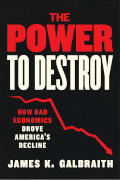
Music: Current count 27020 [26996] rated (+24), 359 [357] unrated (+2). Spent much of last week trying to pull yesterday's Book Roundup post together, barely scratching up my quota (40) although I still have a dozen tabs open with more books, and those will lead to even more. Still, I imagine we'll have to wait for September/October to get a new batch. I didn't find any of this batch compelling enough to order, although I gave some thought to Barbara Ehrenreich's progeny -- Ben Ehrenreich (The Way to the Spring: Life and Death in Palestine) and Rosa Brooks (How Everything Became War and the Military Became Everything: Tales From the Pentagon), David Daley's Ratf**ked: The True Story Behind the Secret Plan to Steal America's Democracy, Steve Fraser's The Limousine Liberal: How an Incendiary Image United the Right and Fractured America. I might have added new books by Thomas Piketty and Jeremy Scahill, but they mostly remind me that I still haven't read older (and probably more important) books by them (Capital in the Twenty-First Century and Dirty Wars: The World Is a Battlefield, both sitting patiently on my shelf). On the other hand, I've already discovered that I missed two books by James K. Galbraith: Welcome to the Poisoned Chalice: The Destruction of Greece and the Future of Europe (2016, Yale University Press), and Inequality: What Everyone Needs to Know (paperback, 2016, Oxford University Press). I do intend to pick both of them up soon, and maybe also Joseph Stiglitz' The Euro: How a Common Currency Threatens the Future of Europe (2016, WW Norton). It's not so much that I feel a need to bone up on these subjects -- I think I understand the Euro issues pretty well (although I don't know much about the supposedly labrinthine EU bureaucracy), and I've been on record that increasing inequality is the main political problem of our time. Actually, I think I'll learn more about inequality from the Euro books, as it seems to me that Europe has, at least in terms of economic issues, been turned as far to the right by globalizing business interests (code name: neoliberalism) as the US, albeit without nearly as much focus on wrecking security nets as here -- although that's likely to change as inequality increases, and the code name there is austerity; Britain, for instance, avoided the Euro trap, but suffered a politically self-induced recession anyway). Rated count isn't anything to brag about, especially given that nearly half of it came from a deep dive into Barbara Dane's discography, and I didn't come up with anything I'd missed there nearly as good as her Anthology of American Folk Songs (1959) or her surprising new one, Throw It Away. Don Ewell and the Chambers Brothers were side trips from Dane. I also thought about taking a dive into Chucho Valdés after listening to somewhat less than half of his 2015 album, Tribute to Irakere (Live in Marciac), last week, but didn't get very far. I actually saw him live here shortly after we moved to Wichita -- the Village Vanguard album from the same period has long sat on my unrated shelf, and I'm sorry to say it doesn't quite live up to the memory, not that it isn't quite some show. The other new A- record this week is from Atmosphere, a Minnesota alt-rap duo I've been habitually giving high B+s to ever since their 1997-2002 A- streak (Overcast!, Lucy Ford, God Loves Ugly). I wrote it up after two spins, then was taken aback to find Dan Weiss panning it (4/10) in Spin, so much so that I replayed it from the second cut ("Ringo" -- Weiss calls it "terribly unfunny" and says it "might be the worst song they've ever made"). Still, the extra play only reinforced my initial impressions. (The album actually has mixed reviews -- 71/6 at etacritic, favorable reviews at AV Club and Exclaim, another pan at Pitchfork -- latter doesn't bother me at all.) Still not sure I didn't underestimate their 2014 album Southsiders, which Weiss likes and Christgau gave an A- to, but I gave them both basically the same shot. But that could also be said of their many in-between albums -- I've heard 10 overall, but have missed a couple along the way. Wasn't clear from Christgau's review of Mestre Cupijó, but it looks to me like the 2014 record is a compilation based on four 1973-78 LPs. Sounds to me closer to Colombia than to Brazil, but that's partly explained by geography, and possibly also by its vintage. I haven't heard The Rough Guide to Ethiopian Jazz yet, or any of Christgau's other recent world music picks (although I do have a download of Senegambia Rebel awaiting my attention). It's getting harder to do basic research on downloaded/streamed albums here, which is to say it's getting harder to write reviews. Part of this is that AMG added some new JavaScript to their site that totally breaks it for me, so they're no longer usable as a reference site. I suppose one might blame this on me, as I'm still doing my writing work on a machine running Ubuntu 12.04, and the Firefox browser there is horribly buggy, crashing every 2-3 days. The longer I wait the harder it gets to upgrade -- at this point I almost have to rebuild the system from scratch, something I don't look forward to. I did, however, manage to upgrade my secondary system -- the one I use for music streaming -- from 14.04 to 16.04. Took all night, but I'm pleased to say nothing serious broke. Good chance I'll go ahead and post Streamnotes sometime this week rather than waiting for the tail end of August. Currently have 101 records in the draft file, including 16 A-. Perhaps a bit long on jazz since I've mostly been picking unserviced, previously unheard records off Downbeat's album ballot. Will be glad to see August gone, although here at least it's been pretty mild compared to past years (hint: grass is still green). New records rated this week:
Recent reissues, compilations, and vault discoveries rated this week:
Old music rated this week:
Unpacking: Found in the mail last week:
Ask a question, or send a comment. Sunday, August 21, 2016 Book RoundupTime for another collection of 40 short notes on recent books -- my modest attempt to keep track of what's being published primarily in the fields of politics, history, economics, and social science (not that other personal interests don't slip in occasionally). These are mostly gathered by trolling around Amazon, checking my "recommended" lists, following up on cross-references, reading (and occasionally quoting) the hype, blurbs, sometimes even reviews. Few of these books I have any in-depth knowledge of, so they hardly constitute reviews. Last batch of these came out on July 7, before that April 26. Christopher H Achen/Larry M Bartels: Democracy for Realists: Why Elections Do Not Produce Responsive Government (2016, Princeton University Press): Political scientists argue against the conventional view that voters make rational political choices by pointing out how their views at least as much shaped by primordial identities, a hint of what's become obvious as the red-blue divide has gone beyond analysis and prescription to selective embrace of facts. Still, title suggests something more, like pointing out how these distortions have opened up opportunities for politicians to do things contrary to the positions they adopt when campaigning. Those things are mostly favors for special interests -- favors that wouldn't stand a chance if "representatives" were actually responsive to voter views. Mehrsa Baradaran: How the Other Half Banks: Exclusion, Exploitation, and the Threat to Democracy (2015, Harvard University Press): "The United States has two separate banking systems today -- one serving the well-to-do and another exploiting everyone else." Actually, I doubt the "well-to-do" are served all that well either, but the "payday lenders" and "check cashing services" that people frozen out of the legit banking system deserve a harsher word than "exploiting." Baradaran advocates a "postal banking" system that would provide minimal cost banking services to everyone. Samuel Bowles: The Moral Economy: Why Good Incentives Are No Substitute for Good Citizens (2016, Yale University Press): Lectures -- I imagine this poised against the Thaler/Sunstein notion of nudges which assumes that wise managers can concoct incentives that lead seemingly free economic actors to do good deeds, although he could be countering the older laissez-faire conceit that markets miraculously do good on their own. It was, after all, no coincidence that the new vogue for Friedman, etc., in the 1980s was accompanied by rejection of public interest and a coarsening of civil concern. Rosa Brooks: How Everything Became War and the Military Became Everything: Tales From the Pentagon (2016, Simon & Schuster): Law professor, New America Foundation fellow, married a Green Beret, was a "senior advisor at the U.S. State Department" and "a counselor to the US defense undersecretary for policy from 2009 to 2011," but also daughter of Barbara Ehrenreich, one of America's finest lefty journalists: I'm not sure how all that adds up (blurb suggests: "by turns a memoir, a work of journalism, a scholarly exploration into history, anthropology and law, and a rallying cry"), or whether. An excerpt I read pushes a Walmart analogy way beyond ridiculousness, especially in assuming that the military, like Walmart, produces tangible and desirable (albeit shoddy and ethically dubious) goods. The military has, for instance, become the only big government institution beloved by conservatives out to discredit all other big government. Part of this is that, as Brooks points out, it crowds out saner alternatives, yet that's not just successful lobbying from organized interest groups -- an important group of Pentagon boosters simply don't want sane. Noam Chomsky: Who Rules the World? (2016, Metropolitan Books): Another essay collection, so not wholly devoted to the title question -- probably just as well, as there's no good answer. Still likely to include his usual rigorous accounting of US misbehavior in the world (one chapter is "The US Is a Leading Terrorist State"). Other recent Chomsky titles I haven't noted before: How the World Works (paperback, 2011, Soft Skull Press); On Anarchism (paperback, 2013, New Press); Masters of Mankind: Essays and Lectures, 1969-2013 (paperback, 2014, Haymarket Books); What d Kind of Creatures Are We? (2015, Columbia University Press); On Palestine (with Ilan Pappé, paperback, 2015, Haymarket Books); Because We Say So (paperback, 2015, City Lights); also several reprints of older books (mostly from Haymarket Books), and the DVD Requiem for the American Dream. Stephen S Cohen/J Bradford DeLong: Concrete Economics: The Hamilton Approach to Economic Growth and Policy (2016, Harvard Business Review Press): An argument that history is key to understanding how the American economy grew, and a compact history of government intervention in the American economy going all the way back to Alexander Hamilton. David Cole: Engines of Liberty: The Power of Citizen Activists to Make Constitutional Law (2016, Basic Books): Points out a number of cases where Supreme Court rulings merely formalized changes in public opinion brought about by political activism -- sample cases include marriage equality and the individual right to bear arms, but it isn't hard to think of more cases, including the 1930s reversal on New Deal programs. David Daley: Ratf**ked: The True Story Behind the Secret Plan to Steal America's Democracy (2016, Liveright): Title evidently a technical term coined by a Nixon operative to boast about some of the "dirty tricks" used to tilt the 1972 presidential election his boss's way, but is generalized here to cover the story of how the recent deluge of GOP-leaning money has helped that party to gain political power way beyond what you'd expect in a representative democracy. Gerrymandering is one not-so-secret aspect of this. Lesser known is the REDMAP project -- especially how the Republicans targeted state legislatures -- that opened up so many opportunities to stack the deck. Charles Derber/Yale R Magrass: Bully Nation: How the American Establishment Creates a Bullying Society (2016, University Press of Kansas): Not just schoolyard bullying, but we live in a society that increasingly lets the rich and powerful bully the poor and weak, that prizes wealth and power, treats their lack as a personal disgrace. These are all consequences of inequality, but they also correlate with the US stance as the world's superpower, the one nation that is free to tower over and bully all others. This is one book that seems to get all that: "The larger the inequalities of power in society, or among nations, or even across species, the more likely it is that both institutional and personal bullying can become commonplace." Dan DiMicco: American Made: Why Making Things Will Return Us to Greatness (2015, St. Martin's Press): Former CEO of Nucor, "the largest and most profitable U.S. steel company" although as far as I an tell they mostly melt down and recycle in non-unionized plants far from America's old Rust Belt. Recently DiMicco was named to Trump's economic advisory board, with the strategic word "Greatness" hinting this book might be a blueprint for Trump's agenda. Still, I doubt there's anything new here: there's still a good deal of manufacturing in America, and such companies can be profitable if you can keep the vulture capitalists who dominate Trump's board from bleeding them dry. The bigger problem is how to get more of the profits of business back into the paychecks of workers, and there DiMicco is more problem than solution. Tamara Draut: Sleeping Giant: How the New Working Class Will Transform America (2016, Doubleday): Cover features the banner "FIGHT FOR $15 AND A UNION." The new working class isn't the old blue collar one, but "more female and racially diverse" employed in bottom end service jobs that don't pay enough to live on much less secure the old notion of middle class equality. A decade ago Draut wrote Strapped: Why America's 20- and 30-Something Can't Get Ahead, and they've only fallen further behind, which is why they're (finally) fighting back. Ben Ehrenreich: The Way to the Spring: Life and Death in Palestine (2016, Penguin Press): American journalist, son of Barbara Ehrenreich, has also written a pair of novels, details considerable time spent in Israel/Palestine observing the military occupation, and perhaps more importantly the people subject to that occupation. Rana Foroohar: Makers and Takers: The Rise of Finance and the Fall of American Business (2016, Crown Business): If I recall correctly, the title comes from Mitt Romney's 2012 campaign speech where he derided the 47% of Americans who owe no federal income tax as "takers" -- as parasites living off the better off classes (i.e., those without effective tax dodge scams). Still, another reading is possible: some businesses still make things, but others (notably Romney's Bain Capital) just take profits out of the economy through various financial shenanigans. Everyone knows that the latter have grown enormously over recent decades. What this book does is explore the effect of all this financial "taking" on the older practice of making things, which as everyone also knows has declined severely in America. Pretty sure the two are linked. Hope this book helps explain why. Robert H Frank: Success and Luck: Good Fortune and the Myth of Meritocracy (2016, Princeton University): Short book, argues that the rich tend to underestimate the role of luck in their success, or overestimate the role of merit -- flip sides of the same coin. Steve Fraser: The Limousine Liberal: How an Incendiary Image United the Right and Fractured America (2016, Basic Books): The term dates from the 1969 New York mayoralty election, about the same time the "hard hat" riots against antiwar protesters reinforced Nixon's idea that a conservative "silent majority" had been victimized by "liberal elites" -- a term that ultimately had more traction than "limousine liberal." Fraser recently wrote about how Americans lost their sense of class struggle in The Age of Acquiescence: The Life and Death of Organized Wealth and Power, to which this adds a significant case study. Chas W Freeman Jr: America's Continuing Misadventures in the Middle East (paperback, 2016, Just World Books): Former US diplomat, was denied a job in the Obama administration because he was considered unacceptably equivocal about Israel. Shortly after that, he wrote America's Misadventures in the Middle East (paperback, 2010, Just World Books). Presumably this is all new material, succinct even, as it only runs 256 pages. Michael J Graetz/Linda Greenhouse: The Burger Court and the Rise of the Judicial Right (2016, Simon & Schuster): Of course, the Rehnquist and Roberts Courts moved even further to the right, but Nixon's appointment of Warren Burger to replace Earl Warren started the rightward shift. This book explains how and why. I'll add that this represented a reversion to form for the Supreme Court up to the New Deal. Maybe now we should recognize how fortunate we were to have grown up in an era when the Supreme Court took an active interest in expanding individual and civil rights. Karen J Greenberg: Rogue Justice: The Making of the Security State (2016, Crown): Having written a book on Guantanamo and edited one called Torture Papers, the author is in a position to sum up the marginal rationalizations used to trample two centuries of legal principle just to facilitate the security state's defense of its own power and secrets. While many of these examples were started by the Bush administration in its initial panic over 9/11, most have been continued under Obama, with some policies -- like extrajudicial killings -- greatly extended. Seymour M Hersh: The Killing of Osama Bin Laden (2016, Verso): Short book on how the US sent a team of Navy SEALs deep into Pakistan to assassinate the nominal leader of Al-Qaida. Hersh casts doubt on many of the stories the Obama administration spread about its exploit. Elizabeth Hinton: From the War on Poverty to the War on Crime: The Making of Mass Incarceration in America (2016, Harvard University Press): Author starts with Lyndon Johnson's War on Poverty, which includes a simultaneous "war on crime," a set of policing policies that Republicans (and Bill Clinton) kept building up while at the same time tearing down the welfare programs. It is probably no accident that Johnson's programs were launched while America was increasingly mired in war in Vietnam, and even less so that police became more militarized during the so-called War on Terror. In between you get the War on Drugs. The idea there was probably that in post-WWII America "war" is the magic word for unity and determination, but after Vietnam most Americans were tired of war, and anti-drug laws criminalized a wide swath of society, which gave increasingly well-financed police a wide license to pick and choose. The result is that "the land of the free" became the world's most pervasive prison state. David Cay Johnston: The Making of Donald Trump (2016, Melville House): Journalist, previously wrote a couple books on how the political system is rigged to favor the rich -- Perfectly Legal: The Covert Campaign to Rig Our Tax System to Benefit the Super Rich -- and Cheat Everybody Else and Free Lunch: How the Wealthiest Americans Enrich Themselves at Government Expense (and Stick You With the Bill). Not an in-depth biography (288 pp), but probably as good as any quick primer on the Republican nominee. Other new books on Trump (aside from the jokes I mention under Trump's own book): Michael D'Antonio: The Truth About Trump (paperback, 2016, St Martin's Griffin -- reissue of 2015 book Never Enough: Donald Trump and the Pursuit of Success; Michael Kranish/Marc Fisher: Trump Revealed: An American Journey of Ambition, Ego, Money, and Power (2016, Scribner); Marc Shapiro: Trump This! The Life and Times of Donald Trump, an Unauthorized Biography (paperback, 2016, Riverdale Avenue Books); Mark Singer: Trump and Me (2016, Mark Duggan Books); and, of course, GB Trudeau: Yuge! 30 Years of Doonsebury on Trump (paperback, 2016, Andrews McNeel). Mark Landler: Alter Egos: Hillary Clinton, Barack Obama, and the Twilight Struggle Over American Power (2016, Random House): Journalist, interviewed over 100 "inside sources" to discover that Clinton was invariably hawkish as Secretary of State, while Obama usually started skeptical but often gave in to the hawks he surrounded himself with -- far be it from to seriously reject any orthodoxy. I doubt Landler further explores how often Obama's policies backfired, as he seems more entranced with his "team of rivals" collaboration story -- the common ground of those alter egos. Marc Lynch: The New Arab Wars: Uprisings and Anarchy in the Middle East (2016, PublicAffairs): Wrote The Arab Uprising: The Unfinished Revolutions of the New Middle East (2012), a more hopeful title but in case after case popular uprisings have given way to civil war, as the ancien regimes have violently clung to power, as jihadists have come to the fore, and as foreign governments (notably the US) have interfered to advance poorly understood interests. Benjamin Madley: An American Genocide: The United States and the California Indian Catastrophe, 1846-1873 (2016, Yale University Press): There is evidence that the population of Native Americans was reduced by as much as 90% from pre-Columbian levels to the end of the 19th century, and it's not much of a stretch to call that genocide. This book deals with just one narrow front, in California where the native population dropped from about 150,000 to 30,000 in the years covered -- roughly the period of California's Gold Rush. On the same subject: Brendan C Lindsay: Murder State: California's Native American Genocide, 1846-1873 (paperback, 2015, University of Nebraska Press). Related: John Mack Faragher: Eternity Street: Violence and Justice in Frontier Los Angeles (2016, WW Norton). George Monbiot: How Did We Get Into This Mess? Politics, Equality, Nature (2016, Verso): British journalist, has written about science (degree in Zoology), climate change, and all sorts of political matters, which gives him a broad view of the "mess" of our times. This one's an essay collection, columns written 2007-15, that illustrate his title rather than exploring it systematically. Still, I did track down the title piece, which indicts neoliberalism traced back to the Mont Pelerin Society in 1947. Peter Navarro: Crouching Tiger: What China's Militarism Means for the World (2015, Prometheus Books): Another Trump "economic adviser," the only one with any academic credentials, which as this book shows means zilch. Trump has a whole range of complaints about China ranging from currency manipulation to short-changing on patent rents. But Navarro sees something different: a mirror image of the US expanding its economic grasp into Asia under a cloak of the threat/promise of military power. The implication is that if the US ever backs down, China will pounce -- certainly not that China's military was built as a defense against intimidation from the world's sole superpower." Navarro previously co-wrote (with Greg Autry): Death by China: Confronting the Dragon -- A Global Call to Action (2011, Pearson Press). Chinese-American conflict has become a staple, both for business writers and empire strategists; e.g.: Thomas J Christensen: The China Challenge: Shaping the Choices of a Rising Power (2015, WW Norton); Thomas Finger: The New Great Game: China and South and Central Asia in the Era of Reform (paperback, 2016, Stanford University Press); Aaron L Friedberg: A Contest for Supremacy: China, America, and the Struggle for Mastery in Asia (paperback, 2012, WW Norton); Lyle J Goldstein: Meeting China Halfway: How to Diffuse the Emerging US-China Rivalry (2015, Georgetown University Press); Robert Haddick: Fire on the Water: China, America, and the Future of the Pacific (2014, Naval Institue Press); Bill Hayton: The South China Sea: The Struggle for Power in Asia (paperback, 2015, Yale University Press); Anja Manuel: This Brave New World: India, China and the United States (2016, Simon & Schuster); Liu Minglu: The China Dream: Great Power Thinking and Strategic Posture in the Post-American Era (2015, CN Times Books); Henry M Paulson Jr: Dealing With China: An Insider Unmasks the New Economic Superpower (2015, Twelve); Michael Pillsbury, The Hundred-Year Marathon: China's Secret Strategy to Replace America as the Global Superpower (paperback, 2016, St Martin's Griffin); also, one I've mentioned before: Robert D Kaplan: Asia's Cauldron: The South China Sea and the End of a Stable Pacific (2014; paperback, 2015, Random House); and one I somehow didn't mention, Henry Kissinger: On China (2011; paperback, 2012, Penguin Books). Daniel Oppenheimer: Exit Right: The People Who Left the Left and Reshaped the American Century (2016, Simon & Schuster): Profiles that go "deep into the minds of six apostates -- Whitaker Chambers, James Burnham, Ronald Reagan, Norman Podhoretz, David Horowitz, and Christopher Hitchens." Reagan seems an odd choice for any book concerned with the mind, but the rest are far from original thinkers, more like notorious cranks, and can only be counted as reshaping the century in the sense that they allowed themselves be used as tools for the right-wing. Some blurb writers I respect liked this book, but it's hard to see why it should matter. Thomas Piketty: Why Save the Bankers?: And Other Essays on Our Economic and Political Crisis (2016, Houghton Mifflin): Author of the major work on economic inequality Capital in the Twenty-First Century (2014), picks these scattered essays from a monthly column published in France (2008-15). Ari Rabin-Havt and Media Matters: Lies, Incorporated: The World of Post-Truth Politics (paperback, 2016, Anchor): Author previously co-wrote (with David Brock) The Fox Effect: How Roger Ailes Turned a Network Into a Propaganda Machine and The Benghazi Hoax: The Truth Behind the Right's Campaign to Politicize an American Tragedy. The PR outfits may have started out just trying to spin the truth, but they quickly found themselves creating whole untruths from scratch, and what worked for tobacco and climate denial was seized upon by the right-wing for their own political machinations. Yakov M Rabkin: What Is Modern Israel? (paperback, 2016, Pluto Press): Argues that Zionism is rooted not in anything Jewish but in Protestant Christianity's reading of Biblical prophecy, compounded by "Europeean ethnic nationalism, colonial expansion, and geopolitical interests." That doesn't quite explain why the idea came to be embraced by many Jews, both among those who settled in Israel and among those scattered elsewhere. Andrés Reséndez: The Other Slavery: The Uncovered Story of Indian Slavery in America (2016, Houghton Mifflin): Before Columbus imported slaves from Africa, he tried enslaving the natives he "discovered." The Spanish crown supposedly ended this practice in 1542, but by then slavery had already had a calamatous effect on decimating native populations, and the story didn't end there. Most likely an eye-opening, pathbreaking book. Jeremy Scahill: The Assassination Complex: Inside the Government's Secret Drone Warfare Program (2016, Simon & Schuster): Previously wrote about early US use of drones for extrajudicial assassinations in 2013's Dirty Wars: The World Is a Battlefield. Since then drones have become ever more central to Obama's continuation of Bush's Global War on Terror, which makes this an important book. Jean Edward Smith: Bush (2016, Simon & Schuster): Big (832 pp) history of the eight years when GW Bush was pretty clearly the worst president the United States has ever had to suffer through, written to remind us of just that fact, all the more urgent since so many media hacks and even President Obama -- originally elected when the memory was clear in the minds of the electorate -- have let so much of his record slip from their minds. Jason Stahl: Right Moves: The Conservative Think Tank in American Political Culture Since 1945 (2016, University of North Carolina Press): Surveys the history of right-wing financiers' efforts to stand up a faux academia to propagate their pet theories, and increasingly to fabricate their own facts, in hopes of dressing up their self-interested politics. But academia turned out to be too grand a vision, as they descended ever more into cranking out made-to-order political propaganda. And they've increasingly turned into a jobs program for conservative politicians, a security net for out-of-work ideologues. Robert Teitelman: Bloodsport: When Ruthless Dealmakers, Shrewd Ideologues, and Brawling Lawyers Toppled the Corporate Establishment (2016, PublicAffairs): During the 1970s there arose a mania for building companies by mergers and acquisitions, a practice which led to the growth of diversified conglomerates as well as big companies snuffing out their competitors. Not clear to me whether Wall Street led the way or jumped on the bandwagon, but this went hand-in-hand with the financialization of the American economy, a process which increased inequality in lots of ways. The ideologues come into play with their justification of the supreme importance of shareholder value, regardless of who gets hurt. Donald J Trump: Great Again: How to Fix Our Crippled America (paperback, 2016, Threshold Editions): Cover an orange smudge on an American flag against a not quite uncloudy blue sky, a vast improvement over Trump's scowl on the hardcover that came out last November as Crippled America: How to Make America Great Again. Like the title swap, the juxtaposition between crippled and great is so confusing it's hard to tell which is the past and which is the future. Meanwhile, the short (170 pages gets you to "Acknowledgments") campaign prop is full of such simplistic pablum you could use it for a second grade reader -- if, that is, you don't mind turning our children into sociopaths. By the way, if you want more Trumped-up propaganda, check the usual suspects: Ann Coulter: In Trump We Trust: E Pluribus Awesome! (2016, Sentinel); Dick Morris/Eileen McGann: Armageddon: How Trump Can Beat Hillary (2016, Humanix Books); Wayne Allyn Root: Angry White Male: How the Donald Trump Phenomenon Is Changing America -- and What We Can All Do to Save the Middle Class (2016, Skyhorse Publishing). Yanis Varoufakis: And the Weak Suffer What They Must?: Europe's Crisis and America's Economic Future (2016, Nation Books): Economist, became Finance Minister when the leftist Syriza party won in Greece, precipitating a crisis within the Eurozone resulting in Greece being forced to suffer punitive austerity and Varoufakis leaving the government in disgust. This appears to aim at something more general, but the author's unique experience offers a distinct starting point. Varoufakis has a similar previous book, The Global Minotaur: America, Europe and the Future of the Global Economy (3rd ed, paperback, 2015, Zed Books). Dov Waxman: Trouble in the Tribe: The American Jewish Conflict Over Israel (2016, Princeton University Press): There have always been segments of the Jewish population in the US that have been critical of Israel, but especially after the 1948 and 1967 wars Israel enjoyed deep support among American Jews. That has begun to shift, mostly along generational lines, as Israel has moved hard to the right politically, as its militarism and human rights abuses have proven ever more difficult to justify on security grounds. This book looks at that, and to do so fairly you have to look at the issues that underly these divisions. Edward O Wilson: Half-Earth: Our Planet's Fight for Life (2016, Liveright): Legendary biologist/entomologist (the study of bugs), has increasingly turned to writing about how much damage people have done to the natural world, and at 86 isn't done yet. He has a case, and his anger is justified. Still, the notion that the earth cares, much less is fighting back, is a fanciful conceit, flattering to the same people who scarcely comprehend what they are doing -- not so much to the earth as to ourselves. Richard D Wolff: Capitalism's Crisis Deepens: Essays on the Global Economic Meltdown (paperback, 2016, Haymarket): Lefty economist, has been tracking economic crisis since 2009's Capitalism Hits the Fan: The Global Economic Meltdown and What to Do About It, and for that matter did something about it, being closely associated with the Occupy Movement. Short, topical pieces written over several years. Other recent books also noted:
Previously mentioned books (book pages noted where available), new in paperback:
Ask a question, or send a comment. Monday, August 15, 2016 Music Week
Music: Current count 26996 [26901] rated (+95), 357 [420] unrated (-63). Early last week I got up and found my new jazz queue was practically empty -- at least didn't have anything I particularly wanted to listen to. I wound up playing something from the travel case for breakfast, then took a look at the Downbeat ballot albums list I had saved and started looking things up on Rhapsody. By the end of the day, I had two very solid A-list albums: new works by George Coleman and David Murray I wasn't aware existed. I kept looking up ballot albums for the rest of the week, but didn't find any more A-list. The tally so far: [A-] 2, [***] 4, [**] 4, [*] 7, [B] 2. That brings the percentage of the 186 ballot albums I've heard up from 60.21% to 70.43%. That also skews the grade curve down a bit, although it still centers on mid-B+ (was 26-35-20, now 30-39-27). That leaves 58 albums, the majority most likely not on Rhapsody. At some point I started wondering why, if the queue was empty, the unrated count was stuck around 440 even though it had been down around 400 before I took my June trip and fell behind. So I took a close look at the ratings database and found nearly sixty albums that I had done but hadn't written down the grade for. The actual newly rated count this week is close to the 36 albums listed below -- a pretty healthy weekly count, but way short of the humanly impossible 96 reported above. As I've explained before, the unrateds shot up over a decade ago when Wichita's local record stores went out of business and I bought boxloads of stuff I still haven't gotten to. The list also includes some LPs I didn't remember well enough to jot down when I first constructed the ratings list in the late 1990s -- of course, I wonder now how many of those I still have, since I sold off most of my vinyl in 1999. There are also a few promos from the mid-'00s that I didn't get to but didn't dispose of, but probably no more than a dozen promos from this decade -- I've been doing a pretty good job of getting through the new stuff even if I haven't made much progress with the old. At some point I should make a serious effort to knock down that backlog, even if it just means reclassifying things I no longer have (or cannot find). That would be one of those decluttering projects we talk about doing but I never seem to be able to find time for. Besides, even if the promo stream is drying up -- this month's dearth is partly seasonal but last week's haul is one of the lamest ever. (Two more records arrived today, but I'm pretty sure if I hadn't held last Monday's mail back I'd be empty below. As it is, I won't be empty next week, but might not see a rebound either.) I made phat thai last week, and finally jotted down the recipe I use -- been meaning to do that for some time, especially as I take various liberties with the cookbook (which, by the way, Michael Tatum recommended to me). Laura doesn't like bean sprouts, and I don't like cayenne, so I leave those things out (but I've found that a couple dried Chinese chili peppers don't hurt, as long as I pitch them before serving). Nice thing about the dish is that I can do all the prep, including soaking, and cook the thing in less than an hour. And with shrimp in the freezer, the only thing I have to worry about having fresh is the scallions. I've had a few recipes online for many years, but I've been pretty erratic about adding to them. In fact, I have two sets, one "old" (which dates to 2000) and "new" (which starts in 2007, using a newer look and feel). At one point I meant to convert all the "old" to "new" format, and develop the code to where everything is cross-indexed by ingredients, cuisine, and even dinner party (so one can tell which dishes went together, even how often I make them -- if I bothered to keep track). But I never finished that code, never converted all the "old" to "new," and have only sporadically added things, mostly when I wanted to pass a recipe on. This is actually one of those, and this time I added some new code to display a picture of the finished dish. Looks pretty good, I think. New records rated this week:
Recent reissues, compilations, and vault discoveries rated this week:
Unpacking: Found in the mail last week:
Ask a question, or send a comment. Sunday, August 14, 2016 Weekend RoundupFirst a few loose ends left over from yesterday's Trump post:
Some scattered links this week:
Finally, a few links for further study (ran out of time to comment): Ask a question, or send a comment. Saturday, August 13, 2016 TrumpOne of the more annoying themes pundits like to spin about Donald Trump is how he represents some sort of populist backlash against the elites who run the country. To do so coherently you have to construct strawmen both of the elites and of the people. Coming up with a definition of elites that does not include Trump is an especially daunting challenge: he is, after all, extremely rich, very famous, a guy who flies around in private planes and helicopters, who lives in a postmodern castle in the heart of Manhattan. Sure, elite could mean many other things that Trump decidedly is not: brilliant scientists, stellar athletes, remarkable chefs and fashion designers, actors who can play someone other than themselves. But rich and famous counts for a lot in America: it gets you invited to hobnob with politicians and gives you free access to the media, privileges that, having been born rich, Trump has enjoyed nearly all his life. Then there are the people. You can't have populism without people, but Trump's people aren't exactly a random cross-section of America -- what Bill Clinton referred to when he said he wanted a cabinet that looks like America (not that the one he picked wasn't a good deal richer and fancier dressed). Trump's cross-section is skewed white, older, and male (in almost exclusively to mostly order). But doesn't populism also have to signify some kind of economic revolt? It did in the 1990s when the Populist Party emerged in response to the worst recession American capitalism suffered (only exceeded by the Great Depression of the 1930s, and maybe the Bush meltdown of 2008). And it's certainly true that there is an economic revolt brewing all across America today, where poverty is increasing and most Americans above the poverty line are mired in stagnant wages, rising prices, and often crushing debt, while business (especially the financial sector) has recovered from 2008 and is posting record profits, with virtually all of the gains accruing to the billionaire class. But it's not Trump's people who are behind this revolt -- those who really are down and out (or just struggling to get ahead) voted for Sanders or Clinton (if they voted at all). As Nate Silver shows (see The Mythology of Trump's 'Working Class' Support), Trump voters are significantly better off than median (average household income is $72K, about even with Cruz with but less than the $90K of Kasich and Rubio voters). They are, in short, comfortable enough they can afford to indulge their prejudices in false solutions and a candidate who won't help them in the least. If anyone had any illusions that Trump's economic program would be a boon for billionaires and disaster for everyone else, the candidate dispelled them in two quick moves last week. First, he announced his team of economic advisers. For a quick rundown, see Andrew Ross Sorkin: Donald Trump's Economic Team Is Far From Typical, Patricia Cohen: Trump's Economic Team: Bankers and Billionaires (and All Men) and Evan Popp/Josh Israel: Donald Trump Announces Economic Policy Team: 13 Men -- not sure why these authors chose to focus on sex when the team is homogeneous in more extraordinary ways, such as their finance portfolios, and their PAC experience. Most are billionaires, and most built their fortunes on predatory financial shenanigans -- most notoriously John Paulson, who rigged up the Abacus Fund to bet against the mortgage bubble. A few may dabble in manufacturing ventures -- Steve Feinberg's company makes AR-15 assault rifles -- but only one has a manufacturing company at the base of his resume (Dan DiMicco, formerly of Nucor). None are economists, unless you count Stephen Moore (whose peerless record of bad predictions qualified him to be employed as Chief Economist at the Heritage Foundation). Two of the advisers do have books that might be seen as signposts of a Trumpian economic nationalism, but they point in different directions, underscoring the incoherence of Trump's own blather: DiMicco's American Made: Why Making Things Will Return Us to Greatness (2015), and Peter Navarro's Crouching Tiger: What China's Militarism Means for the World (2015), but like so much of Trump's thinking they don't exactly fit together. Navarro, for instance, is more concerned with protecting business interests in East Asia against Chinese domination than bringing jobs back to America. I have no idea how DiMicco intends to rebuild America's manufacturing base, but most of Trump's advisers do have proven records of bankrupting companies and sending jobs elsewhere. The absence of any credible economists is especially striking. Sorkin's article explains that even long-term Republican partisans like Glenn Hubbard and Greg Mankiw are keeping their distance from Trump. Sorkin also lists some major Republican donors who have been staying away -- the people Trump picked mostly paid plenty for the proximity, and are all in position to more than make their investment back if Trump wins. Trump got a lot of credit during the primaries by not being beholden to the billionaires who backed his candidates, but as you can see from this list, that's all over now. Of course, if you're smart you should have realized that being your own billionaire backer doesn't convey one iota of independence from the billionaire class -- it merely harmonizes the corruption. Perhaps Trump could have clarified all this in his "major economic speech" in Detroit (transcript here), but when it comes down to brass tacks, Trump has little to offer other than tax breaks and deregulation for the already rich, who will then magically take their gains and invest them in American jobs -- just like they did with the tax breaks and deregulation of the Reagan and Bush eras? (Amusing quote from Trump's China-bashing section: "Just enforcing intellectual property rules alone could save millions of American jobs. According to the U.S. International Trade Commission, improved protection of America's intellectual property in China would produce more than 2 million more jobs right here in the United States." Collecting more intellectual property tariffs is the major purpose of TPP, which Trump claims he opposes.) As Isaac Chotiner noted, the speech "was meant for Republican bigwigs as much as for passionate Trump voters" -- actually, I'd say much more for the bigwigs, as he pulled his punches on doing anything meaningful about balancing the trade deficit -- he just expects miraculous effects there from giving businesses free money. (By the way, the trade deficit actually is a boon to the finance industry, and a major driver of inequality. Some of that money shipped abroad goes to workers abroad, but a large slice of it goes to businesses, many of whom reinvest their profits in American banks which help drive up the prices of assets, benefitting the rich, not least the sticky-fingered bankers.) The speech offers an avalanche of numbers abstracted from dubious sources, so it helps to follow with the fact checkers, like Fact-checking Donald Trump's speech to the Detroit Economic Club, to get a rough idea how selective Trump's writers were with facts and how outrageously they could spin them. I particularly appreciate this for the full context to Hillary's quote about putting "a lot of coal companies and coal miners out of business" -- actually very thoughtful on how we need to help workers and regions impacted by technology and trade, touching even. But still, you only get a rough idea -- there's much more in the speech that could have been critiqued (like, e.g., the intellectual property crap I cited above), plus it would help to provide more context for Trump's sources (e.g., when he cites the Institute for Energy Research, are you aware that it's a Koch front group?). Some critical links in response to the speech follow. I'm again struck by how hard it is for some pundits to let go of the notion that Trump is some sort of populist. As should be glaringly obvious by now, there is no economic dimension to Trump's so-called populism. He is too much a part of the rich in America to find any fault with them. Sure, he finds fault in some trade deals, but not because he opposes trade or wants to restore tariffs -- it's just that those agreements were badly negotiated, something a more skilled dealmaker like himself wouldn't have done and could easily fix. How, however, is mysterious, presumably magic, because he doesn't have any coherent program other than his boundless faith in himself. So what makes Trump a populist? Well, it's all in the eyes of the beholder, isn't it? Deep down, Trump's campaign is based on little more than demagogic appeals to racism and xenophobia. It celebrates a subset of the nation that is white, native-born, and Christian, and flatters them as the true Americans, the people this country used to belong to, people who feel entitled to take the country back from the traitorous scum that let those foreigners and deviants and gave them jobs and power, and that cultivates their votes. Trump's pitch is the classic right-wing scam, first pioneered by the fascists of the 1920s and 1930s. So why dignify Trump as a populist, a movement from the 1890s which sought to elevate common people (mostly farmers at the time) by reining in the predatory practices of the rich, instead of deriding him as a fascist? I think it's because a certain class of pundit always viewed fascism and populism as two faces of the same thing: an expression of the ignorant prejudices of the lower orders. This betrays a good deal of ignorance both about the history of fascism and the current composition of Trump's movement: both have more to do with middle class fears of the masses but ultimately depend most of all on their real masters, the rich. Robert O. Paxton, in The Anatomy of Fascism, argues that fascist movements developed in countries where aristocratic classes had been unable to repackage their political interests to have any real appeal in democratic elections. In essence, the fascists were able to broaden the appeal of conservatives by agitating the middle classes, playing to their fears of communist revolution and their various prejudices and hatreds and offering redemption through a renewed, often violent, cult of nationalism. To my mind, Paxton's focus on democratic appeal is overly narrow, as he uses it to deny that various murderous conservatives like Francisco Franco were really fascists. Curiously, his definition doesn't exclude Trump or, for that matter, much of the Republican Party at least since Newt Gingrich became party leader in the House. For twenty years (at least) Republicans have shamelessly campaigned to increase the power and wealth of the already rich, to vastly increase the degree of inequality among Americans, and they have done this by rallying a large slice -- middle-class and up, white, Christian, patriotic in the sense of being pro-military -- to their cause. Of course, Republicans haven't advertised themselves as fascists -- Americans fought a World War to rid the world of fascism, and sought afterwards to characterize communism as an allied disorder (coming up with "totalitarianism" to group the two as opposed to our system of democracy and free enterprise). In particular, ever since Nixon launched his "southern strategy" and claimed "the silent majority" as his base, Republicans have been careful to "dog whistle" their appeals to racism. The only thing that makes Trump exceptional is that his anti-immigrant stance has been overtly racist -- certainly it doesn't extend to his Slovenian wife or his Scottish mother or his German grandparents -- and that he has refused to dissociate himself with the hard-core racists who have flocked to his campaign. (Has any presidential nominee ever had fewer American-born ancestors?) I suppose you can see from this why pundits who can't tell you the difference between fascism and populism might get confused, but is there anything more to it? Well, Mussolini got his start leading a gang that smashed the heads of strikers. Trump hasn't done that, but he has encouraged his supporters to acts of violence against demonstrators, and most recently asked his "second amendment people" to stop his opponent, Hillary Clinton (after his convention chanted "lock her up"). Again, Republicans since Nixon have occasionally "dog whistled" their support for violence against their perceived enemies -- in particular, recall Nixon's embrace of "hard hats" who cracked the heads of peace protesters. And the threats made against Obama and Clinton by lesser Republicans and their fans are beyond counting. I suppose you could add two more technical issues, but I suspect they're beyond the radar of most pundits. Trump's opposition to trade deals -- what you might call economic nationalism, although to be fair he doesn't -- recalls the fascist concern for autarky. And Trump's more explicit "America First" foreign policy stance threatens to fight wars with no concern for the casualties inflicted elsewhere -- hence his insistence on keeping the option of nuclear weapons "on the table" -- although there is little reason to think he would start wars for foreign conquest (as Mussolini and Hitler did). These aspects have created a huge schism within the Republican establishment, not because they point toward fascism but because they threaten to undermine the profits of global-minded businesses. Republican-leaning capitalists have been remarkably obtuse in not understanding that they've made much more money under Clinton and Obama than under Bush, but many are finally, belatedly realizing that Trump would be even worse for them than Bush was. Just because Trump is a demagogue preying on the worst instincts of a once-powerful segment of the American people does not make him a populist, even if it makes him somewhat popular. After Detroit, that at least is one term that should never be associated with him. As for fascist, I won't argue no -- as a leftist I've long been hypersensitive to even the slightest whiff of fascism -- but I don't regard Trump as exceptionally fascist (e.g., as compared to Cruz and Kasich). I don't see him doing fascist things, but I don't see him undoing the present security state, and he may make things somewhat worse, especially for people who don't pass muster as white. That's because what he really is isn't any sort of ideologue. He's simply a dog -- a guy who's been hearing all those Republican "dog whistles" for so long he assumes everyone can hear them, that they define reality. And as such, he campaigned on the basis of what he and all the other Republican dogs heard, oblivious to the tact and decorum the whistlers have worked so hard at cultivating. Trump should be a hugely popular figure in this world, because he's practically the only public person who speaks their understanding of the truth. On the other hand, the true conservatives who have been manipulating this electorate, especially the ones who bought wholesale into economic orthodoxy and the ones who are most obsessed with preserving America's worldwide hegemony are aghast, as well they should be. Just as I won't deny that Trump is a fascist, I won't deny that his election would be catastrophic. It's not so much what he would do as what him winning would say about the American people: that we're so jaded we'd fall for a crude and ignorant media celebrity who understands nothing and has nothing to offer but discredited clichés, with a side of hate to pin our self-loathing on. Above all, his election would encourage the worst sort of racist revanchists, people who until Trump's rise were consigned to the farthest margins of political discourse. But it would also repopulate government with run-of-the-mill conservative spearchuckers, who would multiply the corrupt rot of the Bush administration, and that may do more damage in the long run. Trump has been sinking in the polls, even since I started writing this. He seems to have learned that the only way to shift one horrid gaffe from the news cycle is to commit another one -- like his "2nd amendment people" threat, or his claim that Obama and Clinton "founded ISIS." Still, no matter how far Trump sinks, Clinton has been unable to push her share above 50%. If Trump wins it will say more about her than about him. Still, Trump only has one real chance: he needs all his dogs to vote, and he needs much of the rest of America to not bother. For that to happen, Clinton will have to prove remarkably uninspiring and/or a dangerous warmonger (her obsession with the "commander-in-chief test" worries me). But also Trump will have to stop pissing off most of the country, and at this point that seems pretty unlikely. A few more links on the speech:
Pierce, by the way, started his article with a somewhat unrelated reference to "a popular Republican strategist named Rick Wilson," who wrote an op-ed hoping that Trump be defeated so utterly his memory is forever purged from conservative consciousness. Pierce goes on to note:
When conservatives set out to take over the country, they set themselves up with a tough task: to somehow convince a majority of Americans to enrich the 1% at their own expense. They did it by assembling as many single-issue constituencies as they could stand under their umbrella, and even then the few victories they scored were often marked by subterfuge -- remember Bush's "compassionate conservatism"? What about his promise to never engage in "nation building"? When Bush cratered the economy, they didn't readjust to the changed reality. They invented their own, in an echo chamber that was totally disconnected from reality (take another look at that fact checking linked to above), and within this world they found their champion in Donald Trump. That puts them in quite a bind: if, having rounded up all the hate groups, and all the fools, they still lose, and lose badly, the only option left for reaching new voters is to abandon their pursuit of inequality, but how can they do that given the way a handful of billionaires dominate the party? |