Blog Entries [990 - 999]Wednesday, August 10, 2016
Downbeat Readers Poll
Voted today in Downbeat's Readers Poll: link
here,
go ahead and vote. Didn't intend on posting this, but took notes
and finally decided my ballot might be of some small interest. In
the Reader's Poll you only get one vote in each category. They
conduct the poll using Survey Monkey, offering you a ballot of
many suggestions for each category (usually two to five dozen, but
up to 186 for Best Album) and the option to write something in.
I almost always vote from the ballot, especially for albums even
though my own lists prefer many things they left out. I list the
categories below, my pick in bold (or bold italic for write-ins),
followed by a few ballot items that I jotted down as possibilities
on the first pass. Rarely I add a comment.
This is much quicker than filling out their Critics Poll ballot.
My notes on that experience are
here.
- Hall of Fame: Anthony Braxton; Han Bennink, Paul Bley,
Don Byas, Don Cherry, Abdullah Ibrahim, Illinois Jacquet, Professor
Longhair, Sam Rivers, George Russell, Pharoah Sanders, Cedar Walton.
(I usually pick Russell, but thought Braxton might have more chance.
Obvious write-in candidates: Louis Jordan, Jimmy Rushing, Mal Waldron.)
- Jazz Artist: Henry Threadgill; Anthony Braxton, Jack
DeJohnette, Dave Douglas, Fred Hersch, Vijay Iyer, Steve Lehman, William
Parker, Matthew Shipp, Wadada Leo Smith, Ken Vandermark.
- Jazz Group: Mostly Other People Do the Killing;
The Bad Plus, Microscopic Septet, Rova. (Write-in here. I generally don't
like voting for artist name groups, and these made up approx. 90% of the
ballot, so I thought an act of rebellion was in order.)
- Big Band: Ken Vandermark Resonance Ensemble; Steven
Bernstein Millennial Territory Orchestra, Either/Orchestra, ICP Orchestra,
London Jazz Composers Orchestra, Vienna Art Orchestra. (Another write-in,
doesn't always bear Vandermark's name, but let's be clear. Haven't noticed
the other candidates being very active.)
- Jazz Album (Released June 1, 2015 to May 31, 2016):
Henry Threadgill, Old Locks and Irregular Verbs (Pi '16);
other A- on ballot:
Amir ElSaffar & Two Rivers Ensemble, Crisis (Pi);
Barry Altschul 3dom Factor, Tales of the Unforeseen (TUM);
Erik Friedlander, Oscalypso (Skipstone);
Fred Hersch, Solo (Palmetto);
Jack DeJohnette/Ravi Coltrane/Matthew Garrison, In Movement (ECM '16);
Liberty Ellman, Radiate (Pi);
Matthew Shipp Trio, The Conduct of Jazz (Thirsty Ear);
Mike Reed's People, Places & Things, A New Kind of Dance (482 Music);
Mostly Other People Do the Killing, Mauch Chunk (Hot Cup);
Nate Wooley Quintet, (Dance To) The Early Music (Clean Feed);
Nicole Mitchell/Tomeka Reid/Mike Reed, Artifacts (482 Music);
Noah Preminger, Pivot: Live At 55 Bar (self release);
Ochion Jewell Quartet, VOLK (self release);
Sonny Rollins, Holding The Stage: Road Shows, Vol. 4 (Doxy/OKeh).
Two full A albums not on ballot:
Irène Schweizer/Han Bennink: Welcome Back (Intakt 8/15);
Aly Keita/Jan Galega Brönnimann/Lucas Niggli: Kalo-Yele (Intakt 1/16).
Only one Intakt album on ballot (Aruan Ortiz); guess they had to save room
for: Concord/Telarc/MCG Jazz (11), ECM (11), Blue Note (10), Mack Avenue
(10), Smoke Sessions (9), Sunnyside (9), Columbia/OKeh (7), HighNote/Savant
(7), Motema (7). Clean Feed (5) did best among imports (after ECM, which
is distributed by Universal in US so is really in a different league). Pi
placed four records; they released six albums in 2015 and four so far this
year.
- Historical Album (Released June 1, 2015 to May 31, 2016):
Thad Jones/Mel Lewis Orchestra, All My Yesterdays: The Debut 1966
Recordings at the Village Vanguard (Resonance);
other A- records:
Blind Alfred Reed, Appalachian Visionary (Dust to Digital '16);
Bobby Rush, Chicken Heads: A 50-Year History of Bobby Rush (Omnivore);
Erroll Garner, The Complete Concert by the Sea (Sony Legacy);
Miles Davis, Miles Davis At Newport: 1955-1975 The Bootleg Series Vol. 4
(Sony Legacy);
Various Artists, The Rough Guide to the Blues Songsters (Rough
Guide).
- Trumpet: Wadada Leo Smith; Ralph Alessi, Steven Bernstein,
Dave Douglas, Ingrid Jensen, Kirk Knuffke, Brian Lynch, Tomasz Stanko.
- Trombone: Roswell Rudd; Ray Anderson, Jeb Bishop, Joe
Fiedler, George Lewis, Phil Ranelin, Steve Swell.
- Soprano Saxophone: Sam Newsome; Jan Garbarek, Evan Parker,
Bob Wilber.
- Alto Saxophone: François Carrier; Tim Berne, Anthony Braxton,
Marty Ehrlich, Jon Irabagon, Lee Konitz, Oliver Lake, Steve Lehman, Rudresh
Mahanthappa, Joe McPhee, Charles McPherson, Ted Nash, Henry Threadgill,
Bobby Watson, Miguel Zenón, John Zorn.
- Tenor Saxophone: Ivo Perelman; Harry Allen, JD Allen,
Peter Brötzmann, James Carter, Charles Gayle, George Garzone, Jon Irabagon,
Joe Lovano, Tony Malaby, Joe McPhee, David Murray, Larry Ochs, Evan Parker,
Houston Person, Chris Potter, Ken Vandermark.
- Baritone Saxophone: Brian Landrus; Hamiet Bluiett, Vinny
Golia, Mats Gustafsson, Scott Robinson, Colin Stetson, Joe Temperley,
Ken Vandermark.
- Clarinet: Michael Moore; Evan Christopher, Anat Cohen,
Eddie Daniels, Marty Ehrlich, Ben Goldberg, David Krakauer, Michel Portal,
Perry Robinson, Louis Sclavis.
- Flute: Nicole Mitchell.
- Piano: Myra Melford; Kenny Barron, George Cables, Uri
Caine, Marilyn Crispell, Satoko Fujii, David Hazeltine, Abdullah Ibrahim,
Ethan Iverson, Vijay Iyer, Keith Jarrett, Misha Mengelberg, Alexander
von Schlippenbach, Matthew Shipp, Craig Taborn. Huge ballot omission
(was tempted to write her in): Irène Schweizer.
- Keyboard: Jamie Saft; Nik Bärtsch, Uri Caine, Wayne
Horvitz, John Medeski, Matthew Shipp, Craig Taborn, Gary Versace.
- Organ: Gary Versace; Brian Charette, Mike LeDonne.
- Guitar: Mary Halvorson; Rez Abbasi, John Abercrombie,
Nels Cline, Liberty Ellman, Bill Frisell, Joe Morris, Marc Ribot.
- Bass: William Parker; Ben Allison, Arild Andersen,
Omer Avital, Stephan Crump, Mark Dresser, Michael Formanek, Drew Gress,
John Hébert, Mark Helias, Dave Holland, Marc Johnson, Eric Revis, Peter
Washington, Reggie Workman.
- Electric Bass: Steve Swallow.
- Violin: Jenny Scheinman; Charles Burnham, Jason Kao
Hwang, Carlos Zingaro.
- Drums: Andrew Cyrille; Han Bennink, Jim Black, Gerald
Cleaver, Jack DeJohnette, Hamid Drake, Gerry Hemingway, John Hollenbeck,
Lewis Nash, Bobby Previte, Matt Wilson.
- Vibraphone: Karl Berger; Jason Adasiewicz, Khan Jamal,
Joe Locke, Matt Moran, Warren Smith.
- Percussion: Han Bennink; Kahil El'Zabar, Marilyn Mazur,
Adam Rudolph, Warren Smith, Dan Weiss.
- Miscellaneous Instrument: Erik Friedlander (cello);
Rabih Abou-Khalil (oud), Edmar Castaneda (Colombian harp), Howard Johnson
(tuba), Fred Lonberg-Holm (cello), Grégoire Maret (harmonica), David
Murray (bass clarinet), Bob Stewart (tuba).
- Male Vocalist: Freddy Cole.
- Female Vocalist: Catherine Russell; Ernestine Anderson,
Patricia Barber, Sheila Jordan, Diana Krall, René Marie, Mary Stallings,
Fay Victor.
- Composer: Carla Bley; Ben Allison, Steve Lehman, Henry
Threadgill, John Zorn.
- Arranger: Steven Bernstein.
- Record Label: Intakt; Clean Feed, Delmark, No Business,
Pi Recordings, anyone that sends me promos.
- Blues Artist or Group: Dave & Phil Alvin; Guy Davis,
Taj Mahal, Otis Taylor, James Blood Ulmer.
- Blues Album (Released June 1, 2015 to May 31, 2016):
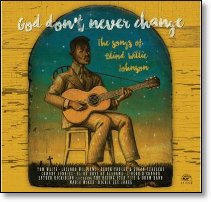
Various Artists, God Don't Never Change: Songs Of Blind Willie
Johnson (Alligator); only other A- record:
The Ragpicker String Band, The Ragpicker String Band (Yellow Dog).
- Beyond Artist or Group: Laurie Anderson; Erykah Badu,
Courtney Barnett, Beyoncé, Chance the Rapper, Leonard Cohen, Flying Lotus,
Future, Grimes, Carly Rae Jepsen, Kendrick Lamar, Willie Nelson, Parquet
Courts, Rihanna, The Roots, Tinariwen, Kanye West, Neil Young.
- Beyond Album (Released June 1, 2015 to May 31, 2016):
Parquet Courts, Human Performance (Rough Trade '16);
other A- records:
Aesop Rock, The Impossible Kid (Rhymesayers '16);
Anderson .Paak, Malibu (Steel Wool '16);
Ashley Monroe, The Blade (Warner Bros. Nashville);
BJ The Chicago Kid, In My Mind (Motown '16);
Bonnie Raitt, Dig In Deep (Redwing '16);
Carly Rae Jepsen, Emotion (604/Schoolboy/Interscope);
Chance the Rapper, Coloring Book (self release '16);
Erykah Badu, But You Caint Use My Phone (Motown/Control Freaq);
Ezra Furman, Perpetual Motion People (Bella Union);
Grimes, Art Angels (4AD);
Rihanna, Anti (Westbury Road/Roc Nation '16).
I copied the full album ballots into the
notebook as a check on how much
I've heard (and still have to dig up). Of 186 new jazz albums, I've
heard 112 (60.21%), grades breaking: [A-] 15, [***] 26, [**] 35, [*] 20,
[B] 10, [B-] 4, [C+] 1, [C] 1, [C-] 1. I could do the same thing for
Historical and Blues but my cut is extremely low. I have nothing to
say about Beyond other than that records so labeled aren't what we
used to call "far out."
Ask a question, or send a comment.
Monday, August 8, 2016
Music Week
Music: Current count 26901 [26875] rated (+26), 420 [423] unrated (-3).
Another week that's liable to make people think I'm an easy grader,
or at least one that has a few soft spots that make him an easy mark:
six A- records, eleven (or twelve counting the grade change) high B+,
that's something like 65%. In my defense, several things came into
alignment this past week. Main one was that I did a major update of
Robert Christgau's website,
which got me rumaging through recent EW lists for things I hadn't
gotten to yet, which yielded two solid A- records (Konono No. 1, Lori
McKenna) and a bunch of just-unders (Leland Sundries, Dawn Oberg,
Walter Salas-Humara, older Lori McKenna). I also caught up with a
purple patch in the new jazz queue: a batch of Clean Feeds, plus
new albums by old favorites Stephan Crump and Steve Lehman. Also
stumbled upon some old records I had been looking for (Peter Kuhn,
Ellery Eskelin, Audio One), looked up some big-name recent jazz I
didn't get in the mail (Kenny Garrett, Charlie Hunter, Joe Lovano,
Markus Stockhausen). Didn't leave much time for bottom trawling.
In this company, the dud of the week was Garrett's Do Your
Dance -- something I might of suspected given that he snagged
the cover of Downbeat (nearly all of my old JCG duds had
been on Downbeat's cover).
I don't usually make a point of linking to music, but the search
for Crump's cover led me to his
Bandcamp
page. Note that to start with the first cut, you have to scroll down
to the song listing and pick it from there. More records there,
including some early ones I should check out, but I don't see my
favorite one, 2010's Reclamation. I reviewed this from CD,
but Bandcamp is one of the best things that's happened for someone
who wants to review a broad swathe of records like I do. Also, I
think, good for customers, who among other things get to sanity
check reviewers like me.
While I'm at it, here's a YouTube link for the song of the week,
Dawn Oberg's "Republican Jesus", from her short 2015 LP Bring.
Probably the most pointed political song since
Todd Snider's "Conservative Christian, Right Wing, Republican, Straight
White White American Male" -- actually more pointed since the
analysis is deeper and more detailed, but the subject is pretty much
the same.
A couple things I could use some feedback on:
Does Spotify (or any other non-Apple streaming source) have much
that Rhapsody/Napster doesn't? I ran into this question because there's
at least one Lori McKenna album I couldn't find on Rhapsody or Bandcamp
that seems to be on Spotify. I tried Spotify's "free" service back when
it came out (at least in the US) and managed to write up a couple albums
based on it, but generally hated everything about it (the ads, of course,
but also the search and the general greediness of the application). Are there any MP3 players which can be managed from Linux more or
less as seemlessly as iPods under iTunes on Windows (or presumably Macs,
something I refuse to even consider)? I have an iPod Nano which I haven't
used since my last Windows computer bit the dust (fittingly, during one
of those "automatic software updates"). Someone mentioned Sansa Clip to
me: from what I gather you can mount it and poke files into it, but not
much more. Searching this question gives me a lot of Linux applications
like Amarok, XMMS, and RhythmBox -- something else I should learn more
about, but not what I'm asking.
Follow the Contact link for an
email address, or comment on Facebook of something like that.
New records rated this week:
- Audio One: The Midwest School (2014, Audiographic): [bc]: B+(**)
- Carate Urio Orchestra: Ljubljana (2015 [2016], Clean Feed): [cd]: B+(*)
- Stephan Crump: Stephan Crump's Rhombal (2016, Papillon): [cd]: A-
- Whit Dickey/Kirk Knuffke: Fierce Silence (2015 [2016], Clean Feed): [cd]: B+(***)
- Kenny Garrett: Do Your Dance! (2016, Mack Avenue): [r]: B+(*)
- Hieroglyphic Being: The Disco's of Imhotep (2016, Technicolour): [r]: B+(***)
- Charlie Hunter: Everybody Has a Plan Until They Get Punched in the Mouth (2016, Ground Up/Decca): [r]: B+(***)
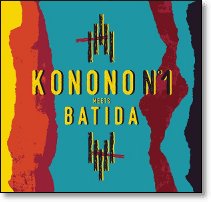
- Konono No. 1/Batida: Konono No. 1 Meets Batida (2016, Crammed Discs): [r]: A-
- The Kropotkins: Portents of Love (2015, Mulatta): [r]: B+(**)
- Steve Lehman: Sélébéyone (2016, Pi): [cd]: A-
- Leland Sundries: Music for Outcasts (2016, L'Echiquier): [r]: B+(***)
- Lori McKenna: The Bird & the Rifle (2016, CN/Thirty Tigers): [r]: A-
- Dawn Oberg: Bring (2015, Blossom Theory): [r]: B+(***)
- Jason Roebke Octet: Cinema Spiral (2014 [2015], NoBusiness): [cd]: B+(***)
- Walter Salas-Humara: Work: Part One (2015, Sonic Pyramid): [r]: B+(**)
- Walter Salas-Humara: Explodes and Disappears (2016, Sonic Pyramid): [r]: B+(***)
- Susana Santos Silva/Lotte Anker/Sten Sandell/Torbjörn Zetterberg/Jon Fält: Life and Other Transient Storms (2015 [2016], Clean Feed): [cd]: B+(***)
- Stirrup: Cut (2016, Clean Feed): [cd]: A-
- Markus Stockhausen/Florian Weber: Alba (2015 [2016], ECM): [dl]: B+(***)
Recent reissues, compilations, and vault discoveries rated this week:
- Joe Lovano Quartet: Classic! Live at Newport (2005 [2016], Blue Note): [r]: B+(***)
Old music rated this week:
- Ellery Eskelin/Andrea Parkins/Jim Black: Arcanum Moderne (2002 [2003], Hatology): [r]: A-
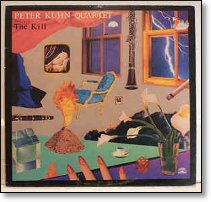
- Peter Kuhn Quartet: The Kill (1981 [1982], Soul Note): [r]: A-
- Leland Sundries: The Foundry EP (2012, L'Echiquier): [r]: B+(**)
- Lori McKenna: Paper Wings and Halo (2000, Orcheard): [r]: B+(**)
- Lori McKenna: Pieces of Me (2001, Signature Sounds): [r]: B+(***)
- Lori McKenna: The Kitchen Tapes (2001 [2004], Gyrox): [r]: B+(*)
- Lori McKenna: Bittertown (2004, Signature Sounds): [r]: B+(**)
Grade changes:
- Dawn Oberg: Rye (2012, Blossom Theory): [r]: [was: B+(*)] B+(***)
Unpacking: Found in the mail last week:
- Jim Black Trio: The Constant (Intakt): advance, August 24
- Don Cherry/John Tchicai/Irène Schweizer/Léon Francioli/Pierre Favre: Musical Monsters (1980, Intakt): advance, August 24
- Barbara Dane with Tammy Hall: Throw It Away . . . (Dreadnaught Music): August 19
- Peter Kuhn/Dave Sewelson/Gerald Cleaver/Larry Roland: Our Earth/Our World (pfMentum)
- Francisco Pais Lotus Project: Verde (Product of Imagination): September 23
- John Stowell/Michael Zilber Quartet: Basement Blues (Origin): August 19
Ask a question, or send a comment.
Sunday, August 7, 2016
Weekend Roundup
I want to start with a paragraph from
John Lanchester: Brexit Blues:
Immigration, the issue on which Leave campaigned most effectively and
most cynically, is the subject on which this bewilderment is most
apparent. There are obviously strong elements of racism and xenophobia
in anti-immigrant sentiment. All racists who voted, voted Leave. But
there are plenty of people who aren't so much hostile to immigrants as
baffled by them. They feel left behind, abandoned, poor, ignored and
struggling; so how come immigrants want to come here, and do so well
when they get here? If Britain is broken, which is what many Leave
voters think, why is it so attractive? How can so many people succeed
where they are failing? A revealing, and sad, piece in the Economist
in 2014 described Tilbury, forty minutes from London, where the white
working class look on resentfully as immigrants get up early and get
the train to jobs in the capital which, to them, seems impossibly
distant. 'Most residents of the town, one of England's poorest places,
are as likely to commute to the capital as fly to the moon.'
The evidence on immigration is clear: EU immigrants are net
contributors to the UK's finances, and are less likely to claim
benefits than the native British. The average immigrant is younger,
better educated and healthier than the average British citizen. In
other words, for every immigrant we let in, the country is richer,
more able to pay for its health, education and welfare needs, and
less dependent on benefits. They are exactly the demographic the
UK needs.
Not sure of the numbers, but offhand this sounds like a pretty
fair description of immigrant America as well -- maybe there is a
slightly larger slice of unskilled immigrant workers because the
US has much more agribusiness, but a lot of the immigrants I know
are doctors and engineers, and I suspect that immigrants own a
disproportionate share of small businesses. One widely reported
figure is that Muslims in America have a higher than average per
capita income, so it's hard to see them as an economic threat to
the middle class -- they're part of it. One thing we do have in
common with Britain is that anti-immigrant fervor seems to be
greatest in places with damn few immigrants. (Trump's third
strongest state -- see below -- is the formerly Democratic
stronghold of West Virginia, which is practically hermetically
sealed from the rest of the US.) Whether that's due to ignorance
and unfamiliarity or because those areas are the ones most left
behind by economic trends -- including the ones most tied to
immigration -- isn't clear (most observers read into this picture
what they want to see).
Lanchester makes another important point, which is that the Brexit
referendum succeeded because the single question cut against the
grain of the political party system: "To simplify, the Torries are
a coalition of nationalists, who voted out, and business interests,
who voted in; Labour is a coalition of urban liberals, who voted in,
and the working class, who voted out." I suspect that if we had a
national referendum on TPP you'd see a similar alignment against it
(and it would get voted down, although the stakes would be far less).
On the other hand, Trump vs. Clinton is going to wind up being a vote
along party lines, not an alignment of outsiders against insiders or
populists against elitists or any such thing.
Some scattered links this week:
David Auerbach: Donald Trump: Moosbrugger for President: Long piece,
finds an analogue for Trump in Robert Musil's novel, The Man Without
Qualities, left incomplete by the author's death in 1942:
The character who concerns us is Christian Moosbrugger, a working-class
murderer of women who becomes an object of fascination for many of the
characters in the novel and of the Vienna they inhabit. During his trial
for the brutal murder of a prostitute, he becomes a celebrity, due to
his cavalier and eccentric manner. [ . . . ] His
"discipline" is akin to Trump's nebulous "art of the deal," not a
teachable trade but an esoteric, innate property that makes him better
than others -- a Macguffin. Trump is not a murderer; unlike Moosbrugger,
he does not need to be. Trump was fortunate enough to begin with his
father's millions and the ability to achieve dominance without physical
violence. For Moosbrugger, violence was the only option available to him.
Moosbrugger is no more a "murderer" than Trump is a "politician." They
perpetrate amoral (not immoral) acts not out of their characters but out
of a lack of character.
Of course, if Trump becomes president, he will become a murderer --
much like Obama before him, by signing off on the assassination of
alleged enemies (and, to use a time-worn phrase, fellow travelers).
GW Bush and Bill Clinton too, but they had a head start as governors
signing death warrants for condemned felons.
I also like Auerbach's line:
Trump's political rise is a product of the commodification
of attention. As the ballooning of new media and analytics have facilitated
the microscopic examination of consumer attention, the analysis has been
performed with indifference to the consequences of that attention. Just as
Donald Trump does not care why he is loved, worshipped, and feared -- no
matter what the consequences -- we have seen massed content production
turn to clickbait, hate clicks, and propaganda in pursuit of viewer eyes.
By mindlessly mirroring fear and tribalism, the new media machine has
produced a dangerous amount of collateral damage.
It seems like it took a couple years after he became president
before psychologists started probing the mind of GW Bush, but now
we are already blessed with
Dan P McAdams: The Mind of Donald Trump -- better safe than
sorry, I suppose. Here he is just getting warmed up:
Researchers rank Richard Nixon as the nation's most disagreeable president.
But he was sweetness and light compared with the man who once sent The
New York Times' Gail Collins a copy of her own column with her photo
circled and the words "The Face of a Dog!" scrawled on it. Complaining in
Never Enough about "some nasty shit" that Cher, the singer and
actress, once said about him, Trump bragged: "I knocked the shit out of
her" on Twitter, "and she never said a thing about me after that." At
campaign rallies, Trump has encouraged his supporters to rough up protesters.
"Get 'em out of here!" he yells. "I'd like to punch him in the face." From
unsympathetic journalists to political rivals, Trump calls his opponents
"disgusting" and writes them off as "losers." By the standards of reality
TV, Trump's disagreeableness may not be so shocking. But political candidates
who want people to vote for them rarely behave like this.
Gabriella Dunn: Bipartisan frustration over Kansas disability system:
'Legislature be damned': Part of Gov. Brownback's program for
making Kansas a model state for emulation all across America and for
resuscitating his presidential ambitions was his program to harness
the magic of private enterprise to "reform" the moribund bureaucracy
of the state's Medicaid program. He called this stroke of genius
KanCare. Now, well, it's worked about as well as the rest of his
programs:
The Medicaid system has been riddled with problems recently. More
than 3,000 disabled Kansans are on waiting lists for services, and
the state says a seven-year wait is typical.
The state also has a backlog of applications for Medicaid that
started mounting a year ago when the state switched the computer
system used to process the applications. The committee was told on
Thursday that nearly 4,000 Kansans have been waiting more than 45
days for their applications to be processed. In mid-May that number
was above 10,000.
Part of the art of shrinking government "to the size where we can
drown it in a bathtub" is to pick on areas that most people don't
immediately recognize what's happening. Slacking off on maintenance
is one such area, and helping people with disabilities is another.
Things have to get pretty bad before they get noticed, and even then
the full impact is hard to absorb. Still, even Kansans have started
to wise up. For one thing, see
GOP Voters Stage Major Revolt Against Brownback's Kansas Experiment.
Not really as "major" as one might hope, but until this year Republican
primaries have been killing fields for our so-called moderates. This
year six Brownback-affiliated state senators, including Majority Leader
Terry Bruce, got axed, as did Tea Party favorite Rep. Tim Huelskamp,
one of the few "small government" conservatives in Congress to oppose
such real government threats as NSA's domestic spying programs -- but
his real problem was agribusiness, who flooded the primary with some
$3 million in mostly out-of-state dark money. (Huelskamp spent a couple
million himself, largely from the Koch network.) Not mentioned in the
article is that Sedgwick County Commissioner Karl Peterjohn, who unlike
Huelskamp has no redeeming virtues, was also knocked off -- again, his
ideological fervor ran afoul of local business interests. On the other
hand, the Democratic primary was a very depressing affair, with hardly
any competent candidates rising to challenge the unmitigated disasters
wrought by Brownback and company.
Diana Johnstone: Hiroshima: The Crime That Keeps on Paying, but Beware
the Reckoning: Each August 6 marks yet another anniversary of our
bloody inauguration of the age of nuclear destruction. I found this
bit, following an Eisenhower quote expressing misgivings about dropping
the atom bomb, interesting:
As supreme allied commander in Europe, Eisenhower had learned that it
was possible to work with the Russians. US and USSR domestic economic
and political systems were totally different, but on the world stage
they could cooperate. As allies, the differences between them were
mostly a matter of mistrust, matters that could be patched up.
The victorious Soviet Union was devastated from the war: cities in
ruins, some twenty million dead. The Russians wanted help to rebuild.
Previously, under Roosevelt, it had been agreed that the Soviet Union
would get reparations from Germany, as well as credits from the United
States. Suddenly, this was off the agenda. As news came in of the
successful New Mexico test, Truman exclaimed: "This will keep the
Russians straight." Because they suddenly felt all-powerful, Truman
and Byrnes decided to get tough with the Russians.
In his book Atomic Diplomacy: Hiroshima and Potsdam, Gar
Alperovitz argued that the US used the atomic bomb in Hiroshima and
Nagasaki to intimidate Russia. This twist is more plausible: that
having used it for whatever reason, it then installed an arrogance
in Truman and his circle that made them more aggressive in postwar
diplomacy, and that made Stalin more defensive (which in turn, in
some cases, made him more aggressive -- e.g., in Berlin and Korea,
although in both cases he was largely provoked to lash out).
Also on Hiroshima, see
Ward Wilson: The Bomb Didn't Beat Japan . . . Stalin Did. By
the way, I wrote more about Hiroshima in
May 2016 and
August 2015, and several times earlier
(e.g., August 2008).
Of course, the question of presidential control of "the nuclear
launch codes" came up with respect to the notoriously thin-skinned
and impulsive Donald Trump, who's been quoted as repeatedly asking
his "security advisers" why we can't use nuclear weapons, and who's
clung to the "never take options off the table" cliché so tenaciously
it's hard to rule out any place he might not bomb. Relevant to this is
Jeffrey Lewis: Our Nuclear Procedures Are Crazier Than Trump,
arguing against the current "launch under attack" strategy which
gives a president "a four-minute window to decide whether or not
to initiate an irreversible apocalypse." I would add that I think
that the only nation that has ever actually used nuclear weapons
against civilian targets, the US should be going out of its way
to reassure the world that won't happen again. Instead, Trump and
his ilk are so insecure they feel to need to remind the world how
terrifying they really are.
Seth Stevenson: If Sean Penn Were the Democratic Nominee: Possibly
the dumbest political article of the year, and that's saying something.
The whole idea is counterfactual, counterlogical even: "Imagining
a world where the wackadoo candidate is in the other party" -- I guess
they can dream, but the fact is that the Republican Party has actively
embraced fantasy and myth and carefully channeled rhetoric while decrying
science and, you know, that "reality-based" stuff, like facts, so there's
little there to guard against unhinged candidates -- indeed, at least
half of the original field of sixteen qualified. The closest thing to
"wackadoo" on the Democratic side was Jim Webb, who didn't even make it
to Iowa. As for Penn, you can look at his
Wikipedia page to
get a thorough list of his political activism, but as far as I can tell
his main transgression against political correctness has been a tendency
to get too close to officially despised foreign leaders like Hugo Chavez.
I can't say as that sort of thing bothers me (in which case he suggests
Kanye West, or "Ben from Ben and Jerry's") -- the point is he assumes
there must be some balance on the Democratic side no matter how wacko
the Republicans get, and second, he wants to show that a great many
Democrats would follow that "unfit, paranoid, unstable Democratic nominee"
as blindly as most Republicans are following Trump.
Of course, this article assumes other fallacies. One is that the
individual at the head of the ticket should matter much more than the
party the ticket represents. I think nowadays that's largely due to
the Commander in Chief fetish, itself due to the fact that the US is
(and has been for 75 years now) a state perpetually at war all around
the world. We tend to assume that having a decisive Commander in Chief
has a huge effect on how effectively those wars are prosecuted, where
in fact the built-in, unquestioned forces behind those wars usually
winds up dictating how tragically foolish presidents wind up. An older
view is that the personal moral character of the president matters a
lot, whereas it rarely counts for anything. What we get instead are
parties -- each president brings a whole layer of administration into
power, and leaves behind a cohort of judges, and those choices are
mostly tied to party. So to the extent that parties represents blocks
of voters, why is it so strange that those voters would back their
party regardless of how qualified and capable the ticket head is?
Obviously, a lot of people who vote for Trump will really be voting
for their party, some in spite of the candidate, but that applies
(perhaps even more than usual) to the Democratic side as well. In
neither case does it represent a serious misjudgement. However, only
on the Republican side does it reflect a belief in complete nonsense
and hysteria unrooted in interests or even reality. Some more election links noted:
Peter Beinart: Why Are Some Conservative Thinkers Falling for Trump?
Begs the question: why does Beinart regard hacks like Peggy Noonan (his
lead example) and Sean Hannity as intellectuals? Citing Czeslaw Milosz's
The Captive Mind, Beinart likens them to Stalinist apparatchiks,
but that gives them too much credit: Stalin, at least, represented the
established order, whereas Trump is only an aspirant, and not a terribly
inspiring one at that.
Harry Enten: Clinton's Post-Convention Bump Is Holding Steady:
Actually,
538's Election Forecast now has Clinton up to 83.4% chance of winning,
with North Carolina tipped blue (D+3.5), and Arizona (R+0.1) and Georgia
(R+0.3) getting close. Clinton's chances of winning other red states are
also up: South Carolina (37.4%), Missouri (31.5%), Texas (26.7%), Mississippi
(25.9%), South Dakota (24.2%), Alaska (24.1%), Montana (24.1%), North
Dakota (22.1%), Utah (21.5%), Indiana (20.2%), . . . Kansas (14.5%), . . .
Arkansas (10.8%). Trump's most secure states are Oklahoma, Alabama, West
Virginia, and Idaho (96.4%).
David Ignatius: Why facts don't matter to Trump's supporters
Sean Illing: Donald Trump and the Tea Party myth: Why the GOP is now
an identity movement, not a political party
Mike Konczal: A new American radical liberalism can counter Trump
Daniel Politi: Marco Rubio: Pregnant Women With Zika Shouldn't Be Allowed
to Have Abortion: Just in case you think the Republicans should have
nominated a more sensible, better behaved presidential contender.
Greg Sargent: Even after Khan battle, Trump voters support ban on
Muslims
Ask a question, or send a comment.
Monday, August 1, 2016
Music Week
Music: Current count 26875 [26851] rated (+24), 423 [431] unrated (-8).
Not a particularly strong rated count -- especially given that I
wrapped up a
Streamnotes column, but still finding exceptional numbers of A-
records, and they take more time than B or low B+ records. Also,
almost everything below is jazz, and most of it (aside from the
Hersch oldies) came from my mail queue (down lower now than it's
been in about three months).
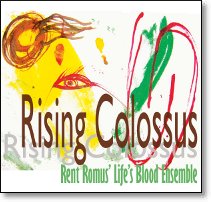
One mistake from Streamnotes is that I omitted the Rent Romus
album cover. I'll rectify that in the faux blog, but probably not
in the Serendipity version. (Not sure how the relative performance
of those is holding up. I have managed to keep adding new entries
to Serendipity, but rarely see them, and find it more work to
edit.)
Surprise star this week is Peter Kuhn, who plays clarinet, bass
clarinet, and some sax, and recorded a bit 1979-81, dropped out for
a long stretch, and re-surfaced last year. I didn't recall the name,
but thanks to Rick Lopez' dilligence I did list his albums in the
discography to my mammoth
William Parker-Matthew
Shipp Consumer Guide (from 2003, I think). I tried to find
Kuhn's other albums for Hat and Soul Note on Rhapsody (err, ugh,
Napster), but only tracked down The Kill (misfiled under
Denis Charles -- seems to have been his real name, although I
notice now that I used the Americanized "Dennis" last week,
something else to fix).
Getting pretty close to doing a major update to
Robert Christgau's website: not many new articles -- latest is
his review of
Jon Savage's 1966: The Year the Decade Exploded -- and no new-old
pieces (maybe someone should organize a scavenger hunt), but I finally
managed to bring the Consumer Guide database up to the moment (July 29).
Now if only I can remember that bug (revision incompatibility) I had to
work around to import the new database. I'll
tweet when I get it done.
New records rated this week:
- Joey Alexander: My Favorite Things (2014 [2015], Motéma): [r]: B+(**)
- Karlis Auzins/Lucas Leidinger/Tomo Jacobson/Thomas Sauerborn: Mount Meander (2015 [2016], Clean Feed): [cd]: B+(***)
- Cortex: Live in New York (2015 [2016], Clean Feed): [cd]: A-
- Fred Hersch: Sunday Night at the Vanguard (2016, Palmetto): [cd]: A-
- Steffen Kuehn: Leap of Faith (2015-16 [2016], Stefrecords): [cd]: B+(*)
- Peter Kuhn Trio: The Other Shore (2015 [2016], NoBusiness): [cd]: A-
- Peter Kuhn/Dave Sewelson/Gerald Cleaver/Larry Roland: Our Earth/Our World (2015 [2016], pfMentum): [bc]: A-
- Joey Locascio: Meets the Legend (2016, Blujazz): [cd]: B+(*)
- Merzbow/Keiji Haino/Balasz Pandi: An Untroublesome Defencelessness (2016, RareNoise): [cdr]: B+(**)
- Modular String Trio: Ants, Bees and Butterflies (2014 [2016], Clean Feed): [cd]: B+(***)
- William Parker: Stan's Hat Flapping in the Wind (2015 [2016], Centering/AUM Fidelity): [r]: B+(**)
- Roji: The Hundred Headed Woman (2016, Shhpuma/Clean Feed): [cd]: B+(***)
- Rent Romus' Life's Blood Ensemble: Rising Colossus (2015 [2016], Edgetone): [cd]: A-
- Jerome Sabbagh/Simon Jermyn/Allison Miller: Lean (2014 [2016], Music Wizards): [cd]: B+(**)
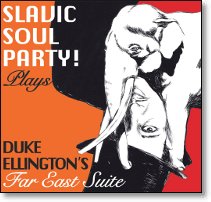
- Slavic Soul Party: Plays Duke Ellington's Far East Suite (2014 [2016], Ropeadope): [cd]: A-
Recent reissues, compilations, and vault discoveries rated this week:
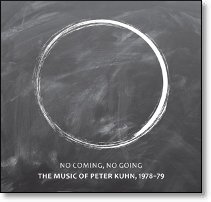
- Peter Kuhn: No Coming, No Going: The Music of Peter Kuhn, 1978-1979 (1978-79 [2016], NoBusiness, 2CD): [cd]: A-
Old music rated this week:
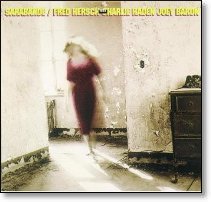
- Fred Hersch/Charlie Haden/Joey Baron: Sarabande (1986 [1987], Sunnyside): [r]: A-
- Fred Hersch/Steve LaSpina/Jeff Hirshfield: ETC (1988, RED): [r]: B+(***)
- The Fred Hersch Trio: Dancing in the Dark (1992 [1993], Chesky): [r]: B+(**)
- Fred Hersch: The Fred Hersch Trio Plays . . . (1994, Chesky): [r]: B+(**)
- Fred Hersch: Point in Time (1995, Enja): [r]: B+(*)
- The Fred Hersch Trio: Live at the Village Vanguard (2002 [2003], Palmetto): [r]: B+(***)
- Fred Hersch/Norma Winstone: Songs & Lullabies (2002 [2003], Sunnyside): [r]: B+(**)
- Fred Hersch Trio: Everybody's Song but My Own (2010 [2011], Venus): [r]: B+(***)
- Michael Moore/Fred Hersh: This We Know (2008, Palmetto): [r]: B+(**)
- Red Fox Chasers: I'm Going Down to North Carolina: The Complete Recordings of the Red Fox Chasers (1928-31) (1928-31 [2009], Tompkins Square, 2CD): [r]: B+(**)
Ask a question, or send a comment.
Sunday, July 31, 2016
Weekend Links
After the big post on the Democratic National Convention and the mad
scramble to wrap up July's Streamnotes, I figured I'd skip attempting a
Weekend Roundup today. I started this in the Notebook, then decided
what the hell, might as well share it. Tried to avoid adding comments.
Read the links at your leisure and the comments will probably be obvious.
Some links:
One quote from these pieces I want to single out: from the Frum
article, a quote from an anonymous Trump supporter:
"The Putin thing. You think you've really nailed Donald with the Putin
thing. Get it through your head: Our people are done fighting wars
for your New World Order. We fought the Cold War to stop the
Communists from taking over America, not to protect Estonia. We went
to Iraq because you said it was better to fight them over there than
fight them over here. Then you invited them over here anyway! Then you
said that we had to keep inviting them over here if we wanted to win
over there. And we figured out: You care a lot more about the "inviting"
part than the "winning" part. So no more. Not until we face a real
threat, and have a real president who'll do whatever it takes to win.
Whatever it takes.
My emphasis. Funny thing is that the first time I heard "New World
Order" in the last decade -- I think the phrase goes back to people
in the first Bush administration, circa the first Iraq War -- was in
the house of a Trump supporter. He attributed it to Obama, and was
greatly bothered by the whole idea. Democrats are vulnerable to this
because they grew up in the internationalist tradition from Wilson to
Roosevelt to Johnson, and the Carters and Clintons and Obamas have just
sheepishly followed in line. It started just helping US companies do
business abroad, evolved into a protection racket for global capitalism,
and eventually became a self-serving monster, starting wars just to
punish countries for disrespecting our omnipotence. This never meant
anything to most Americans aside from the fears they were dictated,
but after Eisenhower beat Taft in 1952 the Republicans were always in
on the deal, so nobody had a chance to hear otherwise -- until Trump.
This is a big risk for Hillary: her political education has taught
her to always spout the Washington establishment's clichés and, if
pressed, always to hedge on the side of being more hawkish. Against
Trump, especially viz. Russia, she could easily convince people that
she's the dangerous maniac (as well as that she's weak -- not willing
to do "whatever it takes" because she's hung up on sensitivities to
foreigners and international law).
I also might have noted that on Saturday 538's
Who will win the presidency? showed Clinton and Trump dead even at
50.0%, with Trump enjoying a slight edge in electoral votes (269.4 to
268.2) but Clinton still leading the popular vote (46.3 to 45.5%, with
Gary Johnson at 6.9% and Jill Stein off the chart). Clinton's decline
nudged Florida, Iowa, Nevada, Ohio, and New Hampshire into the Trump
column. On Sunday new polls bumped Clinton up to 51.0%, 270.2-267.4 in
the electoral college, 46.3-45.4% popular vote, but didn't tip any
states. Right now, the closest state is Pennsylvania, only D+0.8,
followed by Nevada R+0.9, Florida R+1.2, and Virginia D+1.2. Clinton
has been sinking since FBI Director James Comey's press conference
put the private email server issue to rest (at least the threat of
a possible indictment), so the RNC bounce had some prior momentum.
We're not seeing much of a DNC bounce yet -- at least it's not coming
as fast as what was taken as a RNC bounce did. (Silver footnote from
the article cited above: "Although interestingly, if you chart the
numbers, it's not easy to distinguish Trump's convention bounce from
a continuation of the previous trend toward him.")
Don't know if this has been factored in, but RABA Research's
post-DNC poll has Clinton ahead of Trump 46-31% (7% for Johnson,
2% for Stein), a big bump from their post-RNC/pre-DNC poll, which
Clinton led 39-34%. (Still, aren't the undecided remains awfully
large here? Seems like a lot of people don't want to face the choice
they've been given.)
Ask a question, or send a comment.
Saturday, July 30, 2016
Streamnotes (July 2016)
First order of business: I've dropped "Rhapsody" from the column
name because the streaming service changed their name to Napster. I
started writing these notes in 2007 when Rhapsody kindly gave me a
free subscription (I had done some work for them converting Robert
Christgau's Consumer Guide reviews so they could use them). That ran
out a year later and there's a break in coverage until the following
August when I broke down and paid for the service. One of the better
investments I've made, the most obvious ROI being that it broke me
of the habit of buying CDs just to check them out, only to discover
they weren't things I would want to return to. The second effect was
that I wound up checking out a lot of stuff I never would have paid
for -- some did pan out, and many didn't.
I later decided to cut back on my column writing, bringing to a
close
Recycled Goods and
Jazz Prospecting as separate entities
by folding the records I would have reviewed there into here. These
days, the default below (the case not otherwise marked) is something
streamed on Rhapsody/Napster. Other records are marked with a note
in brackets -- [cd] for CDs (mostly promos), [cdr] for advance/bootleg
CDs (all promos), [bc] for Bandcamp, [dl] for some other download (or
streaming) source. Needless to say, these sources are not all created
equal, either in terms of sound quality or personal convenience. Each
column has a legend explaining this.
As you may recall, I missed a big chunk of June travelling, so that
month's haul was much shorter than usual (66). This month's is probably
longer than usual (135). The "new releases" generally came out in the
last 2-3 years, with most being 2016 releases. The "recent reissues,
compilations, vault discoveries" were also released in the last 2-3
years, but usually are older music (recorded more than ten years ago),
but I sometimes slip in more recent "various artist" compilations (like
the Blind Willie Johnson tribute this month). The "old music" section
contains older releases that I'm late getting to -- mostly catch-ups
on artists or labels I've been thinking about and found on Rhapsody
(er, Napster, hate that name), plus the occasional stray that I just
happened to notice. This section was very slim this month until at
the last moment I decided to dive into old Fred Hersch records.
Most of these are short notes/reviews based on streaming records
from Rhapsody (other sources are noted in brackets). They are snap
judgments based on one or two plays, accumulated since my last post
along these lines, back on June 30. Past reviews and more
information are available
here (8364 records).
Recent Releases
The 1975: I Like It When You Sleep, for You Are So Beautiful
Yet So Unaware of It (2016, Dirty Hit/Interscope): British
guitar band, second album. No denying that some of this is catchy,
bouncy, sharp, smart, but it's also extremely long at 73:55 (17
songs).
B+(*)
Anohni: Hopelessness (2016, Secretly Canadian): Antony
Hegarty, formerly of Antony and the Johnsons, name change seems to be
related to a gender change. Produced by Hudson Mohawke, with input from
Oneohtrix Point Never, so the protest music is devoid of folky cliché.
He/she oversings -- some things are beyond change.
B+(*)
The Avalanches: Wildflower (2016, Astralwerks):
Australian group, built their first album wholly from samples (2000's
Since I Left You) -- about the time when they reportedly
started working on this second album, finally released 16 years
later. Ridiculously mixed bag here, the calypso-oom-pah mashup
"Frankie Sinatra" is amusing enough, but other jokes wear thin,
if indeed they are funny at all.
B
Ricardo Bacelar: Concerto Para Moviola: Ao Vivo (2015
[2016], Bacelar): Brazilian pianist, a live recording from the
Guaramiranga Jazz and Blues Festival in Ceara, Brazil; draws on
1970s pop/fusion like Weather Report and Yellowjackets and throws
in some Jobim, of course. Flows, lilts, even rocks out a bit.
B+(*) [cd]
Jon Balke: Warp (2014 [2016], ECM): Norwegian pianist,
more than a dozen albums since 1991. Solo piano, slow and thoughtful
enough for Manfred Eicher, also credits for field recordings and vocals
but nothing I much noticed.
B+(*) [dl]
Aaron Bennett/Darren Johnston/Lisa Mezzacappa/Tim Rosaly:
Shipwreck 4 (2015 [2016], NoBusiness): Tenor sax, trumpet,
bass, drums -- your basic two-horn avant quartet, no chordal instrument
to harmonize the horns. Should be freewheeling, but isn't quite.
B+(*) [cd]
James Blake: The Colour in Anything (2016, Polydor):
British electronica artist, gained a lot of attention for a series
of dubstep-influenced EPs c. 2010, which he's followed up with a pair
of much hyped (but to my ears underwhelming) albums. Blake picked up
help here from Justin Vernon (Bon Iver) and Rick Rubin, stretching
the album out to a monumental 76:13. I can see why some people are
impressed, but I find it dreary and depressing -- not something I
look for in pop music.
B-
Carla Bley/Andy Sheppard/Steve Swallow: Andando el Tiempo
(2015 [2016], ECM): Piano, tenor/soprano sax, bass, playing five Bley
compositions. Swallow is Bley's third famous husband (after Paul Bley
and Michael Mantler). Sheppard is a Brit who produced some exciting
albums from the late 1980s, and has been close to Bley for well over a
decade now. Like their previous Trios, a lovely piece of chamber
jazz.
B+(***) [dl]
Blood Orange: Freetown Sound (2016, Domino): Dev
Hynes, previously recorded as Lightspeed Champion, now has his third
album as Blood Orange. R&B, slick beats and soft croon but it
all comes out twisted in various ways.
A-
The Michael Blum Quartet: Chasin' Oscar: A Tribute to Oscar
Peterson (2015 [2016], self-released): Guitarist, won
Downbeat's Rising Star a year ago in something of a scandal
(he didn't finish in the top 21 this year). Quartet includes piano
(Brad Smith), bass (Jim Stinnett), and drums (Dom Moio). The Oscar
Peterson theme offers easy standards (plus two originals by Stinnett),
and Blum sings a couple -- not very well, but not without charm.
B+(*) [cd]
Bobby Bradford/Hafez Modirzadeh: Live at the Open Gate
(2013 [2016], NoBusiness): Trumpet and alto sax, respectively, with
Mark Dresser on bass and Alex Cline on drums, a perfectly enjoyable
but unspectacular avant set.
B+(**) [cdr]
Brazzamerica: Brazzamerica (2016, self-released):
Brazilian (or Brazilian-American? -- this album, presumably their
debut, was recorded in New York) piano trio: Leco Reis (bass),
Cidinho Teixeira (piano), Edson Ferreira (percussion). Engagingly
upbeat, very pleasant.
B+(**) [cd]
Brothers Osborne: Pawn Shop (2016, EMI Nashville):
John and T.J., country-rockers transplanted to Nashville from Maryland,
not to be confused with Kentucky bluegrassers Sonny and Bobby, aka the
Osborne Brothers. First album, country rock with emphasis on the latter,
but country for their clearly articulated down home themes -- almost
a little too clear, nothing you'd think twice about.
B+(*)
Toronzo Cannon: The Chicago Way (2016, Alligator):
Chicago bluesman, fourth album since 2007 getting a late start --
he's now 48, basically a journeyman working in a long tradition.
B+(*)
Car Seat Headrest: Teens of Denial (2016, Matador):
Singer-songwriter Will Toledo, wrote eleven homemade albums worth of
songs in four years before landing an indie label contract. His debut
featured re-recorded old songs, but this sophomore effort is newer
and bigger, his twelve songs running 69:16, nearly everyone with
substantial crunch and hook -- so much meatier than anything from
his lo-fi days. Can't say as I care yet, but I am impressed.
B+(***)
Cavanaugh: Time and Materials (2015 [2016], Mello
Music): Underground rap duo, Open Mike Eagle and Serengeti, beats
are subtle, raps representing characters -- as usual I have trouble
following, but what I do hear is interesting. Eight tracks, 25:56.
B+(**)
Corey Christensen: Factory Girl (2015 [2016], Origin):
Guitarist, has a handful of grooveful albums, group includes Zach
Lapidus on keyboards, plus bass, drums, and extra percussion.
B+(**) [cd]
Brandy Clark: Big Day in a Small Town (2016, Warner
Brothers): Quite some songwriter, storyteller too, but she turns so
many clever phrases with heaven and hell (e.g., "since you've gone to
heaven the whole world's gone to hell") and love lost and scorned
("if you want the girl next door, go next door . . . and don't look
back").
A-
Frankie Cosmos: Next Thing (2016, Bayonnet): Greta
Kline's second album, at 28:28 still considered an EP by Rhapsody but
anything with fifteen songs deserves more respect. (Her previous
Zentropy finished ten songs in 17:16.) Better than lo-fi
sound, better than DIY songs too.
B+(***)
Sylvie Courvoisier/Mark Feldman/Ikue Mori/Evan Parker: Miller's
Tale (2015 [2016], Intakt): Piano, violin, electronics, soprano
and tenor sax, respectively. Feldman is the most classical-sounding of
jazz violinists and seems to dominate at first, but the more you listen
the more interesting the fractured piano and sax become. Still not sure
about the electronics.
B+(***) [cd]
Dan Cray: Outside In (2015 [2016], Origin): Pianist,
sixth album since 2002, a quartet with Dayna Stephens (tenor sax),
Clark Sommers (bass), and Mark Ferber (drums). Four originals, three
covers (Bud Powell, "A Flower Is a Lovesome Thing," "Where Are You"),
nothing too settled or pat.
B+(**) [cd]
Theo Croker: Escape Velocity (2015 [2016], Okeh):
Trumpet player, grandson of Doc Cheatham -- would have been 11 when
the New Orleans trumpet legend died at 91, but Donald Byrd is the
more explicit reference. Like Byrd, Croker aims for jazz-funk as if
he's on the verge of a commercial breakthrough. Drawing on a wider
range of funk, he gets a bit closer aesthetically, but in today's
marketplace still remains marginal, even with the Dee Dee Bridgewater
vocal.
B+(*)
Orbert Davis' Chicago Jazz Philharmonic Chamber Ensemble:
Havana Blue (2013 [2016], 3Sixteen): Big band plus some
strings, the bulk of the record taken up by "Havana Blue Suite"
followed by a few standards (including "Manteca"). The suite has
a delicate air.
B+(**) [cd]
Suzanne Dean: Come to Paradise (2016, Ship's Bell
Music): More songwriter than singer -- credit here is "background
vocals and ukulele"; lead vocals are by Nicole Zuraitis -- with
the songs in a folk-rock vein (paradise and dreams and such),
starting with guitar then gradually adding in keyboards (Rich
Ruttenberg) and horns (John Daversa and Bob Sheppard).
B [cd]
Debo Band: Ere Gobez (2016, FPE): Boston band led
by Ethiopian singer Bruck Tesfaye and saxophonist Danny Mekonnen,
doing a fair approximation of Ethiopian pop/Ethio-jazz.
B+(*)
The Diva Jazz Orchestra: Special Kay! (2013 [2016],
self-released): Drummer Sherrie Maricle's all-female big band
"celebrates the life and music of Stanley Kay" -- last name Kaufman,
also a drummer, died in 2010 at 86 after a "70+ year career" which
included a stint as Entertainment Director for the New York Yankees,
but he's also credited as founder (in 1992) and "creative force
behind" the Orchestra. He also composed the ten pieces, which swing
ferociously. Done live, with lots of shout-outs to the soloists.
B+(**) [cd]
Drake: Views (2016, Cash Money): Canadian rapper,
took a fairly modest underground style and blew it up into a big hit,
and keeps spitting it out although I've never found much reason to
care. Runs 79:45.
B+(*)
The Evenfall Quartet: Evenfall (2015 [2016], Blue
Duchess): Boston group, first album, very mainstream tenor sax (Mark
Earley), piano (Joe "Sonny" Barbato), bass (Brad Hallen), drums (Jerzy
"Jurek" Glod) outfit. All standards, leading with "That Old Black
Magic," passing through "Time After Time" and "Old Devil Moon" and
"After You're Gone" to wrap up with "Stardust." Earley's background
is playing in blues bands (Duke Robillard, Roomful of Blues) and he
doesn't have the rich vibrato of a Bob Rockwell much less Ben Webster,
nor does the band aspire to anything retro (like a Scott Hamilton).
In short, as a critic I should insist on them working harder, doing
something more ambitious, but in fact my idea of a perfectly lovely
album.
A- [cd]
Fail Better!: Owt (2014 [2016], NoBusiness): Avant-jazz
quintet from Portugal -- Marco dos Reis (guitar), Luis Vicente (trumpet),
João Guimarães (alto sax), José Miguel Pereira (double bass), João Pais
Filipe (drums) -- recorded live at Coimbra. The guitar generally leads
here.
B+(**) [cdr]
Alan Ferber: Roots & Transitions (2016, Sunnyside):
Postbop trombonist, assembled a nonet here to fill out his compositions,
thick and more than a little turgid.
B
Cheryl Fisher: Quietly There (2015 [2016], OA2):
Standards singer (wrote one song here), from Canada, eighth album
since 2004, quietly sneaks up on you, in large part because the
band -- Seattle musicians from John Bishop's crew -- provides
subtle support in all the right places.
B+(**) [cd]
Anat Fort Trio/Gianluigi Trovesi: Birdwatching (2013
[2016], ECM): Pianist, born in Israel, based in New York, fourth album
since 1999, trio means Gary Wang (bass) and Roland Schneider (drums),
together at least since 2009. Trovesi plays alto clarinet, returning
to the lineup of her 2007 ECM debut.
B+(***) [dl]
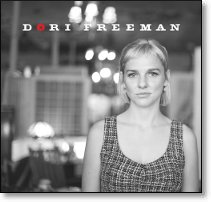
Dori Freeman: Dori Freeman (2015 [2016], Free Dirt):
Folky singer-songwriter from Appalachia doesn't make a show of her
roots or authenticity but lets them quietly seep through her songs,
produced by Teddy Thompson, most effectively when he slips in a rock
band, or lets her take a work song with nothing but finger snaps.
A-
Fresh Cut Orchestra: Mind Behind Closed Eyes (2016,
Ropeadope): Ten-piece group from Philadelphia led by Josh Lawrence
(trumpet), Jason Fraticelli (bass & cuatro), and Anwar Marshall
(drums), who share writing credits pretty evenly. Latin tinge, much
emphasis on rhythm, especially irresistible on the closer "Gallo y
Gallina."
B+(***) [cd]
Fresh Cut Orchestra: From the Vine (2015, self-released):
First album, mostly consists of the seven-part "Mother's Suite," starting
off with irritating bird sounds then gets symphonic. Mixed bag after that,
including passages that show a lot of promise (and not just the fast ones).
B+(*) [bc]
Fred Frith Trio: Another Day in Fucking Paradise
(2015 [2016], Intakt): Guitarist, many albums since his early
Guitar Solos (1974) when he staked his avant-garde claims
by working with prepared guitar. This is still fairly far out,
scratchy avant guitar backed by Jason Hoopes (electric and double
bass) and Jordan Glenn (drums, percussion). Some slavic-sounding
voice, but it doesn't stick around.
B+(***) [cdr]
Fruit Bats: Absolute Loser (2016, Easy Sound):
Chicago alt/indie band, starts with the Velvets' guitar sound and
adds some pop sparkle, with Eric D. Johnson writing neat little
songs.
B+(**)
Gaudi: EP (2016, RareNoise, EP): Daniele Gaudi Cenacchi,
b. 1963 in Italy, based in London, has a dozen albums since 1991 and
many more shorter forms. Plays minimoog and other keyboards here, also
credited with programming, for two cuts, 15:39, backed by 5-6 musicians
(no intersection, the better known ones like Bill Laswell and Merzbow
are on "Electronic impromptu in E-flat Minor." Groove spins off easily
enough you wouldn't mind him running longer.
B+(**) [cdr]
Sara Gazarek/Josh Nelson: Dream in the Blue (2015
[2016], Steel Bird): Nelson plays piano -- has a couple albums on
his own. Gazarek sings, mostly standards but Nelson wrote three
songs, two with Gazarek. A fairly intimate affair, never really
takes off.
B [cd]
Domo Genesis: Genesis (2016, Odd Future): LA rapper,
Dominique Marquis Cole, debut album after several mixtapes. Good chance
this could grow on me, given how many times the first pass reminded me
of Stevie Wonder.
B+(***)
Robert Glasper: Everything's Beautiful (2016, Legacy):
Co-credited to Miles Davis, who is extensively sampled (or reproduced)
for a tie-in with Don Cheadle's movie, Miles Ahead. Still, Davis
died 25 years ago, and while it's amusing to imagine what he might have
made of hip-hop, the result is clearly the work of someone who grew up
straddling both worlds. More polished than previous efforts, with some
imagination but also a tendency to let the soundtrack unwound.
B+(**)
André Gonçalves: Currents & Riptides (2016,
Shhpuma): From Portugal, plays keyboards, guitar and computer, but they
mostly boil down to electronics. Two long tracks, one with Pedro Boavida
joining in on Fender Rhodes, the other with bass (Rodrigo Dias) and
guitar (Gonçalo Silva). The quirky first piece is especially enticing.
The second is more ambient drone, but that goes down easy too.
B+(***)
The Goon Sax: Up to Anything (2016, Chapter Music):
Australian alt/indie trio, basically lo-fi guitar jangle and voice,
with occasional echoes of the Go-Betweens, perhaps expected in a band
led by Robert Forster's son Louis.
B+(***)
Ariana Grande: Dangerous Woman (2016, Republic):
Pop star, got her start as a teenage TV star, third album -- another
pile of glitz with a vast array of writers and producers and featured
guests (Nicki Minaj, Lil Wayne, Macy Gray, Future), which should be
good for some ear candy but rarely rises to that level, let alone
portends the promised danger.
B+(*)
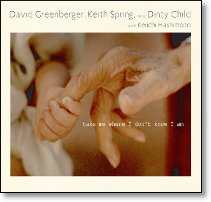
David Greenberger, Keith Spring, and Dinty Child: Take Me Where
I Don't Know I Am (2016, Pel Pel): More spoken word texts from
conversations at a nursing home in Jamaica Plain, MA 1979-83 -- back far
enough you get a good story about Joe Louis. The others (and Keiji
Hashimoto) provide the music, which is jazzy for the opener on "Three
Spaniels" and moodier toward the end, not least for the nonogenarian
who hopes to die soon.
A- [cd]
Tord Gustavsen: What Was Said (2015 [2016], ECM):
Norwegian pianist, working with vocalist Simin Tander and pianist-drummer
Jarle Vespestad. The voice is arresting, and without the voice the piano
grows even grander.
B+(**) [dl]
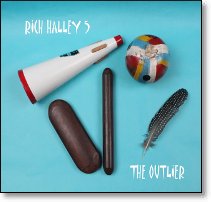
Rich Halley 5: The Outlier (2015 [2016], Pine Eagle):
Tenor saxophonist, has an impressive run of albums since he retired
from his day job, mostly quartet affairs with Michael Vlatkovich on
trombone, Clyde Reed on bass, and son Carson Haley on drums. The fifth
here is Vinny Golia (baritone sax, bass clarinet) -- one of Halley's
early albums was recorded on Golia's Nine Winds label. This is something
of a mess, but frequently turns magnificent, as if rising up from chaos
is a good thing. Guess it is.
A- [cd]
Hard Working Americans: Rest in Chaos (2016, Melvin):
Todd Snider and several guys with long resumes in bands I never bothered
with -- sort of Nashville's answer to the Waco Brothers, but they rarely
live up to the concept.
B+(**)
Tim Hecker: Love Streams (2016, 4AD/Paper Bag):
Ambient electronica artist, his electronics finding a fair amount
of what sounds like radio static and given a sacred music aura by
the Icelandic Choir Ensemble -- none of which I find especially
appealing, even when it's oddly moving.
B
Fred Hersch: Solo (2014 [2015], Palmetto): Didn't
get this last year when it polled well -- guess the publicist knew
that I rarely fell for solo piano albums, even by pianists I've long
admired. Starts with a Jobim, then "Caravan," two originals, "The
Song Is You," "In Walked Bud," "Both Sides Now" -- each taken at a
leisurely stroll for no less than 7:30, where it just envelops you
with warmth and feeling. Good chance that if it wasn't so difficult
to deal with downloads I'd like it even more.
A- [dl]
The Fred Hersch Trio: Sunday Night at the Vanguard
(2016, Palmetto): The pianist's fourth Vanguard title, although
when I saw this title I flashed not on his own previous efforts but
on Bill Evans' justly legendary Sunday at the Village Vanguard --
Hersch has always had a thing for Evans, but in the liner notes he
only mentions the first time he sat foot in the Village Vanguard, in
1976 for Dexter Gordon's homecoming (the only time I ever went there).
Trio with John Hébert and Eric McPherson mostly staying out of the
way -- not my recipe for for a great piano trio but the pianist is
on such a roll he's fascinating anyway.
A- [cd]
Marquis Hill: The Way We Play (2016, Concord Jazz):
Trumpeter, won a Monk prize in 2014 which carries with it Concord's
commitment to release an album. This revisits the hard bop tradition
(Gryce, Silver, Monk, Hancock, Byrd, some standards), in a group
with Christopher McBride on sax and Justin Thomas on vibes in lieu
of piano, with Makaya McCraven's drums lighter and fleeter than
any hard bop drummer. Meagan McNeal introduces the band, and Hill
drops a couple rhymes.
B+(***)
Hinds: Leave Me Alone (2016, Mom + Pop): All-female
garage rock band from Spain, a little too grungy to pass for pop --
or maybe I just mean out of tune.
B
Mike Jones Trio: Roaring (2015 [2016], Capri):
Mainstream pianist, cites Dave McKenna as his main inspiration,
his early albums on Chiaroscuro (longtime home of Ralph Sutton).
Trio with Katie Thiroux (bass) and Matt Witek (drums), a bunch
of swing-ready standards.
B+(**) [cd]
Joonsam: A Door (2014 [2016], Origin): Bassist,
last name Lee, from South Korea, first album, all originals, key
player is pianist Aaron Parks, although you also get guest spots
by Ralph Alessi (trumpet, 5 cuts), Ben Monder (guitar, 2), and
Yeahwon Shin (vocal, 1).
B+(*) [cd]
The Julie Ruin: Hit Reset (2016, Hardly Art): Third
album by Kathleen Hanna under this name: after a one-shot in 1998
and a second thought in 2013. Hanna's previous bands were Bikini Kill
and Le Tigre, and this continues their grrrl punk legacy even while
it sounds more pop than ever -- punk is just the backbone.
A-
Kaytranada: 99.9% (2016, XL): Louis Kevin Celestin,
born in Haiti in 1992, grew up in Montreal, his current base. First
album after more than a dozen remixes. Strikes me as a less gloomy
though not quite happy take on trip-hop, a pleasant beat-album one
can repeatedly fall back on. In 2016, I guess that's something.
A-
The Corey Kendrick Trio: Rootless (2016, self-released):
Piano trio, with Joe Vasquez on bass and Nick Bracewell on drums, from
Michigan, a mix of standards and Kendrick originals. Postbop, has some
zip to it.
B+(*) [cd]
King: We Are King (2016, King Creative): Vocal trio,
twins Amber and Paris Strother and Anita Bias -- first album. Soft
soul, rather dreamy.
B+(*)
Ron King: Triumph (2016, self-released): Los Angeles
trumpet/flugelhorn/keyboard player, first album as far as I can tell
but he has a lot of movie/tv/soundtrack work including a Grammy
nomination. Not quite pop jazz, but upbeat with little empty space,
and his horn does stand out.
B [cd]
Lefteris Kordis: Mediterrana (Goddess of Light)
(2013-15 [2016], Inner Circle Music): Greek pianist, has several
albums, this a relatively nice one with richly evocative piano
and lush support.
B+(*) [cd]
Peter Kuhn Trio: The Other Shore (2015 [2016],
NoBusiness): Kuhn plays b-sharp and bass clarinet, tenor and alto
sax, backed here by Kyle Motl on bass and Nathan Hubbard on drums.
He came out of the late '70s loft scene, recorded obscure albums
with Arthur Williams and/or Denis Charles (recently reissued by
NoBusiness), and mostly vanished after 1982, until recently. This
picks up where the old records left off, and while it won't shock
or startle, this is the sort of inside creativity one listens to
free jazz for.
A- [cd]
Peter Kuhn/Dave Sewelson/Gerald Cleaver/Larry Roland: Our
Earth/Our World (2015 [2016], pfMentum): Kuhn plays more
sax (alto, tenor) than clarinet here, with Sewelson weaving below
(baritone sax) and above (sopranino). Three long pieces, rougher
than Kuhn's trio, more given to squeals and growls, but also more
propulsive (note drummer).
A- [bc]
Elektra Kurtis & Ensemble Elektra: Bridges From the
East (2016, Elektra Sound Works/Milo): Violinist, "of Greek
origin," raised in Poland, studied in Finland, wound up in New York.
Most resumes are inflated but I'm struck by the mix of names in hers,
including Edward Vesala, Max Roach, Simon Shaheen, Gerry Mulligan,
Israel "Cachao" Lopez, Nona Hendrix, Butch Morris, Billy Bang, Steve
Coleman, and Nas. Not sure how old she is but many names on that list
are dead, and her Ensemble Elektra has an album dated 2000. Group
includes a second violin, clarinet, bass, and drums. Music comes
from all over her map, with Greek and Polish folk themes merging
into tango and a little M-Base does Bartok.
B+(***) [cd]
Mathias Landaeus: From the Piano (2016, Moserobie):
Swedish painist, has ten or so albums since 1996. Claims he's "using
only sounds from his 1919 Steinway Moderno Grand Piano," but many
don't sound like piano at all -- various plucked string resonances
and percussion, gives it an avant-electronica feel but not evidently
synthetic. And the piano bits are lovely.
B+(***) [cd]
Jessy Lanza: Oh No (2016, Hyperdub): Singer/electronica
producer from Canada, started singing backup for Junior Boys and gets
production help from Jeremy Greenspan on her second album here. One
bass riff reminds me of Chic, but more often she works over elemental
synth beats, a winning combination.
A-
Låpsley: Long Way Home (2016, XL): Singer-songwriter
from Britain, dropped a gratuitous accent onto her middle name for a
Scandinavian effect; still in her teens but well beyond teen pop on
her first album after two EPs. Mid-tempo electro-beats, arty voice,
most striking song is called "Hurt Me" to show you she's tough enough
to take it.
B+(*)
Alison Lewis: Seven (2016, self-released): Standards
singer. Second in a row to start off with "Blackbird" (cf. Sara Gazarek),
which she paws at more mischievously yet ultimately makes it even more
annoying. She follows that up with comparably tortured versions of
"Cheek to Cheek" and "Like a Rolling Stone." Somewhat better are two
originals.
B- [cd]
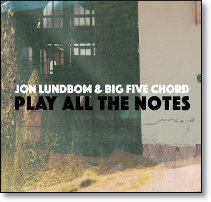
Jon Lundbom & Big Five Chord: Play All the Notes
(2016, Hot Cup, EP): The third of four promised EPs this year, to
be rolled up into a box later this year. Group has two formidable
saxophonists -- Jon Irabagon (alto) and Bryan Murray (tenor, prepared
tenor, and balto, here dba Balto Exclamationpoint) -- with MOPDTK
leader Moppa Elliott on bass and Dan Monaghan on drums. Probably the
best of the series thus far, not least for the leader's strong solos,
but I still have qualms about the marketing concept, and it's short
(three tracks, 26:44).
A- [cdr]
Macklemore & Ryan Lewis: This Unruly Mess I've Made
(2016, Macklemore): Second album by Seattle hip-hop duo, the first a
surprise hit when its fourth single went viral. This, as advertised,
an unruly mess with several songs kneejerk reactions to a success he's
none too comfortable with, mixed in with speed raps, light opera,
inadvertent comedy, and other oddities I can't get too worked up about.
B+(*)
Magnet Animals: Butterfly Killer (2016, Rare Noise):
Guitarist Todd Clouser project, he wrote all the pieces, sings (or
speaks), more alt-rock than jazz but has jazzy touches, not really
fusion. With Eyal Maoz (guitar), Shanir Ezra Blumenkranz (bass), and
Jorge Servin (drums).
B+(**) [cdr]
René Marie: Sound of Red (2015 [2016], Motéma Music):
Jazz singer, started late, in her 40s, but quickly established herself,
showing great range. Not sure about credits, but she wrote all these
songs, with "This Is (Not) a Protest Song" touching and unsatisfying.
B+(*)
Tina Marx: Shades of Love (2007 [2016], self-released):
Standards singer, seems to be her first album, group is billed online
as Tina Marx & the Millionaires. This builds on basics: good songs,
a nicely unaffected voice, and a band that understand how to swing.
B+(**) [cd]
Vic Mensa: There's Alot Going On (2016, Roc Nation):
Chicago rapper, original name Vic Mensah. This is billed as a prelude
to his first studio album, and at seven cuts, 32:53 sometimes gets
slagged as an EP. Doesn't feel short. Standout track is "16 Shots"
on the police killing of Laquan McDonald.
B+(***)
Michete: Cool Tricks (2015, self-released, EP):
Foul mouthed trans rapper from Spokane, key cuts are "#Fuckboy" and
"Me & My Bitches," pretty amazing for four, maybe five, cuts
("Closet Case Fags"), but could use some remix to flesh out the
back half. Nine cuts, 24:07.
B+(***)
Michete: Cool Tricks 2 (2016, self-released, EP):
The torrent of obscenities abates as he/she/whatever works harder
at being cleverer, maybe even approaching the realm of storytelling --
and needless to say, that stretches the nine tracks out to something
(29:33) I wouldn't call an EP except that it's a sequel to one. I
should be impressed by the newfound maturity (if fantasizing about
sucking FDR's dick qualifies) but I got more of a kick from the
debut's puerile enthusiasm.
B+(**)
Joel Miller With Sienna Dahlen: Dream Cassette
(2014 [2016], Origin): Dahlen sings, but so does Miller, who also
plays sax, piano, acoustic guitar, tanpura and percussion, plus
he composed all the songs (except one he added lyrics to, but
Dahlen is credited with lyrics elsewhere). Jazz label, but I'm
hearing echoes of Smile-era Beach Boys, other harder to
pin down art rock, and some pretty decent sax wails.
B+(***) [cd]
Russ Miller and the Jazz Orchestra: You and the Night and the
Music (2015 [2016], Doctheory): Big band, leader plays alto sax
and flute, standard horns and rhythm section plus extra percussion when
they want to do that Latin tinge thing. Jeannine Course-Miller sings
appealingly, though the standards which sound so luscious at first
wear a bit thin by the end.
B+(*) [cd]
Bob Mintzer: All L.A. Band (2016, Fuzzy Music):
Tenor saxophonist, longtime member of the Yellowjackets, a group
I'm not terribly fond of but the bright spot in their records is
invariably his sax. He also has a couple dozen albums under his
own name, many big band efforts. This one revisits his big band
writing, produced by drummer Peter Erskine. Band includes the
usual suspects, which in LA means Bob Sheppard on sax and Larry
Koonse on guitar.
B+(*) [cd]
Mitski: Puberty 2 (2016, Dead Oceans): First-name
artist, last name Miyawaki, born in Japan; lived in Congo, Malaysia,
China, and Turkey before settling in New York. Indulges in harsh
effects but doesn't need them -- can just as well inhabit a cushy
ballad. Reminds me a bit of PJ Harvey (but beware I'm not much of
a fan). One shouldn't underestimate her.
B+(*)
Modern Baseball: The Nameless Ranger (2011, Lame-O,
EP): Faked out by Rhapsody's 2015 date, turns out this five song,
14:54 EP is the Philadelphia alt/indie group's debut. Ragged sound,
but that's a good start.
B+(*)
Modern Baseball: Holy Ghost (2016, Run for Cover):
Rhapsody flags this one as an EP at 27:20, but eleven songs generally
makes for an album. Punkish thrash, short songs, probably not about
baseball.
B+(**)
Maren Morris: Hero (2016, Columbia Nashville): Texas
country singer-songwriter with a big voice gets the big Nashville
production treatment, which overwhelms whatever redeeming social
value she has to offer.
B
Anthony E. Nelson Jr.: Swift to Hear, Slow to Speak
(2016, Music Stand): Saxophonist (soprano/tenor), fourth album, a
sextet with trumpet, alto sax, piano, bass, and drums. Slick postbop,
easy on the ears.
B+(*) [cd]
Bryan Nichols: Looking North (2016, Shifting Paradigm):
Pianist, based in Minneapolis, first album (I think), a solo affair,
thoughtful and rigorous.
B+(**) [cd]
Os Clavelitos: Arriving (2016, self-released):
New York-based samba band, mixed sextet of American, Brazilian, and
Japanese musicians (singer Sheiko Honda and percussionist Arei
Sekiguchi).
B- [cd]
The Paranoid Style: Rolling Disclosure (2016,
Bar/None): Guitarist from the Mendoza Line, a clever reference for
a band that barely got by, and singer-songwriter Elizabeth Nelson,
first LP (if nine songs, 28:56 counts) after three EPs. Not sure I
get the political analysis ("a society seized with crushing economic
inequality, a smug, feckless and entrenches political class, and an
emotionally suicidal relationship to total immersion in divertissement,"
sure, but the lyrics are more like "I am not a pacifist . . . I will
never stop fighting the last war" and "you know that I'll suck anything
that doesn't fuck me first" and "it can't all be that bad because it's
also entertaining"), but the vigorous thrash lifts me up -- not bad for
divertissement.
A-
Jeff Parker: The New Breed (2015 [2016], International
Anthem): Chicago guitarist, probably best known as a member of post-rock
Tortoise although I know him better as an avant-leaning jazz guitarist.
Splits the distance here, playing a lot of keyboards and samplers with
electric bass (Paul Bryan), drums (Jamire Williams), a slippery sax solo
by Josh Johnson, and daughter Ruby singing one.
B
William Parker: Stan's Hat Flapping in the Wind
(2015 [2016], Centering/AUM Fidelity): Actually just Parker's
compositions, performed by Lisa Sokolov (voice) and Cooper-Moore
(piano), with a bit of cello on a piece dedicated to the late
David S. Ware (other dedications for Miguel Piñero, Ornette
Coleman, and Butch Morris). Remarkable singer, although Parker's
songs may be too straightforward for her. Helluva pianist, too.
B+(**)
Joey Purp: iiiDrops (2016, self-released): Another
Chicago rapper, like Vic Mensa a founder of Savemoney, also one half
of the Leather Corduroys. His second mixtape, a mixed bag, where the
raps are sharp and the pounding blare on some songs annoying -- I
like a couple more stripped down beat tracks much better.
B+(***) [dl]
Marc Ribot/The Young Philadelphians: Live in Tokyo
(2014 [2016], Yellowbird): In theory, a fusion of two divergent strains
from the mid/late 1970s, disco and Ornette Coleman's harmolodic funk.
For authenticity, Ribot recruited bassist Jamaaladeen Tacuma and drummer
G. Calvin Weston from Coleman's old Prime Time outfit, Mary Halvorson
for a second guitarist, and a Japanese string section, to play a set
of disco hits -- like "Love Epidemic," "Fly Robin Fly," "TSOP," "Love
Rollercoaster," "The Hustle." In practice, the hits triumph, and the
harmolodics just seem messy. No one takes credit for the vocals, nor
should they: they sound like something you'd shout out yourself on the
dance floor, confident not even your partner could hear you.
B+(**) [cd]
Rent Romus' Life's Blood Ensemble: Rising Colossus
(2015 [2016], Edgetone): Alto saxophonist, I've become a big fan of
his work in recent years. Here he goes big, with a septet that sounds
larger still, doing pieces "he's commissioned from younger Bay Area
artists," fellow altoists John Tchicai and Anthony Braxton, plus one
original. Hits a couple nubs that gave me pause, but ultimately they
power through everything.
A- [cd]
Daniel Schmitz/Johannes Schmitz/Jörg Fischer: Botanic Mob
(2016, Sporeprint): Trumpet, electric guitar, drums, respectively,
scratchy and choppy as is often the case when avant-jazzers tangle.
B+(**) [cd]
Sheer Mag: II 7" (2015, Wilsuns RC/Katorga Works, EP):
Philadelphia punk group, releases four-song digital albums they suggest
are 7-inchers -- this one runs 14:13, which is fair EP length before
hyperinflation. Sound's a little harsh, particularly when whoever is
singing.
B [bc]
Sheer Mag: III 7" (2016, Wilsuns RC/Static Shock, EP):
Four more songs, 13:37, sound a bit cleaner and guitar plenty sharp,
but the singer still escapes me -- although "Nobody's Baby" doesn't.
B+(*) [bc]
Skepta: Konnichiwa (2016, Boy Better Know): Joseph
Junior Adenuga, English grime rapper, Nigerian descent, brother is JME,
called his first album Greatest Hits, has four plus some mixtapes
now.
B+(***)
Slavic Soul Party: Plays Duke Ellington's Far East Suite
(2014 [2016], Ropeadope): New York jazz guys started this Slavic
dance band on a lark, have six albums now, but as I said, despite
various lineup changes they're still New York jazz guys. This
lineup is a nonet with accordion, tuba, and Matt Moran playing
percussion instruments I'm unfamiliar with. Still, they stay
pretty close to the text -- one of my all-time favorite suites
of music. I miss Johnny Hodges, of course, but still find this
irresistible. The original, of course, is greater still.
A- [cd]
Tommy Smith: Modern Jacobite (2015 [2016], Spartacus):
Tenor saxophonist, playing with the BBC Scottish Symphony Orchestra,
opening with something awful by Rachmaninoff (5:57), followed by Smith's
multi-part title suite (29:57) and a quick skewering of Chick Corea's
"Children's Songs" (11:15, co-credit to Smith). The Orchestra is fully
geared for classical music, and for once the sax isn't quite able to
overcome the ballast.
B- [cd]
Jim Snidero: MD66 (2016, Savant): Mainstream/postbop
alto saxophonist, has at least 17 albums since 1987, some I like a
lot. This one is a classic quintet, with Alex Sipiagin on trumpet,
Andy LaVerne on bass, Ugonna Okegwo on bass, and Rudy Royston on
drums. Comes in a bit below average unless you're a huge fan of the
trumpeter, who hogs the spotlight.
B+(**) [cdr]
Sound Underground: Quiet Spaces (2016, Tiny Music):
Tempting to call this no-drums, no-bass trio a chamber jazz group,
especially when the horns wax harmonically. Consists of alto sax
(David Leon), trumpet (Alex Aldred), and guitar (Jonah Udall).
B+(*) [cd]
Peggy Stern: Z Octet (2015 [2016], Estrella Productions):
Pianist, a dozen albums since 1985. Septet actually, oriented for gentle
flow (clarinet, flute, trombone, cello, bass, drums) plus singer Suzi
Stern on a couple tracks that slouch toward choral music.
B+(*) [cd]
Tegan and Sara: Love You to Death (2016, Vapor):
Sister act, started folkie (low budget) in the late 1990s but has
gradually drifted into electropop. This suits them well, adding
sparkle and drive to their usual insightful relationship songs.
A-
Todd Terje/The Olsens: The Big Cover-Up (2016, Olsen):
Synth orchestrator, born Terje Olsen, with drummer Olaf Olsen leading
the band assembled for Terje's live concerts. I've seen this billed as
an EP, and you can make that case for the first slab of vinyl (4 songs,
25:48), but it also comes with a second disc of remixes, adding another
4 cuts, 26:09, and Discogs shows two more cuts (both "Untitled"). First
cut seems ham-fisted, but everything else is pretty danceable.
B+(**)
Thumbscrew: Convallaria (2015 [2016], Cuneiform):
All-star trio -- Mary Halvorson (guitar), Michael Formanek (bass),
Tomas Fujiwara (drums) -- adopting the title of their 2014 album
as group name. Dicey guitar, reflecting the unpinnedness of the
rhythm, impressive as such things go, but never quite transcends
the basic concept, something extra the debut had.
B+(***) [dl]
Tweet: Charlene (2016, eOne): Born Charlene Keys, had
two albums 2002-05, the former with a modest hit single featuring Missy
Elliott -- who gets another feature here, a break from the soft soul
dreaminess Timbaland massaged.
B+(**)
Two Fresh: Torch (2015, self-released, EP): Hip-hop
production duo, twin brothers, reportedly "a nationally-ranked tennis
doubles team before beginning their career in music. Six pieces, 19:22,
some seriously deranged beats featuring Joey Purp, Vic Mensa, and a
few others I know even less about.
B+(*)
Carrie Underwood: Storyteller (2015, 19/Arista Nashville):
Hints of songcraft here as several pieces start basic before the volume
swells and the kitchen sink production becomes oppressive.
B-
Leon Vynehall: Rojus (Designed to Dance) (2016,
Running Back): British "deep house" producer, second album plus the
usual smattering of shorter forms. Dance music, starts pretty hard
and cranks it up even further, the last cuts irresistible (to my
ears at least).
A-
Brahja Waldman: Wisdomatic (2016, Fast Speaking Music):
Alto saxophonist, also plays synth here, has several albums, this a
quintet with Adam Kinner on tenor sax, D Shadrach Hankoff on piano,
Martin Heslop on bass, and Daniel Gelinas on drums. Most songs build
off a mechanical up-down, push-pull rhythm, just enough framework to
elaborate something enticing on.
A- [cdr]
Wet: Don't You (2016, Columbia): Brooklyn trio behind
singer Kelly Zutrau, considered "indie pop" or "indie electronic" but
not sounding like much of either ("indie," sure) -- a little mopey,
thin, pale, deprived of sunshine.
B
Wire: Nocturnal Koreans (2016, Pink Flag, EP):
Leftovers from the recording sessions that produced last year's
eponymous Wire, comes to eight songs, 25:55, all sounding
almost perfectly like you'd expect the original post-punk band
to sound nearly forty years after they first emerged -- almost
as if they've recycled and found lost outtakes from, well, not
Pink Flag, but maybe Chairs Missing.
A-
Nate Wooley/Hugo Antunes/Jorge Queijo/Mario Costa/Chris Corsano:
Purple Patio (2012 [2016], NoBusiness): Prolific avant
trumpet player goes to Portugal, picks up a band with bass (Antunes)
and three drummers. Still, everyone seems to be waiting for the star
to do something, and all he does is his usual scratchy shtick, leaving
holes the drummers don't know how to fill.
B [cdr]
Young Thug: I'm Up (2016, 300 Entertainment/Atlantic):
Considered a mixtape, available as download product, yet is short enough --
9 songs, 38:03 -- they could released it on vinyl. Most songs feature
someone I haven't heard of, but they flow and are tight and catchy.
A-
Young Thug: Slime Season 3 (2016, 300 Entertainment/Atlantic,
EP): Yet another mixtape, three weeks after I'm Up, but this one seems to
be grabbing all the attention -- I didn't know about I'm Up until I
looked this one up -- despite being shorter (8 cuts, 28:20) and, well, not
as good. Actually, the beats are comparable, so maybe it's the rapper --
presumably YT as the "featuring" count is way down.
B+(**)
Recent Reissues, Compilations, Vault Discoveries
Angry Angles: Angry Angles (2005 [2016], Goner):
Memphis punk band, formed by James Lee Lindsey (aka Jay Reatard)
and Alix Brown, released a handful of singles before breaking up,
with Lindsey going on to cut a smattering of albums before his
early death in 2010 (age 29). This sweeps up everything the group
recorded: 16 songs plus an unreleased take of the single "Things
Are Moving." Band had real promise, but is stretched thin here.
B+(**)
The Cucumbers: The Fake Doom Years (1983-1986)
(1983-86 [2016], Lifeforce): Two EPs and a 10-cut album that came out
before the New Jersey group's eponymous coming out, one of my favorite
albums of 1987. The EPs offer glimpses of the their masterpiece, and
brighten up the not-quite ready debut album, and it's nice to have
them all together.
A- [dl]
God Don't Ever Change: The Songs of Blind Willie Johnson
(2016, Alligator): Tom Waits at his grizzliest is the only singer here
who comes close to Johnson's raw, gruff force, but everyone steps up to
the challenge, with Lucinda Williams (like Waits) earning an encore.
A-
Peter Kuhn: No Coming, No Going: The Music of Peter Kuhn,
1978-1979 (1978-79 [2016], NoBusiness, 2CD): Plays clarinet,
bass clarinet, and tenor sax. Another reissue from the New York "loft
scene" years, when avant-jazz went underground, that period after most
US jazz labels folded or slunk into fusion and before European labels
like Hat and Soul Note picked up the slack (Kuhn, by the way, has
1981-82 albums on both, but little after that). First disc is from
same group that recorded Arthur Williams' Forgiveness Suite --
Williams and Toshinori Kondo on trumpet, William Parker on bass, and
Denis Charles on drums -- is often bracing, a solid effort. Second
disc is just Kuhn with Charles, a better showcase for each. Comes
with a substantial booklet helping us recover valuable history.
A- [cd]
Hailu Mergia: Wede Harer Guzo (1978 [2016], Awesome
Tapes From Africa): Ethiopian keyboard player, organ here, with a
group called Dahlak Band that some sources co-credit. Third reissue
from this label, all quite delightful in their loping flow, just
enough edge to stay out of the background.
A-
Putumayo Presents: Blues Party (1968-2013 [2016],
Putumayo World Music): Modern blues compilation, oldest cut seems
to be Magic Sam's, newest Lurrie Bell's, a distance of damn few
Chicago blocks, with nearly everything upbeat (first song "I Feel
So Good," last "Have a Good Time"), and most cuts coming from the
1990s "chitlin circuit" down south.
B+(**) [cdr]
The Rough Guide to South African Jazz [Second Edition]
([2016], World Music Network): The original 2000 edition spanned the
years 1958-98. As usual, it's difficult-to-impossible to track down
these thirteen tracks (e.g., the opener by African Jazz Pioneers, a
group dating from the late 1950s, was on a 1989 album on Kaz which I
suspect was a compilation of older material; on the other hand, the
second track is by a pianist born in 1986). South African jazz builds
on local pop traditions much like swing built on American pop songs,
and many of those roots are irresistibly catchy. Still, this reboot
sounds less classic than the first edition -- probably because it is
newer and glitzier.
A-
Carrie Underwood: Greatest Hits: Decade #1 (2005-14
[2015], Arista Nashville, 2CD): American Idol winner, with voice
enough to hold her own against the most overblown arena productions
Nashville has to offer. Her decade spans four albums, eighteen
top-ten singles (twelve number ones), rounded up to 25 cuts, 100:10
here with a Brad Paisley lead and six previously unreleased (three
worktapes where she finally lets down her guard).
C-
Arthur Williams: Forgiveness Suite (1979 [2016],
NoBusiness): One from the vaults of New York's "loft era," a trumpet
player who shows up in various groups with William Parker, Jemeel
Moondoc, and Frank Lowe, but this may be the only item under his
name. Quintet with a second trumpet (Toshinori Kondo), sax (Peter
Kuhn), bass (Parker), and drums (Denis Charles). A little somber,
but a welcome find.
B+(**) [cdr]
Jürgen Wuchner/Rudi Mahall/Jörg Fischer: In Memoriam: Buschi
Niebergall (1997 [2016], Sporeprint): Niebergall was a German
avant-bassist, 1938-90, played in Globe Unity Orchestra and many key
groups of the early German avant-garde (Brötzmann, Hampel, Rolf Kühn,
Mangelsdorff, Schlippenbach, Schoof, other household names), although
I don't think he ever quite qualified as a leader. The leader is a
bassist in the same vein, helped out here by Mahall on bass clarinet
and Fischer on drums.
B+(***) [cd]
Old Music
Clay Harper: Old Airport Road (2013, Terminus):
Owner of an Atlanta pizza chain and sometime musician, started in
the 1980s with the Coolies, then moved on to Lester Square, Ottoman
Empire, most recently Plus Sized Dan, with a solo album in 1997 and
this follow-up 16 years later. Still, for a "solo" album he doesn't
establish any reliable presence here, yielding the stage to various
guests ranging from "an Arabic-singing massage therapist" to a female
rapper praising Red Lobster, or just vamping indeterminately. In a
more innocent time, this would be called "eclectic."
A-
Fred Hersch/Charlie Haden/Joey Baron: Sarabande (1986
[1987], Sunnyside): Mainstream pianist, not afraid to show his sensitive
side, which his famous bandmates were suckers for. Of course, they're
also able to keep up when he threatens to run away.
A-
Fred Hersch/Steve LaSpina/Jeff Hirshfield: ETC (1988,
RED): Piano trio, all covers including two Cole Porters, jazz pieces
from Miles Davis, Wayne Shorter, Frank Foster, and Sam Jones. Sharp,
lively.
B+(***)
The Fred Hersch Trio: Dancing in the Dark (1992 [1993],
Chesky): Piano trio with Drew Gress (bass) and Tom Rainey (drums). All
standards, common fare but stretched out in unfamiliar ways.
B+(**)
Fred Hersch: The Fred Hersch Trio Plays . . .
(1994, Chesky): Cover order: Coleman, Coltrane, Davis, Ellington,
Gillespie, Hancock, Hersch, Monk, Rollins, Shorter, Strayhorn, and
adds "with Drew Gress & Tom Rainey." Hersch's own piece is
"Evanessence," the title of his 1990 Bill Evans tribute.
B+(**)
Fred Hersch: Point in Time (1995, Enja): Five trio cuts
with Drew Gress and Tom Rainey, plus five more with horns -- Rich Perry
on tenor sax and Dave Douglas on trumpet. Still, the latter don't carry
much weight, almost as if Hersch is trying to make the point that they're
unnecessary.
B+(*)
The Fred Hersch Trio: Live at the Village Vanguard
(2002 [2003], Palmetto): The pianist's first live album from New York's
famous jazz club -- at least the first with Vanguard in the
title -- a trio with Drew Gress and Nasheet Waits. Starts with a
rousing "Bemsha Swing" showing you how sharp the group can be at
full tilt.
B+(***)
Fred Hersch/Norma Winstone: Songs & Lullabies
(2002 [2003], Sunnyside): British singer, started in the 1960s and
wound up with a MBE, has a clear voice not given to idiosyncrasy,
given substantial support by the pianist, plus vibraphonist Gary
Burton on three cuts.
B+(**)
Fred Hersch Trio: Everybody's Song but My Own (2011,
Venus): With John Hébert (misspelled on cover) and Eric McPherson,
recorded in New York, standards as advertised including two Porters
and the title tune from Kenny Wheeler. Takes nearly everything fast,
which they can do.
B+(***)
Michael Moore/Fred Hersch: This We Know (2008, Palmetto):
Moore, who plays clarinet and alto sax, is an American based in Amsterdam,
a longtime member of ICP Orchestra with a couple dozen albums on his own
Ramboy label. He rarely shows up on American labels, but here you get a
duo with the pianist, lovely chamber stuff.
B+(**)
Red Fox Chasers: I'm Going Down to North Carolina: The Complete
Recordings of the Red Fox Chasers (1928-31) (1928-31 [2009],
Tompkins Square, 2CD): String band from North Carolina, a quartet of
Guy Brooks (fiddle), Bob Cranford (harmonica), Paul Miles (banjo), and
A.P. Thompson (guitar), some (or all) singing. The tunes are twangy
folk ballads, some traditional, few exceptional, the remastering
scratchy.
B+(**)
Revised Grades
Sometimes further listening leads me to change an initial grade,
usually either because I move on to a real copy, or because someone
else's review or list makes me want to check it again:
Todd Snider: Live: The Storyteller (2010 [2011], Aimless,
2CD): Live double, a staple in my traveling case, so I think one can say
it's stood the test of time.
A
Additional Consumer News:
Previous grades on artists in the old music section.
- Fred Hersch: At Maybeck [Maybeck Recital Hall Series Vol. 31] (1993, Concord): B+
- Fred Hersch: Last Night When We Were Young (1994, Classical Action): B
- Fred Hersch: Plays Rodgers and Hammerstein (1996, Nonesuch): B+(***)
- Fred Hersch: Thelonious: Fred Hersch Plays Monk (1997, Nonesuch): B+
- Fred Hersch: Songs Without Words (2000 [2001], Nonesuch, 3CD): B+
- Fred Hersch: In Amsterdam: Live at the Bimhuis (2003 [2006], Palmetto): B
- Fred Hersch: The Fred Hersch Trio + 2 (2004, Palmetto): B+
- Fred Hersch: Leaves of Grass (2005, Palmetto): B-
- Fred Hersch: Night and the Music (2006 [2007], Palmetto): B
- Fred Hersch: Live at the Jazz Standard (2008 [2009], Sunnyside): B+(**)
- Fred Hersch: Plays Jobim (2009, Sunnyside): B+(*)
- Fred Hersch: Whirl (2010, Palmetto): A-
- Fred Hersch: Alone at the Vanguard (2010 [2011], Palmetto): B+(*)
- Fred Hersch: Alive at the Vanguard (2012, Palmetto, 2CD): B+(**)
- Fred Hersch: Floating (2014, Palmetto): A-
Notes
Everything streamed from Rhapsody, except as noted in brackets
following the grade:
- [cd] based on physical cd
- [cdr] based on an advance or promo cd or cdr
- [bc] available at bandcamp.com
- [sc] available at soundcloud.com
- [os] some other stream source
- [dl] something I was able to download from the web; may be freely
available, may be a bootleg someone made available, or may be a publicist
promo
Ask a question, or send a comment.
Friday, July 29, 2016
DNC Update
The first day of the Democratic National Convention put the party's
best face forward. It featured Michelle Obama, a couple of prominent
senators who could have mounted credible campaigns for what Howard
Dean once called "the democratic wing of the Democratic Party" --
Al Franken and Elizabeth Warren -- but didn't dare run up against the
the Clinton machine, and one guy who did have the guts to try, and
who damn near won, because he had the issues and integrity to pose
a real alternative to the party's comfort with the status quo: Bernie
Sanders. It offered a glimpse of what might have been, and more than
hinted that Hillary Clinton might have learned something from Sanders'
"political revolution."
I didn't see
Michelle's speech, which was by all accounts monumental.
I did catch bits of Raul Grijalva and Keith Ellison, and all of the
speeches by Warren and Sanders -- both superb, and in the former's
slam on Trump and the latter's mapping of his agenda to her platform
more than she could have hoped for. Could be that if the occasion
presents itself she's opportunistic enough to slide to the left. At
least in presenting this night she showed some recognition that she
understands what the Democratic base wants. Not that she didn't keep
three more days open to pander to the donors.
One retrospectively nice thing about the first night was that I
didn't hear a single mention of foreign policy, war, America's vast
military-security-industrial complex, and all the mayhem that they
have caused. This is odd inasmuch as those issues weigh heavily in
any comparison between Sanders and Clinton, but expected in that
they still loom as major differences. It's not so much that Sanders
has promised much change from fifteen years of "war on terror" --
the self-perpetuating struggle to shore up American hegemony over
a part of the world which has suffered much from it -- as that
Clinton's instinctive hawkishness promises even more turmoil as
far out as anyone can imagine. Of course, the jingoism would come
back in subsequent nights, but for Monday at least one could hope
for a world where such things would no longer be worth fretting
over.
I skipped the second night completely, including
Madeleine Albright's neocon horror show and
Bill Clinton's soggy valentine ("not quite first-spouse speech").
Also missed the third night when Tim Kaine, Joe Biden and Barack Obama
spoke. I gather that Obama spoke in his usual mode, as a pious Americanist,
a super-patriot proud of his country's deep liberal roots, validated by
his own elevation to the presidency. He may not have reconciled Republicans
and Democrats in the real world, but he's unified us all in his own mind,
and that's such a pretty picture only those with their heads implanted in
their asses can fail to take some measure of pride. Even if he hasn't
fully convinced the talking heads of the right, hasn't he at least made
it ludicrous for people like Trump and Cruz and Ryan to argue that they
can "bring us together" in anything short of a concentration camp?
I paid even less attention to
Hillary Clinton's speech, which I gather was superbly crafted
and broadly targeted.
John Judis faulted her for not weasel-wording enough on
immigration -- after all, Trump already set the bar on that issue
awfully low, so why not split the difference and still look relatively
sane? Paul Krugman tweeted: "I keep talking to people
asserting that she'll 'say anything,' but last night she clearly
only said things she really believes. Socially (very) liberal,
wonkish with center-left tilt on economic and domestic policy,
comfortable with judicious use of military power. So, do we
people realize that HRC's speech didn't involve any pandering
at all? It was who she is." Either that, or Krugman's fooled
himself into thinking he's looking at her when he's looking in
the mirror.
But rather than ruminating more on this -- at some point I
do have to just post what I have and catch up with what I missed
sometime later -- let me point you to a long piece on the many
complaints people have had lodged against her since she came to
prominence in 1992:
Michelle Goldberg: The Hillary Haters. Goldberg comes up with
a long list illustrated by real people: "She strikes me as so
programmed and almost robotic"; "She is disingenuous and she lies
blatantly"; "I think she's more of a Republican than a Democrat";
"If I could make her a profit she'd be my best friend"; "She is
a sociopath"; "She feels like she's above the law, and she's above
us peasants." Reading this list (and the article that expands on
them) I'm not sure which I'd rather argue: for one thing, none of
these strike me as particularly true, but even if they were true
they don't strike me as good reasons not to vote for her (at least
given the Republicans she's run against). On the other hand, the
Goldberg line that the editors pulled out as a large-type blurb --
"Americans tend not to like ambitious women with loud voices" --
does strike me as being at the root of much opposition to her (and
also helps explain why some people, and not just women, like her
so much even when they disagree with much of her policy record).
I had rather high hopes for Bill Clinton after his 1992 campaign,
which were quickly diminished after he cozied up to Alan Greenspan
and capitulated to Colin Powell and sunk ever lower pretty much
month by month over eight years. By 1998 I would have voted to
impeach him, not because I cared about the Republicans' charges
but because I was so alarmed by his bombings of Iraq and elsewhere,
acts I considered war crimes (even if I didn't fully comprehend
how completely they set the table for the Bush wars that followed).
Even so, I thought he might redeem himself after leaving office,
much as Jimmy Carter had done. However, it's been hard to see his
Foundation as anything other than the vehicle for a political
machine, one intent on returning him to power through proximity
to his wife. My view was influenced by the fact that through the
1980s most of the women who had become governors in the South
were nothing more than proxies for their term-limited husbands.
Nor had I ever been a fan of political dynasties, a view that
became all the more bitter after the Bore-Gush debacle.
Of course, Hillary was different from all those other Southern
governors' wives, and I recognized that -- even admired her at
first, a view that diminished as her husband got worse and worse
but never quite sunk so low. Still, her own record of policy and
posturing in the Senate, as Secretary of State, and campaigning
for president, never impressed me as especially admirable -- and
sometimes turned out to be completely wrong, as with her Iraq War
vote. Given a credible alternative in 2008 -- one that would break
the tide of nepotism and dynasty building, and one that offered
what seemed at the time like credible hope -- I supported Obama
against her. Of course, I was later disappointed by many things
that I thought Obama handled badly -- all too often noticing folks
previously associated with Clinton in critical proximity -- but I
also appreciated how much worse things might have been had a wacko
warmonger like McCain or an economic royalist like Romney had won
instead. Again this year I found and supported an alternative to
Hillary -- one I felt could be trusted to stand up to the Republicans
without degrading into what I suppose we could call Clintonism. In
the end, she wound up beating Sanders, something I don't ever expect
to be happy about. But we're stuck with her, and all I can say is
that we owe it to her to treat her honestly and fairly. Which means
rejecting all the mean, vicious, repugnant, and false things people
and pundits say about her, while recognizing her limits and foibles,
and resolving to continue saying and doing the right things, even if
doing so challenges her. After all, what really matters isn't whether
we're with her. It's whether she's with us. That's something she's
actually made some progress towards this week -- not that she doesn't
still have a long ways to go.
Some links:
George Zornick: Welcome to the 2016 DNC, Sponsored by Special Interests:
Points out that these are the first presidential conventions since 1968
for which there is no government financing, leaving the parties at the
mercy of private donors and loose regulations. The Atlantic is doing daily coverage of the DNC, with
lead-in pieces and lots of short notes from their many writers. See
Day 1: Bernie Gives in to Hillary,
Day 2: The First Lady to Become the Nominee,
Day 3: Obama Endorses Hillary as America's Best Hope,
Day 4: Hillary Clinton Begins Building Her Coalition. The comments jerk
in and out of chronological sequence, some are scattered and many are trivial,
but they probably give you as thorough an idea of what's happened as sitting
on a cable new station (or surfing between them whenever anything annoying
happens, which is often).
Molly Ball: The Long Fall of Debbie Wasserman Schultz: The Sanders
campaign has been feuding with the Democratic Party Chair since she
tried to stack the debate schedule to ensure minimum press coverage.
Her bias was unsurprising given how effective the Clintons were at
clearing the field of potential challengers, and of course became
even more obvious with last week's Wikileaks dump of her emails, but
she would probably have been dumped anyway.
Few Democrats will miss Wasserman Schultz, who was widely seen as an
ineffective leader. She was a poor communicator whose gaffes often
caused the party headaches; a mediocre fundraiser; and a terrible
diplomat more apt to alienate party factions than bring them together.
"Only Donald Trump has unified the party more," Rebecca Katz, a
Democratic consultant who supported Sanders in the primary, told
me wryly. [ . . . ]
The litany of Wasserman Schultz's offenses during the primary was
familiar to supporters of Sanders and other Clinton rivals: scheduling
debates at odd times, shutting Sanders out of the party's data file,
stacking convention committees with Clinton supporters. But her tenure
was rocky long before that -- in fact, within a month of her being named
in 2011 to finish the term of Tim Kaine, who had just been elected to
the Senate, Democrats were starting to grumble about her. When her term
ended after Obama's reelection, there was more sniping about her leadership,
and Obama's advisors urged him to bring in someone new, but Wasserman
Schultz made it clear she wouldn't go without a fight, according to
reports at the time and my sources inside the DNC. And so the White
House chose the path of least resistance and kept her in.
"Good fucking riddance," one former top DNC staffer during her tenure
told me of Wasserman Schultz's ouster. "But she was convicted for the
wrong crime." Critics charged that Wasserman Schultz treated the committee
as a personal promotion vehicle, constantly seeking television appearances
and even urging donors to give to her personal fundraising committee. A
different former staffer went so far as to compare her personality to
Donald Trump's, describing a "narcissism" that filtered everything through
her personal interests.
The larger issue, many Democrats told me, was the White House's lack
of concern with the health of the party, which allowed the DNC to atrophy.
"There's a lot of soul-searching and reckoning to be done going forward
about the role of the party," Smith said. Obama won the nomination by
running against the party establishment, and once he got into office
converted his campaign into a new organization, Organizing for America.
It was technically a part of the DNC, but in reality served as a rival
to it that redirected the party's organizing functions, effectively
gutting its field operation. The weakened DNC bears some of the
responsibility for the epic down-ballot losses -- in Congress, state
offices, and legislatures -- that have occurred during Obama's presidency.
"The president doesn't give a shit about the DNC, and he's the only
one with the leverage to do something about it," said Jamal Simmons, a
Democratic consultant and commentator who has advised the DNC. "Barack
Obama made it abundantly clear that he didn't care about the DNC, so
why have that fight?" [ . . . ]
The irony to many of Wasserman Schultz's critics was that if she was,
in fact, trying to "rig" the primary for Clinton, she didn't do it very
well, and by antagonizing Sanders supporters she might have even helped
power Clinton's opposition. "She had lost trust from every corner of the
party," said Mo Elleithee, a former communications director for the DNC
under Wasserman Schultz. "Congressional Democrats had lost trust in her,
the White House had lost trust in her, the Clinton campaign was rapidly
losing trust in her. So once she started to lose the grassroots, which
was her only strength, she had nothing left."
Timothy B Lee: DNC email leaks, explained: A fair introduction to
the Wikileaks dump of some 20,000 DNC emails. Key lines: "The email
trove contains some embarrassing revelations but no bombshells"; "The
hack included a lot of donors' personal information"; and "There's
significant evidence linking the attacks to the Russian government."
I'm not so sure about the latter point, which has been repeated so
many times that it's turning into an assumption -- see, e.g.,
Patrick Tucker: Was Russia Behind the DNC Hack? and
Isaac Chotiner: Is the DNC Hack an Act of War?. It's easy to be
sloppy here because anti-Russian prejudice is such a well-practiced
art in Washington that it's almost second nature. (For instance, we
routinely hear that Putin is a dictator, even though he's in power
by virtue of having clearly been elected in competitive contests.
Also, Putin is easily charged with being the aggressor in places
like Georgia and Ukraine -- ignoring that the US engaged in covert
campaigns in both to turn governments there against Russia.) It's
easy to imagine that Democrats jumping on the opportunity to blame
Russia -- it certainly helps distract from the embarrassments in
the emails itself, and it's the sort of rhetoric that Americans
have long fallen for. The big problem here is that the US seems
hell-bent to resurrect some sort of Cold War against Russia, as
seems clear by the steady advance of NATO forces toward Russia's
borders and the imposition of crippling economic sanctions on
Russia's already depressed economy. Given all this, it's pretty
easy to imagine Russia "striking back" via cyberwarfare -- after
all, the US is already heavily invested in that sort of mischief.
On the other hand, the stakes -- chiefly embarrassing the already
discredited Debbie Wasserman Schultz -- are pretty low.
On the other hand, this gives Democrats who have already shown
a knack for Putin-baiting an opportunity to rehash the supposed
ties between Putin and Trump, which must be true because Trump
hasn't shown much relish at joining in on the Putin-bashing as
have the Democrats -- one of the few areas where Trump has been
significantly less crazy and reckless than Clinton. Possibly the
most extreme statement of this is
Franklin Foer: Putin's Puppet:
Vladimir Putin has a plan for destroying the West -- and that plan looks
a lot like Donald Trump. Over the past decade, Russia has boosted right-wing
populists across Europe. It loaned money to Marine Le Pen in France,
well-documented transfusions of cash to keep her presidential campaign
alive. Such largesse also wended its way to the former Italian premier
Silvio Berlusconi, who profited "personally and handsomely" from Russian
energy deals, as an American ambassador to Rome once put it.
[ . . . ]
There's a clear pattern: Putin runs stealth efforts on behalf of
politicians who rail against the European Union and want to push away
from NATO. He's been a patron of Golden Dawn in Greece, Ataka in
Bulgaria, and Jobbik in Hungary. [ . . . ]
Donald Trump is like the Kremlin's favored candidates, only more so.
He celebrated the United Kingdom's exit from the EU. He denounces NATO
with feeling. He is also a great admirer of Vladimir Putin. Trump's
devotion to the Russian president has been portrayed as buffoonish
enthusiasm for a fellow macho strongman. But Trump's statements of
praise amount to something closer to slavish devotion.
[ . . . ] Still, we should think of the Trump
campaign as the moral equivalent of Henry Wallace's communist-infiltrated
campaign for president in 1948, albeit less sincere and idealistic
than that. A foreign power that wishes ill upon the United States has
attached itself to a major presidential campaign.
Most of this is fantasy stitched into conspiracy -- not that I doubt
that Putin has pitched some money at right-wing (ultra-nationalist)
political movements in Europe, but Russians got a raw deal in the '90s
when they opened their doors to capitalism, leaving them defensive and
nostalgic for a leader that demanded more respect. One can argue whether
he is one, or whether he's succumbed to the corruption of the Yeltsin
era, or whether his occasional flex of muscle is productive, but it's
absurd to claim he intends to destroy Europe and America, and even more
so to think he can do so by cyberhacks -- especially ones that at most
reveal their victims to have been fools.
On the other hand, the neocon idea that they can push and prod a
nation with a staggering number of nuclear weapons into a powerless
little corner is dangerous indeed -- and that's what Clinton risks
by slipping into Cold War revanchism. As for Trump, he's demonstrating
a truism: that people and nations that do business together are less
likely to confront each other militarily. Indeed, the real distinction
between America's "allies" and "enemies" almost exactly correlates with
ease of doing business together -- which is why, of course, neocons are
so eager to impose sanctions on countries like Russia and Iran (and
why they turn a blind eye to the real Islamic state, Saudi Arabia,
and why they are so eager to quash Boeing's airliner deal with Iran).
For more on Trump's business dealings with Russia, see
Josh Marshall's initial post,
Jeffrey Carr's fact-check, and
Marshall's riposte. I do admit that all this leaves me with a serious
question: if Trump's business ties to Russia compromise his ability to
put his own finances aside and serve the interests of the American people,
what about the rest of his business interests? As I recall, the Kennedys
put all of their vast inherited wealth into blind trusts when they went
into politics. Wouldn't it be fair and reasonable to insist that Trump do
the same thing?
PS: Marshall later tweeted: "Everything else aside, let's stop
talking about 'red-baiting,' 'McCarthyism.' Russia's not a communist or
a left state. That's silly." Sure, there's no reason to think that Trump
has fallen under the spell of Bolshevism, but anti-Russian rhetoric both
before and after the fall of Communism has been remarkably consistent --
in both cases Russia is casually charged with plotting the destruction
of Europe and America, and motives are rarely discussed (mostly because
they would make one wonder "really?"). And today's Putin-baiting works
so effortlessly because yesterday's red-baiting so effectively greased
the slide. Moreover, although Russia may have moved from left to right
since 1990, America's unelected "security state" is still run by the
same people who cut their teeth on the Cold War, and who will to their
deaths view Russia as the enemy. Does anyone really think that the US
is surrounding Russia with anti-ballistic missile rings because we're
worried about oligarchy and corruption?
Gideon Lewis-Kraus: Could Hillary Clinton Become the Champion of the
99 Percent? The political winds have changed since the early '90s
brought the Clintons and their "blue dog" DLC coalition to Washington,
so opportunist that Hillary has always been, could she blow back the
other way? One thing that's happened is that as the right-wing "think
tanks" have lost touch with reality, left-leaning ones have matured --
the article here features Felicia Joy Wong of the Roosevelt Institute,
and also singles out long-time Clinton economic adviser Joseph Stiglitz
(who's moved steadily leftward since the '90s), whose Rewriting the
Rules of the American Economy is a full-fledged political platform.
Another thing is that Bernie Sanders nearly beat her running further to
the left than anyone previously imagined possible. Still, very little
here about Clinton:
To Wong, though, much of the hand-wringing about Clinton is beside the
point. People like to kibitz on the subject of who a politician "really"
is, to claim that some votes or statements or gaffes or alliances are
deeply revealing and others merely accidents, frivolities or improvisatory
performances. We isolate and label a politician's essence in the hope we
might predict with certainty how she'll behave in the future. But in Wong's
view, the question of who a politician is -- and above all who this
particular presidential candidate is -- is irrelevant. Her strategy is
to proceed in public as if the candidate is certain to rise to the occasion.
[ . . . ]
"After all," Wong said to me more than once, "she is unknowable. Nobody
can know her. I certainly can't know her. All I can go by is what is on the
public record, and who she's got around her. I'm sure I'll be disappointed
again. Over the next few months, we'll all be disappointed again. But I'm
only optimistic because there's evidence for me to be that way."
When people talk about Hillary as a "genuine progressive" I can't help
but scoff: where's the evidence, anyone? On the other hand, it has occurred
to me that the situation might nudge her in the right direction. I even
came up with a precedent, Woodrow Wilson: early in his administration he
oversaw a number of progressive reforms, even though he really didn't have
a progressive bone in his body -- he also adopted Jim Crow as federal
policy, started two fruitless wars with Mexico, blundered into the big
war in Europe, implemented the most draconian assault on civil liberties
in the nation's history, and was so ineffective in negotiating the end
of the war that he was soundly rejected both at home and abroad. Still,
if Wilson can be remembered as a progressive, maybe the bar isn't too
high for Clinton. Of course, you might argue that FDR was another one
who rose to progressivism because the circumstances dictated it.
Also along these lines:
Mark Green: Is Hillary Ready for a Progressive 'Realignment'?, and
Katrina vanden Heuvel: Hillary Clinton Can Become the Real Candidate of
Change.
Allegra Kirkland: Conservatives Stunned by How Much They Liked Obama's
DNC Speech: There's an old Mort Sahl joke where he quotes Charlton
Hesston as saying that he hopes his children will some day live in a
fascist dictatorship, then quips that if Hesston was more perceptive
he'd be a happy man today. One of the great absurdities of our times
is that conservatives have been so hateful to Obama, who has always
gone out of his way to embody and celebrate their most cherished and
most hackneyed myths. As I've said before, Barrack Obama is a man
whose conservatism runs so deep he's incapable of imagining a world
where Jamie Dimon isn't still head of JP Morgan-Chase. There has
never been a better "poster child" for the American Dream than him,
yet many self-proclaimed conservatives have insisted on attacking
him, insisting that he is perversely bent on destroying the very
nation had flattered him so by electing him president. That's never
been credible, but it's taken eight years and the counterexample of
Donald Trump for it to sink into these numbskulls.
Pundits who fundamentally disagree with the majority of Obama's
policies expressed grudging admiration for an optimistic speech
that praised America's inclusive democracy. It provided a stark
contrast to the ominous address about the threats facing the
United States that Donald Trump gave at last week's Republican
convention in Cleveland.
Some suggested that Obama's speech, which quoted the Declaration
of Independence and framed the U.S. as a "light of freedom, dignity
and human rights," did a better job at expressing conservative
values than Trump's did.
In some ways we're fortune that they were so dense. Give his
lifelong habit of sucking up to power and his earnest desire for
"bipartisan" solutions, there's no telling what "compromises" he
might have made had the Republicans not been so obstructionist.
His continuation of the Bush wars in Afghanistan and Iraq, his
revival of the war in Iraq and Syria, his expansion of loosely
targeted assassinations via the drone program, and his relentless
defense of America's secret police against whistleblowers have
been among the darket blots on his administration -- all cases
where Republicans have cheered him on and taunted him to do even
worse. Even today, Obama remains the last significant politician
supporting TPP. In time conservatives will appreciate what they
missed and lost -- much like today they hail the once-hated Harry
Truman for blundering his way into the Cold War. But their blinders
are a necessary part of their identity: whenever you look back at
American history for something inspiring, something to be proud of,
you necessarily have to embrace some aspect of liberal tradition.
What makes Obama such a great conservative is his liberalism, and
that's what they cannot abide, even less admit -- at least until
they've found themselves stuck with Trump, a convervative standard
bearer who promises to usher a smaller, poorer, meaner America --
and all he has to do is call it Great. That makes Trump the perfect
anti-Obama, logically the ideal candidate for everyone who bought
the anti-Obama vitriol of the last eight years. If some conservatives
are having second thoughts, maybe they're more perceptive than we
thought.
Shibley Telhami: Are Clinton's supporters to the right of Sanders's on
the Middle East? Hardly. Telhami has been polling on questions like
this for years:
Over the past few years, I have asked Americans about their attitudes
on American policy toward Israeli settlements. In a November 2015 poll,
49 percent of Democrats expressed support for imposing sanctions or
harsher measures on Israeli settlements. In a May 2016 poll, 51 percent
of Democrats expressed the same view (within the margin of error of the
November poll).
Those expecting Clinton's backers to be less supportive of such
measures than Sanders's are in for a surprise: 51 percent of Sanders's
supporters wanted punitive measures imposed, and 54 percent of Clinton's
expressed the same opinion -- a statistical tie. In contrast, only 24
percent of Trump supporters voiced support for such measures.
Telhami asks a number of similar questions, again finding no real
differences between Clinton and Sanders supporters' views, so he asks
"why are candidates' rhetoric different when supporters' views are
similar?" He doesn't really answer this clearly, but two reasons seem
obvious to me: one is that Clinton has two levels of donors, and the
big shots -- the ones who kick in enough to get personal contact --
are rabidly pro-Israel, so they pull her in that direction; Sanders,
on the other hand, draws nearly all of his financing from his base,
so he leans that direction. But also, both Sanders and Clinton start
out exceptionally pro-Israel, partly because the Israel lobby has
become so hegemonic in Washington, partly because the very powerful
defense complex is so intertwined with Israel. Sanders is also Jewish,
and of an age when Israel was a much more attractive proposition.
Still, I would imagine that while there is no general difference in
opinion between Sanders and Clinton supporters, those who are very
concerned about the issue should favor Sanders -- if only because
Clinton has boxed herself into a hole from which she has effectively
committed to do nothing whatsoever to help resolve the conflict.
Sanders at least understands something that political expediency
doesn't allow Clinton to admit: that Palestinians must be treated
as human beings. This makes me wonder how many other issues there
are where Clinton supporters are well to the left of their
candidate.
Clare Foran: Can Jill Stein Lead a Revolution? Nothing here suggests
to me that she can -- not that there's much here to suggest what she
stands for or why that matters -- it's mostly about Bernie supporters
who aren't reconciled to Hillary, a number that's likely to drop by
half come election day. The fact that Stein is in Philadelphia this week
suggests she realizes that the real forum for the left isn't her third
party effort -- it's the Democratic Party, which Bernie came close to
winning over, and even after Hillary's win is still where most of the
people "the revolution" needs do their business. Still, neither Foran
nor Jordan Weissmann (in
Jill Stein's Ideas Are Terrible. She Is Not the Savior the Left Is
Looking For) talk about the one idea that could make a difference,
which is to play up the fear that Hillary's hawkishness could be even
more self-destructive than Trump's brutishness, and that people who
believe that America should radically retrench from the ambition to
be the world's sole hegemon need to withdraw their votes from both.
That at least is an argument, one that needn't depend on the tired
homily that both sides are equivalent, and one that might scare or
shame Hillary enough that she makes an effort not to alienate the
large number of antiwar voters who otherwise see her as preferable
to Trump. Of course, Stein will still lose half of her sympathizers
on election day (as will libertarian Gary Johnson), just because
votes aren't worth so much that they have to be perfect.
Michelle Goldberg: The DNC Has Been a Rousing Success. So Why Am I
Terrified? Basically because she doesn't trust the American
people to do the sane thing:
One of the unofficial slogans of this election, at least among the green
room flotsam and millennial ironists on Twitter, is "nothing matters."
It's an expression of weary incredulity at each new Trumpian outrage
that should be the end of him but isn't. This election isn't a contest
of ideology. It's certainly not about experience or competence. It's
being fought at the level of deep, unconscious, Freudian drives. Trump
promises law and order, but he is the Thanatos candidate, appealing to
the people so disgusted by the American status quo that they're willing
to blow it up. Clinton is the candidate of dull, workmanlike order and
continuity. She once described herself as a "mind conservative and a
heart liberal," but her convention has almost been the opposite, with
the most liberal platform in decades married to a show of sunny, orderly
patriotism. "America is already great!" is as anti-radical slogan as can
be imagined. The question in this election is whether the forces of
stability are a match for those of cynical nihilism. This convention
has been, for the most part, impeccably choreographed. Will it matter?
Will anything?
That "mind conservative/heart liberal" thing tells me that she's
bought the conservative line hook and sinker: only conservatives
think that liberalism is an ailment of the heart, and only people
hopelessly mired in the past fail to recognize that conservatism
has become a form of mental derangement. (I would concede that a
conservative ethos is a good thing for a person to have, provided
you understand that it doesn't work for social/political/economic
matters. It's all good and well any person to be self-sufficient,
but as a society we need mutual respect, concern, and help.)
My own great fear is watching Hillary one-on-one in the debates
as Trump goads her into World War III.
On the other hand, see:
Jamelle Bouie: The Democrats Make Their Pitch to a New Silent
Majority. Not my favorite turn of phrase, but they started
making this pitch in 2012, when after four years when it seemed
like only the Tea Party could get media attention Obama won the
presidential election rather easily. (Still, only 57.5% came
out to vote in 2012, less than the 62.3% who voted in 2008 when
Obama won even more handily.) I'm less impressed by the Wednesday
lineup than Bouie is ("figures of authority -- all white men --
who in different ways sought to delegitimize Donald Trump and
persuade the most Republican-leaning whites with degrees to
switch sides and abandon the GOP") -- Leon Panetta, Admiral John
Hutson, Michael Bloomberg -- but they do suggest that a swath
of the establishment realizes they'd be better off with Hillary,
and not rocking the boat has much to do with that. I think it
is the case that an awful lot of Americans don't like to rock
the boat -- otherwise why would they have stuck with so many
losers for so long?
Plus a few shorts:
Harry Reid Wants Intelligence Agencies to Give Trump "Fake" Briefings
After Russia Comments: Because, I suppose, he's not misinformed
enough as it is.
No, Donald Trump Did Not Commit Treason When He Suggested Russia Hack
Clinton's Emails: Glad we cleared that one up.
David Frum: Donald Trump Has Turned the Republicans Into the Party of
Russia: Piling on, from the guy who coined the phrase "axis of
evil."
Ron Fournier: How TV Networks Can Force Trump to Release His Tax Returns:
"broadcast outlets need to apply pressure where it counts -- to Trump's
ego." Yeah, good luck with that. But he would be exposing himself to huge
liability: I doubt if anyone who makes that kind of money from as many
sources as Trump can file a tax return that doesn't have something dodgy
enough that it can't be turned into a federal case on close inspection.
Then there's the suspicion that he's not actually making that much money
and not worth nearly as much as he claims.
Uri Friedman: What If Russia Invaded the Baltics -- and Donald Trump
Was President? My first reaction is if Trump was president we'd have
far worse problems. But what do they want him to do? Start WWIII?
Trump: You Know I Love the Disabled Because My Buildings Are Accessible:
Couldn't possibly be because federal law mandates accessability?
Peter Beinart: Bill Clinton's Lapse Into Trumpism: Actually just a
quibble over an unfortunate turn of speech, even if, like most gaffes,
it exposes mental rot underneath. On the other hand, Beinart trivializes
Trumpism by suggesting it's just about Muslims -- so Beinart matches one
gaffe with another.
Trump Jr.: Obama Plagiarized a Line From My RNC Speech! He further
asked, "where's the outrage?" The line was "This is not the America I
know." Turns out Obama had used the same line previously, so maybe
Trump Jr. is the plagiarist? But others have also used the line, or
close variants. Really not a very original turn of phrase -- just
another cliché, something political speeches (Obama's included) are
full of.
Nancy LeTourneau: Trump Says That He Wants to Hit the "Little Guy":
Watching the DNC, all Trump can do is lash out: "I was gonna hit one guy
in particular, a very little guy" -- evidently fellow billionaire and
New Yorker Michael Bloomberg. LeTourneau suspects the cause was this bit
from Bloomberg's speech: "Throughout his career, Trump has left behind
a well-documented record of bankruptcies, thousands of lawsuits, angry
shareholders, and contractors who feel cheated, and disillusioned
customers who feel ripped off. Trump says he wants to run the nation
like he's run his business. God help us."
Tamara Draut: The new working class: Trump can talk to disaffected
white men, but they don't make up the "working class" anymore:
And, one might add, those who do got more urgent things to worry
about than immigrants and terrorists.
Andrew Kahn: How to Tell When Donald Trump Is Joking: Of course,
it's hard for people who find Trump utterly horrifying to distinguish
when he's merely being sardonic, as opposed, say, to when he's saying
something utterly horrifying. Would be easier if he were funnier but,
hey, not everybody is.
John Judis: Trump's very peculiar and unprecedented appeal to Bernie
Sanders' supporters: Evidently Trump has been taken in by some
of the dumbest political observers in the country -- the ones who
see the Trump and Sanders campaigns as parallel efforts by outsiders
to counter the deep corruption of American politics. So now he's
accusing Sanders of "selling his soul" and hoping that will deflect
his followers to the last outsider champion still in the race. In
fact, the campaigns have nothing in common, and Trump has no answers
for the problems Sanders identified. Still, amusing to watch him
try.
Katherine Krueger: The Reviews Are In: Conservatives Say the DNC Was
'Disaster' for the GOP: As recounted in 14 tweets. Not sure that
constitutes a significant sample. Of course, she could have pointed to
David Brooks: The Democrats Win the Summer, but maybe that was
too long to read (or maybe she already knew better). Brooks quote:
"Trump has abandoned the Judeo-Christian aspirations that have always
represented America's highest moral ideals: toward love, charity,
humility, goodness, faith, temperance and gentleless. He left the
ground open for Joe Biden to remind us that decent people don't
enjoy firing other human beings."
Ezra Klein: This election isn't just Democrat vs. Republican. It's
normal vs. abnormal. Klein argues that "the Republican Party
has become an abnormal political party that has nominated an abnormal
presidential candidate," but maybe he should consider why. Since
Obama won in 2008, Republicans have done everything they could to
prevent the Democrats from delivering on their campaign promises,
repeatedly predicting doom if the Democrats succeed, yet during
that time the economy has gotten stronger, and almost everything
else has improved, at least relative to the eight previous years
when Bush was president. So the Republicans have to keep repeating
their narrative, even though it's long lost any tether to reality.
Consequently, Republicans have abdicated any claim to the status
quo, allowing the Democrats to take over the center (in addition
to being the only realistic haven for the left). For more, see
Klein's
Have we stopped to appreciate how crazy Donald Trump has gotten
recently?
Greg Grandin: Eat, Pray, Starve: What Tim Kaine Didn't Learn During His
Time in Honduras: One of the blackest marks on Hillary Clinton's
tenure as Secretary of State was her support for a murderous coup in
Honduras. Kaine spent nine months in a Jesuit mission in Honduras,
learned Spanish, says that time "made him who he is." Those nine months
coincided with the CIA setting up the Contras in Honduras to wage war
against Nicaragua, also with targeted assassinations of Jesuits in El
Salvador, also backed by the US. "Kaine helps the Clinton campaign
transform Honduras from a real place, engaged in political struggle,
into an imaginary kingdom of banality."
Ask a question, or send a comment.
Monday, July 25, 2016
Music Week
Music: Current count 26851 [26822] rated (+29), 431 [435] unrated (-4).
Much better than average week of mail: two packages from Clean Feed
in Portugal, one from Fou in France, the new Steve Lehman from Pi, and
a new Stephan Crump with Ellery Eskelin and Tyshawn Sorey. Didn't quite
make the 30 rated mark, although there's some chance that I missed
counting something (found two of those earlier today). Not sure why
given that I hardly ventured outside the house (temperature was into
triple digits all week, and that's not the "feels like" figure although
it certainly does). Probably because I mostly worked from the new jazz
queue, and made an effort to play some downloads I've collected but
find annoying to bother with. I think Thumbscrew got five plays before
I gave up on it, but others got cut short -- Anat Fort, perhaps. Two
HMs I probably should have given another spin: Domo Genesis and André
Gonçalves. The former is a rapper and I've been having a lot of trouble
parsing them on Rhapsody. The latter is very minimal-concept electronica
(although on a jazz label).
The Fred Hersch Solo is from last year. It finished 11th in the
Jazz Critics Poll, second highest among records I hadn't heard
(after 3rd place Jack DeJohnette, ahead of Roscoe Mitchell at 31
and Brad Mehldau at 34). Its publicist didn't service me at the time,
probably recognizing that I'm usually a wet blanket as far as solo
piano is concerned, but I found it on her annual wrap up (along
with Ran Blake's solo Ghost Tones, 27th in the Poll). I'm
duly impressed after two plays, although I'm still undecided about
Hersch's new trio (which I did receive), tauntingly titled Sunday
Night at the Vanguard -- either A- or very high B+ (find out next
week, or probably sooner, as I should have a Rhapsody Streamnotes
column sometime this week).
Rich Halley and The Paranoid Style also got quite a bit of play,
both winding up slightly above the A- line. The saxophonist's album
is a bit scattered with more unison playing than I'd like and the
trombonist very hit-and-mess plus I'm never sure what Vince Golia
is up to, but it has more thrilling moments than anything I can
recall in the last couple months. I'm still having trouble with
Elizabeth Nelson's sociopolitical theorizing, but ultimately went
with the review she provided in a lyric: "it can't all be that
bad because it's also entertaining."
New records rated this week:
- Jon Balke: Warp (2014 [2016], ECM): [dl]: B+(*)
- Aaron Bennett/Darren Johnston/Lisa Mezzacappa/Tim Rosaly: Shipwreck 4 (2015 [2016], NoBusiness): [cd]: B+(*)
- Carla Bley/Andy Sheppard/Steve Swallow: Andando el Tiempo (2015 [2016], ECM): [dl]: B+(***)
- Bobby Bradford/Hafez Modirzadeh: Live at the Open Gate (2013 [2016], NoBusiness): [cdr]: B+(**)
- Brothers Osborne: Pawn Shop (2016, EMI Nashville): [r]: B+(*)
- Toronzo Cannon: The Chicago Way (2016, Alligator): [r]: B+(*)
- Cavanaugh: Time and Materials (2015 [2016], Mello Music): [r]: B+(**)
- Suzanne Dean: Come to Paradise (2016, Ship's Bell Music): [cd]: B
- Fail Better!: Owt (2014 [2016], NoBusiness): [cdr]: B+(**)
- Anat Fort Trio/Gianluigi Trovesi: Birdwatching (2013 [2016], ECM): [dl]: B+(***)
- Gaudi: EP (2016, RareNoise, EP): [cdr]: B+(**)
- Domo Genesis: Genesis (2016, Odd Future): [r]: B+(***)
- André Gonçalves: Currents & Riptides (2016, Shhpuma): [r]: B+(***)
- Tord Gustavsen: What Was Said (2015 [2016], ECM): [dl]: B+(**)
- Rich Halley 5: The Outlier (2015 [2016], Pine Eagle): [cd]: A-
- Fred Hersch: Solo (2014 [2015], Palmetto): [dl]: A-
- Hinds: Leave Me Alone (2016, Mom + Pop): [r]: B
- Lefteris Kordis: Mediterrana (Goddess of Light) (2013-15 [2016], Inner Circle Music): [cd]: B+(*)
- Elektra Kurtis & Ensemble Elektra: Bridges From the East (2016, Elektra Sound Works/Milo): [cd]: B+(***)
- Tina Marx: Shades of Love (2007 [2016], self-released): [cd]: B+(**)
- Anthony E. Nelson Jr.: Swift to Hear, Slow to Speak (2016, Music Stand): [cd]: B+(*)
- Os Clavelitos: Arriving (2016, self-released): [cd]: B-
- The Paranoid Style: Rolling Disclosure (2016, Bar/None): [r]: A-
- Tommy Smith: Modern Jacobite (2015 [2016], Spartacus): [cd]: B-
- Jim Snidero: MD66 (2016, Savant): [cdr]: B+(**)
- Peggy Stern: Z Octet (2015 [2016], Estrella Productions): [cd]: B+(*)
- Thumbscrew: Convallaria (2015 [2016], Cuneiform): [dl]: B+(***)
- Brahja Waldman: Wisdomatic (2016, Fast Speaking Music): [cdr]: A-
- Nate Wooley/Hugo Antunes/Jorge Queijo/Mario Costa/Chris Corsano: Purple Patio (2012 [2016], NoBusiness): [cdr]: B
Recent reissues, compilations, and vault discoveries rated this week:
- Putumayo Presents: Blues Party (1968-2013 [2016], Putumayo World Music): [cdr]: B+(**)
- Arthur Williams: Forgiveness Suite (1979 [2016], NoBusiness): [cdr]: B+(**)
Unpacking: Found in the mail last week:
- Karlis Auzins/Lucas Leidinger/Tomo Jacobson/Thomas Sauerborn: Mount Meander (Clean Feed)
- Carate Urio Orchestra: Ljubljana (Clean Feed)
- Cortex: Live in New York (Clean Feed)
- Stephan Crump: Stephan Crump's Rhombal (Papillon): September 13
- Whit Dickey/Kirk Knuffke: Fierce Silence (Clean Feed)
- Daunik Lazro/Joëlle Léandre/George Lewis: Enfances 8 Janv. 1984 (Fou)
- Steve Lehman: Sélébéyone (Pi): August 19
- Joey Locascio: Meets the Legend (Blujazz)
- Modular String Trio: Ants, Bees and Butterflies (Clean Feed)
- Roji: The Hundred Headed Woman (Clean Feed)
- Susana Santos Silva/Lotte Anker/Sten Sandell/Torbjörn Zetterberg/Jon Fält: Life and Other Transient Storms (Clean Feed)
- Stirrup: Cut (Clean Feed)
Ask a question, or send a comment.
Sunday, July 24, 2016
Weekend Roundup
First, some leftover (or late-breaking) links on Donald Trump, Mike
Pence, and last week's Republican National Convention:
Matt Taibbi: Trump's Appetite for Destruction: That was the week that
was. Some highlights, but not necessarily the best jokes:
It wasn't what we expected. We thought Donald Trump's version of the
Republican National Convention would be a brilliantly bawdy exercise
in Nazistic excess.
We expected thousand-foot light columns, a 400-piece horn section
where the delegates usually sit (they would be in cages out back with
guns to their heads). Onstage, a chorus line of pageant girls in gold
bikinis would be twerking furiously to a techno version of "New York,
New York" while an army of Broadway dancers spent all four days building
a Big Beautiful Wall that read winning, the ceremonial last brick timed
to the start of Donald's acceptance speech . . .
But nah. What happened instead was just sad and weird, very weird.
The lineup for the 2016 Republican National Convention to nominate
Trump felt like a fallback list of speakers for some ancient UHF
telethon, on behalf of a cause like plantar-wart research.
[ . . . ]
That the press seemed let down by the lack of turmoil on the streets
was odd, given that the Trump convention itself was, after all, a
historic revolt.
Thirteen million and three hundred thousand Republican voters had
defied the will of their party and soundly rejected hundred-million-dollar
insider favorites like Jeb Bush to re-seize control of their own political
destiny. That they made perhaps the most ridiculous choice in the history
of democracy was really a secondary issue.
It was a tremendous accomplishment that real-life conservative voters
did what progressives could not quite do in the Democratic primaries.
Republican voters penetrated the many layers of money and political
connections and corporate media policing that, like the labyrinth of
barricades around the Q, are designed to keep the riffraff from getting
their mitts on the political process.
But it wasn't covered that way. What started a year ago as an amusing
story about a clown car full of bumbling primary hopefuls was about to
be described to the world not as a groundbreaking act of defiance, but
as a spectacular failure of democracy. [ . . . ]
We could never quite tell what [Trump] was: possibly the American
Hitler, but just as possibly punking the whole world in the most ambitious
prank/PR stunt of all time. Or maybe he was on the level, birthing a weird
new rightist/populist movement, a cross of Huey Long, Pinochet and David
Hasselhoff. He was probably a monster, but whatever he was, he was
original.
Then came Thursday night.
With tens of millions of eyes watching, Trump the Beltway conqueror
turtled and wrapped his arms around the establishment's ankles. He spent
the entirety of his final address huddled inside five decades of Republican
Party clichés, apparently determined to hide in there until Election
Day. [ . . . ]
But it wasn't new, not one word. Trump cribbed his ideas from the
Republicans he spent a year defaming. Trump had merely reprised Willie
Horton, Barry Goldwater's "marauders" speech, Jesse Helms' "White Hands"
ad, and most particularly Richard Nixon's 1968 "law and order" acceptance
address, the party's archetypal fear-based appeal from which Trump borrowed
in an intellectual appropriation far more sweeping and shameless than
Melania's much-hyped mistake. [ . . . ]
In the end, Trump's populism was as fake as everything else about him,
and he emerged as just another in a long line of Republican hacks, only
dumber and less plausible to the political center.
Which meant that after all that we went through last year, after that
crazy cycle of insults and bluster and wife wars and penis-measuring
contests and occasionally bloody street battles, after the insane media
tornado that destroyed the modern Republican establishment, Trump concluded
right where the party started 50 years ago, meekly riding Nixon's Southern
Strategy. It was all just one very noisy ride in a circle. All that
destruction and rebellion went for nothing. Officially now, he's just
another party schmuck.
Rick Perlstein: Mr. Trump, You're No Richard Nixon: Paul Manafort
promised that Trump's acceptance speech would be based on Nixon's 1968
speech, but as Perlstein says, "I've studied Richard Nixon. And you're
no Richard Nixon." He goes on to explain:
And, contra Manafort, there was a hell of a lot of "happy talk"
in Nixon's speech. That was the soul of its success. Nixon was fond of
a spiritual ideal he learned in his Quaker youth: "peace in the center."
This speech's very logic was saturated by it -- that a God-spark of
grace lay buried underneath America's currently, temporarily degraded
circumstances: the "quiet voice in the tumult and the shouting," heirs
to "world's oldest revolution, which will never grow old."
Sure, it was in some respects a rhetorical con: Nixon identified that
quiet voice with a certain type of American, the "good people,"
the "decent people; they work and they save, and they pay their taxes,
and they care." But his conception of this core -- which he later, with
a more snarling tinge, tagged the "Silent Majority" -- was considerably
more gracious than the angry, cornered victims, straining to lash out at
their tormenters, that Trump had in mind last night. Nixon stepped back
from that brink, granting them a charitable core and calling them to
further charity: "They know that this country will not be a good place
for any of us to live in unless it is a good place for all of us to live
in." Later, he said, "Just to be alive in America, just to be alive at
this time, is an experience unparalleled in history. Here is where the
action is."
Try imagining those words coming out of Donald Trump's mouth. Try to
imagine them getting the warm, extended applause that they got from the
Republicans of 1968. [ . . . ]
But the single most telling divergence between Trump's acceptance
speech and its Nixonian model, and the easiest to forget, comes down
to this: Nixon never said it would be easy. Trump says nothing
else. It was the theme of his convention.
Nixon: "And so tonight I do not promise the millennium in the morning.
I do not promise that we can eradicate poverty and end discrimination,
eliminate all danger of war in the space of four or even eight years."
Trump: "I have a message for all of you: The crime and violence that
today afflicts our nation will soon come to an end." (That was what the
teleprompter said. Trump spontaneously added, "and I mean very soon.")
"Beginning on January 20th 2017, safety will be restored."
Trump, again: "We are going to defeat the barbarians of ISIS." (Again,
that was the teleprompter version; he added, "And we're going to defeat
them fast.") And then these words on the teleprompter -- "we must work
with all of our allies who share our goal of destroying ISIS and stamping
out Islamic terror" -- followed by his own hasty interposition: "Doing it
now, doing it quickly, we're going to win, we're going to win fast!"
[ . . . ]
It all came down to Donald Trump's own patented brand of alchemical
magic: turning coal into diamonds, bending steel with his mind. After
all, "Our steelworkers and miners are going back to work. With these
new economic policies, trillions of dollars will start flowing into
our country. This new wealth will improve the quality of life for all
Americans."
Benjamin Wallace-Wells: The Strangely Quiet Streets of Cleveland: As
Taibbi pointed out in the piece above, protesters and counter-protesters
in Cleveland for the RNC were vastly outnumbered by journalists, many
evidently hoping for some street-fighting to fuel the notion that Trump's
1968 Nixon rip-off had some relevance to the real world. The fact is not
many people showed up, and nothing much happened.
One feature of American politics right now is a sensitivity to the
influence of the fringe. The campaigns of Donald Trump and Bernie Sanders,
and the angry call-and-response of Black Lives Matter and Blue Lives
Matter, have raised the possibility of new forces at work, and a popular
anthropology has followed. People like the young white nationalist writers
Richard Spencer and Milo Yiannopoulos have become ubiquitous, because they
fit the general story and because they suggest something new. But in
Cleveland the people who embraced the racial grievances of the Convention
were not the bearded conspiracists of the fringe but the delegates
themselves.
David Frum: Donald Trump's Bad Bet on Anger: Compares Trump's speech
to Nixon's from 1968 and also mentions Pat Buchanan's in 1992, citing
Michael Barone's observation that "Buchanan would no nowhere in politics
because Americans aren't angry people, and they don't trust angry people
with power." That observation will certainly be tested this year.
But unlike Richard Nixon, Donald Trump is not speaking for a silent
majority. He is speaking for a despairing minority.
The range and reach of Trump's voice will be inescapably limited by
all the people he does not speak to. He does not speak to those rising
and thriving in today's America. He does not speak to entrepreneurs and
business owners. He does not speak to people who work in creative
industries or the sciences or technology. He does not speak to those
who feel emancipated by the lifting of inherited cultural and physical
limits. He does not speak to those who feel that this modern age, for
all its troubles, is also a time of miraculous achievement and
astonishing possibility.
I've compared Donald Trump to William Jennings Bryan, who forfeited
the chance in 1896 to build an alliance of all those discontented with
industrial capitalism because he only truly felt at home with rural
people -- and could not refrain from inflammatory language about cities
and city people. Tonight this comparison seems even more valid than ever.
Trump's right about the shock of globalization and the disruption of
migration. But it's not enough to be right to become president, as Henry
Clay famously quipped. You have to be right in the right way and at the
right time. You have to be the right messenger to carry the right message.
Actually, Trump's not even very right on "the shock of globalization
and the disruption of migration" -- those are fairly minor problems (to
the extent they are problems at all), ones that could have been handled
by more sensible policies and a greater commitment to a "safety net" to
help out those few people who were hurt. (Same for those unemployed coal
miners and their depressed communities, although their plight was caused
by something else entirely.) Still, one has to wonder how many people
actually believe the Republicans' endlessly repeated message of America's
economic and cultural and political decline under Obama. Compared to Bush,
I can't find a single objective indicator of such decline: the economy
has grown steadily, (as has been much commented on) crime rates continue
to decline, and the number of American soldiers killed or maimed abroad
is also down. Sure, none of these metrics are as good as they should be,
but much of the blame there belongs with the Republican stranglehold on
Congress (and so many state governments -- Wisconsin vs. Minnesota is an
especially telling example).
This is the first I've seen of the Bryan comparison, and there is
something interesting to it, but it's also a bit misleading. For one
thing, the two major political parties in the 1890s weren't polarized
by class like they are now: there were progressive movements in both
parties, struggling against oligarchic control of each. Bryan led a
revolt in the Democratic Party against extreme conservatives like
Grover Cleveland, and the conservatives got their revenge by throwing
the election to McKinley (something they repeated in 1972, and would
have been tempted to do this year had Sanders won). So, sure, it's
interesting that Bryan didn't have the temperament to rally urban
workers and blacks (most of whom voted Republican back then). And,
sure, neither does Trump, but one other similarity is that both
embraced simplistic and ultimately non-credible solutions: silver
for Bryan, and walls and barricades for Trump. Also, Bryan was a
heroically decent politician (not unlike McGovern later, but much
preachier), whereas Trump is a greedy self-centered asshole -- and
while the latter may be a better fit for our times, it's still not
clear how many people have sunk to his level.
Corey Robin: Check Your Amnesia, Dude: On the Vox Generation of
Punditry: Feedback from Trump's
foreign policy interview (which I wrote about last time) included a
tweet from Peter W. Singer: "It is the most irresponsible foreign policy
statement by a presidential nominee of any party in my lifetime." Robin
notes that "Barry Goldwater said the US should consider using tactical
nukes in Vietnam," but that was before Singer was born, so he concentrated
on various outrageous Ronald Reagan pronouncements. Robin goes on to make
some generalizations about "the Vox generation of pundits" that may (or
may not) be insightful (I'm not sure), but his "Update" is worth quoting.
There he's responding to Matt Yglesias attacking Trump for having "proven
time and again he's much too lazy to do the job." Robin responds with
four bullet items from Ronald Reagan, then adds:
Yglesias's complaint is a frequently heard among liberals. As Alex
Gourevitch reminded me, they said the same thing about George W. Bush.
Remember all those vacations he took? (879 days, or 30% of his time
in office.)
But here's the thing: Ronald Reagan (or George W. Bush] wasn't
terrifying because he was lazy. Do we honestly think that if he had
worked harder he would have been less terrifying? When your entire
belief system is jackboots and smiles, it doesn't get less scary
because you work harder; the opposite, in fact. Honestly, I'm thankful
Reagan was as lazy as he was. God only knows how much more havoc he
might have wreaked had he been awake during those precious afternoon
nap hours.
Likewise, Donald Trump. The notion here is that if he had more
knowledge of the things he talks about, if he just worked harder at
his job, his positions would be moderated. Like Ted Cruz?
On the other hand, laziness at the top allowed those they had
(perhaps carelessly) appointed to lower positions to do considerable
damage (as bit Reagan in the HUD and Iran-Contra scandals, although
the machinations of Ed Meese's Justice Department were probably more
damaging in the long run; Bush may have been the primary instigator
of his war and terror regime, but he stocked his administration with
people who would not only go along but would push him further). There
is no reason to think Trump will pick better underlings. Exhibit A:
Mike Pence.
As for the rest of the world, some scattered links:
John Quiggin: Anti-militarism: A short piece on definitions.
My case for anti-militarism has two main elements.
First, the consequentialist case against the discretionary use of
military force is overwhelming. Wars cause huge damage and destruction
and preparation for war is immensely costly. Yet it is just about
impossible to find examples where a discretionary decision to go to
war has produced a clear benefit for the country concerned, or even
for its ruling class. Even in cases where war is initially defensive,
attempts to secure war aims beyond the status quo ante have commonly
led to disaster.
Second, war is (almost) inevitably criminal since it involves killing
and maiming people who have done nothing personally to justify this; not
only civilians, but soldiers (commonly including conscripts) obeying the
lawful orders of their governments.
Quiggin allows an exception for "humanitarian intervention" which is
neither well-developed nor well-critiqued. Most actual wars justified
on "humanitarian" grounds have turned out to have bad consequences --
Iraq and Libya are pretty clear recent examples -- often because the
motives of the "humanitarians" are never quite pure but also because
no amount of good intentions ever really compensates for the criminal
killing inextricably bundled into war. (As I recall, Noam Chomsky has
cited two wars that he approved of: India's 1971 war with Pakistan
which spun Bangladesh off as an independent country, and the 1999 UN
defense of the former Portuguese colony of East Timor against forced
annexation by Indonesia. Both resulted in independent states which
were not subsequently controlled or dominated by interveners -- which
isn't to say they didn't have their own reasons that were only loosely
cloaked in "humanitarian" rhetoric.)
Advocates of "humanitarian intervention" point to the high death
tolls in places like Rwanda where no military jumped in, or to Syria
now (although how anyone could think there's been no intervention in
Syria is way beyond me). The fact is that nobody knows whether fewer
people would have died in Rwanda had outside powers intervened, because
no one know what the effect would be of Euroamericans, with their long
histories of racism and colonialism, coming in and shooting up the
place, killing people on both sides ostensibly to keep them from
killing each other. Nor does anyone have any idea what the invaders
would have done after the shooting stopped (although with the US, UK,
France and others, the temptation would have been to set up shop and
recoup expenses; i.e., neocolonialism).
It's easy enough to conjure up a fantasy that some omnipotent foreign
force could march through Syria and end the civil war there by killing
anyone who resists (assuming, of course, you could keep all the other
foreign forces from supporting their own favorite factions), but would
such a force be willing to turn the spoils over to the Syrian people
and let them decide to do whatever they wished with their country --
just without the resort to violence. We've seen the US in a position to
do just that at least twice (in Afghanistan and Iraq) and neither time
the US was capable of even feigning neutrality. The odds the US might
do the right thing in Syria are even slimmer, given that the Americans
who plot wars (and imagine them to be humanitarian) already see Syria
as a microcosm of region- and world-wide rivalries with "enemies" like
Russia and Iran and both Islamist and secular (socialist) tendencies
in all Arab nations and "allies" having as many conflicting views and
aims as Israel, Saudi Arabia, Turkey, Iraq, Egypt, France, the UK, and
its former (but still reigning) emirates and vassals.
As Quiggin notes, we are now well into the hundredth anniversary of
the original Great War. The reaction to that horror was to demilitarize,
but that world was still driven by dreams of empire, and the inequitable
settlement left Germany hungering for another shot and Japan and Italy
thinking they were still on the rise, so there followed another, even
more devastating and frightful war, capped by the emergence of a bomb
capable of devastating whole cities in seconds. Again, nearly everyone
hoped to render war obsolete and impossible. Some measures were taken,
starting with declaration of a universal "rights of man" that if truly
honored would render the old reasons for war -- chiefly, empire and
plunder -- obsolete. It would be smart to revisit those ideas and try
to reinvigorate them. Because clearly piling one armed outrage on top
of another isn't working.
Matt Taibbi: Democrats Will Learn All the Wrong Lessons From Brush
With Bernie: This came out after the California and New Jersey
primaries in early June. I don't recall whether I saw it at the time,
but it's still timely with the Democratic National Convention up this
coming week.
Politicians are so used to viewing the electorate as a giant thing to
be manipulated that no matter what happens at the ballot, they usually
can only focus on the Washington-based characters they perceive to be
pulling the strings. Through this lens, the uprising among Democratic
voters this year wasn't an organic expression of mass disgust, but
wholly the fault of Bernie Sanders, who within the Beltway is viewed
as an oddball amateur and radical who jumped the line.
Nobody saw his campaign as an honest effort to restore power to
voters, because nobody in the capital even knows what that is. In the
rules of palace intrigue, Sanders only made sense as a kind of
self-centered huckster who made a failed play for power. And the
narrative will be that with him out of the picture, the crisis is
over. No person, no problem.
This inability to grasp that the problem is bigger than Bernie
Sanders is a huge red flag. As Thacker puts it, the theme of this
election year was widespread anger toward both parties, and both the
Trump craziness and the near-miss with Sanders should have served
as a warning. "The Democrats should be worried they're next," he
says.
But they're not worried. Behind the palace walls, nobody ever is.
Since then we have seen Sanders having some influence on the
Democratic Party platform, although many issues remained firmly
within Clinton parameters (Israel, for one). Clinton has even
moved a bit toward free college, but with numerous caveats. On
the other hand, picking Tim Kaine as her running mate showed no
desire to reward or even acknowledge Sanders' voters -- not that
Kaine is so awful, just that he offers nothing Clinton doesn't
already have.
Michael Tomasky: Can the Monster Be Elected? It may seem like I
should have filed this under Trump, but on the cover of The New
York Review of Books this was titled "Will She Win?" with a less
than flattering picture of Hillary Clinton. Inside it's nominally a
review of two books: John Sides/Lynn Vavreck: The Gamble: Choice
and Chance in the 2012 Presidential Election, and Christopher
H. Achen/Larry M. Bartels: Democracy for Realists: Why Elections
Do Not Produce Responsive Government, not that he has much to
say about either. Nor does he make a case that either candidate is
a monsters (although Trump, and for that matter Clinton, are vivid
enough you can confirm your own conclusions. Rather, his main argument
is that not much actually changes in an election. He points out, for
instance, that in December 2011 Obama was leading Romney in the polls
by four points, and eleven months later Obama won by the same four
points. "Nothing that happened seems to have made any difference.
[ . . . ] The whole race, and all those billions
of dollars spent on it, might as well never have happened." He
attributes most of this to polarization, the process by which most
people have locked themselves into one party/worldview regardless
of candidate. One could take such an analysis and argue that Trump,
at least, is something different, but Tomasky doesn't go there. He
sees Clinton winning, narrowly but solidly, for the usual reason:
there's just not so much so wrong that most people will risk such
a seemingly radical change. Indeed, Sides and Vavreck argue that
"Mitt Romney's crucial error was his relentless hammering away at
the terrible economy," because that message then strayed so far
from reality. Yet they don't draw the obvious conclusion, that
Trump is painting a far more extreme picture, even farther from
reality, and offering "solutions" that can hardly be described as
anything but magic. So for me a key question is why so many on
the left are so terrified by Trump. By all evidence, he is less
trigger-happy than McCain, and less of an economic royalist than
Romney -- those two were my idea of really scary candidates --
but he is racist like we've rarely seen in recent years, he seems
excited by violence, he has extraordinary delusions of grandeur,
but those are all things sensible candidates would ridicule, not
fear. Those who fear him seem to think he has some special yoke
on the white working class, a group they seem to fear and despise
as if they've been locked in a theatre and force fed Richard Nixon
speeches -- but also a group that they know New Democrats have
screwed over and abandoned, something they should feel guilty
for. Several pieces on Turkey:
Mustafa Akyol: Who Was Behind the Coup Attempt in Turkey? Argues
that it was, indeed, followers of exiled cleric Fethullah Gulen, so
Erdogan's insistence that the US arrest Gulen and turn him over to
Turkey isn't so far-fetched.
The Gulen community is built around one man: Fethullah Gulen. His
followers see him not merely as a learned cleric, as they publicly
claim, but the "awaited one," as I have been told in private. He is
the Mahdi, the Islamic version of the Messiah, who will save the
Muslim world, and ultimately the world itself. Many of his followers
also believe that Mr. Gulen sees the Prophet Muhammad in his dreams
and receives orders from him.
Besides Mr. Gulen's unquestionable authority, another key feature
of the movement is its cultish hierarchy. The Gulen movement is
structured like a pyramid: Top-level imams give orders to second-level
imams, who give orders to third-level imams, and it goes on like that
to the grass roots.
What does the group do? Its most visible activities include opening
schools, running charities that provide social services to the poor and
maintaining "dialogue centers" that preach love, tolerance and peace.
There is nothing wrong with that, of course. I personally have spoken
many times at Gulen institutions as a guest, and met modest, kind,
lovable people.
But, as one disillusioned Gulenist told me last year, "there is a
darker side of the movement, and few of its members know it as it is."
For decades, the movement has been infiltrating Turkey's state institutions,
like the police, judiciary and military. Many believe that some Gulenists,
taking orders from their imams, hide their identities and try to rise
through these institutions in order to capture state power.
The Turkish army has long been a bastion of Kemalist secularism, but
Akyol argues that an alliance of Erdogan and the Gulenists effectively
purged the armed forces of secularists, and that the coup itself was
precipitated by Erdogan's efforts to purge the Gulenists from the
military.
Dov Friedman: The Causes of the Coup Attempt in Turkey: A History of
the Usual Suspects: Much more on the history of Islamist movements
in Turkish history, including the 1997 "postmodern coup" which deposed
Welfare Party Prime Minister Necmettin Erbakan and send Fethullah Gulen
into exile. When democracy was restored, Erdogan's AKP rose to power,
and formed an alliance with the Gulenists to counter the secular bias
in the military and government bureaucracy. That alliance fell apart
after 2012:
The rift only widened. Gulen himself voiced criticisms of the government's
handling of the May 2013 Gezi protests, when the government's grip on power
momentarily appeared to wobble. In October of that year, the government
proposed legal changes to close university entrance exam prep schools --
a key source of Gulenist revenue and youth recruitment.
In December 2013, the Gulenists revealed evidence of large-scale
corruption that reached all the way to the highest ranks of the AK Party,
implicating Erdogan himself, his family, and key ministerial allies. The
attempted coup de grace failed. Erdogan survived the crisis and unleashed
a backlash of sustained intensity that continues to this day. He purged
Gulenist sympathizers from every part of the bureaucracy, closed Gulenist
media organizations, punished Gulenist-owned companies, and orchestrated
the insolvency and takeover of the formerly Gulenist-aligned Bank Asya.
Since this eruption, Erdogan has taken every opportunity to accuse the
Gulenist movement of functioning as an illegal parallel state subverting
institutions and engaging in terrorism.
Another factor here is the breakdown of peace talks with the Kurds,
increasing aggressiveness of the Turkish military against Kurdish forces
in Syria and Iraq, and Turkey's own rather schizophrenic approach to
Syria (promoting anti-Assad forces, allowing the US to bomb ISIS from
Turkey, trying to undermine Syria's Kurds, and finding itself targeted
by ISIS terrorists). It's just not clear how these factors play out,
in part because the main effect of the coup attempt has been to allow
Erdogan to greatly accelerate his power grab within Turkey.
Ever the opportunist, Erdogan has recognized an opening to amass the
formalized broad powers he seeks -- and long sought, even before the
failed coup. This is why the Erdogan loyalist-controlled judicial
appointments board sacked 2,745 judges within hours of the coup. The
government has been in the slow process of remaking the judiciary --
one of the last state institutions not entirely under thumb. The purges
have only deepened -- with more than 50,000 suspended or detained,
among them teachers, civil servants, and university administrators.
The AK Party government has accelerated the process in a way that
would not have been possible without the coup attempt.
Ask a question, or send a comment.
Friday, July 22, 2016
RNC Update
I started this on day two of the Republican National Convention, and
it just kept growing as the writing came in. Still doesn't cover day four,
with Trump's monumental acceptance speech, very well, but you can kind of
fill that in given all you already know about Trump. Some late-breaking
pieces include
Trump Just Rehashed Literally Every Feud He's Ever Had With Cruz,
John Nichols: If Trump's Speech Sounded Familiar, That's Because Nixon
Gave It First,
Charles Pierce: Donald Trump Sold Us Fear. Next Comes the Wrath,
Margaret Doris: And Then the Balloons Dropped, and Then the World Started
Coming to an End,
Nate Silver: Donald Trump Goes 'All-In.' How Will Clinton Respond?,
DD Guttenplan: The RNC Is a Disaster -- So Why Can't I sleep at Night,
Ben Cohen: The RNC Was Not the End of the GOP, It Was Its Rebirth as a Fascist
Party,
Andrew O'Hehir: After that diabolical, masterful performance, Donald
Trump could easily end up president, and
New Media Guru Clay Shirky Drops 'Stop Trump' Tweetstorm on White
Liberals. The latter posts may seem alarmist, but
538's Election Forecast has reduced Clinton's "chance of winning"
to 58.5% (from 77.2% as recently as on July 11). That suggests that
Trump did indeed get a bounce from the Convention, even though I can't
recall one that looked more haggard and repulsive. Actually, most of
that drop occurred before the convention, following the FBI's report
on Hillary Clinton's email server affair.
The links below come from a mix of left, liberal, and mainstream
sites -- I don't bother with anything on the far right, although my
wife has a weak spot for Fox News (especially on days most embarrassing
to the right), so I watched more of that than I would have if it were
up to me. In my youth, I used to watch party conventions gavel to
gavel, but haven't for many decades, especially as they became ever
more tightly programmed for propaganda effect. But also the coverage
has changed, so you have a lot more commentary on the side, fewer
interviews with delegates, and even some of the speeches get skipped
(in part because they've become ever more predictable). I did manage
to watch late-night coverage by Stephen Colbert and Seth Myers, much
of which could have been scripted before events -- not that I have
any reason to think they missed their marks.
One theme you'll see much of below is the notion that Donald Trump
is the vilest and scariest candidate any party has ever nominated.
Indeed, you'll find Wichita's own mild-mannered centrist Davis Marritt
describing the prospect of a Trump triumphant as "democracide." Or as
Seth Myers put it: "Donald Trump's campaign manager, Paul Manafort,
told reporters that, 'once Donald Trump is accepted by the American
people as someone who can be president the race will be over with.'
I assume he means the human race."
I can't think of any level on which I admire or even like Trump, but
I can't view him as uniquely apocalyptic. Rather, I think the rot has
been setting into the Republican Party for decades now, and any of the
sixteen original candidates would have been more/less equally atrocious.
In strictly policy terms most of the candidates were much worse than
Trump -- not that he's consistent enough to trust, but rigor made Cruz
perhaps the worst of all. And even in terms of personality and temperament,
I'm not not certain that Trump is worse than Carson or Jindal or Huckabee
or Santorum or even Chris Christie. Still, there is one area where Trump
stands out: he's given vent to, and effectively legitimized, racism to a
degree that no American politician, at least on the national stage, has
dared since George Wallace. And the effect of his example has been to
elicit the worst instincts in his followers -- indeed, diehard racists
from all around the world have flocked to his cause. He's especially
horrible in that regard, which would be reason enough to oppose him.
I doubt that even most of his followers back him there, although they
are the sort that can be amazingly blind to racial slurs, and he has
clearly earned points with them for refusing to back down any time he
offends the imaginary "code of political correctness" -- what we more
generally refer to as civil decency.
Then there is the charge that Trump is a fascist, or would be our
first fascist president. I don't think it took his Mussolini tweets
or his father's Hitler fetish to show that his temperament and belief
system leaned that way. There was, for instance, his endorsement of
street violence by his supporters, and his more general way with
hateful speech. And even before him segments of his party have been
obsessed with enforcing their notions of religious morality on the
population, and in undermining democracy -- both preventing their
opponents from being able to vote and allowing business interests to
flood campaigns with money and false advertising. Moreover, Trump's
expressed a desire for extraordinary powers, including the ability
to purge the government of Democrats. He hardly seems like someone
whose oath to "defend and protect the constitution" would be worth
much.
Then there's his goal of "making America great again" -- a claim,
a project, that reeks of war and imperialism, although it is far
from clear how he intends to accomplish that, or even what he means.
(Clinton, on the other hand, will counter that "America has never
not been great," and will embrace American exceptionalism on her way
to continuing the same world-hegemonic ambitions of her predecessors,
even though the entire project has been patently absurd for decades
now. Trump may be less predictable and more dangerous because of his
combination of ignorance and petulance, but she is more certain to
continue the bankrupt policies of the last fifteen years.) For one
thing, he fancies himself more the dealmaker than the conquistador,
and sees America's interests as more economical than ideological.
However, there is one area of American life where near-totalitarian
power exists, and that is Trump's area: business. Not since the 1920s,
if ever, have businesses had more control over their employees than
they have now -- a fact that Trump has flaunted on his TV show given
the flourish with which he fires underlings who in any way displease
him. No doubt he will expect the same powers as President -- indeed,
his plans may depend on them -- and he will certainly promote them.
Anyone concerned about Trump's potential for fascism should start by
looking at the culture he comes from. Indeed, that culture is a rich
source of reasons why Trump should not be president.
Next week, we move on to the Democratic Convention, where Hillary
Clinton will be nominated as the only realistic alternative to Donald
Trump. One hopes that she will be able to present herself as a much
different person than Trump, and also that she will show that America
need not be the dystopia that fires the desire for a Führer like
Trump. That's going to be a tall order.
Some links:
Ezra Klein: Donald Trump's speech introducing Mike Pence showed why he
shouldn't be president:
Back in May, E.J. Dionne wrote that the hardest thing about covering
Donald Trump would be "staying shocked." Watching him, day after day,
week after week, month after month, the temptation would be to normalize
his behavior, "to move Trump into the political mainstream."
But today helped. Trump's introduction of Mike Pence was shocking.
Forget the political mainstream. What happened today sat outside the
mainstream for normal human behavior. [ . . . ]
Even when he did mention Pence, he often managed to say exactly the
wrong thing. "One of the big reasons I chose Mike is party unity, I have
to be honest," Trump admitted midway through his speech, at the moment
another candidate would have said, "I chose Mike because he'll be a great
president." Trump then segued into a riff on how thoroughly he had
humiliated the Republican establishment in state after state. Thus he
managed to turn Pence from a peace offering into a head on a pike, a
warning to all who might come after.
When Trump finally stuck to Pence, at the end of his lengthy speech,
he seemed robotic, bored, restless. He recited Pence's accomplishment
like he was reading his Wikipedia page for the first time, inserting
little snippets of meta-commentary and quick jabs as if to keep himself
interested.
The final humiliation was yet to come: Trump introduced Pence and
then immediately, unusually, walked off the stage, leaving Pence alone
at the podium.
When Trump initially picked Pence I was pretty upset. The one thing
I always gave Trump credit for was his rejection of the economic nostrums
that had were the bedrock of the conservative movement, that obviously
had proven so hurtful to the vast majority of the Republican base but
were locked into Republican dysfunction by the donor class. Yet picking
Pence tied him to the same program of devastation that his voters had
just rejected -- the only saving grace was that Pence seems never to
have had an original thought, unlike figures like Gingrich, Brownback,
and Cruz who have pioneered new ways of degrading America. But what I
hadn't realized was how utterly colorless Pence was -- Trump needn't
have denigrated him so, as he was quite capable of humiliating himself.
Indeed, in his speech he uttered the best joke line of the convention:
"Trump is a man known for his large personality, a colorful style and
lots of charisma, so I guess he was looking for some balance." Funny
line, but he made it seem pathetic.
Ezra Klein: Donald Trump's nomination is the first time American politics
has left me truly afraid: I've always been more focused on policy, so
I found the extreme ideological neoconservatism of McCain and the equally
extreme ideological neoliberalism of Romney, combined with the eagerness
of both to kowtow to the neofascist Christian right, scarier than the
scattered heterodoxy and opportunism of Trump, but Klein crafts a pretty
strong case, with sections on (follow the link for details):
- Trump is vindictive.
- Trump is a bigot.
- Trump is a sexist.
- Trump is a liar.
- Trump is a narcissist.
- Trump admires authoritarian dictators for their authoritarianism.
- Trump is a conspiracy theorist.
- Trump is very, very gullible.
- Trump doesn't apologize, and his defensiveness escalates situations.
- Trump surrounds himself with sycophants.
- Trump has proven too lazy to learn about policy.
- Trump as run an incompetent campaign and convention.
- Trump is a bully.
- Trump has regularly incited or justified violence among his supporters.
Not specifically on the convention but on the candidate, see
Jane Mayer: Donald Trump's Ghostwriter Tells All -- based on the
co-author of Trump's Art of the Deal, which he now feels would
be better titled Sociopath. (James Hamblin examines the evidence
for that claim in
Donald Trump: Sociopath?.) Mayer recounts Schwartz's attempts to
elicit information for the book from Trump:
After hearing Trump's discussions about business on the phone, Schwartz
asked him brief follow-up questions. He then tried to amplify the material
he got from Trump by calling others involved in the deals. But their
accounts often directly conflicted with Trump's. "Lying is second nature
to him," Schwartz said. "More than anyone else I have ever met, Trump has
the ability to convince himself that whatever he is saying at any given
moment is true, or sort of true, or at least ought to be true." Often,
Schwartz said, the lies that Trump told him were about money -- "how much
he had paid for something, or what a building he owned was worth, or how
much one of his casinos was earning when it was actually on its way to
bankruptcy." [ . . . ]
When challenged about the facts, Schwartz says, Trump would often
double down, repeat himself, and grow belligerent. This quality was
recently on display after Trump posted on Twitter a derogatory image
of Hillary Clinton that contained a six-pointed star lifted from a
white-supremacist Web site. Campaign staffers took the image down,
but two days later Trump angrily defended it, insisting that there
was no anti-Semitic implication. Whenever "the thin veneer of Trump's
vanity is challenged," Schwartz says, he overreacts -- not an ideal
quality in a head of state.
Trump's response to this piece, unsurprisingly, has been to threaten
to sue Schwartz. See Mayer's follow-up,
Donald Trump Threatens the Ghostwriter of The Art of the Deal.
George Saunders: Who Are All These Trump Supporters?: Many anecdotes
in the article, including some about how some Trump supporters seem to
relish violence, but this is close to a fair definition:
The Trump supporters I spoke with were friendly, generous with their time,
flattered to be asked their opinion, willing to give it, even when they
knew I was a liberal writer likely to throw them under the bus. They loved
their country, seemed genuinely panicked at its perceived demise, felt
urgently that we were, right now, in the process of losing something
precious. They were, generally, in favor of order and had a propensity
toward the broadly normative, a certain squareness. They leaned toward
skepticism (they'd believe it when they saw it, "it" being anything
feelings-based, gauzy, liberal, or European; i.e., "socialist"). Some
(far from all) had been touched by financial hardship -- a layoff was
common in many stories -- and (paradoxically, given their feelings about
socialism) felt that, while in that vulnerable state, they'd been let
down by their government. They were anti-regulation, pro small business,
pro Second Amendment, suspicious of people on welfare, sensitive (in a
"Don't tread on me" way) about any infringement whatsoever on their
freedom. Alert to charges of racism, they would pre-counter these by
pointing out that they had friends of all colors. They were adamantly
for law enforcement and veterans' rights, in a manner that presupposed
that the rest of us were adamantly against these things. It seemed
self-evident to them that a businessman could and should lead the
country. "You run your family like a business, don't you?" I was asked
more than once, although, of course, I don't, and none of us do.
It seems like a lot of liberal writers have this fixed idea of
Trump's supporters as an ignorant, embittered white lumpenproletariat,
ground down by globalized business and lashing out at the blacks and
immigrants who they see as gaining from their misfortune and the
overeducated urban liberals who help them. (For example, see
Davis Merritt: The day of GOP's democracide arrives: "Consider
that [Trump] has drawn millions of votes from America's unhappiest,
most dispossessed people by inflaming their righteous grievances and
deepest fears for their future.") But in fact Trump's supporters are
relatively well off -- I've seen a study that indicates that their
average family income is about $20,000 over the national average.
Of course, some of that is that they're white and they're mostly
older, and both of those skew the median up. I see them as basic
conformists: the kind of people who get promoted at work not just
because they work hard but because they suck up to the boss and
adopt his worldview, as well as conforming to the time-tested
verities of faith and patriotism. Such people believe that they
earned their success, and that others could do the same if only
they conformed to the social order like they did. There's nothing
terribly wrong with this -- my recommendation for anyone who wants
to succeed in America is to adopt a conservative lifestyle -- but
several factors work to twist their worldview. One is that their
success isn't generalizable: their success, their promotions, etc.,
depend on bypassing other people, deemed less worthy mostly because
they are less able to conform. Second, these people tend to live
in homogeneous suburbs where they rarely encounter diversity --
of course, when they do see other kinds of people as human like
themselves, they make exceptions, but not often enough to shed
their generalizations. Third, they experience the distant world
through a media that is finely tuned to flatter themselves and
shock them with the horrors of the outside world -- especially
those that threaten their worldview.
That media, of course, is a key part of a political project
launched by the conservative business class in the 1970s, aimed
at making sure that as America declined in the world the pinch
wouldn't be felt by themselves. Richard Nixon came up with the
basic concept in what he called the "silent majority" and sought
to agitate them into becoming a loyal political force. Later,
under Reagan, they were rebranded the "moral majority." After
Clinton won in 1992 -- conservative economic ideas were already
proving to be disastrous for America's once vast middle class --
the media effort went into overdrive with its scorched earth
attacks on "liberal elites," and that only intensified after
Obama's win in 2008 (following the incompetence revealed in eight
disastrous years of Bush's aggressive conservative agenda). Many
of us have had no trouble rejecting this agenda, but much of the
targeted audience have bought it all, bringing electoral success
to a party which seems bound and determined to dismantle much of
the framework that makes our country and world livable. Saunders
has an explanation for this:
Where is all this anger coming from? It's viral, and Trump is
Typhoid Mary. Intellectually and emotionally weakened by years of
steadily degraded public discourse, we are now two separate
ideological countries, LeftLand and RightLand, speaking different
languages, the lines between us down. Not only do our two subcountries
reason differently; they draw upon non-intersecting data sets and
access entirely different mythological systems. You and I approach
a castle. One of us has watched only "Monty Python and the Holy Grail,"
the other only "Game of Thrones." What is the meaning, to the collective
"we," of yon castle? We have no common basis from which to discuss it.
You, the other knight, strike me as bafflingly ignorant, a little
unmoored. In the old days, a liberal and a conservative (a "dove" and
a "hawk," say) got their data from one of three nightly news programs,
a local paper, and a handful of national magazines, and were thus
starting with the same basic facts (even if those facts were questionable,
limited, or erroneous). Now each of us constructs a custom informational
universe, wittingly (we choose to go to the sources that uphold our
existing beliefs and thus flatter us) or unwittingly (our app algorithms
do the driving for us). The data we get this way, pre-imprinted with
spin and mythos, are intensely one-dimensional.
I don't get the castle example, but you can substitute many other
concepts/events and see clear divides -- torture comes to mind, as
I'm currently reading James Risen's Pay Any Price. Still, the
left/right breakdown doesn't depend solely on one's chosen ideological
envelope: one chooses that envelope based on other factors, perhaps
most importantly whether you can see yourself or can empathize with
the victim of some act. The RNC made it very clear that Republicans
are deeply moved by violence against police, yet their only concern
about police who kill unarmed black is the racism they perceive in
the Black Lives Matter demonstrators.
For an example of how absurd
this can get, see
Kansas Senate president: Obama 'has stoked the fires of anger and
hostility' toward police. Susan Wagle is rarely the dumbest
Republican in Kansas, yet she took the prize this time attempting
to reap political gain from a tragic shooting. Of Obama, she said:
"He's our national leader. We take his responses very seriously,
and I think his role should be one of being an encourager for
people to get along and for people to build relationships and
for police to be fair in their treatment of all people and for
the public to appreciate their role in our communities." It's
obvious to me that that's exactly what he's always done, yet
she refuses to recognize that and goes further to accuse him
of the opposite, based on absolutely nothing but her visceral
hatred of the man. That sort of carelessness about facts and
views and the motives of people is endemic in her party.
Christine Aschwenden: There's Probably Nothing That Will Change Clinton
or Trump Supporters' Minds: Another iteration of Saunders' conclusions
(with gratuitous equivalencies about Clinton -- the author is evidently
one of those "both sides do it" middle-of-the-roaders):
To his ardent supporters, Donald Trump is an exemplar of power and status.
Donald Trump is going to make America great again. He'll put America First.
He refuses to be silenced by the thought police. He's so rich, he can't be
bought. He speaks his mind. He'll get the job done.
To those who oppose him, he's a racist, misogynistic, narcissistic
buffoon. Repeated lies, racist statements and attacks on women have led
many people, including some prominent conservative donors, to conclude
that Trump is unfit to be president, yet these missteps don't seem to
bother his supporters much. Trump told a campaign rally in January that,
"I could stand in the middle of 5th Avenue and shoot somebody and I
wouldn't lose any voters, OK? It's incredible."
Trump's claim might seem like an exaggeration, played up for drama,
but research suggests that once people board the Trump train, there's
little that can prod them to jump off. (You could probably say something
similar about Hillary Clinton supporters.) As much as we like to think
that we use reason to evaluate evidence and come to conclusions, "It
really goes back assward, a lot of times," said Peter Ditto, a psychologist
at University of California, Irvine. "People already have a firm opinion,
and that shapes the way they process information." We hold beliefs about
how the world works and tend to force new information to fit within these
pre-existing narratives.
There's also this, which reminds me of Goebbels' "big lie" principle:
Detractors shake their heads over Trump's habit of repeating lies that
have already been publicly debunked. (PolitiFact has documented at least
17 times when Donald Trump said one thing and then denied it, and they've
found that only five of the 182 Trump statements they evaluated were true,
while 107 of them were false or "pants on fire" false.) But this strategy
might not be as foolish as it seems. Work by political scientists Brendan
Nyhan and Jason Reifler has shown that once an incorrect idea is lodged
in someone's mind, it can be hard to overturn and corrections can actually
strengthen people's belief in the misperception via the "backfire effect."
When presented with information that contradicts what they already believe
about controversial issues or candidates, people have a tendency to
counterargue. They draw on the available considerations, malign the source
of unwelcome information and generate ways to buttress the position they
are motivated to take. As a result, they can end up becoming surer of
their misconceptions, Nyhan said.
Jeff Carter: Terrifying politics aside, let's take a moment to lavish in
the supreme weirdness of the RNC spectacle:
Say what you will about Donald Trump's almost infinite ignorance about
every issue confronting the country, there is nobody, absolutely and
unequivocally nobody, who can stage a Trump adore-a-thon better than
Donald Trump. It's going to be huge! The best convention ever convened!
The best speakers ever gathered! It will have the best platform ever
conjured forth by a political party (not that Trump will ever read it
or know what's in it, but it'll be great!). Xenophobes, Klansmen, White
Nationalists, misogynists, Birthers and other Republican constituency
groups will be gathered as one to sing hosannas to Donald Trump.
Heather Digby Parton: Fear and loathing of Clinton:
After Melania Trump left the stage people began filtering out of the hall
since she'd been billed as the main attraction but the speeches went on
and on afterwards with a bizarre, rambling speech from retired general
Michael Flynn that sounded like it too was plagiarized -- from "Dr.
Strangelove." Senator Joni Ernst spoke to a hall that was two thirds
empty and there were even more people speaking late into the night after
she was done. For a convention that was supposed to be showbiz slick,
the first night certainly had a haphazard feeling to it.
Tierney Sneed/Lauren Fox: Gloomy Old Party: GOP Clings to Themes of Threats,
Violence, and Betrayal:
The night's other prevailing theme -- besides America is going to hell --
is that Hillary Clinton is going to prison.
"Hillary Clinton is unfit to be president. We all know she loves her
pantsuits. Yes, you know what's coming. We should send her an e-mail and
tell her she deserves a bright orange jumpsuit," said Colorado Senate
candidate Darryl Glenn, merging two of the GOP's favorite Hillary memes
into one.
Later in the night the convention crowd broke out into chants of
"lock her up."
The rhetoric provided a theme around which the fractured Republican
Party could rally. They may not all see Trump as their white knight,
but they were united in fear about the state of the world and the country.
Incarcerating Clinton may actually be a minority position among GOP
delegates. There is, for instance, this:
Trump Adviser: Clinton Should Be 'Shot for Treason' Over Benghazi
Attack. But really, judging from the tone of the speakers and
the crowd chants, many won't be satisfied until they see her head
on a spike. And while Trump is amazingly quick to recant any time
he says something that offends conservative orthodoxy, he has never
shied away from his followers' penchant for racism and violence,
even here:
The Trump Campaign Is Now Wink-Winking Calls to Murder Clinton:
Calls for violence or the killing of a political opponent usually spurs
the other candidate to totally disavow the person in question. Frankly,
it's a pretty new thing for a prominent supporter of a prominent politician
to call for killing opposing candidates at all. But the Trump campaign is
still "incredibly grateful his support" even though "we don't agree" that
Clinton should be shot.
Emily Plitter: Trump could seek new law to purge government of Obama
appointees: When I first read this headline, I wondered whether
Trump was jealous of Turkish president Erdogan, who has started a
massive purge of the Turkish military and bureaucracy to get rid of
anyone who had gone along with the coup attempt (or more generally,
anyone hostile to the ruling AKP party). Turns out this is more
focused at a small number of appointees whose jobs are reclassified
as civil service. Still, such a law would be a step toward such a
purge, and could be used to further politicize the civil service --
as, e.g., GW Bush did when he fired a couple dozen federal prosecutors
who weren't adequately following his partisan program.
Lauren Fox/Tierney Sneed: 'I Feel Like I Am Living a Dream': The GOP
Convention From the Inside:
[Mary Susan Rehrer, a delegate from Minnesota] said she was floored so
many in the media had walked away from Monday night's convention with
the similarities between Melania's speech and Michelle Obama's in 2008
as their headline.
"I'm in business, OK, and I speak for a living as one of the things
that I do. All the best stuff is stolen and there is nothing original,
so it's all hocus pocus," Rehrer said. "We're supposed to share."
Daniel Victor: What, Congressman Steve King Asks, Have Nonwhites Done
for Civilization?: From one of those panel discussions that have
filled up the airways during the RNC, this one on MSNBC chaired by
Chris Hayes with Iowa Rep. King as the only far right voice:
"If you're really optimistic, you can say this was the last time that
old white people would command the Republican Party's attention, its
platform, its public face," Charles P. Pierce, a writer at large at
Esquire magazine, said during the panel discussion.
In response, Mr. King said: "This whole 'old white people' business
does get a little tired, Charlie. I'd ask you to go back through history
and figure out where are these contributions that have been made by these
other categories of people that you are talking about? Where did any
other subgroup of people contribute more to civilization?"
"Than white people?" Mr. Hayes asked.
Mr. King responded: "Than Western civilization itself that's rooted
in Western Europe, Eastern Europe and the United States of America, and
every place where the footprint of Christianity settled the world. That's
all of Western civilization."
I see this mostly as an example of how Trump's ascendancy has loosened
the tongues of white supremacists. But I can't say as it's helpful to
have their opinions freely expressed again -- and make no mistake that
such opinions had a long run as freely spoken, to extraordinarily cruel
effect. But even if his assertion is true -- and you can't say "western
civilization" without conjuring up, at least in my mind, Gandhi's quote
that "that would be a nice idea" -- what does King think that means?
That white people deserve due respect? Sure. That white people are
entitled to special privileges in our democracy? Not really. I think
that Pierce is wrong: that white Republicans would rather go down with
the ship than diversify, clinging to their control of "red states" even
if they cease to be competitive nationally. Of course, a different kind
of Republican Party could incubate in "blue states" but it's hard to
see how they gain traction after the party has so totally succumbed to
conservative extremism. If the core idea of Republicanism is to help
rich business interests against labor and the poor, that isn't a very
promising platform on which to build a political majority: that's why
they've had to resort to racism, religious bigotry, and militaristic
jingoism in the first place. What else do they have?
Article includes several reaction tweets. My favorite, not included,
is from Jason Bailey: "Steve King must have the shittiest iTunes
library."
Scott Eric Kaufman: Ted Cruz refuses to endorse Trump: To quote
him: "Vote your conscience, for candidates you believe will be faithful
to the Constitution."
Mario Rubio also tiptoed through his speaking slot without offering
a Trump endorsement, while
Nikki Haley offered a "tepid semi-endorsement." Other GOP luminaries
didn't bother to attend, especially Ohio Governor John Kasich, who was
reportedly offered the
vice-president slot and who could have justified attending just to
promote home-state business, also the Bush clan. But Cruz was widely
reviled afterwards, although I don't see how imploring folks to "vote
your conscience" implicates one who has none. My main question about
Cruz (and for that matter Kasich) is why if he's so adamantly opposed
to Trump did he fold up his tent after losing Indiana? Surely there
were still Republican voters, especially in California, prepared to
resist Trump? The most likely reason is that his billionaire backers
pulled the plug, and he was so totally their creature he didn't have
the guts to continue on his own. Aside from Trump and Carson, that
was the situation with all the Republicans: they ran because they
lined up rich backers, and quit as soon as the money ran dry. Bernie
Sanders, on the other hand, could hang on to the bitter end because
his supporters backed his program, rather than looking for an inside
track on favors if he won.
Martin Longman, by the way, saw the Cruz speech thus:
I Thought Trump Sabotaged Cruz. He makes a pretty good case that
Trump, who had seen the speech two hours before, timed the disruption
to highlight Cruz's treachery, even if it turned him into a martyr:
In other words, he simply didn't say anything at that particular point
in the speech that would logically inspire a spontaneous stomping protest
of outrage. On the other hand, if you had read the speech ahead of time
and were planning to boo Cruz off the stage, that was the logical point
to do it. It was the point in which he failed to say the magic words.
That was knowable with the speech in hand, but not knowable if you were
just listening to the speech and had no idea what was coming next or how
it would end.
To me, it's clear that Trump coordinated the whole thing, told the
New York delegation when to protest, timed his entrance for just that
time, prepped his running mate and others to have their talking points
ready, and "loved" the result, as he said.
David E Sanger/Maggie Haberman: Donald Trump Sets Conditions for Defending
NATO Allies Against Attack: Details Trump's latest pontifications on
foreign policy, which among other things questioned why the US should foot
much of the bill for NATO.
"This is not 40 years ago," Mr. Trump said, rejecting comparisons of his
approaches to law-and-order issues and global affairs to Richard Nixon's.
Reiterating his threat to pull back United States troops deployed around
the world, he said, "We are spending a fortune on military in order to
lose $800 billion," citing what he called America's trade losses. "That
doesn't sound very smart to me."
Mr. Trump repeatedly defined American global interests almost purely
in economic terms. Its roles as a peacekeeper, as a provider of a nuclear
deterrent against adversaries like North Korea, as an advocate of human
rights and as a guarantor of allies' borders were each quickly reduced
to questions of economic benefit to the United States.
The neocons went beserk over this, with
Lindsey Graham,
John Kasich,
John Bolton, and
NATO Secretary General Jens Stoltenberg prominent. (Trump flack
Scott Brown assures us there's nothing to worry about because Melania
"is from that region.") More worrisome to me is that counterattacks have
also sprung up among liberals (as opposed to the left, as they frequently
are): e.g., in TPM
Sara Jerde: The 3 Most Dangerous Things Trump Said in Bonkers NYT Foreign
Policy Interview. I don't doubt that the interview was bonkers, but
what's so dangerous about these three things? -- "America's role in
assisting NATO allies," "Reining in US bases abroad," and "Solving Islamic
State unrest through 'meetings'"? In the first place, the US has never
actually assisted any allies through NATO. The US uses NATO to threaten
Russia, exacerbating tensions that could more easily be reduced through
neutrality, trade and openness (as has happened within Europe). Why the
US does this is more complex, some combination of neocon "sole super
power" supremacism, subsidies for the US defense industry, and providing
a fig leaf of international support for America's wars in Afghanistan,
the Middle East, and North Africa -- but there's not a single good idea
in that mix. Moreover, Trump's right that most US bases abroad are no
more than economic subsidies, tolerated because they pay their own way.
One could go further and point out that major US base complexes in
Germany and Japan, while largely inoffensive to those countries, are
critical way stations for America's wars in Asia and Africa. Shutting
them down would make it harder for the US to try to solve problems by
warfare and would (horror of horrors) make it more important to hold
"meetings." (In fairness, I don't think Trump proposed meetings with
ISIS; rather, he was talking about Turks and Kurds, and Jerde took
license to poison the argument.)
What I fear happening here is that liberal hawks (Hillary Clinton
certainly qualifies) will seize this opportunity to attack Trump as
soft on Putin (and ISIS). I am especially reminded of the 1984 debates
between Reagan and Mondale, where Mondale proved himself to be the far
more rigorous and militant red-baiter -- a stance that did him no good,
partly because most people didn't care, partly because Reagan's own
"star wars" dreams were so loony he held onto the lunatic right, and
possibly because he turned off anyone actually concerned about peace.
Trump's interview suggests that he might actually be saner regarding
world war than Clinton. It would be a terrible mistake should she
prove him right.
Note that Lyndon Johnson beat Barry Goldwater bad
by convincing people that Goldwater would be the dangerous lunatic,
even though it was Johnson who insanely escalated the war in Vietnam.
Similarly Woodrow Wilson and Franklin Roosevelt campaigned on their
kill at keeping America out of world wars they joined post-election.
Even GW Bush was circumspect when campaigning about the wars he hoped
we now know he had every intention of launching. So why would Clinton
want to present herself as the warmonger in the 2016 race? Insecurity
perhaps, or maybe conviction, but clearly not smarts.
PS: Jeffrey Goldberg has already fired the first shot of Hillary's
campaign to out-warmonger Trump: see
It's Official: Hillary Clinton Is Running Against Vladimir Putin.
Featured blurb: "Unlike Trump, leaders of countries like Estonia
believe that the US still represents the best hope for freedom." So
why shouldn't tiny, unstrategic countries like Estonia (or Georgia
or Israel) be able to usurp and direct American foreign policy simply
by uttering a few magic words?
Unlike Trump, leaders of such countries as Estonia believe that the
United States still represents the best hope for freedom. In his
interview with Haberman and Sanger, Trump argued, in essence, that
there is nothing exceptional about the U.S., and that therefore its
leaders have no right to criticize the behavior of other countries:
"When the world looks at how bad the United States is, and then we
go and talk about civil liberties, I don't think we're a very good
messenger."
PPS: More liberal hawks:
Nancy LeTourneau: Trump's Outrageous Foreign Policy Views (in
Washington Monthly), and
Kevin Drum: Donald Trump Just Invited Russia to Attack Eastern Europe
(in Mother Jones).
Paul Krugman: The GOP's Original Sin: I'd trace this back a bit
further, but lots of bad ideas that fermented in the 1970s only became
manifest once Reagan became president.
What I want to talk about is when, exactly, the GOP went over the edge.
Obviously it didn't happen all at once. But I think the real watershed
came in 1980-81, when supply-side economics became the party's official
doctrine. [ . . . ]
Yet 35 years ago the GOP was already willing to embrace this doctrine
because it was politically convenient, and could be used to justify tax
cuts for the rich, which have always been the priority.
And given this, why should anyone be surprised at all the reality
denial and trashing of any kind of evidence that followed? You say
economics is a pseudo-science? Fine. First they came for the economists;
then they came for the climate scientists and the evolutionary biologists.
Now comes Trump, and the likes of George Will, climate denier, complain
that he isn't serious. Well, what did you think was going to happen?
Bonus link:
Michelle Obama's Glorious, Savvy 'Carpool Karaoke' Clip, with
James Corden. We've spent much of the last eight years griping about
Obama, but will miss her -- and may even miss him. Also see
John Stewart Returns to Savage Trump, Hannity: well, he doesn't
actually refer to Hannity. Calls him "Lumpy."
Ask a question, or send a comment.
prev -- next
|